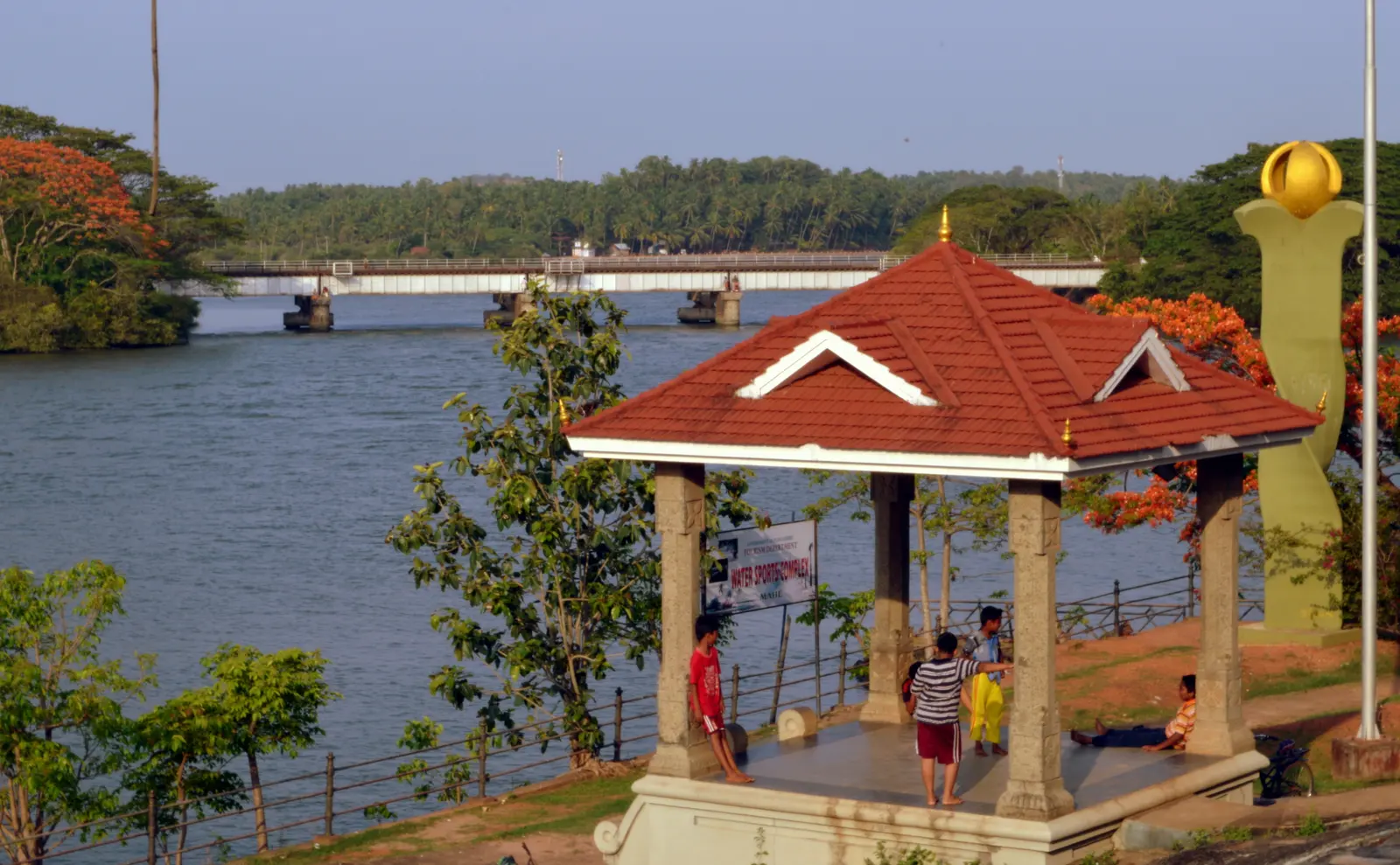
Why Mahe District?
Tucked into Kerala's Malabar coast near Thalassery, Mahe (also written Mahé, and known locally as Mayyazhi) is the smallest of Puducherry Union Territory's four districts — a French trading post founded in 1721, now a quiet riverfront town most travellers pass without stopping.
That's the appeal. Mahe sits where the Mahe River meets the Arabian Sea, and its compact town centre still carries a genuine French colonial layer — a riverfront walkway, a historic church, and a small-town pace that feels completely different from the busier Malabar towns around it. Beyond the town, the surrounding villages of Palloor, Pandakkal, Chalakkara, and Parakkal are quiet river-and-farmland stretches that rarely appear on any itinerary at all.
Mahe isn't a multi-day destination on its own — it's a genuinely worthwhile half-day-to-two-day detour if you're already travelling along the Malabar coast between Kozhikode and Kannur.
⛵ Mahe District at a Glance
Best Time to Visit Mahe District
Mahe shares Kerala's Malabar coast climate — heavy monsoon rain for much of the year, with a clear comfortable window either side of it.
Cool, dry, and pleasant (20–30°C) — ideal for the riverfront walkway, Mahe Beach, and drives out to the surrounding villages.
Temperatures and humidity both climb — manageable with early mornings, but not the district's most comfortable stretch.
The Malabar coast gets serious monsoon rainfall in this window — the Mahe and Chalakkara rivers run high, and outdoor plans need real flexibility.
Rain tapers off through the month, with rivers still running full — a good time to see Mahe's riverfront at its most scenic without full monsoon disruption.
Our pick: November through February — comfortable weather for the riverfront walkway and the village drives, and calm conditions at Mahe Beach.
How to Reach Mahe District
- By Air: Kozhikode (Calicut) International Airport, roughly 50 km away, is the nearest major airport with good domestic and some international connectivity.
- By Train: Thalassery (Tellicherry) railway station, about 8 km from Mahe, is the closest well-connected stop on the Malabar coast line, with onward autos and taxis into Mahe town.
- By Road: Mahe sits directly on NH66 between Kozhikode and Kannur, making it an easy stop on any Malabar coast road trip rather than a detour.
Mahe Town
The district's namesake town is compact enough to see in half a day, built almost entirely around its riverfront and the French-colonial institutions left behind after 1721.
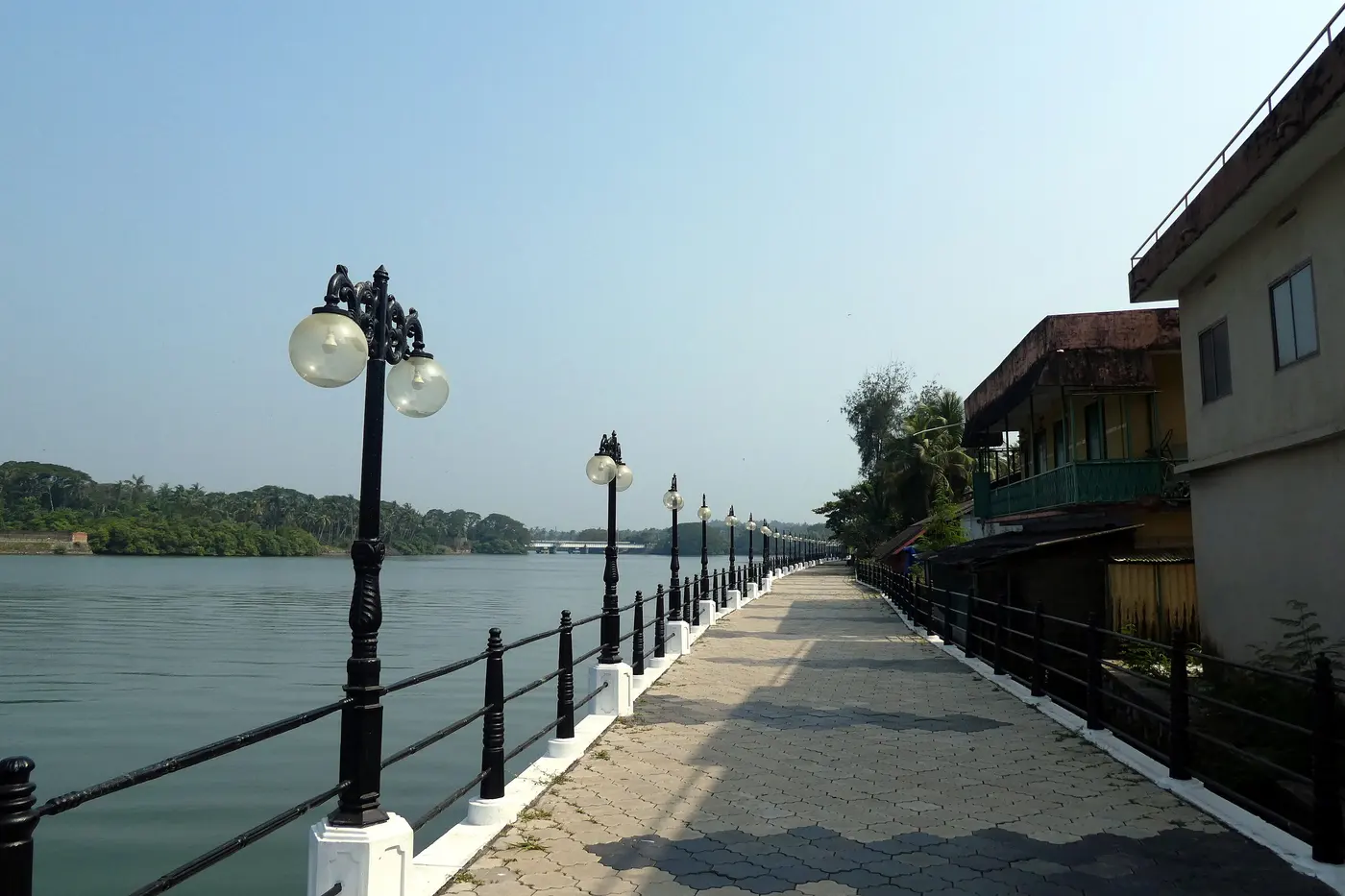
- Mahe Walkway: A landscaped riverfront promenade along the Mahe River — the town's most pleasant stretch for an evening walk, and its closest equivalent to Puducherry's Promenade.
- Mahe River: The river that gives the town its name and its layout, flowing out to the Arabian Sea at the town's edge.
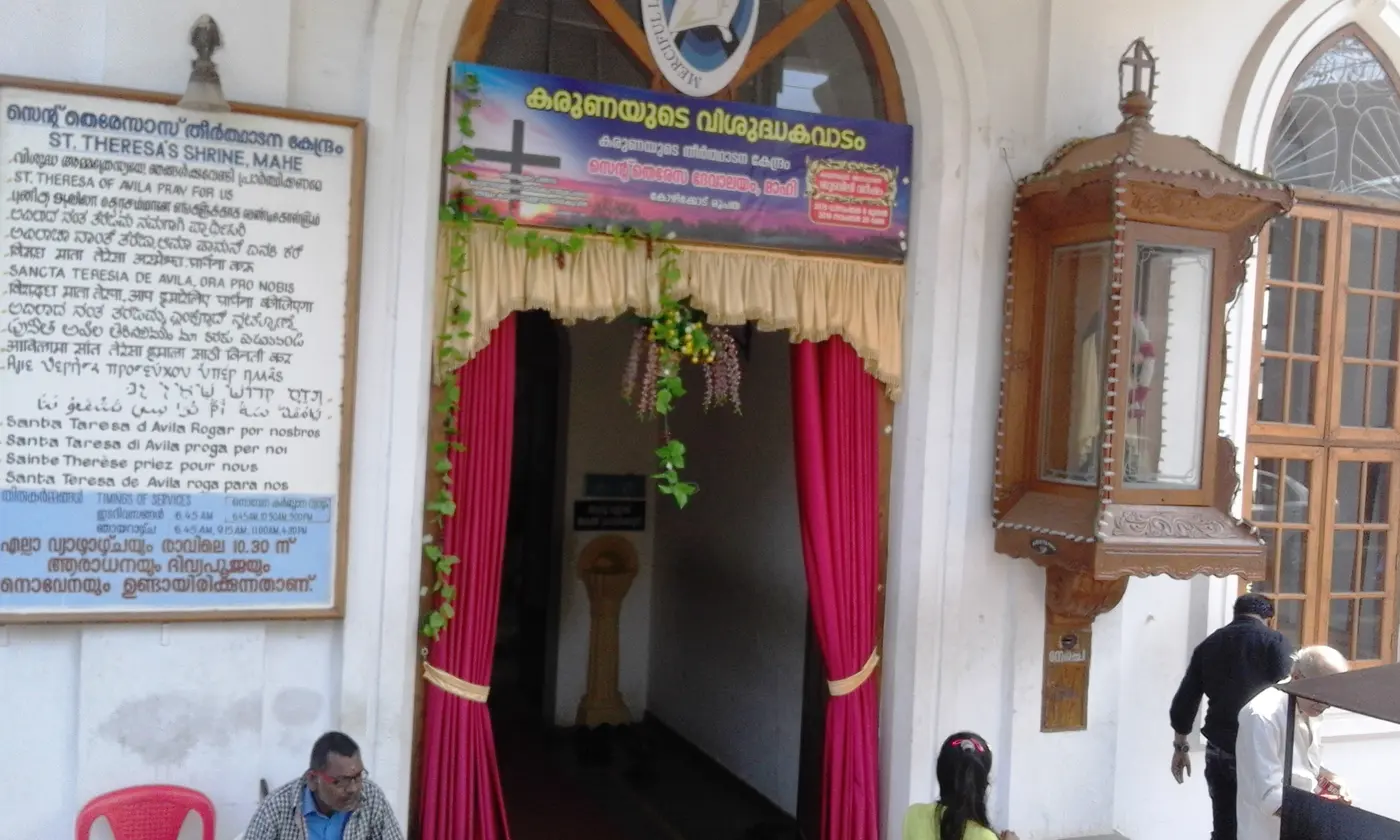
- St. Teresa's Shrine: A prominent Catholic church and one of Mahe's most significant landmarks, especially lively during its annual feast.
- Tagore Park: A small, well-kept public park in the town centre, named for Rabindranath Tagore — a pleasant stop between the riverfront and the shrine.
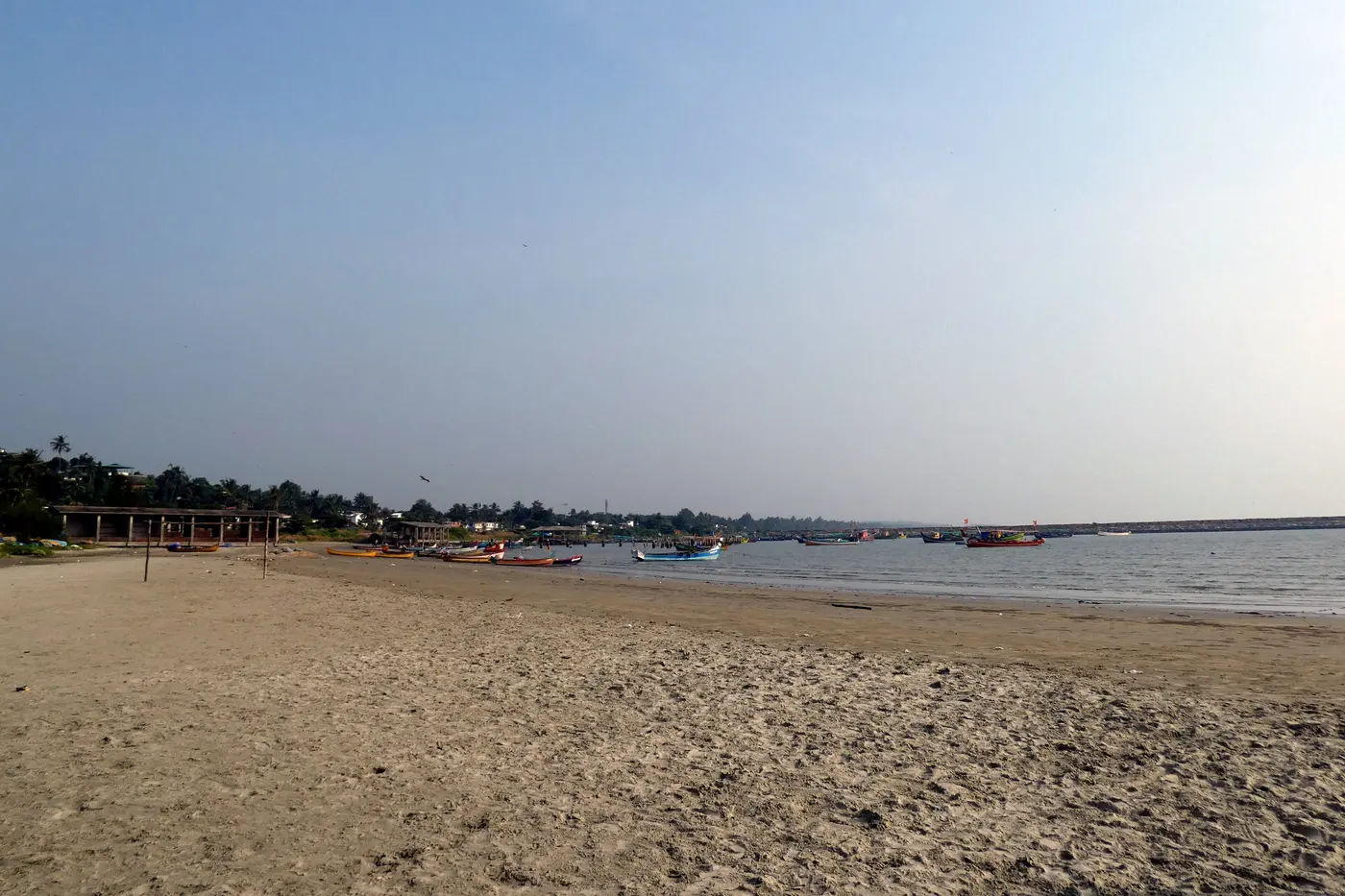
- Mahe Beach: A quiet beach near the river mouth, considerably less crowded than the major Kerala coastal beaches nearby.
- Mahe Lighthouse: A working lighthouse marking the coast, worth the short walk for sea views.
Palloor & Pandakkal
Just outside Mahe town, Palloor and Pandakkal are the district's closest village surroundings — an easy add-on if you have an extra hour or two.
- Palloor: A village area with its own local temples and churches, and a genuine slice of everyday village life just beyond the town limits.
- Pandakkal: Known for its local religious sites and its position along the Mahe River's surroundings — a quieter riverside stretch than the town's main walkway.
Chalakkara & Parakkal
Further out, Chalakkara and Parakkal are the district's most rural stretches — worth a slow drive if you want to see Mahe beyond its riverfront and church.
- Chalakkara: Centred on its own river surroundings, with local temples and rural landscapes typical of the Malabar coast's interior.
- Parakkal: A village landscape of local temples and nearby river areas, similarly quiet and largely untouched by tourism.
Neither area has a headline monument — their value is in the drive itself, through river-fed farmland that most Malabar coast itineraries skip entirely.
Where to Stay
Accommodation in Mahe itself is limited — many travellers base themselves in Thalassery or Kozhikode instead and treat Mahe as a day trip.
- → Guesthouses, Mahe town centre
- → Budget lodges, Thalassery (8 km away)
- → Basic rooms near the riverfront
- → Business hotels, Thalassery
- → Mid-range hotels, Kozhikode
- → A handful of hotels in Mahe town
- → Premium hotels, Kozhikode
- → Beach resorts along the Malabar coast
- → Heritage-style stays (very limited in Mahe)
Given Mahe's small size, most visitors are better served staying in Thalassery or Kozhikode and treating the district as a half-day-to-two-day detour on a longer Malabar coast trip.
What to Eat in Mahe District
- Malabar Muslim cuisine: Biryani, kallummakkaya (mussel) dishes, and other Malabar coastal specialities are widely available in and around Mahe town.
- Fresh seafood: Mahe's river-mouth location makes fresh fish and prawns a genuine strength — look for it at riverside and beachside eateries.
- Kerala staples: Appam, puttu, and other everyday Kerala breakfasts are the norm across Mahe and the surrounding villages.
- French-influenced bakery items: Small traces of Mahe's colonial past occasionally surface in local bakeries — worth a look if you're curious about the town's French heritage beyond its architecture.
2-Day Mahe District Itinerary
Mahe's small size means two days is enough to cover the whole district comfortably, especially if slotted into a longer Malabar coast trip.
Mahe Town
- ✓Arrive, check in
- ✓St. Teresa's Shrine, Tagore Park
- ✓Afternoon: Mahe Walkway along the riverfront
- ✓Evening: Mahe Beach and lighthouse
Palloor, Pandakkal, Chalakkara & Parakkal
- ✓Morning: Palloor's local temples and churches
- ✓Pandakkal's riverside religious sites
- ✓Afternoon: Drive through Chalakkara and Parakkal
- ✓Departure toward Thalassery or Kozhikode
Budget Breakdown
| Expense | Budget | Mid-Range | Upscale |
|---|---|---|---|
| Accommodation/night | ₹700 | ₹2,200 | ₹5,000 |
| Food/day | ₹400 | ₹900 | ₹1,800 |
| Local transport/day | ₹300 | ₹600 | ₹1,200 |
| Sightseeing/misc | ₹150 | ₹300 | ₹500 |
| Daily total | ₹1,550 | ₹4,000 | ₹8,500 |
| 2-Day trip total | ₹3,100 | ₹8,000 | ₹17,000 |
* Excludes travel to Kozhikode/Thalassery. Costs assume a base in Mahe or Thalassery rather than pricier Kozhikode city stays.
Essential Travel Tips for Mahe District
- Treat Mahe as a detour, not a base: Given its small size and limited stay options, most visitors are better off basing in Thalassery or Kozhikode and visiting Mahe as a day trip.
- Hire a car or auto for the village stretches: Public transport to Palloor, Pandakkal, Chalakkara, and Parakkal is limited — a private vehicle makes covering all four realistic in a single day.
- Dress modestly at St. Teresa's Shrine: An active place of worship, busiest during its annual feast — covered shoulders are expected.
- Carry cash outside Mahe town: Card and digital payment acceptance drops off quickly in the surrounding villages.
- Combine with a Malabar coast road trip: Mahe sits directly on NH66 — the easiest way to see it is as a stop between Kozhikode and Kannur, not a dedicated trip.
- Check monsoon timing: June to September brings heavy rain to the whole Malabar coast — plan riverfront and village visits outside this window if possible.
✅ Do
- →Walk the Mahe Walkway at evening for the best atmosphere
- →Base in Thalassery or Kozhikode and day-trip into Mahe
- →Hire a car or auto for Palloor, Pandakkal, Chalakkara, and Parakkal
- →Dress modestly at St. Teresa's Shrine
- →Try fresh seafood near the riverfront
- →Combine Mahe with a Kozhikode–Kannur coastal drive
❌ Don't
- →Expect a wide range of accommodation inside Mahe town
- →Rely on public transport for the village stretches
- →Skip modest dress at St. Teresa's Shrine
- →Rely on cards outside Mahe town
- →Plan a village drive during peak monsoon without checking conditions
- →Treat Mahe as a multi-day standalone destination
Frequently Asked Questions
How many days do I need for Mahe?
Mahe isn't a multi-day destination on its own — it's a genuinely worthwhile half-day-to-two-day detour if you're already travelling along the Malabar coast between Kozhikode and Kannur. Our suggested itinerary covers Mahe town on day one and the surrounding villages of Palloor, Pandakkal, Chalakkara, and Parakkal on day two.
What is the best time to visit Mahe?
November through February is the best window — cool, dry, and pleasant (20–30°C), ideal for the riverfront walkway, Mahe Beach, and drives out to the surrounding villages. June to September brings heavy southwest monsoon rain, when the Mahe and Chalakkara rivers run high and outdoor plans need real flexibility.
How do I reach Mahe from Kozhikode?
Mahe is roughly 50 km from Kozhikode (Calicut) International Airport, about 1.5 hours by road. Mahe sits directly on NH66 between Kozhikode and Kannur, making it an easy stop on any Malabar coast road trip. Thalassery railway station, about 8 km from Mahe, is the closest well-connected rail stop, with onward autos and taxis into town.
Is Mahe worth visiting?
Yes, if you're already on the Malabar coast — Mahe sits where the Mahe River meets the Arabian Sea, with a compact town centre that still carries a genuine French colonial layer: the Mahe Walkway riverfront promenade, St. Teresa's Shrine, and Tagore Park. Beyond the town, the surrounding villages are quiet river-and-farmland stretches that rarely appear on any itinerary at all.
What is the budget for a trip to Mahe?
A budget traveller can expect a daily total of around ₹1,550, a mid-range trip around ₹4,000/day, and an upscale trip around ₹8,500/day, based on accommodation, food, local transport, and sightseeing. A two-day trip works out to roughly ₹3,100 (budget), ₹8,000 (mid-range), or ₹17,000 (upscale) in total.
Should I stay in Mahe or a nearby town?
Accommodation in Mahe itself is limited, so many travellers base themselves in Thalassery or Kozhikode instead and treat Mahe as a day trip. Given Mahe's small size, most visitors are better served staying nearby and visiting the district as a half-day-to-two-day detour on a longer Malabar coast trip.
What is St. Teresa's Shrine in Mahe?
St. Teresa's Shrine is a prominent Catholic church and one of Mahe's most significant landmarks, especially lively during its annual feast. As an active place of worship, modest dress with covered shoulders is expected of visitors.
Published by the Kudozz Club editorial team · Last updated · How we research our guides
Want us to plan this trip for you?
Tell Kudozz Club where you want to go and what kind of trip you’re looking for. We’ll build a Mahe District and Puducherry itinerary around your dates and budget.
Continue Exploring
View all guides Destination Guide
Yanam District Travel Guide: Godavari Delta & French Heritage
St. Ann's Church, Yanam Ferry Road, the Godavari River, Yanam Tower and Rajiv Gandhi Beach, plus the quiet Godavari delta villages of Mettakur, Kolanka, and Kanakalapeta.
 Destination Guide
Karaikal District Travel Guide: Temples, Beach & Cauvery Delta
Tirunallar's famous Saneeswaran Temple and Nala Theertham, Karaikal town's beach, lighthouse and Karaikal Ammaiyar Temple, and the quiet Cauvery delta villages of Neravy, Kottucherry, and Nedungadu.
 Destination Guide
Puducherry Travel Guide: French Quarter, Auroville & Beaches
Mustard-yellow colonial villas, a seafront promenade closed to traffic, and the golden Matrimandir at Auroville — the complete guide to India's most European town.
Things to DoThings to Do in Pondicherry: French Quarter, Auroville, Beaches & Cafés
Things to do in Pondicherry: walk the French and Tamil quarters, the Promenade at sunrise, Sri Aurobindo Ashram, Auroville and the Matrimandir, Paradise Beach and Chunnambar backwaters, churches and temples, cycling tours, surfing, scuba diving, cafés and bakeries.