Why Haryana?
Let's be upfront about this one: Haryana isn't a conventional tourist state. It doesn't have Rajasthan's palaces, Kerala's backwaters, or Himachal's mountains. What it does have is a wrap-around geography that surrounds Delhi on three sides, an agricultural heartland that quietly feeds much of North India, and some genuinely significant history and mythology that tends to get overlooked in the rush to bigger-name destinations.
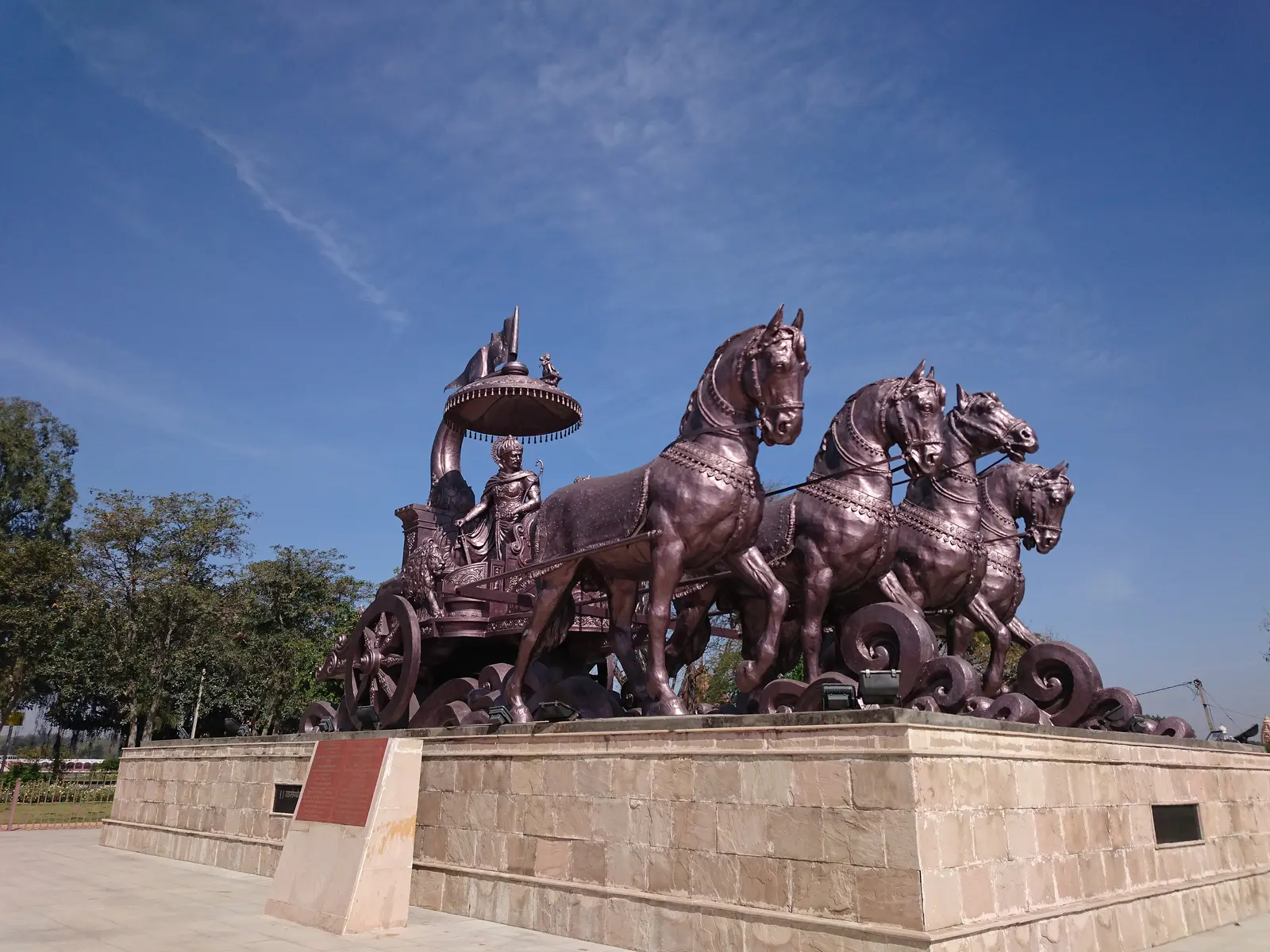
The single biggest draw is Kurukshetra — the site traditionally identified as the battlefield of the Mahabharata, and where Lord Krishna is said to have delivered the Bhagavad Gita to Arjuna. For anyone with an interest in Indian mythology or religious history, it's a place worth the detour on its own merits, not as a footnote to somewhere else.
Beyond Kurukshetra, Haryana's real strength is practicality: it's one of the easiest short trips available to anyone based in Delhi-NCR. Surajkund hosts one of the world's largest handicrafts fairs every February, Pinjore Gardens and Morni Hills sit right beside Chandigarh, and Sultanpur's wetlands draw migratory birds within an hour of Gurugram. None of it needs a week off — most of it fits into a long weekend.
🛕 Haryana at a Glance
Best Time to Visit Haryana
Haryana sits on the North Indian plains, which means genuinely extreme summers and short, sharp winters — the weather window for comfortable sightseeing is narrower than most states on this site.
Cool and dry (7–25°C) — comfortable for temple visits, the Surajkund Mela, and outdoor sightseeing without the plains heat.
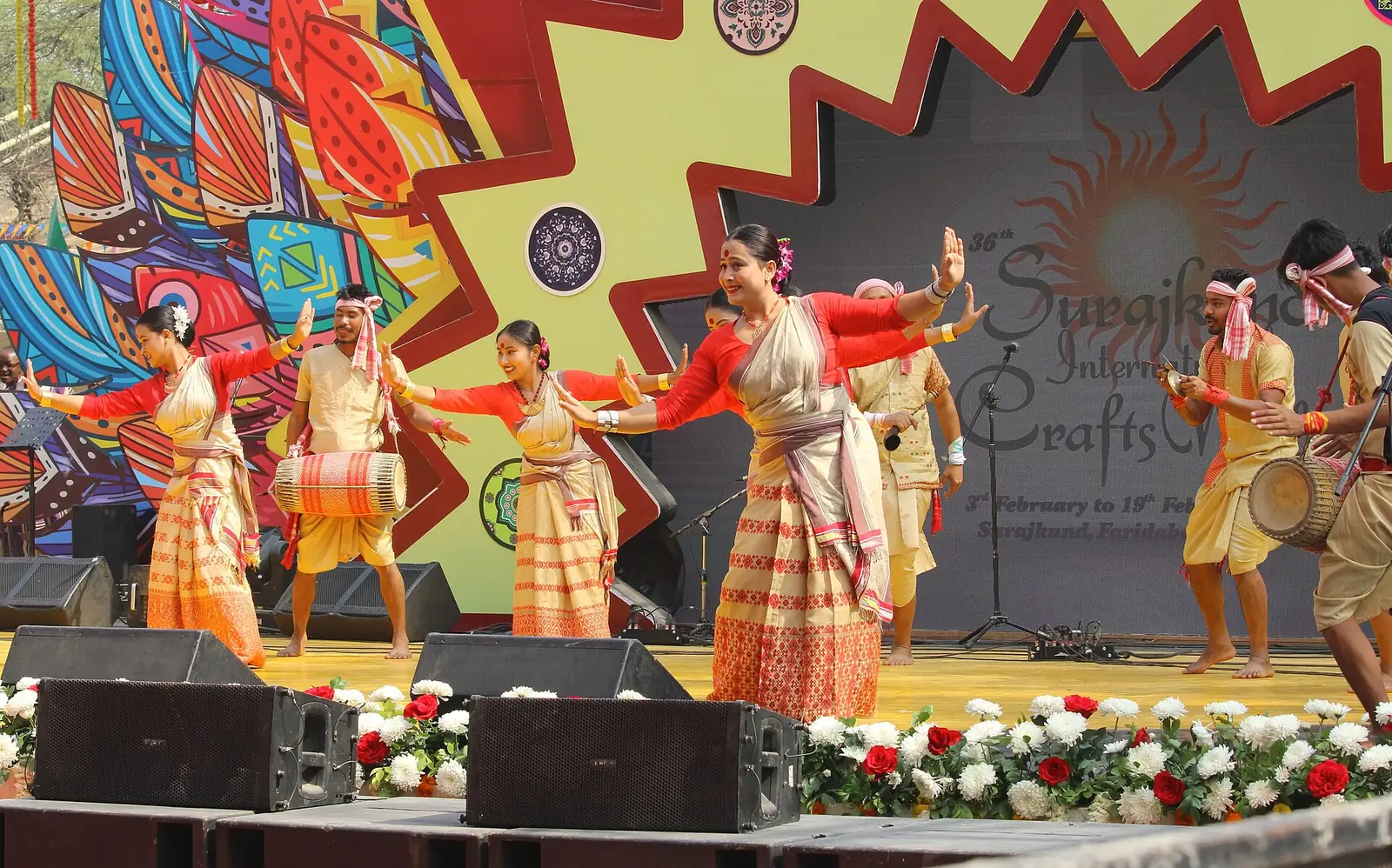
The International Surajkund Crafts Mela runs for about two weeks every February — a genuinely major event worth timing a trip around.
Peak plains heat, regularly crossing 40°C. Sightseeing is uncomfortable outside early morning and evening hours.
Rain brings relief from the heat but adds humidity; Sultanpur's wetlands are lush but migratory birds haven't arrived yet.
Our pick: Time your trip to February if the Surajkund Crafts Mela interests you at all — it's genuinely one of the best reasons to visit Haryana specifically. Otherwise, any weekend between November and February works well.
How to Reach Haryana
- By Air: Most of Haryana's major towns have no airport of their own — Delhi's Indira Gandhi International Airport (IGI) is effectively the gateway for the entire state, and it's the reason a Haryana trip is so easy to bolt onto a Delhi visit.
- By Rail: Kurukshetra, Panipat, Ambala, Faridabad, and Gurugram all sit on major rail lines out of Delhi, with frequent daily trains.
- By Road: This is genuinely a road-trip state — NH-44 and NH-48 cut straight through it, and most destinations are 1–3 hours from Delhi by car or bus.
Kurukshetra: Mahabharata's Battlefield
Kurukshetra is traditionally identified as the site of the great Mahabharata war, and — more significantly for most visitors — the place where Lord Krishna is believed to have delivered the Bhagavad Gita to Arjuna. It's one of the most religiously and mythologically significant sites in North India, and one the state has built its tourism identity around.
- Brahma Sarovar: A vast sacred tank at the heart of Kurukshetra, ringed by ghats and temples — the spiritual center of the town and a striking sight at sunrise or during evening aarti.
- Jyotisar: The spot traditionally believed to be where Krishna delivered the Bhagavad Gita to Arjuna, marked by an ancient banyan tree and a small temple — quieter and more contemplative than Brahma Sarovar.
- Kurukshetra Panorama & Science Centre: A museum built around large panoramic paintings depicting scenes from the Mahabharata — a useful primer if you're not deeply familiar with the epic before visiting.
Surajkund & Faridabad

Just across the Delhi border in Faridabad, Surajkund is best known today for one thing: a crafts fair that draws artisans and visitors from across the country and beyond.
- International Surajkund Crafts Mela: Held every February, this is one of the world's largest handicrafts fairs — hundreds of stalls of textiles, pottery, woodwork, and folk performances from across India and partner countries.
- Surajkund itself: An ancient stepped reservoir dating back over a thousand years, built in a distinctive semi-circular amphitheater shape — worth a look even outside the Mela dates.
- Badkhal Lake: A quieter spot nearby, popular for a short evening drive out of Faridabad rather than as a standalone destination.
Pinjore, Sultanpur & Morni Hills
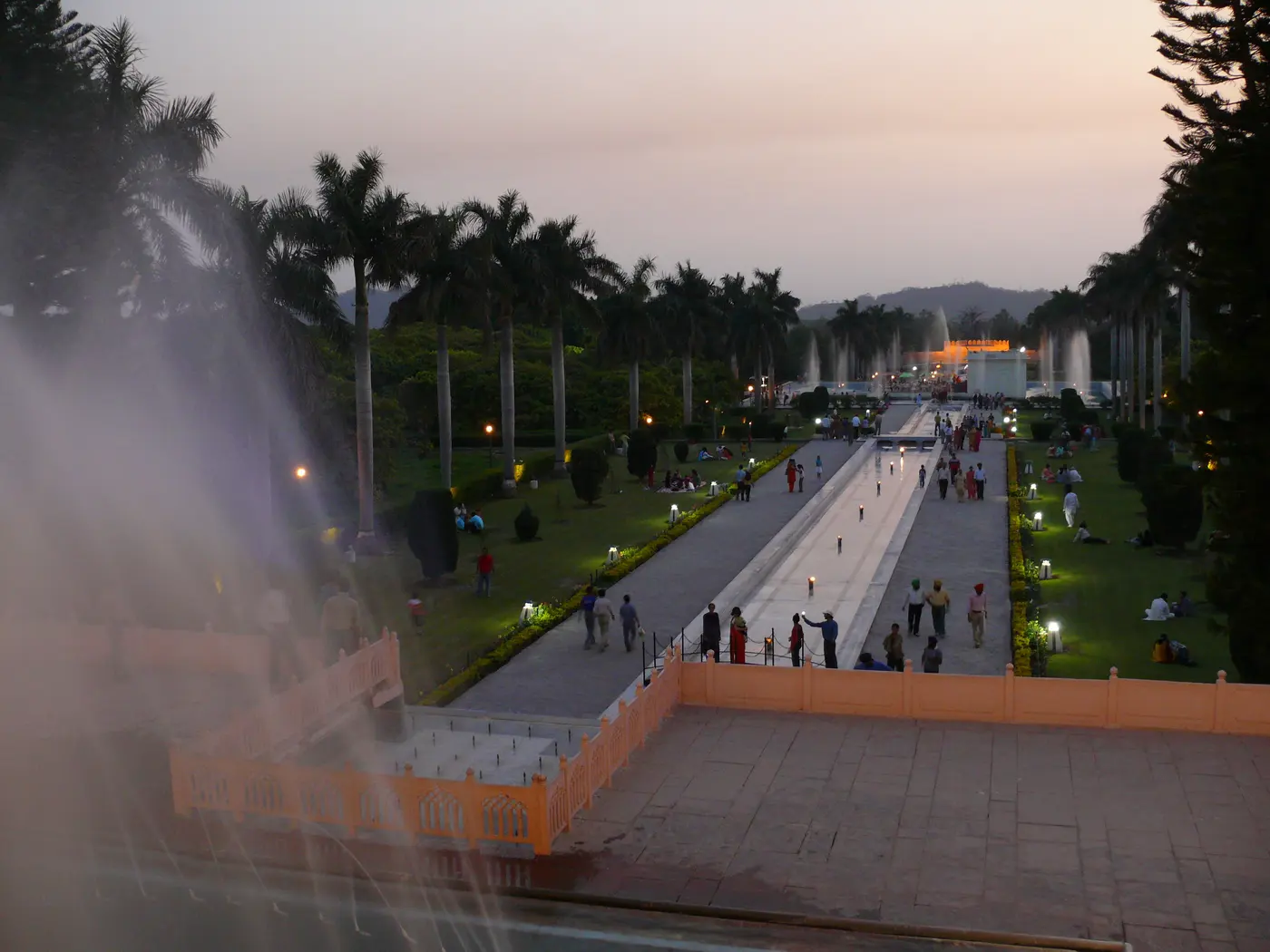
- Pinjore Gardens: A Mughal-era terraced garden near Panchkula, close to Chandigarh, laid out with fountains, pavilions, and manicured lawns — one of the more visually rewarding stops in the state.
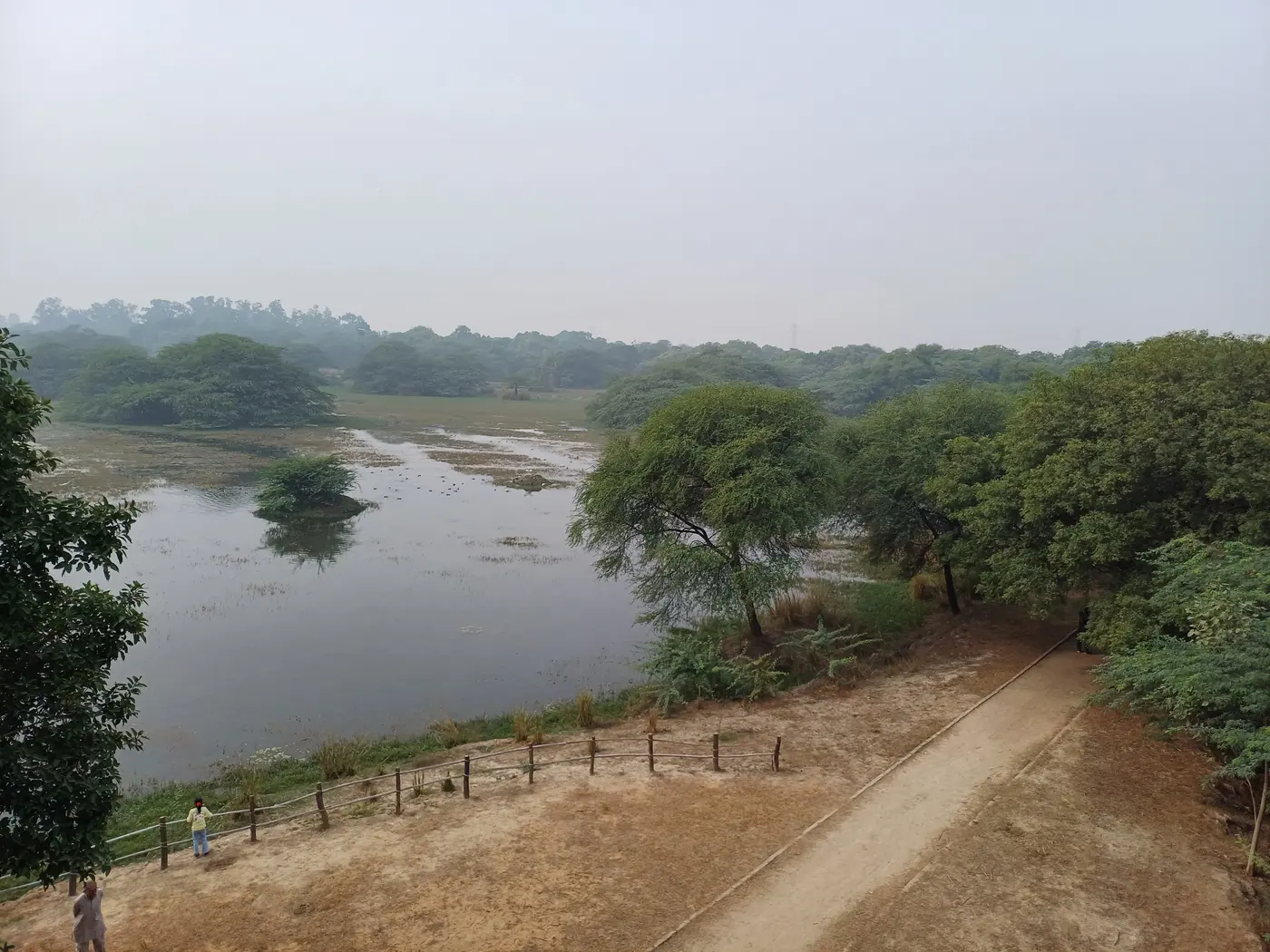
- Sultanpur National Park: A migratory bird sanctuary near Gurugram, drawing flamingos, herons, and dozens of other species between roughly October and March — a solid half-day trip for anyone interested in birdwatching.
- Panchkula & Morni Hills: Haryana's only real hill area, bordering Chandigarh — modest by Himalayan standards, but a genuine change of scenery with a small lake and pine-covered slopes.
Where to Stay
Haryana's better hotels cluster around Gurugram and Faridabad, given their proximity to Delhi and corporate travel demand. Elsewhere — Kurukshetra, Panchkula — options are simpler, and highway dhaba-style stays fill in the gaps along NH-44 and other major routes.
- → Guesthouses, Kurukshetra
- → Highway dhaba-style stays, NH-44
- → Budget hotels, Panchkula
- → Business hotels, Gurugram/Faridabad
- → Mid-range hotels, Kurukshetra
- → Resort-style hotels, Panchkula
- → International chains, Gurugram
- → Business hotels, Faridabad
- → Premium stays near Chandigarh/Panchkula
Gurugram's international-chain hotels are Haryana's genuine luxury tier — Kurukshetra and Panchkula's "luxury" options are more accurately upper-mid-range. Set expectations accordingly.
What to Eat in Haryana
- Bajra Khichdi: A hearty pearl-millet khichdi, often served with a generous dollop of white butter — a staple of rural Haryanvi households.
- Kadhi: Haryana's version of the yogurt-and-gram-flour curry, typically thicker and more rustic than its Gujarati or Rajasthani cousins.
- Singri ki Sabzi: A dry vegetable dish made from sangri beans, often paired with bajra roti — a distinctly regional specialty.
- Lassi: Thick, generously served, and taken seriously here — Haryana's dairy-heavy agricultural economy shows up clearly in its food.
- Dhaba culture: NH-44 and the other highways cutting through the state are lined with genuinely excellent roadside dhabas — some of the best, most unpretentious food in Haryana is eaten at a highway stop, not a restaurant.
4-Day Haryana Itinerary
Haryana is more of a short-trip state than most others on this site — four days is enough to cover Kurukshetra, Panchkula/Pinjore, and Surajkund/Faridabad without feeling rushed, and it slots naturally onto either end of a Delhi trip.
Delhi to Kurukshetra
- ✓Drive/train from Delhi (~3 hrs)
- ✓Brahma Sarovar and evening aarti
- ✓Check in, Kurukshetra
Kurukshetra Sightseeing
- ✓Jyotisar and the Bhagavad Gita site
- ✓Kurukshetra Panorama & Science Centre
- ✓Travel to Panchkula (~2 hrs)
Panchkula & Pinjore
- ✓Pinjore Gardens
- ✓Morni Hills, if time allows
- ✓Travel toward Gurugram/Faridabad
Surajkund, Faridabad & Departure
- ✓Surajkund (or the Mela, if in season)
- ✓Sultanpur National Park (seasonal detour)
- ✓Return to Delhi, departure
Budget Breakdown
| Expense | Budget | Mid-Range | Luxury |
|---|---|---|---|
| Accommodation/night | ₹1,000 | ₹3,200 | ₹8,500 |
| Food/day | ₹400 | ₹900 | ₹2,200 |
| Local transport/day | ₹500 | ₹1,200 | ₹2,800 |
| Entry fees & extras/day | ₹300 | ₹700 | ₹1,500 |
| Daily total | ₹2,200 | ₹6,000 | ₹15,000 |
| 4-Day trip total | ₹8,800 | ₹24,000 | ₹60,000 |
* Excludes flights into Delhi. A self-drive or hired car is usually the single biggest cost lever for a Haryana trip — sharing one across a group brings per-person costs down considerably.
Essential Travel Tips for Haryana
- Time it around the Surajkund Mela if you can: The February crafts fair is genuinely one of the best reasons to visit Haryana specifically — check exact dates in advance, as it moves slightly year to year.
- Avoid April–June if possible: Plains heat in Haryana is intense and not softened by hill stations or coastline the way it is elsewhere.
- Set realistic expectations: This isn't a state with dramatic scenery — it rewards travelers interested in mythology, history, and practical short trips more than visual spectacle.
- Hire a car for flexibility: Public transport between smaller towns can be slow and indirect — a private car makes far better use of a short trip.
- Don't skip the dhabas: Some of Haryana's best food is at unglamorous highway stops along NH-44, not sit-down restaurants in town.
- Combine with Delhi or Chandigarh: Haryana works best as an add-on rather than a standalone destination — it slots naturally onto either end of a Delhi or Chandigarh trip.
✅ Do
- →Time a visit to the February Surajkund Mela if possible
- →Visit Brahma Sarovar early morning or at evening aarti
- →Hire a car for flexibility between towns
- →Stop at highway dhabas along NH-44
- →Treat Haryana as an add-on to a Delhi or Chandigarh trip
- →Carry sun protection year-round outside winter
❌ Don't
- →Expect Rajasthan-level tourist infrastructure
- →Travel April–June if it can be avoided
- →Rely heavily on public transport between smaller towns
- →Build a full day around Surajkund outside Mela season
- →Skip the roadside dhabas for chain restaurants
- →Underestimate midday heat on open ghats and fairgrounds
Places to Explore in Haryana
Every Haryana guide on Kudozz Club, in one place — 14 destinations covered so far, from cities and towns to individual attractions. Use this index to plan beyond the highlights above.
Frequently Asked Questions
How many days do I need for Haryana?
Four days is enough to cover Kurukshetra, Panchkula/Pinjore, and Surajkund/Faridabad without feeling rushed. Haryana is more of a short-trip state than most others, and slots naturally onto either end of a Delhi trip rather than needing a dedicated week.
What is the best time to visit Haryana?
October to March is best — cool and dry (7–25°C), comfortable for temple visits, the Surajkund Mela, and outdoor sightseeing. If the International Surajkund Crafts Mela interests you, time your trip specifically to February, when it runs for about two weeks. Avoid April–June, when temperatures regularly cross 40°C.
How do I reach Kurukshetra from Delhi?
Kurukshetra sits on a major rail line out of Delhi with frequent daily trains, or you can drive via NH-44, roughly 3 hours by car. Delhi's Indira Gandhi International Airport (IGI) is effectively the gateway for the whole state, since most Haryana towns have no airport of their own.
Is Haryana safe for solo travellers?
Haryana is generally straightforward for solo travellers, especially around the well-trodden Delhi-NCR-adjacent circuit of Kurukshetra, Surajkund, and Panchkula. It's a practical, road-heavy trip rather than a remote one, with good rail and highway connectivity back to Delhi throughout.
What is the budget for a trip to Haryana?
A budget traveller can expect to spend roughly ₹2,200 a day, a mid-range trip runs about ₹6,000 a day, and a luxury trip around ₹15,000 a day. A 4-day trip totals roughly ₹8,800 on a budget and ₹24,000 mid-range, excluding flights into Delhi. A self-drive or hired car is usually the single biggest cost lever, and sharing one across a group brings per-person costs down considerably.
Is Haryana worth visiting?
It won't compete with Rajasthan or Kerala for postcard scenery, and it doesn't pretend to — but Kurukshetra, the site traditionally identified as the Mahabharata's battlefield and where the Bhagavad Gita is said to have been spoken, one of the world's largest craft fairs at Surajkund, and dead-easy access from Delhi-NCR make it a genuinely worthwhile short trip.
When is the Surajkund Crafts Mela held?
The International Surajkund Crafts Mela runs for about two weeks every February in Faridabad, just across the Delhi border. It's one of the world's largest handicrafts fairs, with hundreds of stalls of textiles, pottery, and woodwork, and is genuinely one of the best reasons to visit Haryana specifically — check exact dates in advance, as they shift slightly year to year.
Published by the Kudozz Club editorial team · Last updated · How we research our guides
Want us to plan this trip for you?
Tell Kudozz Club where you want to go and what kind of trip you’re looking for. We’ll build a Haryana itinerary around your dates and budget.
Continue Exploring
View all guides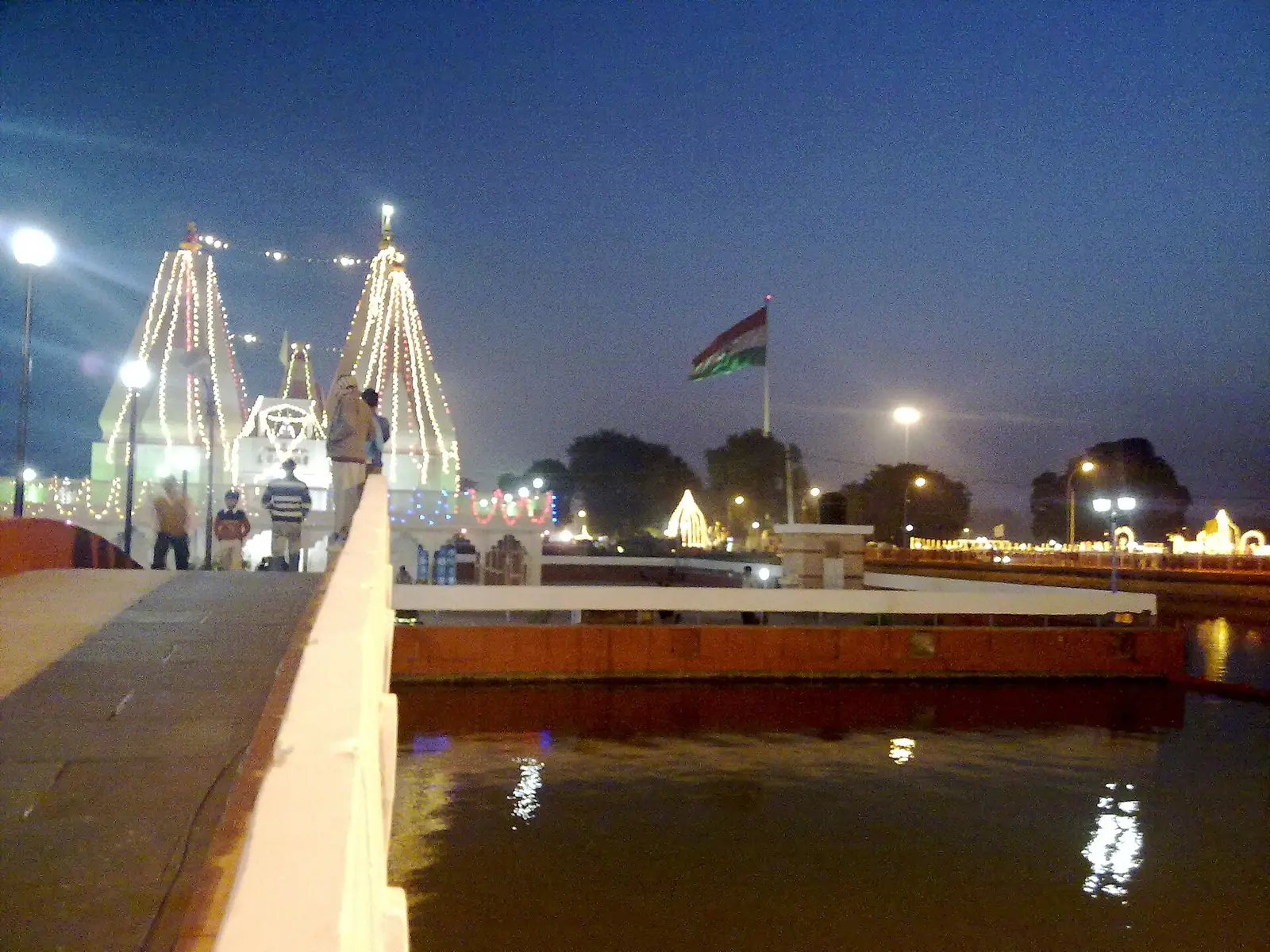 Heritage
Kurukshetra Travel Guide: Bhagavad Gita's Battlefield & Brahma Sarovar
The ground where the Bhagavad Gita is said to have been spoken, and a sacred tank where millions gather for a solar-eclipse bathing ritual — the complete guide to Kurukshetra.
 Heritage
Surajkund Travel Guide: Crafts Mela & Ancient Sun Reservoir
A thousand-year-old amphitheatre-shaped reservoir that hosts one of Asia's largest crafts fairs every February — the complete guide to Surajkund.
 Destination Guide
Hisar Travel Guide: Firoz Shah Palace & Blackbuck Country
A 14th-century Tughlaq fort city that's now a gateway to some of North India's best blackbuck sightings — the complete guide to Hisar.
 Destination Guide
Murthal Travel Guide: The Parathas That Built a Highway Legend
A cluster of highway dhabas on NH44 that turned parathas and lassi into a genuine road-trip pilgrimage — the complete guide to Murthal.