Le Corbusier's Civic Heart
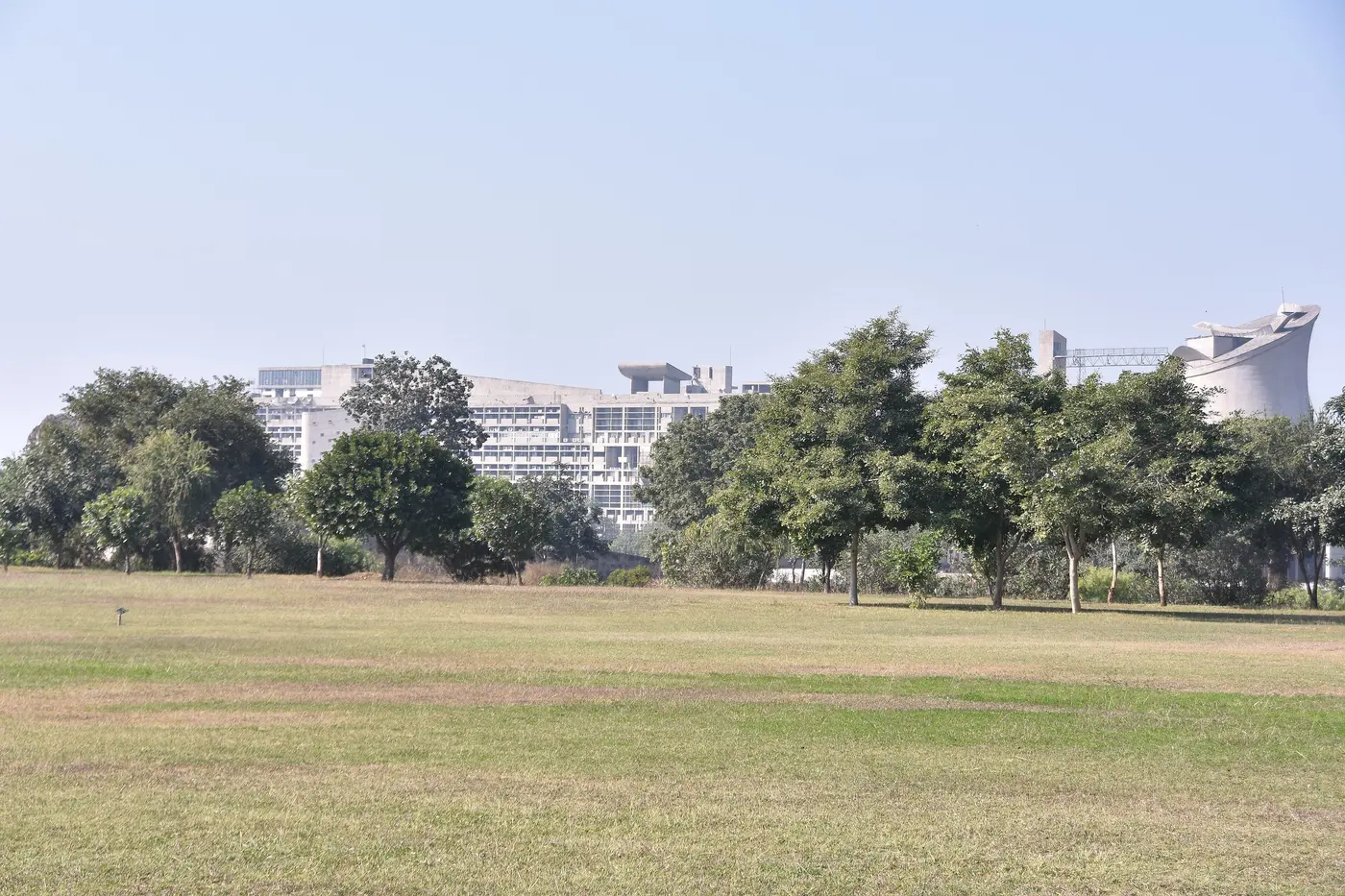
The Capitol Complex is the administrative and civic centrepiece of Chandigarh — the cluster of government buildings and monuments that Swiss-French architect Le Corbusier designed as the anchor of his master plan for the city, built through the 1950s and 60s. If Chandigarh as a whole is Le Corbusier's idea of a modern Indian city, Capitol Complex is where that idea is expressed at its most ambitious and most literal.
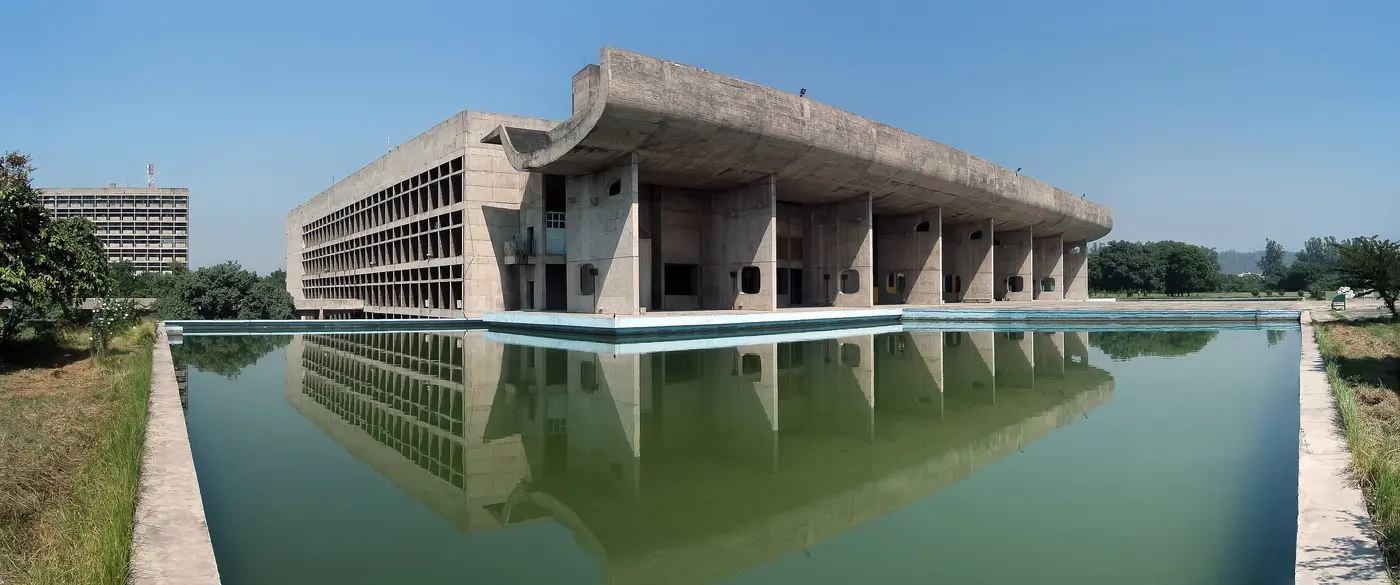
Three major government buildings sit within the complex — the Punjab and Haryana High Court, the Secretariat, and the Vidhan Sabha (Legislative Assembly) — all built in Le Corbusier's signature raw-concrete brutalist style, with deep sun-breakers, or brise-soleil, designed to tame the harsh plains sun without closing the buildings off from light and air. Scattered across the vast open plaza between them are standalone sculptural works, including the Open Hand Monument that has since become Chandigarh's official emblem.
In 2016, Capitol Complex was inscribed as a UNESCO World Heritage Site, as part of the transnational listing "The Architectural Work of Le Corbusier," which groups 17 of his buildings across seven countries. It's the only Indian entry in that list, and it's a working government complex to this day — the High Court and Assembly are in active use — which is exactly why visiting takes a bit more planning than most tourist sites. We'll walk through that process in detail below, so read the Permission & Access section before you finalise your travel dates.
Capitol Complex pairs naturally with two other stops in this same architecture-and-heritage cluster: the Le Corbusier Centre, a compact museum on the master plan itself, and the Government Museum and Art Gallery, which is worth combining into one half-day loop if architecture and planning history interest you.
🏛️ Capitol Complex at a Glance
Interested in the history? See our guide to UNESCO World Heritage Sites in India.
Best Time to Visit Capitol Complex
Because the plaza is vast, open, and largely unshaded, timing your visit matters more here than at most Chandigarh sights — both for comfort and for the light that raw concrete photographs best in.
Cool, comfortable temperatures make the long walk across the plaza and between buildings genuinely pleasant rather than a chore under the plains sun.
Soft, low-angle light rakes across the sun-breakers and raw concrete facades, bringing out texture that flattens out completely by midday.
Summer heat on an open plaza with minimal shade is genuinely punishing by late morning — if you must visit in these months, aim for the earliest available slot.
As a functioning government complex, weekdays generally offer more predictable access than weekends or public holidays — confirm this when you arrange permission.
Our pick: a winter weekday morning slot, arranged well in advance. Cool weather, soft light on the concrete, and the best odds of smooth access on a functioning government campus.
How to Reach Capitol Complex
Capitol Complex sits at the northern edge of Chandigarh's sector grid, in Sector 1 — set apart from the busier commercial sectors, which is part of why it still feels so monumental and uncluttered.
- By Cab or Auto: The simplest way in — most drivers in Chandigarh know Sector 1 and the Capitol Complex by name. Ask to be dropped at the visitor entry/reception point rather than the buildings directly, since access is controlled.
- From Sector 17 or Sukhna Lake: Both are a short drive away, making it easy to combine Capitol Complex with a Sukhna Lake visit or a stop at Sector 17 on the same day.
- Self-drive: Straightforward given Chandigarh's wide, well-signed roads, though parking near the complex is limited to designated visitor areas — don't expect to park right outside the buildings themselves.
Permission & Access
This is the single most important thing to get right before visiting Capitol Complex, so it's worth repeating plainly: the High Court and Vidhan Sabha are active, functioning seats of government, not museum buildings kept for tourism. Because of that, visitor access is restricted, and walk-in access is not guaranteed.
- Arrange permission in advance: Prior permission is typically required and is usually arranged through the Chandigarh Tourism office. Do this well before your visit date — ideally several days in advance — rather than assuming you can sort it out on arrival.
- Carry valid government ID: Access involves ID verification for every visitor, so carry an original government-issued photo ID (and often a copy), not just a photograph of one on your phone.
- Confirm the current process before you travel: Procedures, documentation requirements, group size limits, and available time slots can and do change. Contact Chandigarh Tourism directly to confirm exactly what's needed for your visit dates rather than relying on older information.
- Build in a buffer: If you're travelling from outside Chandigarh specifically to see Capitol Complex, don't schedule it for your only day in the city — a same-day fallback plan is wise in case a slot needs to be rescheduled.
The Three Buildings
Capitol Complex is built around three principal structures, arranged across the plaza with generous distances and framed views between them — a deliberate choice that makes walking between buildings part of the experience rather than a formality.
Punjab and Haryana High Court
The High Court is arguably the most photographed of the three buildings, defined by its huge, curved concrete canopy roof and a facade of deep sun-breakers arranged in a bold geometric rhythm. The design manages a genuinely difficult brief — a monumental civic building that still lets in filtered light and air rather than sealing itself off — and remains one of the clearest demonstrations of Le Corbusier's brise-soleil approach anywhere in his body of work.
The Secretariat
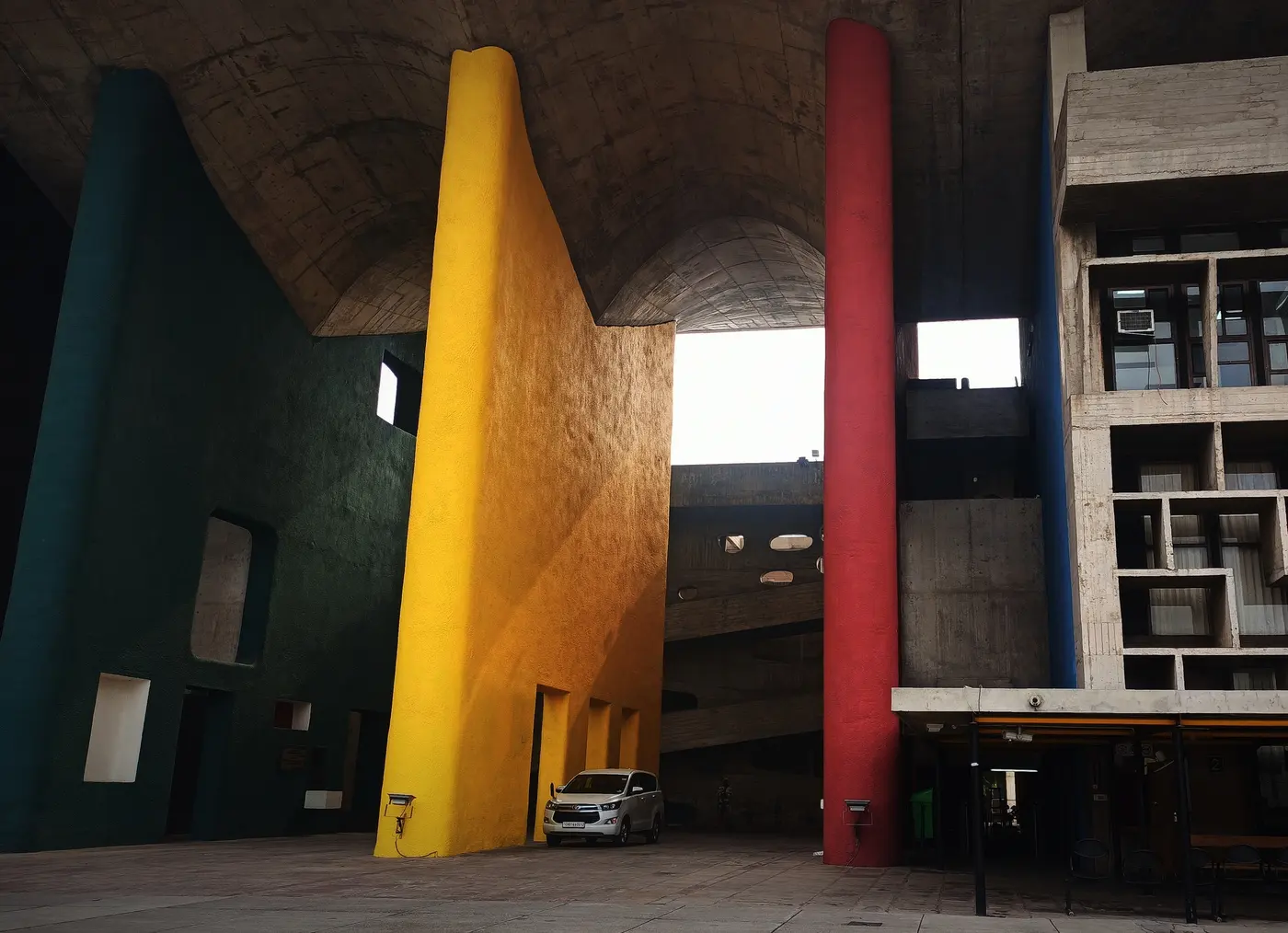
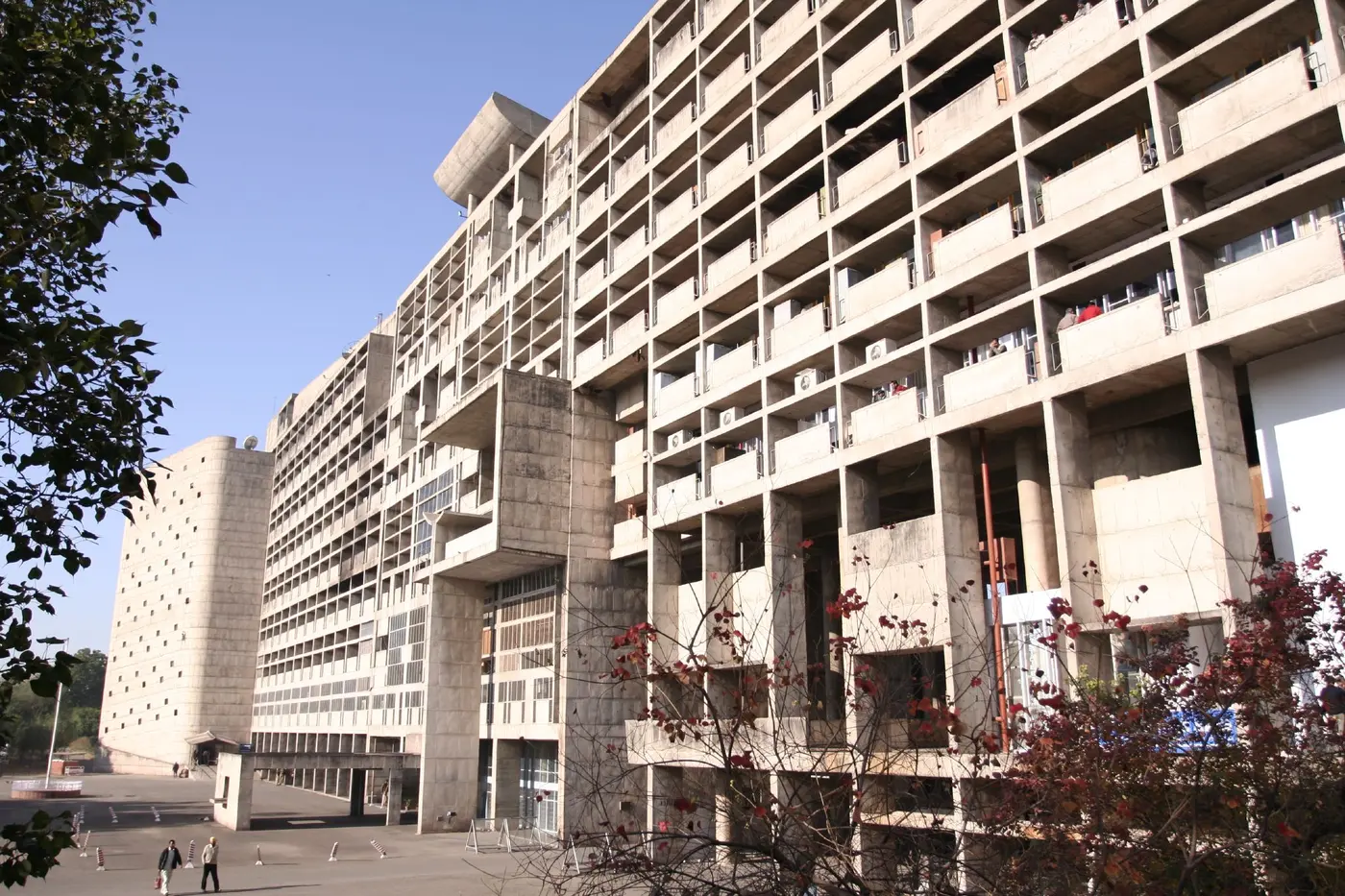
A long, horizontal slab building that houses the administrative offices of the state government, the Secretariat is the most purely functional of the three structures but no less considered — its extended facade of repeating sun-breakers creates a strong, almost musical rhythm when viewed from across the plaza, and it anchors one end of the complex's overall composition.
Vidhan Sabha (Legislative Assembly)
The Assembly building is the most sculptural of the three, combining a portico with a distinctive hyperbolic tower that rises above the roofline and doubles as a form of natural ventilation for the assembly chamber below. It's the building most closely associated with ceremonial and symbolic weight in the complex, given its role as the seat of the legislature.
The Open Hand Monument
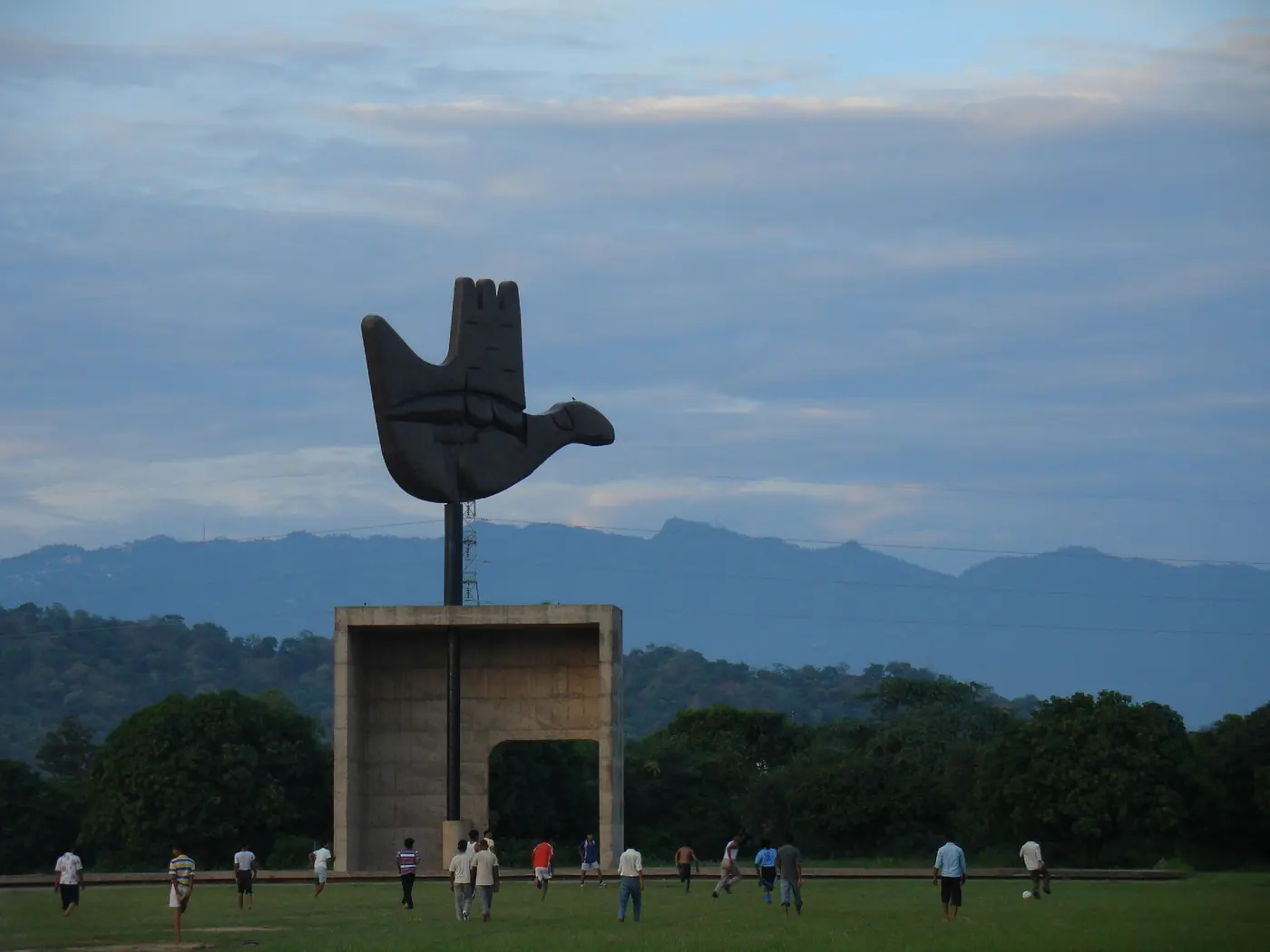
Standing apart from the three government buildings, the Open Hand Monument is Capitol Complex's single most recognisable symbol — a large metal hand sculpture mounted so that it can rotate with the wind. It has since become Chandigarh's official emblem, appearing on everything from government letterheads to the city's own branding.
The symbolism is deliberately simple and universal: an open hand, "open to give and open to receive" — Le Corbusier's own description of the sculpture's intended meaning, conceived as a gesture of peace and reconciliation fitting for a city built, quite literally, from scratch after Partition. Positioned within its own sunken plaza, it's designed to be approached and viewed in relative isolation from the surrounding buildings, giving it a weight disproportionate to its size.
Other Monuments
Beyond the Open Hand, Capitol Complex includes several smaller standalone works that reward visitors willing to walk the full plaza rather than sticking to the three main buildings.
- Tower of Shadows: A small, open pavilion-like structure designed as a working study in solar geometry — its walls and openings are oriented to demonstrate how sunlight moves through a space across the day and the seasons, a hands-on illustration of the same sun-breaker logic used throughout the complex.
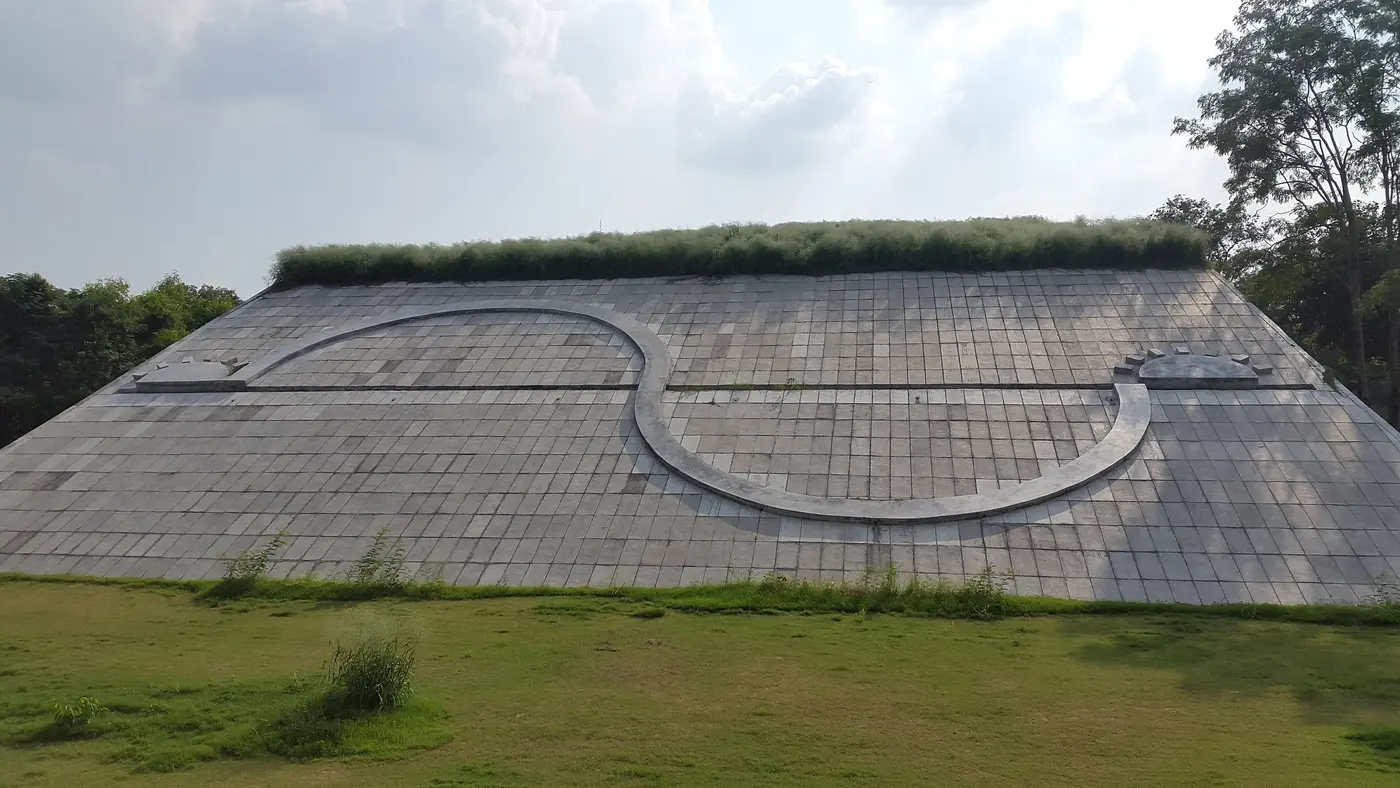
- Geometric Hill: An earthwork/sculptural mound that plays with pure geometric form at landscape scale — one of the more understated pieces in the complex, easy to walk past if you're not specifically looking for it.
- Martyrs Memorial: A memorial monument within the complex honouring those who lost their lives in the struggle for Punjab's reorganisation and related causes — a quieter, more solemn stop amid the otherwise grand civic architecture.
Photography Tips
- Shoot early morning: Low, raking light brings out the texture of raw concrete and the sun-breaker patterns far better than the flat light of midday.
- Use the sun-breakers as a subject in themselves: Tight, repeating shots of the brise-soleil grids often make for more striking images than a wide shot of an entire building facade.
- Frame through the plaza's water bodies: Reflections off the water features between buildings add real depth to shots of the High Court and Assembly.
- Check interior photography rules in advance: Rules around photographing inside the working buildings are generally stricter than for the exteriors and monuments — confirm this at the same time you arrange permission.
- Give the Open Hand its own frame: It's designed to be viewed in relative isolation within its sunken plaza — resist the urge to always include the distant buildings in the same shot.
Nearby Sights
Capitol Complex sits at one end of a natural architecture-and-heritage loop that's well worth stringing together into one half or full day.
- Le Corbusier Centre — a compact museum on the master plan and design process behind Chandigarh, an excellent primer either before or after seeing Capitol Complex itself.
- Government Museum and Art Gallery — Sector 10's Gandhara sculpture and miniature painting collection, a good complement for a fuller heritage day.
- Sukhna Lake — a short drive away, a good place to unwind after the more intense, formal experience of Capitol Complex.
- Rock Garden — a striking contrast in spirit to Capitol Complex's formal planning, well worth pairing on the same day.
Suggested Visit Plan (1.5–2 Hours)
Capitol Complex rewards an unhurried pace far more than a rushed walkthrough — the distances between buildings and monuments are deliberately generous, so budget your time accordingly.
Arrival & Check-In
- ✓Report to the visitor entry point with ID
- ✓Complete any on-site verification formalities
- ✓Orient yourself to the plaza layout
High Court & Secretariat
- ✓Approach the High Court's curved canopy roof
- ✓Study the sun-breaker facades up close
- ✓Walk toward the Secretariat's long slab facade
Vidhan Sabha & Open Hand
- ✓View the Assembly's portico and hyperbolic tower
- ✓Walk to the Open Hand Monument's sunken plaza
- ✓Take in the framed views back across the complex
The Smaller Monuments
- ✓Tower of Shadows and its solar-geometry design
- ✓Geometric Hill and the Martyrs Memorial
- ✓A slow final walk back through the plaza
* Architecture enthusiasts wanting to sketch, photograph in depth, or simply sit and absorb the plaza should add at least another 30-45 minutes.
Budget Breakdown
Capitol Complex has no major direct costs beyond getting there — the real "cost" here is the time and advance planning needed to secure permission.
| Expense | Budget | Mid-Range | Luxury |
|---|---|---|---|
| Entry / permission | Nominal / free* | Nominal / free* | Nominal / free* |
| Transport to/from site | ₹150 (auto) | ₹350 (cab) | ₹800 (private car) |
| Guided commentary (optional) | — | ₹300-500 | ₹1,500+ |
| Combine with Le Corbusier Centre + Museum | ₹50-100 | ₹100-200 | ₹200+ |
| Total (approx.) | ₹200-250 | ₹750-1,050 | ₹2,500+ |
* Figures are approximate and per person — confirm current entry and permission terms with Chandigarh Tourism, since this is a government-run access process rather than a fixed ticket price. See our full Chandigarh travel guide for a complete city budget breakdown.
Essential Tips for Visiting Capitol Complex
- Sort permission out early: This is the single biggest factor in whether your visit goes smoothly — arrange it through Chandigarh Tourism days in advance, not on the morning of your visit.
- Carry original government ID: Not a photocopy or a phone photo — every visitor typically needs to be verified individually.
- Wear comfortable, sun-appropriate clothing: The plaza is large and largely unshaded — a hat and water are worth carrying even in cooler months.
- Don't rush the plaza: The distances between buildings and the framed views along the way are part of the design — treat this as a slow architectural walk, not a quick photo stop.
- Confirm current timings and closures: As a working government complex, access can be affected by official proceedings, holidays, or security considerations on any given day — always confirm before you travel.
- Pair it with the Le Corbusier Centre: Visiting the Le Corbusier Centre first gives useful context on the master plan before you see it realised at Capitol Complex.
✅ Do
- →Arrange permission through Chandigarh Tourism in advance
- →Carry original government-issued photo ID
- →Visit on a cool winter morning if possible
- →Walk the full plaza slowly, including the smaller monuments
- →Confirm photography rules for building interiors
- →Pair the visit with the Le Corbusier Centre
❌ Don't
- →Assume you can walk in without prior permission
- →Leave the permission process to the last minute
- →Forget original ID or bring only a digital copy
- →Schedule this as your only activity on a tight single day
- →Rush between buildings without pausing at the monuments
- →Ignore local guidance on interior photography rules
Frequently Asked Questions
Do I need permission to visit Capitol Complex?
Yes. Because the High Court and Vidhan Sabha are active, functioning government buildings, walk-in access is not guaranteed — prior permission and government-ID verification are required. This is typically arranged through the Chandigarh Tourism office, and it's worth sorting out well before your visit date rather than assuming you can turn up and enter.
How far in advance should I arrange the permission?
Give yourself at least a few days, ideally longer if you're travelling from outside Chandigarh and can't easily make a second trip. Procedures, required documents, and how far ahead you need to apply can change, so confirm the current process directly with Chandigarh Tourism before you finalise your travel dates.
Is Capitol Complex free to visit?
Entry itself is generally treated as a formality-first, low-cost visit rather than a heavily ticketed monument, but exact arrangements (whether a nominal fee, a guided-tour requirement, or specific slots apply) can vary. Confirm current entry terms when you arrange permission, since this is a working government complex rather than a standard tourist site.
What exactly can I see inside Capitol Complex?
A typical visit covers the exteriors and approved areas of the Punjab and Haryana High Court, the Secretariat, and the Vidhan Sabha (Legislative Assembly), plus the standalone monuments scattered across the plaza — the Open Hand Monument, Tower of Shadows, Geometric Hill, and Martyrs Memorial. Interior access, especially to working chambers, is more restricted and depends on what's approved for your visit.
Why is Capitol Complex a UNESCO World Heritage Site?
It was inscribed in 2016 as part of a transnational listing called 'The Architectural Work of Le Corbusier' — a group of 17 sites across seven countries recognised together for their outstanding contribution to the Modern Movement in architecture. Capitol Complex is the Indian component, representing Le Corbusier's civic vision at city scale rather than a single building.
How much time should I set aside for Capitol Complex?
Budget at least 90 minutes to two hours if you want to appreciate it properly — this is a large, spread-out plaza best covered on foot at a slow pace, not a quick drive-by stop. Architecture enthusiasts often spend considerably longer, particularly around the Open Hand Monument and the water bodies between buildings.
Can I take photographs inside Capitol Complex?
Photography of the exteriors, the plaza, and the standalone monuments is generally fine, but rules around interiors — especially inside the High Court and Assembly — can be stricter given their active government use. Confirm current photography rules at the time you arrange your permission so you're not caught out on the day.
Published by the Kudozz Club editorial team · Last updated · How we research our guides
Want us to plan this trip for you?
Tell Kudozz Club where you want to go and what kind of trip you’re looking for. We’ll build a Chandigarh itinerary around your dates and budget.
Continue Exploring
View all guides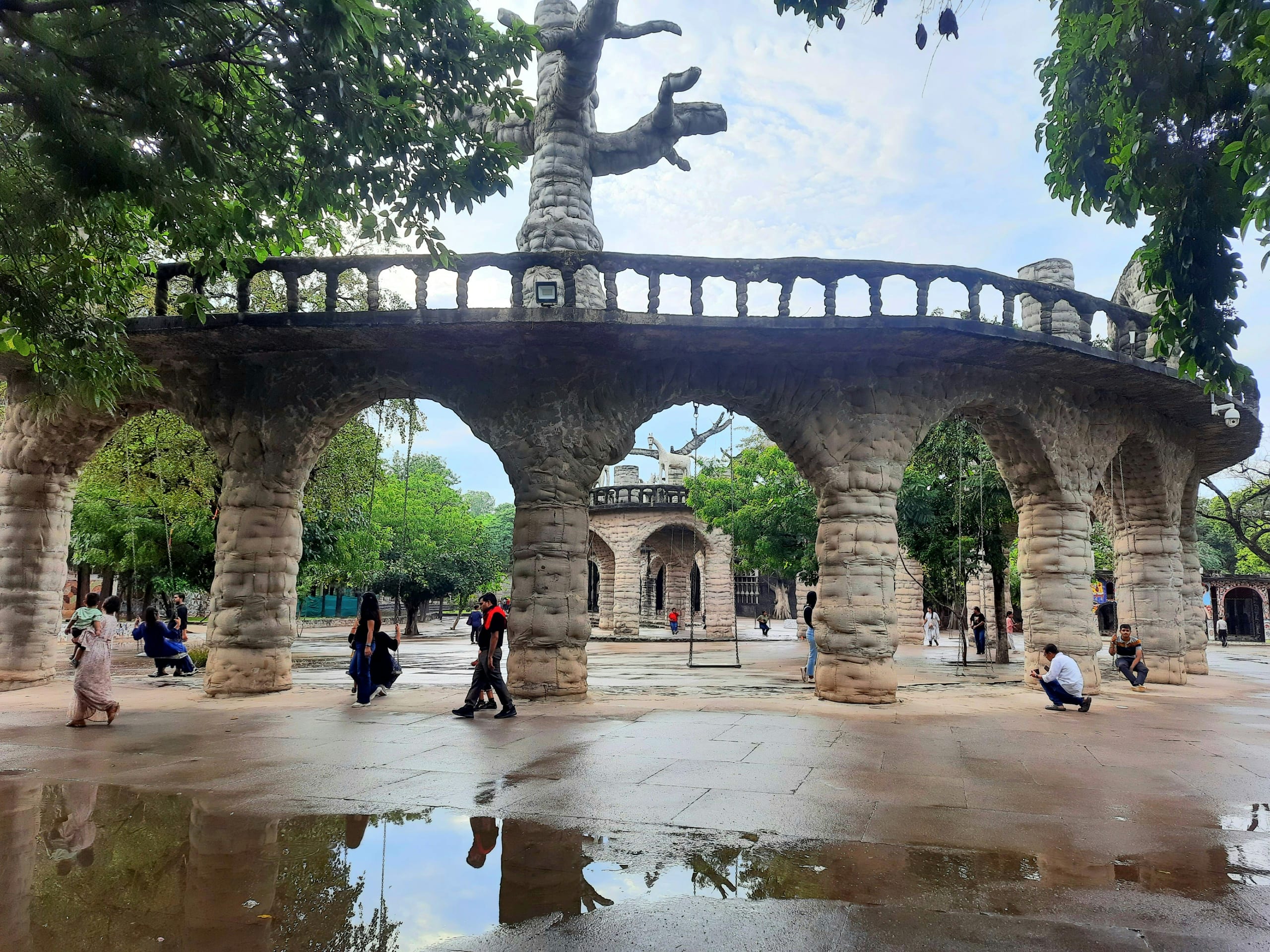 Heritage
Le Corbusier Centre Chandigarh: Museum Visit Guide
Original drawings, models, and photographs documenting how Le Corbusier planned an entire city from scratch — the essential primer before visiting the Capitol Complex.
 Heritage
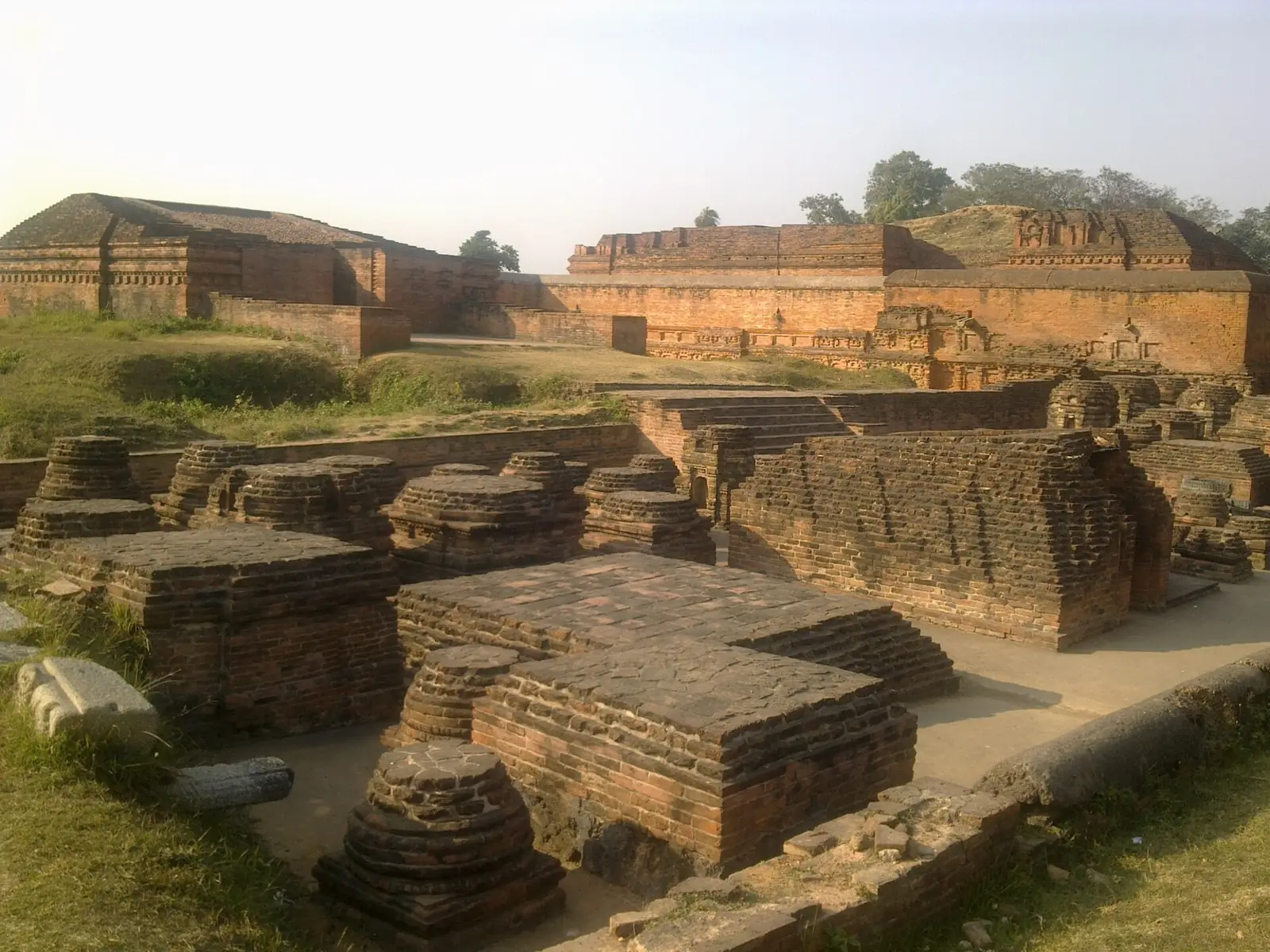
Nalanda Travel Guide: Ruins of an Ancient Buddhist University
The excavated remains of a residential university that once housed thousands of monks and scholars from across Asia, over a thousand years before Oxford existed — the complete guide to Nalanda.
HeritageGovernment Museum Chandigarh: Gandhara Art & Miniatures
Gandhara-era stone sculpture and Pahari miniature paintings in a quiet Sector 10 museum most tourists walk straight past.
 Heritage
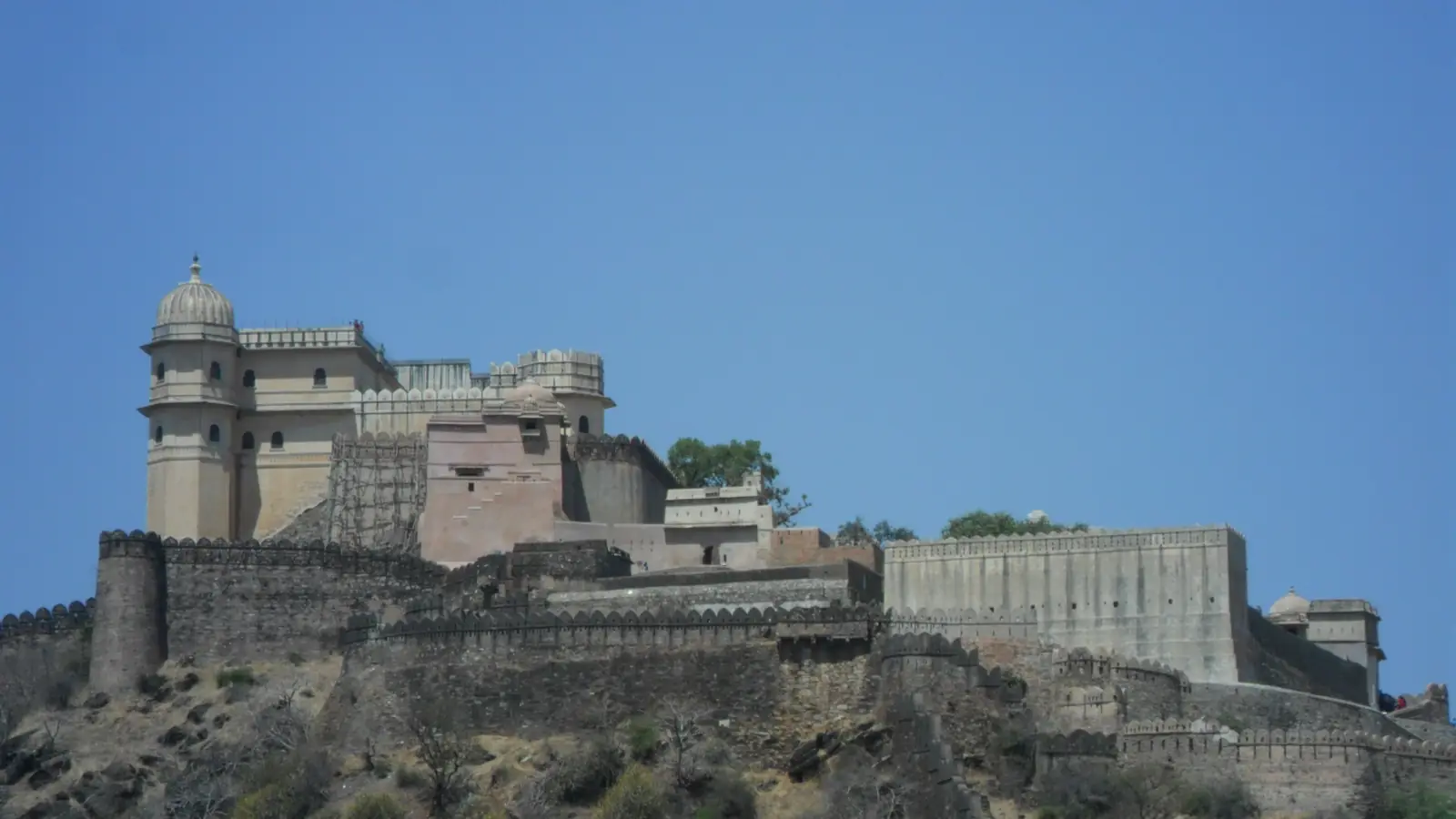
Kumbhalgarh Fort Guide: The Great Wall of India
A 36-km fortified wall across the Aravalli hills, the birthplace of Maharana Pratap, and a wildlife sanctuary at its feet — the complete Kumbhalgarh guide.