A Garden Built in Secret
The Rock Garden in Sector 1 of Chandigarh is one of the strangest and most genuinely original attractions in India — a roughly 40-acre labyrinth of courtyards, waterfalls, and thousands of sculpted figures, every one of them assembled from things other people threw away. Broken ceramics, chipped tiles, discarded bangles, shattered glass, old electrical fittings, worn tyres, and scrap wire have all been folded into an environment that feels closer to outsider art on a monumental scale than a conventional public garden.
What makes the Rock Garden more than just a curiosity is the story behind it. It wasn't commissioned, designed by committee, or built with any official sanction — it grew for nearly eighteen years in near-total secrecy, on land where its very existence was against the rules, before the government discovered it and, remarkably, chose to protect it rather than tear it down.
Sometimes cited in tourism literature as one of India's most-visited attractions after the Taj Mahal — a claim often repeated rather than independently verified, but one that gives a sense of how significant the site has become — the Rock Garden sits immediately next to Sukhna Lake, and the two are visited together by almost everyone who comes to this corner of the city.
🪨 Rock Garden at a Glance
The Origin Story: An Eighteen-Year Secret
Chandigarh itself was built on land cleared of some two dozen villages, whose materials and structures were demolished to make way for Le Corbusier's planned city. Among the government employees involved in that construction was Nek Chand Saini, a road inspector with no formal training in art, architecture, or sculpture. Starting around 1957, Nek Chand began quietly collecting the debris left behind — broken ceramics and pottery shards, discarded bangles, chipped tiles, sinks, tyres, wire, and glass — and carrying it, piece by piece, to a patch of forest on the city's northern edge.
That patch of land was a legally protected forest reserve, where construction of any kind was strictly forbidden. Working alone after his official working hours, Nek Chand cleared small sections of undergrowth and began building sculptures and structures entirely in secret, telling no one — not even, for a long stretch, his own family — what he was doing out there. He kept this up for close to eighteen years, gradually expanding a hidden network of courtyards that no government official knew existed.
In 1975, authorities finally discovered the site during a survey of the forest land — by then it had grown into a substantial, densely populated complex of sculptures spread across several acres. Given that it sat on protected land and had been built entirely without permission, the discovery could easily have ended with demolition. Instead, officials recognised what they were looking at as a genuine, singular work of art. Rather than tearing it down, the government gave Nek Chand a salary and a team of labourers to continue and formalise the work, and the Rock Garden was opened to the public in 1976. Nek Chand continued expanding it for decades afterward, until his death in 2015, and the garden has continued to be maintained and added to since.
Best Time to Visit the Rock Garden
The Rock Garden is entirely outdoors and involves a fair amount of walking through narrow, sun-exposed passages, so timing your visit around Chandigarh's seasonal extremes matters more here than at most indoor attractions.
Arriving close to opening time means cooler temperatures, softer light for photography, and courtyards that haven't yet filled with the day's tour groups and school trips.
The couple of hours before closing bring warmer, more flattering light into the courtyards, with crowds typically thinning out as the day winds down.
Cool, comfortable temperatures make the Rock Garden's largely shadeless courtyards genuinely pleasant to walk through at any hour of the day.
Midday heat in the narrow, sun-trapped passages can be intense. If visiting in summer, stick to the first or last couple of hours the garden is open.
Our pick: a cool-season weekday morning. You'll get soft light for photographs, comfortable walking temperatures in the narrow passages, and enough quiet to actually notice the detail in individual sculptures rather than just moving with a crowd.
How to Reach the Rock Garden
The Rock Garden sits in Sector 1, at the northern edge of the city, right beside Sukhna Lake — one of the easiest parts of Chandigarh to combine into a single outing.
- By Auto/Cab: The simplest way in from anywhere in the city — Sector 1 is a well-known landmark and every auto or app-based cab driver in Chandigarh knows it.
- From Sector 17: The Rock Garden is only a short ride from Sector 17 Plaza, making it easy to combine a Rock Garden and Sukhna Lake morning with shopping or a café stop later in the day.
- On foot from Sukhna Lake: If you're already at the lake, the Rock Garden's entrance is a short, easy walk away — most visitors do both sites back to back.
Walking the Courtyards
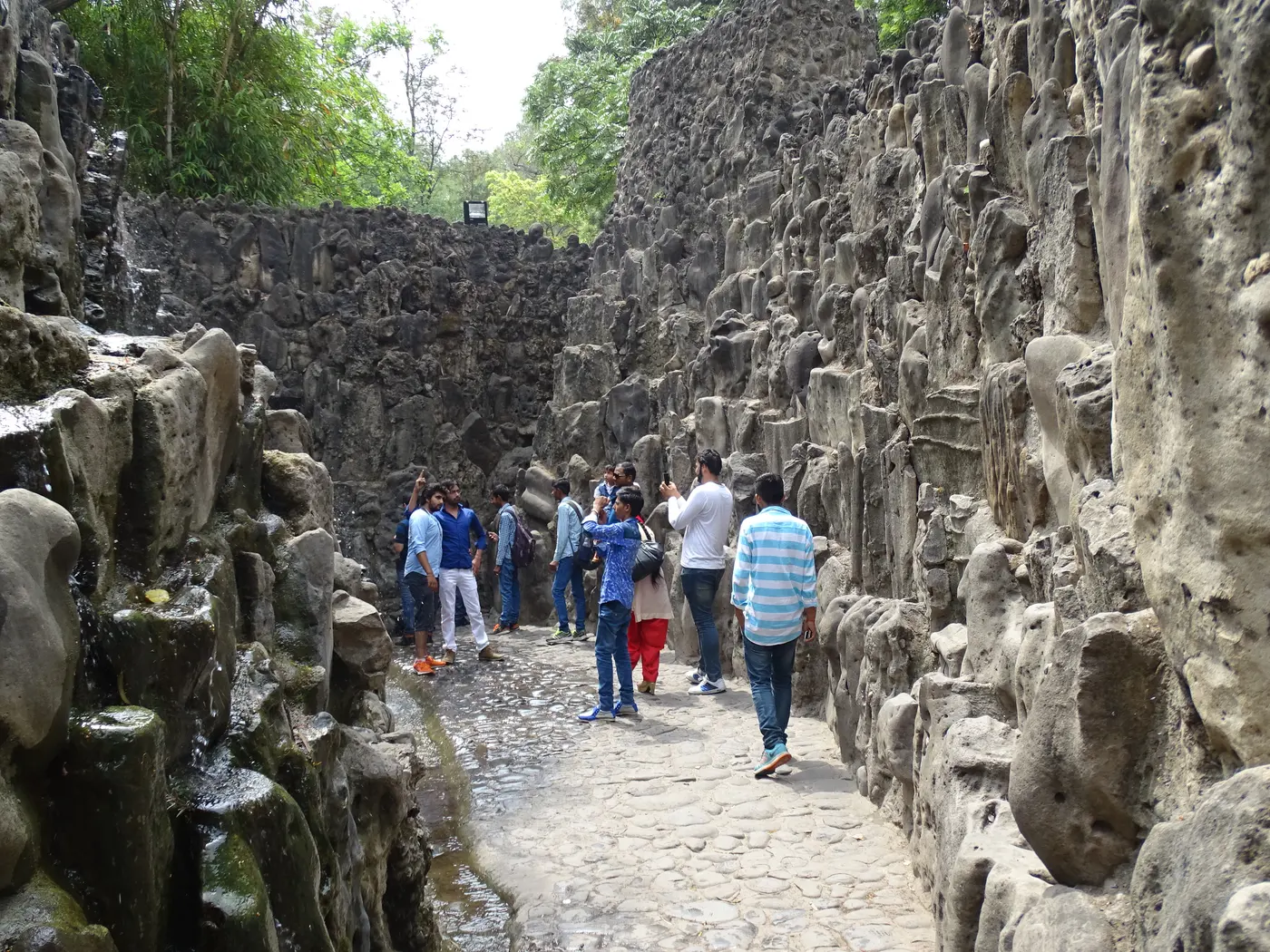
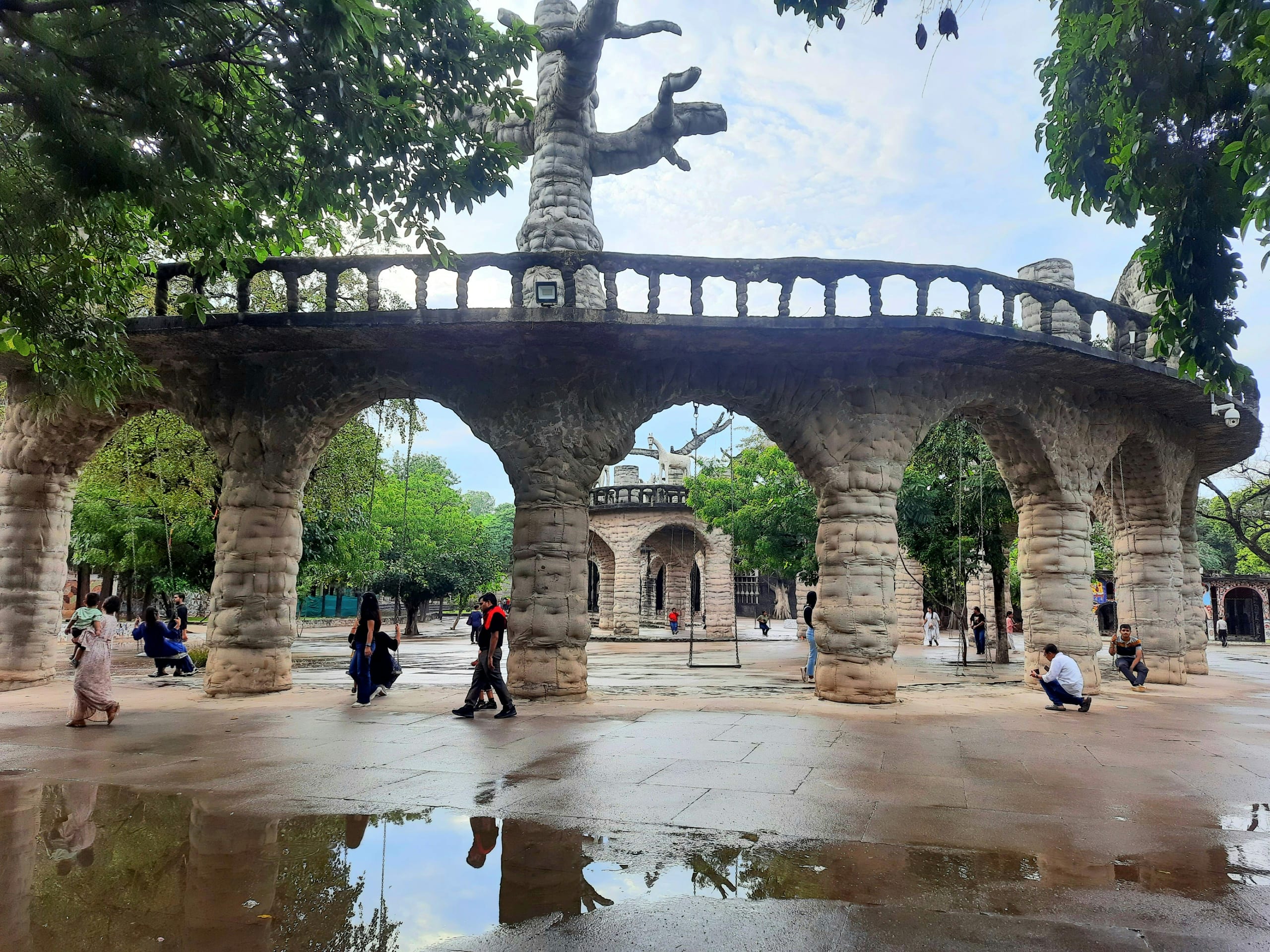
The Rock Garden isn't laid out as a single open park — it's a deliberate sequence of interlinked courtyards connected by narrow, low, winding passageways, engineered so that you can never see more than a short distance ahead or glimpse what's coming next. Ducking through one of these tight corridors and stepping out into a sudden, wide courtyard packed with sculpture is a large part of what makes a walk through the garden feel so disorienting and theatrical, almost like moving through a maze designed purely for reveal and surprise.
Each courtyard tends to have its own loose theme or concentration — one might be dense with rows of mosaic-covered human figures, arms linked or raised in identical poses; another opens onto groupings of animals and birds; others centre on man-made waterfalls, with water tumbling over ceramic-studded ledges into pools below. Long stretches of wall throughout the garden are embedded edge-to-edge with broken bangles and ceramic fragments, catching light in a way that turns even the connecting corridors into something worth slowing down for.
Deeper into the complex, the courtyards open up further still into a large open-air amphitheatre, used periodically for performances and events — a genuinely surprising thing to find at the heart of what still feels, at every turn before it, like a maze. The overall effect of walking the full sequence — tight passage, wide courtyard, tight passage, wider courtyard again — builds a rhythm that's hard to appreciate from photographs alone; it really only lands when you're moving through it yourself.
Because the paths were built low and deliberately narrow in places, taller visitors may find themselves ducking occasionally, and anyone with mobility concerns should know that some sections involve steps and uneven surfaces rather than flat, wheelchair-friendly paths.
Materials & Craft
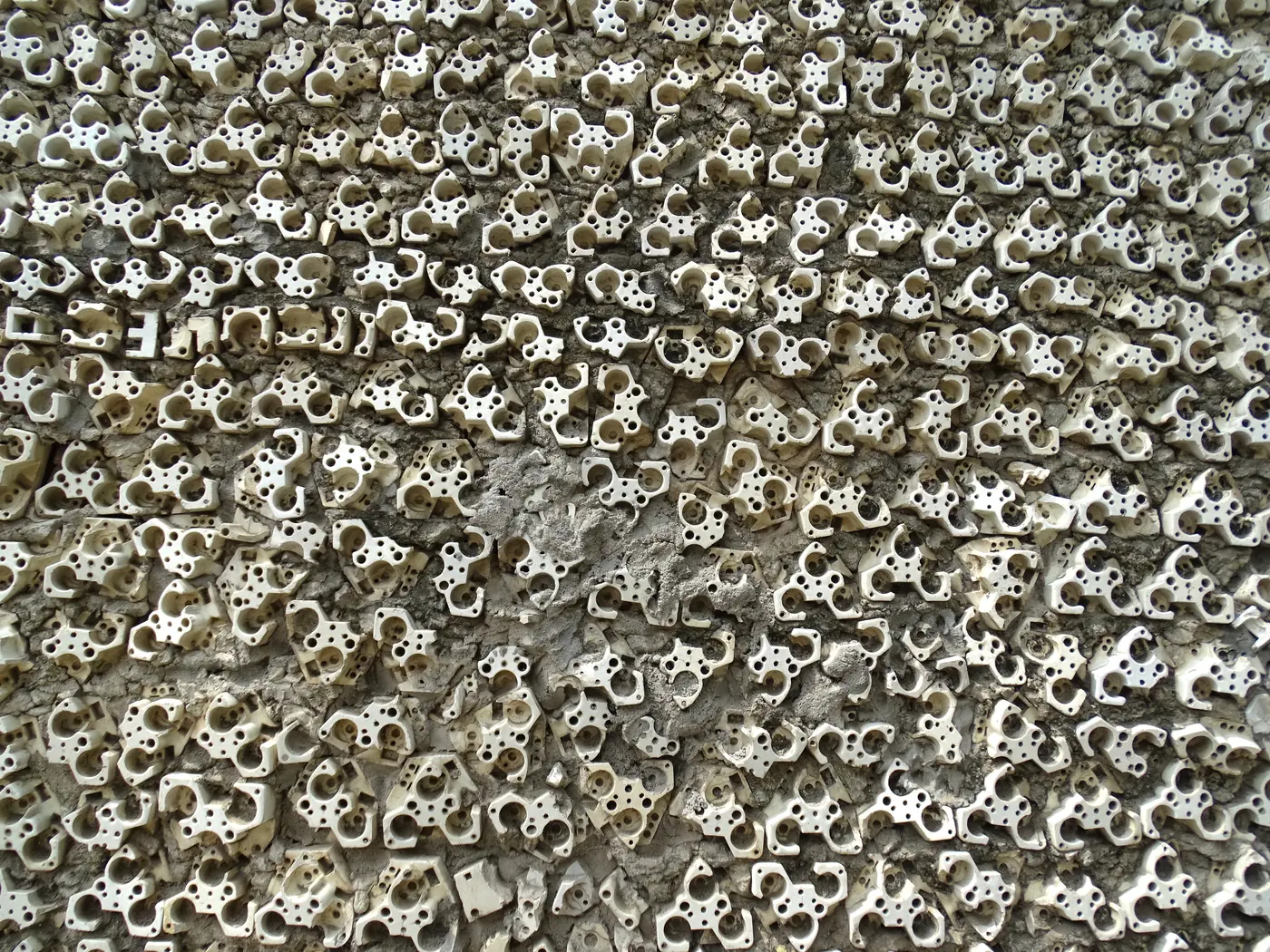
What sets the Rock Garden apart from most sculpture parks is that essentially nothing in it was purpose-made or purpose-bought. Nek Chand worked almost entirely with salvage: broken ceramics and pottery shards, chipped porcelain and tiles, discarded glass bangles, shattered glass and mirror fragments, old electrical fittings and switches, cast-off sinks, worn rubber tyres, and coils of scrap wire — much of it originally recovered from the demolished villages that made way for Chandigarh's construction in the first place, which gives the garden a quiet, almost circular relationship with the city built around it.
The craft technique itself is straightforward in principle but demanding in practice: concrete or cement forms are built up into the rough shape of a figure, animal, or wall, and then studded, piece by piece, with the salvaged material — ceramic shards pressed in to form patterned skin or clothing, bangles set into rows along a wall or archway, broken tile fragments arranged into mosaic surfaces. Multiply that technique across thousands of individual figures and hundreds of metres of wall, and the sheer scale of repeated, patient labour becomes one of the most striking things about the site — this was, for nearly two decades, essentially one person's project.
Photography Tips
- Shoot in soft morning or late-afternoon light: The mosaic surfaces catch and scatter harsh midday light in a way that can wash out detail — softer, angled light brings out the texture of the broken ceramic and glass far better.
- Use the narrow passages as leading lines: The winding corridors between courtyards make natural framing devices for wider shots of the courtyards beyond them.
- Mind restrictions in some sections: Flash photography and tripods may be restricted in parts of the garden, both to protect the sculptures and to keep narrow passages moving — check signage and staff guidance as you go rather than assuming full access everywhere.
- Get close-up detail shots: Wide shots convey scale, but close-ups of individual mosaic surfaces — a wall of bangles, a row of ceramic-studded figures — often make for the most compelling images from the visit.
- Photograph the waterfalls when they're running: The man-made waterfalls add both motion and sound to a static, textured environment — worth timing a stop there rather than walking straight past.
Suggested Visit Plan (1.5-2 Hours)
The Rock Garden rewards an unhurried pace far more than a quick walkthrough — the whole point of its layout is gradual reveal, which is lost if you rush.
Entry & First Courtyards
- ✓Buy tickets and enter through the main gate
- ✓Take the first narrow passages slowly
- ✓Note the recurring human-figure sculptures
Deeper Courtyards & Waterfalls
- ✓Continue through denser courtyard clusters
- ✓Stop at the man-made waterfalls
- ✓Look closely at wall mosaics for material detail
Amphitheatre & Final Stretch
- ✓Reach the open-air amphitheatre
- ✓Slow photography stop in the best-lit courtyard
- ✓Exit toward Sukhna Lake, next door
* Add 30 minutes or more if you're photographing seriously, visiting on a busy weekend, or simply want to sit in the amphitheatre for a while before moving on.
Nearby: Sukhna Lake & More
The Rock Garden's location in Sector 1 puts it within easy reach of several of Chandigarh's other major sights, making this corner of the city a natural half- or full-day cluster rather than a single-stop visit.
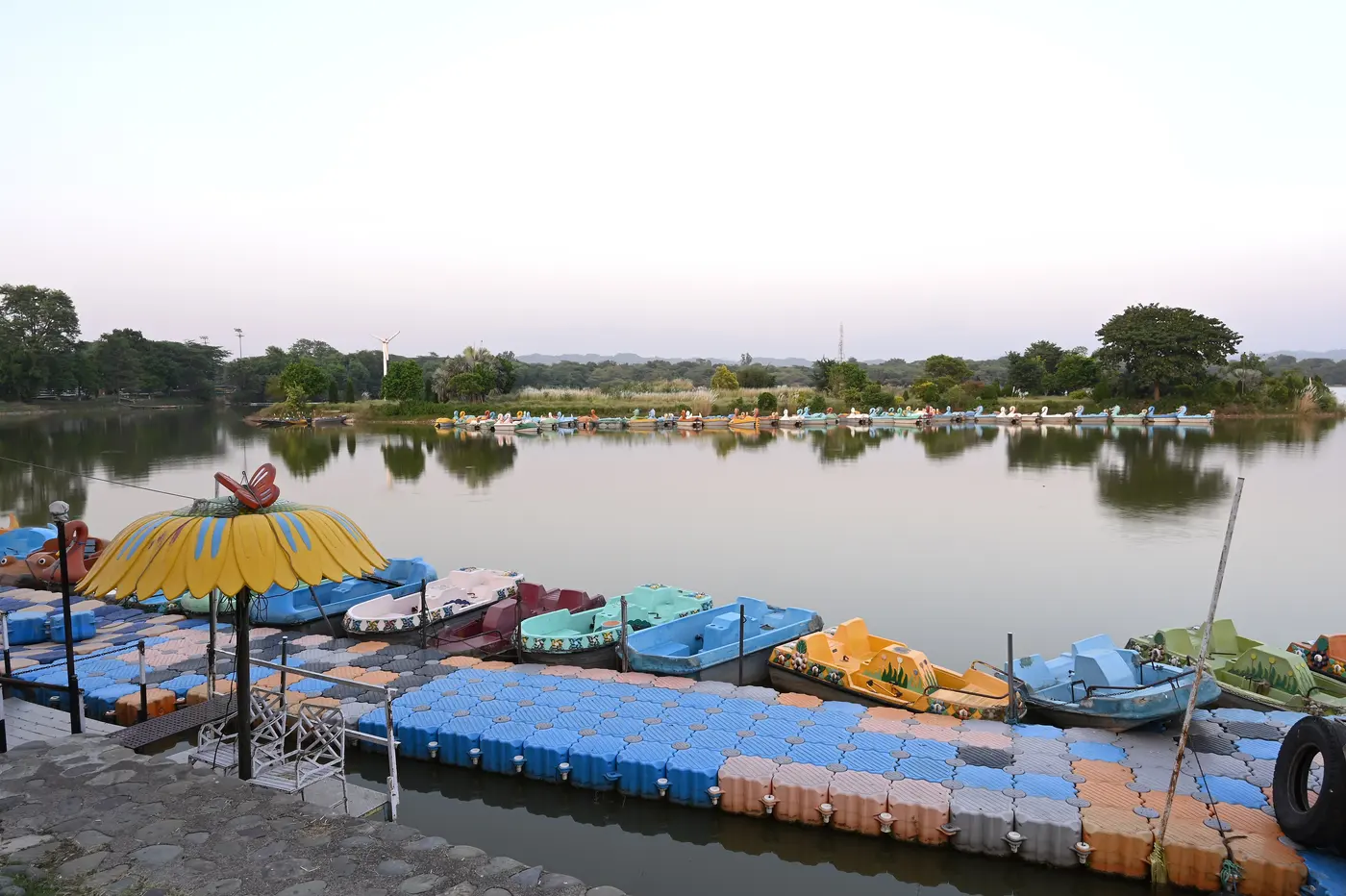
- Sukhna Lake: Right next door — a man-made lake with a lakeside promenade, boating, and views of the Shivalik foothills. Almost every Rock Garden visit is paired with at least a short stop here.
- Capitol Complex: Le Corbusier's UNESCO-listed government buildings are a short drive away, for anyone interested in seeing the city's formal modernist architecture alongside Nek Chand's entirely unofficial, self-taught counterpart.
- Le Corbusier Centre: A small museum dedicated to the city's founding architect — a useful counterpoint if you want the "planned" side of Chandigarh's story after seeing its most unplanned monument.
Budget Breakdown
The Rock Garden is one of Chandigarh's cheapest major attractions — your main cost is simply getting there.
| Expense | Budget | Mid-Range | Luxury |
|---|---|---|---|
| Entry ticket | ~₹30-40 | ~₹30-40 | ~₹30-40 |
| Transport to/from Sector 1 | ₹60 (auto, shared) | ₹200 (auto/cab) | ₹500 (private cab) |
| Food/snacks nearby | ₹150 | ₹400 | ₹1,200+ |
| Combined with Sukhna Lake boating | — | ₹150-300 | ₹500+ |
| Total (approx.) | ₹240 | ₹680 | ₹2,200+ |
* Figures are per person, per visit, and approximate — entry fees are periodically revised. See our Sukhna Lake guide for combined-visit budgeting.
Essential Tips for Visiting the Rock Garden
- Confirm timings before you go: Hours generally run from around 9 AM to somewhere between 6 and 7 PM, later in summer, but this can shift — check current timings locally rather than relying on a fixed schedule.
- Wear comfortable, closed footwear: Surfaces inside are uneven in places, with steps and narrow ledges around the waterfalls.
- Watch your head in the low passages: Several connecting corridors are deliberately built low and narrow — taller visitors should move through them carefully.
- Budget more time than you think: The maze-like layout makes a rushed 30-minute visit feel unsatisfying — 1.5 to 2 hours is a realistic minimum.
- Combine with Sukhna Lake: The two sites sit right next to each other — see our Sukhna Lake guide to plan a combined half-day visit.
- Respect photography restrictions: Flash and tripod use may be limited in some courtyards — check posted signage rather than assuming blanket access.
✅ Do
- →Walk slowly and let the courtyards reveal themselves
- →Visit early morning or late afternoon for light and crowds
- →Look closely at individual figures for material detail
- →Pair the visit with Sukhna Lake next door
- →Carry water — shade is limited in places
- →Check current timings and entry fee before you go
❌ Don't
- →Rush through in under 30 minutes
- →Touch or climb on the mosaic sculptures
- →Assume flash photography is allowed everywhere
- →Visit at peak midday heat in summer
- →Skip Sukhna Lake — it's a two-minute walk away
- →Expect wheelchair-flat paths throughout
Frequently Asked Questions
Who built the Rock Garden in Chandigarh?
The Rock Garden was built single-handedly, and initially in complete secrecy, by Nek Chand Saini — a government road inspector with no formal training in art or architecture. Starting around 1957, he began collecting industrial and household waste after work and quietly building sculptures on forest land where construction was legally forbidden, continuing for nearly two decades before anyone official found out.
What is the entry fee for the Rock Garden?
Entry is a token amount — on the order of ₹30-40 for adults, with a lower rate for children — though exact fees are periodically revised, so it's worth confirming the current price at the ticket counter rather than treating this as fixed. It remains one of the most affordable major attractions in Chandigarh regardless.
What are the Rock Garden's timings?
The Rock Garden is typically open from around 9 AM to somewhere between 6 and 7 PM, with later closing hours in summer months. Timings and weekly closures can shift, so check current hours locally — through your hotel or a quick search on the day — rather than planning around fixed times.
Is the Rock Garden really built entirely from waste?
Yes. Nek Chand used broken ceramics and pottery shards, chipped tiles, discarded bangles, broken glass and mirrors, old electrical fittings, sinks, worn-out tyres, and scrap wire — much of it salvaged from villages that were being demolished to build Chandigarh itself. Almost nothing in the garden was purpose-bought; it's assembled entirely from what other people threw away.
How much time should I spend at the Rock Garden?
Plan for at least 1.5 to 2 hours. The garden's narrow, deliberately winding passageways and repeating courtyards make it easy to lose track of time, and rushing through defeats the point — the layout is designed to be walked slowly, with each courtyard revealing itself only as you turn into it.
Is the Rock Garden worth visiting if I've already seen photos of it?
Photos genuinely undersell it. The narrow passages, the sound of the waterfalls, and the sheer density of repeated forms — thousands of similar-looking figures multiplying across courtyard after courtyard — is a scale and rhythm that doesn't come through in a handful of images. Most visitors find it more immersive and stranger in person than expected.
Can I visit the Rock Garden and Sukhna Lake together?
Yes, and most visitors do — the two sit right next to each other in Sector 1. A natural half-day plan is the Rock Garden in the morning followed by lunch and a walk around the Sukhna Lake promenade, or the reverse if you'd rather catch the lake at sunrise.
Published by the Kudozz Club editorial team · Last updated · How we research our guides
Want us to plan this trip for you?
Tell Kudozz Club where you want to go and what kind of trip you’re looking for. We’ll build a Chandigarh itinerary around your dates and budget.
Continue Exploring
View all guides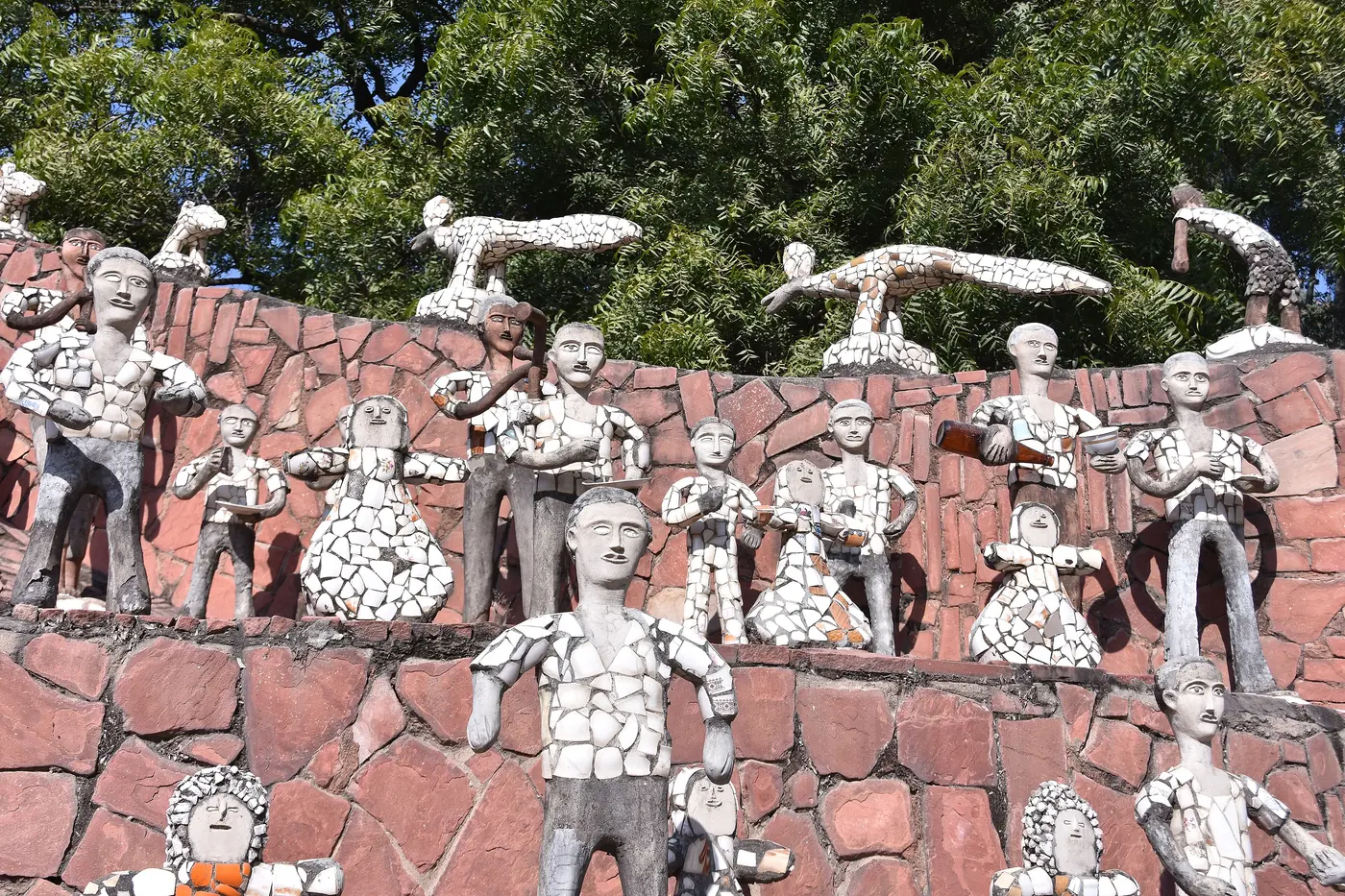 Destination Guide
Chandigarh Travel Guide: Rock Garden, Sukhna Lake & Itinerary
Le Corbusier's modernist Capitol Complex, a rock garden built entirely from industrial waste, and a lake at the foot of the Shivaliks — the complete guide to India's most planned city.
Destination GuideSukhna Lake Chandigarh: Promenade, Boating & Best Time
A man-made lake at the foot of the Shivalik hills, ringed by a 3-km promenade — Sukhna Lake is Chandigarh's favourite sunrise and sunset spot.
 Heritage
Le Corbusier Centre Chandigarh: Museum Visit Guide
Original drawings, models, and photographs documenting how Le Corbusier planned an entire city from scratch — the essential primer before visiting the Capitol Complex.
HeritageGovernment Museum Chandigarh: Gandhara Art & Miniatures
Gandhara-era stone sculpture and Pahari miniature paintings in a quiet Sector 10 museum most tourists walk straight past.