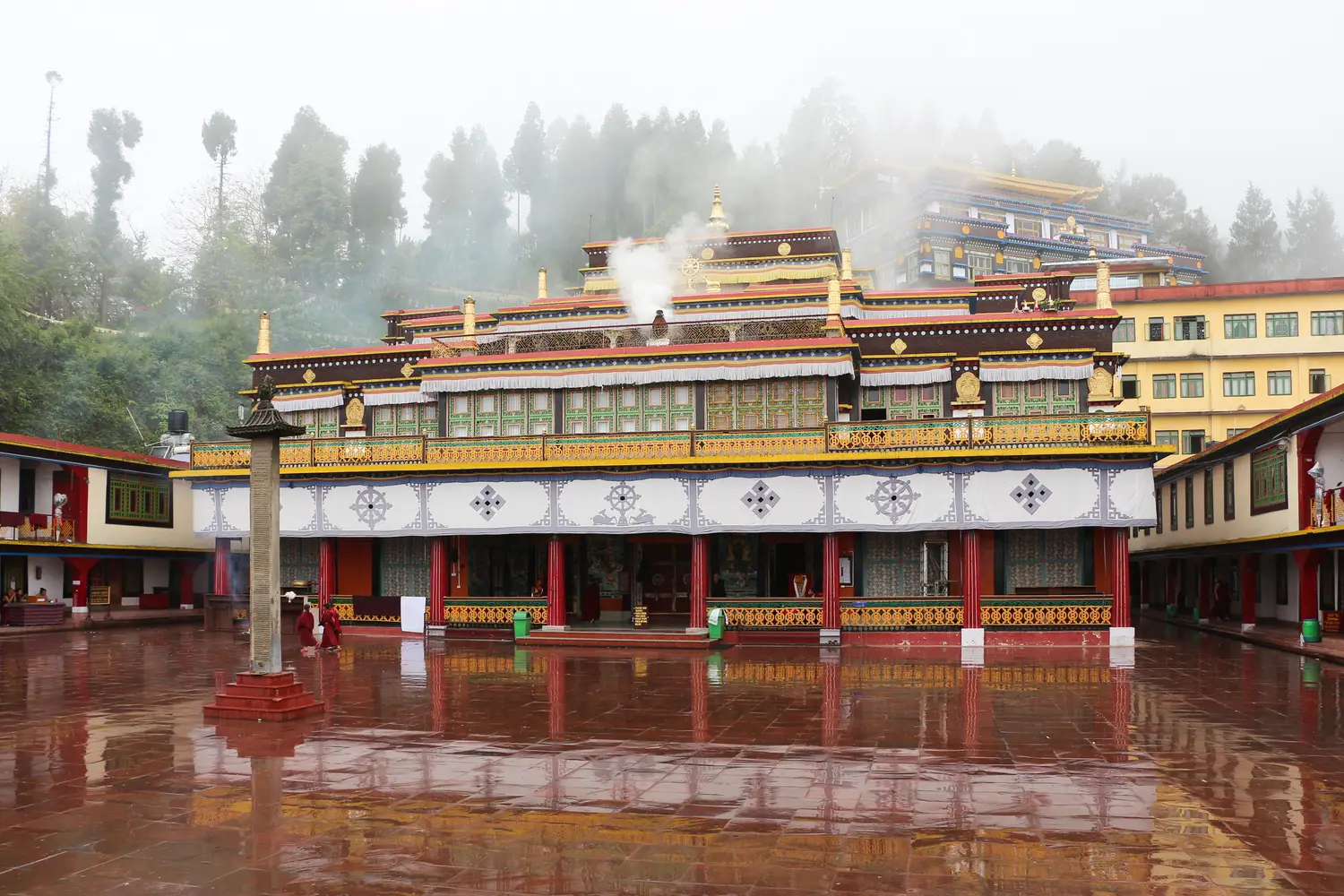
Why Sikkim?
Wedged between Nepal, Tibet, and Bhutan, Sikkim is a small state that punches well above its size — India's first fully organic state, its cleanest by most measures, and home to some of the most accessible high-altitude scenery in the entire Himalayas.
Within a single trip, Sikkim delivers alpine lakes at nearly 4,000 metres, a genuine international border crossing point at Nathula Pass, a valley (Yumthang) that turns into a sea of blooming rhododendrons every spring, and — from Pelling — some of the closest, most unobstructed views anywhere of Kanchenjunga, the world's third-highest mountain.
It's also one of the more logistically structured Himalayan states to visit — several key areas require permits and shared-jeep travel with a registered agent, which keeps things orderly but does mean less spontaneity than a typical road trip.
🏔️ Sikkim at a Glance
Looking for activities and experiences? See our guide to the best things to do in Sikkim.
Planning something active? Read our guide to adventure activities in Sikkim.
Best Time to Visit Sikkim
Sikkim's spring bloom and clear autumn skies make for two distinct — and equally strong — travel windows.
Yumthang Valley bursts into bloom, and temperatures across Gangtok, Pelling and the valleys are comfortable — a strong window for both flowers and mountain views.
Post-monsoon skies are at their clearest, giving the best odds for unobstructed Kanchenjunga views from Pelling and Gangtok.
Heavy rain brings real landslide danger on mountain roads, and views are frequently obscured by cloud cover.
Higher areas like Yumthang and Nathula can see snowfall and temporary road closures — check conditions before planning a winter trip.
Our pick: April to May for the rhododendron bloom at Yumthang Valley, or October to November for the clearest possible Kanchenjunga views from Pelling.
How to Reach Sikkim
- By Air: Pakyong Airport (PYG), near Gangtok, has limited direct flights; Bagdogra Airport (IXB) in West Bengal is the more reliable option, with a scenic 4-5 hour drive on to Gangtok.
- By Rail: New Jalpaiguri (NJP) is the nearest railhead, connected to major Indian cities, followed by the same road transfer as from Bagdogra.
- By Road: Gangtok is reached from Siliguri (~120 km, ~4.5 hrs) via a winding mountain road — shared jeeps and private taxis both run this route regularly.
Permits Explained
Sikkim's border-adjacent geography means several key areas require permits — this is the single biggest piece of planning the state requires.
- Protected Area Permit (PAP): Required for foreign nationals to visit Sikkim beyond Gangtok and Pelling — typically arranged through a registered travel agent alongside your itinerary.
- Restricted Area Permit (RAP): Required for both Indian and foreign visitors to Tsomgo Lake, Nathula Pass, and North Sikkim (Yumthang, Lachung, Lachen, Gurudongmar) — arranged through registered agents, usually same-day to a few days' processing.
- ID requirements: Carry original ID and several passport photos — most permits require physical copies submitted in advance.
Gangtok: Capital & Base
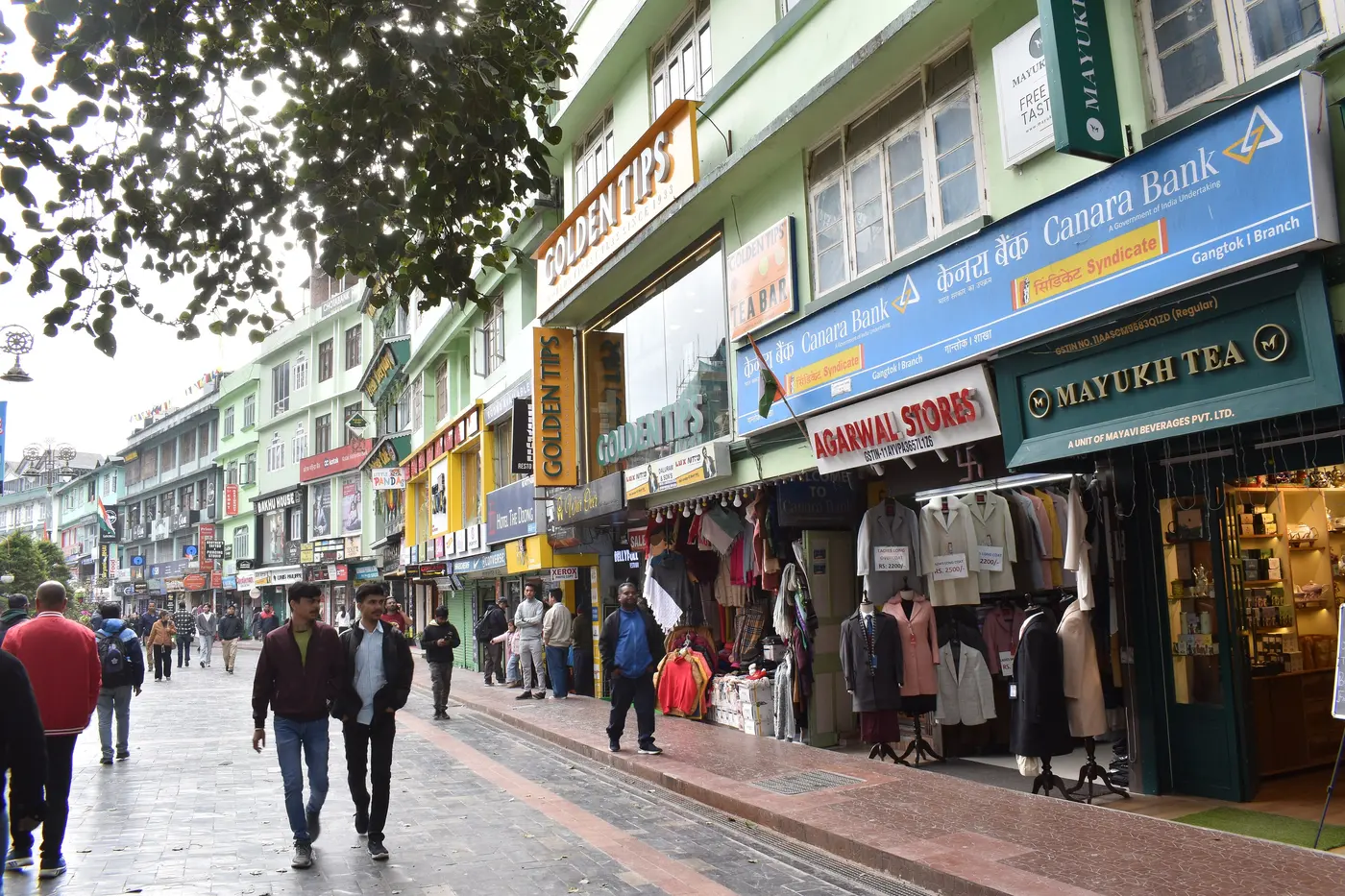
Sikkim's capital sits on a ridge at around 1,650m and functions as the natural base for the whole state — most permits and shared jeeps to other regions originate here.
- MG Marg: A clean, pedestrian-only main street lined with cafés and shops — Gangtok's social centre, especially in the evening.
- Rumtek Monastery: One of the most significant Buddhist monasteries in Sikkim, seat of the Karmapa lineage, roughly 24 km from Gangtok.
- Enchey Monastery: A smaller, more centrally located monastery within Gangtok itself.
- Ganesh Tok & Hanuman Tok: Hilltop viewpoints with panoramic views over Gangtok and, on clear days, Kanchenjunga.
- Ropeway: A short cable car ride offering aerial views across the city — a quick, easy activity if time is limited.
Tsomgo Lake & Nathula Pass
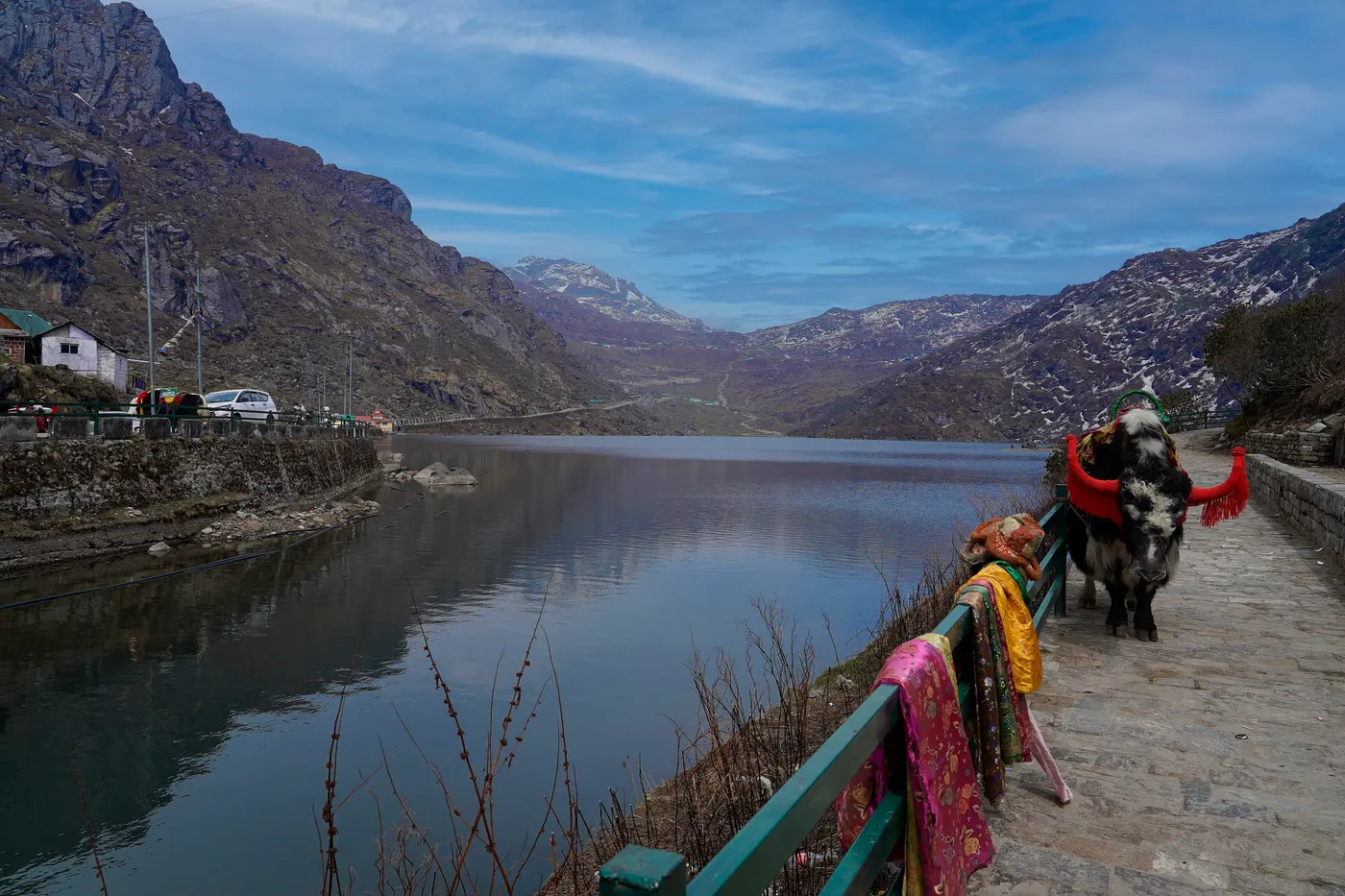
A single-day permit trip from Gangtok covers both of these — a glacial lake and one of the few open land border crossings between India and China.
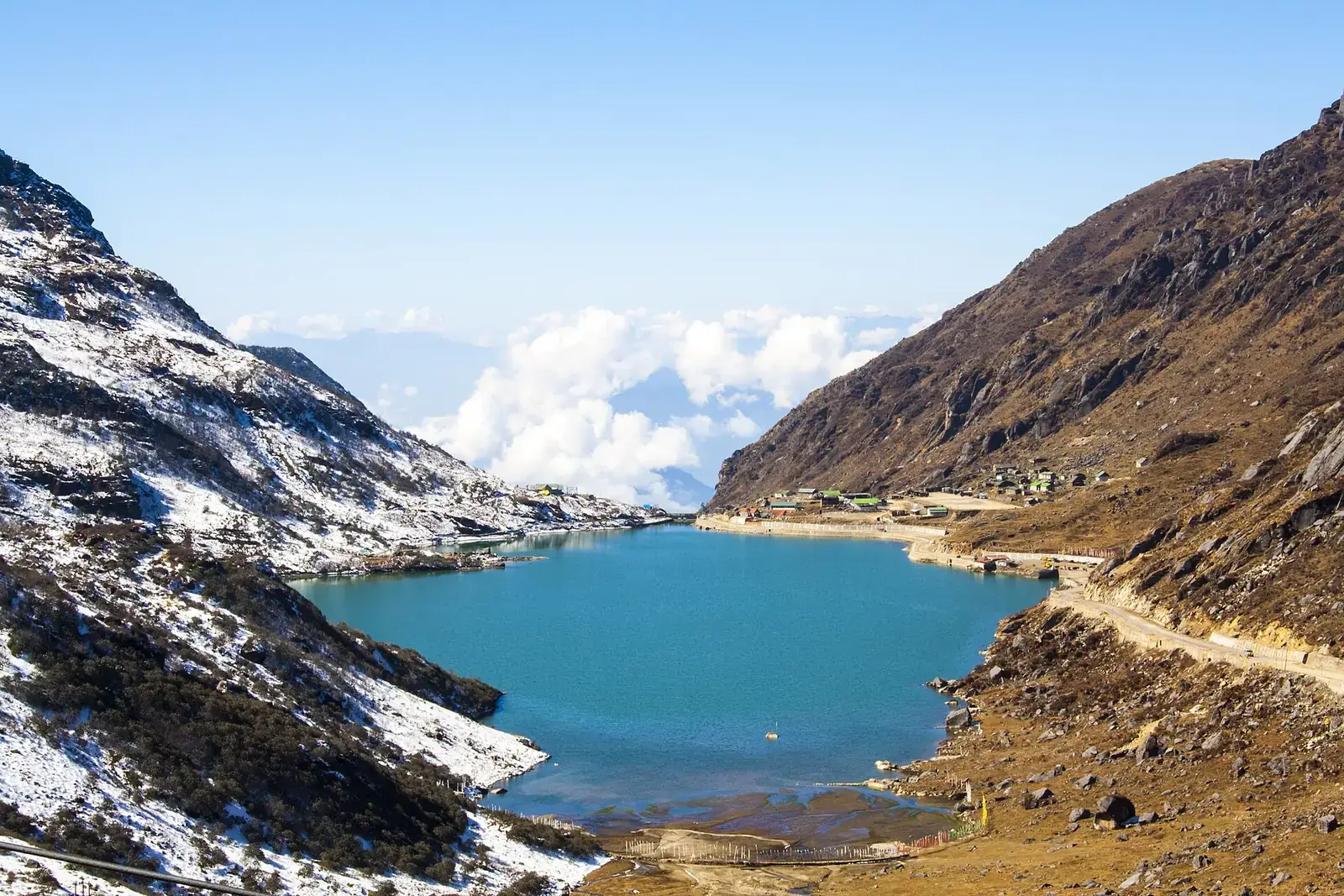
- Tsomgo (Changu) Lake: A glacial lake at 3,753m, often partially frozen in winter — yak rides are available around the lake.
- Nathula Pass: At 4,310m, one of the few official trading border points between India and China (Tibet) — closed on Mondays and Tuesdays, and requires a separate permit beyond the Tsomgo one.
- Baba Mandir: A shrine dedicated to an Indian Army soldier, near Nathula, considered spiritually significant by both civilians and military personnel.
Yumthang Valley & Lachung
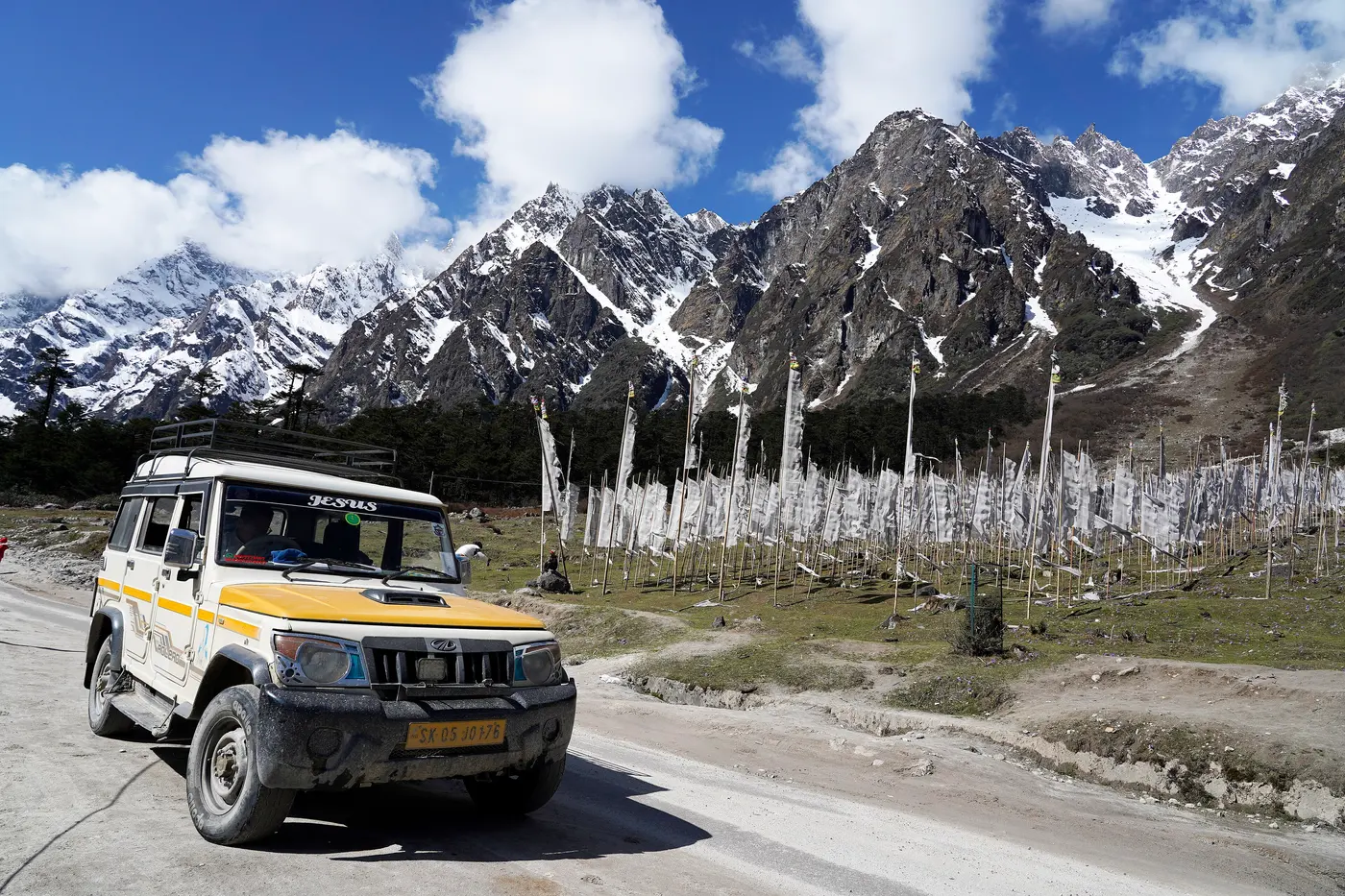
North Sikkim's permit-controlled circuit is where the state's high-altitude scenery is at its most dramatic — typically covered as a 2-3 day shared-jeep package from Gangtok.
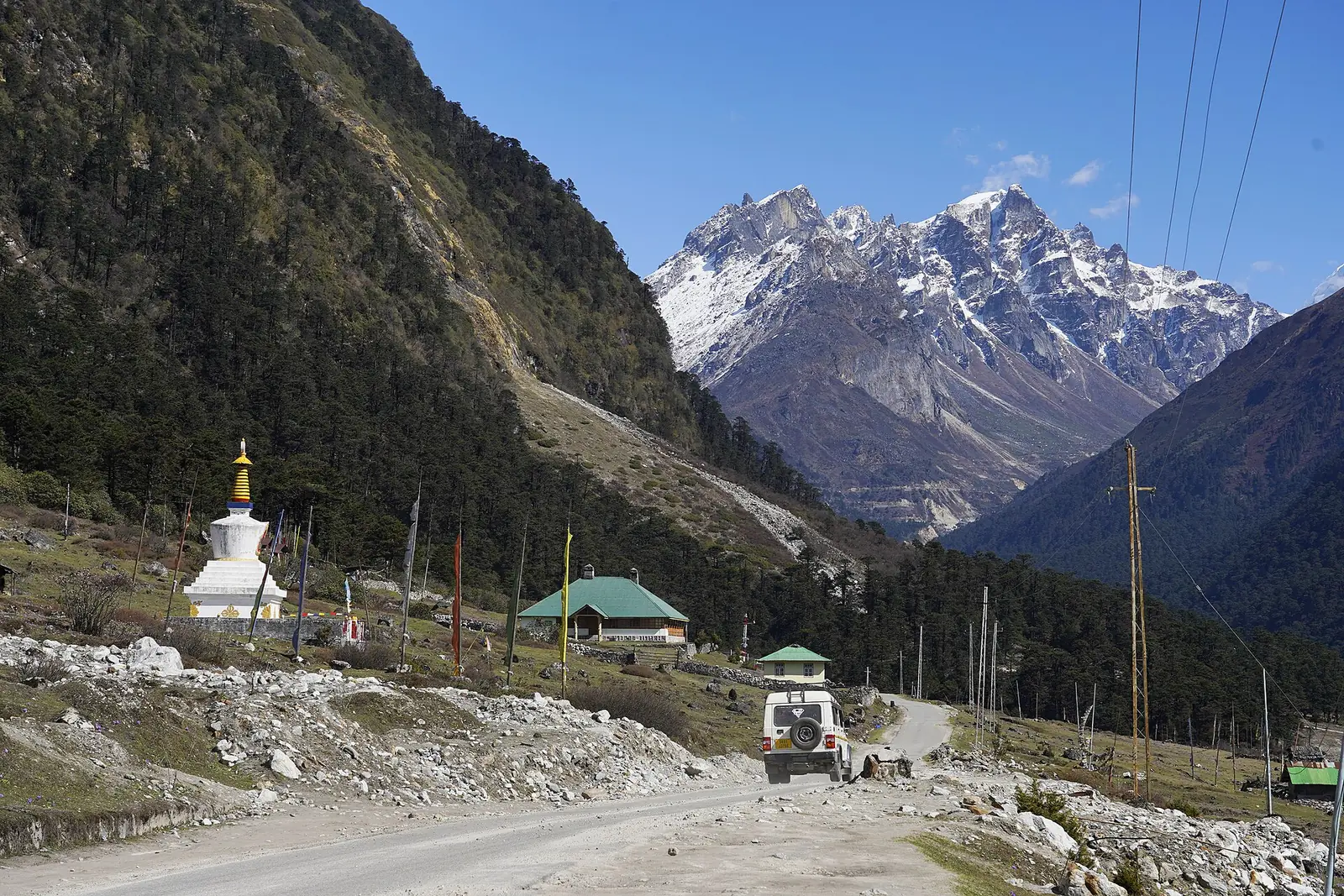
- Yumthang Valley ("Valley of Flowers"): A wide alpine valley that turns into a spectacular rhododendron and primula bloom in spring, with hot springs nearby.
- Lachung: A small mountain village that serves as the base for Yumthang, with dramatic valley views and a notable monastery.
- Zero Point (Yumesamdong): The furthest accessible point by road, at around 4,600m — often snow-covered even outside peak winter.
- Gurudongmar Lake: One of the highest lakes in the world (5,430m), accessed via Lachen — requires a separate permit and is only feasible for well-acclimatised travellers given the extreme altitude.
Pelling & Kanchenjunga Views
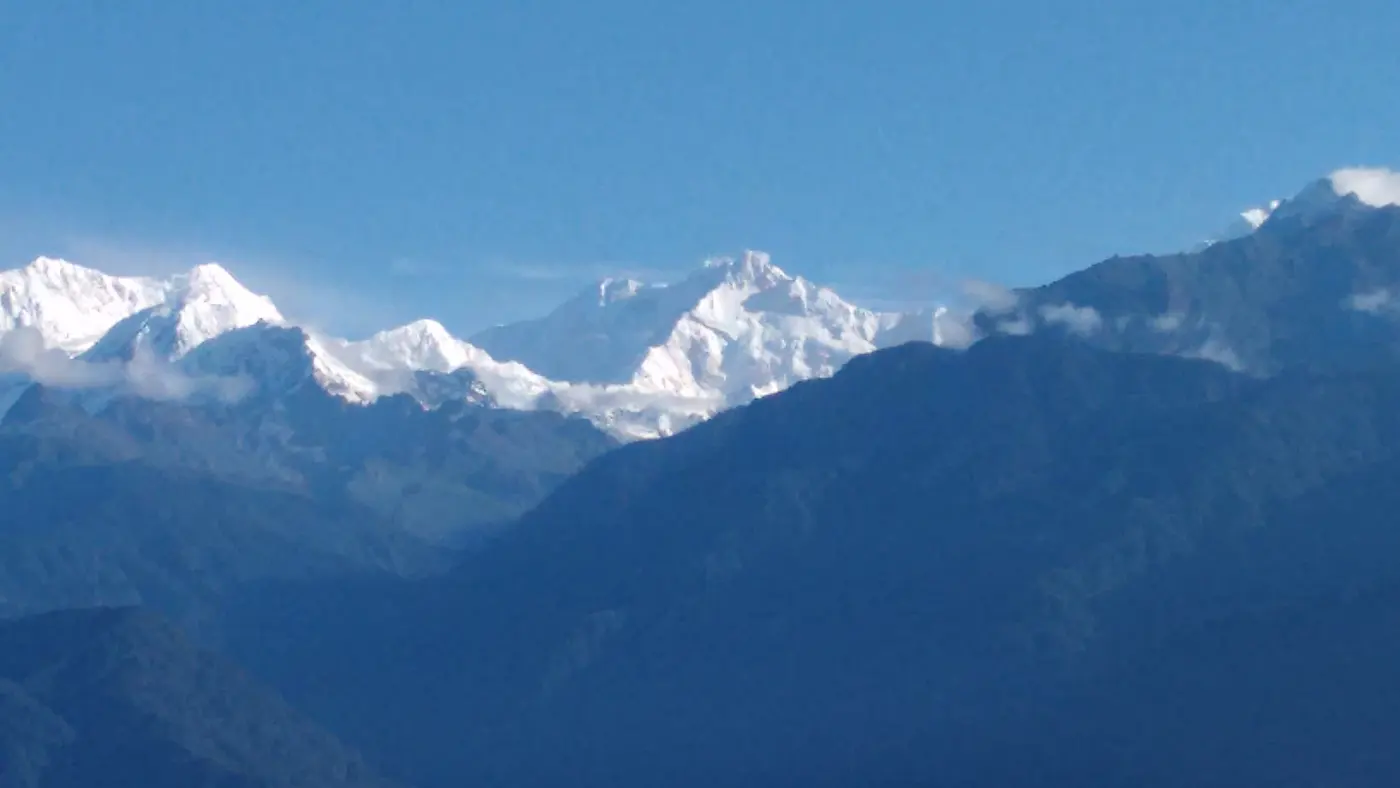
West Sikkim offers some of the state's best mountain views without the permit complexity of the north and east.
- Pelling: A small hill town with arguably the best unobstructed Kanchenjunga sunrise views in Sikkim, especially from the Pelling Skywalk area.
- Pemayangtse Monastery: One of Sikkim's oldest and most important monasteries, with excellent valley views.
- Khecheopalri Lake: A sacred lake believed to grant wishes, considered one of the holiest sites in Sikkim by both Buddhists and Hindus.
- Rabdentse Ruins: The ruins of Sikkim's second capital, reached via a short forest walk with good mountain views.
Where to Stay
Gangtok has the widest range of accommodation; North Sikkim stays are far more basic given the remote, permit-controlled nature of the region.
- → Guesthouses near MG Marg, Gangtok
- → Homestays, Pelling
- → Basic lodges, Lachung
- → Hotel Sonam Delek, Gangtok
- → Mountain-view hotels, Pelling
- → Standard tour-package lodges, Lachung
- → Mayfair Spa Resort, Gangtok
- → The Elgin Mount Pandim, Pelling
- → Premium boutique stays, Gangtok
North Sikkim accommodation is usually bundled directly into your permit tour package — don't expect to book it separately, and confirm what's included before departing Gangtok.
What to Eat in Sikkim
- Momos: Sikkim's most iconic food — steamed or fried dumplings filled with meat or vegetables, sold everywhere from street stalls to restaurants.
- Thukpa: A warming Tibetan-style noodle soup, especially welcome at Sikkim's higher, colder elevations.
- Gundruk: A fermented leafy green dish, a distinctive Nepali-influenced Sikkimese specialty.
- Sikkim organic produce: As India's first fully organic state, Sikkim's vegetables and local produce are genuinely worth seeking out at Gangtok's markets.
- Local millet-based drinks (Chhaang): A fermented millet beverage, traditionally served warm in a bamboo container — a distinctive regional experience.
6-Day Sikkim Itinerary
Six days is a comfortable minimum to cover Gangtok, East Sikkim, and either North or West Sikkim without rushing.
Arrival in Gangtok
- ✓Arrive via Bagdogra, transfer to Gangtok
- ✓Evening: MG Marg walk
Tsomgo Lake & Nathula Pass
- ✓Permit day trip to Tsomgo Lake
- ✓Nathula Pass (if open — closed Mon/Tue)
- ✓Baba Mandir
North Sikkim: Lachung & Yumthang
- ✓Drive to Lachung (~5-6 hrs)
- ✓Yumthang Valley, Zero Point
- ✓Return to Gangtok
Travel to Pelling
- ✓Drive to Pelling (~5 hrs)
- ✓Pemayangtse Monastery, Rabdentse Ruins
Pelling & Departure
- ✓Sunrise Kanchenjunga view
- ✓Khecheopalri Lake
- ✓Return to Bagdogra for departure
Budget Breakdown
| Expense | Budget | Mid-Range | Luxury |
|---|---|---|---|
| Accommodation/night | ₹1,200 | ₹4,000 | ₹12,000 |
| Food/day | ₹500 | ₹1,200 | ₹2,800 |
| Permits & shared jeeps/day | ₹800 | ₹1,500 | ₹3,000 |
| Local transport/day | ₹300 | ₹700 | ₹1,800 |
| Daily total | ₹2,800 | ₹7,400 | ₹19,600 |
| 6-Day trip total | ₹16,800 | ₹44,400 | ₹1,17,600 |
* Excludes travel to Bagdogra/NJP. North Sikkim and Nathula permit packages are typically quoted as bundled per-person rates covering transport, permits, and basic accommodation.
Essential Travel Tips for Sikkim
- Arrange permits through a registered agent: Independent travel to Nathula, Tsomgo, and North Sikkim isn't possible — book through a Gangtok-based operator.
- Nathula Pass is closed Mon/Tue: Plan your East Sikkim day trip around this if Nathula itself is a priority.
- Carry warm layers regardless of season: Even in summer, Nathula and Yumthang can be genuinely cold — Gangtok's mild climate is not representative of the high-altitude stops.
- Build in buffer days for weather: Mountain roads to North Sikkim can close temporarily due to landslides or snow — don't schedule tight onward connections.
- Acclimatise before Gurudongmar Lake: At 5,430m, this is a genuinely high-altitude excursion — don't attempt it as a rushed add-on.
- Carry cash outside Gangtok: Card and UPI acceptance drops sharply in smaller towns like Lachung and Pelling.
✅ Do
- →Book Nathula/North Sikkim permits through a registered agent
- →Carry warm layers even in summer for high passes
- →Build buffer days into your North Sikkim itinerary
- →Try momos and thukpa at local eateries
- →Time your Pelling stop for a Kanchenjunga sunrise
- →Carry passport photos and ID copies for permits
❌ Don't
- →Plan Nathula Pass for a Monday or Tuesday
- →Rush Gurudongmar Lake without acclimatisation
- →Attempt independent travel into permit-controlled zones
- →Underestimate cold at Tsomgo, Nathula and Yumthang
- →Rely on cards outside Gangtok
- →Book tight onward travel right after North Sikkim
Places to Explore in Sikkim
Every Sikkim guide on Kudozz Club, in one place — 16 destinations covered so far, from cities and towns to individual attractions. Use this index to plan beyond the highlights above.
Frequently Asked Questions
How many days do I need for Sikkim?
Six days is a comfortable minimum to cover Gangtok, East Sikkim (Tsomgo Lake and Nathula Pass), and either North or West Sikkim without rushing, as covered in our suggested itinerary.
What is the best time to visit Sikkim?
April to May is best for the rhododendron bloom at Yumthang Valley, while October to November offers the clearest possible Kanchenjunga views from Pelling. Avoid July–September, when heavy monsoon rain brings real landslide risk on mountain roads.
How do I reach Gangtok from Bagdogra?
Bagdogra Airport (IXB) in West Bengal is the most reliable air gateway to Sikkim, followed by a scenic 4-5 hour drive to Gangtok. New Jalpaiguri (NJP) is the nearest railhead and involves the same road transfer. Pakyong Airport (PYG) near Gangtok has limited direct flights.
Do I need a permit to visit Sikkim?
Yes, for several key areas. A Restricted Area Permit (RAP) is required for both Indian and foreign visitors to Tsomgo Lake, Nathula Pass, and North Sikkim (Yumthang, Lachung, Lachen, Gurudongmar), arranged through a registered travel agent. Foreign nationals also need a Protected Area Permit (PAP) to travel beyond Gangtok and Pelling.
Is Sikkim safe for solo travellers?
Sikkim is one of India's cleanest and most organised Himalayan states, with a structured permit and shared-jeep system that keeps travel to restricted areas orderly. The main things to plan around are cold-weather preparation for high passes and acclimatisation before high-altitude excursions like Gurudongmar Lake (5,430m).
What is the budget for a Sikkim trip?
A 6-day trip runs around ₹16,800 total on a budget, ₹44,400 mid-range, or roughly ₹1,17,600 for a luxury trip, covering accommodation, food, permits and shared jeeps, and local transport — excluding travel to Bagdogra or NJP.
Is Sikkim worth visiting?
Yes — within a single trip it delivers alpine lakes near 4,000 metres, a genuine international border crossing at Nathula Pass, a valley that turns into a sea of blooming rhododendrons every spring, and some of the closest, most unobstructed views anywhere of Kanchenjunga, the world's third-highest peak.
Published by the Kudozz Club editorial team · Last updated · How we research our guides
Want us to plan this trip for you?
Tell Kudozz Club where you want to go and what kind of trip you’re looking for. We’ll build a Sikkim itinerary around your dates and budget.
Continue Exploring
View all guides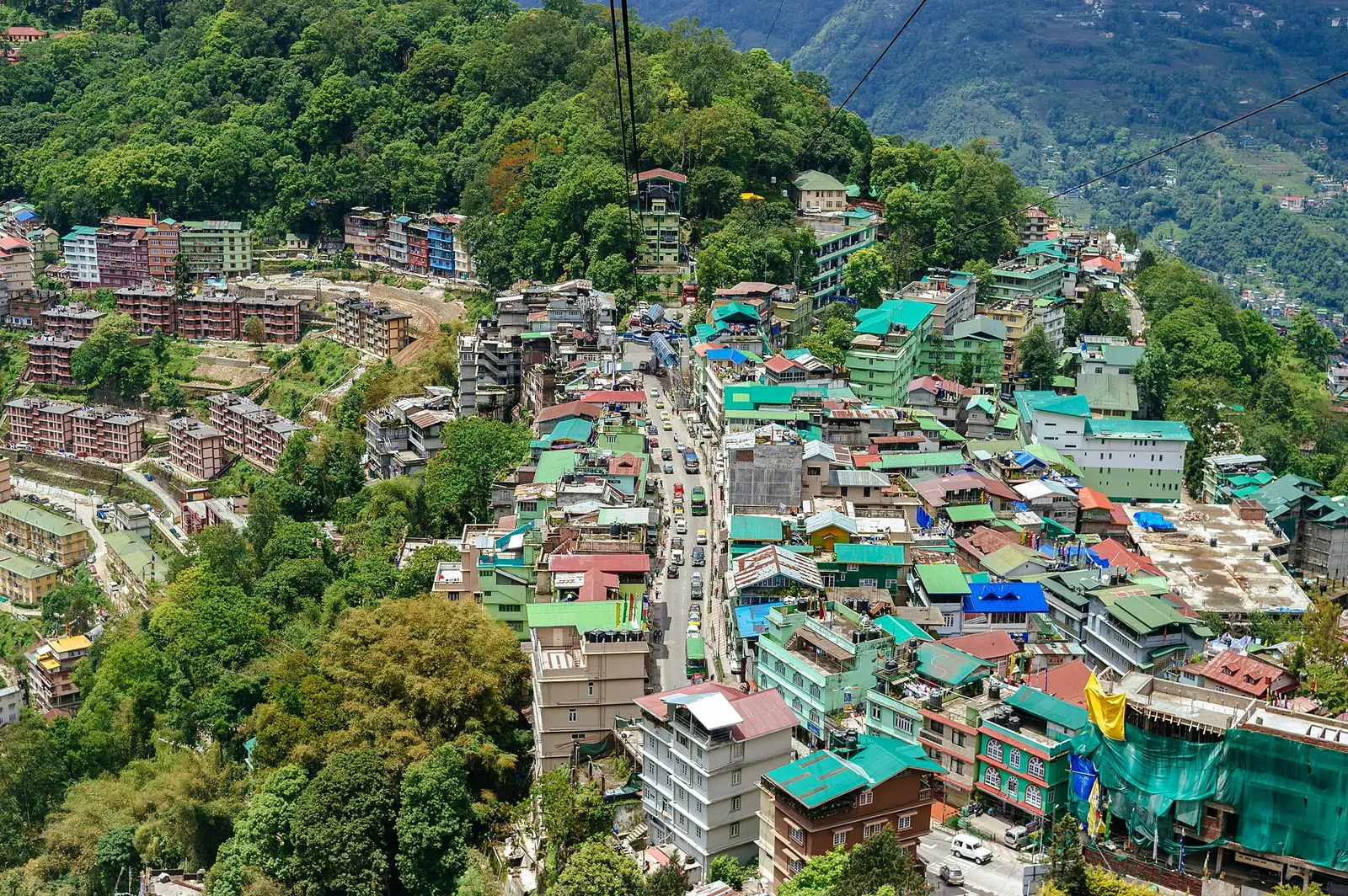 Destination Guide
Gangtok Travel Guide: Sightseeing, Food & Tips
A pedestrian promenade, monasteries, and the logistical hub through which almost every Sikkim itinerary passes — the complete Gangtok guide.
 Hill Stations
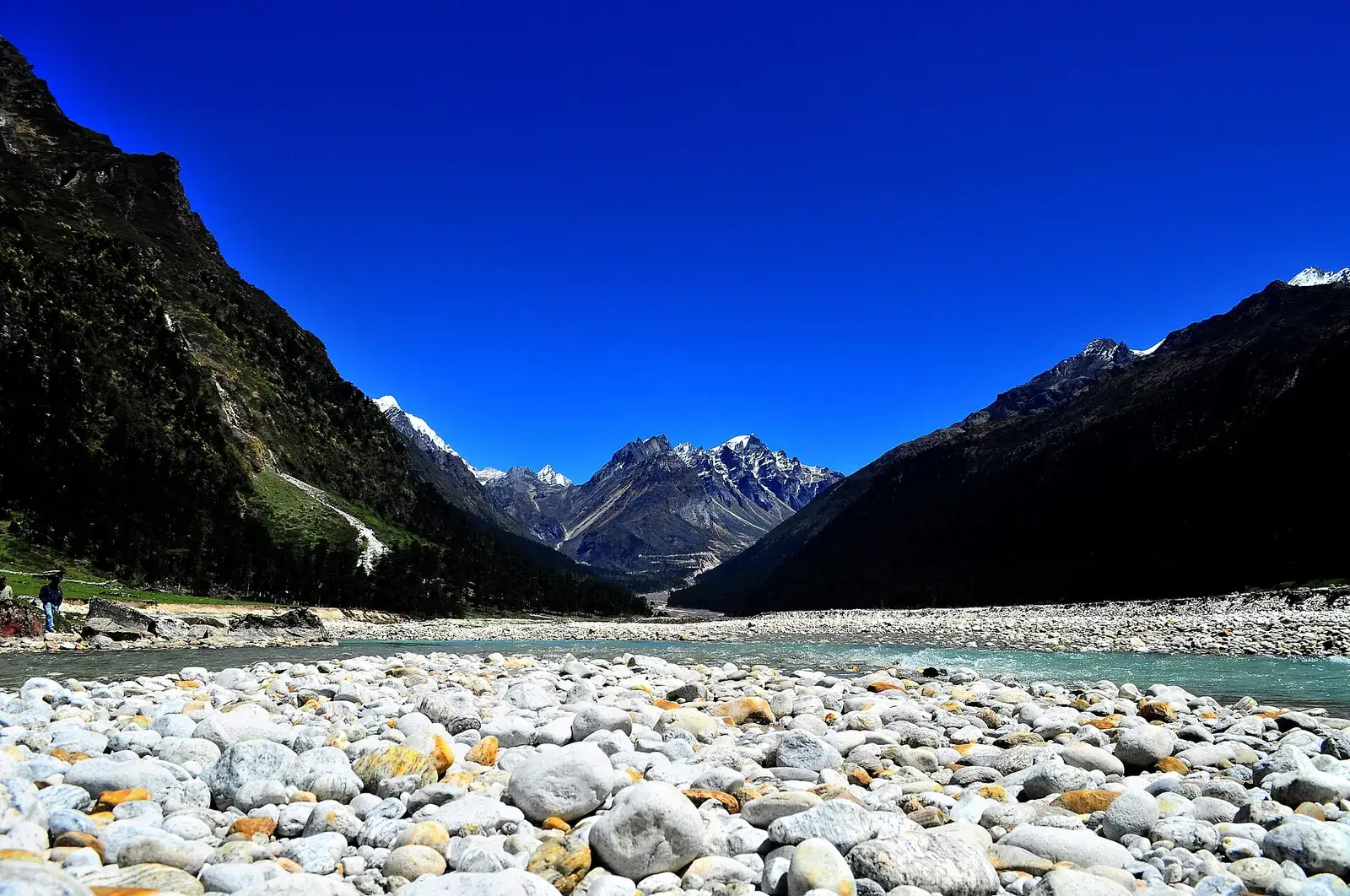
Hill Stations in Sikkim: Gangtok, Pelling, Lachung and More
A guide to the hill stations and valleys of Sikkim: Gangtok and day trips to Tsomgo and Nathu La, Pelling and Yuksom in the west, Ravangla and Namchi in the south, and Lachung, Yumthang and Lachen in the north, with permits, seasons, getting there and how to combine Sikkim with Darjeeling.
 Off-beat
Yumthang Valley Guide: Flowers & Best Time
Sikkim's own Valley of Flowers — a rhododendron sanctuary in full bloom against snow peaks, plus a high-altitude Zero Point extension.
 Hill Stations
Darjeeling and Sikkim Itinerary: Darjeeling, Gangtok and Pelling
A practical seven to nine day Darjeeling and Sikkim itinerary: Darjeeling's Tiger Hill, toy train and tea estates, Pelling's Kanchenjunga views and monasteries, Ravangla, Gangtok and a permit day trip to Tsomgo Lake and Nathu La, with an optional North Sikkim extension to Lachung and Yumthang, permits, seasons and transfers.