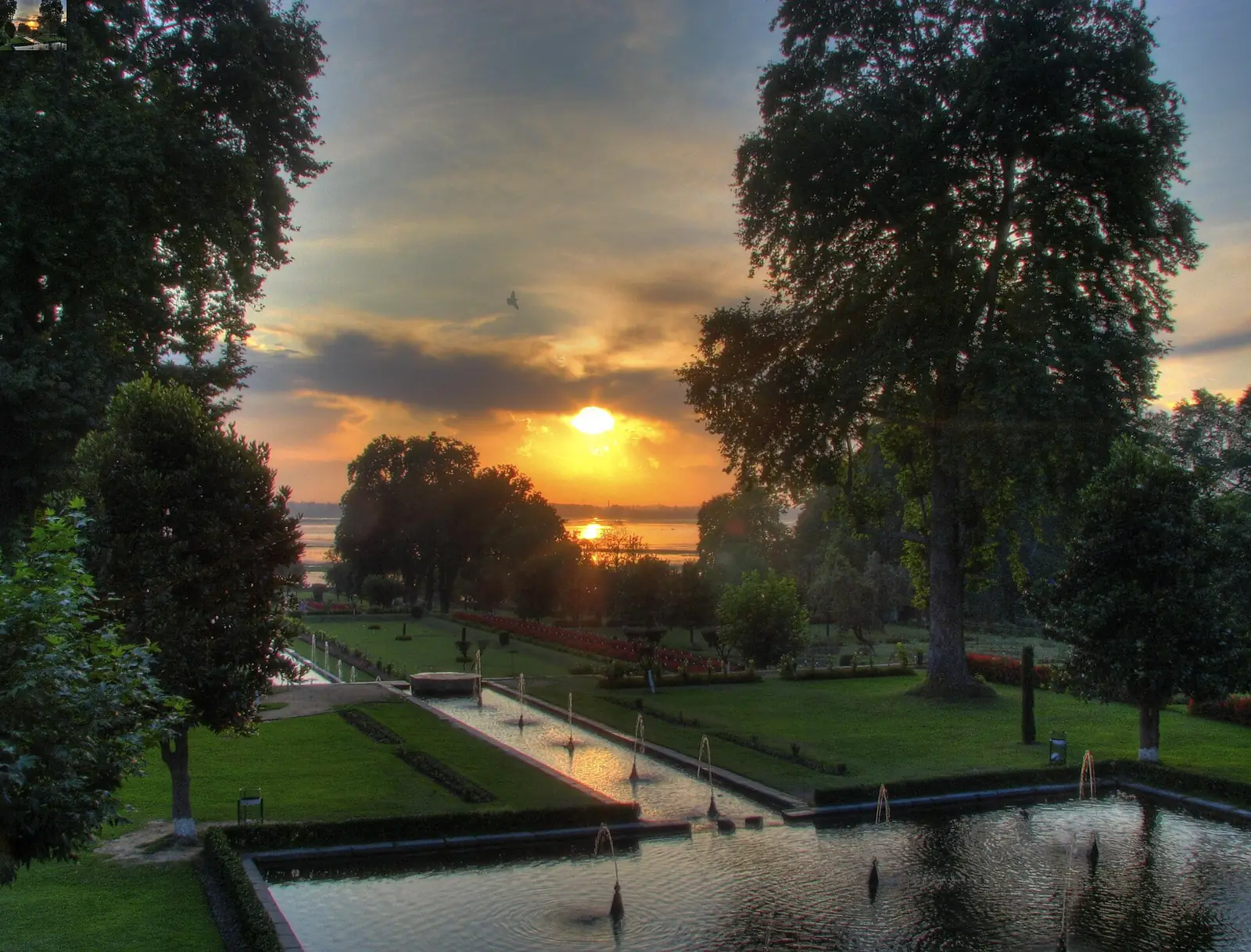
Why Visit Srinagar
Srinagar, the summer capital of Jammu and Kashmir, sits at roughly 1,585 metres in a broad valley ringed by the Zabarwan and Pir Panjal ranges. It's a city built around water — Dal Lake and Nigeen Lake anchor daily life here in a way few other Indian cities can match, with houseboats moored along the shore, shikara boats threading between floating gardens, and a working vegetable market that happens entirely on the water at dawn.
Beyond the lake, Srinagar carries centuries of Mughal-era landscaping in its terraced gardens, a genuinely old Old City around the 14th-century Jama Masjid, and a handicraft tradition — pashmina, papier-mâché, walnut wood carving — that has drawn traders and travellers here for generations. It's also the natural base for the wider Kashmir valley: Gulmarg's gondola, Pahalgam's pine forests, and Sonamarg's glacier views are all within a few hours' drive.
For the full Kashmir circuit beyond Srinagar itself, see our Jammu & Kashmir travel guide, which covers the region end to end including Vaishno Devi. This guide focuses specifically on getting the most out of Srinagar.
🛶 Srinagar at a Glance
Looking for activities and experiences? See our guide to the best things to do in Srinagar.
Want a day-by-day plan? Follow our 5 to 7 day Kashmir itinerary.
Going by road? See our guide to the Srinagar to Leh road trip.
Comparing hill stations? See our guide to a Kashmir itinerary.
Best Time to Visit Srinagar
Srinagar has genuinely distinct seasons, and each one shows the city differently — there's no single wrong time to visit, but the right season depends on what you want to see.
Almond and apple orchards blossom across the valley, tulip season peaks at Indira Gandhi Memorial Tulip Garden in early April, and temperatures sit comfortably between 12–23°C.
Warm, dry days (20–30°C) and long daylight hours make this the busiest season for houseboat bookings — book well ahead if travelling in June or July.
Srinagar's iconic Chinar trees turn deep red and gold through October — a quieter, arguably more photogenic season with fewer crowds than spring or summer.
Sub-zero nights and occasional snowfall bring a stark, quiet beauty to the city; Dal Lake has partially frozen in recent winters. Best for travellers who want snow without the crowds of Gulmarg.
Our pick: Late April through early June for tulip season, blossoming orchards, and mild weather — or late September into October if you want the Chinar trees at their most striking with noticeably thinner crowds.
How to Reach Srinagar
Srinagar is well-connected by air and road, and is the primary gateway for Kashmir valley tourism.
- By Air: Srinagar International Airport (SXR) has daily direct flights from Delhi, Mumbai, Bangalore, Jammu, and several other major cities — by far the fastest way in, typically 1.5–2.5 hours from Delhi. Pre-book airport pickup or arrange one through your houseboat/hotel, since airport taxi queues can be long in peak season.
- By Road from Jammu: The Jammu–Srinagar stretch of NH44 covers roughly 270 km and takes about 7–8 hours by car, passing through the Jawahar Tunnel. It's a scenic but weather-dependent route, occasionally closed for landslides or snow — check road status before travelling in winter.
- By Train: Jammu Tawi is the nearest major railhead with direct connections to Delhi and other cities; from there, continue to Srinagar by road or a connecting rail link via the Banihal route.
- Local transport in Srinagar: Auto- rickshaws and pre-paid taxis cover the city; for Dal Lake itself, a shikara is often the most practical way to reach a houseboat once you're at the ghat.
Dal Lake & Houseboat Stays
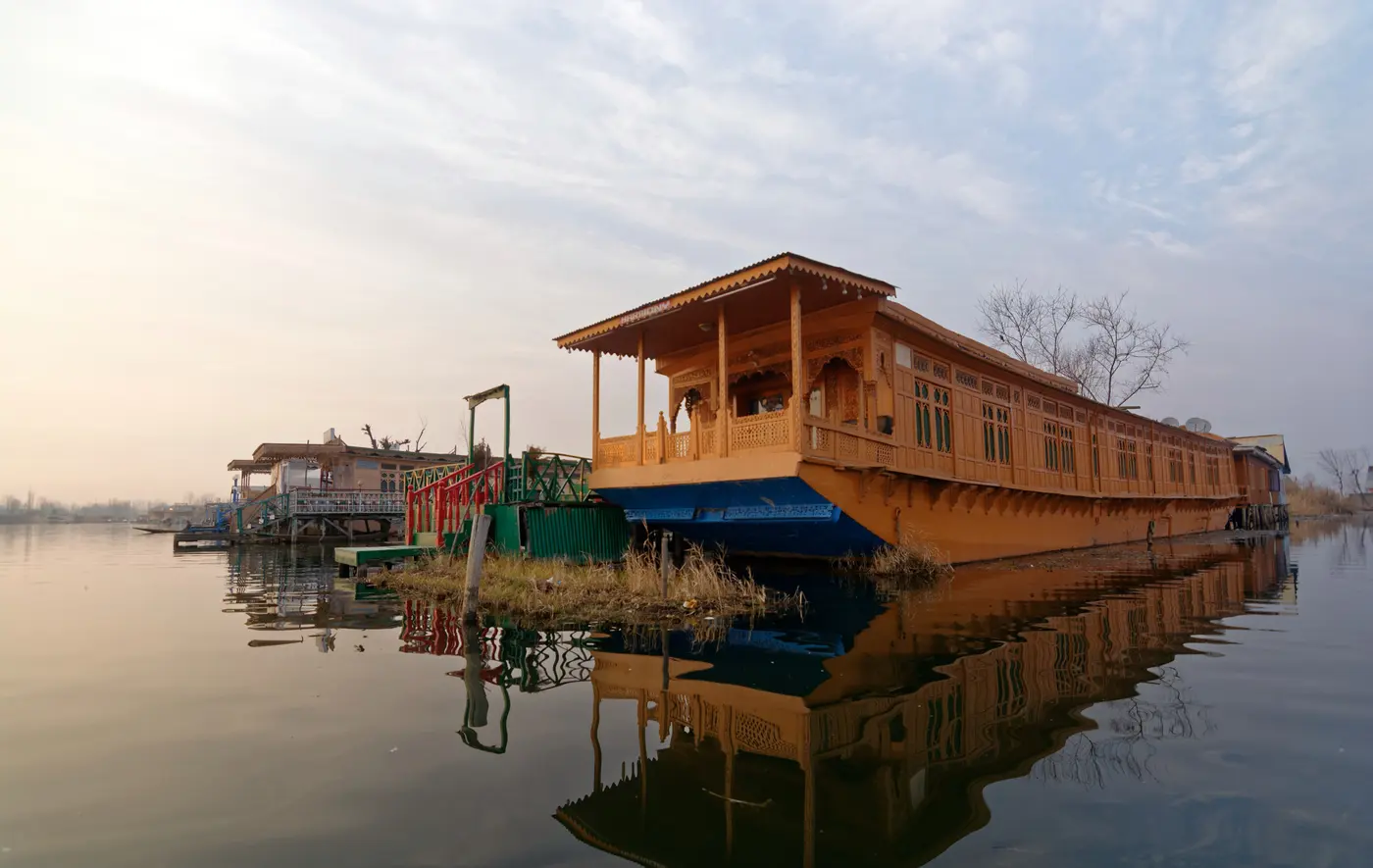
Dal Lake is Srinagar's centrepiece — a roughly 18 sq km lake bordered by the Mughal Gardens on one side and the Old City on the other, dotted with floating vegetable gardens ("radh") that locals have cultivated for generations.
- Types of houseboats: Houseboats are graded roughly Deluxe, A, B, and C class by the tourism department. Deluxe and A-class boats have carved walnut-wood interiors, attached bathrooms, and proper dining rooms; standard boats are simpler but still comfortable and include meals cooked on board.
- Shikara rides: A slow, paddle-powered tour of the lake is the essential Srinagar experience — past floating gardens, the Char Chinar island, and souvenir-selling boats. Rides are priced roughly by the hour, and rates are semi-fixed by the local shikara union.
- Floating market at dawn: Every morning before sunrise, vegetable growers paddle their produce to a floating wholesale market near Dal Gate — one of the few genuinely working floating markets left in India, and worth the early alarm.
- Nigeen Lake: A quieter, smaller lake connected to Dal Lake by a channel, with fewer houseboats and a noticeably calmer atmosphere — a good alternative for travellers who find Dal Lake too busy.
Srinagar's Mughal Gardens
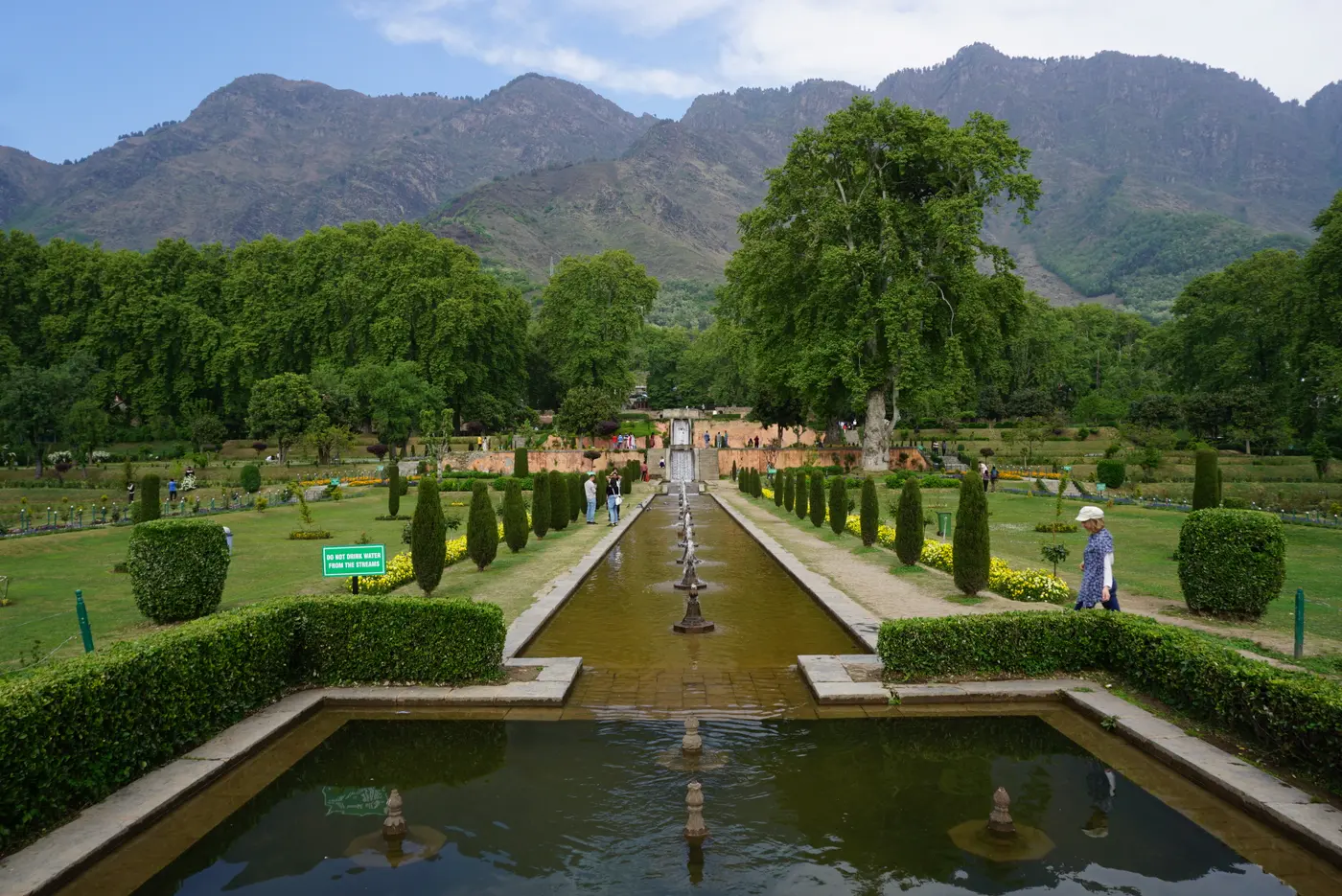
Srinagar's terraced Mughal Gardens date back to the reigns of Emperor Jahangir and Shah Jahan in the 17th century, built along the shore of Dal Lake with the Zabarwan hills as a backdrop.
- Nishat Bagh: "Garden of Bliss," the largest of Srinagar's Mughal gardens, laid out across twelve terraces representing the twelve zodiac signs, with views straight across Dal Lake toward the Pir Panjal range.
- Shalimar Bagh: Built by Jahangir for his wife Nur Jahan, this is the most famous of the three — fountains, chinar-lined avenues, and a black marble pavilion mark its centre.
- Chashme Shahi: The smallest of the three, built around a natural spring believed to have medicinal properties — a compact, less crowded stop, good for a shorter visit.
- Indira Gandhi Memorial Tulip Garden: A more recent addition on the Zabarwan foothills, Asia's largest tulip garden, blooming for roughly three to four weeks each spring, usually late March through mid-April.
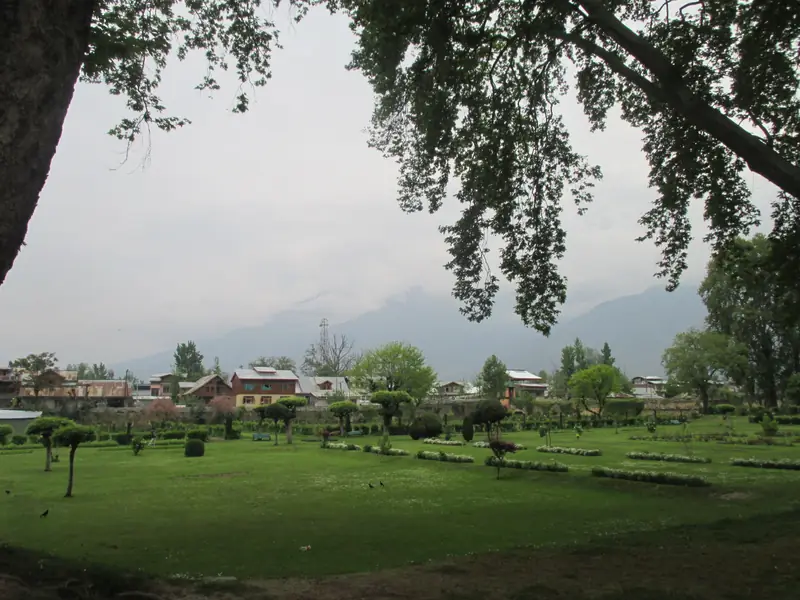
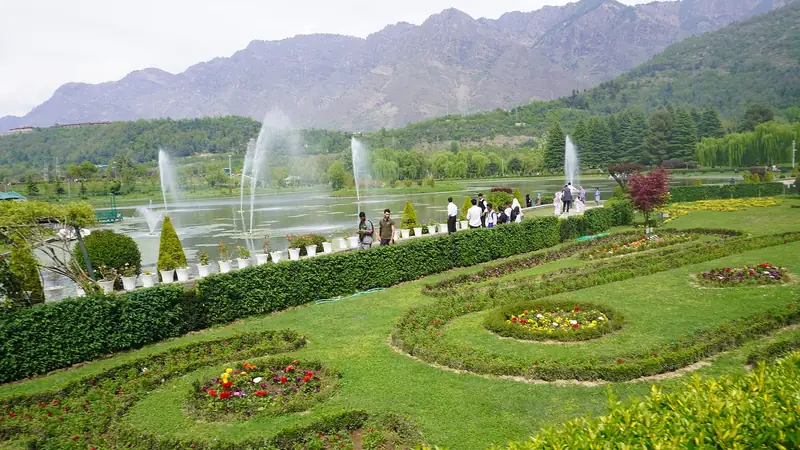
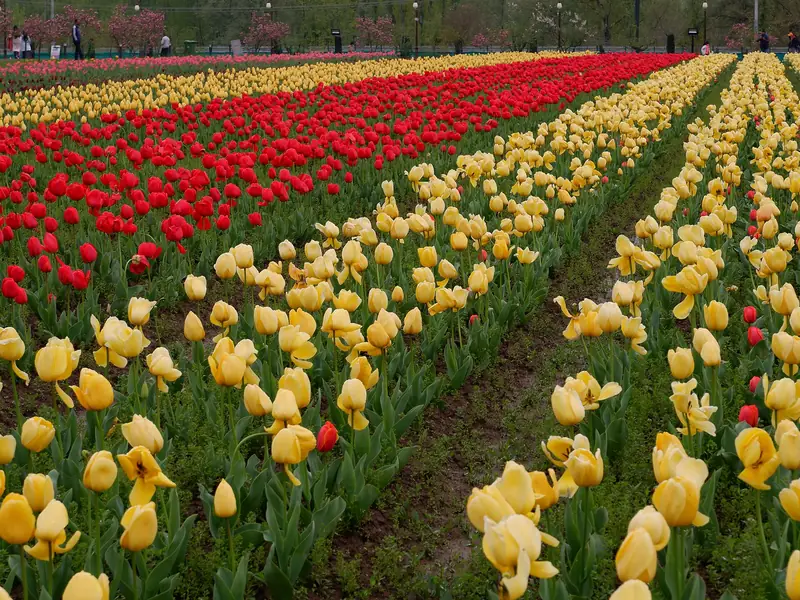
Visit Nishat Bagh in the late afternoon — the terraces face the lake, and the light on the water as the sun drops behind the Pir Panjal range is worth timing your visit around.
Exploring Srinagar's Old City
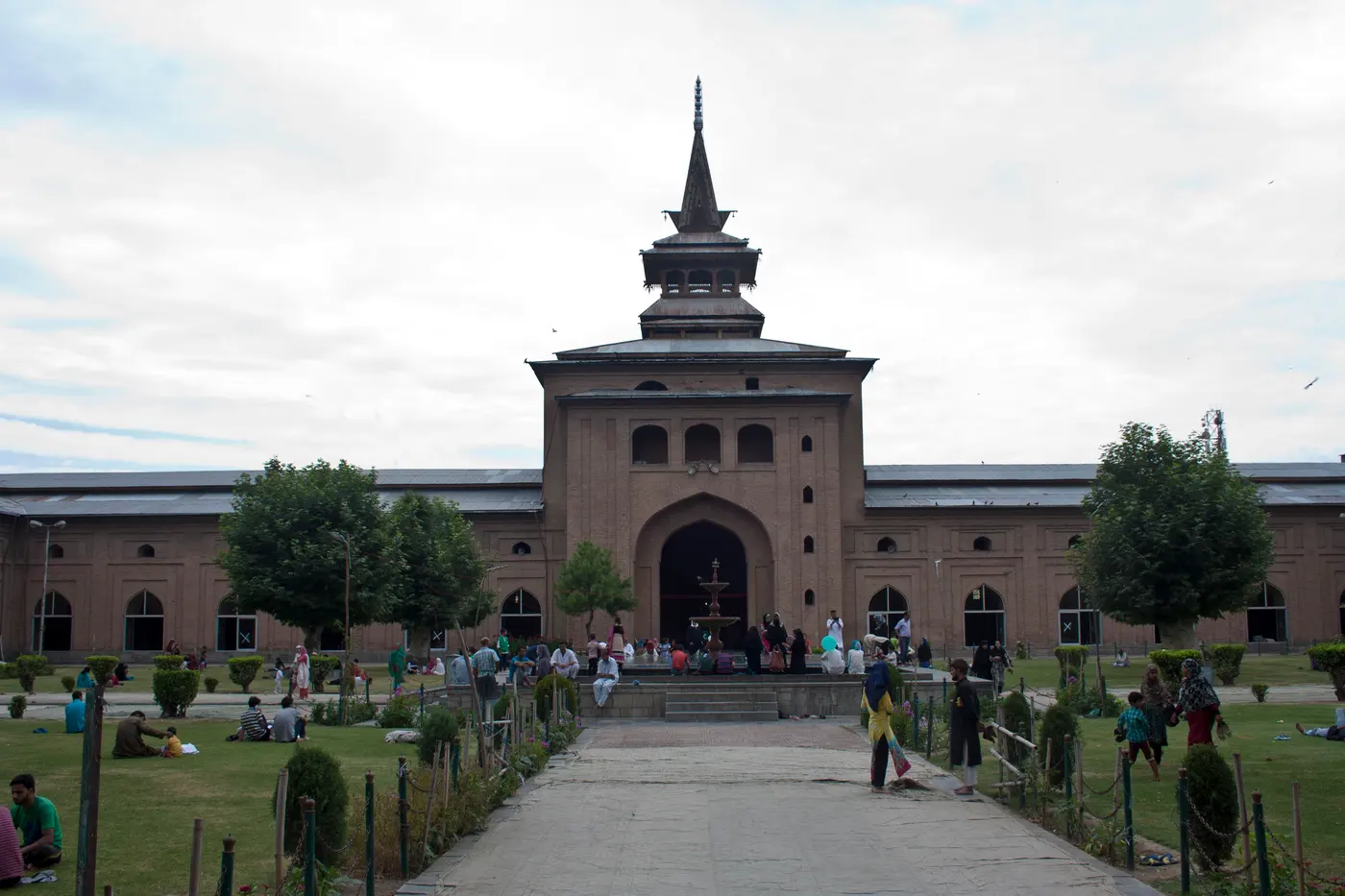
Away from the lake, Srinagar's Old City is dense, working, and largely untouched by the tourist circuit around Dal Lake — narrow lanes, wooden-fronted shops, and centuries of layered history.
- Jama Masjid: Built in 1394 and rebuilt several times after fires, this mosque's distinctive wooden architecture and 370-pillar courtyard make it one of Srinagar's most striking buildings — open to visitors outside prayer times.
- Shankaracharya Temple: A hilltop temple dedicated to Shiva, reached by a steep flight of steps, offering panoramic views over the entire city and lake — particularly good at sunset.
- Hazratbal Shrine: A white marble mosque on the northern shore of Dal Lake, believed to house a relic of the Prophet Muhammad — one of Kashmir's most revered religious sites.
- Shikara-side markets & handicrafts: Kashmiri pashmina shawls, papier-mâché boxes and ornaments, and intricately carved walnut wood furniture are sold both from lakeside boats and in established shops around the Old City — buy from reputed stores with authenticity certification, especially for pashmina.
Day Trips from Srinagar
Srinagar's central location in the valley makes it the natural base for the region's other big draws, each reachable in a half-day drive or less.
- Gulmarg: About 50 km / 2 hours away, home to the Gulmarg Gondola — one of the world's highest cable cars, rising toward Apharwat Peak — and India's premier skiing destination in winter.
- Pahalgam: About 90 km / 2.5–3 hours away, a pine-forested valley along the Lidder River, base for the Amarnath Yatra and a calmer alternative to Gulmarg with easy access to Betaab Valley and Aru Valley.
- Sonamarg: About 80 km / 2.5 hours away, the "Meadow of Gold," known for the Thajiwas Glacier and as the gateway to the Zoji La pass toward Ladakh.
Where to Stay in Srinagar
A houseboat is the signature Srinagar stay, but the city also has plenty of conventional hotels spanning budget to genuinely luxurious, both around Dal Lake and in the city centre.
- → Standard C/B-class houseboats
- → Budget hotels near Boulevard Road
- → Guesthouses near Dal Gate
- → Deluxe A-class Dal Lake houseboats
- → Hotel Dar-Es-Salam, Srinagar
- → Hotel Grand Mumtaz, Srinagar
- → The Lalit Grand Palace, Srinagar
- → Vivanta Dal View, Srinagar
- → Heritage Deluxe houseboats, Nigeen Lake
At least one night on a Dal Lake houseboat is worth building into any Srinagar stay — pair it with a hotel stay in the city centre for the rest of your trip if you want easier access to the Old City and gardens.
What to Eat in Srinagar
Kashmiri cuisine is rich, meat-forward, and built around the multi-course Wazwan tradition — distinct from anything else in North India, and best experienced in Srinagar itself.
- Rogan Josh: A rich, red Kashmiri mutton curry coloured with Kashmiri chillies and cockscomb flower — one of the region's best-known dishes.
- Yakhni: A yogurt-based, milder mutton curry flavoured with fennel and cardamom — a good contrast to the heavier Rogan Josh.
- Wazwan: A traditional multi-course feast of Kashmiri meat dishes — served on a shared trami platter at weddings, and increasingly at dedicated Srinagar restaurants for visitors who want the full experience.
- Kahwa: Traditional saffron and cardamom-spiced green tea, often topped with slivered almonds — served everywhere from houseboats to street stalls, and a genuinely warming drink in the cold.
- Kashmiri bread: Sheermal, bakarkhani, and girda from local bakeries in the Old City — best bought fresh in the early morning.
3-Day Srinagar Itinerary
Three days is enough to properly experience Srinagar itself — the lake, the gardens, and the Old City — without feeling rushed. Extend it with day trips to Gulmarg, Pahalgam, or Sonamarg if you have more time.
Arrival & Dal Lake
- ✓Arrive Srinagar, check into a Dal Lake houseboat
- ✓Afternoon: Leisurely shikara ride, floating gardens
- ✓Evening: Sunset at Nehru Park, dinner on the houseboat
Gardens & Old City
- ✓Early morning: Floating vegetable market by shikara
- ✓Late morning: Nishat Bagh and Shalimar Bagh
- ✓Afternoon: Jama Masjid and Old City walk
- ✓Evening: Shankaracharya Temple sunset
Chashme Shahi & Departure
- ✓Morning: Chashme Shahi and Hazratbal Shrine
- ✓Late morning: Pashmina and papier-mâché shopping
- ✓Final houseboat lunch, depart from Srinagar Airport
Have longer? Add a day each for Gulmarg and Pahalgam to turn this into a fuller Kashmir valley trip, or see our Jammu & Kashmir travel guide for a complete 6-day circuit including Sonamarg and Vaishno Devi.
Srinagar Budget Breakdown
| Expense | Budget | Mid-Range | Luxury |
|---|---|---|---|
| Accommodation/night | ₹1,500 | ₹4,000 | ₹12,000 |
| Food/day | ₹600 | ₹1,400 | ₹2,800 |
| Local transport / shikara | ₹800 | ₹1,500 | ₹2,500 |
| Sightseeing / entry fees | ₹400 | ₹800 | ₹1,500 |
| Daily total | ₹3,300 | ₹7,700 | ₹18,800 |
| 3-Day trip total | ₹9,900 | ₹23,100 | ₹56,400 |
* Excludes flights/train to Srinagar. Houseboat rates typically include breakfast and dinner; day-trip cab hire to Gulmarg, Pahalgam, or Sonamarg is an additional ₹2,500–₹4,500 per vehicle, per day.
Essential Srinagar Travel Tips
- Book houseboats through verified channels: Use registered houseboat associations, your hotel, or a reputable operator — avoid unsolicited approaches at the airport or train station.
- Check current travel advisories: Conditions in the region can shift — check official advisories before booking non-refundable travel.
- Negotiate shikara rates upfront: Rates are semi-fixed by the local union but confirm the price and duration before boarding, especially for longer rides to the floating market.
- Buy pashmina from established shops: Counterfeit "pashmina" is common in tourist-heavy markets — buy from reputed stores with authenticity certification.
- Pack for cold mornings: Even in summer, dawn shikara rides on the lake are noticeably cold — carry a light jacket regardless of season.
- Dress modestly at religious sites: Cover shoulders and knees when visiting Jama Masjid, Hazratbal Shrine, or Shankaracharya Temple.
✅ Do
- →Spend at least one night on a Dal Lake houseboat
- →Take the sunrise shikara ride to the floating market
- →Visit Nishat Bagh in the late afternoon light
- →Check current travel advisories before booking
- →Buy pashmina from certified, established shops
- →Carry a light jacket for early lake mornings
❌ Don't
- →Book a houseboat from an unsolicited airport approach
- →Buy pashmina from unverified street vendors
- →Skip confirming shikara rates before boarding
- →Rush the Old City into a quick drive-by
- →Book non-refundable travel without checking advisories
- →Underestimate how cold dawn on the lake can feel
Frequently Asked Questions
How many days are enough for Srinagar?
Two to three days is enough to see Srinagar itself comfortably — a houseboat stay, a shikara ride, the Mughal Gardens, and the Old City. If you're using Srinagar as a base for day trips to Gulmarg, Pahalgam, or Sonamarg, budget five to six days for the wider Kashmir circuit.
Is it safe to stay in a houseboat in Srinagar?
Yes, houseboat stays are a well-established, regulated part of Srinagar tourism and thousands of travellers stay on Dal Lake and Nigeen Lake every season without incident. Book through a registered houseboat association, a reputable travel operator, or your hotel rather than an unsolicited approach at the airport, and check recent reviews before paying an advance.
What is the best time to visit Dal Lake?
Early morning, around sunrise, is the best time to be on Dal Lake — the water is calm, the light is soft, and the floating vegetable market is in full swing. Seasonally, April to June brings mild weather and blooming gardens, while September and October offer golden Chinar colours with fewer crowds.
How much does a houseboat stay cost in Srinagar?
A simple, standard houseboat runs roughly ₹1,500 to ₹2,500 per night including meals, mid-range deluxe houseboats cost ₹3,000 to ₹6,000, and luxury houseboats with heritage interiors can go upward of ₹8,000 to ₹15,000 per night. Rates typically include breakfast and dinner, and a shikara ride to and from the shore is usually included.
Is Srinagar safe for tourists in 2026?
Srinagar's main tourist areas — Dal Lake, the Mughal Gardens, and the city centre — see heavy domestic and international tourist footfall year-round and are well set up for visitors. As with any trip to the region, it's worth checking current government travel advisories before booking non-refundable travel, since conditions can occasionally shift.
Can you visit Gulmarg and Pahalgam as day trips from Srinagar?
Yes. Gulmarg is about 50 km (roughly 2 hours by road) from Srinagar and Pahalgam is about 90 km (roughly 2.5 to 3 hours), both commonly done as full-day trips with a hired taxi. Sonamarg, around 80 km away, is also a popular day trip, though an overnight stay lets you see more of each without the drive eating into your day.
What should first-time visitors not miss in Srinagar?
A sunrise shikara ride through the floating market, at least one night on a Dal Lake houseboat, a walk through Nishat Bagh or Shalimar Bagh, and an hour wandering the Old City around Jama Masjid are the four experiences most visitors rate as unmissable. A plate of Wazwan and a cup of Kahwa round out the essential Srinagar experience.
Published by the Kudozz Club editorial team · Last updated · How we research our guides
Want us to plan this trip for you?
Tell Kudozz Club where you want to go and what kind of trip you’re looking for. We’ll build a Srinagar and Kashmir itinerary around your dates and budget.
Continue Exploring
View all guides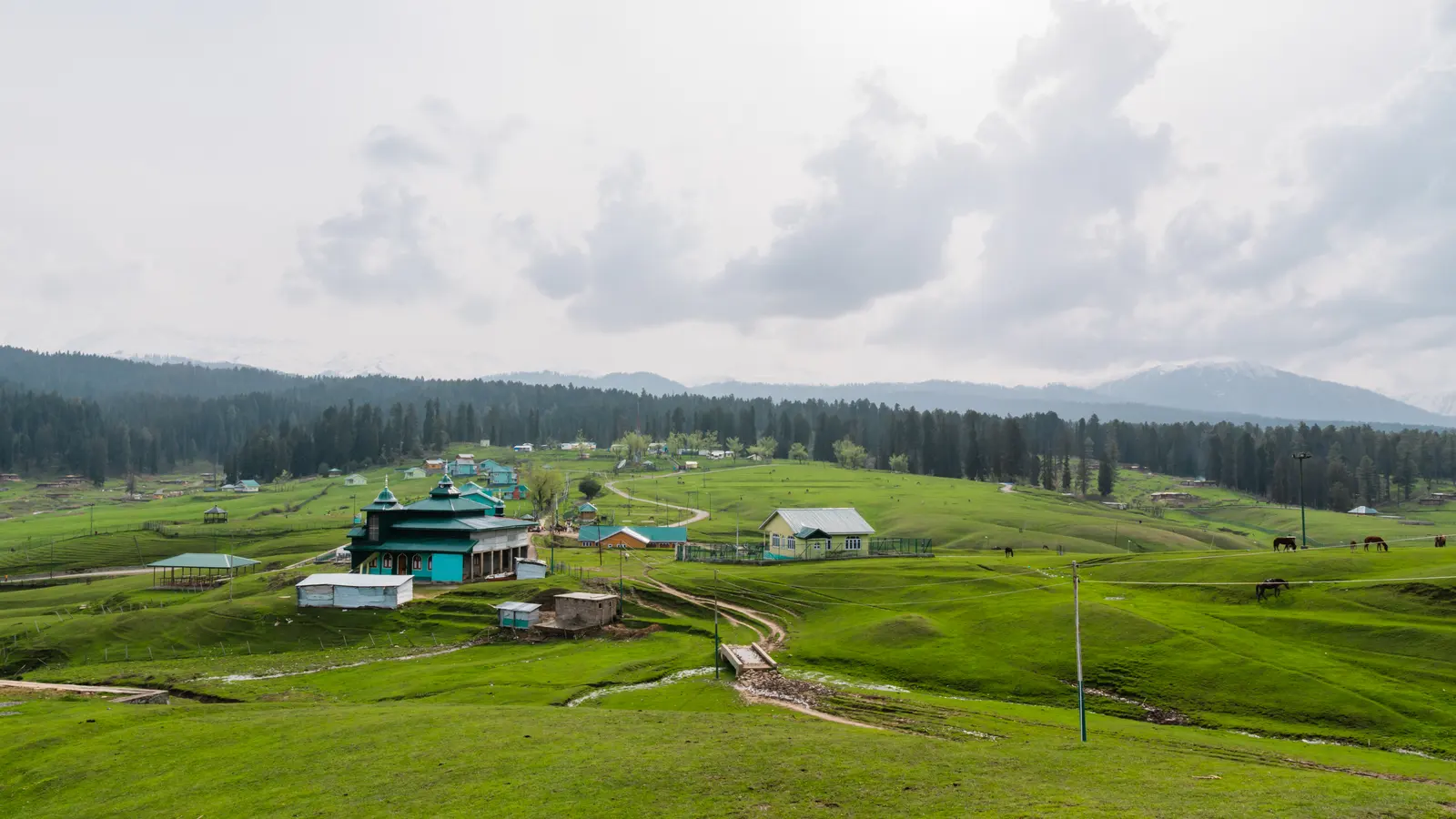 Off-beat
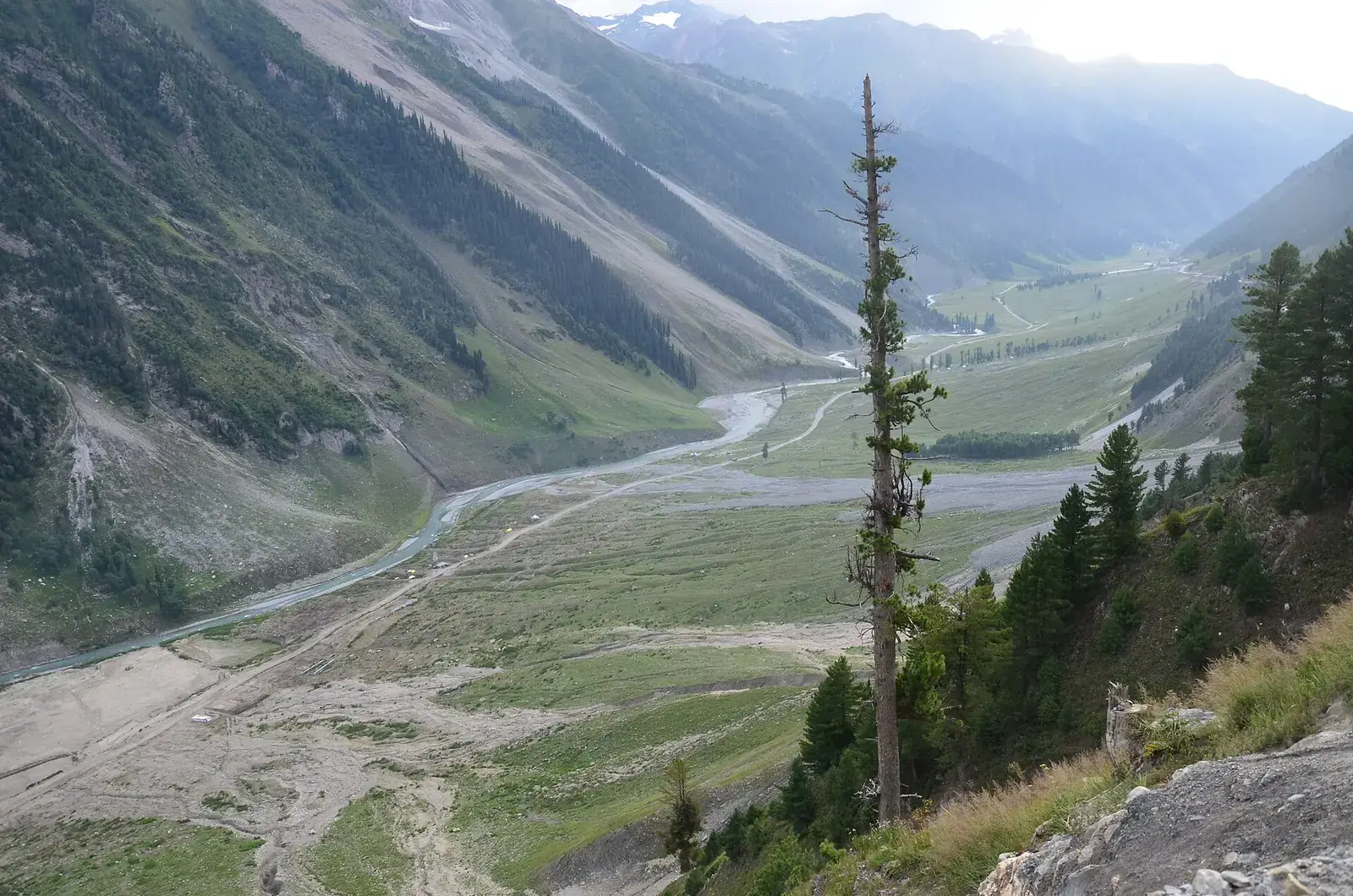
Yusmarg Travel Guide: Meadow of Jesus & Nilnag Lake
A quiet, pine-fringed meadow in Budgam where the crowds thin out — pony rides across open grassland, a glacial lake through the pines, and a Sufi shrine on the way.
 Hill Stations
Kashmir Itinerary: 5 to 7 Days in Srinagar, Gulmarg, Pahalgam and Sonamarg
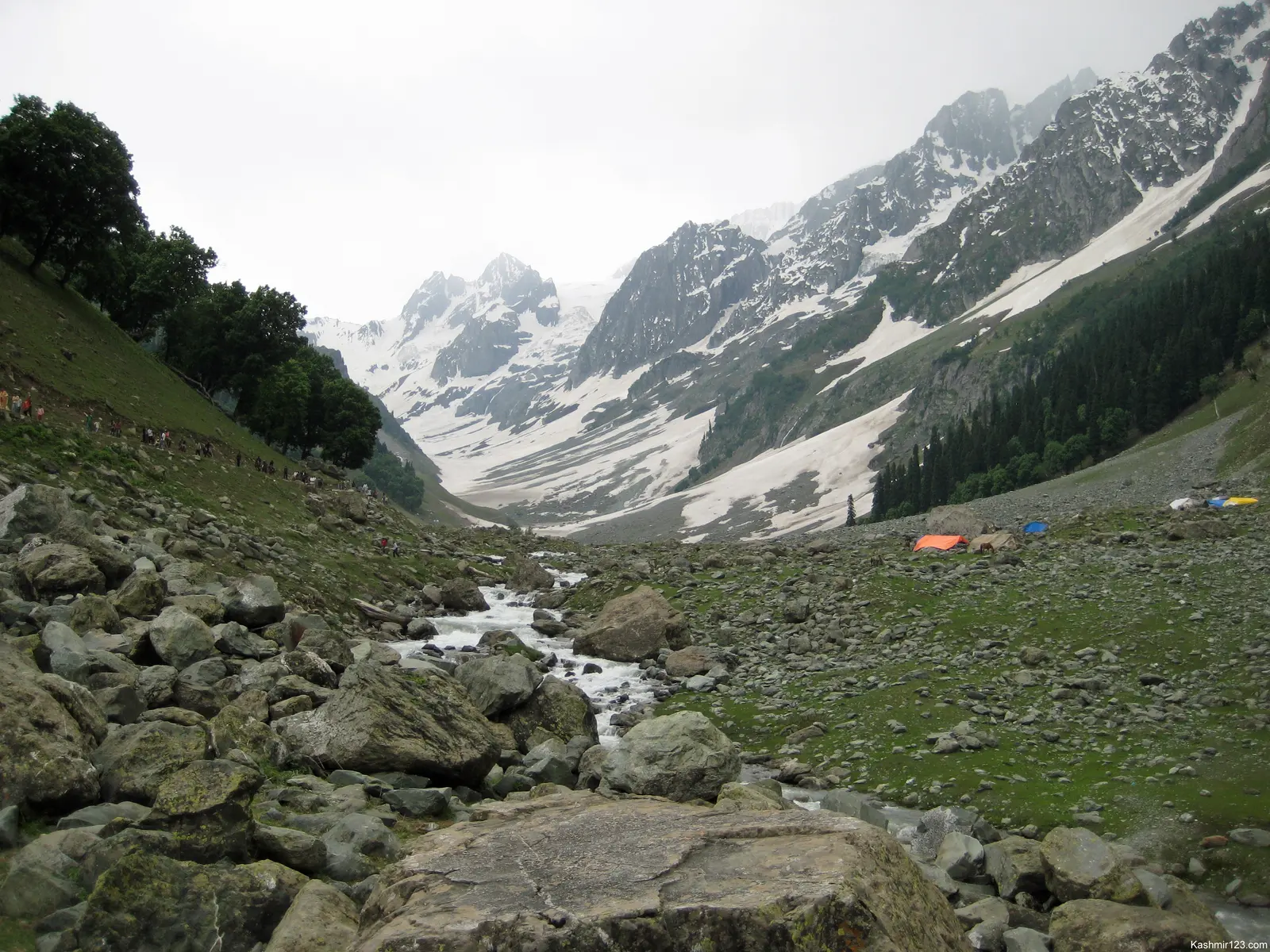
A practical five to seven day Kashmir itinerary: Srinagar's Dal Lake, houseboats, Mughal gardens and old city, Gulmarg's meadows and gondola, Pahalgam and the Lidder valley, and a day trip to Sonamarg, with seasonal variations for tulips, summer meadows, autumn and winter snow, where to stay, and the importance of checking current official advisories.
 Adventure
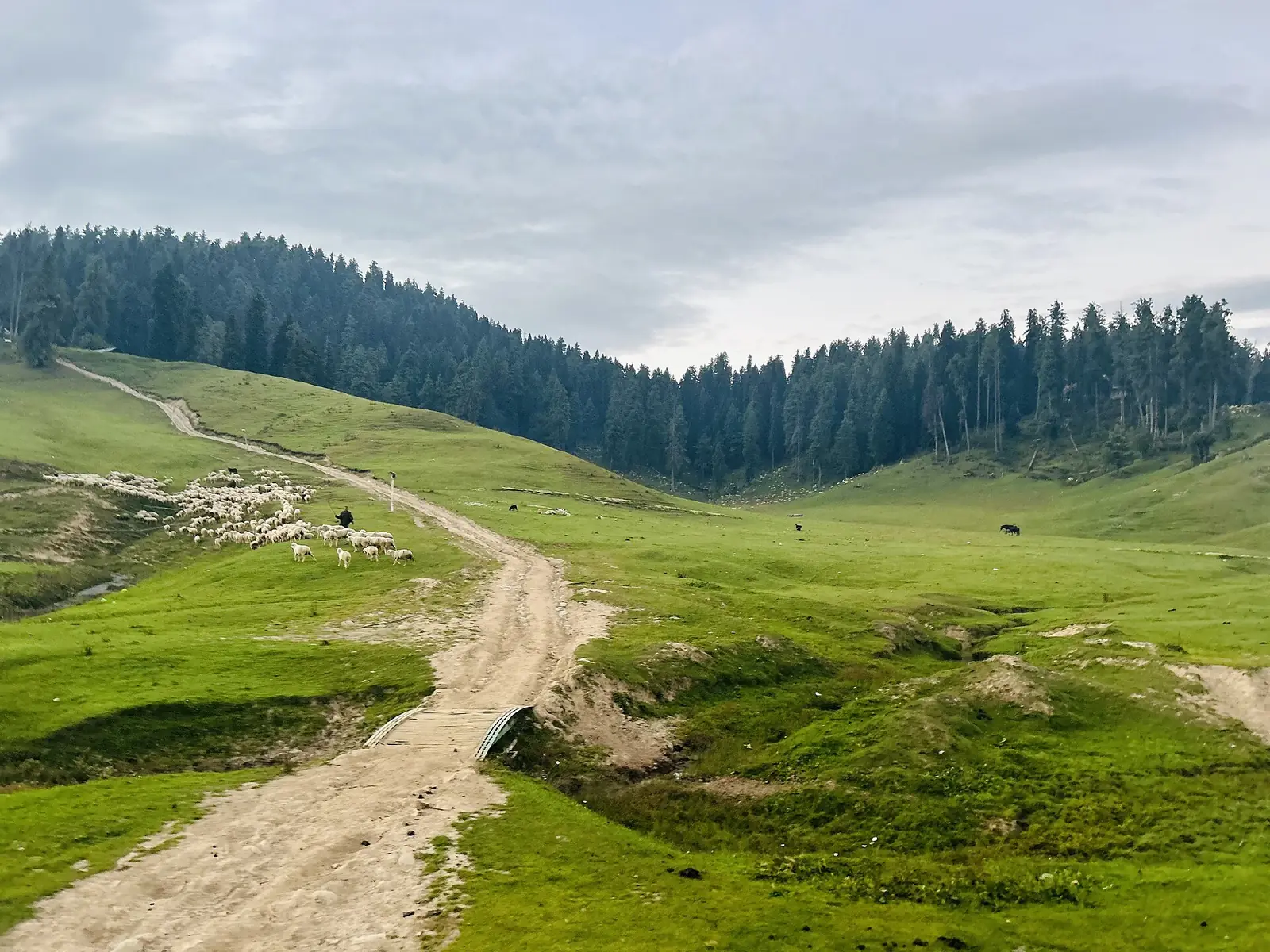
Sonamarg Travel Guide: Thajiwas Glacier & How to Visit
A glacier you can walk to, a river valley that never stops moving, and the last stretch of Kashmir before the road climbs into Ladakh — meet Sonamarg, the Meadow of Gold.
 Adventure
Gulmarg Travel Guide: Gondola, Skiing & Meadows
A cable car that climbs past 3,900 metres, ski slopes that rival anywhere in the Himalayas, and meadows that turn green the moment the snow retreats — Gulmarg does double duty as India's top winter and summer mountain escape.