Gangeshwar Temple: A Shrine on the Rocks
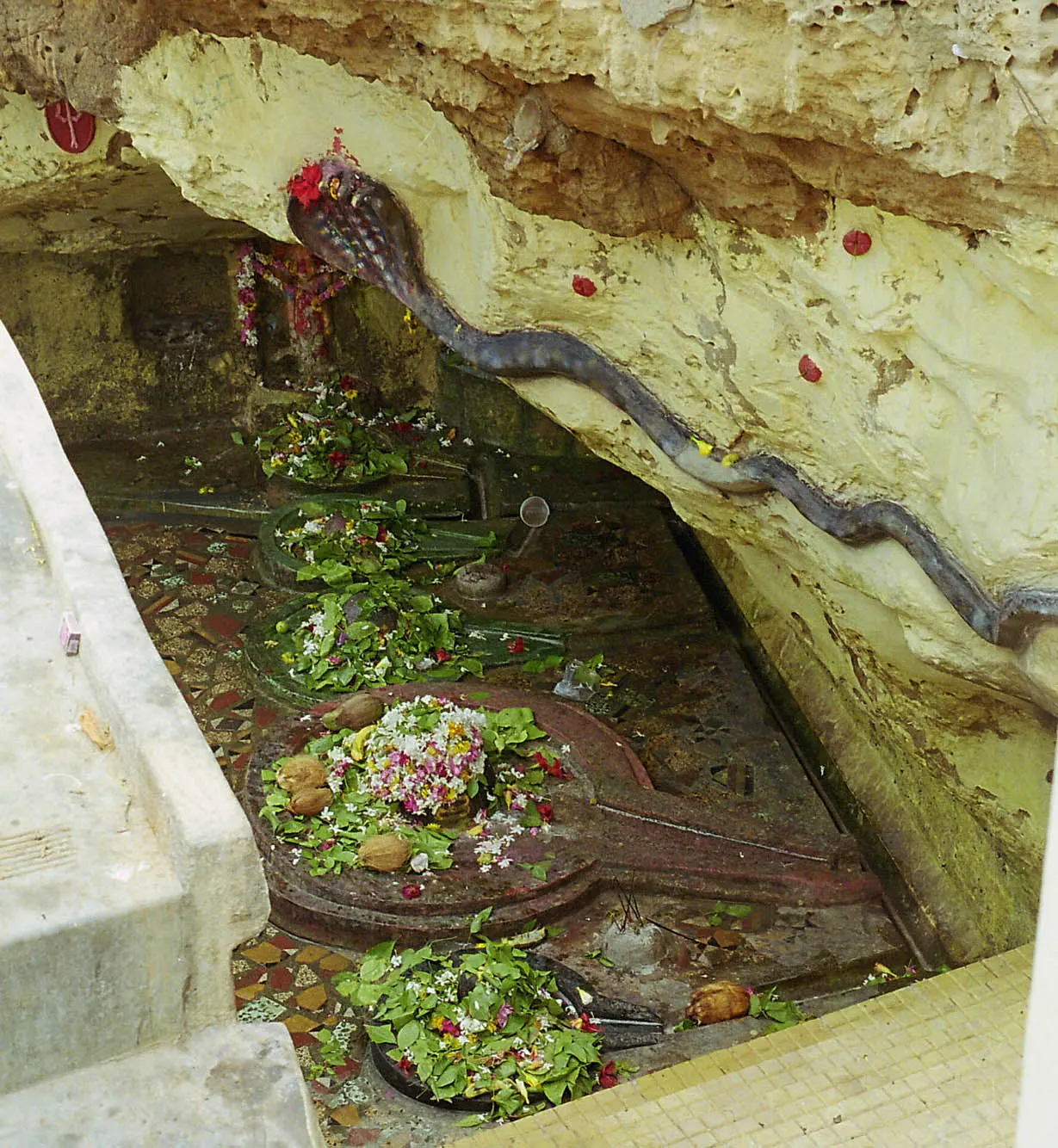
Gangeshwar Temple is an ancient shrine dedicated to Lord Shiva on the rocky southern coastline of Diu, part of the Union Territory of Dadra & Nagar Haveli and Daman & Diu. What sets it apart from almost any other Shiva temple in India is that it isn't really a building at all — its five Shivlings are natural rock formations rising directly out of the boulders at the water's edge, with the Arabian Sea washing over them as the tide moves in and out.
Local tradition holds that the five lingams were installed here by the Pandavas of the Mahabharata during their travels — a belief passed down through generations of worshippers and woven into how the site is understood locally. It's worth treating this the way it's meant: as tradition and legend, a story that gives the place meaning, rather than a claim of verified history.
What is verifiable, and genuinely remarkable, is the site itself — a small, active shrine set into a wild, weather-beaten stretch of coast, unlike any conventional temple complex. This guide covers when to go, how the tide affects what you'll actually see, how to visit respectfully, and how to stay safe on the rocks.
🕉️ Gangeshwar Temple at a Glance
Best Time to Visit Gangeshwar Temple
Timing matters more here than at almost any other temple you'll visit in Diu, because the tide genuinely changes what you see. At low tide, all five lingams sit clearly exposed among the rocks, easy to approach and view. As the tide rises, seawater gradually creeps over them, and at high tide the lingams can be partly or fully submerged, with waves breaking directly over the spot.
Neither state is "wrong" — the site is meant to be seen this way, and watching the sea cover and uncover the lingams is part of what makes Gangeshwar distinctive. But if your goal is to see all five lingams clearly, plan around the tide table rather than an arbitrary time of day.
All five lingams are visible on dry or shallow rock, making this the ideal window for darshan and photography. Check local tide timings before setting out — these shift daily.
Waves wash over the rocks and can submerge the lingams partly or fully. Striking to watch from a safe distance, but not the time to approach closely.
Fewer visitors and softer light make mornings pleasant — pair this with a low-tide window if the schedule allows.
Golden light over the dark rocks and open sea makes for the most striking photographs of the day, especially if it coincides with a receding tide.
Our pick: Check a tide chart for Diu the evening before, and aim to arrive within an hour or two of low tide. Combine it with sunset when the timing lines up — it's the single best window for both darshan and photographs.
How to Reach Gangeshwar Temple
Gangeshwar Temple sits a short distance from Diu town, along the coastal road on the island's southern edge, and is easy to reach independently.
- By moped or bike: The most popular way to get there — rentals are cheap and widely available in Diu town, and the coastal road makes for a pleasant 15–20 minute ride with sea views along the way.
- By auto-rickshaw or taxi: A quick and easy option if you'd rather not self-drive; most drivers in Diu know the temple well since it's a regular stop on local sightseeing routes.
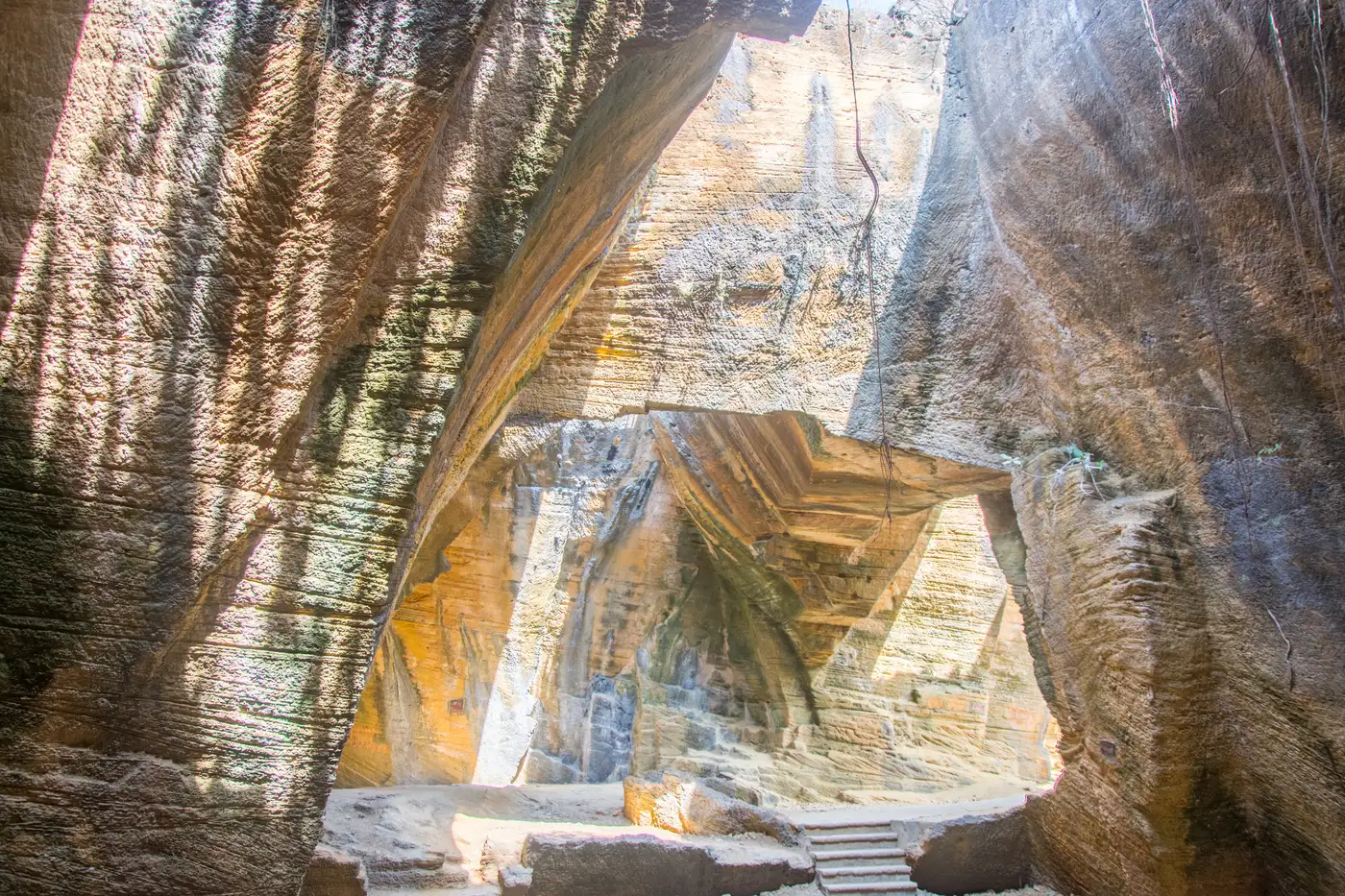
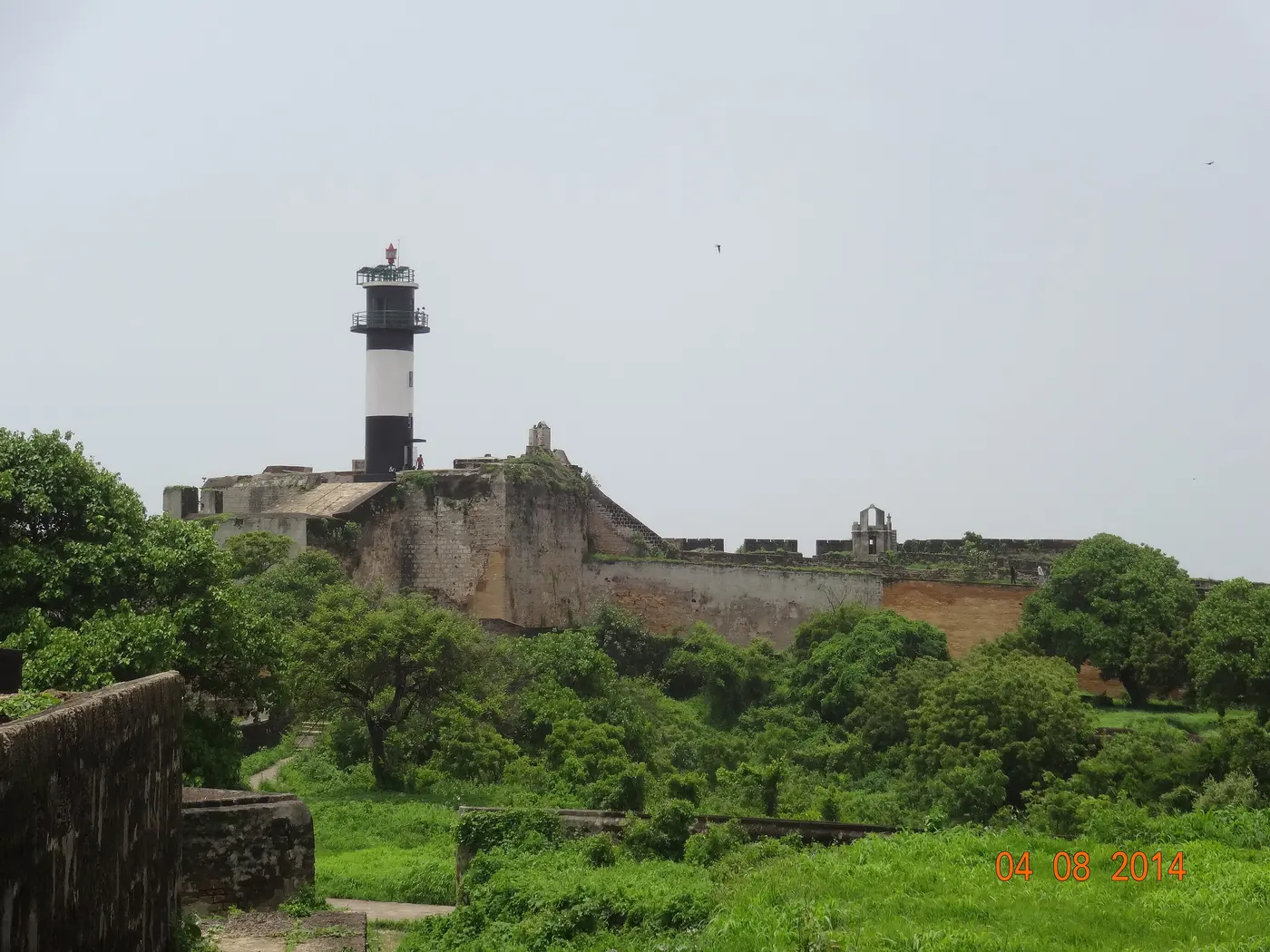
- Combined with other sights: Gangeshwar is often visited alongside Naida Caves and Diu Fort, all of which sit within a similar radius of the old town, making a single half-day loop practical.
The Setting & Atmosphere
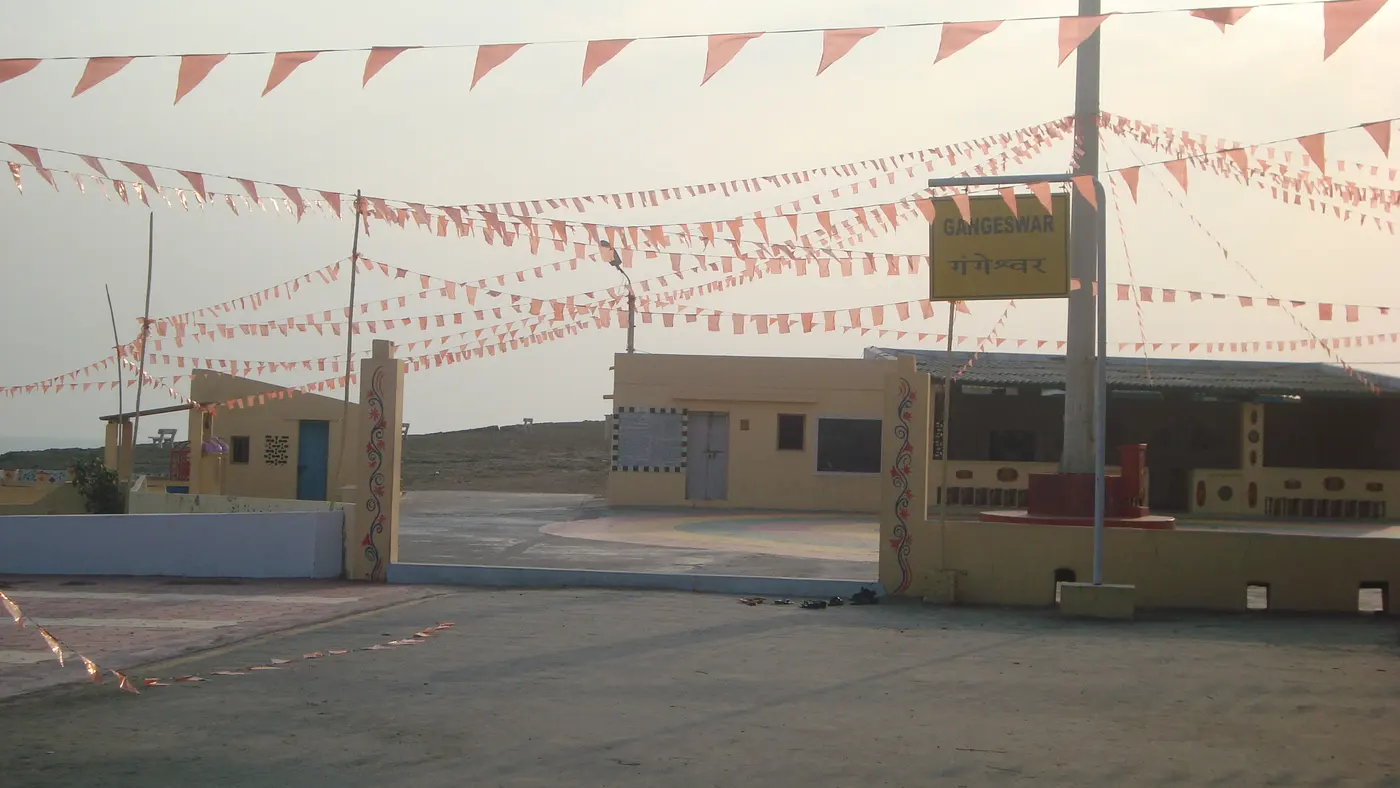
There's no ornate gopuram or courtyard here — Gangeshwar announces itself with sound before sight. Waves crash continuously against dark, weathered rocks that look almost volcanic, and the path down from the road narrows into a scramble across uneven boulders before the lingams come into view, set low among the stones right at the waterline.
It's a genuinely dramatic natural shrine rather than a conventional temple building, and that's precisely its character — the sea isn't kept out with walls or embankments, it's simply part of the site, arriving and retreating on its own schedule twice a day. Small offerings, vermilion, and the sound of temple bells mix with the constant rhythm of the surf, and worshippers quietly time their prayers around the water rather than the other way around.
Even for visitors without a religious connection to the site, the setting alone — an untamed stretch of Diu's coastline, rock, spray, and open sea — makes it worth the short detour.
Respectful Visiting Etiquette
Gangeshwar is an active place of worship, not a tourist curiosity, and it's worth visiting with that in mind.
- Remove footwear: As at any Hindu shrine, footwear comes off before approaching the lingams. Because the ground here is natural rock rather than a paved courtyard, many visitors carry their sandals in hand rather than leaving them far away.
- Dress modestly: Shoulders and knees covered is a safe default, even though this is a beach adjacent site rather than a formal temple complex.
- Respect active worship: Local devotees regularly visit to pray, especially around low tide — keep a respectful distance and a quiet tone if a ritual or prayer is underway rather than treating it as a photo backdrop.
- Leave no litter: The rocks and shoreline are as much a natural site as a religious one — carry out anything you bring in.
- Ask before photographing people: Worshippers and priests at the site should be asked before you photograph them directly, even if the setting itself is fair game.
Photography at Gangeshwar Temple
Gangeshwar is one of the more genuinely photogenic spots in Diu precisely because it doesn't look like anything else — dark, textured rock, breaking waves, and small lingams set right at the edge of the sea make for compositions you won't get at a conventional temple.
- Sunset is prime time: Warm, low light against the dark rocks and open water produces the most striking images of the day.
- Low tide for clarity: If you want clean shots of all five lingams, low tide is essential — at high tide they're often partly hidden under moving water.
- Mind your footing while shooting: It's easy to get absorbed in a shot and forget you're standing on wet, uneven rock — keep at least part of your attention on where you're stepping.
- Protect your gear from spray: Waves can throw spray further than expected, especially as the tide turns — keep phones and cameras shielded when you're close to the water's edge.
Safety Notes
Gangeshwar's appeal comes directly from its wild, natural setting — which also means it carries a few genuine risks that a paved temple complex wouldn't.
- Slippery rocks: The boulders near the lingams are frequently wet and can be slick with algae — move slowly and test your footing rather than walking at a normal pace.
- Watch the tide, not just the clock: The tide can rise faster than it seems, and it's possible to end up cut off on an outer rock or caught by a larger-than-expected wave if you're not paying attention. Check tide timings before you go and keep an eye on the water while you're there.
- Avoid the rocks during rough seas or monsoon swells: Wave action is noticeably stronger during the monsoon months — this isn't the best season for a close approach to the lingams.
- Supervise children closely: The uneven, wet terrain right at the waterline isn't a place for kids to wander unsupervised.
- Visit in daylight: There's no lighting on the rocks after dark, which makes footing and tide awareness much harder to judge.
Suggested Visit Plan
Gangeshwar doesn't need a long visit — most people spend 30 to 45 minutes here, which is enough to take in the setting, offer prayers if that's part of your visit, and get photographs without rushing.
Arrive & Approach
- ✓Park near the access point and remove footwear
- ✓Walk the short, uneven path down to the rocks
- ✓Take in the setting — sound of the sea before sight of the shrine
Darshan & the Site
- ✓View the five lingams (tide-dependent visibility)
- ✓Offer prayers respectfully if that's part of your visit
- ✓Take photographs, staying mindful of footing and spray
Linger or Move On
- ✓Sit and take in the coastline for a few extra minutes
- ✓Head back up to the road, footwear back on
- ✓Continue on to Naida Caves or Diu Fort nearby
Nearby Sights
Gangeshwar sits close enough to several of Diu's other highlights that it's easy to build into a single loop rather than a standalone trip.
- Naida Caves: Sun-dappled sandstone caves near the fort, a quick and popular photo stop on the same side of the island.
- Diu Fort: The 16th-century Portuguese sea fort with bastions, cannons, and sweeping views of the coastline — Diu's unmissable heritage site.
- Diu old town: Narrow lanes lined with pastel Portuguese-era houses and churches, a short drive back toward the centre of the island.
- Nagoa Beach: A calm, crescent-shaped beach elsewhere on the island — a good contrast after Gangeshwar's rougher, rockier coastline.
Budget Breakdown
Gangeshwar Temple itself is free to visit — the only real cost is getting there and back from Diu town.
| Expense | Budget | Mid-Range | Luxury |
|---|---|---|---|
| Temple entry | Free | Free | Free |
| Transport (round trip) | Moped ₹100–₹150 | Auto-rickshaw ₹300–₹400 | Private taxi ₹600–₹900 |
| Time on-site | 30–45 min | 30–45 min | 30–45 min |
| Combined half-day trip* | ₹150–₹300 | ₹400–₹700 | ₹900–₹1,500 |
* Combined half-day trip includes Gangeshwar Temple, Naida Caves, and Diu Fort in a single outing. Rates are approximate and vary by season and negotiation.
Essential Tips for Visiting Gangeshwar Temple
- Check the tide before you go: A quick local tide-time check saves a wasted trip if the lingams happen to be submerged when you arrive.
- Go early or late in the day: Cooler temperatures, softer light, and often calmer conditions make mornings and evenings the most pleasant times to visit.
- Wear grippy, easy-to-remove footwear: You'll need to go barefoot on the rocks near the lingams, so simple sandals or slip-ons beat laced shoes.
- Carry a small towel: Sea spray reaches further than expected near the water's edge.
- Combine with nearby sights: Pair the visit with Naida Caves and Diu Fort for an efficient half-day loop rather than a standalone trip.
- Treat the Pandava legend as tradition: It's a meaningful part of the site's story for local worshippers — share and enjoy it as legend rather than presenting it as documented history.
✅ Do
- →Check tide timings before setting out
- →Visit during low tide to see all five lingams
- →Remove footwear before approaching the shrine
- →Move carefully on wet, uneven rocks
- →Dress modestly and stay quiet near active worship
- →Combine the trip with Naida Caves and Diu Fort
❌ Don't
- →Climb far out on the rocks near high tide
- →Ignore the sound or size of incoming waves
- →Visit after dark or during rough monsoon seas
- →Let children wander the rocks unsupervised
- →Treat active worship as a photo backdrop
- →Present the Pandava legend as verified history
Frequently Asked Questions
What is special about Gangeshwar Temple?
Gangeshwar Temple is unusual because its five Shivlings aren't housed inside a conventional temple building — they're natural rock formations set directly among the boulders at the water's edge on Diu's southern coast, with waves washing over them at high tide. It's as much a dramatic natural setting as it is a place of worship.
What is the best time to visit Gangeshwar Temple?
Low tide is the best time, since it's when all five lingams are visible above the water. Early morning or the hours around sunset also work well for cooler weather and better light for photos. Checking a local tide timing before you go is genuinely useful here, not just a nice-to-have.
Is Gangeshwar Temple safe to visit?
Yes, with sensible precautions. The rocks are naturally uneven and can be slippery, especially near the waterline, so footing needs care. It's also worth being mindful of the tide schedule so you're not caught out on the rocks as the water rises. Visiting during daylight and low tide, and keeping a reasonable distance from the breaking waves, covers most of the risk.
How far is Gangeshwar Temple from Diu town?
Gangeshwar Temple is a short distance from Diu town, roughly a 15–20 minute drive along the coastal road on the southern side of Diu island. It's easily combined with other nearby sights like Naida Caves and Diu Fort in a single half-day outing.
Are the five lingams at Gangeshwar Temple always visible?
No — visibility depends entirely on the tide. At low tide, all five are clearly visible sitting among the rocks. As the tide comes in, seawater gradually covers them, sometimes fully submerging one or more, which is considered a natural and characterful part of the site rather than a flaw.
What is the connection between Gangeshwar Temple and the Pandavas?
Local tradition associates the temple with the Pandavas of the Mahabharata, who are said to have installed the five lingams here during their travels. This is a belief held and passed down by local worshippers rather than a claim backed by historical or archaeological record, and it's best approached and shared as tradition and legend.
Do I need to remove my footwear at Gangeshwar Temple?
Yes. As with any active Hindu shrine, footwear should be removed before approaching the lingams, and modest dress is appreciated. Because the approach is over natural rock rather than a paved courtyard, many visitors carry their footwear rather than leaving it far away, and watch their footing carefully while barefoot.
Published by the Kudozz Club editorial team · Last updated · How we research our guides
Want us to plan this trip for you?
Tell Kudozz Club where you want to go and what kind of trip you’re looking for. We’ll build a Gangeshwar Temple, Diu and Dadra and Nagar Haveli and Daman and Diu itinerary around your dates and budget.
Continue Exploring
View all guides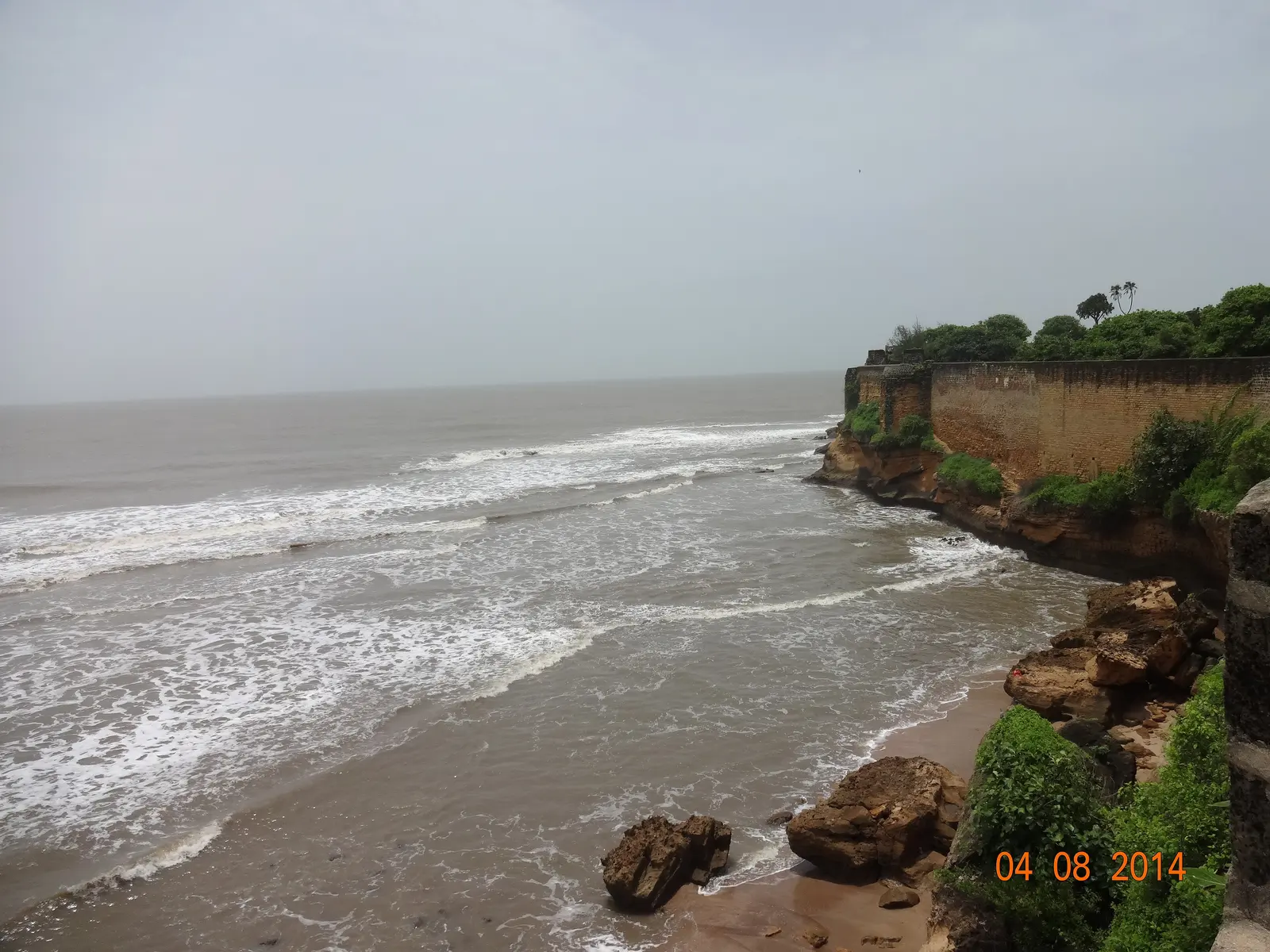 Heritage
Diu Fort Travel Guide: History, Timings & Tips
A 16th-century Portuguese sea fort with a seawater-filled moat, original cannons, and one of the best sunset spots on India's west coast — the complete guide to Diu Fort.
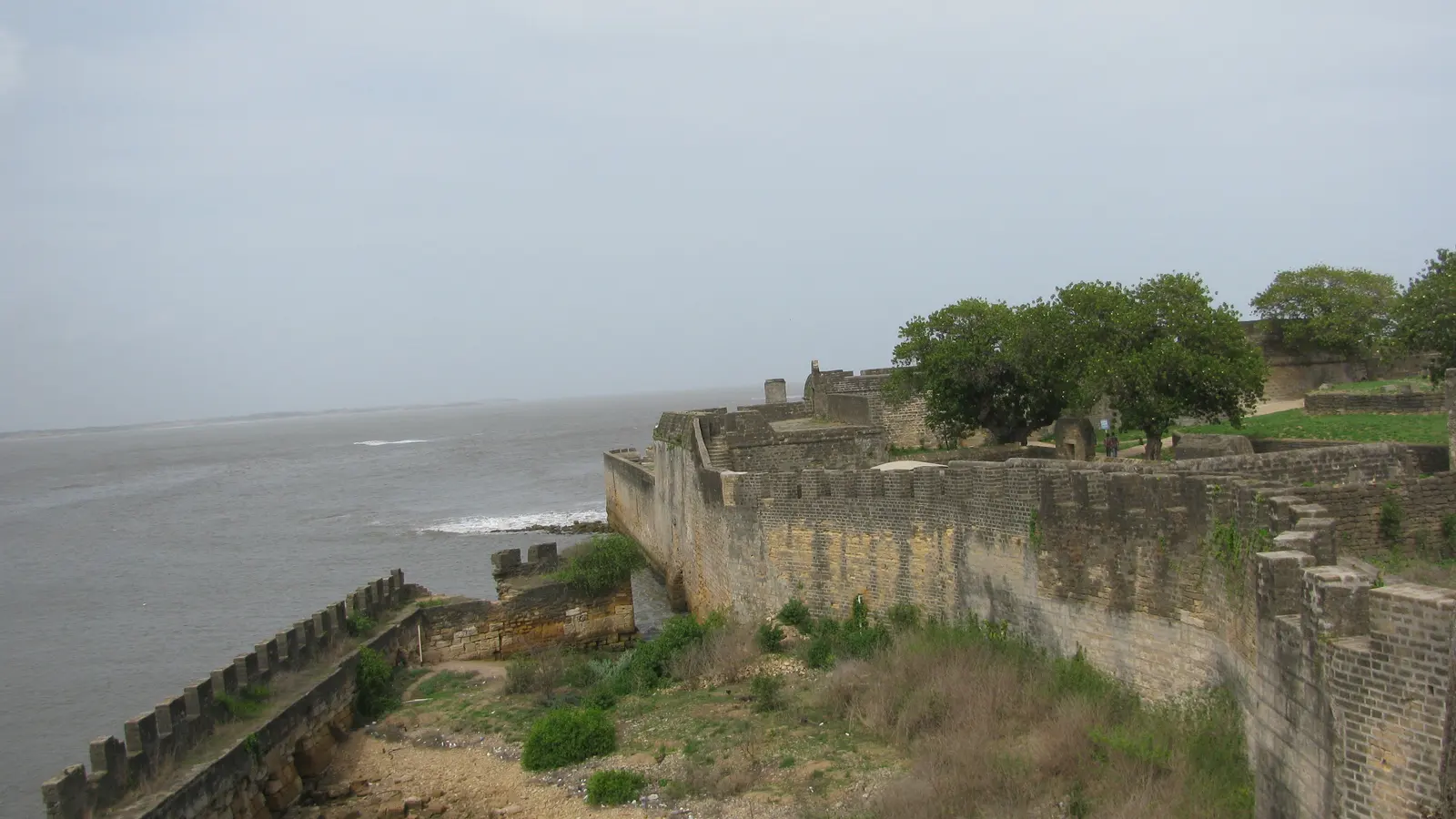 Destination Guide
Diu Travel Guide: Beaches, Fort & Weekend Trip
A former Portuguese colony off Gujarat's coast — Diu Fort, quiet beaches, old-town churches, duty-free liquor, and a full 2-day itinerary.
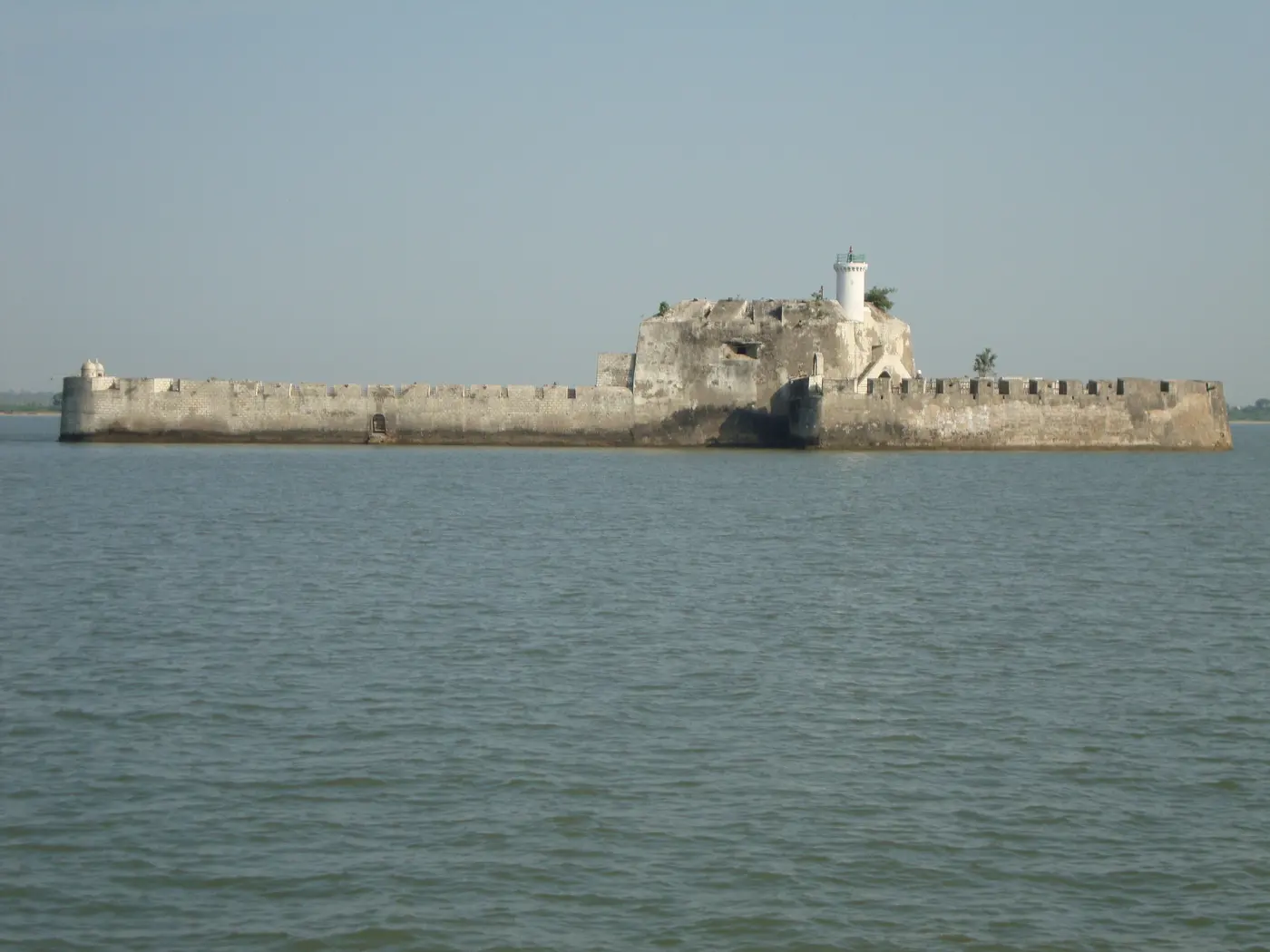 Things to Do
Things to Do in Diu: Portuguese Fort, Churches, Beaches & Seaside Cafés
Things to do in Diu: the 16th-century Diu Fort and the sea fort of Panikotha, St Paul's Church and St Thomas Church museum, Nagoa, Ghoghla and Chakratirth beaches, the Naida Caves, Gangeshwar Temple, the INS Khukri memorial, Zampa Gateway and seafood.
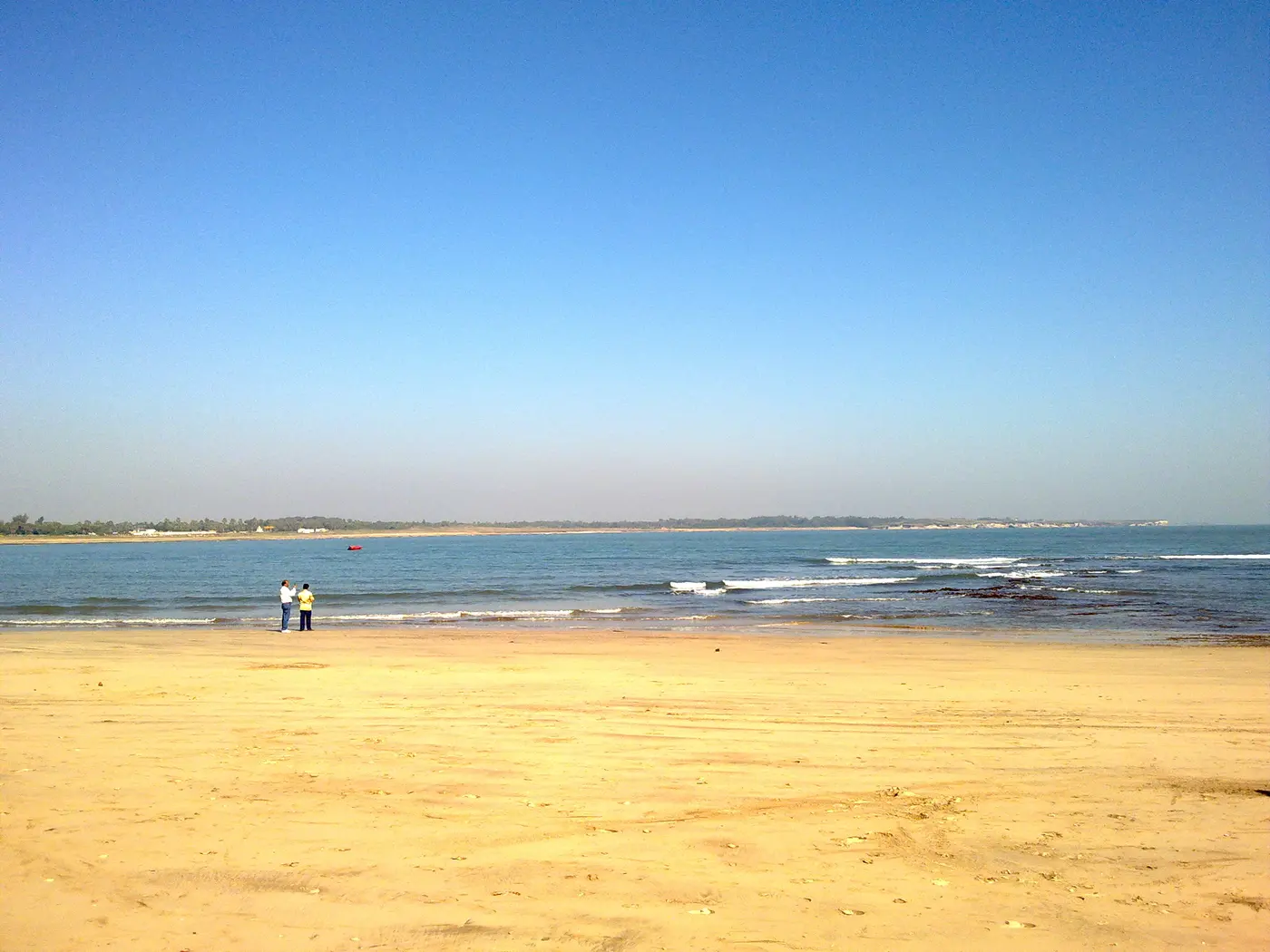 Beaches
Nagoa Beach Diu: Water Sports, Timings & Tips
A horseshoe-shaped bay of calm water, coconut-lined promenade and Diu's only real watersports scene — everything you need for a half-day at Nagoa Beach.