
Why Kaas Plateau?
Near the hill town of Satara, a stretch of black basalt rock sits mostly bare and unremarkable for eleven months of the year. Then, for a few short weeks after the monsoon retreats, the Kaas Plateau (locally called Kaas Pathar) transforms into a rolling carpet of wildflowers — hundreds of species, many found nowhere else, blooming and fading in overlapping waves of colour across the volcanic terrain.
The plateau is part of the Western Ghats UNESCO World Heritage Site, recognised for its exceptional biodiversity and the sheer density of endemic flowering species packed into a small area. It's often called Maharashtra's answer to Uttarakhand's Valley of Flowers — smaller in scale, but just as fleeting, and far more accessible for a weekend trip from Pune or Mumbai.
🌸 Kaas Plateau at a Glance
Love the outdoors? See our guide to flower valleys and blooms in India.
Comparing hill stations? See our guide to monsoon hill stations.
Best Time to Visit (Bloom Season)
This is the single most important thing to get right at Kaas — the flowering window is short, and it shifts every year with the monsoon's retreat.
The plateau's main flowering window, though the exact peak weeks vary year to year with rainfall patterns. Always check current-year bloom updates before booking.
Some later-flowering species persist into November, though the dense carpet effect of peak bloom has usually faded by this point.
Pleasant weather for a visit to nearby Thoseghar or Sajjangad, but the plateau itself is largely bare grassland outside bloom season.
Heavy rain across the region; the flowering hasn't started yet and access can be affected by weather.
Important: The peak bloom window shifts every year and typically lasts just a few weeks. Check official current-year announcements before finalising your dates — this is not a destination where "roughly September" is precise enough.
How to Reach Kaas Plateau
- By Air: Pune Airport (PNQ) is the nearest, roughly 140 km / 3 hours by road.
- By Train: Satara is the nearest well-connected station on the Pune-Mumbai rail corridor; there's no direct rail link to the plateau itself.
- By Road: Kaas is about 25 km from Satara town by taxi or self-drive — the base most visitors use.
Kaas Plateau & Nearby Attractions
- Kaas Plateau: The main attraction — marked wooden walkways loop through the flowering fields; entry is ticketed and capped daily.
- Kaas Lake: A scenic lake just before the plateau entrance that supplies water to Satara town — a quiet stop for photos.
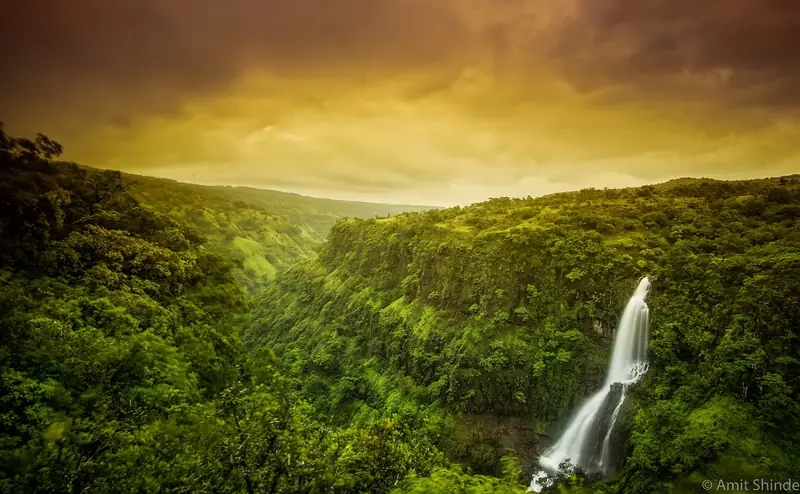
- Thoseghar Waterfalls: About 20 km away, a dramatic multi-tiered waterfall at its fullest during and just after the monsoon.
- Bamnoli: A short drive from Kaas, offering boat rides on the Shivsagar (Koyna) backwaters.
- Sajjangad Fort: About 30 km away, home to the samadhi of the saint Samarth Ramdas — a good half-day add-on with fort views.
Where to Stay
There's little accommodation right at the plateau — most visitors base themselves in Satara town.
- → Satara town guesthouses
- → Budget lodges near the bus stand
- → MTDC-style basic rooms
- → Satara business hotels
- → Resorts on the Kaas road
- → Boutique stays near Sajjangad
- → Premium resorts around Mahabaleshwar (1.5-2hrs)
- → Select hillside luxury properties
What to Eat
- Local Satara thalis: Simple Maharashtrian home-style meals at small eateries in Satara town.
- Roadside stalls near Kaas: Basic snacks, tea, and light bites near the entrance — don't expect a full meal on the plateau itself.
- Kandi pedha: Satara's famous milk sweet, worth picking up as a souvenir on your way through town.
Day-Trip Itinerary
Kaas Plateau at Opening
- ✓Leave Satara early to reach Kaas at opening time
- ✓Walk the flowering fields on the marked walkways (1.5-2 hrs)
- ✓Photography before the midday light and crowds build
Thoseghar & Bamnoli
- ✓Drive to Thoseghar Waterfalls (~20 km)
- ✓Optional boat ride at Bamnoli on the Koyna backwaters
- ✓Return to Satara by evening
Budget Breakdown
| Expense | Budget | Mid-Range | Luxury |
|---|---|---|---|
| Accommodation/night (Satara) | ₹800 | ₹3,000 | ₹9,000 |
| Kaas entry ticket | ₹100 | ₹100 | ₹100 |
| Local transport/taxi (day) | ₹800 | ₹1,800 | ₹3,500 |
| Food/day | ₹350 | ₹800 | ₹1,800 |
| Daily total | ₹2,050 | ₹5,700 | ₹14,400 |
* Entry ticket price is indicative — confirm current rates on the official booking portal before you go.
Essential Travel Tips
- Book online tickets ahead: Especially for peak-bloom weekends, when daily visitor caps fill fast.
- Stay on the walkways: Off-path walking damages fragile, slow-regrowing flower beds — this is strictly enforced.
- Go early: Best light for photography and noticeably thinner crowds before mid-morning.
- Check current-year bloom dates: The window shifts annually — don't rely on last year's dates.
- Combine with Thoseghar or Sajjangad: Makes the most of the drive out from Satara.
✅ Do
- →Book your entry ticket online in advance
- →Visit early morning for light and lower crowds
- →Stay strictly on the marked walkways
- →Check current-year bloom updates before travelling
- →Combine with Thoseghar Waterfalls the same day
❌ Don't
- →Step off the walkways for a photo
- →Assume last year's bloom dates apply this year
- →Arrive on a peak weekend without a booked ticket
- →Pluck or disturb any flowers
- →Expect food options right at the plateau
Frequently Asked Questions
When exactly does Kaas Plateau bloom?
Roughly early September to early October, but the exact peak weeks shift every year depending on when the monsoon retreats and how much rainfall the plateau got that season. Always check the current year's official bloom updates before finalising travel dates — going a week too early or late can mean a very different experience.
Do I need to book tickets in advance for Kaas Plateau?
Yes, especially on weekends during peak bloom. Entry is capped daily to protect the ecosystem, and tickets are typically booked online through the official Kaas Plateau portal. Walk-in entry isn't guaranteed once the daily quota fills.
Can I walk freely among the flowers at Kaas?
No. Visitors are required to stay on marked wooden walkways at all times. This isn't a photo-op restriction — the flower beds are genuinely fragile, and off-path walking damages species that take a full year to regrow.
How long does a Kaas Plateau visit take?
The plateau itself takes 1.5-2 hours to walk. Most visitors combine it with Thoseghar Waterfalls and/or a Bamnoli boat ride on the same day, making it a comfortable full-day trip from Satara or Pune.
What is the best time of day to visit Kaas Plateau?
Early morning, ideally right at opening. Light is softer for photography, temperatures are cooler for walking, and you'll beat the weekend crowds that build steadily through the late morning and afternoon.
How do I reach Kaas Plateau?
Satara is the base town, about 25 km from the plateau, well connected by road and rail from Pune and Mumbai. Pune Airport (PNQ) is the nearest airport, roughly 140 km away. There's no direct railway station at Kaas itself — you'll need a taxi or self-drive from Satara.
Published by the Kudozz Club editorial team · Last updated · How we research our guides
Want us to plan this trip for you?
Tell Kudozz Club where you want to go and what kind of trip you’re looking for. We’ll build a Kaas Plateau and Maharashtra itinerary around your dates and budget.
Continue Exploring
View all guides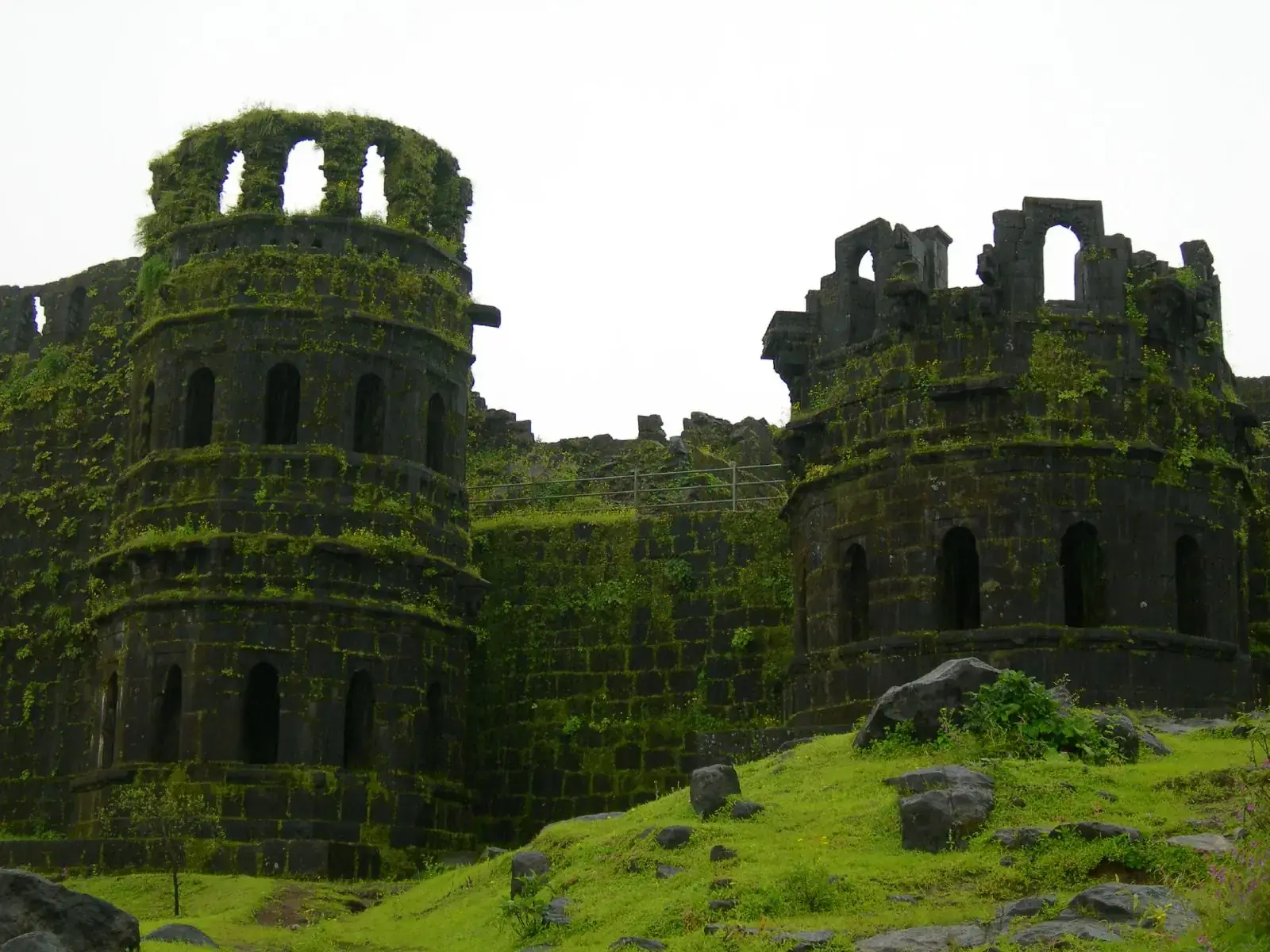 Heritage & Culture
Forts in Maharashtra: The Maratha Military Landscapes and More
A guide to the forts of Maharashtra: the Maratha Military Landscapes of India inscribed by UNESCO in 2025 (Salher, Shivneri, Lohagad, Khanderi, Raigad, Rajgad, Pratapgad, Suvarnadurg, Panhala, Vijaydurg, Sindhudurg, and Gingee in Tamil Nadu), other famous forts such as Sinhagad, Daulatabad and Murud-Janjira, how to visit, fort treks, seasons and safety.
 Off-beat
Bhandardara Travel Guide: Arthur Lake, Waterfalls & Camping
A quiet dam-side lake ringed by peaks, a waterfall that free-falls 300 feet, and some of Maharashtra's clearest night skies — the complete guide to Bhandardara.
 Off-beat
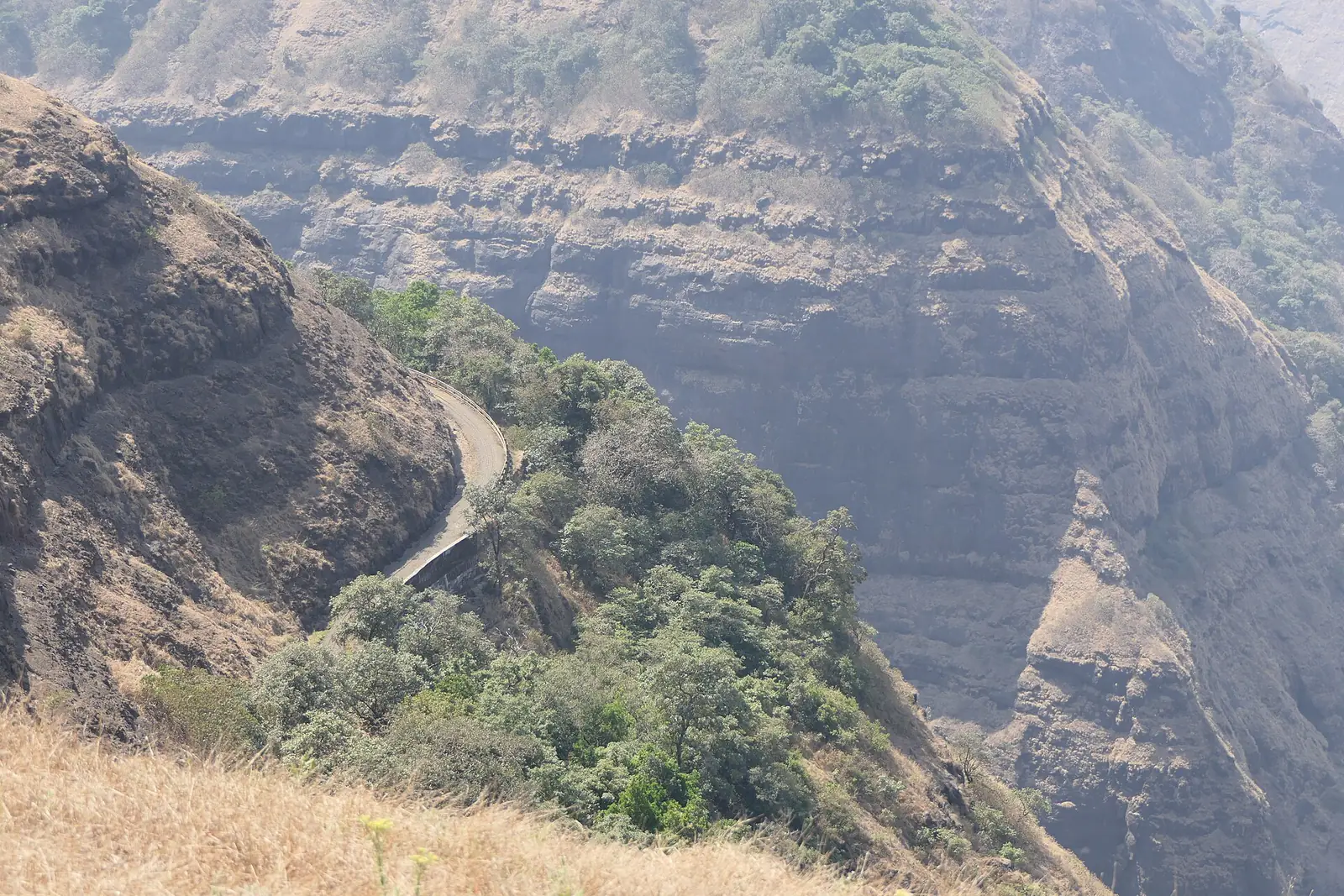
Matheran Travel Guide: India's Only Vehicle-Free Hill Station
No cars, no bikes, not even bicycles allowed — just red mud trails, a century-old toy train, and panoramic points over the Sahyadris. The complete guide to Matheran.
 Heritage
Ajanta & Ellora Caves Travel Guide: History, Timings & Tips
Buddhist cave paintings 2,000 years old and a temple carved downward out of a single basalt cliff — the complete guide to India's two greatest rock-cut wonders.