Why Ajanta & Ellora?
Roughly 100 km apart in the Deccan plateau near what is now Chhatrapati Sambhajinagar (formerly Aurangabad), two cave complexes together form one of the most complete records of ancient Indian religious art and engineering anywhere in the world. Both are UNESCO World Heritage Sites, both were carved directly out of volcanic basalt rock over centuries, and both were, for long stretches of history, essentially forgotten — Ajanta was only rediscovered in 1819 by a British officer out tiger hunting, who stumbled on the horseshoe-shaped gorge and the cave mouths cut into its cliff face.
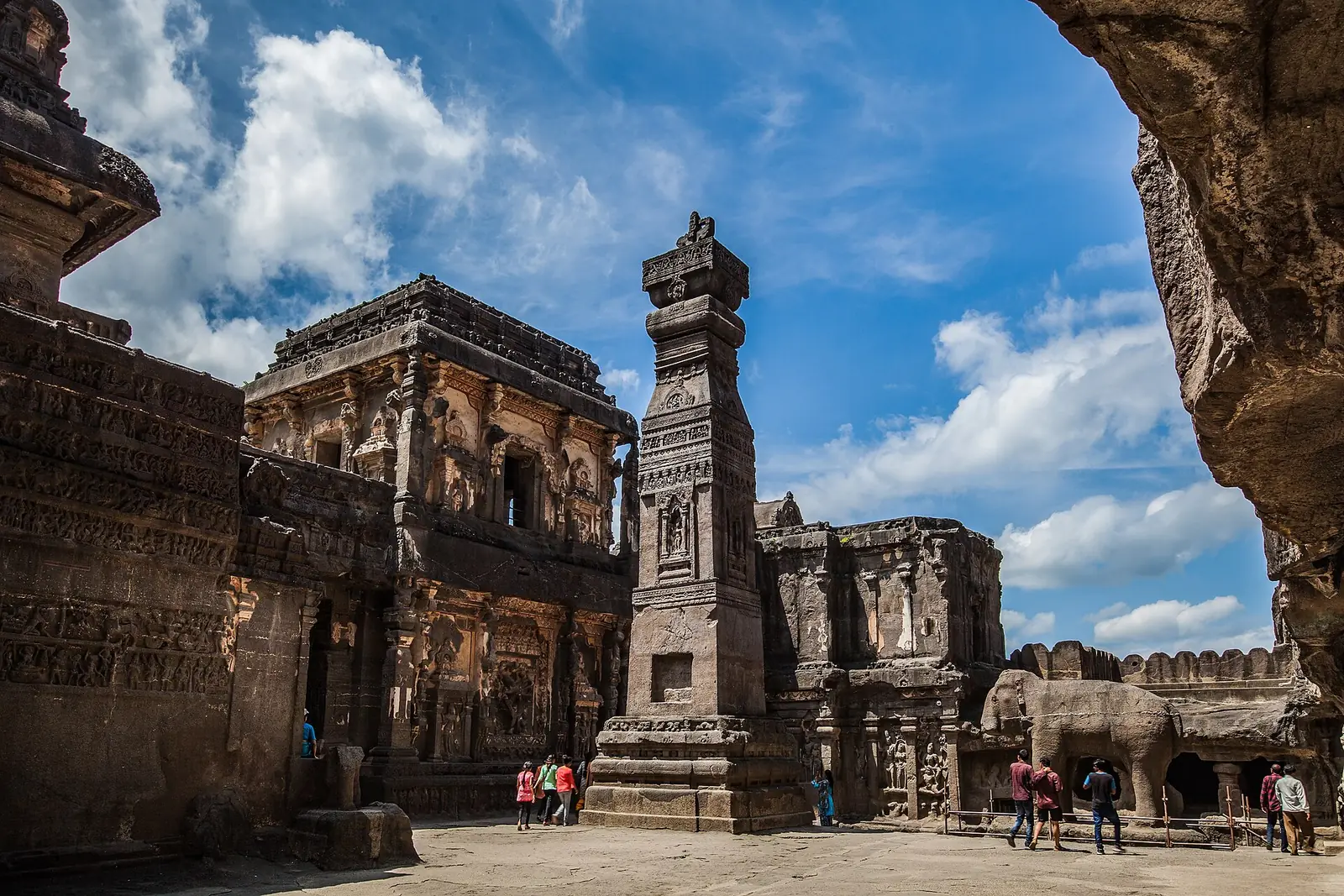
Ajanta Caves are older and almost entirely Buddhist — 30 caves cut between the 2nd century BCE and 6th century CE, famous above all for their fresco paintings, among the finest surviving examples of ancient Indian painting anywhere. Ellora Caves are younger (6th–10th century CE) and deliberately mixed — Buddhist, Hindu, and Jain monastic complexes carved side by side, a rare physical record of religious coexistence. Ellora's showpiece is the Kailasa Temple, Cave 16, excavated top-down out of a single rock face and still one of the largest monolithic structures on Earth.
Together they're not a quick stop — expect to give each site the better part of a day, ideally on separate days, with the city formerly known as Aurangabad as your base.
🛕 Ajanta & Ellora at a Glance
* Verify current closure days with the ASI before planning — these schedules do occasionally change.
Interested in the history? See our guide to rock-cut caves in India.
Planning a pilgrimage? See our guide to Grishneshwar Jyotirlinga near Ellora.
Best Time to Visit
Both sites involve hours of walking, climbing stairs cut into rock, and standing in open courtyards, so weather matters more than it might for an indoor museum.
Cool mornings and comfortable daytime highs make the long walking days at both sites genuinely enjoyable. This is also peak season, so expect more visitors, especially on weekends.
Temperatures regularly cross 38°C by midday. If you must visit in this window, start at opening time and plan to be done well before noon.
The Deccan plateau turns lush green and the Waghur gorge above Ajanta looks its most dramatic, but expect rain delays and humidity during the walk between caves.
Post-monsoon greenery lingers, temperatures start easing, and crowds haven't yet hit their winter peak.
Our pick: December to February. Cool mornings mean you can start early at Ajanta before the shuttle bus queues build up, and comfortably spend a full afternoon walking the length of Ellora's cave line.
How to Reach Ajanta & Ellora
Almost every visitor bases themselves in Chhatrapati Sambhajinagar (formerly Aurangabad), the nearest city with real airport and rail connectivity to both sites.
- By Air: Chhatrapati Sambhajinagar Airport (IXU) has direct flights from Mumbai, Delhi, Pune, and Hyderabad — by far the easiest way in.
- By Train: Chhatrapati Sambhajinagar railway station is well connected to Mumbai, Pune, and other major cities.
- To Ellora: About a 30-minute drive from the city — easily reached by taxi, rented car, or a shared tour.
- To Ajanta: Roughly a 2-hour drive. Private vehicles are stopped at Fardapur (or the designated T-junction) and visitors switch to a mandatory shuttle bus for the final stretch — a rule put in place to limit vehicle pollution near the paintings.
Ajanta Caves
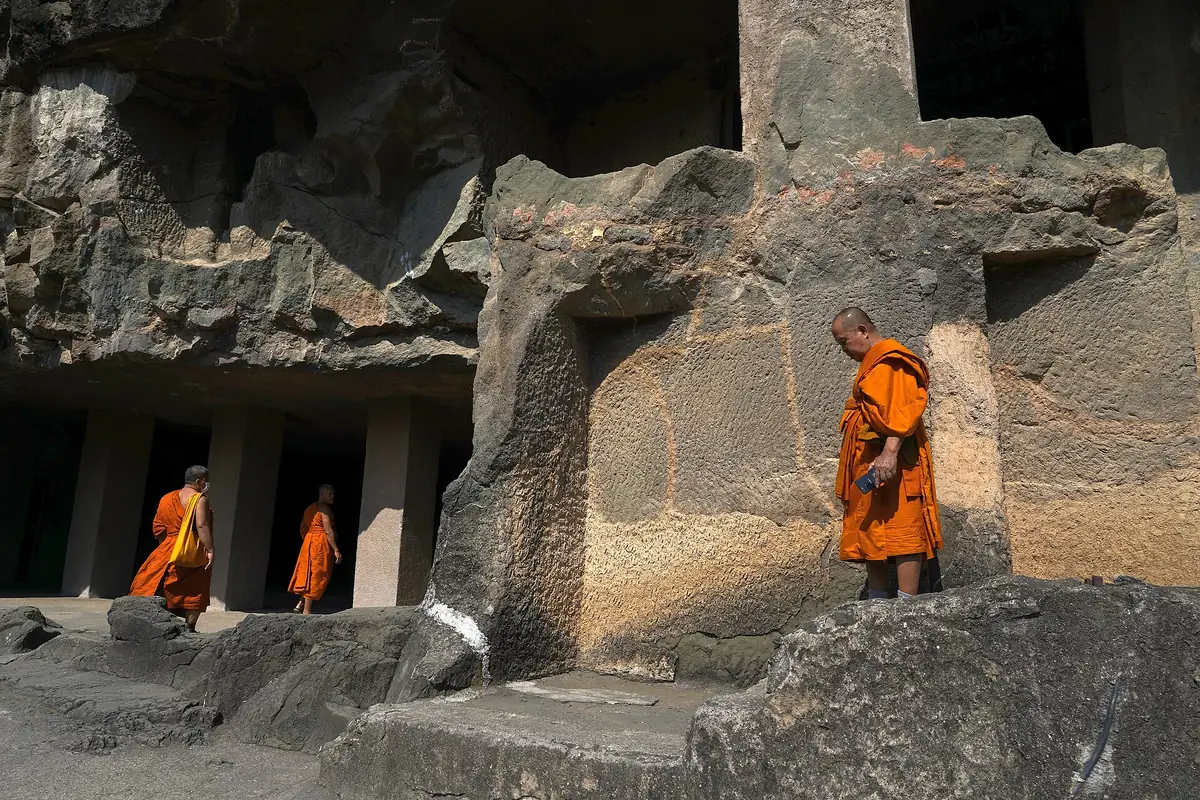
- The frescoes: Ajanta's real claim to fame — painted narrative scenes from the Jataka tales (stories of the Buddha's past lives), remarkably preserved across some caves given their age, and considered among the finest surviving examples of ancient Indian painting.
- The setting: All 30 caves are cut into the inner face of a horseshoe-shaped gorge above the Waghur river — the viewpoint across the gorge from the entrance path is worth the walk on its own.
- Chaitya halls & viharas: A mix of prayer halls (chaityas) with carved stupas and monastic living quarters (viharas), showing how the site functioned as a working Buddhist monastic community, not just a shrine.
- Photography rules: Flash photography is prohibited near the paintings to prevent further fading — bring a torch if you want to actually see detail in the dimmer caves.
Ellora Caves
- Kailasa Temple (Cave 16): The centerpiece — a full temple complex excavated top-down out of a single continuous basalt rock face to resemble Mount Kailash, an estimated 200,000 tonnes of stone removed by hand over decades. It's one of the largest monolithic rock-cut structures in the world.
- Buddhist caves (1–12): The oldest group, mostly monasteries and prayer halls, generally simpler than the Hindu caves that follow.
- Hindu caves (13–29): Including Kailasa Temple, dedicated primarily to Shiva, with elaborate carved narrative panels from Hindu mythology.
- Jain caves (30–34): The last group chronologically, smaller in scale but intricately carved, at the northern end of the site — placed side-by-side with the Buddhist and Hindu caves as a striking record of religious coexistence.
Where to Stay
Nearly everyone stays in Chhatrapati Sambhajinagar, which has the widest range of options and is a manageable drive from both sites.
- → MTDC Holiday Resort, Aurangabad
- → Budget hotels near the railway station
- → Guesthouses close to the airport road
- → Business hotels in Cidco/Osmanpura
- → Heritage-style boutique stays
- → Chain hotels near the airport
- → Vivanta Aurangabad
- → Taj/premium chain properties
- → Resort-style stays on the city outskirts
What to Eat
Chhatrapati Sambhajinagar's food reflects its Nizami and Marathwada influences — expect a heavier, spicier hand than coastal Maharashtra.
- Naan Qalia: A local mutton curry served with tandoor-baked naan — the city's signature dish.
- Aurangabadi Biryani: A Nizami-influenced biryani style distinct from Hyderabadi biryani, worth seeking out at long-running local joints.
- Thalis: Simple Marathwada vegetarian thalis are widely available and a reliable, filling option between cave visits.
- Roadside stalls near Ellora: Basic but decent chai and snack stalls cluster near the Ellora entrance for a quick break between caves.
2-Day Ajanta & Ellora Itinerary
Two full days, one site each, based out of Chhatrapati Sambhajinagar.
Ellora Caves
- ✓Early start, 30-min drive to Ellora
- ✓Walk the Buddhist caves (1–12) first
- ✓Spend the most time at Kailasa Temple (Cave 16)
- ✓Finish with the Jain caves (30–34)
- ✓Evening: return to the city, try Naan Qalia for dinner
Ajanta Caves
- ✓Early departure — roughly 2 hours by road
- ✓Park at Fardapur/T-junction and take the mandatory shuttle bus
- ✓Walk the cave line, prioritising the best-preserved fresco caves
- ✓Take in the horseshoe-gorge viewpoint before leaving
- ✓Return drive to the city by evening
Budget Breakdown
| Expense | Budget | Mid-Range | Luxury |
|---|---|---|---|
| Accommodation/night | ₹1,000 | ₹3,500 | ₹12,000 |
| Food/day | ₹400 | ₹1,000 | ₹2,500 |
| Local transport/day (car hire) | ₹1,500 | ₹2,500 | ₹4,500 |
| Entry fees (both sites) | ₹800 | ₹800 | ₹800 |
| Daily total | ₹1,900 – ₹2,300 | ₹5,800 | ₹18,500 |
| 2-Day trip total | ₹4,700 | ₹13,300 | ₹38,300 |
* Excludes flights/trains to Chhatrapati Sambhajinagar. Entry fees are approximate — confirm current ASI rates locally before you go.
Essential Travel Tips
- Verify closure days before you go: Ajanta is traditionally closed Mondays and Ellora Tuesdays, but confirm current ASI schedules ahead of your trip.
- Hire an ASI-approved guide: The Jataka tale paintings at Ajanta and the layered history at Ellora are much richer with context than a solo walk-through.
- No flash photography near the paintings: Carry a small torch instead to actually see fresco detail in dimmer caves.
- Wear real walking shoes: Both sites involve significant stairs and uneven stone paths.
- Start early in warmer months: Outside Nov–Mar, aim to be at either site by opening time and finish before the worst midday heat.
- Budget a full day per site: Don't try to combine both in one day — the Ajanta shuttle bus alone eats up significant time.
✅ Do
- →Visit Ajanta and Ellora on separate days
- →Hire an ASI-approved guide at both sites
- →Start early to beat both heat and crowds
- →Carry your own water and a torch
- →Check current closure days before finalising dates
- →Base yourself in Chhatrapati Sambhajinagar
❌ Don't
- →Try to cover both sites in a single day
- →Use flash photography near the paintings
- →Visit at midday in the Mar–Jun heat without shade breaks
- →Skip the guide and miss the historical context
- →Wear sandals for the extensive stone stairways
- →Assume the closure days without checking first
Frequently Asked Questions
Can I visit both Ajanta and Ellora Caves in one day?
Not comfortably. The two sites are roughly 100 km apart and each needs the better part of a day to see properly — Ajanta alone can take 3–4 hours once you add the shuttle bus ride in, and Ellora's spread-out cave complex is easily another half-day. Plan on two separate days, ideally with Chhatrapati Sambhajinagar (Aurangabad) as your base.
Which day are Ajanta and Ellora Caves closed?
Ajanta Caves are traditionally closed on Mondays, and Ellora Caves are traditionally closed on Tuesdays — but ASI schedules do change from time to time, so verify the current closure day before you finalise your itinerary.
How do I get from Chhatrapati Sambhajinagar to Ajanta and Ellora?
Ellora is about a 30-minute drive from the city, easily done by taxi or rented car. Ajanta is roughly 2 hours away by road; private vehicles are stopped at Fardapur (or the designated T-junction) and visitors switch to a mandatory shuttle bus for the final stretch to the caves, a rule meant to reduce pollution damage to the paintings.
What is the best time to visit Ajanta and Ellora?
November to March is ideal — cool mornings and comfortable daytime temperatures make the hours of walking, climbing, and standing in queues far more bearable. April to June gets punishingly hot for a full day outdoors at either site.
Is Ellora's Kailasa Temple really carved from a single rock?
Yes. Cave 16 at Ellora, the Kailasa Temple, was excavated top-down out of one continuous basalt rock face rather than built up from a foundation — an estimated 200,000 tonnes of rock were removed by hand over several decades. It remains one of the largest monolithic rock-cut structures on Earth.
Do I need a guide at Ajanta and Ellora?
It isn't mandatory, but it's genuinely worth it. Both sites reward context — the Jataka tale narratives painted on Ajanta's cave walls and the layered Buddhist-Hindu-Jain history at Ellora are far more meaningful with an ASI-approved guide than a solo walk-through with a phone camera.
What is the budget for a trip to Ajanta and Ellora?
A budget traveller basing out of Chhatrapati Sambhajinagar can expect to spend roughly ₹1,600–₹2,000 a day (stay, food, local transport, entry fees), a mid-range trip runs closer to ₹4,500–₹5,500 a day, excluding flights or trains into the region.
Published by the Kudozz Club editorial team · Last updated · How we research our guides
Want us to plan this trip for you?
Tell Kudozz Club where you want to go and what kind of trip you’re looking for. We’ll build a Ajanta & Ellora Caves and Maharashtra itinerary around your dates and budget.
Continue Exploring
View all guides Heritage
Shirdi Travel Guide: Sai Baba Temple, Timings & How to Reach
One of India's most-visited pilgrimage towns, built around the shrine of Sai Baba — the complete guide to darshan timings, stays, and getting to Shirdi.
 Heritage
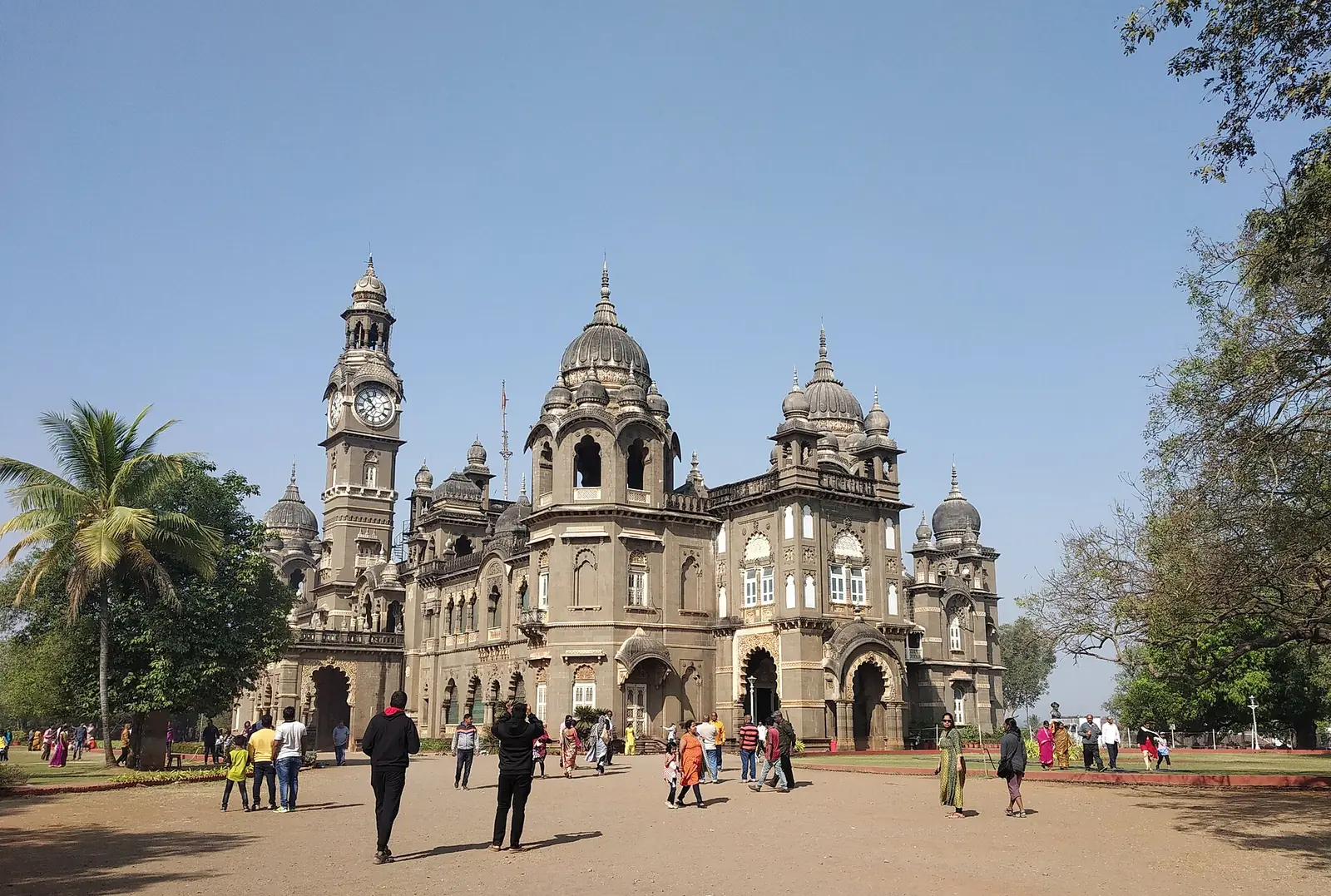
Kolhapur Travel Guide: Mahalaxmi Temple, Palace & Kolhapuri Food
A Shakti Peeth temple city, a New Palace built by an English architect, and the fieriest thali in Maharashtra — the complete guide to Kolhapur.
 Heritage
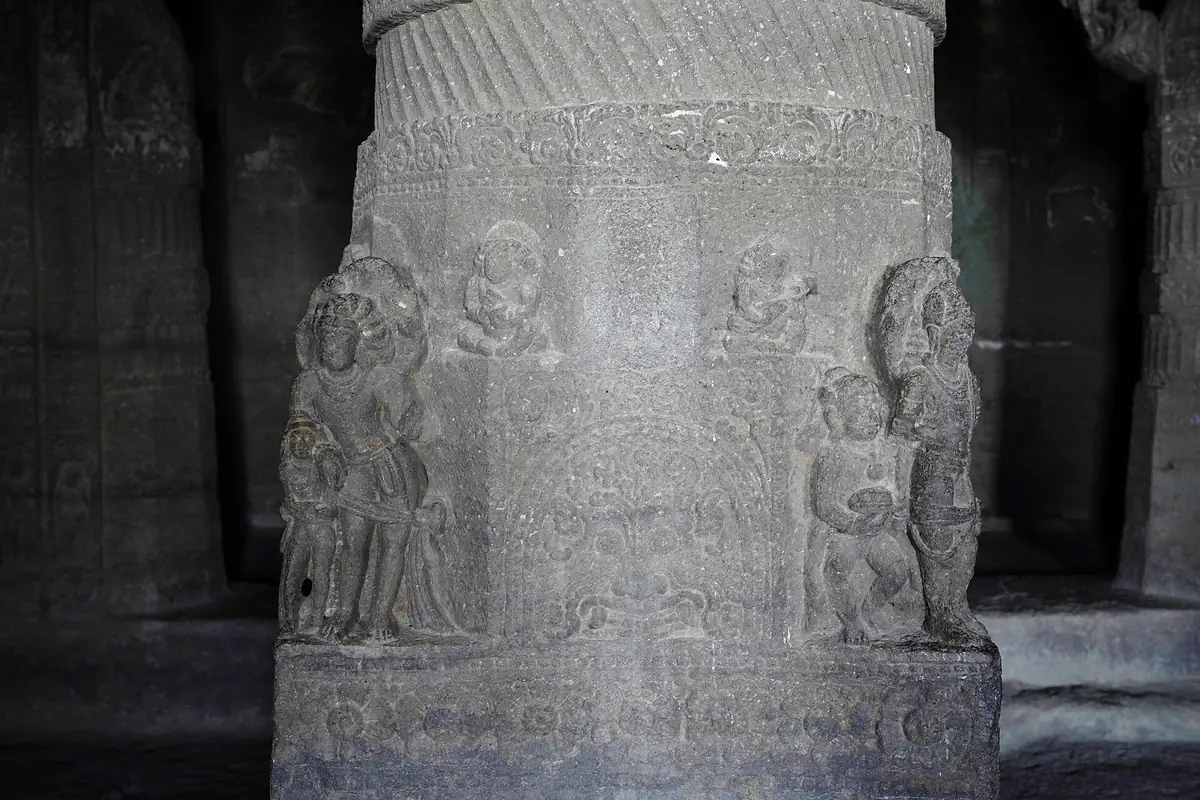
Chhatrapati Sambhajinagar Travel Guide: Bibi Ka Maqbara & Forts
A Mughal-era 'mini Taj Mahal', the hilltop Daulatabad Fort, and the gateway to Ajanta and Ellora — the complete guide to Chhatrapati Sambhajinagar (Aurangabad).
 Spiritual Tourism
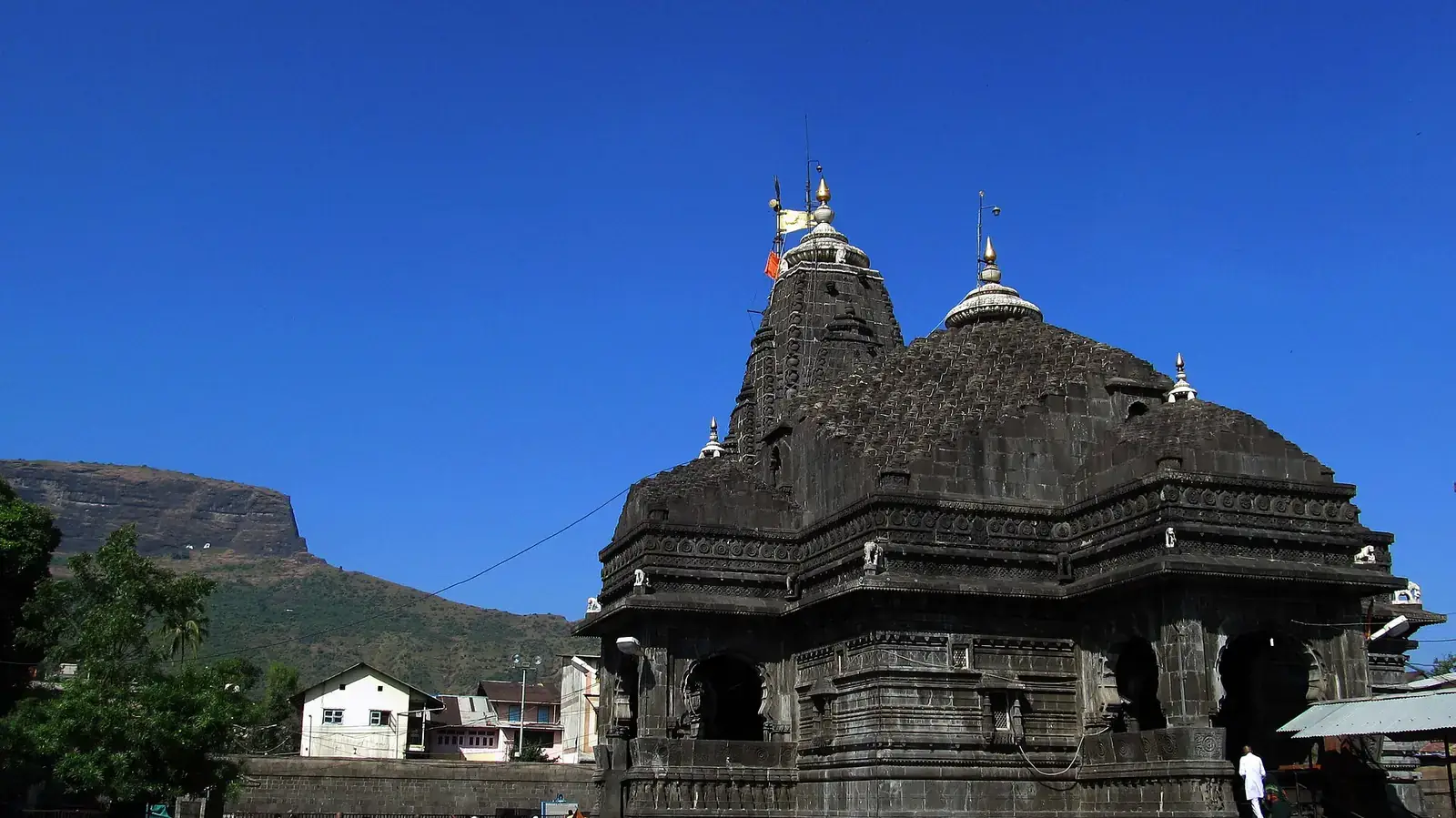
Trimbakeshwar Jyotirlinga: Temple Guide, Darshan and How to Reach
A visitor's guide to Trimbakeshwar Jyotirlinga at Trimbak, Nashik district: the temple's history and unusual linga, darshan and puja practicalities, Kushavarta tank and the Brahmagiri source of the Godavari, how to reach from Nashik and Mumbai, where to stay, the best time and the 2027 Simhastha Kumbh.