Why Manas?
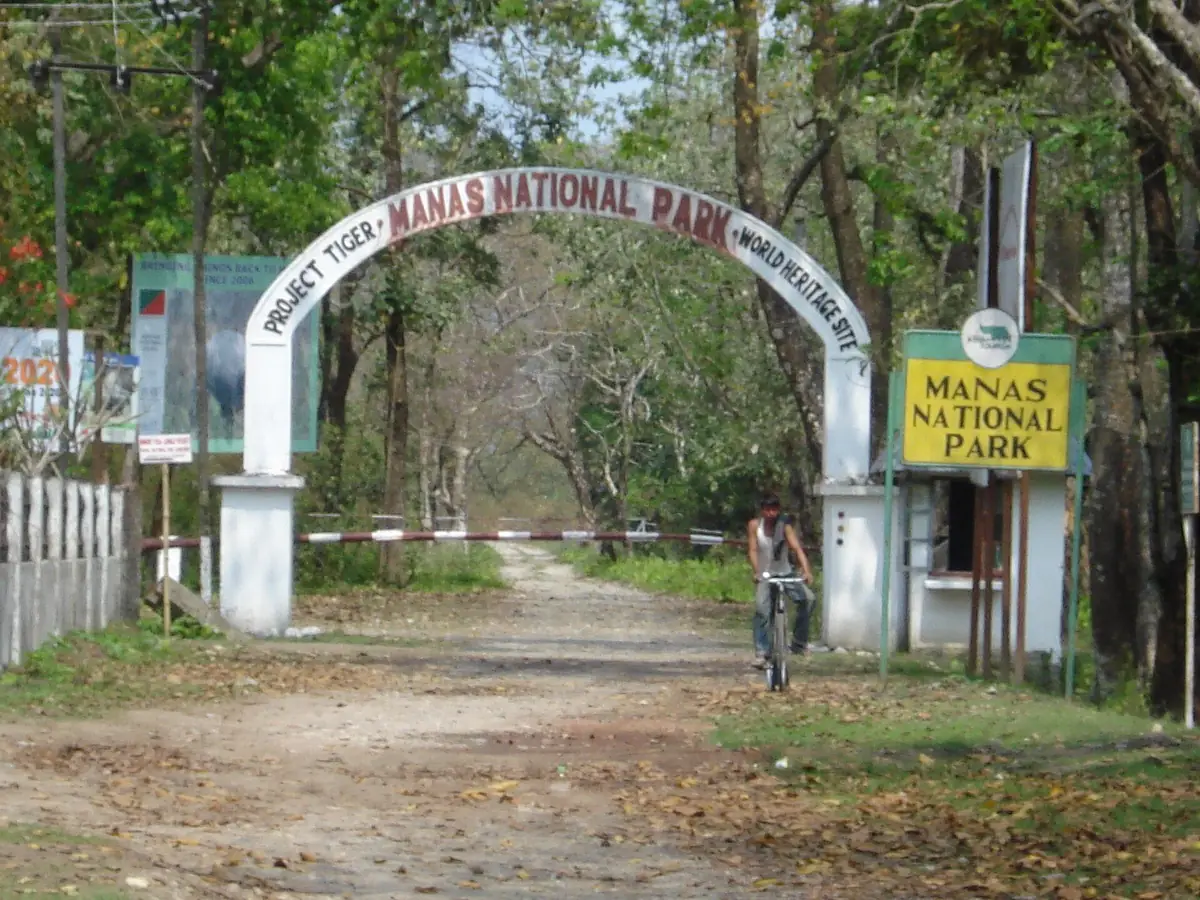
Manas National Park is a UNESCO World Heritage Site and Project Tiger reserve straddling the Assam-Bhutan border, contiguous with Bhutan's own Royal Manas National Park on the other side — together forming a significant transboundary conservation landscape.
Manas's story is worth knowing before you go: during a period of regional unrest in the 1980s-90s, the park suffered severe poaching and infrastructure damage, and was placed on UNESCO's "World Heritage in Danger" list. What followed was a genuine, well-documented conservation recovery — rhinos were reintroduced, patrolling and infrastructure rebuilt, and the park was eventually removed from that danger list. Visiting Manas today means visiting a real comeback story, not just a wildlife park.
🐅 Manas at a Glance
Planning a wildlife trip? See our guide to wildlife tourism in Assam.
Best Time to Visit Manas
Cool, dry weather with the most comfortable safari conditions.
Warmer but still within the safari season, with wildlife often visible near remaining water sources.
The park closes for monsoon and river flooding, similar to Kaziranga — verify current exact dates.
Our pick: November to February — the most comfortable window and the peak of the safari season.
How to Reach Manas
- By Air: Guwahati is the nearest airport, about 140km away.
- By Train: Barpeta Road is the nearest railway station.
- By Road: Road access from Guwahati is the standard route.
Safaris & Wildlife
- Tigers: Present in the park as part of Project Tiger, though sightings aren't guaranteed on any single visit.
- One-horned rhinos: Reintroduced as part of the park's post-crisis conservation recovery.
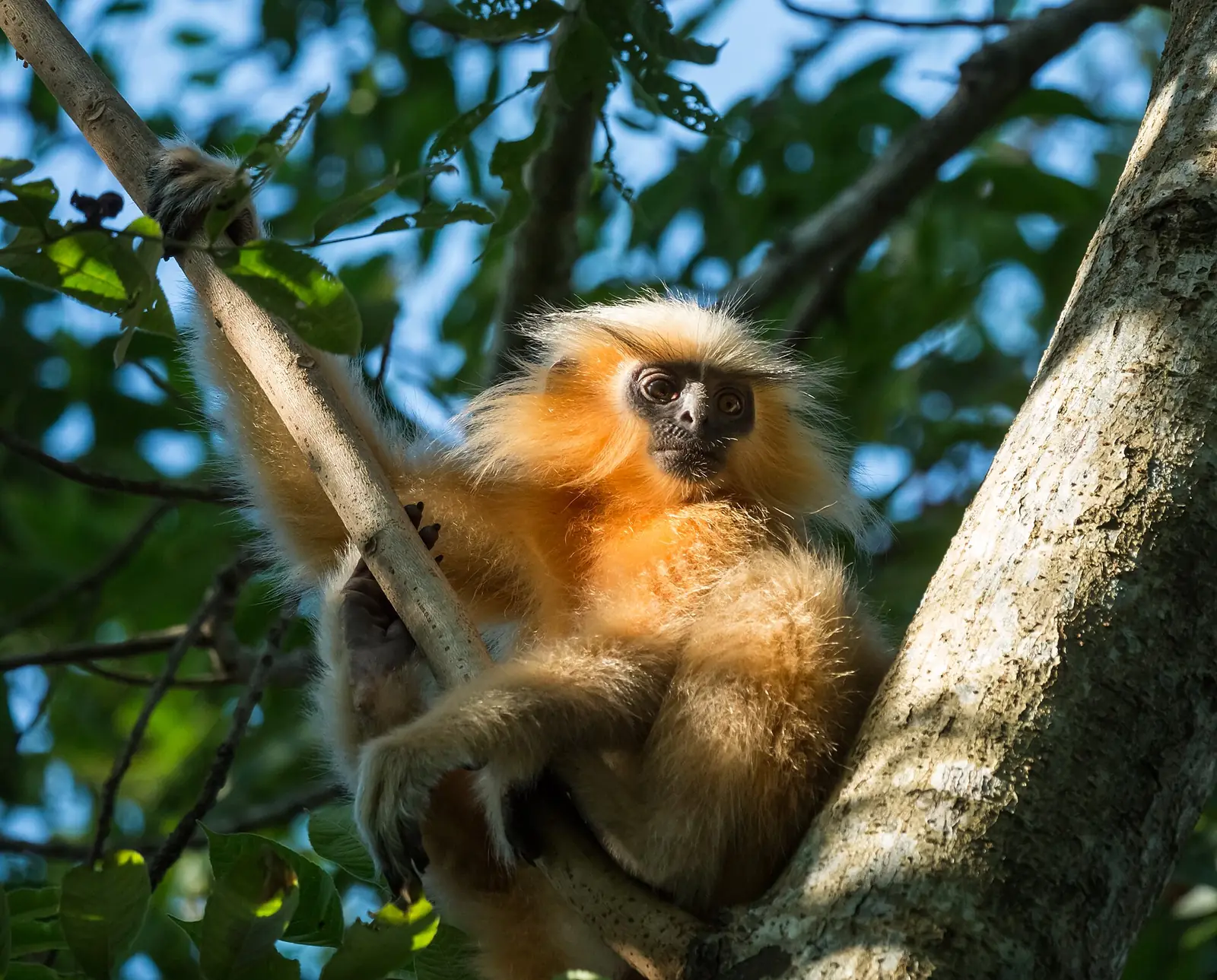
- Golden langurs: A rare, striking primate species for which Manas is a particularly notable habitat.
- Pygmy hogs: One of the world's rarest and smallest wild pig species, with Manas a key conservation site.
- Wild water buffalo and elephants: Also present across the park's forest and grassland zones.
- Manas River: Runs through the park, adding scenic river-valley terrain to the ecosystem.
Where to Stay Near Manas
- → Basic lodges near the park gate
- → Simple guesthouses in Barpeta Road
- → Forest-adjacent mid-range resorts
- → Better-appointed eco-lodges
- → A small number of premium safari lodges — luxury options remain limited here
What to Eat Near Manas
- Assamese thalis: Simple rice, dal, and vegetable meals available at most lodges.
- Khar and tenga: Two distinctive Assamese preparations — an alkaline dish and a light sour curry — worth seeking out at local eateries.
- Assam tea: A genuine constant across the region, given the state's tea-growing heritage.
2-Day Manas Itinerary
Arrival & First Safari
- ✓Travel from Guwahati
- ✓Check in near the park gate
- ✓Afternoon safari
Second Safari & Departure
- ✓Early morning safari (best golden-langur viewing odds)
- ✓Late morning: rest/departure prep
- ✓Travel back to Guwahati
Budget Breakdown
| Expense | Budget | Mid-Range |
|---|---|---|
| Accommodation/night | ₹1,200 | ₹3,500 |
| Food/day | ₹400 | ₹900 |
| Safari/gypsy hire | ₹1,800 | ₹3,000 |
| Daily total | ₹2,000 | ₹5,000 |
| 2-Day trip total | ₹4,000 | ₹10,000 |
* Excludes transport to the region.
Essential Travel Tips for Manas
- Book safaris in advance: Especially during peak winter months.
- Verify current monsoon closure dates: The park's exact reopening date can shift year to year.
- Watch for golden langurs specifically: A genuine Manas highlight not found at most other Indian reserves.
- Consider Manas over Kaziranga if you want fewer crowds: Both cross-reference well as a combined Assam wildlife trip.
✅ Do
- →Book safaris ahead of your visit
- →Look out for golden langurs in the canopy
- →Verify current park opening/closure dates
- →Consider pairing with Kaziranga for a fuller Assam wildlife trip
- →Bring good binoculars for the mixed terrain
❌ Don't
- →Expect a guaranteed tiger sighting
- →Show up without confirming safari availability
- →Visit during the monsoon closure without checking dates
- →Wear bright colors on safari
- →Skip insect repellent given the river-valley humidity
Frequently Asked Questions
Is Manas safe and stable to visit today?
Yes — Manas went through a genuinely difficult period of poaching and infrastructure damage during regional unrest in the 1980s-90s, which saw it added to UNESCO's 'World Heritage in Danger' list. Since then it has undergone a well-documented conservation recovery and was removed from that danger list. Today it operates as a normal, safe-to-visit tiger reserve.
How many days do I need at Manas?
One to two days covers a couple of safaris comfortably. Given the travel time from Guwahati, most visitors stay at least one night near the park.
What is the best time to visit Manas?
November to April is the safari season, similar to Kaziranga. The park is typically closed roughly May–October for monsoon — verify current exact closure dates before planning.
How do I reach Manas?
The nearest airport is Guwahati (~140km), and the nearest railway station is Barpeta Road. Road access from Guwahati is the standard route.
Can I see tigers at Manas?
Tigers are present, but as with most reserves, sightings aren't guaranteed on any single visit. Manas is also notable for other wildlife — one-horned rhinos (reintroduced as part of the park's recovery), golden langurs, wild water buffalo, and pygmy hogs.
How is Manas different from Kaziranga?
Manas is generally quieter and less crowded than Kaziranga, straddles the Bhutan border with a genuinely compelling conservation-recovery story, and is a particularly notable habitat for golden langurs — a species Kaziranga isn't known for.
What is the budget for a trip to Manas?
A budget traveler can manage on roughly ₹2,000 a day including a basic safari, a mid-range trip closer to ₹5,000 a day.
Published by the Kudozz Club editorial team · Last updated · How we research our guides
Want us to plan this trip for you?
Tell Kudozz Club where you want to go and what kind of trip you’re looking for. We’ll build a Manas National Park and Assam itinerary around your dates and budget.
Continue Exploring
View all guides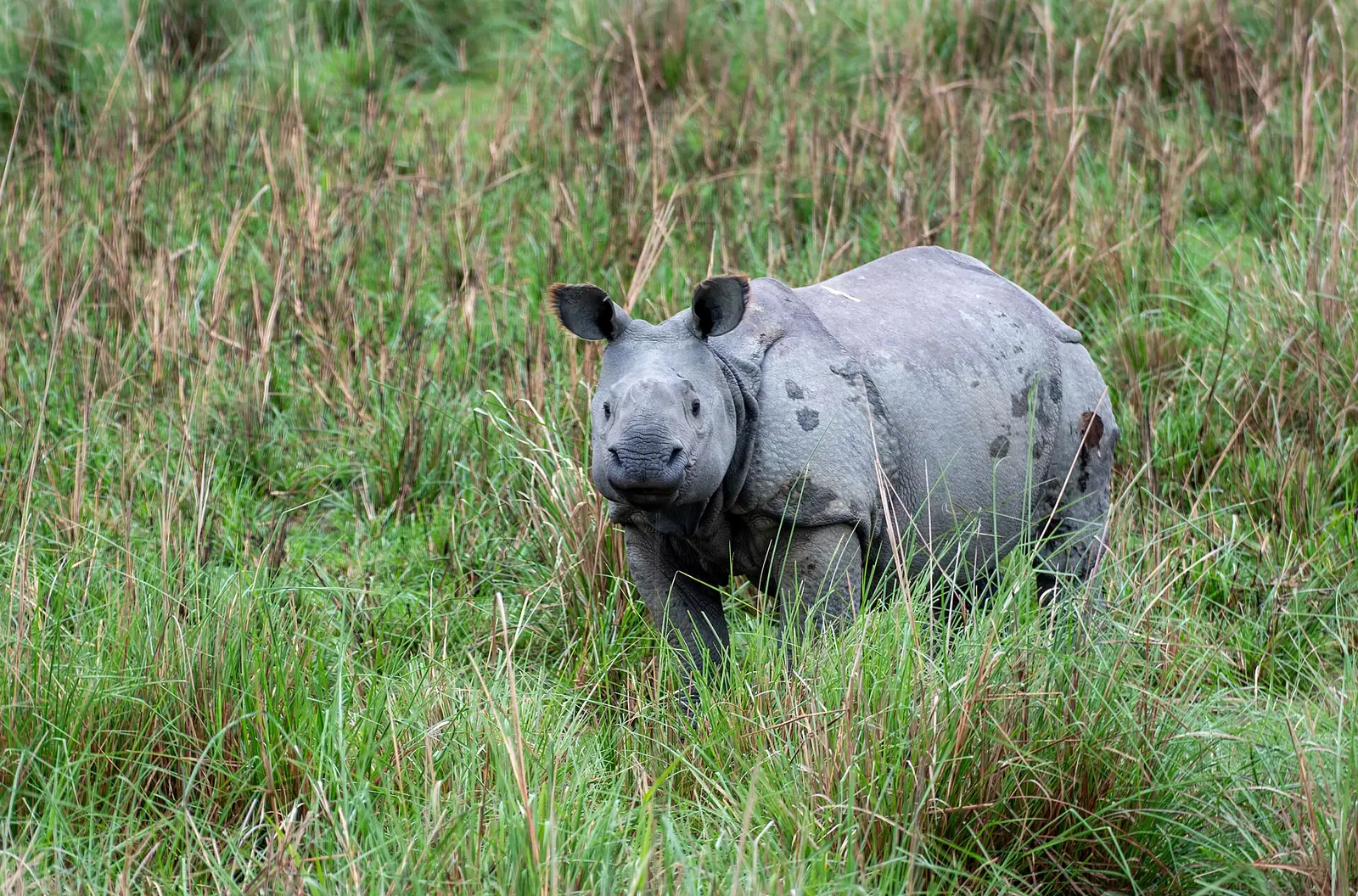 Adventure
Pobitora Wildlife Sanctuary Travel Guide: Highest Rhino Density on Earth
A small sanctuary packing the highest density of one-horned rhinos found anywhere in the world, close enough to Guwahati for a day safari — the complete guide to Pobitora.
 Adventure
Valmiki Nagar Travel Guide: Tiger Reserve & Himalayan Foothills
Bihar's only tiger reserve, tucked into the Himalayan foothills where the Gandak River enters India from Nepal — the complete guide to Valmiki Nagar.
 Adventure
Kaziranga National Park Travel Guide: One-Horned Rhino Safari
Home to two-thirds of the world's remaining one-horned rhinos, and one of India's most successful wildlife conservation stories — the complete guide to Kaziranga.
 Adventure
Nameri National Park Travel Guide: Rafting & Birdwatching
A forest park on the Jia Bhoroli River known for river rafting and some of Northeast India's best birdwatching — the complete guide to Nameri.