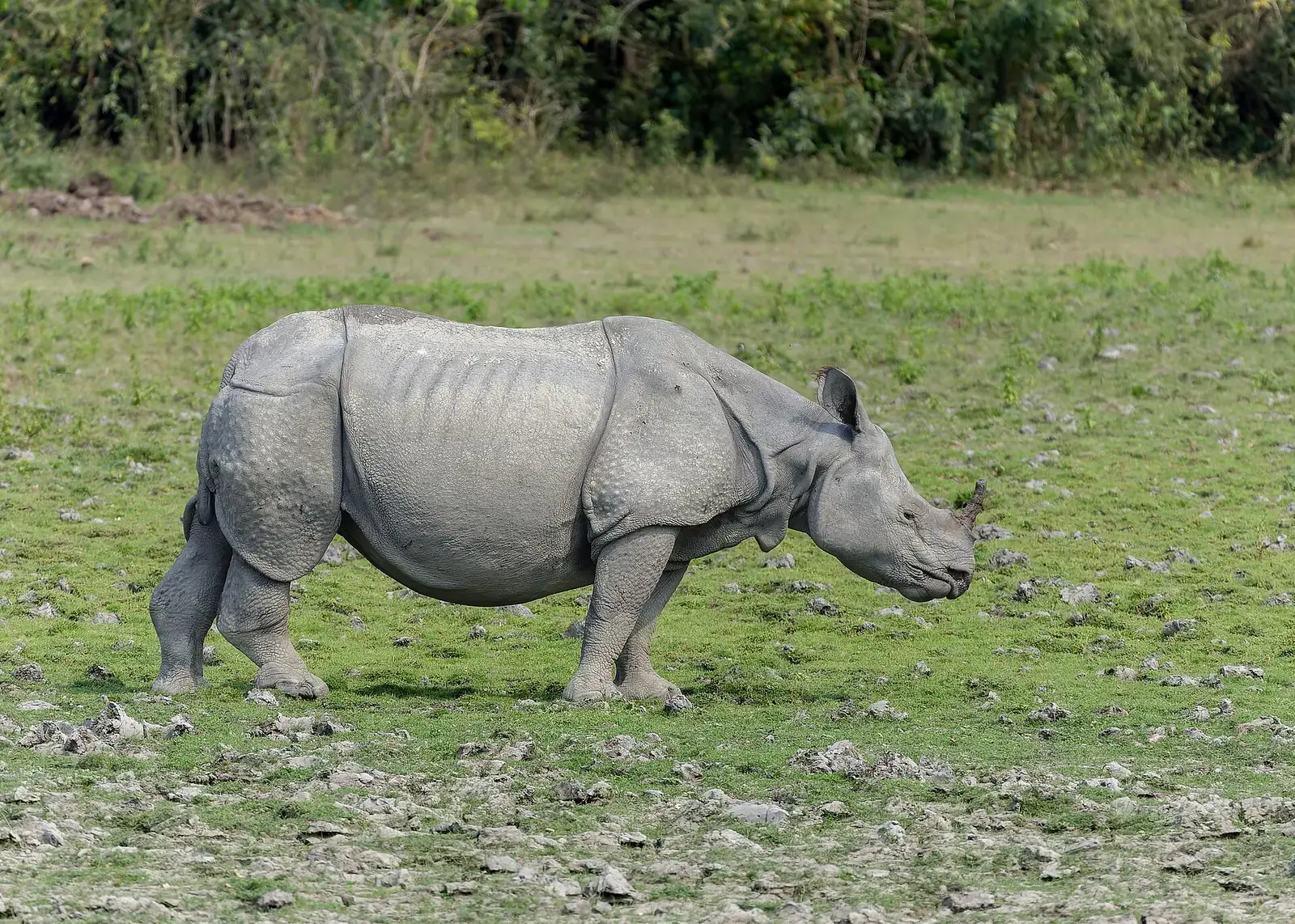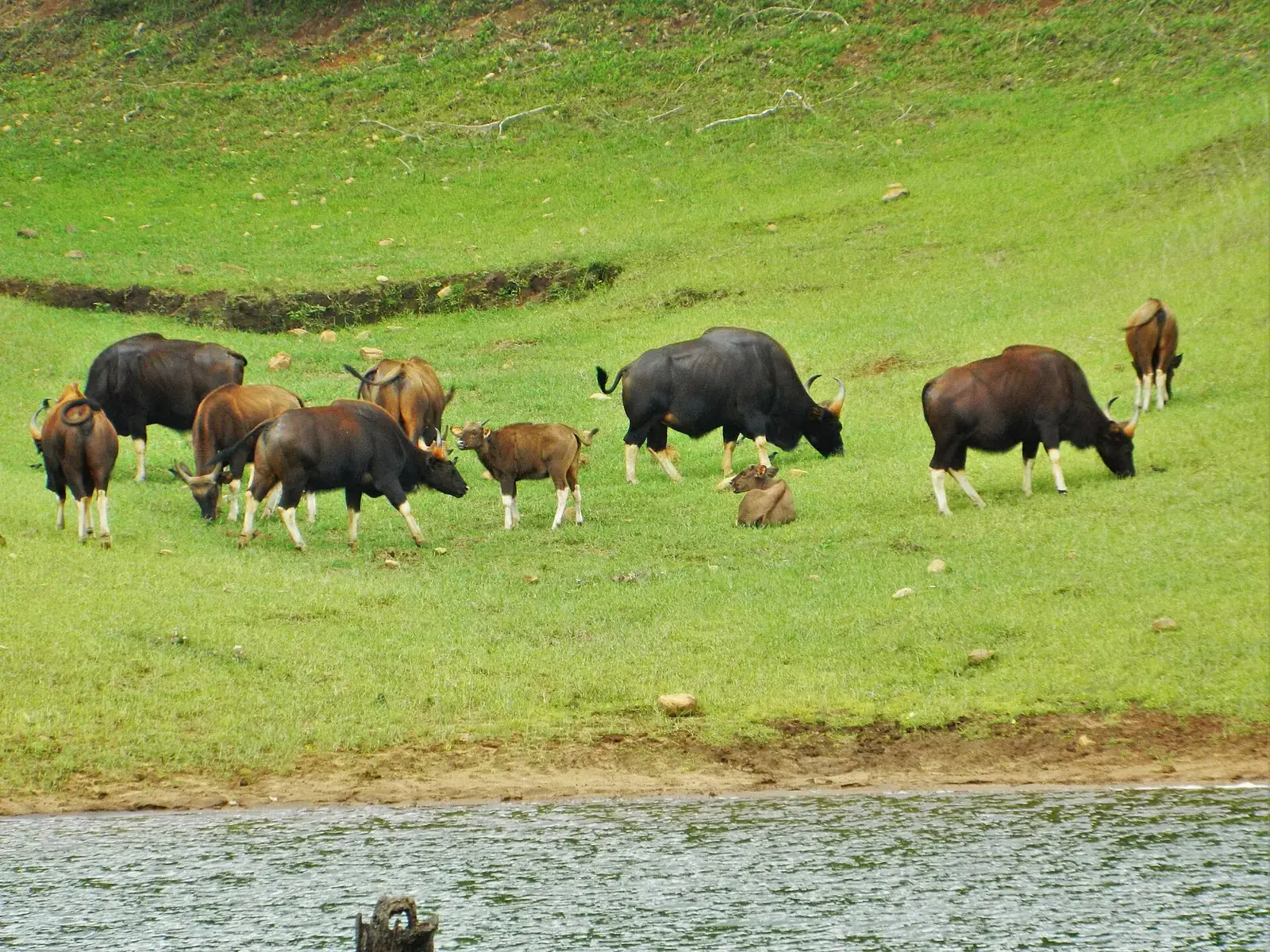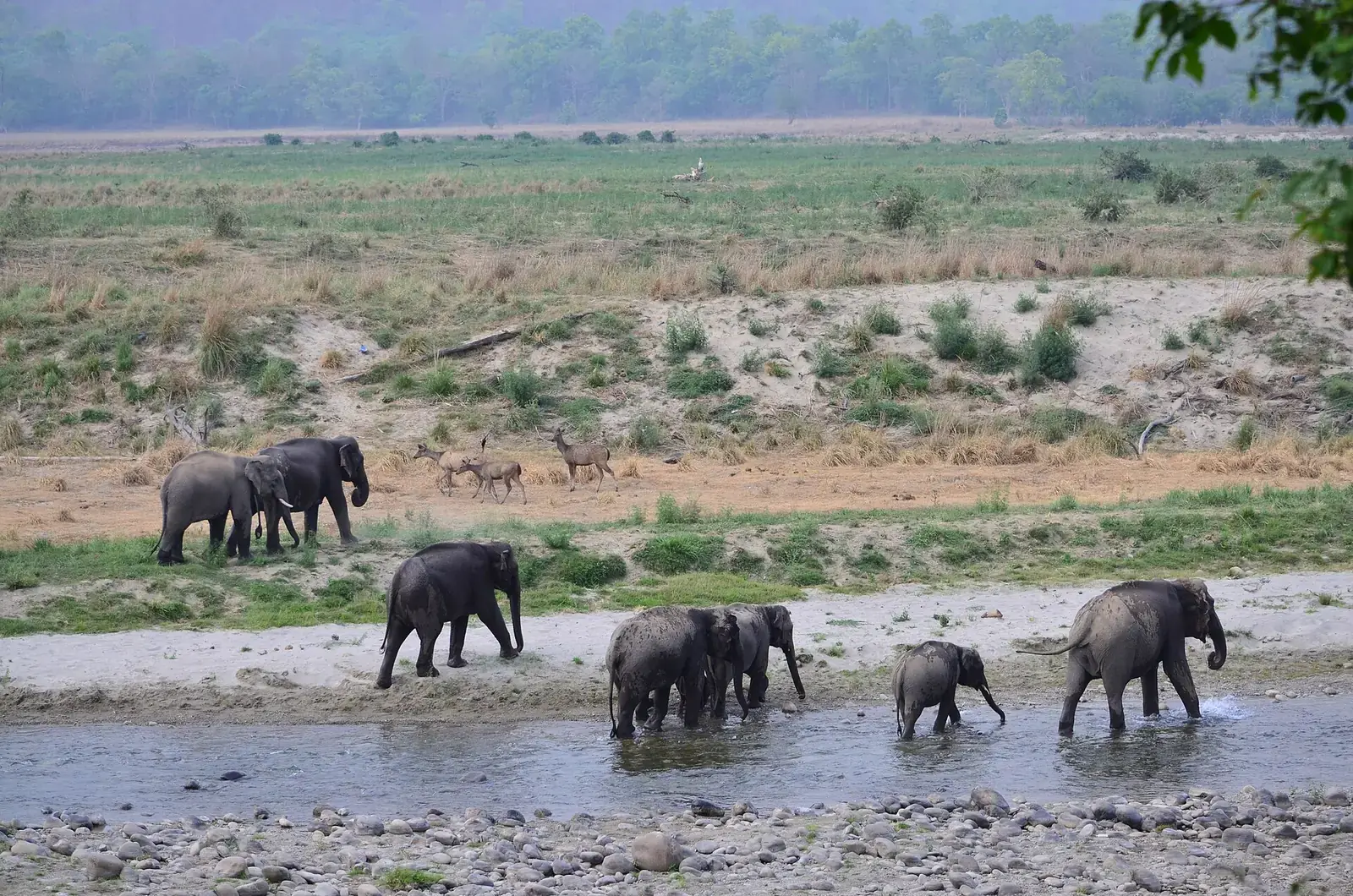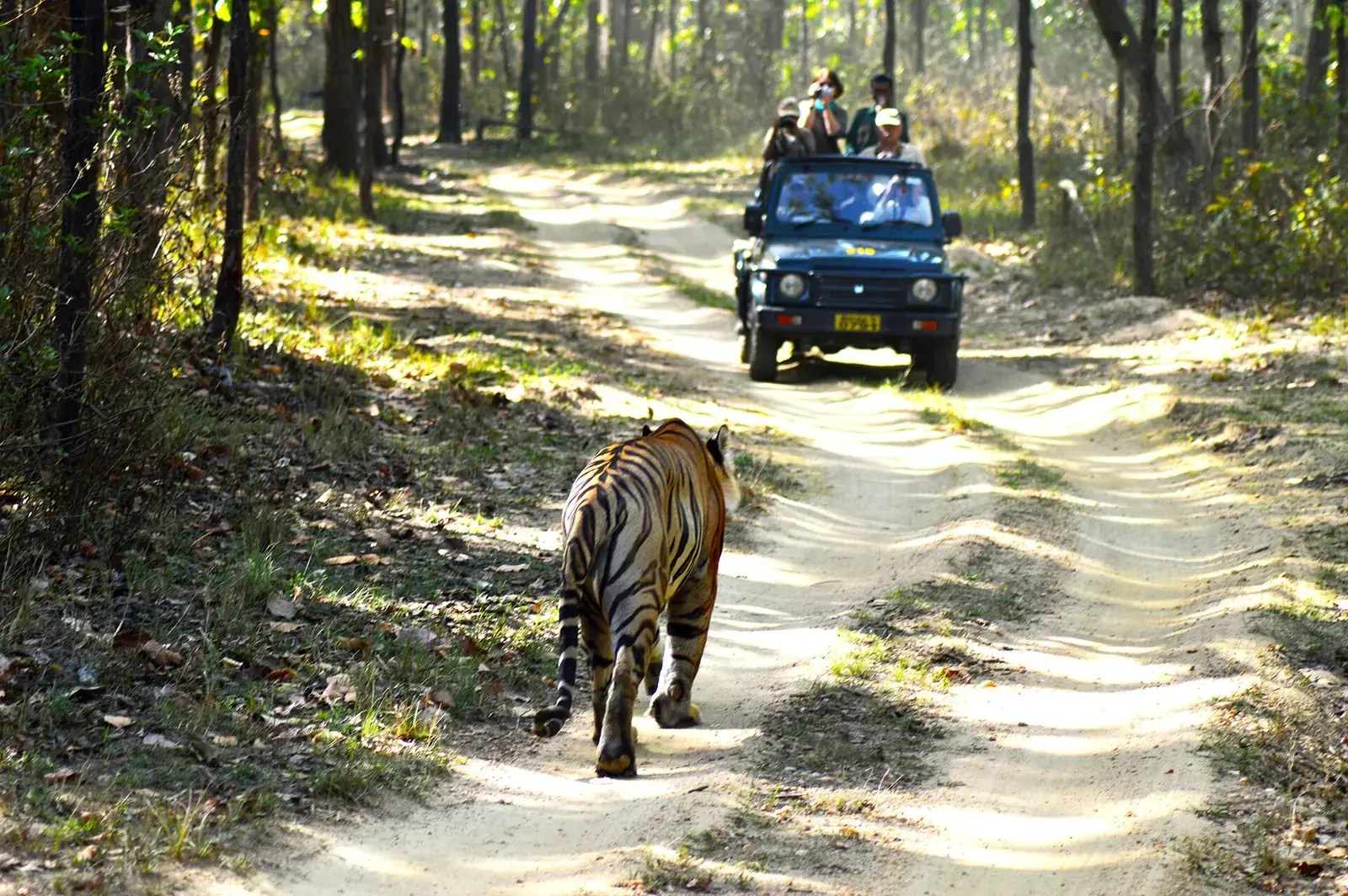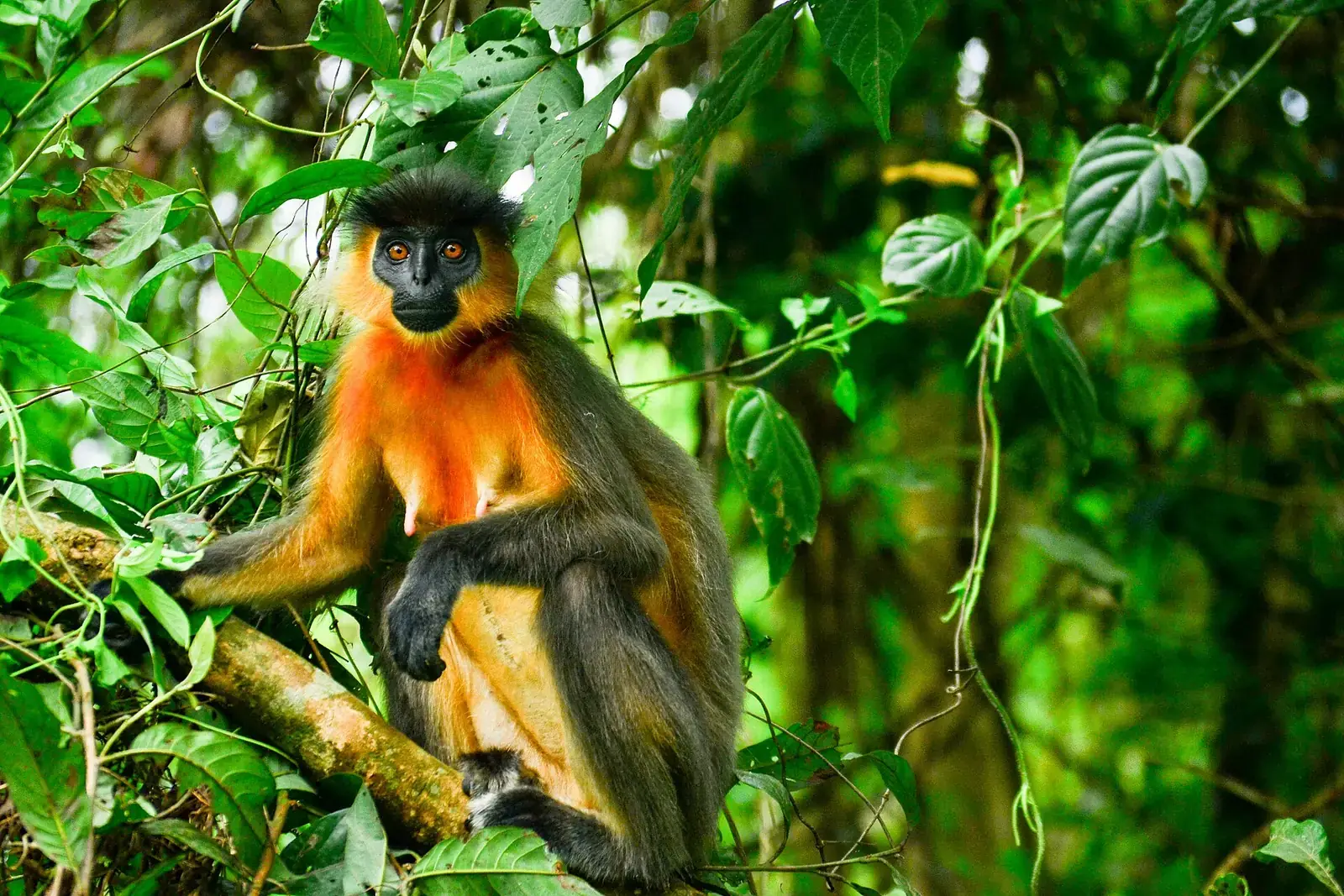
Assam's floodplains along the Brahmaputra hold India's largest populations of the greater one-horned rhinoceros, wild water buffalo and swamp deer, along with tigers, elephants and more than 450 bird species in Kaziranga alone. Kaziranga and Manas are both UNESCO World Heritage Sites.
The state has four tiger reserves: Kaziranga, Manas, Nameri and Orang. It also has forests with hoolock gibbons and golden langurs, and river islands where Gangetic dolphins surface.
Quick answer
Assam's leading wildlife destination is Kaziranga National Park, with 2,613 rhinos in the 2022 count, plus elephants, wild buffalo and tigers. Manas, on the Bhutan border, has golden langurs and rhinos; Pobitora near Guwahati has a dense rhino population; Nameri suits birders; and Hollongapar Gibbon Sanctuary has hoolock gibbons. Parks are usually open from November to April.
Key takeaways
- Kaziranga holds most of the world's greater one-horned rhinos.
- Kaziranga and Manas are UNESCO World Heritage Sites.
- Assam has four tiger reserves: Kaziranga, Manas, Nameri and Orang.
- Parks usually open in November and close by May for the monsoon.
- Hollongapar near Jorhat is India's best-known place to see hoolock gibbons.
Wildlife places in Assam
| Place | Status | Known for | Gateway |
|---|---|---|---|
| Kaziranga | National park, tiger reserve, UNESCO site | Rhinos, buffalo, elephants, tigers | Jorhat, Guwahati |
| Manas | National park, tiger reserve, UNESCO site | Golden langur, rhinos, grassland birds | Guwahati, Barpeta Road |
| Pobitora | Wildlife sanctuary | Dense rhino population | Guwahati |
| Nameri | National park, tiger reserve | Birds, river rafting on the Jia Bhoroli | Tezpur |
| Orang | National park, tiger reserve | Rhinos, fewer visitors | Tezpur |
| Dibru-Saikhowa | National park | Feral horses, river dolphins, birds | Tinsukia |
| Hollongapar | Gibbon sanctuary | Hoolock gibbons | Jorhat |
Kaziranga
Ranges and safaris
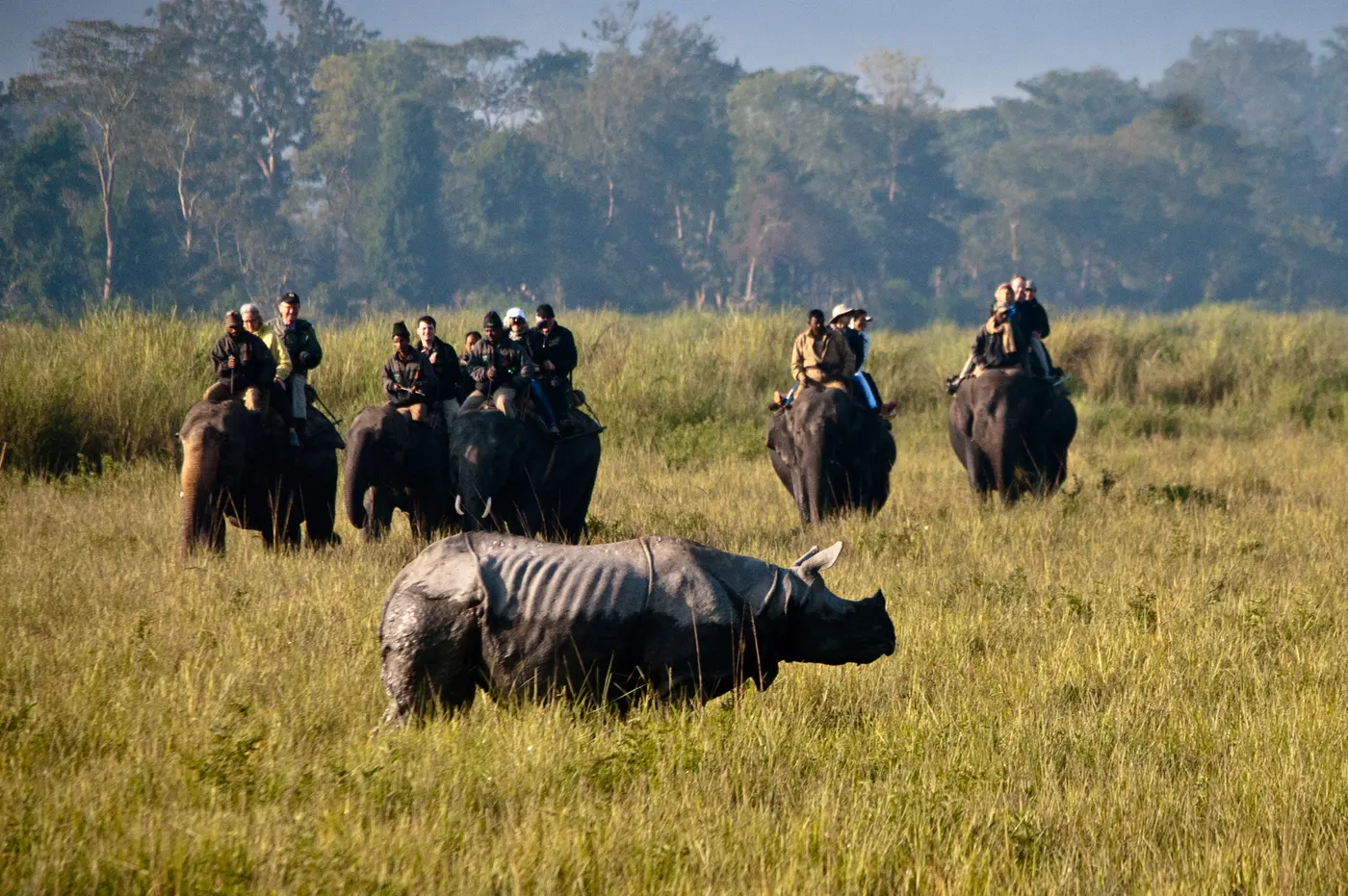
Jeep safaris run in the Kohora (central), Bagori (western), Agaratoli (eastern) and Burapahar ranges; elephant rides start from Kohora and Bagori. Agaratoli is good for waterbirds; Bagori for rhinos in open grassland.
- Season
- Usually November to April
Floods and the highway
Each monsoon, floods push animals across the highway to the Karbi Anglong hills. Speed limits apply on the road through the park all year.
Beyond Kaziranga
Manas
Forest and grassland running into Bhutan's Royal Manas National Park, with golden langurs, capped langurs, rhinos, and rare birds such as the Bengal florican.
Pobitora
About an hour or so from Guwahati, with rhinos in a small area; a good day trip.
Nameri
Forest along the Jia Bhoroli river, known for the white-winged wood duck and walks with forest guards.
Hollongapar
A small forest near Jorhat with hoolock gibbons, India's only ape, often heard before they are seen.
Where to stay and how long
Kaziranga's lodges and resorts cluster around Kohora, close to the central range, with more near Bagori and Agaratoli. Manas has a few lodges near the Bansbari gate, and Nameri has an eco-camp by the river. Guwahati works as a base for Pobitora.
Three nights in Kaziranga allow drives in each of the main ranges and an elephant ride. Add two nights for Manas, or a night each for Hollongapar and Majuli, to build a week-long trip.
Tips for Kaziranga
- Book elephant rides and morning jeep safaris a day or two ahead through your lodge or the official counters.
- Visit in February or March for shorter grass and better views.
- Carry binoculars for waterbirds and raptors on the wetlands.
- Respect the speed limits on the highway through the park.
When to go
| Months | What to expect |
|---|---|
| November to February | Cool, dry; tall grass burned from winter, improving views |
| March to April | Warmer; good sightings; parks close by May |
| May to October | Monsoon floods; most parks closed |
A sample route
| Days | Plan |
|---|---|
| 1 | Guwahati; afternoon at Pobitora |
| 2 to 4 | Kaziranga: jeep safaris in three ranges, one elephant ride |
| 5 | Hollongapar gibbons, then Jorhat or Majuli |
| Alternative | Manas for two nights from Guwahati |
Safety
- Sightings are never guaranteed; plan several drives and enjoy the forest itself.
- Stay in the vehicle on safaris and follow your guide.
- Book permits only through official forest department portals or trusted operators.
- Never feed animals or leave litter in a park.
- Rhinos and wild buffalo can charge; stay in the vehicle at all times.
What to pack
- Warm jacket for winter mornings
- Neutral clothes
- Binoculars
- Insect repellent
Ready to plan your wildlife escape?
FAQs
Which is the best national park in Assam?
Kaziranga for rhinos and variety; Manas for scenery and rare species.
When is Kaziranga open?
Usually from November to April; it closes for the monsoon.
Can I see tigers in Kaziranga?
Kaziranga has a high density of tigers, but tall grass makes them harder to see than rhinos.
Where can I see gibbons in Assam?
At Hollongapar Gibbon Sanctuary near Jorhat.
How many days do I need for Kaziranga?
Three nights allows safaris in the main ranges and an elephant ride.
How do I reach Kaziranga?
Jorhat airport is about two hours away and Guwahati about five hours by road.