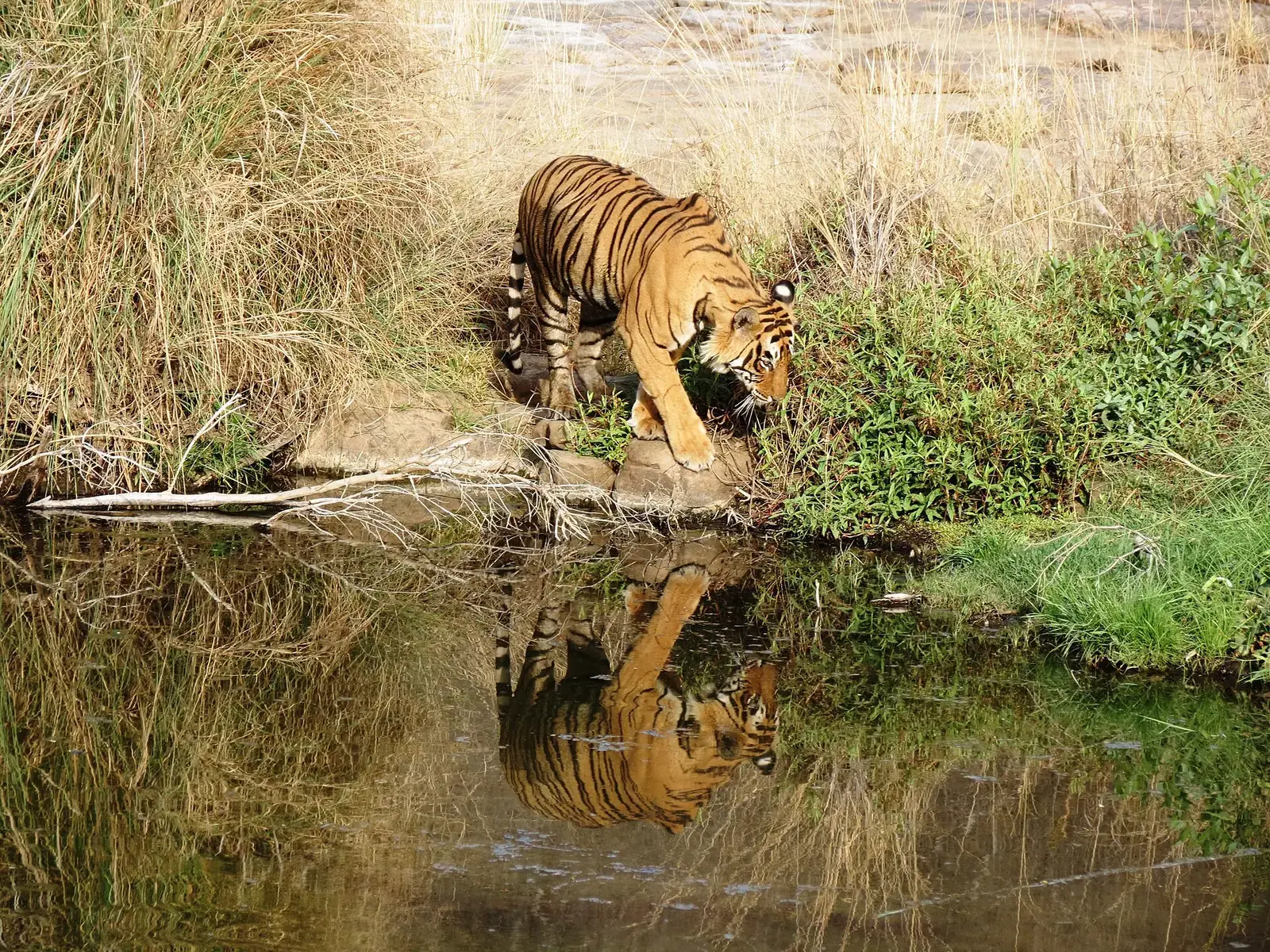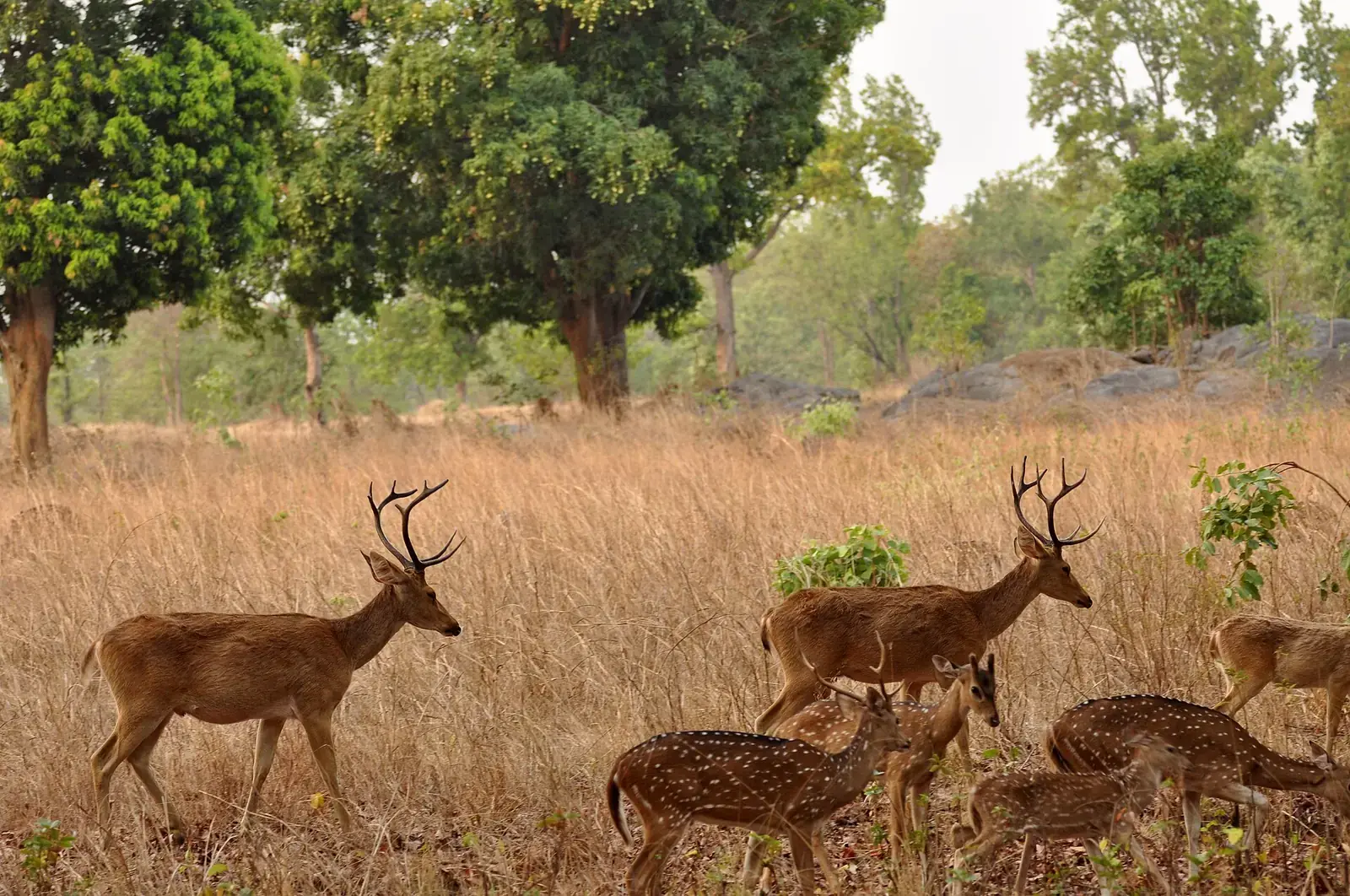
India had 107 national parks as of 2025, according to the Wildlife Institute of India's protected-area database. Under the Wildlife (Protection) Act, 1972, a national park has stronger protection than a sanctuary: grazing and most local rights are not allowed, and tourism is limited to set zones and routes.
Many of the best-known parks are also the core of a tiger reserve, so you will see both names used. The list below covers parks that combine good wildlife viewing with reasonable access, grouped by region.
Quick answer
Among India's national parks, Jim Corbett, Kanha, Bandhavgarh, Ranthambore and Tadoba are known for tigers, Kaziranga for one-horned rhinos, Gir for Asiatic lions and Keoladeo for birds. Hemis in Ladakh is the place for snow leopards and Eravikulam for the Nilgiri tahr. Most are open from about October to June, with core zones closed in the monsoon.
Key takeaways
- India has 107 national parks, the strictest category of protected area.
- Jim Corbett, set up in 1936 as Hailey National Park, is India's oldest.
- Kaziranga, Manas, Keoladeo, the Sundarbans, Nanda Devi and Valley of Flowers, and the Great Himalayan National Park are UNESCO World Heritage Sites.
- Many parks form the core of a tiger reserve.
- Most close their core zones in the monsoon.
Leading national parks at a glance
| National park | State | Known for | Usual season |
|---|---|---|---|
| Jim Corbett | Uttarakhand | Tigers, elephants, rivers | Mid-October to June (Dhikala mid-November to mid-June) |
| Kanha | Madhya Pradesh | Tigers, barasingha, meadows | October to June |
| Bandhavgarh | Madhya Pradesh | Tigers, fort, rocky hills | October to June |
| Ranthambore | Rajasthan | Tigers, lakes, fort | October to June |
| Tadoba | Maharashtra | Tigers, sloth bears, lakes | October to June |
| Kaziranga | Assam | Rhinos, wild buffalo, elephants | November to April |
| Gir | Gujarat | Asiatic lions | 16 October to 15 June |
| Keoladeo | Rajasthan | Wintering birds | October to March |
| Sundarbans | West Bengal | Mangroves, tigers, boats | September to March |
| Hemis | Ladakh | Snow leopards | January to March for snow leopards |
| Eravikulam | Kerala | Nilgiri tahr, grassland | Closed in the calving season, roughly February to March |
| Keibul Lamjao | Manipur | Sangai deer, floating phumdis | October to April |
Tiger parks
Jim Corbett
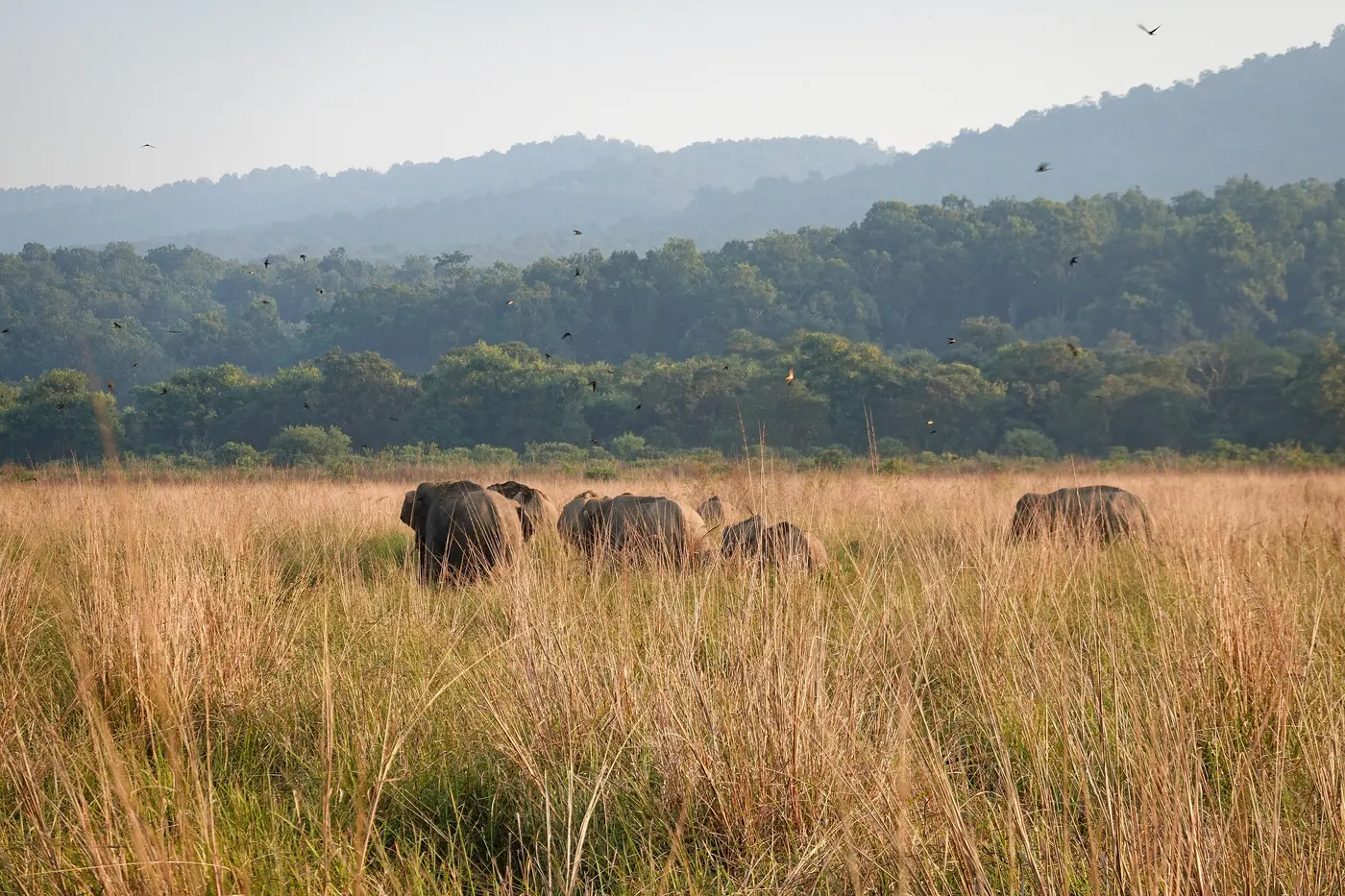
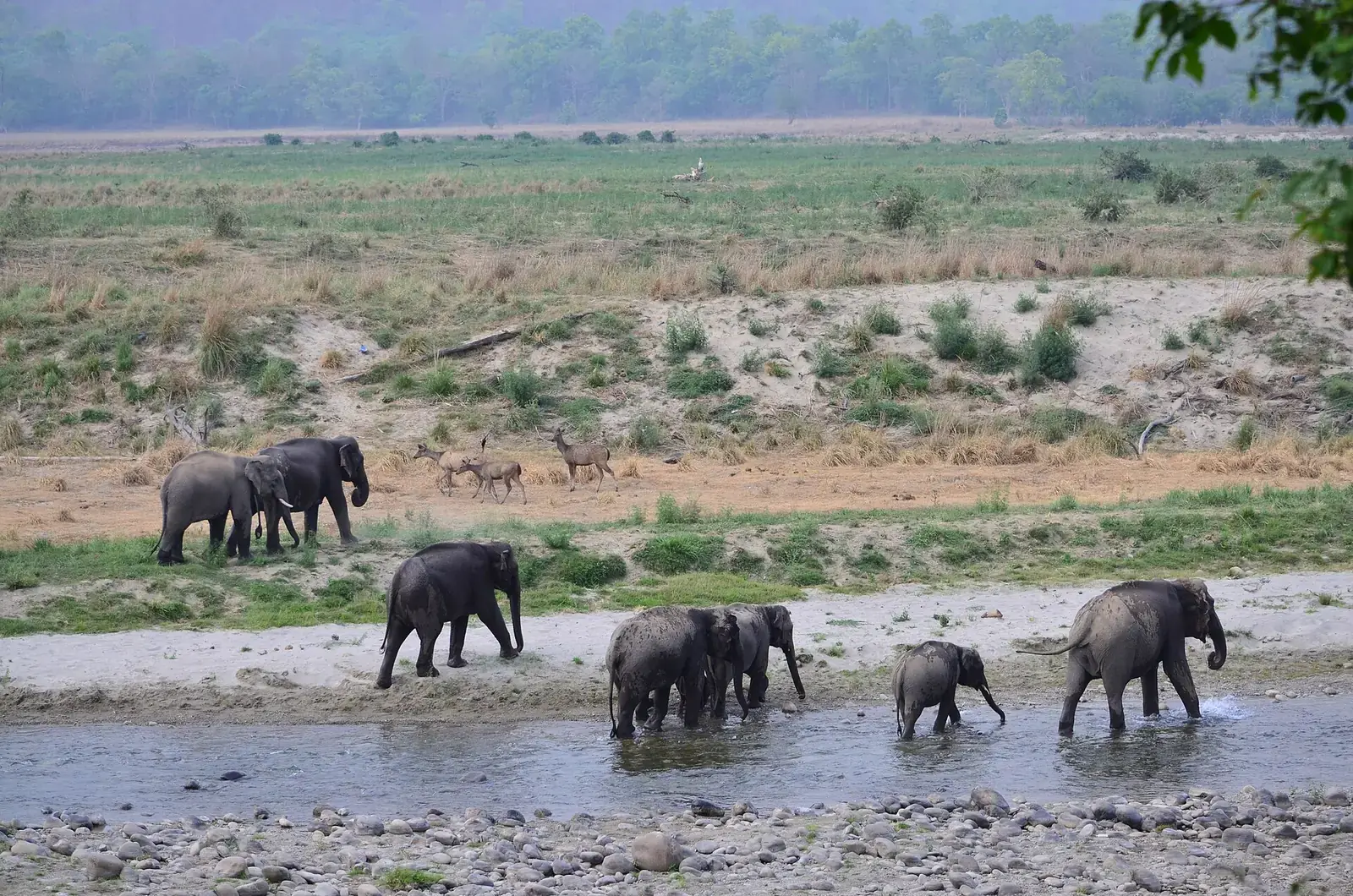
Set up in 1936 as Hailey National Park, Corbett has grassland, sal forest and the Ramganga river. Dhikala zone offers stays inside the forest.
- Nearest station
- Ramnagar
Kanha
Wide meadows and sal forest, and the hard-ground barasingha, a swamp deer brought back from the brink here.
Bandhavgarh
A compact core with a high density of tigers, below the Bandhavgarh fort.
Ranthambore
Dry deciduous forest, lakes and a 10th-century fort, easy to reach from Jaipur.
Beyond tigers
Kaziranga
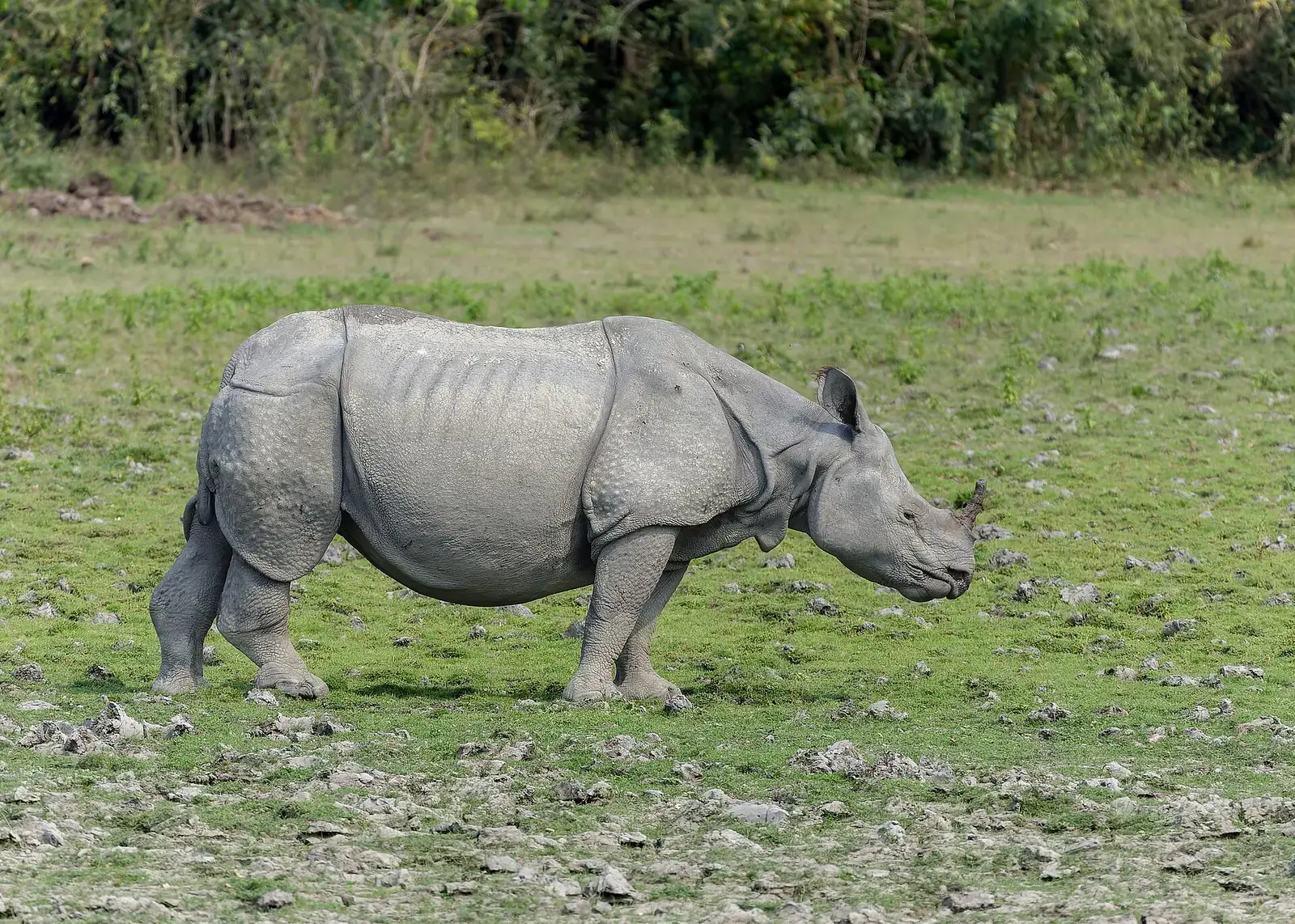
Grassland and wetland on the Brahmaputra, with the largest population of one-horned rhinos anywhere.
Keoladeo
A man-made wetland near Bharatpur, famous for winter birds, explored on foot, by bicycle or cycle-rickshaw.
Hemis
A high-altitude park in Ladakh where snow leopards are tracked in winter from homestays in Rumbak.
Keibul Lamjao
The world's only floating national park, on Loktak lake in Manipur, and the last home of the sangai deer.
National park, sanctuary or tiger reserve?
National parks and wildlife sanctuaries are both declared under the Wildlife (Protection) Act, 1972. National parks have stricter rules: no grazing and no private rights. Sanctuaries can allow some regulated activities.
A tiger reserve is an area notified for tiger conservation. It combines a core (critical tiger habitat), which is often a national park or sanctuary, with a surrounding buffer. That is why Kanha is both a national park and the core of Kanha Tiger Reserve.
Our sanctuaries guide covers the best sanctuaries in detail.
Mountain and hill parks
Great Himalayan National Park
A UNESCO site in Himachal's Kullu district, with western tragopan, Himalayan tahr and musk deer. It is explored on foot, on multi-day treks from the Tirthan and Sainj valleys, with permits from the park office.
Valley of Flowers
A high meadow in Uttarakhand that blooms in the monsoon, open roughly June to October. It is part of the Nanda Devi and Valley of Flowers UNESCO site.
Namdapha
A vast rainforest park in eastern Arunachal Pradesh, rising from about 200 m to over 4,500 m, with four big cats recorded: tiger, leopard, clouded leopard and snow leopard. Visits need an Inner Line Permit and a guide.
Eravikulam
Grassland and shola forest above Munnar, protecting the Nilgiri tahr, a mountain goat found only in the Western Ghats. Visitors travel by forest department bus to the Rajamala tourism zone.
Safety
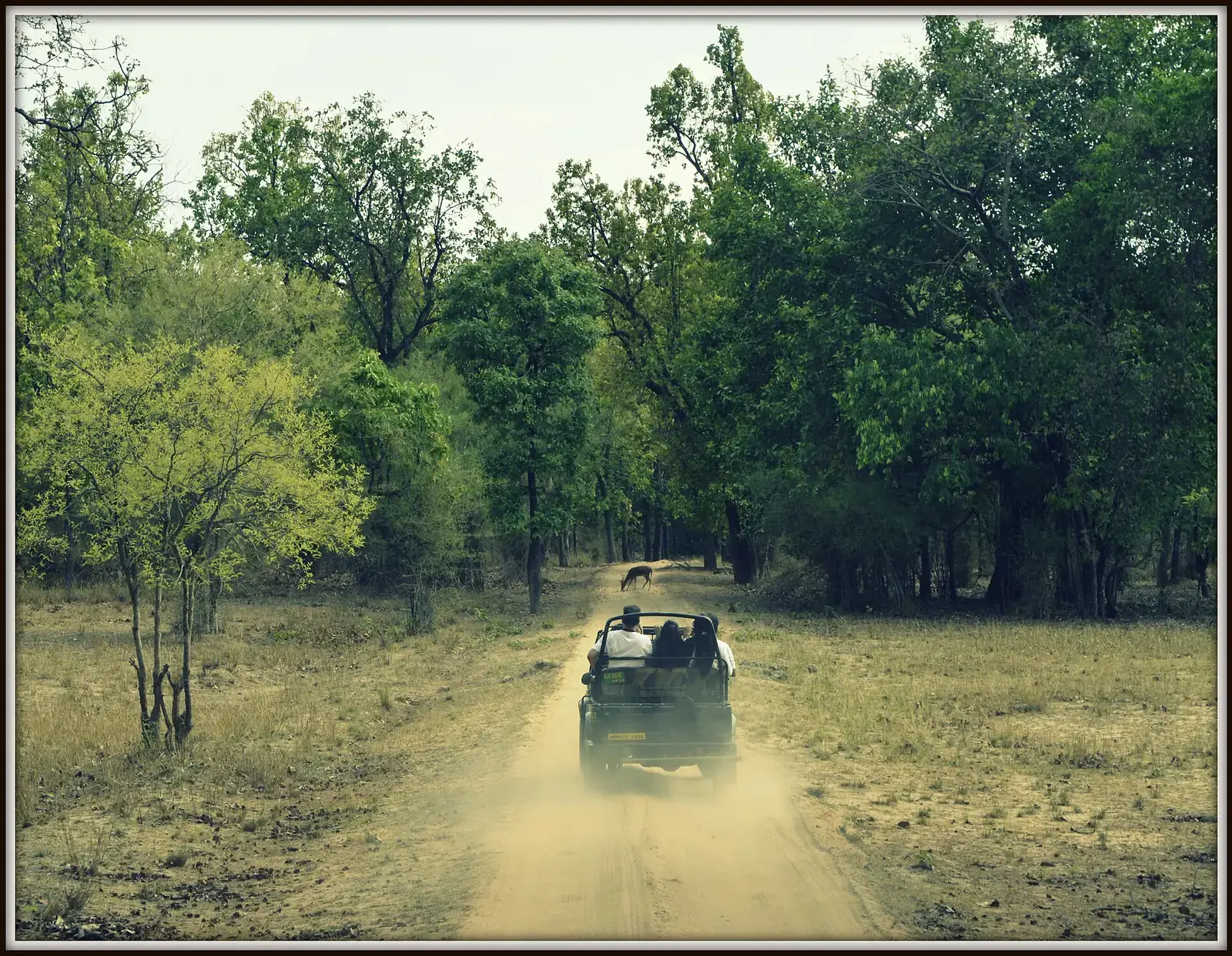
- No park can promise a sighting; plan several drives and enjoy the forest itself.
- Stay inside vehicles and on marked routes.
- Carry the ID used when booking.
- Never feed or call to animals.
What to pack
- Neutral clothes
- Binoculars
- Warm layers for winter mornings
- Sun protection for summer
Ready to plan your wildlife escape?
FAQs
Which is the oldest national park in India?
Jim Corbett, set up in 1936 as Hailey National Park.
How many national parks are there in India?
107, according to the Wildlife Institute of India's database as of 2025.
Which national parks are UNESCO World Heritage Sites?
Kaziranga, Manas, Keoladeo, the Sundarbans, Nanda Devi and Valley of Flowers, and the Great Himalayan National Park.
Which national park is best for tigers?
Bandhavgarh, Kanha, Tadoba, Ranthambore and Corbett are the most popular. Sightings are never guaranteed.
What is the difference between a national park and a sanctuary?
National parks have stricter protection, with no grazing or private rights; sanctuaries may allow some regulated activities.