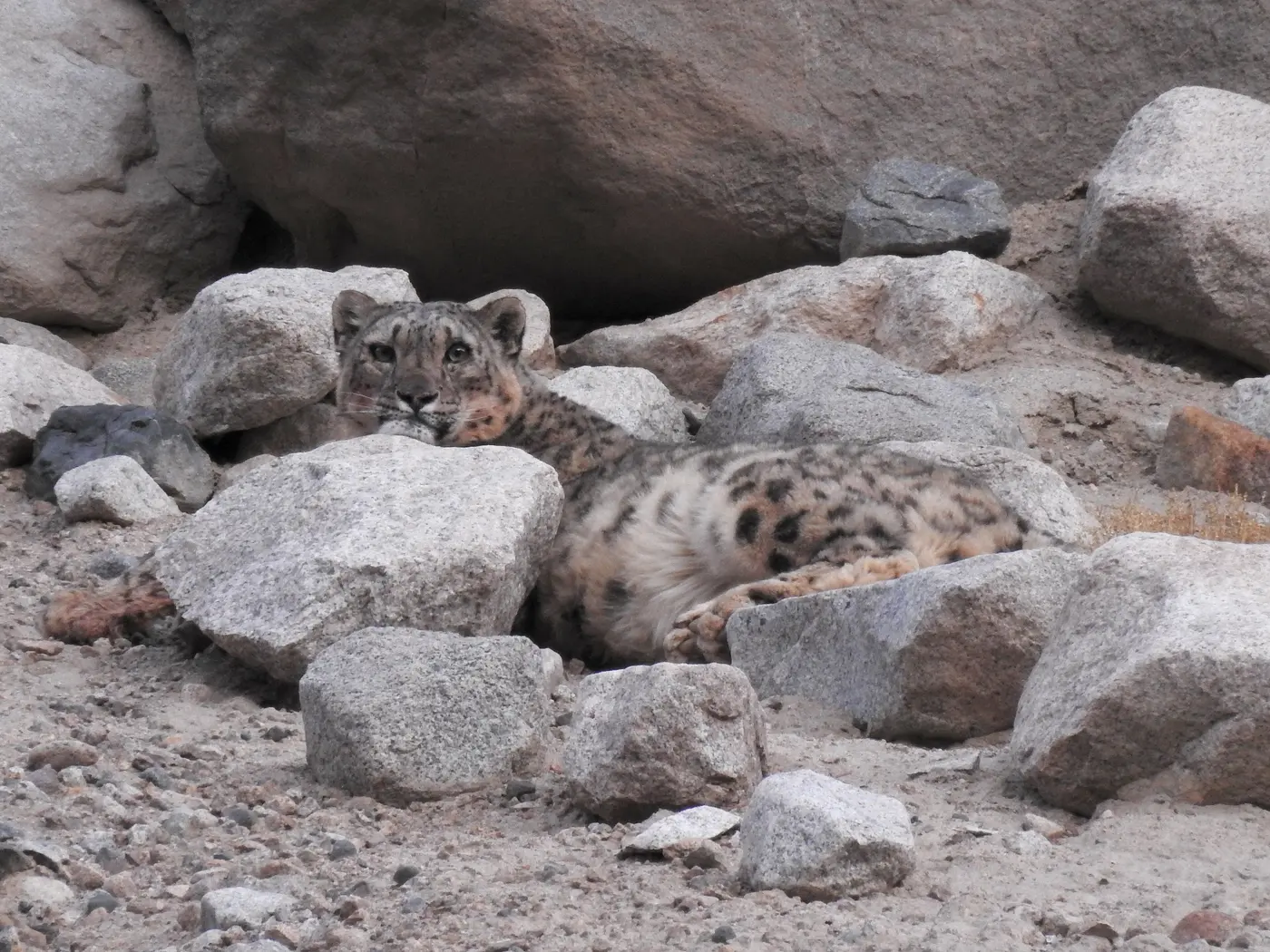
Snow leopards live in the high mountains of Ladakh, Himachal Pradesh, Uttarakhand, Sikkim, Arunachal Pradesh and Jammu and Kashmir. India's first national assessment, released in 2024, estimated 718 snow leopards, about two-thirds of them in Ladakh.
In winter, snow pushes their prey, blue sheep (bharal) and Ladakh urial, down to lower valleys, and the cats follow. That is when tracking trips run, based in village homestays, with local spotters scanning the slopes through telescopes.
Quick answer
Snow leopard trips in India run mainly from January to March, with February to mid-March often the peak. The main areas are Hemis National Park (Rumbak valley) and Ulley in Ladakh, and Kibber in Spiti, Himachal Pradesh. Trips last about eight to ten days, including acclimatisation in Leh, with spotters searching from ridges. Sightings are likely on a well-run trip but never guaranteed.
Key takeaways
- India had an estimated 718 snow leopards in the 2024 assessment, most of them in Ladakh.
- Trips run from January to March, when the cats move lower.
- Allow two to three days in Leh to acclimatise before tracking.
- Village homestays in Rumbak and Ulley share income with local families.
- Temperatures fall well below freezing; proper cold-weather gear is essential.
Where to go
Hemis National Park (Rumbak)
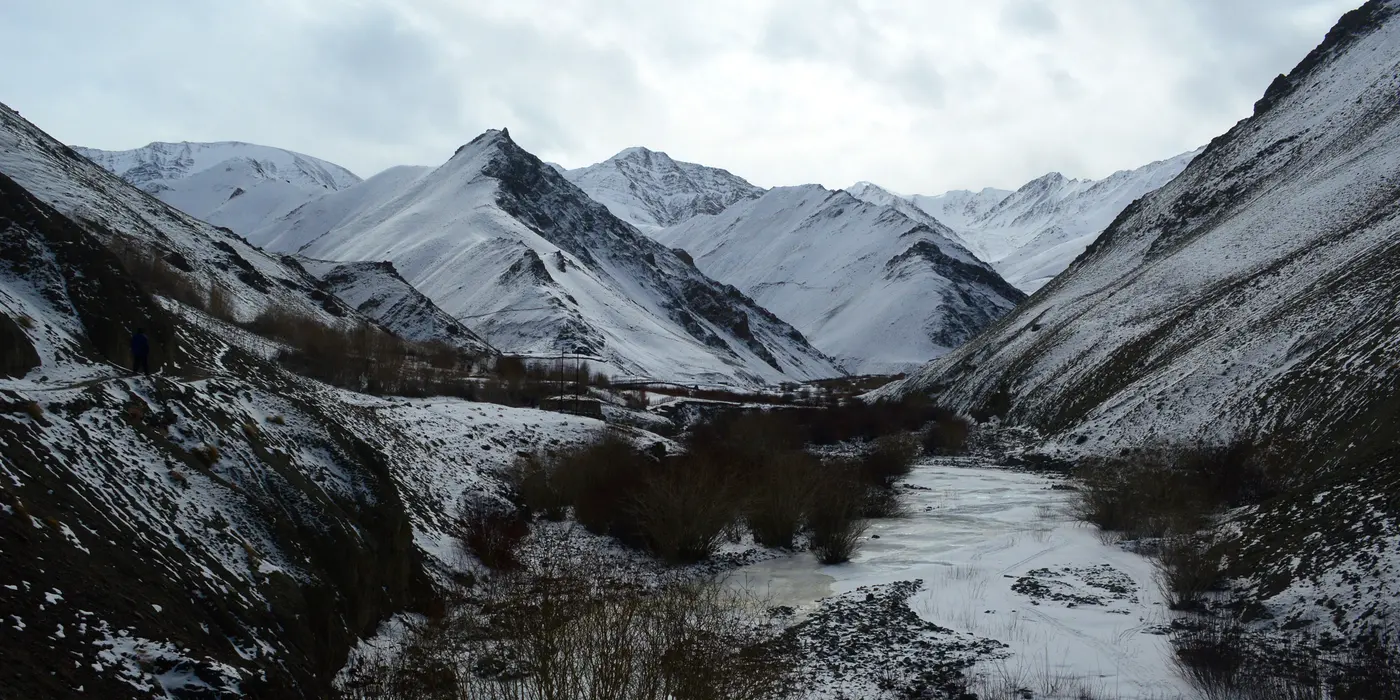
The best-known area, a short drive from Leh. Tracking trips base themselves in Rumbak and nearby villages.
- Altitude
- About 3,500 to 4,000 m
- Base
- Leh
Ulley and the Sham valley
West of Leh, with gentler terrain and good views of urial and ibex.
- Base
- Ulley homestays
Kibber, Spiti
A village in Himachal's Spiti valley, reached from Kaza, where winter trips have become popular.
- Access
- Via Shimla and Kinnaur in winter
How a trip works
- Fly to Leh and rest for two to three days to acclimatise.
- Drive to a village base and stay in a homestay or camp.
- Spotters scan the slopes from dawn; guests walk to viewpoints when a cat is found.
- Walks are short but at altitude and in cold; basic fitness is needed.
- Most trips last eight to ten days, giving several days of searching.
Choosing an operator
- Ask whether they use experienced local spotters and how many days are spent searching.
- Check that stays are in village homestays or community-run camps.
- Ask about acclimatisation days and emergency plans, including oxygen and evacuation.
- Avoid anyone who promises a sighting or offers baiting.
Getting there in winter
Leh has year-round flights from Delhi and some other cities, and winter flights can be delayed by weather, so keep a spare day at each end. The roads into Ladakh over Zoji La and from Manali are usually closed in winter. For Spiti, the road runs through Shimla and Kinnaur to Kaza, which can be blocked by snow; allow extra days.
A sample ten-day trip
| Days | Plan |
|---|---|
| 1 to 3 | Fly to Leh; rest and short walks to acclimatise |
| 4 to 8 | Base in Rumbak or Ulley; daily searches with spotters |
| 9 | Return to Leh |
| 10 | Fly out; keep a buffer day for weather delays |
When to go
| Months | Conditions |
|---|---|
| December | Very cold; fewer visitors; cats start moving lower |
| January to March | Main season; February to mid-March is often the peak |
| April | Snow melting; cats move higher |
Other wildlife
- Blue sheep (bharal) and Ladakh urial, the snow leopard's prey.
- Asiatic ibex on steep slopes.
- Tibetan wolf and red fox.
- Birds such as lammergeier, golden eagle and wallcreeper.
Community and conservation
Homestay programmes in Ladakh and Spiti share tourism income with local families, which helps reduce conflict when snow leopards kill livestock. Choose operators who use local spotters, homestays and guides.
Safety
- Acclimatise properly in Leh before going higher; altitude sickness is a real risk.
- Carry clothing for temperatures well below freezing.
- Sightings are never guaranteed; wild animals move freely and every drive is different.
- Follow your spotter's and guide's instructions on slopes and ice.
What to pack
- Down jacket and thermal layers
- Insulated boots and warm socks
- Gloves, hat and neck warmer
- Binoculars; telescopes are usually provided
- Sunglasses and high-SPF sunscreen
- Spare camera batteries, which drain fast in the cold
Ready to plan your wildlife escape?
FAQs
Where is the best place to see snow leopards in India?
Hemis National Park in Ladakh, especially the Rumbak valley, and Ulley. Kibber in Spiti is another option.
When is the best time for a snow leopard tour?
January to March, with February to mid-March often the peak.
How many snow leopards are in India?
The 2024 national assessment estimated 718.
Is a snow leopard sighting guaranteed?
No. Well-run trips with local spotters give good chances, but sightings are never certain.
Can I see snow leopards in summer?
Very rarely. In summer they move to high, remote slopes, so tracking trips run only in winter.
How fit do I need to be?
Walks are short but at 3,500 m or higher in extreme cold. Moderate fitness and good acclimatisation are needed.