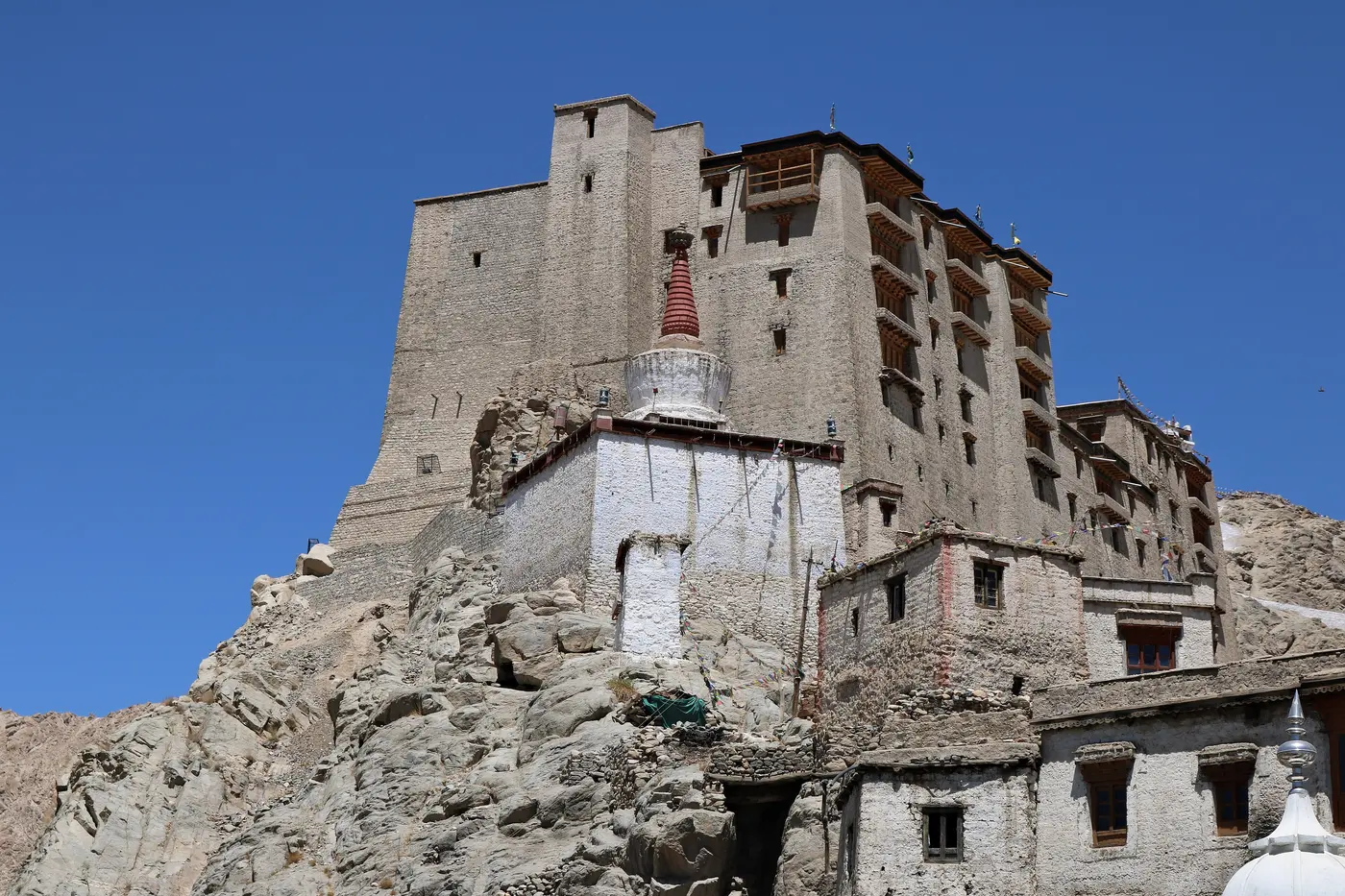
Leh, at about 3,500 metres, is the capital of Ladakh and was once a stop on caravan routes between Tibet, Kashmir and Central Asia. The old town clusters below Leh Palace, built by King Sengge Namgyal in the 17th century, with Namgyal Tsemo gompa on the ridge above.
The first days in Leh should be slow. That suits the town well: things to do in Leh include short walks in the old town, the palace, stupas and small monasteries, the main bazaar and its cafés, and easy half-day drives to Thiksey, Shey and Hemis on the Indus. Once you are acclimatised, Leh is the base for trips to Nubra, Pangong and beyond.
Two to three days in Leh itself is ideal. Leh town needs no permit; the Inner Line Permit is only needed for protected areas beyond.
For how to get there, when to go and where to stay, see our Leh travel guide.
Quick answer: best things to do in Leh
- Rest on day one, then walk the old town
- Visit Leh Palace
- Climb to Namgyal Tsemo gompa
- Watch sunset at Shanti Stupa
- Browse Leh's main bazaar and cafés
- See the Hall of Fame museum
- Visit Sankar Gompa
- Take a half-day to Thiksey, Shey and Hemis
- See Magnetic Hill and the Indus–Zanskar Sangam
- Visit Spituk and Phyang monasteries
Going by road? See our guide to the Manali to Leh road trip.
Comparing hill stations? See our guide to India's mountain destinations.
Planning something active? Read our guide to adventure activities in Ladakh.
Leh town
Walk the old town
Leh's old town, below the palace, is a warren of mud-brick houses, prayer wheels, chortens and narrow lanes. Several houses have been restored as part of heritage projects. It is a gentle walk, ideal for the first days, and best early in the morning.
- Time needed
- 1–2 hours
- Best time
- Morning
- Good for
- Everyone
Visit Leh Palace
The nine-storey Leh Palace, modelled in part on the Potala Palace in Lhasa, was the royal residence until the 19th century. It is maintained by the Archaeological Survey of India. Inside, you can see old rooms, a small gallery and, from the roof, sweeping views of Leh and the Stok range.
- Time needed
- 1 hour
- Good to know
- Steep steps; go slowly
Climb to Namgyal Tsemo
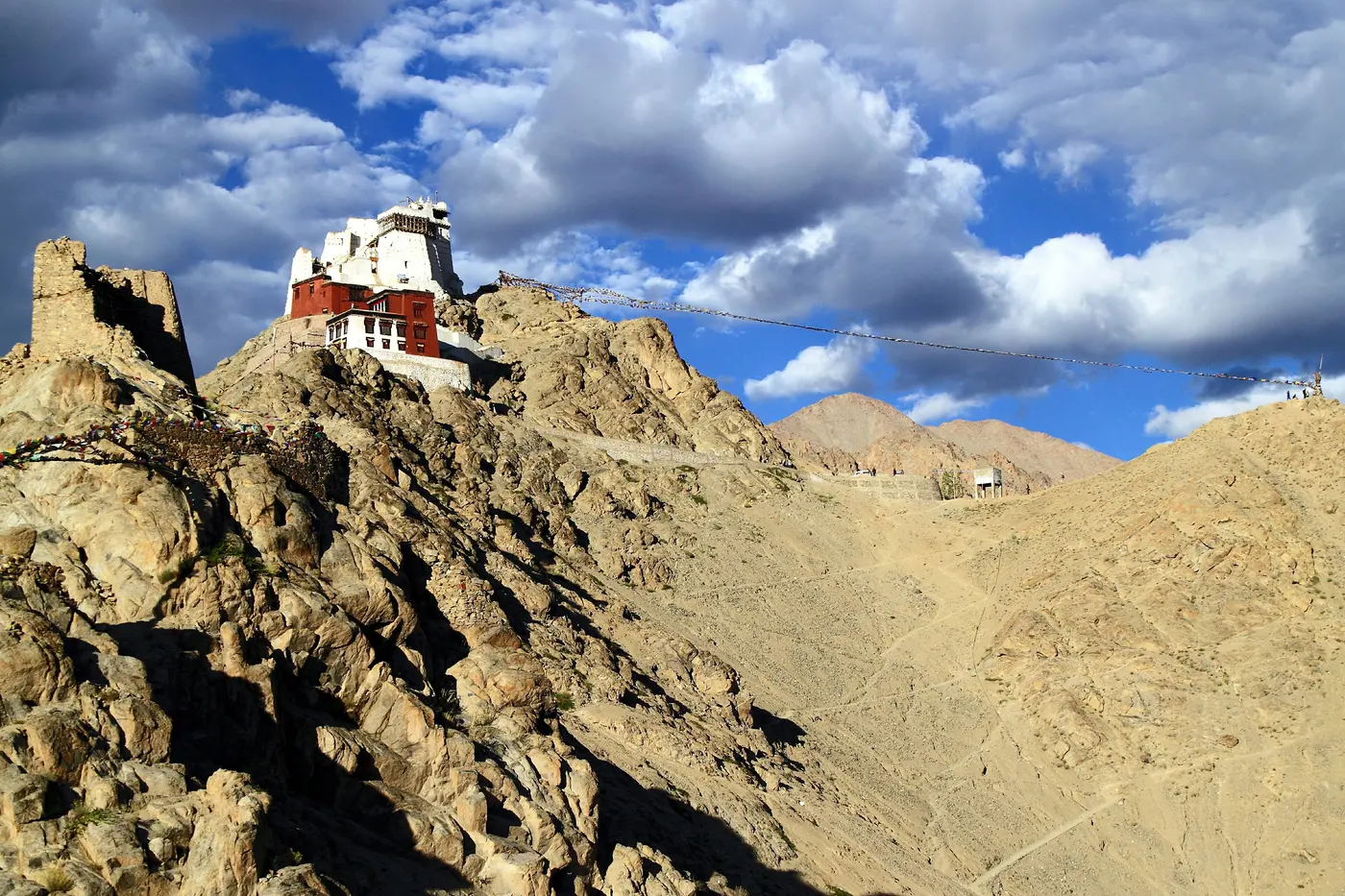
Namgyal Tsemo, a gompa and fort ruins on the ridge above the palace, has a large Maitreya statue and prayer flags strung across the hill. The climb is steep; do it only after a day or two of acclimatisation, or drive up by the road at the back.
- Time needed
- 1.5 hours
Watch sunset at Shanti Stupa
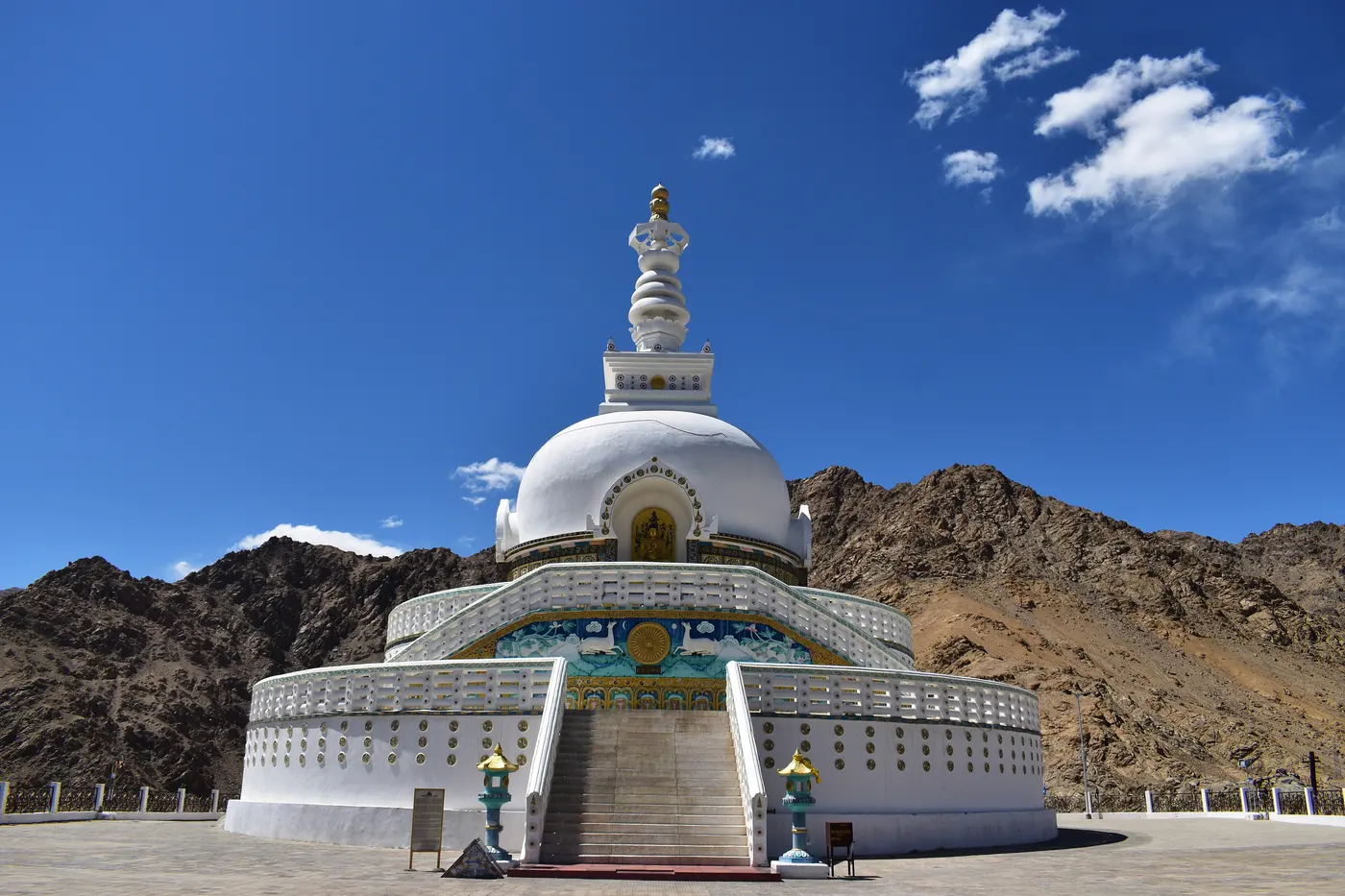
Shanti Stupa, a white stupa built by Japanese and Ladakhi Buddhists and inaugurated in 1991, stands on a hill at Changspa. You can drive up or climb the steps. The view of Leh and the mountains at sunset is the town's classic evening.
- Best time
- Sunset
- Good for
- Everyone
Browse the main bazaar
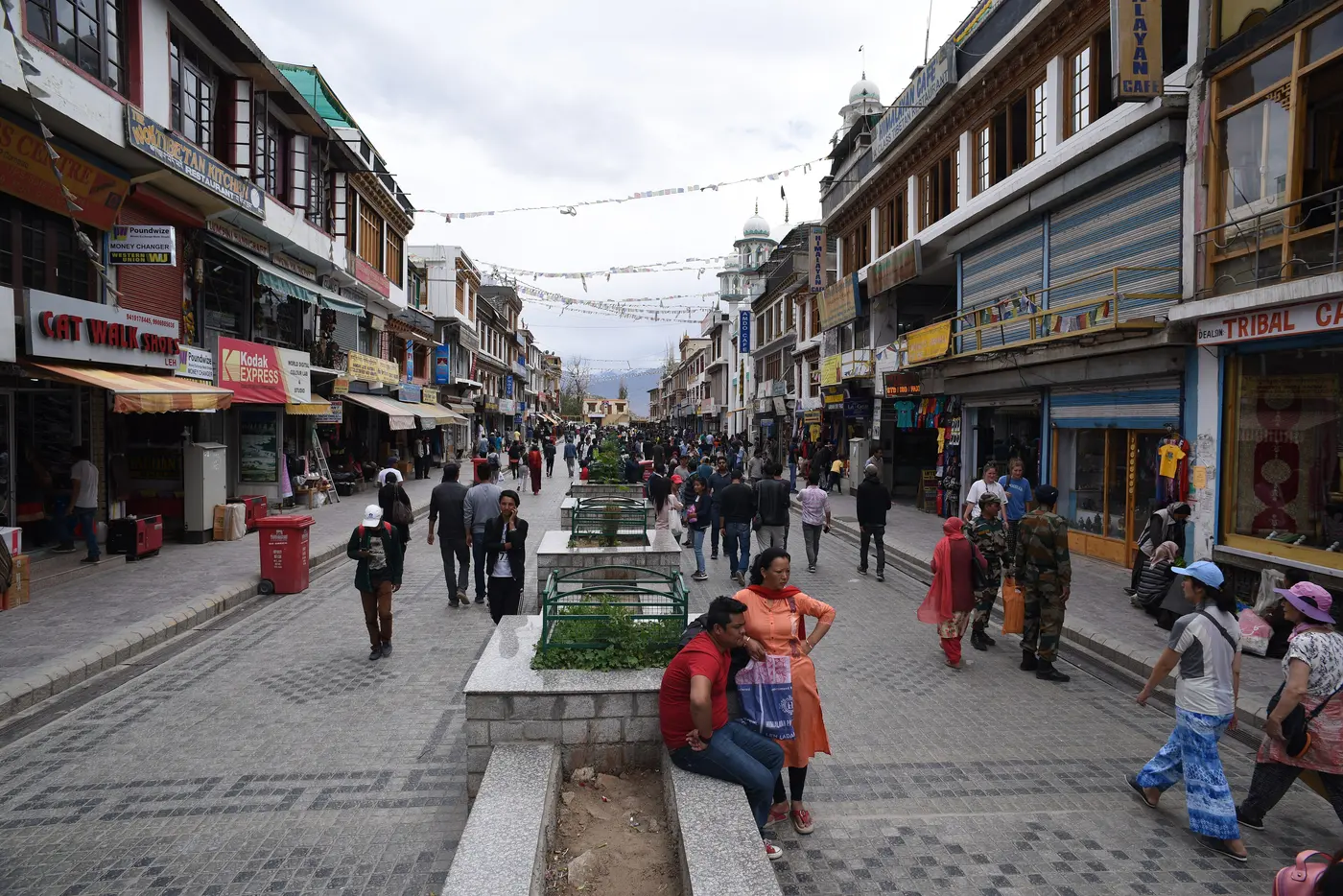
The pedestrianised main bazaar is lined with shops selling pashmina, Tibetan jewellery, prayer flags and apricot products. Ladakhi women sell fresh vegetables along the pavement. The cafés and bakeries in and around the bazaar and on Changspa Road serve everything from Ladakhi skyu and thukpa to apricot cake.
- Best time
- Late afternoon and evening
See the Hall of Fame
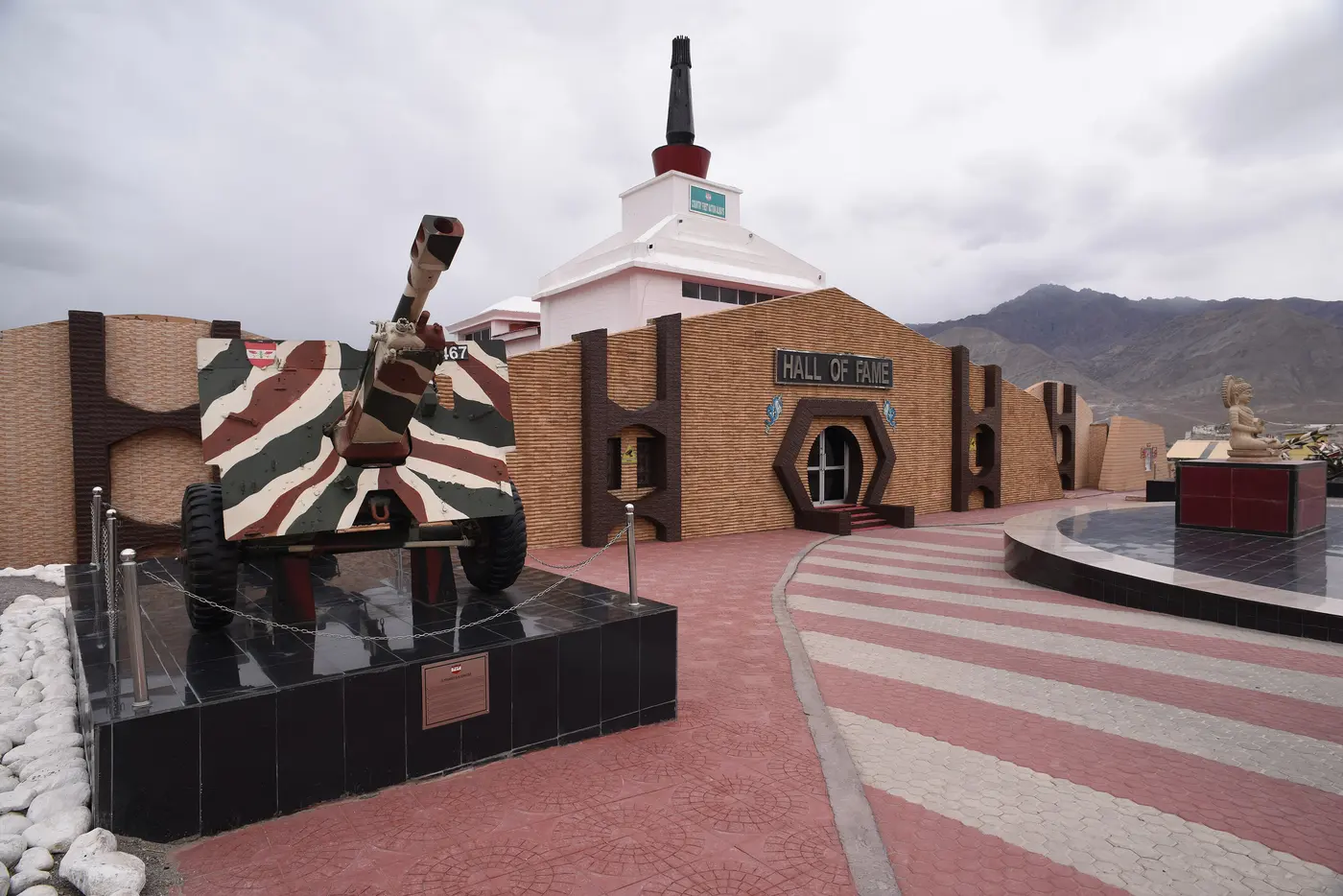
The Hall of Fame, run by the Indian Army a few kilometres from town, is a museum dedicated to soldiers who died defending the region, with exhibits on the wars and on Ladakh's culture and wildlife. The evening light and sound show adds to the visit.
- Time needed
- 1–1.5 hours
Visit Sankar Gompa
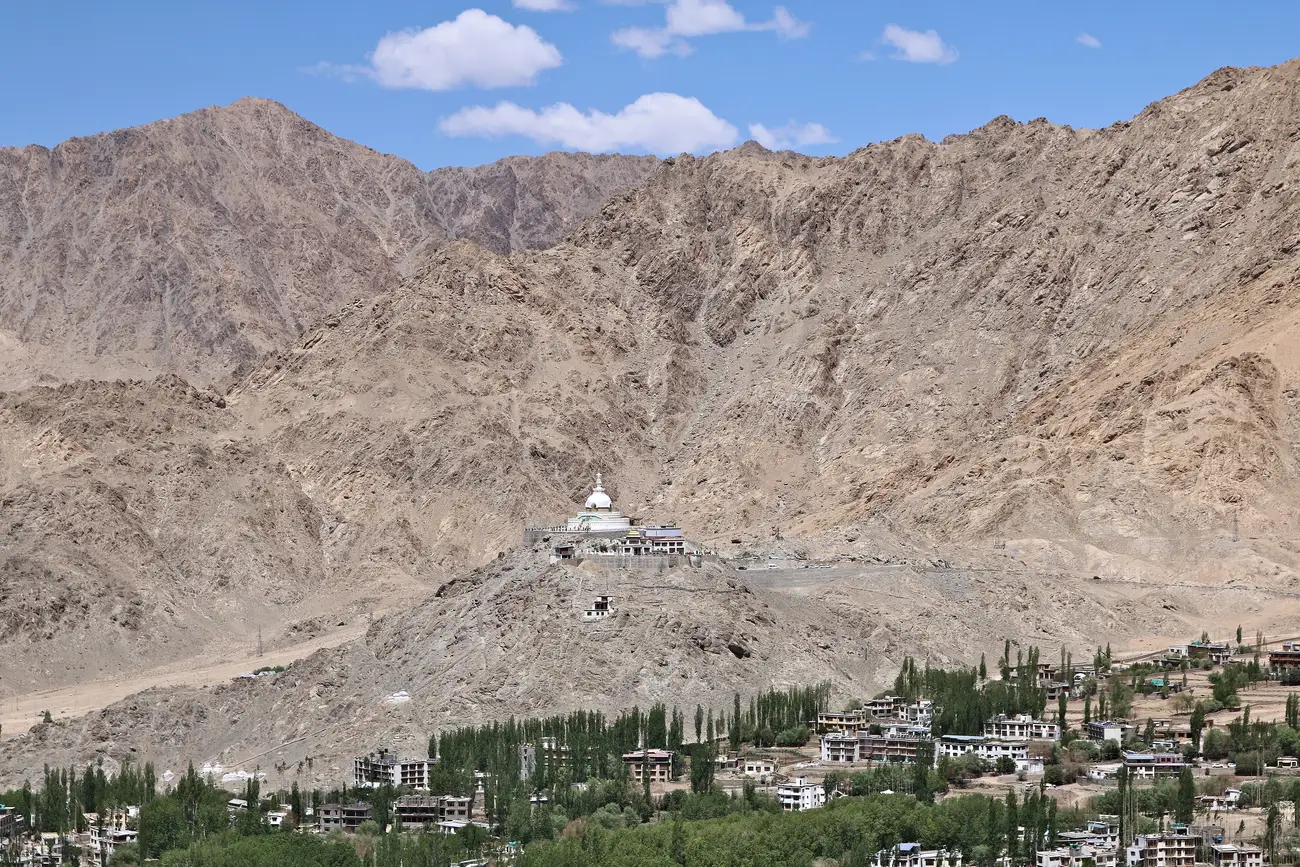
Sankar Gompa, a small monastery a short walk north of the town centre, belongs to the Gelug school and has a statue of Avalokiteshvara with many arms and heads. It is quiet and easy to reach.
- Time needed
- 45 minutes
Along the Indus
See Thiksey and Shey
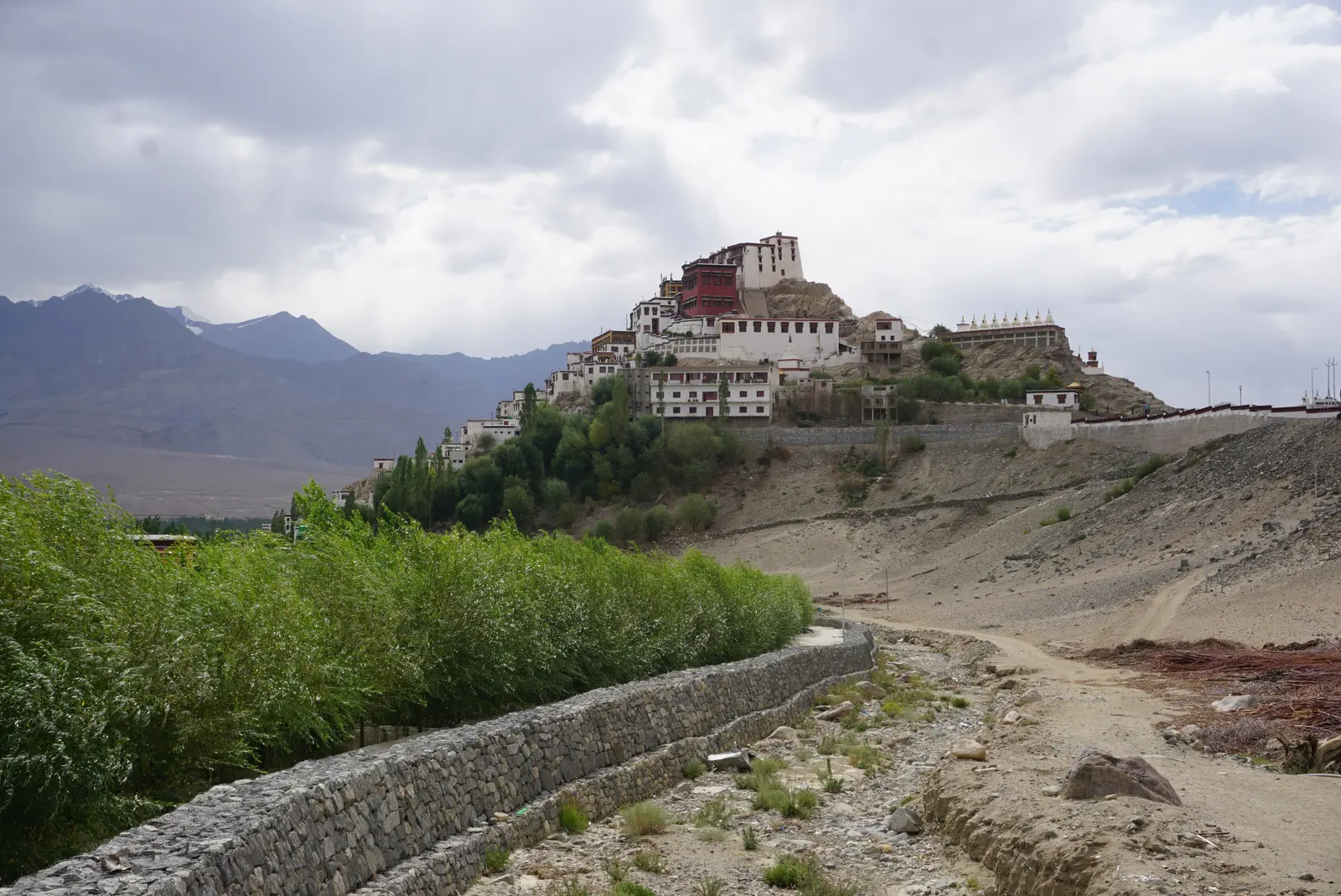
Thiksey Monastery, about 19 km south-east of Leh, is a hilltop complex with a two-storey Maitreya Buddha. Arrive for morning prayers around dawn. On the way, Shey Palace, the old summer palace, has a large seated Buddha statue and views over the Indus.
- Time needed
- Half a day
Visit Hemis
Hemis Monastery, about 45 km from Leh, is the largest in Ladakh and hosts the colourful Hemis festival in June or July. Its museum holds thangkas, statues and ritual objects.
See Magnetic Hill and the Sangam
West of Leh on the Srinagar road, Magnetic Hill is a stretch where an optical illusion makes vehicles appear to roll uphill. Nearby, at Nimmu, the muddy Zanskar meets the blue-green Indus at the Sangam. Gurudwara Pathar Sahib, on the same road, is linked to Guru Nanak.
- Time needed
- Half a day
Visit Spituk and Phyang
Spituk Monastery, near the airport, sits on a hill above the Indus and hosts a winter festival. Phyang, a few kilometres west, is a large monastery with a summer festival and a quieter atmosphere.
Food, museums and festivals
Eat Ladakhi food
Try skyu (hand-rolled pasta stew), thukpa, momos, khambir (a thick local bread) with apricot jam, and butter tea (gur gur cha). Several small restaurants in and around the old town serve home-style Ladakhi dishes, and the Women's Alliance of Ladakh has run a café serving traditional food. Seabuckthorn juice, made from a hardy local berry, is everywhere.
- Good for
- Food lovers
See the Central Asian Museum and LAMO
The Central Asian Museum, in the old town, is built like a traditional fort-tower and tells the story of Leh's place on caravan routes to Yarkand, Tibet and Kashmir. LAMO (Ladakh Arts and Media Organisation), in two restored old-town houses, hosts exhibitions and has views over the rooftops.
- Time needed
- 1–1.5 hours each
Visit Stok Palace
Stok Palace, about 15 km across the Indus, is the residence of the former Ladakhi royal family. Part of it is a museum with royal costumes, jewellery, thangkas and the queen's turquoise headdress (perak). Part of it has also operated as a heritage stay.
- Time needed
- 1.5 hours
Catch a festival
The Ladakh Festival, held in Leh in September, has parades, masked dances, archery and polo. Monastery festivals with cham dances take place through the year, including Hemis in summer and Spituk and Thiksey in winter. Losar, the Ladakhi new year, falls in December or January. Dates follow the lunar calendar.
- Best time
- September for the Ladakh Festival
Things to do in Leh by type of traveller
First-day arrivals: Rest completely on day one, drink water, then do only the old town and Shanti Stupa by car on day two.
Culture seekers: Morning prayers at Thiksey, Hemis museum, the old town and a long café afternoon in the bazaar.
Families: Hall of Fame, Magnetic Hill and the Sangam, and the palace are easy with children once acclimatised.
What to do in Leh with one day
Drive to Thiksey for morning prayers, then visit Shey Palace. Return to Leh for lunch in the bazaar. Walk through the old town to Leh Palace in the afternoon, visit the Hall of Fame and end at Shanti Stupa for sunset.
Practical tips for Leh
- Rest for 24 to 48 hours on arrival; avoid alcohol and strenuous walks until you have acclimatised.
- Leh's airport has flights from Delhi and other cities; roads from Manali and Srinagar are open roughly from May or June to October.
- Water is scarce in Leh; use it carefully and refill bottles at water stations to reduce plastic.
- Get Inner Line Permits for onward trips in advance, online or at the DC office.
Plan the rest of your Leh trip
Leh things to do: FAQs
What are the best things to do in Leh?
Walk the old town, visit Leh Palace and Namgyal Tsemo, watch sunset at Shanti Stupa, explore the main bazaar, see the Hall of Fame and Sankar Gompa, and take half-day trips to Thiksey, Shey, Hemis, Magnetic Hill and the Sangam.
Do I need a permit to visit Leh?
No. Permits are only needed for protected areas such as Nubra, Pangong and Tso Moriri.
How many days should I spend in Leh?
Two to three days for acclimatisation and local sightseeing before heading to higher areas.
What is the best time to visit Leh?
June to September for the full range of trips. Early September is quieter and still warm.
How do I avoid altitude sickness in Leh?
Rest completely for the first day, drink plenty of water, avoid alcohol and heavy exertion for two days, and ascend gradually. Headache, nausea and breathlessness at rest are warning signs; if they worsen, descend and see a doctor. Leh has a well-equipped hospital.
Things to do near Leh
- Things to do in Ladakh: the full region, from Pangong to Zanskar
- Things to do in Nubra Valley: over Khardung La
- Pangong Lake: the famous lake, five to six hours east
- Hemis: the great monastery and national park
More things to do in Ladakh
Published by the Kudozz Club editorial team · Last updated · How we research our guides
Want us to plan this trip for you?
Tell Kudozz Club where you want to go and what kind of trip you’re looking for. We’ll build a Leh and Ladakh itinerary around your dates and budget.
Continue Exploring
View all guides Trekking
Padum Travel Guide: Zanskar Valley's Historic Capital Town
A dusty bazaar town where two rivers meet, Padum is Zanskar's historic capital and the essential base for its monasteries, royal ruins, and legendary high-altitude treks.
 Adventure Travel
Adventure Activities in Ladakh: Rafting, Treks, Rides and Peaks
The best adventure activities in Ladakh: white-water rafting on the Zanskar and Indus, treks from the easy Sham Valley to Markha Valley and the Chadar, trekking peaks, motorcycle loops over Khardung La and Chang La, cycling descents, Bactrian camel rides in Nubra, lake camping and winter wildlife trips.
 Heritage
Thiksey Travel Guide: Monastery, Morning Prayers & Maitreya Buddha
Twelve storeys of whitewashed walls climb a hillside above the Indus like a mini Potala Palace — home to a 15-metre golden Buddha and the most spellbinding 6 AM prayer ceremony in Ladakh.
 Hill Stations
Best Mountain Destinations in India: Valleys, High Passes and Himalayan Towns
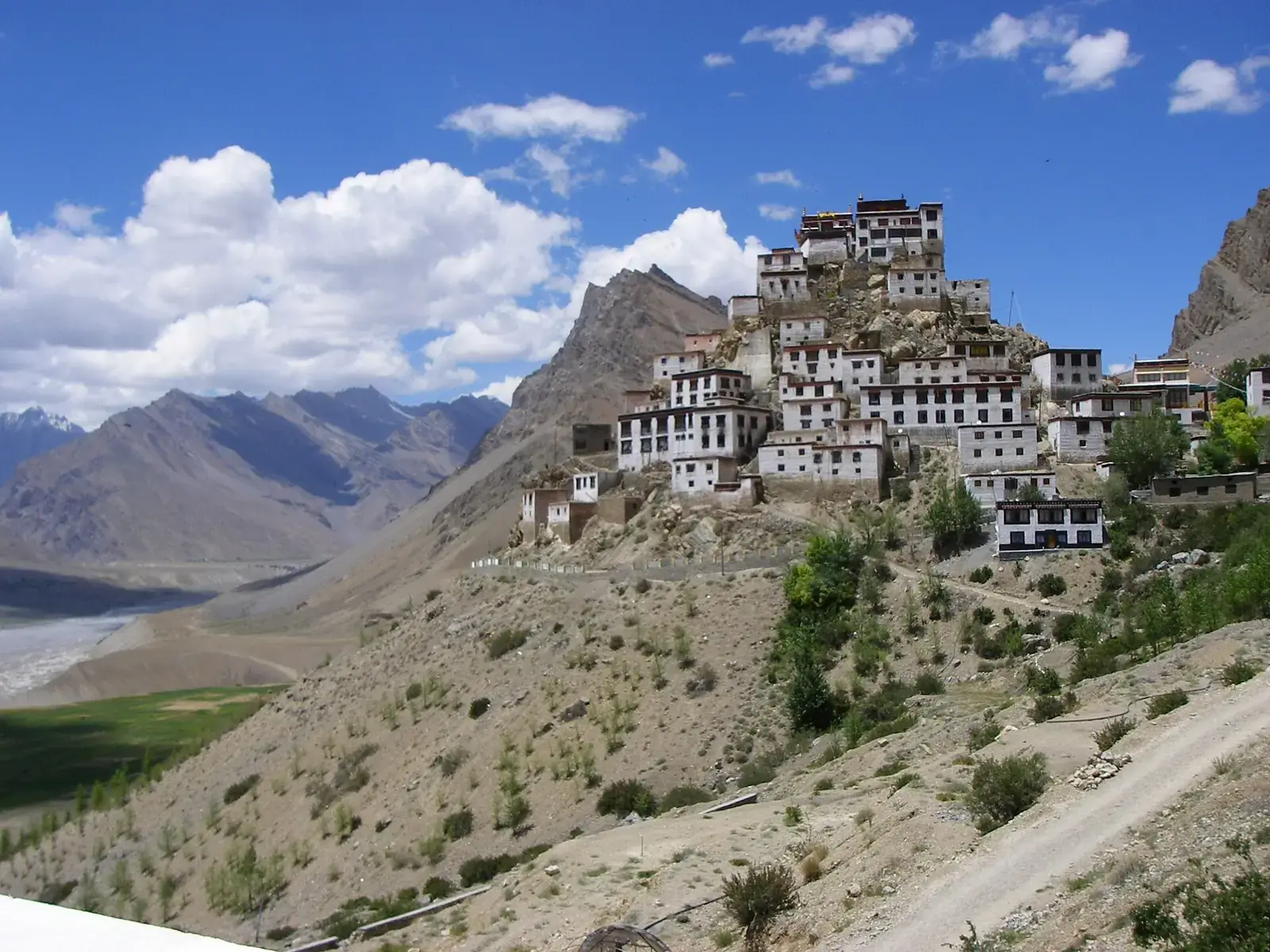
A guide to India's mountain destinations beyond classic hill stations: the high-altitude regions of Ladakh, Spiti and Zanskar, Himalayan valleys such as Kinnaur, Tirthan, Parvati and Lahaul, Uttarakhand's Chopta and Munsiyari, North Sikkim, Tawang and Dzukou, with the right terminology, seasons, permits and how to acclimatise.