Why Leh?
Most people arrive in Leh on their way to somewhere else — Pangong, Nubra, Khardung La, the great road-trip trophies of Ladakh. That's understandable, and this town is happy to play the role of gateway. But treat Leh as a mere stopover and you'll miss one of the most quietly remarkable towns in the Himalaya: a former royal capital with a nine-storey palace on the hill, a market that has been a Silk Road trading post for centuries, and an old quarter of mudbrick homes, prayer wheels, and apricot trees that rewards nothing more than an unhurried walk.
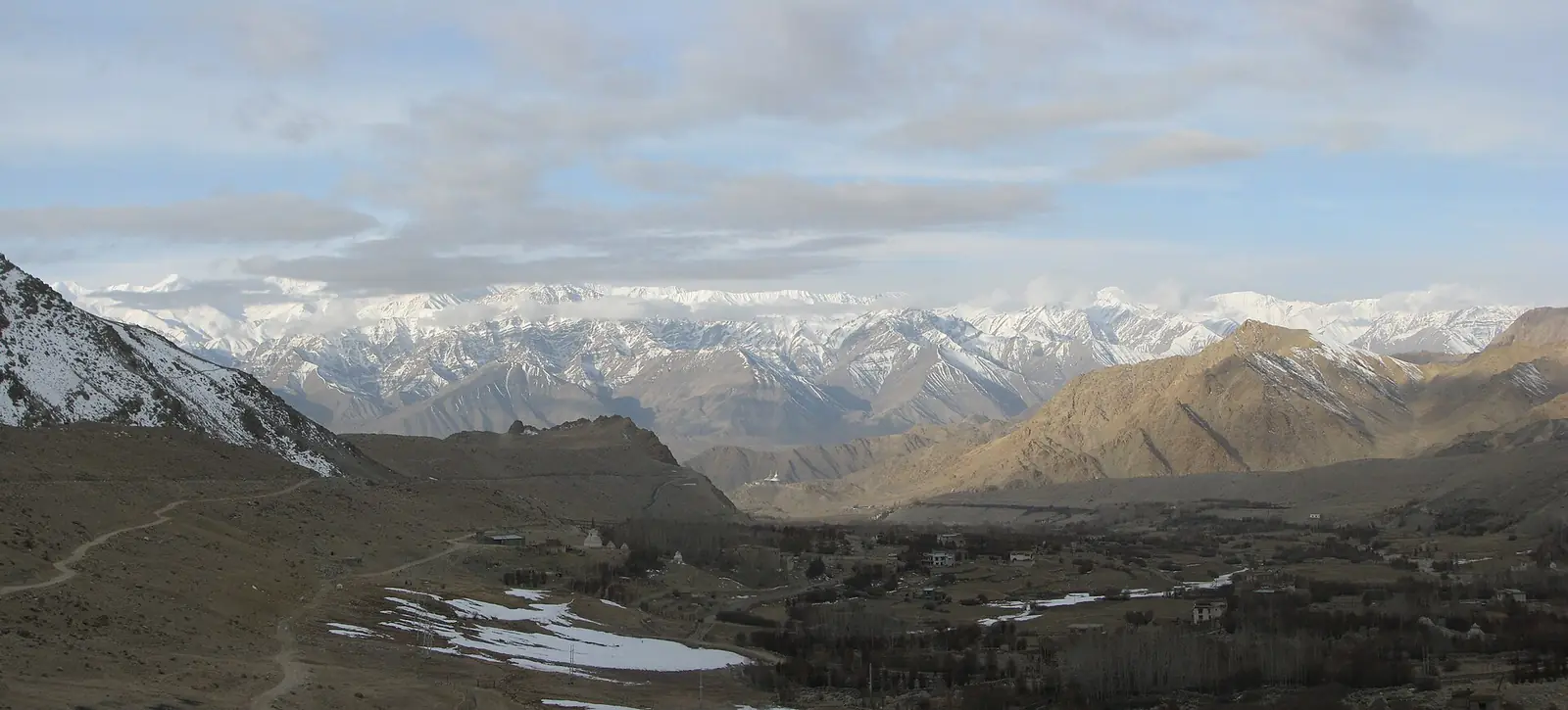
Leh is the largest town in Ladakh and, for most travellers, the first taste of the region — whether you fly straight in or roll down from Manali or Srinagar after days on the highway. It sits in the Indus Valley at 3,524 metres, ringed by the stark, treeless mountains that define this cold desert, with the Stok Kangri range visible across the valley on a clear day.
This guide is deliberately narrow: it covers Leh town itself — the palace, the bazaar, the stupas, the monasteries within walking or short-taxi distance, and the cafés where you'll spend your acclimatisation days. For the wider road-trip circuit — Pangong, Nubra, Khardung La, Zanskar — see our complete Leh Ladakh road trip guide.
🏯 Leh at a Glance
Looking for activities and experiences? See our guide to the best things to do in Leh.
Going by road? See our guide to the Manali to Leh road trip.
Comparing hill stations? See our guide to India's mountain destinations.
Planning something active? Read our guide to adventure activities in Ladakh.
Best Time to Visit Leh
Leh's tourist season is short and defined almost entirely by winter road closures and flight reliability. Unlike the high passes and border lakes, the town itself is reachable by air year-round — but most of what makes it worth visiting (open cafés, functioning guesthouses, a lively bazaar) shuts down or thins out drastically once the cold sets in.
Manali highway opens by mid-to-late June; Srinagar route opens earlier. Apricot and apple blossom in the old town. Days pleasant (15–25°C), nights still cool. Fewer tourists than peak summer, and Leh Palace queues are short.
Warmest, busiest, liveliest. Leh Market is at its most colourful, cafés are full of overlanders and bikers, and both the Hemis Festival and Ladakh Festival fall in this window. Book accommodation ahead — rooms sell out.
Crowds thin sharply after the first week of September, poplar and willow trees along the old town lanes turn gold, and the light on Namgyal Tsemo at sunset is extraordinary. Prices soften. Highway still open.
Manali and Srinagar highways close; Leh reachable only by flight, weather permitting. Night temperatures fall to -15°C to -25°C. Most guesthouses and cafés close. A stark, near-empty town for winter specialists and the Chadar Trek crowd.
Our pick: The first two weeks of September. The bazaar is still fully open, the light turns the old town gold in the evenings, and you'll get Leh Palace and Shanti Stupa with a fraction of the peak August crowds.
How to Reach Leh
Leh is the transport hub for the entire region — every road, flight, and onward taxi in Ladakh routes through here. Three approaches exist: fly in directly, or drive overland via Manali or Srinagar as part of a longer trip.
- By air: Kushok Bakula Rimpochee Airport (IXL) sits just 4 km south of town and is one of the highest commercial airports in the world at roughly 3,256 m. IndiGo, Air India, Vistara, and SpiceJet run daily flights from Delhi (around 1 hr 20 min) and seasonal flights from Srinagar, Jammu, and Mumbai. This is by far the fastest way in — but also the most punishing on your body, since you go from near sea level to 3,524 m in under two hours.
- Overland via Manali (NH3): 479 km, 2–3 days including an acclimatisation stop at Jispa or Sarchu. Crosses five high passes including Tanglang La at 5,328 m. Open roughly mid-June to mid-October.
- Overland via Srinagar (NH1): 434 km via Zoji La and Kargil, with a gentler altitude curve than the Manali route, making it easier on newcomers. Open longer in the season, roughly April to November.
- From the airport into town: Prepaid taxis (₹300–₹500) and the airport shuttle cover the 15–20 minute run into central Leh. Most guesthouses in Changspa and Old Town will also arrange a pickup.
Full route breakdowns, permits, and a 14-day circuit itinerary covering the wider region live in our Leh Ladakh road trip guide. This page assumes you've arrived and are ready to explore the town.
Acclimatisation in Leh — Read This Before Anything Else
This is the single most important section of this guide. Leh sits at 3,524 metres, and if you've flown in from Delhi or Mumbai, your body has just gained roughly 3,300 metres of elevation in under two hours. Acute Mountain Sickness (AMS) is not a rare misfortune here — it is the default outcome for anyone who ignores the basics, and it sends visitors to Leh's hospital every single week of peak season.
- Day 1 — total rest: Stay near your guesthouse. Hydrate constantly (3–4 litres of water). Eat light, carbohydrate-rich meals. Skip alcohol and sleeping pills, both of which suppress breathing at altitude.
- Day 2 — gentle activity only: A slow walk to Leh Market or Leh Palace is fine. Save Shanti Stupa's steps and Namgyal Tsemo's climb for day 3.
- Watch for symptoms: Headache, nausea, loss of appetite, and mild breathlessness are common and usually resolve with rest. Confusion, a persistent cough, breathlessness at rest, or an inability to walk in a straight line are emergencies — descend and seek help immediately at SNM Hospital in Leh.
- Diamox (acetazolamide): Many doctors recommend starting 125 mg twice daily a day before you fly in, continuing for the first 2–3 days. Discuss this with your physician before travel — it's not for everyone.
- If you drove in via Manali or Srinagar: You've already acclimatised gradually and generally need less downtime in Leh itself — but symptoms can still appear, especially if you pushed the drive too fast.
The upside of Leh specifically: it's one of the easiest places in Ladakh to acclimatise well, precisely because there's so much low-effort, genuinely interesting stuff to do at rest — a slow coffee in Changspa, a wander through the bazaar, the palace at golden hour. You lose nothing by taking it slow here.
Getting Around Leh Town
Central Leh — the palace, the market, and the Changspa guesthouse belt — is compact enough to cover almost entirely on foot once you've acclimatised, which is also the best way to see it.
- On foot: Leh Market to Leh Palace is a 10-minute uphill walk; Market to Changspa is about 15 minutes. Go slowly for your first few days — even flat walking can leave you breathless at this altitude.
- Auto-rickshaws and taxis: Useful for Shanti Stupa, Sankar Gompa, or the airport. The Leh Taxi Operators' Union runs a fixed-rate card — expect ₹150–₹300 for most in-town hops.
- Rental scooters and bikes: Widely available in Changspa (₹800–₹1,500/day for a scooter, more for an Enfield) once you're acclimatised — useful for day trips to Thiksey, Hemis, or Shey without hiring a driver.
- Shared taxis and buses: J&K SRTC buses run cheap routes out to Thiksey, Hemis, and Shey from the main bus stand, if you're not in a hurry.
Top Things to Do in Leh
Everything below sits within Leh town or a short taxi ride of its centre — no permits, no long drives, just genuinely worthwhile places woven into two or three unhurried days.
Leh Palace
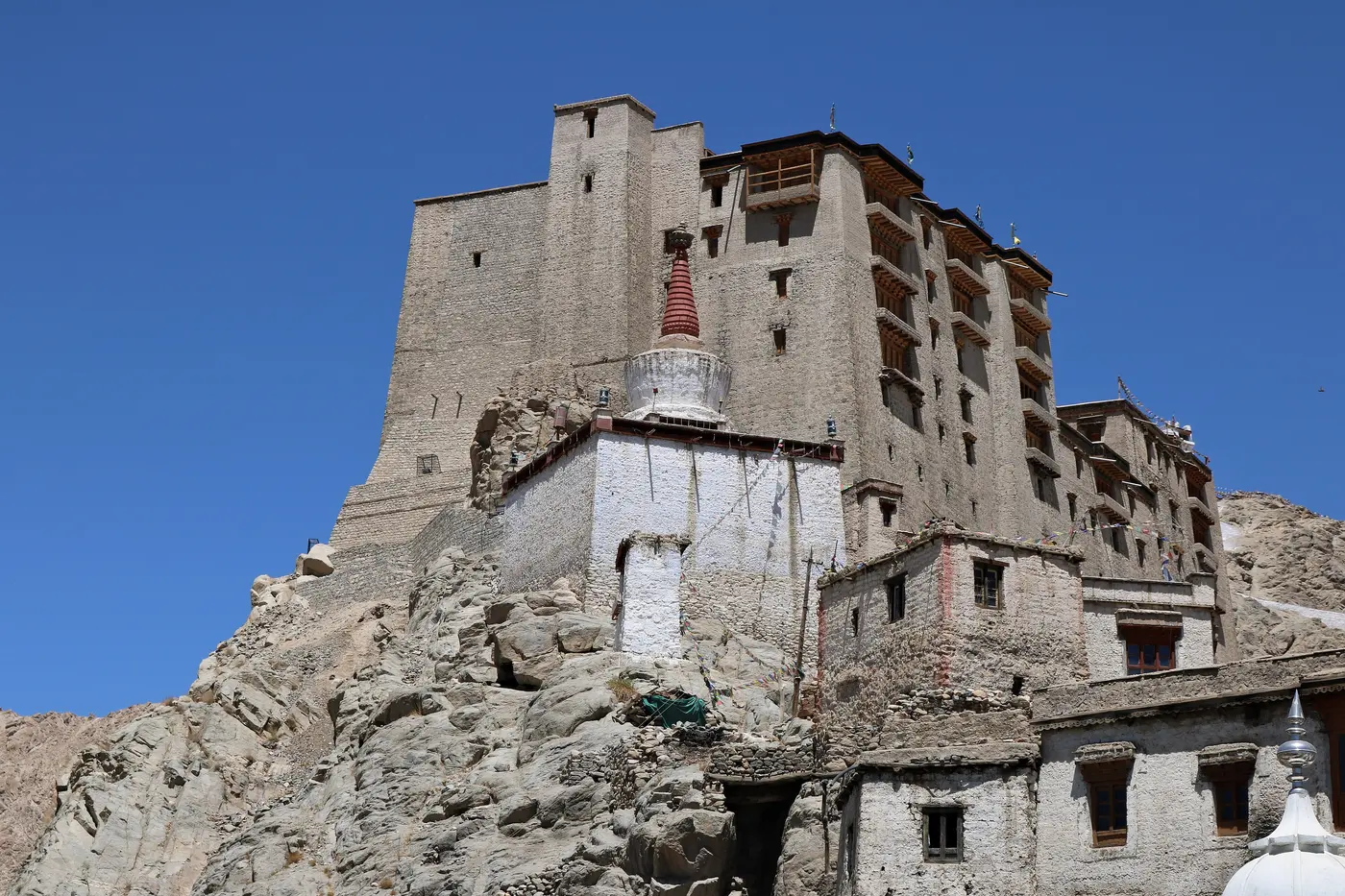
Built in the early 17th century by King Sengge Namgyal, Leh Palace rises nine storeys above the old town and is said to have inspired — or at least shares clear architectural DNA with — the Potala Palace in Lhasa, built decades later. The royal family abandoned it in the mid-1800s after the Dogra invasion, and it stood empty and crumbling for over a century before the Archaeological Survey of India began restoration work.
Today the interiors are mostly bare — this is a building you visit for its bones and its view rather than furnished rooms — but a small museum on the upper floors displays jewellery, ceremonial dress, and thangkas from the royal collection. The real reward is stepping onto the upper terraces: the whole Indus Valley opens out below you, with the old town's flat mudbrick roofs, prayer flags, and poplar lines leading the eye out to the mountains.
- Entry: ₹25 for Indians, ₹300 for foreign nationals; camera fee extra
- Timings: Sunrise to sunset daily, roughly 7 AM – 6 PM
- Time needed: 45–60 minutes
- Best light: Early morning or an hour before sunset, when the whitewashed walls turn amber
Leh Market & Old Town
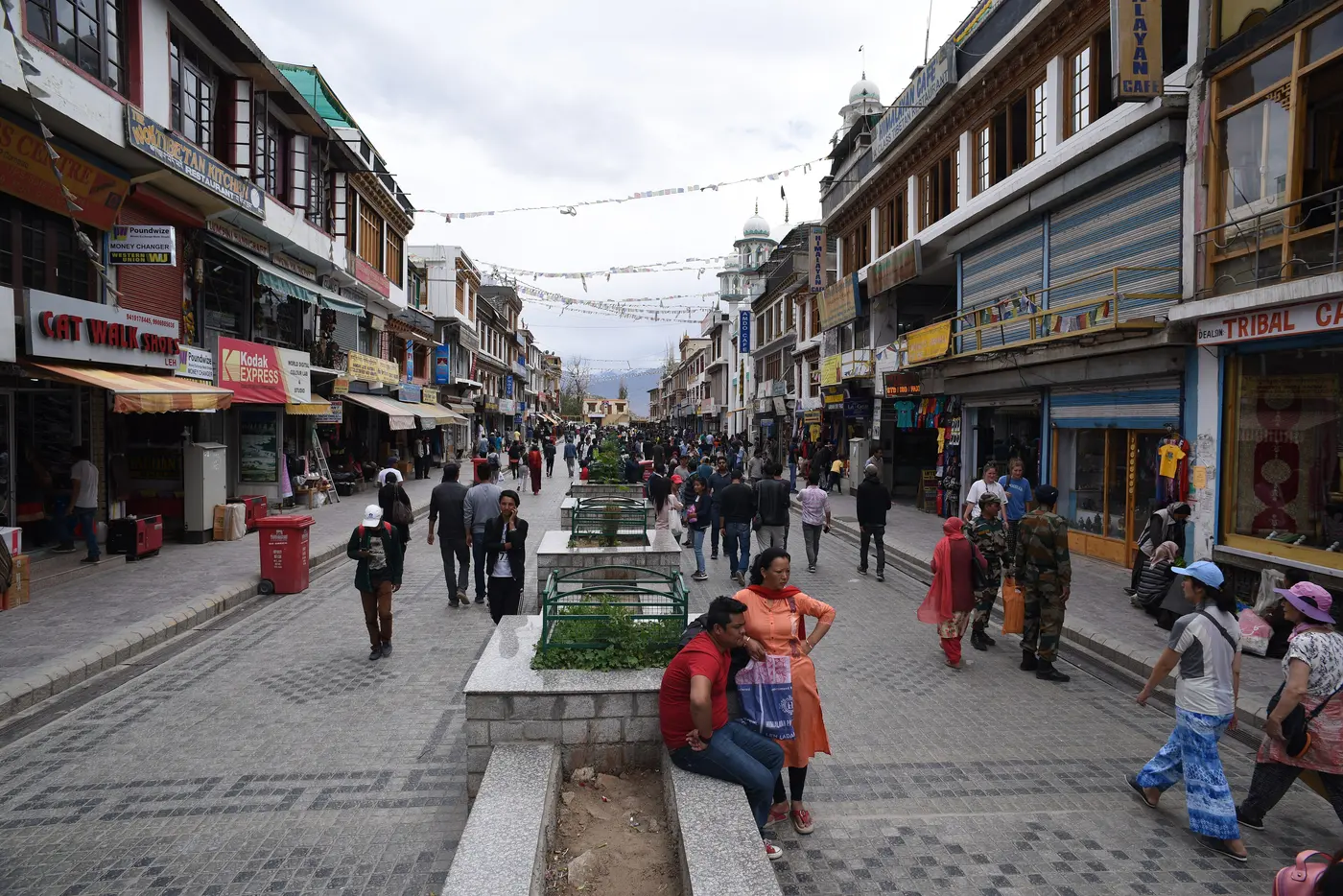
Leh Market (Main Bazaar) has been a trading post since the town's days as a Silk Road stop between Kashmir, Tibet, and Central Asia, and it still carries that layered, cross-border feel — Kashmiri shawl sellers next to Ladakhi jewellery stalls next to Tibetan refugee craft cooperatives. It's pedestrianised for most of the day, lined with poplar and willow trees, and easily the liveliest place in town come evening.
Behind the main bazaar, the old town unfolds in a tangle of narrow lanes climbing toward the palace — mudbrick houses, small chortens, prayer wheels built into courtyard walls, and the occasional startled goat. It's a genuinely rewarding place to just wander with no destination, especially in the golden hour before sunset when residents sit out on their steps and the light catches the whitewashed walls.
- Buy here: Pashmina shawls, Ladakhi turquoise and coral jewellery, apricot products, prayer flags, Tibetan singing bowls, dried fruit and nuts
- Best time: Early evening, 5–8 PM, when stalls are fully open and the crowd is thickest but not overwhelming
- Bargain, but fairly: Prices are already modest by Indian city standards; most sellers depend heavily on the short tourist season
Shanti Stupa
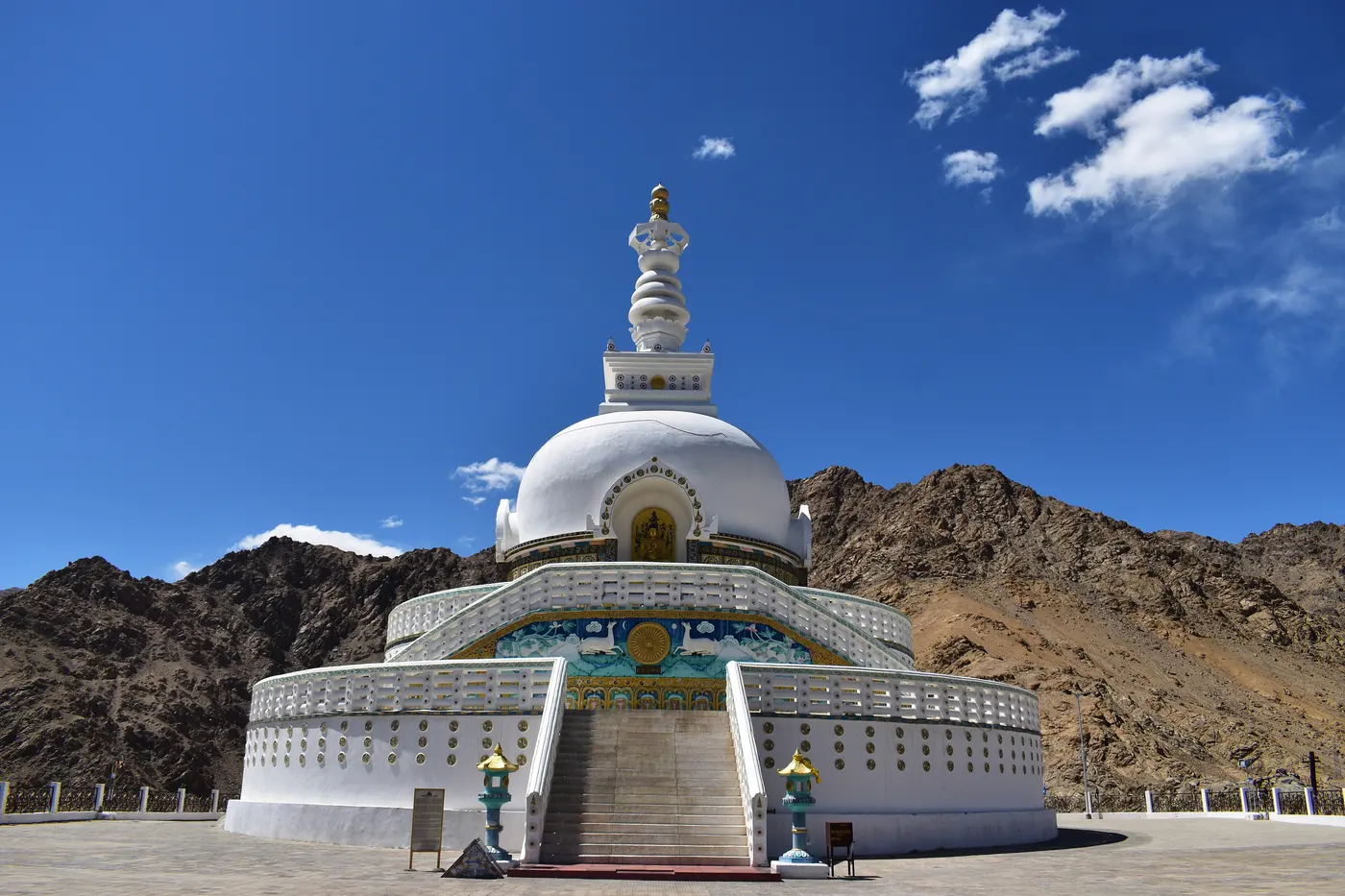
Perched on a hilltop above Changspa, Shanti Stupa is a gleaming white-domed Buddhist monument built in 1991 by Japanese Buddhist monks as part of a global "peace pagoda" movement, dedicated to the spread of world peace and to mark 2,500 years of Buddhism. Gilded panels around the base depict scenes from the Buddha's life and his previous incarnations.
What draws most visitors, though, is the view. From the stupa's terrace you get one of the finest panoramas in Leh — the whole town spread out below, Leh Palace and Namgyal Tsemo across the valley, and the Stok Kangri range beyond. Sunrise and sunset are both spectacular here; sunset draws bigger crowds, sunrise gets you the place nearly to yourself.
- Getting there: A steep flight of roughly 500 steps from Changspa, or a short taxi ride up the motorable road on the far side — take the taxi on your first couple of days
- Entry: Free
- Timings: Open 5 AM – 9 PM; illuminated after dark
Namgyal Tsemo Fort & Gompa
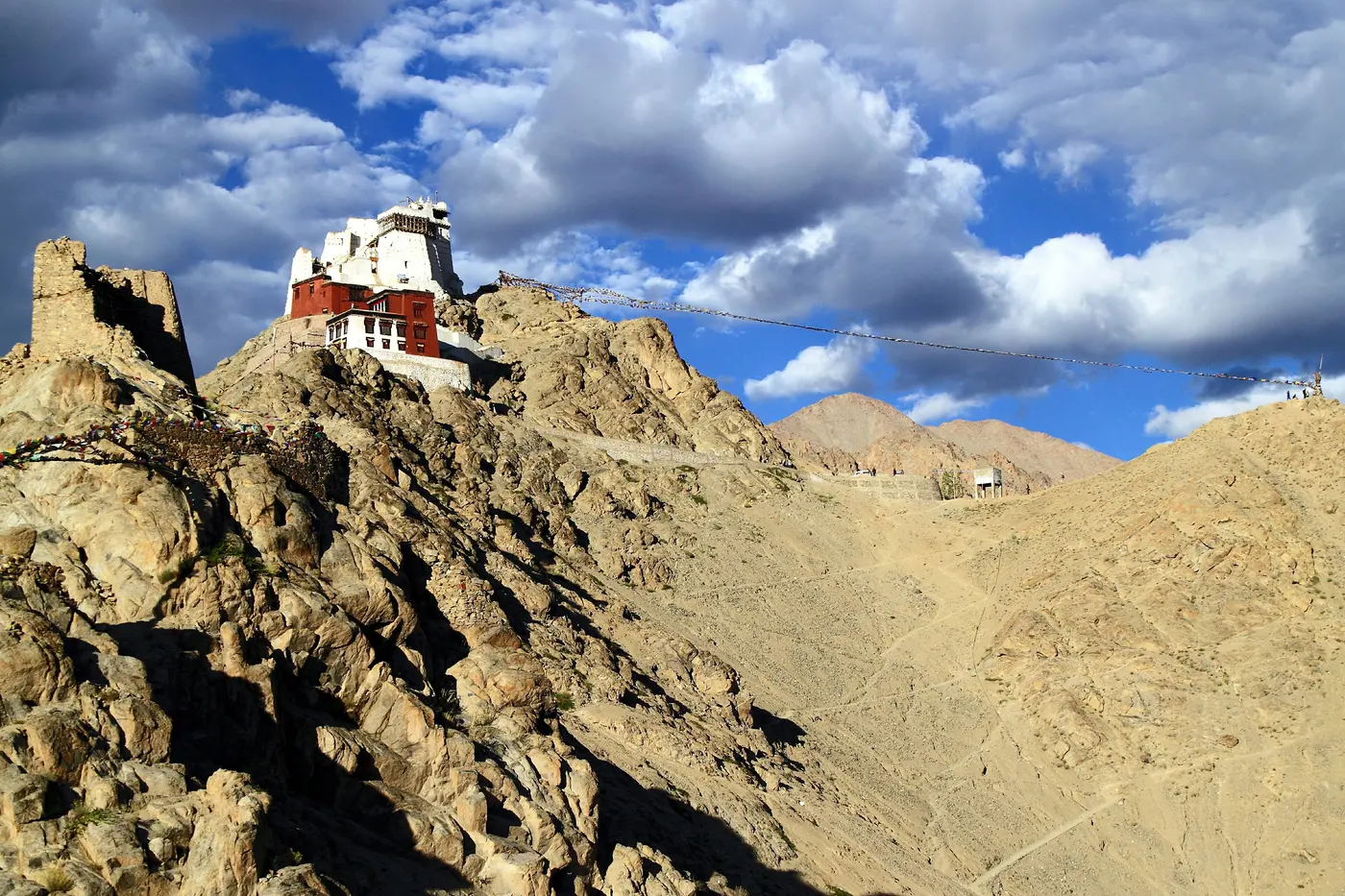
Higher still above Leh Palace, on the very crown of the hill, sits Namgyal Tsemo — a 16th century fort and monastery built by King Tashi Namgyal, predating the palace below it. Inside the small gompa is a two-storey gilded statue of Maitreya Buddha (the Buddha of the future), along with older thangkas and a small collection of weapons and armour from the old Namgyal dynasty.
It's a genuinely tough climb — steeper and longer than the palace approach — but the reward is the single best view over Leh: the entire old town, the palace below you, the Indus Valley stretching out, and on a clear day the peaks around Stok visible across the valley. Very few day-tripping tourists make it up here, which keeps it peaceful.
- Access: On foot from Leh Palace (steep, 20–30 minutes further) or by a rough motorable road around the back of the hill
- Best for: Day 3 or later — this is not a first-day activity at 3,500 m+
- Timings: Roughly 7 AM – 6 PM
Hall of Fame
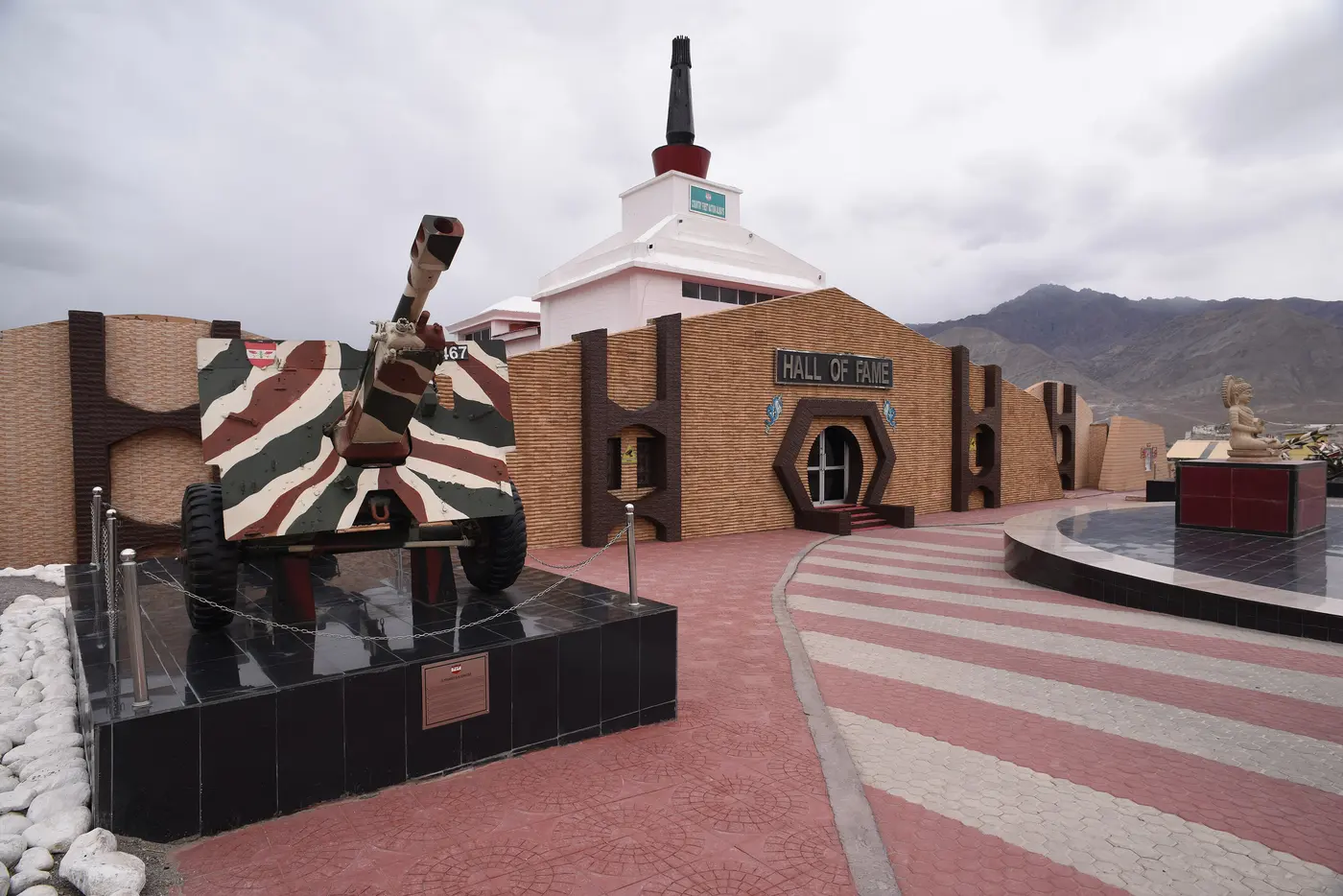
Run by the Indian Army, the Hall of Fame is a war memorial and museum a short drive from central Leh, dedicated to soldiers who fought in the 1962, 1965, and 1971 wars, and to the Kargil War of 1999. Exhibits cover the extreme conditions of high-altitude warfare — Siachen Glacier gear, captured Pakistani equipment, photographs from Kargil — alongside displays on Ladakhi culture, flora, and fauna.
It's a sobering, well-curated stop that gives real context to how militarily significant — and physically brutal — this border region is, something easy to forget amid the scenery elsewhere in Ladakh.
- Distance from centre: ~4 km, 10–15 minutes by taxi
- Entry: Nominal ticket fee, camera fee extra
- Timings: Closed Mondays and during winter months (typically Dec–Feb)
Sankar Gompa
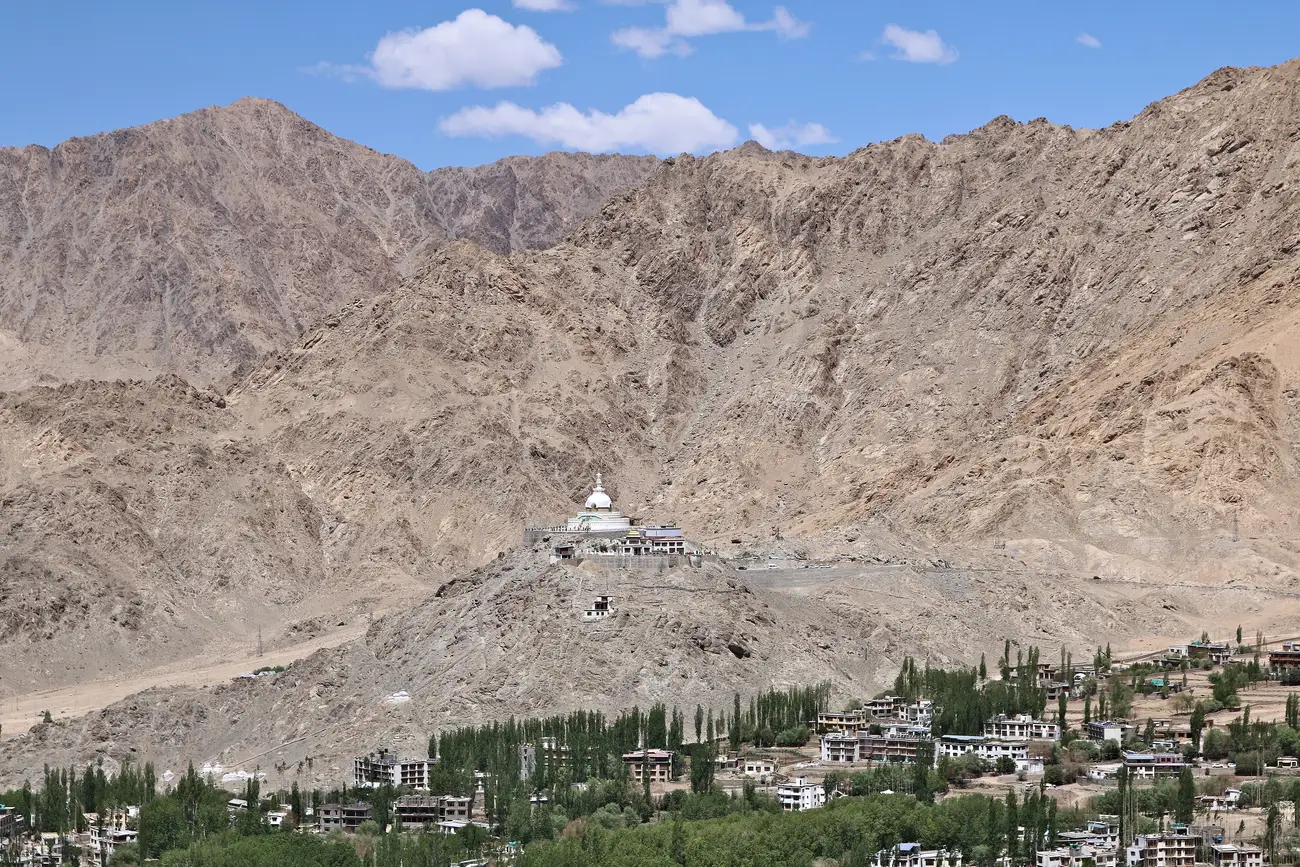
A small, active Gelugpa (Yellow Hat) monastery about 3 km north of the main bazaar, affiliated with the larger Spituk Monastery. Sankar Gompa is easy to combine with a Changspa evening — a 20-minute walk or short taxi — and rarely sees the crowds of the bigger monasteries further out. Its main hall holds a striking statue of Avalokiteshvara with a thousand arms and eyes, along with well-preserved wall paintings.
- Distance: ~3 km from Leh Market
- Entry: Modest donation/entry fee
- Best time: Late afternoon, when it's quiet and monks may be around for a chat
Leh Jama Masjid
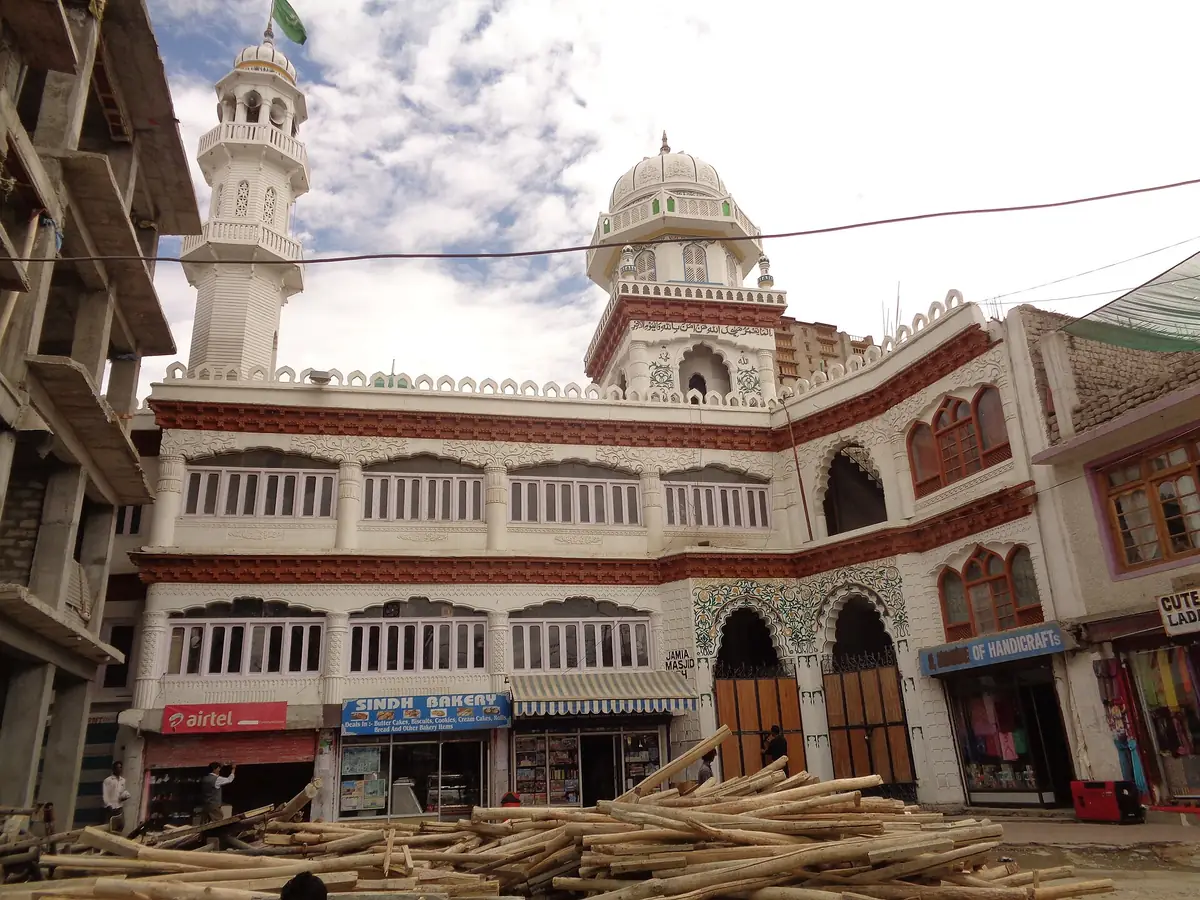
Standing right at the entrance to the main bazaar, the Jama Masjid of Leh is a reminder that this town's Silk Road past brought more than just Buddhist influence — a significant Muslim trading community, largely of Kashmiri and Central Asian descent, has lived here for centuries. The mosque's pale green-and-white facade and minarets are a distinctive landmark at the market's edge, and its call to prayer is one of the everyday sounds of the bazaar.
Non-Muslim visitors are generally welcome to view the exterior and courtyard respectfully; dress modestly and avoid entering during prayer times unless invited.
Day Trips from Leh
Once you're acclimatised, Leh makes an excellent base for a string of easy half-day and full-day trips — none of them requiring an Inner Line Permit, since they sit outside the restricted border zones. Each of these has a dedicated guide of its own on Kudozz Club; here's the short version to help you plan your days.
Thiksey Monastery
Half-dayThe most photogenic monastery near Leh — twelve storeys tiered up a hillside like a miniature Potala, with a 15-metre Maitreya Buddha inside. Time it for the 6 AM morning prayers if you can manage an early start.
Hemis Monastery
Full-day loopLadakh's largest and wealthiest monastery, tucked in a side valley. Combine it with Shey Palace and Thiksey for a full loop day. Hosts the region's biggest festival, with masked cham dances, in June or July.
Magnetic Hill
Quick stopA famous optical-illusion stretch of road where vehicles left in neutral appear to roll gently uphill — a fun, brief stop, not a destination in itself.
Sangam (Zanskar–Indus Confluence)
Combine with Magnetic HillJust past Magnetic Hill, the turquoise Zanskar River meets the murkier green Indus, running side by side for hundreds of metres without mixing. One of the most photogenic, most overlooked spots on the Leh–Kargil road.
Also within easy reach: Shey Palace (former summer capital of the Namgyal kings, 15 km) and Stok Palace (the current royal family's residence, across the Indus, 15 km). For Pangong Tso, Nubra Valley, and Khardung La — which do require permits and are best planned as overnight trips — see our full Leh Ladakh road trip guide.
Where to Stay in Leh
Leh has by far the widest and most reliable accommodation in Ladakh, from backpacker dorms to boutique heritage stays. The main clusters are Changspa (backpacker and café hub, walkable to Shanti Stupa), the Old Town/Market area (closest to the palace, more local feel), and Fort Road/Sheynam (mid-range hotels, quieter).
- → Zostel Leh
- → Old Leh House (guesthouse)
- → Changspa lane guesthouses
- → Backpacker hostels near Moti Market
- → Hotel Ladakh Palace
- → Lha-Ri-Sa Resort
- → Hotel Kanglachen
- → Fort Road guesthouses
- → The Grand Dragon Ladakh
- → Lchang Nang Retreat
- → The Zen Ladakh
- → Nimmu House (day trip out of town)
Book at least 3–4 weeks ahead for July–August travel. Changspa is the best base for first-timers — walkable to the market, close to Shanti Stupa, and packed with cafés for those slow acclimatisation days.
Cafés & Food in Leh
Leh's café scene is one of its quiet highlights, built up over decades of backpacker and overlander traffic — genuinely excellent coffee and baked goods sit alongside hearty Tibetan and Ladakhi staples designed for a body working hard at altitude.
- Skyu: Ladakh's answer to comfort food — thick, hand-pinched pasta shapes simmered in a root vegetable and meat or lentil broth. Deeply warming and the thing to order on a cold evening.
- Thukpa & momos: Available at nearly every restaurant in Leh, Tibetan-style noodle soup and steamed dumplings are the reliable go-to. Tibetan Kitchen and Lamayuru Restaurant near the market are long-standing local favourites.
- Butter tea (gur gur chai): Salted, churned with yak butter — an acquired taste for most first-timers, but worth trying at least once, ideally at a monastery or homestay rather than a tourist café.
- Apricot everything: Ladakh grows some of India's finest apricots. Jam, dried fruit, and apricot oil are sold throughout the market — buy direct from stalls rather than packaged tourist shops.
- Changspa café strip: This is where Leh's café culture really lives — Bon Appetit for continental food and cakes, The Bookshop Café for good coffee and a quiet reading corner, Café Jeevan for breakfasts, and a string of German-bakery-style spots serving banana bread and cinnamon rolls to travellers resting up between altitude gains.
Budget Breakdown for Leh
| Expense | Budget | Mid-Range | Comfort |
|---|---|---|---|
| Accommodation/night | ₹600 | ₹2,500 | ₹9,000 |
| Food/day | ₹400 | ₹800 | ₹1,800 |
| Local taxi/day (sightseeing) | ₹500 | ₹1,500 | ₹3,000 |
| Monument entries/day | ₹100 | ₹300 | ₹500 |
| Café & coffee/day | ₹150 | ₹400 | ₹800 |
| Daily total (approx) | ₹1,750 | ₹5,500 | ₹15,100 |
| 3-day Leh town total | ₹5,300 | ₹16,500 | ₹45,000+ |
* Excludes flights to/from Leh (₹4,000–₹12,000 one-way from Delhi) and any onward permits/costs for Pangong, Nubra, or other restricted areas outside town.
Essential Tips for Leh
- No permit needed for Leh town itself: The Inner Line Permit is only required if you're heading onward to Pangong, Nubra, Tso Moriri, or other restricted border areas. You can explore Leh freely without one.
- Cash still matters: ATMs in Leh (SBI, PNB, J&K Bank) generally work but can run dry during peak season weekends. Carry some cash as backup, though most market shops and cafés now accept UPI.
- Sun protection is non-negotiable: UV exposure at 3,500 m is intense even on a mild-feeling day. SPF 50+, sunglasses, and lip balm from day one.
- Layer up, even in summer: Daytime highs can hit 25°C but evenings drop sharply once the sun is behind the mountains. Pack a proper jacket even for a July trip.
- Mobile connectivity: BSNL and Airtel postpaid SIMs work most reliably in Leh; Jio coverage is patchy. Prepaid SIMs from other states typically don't activate here — sort connectivity before you arrive if possible.
- Respect monastery etiquette: Remove shoes before entering prayer halls, ask before photographing monks or interiors, and dress modestly — shoulders and knees covered.
✅ Do
- →Rest completely on your first day, no matter how fine you feel
- →Walk the old town lanes behind the palace at golden hour
- →Take a taxi up to Shanti Stupa for your first two visits
- →Try Skyu and butter tea at least once
- →Visit Leh Market in the early evening when it's liveliest
- →Carry water and sunscreen on every outing
❌ Don't
- →Climb to Shanti Stupa or Namgyal Tsemo on foot on day one
- →Drink alcohol in your first 24–48 hours in Leh
- →Ignore a headache — treat it as a warning, not an inconvenience
- →Book a Khardung La or Pangong trip for day one or two
- →Assume every SIM will work — check connectivity beforehand
- →Skip layers because it 'felt warm' during the day
Frequently Asked Questions
How many days do I need in Leh?
Two to three unhurried days is enough to properly see Leh town itself — Leh Palace, the market and old town, Shanti Stupa, and one or two day trips like Thiksey or Hemis — while also building in the acclimatisation time your body needs at 3,524 m before heading onward to Pangong or Nubra.
How do I acclimatise in Leh?
The golden rule is to do nothing for your first 24 hours — no sightseeing, no hikes, not even a brisk walk to the market. Hydrate constantly, eat light carbohydrate-rich meals, and skip alcohol and sleeping pills. Day 2 can include gentle activity like a slow walk to Leh Market or Leh Palace, saving the steeper climbs to Shanti Stupa and Namgyal Tsemo for day 3.
Do I need a permit to visit Leh town?
No — the Inner Line Permit is only required if you're heading onward to Pangong, Nubra, Tso Moriri, or other restricted border areas. You can explore Leh town itself, including Leh Palace, the market, and Shanti Stupa, freely without one.
What is the best time to visit Leh?
The first two weeks of September are the recommended window — the bazaar is still fully open, the light turns the old town gold in the evenings, and Leh Palace and Shanti Stupa see a fraction of the peak-August crowds. July–August is the busiest and warmest period, when the Hemis and Ladakh festivals also fall.
How do I reach Leh?
Most visitors fly into Kushok Bakula Rimpochee Airport (IXL), just 4 km from town, with daily flights from Delhi in around 1 hour 20 minutes. Alternatively, you can drive overland via Manali (479 km, 2–3 days, crossing Tanglang La) or via Srinagar (434 km through Zoji La and Kargil, open longer in the season and gentler on altitude).
What is the budget for a Leh town trip?
A 3-day stay in Leh town costs roughly ₹5,300 on a budget itinerary, around ₹16,500 mid-range, and ₹45,000+ for a comfort-tier trip — covering accommodation, food, local taxis, monument entries, and cafés, but excluding flights and any onward permits for Pangong or Nubra.
What are the must-see sights in Leh town?
The core sights are Leh Palace (a nine-storey former royal residence with sweeping Indus Valley views), Leh Market and the old town, Shanti Stupa (best for sunrise or sunset panoramas), and Namgyal Tsemo Fort, the toughest climb but the single best viewpoint over Leh. The Hall of Fame war memorial and Sankar Gompa are worthwhile lower-effort additions.
Published by the Kudozz Club editorial team · Last updated · How we research our guides
Want us to plan this trip for you?
Tell Kudozz Club where you want to go and what kind of trip you’re looking for. We’ll build a Leh and Ladakh itinerary around your dates and budget.
Continue Exploring
View all guides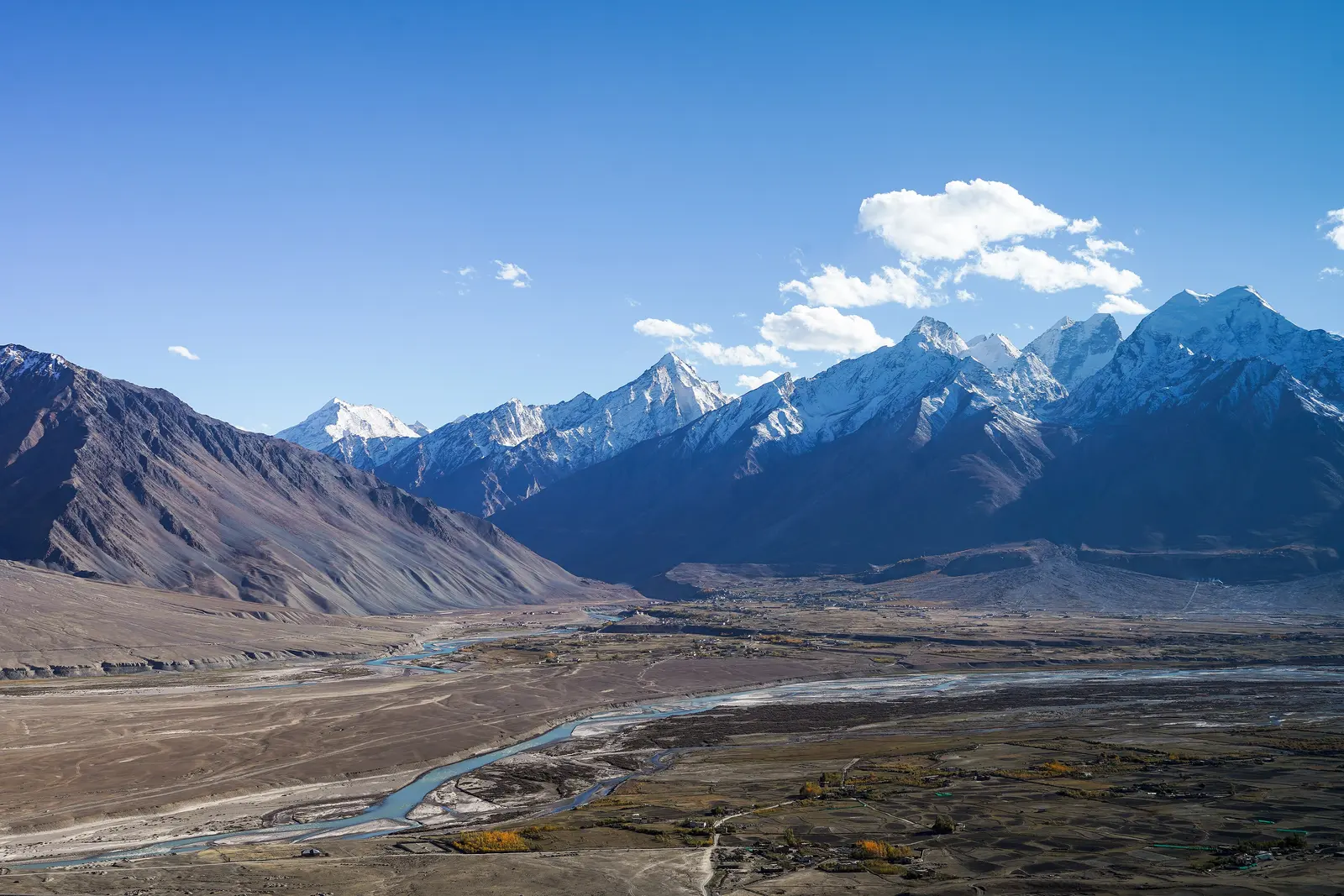 Trekking
Padum Travel Guide: Zanskar Valley's Historic Capital Town
A dusty bazaar town where two rivers meet, Padum is Zanskar's historic capital and the essential base for its monasteries, royal ruins, and legendary high-altitude treks.
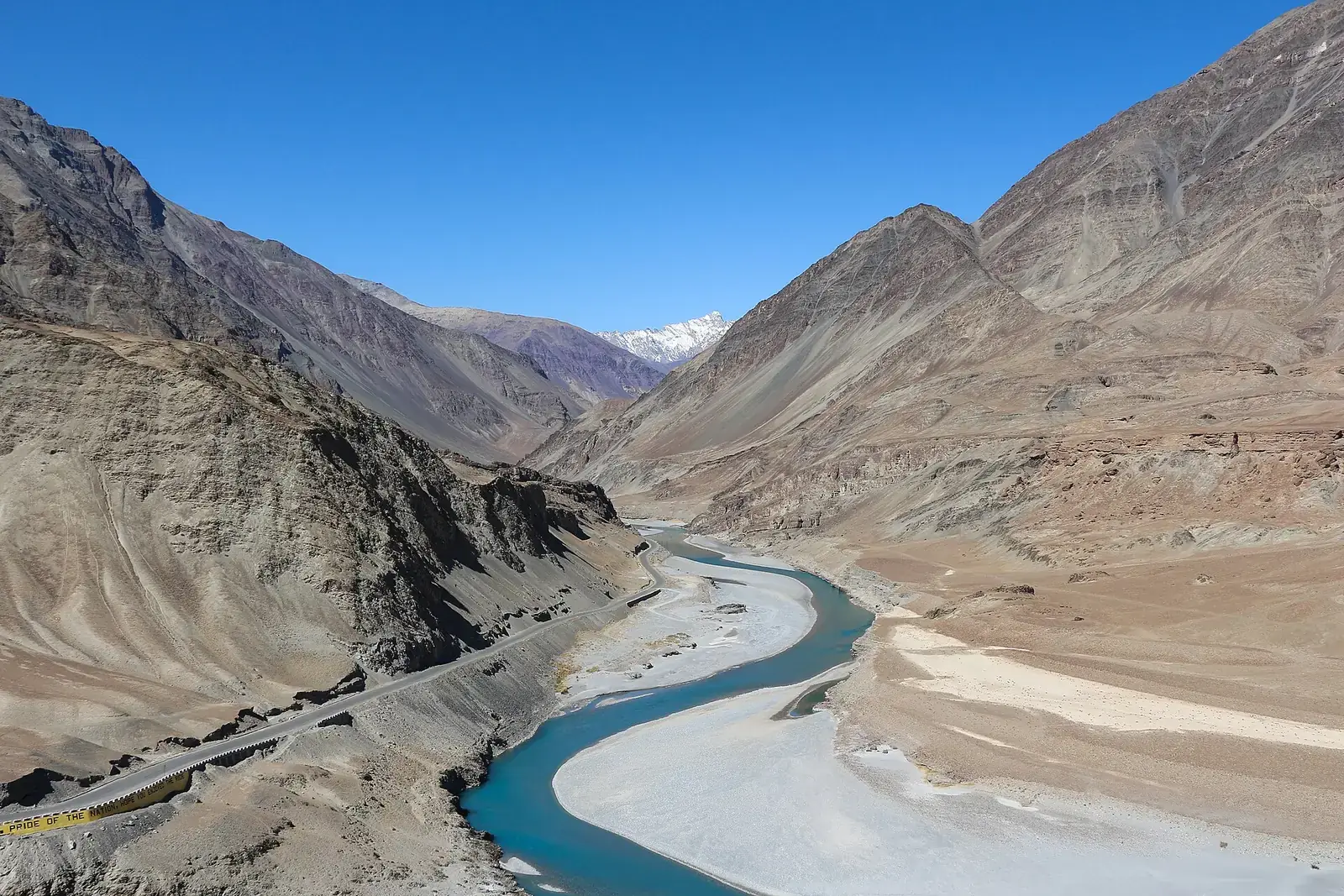 Adventure Travel
Adventure Activities in Ladakh: Rafting, Treks, Rides and Peaks
The best adventure activities in Ladakh: white-water rafting on the Zanskar and Indus, treks from the easy Sham Valley to Markha Valley and the Chadar, trekking peaks, motorcycle loops over Khardung La and Chang La, cycling descents, Bactrian camel rides in Nubra, lake camping and winter wildlife trips.
Things to DoThings to Do in Leh: Palace, Old Town, Stupas & Indus Valley Monasteries
Things to do in Leh: Leh Palace and the old town, Namgyal Tsemo, Shanti Stupa at sunset, the main bazaar and cafés, the Hall of Fame, Sankar Gompa, Thiksey, Shey and Hemis, Magnetic Hill, the Sangam and Spituk, and acclimatisation walks.
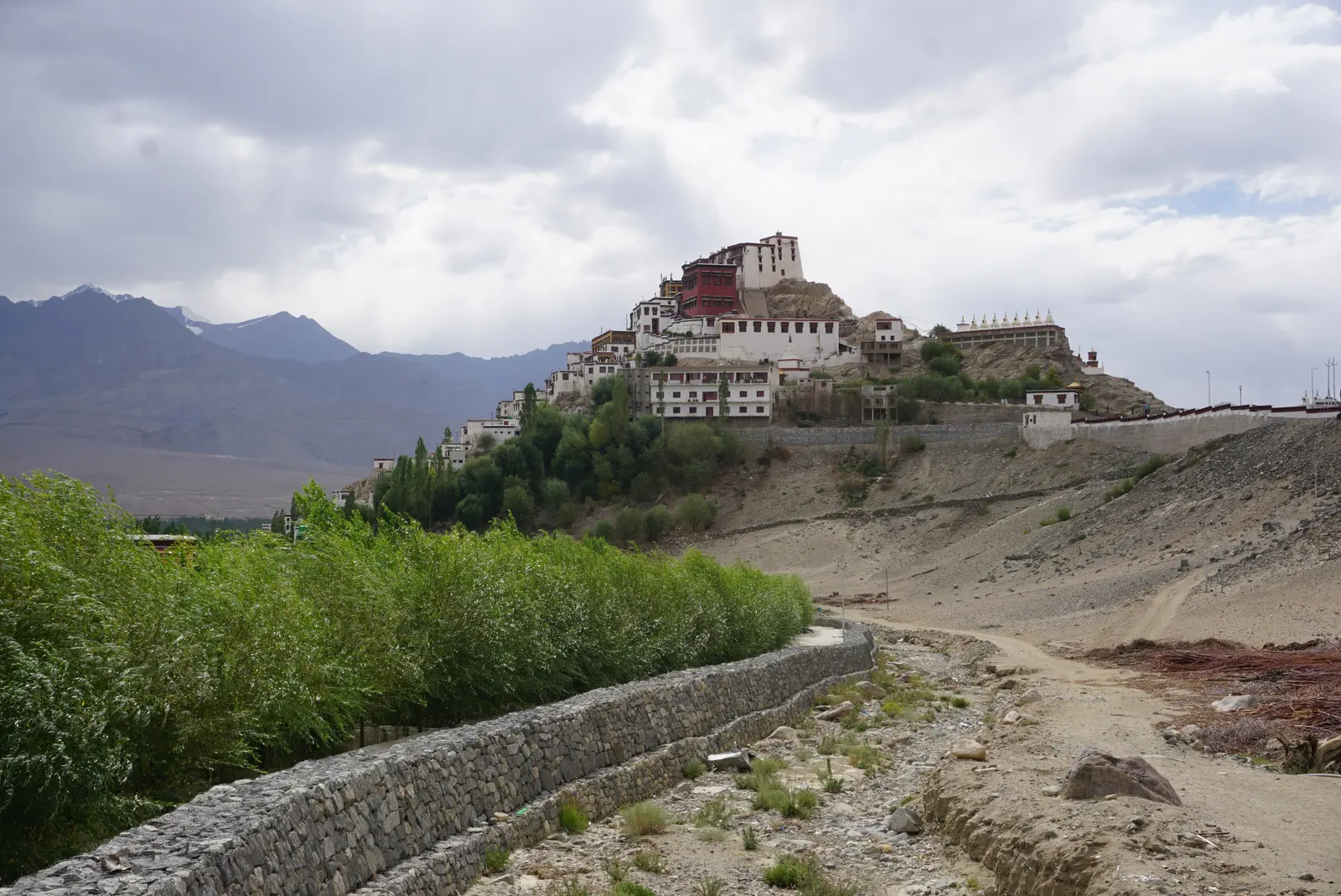 Heritage
Thiksey Travel Guide: Monastery, Morning Prayers & Maitreya Buddha
Twelve storeys of whitewashed walls climb a hillside above the Indus like a mini Potala Palace — home to a 15-metre golden Buddha and the most spellbinding 6 AM prayer ceremony in Ladakh.