Why Pangong Lake?
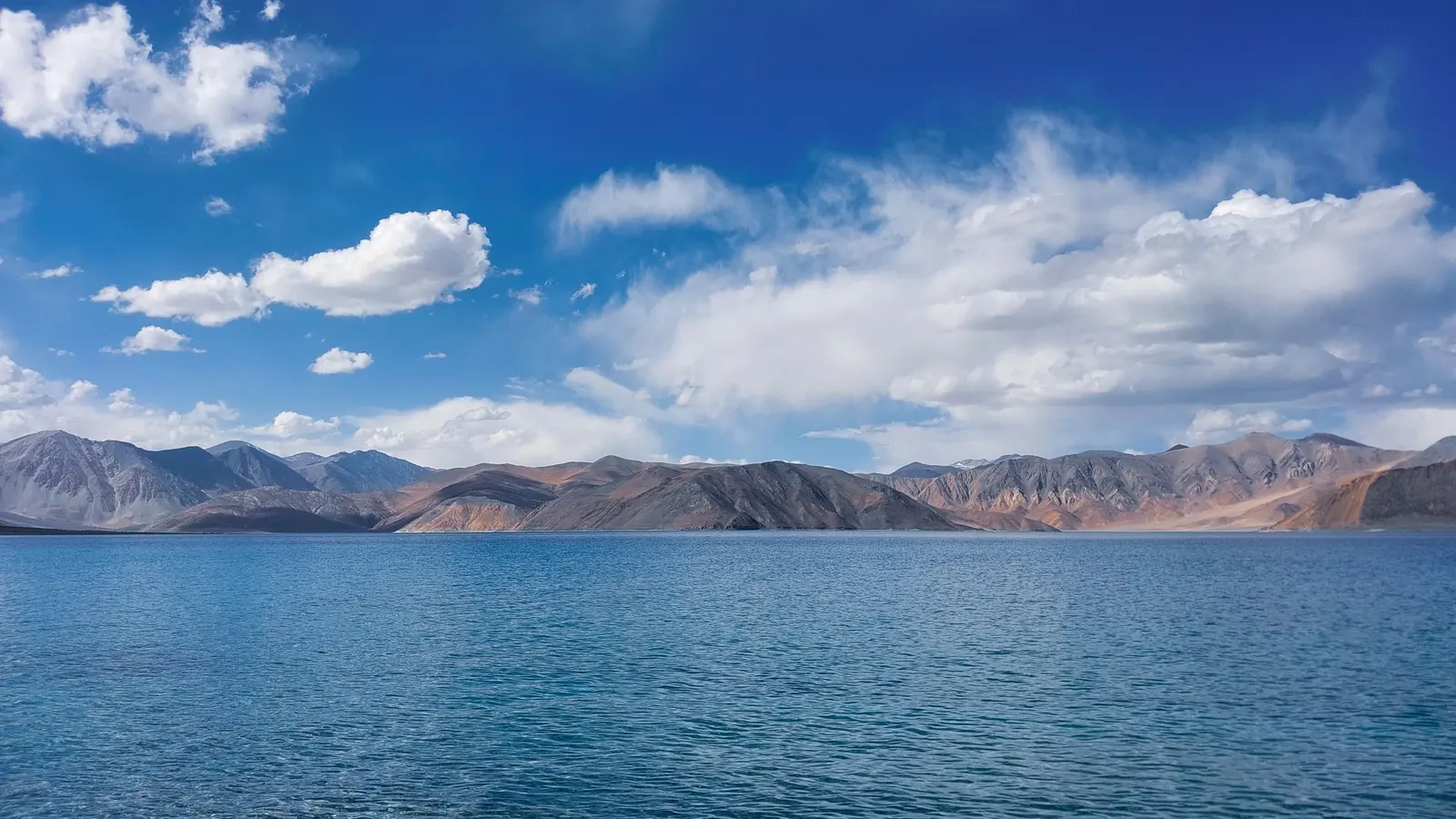
Some places are famous for a reason that turns out to be an understatement, and Pangong Tso is one of them. Long before it became a household name after the final scene of 3 Idiots, this endorheic saline lake sat quietly at 4,225 metres in the far eastern reaches of Ladakh, changing colour through the day for an audience of yaks, migratory birds, and the occasional Changpa herder.
Today it is the single most photographed body of water in the Indian Himalaya, and deservedly so. Pangong stretches 134 km from Ladakh into Tibet's Rutog region — only about 40 km of it lies in India — making it one of the largest high-altitude lakes on earth. The water is startlingly saline despite being fed by glacial streams and having no outlet, and it freezes solid enough in winter to walk across.
What sets Pangong apart from a postcard is the drive to get there and the night you spend on its shore. You cross a 5,360-metre pass to reach it, camp in a tent within metres of water that turns violet at dusk, and wake to a sunrise that no photograph quite prepares you for. It is, without exaggeration, one of the finest 36-hour detours in Indian travel.
🏔️ Pangong Lake at a Glance
Love the outdoors? See our guide to lakes in India.
Planning something active? Read our guide to camping in India.
Best Time to Visit Pangong Lake
Pangong is only accessible for about five months of the year. The road over Chang La closes under snow in winter, and the lake itself freezes over from December through February — a spectacular sight, but reachable only on specialist winter expeditions, not a standard trip.
Chang La reopens by mid-to-late May once BRO clears snow. Water levels are high from snowmelt, the surrounding hills still carry snow patches, and nights are bitterly cold (-5°C to 0°C). Fewer crowds than peak summer.
Warmest daytime temperatures (15–20°C), all camps open, the fullest range of colour on the lake. Also the most crowded — day-trip convoys from Leh arrive by late morning and thin out by 4 PM. Book camps in advance.
Our pick. Tourist numbers drop sharply after the second week, the sky turns a deeper, clearer blue, and the light in early morning and late afternoon is extraordinary. Nights turn cold again (-2°C to -8°C) — pack accordingly.
Chang La closes to regular traffic by mid-October. The lake begins freezing in December and is fully frozen by January, with temperatures below -20°C. Only accessible via specialised winter expeditions with local operators.
Our pick: First two weeks of September. The convoys of day-trippers have thinned, the water holds its deepest blues in the clear post-monsoon air, and camps that were fully booked in August have rooms to spare. Carry proper cold-weather layers regardless of when you go — nights at 4,300 m are cold in any month.
How to Reach Pangong Lake
There is no town, airport, or railhead anywhere near Pangong — every visitor arrives by road, almost always starting from Leh. There are two practical routes, and combining them into a loop (in via one, out via the other) is the single best upgrade you can make to a Ladakh itinerary.
Via Chang La (from Leh) — the direct route
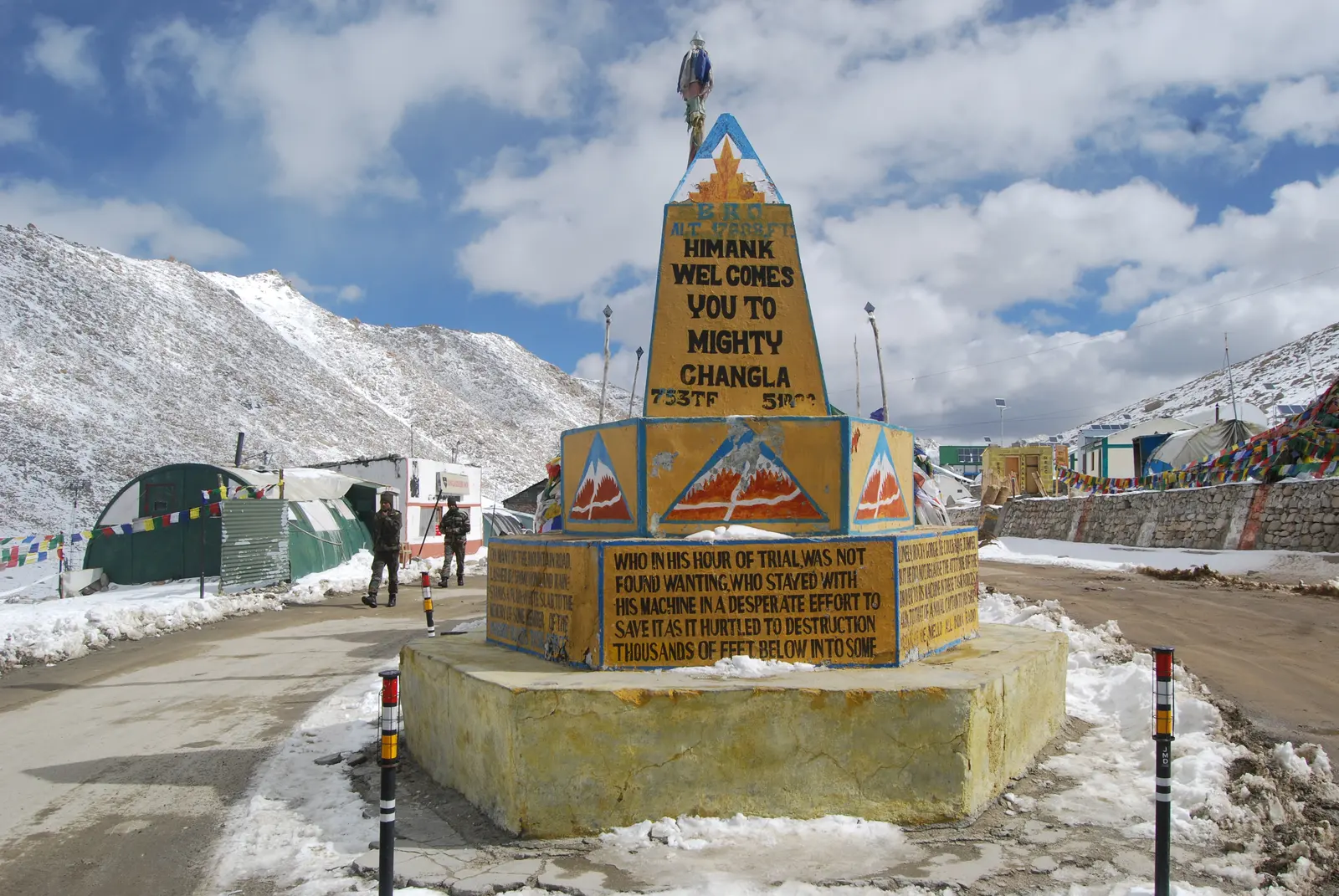
The standard approach: leave Leh, climb through Karu and Sakti, cross Chang La at 5,360 m, then descend through Durbuk and Tangtse before the road opens out along the lake's northern shore near Lukung. It is the shortest, most direct route and the one every taxi union and tour operator in Leh runs by default.
- Distance: ~160 km from Leh (one way)
- Duration: 4.5–5.5 hours driving, more with photo stops
- Highest point: Chang La at 5,360 m (17,590 ft)
- Road condition: Well-maintained tarmac for most of the way, with a rough, broken-tarmac stretch on the final descent to the lake
- Fuel: Top up fully in Leh — the nearest pump beyond Karu is unreliable
Via Nubra–Shyok Route — the scenic long way
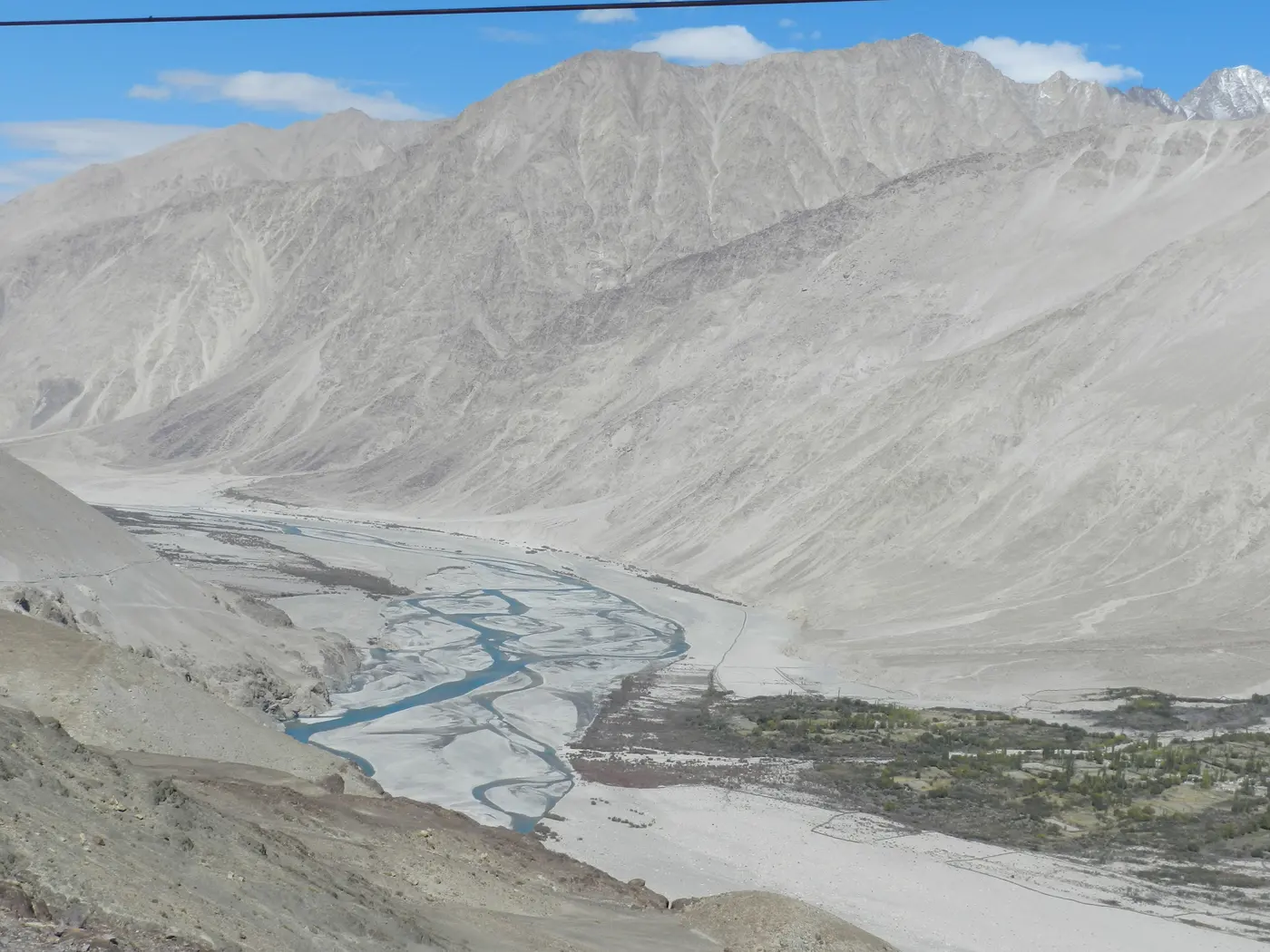
If you're already in Nubra Valley, there's a spectacular alternative: follow the Shyok River south from Diskit or Hunder along a raw, dramatically beautiful valley road that few tourists take, joining the main Pangong road near Durbuk. This route skips Chang La entirely and links two of Ladakh's headline sights into one loop without backtracking through Leh.
- Distance: ~180–200 km from Hunder / Diskit
- Duration: 6–7 hours — slower than the Chang La route due to unpaved stretches
- Road condition: Mostly graded dirt and river-bed track, with a handful of shallow water crossings; a high-clearance vehicle is strongly recommended
- Highlight: The Shyok gorge itself — sheer rock walls, turquoise river braids, and almost no other traffic
Permits & Paperwork for Pangong
Pangong sits inside a protected border zone, so an Inner Line Permit (ILP) is mandatory for every visitor — Indian or foreign. Checkpoints at Zingral (before Chang La) and near Tangtse check permits carefully, and travelling without one means being turned back after hours of driving.
Inner Line Permit (ILP)
Protected Area Permit (PAP)
Wetland Conservation Fee
📋 Documents to carry (photocopies × 3–5)
The Colour-Changing Lake
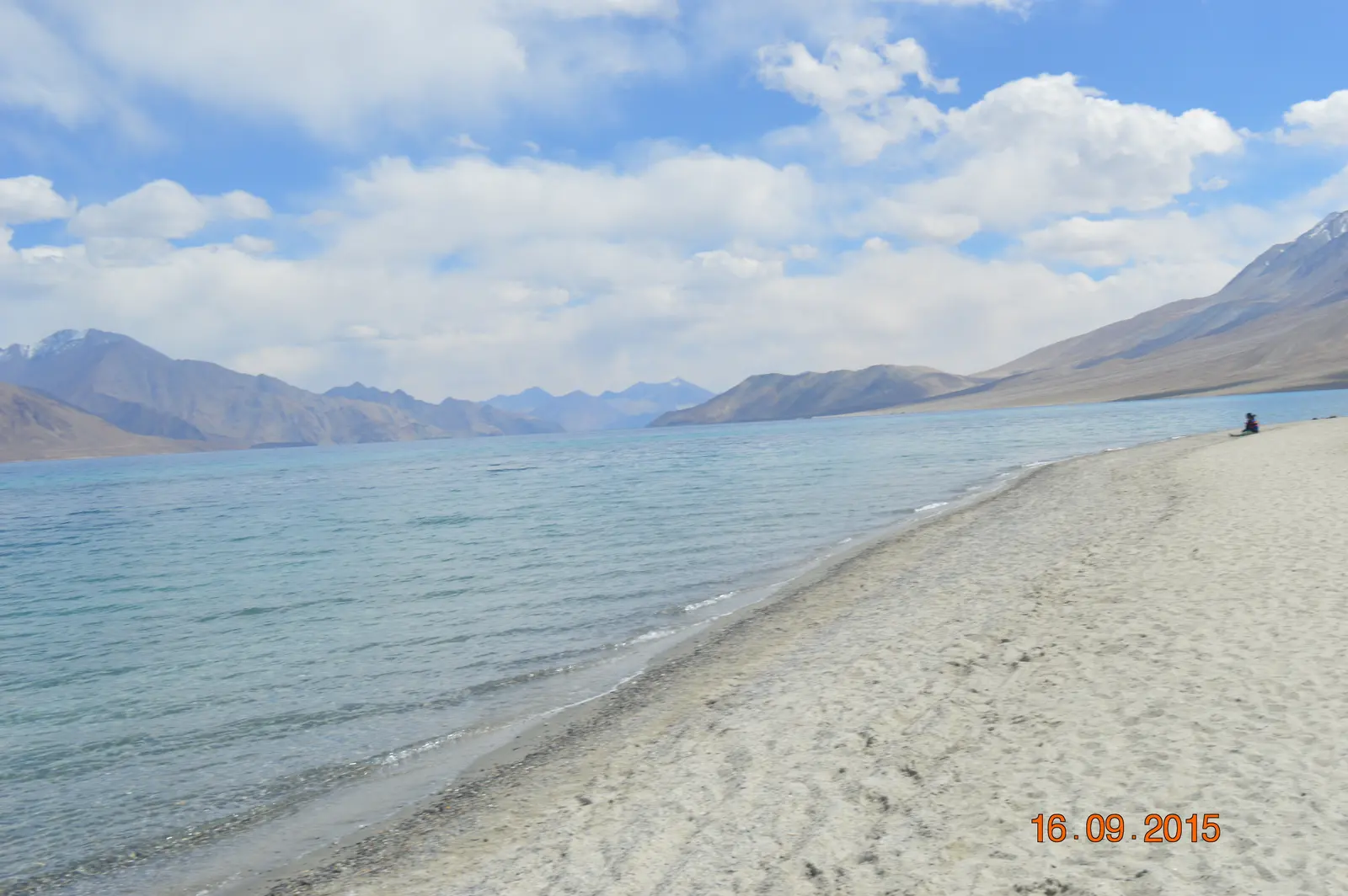
Pangong's signature party trick is real, not a filter. Watch the lake for even a few hours and you'll see it shift through pale jade, turquoise, sapphire, steel grey, and — right at dusk, if the sky cooperates — a deep violet. The cause is a combination of the lake's unusual mineral content, its extreme clarity and depth in places, and the angle of sunlight hitting a body of water sitting in a treeless, high-UV desert environment. There is no vegetation or silt to mute the colour, so the lake reflects the sky and refracts light with unusual purity.
It also happens to be a saline lake with no fish and no outlet — water only leaves by evaporation, which over thousands of years has concentrated the dissolved salts. Despite this, it freezes over completely in winter, thick enough that locals historically crossed it on foot and by yak.
Camping Overnight on the Shore
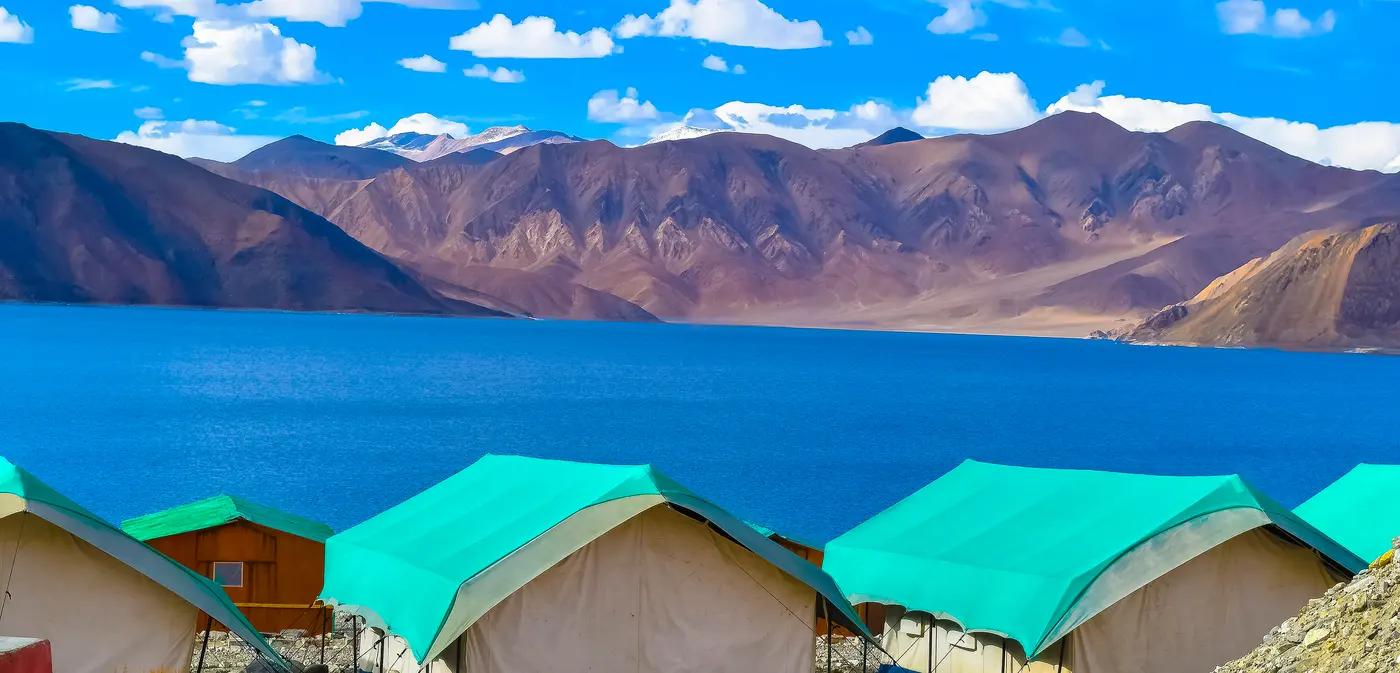
Doing Pangong as a same-day trip from Leh is common — and a mistake. You'll spend nearly 10 hours driving to get barely 90 minutes at the lake, sandwiched between the same crowds and the same midday light everyone else gets. Staying overnight is what actually delivers the Pangong experience: the crowds thin out by 5 PM, the light turns extraordinary at sunset, the stars at 4,300 m with zero light pollution are staggering, and you get the lake to yourself again at sunrise.
A strip of semi-permanent tent camps runs along the shore near Spangmik and Man, ranging from basic two-person tents with a shared bathroom block to heated, carpeted "luxury" tents with attached toilets and hot water buckets. All run on generator power for a few hours each evening — don't expect Wi-Fi or reliable charging.
- Typical camp cost: ₹2,000–₹6,000 per night including dinner and breakfast, per tent
- Heating: Most camps provide extra blankets and a bukhari (wood stove) lit in the evening — nights still drop close to freezing even in July
- Booking: In peak season (July–August) book at least a week ahead; camps fill fast on weekends
- Toilets: Basic dry or bucket-flush toilets at budget camps; attached Western toilets at mid-range and above
South Shore vs North Shore
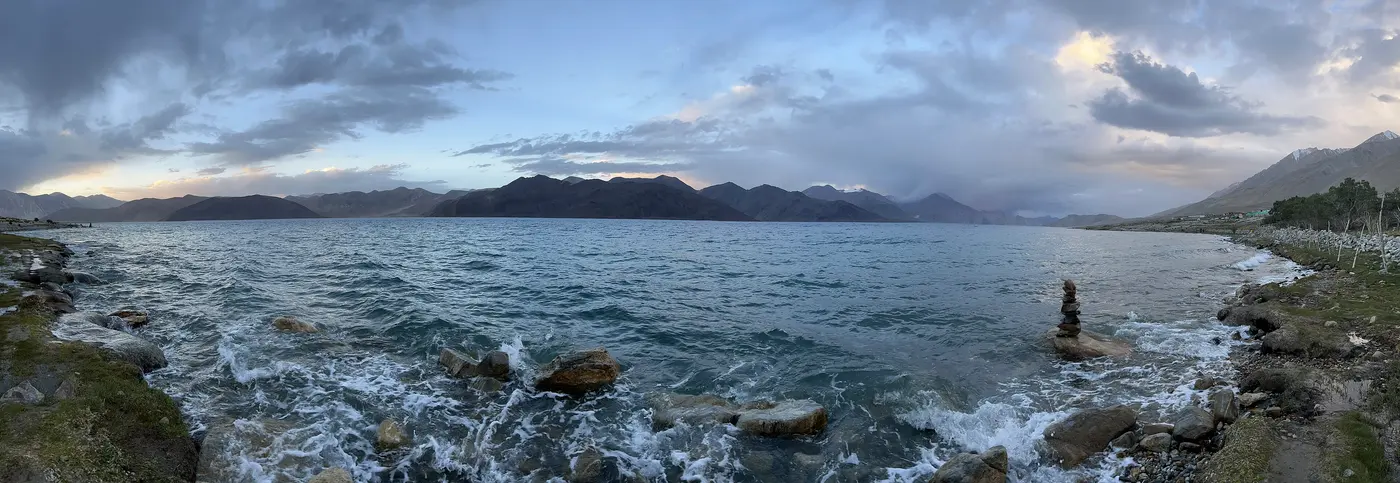
Almost every tourist convoy from Leh via Chang La lands at the same stretch of the north shore near Lukung and the viewpoint made famous by 3 Idiots — which means that stretch is, predictably, the busiest patch of shoreline in Ladakh by 11 AM. A short drive around the western tip of the lake changes everything.
North Shore (Lukung side)
The default stop for every day-trip taxi from Leh — easy road access, the famous 3 Idiots viewpoint, souvenir stalls, and by far the heaviest footfall. Worth a quick photo stop but not where you want to spend your night.
South Shore (Merek, Man, Spangmik)
Reached via a well-marked road skirting the lake's western edge. Home to most of the established tent camps, dramatically fewer people, and arguably better views — the mountains of the Pangong range rise more steeply behind these villages. This is where you should base yourself for the night.
A good rhythm: arrive via the north shore in the afternoon for the classic viewpoint photo, then drive 20–30 minutes further to Spangmik or Man to check into camp, walk the shoreline at golden hour with almost no one else around, and return to the north shore briefly the next morning only if you skipped it the day before.
Chang La Pass
At 5,360 metres (17,590 ft), Chang La is frequently — if inaccurately — signed as "the world's third-highest motorable pass." It isn't quite that by strict measurement, but it is genuinely one of the highest roads most travellers will ever drive, and the approach from either side is dramatic: switchbacks climbing through bare scree slopes into thin, biting air.
The pass is named for a local saint, Changla Baba, and a small shrine near the top draws offerings from passing drivers. There's a modest army-run cafeteria serving hot tea and Maggi noodles — a genuine lifeline given how cold and thin the air is at the top.
2-Day Leh–Pangong–Leh Itinerary
This is the minimum sensible way to see Pangong properly — one night at the lake, with acclimatisation in Leh already done beforehand. If you have more time, slot this straight into a longer Nubra–Pangong loop instead of doing it as an out-and-back.
Acclimatise in Leh
- ✓Spend at least 2 full days resting/exploring Leh city first
- ✓Arrange your ILP at the DC Office or via your hotel/agent
- ✓Fuel the vehicle fully — last reliable pump before Pangong
- ✓Pack warm layers even if Leh feels comfortably warm
Leh → Pangong via Chang La
- ✓Depart Leh by 7–8 AM to beat the midday convoy crush
- ✓Tea stop and photos at Chang La (5,360 m) — 15–20 min max
- ✓Lunch stop in Durbuk or Tangtse village
- ✓Reach the north shore viewpoint by early afternoon
- ✓Continue to Spangmik / Man on the south shore, check into camp
- ✓Sunset walk along the shoreline — watch the colours shift
Sunrise at Pangong → Return to Leh
- ✓Wake before dawn for sunrise over the lake — worth the cold
- ✓Slow breakfast at camp, walk the south shore in soft morning light
- ✓Depart by 10–11 AM to avoid the outbound day-trip convoy
- ✓Second stop and photos at Chang La on the return leg
- ✓Back in Leh by mid-afternoon — rest and market evening
Where to Stay at Pangong
Accommodation at Pangong means tent camps — there are no permanent hotels on the shore. Camps cluster around Spangmik, Man, and Merek on the south shore, with a smaller number near Lukung on the north shore. Book ahead in July–August; camps often close entirely by late October.
- → Basic Swiss tents, shared toilets
- → Camps near Lukung (north shore)
- → Local family-run tent setups in Spangmik
- → Bring your own sleeping bag liner
- → Pangong Retreat Camp
- → Lake View Camp, Spangmik
- → Attached bathrooms, bukhari heating
- → Meals included (dinner + breakfast)
- → Chamba Camp Pangong (Merek)
- → Nomadic Ladakh Luxury Camps
- → Heated tents, en-suite hot water
- → Multi-course dinners, lake-facing decks
What to Eat at Pangong
Options at the lake itself are limited to whatever your camp cooks — usually a simple, hearty set menu geared toward warming you up after a cold night. Don't expect variety; do expect it to hit the spot at 4,200 metres.
- Camp thali: Most tent camps serve a fixed vegetarian or mixed thali — dal, rice, a vegetable curry, roti, and pickle. Simple and filling.
- Maggi noodles: The unofficial food of every Ladakh mountain pass and lakeside stall, including the small dhabas at Chang La and near Lukung. Reliable, hot, and fast.
- Thukpa & instant soups: A warming staple at camps and roadside stalls en route — worth ordering the moment you feel the evening chill set in.
- Butter tea & black tea: Offered at most camps and the army-run stall at Chang La — the salted butter tea is an acquired taste but genuinely warming.
- Bring your own snacks: Energy bars, dry fruit, and electrolyte sachets are worth carrying — shop options at the lake are minimal and prices are higher than in Leh.
Budget Breakdown for a Pangong Trip
| Expense | Budget | Mid-Range | Comfort |
|---|---|---|---|
| Tent camp/night (incl. meals) | ₹1,800 | ₹4,000 | ₹12,000 |
| Vehicle hire, Leh–Pangong–Leh | ₹4,500 | ₹7,500 | ₹12,000 |
| ILP + wetland fee | ₹150 | ₹150 | ₹150 |
| Food en route (2 days) | ₹500 | ₹1,000 | ₹2,000 |
| 2-day trip total (2 people, shared vehicle) | ₹6,950 | ₹12,650 | ₹26,150 |
* Assumes a shared taxi/SUV from Leh split between 2–4 people. A self-drive rental bike or car changes the vehicle-hire line but adds fuel costs of roughly ₹1,500–₹2,500 for the round trip.
Essential Travel Tips for Pangong
- Acclimatise before you go: Pangong (4,225 m) sits higher than Leh (3,524 m). Spend at least two full days in Leh before attempting the overnight trip — this is not the place to test your body for the first time.
- There are no ATMs at Pangong: Carry all the cash you'll need — camps, fuel top-ups, and roadside stalls are cash-only. ₹5,000–₹8,000 per person for a two-day trip is a safe buffer.
- Network is minimal to non-existent:BSNL and postpaid Airtel have patchy signal near Lukung; most of the south shore and the Chang La stretch have none at all. Tell someone your plan before you leave Leh and treat the trip as offline.
- Nights are genuinely cold: Even in peak summer, temperatures at the lake can fall close to freezing after sunset. Pack thermal layers, a warm jacket, gloves, and a beanie regardless of the month.
- Fuel up in Leh: There is no petrol pump at Pangong. Fill the tank completely before leaving Leh and, on a bike, carry a spare litre or two as a buffer.
- Don't linger long at Chang La: 15–20 minutes at the top is plenty. The combination of altitude and cold makes it a place to admire briefly, not to hang around.
- Protect your skin and eyes: UV exposure at 4,200–5,400 m is extreme, and the lake's reflective surface intensifies it further. SPF 50+, polarised sunglasses, and lip balm are non-negotiable.
- Pack out everything you bring in: Pangong's ecosystem is fragile and there is no waste management on the shore. Carry a reusable bottle, avoid single-use plastics, and take all litter back to Leh.
✅ Do
- →Spend at least 2 days acclimatising in Leh first
- →Book your tent camp ahead in July–August
- →Carry all the cash you'll need — no ATMs here
- →Stay overnight for sunrise and sunset, not a day trip
- →Base yourself on the quieter south shore (Spangmik/Man)
- →Fuel up fully in Leh before departing
- →Pack warm layers even in peak summer
- →Carry your ILP printouts, not just a phone photo
❌ Don't
- →Drive straight from a flight arrival to Pangong
- →Linger more than 20 minutes at Chang La
- →Assume you'll find an ATM or fuel pump at the lake
- →Expect reliable phone signal beyond Lukung
- →Skip the ILP — checkpoints will turn you back
- →Leave litter or single-use plastic on the shore
- →Underestimate how cold Pangong nights get
- →Rush the visit as a same-day out-and-back
Frequently Asked Questions
How many days do I need for Pangong Lake?
The minimum sensible plan is a 2-day, 1-night trip from Leh — one night camping on the shore, ideally on the quieter south side near Spangmik or Man. A same-day out-and-back is technically possible but not recommended, since you'd spend nearly 10 hours driving for barely 90 minutes at the lake.
What is the best time to visit Pangong Lake?
The first two weeks of September are our pick — day-trip crowds have thinned, the water holds its deepest blues in the clear post-monsoon air, and camps that were fully booked in August have rooms to spare. July–August is peak season with the warmest weather but the biggest crowds. The lake is only accessible for about five months a year, roughly May through September/October.
How do I reach Pangong Lake from Leh?
The direct route crosses Chang La (5,360 m) from Leh, roughly 160 km and 4.5–5.5 hours of driving. An alternative if you're already in Nubra Valley follows the Shyok River south from Diskit or Hunder, skipping Chang La entirely — a longer, rougher 6–7 hour drive that lets you combine both regions into one loop without backtracking through Leh.
Do I need a permit for Pangong Lake?
Yes — an Inner Line Permit (ILP) is mandatory for every visitor, Indian or foreign, since Pangong sits inside a protected border zone. Indian nationals apply online at lahdclehpermit.in or in person at the DC Office in Leh; foreign nationals need a Protected Area Permit (PAP) arranged through a registered Leh-based tour operator in a group of at least two.
What is the budget for a trip to Pangong Lake?
For a shared vehicle split between 2–4 people, a 2-day trip totals roughly ₹6,950 on a budget plan, ₹12,650 mid-range, or ₹26,150 for more comfort — covering the tent camp, vehicle hire from Leh, permits, and food. Tent camps alone range from ₹1,800 to ₹12,000 per night including meals.
Is it safe to camp overnight at Pangong Lake?
Yes, camping is the recommended way to experience Pangong — a strip of semi-permanent tent camps runs along the shore near Spangmik and Man, ranging from basic two-person tents to heated 'luxury' tents. The main things to plan around are the cold (nights drop close to freezing even in July) and the altitude, since Pangong (4,225 m) sits higher than Leh — spend at least two acclimatisation days in Leh first.
Why does Pangong Lake change colour?
The colour shift through the day — from pale jade to turquoise, sapphire, steel grey, and violet at dusk — comes from the lake's unusual mineral content, its extreme clarity and depth, and the angle of sunlight hitting a treeless, high-UV desert environment with no vegetation or silt to mute the colour. It's most dramatic in the hour after sunrise and the hour before sunset.
Published by the Kudozz Club editorial team · Last updated · How we research our guides
Want us to plan this trip for you?
Tell Kudozz Club where you want to go and what kind of trip you’re looking for. We’ll build a Pangong Lake and Ladakh itinerary around your dates and budget.
Continue Exploring
View all guides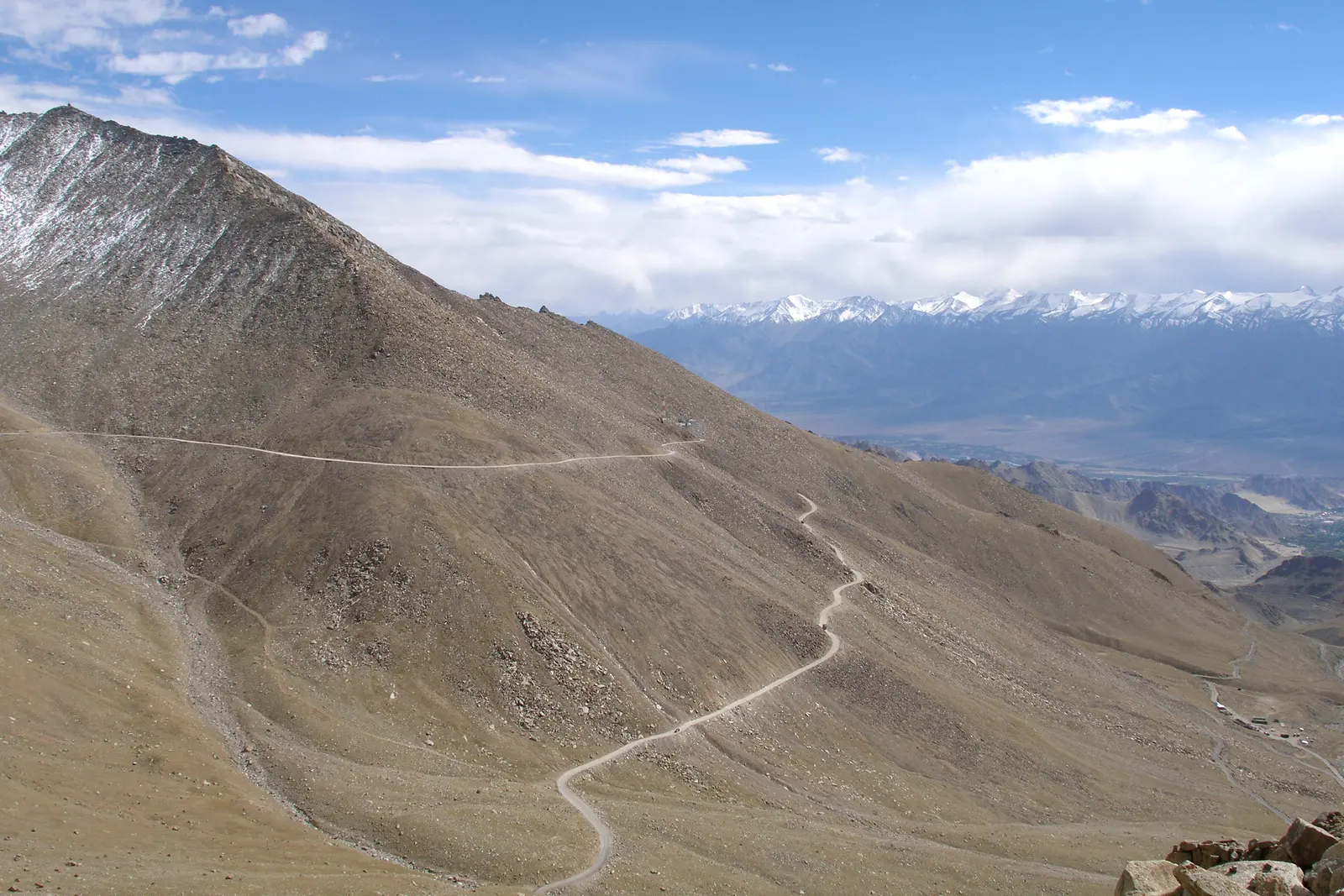 Adventure
Khardung La Travel Guide: Height, Route, Permits & Tips
At 5,359 metres, the air thins, prayer flags snap in the wind, and the road to Nubra Valley climbs above the clouds — everything you need to cross Khardung La safely and unforgettably.
 Road Trip
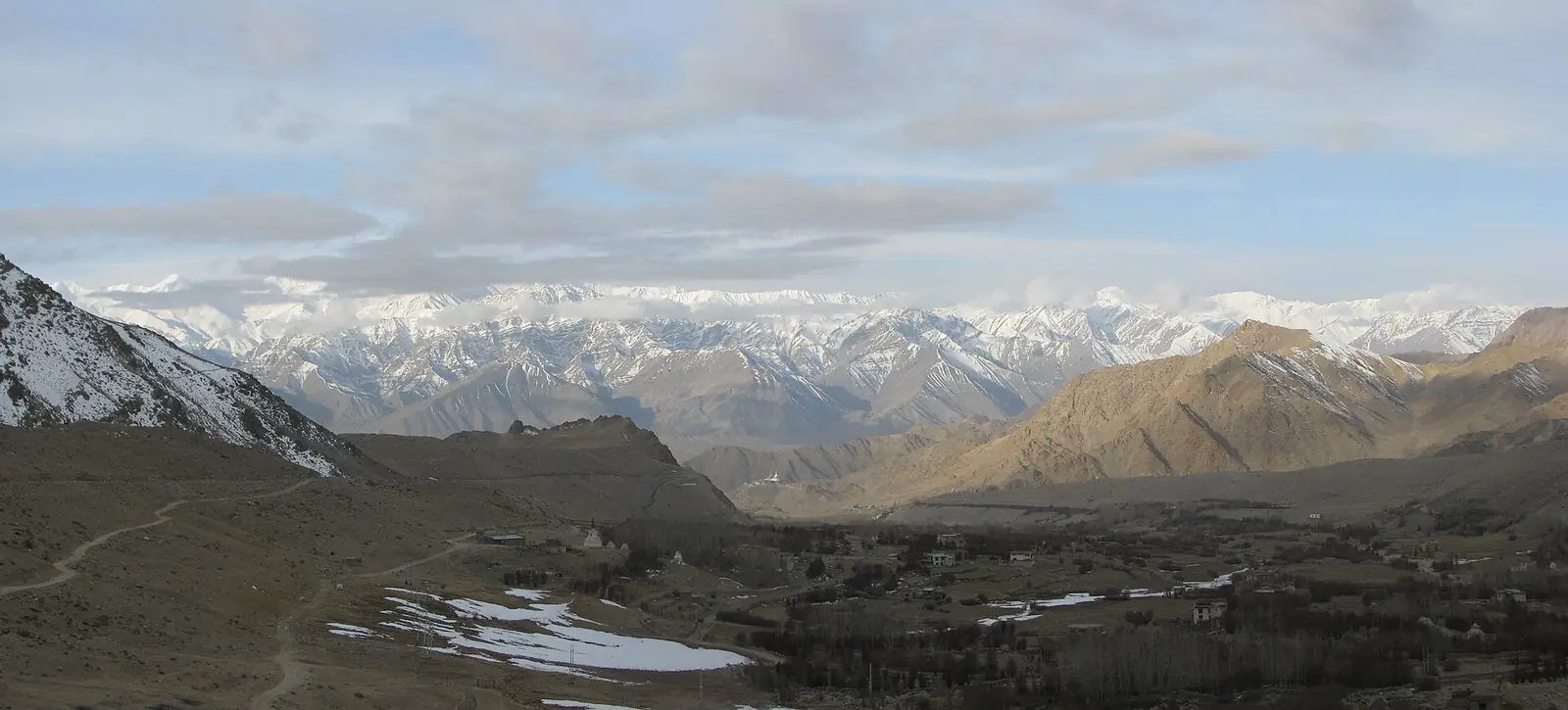
Leh Ladakh Road Trip Guide: Routes, Permits, Passes & Tips
Moonscapes, Buddhist monasteries, and the world's highest motorable passes — a complete 14-day Leh Ladakh road trip guide covering routes, permits, passes and acclimatisation.
Road TripLeh Ladakh Road Trip Guide
Pangong Tso, Nubra Valley, Khardung La and 14 days on the most dramatic roads on earth.
 Destination Guide
Leh Travel Guide: Leh Palace, Market, Shanti Stupa & Tips
A whitewashed old town under a ruined nine-storey palace, at 3,524 metres — Leh Palace, the bazaar, Shanti Stupa, and everything you need to explore the capital of Ladakh itself.