Why Khardung La?
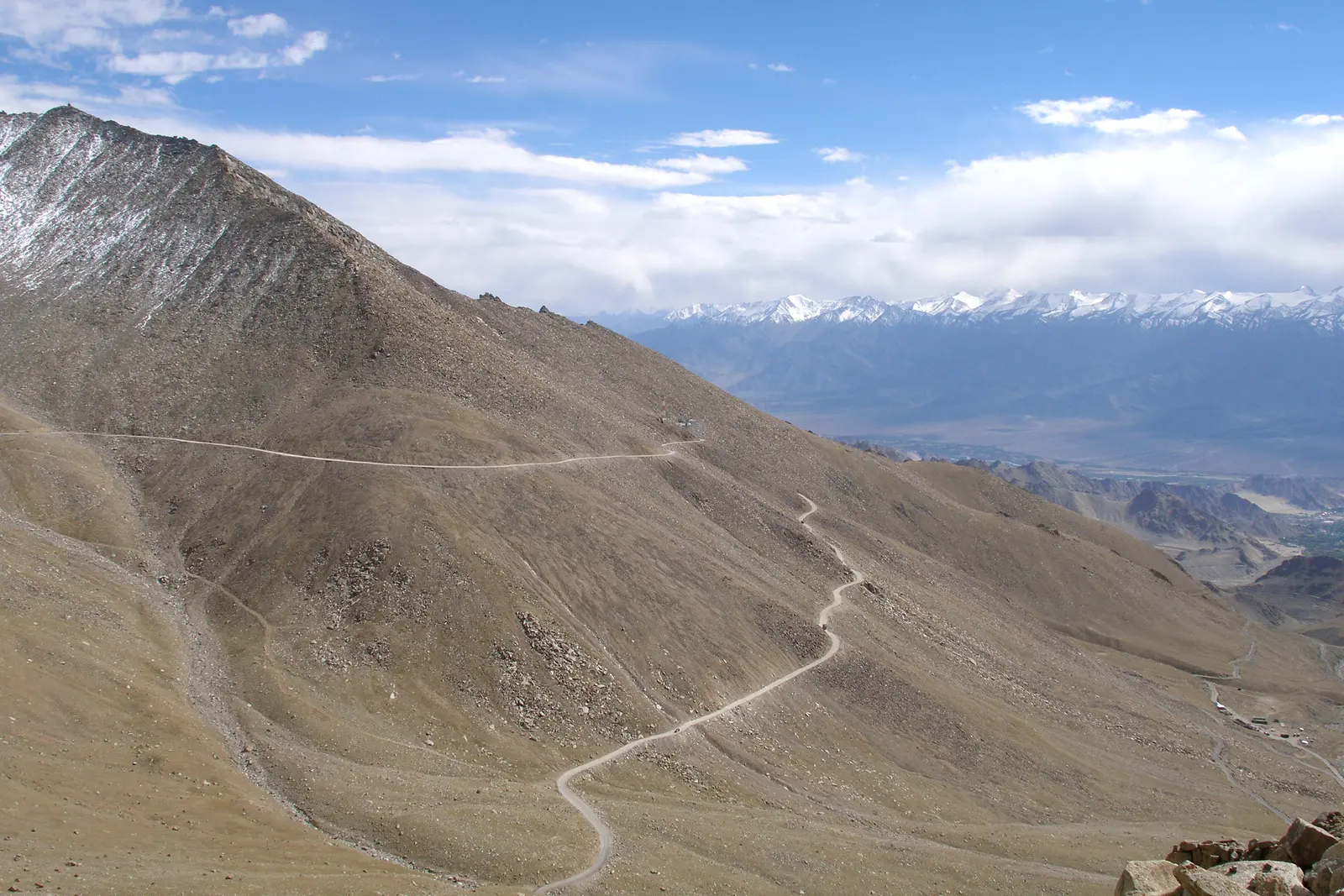
Every road trip through Ladakh eventually funnels its travellers toward the same 40-kilometre stretch of tarmac north of Leh — a switchbacking climb through bare brown hills that ends, improbably, above the clouds. Khardung La is the pass that separates the Indus Valley from Nubra Valley, and for most visitors to Ladakh it's the single highest point they will ever stand on in a moving vehicle.
The pass sits at 5,359 metres (17,582 ft) according to modern GPS surveys — a figure worth dwelling on, because for decades the signboard at the top proudly (and incorrectly) declared Khardung La the "world's highest motorable pass" at 5,602 m. That claim has since been debunked. Ladakh itself has higher roads — Umling La near Chumathang tops 5,800 m, and passes like Mardung La and Semo La also clear Khardung La's true elevation. None of that diminishes what Khardung La actually is: a BRO-built, genuinely high, genuinely spectacular road that most travellers will only ever cross once in their life, and never forget.
It is also, practically speaking, the only way in and out of Nubra Valley by road from Leh — which means almost everyone visiting Ladakh's sand dunes, Bactrian camels, and Diskit's giant Maitreya Buddha will cross this pass at least twice. Treat it with respect, plan around the altitude, and it becomes one of the most rewarding hours of any Ladakh itinerary.
🏔️ Khardung La at a Glance
Planning something active? Read our guide to adventure activities in Ladakh.
Best Time to Visit Khardung La
The pass is open to civilian traffic roughly from late May or early June through October, though the exact opening date shifts every year depending on how much snow the BRO's road-clearing teams have to cut through. Outside this window, heavy winter snowfall makes the road impassable and it's closed for months at a stretch — Khardung La is not a winter destination for tourists.
The road reopens after the BRO clears the winter snow. Expect metre-high snow walls on either side of the tarmac, cold winds, and a genuinely dramatic crossing. Some years the pass opens as early as mid-May.
The road is at its most stable and least likely to close unexpectedly. Daytime temperatures at the top hover around 0–10°C, still cold enough for proper layers. Busiest time — expect queues for photos at the summit signboard.
Our pick. Monsoon dust has settled, the sky is a deep, saturated blue, and the crowds from peak July–August have thinned considerably. Nights turn noticeably colder, a hint of the winter to come.
Early snowfall can close the pass with little warning from mid-October onward. If you're travelling this late in the season, check the current road status in Leh before committing to a Nubra crossing.
Our pick: Early-to-mid September. The road is fully open and reliably maintained, the light is extraordinary, and you'll share the summit signboard with far fewer people than you would in the peak-July crush.
How to Reach Khardung La
Khardung La begins its climb right from the edge of Leh town, which makes it one of the most accessible 5,000-metre-plus roads on earth. There's no trekking, no multi-day approach — just a well-marked road and a couple of hours of driving.
- Distance from Leh: Approximately 40 km one-way from Leh Market
- Duration: 1.5–2 hours each way, depending on traffic at the checkposts and road condition
- Route: Leh → South Pullu checkpost → Khardung village → Khardung La summit → North Pullu checkpost → descent into Nubra Valley
- Starting altitude: Leh sits at 3,524 m — you'll gain nearly 1,850 vertical metres on this drive alone
Altitude Sickness & Precautions
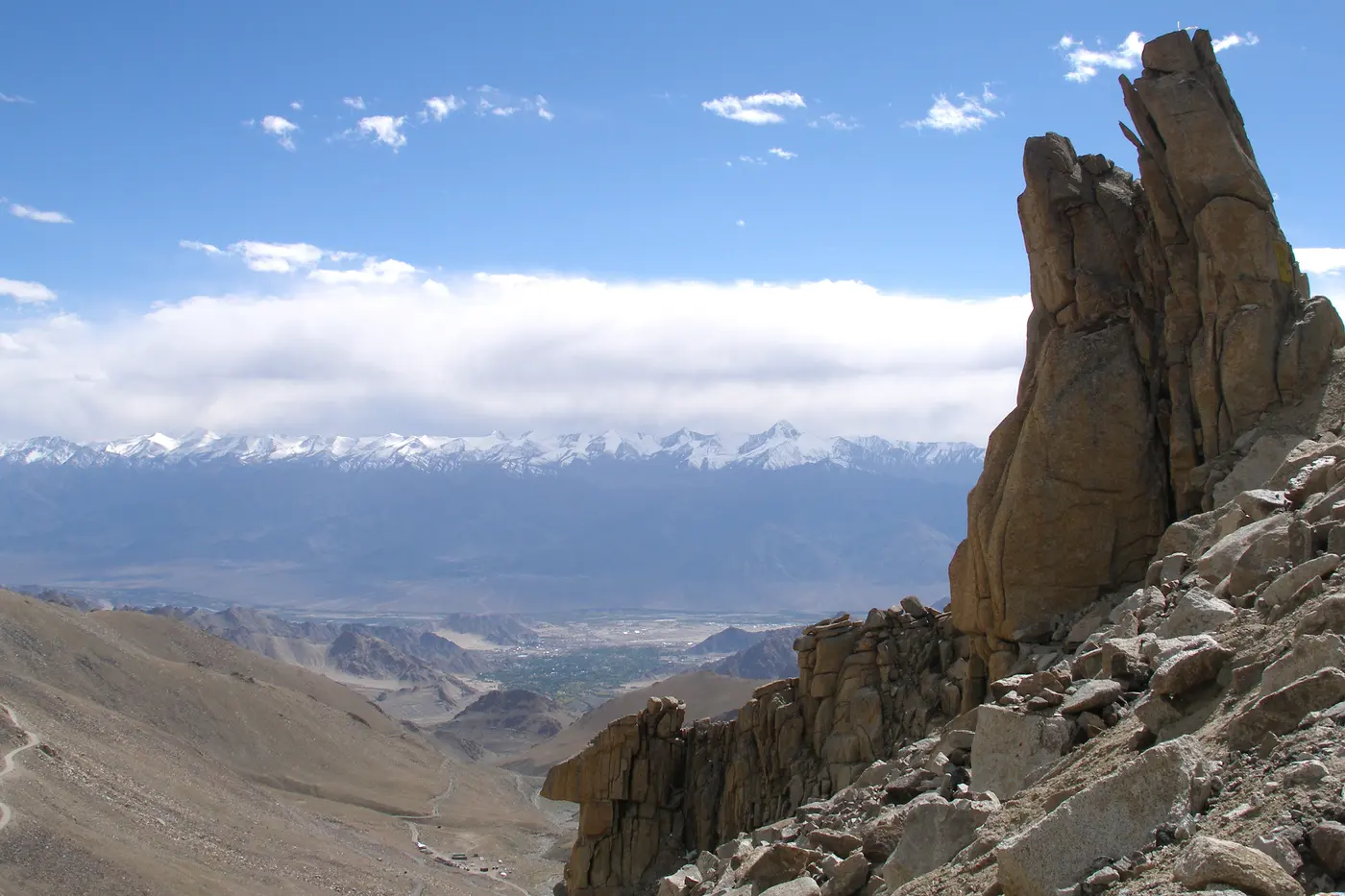
At 5,359 m, the atmospheric pressure is roughly half of what it is at sea level — meaning every breath you take delivers about half the oxygen your body is used to. Even travellers who've acclimatised comfortably in Leh can feel the effects sharply the moment they step out of the vehicle at the top: light-headedness, breathlessness after a few steps, a pounding heart rate at rest.
- Limit your time at the top: 15–20 minutes is the widely recommended ceiling. Take your photos, breathe, and head back down — this isn't a place to linger.
- Don't exert yourself: No running to the signboard, no jumping for photos, no climbing the nearby slopes. Move slowly and deliberately.
- Watch for warning signs: Severe headache, vomiting, confusion, or difficulty breathing at rest are signs to descend immediately — these can be early symptoms of High Altitude Pulmonary or Cerebral Edema (HAPE/HACE), which are medical emergencies.
- Oxygen is available: The army canteen at the top keeps oxygen cylinders on hand for travellers in visible distress — don't hesitate to ask.
- Stay hydrated, skip the alcohol: Drink water throughout the drive up. Avoid alcohol the night before and any heavy meal right before the climb.
What's at the Top
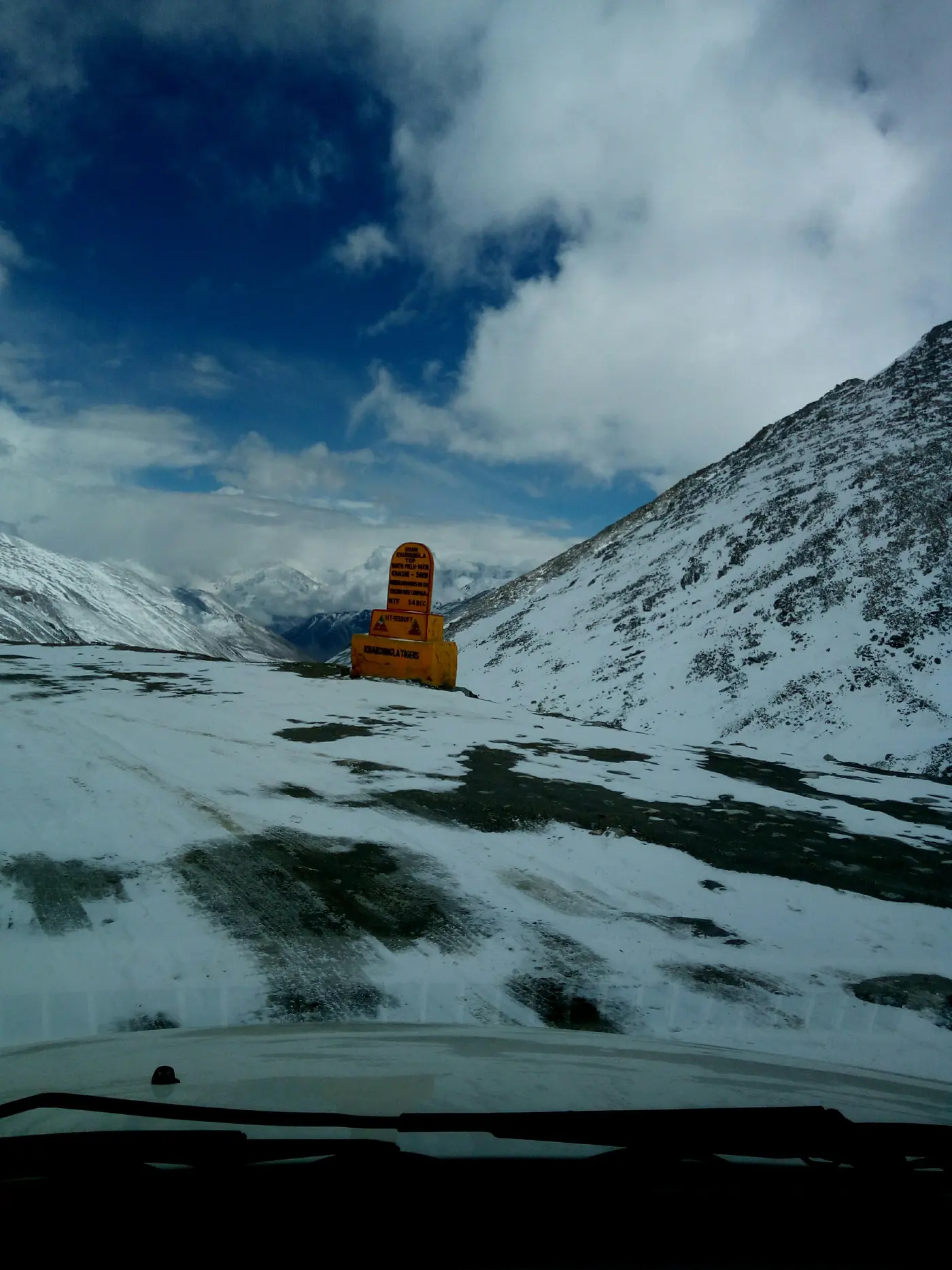
Despite sitting above 5,300 m, the summit of Khardung La is surprisingly well set up for the steady stream of travellers who pass through it every day in season. It's a small but memorable stop, not a place you'd want to spend hours — but there's enough here to make the obligatory selfie feel earned.
- The signboard: A weathered, much-photographed BRO signboard marking the pass — expect a short queue for photos in peak season.
- Army canteen / tea stall: Run by the Indian Army, serving hot tea, Maggi noodles, and basic snacks. On a freezing, oxygen-starved morning, a cup of sweet chai here tastes better than it has any right to.
- The "highest ATM" claim: A State Bank of India branch near the pass has long marketed itself as one of the world's highest ATMs — a novelty stop for many travellers, though don't rely on it actually dispensing cash.
- Prayer flags: Strings of Buddhist prayer flags snap in the wind across the ridgeline, exactly as vivid in person as they look in every Ladakh photograph you've ever seen.
- The view: On a clear day you can see across the folded brown ridges of the Ladakh Range toward the snow-streaked Karakoram peaks in the distance — one of the most expansive high-altitude panoramas accessible by road anywhere in India.
Motorcycle vs Car — Which Should You Choose?
Khardung La is crossed by everything from Royal Enfields to shared Innova taxis, and both approaches have real trade-offs at this altitude.
By Motorcycle
Riding a motorcycle over Khardung La is a rite of passage for bikers across India — the pass is one of the most photographed stretches on the entire Ladakh circuit. Royal Enfield Himalayans and Classic 350s dominate the rental fleets out of Leh's Changspa area, and the road, while occasionally rough, is manageable for a moderately experienced rider.
- Wear proper riding gear — full-face helmet, riding jacket, gloves. Wind chill at the top can make exposed skin go numb within minutes.
- Keep engine RPMs measured on the steep switchbacks — thin air affects your bike's combustion just as it affects your lungs, and engines noticeably lose power above 4,500 m.
- Fill your tank in Leh. There is no reliable fuel stop on the pass itself.
By Car / Taxi
For families, older travellers, or anyone who'd rather not manage a motorcycle at 5,000 m, a shared or private taxi (typically a Bolero, Sumo, or Innova) is the standard option. Local Ladakhi drivers know this road intimately and are used to managing altitude-anxious passengers.
- A shared taxi to Nubra via Khardung La costs roughly ₹1,500–₹2,500 per person; a private full-day hire runs ₹4,500–₹7,000 depending on vehicle and season.
- SUVs with good ground clearance handle the occasional rutted or gravel stretch far more comfortably than sedans — most operators won't send a sedan up this road anyway.
South Pullu & North Pullu Checkposts
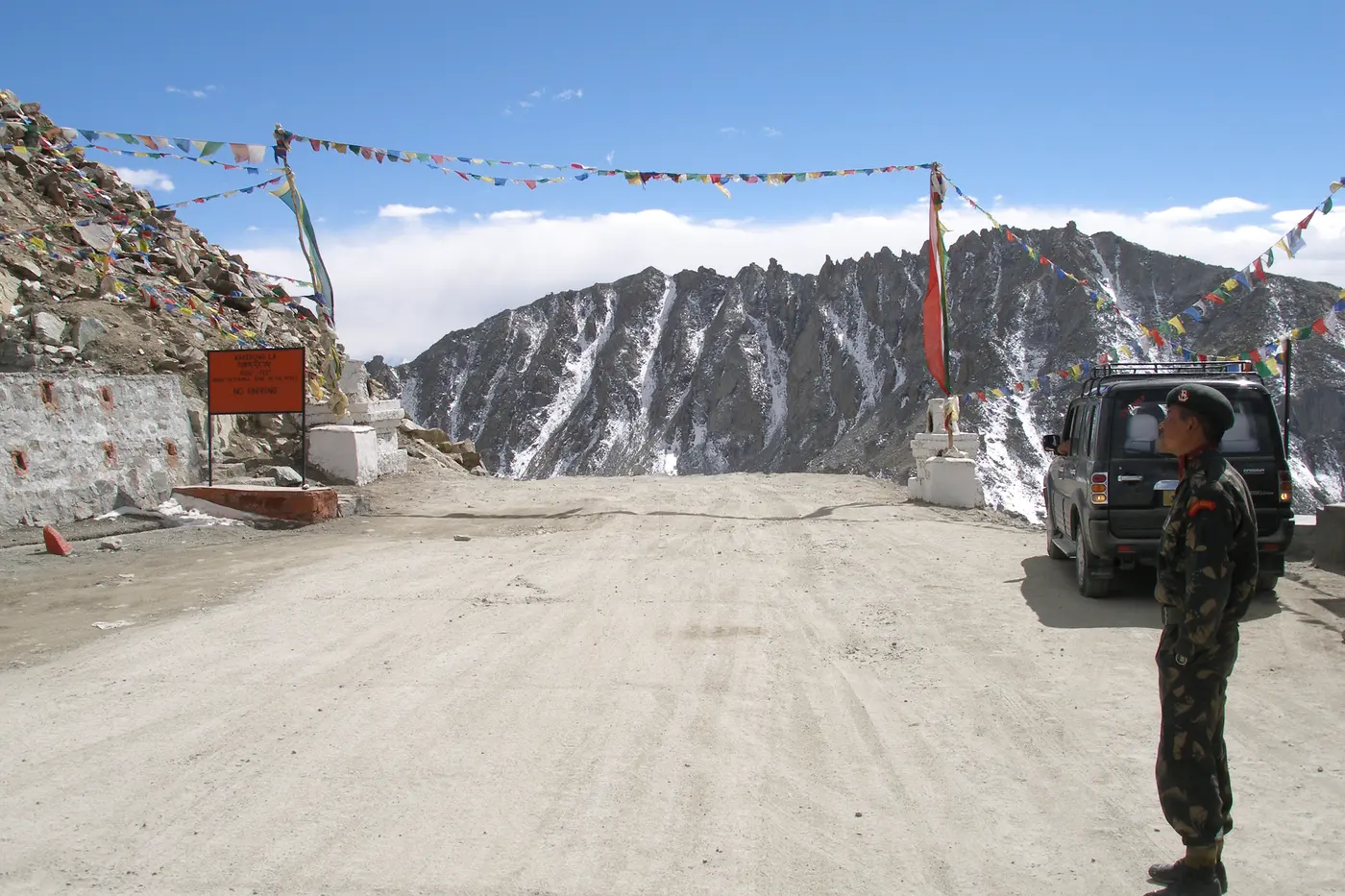
Two checkposts bookend the Khardung La crossing, and every vehicle headed toward Nubra Valley must stop at both. Neither is a hassle if your paperwork is in order — plan for a few minutes at each.
South Pullu
The first checkpost, roughly 24 km from Leh on the way up. This is where your Inner Line Permit is checked and logged before you're allowed to continue toward the pass.
North Pullu
On the descending side toward Nubra, past the summit. A second permit check happens here as you exit the restricted zone around the pass and drop toward Khardung village and, eventually, Diskit.
Carry physical printouts of your Inner Line Permit — 2–3 copies per traveller is a safe rule of thumb. Digital copies on a phone are sometimes accepted but not guaranteed, especially if signal is patchy (it usually is). ILPs are obtained in Leh, either online in advance or in person at the DC Office, and cover Nubra Valley, Pangong, and other restricted border areas in one go.
Onward to Nubra Valley
Descend the far side of Khardung La and the landscape changes almost as dramatically as the altitude does. Within an hour or two you drop into Nubra Valley, a broad, comparatively green valley where the Shyok and Nubra rivers meet, sand dunes rise between snow-streaked 6,000-metre peaks, and Bactrian camels — descendants of Silk Road caravans — still plod across the dunes at Hunder.
Diskit, Nubra's main town, is home to a towering hilltop Maitreya Buddha statue and an ancient monastery perched above the valley floor. Most travellers who cross Khardung La spend a night or two in Nubra before returning the same way — making this pass a crossing you'll almost certainly make twice.
Road Conditions & BRO Maintenance
The road over Khardung La is built and maintained by the Border Roads Organisation (BRO), the Indian government agency responsible for road infrastructure in the country's remote border regions. Motto boards along the route — cheerful, slightly absurdist warnings about speed and safety — are a small running joke among Ladakh road-trippers and worth reading as you pass.
Conditions vary considerably by season and by year. Large stretches are smoothly tarmacked, but expect intermittent gravel, water crossings from meltwater streams, and occasional construction detours, especially just after the pass reopens in early summer. BRO crews work continuously through the season to keep the road passable, but landslides and minor washouts are a normal part of high-altitude Himalayan driving here — build slack into your schedule rather than expecting a fixed arrival time.
Where to Stay
There is no accommodation at Khardung La itself — nor would you want any, given the altitude. This is a crossing, not a destination to overnight at. Your two realistic bases are Leh, before and after the drive, or Nubra Valley, if you're continuing on rather than returning the same day.
- → Changspa area guesthouses (budget)
- → Hotel Ladakh Palace (mid-range)
- → The Grand Dragon Leh (luxury)
- → Best if doing Khardung La as a day trip
- → Diskit guesthouses and homestays
- → Hunder dune-side camps
- → Nubra Eco Camp
- → Best if combining with a 2–3 day Nubra loop
Budget Breakdown for a Khardung La Crossing
Costs here are modest compared to the rest of a Ladakh trip — the pass itself doesn't charge an entry fee, and your main expenses are the vehicle, fuel, and permit.
| Expense | Budget | Mid-Range | Comfort |
|---|---|---|---|
| Vehicle (bike rental/day) | ₹1,000 | ₹1,500 | ₹2,500 |
| Vehicle (taxi, round trip) | ₹1,800/seat | ₹4,500 (private) | ₹7,000 (SUV, private) |
| Fuel (round trip from Leh) | ₹500 | ₹700 | ₹900 |
| Inner Line Permit | ₹300 | ₹400 | ₹400 |
| Tea / snacks at the top | ₹100 | ₹200 | ₹400 |
| Riding gear rental (bikers) | ₹300 | ₹500 | ₹800 |
Essential Tips: Do's & Don'ts
✅ Do
- ✓Acclimatise in Leh for at least 48 hours before the drive
- ✓Fill your fuel tank fully in Leh — no reliable pump on the pass
- ✓Carry printed ILP copies for both checkposts
- ✓Pack proper cold-weather layers, even in July
- ✓Check same-day road status before setting out
- ✓Test your vehicle's brakes on the descent — engine braking helps on long downhill stretches
❌ Don't
- ✕Don't attempt this drive on your first or second day in Ladakh
- ✕Don't linger at the top beyond 15–20 minutes
- ✕Don't run, jump, or exert yourself for photos at altitude
- ✕Don't rely on the summit ATM actually having cash
- ✕Don't ride or drive without full protective/warm gear
- ✕Don't ignore headache, nausea, or breathlessness — descend immediately
Khardung La rewards preparation far more than bravado. Go slow on the way up, breathe, keep your stop at the summit brief, and the pass becomes exactly what it should be — a genuinely thrilling, genuinely beautiful high point of any Ladakh trip, not an ordeal to survive.
Frequently Asked Questions
How high is Khardung La?
Khardung La sits at 5,359 metres (17,582 ft) according to modern GPS surveys. For decades the signboard at the top claimed 5,602 m, but that figure has since been corrected.
Is Khardung La really the world's highest motorable pass?
No — that long-repeated claim has been debunked. Ladakh itself has higher roads, including Umling La near Chumathang, which tops 5,800 m, along with passes like Mardung La and Semo La that also clear Khardung La's true elevation. Khardung La remains a genuinely high, spectacular BRO-built road regardless.
How do I reach Khardung La from Leh?
Khardung La is about 40 km from Leh Market and takes roughly 1.5–2 hours each way by road, depending on traffic at the checkposts. The route runs Leh → South Pullu checkpost → Khardung village → the summit → North Pullu checkpost → down into Nubra Valley — no trekking or multi-day approach is required.
Do I need a permit to visit Khardung La?
Yes, an Inner Line Permit (ILP) is required and checked at both the South Pullu and North Pullu checkposts. ILPs are obtained in Leh, either online in advance or in person at the DC Office, and the same permit covers Nubra Valley, Pangong, and other restricted border areas. Carry 2–3 physical printouts per traveller, since digital copies aren't always accepted.
What is the best time to visit Khardung La?
The pass is open to civilian traffic roughly from late May or early June through October, with exact dates shifting each year based on snow clearance. Early-to-mid September is the recommended window — the road is fully open and reliably maintained, skies are clear, and crowds have thinned from the July–August peak.
How long should I stay at the top of Khardung La?
15–20 minutes is the widely recommended ceiling, since atmospheric pressure at 5,359 m delivers roughly half the oxygen you're used to. Take your photos, breathe, avoid exertion, and head back down rather than lingering.
Should I ride a motorcycle or take a car to Khardung La?
Both are common. Royal Enfields and other motorcycles are a rite of passage for many riders, with rental fleets concentrated in Leh's Changspa area, while shared or private taxis (Bolero, Sumo, or Innova) suit families, older travellers, or anyone who'd rather not manage a bike at altitude. A shared taxi to Nubra via the pass costs roughly ₹1,500–₹2,500 per person; a private full-day hire runs ₹4,500–₹7,000.
Published by the Kudozz Club editorial team · Last updated · How we research our guides
Want us to plan this trip for you?
Tell Kudozz Club where you want to go and what kind of trip you’re looking for. We’ll build a Khardung La and Ladakh itinerary around your dates and budget.
Continue Exploring
View all guides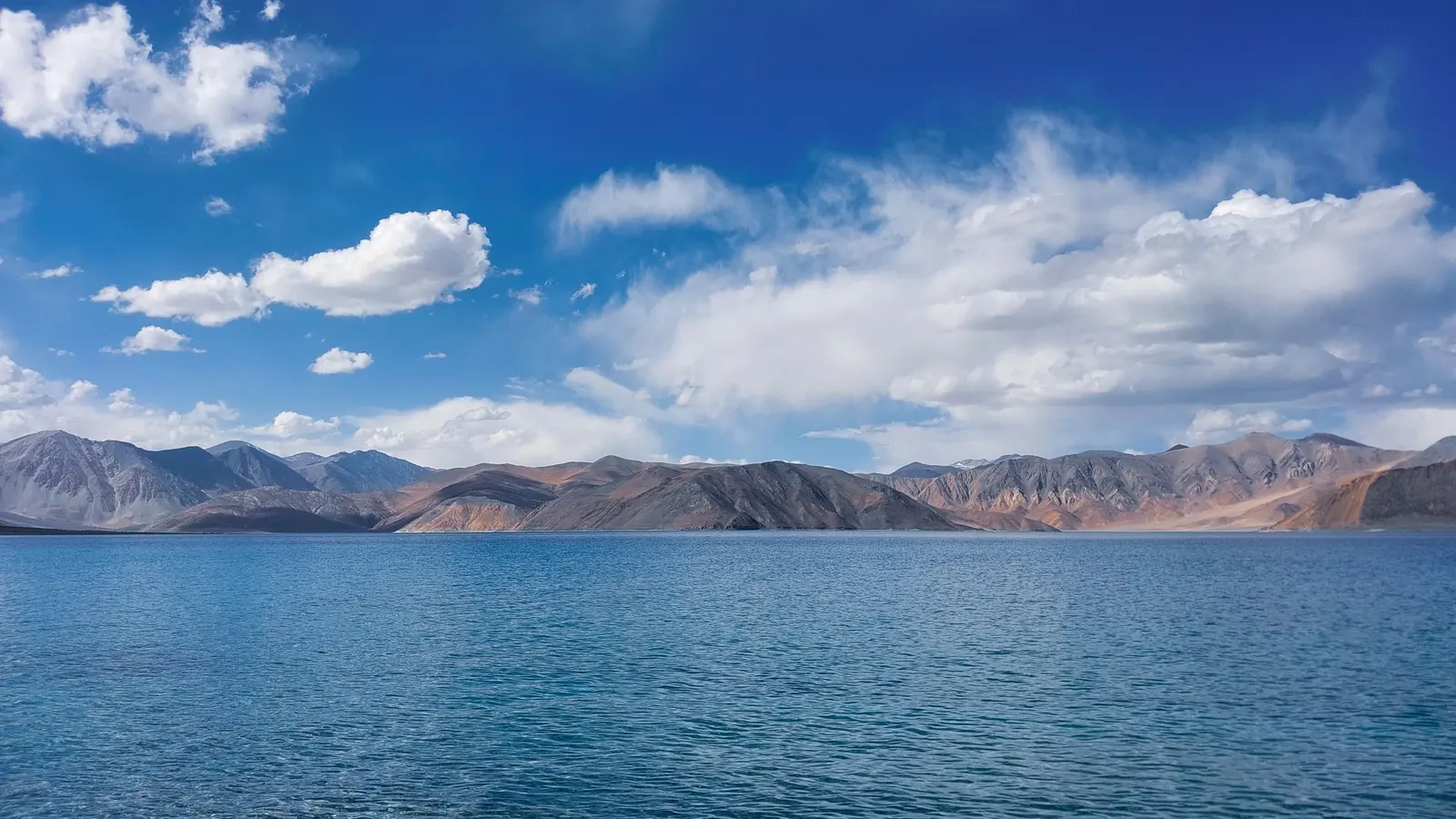 Adventure
Pangong Lake Travel Guide: Routes, Permits, Camping & Tips
A saline lake at 4,225 metres that turns turquoise to violet across a single afternoon — here's how to reach it, camp on its shore, and see it away from the crowds.
 Road Trip
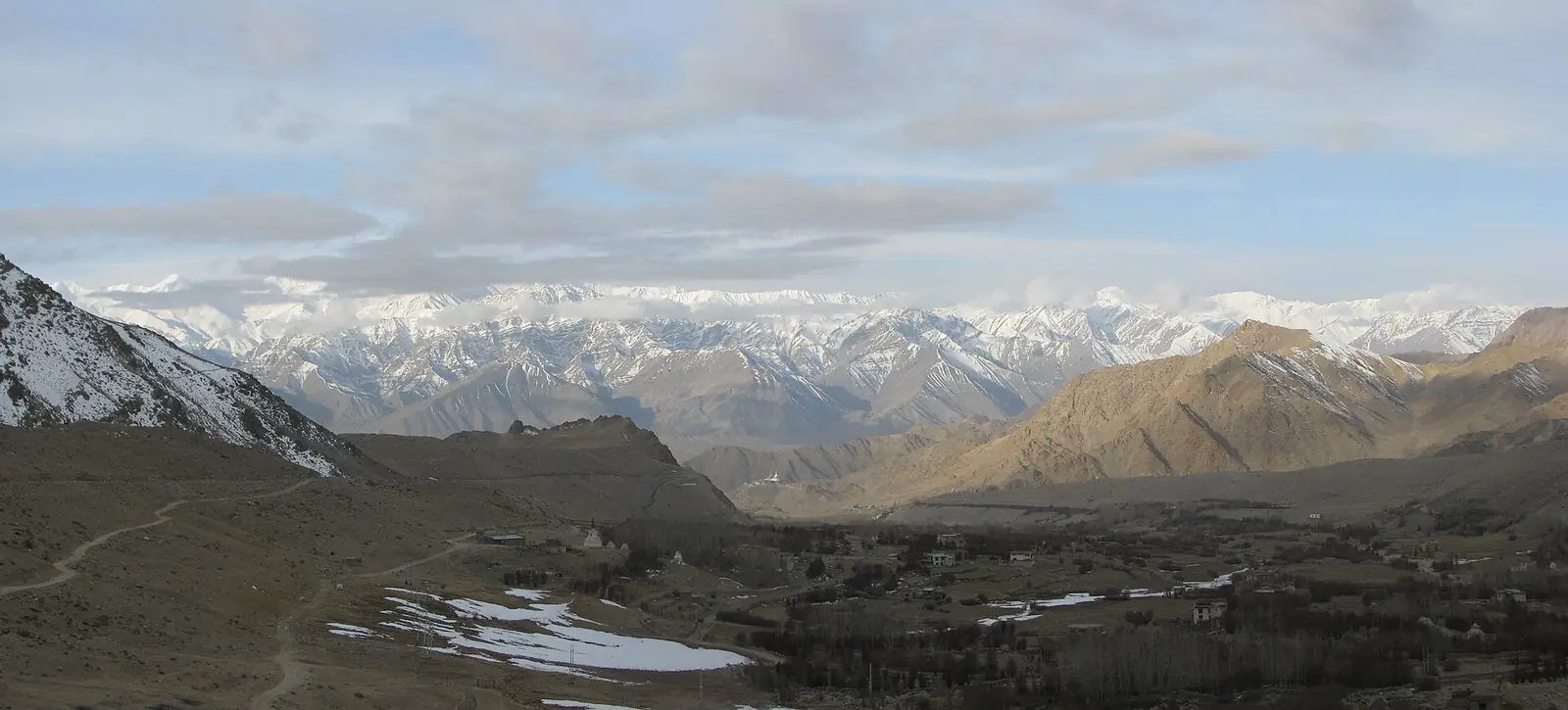
Leh Ladakh Road Trip Guide: Routes, Permits, Passes & Tips
Moonscapes, Buddhist monasteries, and the world's highest motorable passes — a complete 14-day Leh Ladakh road trip guide covering routes, permits, passes and acclimatisation.
 Off-beat
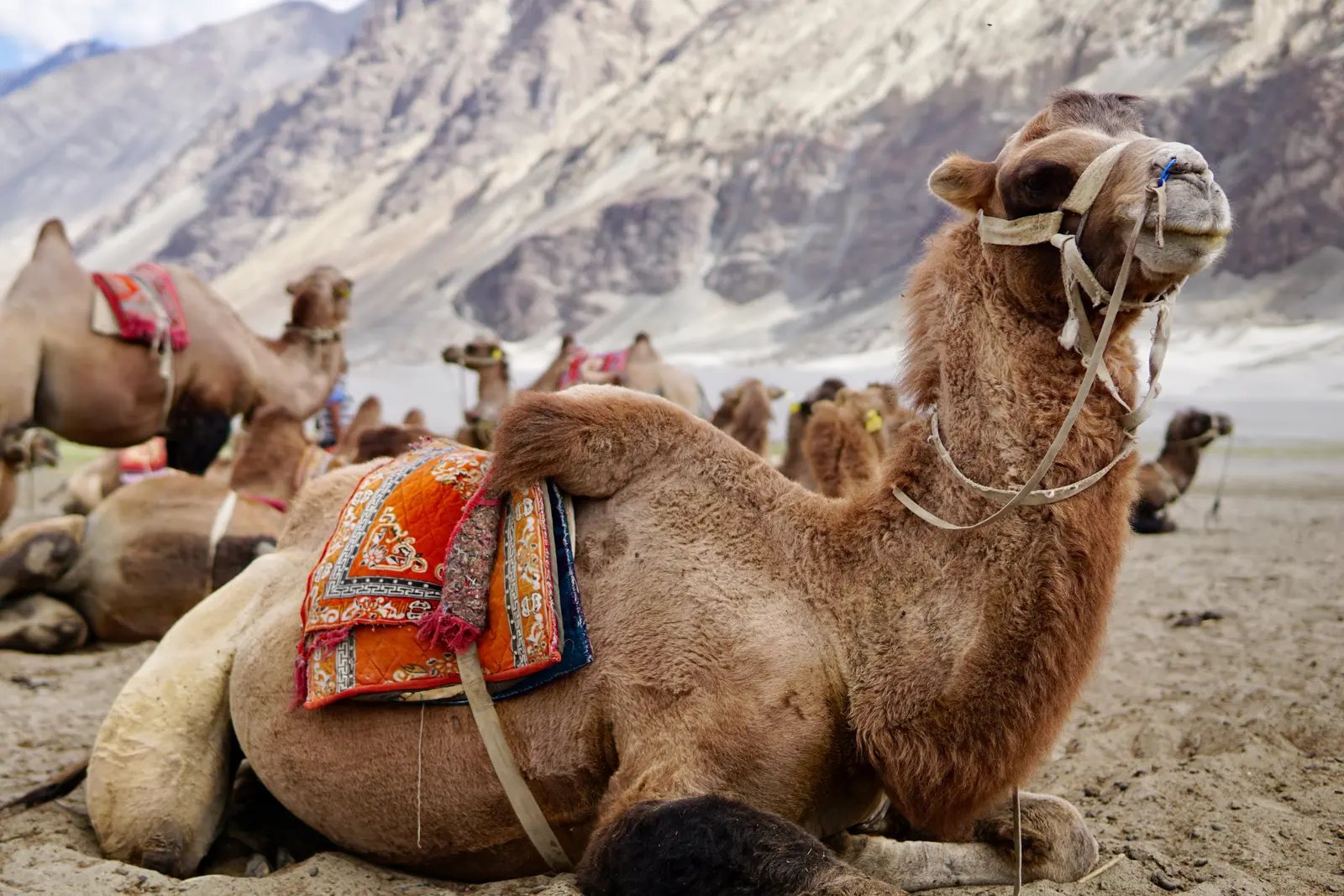
Nubra Valley Travel Guide: Sand Dunes, Camels & Cold Desert
Cross the world's second-highest motorable pass into a valley where sand dunes meet snow peaks, Bactrian camels roam ancient Silk Route trails, and a 32-metre Buddha watches over the Shyok River.
Road TripLeh Ladakh Road Trip Guide
Pangong Tso, Nubra Valley, Khardung La and 14 days on the most dramatic roads on earth.