Why Hemis?
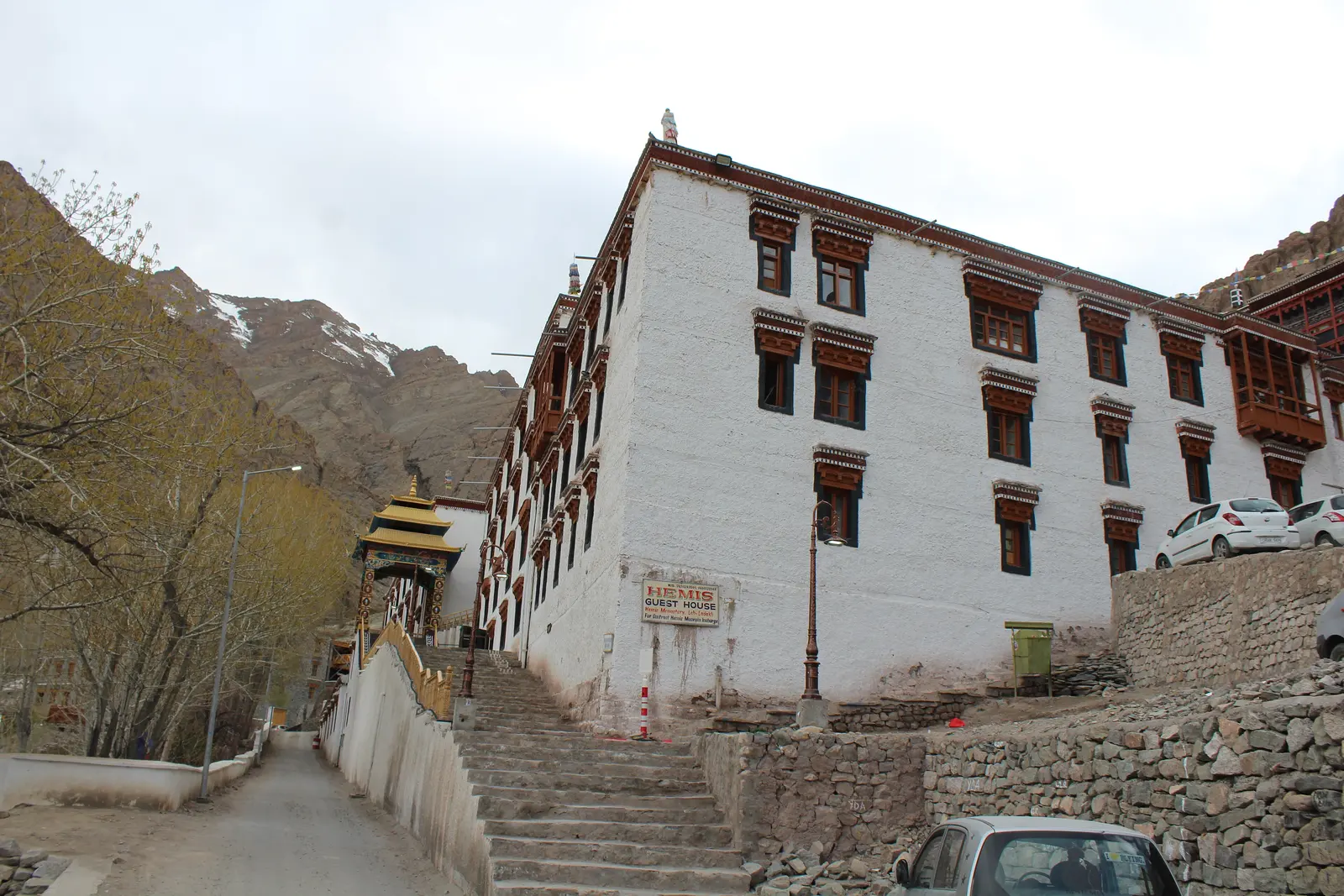
Most visitors to Ladakh see the Indus Valley monasteries from the highway — Thiksey rising like a mini-Potala, Shey's ruined palace, Stakna perched on its rock. Hemis is different. You won't glimpse it from the road at all. To reach it you have to turn off the Indus and climb into a narrow side valley, hidden behind a fold of bare mountains, until the gompa appears almost without warning — a sprawling whitewashed complex tucked into a natural amphitheatre of rock.
That seclusion is precisely why Hemis survived what other monasteries did not. When Mongol raiders swept through Ladakh in the 17th century looting monastic treasuries, Hemis — invisible from the main valley — was spared. Centuries of royal patronage from the Namgyal dynasty followed, and today Hemis is, without contest, the largest and wealthiest monastery in Ladakh, seat of the Drukpa Kagyu lineage and custodian of relics, gold statues, and thangkas that rank among the finest Buddhist art in the Himalayas.
But Hemis is not only a monastery. The same valley system behind it opens into Hemis National Park — India's largest national park outside the Arctic Circle, and the single most reliable place on the planet to see a wild snow leopard. Few places in the world let you stand in a 17th-century monastery courtyard listening to masked cham dancers in the morning, and be scanning a ridgeline for the ghost of the mountains by afternoon.
🏔️ Hemis at a Glance
Planning a wildlife trip? See our guide to snow leopard tours in India.
Best Time to Visit Hemis
Hemis rewards different visitors at different times of year — and unusually, its two headline experiences (the festival and the snow leopards) sit on almost opposite ends of the calendar.
The two-day Hemis Tsechu takes over the monastery courtyard with masked cham dances, monastic music, and a rare thangka unveiling once every 12 years. Warm days (15–25°C), the valley is at its greenest, and the monastery is at its most alive.
Comfortable temperatures, clear skies, and the monastery without the festival crush. Good for combining Hemis with the rest of the Indus Valley monastery circuit and Hemis National Park's lower trails.
Bitterly cold (-15°C to -25°C) but the only window for serious snow leopard spotting — hungry leopards descend to lower elevations to hunt blue sheep, and tracks are far easier to read in snow. Requires proper winter gear and an experienced guide.
The monastery stays open year-round and is peaceful and near-empty. Park trekking is limited and access can be difficult with early or late snow. Best for a low-key monastery visit, not for wildlife or festival travel.
Our pick: If you can only pick one trip, time it for the Hemis Festival in late June or July — exact dates follow the Tibetan lunar calendar and shift each year, so confirm with the monastery or a local operator months in advance. If snow leopards are the priority, nothing beats a dedicated winter expedition between January and March.
How to Reach Hemis
Hemis is one of the easiest monastery excursions from Leh — a straightforward half-day trip that fits comfortably alongside Thiksey and Shey on the same outing, or as a standalone visit.
- Distance from Leh: ~45 km, approximately 1.5 hours by road
- Route: Leh → Choglamsar → Karu (on the Leh–Manali highway) → turn off and climb ~9 km into the side valley to Hemis
- By taxi: A half-day taxi from Leh covering Hemis, Thiksey, and Shey costs roughly ₹2,500–₹3,500; a Hemis-only round trip is cheaper
- By self-drive: Rental bikes and cars easily reach Hemis — the road is well-paved and gains altitude gradually
- By shared transport: Infrequent local buses run from Leh to Karu; from there it's a short shared-taxi or walk up to the monastery
Hemis Monastery
Founded in 1630 under the patronage of King Sengge Namgyal and re-established by the Tibetan lama Stagsang Raspa, Hemis Monastery belongs to the Drukpa Kagyu lineage of Tibetan Buddhism — one of the "practice lineages" that emphasises meditation and yogic transmission over scholastic debate. It quickly became the wealthiest religious institution in the kingdom, endowed with land grants, gold, and treasure by successive Ladakhi kings, and its remoteness meant that wealth was rarely disturbed.
Architecture & Treasures
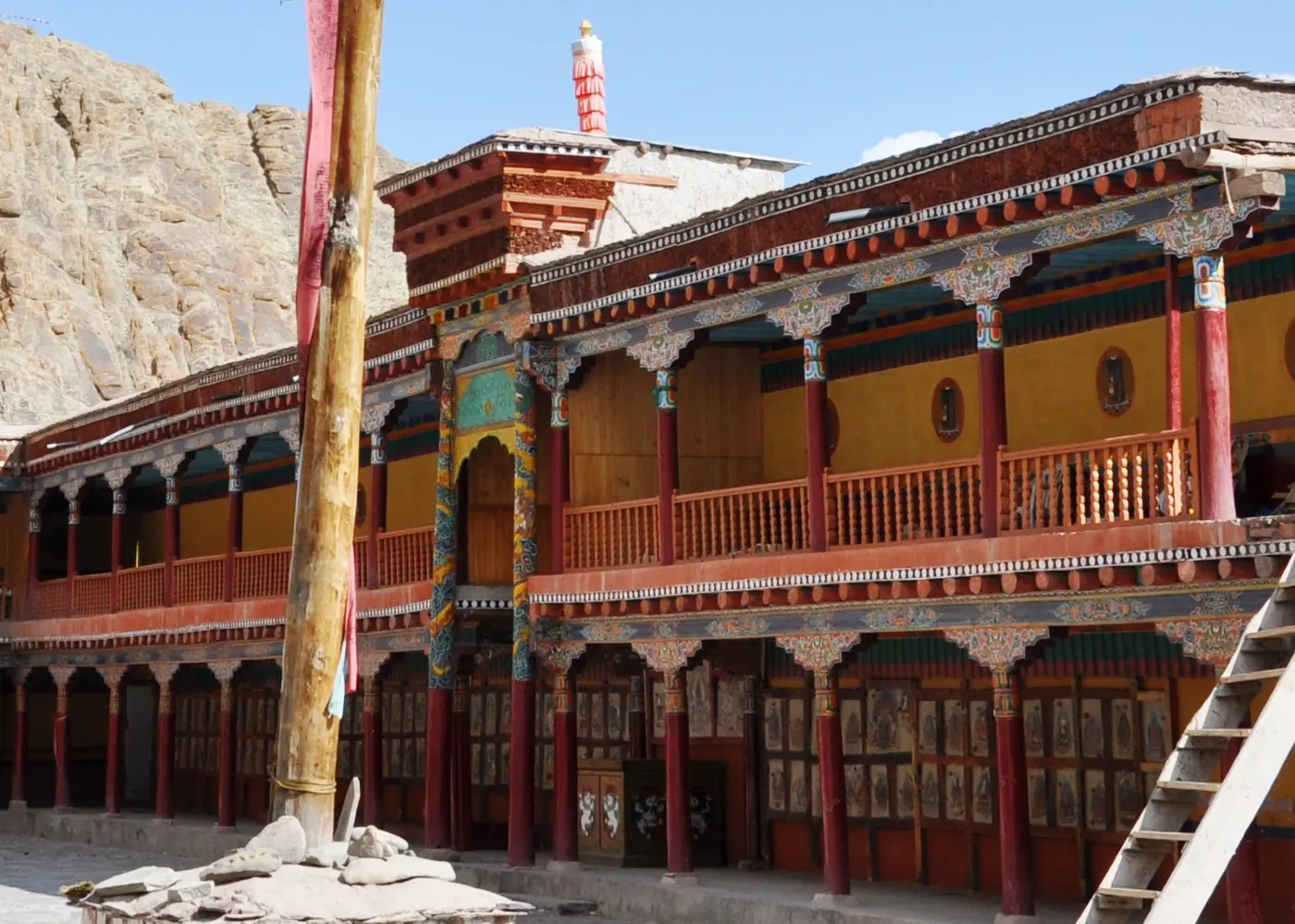
The monastery complex spreads across a hillside courtyard framed by residential quarters for over 500 monks at its historic peak (a much smaller number reside there today). Two tall gilded stupas flank the main courtyard where the festival dances take place, and the walls are lined with prayer wheels that pilgrims turn clockwise on their way through.
Inside, the assembly halls hold an extraordinary collection: gold and silver stupas studded with precious stones, a copper-gilt statue of the Buddha, ancient Tibetan manuscripts, ceremonial masks used in the cham dances, and a small museum displaying weapons, thangkas, and royal relics gifted over four centuries. Photography inside the main halls is often restricted — ask before shooting, and expect to remove your shoes.
The Great Thangka of Guru Padmasambhava
Hemis's most famous treasure is rarely seen at all: an enormous silk thangka (a Tibetan Buddhist scroll painting) depicting Guru Padmasambhava — the 8th-century tantric master credited with establishing Buddhism in Tibet — reputedly the largest thangka in Ladakh. It is kept folded away in the monastery's vaults and unveiled publicly only once every twelve years, during the Year of the Monkey according to the Tibetan calendar, drawing pilgrims from across the Buddhist Himalayan world for what many describe as a once in a lifetime darshan.
The Hemis Festival
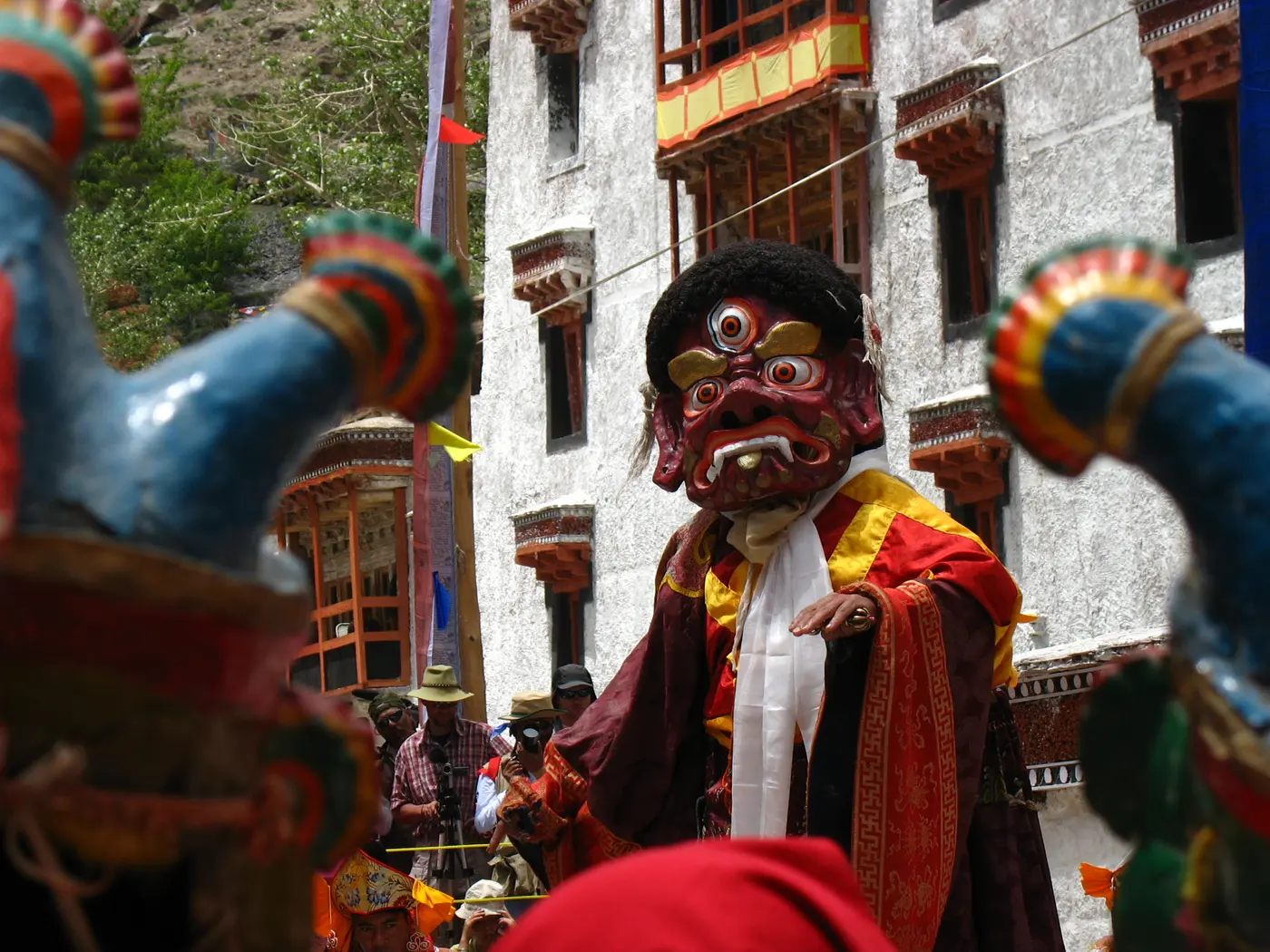
Held annually over two days in June or July (the precise dates follow the Tibetan lunar calendar), the Hemis Tsechu is the largest and most celebrated monastic festival in Ladakh — commemorating the birth anniversary of Guru Padmasambhava, revered as the founder of Tibetan Buddhism.
The courtyard fills at dawn with monks in extravagant brocade robes and painted wooden masks — snarling protector deities, skeletal figures representing impermanence, wrathful guardians, and the serene face of the guru himself. To the slow, resonant beat of long horns, cymbals, and drums, the monks perform cham — ritual masked dances that dramatise the triumph of Buddhist wisdom over ignorance and evil. Every gesture, spin, and pause is prescribed by centuries of tradition; nothing is improvised.
Around the dancers, the courtyard becomes a market of colour: Ladakhi women in traditional perak headdresses strung with turquoise, traders selling handicrafts and apricots, and a crowd that mixes local pilgrims with photographers and travellers from across the world. It is loud, joyful, deeply devotional, and unmistakably Ladakhi — nothing performed for tourists, simply a sacred ritual that visitors are welcomed to witness.
- When: Two days, typically late June or July (dates change yearly — confirm with the monastery or a Leh-based operator)
- Entry: Free for the general festival; small charges may apply for premium seating areas
- Crowds: Significant — book Leh accommodation weeks ahead if visiting during festival dates
- Etiquette: Dress modestly, avoid blocking pilgrims' sightlines, ask before close-up photography of individuals
Hemis National Park
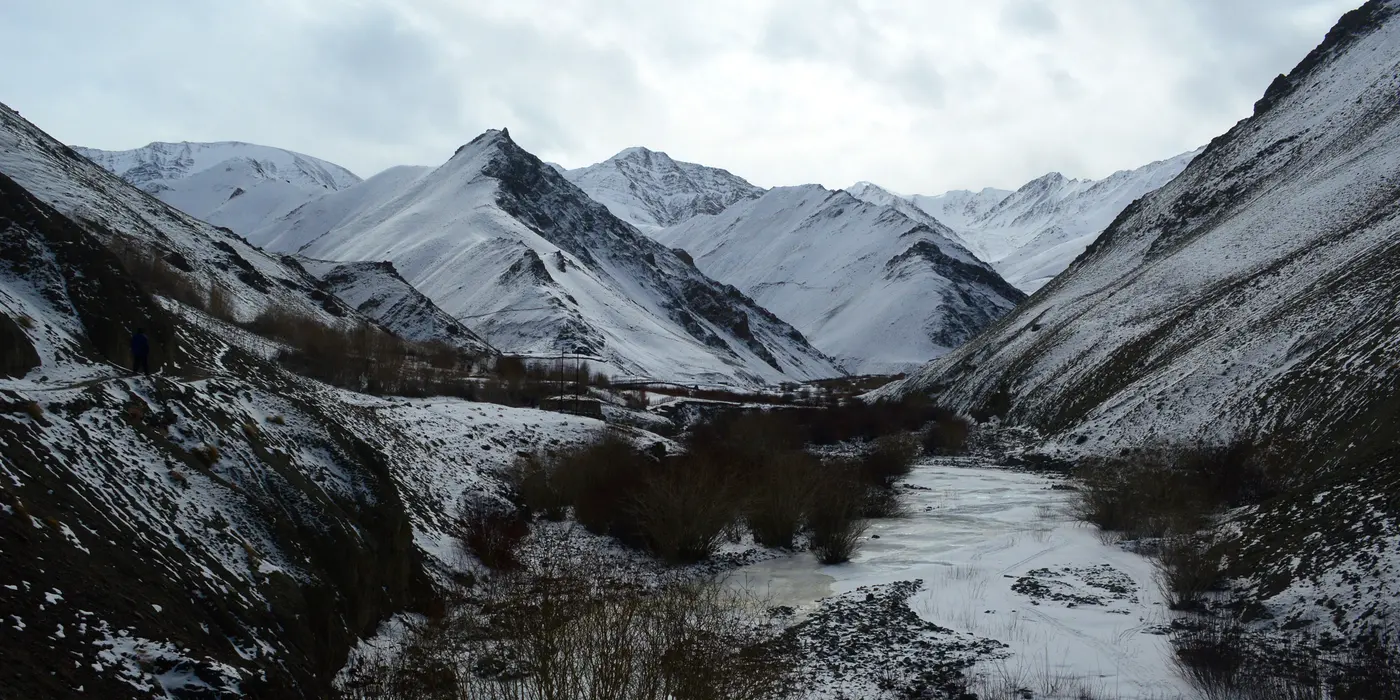
Stretching from the monastery's back valley deep into the high Himalaya, Hemis National Park covers roughly 4,400 sq km — making it India's largest national park outside the Arctic, and one of the largest protected areas in South Asia. It spans elevations from around 3,300 m to over 6,000 m, taking in catchments of the Markha, Sumdah, and Rumbak valleys, and forms a core zone that borders other high-altitude protected areas across Ladakh.
The park was established in 1981 primarily to protect the snow leopard and its prey base, and today it holds one of the highest densities of snow leopards anywhere on earth — a status that has earned it global renown among wildlife travellers as the "Snow Leopard Capital of the World."
Snow Leopard Trekking & Spotting
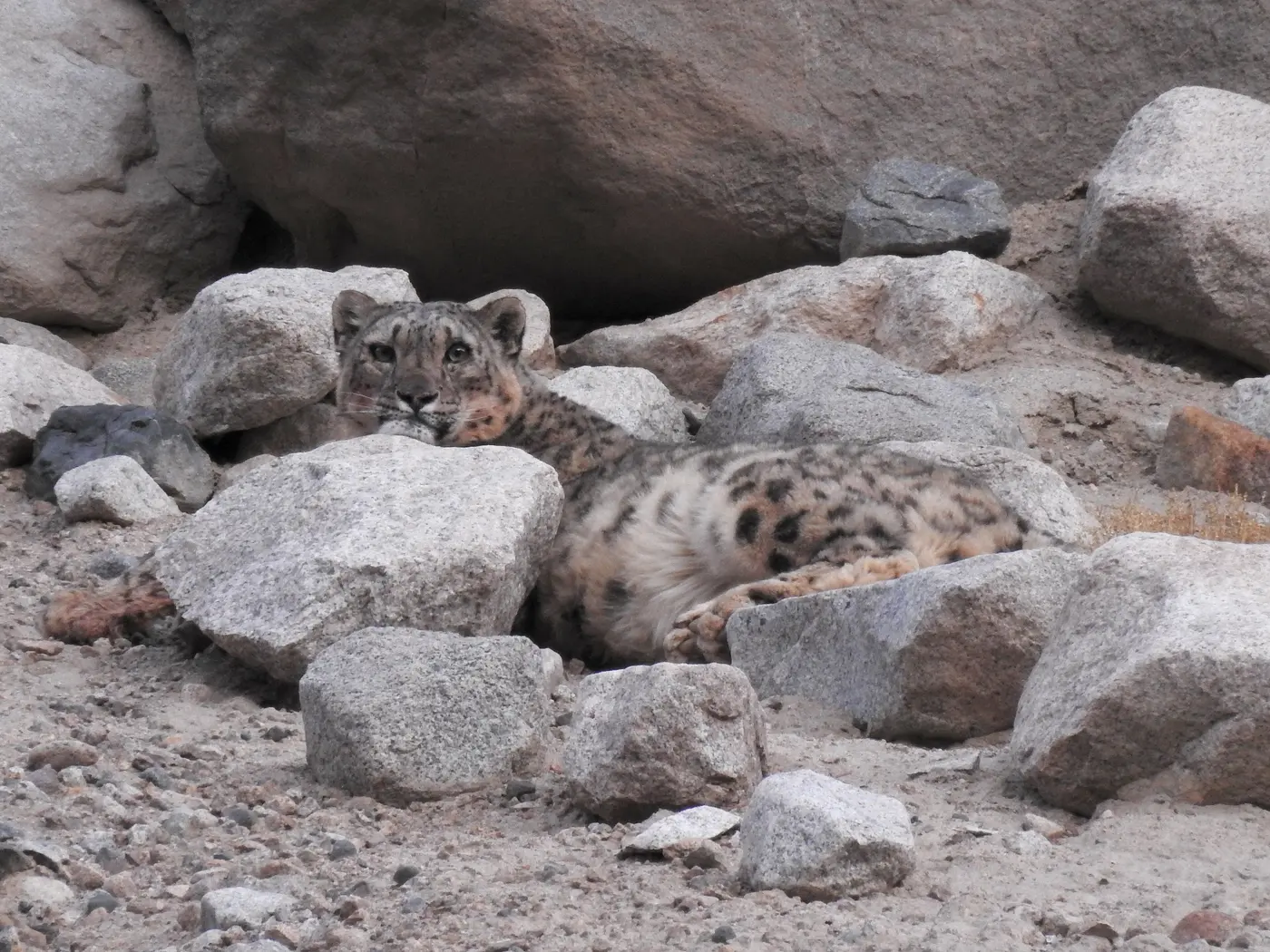
Seeing a snow leopard in the wild is one of the most coveted wildlife experiences on the planet — these are supremely elusive, superbly camouflaged cats that spend their lives on cliffs and ridgelines at 3,000–5,500 m, and even experienced trackers can go days without a sighting. Hemis National Park offers better odds than almost anywhere else because of a rare combination: dense prey populations, a resident leopard population unusually tolerant of distant human presence, and open terrain that allows spotters to scan huge stretches of slope with a telescope.
Expeditions are based out of villages inside the park — most commonly Rumbak and Ulley, reached by a scenic drive and short trek from Leh. Days involve early starts, long periods of quiet observation with spotting scopes, and homestay accommodation with local families who often double as trackers. A sighting is never guaranteed, but operators running multi-day expeditions in peak winter report success rates that are remarkably high for such a rare animal.
- Best season: January–March, when leopards descend to lower elevations following prey
- Base villages: Rumbak, Ulley, Husing — 3–4 hours from Leh by road/short trek
- Duration: 5–10 day expeditions typical, longer improves odds
- Gear: Extreme cold-weather layers (-20°C or lower), a good spotting scope or binoculars, and a licensed local guide are essential
- Permits/fees: Park entry and wildlife fees payable at the checkpoint; a licensed naturalist guide is strongly recommended and often required
Other Wildlife of Hemis National Park
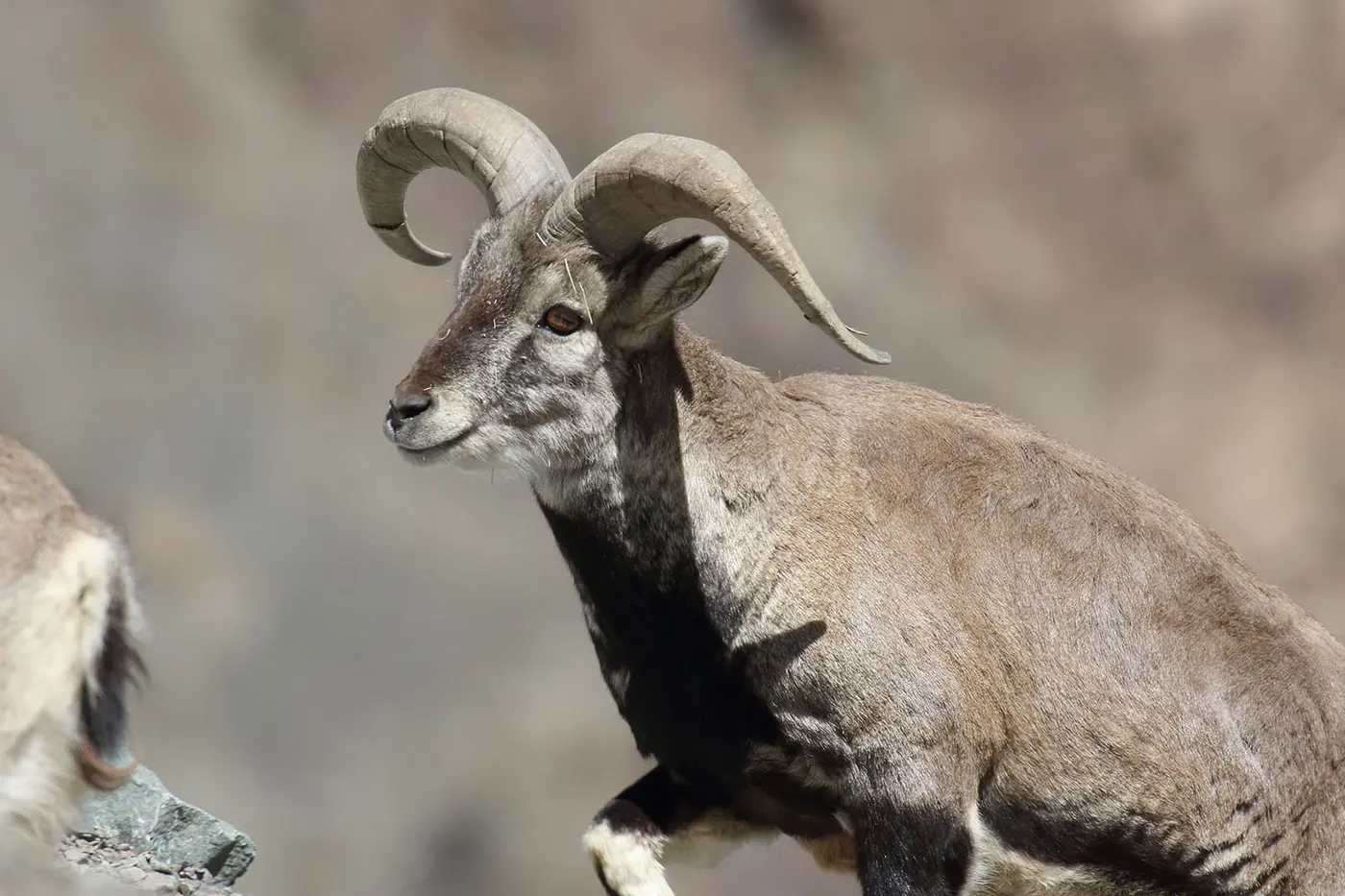
The snow leopard gets the headlines, but the park supports a rich high-altitude ecosystem worth watching for in its own right:
- Bharal (blue sheep): The primary prey species for snow leopards, seen in herds grazing steep slopes — often the first sign that a leopard may be nearby.
- Tibetan wolf: A rare and elusive subspecies found in small numbers across the park's remote valleys.
- Asiatic ibex: Large wild goats with dramatic curved horns, found on rocky outcrops at similar elevations to the bharal.
- Ladakh urial: A wild sheep species found at somewhat lower elevations near the park's edges.
- Birdlife: Golden eagles, lammergeiers (bearded vultures), Himalayan griffons, and the chukar partridge are frequently spotted riding thermals above the ridgelines.
Nearby: Stakna Monastery
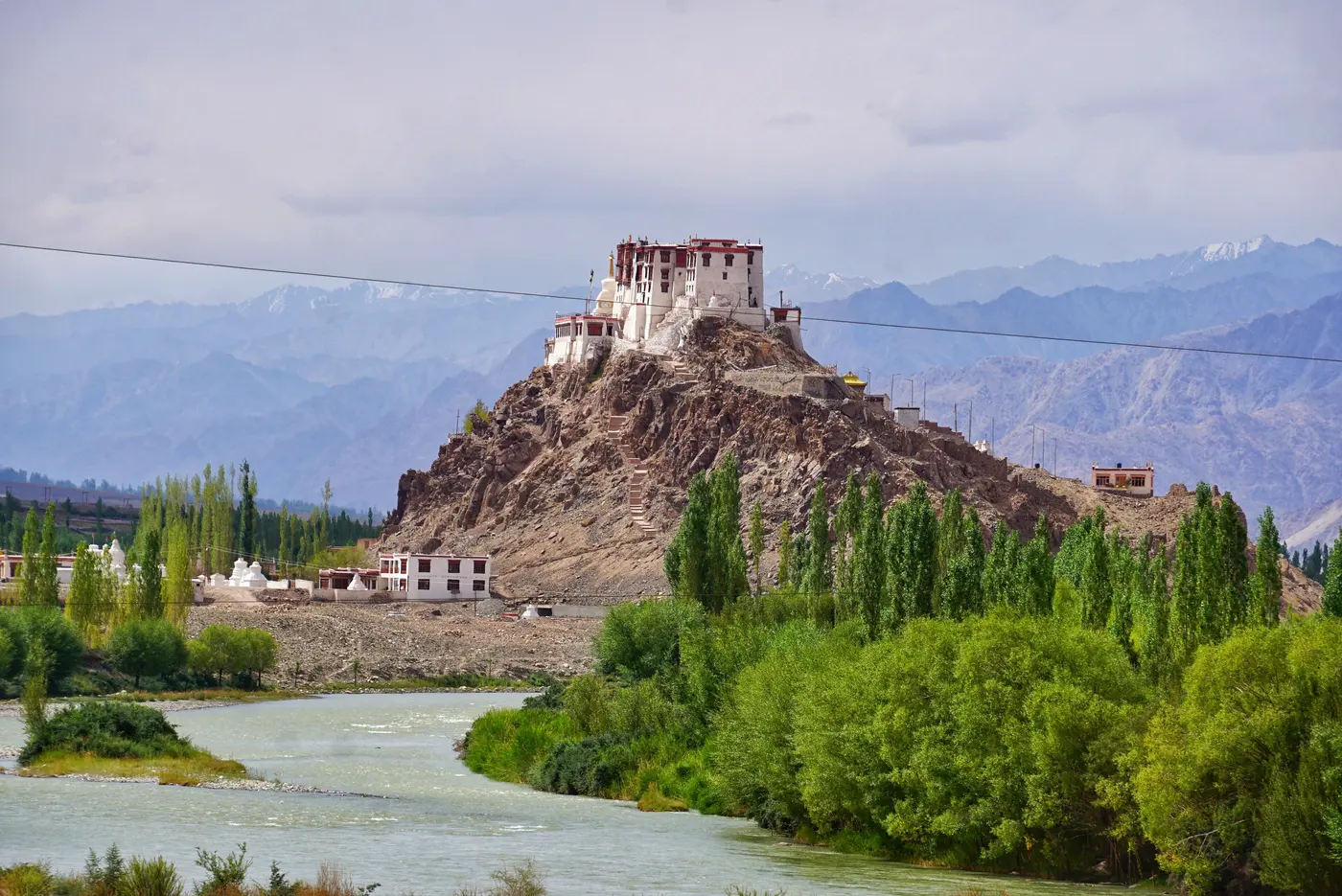
If you have half a day to spare on the way to or from Hemis, detour to Stakna Monastery, perched dramatically on a rocky outcrop above the Indus roughly midway between Leh and Hemis. Founded in the late 16th century — predating Hemis itself — Stakna belongs to the same Drukpa Kagyu lineage and takes its name from the "tiger's nose" shape of the rock it sits on.
It sees a fraction of Hemis's visitors, which makes it a peaceful, uncrowded stop with sweeping views over the Indus Valley, and a chance to see monastic life unfold at its own unhurried pace — no festival crowds, just prayer flags snapping in the wind and the murmur of chanting from the assembly hall.
Where to Stay
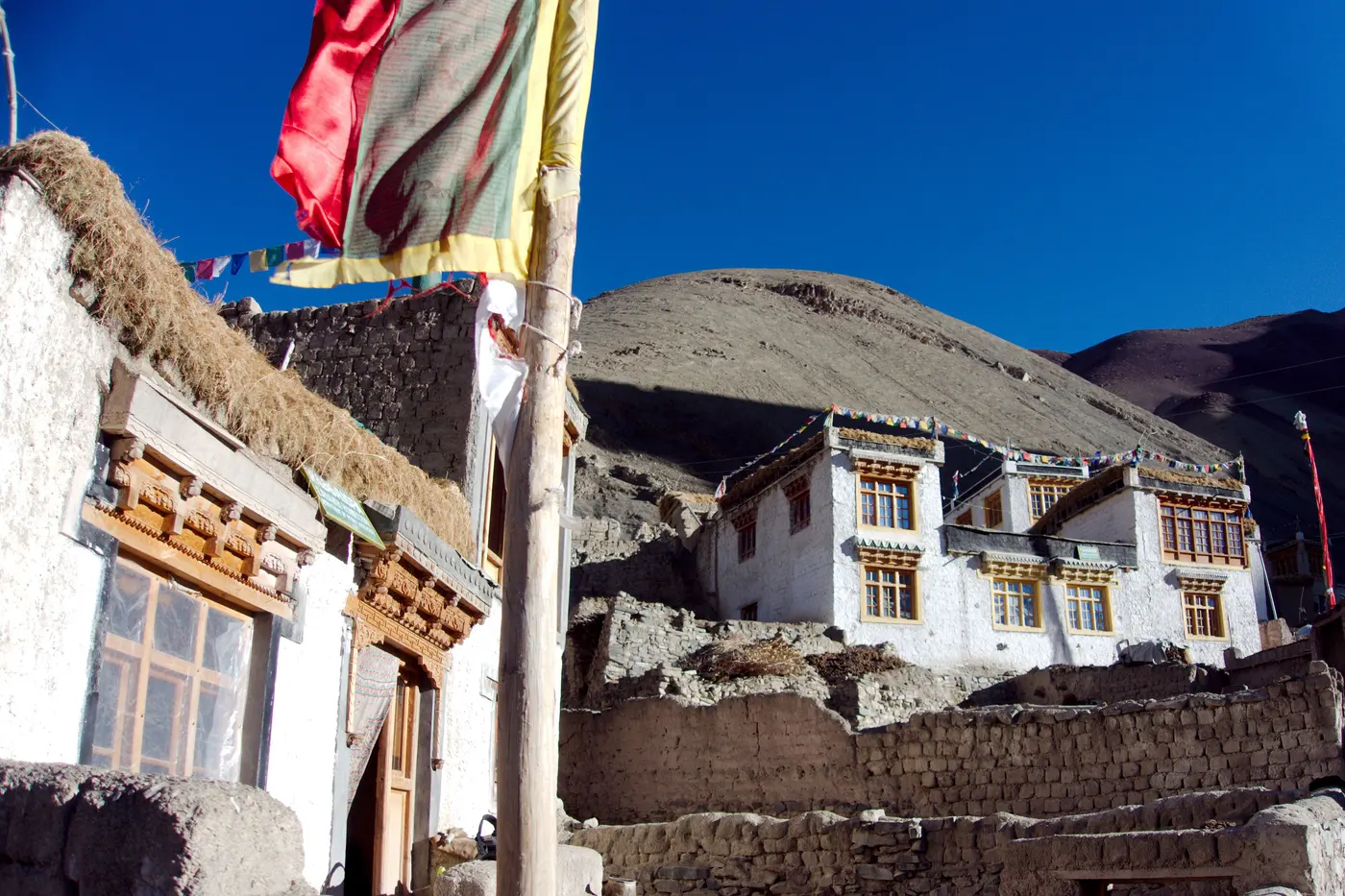
Hemis itself has no real accommodation infrastructure — almost everyone bases in Leh and visits as a day trip. For snow leopard expeditions inside the national park, homestays in villages like Rumbak and Ulley are the only option, and are part of the experience.
- → Old Leh House (guesthouse)
- → Zostel Leh
- → Hotel Ladakh Palace
- → The Grand Dragon (luxury)
- → Rumbak village homestays
- → Ulley village homestays
- → Husing village homestays
- → Run through Snow Leopard Conservancy network
- → Roadside guesthouses near Karu junction
- → Small camps along the Leh–Manali highway
- → Convenient if combining with Chumathang/Pangong
What to Eat Near Hemis
There's little in the way of restaurants at Hemis itself beyond a small monastery-run canteen and a couple of roadside stalls at Karu junction — most eating happens back in Leh or, for park visitors, in homestay kitchens.
- Skyu: A hearty Ladakhi stew of thick, hand-rolled dough pieces simmered with root vegetables — the classic homestay meal after a cold day of trekking or spotting.
- Thukpa: Tibetan noodle soup, warming and filling — often the default dinner at village homestays in the national park.
- Butter tea (Gur Gur Chai): Salted yak-butter tea served at the monastery and in every homestay — an acquired taste that becomes genuinely comforting at altitude.
- Tsampa: Roasted barley flour mixed with butter tea, eaten by hand — the traditional high-energy Ladakhi staple, especially valued by trekkers and herders.
- Apricots and dried fruit: Sold by villagers along the Karu–Hemis road, and offered generously at homestays — Ladakh's apricots are genuinely excellent.
- Leh restaurants: After a Hemis day trip, Tibetan Kitchen (momos), The Bookshelf Café, and Lamayuru Restaurant are reliable options back in town.
Budget Breakdown
| Expense | Budget | Mid-Range | Comfort |
|---|---|---|---|
| Hemis day trip (taxi from Leh) | ₹1,500 shared | ₹2,500 private | ₹3,500 private + guide |
| Monastery entry fee | ₹50 | ₹50 | ₹50 |
| National park entry/wildlife fee | ₹20–₹100/day | ₹20–₹100/day | ₹20–₹100/day |
| Homestay (Rumbak/Ulley, full board) | ₹1,200 | ₹1,800 | ₹2,500 |
| Snow leopard guide/naturalist (per day) | ₹2,000 | ₹4,000 | ₹7,000+ |
| 5-day snow leopard expedition (all-in) | ₹20,000 | ₹40,000 | ₹70,000+ |
* A Hemis-only day trip is inexpensive; costs rise sharply for a dedicated multi-day snow leopard expedition, which is priced closer to a full trekking package than a sightseeing outing.
Essential Travel Tips
- Confirm festival dates early: The Hemis Tsechu follows the Tibetan lunar calendar and shifts each year — check with the monastery office or a Leh-based operator months in advance, and book Leh accommodation as soon as dates are confirmed.
- Dress modestly and behave respectfully: Hemis is an active place of worship, not a museum. Cover shoulders and knees, remove shoes where indicated, and keep noise down in assembly halls.
- Ask before photographing: Some interior shrines and specific ritual objects may be off-limits to cameras; ask a monk first. During the festival, be mindful about blocking pilgrims' views for a photo.
- Snow leopard trips need real winter gear: Down layers rated to -20°C or below, insulated boots, and a good pair of gloves are non-negotiable for a January–March expedition. This is not a trip to under-pack for.
- Book snow leopard guides through reputable operators: Community-run networks (such as the Snow Leopard Conservancy homestay programme) channel income directly to villages inside the park and employ genuinely experienced local trackers.
- Altitude still applies: Hemis sits around 3,600 m and the national park goes higher still. Acclimatise in Leh for at least a day or two before heading into the park, especially before any trekking.
- Carry cash: There are no ATMs at Hemis, Karu, or inside the national park villages. Withdraw what you need in Leh beforehand.
- Combine with the Indus Valley circuit: Hemis pairs naturally with Thiksey, Shey, and Stakna monasteries — all reachable in a single well-planned day from Leh.
✅ Do
- →Arrive early during the festival for a good courtyard spot
- →Combine Hemis with Thiksey, Shey, and Stakna in one day
- →Confirm exact Hemis Tsechu dates months ahead
- →Book a licensed naturalist for snow leopard tracking
- →Pack proper winter gear for a winter expedition
- →Carry enough cash — no ATMs nearby
- →Try Skyu and butter tea at a village homestay
- →Respect monastery photography restrictions
❌ Don't
- →Expect to see the great thangka outside a Monkey Year
- →Underestimate winter cold on a snow leopard trip
- →Skip acclimatisation before heading into the park
- →Photograph interiors or individuals without asking
- →Book festival-time Leh stays at the last minute
- →Attempt independent snow leopard tracking without a guide
- →Wear revealing clothing inside the monastery
- →Rush the visit — Hemis rewards unhurried time
Frequently Asked Questions
How many days do I need for Hemis?
Hemis itself is an easy half-day trip from Leh, often combined with Thiksey and Shey monasteries in a single day. If you're going specifically for the Hemis Festival, plan for the two festival days plus travel; a dedicated snow leopard expedition inside Hemis National Park typically runs 5-10 days.
What is the best time to visit Hemis?
It depends on what you're after. For the Hemis Festival, June or July, when the monastery courtyard fills with masked cham dances during the two-day Hemis Tsechu. For snow leopard spotting, January to March, when leopards descend to lower elevations to hunt. August-September offers pleasant weather and fewer crowds for a straightforward monastery visit.
How do I reach Hemis from Leh?
Hemis is about 45 km from Leh, roughly 1.5 hours by road via Choglamsar and Karu on the Leh-Manali highway, then a turn-off climbing about 9 km into the side valley. A half-day taxi from Leh covering Hemis, Thiksey, and Shey costs roughly ₹2,500-3,500, and the road is well-paved enough for self-drive bikes and cars.
Is Hemis safe for solo travellers?
Yes, Hemis is a well-established day-trip destination from Leh with regular taxi and shared-transport access, making it comfortable for solo travellers. A dedicated snow leopard expedition into the national park is a more serious undertaking and should be booked through an experienced operator with a licensed guide rather than attempted independently.
What is the budget for a trip to Hemis?
A Hemis-only day trip from Leh is inexpensive — a shared taxi runs around ₹1,500 plus a ₹50 monastery entry fee. Costs rise sharply for a snow leopard expedition, which runs closer to a full trekking package: a 5-day all-in expedition costs roughly ₹20,000 on a budget and ₹40,000+ mid-range, including homestays and a naturalist guide.
Is Hemis worth visiting?
Yes — Hemis is the largest and wealthiest monastery in Ladakh, its remoteness having spared it from 17th-century Mongol raids that hit other monasteries. It also hosts Ladakh's most spectacular festival, the Hemis Tsechu, and sits at the edge of Hemis National Park, India's largest national park outside the Arctic and the most reliable place on the planet to see a wild snow leopard.
What are the odds of seeing a snow leopard in Hemis National Park?
Sightings are never guaranteed, since these are supremely elusive, well-camouflaged cats, but Hemis National Park offers better odds than almost anywhere else thanks to dense prey populations and a resident leopard population unusually tolerant of distant human presence. Multi-day expeditions in peak winter (January-March), based out of villages like Rumbak and Ulley, report remarkably high success rates for such a rare animal.
Published by the Kudozz Club editorial team · Last updated · How we research our guides
Want us to plan this trip for you?
Tell Kudozz Club where you want to go and what kind of trip you’re looking for. We’ll build a Hemis and Ladakh itinerary around your dates and budget.
Continue Exploring
View all guidesWildlife TourismSnow Leopard Tours in India: Hemis, Ulley and Spiti
A guide to snow leopard tours in India: Hemis National Park and the Rumbak valley, Ulley and the Sham valley in Ladakh, and Kibber in Spiti, with how tracking trips work, the January to March season, acclimatisation, community homestays, cold-weather gear, other wildlife and realistic expectations.
 Heritage
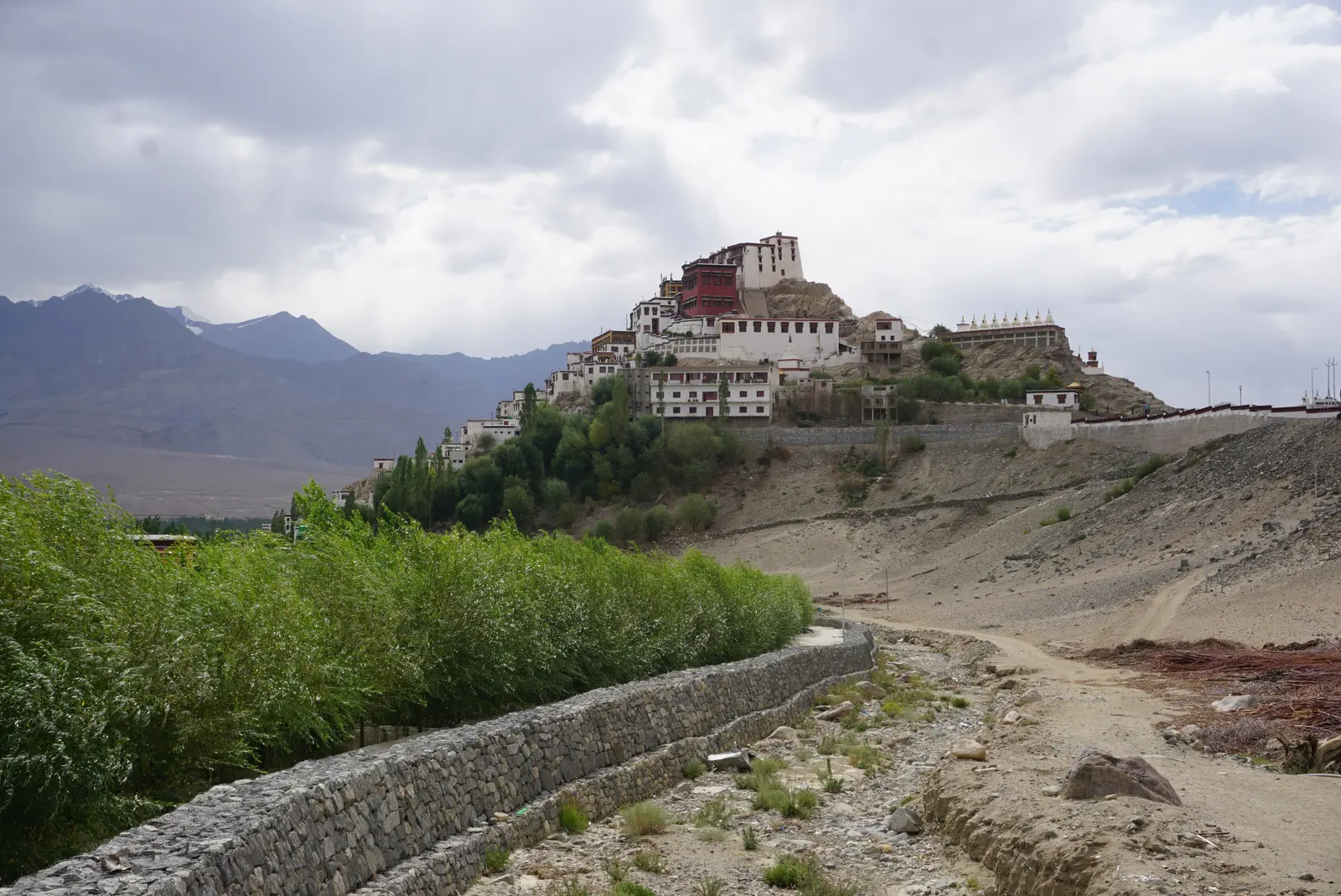
Thiksey Travel Guide: Monastery, Morning Prayers & Maitreya Buddha
Twelve storeys of whitewashed walls climb a hillside above the Indus like a mini Potala Palace — home to a 15-metre golden Buddha and the most spellbinding 6 AM prayer ceremony in Ladakh.
 Heritage
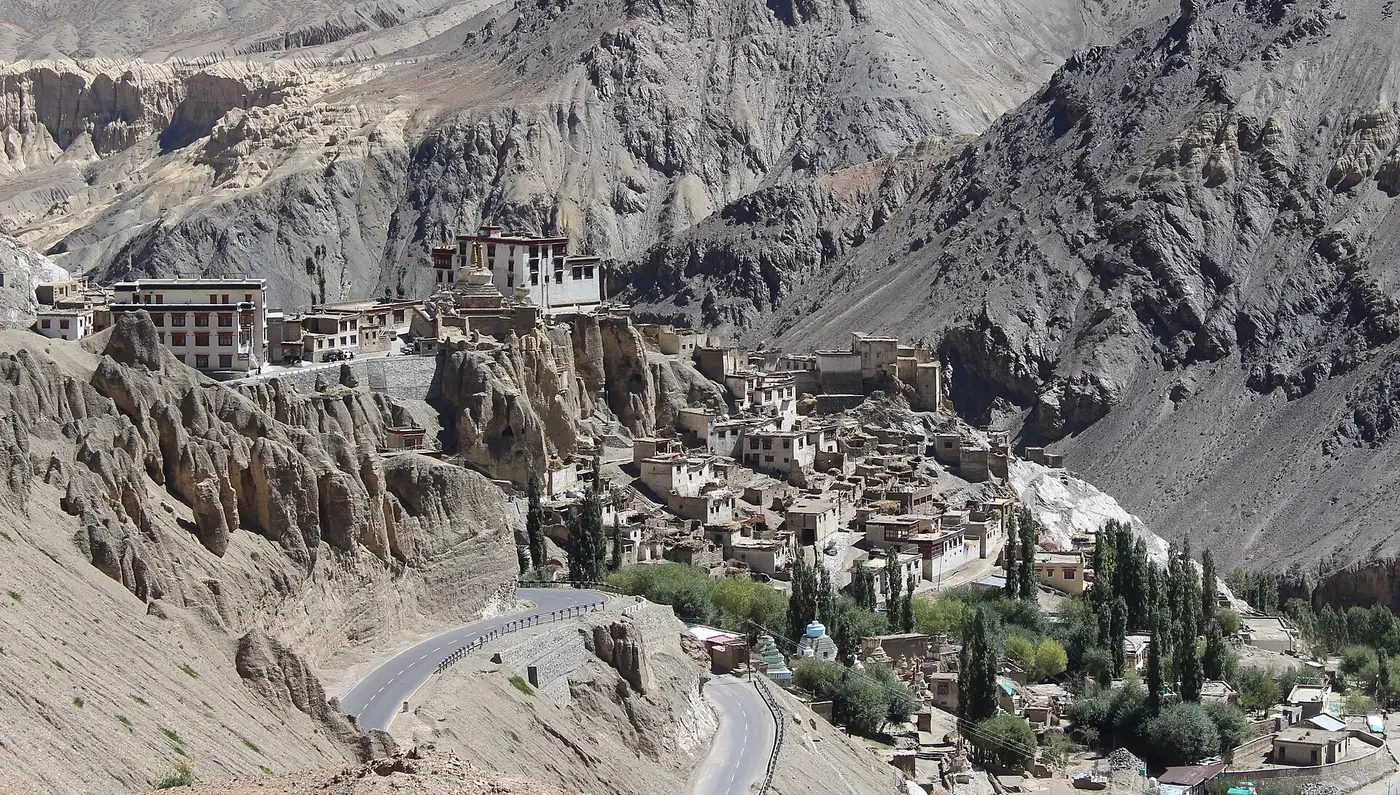
Lamayuru Travel Guide: Moonland, Monastery & How to Visit
Ladakh's oldest monastery perches above a landscape so eroded it's simply called the Moonland — here's how to see it right, from the Yuru Kabgyat festival to the short treks that begin at its gates.
 Heritage
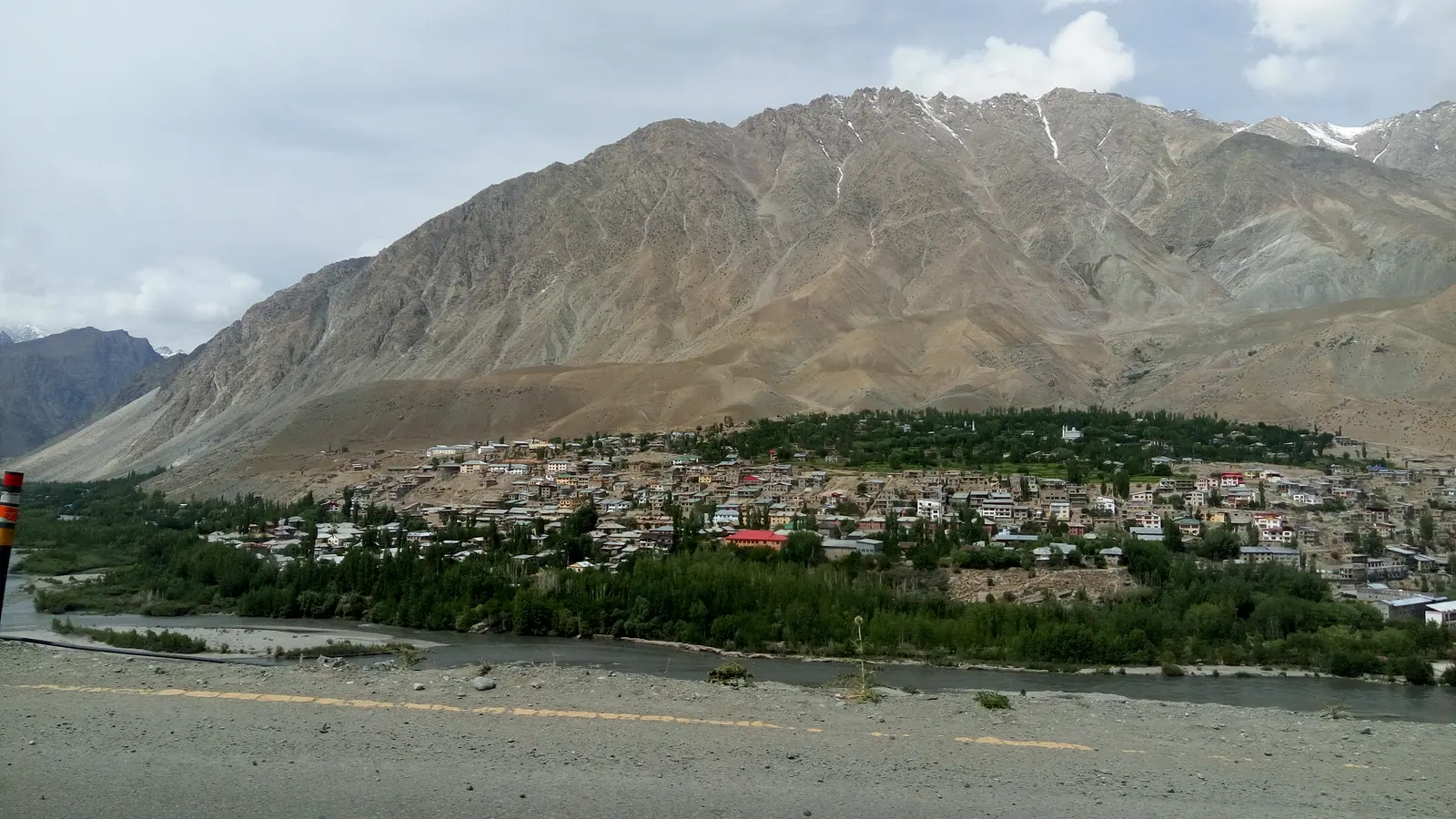
Kargil Travel Guide: Gateway to Zanskar & the Srinagar-Leh Highway
Halfway between Srinagar and Leh, where Balti Muslim and Ladakhi Buddhist worlds meet amid apricot orchards — Kargil is the highway town most travellers rush through, and the doorway to remote Zanskar.