Why Kargil?
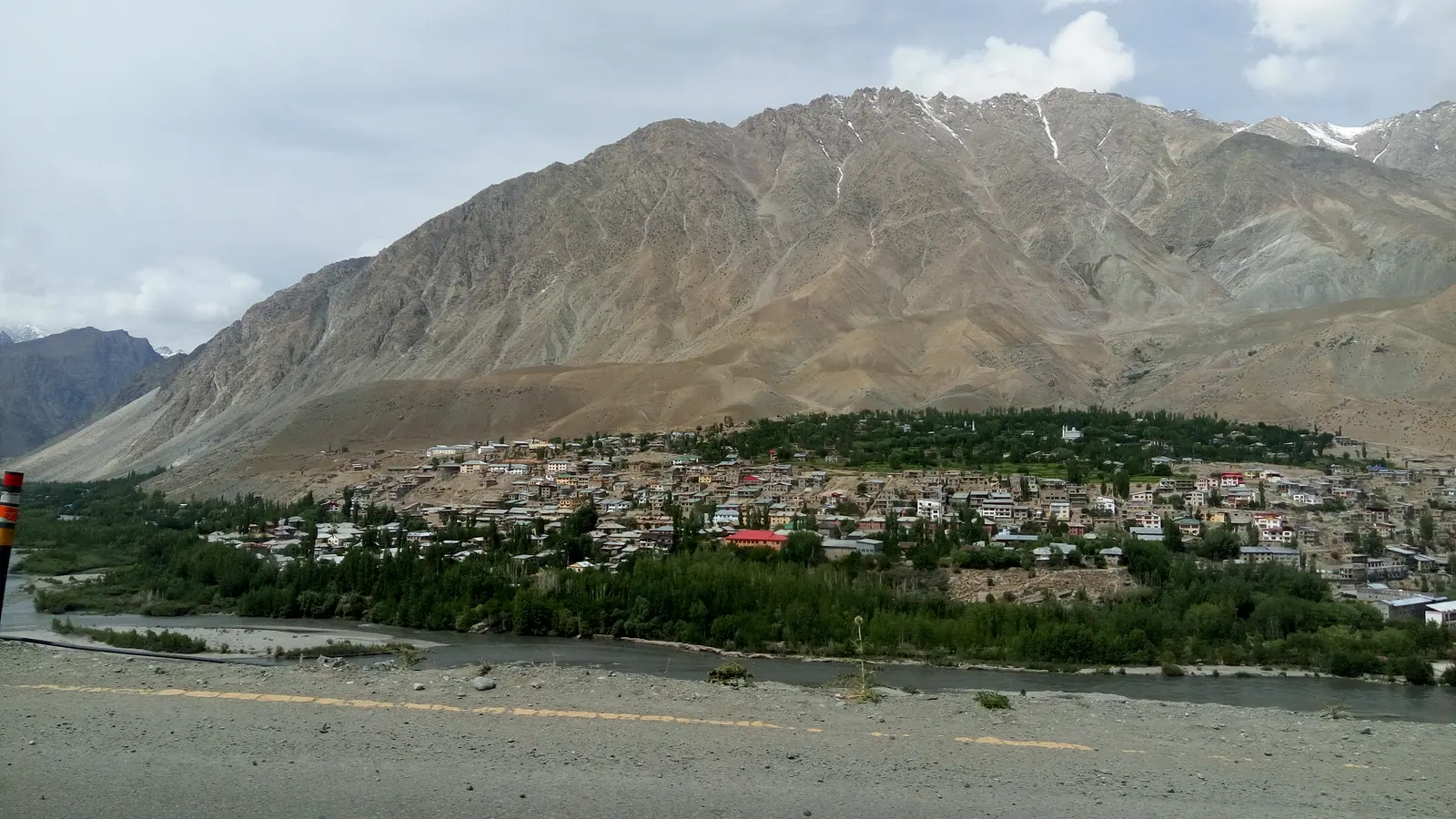
Most people who pass through Kargil are on their way to somewhere else. It sits almost exactly halfway along the Srinagar–Leh highway, 204 km from each, which means it exists in most itineraries as an overnight stop — a place to sleep before the next day's drive over Namika La and Fotu La towards Lamayuru. That's a shame, because Kargil is one of the few places in Ladakh where you can feel two distinct worlds meet.
Leh and the eastern valleys are Buddhist, Tibetan in influence, dotted with gompas and prayer flags. Kargil district is different: the majority here are Balti Muslims, Shia in faith, speaking a dialect close to Balti (itself close to Ladakhi and ultimately Tibetan) but culturally oriented as much towards Baltistan and Kashmir as towards Leh. The bazaar smells of apricot and mutton rather than incense and juniper. Domed mosques and imambaras stand where you might expect chortens. It is Ladakh, unmistakably — the same high desert light, the same Suru and Indus-fed rivers, the same jagged brown mountains — but told in a different accent.
Kargil is also a town with a heavy, recent history. In the summer of 1999, the hills above nearby Dras and Kargil were the front line of the Kargil War, fought at altitudes above 5,000 metres in conditions that remain a byword for military hardship in India. The scars are visible if you know where to look, and the memorial at Dras is one of the most moving stops on the entire highway.
And practically speaking, Kargil is the last real town before you can turn south towards the Suru Valley and the remote, wildly beautiful Zanskar Valley — a detour that very few highway travellers make, and one of the most rewarding in all of Ladakh.
🏔️ Kargil at a Glance
Going by road? See our guide to the Srinagar to Leh road trip.
Best Time to Visit Kargil
Kargil's season tracks the Srinagar–Leh highway itself. The town sits at a lower altitude than Leh, so it's slightly milder, but it's still a high-desert climate with a short, sharp summer and a long, brutally cold winter.
Srinagar–Leh road reopens after winter closure (Zoji La is the last stretch to clear, usually late April/early May). Apricot and apple trees blossom around Kargil town. Cold at night, pleasant by day. Fewer travellers.
Warm, stable weather — daytime highs of 25–30°C, nights around 10°C. The Suru and Zanskar roads are fully open. Busiest period on the highway, mostly road-trippers headed to or from Leh.
Orchards around Kargil and along the Wakha valley turn heavy with apricots; drying racks appear on rooftops across every village. Clear skies, comfortable days, thinning crowds by mid-September. The best month for the Suru–Zanskar detour.
Snow closes Zoji La and the Zanskar road; Kargil becomes accessible only via the Leh side until that too gets difficult. Winter temperatures fall to -20°C or lower. Not a season for casual travel.
Our pick: Late August. The apricot harvest is in full swing, the Zanskar road is at its most reliable, and the punishing midsummer heat of the Suru Valley's lower stretches has eased. If Zanskar isn't on your list, June–July gives you the widest window with every route open.
How to Reach Kargil
Kargil has no airport and no railway line — every visitor arrives by road, which is fitting for a town whose whole identity is bound up with the highway running through it.
Via Srinagar (NH1) — the Classic Approach
The Srinagar–Kargil road (204 km) is the western half of the historic Srinagar–Leh highway, and for most travellers it's the more scenic and culturally rich of the two approaches. It climbs out of the Kashmir Valley through Sonamarg, crosses Zoji La (3,528 m) — the dramatic, often fog-bound pass that is the real gateway from Kashmir into Ladakh — then descends through Dras into the Suru valley towards Kargil.
- Distance: 204 km from Srinagar
- Duration: 7–8 hours by road (best done as a full day, not rushed)
- Open: Roughly May to November, weather dependent — Zoji La is the first section to close in early winter
- Road condition: Good tarmac for most of the route; the Zoji La stretch itself is narrow, unpaved in patches, and can back up with truck traffic for hours
Via Leh
Coming from the east, Kargil is 204 km from Leh via Lamayuru, Fotu La (13,479 ft) and Namika La (12,198 ft) — a spectacular stretch of the highway through Ladakh's famous "moonland" badlands around Lamayuru. This is the direction most Leh-based travellers use to reach Kargil, either as a day trip to Mulbekh and back, or as the first leg of a longer loop towards Kashmir or Zanskar.
- Distance: 204 km from Leh
- Duration: 6–7 hours
- Highlights en route: Lamayuru Monastery and moonland, Namika La, Mulbekh's rock-cut Buddha
Kargil–Zanskar Road
From Kargil, a single road runs 230 km south through the Suru Valley, over the Pensi La (4,400 m), and down into the Zanskar Valley to Padum. It's the only vehicle access to Zanskar for most of the year (a newer, dramatic road from Manali via Shinkun La is open only in peak summer). This road is covered in more detail in the Suru Valley and Gateway to Zanskar sections below.
- Distance: 230 km, Kargil to Padum
- Duration: 8–10 hours, best split over two days
- Open: June to early October only
Kargil War Memorial, Dras
About 60 km before Kargil, on the Srinagar side, the road passes through Dras — often cited as the second-coldest inhabited place on earth, where winter temperatures have dropped below -40°C. In the summer of 1999, the ridgelines visible from the highway here were the site of the Kargil War, fought between India and Pakistan at altitudes most armies would consider unsurvivable.
The Kargil War Memorial (also known as the Vijayanta War Memorial), maintained by the Indian Army, stands at Dras with the peaks of Tololing and Tiger Hill as its backdrop — the very ground the fighting was fought over. A wall inscribed with the names of the fallen, a small but powerful museum of recovered equipment and photographs, and an eternal flame make it one of the most affecting stops on the entire highway. Most travellers pause here for 30–45 minutes; give it longer if you can.
Mulbekh & Shargol Monastery
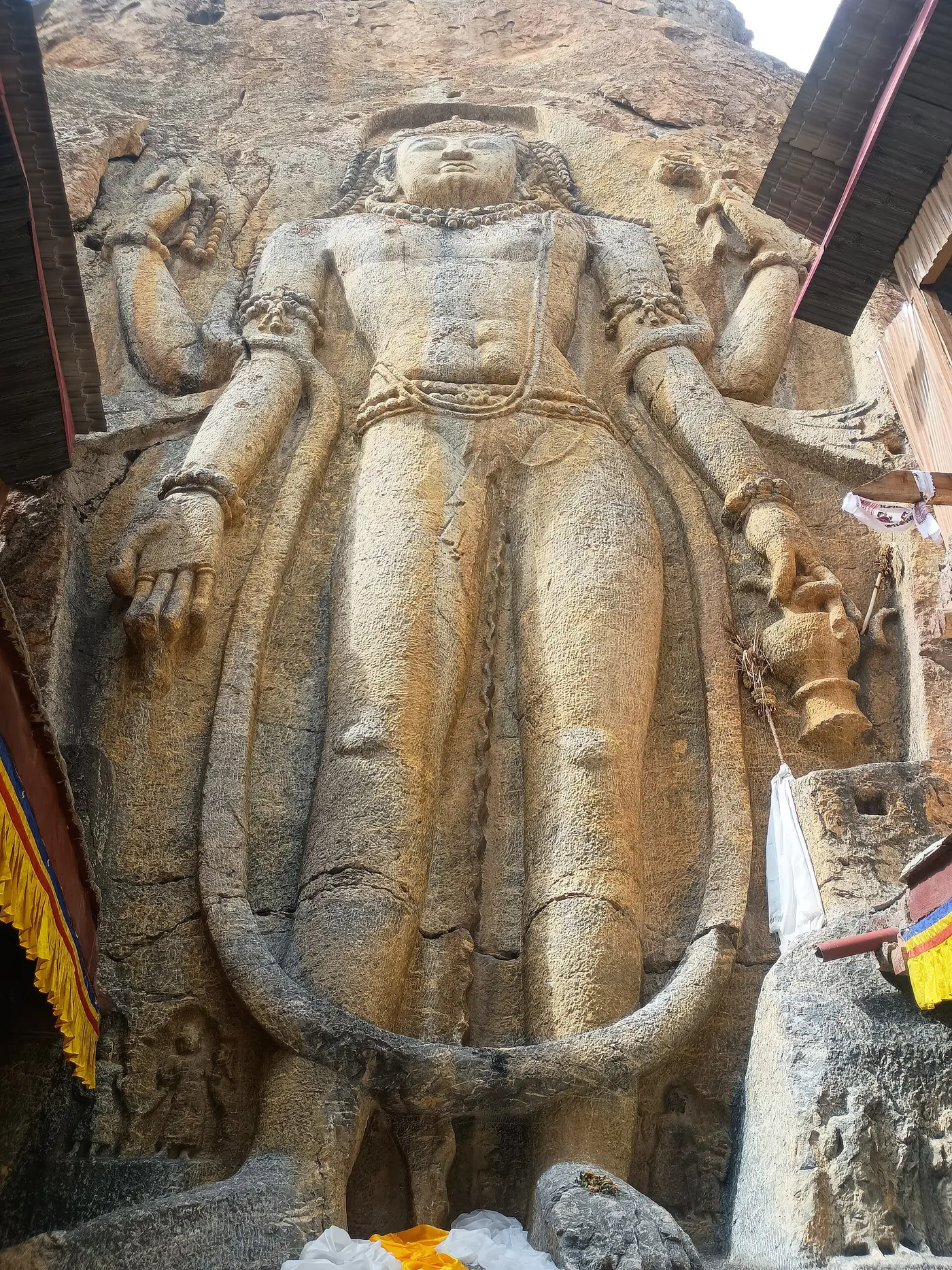
Roughly 45 km east of Kargil, on the road towards Leh, the highway passes through Mulbekh — a small village that marks, almost precisely, the cultural boundary between Muslim Kargil and Buddhist Ladakh. It's an easy, worthwhile stop for anyone driving between the two.
The village's landmark is the Mulbekh Chamba statue — a roughly 9-metre-tall figure of Maitreya (the future Buddha) carved directly into a freestanding rock face beside the highway, believed to date to the 7th or 8th century, making it one of the oldest Buddhist rock carvings in the region. Two small monasteries, one Gelugpa and one Drikung Kagyu, are built into the same rock outcrop, and a short flight of steps takes you right up to the statue's base.
A little further along, near the village of Shargol, the Shargol Monastery is worth a detour if you have the time — a cluster of whitewashed cave shrines built into a sheer cliff face, visible from the road but reached by a steep climb. It sees a fraction of Mulbekh's footfall and rewards travellers willing to make the short, steep effort.
- Distance from Kargil: Mulbekh ~45 km, Shargol ~40 km (both on the Kargil–Leh road)
- Time needed: 30–45 minutes at Mulbekh; 1–1.5 hours if you climb up to Shargol
- Best done: As a stop on the Kargil–Leh drive, either direction
Kargil Town & Bazaar
Kargil town itself is unglamorous and functional — a district headquarters strung along the Suru River with a busy main bazaar, government offices, and a steady flow of highway traffic. It won't compete with Leh for postcard appeal, but spend an evening walking it and a different Ladakh reveals itself.
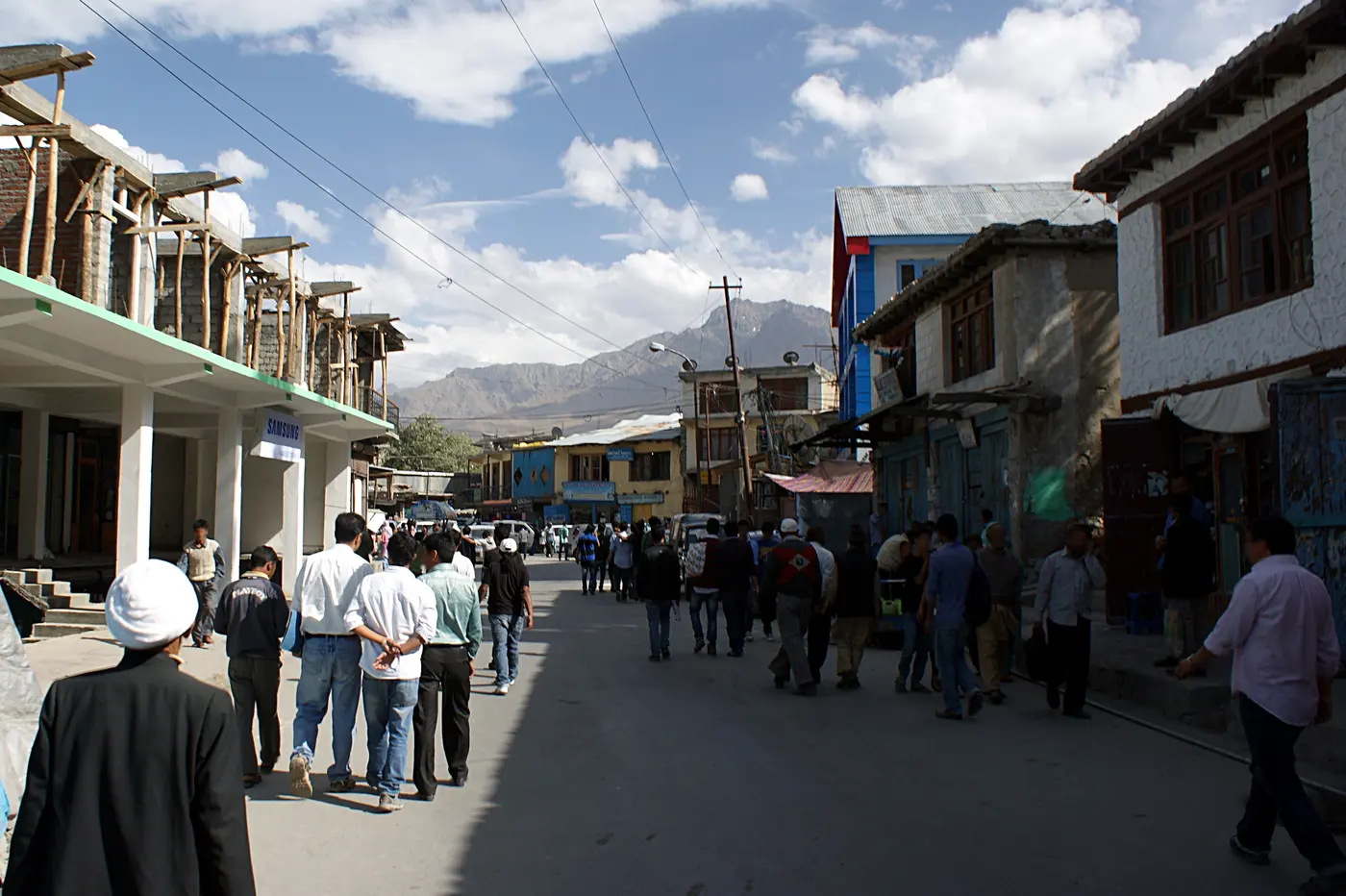
The main bazaar is where Kargil's mixed identity is most visible: bakeries selling fresh Kashmiri-style bread alongside Balti flatbreads, fruit stalls piled with apricots and mulberries in season, tailors, hardware stores supplying the whole district, and a scattering of small mosques and an imambara whose architecture owes as much to Kashmir and Baltistan as to Tibet. Trucks bound for Zanskar, Leh, and Srinagar all pass through here, making the bazaar a genuine crossroads rather than a tourist strip.
🕌 A Different Ladakh
Kargil district is majority Shia Muslim, with a distinct Balti heritage tied historically to Baltistan (now in Pakistan-administered territory). Ashura processions during Muharram are a significant local event, and the call to prayer, not monastery horns, marks the rhythm of the day. It's a useful reminder that "Ladakh" is not a single culture — it's a meeting point of several, and Kargil is where that meeting is most visible.
There isn't a great deal of formal "sightseeing" in town itself, and that's part of the appeal — Kargil rewards slow travel more than a checklist. A walk along the river, a wander through the bazaar at dusk when the shops light up, and a proper Balti meal are the best way to spend an evening here before continuing on the highway or turning south towards Suru.
Suru Valley
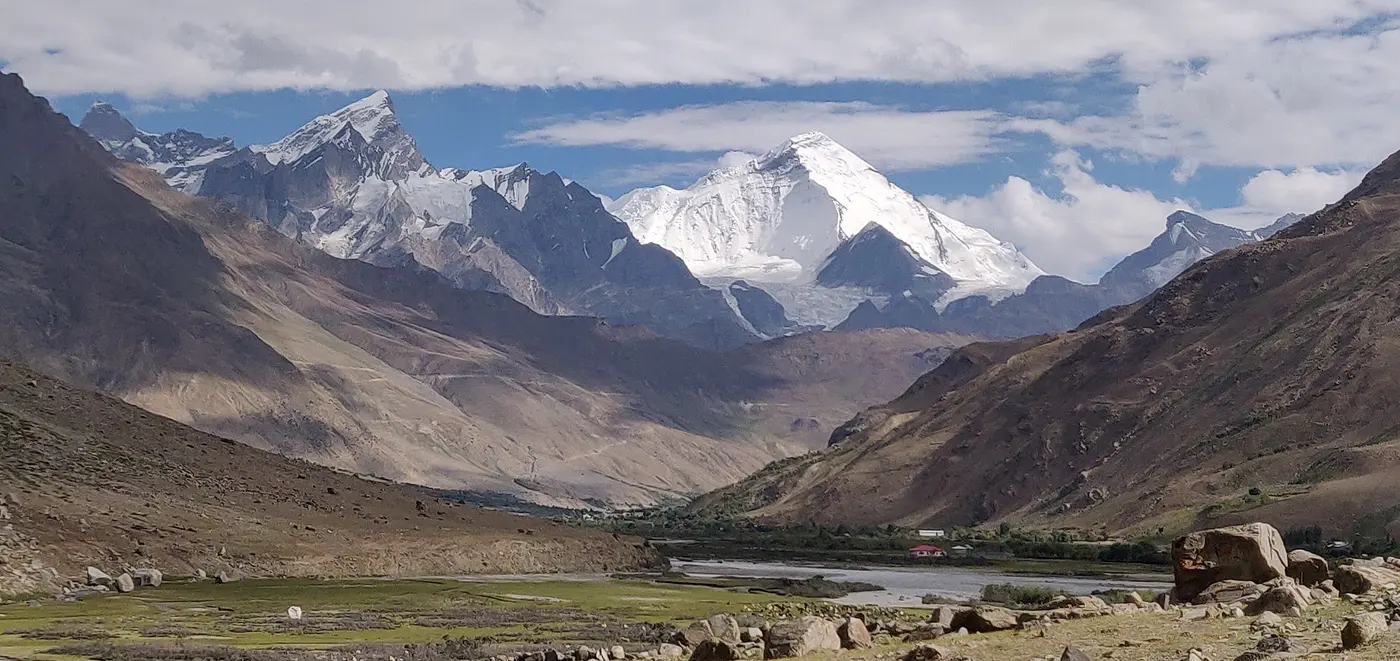
South of Kargil town, the road follows the Suru River upstream into one of Ladakh's greenest and least-visited valleys. Willow and poplar line the fields around villages like Sankoo and Panikhar, and apricot orchards give way, as you climb, to bare highland pasture and glacier views.
The valley's showpiece is the Nun Kun massif — twin peaks of 7,135 m (Nun) and 7,077 m (Kun), the highest mountains in this part of the western Himalaya, visible in startling close-up from the road near Parkachik. Few places in Ladakh let you see a 7,000-metre peak from a paved highway; this is one of them, and it's a genuine highlight of the drive that most highway-only travellers never see.
- Key villages: Sankoo, Panikhar, Parkachik, Rangdum
- Distance from Kargil: Sankoo ~40 km, Parkachik ~100 km, Rangdum ~130 km
- Highlight: Nun Kun massif viewpoint near Parkachik
- Stay: Basic homestays in Sankoo and Panikhar; a handful of camps near Rangdum in season
Suru is best treated as a full day trip from Kargil (to Parkachik and back) or, better, as the first leg of the longer journey towards Zanskar — the road doesn't dead-end here, it keeps climbing.
Gateway to Zanskar Valley
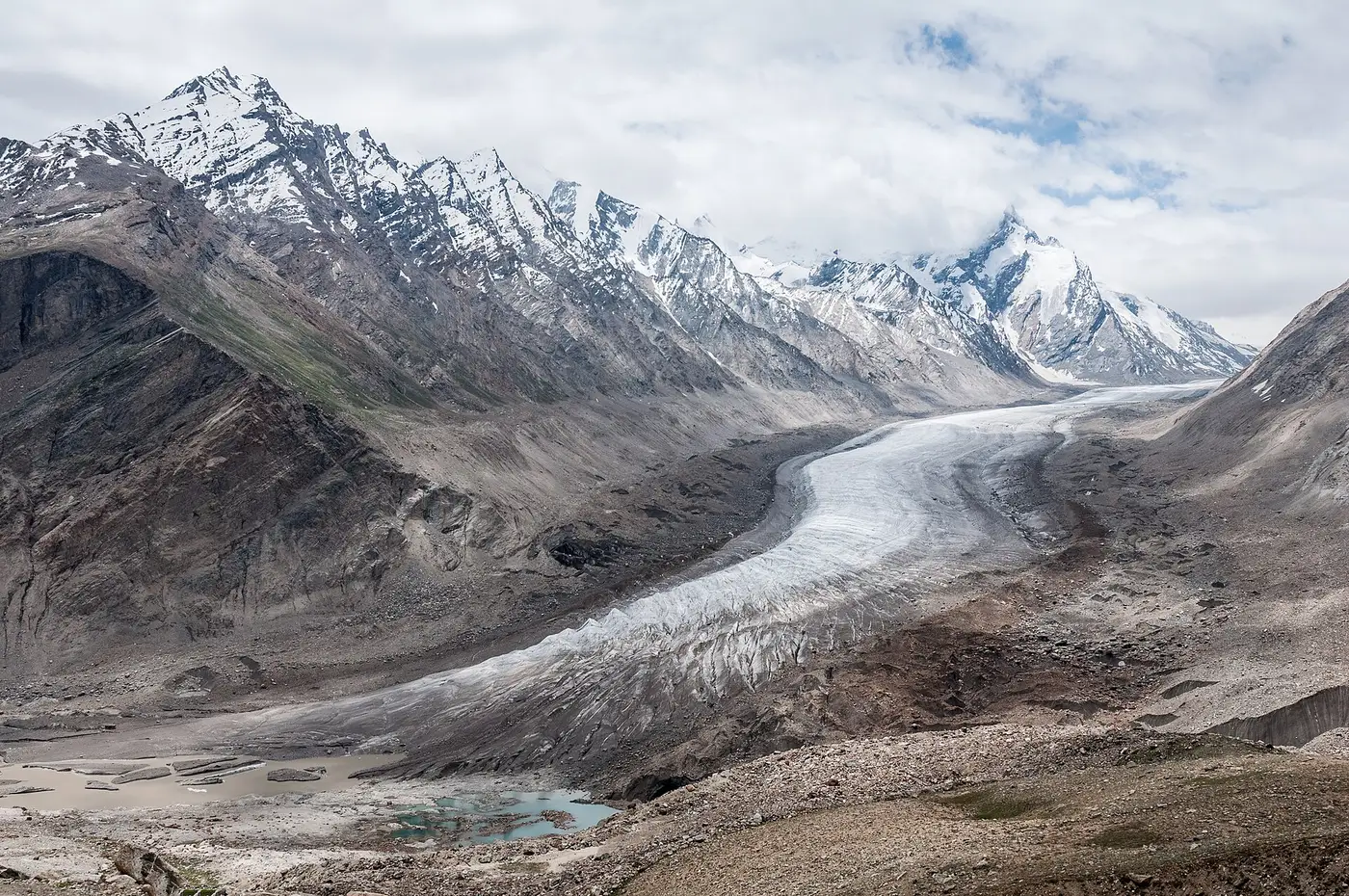
Continue past the Suru Valley's upper reaches and the road climbs to the Pensi La (4,400 m), crossing beneath the Drang-Drung Glacier — one of the largest and most accessible glaciers in Ladakh, visible directly from the roadside. Beyond the pass, the landscape changes again: this is Zanskar, a high, isolated valley cut off from the rest of Ladakh for eight or nine months of the year by snow, with its own dialect, its own royal lineage, and monasteries (Karsha, Sani, and the extraordinary cliffside Phugtal among them) found almost nowhere else.
Kargil is, for most travellers, the only practical entry point to Zanskar — the alternative approach from Manali via Shinkun La is longer, higher, and open for a shorter window. That makes Kargil more than a highway stopover: it's the last town with reliable fuel, mechanics, and provisions before a genuinely remote onward journey.
Where to Stay in Kargil
Kargil's accommodation is functional rather than luxurious — most travellers are here for one night on their way through, and the town's hotels are built accordingly. Book ahead in peak season (June–August) when highway traffic between Srinagar and Leh is heaviest.
- → Hotel Siachen (bazaar area)
- → Hotel Karwan-Sarai
- → Simple guesthouses near the bus stand
- → Homestays in Suru Valley villages
- → Hotel Greater Kailash
- → Hotel Zojila Residency
- → Hotel D'Zojila Continental
- → JKTDC Tourist Bungalow
- → Better riverside properties near town
- → Select business-traveller hotels
- → Advance-booked highway rest stops
- → (Kargil has no true luxury tier — plan accordingly)
What to Eat in Kargil
Balti cuisine is Kargil's real culinary signature — heartier and more bread-focused than the noodle-and-broth dishes you'll find further east in Leh, shaped by the valley's Kashmiri and Central Asian trade links as much as its Tibetan roots.
- Kisir: A dense, slightly sour buckwheat flatbread, traditionally eaten with butter or apricot oil — a Balti staple rarely found outside this region.
- Balay: Small hand-rolled wheat dumplings simmered in a light broth, often with dried vegetables — simple, warming, and everywhere in Kargil homes.
- Chutagi: Bow-tie-shaped pasta cooked in a thick vegetable and lentil broth, closely related to dishes found across Ladakh but made distinctively here.
- Mamtu: Steamed dumplings similar to momos, usually filled with minced meat, served with a thin, spiced broth rather than dry.
- Apricot everything: Kargil's orchards produce some of the best apricots in Ladakh. Look for fresh apricots in August, dried ones year-round, and cold-pressed apricot oil sold in the bazaar — used both in cooking and as a traditional skin remedy for the harsh, dry climate.
- Noon chai: The pink, salted Kashmiri tea common on the Srinagar side of the highway, popular in Kargil's tea stalls alongside butter tea further east.
- Where to eat: The bazaar's small family-run dhabas serve the most authentic Balti food; hotel restaurants lean towards a safer mix of North Indian and Kashmiri dishes for highway travellers.
Budget Breakdown for Kargil
| Expense | Budget | Mid-Range | Comfort |
|---|---|---|---|
| Accommodation/night | ₹700 | ₹2,000 | ₹4,500 |
| Food/day | ₹350 | ₹700 | ₹1,500 |
| Local transport/taxi | ₹300 | ₹1,000 | ₹2,500 |
| Suru Valley day trip | ₹1,500 | ₹3,000 | ₹5,000 |
| Sightseeing/entries | ₹100 | ₹300 | ₹500 |
| Daily total (approx) | ₹1,450 | ₹4,000 | ₹8,500 |
* Excludes the shared taxi/private vehicle cost of reaching Kargil itself from Srinagar or Leh, and any onward Zanskar travel beyond a single day trip.
Essential Travel Tips for Kargil
- Fuel up in Kargil: It's one of only a handful of reliable fuel stops on the entire Srinagar–Leh highway, and the last one before the Suru and Zanskar roads. Fill up here even if your tank looks fine.
- Carry cash: ATMs exist in Kargil town but are unreliable in peak season and non-existent beyond it in Suru or towards Zanskar. Carry enough rupees for several days.
- Dress modestly: As a Muslim-majority town, Kargil is culturally more conservative than Leh. Modest clothing is appreciated, especially in the bazaar and near mosques and imambaras.
- Mobile coverage: BSNL and Airtel work reasonably in Kargil town itself but drop out quickly once you head into the Suru Valley or towards Zanskar. Jio coverage is patchy at best.
- Check the road status: Both Zoji La and the Kargil–Zanskar road via Pensi La are subject to sudden closures from landslides, snow, or flooding. Confirm current status locally before setting out, especially in shoulder season (May or October).
- Photography near the border: Kargil district sits close to sensitive border areas. Avoid photographing military installations, checkpoints, or convoys, and expect occasional document checks on the highway.
- Give the war memorial its due: The Kargil War Memorial at Dras is a working memorial, not a tourist attraction — dress and behave respectfully, and allow real time rather than treating it as a quick photo stop.
✅ Do
- →Fill your fuel tank in Kargil before heading onward
- →Spend at least one night rather than rushing through
- →Stop properly at the Kargil War Memorial in Dras
- →Try Balti dishes like kisir and chutagi in the bazaar
- →Take the Suru Valley detour if you have a spare day
- →Check Zoji La and Pensi La road status before departure
- →Carry sufficient cash for several days
- →Dress modestly, especially in the town bazaar
❌ Don't
- →Treat Kargil as a place to just drive through unseen
- →Photograph military checkpoints, convoys, or installations
- →Attempt the Zanskar road without checking conditions first
- →Assume ATMs will be working — carry cash
- →Rush the war memorial stop at Dras
- →Expect Leh-style tourist infrastructure or luxury stays
- →Skip fuel here assuming you'll find it further on
- →Wear revealing clothing in the town bazaar
Frequently Asked Questions
How do I reach Kargil?
Kargil has no airport or railway line — every visitor arrives by road. From Srinagar it's 204 km via NH1 over Zoji La, taking 7–8 hours; from Leh it's also 204 km via Lamayuru, Fotu La, and Namika La, taking 6–7 hours. Both routes are typically open from roughly May to November, weather dependent.
What is the best time to visit Kargil?
Late August is our pick — the apricot harvest is in full swing, the Zanskar road is at its most reliable, and the midsummer heat in the lower Suru Valley has eased. If Zanskar isn't on your itinerary, June–July gives the widest window with every route open.
Is Kargil worth an overnight stay, or just a drive-through?
It's worth stopping for. Most highway travellers treat Kargil as a place to sleep before the next day's drive, but the town is one of the few places in Ladakh where Balti Muslim and Buddhist Ladakhi worlds visibly meet — the bazaar, its mixed architecture, and Balti cuisine reward at least one unhurried evening.
What is the Kargil War Memorial?
The Kargil War Memorial (also called the Vijayanta War Memorial) stands at Dras, about 60 km before Kargil on the Srinagar side, with the peaks of Tololing and Tiger Hill — the actual battle sites of the 1999 Kargil War — as its backdrop. It includes a wall inscribed with the names of the fallen, a small museum, and an eternal flame; most travellers pause for 30–45 minutes.
Can I visit Zanskar from Kargil?
Yes — Kargil is the practical entry point to Zanskar for most travellers. A single road runs 230 km south through the Suru Valley, over the Pensi La (4,400 m), and down to Padum, typically open only from June to early October and best split over two days. The alternative approach from Manali via Shinkun La is longer, higher, and open for a shorter window.
What is the budget for a trip to Kargil?
A budget traveller can expect around ₹1,450 a day covering accommodation, food, local transport, and sightseeing. Mid-range travel runs about ₹4,000 a day, and a more comfortable stay can reach ₹8,500 a day — Kargil has no true luxury tier, so plan accordingly. This excludes the cost of reaching Kargil itself from Srinagar or Leh.
What is the Suru Valley known for?
The Suru Valley, running south of Kargil town along the Suru River, is known for its willow-lined villages like Sankoo and Panikhar and for close-up views of the Nun Kun massif — twin peaks of 7,135 m and 7,077 m visible from the road near Parkachik, one of the few places in Ladakh where a 7,000-metre peak is visible from a paved highway.
Published by the Kudozz Club editorial team · Last updated · How we research our guides
Want us to plan this trip for you?
Tell Kudozz Club where you want to go and what kind of trip you’re looking for. We’ll build a Kargil and Ladakh itinerary around your dates and budget.
Continue Exploring
View all guides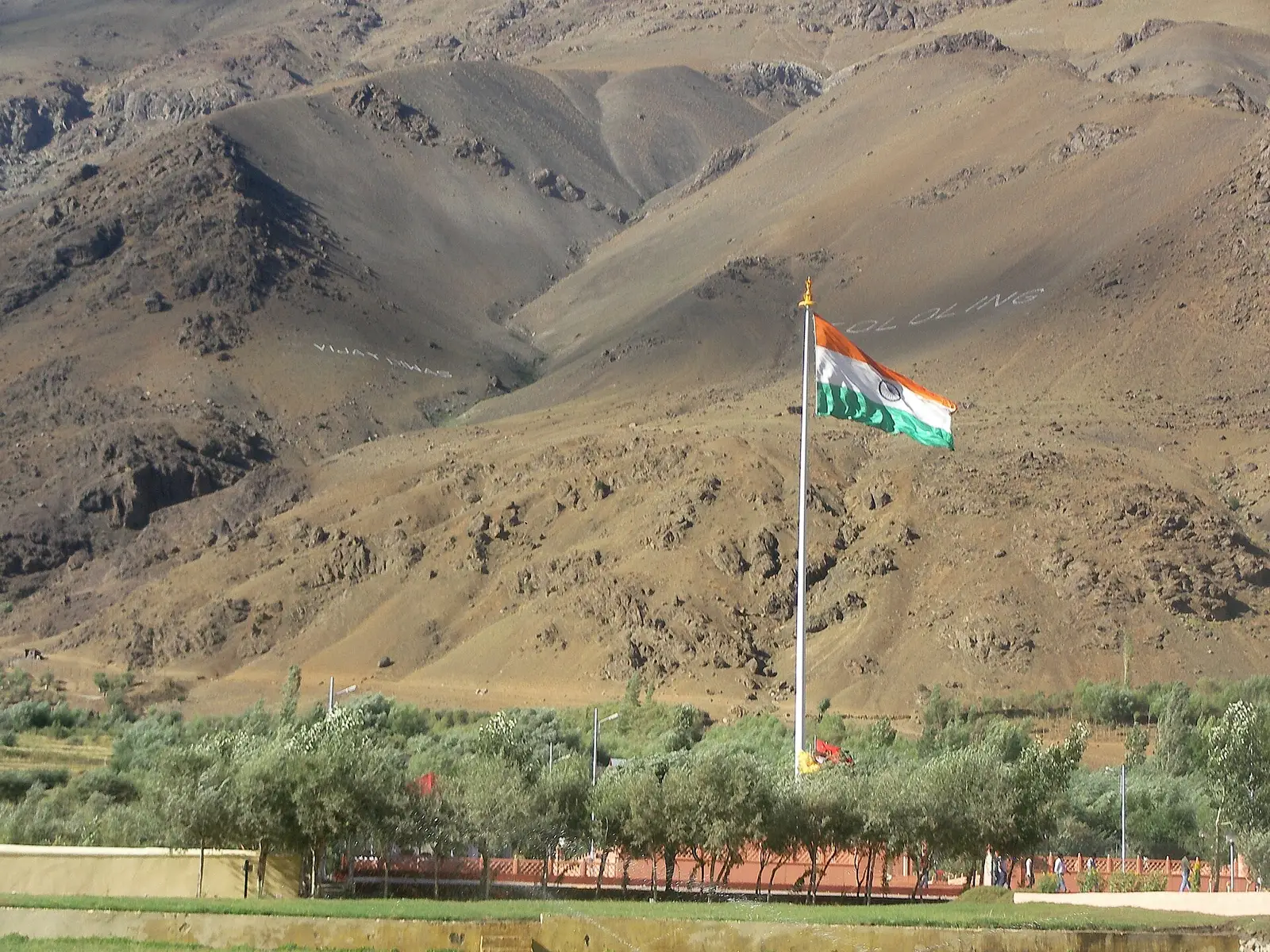 Off-beat
Drass Travel Guide: Kargil War Memorial & the Gateway to Ladakh
The second-coldest inhabited place on Earth, and the town that stands quietly at the foot of the Kargil War Memorial — a stopover on the Srinagar-Leh highway you won't forget.
 Road Trips
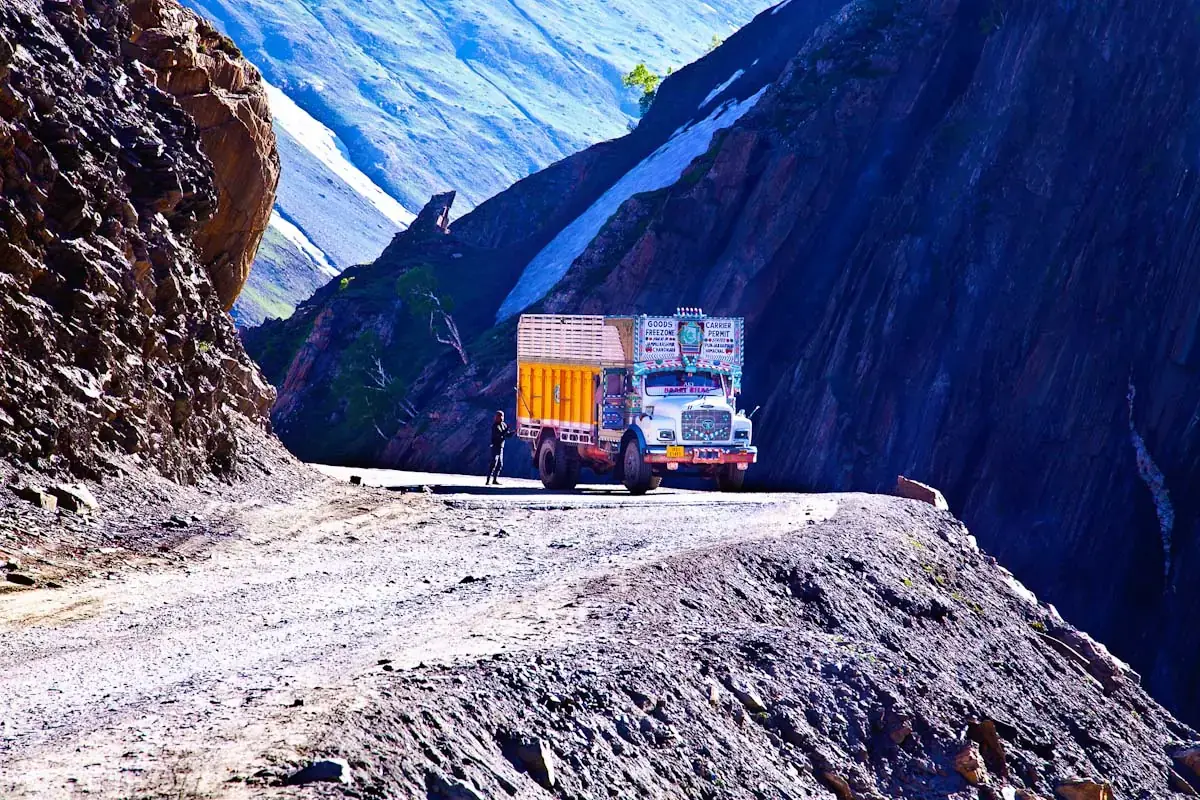
Srinagar to Leh Road Trip: Zojila, Kargil and Lamayuru
A route guide to the Srinagar to Leh road trip: the route via Sonamarg and the Z-Morh tunnel, over Zojila to Drass and Kargil, then via Mulbekh, Namika La, Fotu La and Lamayuru to Alchi and Leh, with approximate distance, the overnight stop in Kargil, stops along the way, acclimatisation benefits, Zojila opening and tunnel progress, the Jammu approach and advisories.
 Off-beat
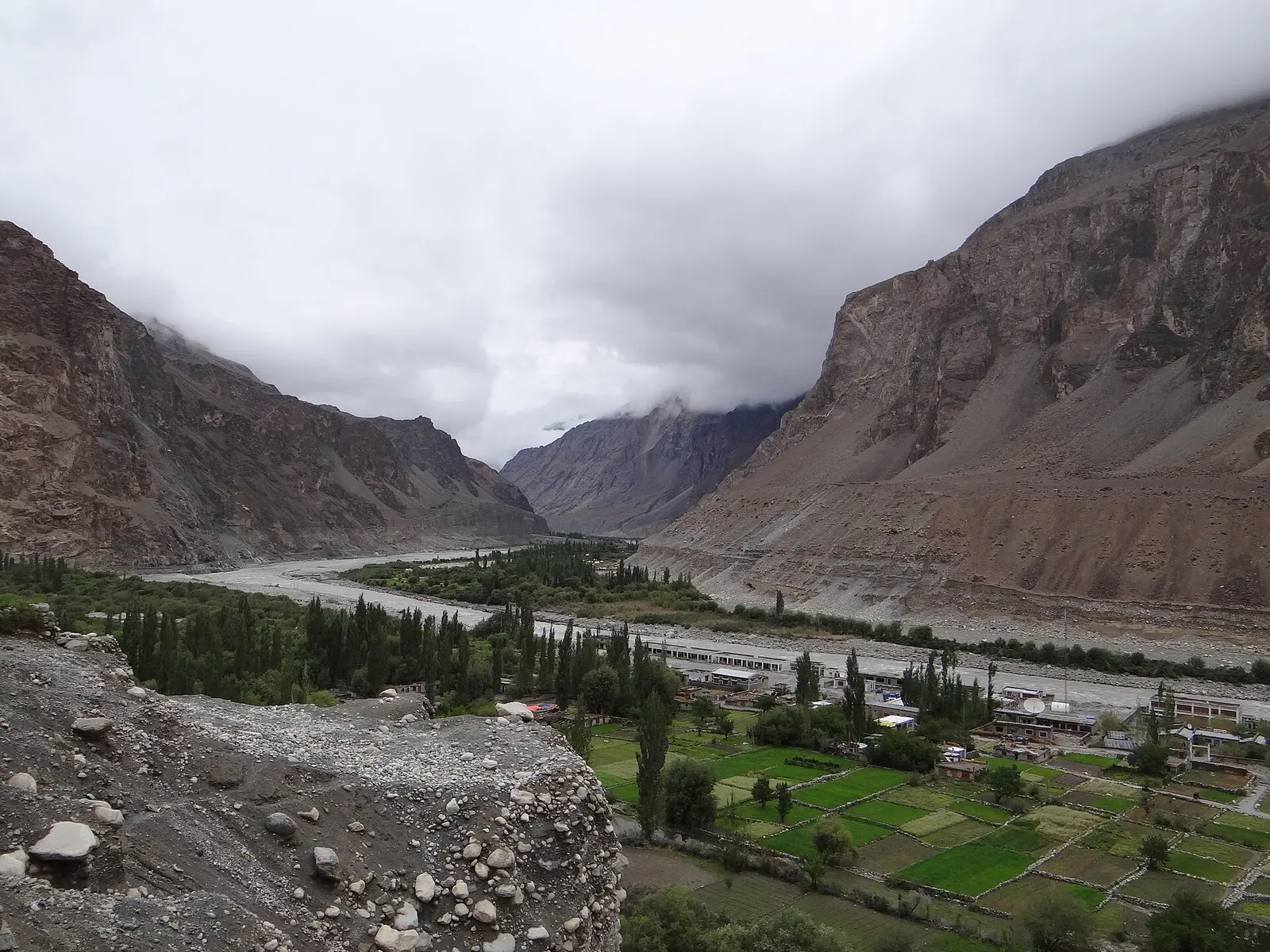
Turtuk Travel Guide: Ladakh's Last Balti Village Before the LOC
A Balti village of stone houses and apricot orchards on the Shyok River, under Pakistani control until 1971 and closed to outsiders until 2010 — Turtuk is unlike anywhere else in Ladakh.
 Heritage
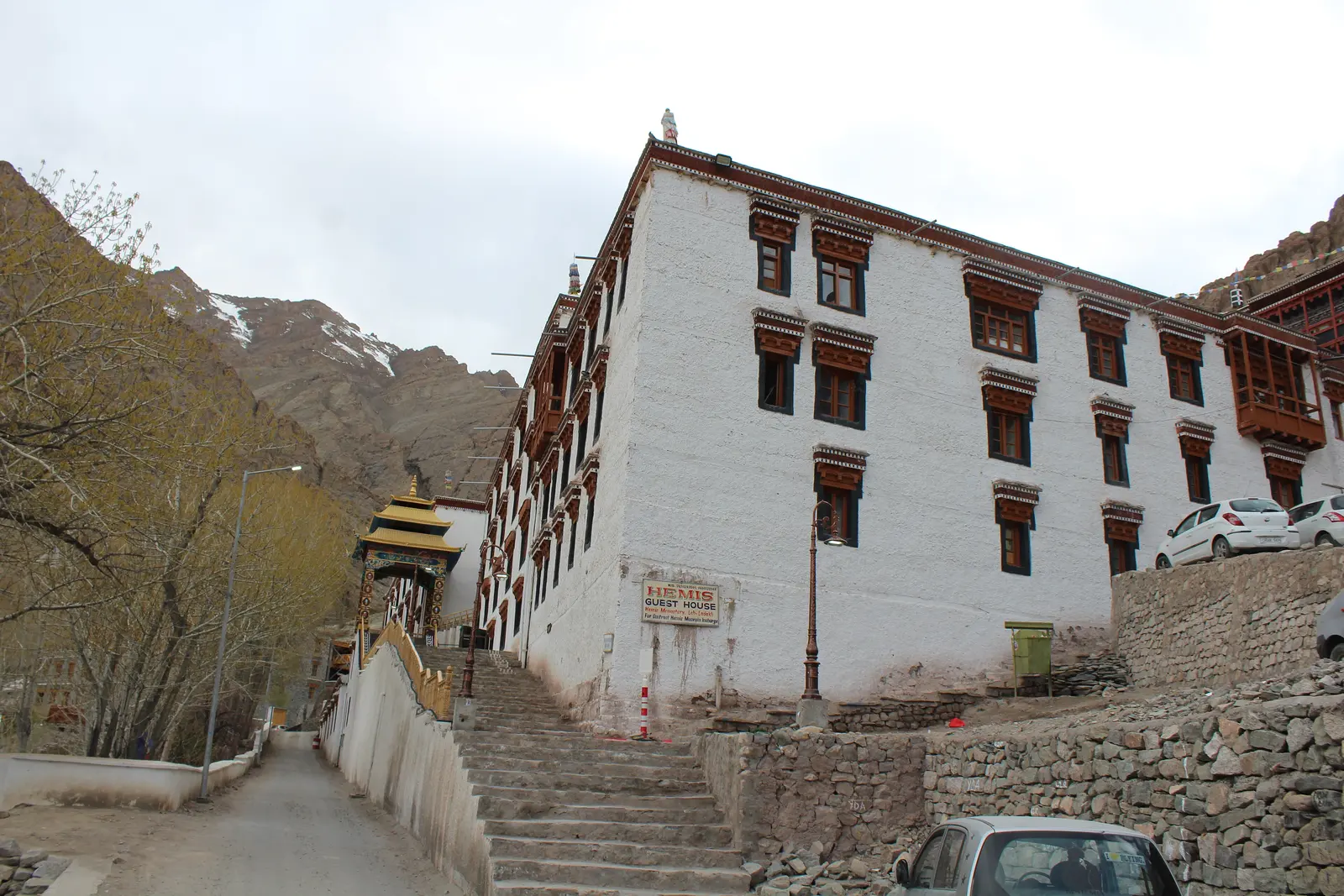
Hemis Travel Guide: Monastery, Festival & Snow Leopard Country
Ladakh's largest and wealthiest monastery, its most spectacular masked-dance festival, and the wild high-altitude kingdom of the snow leopard — all hidden in one secluded valley.