Why Hanle?
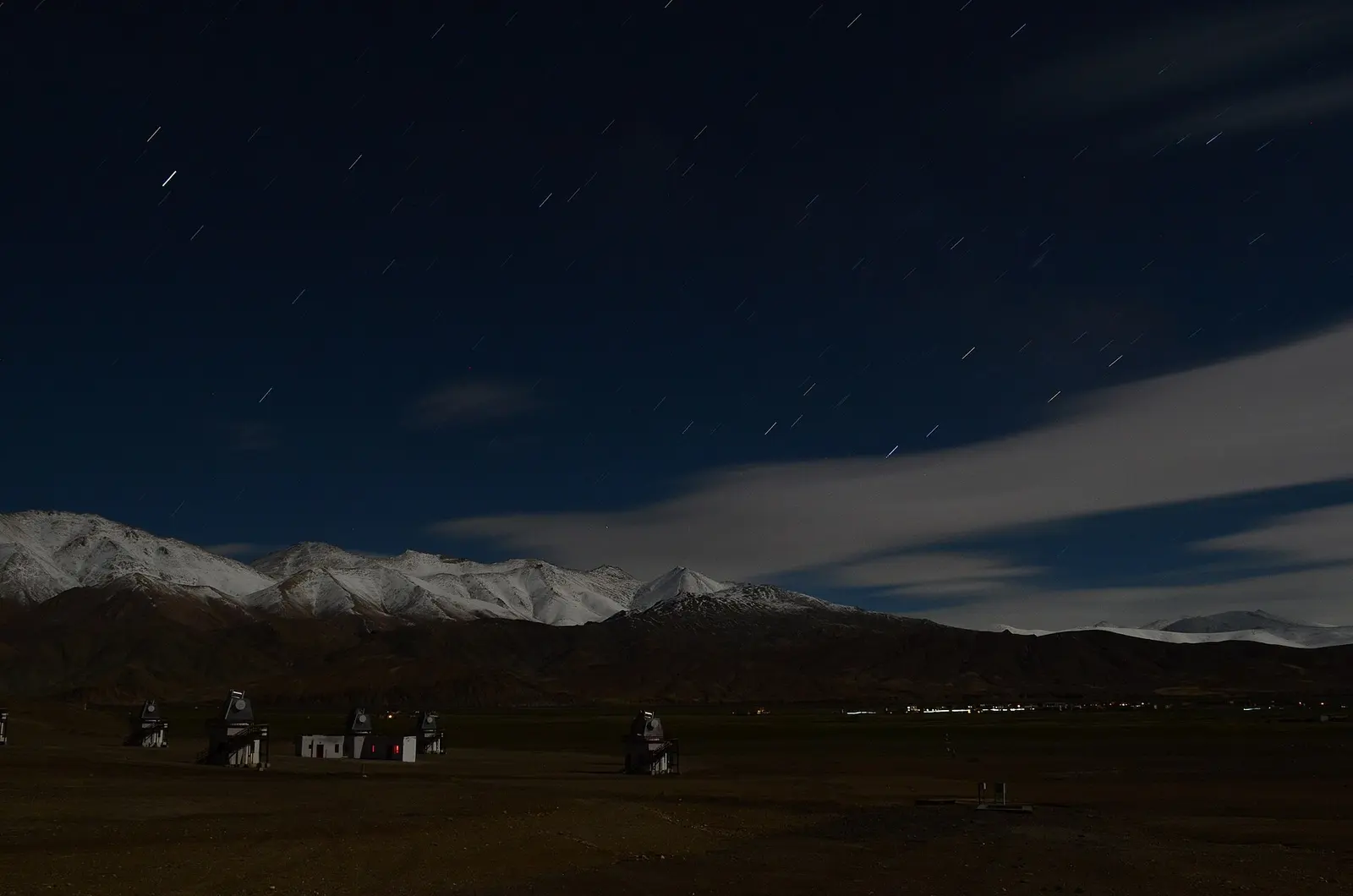
Most of Ladakh sells itself on colour — turquoise lakes, ochre monasteries, prayer flags snapping against a cobalt sky. Hanle sells itself on the absence of it. This is a village of roughly 40 stone houses scattered across the Changthang plateau in eastern Ladakh, so far from any city, any highway glow, any real source of artificial light, that on a clear moonless night the sky above it does something most people have never seen: it fills, edge to edge, with stars, and the Milky Way arcs overhead thick and bright enough to read a shadow by.
In 2022, the Union Territory of Ladakh formally declared the area around Hanle India's first Dark Sky Reserve — a roughly 1,000 sq km zone where lighting is regulated and astro-tourism is actively encouraged rather than merely tolerated. The choice of location was not arbitrary. Hanle sits at nearly 4,500 metres, in one of the driest, least humid, least light-polluted corners of the country, with over 250 clear nights a year. Those are precisely the conditions astronomers look for — which is why, since 2001, the ridge above the village has hosted the Indian Astronomical Observatory, one of the highest sites for optical and gamma-ray telescopes anywhere on Earth.
What makes Hanle worth the long drive isn't only the science, though. It's the totality of the place — a Changpa nomad settlement with a 17th-century monastery on a hillock, yak and pashmina goats grazing on wind-scoured grassland, homestays that now double as informal observatories, and a silence so complete that visitors often describe the drive out as more disorienting than the drive in. There is very little to "do" in Hanle in the conventional sense. There is only, after dark, an enormous amount to see.
✨ Hanle at a Glance
Best Time to Visit Hanle
Two calendars matter in Hanle: the road-access calendar and the sky calendar. The roads are open, weather permitting, from roughly May through late October. Within that window, the darkest and clearest skies fall around the new moon, when moonlight isn't washing out fainter stars and the Milky Way's core is at its most vivid.
Daytime temperatures are as mild as Hanle gets (10–18°C), nights still drop below freezing. Roads fully open, homestays operating at full capacity. Monsoon barely touches this rain-shadow plateau, so skies stay reliably clear.
Crowds from peak summer thin out, the air is at its driest, and clear-sky nights are near-guaranteed. Days are crisp, nights cold but manageable. Widely considered the best month for both scenery and stargazing.
Humidity drops further and skies turn exceptionally transparent — astronomers rate this among the best months for observing. But nights fall well below -10°C and early snow can complicate the return drive. For committed stargazers only.
Roads become unreliable or impassable, temperatures plunge to -25°C to -30°C, and most homestays shut down. Hanle is not a realistic winter destination for casual travellers — this is expedition territory.
Our pick: The week around the September new moon. Combine it with the tail end of the tourist season for empty homestays, warm-enough days, and skies that will genuinely rearrange your sense of scale. Whatever month you choose, check a lunar calendar before booking — a full moon in Hanle can wash out everything but the brightest planets.
How to Reach Hanle
There is no shortcut to Hanle. Every route funnels through Leh, and every route is a long, high-altitude day of driving across the Changthang plateau. Plan for a full day each way, with an overnight stop if you're combining Hanle with Pangong Tso or Tso Moriri.
Via Chumathang & Nyoma (the standard route)
The most direct approach runs Leh → Upshi → Chumathang → Mahe → Nyoma → Hanle, following the Indus River for much of the way before cutting east across open plateau. It's the route almost every taxi and self- drive traveller uses, and the road surface — while remote — is in reasonably good condition for most of its length.
- Distance: ~254 km from Leh
- Duration: 7–8 hours of driving (rest stops included)
- Route markers: Upshi (last real fuel stop for many travellers), Chumathang (natural hot springs), Mahe bridge, Nyoma (military and administrative outpost)
- Road condition: Paved for long stretches; expect gravel and washboard sections near Nyoma and on the final approach to Hanle
Via Pangong Tso & Chushul (the scenic detour)
Travellers already at Pangong Tso can continue south along the lake's remote shore through Chushul and Loma before joining the Nyoma road into Hanle. This route is longer, rougher, and passes closer to the Line of Actual Control, which means it demands extra planning — but it strings together three of eastern Ladakh's most remote landscapes in a single loop.
- Best for: Travellers doing the full Changthang loop — Pangong → Chushul → Hanle → Tso Moriri → Leh
- Vehicle: High-clearance SUV strongly recommended; some stretches are unpaved and river-crossed
- Permits: This corridor sits well inside the restricted zone — confirm your ILP covers Chushul and the connecting road before setting out
Permits & Paperwork for Hanle
Hanle lies deep in Ladakh's protected border belt, close enough to the Line of Actual Control that every visitor needs paperwork sorted before leaving Leh. Checkpoints at Upshi and Nyoma are strictly enforced — arriving without the right documents means being turned back after most of a day's driving.
Inner Line Permit (ILP)
Protected Area Permit (PAP)
Dark Sky Reserve entry
Stargazing & the Dark Sky Reserve
This is the reason to make the drive. Hanle combines three things astronomers chase and rarely get together: altitude (thinner, drier air with less atmosphere to look through), minimal humidity (the Changthang plateau sits in a rain shadow, so haze and cloud are rare), and almost zero artificial light for hundreds of kilometres in every direction. The result, on a clear new-moon night, is a sky that looks less like stargazing and more like standing inside a planetarium with the dome switched off.
The Hanle Dark Sky Reserve (HDSR), notified by the Ladakh administration in 2022, covers roughly 1,000 sq km around the village with a strictly controlled core zone. Within it, outdoor lighting is shielded and dimmed, vehicle headlights are switched to parking lights after dark near the village, and new construction is required to follow dark-sky-friendly lighting norms. It's a rare case of a remote community treating its night sky as an economic and cultural asset worth actively protecting, rather than something to simply not think about.
On the ground, this has quietly built a small astro-tourism economy. Several homestays now have their own Dobsonian telescopes and viewing decks, and can walk guests through locating the rings of Saturn, the moons of Jupiter, star clusters, and — on the clearest nights — the dust lanes within the Milky Way's own arm. A handful of dedicated astro-camps and public observatories run longer sessions with larger telescopes, astrophotography guidance, and constellation walks aimed at both first- timers and serious amateur astronomers.
🔴 Red-Light Etiquette — Non-Negotiable
Human eyes take 20–30 minutes to fully adapt to darkness — and a single burst of white light resets that adaptation instantly, for you and everyone around you.
- Use a red-filtered torch (or red cellophane over a regular one) for any nighttime movement
- Never use your phone flashlight or camera flash near a telescope setup
- Switch your phone to night mode / lowest brightness before stepping outside
- Vehicles should use parking lights, not headlights, once inside the village after dark
Practically: dress for far colder than you expect. Even in July, standing still at 4,500 metres for an hour after dark drops the felt temperature dramatically — down jacket, thermal layers, gloves, and a warm hat are essential kit for a stargazing session, not optional extras. Bring a flask of hot water or tea, and if you own binoculars or a camera capable of long exposures, pack them; Hanle rewards anyone who comes prepared to linger outside.
Indian Astronomical Observatory
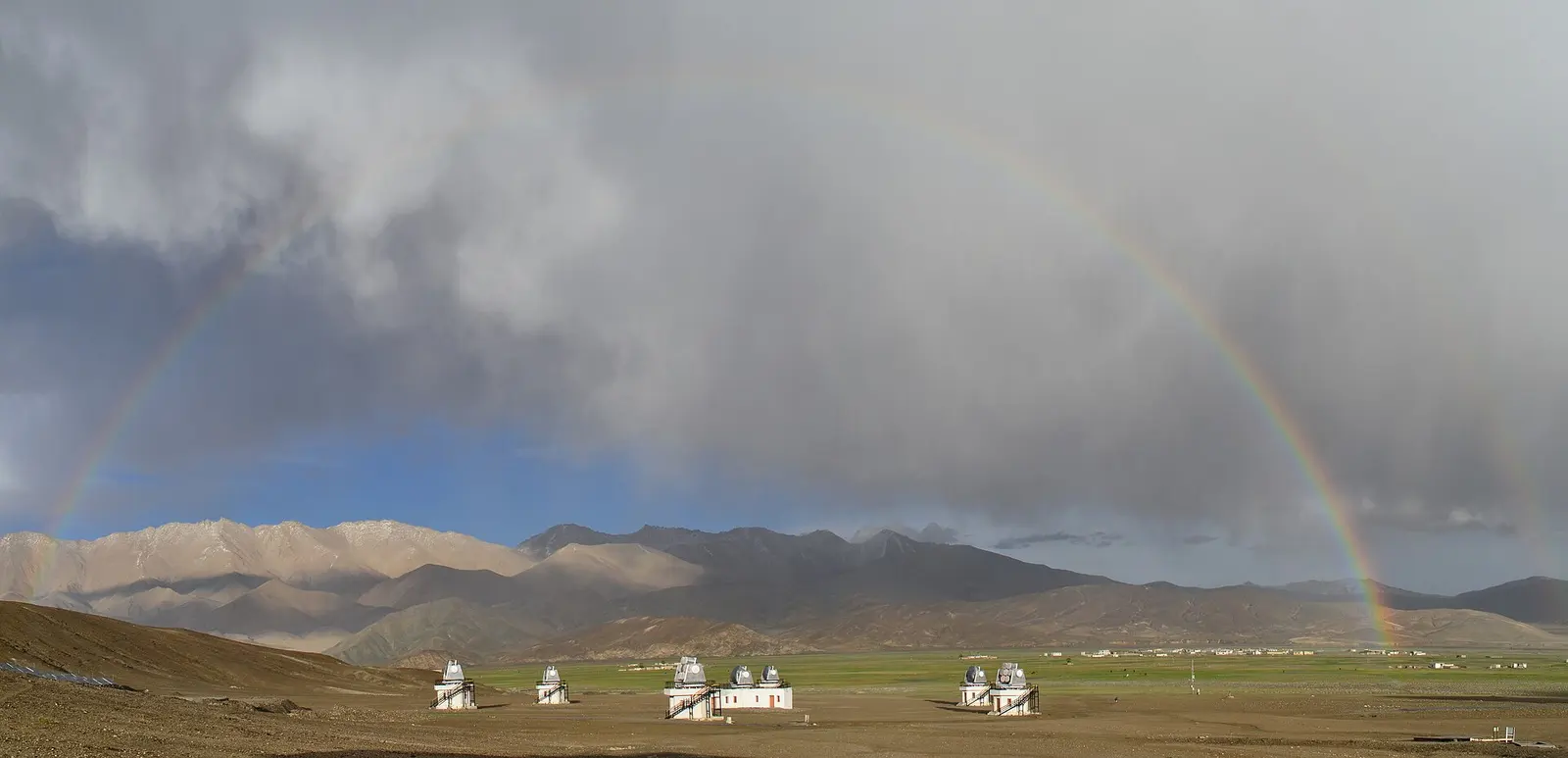
On the ridge of Mt Saraswati (locally Digpa-ratsa Ri), roughly 4,500 metres up and a short drive above the village, sits the Indian Astronomical Observatory (IAO), operated by the Indian Institute of Astrophysics (IIA) since 2001. It is one of the highest sites in the world hosting optical, infrared, and gamma-ray telescopes — a distinction that put Hanle on the map for astronomers decades before "dark sky tourism" became a phrase anyone used.
The observatory's flagship instrument is the 2-metre Himalayan Chandra Telescope (HCT), remotely operated via satellite link from IIA's control room in Hosakote, near Bengaluru — a setup that lets scientists observe from sea level while the telescope itself sits in the thin, dry air where it performs best. The site also hosts the Major Atmospheric Cherenkov Experiment (MACE), a large gamma-ray telescope studying high-energy astrophysical events, along with other instruments run in collaboration with international partners.
Even without stepping inside a dome, the drive up toward the ridge is worth it for the views alone — the telescope structures catching the last light against an empty, ochre-and-grey plateau is one of the more surreal sights in Ladakh, science and wilderness sharing the same frame.
Hanle Monastery
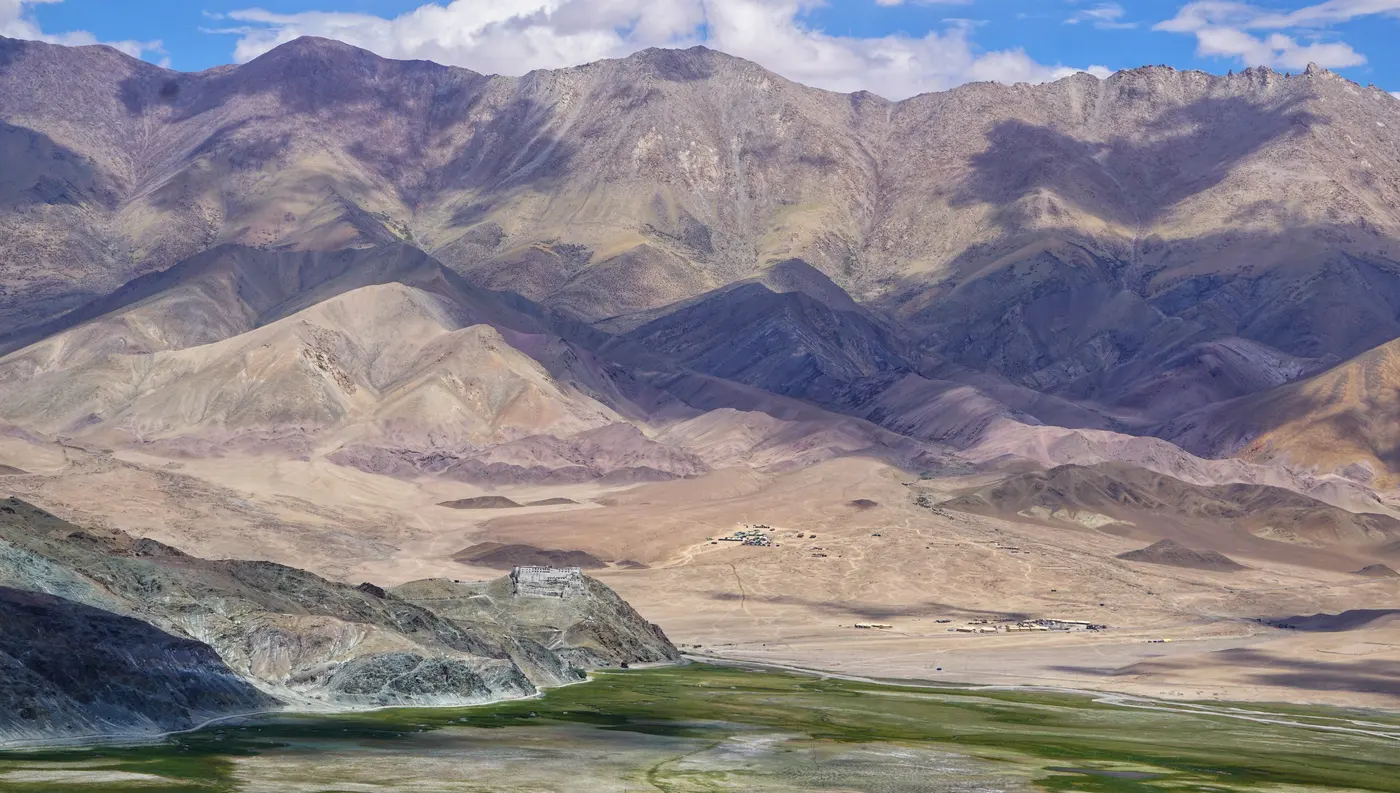
Above the village, on a rocky outcrop that has clearly been chosen for its view as much as its defensibility, stands Hanle Monastery (Hanle Gompa), built in the late 17th century and belonging to the Drukpa Kagyu lineage — the same order responsible for Hemis, Ladakh's largest monastery. A handful of monks still maintain it, and the walk up is short but steep enough to remind you how thin the air really is at this altitude.
The interior holds older Buddhist statuary and murals, faded but intact, and the courtyard offers a sweeping view across the Hanle valley — stone houses, grazing animals, the thin ribbon of the Hanle river, and the observatory domes catching light on the ridge beyond. It's a quiet, unhurried stop, usually visited in the late afternoon before the evening's stargazing begins.
Pangong & Tso Moriri Combo
Very few travellers make the long drive to Hanle on its own — most fold it into a loop through eastern Ladakh's other great high-altitude landscapes. Tso Moriri, roughly a half-day's drive away via Chumathang and the Rupshu plateau, is a Ramsar-protected lake at 4,522 metres known for its stillness and its birdlife, including bar-headed geese and the rare black-necked crane. Pangong Tso, reachable via the rougher Chushul route described above, adds Ladakh's most photographed lake to the same circuit.
A well-paced version of this loop runs: Leh → Pangong Tso (overnight) → Chushul → Hanle (overnight, stargazing) → Tso Moriri via Puga/Chumathang (overnight) → Leh. Done this way, Hanle sits at the quiet, dark heart of a trip that also delivers Ladakh's two most famous lakes — without the crowds that gather at either one closer to Leh.
Where to Stay in Hanle
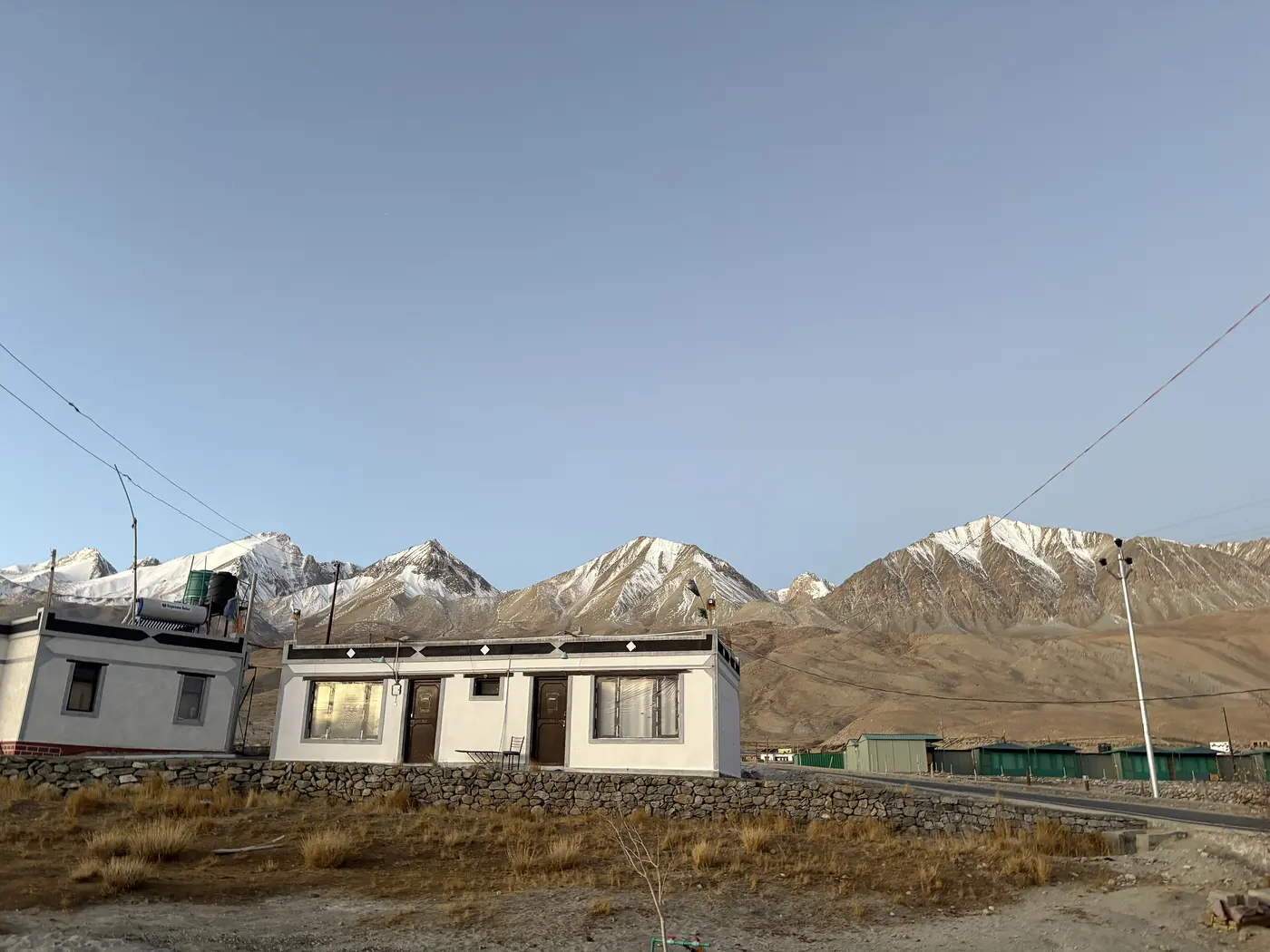
There are no hotels in Hanle — accommodation is almost entirely homestays run by Changpa and Ladakhi families, many of which have adapted specifically for stargazers over the last few years, adding heated rooms, telescopes, and dedicated night-viewing decks. Book ahead; capacity is genuinely limited.
- → Family-run village homestays
- → Simple rooms, shared bathrooms common
- → Home-cooked meals included
- → Basic telescope access on request
- → Dedicated stargazing decks or terraces
- → Guided telescope sessions included
- → Better insulation, attached bathrooms
- → Some offer astrophotography guidance
Expect basic but warm rooms, thick quilts, and limited or no electricity after certain hours (partly a practical constraint, partly deliberate — it keeps the village dark). Hot water is usually bucket-based. Charge devices and torches fully before your stargazing session; power isn't guaranteed to last the night.
What to Eat in Hanle
There are no restaurants in Hanle — food comes from your homestay kitchen, cooked with what's locally available and whatever staples the family has stocked up from Leh. It's simple, warming food, built for altitude and cold rather than variety.
- Thukpa & Skyu: Hearty noodle and dough-based soups, the backbone of most homestay dinners across the Changthang plateau.
- Butter tea (Gur Gur Chai): Salted yak-butter tea, churned fresh — a Changpa staple and genuinely useful for warmth at this altitude.
- Yak cheese (Churpi): Hard, dried cheese made by local nomadic herders — an acquired taste, but a real taste of Changthang's pastoral economy.
- Rice, dal, and vegetables: Most homestays serve a simple rice-dal-sabzi meal for dinner, supplemented with whatever vegetables made it up from Leh that week.
- Carry your own snacks: Bring energy bars, dry fruit, and instant coffee/tea sachets — the nearest shop of any real size is hours away, and you'll want extra calories for the cold nights out under the telescope.
Budget Breakdown for Hanle
| Expense | Budget | Mid-Range | Comfort |
|---|---|---|---|
| Homestay/night (with meals) | ₹1,200 | ₹2,800 | ₹5,000 |
| Guided stargazing session | Included | ₹500–₹1,000 | ₹1,500+ |
| Permits (ILP, per person) | ₹100 | ₹100 | ₹100 |
| Vehicle hire (Leh–Hanle return) | ₹6,000 | ₹9,000 | ₹14,000 |
| Daily total (excl. vehicle) | ₹1,300 | ₹3,400 | ₹6,600 |
* Vehicle hire is typically shared across 3–4 travellers and is usually the largest single cost — pooling a group makes Hanle noticeably more affordable.
Essential Travel Tips for Hanle
- Acclimatise before you arrive: Hanle sits higher than Leh itself. Spend at least 2 days acclimatising in Leh before attempting the drive out — there is no medical facility of any size in Hanle.
- Nights are brutally cold, even in summer: Pack a proper down jacket, thermal base layers, gloves, and a warm hat regardless of the month. Temperatures can drop below freezing after dark even in July.
- Check the moon phase before booking: A full moon washes out the fainter stars and the Milky Way almost entirely. Time your trip around the new moon for the darkest, most dramatic skies.
- No fuel, no ATM, minimal connectivity: Fill your tank in Leh or Upshi, carry sufficient cash for the whole trip, and expect little to no mobile signal once you're past Nyoma.
- Respect the dark-sky rules: Use a red-light torch after dark, avoid camera flashes and phone screens near telescope setups, and keep vehicle headlights off inside the village at night.
- Book homestays in advance: Rooms are genuinely limited, especially around new-moon weekends in peak season. Confirm with your host a few days ahead rather than arriving on spec.
✅ Do
- →Time your visit around the new moon
- →Acclimatise in Leh for 2 full days first
- →Carry a red-filtered torch for nighttime use
- →Book your homestay's stargazing session in advance
- →Fill your fuel tank fully before leaving Leh/Upshi
- →Carry enough cash for the entire trip
- →Pack down jackets and thermal layers, even in July
- →Build a buffer day into any Pangong–Hanle–Tso Moriri loop
❌ Don't
- →Use phone flashlights or camera flash near telescopes
- →Drive to Hanle straight from sea level without acclimatising
- →Expect fuel, ATMs, or reliable signal beyond Nyoma
- →Assume the IAO observatory itself is open for walk-in visits
- →Arrive without confirming your ILP covers the full route
- →Underestimate nighttime cold — even in peak summer
- →Skip booking your homestay ahead of a new-moon weekend
- →Rush the Pangong–Chushul route without checking current road status
Frequently Asked Questions
How many days do I need for Hanle?
Plan for at least 2 days acclimatising in Leh, then a full day of driving each way to Hanle (7-8 hours via the Nyoma route), plus at least one overnight in the village for a stargazing session. Most travellers fold Hanle into a longer loop with Pangong Tso and Tso Moriri, which stretches the trip to around a week from Leh.
What is the best time to visit Hanle?
The roads are open from roughly May through late October. September is our pick — crowds thin out, the air is at its driest, and clear-sky nights are near-guaranteed, with days crisp and nights cold but manageable. Whatever month you choose, time your visit around the new moon, since a full moon washes out the fainter stars and the Milky Way.
How do I reach Hanle from Leh?
The standard route runs Leh to Upshi to Chumathang to Mahe to Nyoma to Hanle, roughly 254 km and 7-8 hours of driving. Fuel up in Leh or Upshi, since there is no reliable fuel station beyond Nyoma and none in Hanle itself. Travellers coming from Pangong Tso can also continue south via Chushul, though that route is longer, rougher, and requires confirming your permit covers it.
Is Hanle safe for solo travellers?
Hanle is remote but not unsafe — the main risks are altitude (roughly 4,500 metres, higher than Leh itself), extreme cold after dark, and the lack of fuel, ATMs, or mobile signal beyond Nyoma. Acclimatise in Leh for at least 2 days first, carry sufficient cash, and confirm your Inner Line Permit before setting out; solo travellers regularly make the trip via homestays and shared taxis.
What is the budget for a trip to Hanle?
A standard homestay with meals runs roughly ₹1,200-2,500 a night, while an astro-stay homestay with guided telescope sessions runs ₹2,500-5,000. Daily costs excluding vehicle hire range from about ₹1,300 on a budget to ₹6,600 for comfort. Vehicle hire for the Leh-Hanle return (₹6,000-14,000) is usually the largest single cost, and is far more affordable split across a group of 3-4.
Do I need a permit to visit Hanle?
Yes. Indian nationals need an Inner Line Permit (ILP), available online at lahdclehpermit.in or in person at the Leh DC Office, typically approved within 24-48 hours. Foreign nationals need a Protected Area Permit (PAP) arranged through a registered Leh tour operator and cannot travel to Hanle independently. Checkpoints at Upshi and Nyoma are strictly enforced.
What makes Hanle's Dark Sky Reserve special?
Hanle sits at nearly 4,500 metres in one of India's driest, least light-polluted corners, with over 250 clear nights a year. In 2022 it became India's first Dark Sky Reserve, a roughly 1,000 sq km zone where outdoor lighting is shielded and dimmed and vehicles use parking lights after dark, protecting the conditions that also make it home to the Indian Astronomical Observatory.
Published by the Kudozz Club editorial team · Last updated · How we research our guides
Want us to plan this trip for you?
Tell Kudozz Club where you want to go and what kind of trip you’re looking for. We’ll build a Hanle and Ladakh itinerary around your dates and budget.
Continue Exploring
View all guides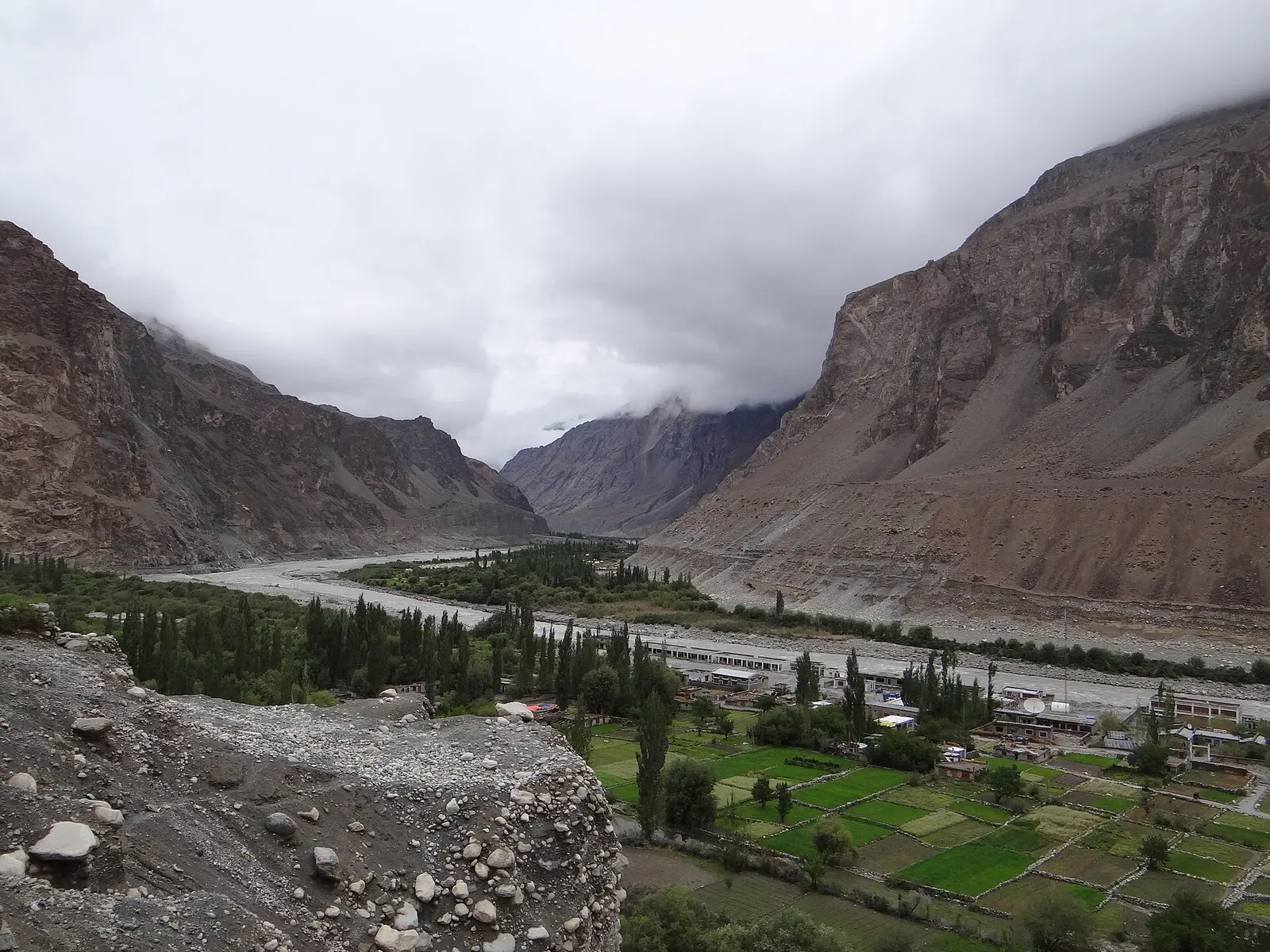 Off-beat
Turtuk Travel Guide: Ladakh's Last Balti Village Before the LOC
A Balti village of stone houses and apricot orchards on the Shyok River, under Pakistani control until 1971 and closed to outsiders until 2010 — Turtuk is unlike anywhere else in Ladakh.
 Off-beat
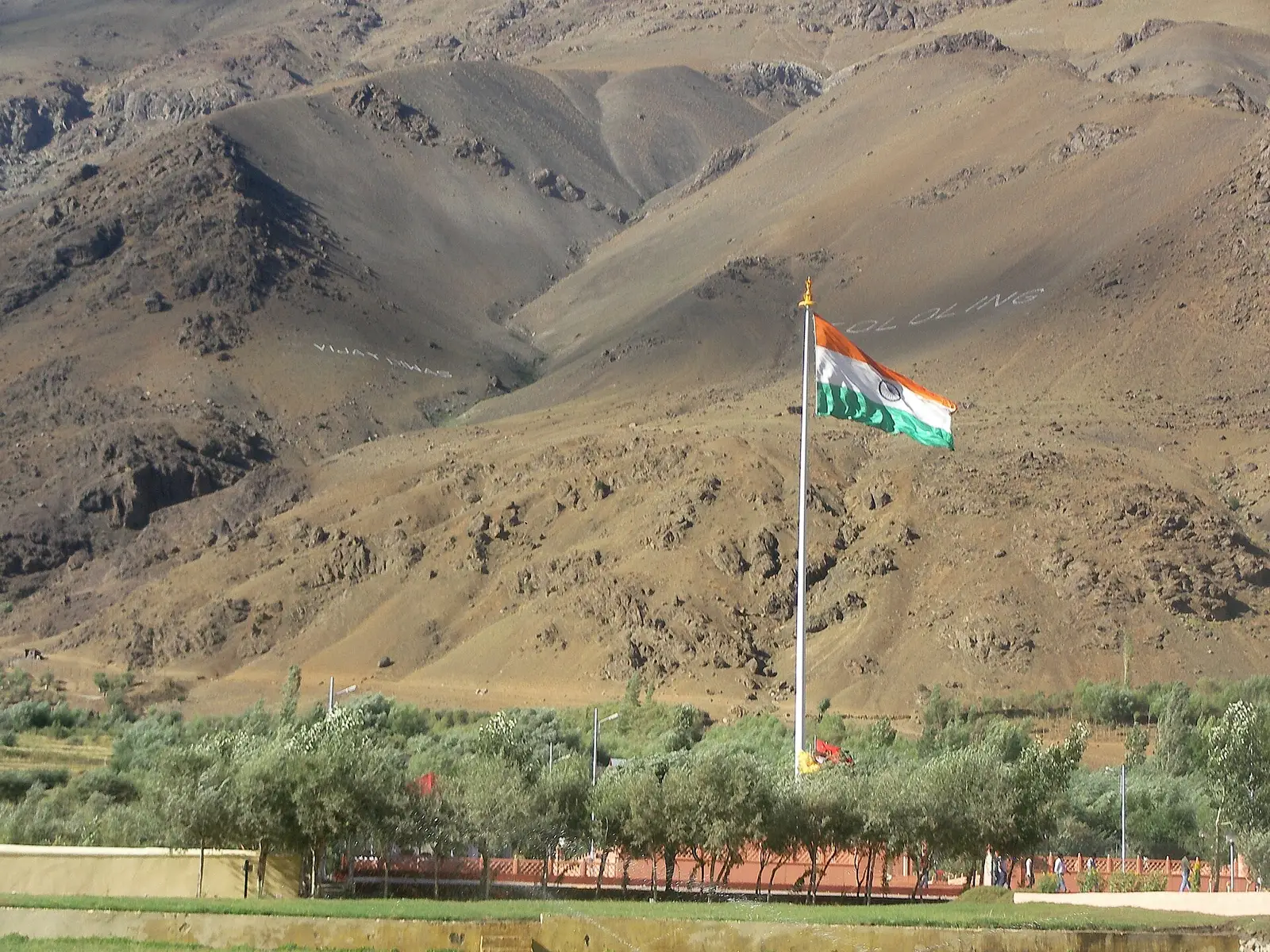
Drass Travel Guide: Kargil War Memorial & the Gateway to Ladakh
The second-coldest inhabited place on Earth, and the town that stands quietly at the foot of the Kargil War Memorial — a stopover on the Srinagar-Leh highway you won't forget.
 Off-beat
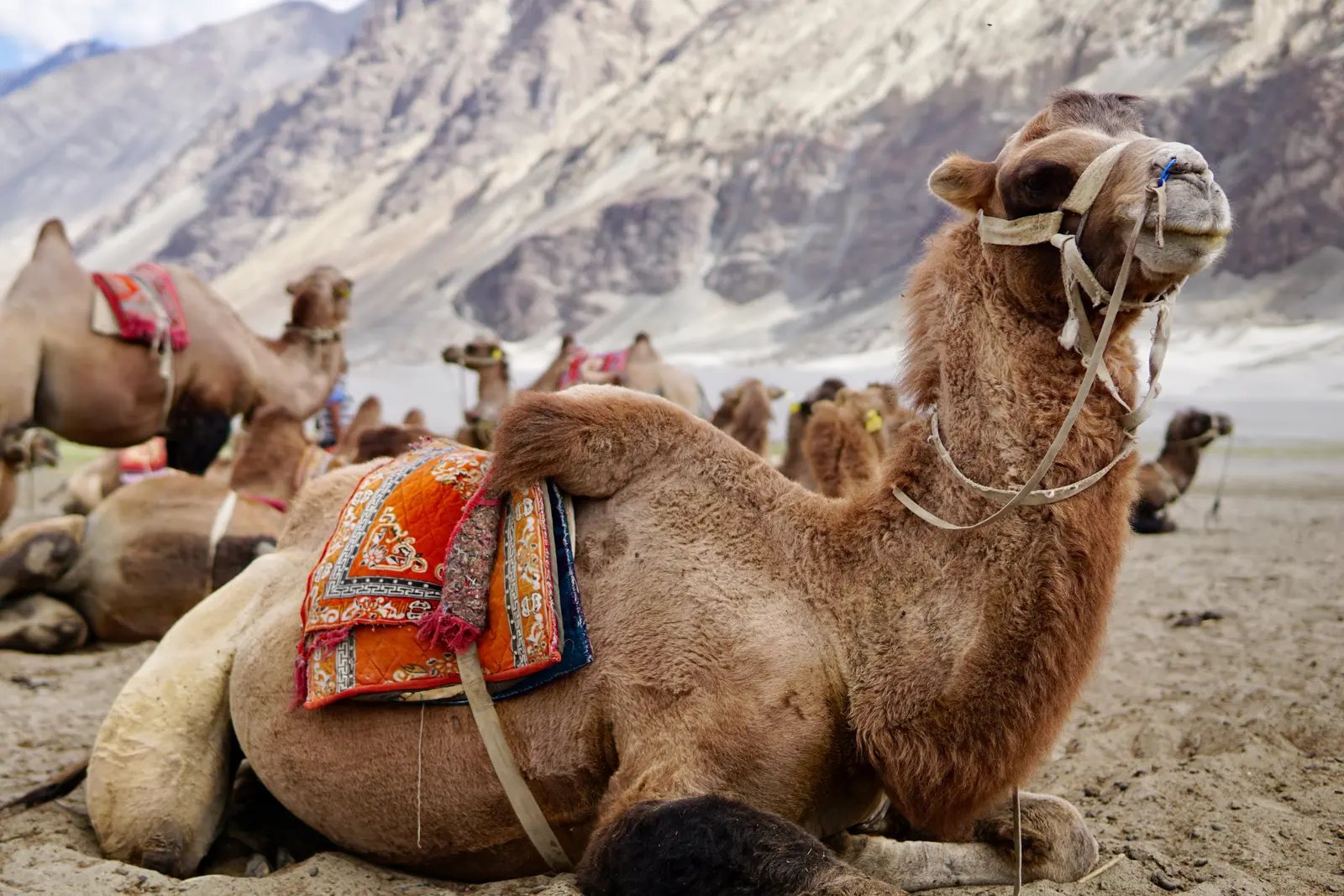
Nubra Valley Travel Guide: Sand Dunes, Camels & Cold Desert
Cross the world's second-highest motorable pass into a valley where sand dunes meet snow peaks, Bactrian camels roam ancient Silk Route trails, and a 32-metre Buddha watches over the Shyok River.
 Off-beat
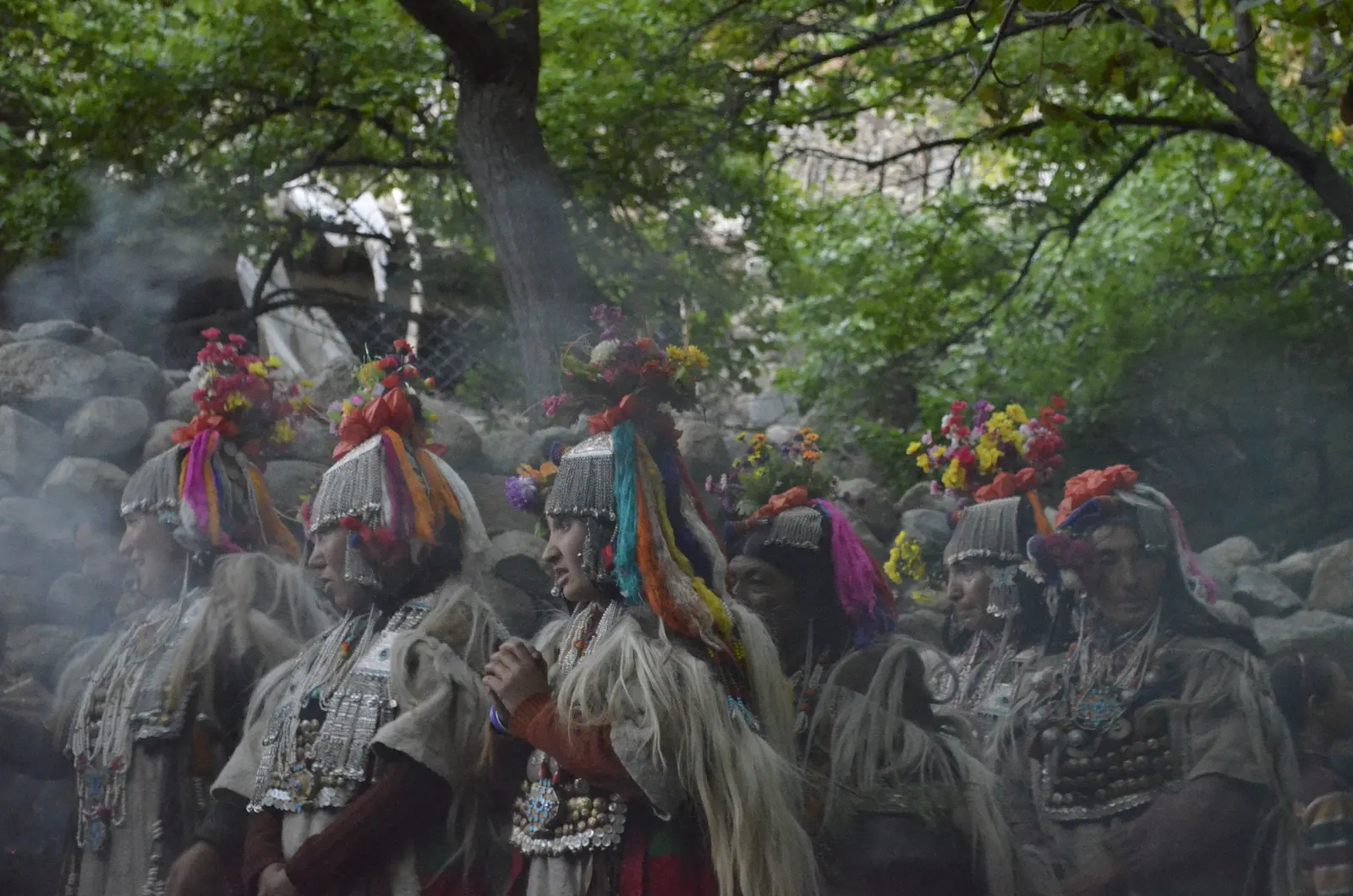
Dha-Hanu Travel Guide: Ladakh's Aryan Valley & the Brokpa People
Along a quiet bend of the Indus, the Brokpa villages of Dha, Hanu, Garkone and Darchik hold on to a language, dress, and way of life found nowhere else in India — a guide to visiting them carefully, and on their own terms.