Why Visit Nubra Valley?
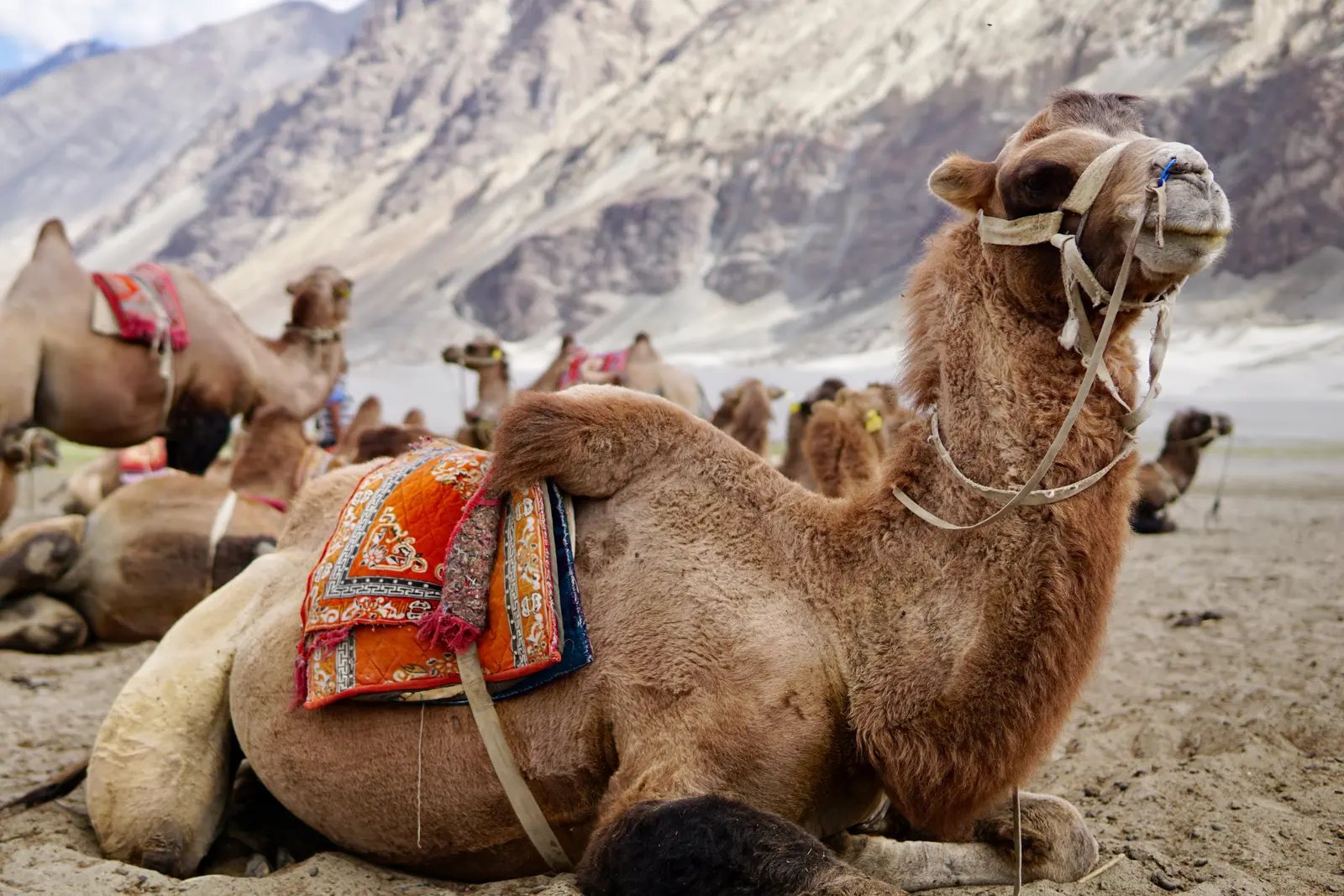
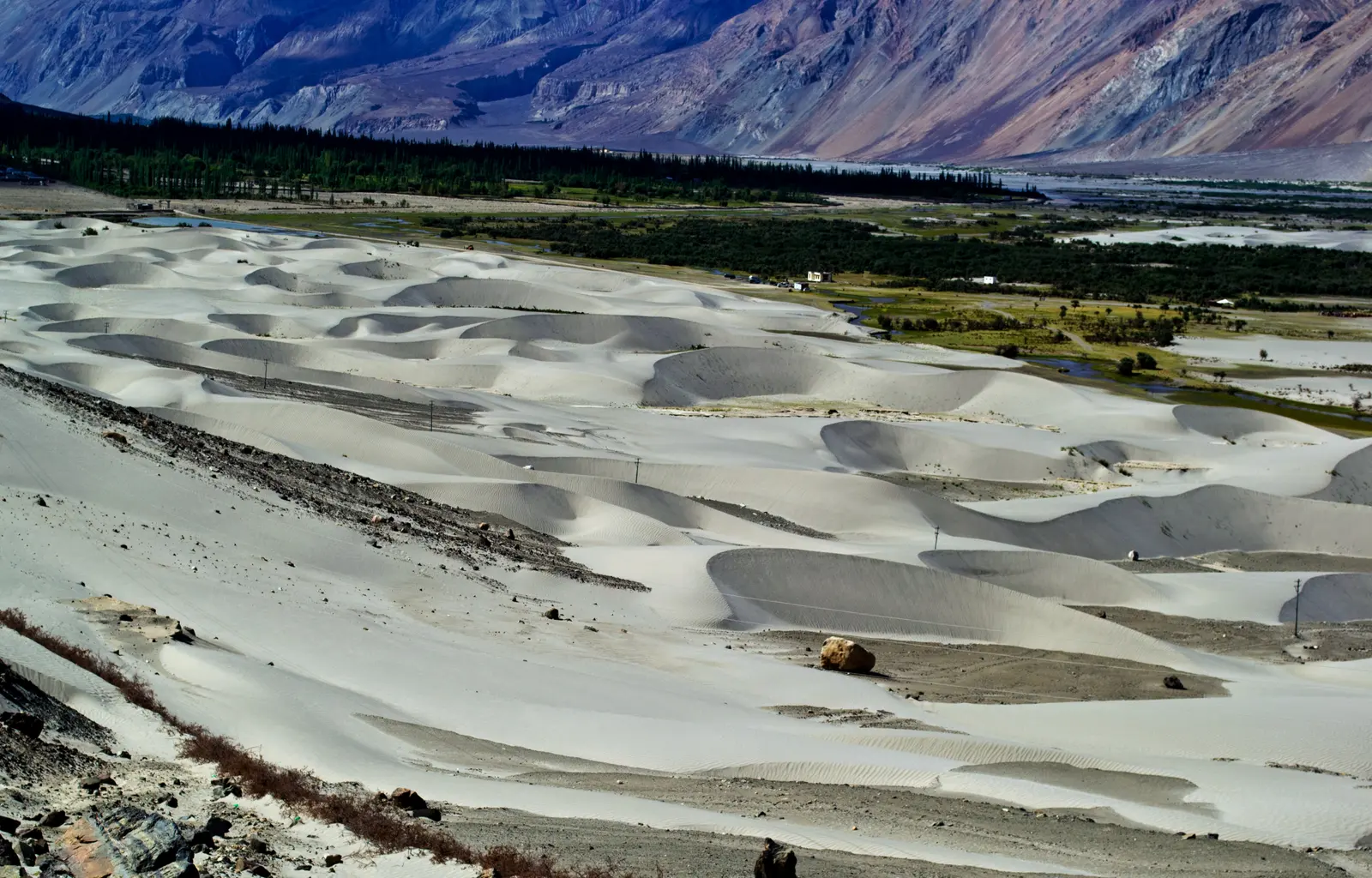
Cross Khardung La out of Leh and the landscape performs a quiet trick on you. The barren brown mountains don't change, but the valley floor does — instead of the tight, river-carved gorge you'd expect at nearly 10,000 feet, it opens into a wide, pale expanse of sand dunes, with double-humped Bactrian camels ambling across them and snow peaks rising directly behind. This is Nubra Valley — once a resting point on the Silk Route caravan trail between Central Asia and the Indian plains, now one of Ladakh's most rewarding detours.
Nubra takes its name from "Ldumra," meaning valley of flowers, though the cold-desert reality on the ground is all sand, scrub willow, and apricot orchards clinging to the banks of the Shyok and Nubra rivers. It's a valley of contrasts: a 32-metre golden Buddha gazing serenely towards Pakistan, camels that once carried silk and salt now carrying tourists across the dunes, and monasteries tucked into cliffs that have watched caravans come and go for six centuries. Few places in India feel this remote — or this quietly cinematic.
🐫 Nubra Valley at a Glance
Looking for activities and experiences? See our guide to the best things to do in Nubra Valley.
Love the outdoors? See our guide to valleys in India.
Planning something active? Read our guide to desert adventures in India.
Best Time to Visit Nubra Valley
Nubra is only accessible for a narrow window each year — Khardung La closes with heavy snow, and winter temperatures in the valley plunge well below freezing. Timing your visit right matters more here than almost anywhere else in Ladakh.
Khardung La typically reopens by mid-to-late May once BRO clears the snow. Days are pleasant (15–20°C), nights still cold. Fewer tourists than peak summer, and the dunes are at their most photogenic with snow still visible on surrounding peaks.
The most popular window — roads are fully open, weather is stable, and daytime temperatures reach a comfortable 20–25°C in the valley. Book Hunder and Diskit camps in advance; this is also when the rest of Ladakh is busiest.
Apricot and poplar trees turn gold, crowds thin out noticeably, and the light across the dunes in late afternoon is spectacular. Nights get noticeably colder. A favourite among photographers and repeat visitors.
Khardung La closes to civilian traffic once heavy snow sets in, usually by late October, and reopens only in May. Some tour operators run winter access via alternate routes for the exceptionally determined, but this isn't a realistic plan for most travellers.
Our pick: Early-to-mid September. The apricot orchards in Sumur and Diskit turn gold, Khardung La is free of the summer traffic jams, and the dunes at Hunder catch a beautiful low, warm light in the late afternoon.
How to Reach Nubra Valley
There's no airport or railway anywhere near Nubra — every route runs through Leh, and every route involves crossing a high pass. Give yourself a full acclimatisation day in Leh before attempting either.
- Via Khardung La (the standard route): The most direct and most-used route. From Leh, drive north on the South Pullu road, cross Khardung La at 5,359 m, and descend to Khardung village and onward to Diskit — roughly 120 km and 4–5 hours including a photo stop at the top. Shared taxis, private cabs, and self-driven bikes all use this road.
- Via the Shyok/Wari La route (the scenic alternative): A longer route that skips Khardung La entirely, running instead via Karu, Chang La's foothills, and Wari La before dropping into the Shyok valley and approaching Nubra from the Sumur/Khalsar side. It's rougher, less trafficked, and takes closer to 6–7 hours, but it's a genuinely spectacular drive and a good way to enter via one route and exit via the other if you're continuing on to Pangong Tso afterwards.
- By shared taxi: Shared jeeps to Diskit and Hunder leave from the Leh taxi stand most mornings in season (₹500–₹800 per seat). Slower and less flexible, but the cheapest option if you're not renting a bike or private cab.
- By private cab: A private taxi from Leh for a 2-day/1-night Nubra trip typically costs ₹8,000–₹12,000, inclusive of the driver's stay. This is the most comfortable option and lets you stop freely at Khardung La, South Pullu checkpoint, and the dune viewpoints.
- By motorbike: Royal Enfields are the classic choice, rented in Leh (₹1,200–₹2,000/day). The climb to Khardung La is a rite of passage for Ladakh road-trippers — just fuel up fully in Leh, as the next reliable pump is at Diskit.
Permits & Paperwork
Nubra Valley sits close to the Line of Control and the Siachen Glacier, so unlike central Leh, it falls inside a protected border zone. You cannot cross the South Pullu checkpoint beyond Khardung La without the right paperwork.
| Permit | Needed For | Where to Get It |
|---|---|---|
| Inner Line Permit (ILP) | All Indian nationals entering Nubra, Khardung La, Diskit, Hunder & Sumur | Online at lahdclehpermit.in or in person at the DC Office, Leh |
| Protected Area Permit (PAP) | Foreign nationals, and anyone continuing to Turtuk / Panamik beyond the checkpoint | Through a registered Leh travel agent (solo foreign travel into PAP zones isn't permitted) |
| Environmental fee | Included in most ILPs; funds local conservation | Collected at the South Pullu / North Pullu checkpoint |
Top Places to Visit in Nubra Valley
Nubra rewards a slow pace — the villages are small and the distances between them short, so it's easy to cover the highlights over two unhurried days.
Diskit Monastery & the Maitreya Buddha
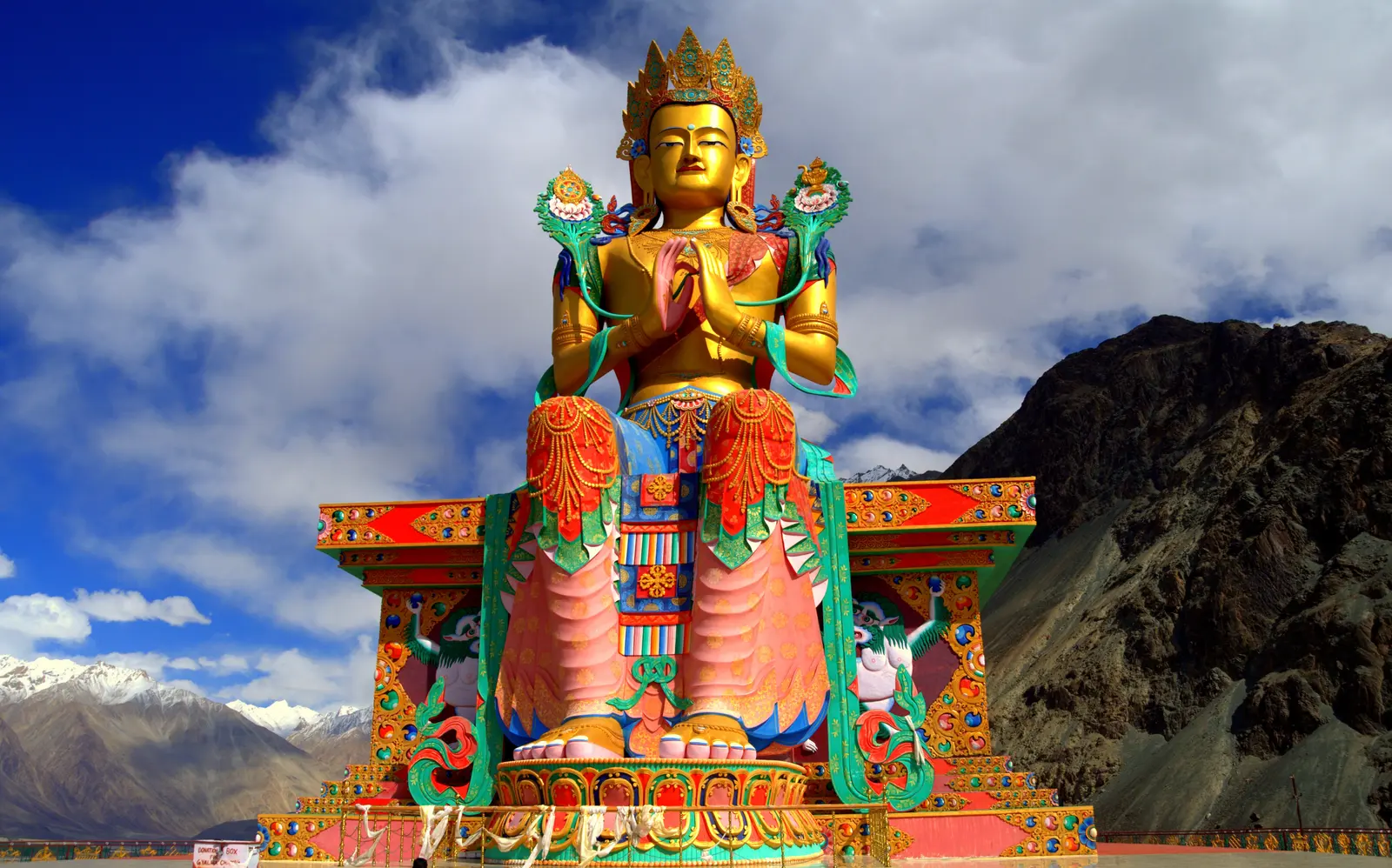
Perched on a cliff above Diskit village, the oldest and largest monastery in Nubra dates to the early 14th century and belongs to the Gelugpa (Yellow Hat) sect. Climb the steep stairway past prayer wheels to reach the prayer hall, home to a centuries-old collection of thangkas, weapons once used against Mongol raiders, and a small but atmospheric museum.
Below the monastery, a 32-metre statue of the Maitreya Buddha (the Future Buddha), completed in 2010, sits facing down the Shyok valley towards Pakistan — deliberately positioned, monks say, as a gesture of peace watching over the contested border. At golden hour, with the statue catching the last light and the valley falling into shadow below, it's one of the most striking sights in all of Ladakh.
Hunder Sand Dunes & Bactrian Camels
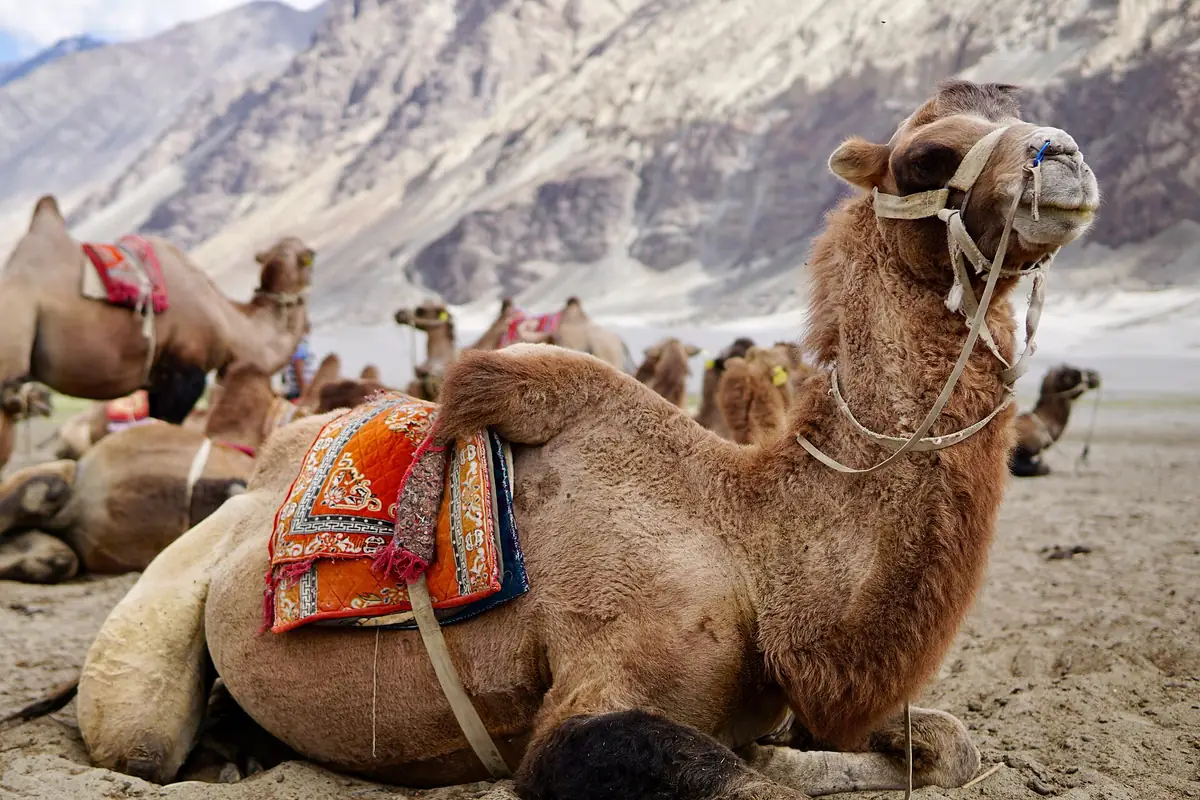
A short drive past Diskit, Hunder is the postcard image of Nubra Valley — pale, cold-desert sand dunes stretching along the Shyok riverbed, framed by bare brown mountains and, further back, snow peaks. The dunes host Ladakh's famous double-humped Bactrian camels, descendants of animals used on Silk Route caravans that once passed through Nubra en route to Yarkand and Kashgar in Central Asia.
A 20–25 minute camel ride across the dunes costs roughly ₹500–₹700 per person and is well worth doing once — it's genuinely surreal to be riding a camel with snow-capped Himalayan peaks as the backdrop. Sunset is the best time to visit: the dunes turn a soft gold, the day-trip crowds have usually left, and the light on the surrounding ridgelines is spectacular.
- Best time: Late afternoon to sunset, when the light is softest and crowds are thinnest
- Camel ride: ₹500–₹700 for ~20–25 minutes
- Nearby: Hunder village has apricot orchards, a small monastery, and Nubra's best cluster of camps and homestays
Sumur Village & Panamik Hot Springs
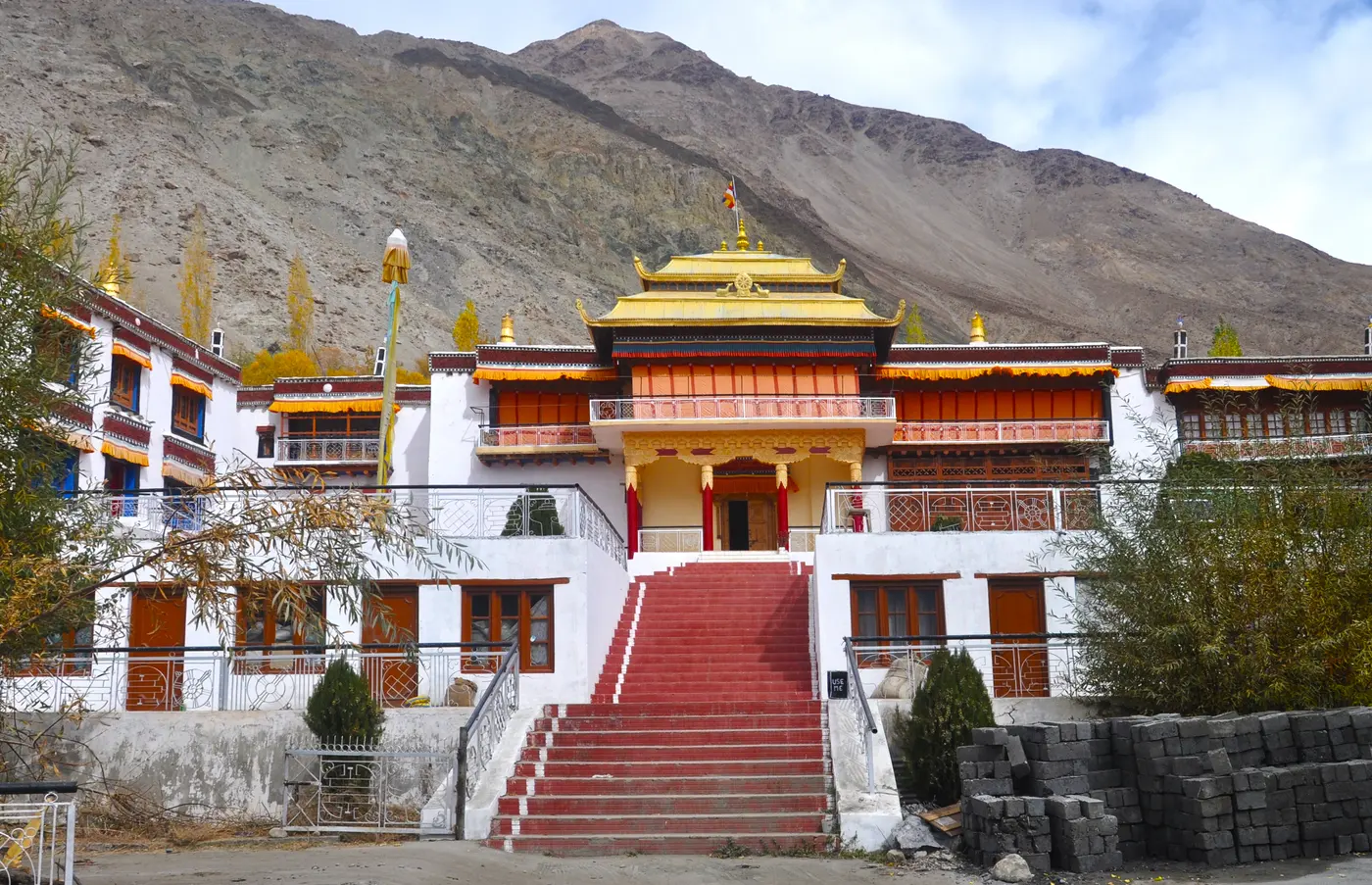
On the northern bank of the Nubra River, roughly 15 km from Diskit, Sumur is a quieter, greener village known for the imposing Samstanling Monastery, a relatively modern (19th-century) but beautifully maintained complex set among poplar groves a short drive above the village. It's far less visited than Diskit and makes for a peaceful, unhurried stop.
Continue north from Sumur and the road ends, quite literally, at Panamik — the last civilian village before the restricted Siachen approach road. Panamik is known for its natural sulphur hot springs, believed locally to have therapeutic properties for joint and skin ailments. The setting, with the Nubra River rushing past and barley fields terracing the slopes, is quietly beautiful even without the springs.
Ensa Gompa
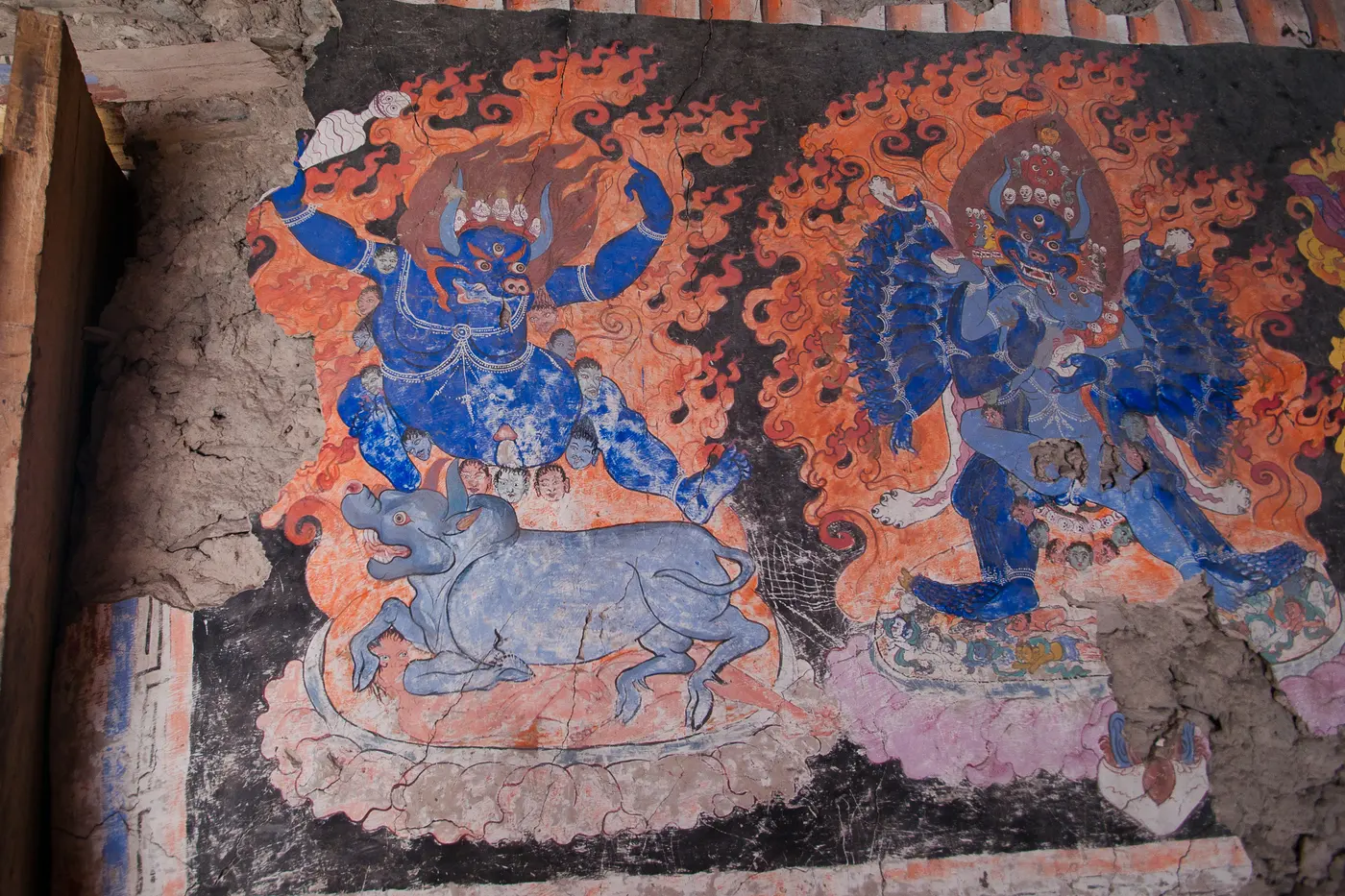
Across the river from Sumur, tucked into a hillside and reachable via a small bridge and a short uphill walk, Ensa Gompa is one of Nubra's least-visited monasteries — and one of its most rewarding for that reason. Founded in the 17th century and affiliated with Hemis Monastery, it holds faded but exquisite wall paintings and an almost total absence of other visitors.
Getting there takes a bit of local asking (a caretaker usually holds the key), but the walk itself, along irrigation channels and past willow groves with the Nubra River below, is as memorable as the monastery. It's a good half-day detour for travellers who've already ticked off Diskit and Hunder and want something quieter.
Turtuk (A Worthwhile Detour)
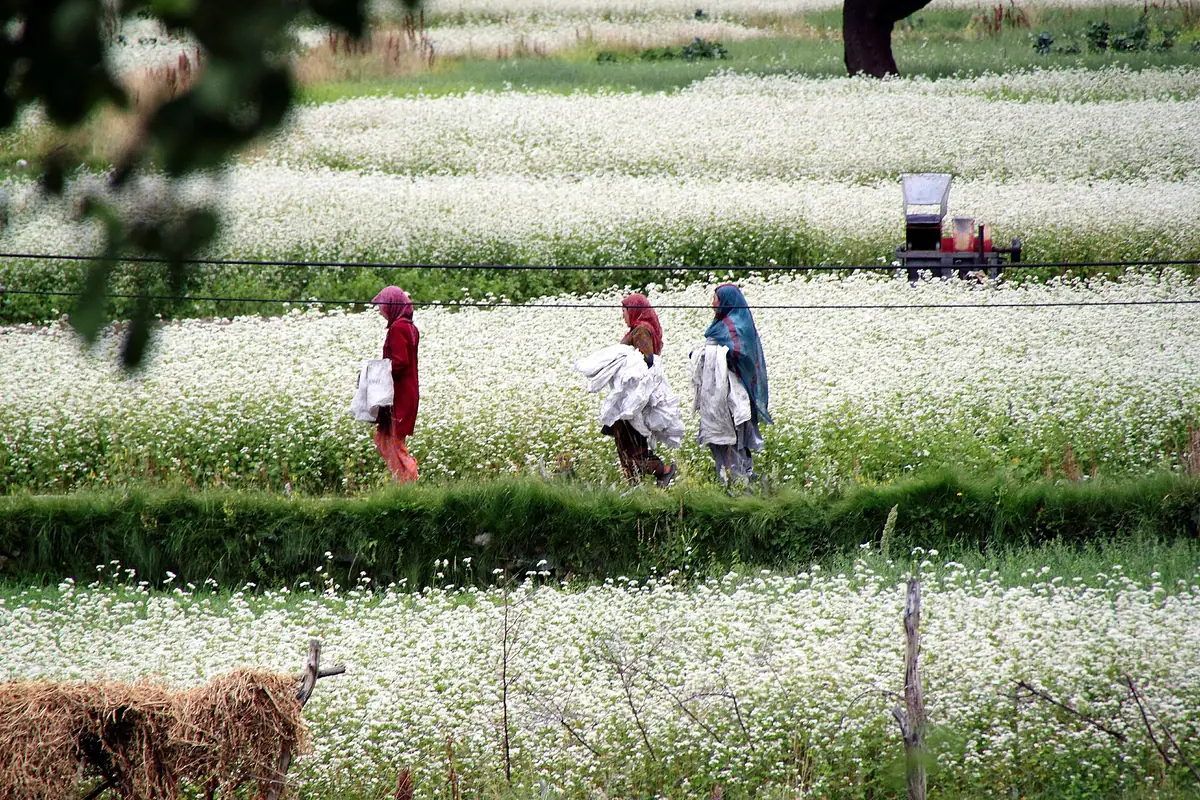
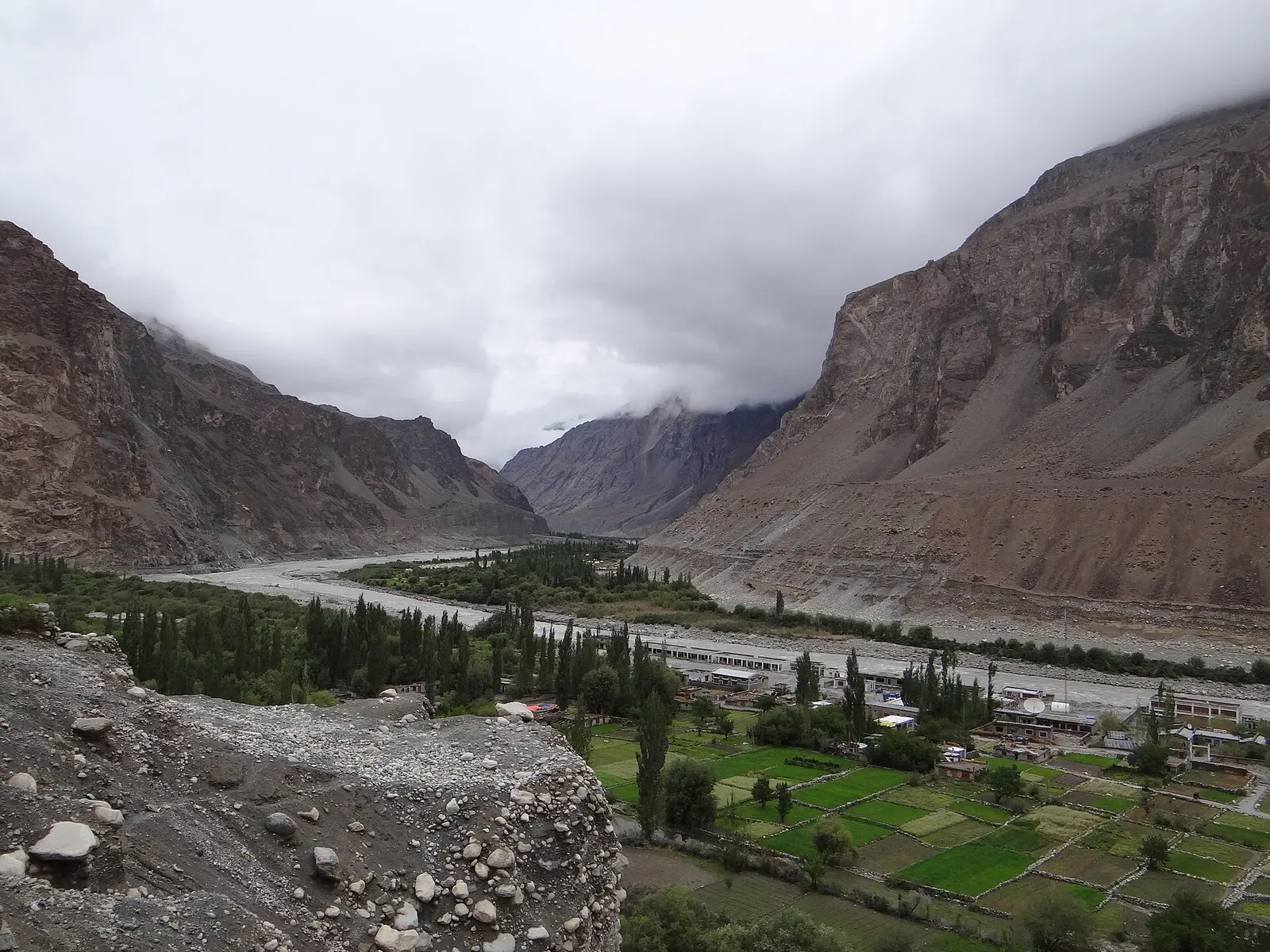
For travellers with an extra day and the right permit, Turtuk is the furthest and most atmospheric stop in the region — a Balti village that was part of Pakistan until the 1971 war and opened to tourists only in 2010. Roughly 90 km beyond Diskit along the Shyok river road, it feels culturally distinct from the rest of Ladakh: Balti language, apricot orchards cascading down stone-walled terraces, and views towards the Baltoro range and, on a clear day, distant glaciated peaks near the Pakistan border.
Turtuk requires the Protected Area Permit mentioned earlier and is best treated as an overnight extension rather than a rushed day trip — the drive alone is roughly 3 hours each way from Diskit. If your itinerary allows a third day in Nubra, it's a genuinely worthwhile detour; if not, it's a good reason to come back.
2-Day Nubra Valley Itinerary
This is the classic overnight loop from Leh, structured to cross Khardung La in good light and leave time to actually enjoy Diskit and Hunder rather than rushing between them.
Leh → Khardung La → Diskit → Hunder
- Depart Leh by 7–8 AM with all ILP copies in hand
- Photo stop at Khardung La summit (5,359 m) — 20 min max
- Descend to Diskit; visit the monastery and Maitreya Buddha
- Continue to Hunder; check into a camp or guesthouse
- Sunset camel ride on the Hunder sand dunes
Sumur, Panamik & Return to Leh
- Morning drive to Sumur; visit Samstanling Monastery
- Optional detour to Ensa Gompa across the river
- Continue to Panamik for the hot springs (if time allows)
- Head back via Diskit and re-cross Khardung La to Leh
- Arrive Leh by evening; rest and hydrate well
Extending your trip: With a third day, add Turtuk as an overnight extension before returning via Diskit — or exit Nubra via the Shyok/Wari La route towards Pangong Tso instead of retracing your steps over Khardung La.
Where to Stay in Nubra Valley
Diskit and Hunder have the widest range of accommodation in the valley; Sumur has a handful of quieter homestays for those wanting to avoid the tour-group circuit.
- → Local homestays in Sumur & Diskit
- → Backpacker guesthouses in Hunder
- → Basic dune-view camps (shared bath)
- → Diskit village lodges
- → Nubra Eco Camp, Hunder
- → Silk Route Camp, Hunder
- → Sand Dune Resort, Hunder
- → Desert Villa, Diskit
- → Deluxe Swiss-tent camps, Hunder
- → Nubra Ethnic Camp
- → Premium riverside resorts, Diskit
- → Boutique heritage stays, Sumur
What to Eat in Nubra Valley
Nubra's food is simpler and more homestyle than Leh's — expect Ladakhi and Balti staples cooked in family kitchens and camp dining tents, built around barley, apricots, and whatever the high-altitude soil can grow.
- Skyu & Chutagi: Hearty Ladakhi hand-rolled pasta dishes cooked with root vegetables in a thick broth — the perfect meal after a cold day on the dunes.
- Thukpa & Momos: Tibetan noodle soup and steamed dumplings, found at nearly every guesthouse and camp kitchen in Diskit and Hunder.
- Apricots: Nubra is one of Ladakh's apricot-growing heartlands. Try fresh apricots in season (July–August), dried apricots, and apricot oil or jam sold by roadside stalls in Sumur and Diskit.
- Balti cuisine (Turtuk): If you make it to Turtuk, don't miss Balti bread, apricot-based desserts, and mountain-grown apples — distinct from Ladakhi cooking elsewhere in the valley.
- Butter tea (gur gur cha) & chang: Salted Tibetan butter tea and locally brewed barley beer are both worth trying, especially in Sumur's quieter homestays.
Budget Breakdown
| Expense | Budget | Mid-Range | Luxury |
|---|---|---|---|
| Accommodation/night | ₹1,000 | ₹3,000 | ₹8,000 |
| Food/day | ₹500 | ₹1,000 | ₹2,000 |
| Permits (ILP/PAP) | ₹200 | ₹400 | ₹600 |
| Camel ride | ₹500 | ₹700 | ₹700 |
| Transport (Leh–Nubra return) | ₹700 | ₹4,000 | ₹9,000 |
| Daily Total (excl. transport) | ₹2,200 | ₹5,100 | ₹11,300 |
Essential Travel Tips
✓ Do
- Acclimatise 1–2 days in Leh before crossing Khardung La
- Carry 4–5 photocopies of your ILP for checkpoints
- Fuel up fully in Leh — the next pump is at Diskit
- Carry cash — there are no ATMs in Nubra Valley
- Pack warm layers even in summer; nights drop near freezing
- Book Hunder/Diskit camps ahead in July–August peak season
✗ Don't
- Linger more than 20–30 minutes at Khardung La summit
- Skip the ILP — checkpoints at South Pullu are strict
- Photograph military installations or personnel anywhere en route
- Push straight from Leh to Nubra without acclimatisation
- Attempt Turtuk without the correct Protected Area Permit
- Overload the camel ride booth without confirming the price first
Above all, treat Khardung La as a crossing, not a destination — the altitude is unforgiving, and the real reward is what waits on the other side. Nubra rewards travellers who slow down: linger by the dunes at sunset, sit with a cup of butter tea in a Sumur homestay, and let the valley's quiet, high-desert rhythm take over.
Frequently Asked Questions
How many days do I need for Nubra Valley?
The classic loop from Leh is a 2-day, 1-night trip — enough to see Diskit Monastery, the Maitreya Buddha, and a sunset camel ride on the Hunder dunes on Day 1, then Sumur, Panamik, and the return over Khardung La on Day 2. With a third day, add Turtuk as a worthwhile overnight extension.
What is the best time to visit Nubra Valley?
Our pick is early-to-mid September, when the apricot orchards in Sumur and Diskit turn gold, Khardung La is free of summer traffic jams, and the dunes at Hunder catch beautiful late-afternoon light. July–August is the warmest, driest, and busiest window, while Khardung La is typically closed to civilian traffic from late October to May.
How do I reach Nubra Valley from Leh?
The standard route crosses Khardung La (5,359 m) north of Leh, descending to Diskit — roughly 120 km and 4–5 hours by shared taxi, private cab, or motorbike. A scenic alternative runs via the Shyok River and Wari La, skipping Khardung La entirely and taking 6–7 hours, which works well as one leg of a loop if you're continuing on to Pangong Tso.
Do I need a permit to visit Nubra Valley?
Yes. Nubra sits inside a protected border zone near the Line of Control, so an Inner Line Permit (ILP) is mandatory for all Indian nationals, obtainable online or at the DC Office in Leh. Foreign nationals need a Protected Area Permit (PAP) arranged through a registered Leh travel agent, and anyone continuing on to Turtuk or Panamik needs the PAP as well.
What is the budget for a trip to Nubra Valley?
Excluding transport from Leh, a daily budget (accommodation, food, permits, and a camel ride) runs roughly ₹2,200 on a budget trip, ₹5,100 mid-range, or ₹11,300 for a luxury trip. Vehicle hire for the Leh–Nubra return adds ₹700–₹9,000 depending on whether you go by shared taxi, private cab, or self-driven bike.
Is Nubra Valley worth visiting?
Yes — it's one of Ladakh's most rewarding detours precisely because it looks so different from the rest of the region: pale sand dunes with double-humped Bactrian camels set against snow peaks, a 32-metre golden Buddha at Diskit, and centuries-old monasteries tucked into cliffs above the Shyok and Nubra rivers.
What are the Hunder sand dunes and are the camel rides worth it?
The Hunder sand dunes are Nubra's postcard image — pale, cold-desert dunes along the Shyok riverbed that host Ladakh's famous double-humped Bactrian camels, descendants of animals used on old Silk Route caravans. A 20–25 minute camel ride costs roughly ₹500–₹700 per person and is genuinely worth doing once, especially at sunset when the dunes turn gold and day-trip crowds have thinned.
Published by the Kudozz Club editorial team · Last updated · How we research our guides
Want us to plan this trip for you?
Tell Kudozz Club where you want to go and what kind of trip you’re looking for. We’ll build a Nubra Valley and Ladakh itinerary around your dates and budget.
Continue Exploring
View all guides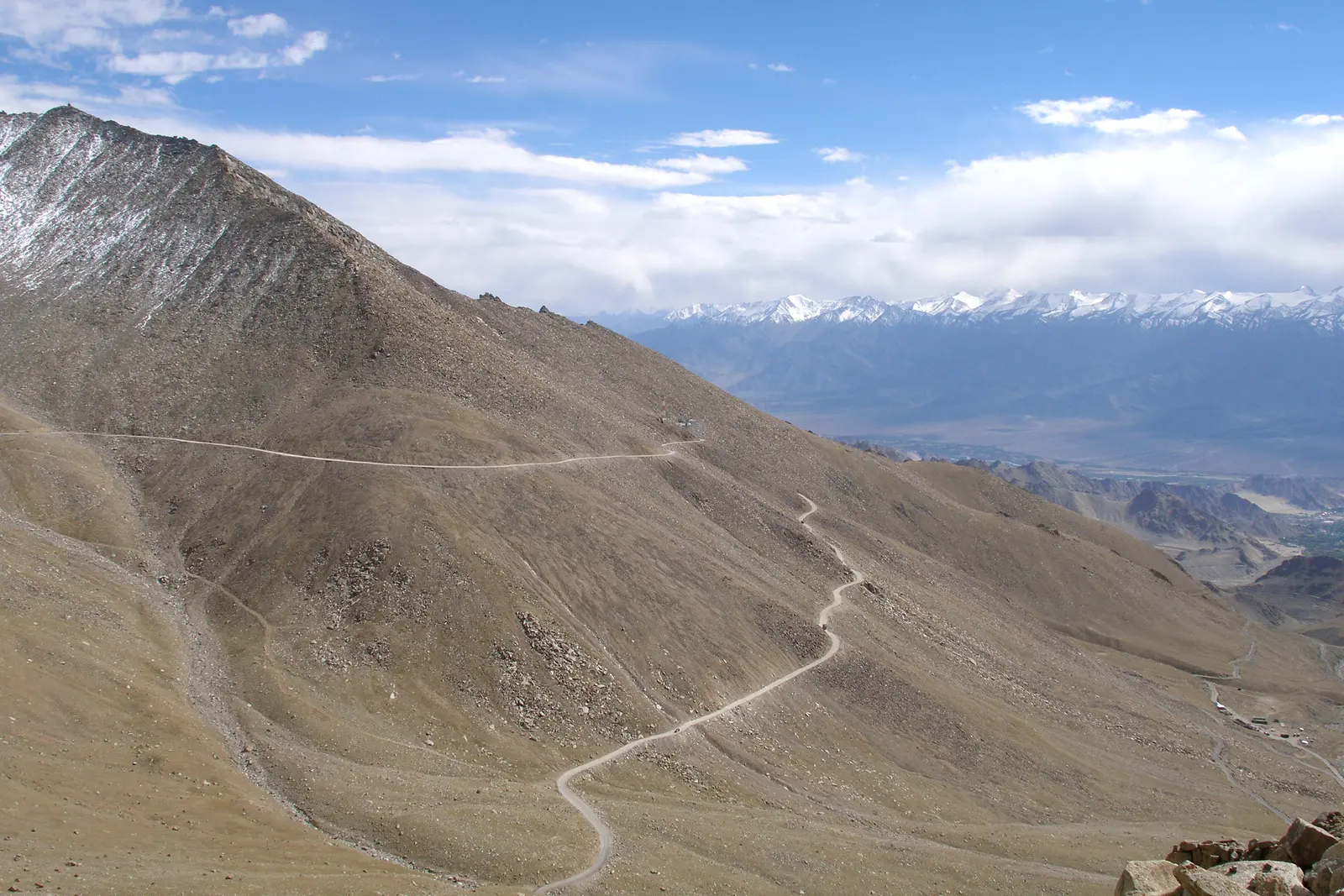 Adventure
Khardung La Travel Guide: Height, Route, Permits & Tips
At 5,359 metres, the air thins, prayer flags snap in the wind, and the road to Nubra Valley climbs above the clouds — everything you need to cross Khardung La safely and unforgettably.
 Off-beat
Turtuk Travel Guide: Ladakh's Last Balti Village Before the LOC
A Balti village of stone houses and apricot orchards on the Shyok River, under Pakistani control until 1971 and closed to outsiders until 2010 — Turtuk is unlike anywhere else in Ladakh.
 Off-beat
Hunder Travel Guide: Nubra Valley's Sand Dunes & Camel Safari
Silver sand dunes, double-humped Bactrian camels, and snow peaks rising from a cold desert — Hunder in Nubra Valley is Ladakh's strangest, most beautiful contradiction.
Things to DoThings to Do in Nubra Valley: Dunes, Diskit, Hot Springs & Turtuk
Things to do in Nubra Valley: Khardung La, Diskit Monastery and its Maitreya Buddha, Bactrian camel rides on the Hunder dunes, Sumur and Samstanling, Panamik hot springs, Ensa Gompa, Turtuk's Balti village and apricot orchards.