Why Visit Hunder?
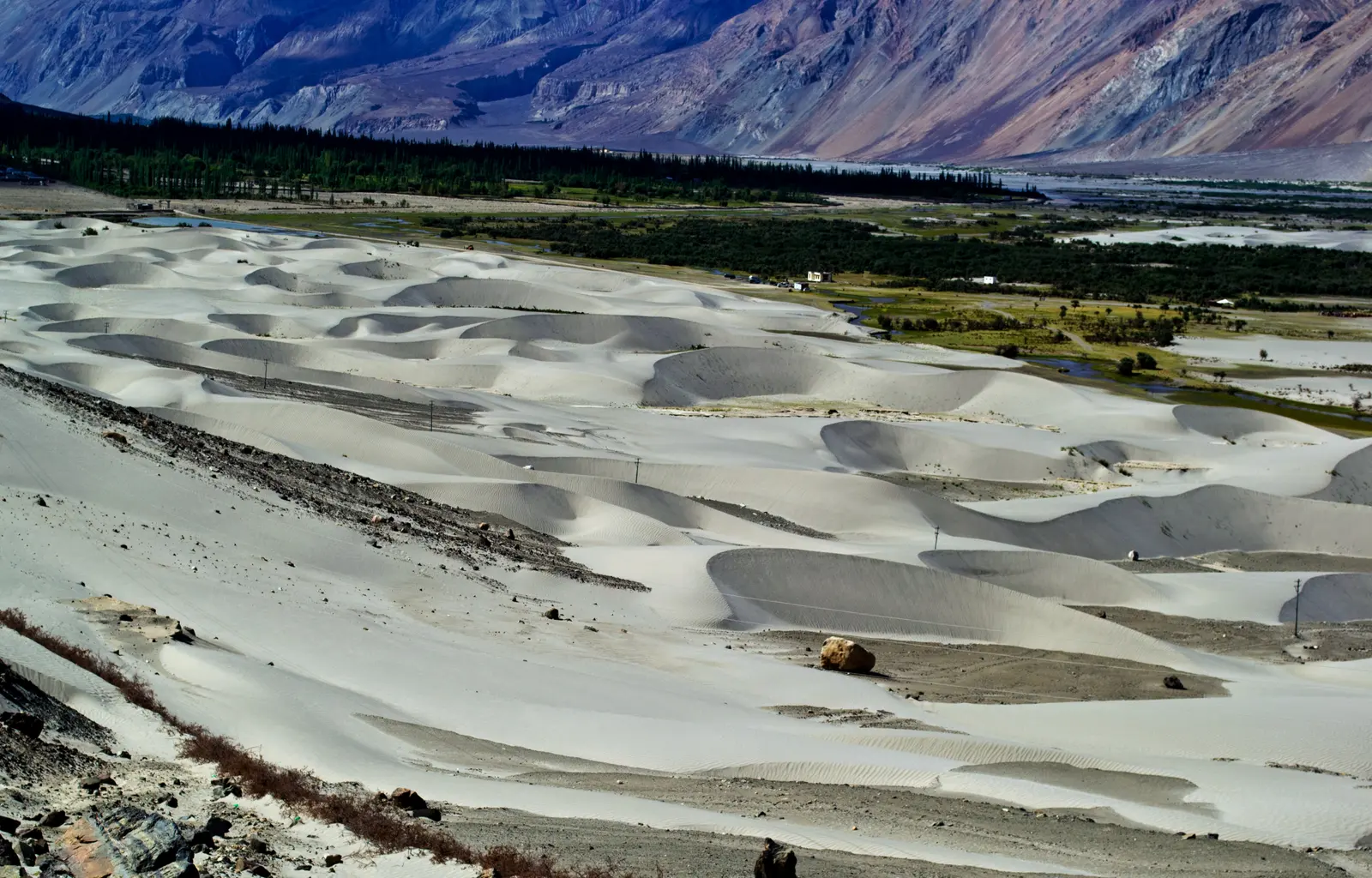
There is a moment, somewhere past the Shyok river bridge on the road into Nubra Valley, when the landscape simply stops making sense. Snow-capped peaks tower on the horizon, a glacial river braids across a wide gravel plain, and then — rising out of nowhere — pale silver sand dunes ripple across the valley floor. Wandering across them, unhurried and double-humped, are Bactrian camels. This is Hunder, and it is unlike anywhere else in the Himalayas.
Hunder sits in the cold desert of Nubra Valley at roughly 3,000 metres, a good 1,300 metres lower and noticeably milder than Leh. It was once a resting point on the Silk Route caravans that crossed the Karakoram Pass into Central Asia, and the Bactrian camels grazing on its dunes today are the direct descendants of those trade caravans — one of the very few places on Earth where you can ride a double-humped camel against a backdrop of permanently snow-clad mountains.
It's a landscape that photographs like a fever dream: desert dunes, an icy river, willow and seabuckthorn groves, whitewashed monasteries clinging to cliffs, and peaks over 6,000 metres watching over all of it. Most travellers see Hunder as a single afternoon stop on a Nubra Valley loop from Leh — but stay even one night here and the place gets under your skin.
🐫 Hunder at a Glance
Best Time to Visit Hunder
Hunder's climate is milder than Leh's thanks to its lower altitude, but it remains a high-desert environment with brutal winters and a short, precious travel window.
Khardung La and Nubra roads reopen fully by mid-to-late May. Days are pleasant, nights still cold. Fewer crowds than peak summer — a great window for the camel safari and photography.
Warmest, driest, and busiest months. Daytime temperatures can touch 25–30°C in the dunes even as snow lingers on nearby peaks. Best for camping and longer stays.
Willow and poplar groves turn gold, the light softens beautifully for photos, and tourist numbers thin out. Nights get noticeably colder.
Khardung La and the Nubra road are snowbound and largely impassable for regular tourist traffic. Temperatures plunge well below freezing. Not recommended for a standard visit.
Our pick: Mid-June or early September. You get warm, walkable dune conditions without the peak July–August crowds jostling for camel-safari photos, and the light at both ends of the day is extraordinary.
How to Reach Hunder
Hunder lies about 7 km from Diskit, the administrative hub of Nubra Valley, and roughly 120 km from Leh. There are two classic routes in — one dramatic and high-altitude, the other longer but gentler.
- Via Khardung La (the classic route): From Leh, the road climbs to Khardung La (often cited as one of the world's highest motorable passes at ~5,359 m), then drops through South Pullu and Khardung village into the Shyok river valley before reaching Diskit and Hunder. It's roughly 4–5 hours of driving with stops, through some of the most spectacular high-altitude scenery in Ladakh.
- Via Wari La / Agham (the alternate loop): A longer, less-travelled route that avoids Khardung La via Sakti and Wari La pass, useful for making a circular Nubra trip rather than backtracking the same road twice.
- Shared taxis and buses: Shared jeeps run from Leh's main taxi stand to Diskit; from there, shared autos or short taxi hops cover the final 7 km to Hunder. J&K Road Transport Corporation also runs a state bus service to Diskit, though it's infrequent.
- Self-drive / rented bike: A popular option is renting a Royal Enfield or hiring a private cab from Leh — both let you stop freely for photos at the Khardung La summit and the Shyok river viewpoints along the way.
Permits for Nubra Valley
Nubra Valley, including Hunder and Diskit, falls within a protected border zone close to the Line of Actual Control, so all visitors — Indian and foreign — need an Inner Line Permit (ILP) before travelling beyond Khardung La.
- Indian nationals: Apply online via the Ladakh administration's permit portal, or through registered travel agents in Leh. Permits are usually issued same-day and are inexpensive (a small per-person environment fee applies).
- Foreign nationals: Can also obtain an ILP for Nubra Valley, generally arranged through a registered Leh-based travel agency, valid for a set number of days.
- What to carry: Print or download multiple copies of your permit — checkpoints at South Pullu (before Khardung La) and North Pullu, as well as near Khalsar, ask for it. Carry a valid photo ID too.
Permits are typically valid for a set window (commonly a week), so plan your Nubra dates before applying. Most guesthouses and homestays in Hunder will also ask to see your permit copy at check-in.
The Bactrian Camel Safari
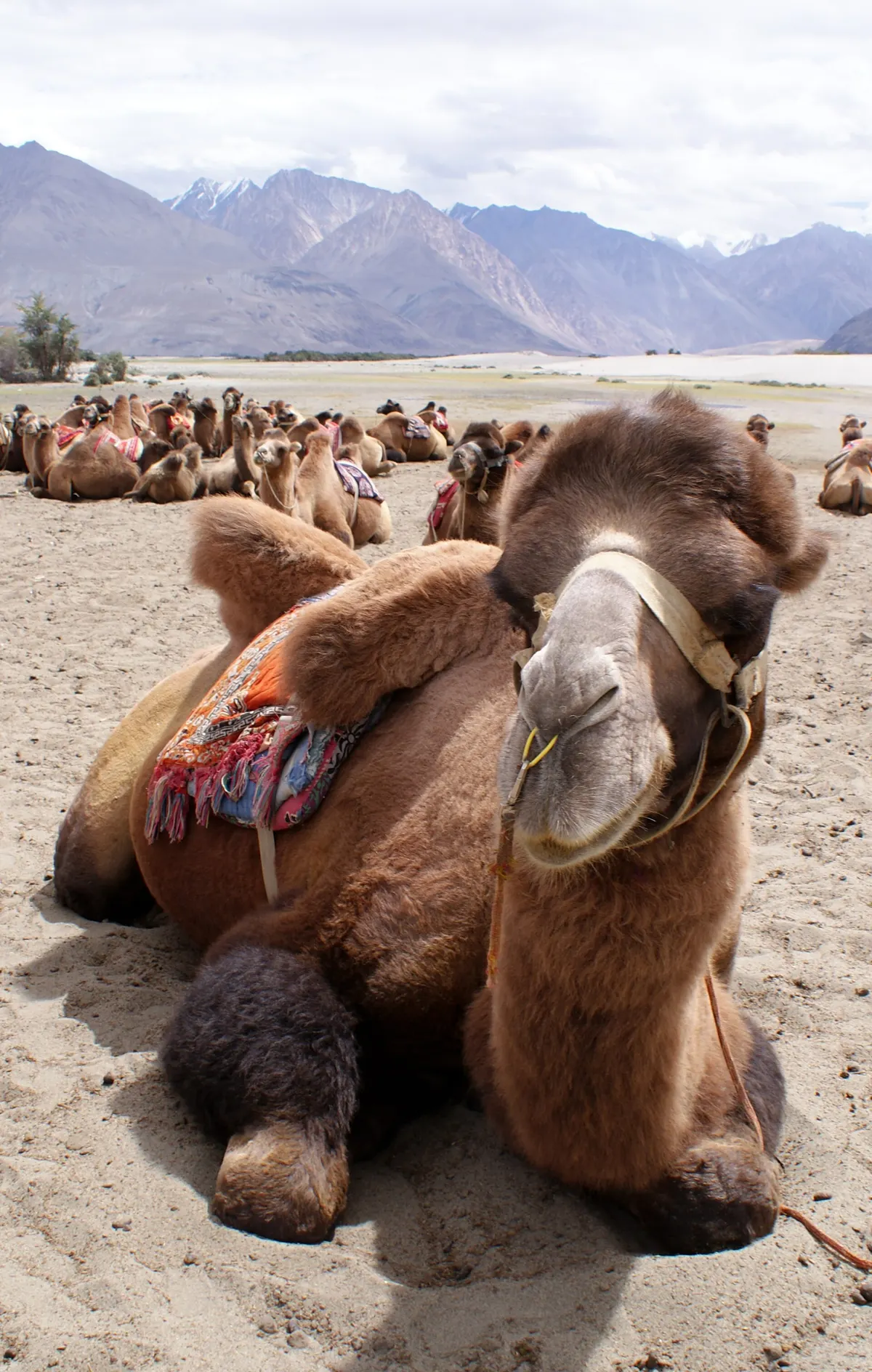
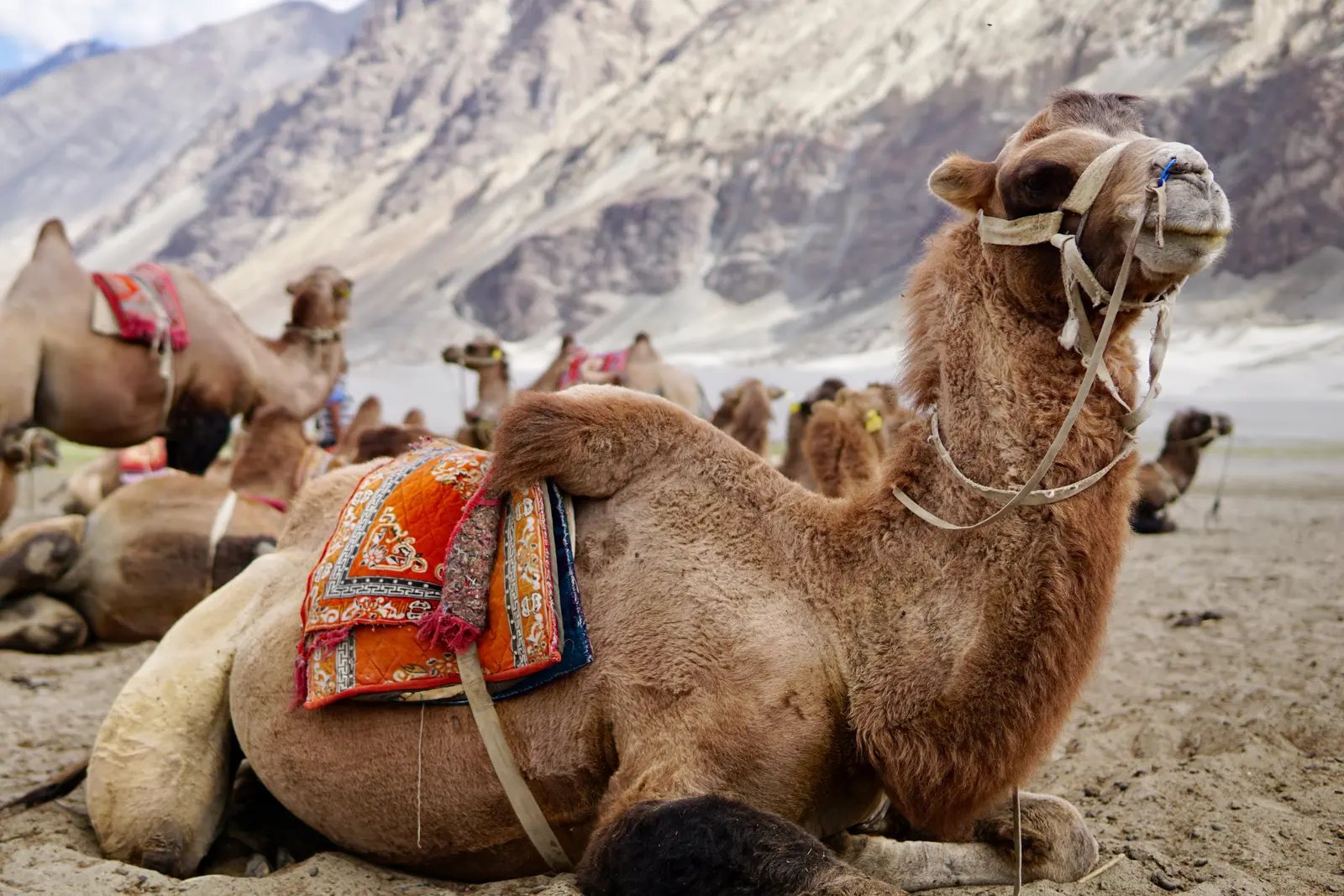
The signature experience in Hunder is a short ride on a double-humped Bactrian camel across the dunes. These shaggy, thick-coated animals are a genuinely different species from the single-humped dromedaries seen elsewhere in India — native to the steppes of Central Asia, and believed to be descendants of pack animals abandoned by Silk Route traders who once moved salt, silk, and pashmina wool between Yarkand and Leh through this very valley.
Rides are organised at the main dune patch near Hunder village, close to the Sand Dunes Camping ground. A typical ride lasts 15–20 minutes and loops through the dunes, letting you feel the strange sensation of a swaying two-humped gait while snow peaks fill the background. It's touristy, yes — but it's also one of the only places on the planet where this is even possible outside of Mongolia and parts of Central Asia.
Sand Dunes at Sunset
Beyond the camel rides, simply walking barefoot across Hunder's dunes at sunset is worth the trip on its own. The sand here isn't a leftover geological curiosity — it's an active cold desert, formed over millennia by wind depositing fine silt and sand carried down by the Shyok and Nubra rivers, trapped in this bowl between the Ladakh and Karakoram ranges.
As the sun drops behind the ridgeline, the dunes shift through amber, rose, and finally a cool blue-grey, while the peaks above stay lit pink long after the valley floor falls into shadow. Seabuckthorn bushes and willow groves ring the edges of the dunes, and it's common to see local herders bringing goats and pashmina-wool changra sheep home along the riverbank as the light fades.
Diskit Monastery
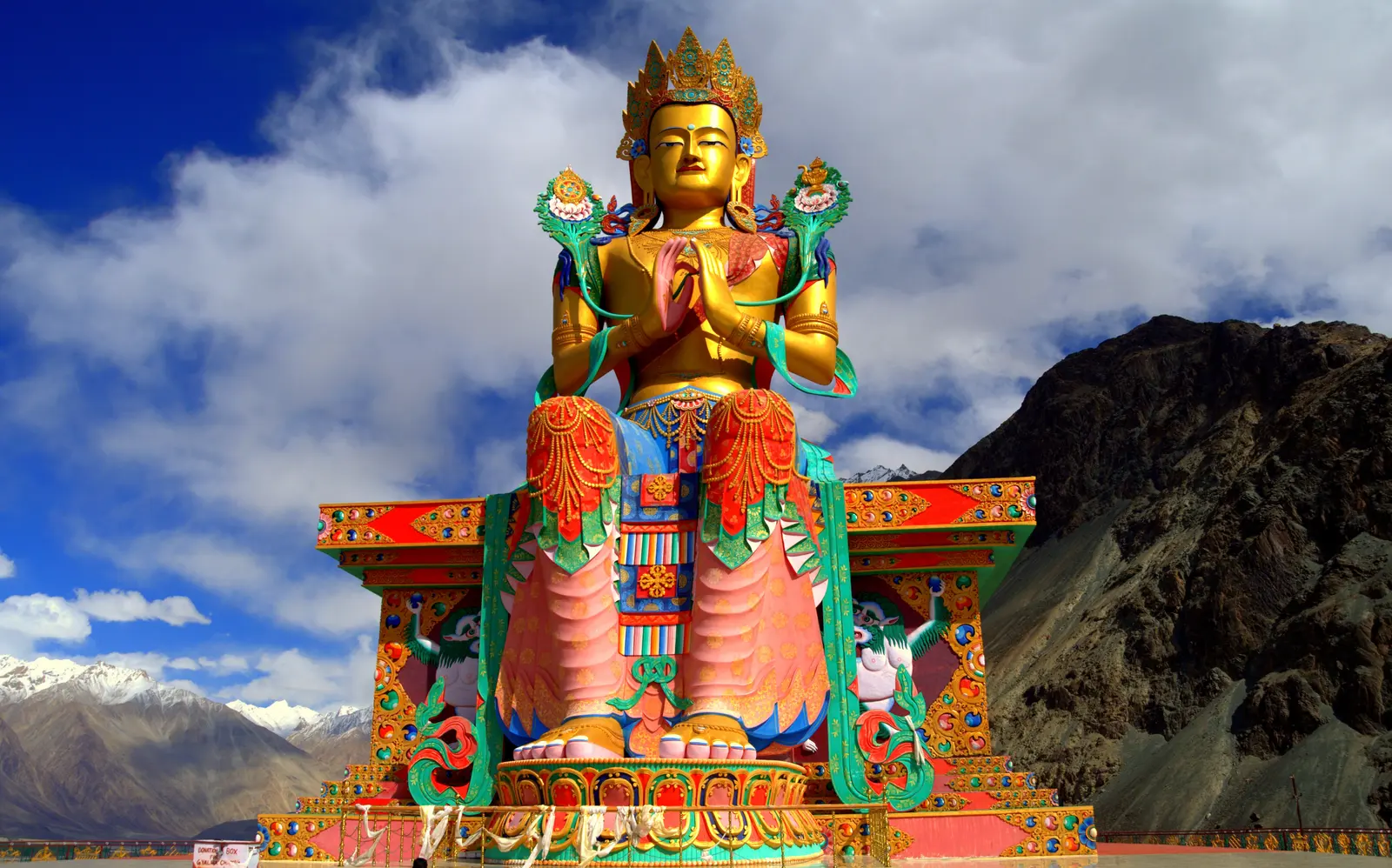
Just 7 km from Hunder, perched dramatically on a cliff overlooking the valley, sits Diskit Monastery (Diskit Gompa) — the oldest and largest Buddhist monastery in Nubra Valley, founded in the 14th century and belonging to the Gelugpa (Yellow Hat) sect. A 32-metre statue of Maitreya Buddha, unveiled in 2010, faces down the valley toward Pakistan, said to bless the region with peace.
Climb the steps through the monastery's prayer halls, past centuries-old thangka paintings and ceremonial masks, to the rooftop for one of the finest panoramic views in Nubra — the entire valley, the Shyok river's braided channels, and on clear days, the distant Hunder dunes themselves.
Camping Under the Stars
Hunder is one of the best places in Ladakh to sleep under an genuinely dark, high-altitude sky. Several campsites are set up right at the edge of the dunes, offering Swiss-style or Ladakhi-style tents with proper bedding — far more comfortable than it sounds given the remote setting.
With minimal light pollution and thin desert air at 3,000 m, the night sky over Hunder is extraordinary — the Milky Way is often visible to the naked eye on clear, moonless nights. Most campsites serve a simple hot dinner around a bonfire, and mornings bring an almost eerie stillness broken only by wind over the sand and the distant call of a chukar partridge.
Suggested Itinerary
Hunder is almost always visited as part of a wider Nubra Valley trip from Leh. Here's a simple, realistic plan that gives the dunes and camels the time they deserve without rushing.
Leh to Hunder via Khardung La
- Early start from Leh, photo stop at Khardung La summit
- Permit checks at South Pullu and North Pullu
- Descend through the Shyok valley to Diskit, then Hunder
- Evening: sunset walk on the dunes, camel ride
Diskit Monastery & Dune Camping
- Morning visit to Diskit Monastery and Maitreya Buddha statue
- Explore Hunder village's willow-lined lanes and stupas
- Afternoon rest, riverside walk along the Shyok
- Night camping at the dunes, bonfire dinner, stargazing
Onward or Return to Leh
- Option A: continue further into Nubra toward Turtuk village
- Option B: drive back to Leh via Khardung La
- Stop for photos at the Shyok river confluence
- Arrive Leh by early evening
Where to Stay in Hunder
Accommodation in Hunder ranges from simple family homestays to dune-side glamping tents and a handful of comfortable guesthouses — all far quieter than anything in Leh.
- → Local family homestays
- → Basic guesthouses in Hunder village
- → Simple lodges near Diskit
- → Backpacker rooms with shared bath
- → Orchard-view guesthouses
- → Dune-side camping (deluxe tents)
- → Nubra Valley heritage lodges
- → Family-run boutique guesthouses
- → Premium Swiss-tent dune camps
- → Nubra luxury resort camps
- → Full-board glamping with bonfire dinners
- → Private riverside cottages
What to Eat in Hunder
Dining options in Hunder are simple but satisfying — mostly home-cooked Ladakhi fare served by guesthouses and campsites, plus a few small local eateries.
- Skyu & Chutagi: Hearty Ladakhi pasta dishes — thick wheat dumplings or pinched noodles simmered with root vegetables in a warming broth. Perfect after a cold evening on the dunes.
- Thukpa & Momos: Tibetan-Ladakhi staples found at nearly every guesthouse — noodle soup and steamed or fried dumplings, usually filled with vegetables or yak meat.
- Butter tea (Gur Gur Chai): Salted, churned tea with yak butter — an acquired taste, but a genuine slice of Ladakhi tradition and surprisingly warming at altitude.
- Apricot products: Nubra Valley is known for its apricot orchards. Look out for dried apricots, apricot jam, and fresh apricot juice sold by local families in season.
- Homestay thalis: Most guesthouses serve a fixed home-cooked thali of rice, dal, seasonal vegetables, and sometimes local barley preparations — simple, filling, and included in most stays.
Budget Breakdown
A day in Hunder (as part of a Nubra Valley trip) is generally cheaper than a day in Leh proper, though camel rides and camping tents add up.
| Expense | Budget | Mid-Range | Luxury |
|---|---|---|---|
| Accommodation/night | ₹900 | ₹3,000 | ₹8,000 |
| Food/day | ₹350 | ₹700 | ₹1,800 |
| Camel safari | ₹300 | ₹300 | ₹500 |
| Local transport | ₹300 | ₹800 | ₹2,000 |
| Permit & misc fees | ₹100 | ₹150 | ₹200 |
| Daily Total | ₹1,950 | ₹4,950 | ₹12,500 |
Essential Travel Tips
✅ Do
- Acclimatise 1–2 days in Leh before crossing Khardung La
- Carry printed copies of your Inner Line Permit
- Pack warm layers even for summer nights
- Carry enough cash — ATMs are scarce in Nubra
- Book dune-camp tents in advance during peak season
❌ Don't
- Don't rush from Leh airport straight to Khardung La
- Don't skip the ILP checkpoints — permits are checked
- Don't overexert on the dunes — altitude sickness is real
- Don't litter the dunes or feed the camels processed food
- Don't rely on mobile network — coverage is patchy
- Fuel up in Leh or Khardung: Petrol pumps are limited in Nubra Valley — top up your tank before leaving Leh.
- Network: Only postpaid BSNL and certain local SIMs work reliably in parts of Nubra; most private prepaid SIMs have no signal. Inform family you may be unreachable for a day or two.
- Respect wildlife and culture: The Bactrian camels are working animals cared for by local families — treat handlers and animals with respect, and dress modestly when visiting Diskit Monastery.
Frequently Asked Questions
How many days do I need in Hunder?
Most travellers see Hunder as a single afternoon stop on a Nubra Valley loop from Leh, but staying at least one night is worth it. A fuller trip covering Hunder's dunes, the camel safari, and Diskit Monastery, with camping, is comfortably planned as about three days out of Leh, including travel time via Khardung La.
How do I reach Hunder from Leh?
The classic route runs from Leh over Khardung La (~5,359 m), then down through South Pullu and Khardung village into the Shyok river valley to Diskit and on to Hunder — roughly 120 km and 4–5 hours of driving with stops. Shared jeeps and J&K Road Transport Corporation buses run from Leh to Diskit, with the final 7 km to Hunder covered by shared autos or a short taxi ride.
Do I need a permit to visit Hunder?
Yes. Nubra Valley, including Hunder, lies in a protected border zone, so every visitor — Indian or foreign — needs an Inner Line Permit (ILP) before travelling past Khardung La. Indian nationals can apply online or through registered Leh travel agents, usually issued the same day; foreign nationals typically arrange it through a registered Leh-based agency.
What is the best time to visit Hunder?
The travel window runs roughly May through September, once Khardung La and the Nubra road reopen. Mid-June or early September are the sweet spots — warm, walkable dune conditions without the peak July–August crowds, and especially good light for photography at both ends of the day.
How long does the camel safari in Hunder last?
A typical Bactrian camel ride at Hunder's dunes lasts about 15–20 minutes, looping through the dune patch near Hunder village close to the Sand Dunes Camping ground. Early morning or just before sunset are the best times to go, since midday light and heat flatten the experience.
What is the budget for a trip to Hunder?
Costs stay lower than in Leh proper, though camel rides and dune camping add up. On a budget plan, expect roughly ₹1,950 a day covering guesthouse stays, food, the camel safari, local transport, and permit fees; a mid-range day runs closer to ₹4,950, and a luxury dune-camp experience can reach around ₹12,500 a day.
Is Diskit Monastery worth visiting from Hunder?
Yes — it's just 7 km from Hunder and considered the oldest and largest monastery in Nubra Valley, founded in the 14th century. Beyond the 32-metre Maitreya Buddha statue overlooking the valley, the rooftop offers one of the finest panoramic views in Nubra, taking in the Shyok river's braided channels and, on clear days, the Hunder dunes themselves.
Published by the Kudozz Club editorial team · Last updated · How we research our guides
Want us to plan this trip for you?
Tell Kudozz Club where you want to go and what kind of trip you’re looking for. We’ll build a Hunder and Ladakh itinerary around your dates and budget.
Continue Exploring
View all guidesOff-beatNubra Valley Travel Guide: Sand Dunes, Camels & Cold Desert
Cross the world's second-highest motorable pass into a valley where sand dunes meet snow peaks, Bactrian camels roam ancient Silk Route trails, and a 32-metre Buddha watches over the Shyok River.
 Off-beat
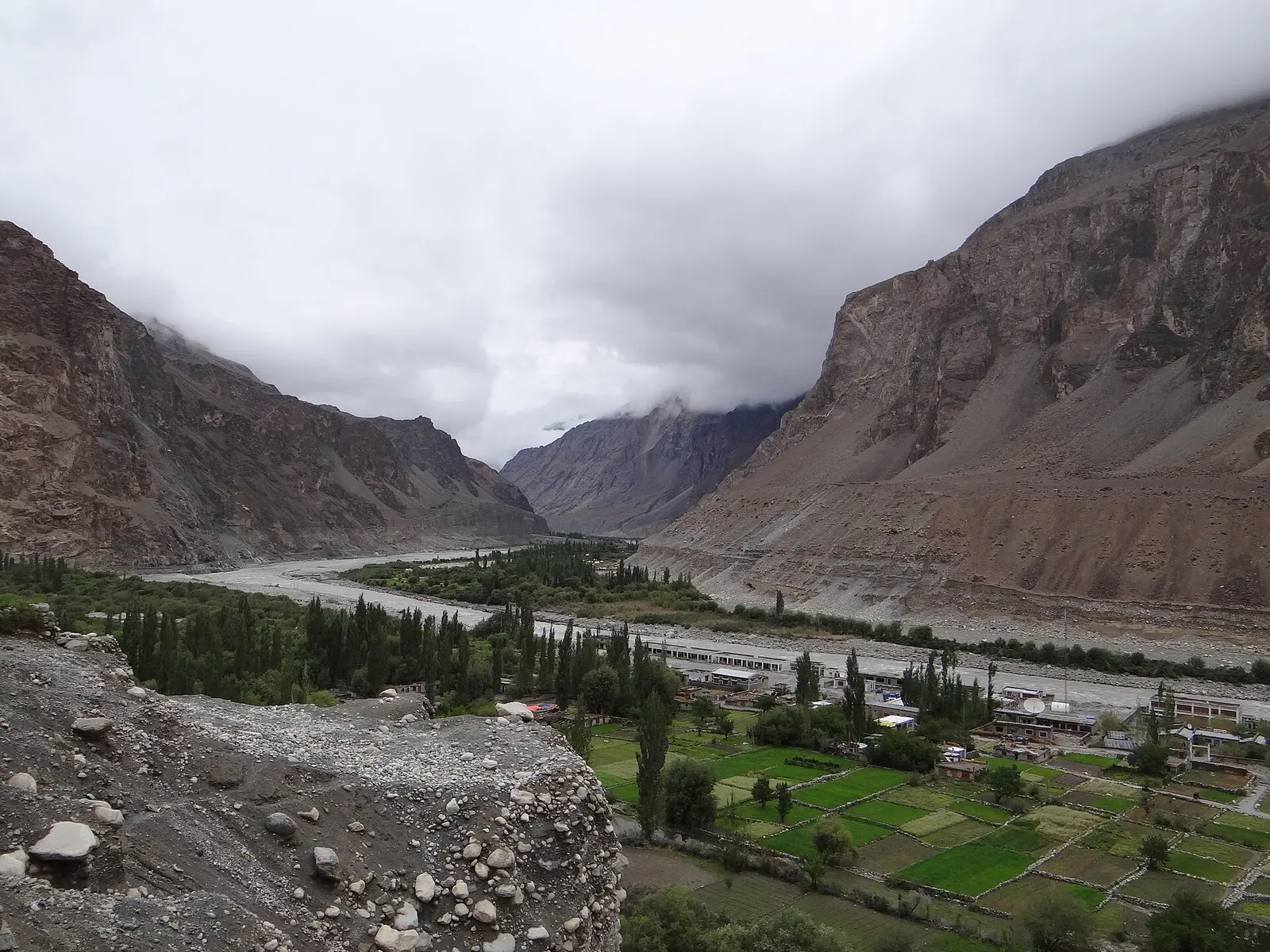
Turtuk Travel Guide: Ladakh's Last Balti Village Before the LOC
A Balti village of stone houses and apricot orchards on the Shyok River, under Pakistani control until 1971 and closed to outsiders until 2010 — Turtuk is unlike anywhere else in Ladakh.
 Adventure
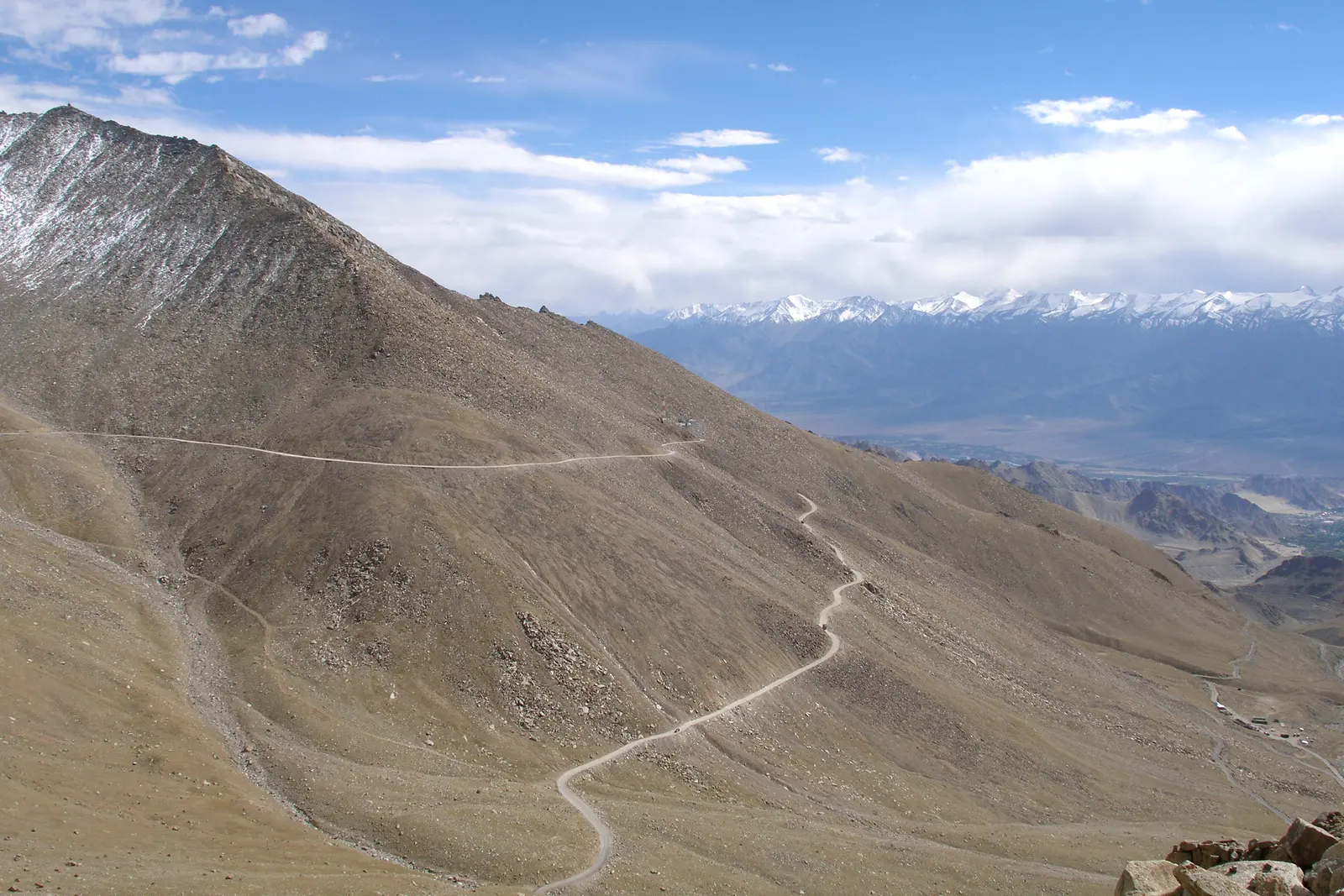
Khardung La Travel Guide: Height, Route, Permits & Tips
At 5,359 metres, the air thins, prayer flags snap in the wind, and the road to Nubra Valley climbs above the clouds — everything you need to cross Khardung La safely and unforgettably.
Things to DoThings to Do in Nubra Valley: Dunes, Diskit, Hot Springs & Turtuk
Things to do in Nubra Valley: Khardung La, Diskit Monastery and its Maitreya Buddha, Bactrian camel rides on the Hunder dunes, Sumur and Samstanling, Panamik hot springs, Ensa Gompa, Turtuk's Balti village and apricot orchards.