Why Visit Lamayuru?
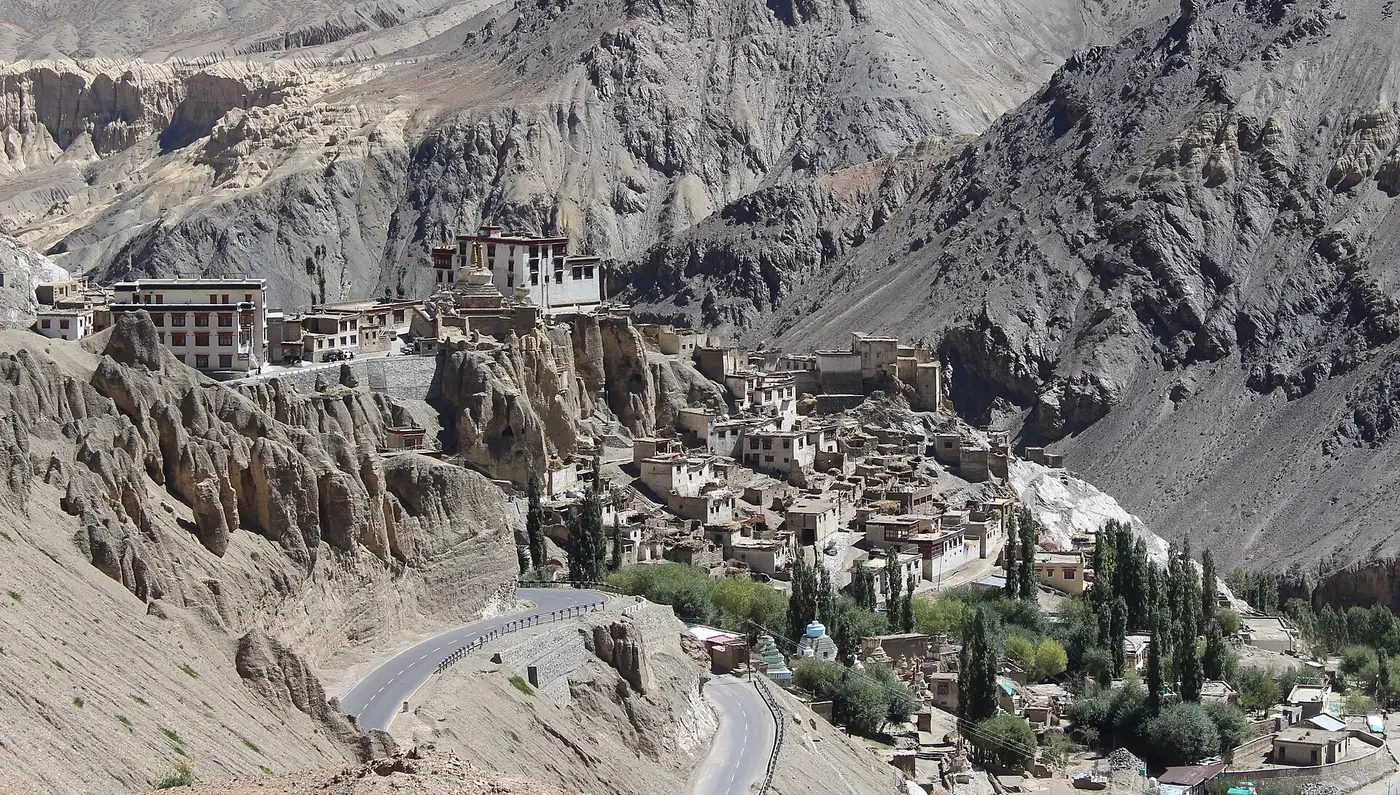
Most people driving the Srinagar–Leh highway have their eyes fixed on Leh, still hours away, and almost miss the turn that leads up to one of the most remarkable sights in the Himalaya. Lamayuru is a small village at roughly 3,510 metres in Ladakh's Kargil district, built around and beneath a monastery that is widely regarded as the oldest in Ladakh — and one of its largest. But it isn't only the age of the gompa that stops travellers in their tracks. It's what surrounds it.
The hills around Lamayuru have been carved by wind and water over millions of years into a maze of ridges, cones, and folds of pale, cracked sediment — the eroded bed of what geologists believe was once a vast Himalayan lake. Local legend tells a gentler version of the same story: that this was once a lake sacred to the nagas, drained by a great Buddhist master so that a monastery could rise in its place. Either way, the result is a landscape so barren and lunar that everyone who passes through, monk and motorcyclist alike, calls it the same thing — the Moonland.
Lamayuru rewards travellers who are willing to slow down. It's usually treated as a 20-minute photo stop on the long drive between Srinagar and Leh, but stay a night and you get the monastery at dawn without a single other visitor, a village that still moves at its own pace, and — if your timing is right — a doorway into Ladakh's finest short treks.
🏔️ Lamayuru at a Glance
Going by road? See our guide to the Srinagar to Leh road trip.
Best Time to Visit Lamayuru
Lamayuru sits on the Srinagar–Leh highway, which has a longer open season than the Manali route but is still firmly a summer-and-shoulder destination. The moonland itself looks different depending on the light and season — from stark and pale in early summer to deep gold at sunset in September.
The Srinagar–Leh highway opens (usually April–May), the village wakes up after winter, and the moonland formations still carry faint traces of the season's last snowmelt in their gullies. Fewer travellers, crisp mornings.
Warmest, driest, busiest — this is also when the Yuru Kabgyat festival usually falls, bringing masked cham dances to the monastery courtyard. Book a room in the village ahead if you're timing your visit to the festival.
Crowds thin out after the summer rush, the light turns long and golden in the late afternoon, and the moonland's folds and shadows are at their most dramatic. The highway typically stays open into late October.
The Srinagar–Leh highway closes under snow, usually by early December, and Lamayuru becomes accessible only via a long detour through Leh and the Manali highway, if at all. Not recommended for most travellers.
Our pick: Mid-to-late September. The monastery is quiet, the moonland glows amber in the evening light, and the highway is still comfortably open. If you specifically want the Yuru Kabgyat festival, plan around July, since exact dates follow the Tibetan lunar calendar and shift year to year.
How to Reach Lamayuru
Lamayuru sits directly on NH1, the Srinagar–Leh highway, about 125 km west of Leh and roughly 3 hours by road under normal conditions — making it one of the easiest heritage sites in Ladakh to reach without a special detour.
- From Leh: Drive west via Nimmu, Basgo, Khaltse, and Wanla. The road is well-maintained tarmac for most of the way, with the final stretch climbing to the village. Shared taxis and local buses run this route, though a private cab or self-drive gives you the freedom to stop at Magnetic Hill, Sangam, and Alchi along the way.
- From Kargil: Lamayuru is about 100 km east of Kargil (~3 hours), making it a natural stop if you're arriving on the Srinagar–Leh highway from Kashmir rather than from Leh.
- From Srinagar: The full Srinagar–Leh drive is around 420 km and typically split over two days with an overnight in Kargil, crossing Zoji La Pass en route. Lamayuru falls on day two, roughly three hours before Leh.
- Public transport: Shared sumos and the state bus service between Leh and Kargil pass through Lamayuru daily, but timings are limited — a hired taxi or your own vehicle gives far more flexibility to actually stop and explore.
The Moonland Landscape
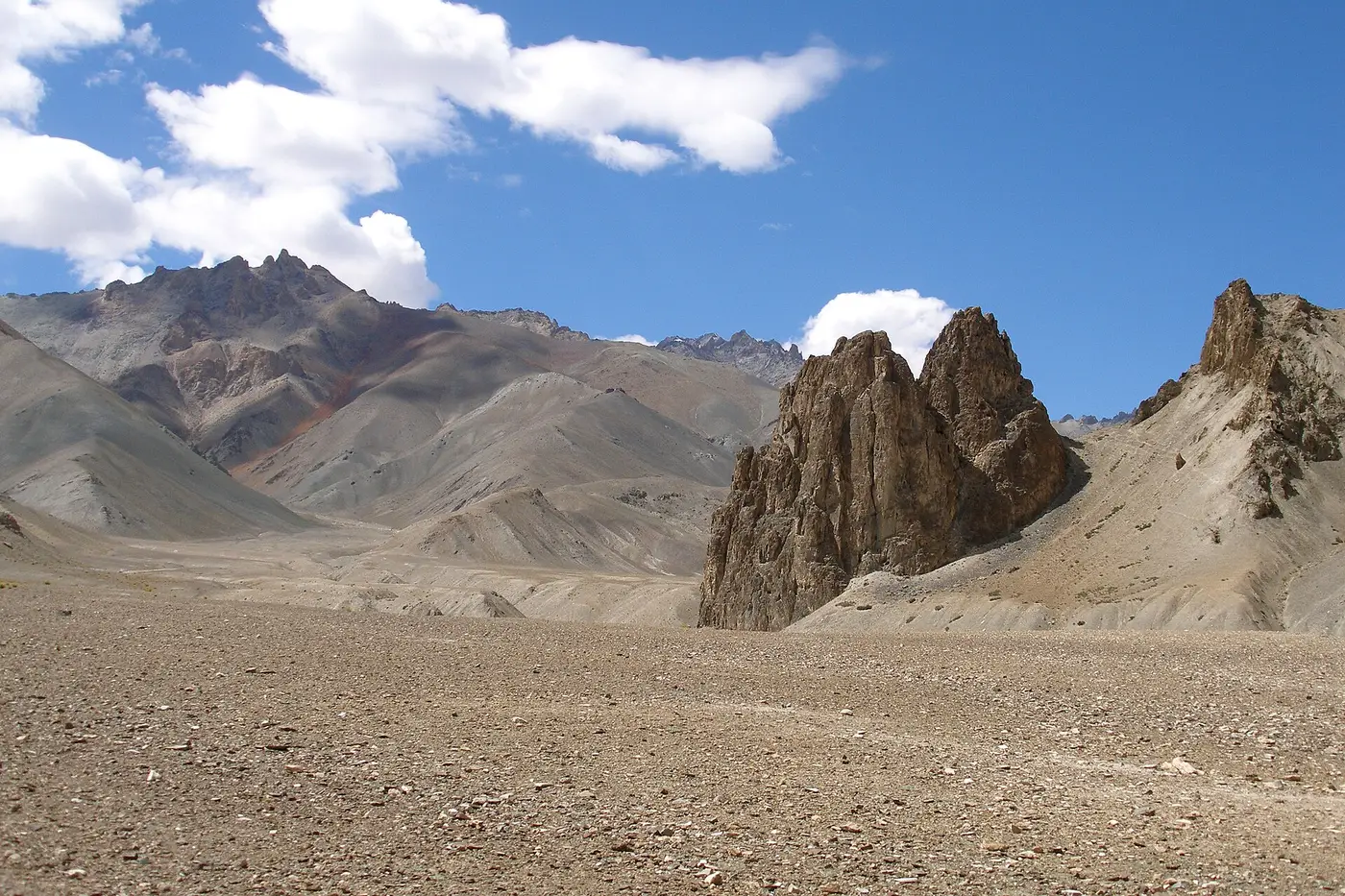
What sets Lamayuru apart from every other monastery town in Ladakh is the ground it stands on. The hills that ring the village aren't the sharp granite and schist of the wider Himalaya — they're soft, pale sedimentary formations, laid down when this entire basin was underwater and sculpted since into cones, ridges, and deep vertical gullies by millennia of wind, frost, and the occasional violent cloudburst.
Seen from the highway viewpoint just above the village, the effect is startling: a rippling, cratered expanse of grey-beige earth with almost no vegetation, folding away toward the mountains in a texture that genuinely does resemble lunar terrain. It's the reason every road trip itinerary through Ladakh flags Lamayuru as a must-stop — this is one of the very few places in the world where the ground itself is the attraction.
- Best viewpoint: The pull-off on NH1 just before the village, on the Leh-facing side, gives the classic wide shot of the formations with the monastery perched above them.
- Best light: Early morning and the last hour before sunset, when low-angle light deepens the shadows in every gully and ridge and turns the pale rock gold and rose.
- Best vantage: Climb to the monastery's upper terraces for an elevated view over the full sweep of the badlands — far better than the roadside stop for photography.
- Respect the terrain: The formations are soft and erode further with foot traffic. Stick to established paths rather than scrambling directly up the cones for a photo.
Lamayuru Monastery
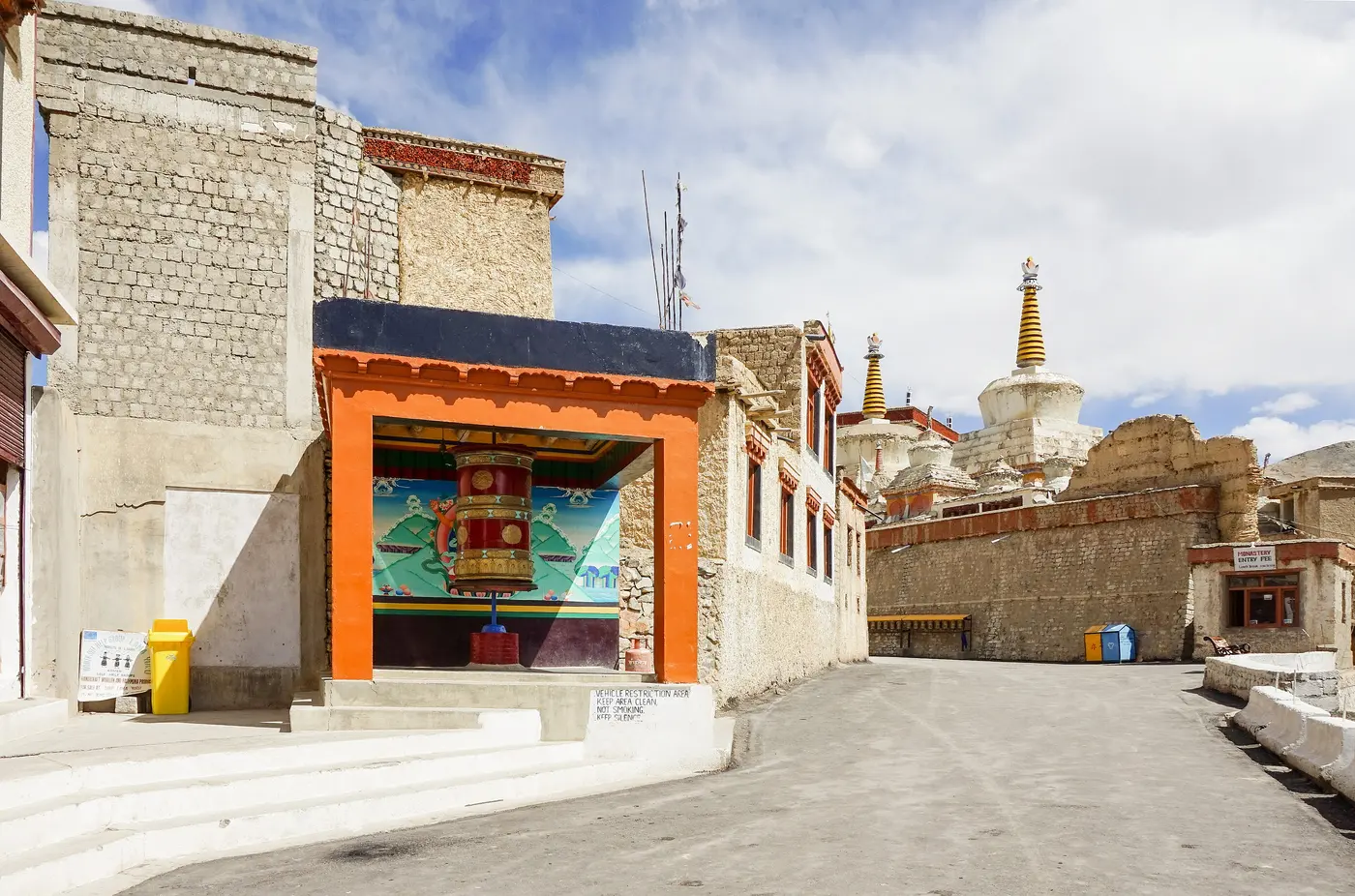
Lamayuru Monastery (Yuru Gompa) traces its roots to the 11th century, when the Kashmiri Buddhist master Naropa is said to have meditated in a cave on this site — a cave still preserved within the monastery complex today. Local tradition holds that the valley was once a lake, and that Naropa drained it, revealing the ground on which the monastery now stands; a version of the same "moon lake" story that gives the surrounding badlands their nickname. The site is generally accepted as the oldest continuously used monastery in Ladakh, and today it belongs to the Drikung Kagyu lineage of Tibetan Buddhism, though it is said to have started life earlier still, as a Bon site before its conversion.
At its peak, Lamayuru is believed to have housed several hundred monks across five separate colleges — an extraordinary scale for such a remote location. Numbers have dwindled since, but the monastery remains active, with a resident community of monks who maintain the prayer halls, run a small monastic school, and keep the daily rhythm of chanting and ritual that has continued here, with interruptions, for close to a thousand years.
Singhe Ghang & the Inner Chambers
The main temple building, known as Singhe Ghang (Seng-ge-sgang, "Lion's Fort"), crowns the rock outcrop at the heart of the complex and is the oldest surviving structure at Lamayuru. Inside, dim, butter-lamp-lit chambers hold statues of the Buddha, Avalokiteshvara, and Guru Rinpoche, along with faded but still striking wall murals depicting the lives of the masters connected to the monastery's founding.
A narrow passage leads to Naropa's meditation cave, a low, dark chamber tucked into the rock that predates the temple built around it. Visitors can also walk the labyrinth of monastic quarters, prayer wheels, and courtyards that spill down the hillside below the main temple, giving Lamayuru its distinctive tiered, almost fortress-like silhouette when viewed from the highway below.
- Entry: A small entry fee applies; photography inside the main halls is often restricted — ask before shooting.
- Timing: Open through daylight hours; early morning, before tour groups arrive from Leh, is quietest.
- Dress: Modest clothing, shoes off before entering prayer halls.
Yuru Kabgyat Festival
Once a year, Lamayuru's usually quiet courtyard fills with colour and drums for the Yuru Kabgyat festival — two days of cham, the masked ritual dances performed by monks in elaborate costumes representing wrathful deities, skeleton figures, and protector spirits. The dances re-enact the triumph of Buddhist teaching over hostile forces and culminate in the ceremonial destruction of a sacrificial effigy, a symbolic clearing of obstacles for the year ahead.
The festival is held according to the Tibetan lunar calendar, typically falling in summer (often around July), and dates shift from year to year — check locally or with a Ladakh-based operator a season ahead if you want to plan your trip around it. Unlike Hemis, Ladakh's largest and most visited festival, Yuru Kabgyat still draws a mostly local and pilgrim crowd, which makes it a rarer, more intimate way to see cham performed in its original context.
Trekking from Lamayuru
Beyond its highway-stop reputation, Lamayuru is also the trailhead for two of Ladakh's most rewarding short treks — routes that thread through the same eroded terrain and remote side valleys, connecting the village to the Indus and Zanskar river systems on foot.
Lamayuru–Alchi Trek
The classic Lamayuru–Alchi trek is a 3–4 day route that climbs out of the moonland via the Prinkiti La and Konzke La passes before dropping through remote hamlets — Shilla, Sumdah Chenmo, Sumdah Choon — toward the Indus Valley near Alchi. It's often used as an introductory Ladakh trek: high enough to feel properly wild, but shorter and less logistically demanding than routes into Markha Valley or Zanskar.
- Duration: 3–4 days
- Max altitude: Konzke La, around 4,900 m
- Difficulty: Moderate — good for a first high-altitude trek with prior acclimatisation in Leh
- Season: June to early October
Lamayuru–Chilling Trek
A shorter variant of the same route, the Lamayuru–Chilling trek follows the first stages toward Sumdah before branching south into the gorge that leads down to Chilling, a small village on the Zanskar River known for its metalworking tradition and as a popular put-in point for rafting trips. At 2–3 days, it's a good option if you're short on time but still want a genuine taste of trekking through Ladakh's back-country.
Wanla Village & Monastery
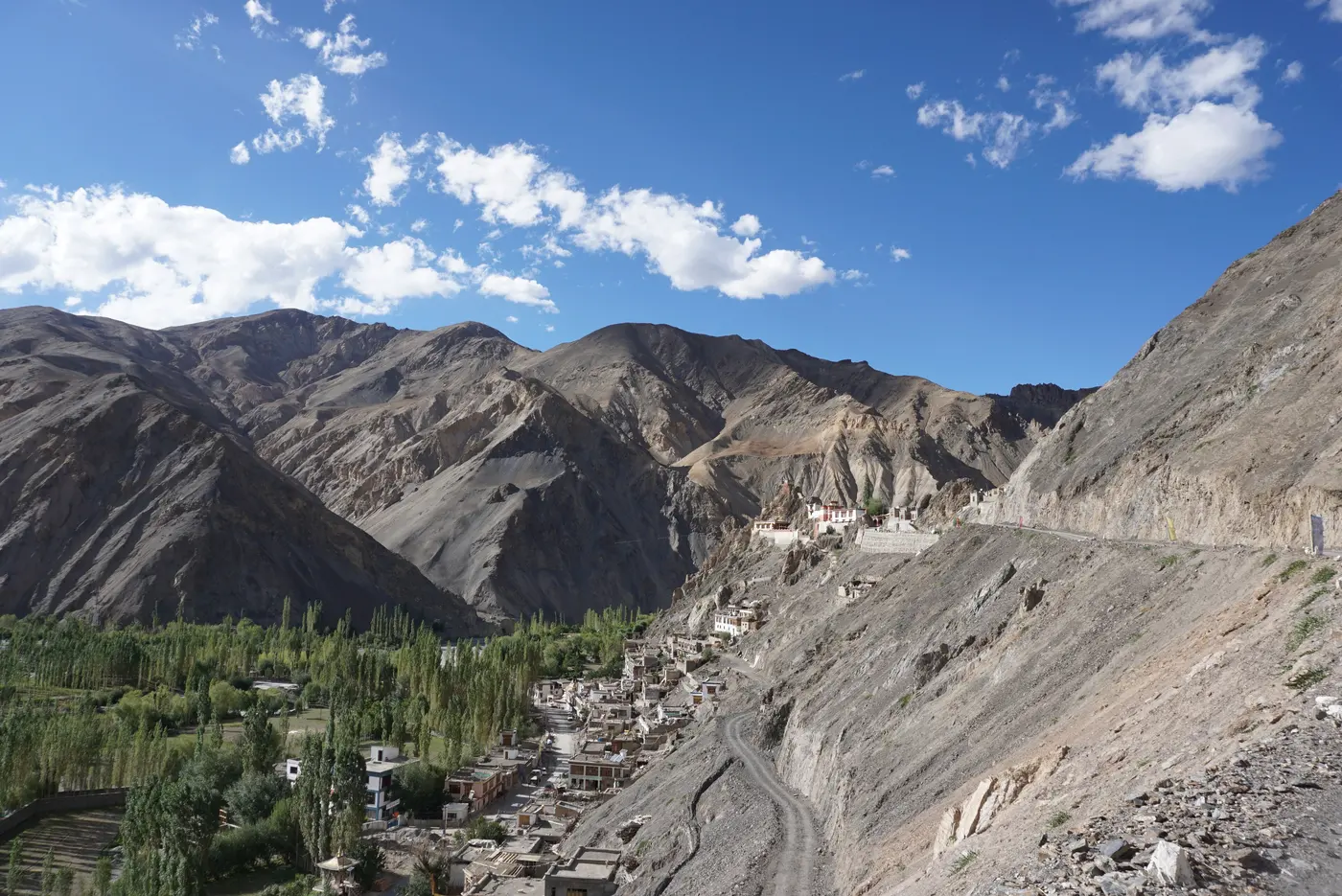
About 8 km back toward Leh, just off the highway, the small village of Wanla is an easy add-on that most Lamayuru-bound travellers skip entirely — which is exactly why it's worth the detour. Wanla's own monastery, perched on a rocky spur above the village, houses a three-storey temple attributed to Rinchen Zangpo, the great 10th–11th century translator credited with founding many of Ladakh's earliest monasteries, including Alchi.
The main image inside is a large statue of Avalokiteshvara, the bodhisattva of compassion, flanked by older murals in a style closely related to Alchi's famous paintings. Wanla receives a fraction of Lamayuru's visitors, and the walk up through the village — past barley terraces, a ruined fort on the ridge above, and stone houses stacked along the hillside — is as much the point as the temple itself.
- Distance from Lamayuru: ~8 km (15–20 minutes by road)
- Combine with: Alchi Monastery, a further 45 minutes toward Leh, for a full morning of early Ladakhi Buddhist heritage sites
Where to Stay in Lamayuru
Lamayuru is a small village, and accommodation is correspondingly modest — think simple guesthouses and homestays rather than resorts. That's part of the appeal: staying here puts you a five-minute walk from the monastery gate and lets you see the moonland at dawn and dusk, when the highway crowds have gone.
- → Village homestays (bed + meals)
- → Basic guesthouses near the monastery road
- → Dorm-style stops used by trekking groups
- → Small family-run hotels on the highway
- → Guesthouses with attached bathrooms
- → Rooms with monastery or moonland views
- → Base in Leh, drive out for a half-day visit
- → Combine with Alchi + Basgo on the same trip
- → Best if you're short on time
What to Eat in Lamayuru
Don't expect a restaurant scene — Lamayuru's food options are a handful of simple guesthouse kitchens and highway dhabas serving the same hearty, high-altitude Ladakhi staples you'll find across the region.
- Thukpa: Tibetan noodle soup, the reliable go-to at every roadside stop along NH1 — warming and filling after a cold morning at the viewpoint.
- Skyu: Ladakh's thick, hand-shaped pasta simmered in vegetable broth — traditional homestay fare, best eaten exactly where it's made.
- Momos: Steamed dumplings, usually vegetable or potato-filled in villages this remote, available at most guesthouses on request.
- Butter tea: Salted, yak-butter churned tea offered in most homestays and inside the monastery itself — an acquired taste, but worth trying once at the source.
- Carry your own snacks: Between meal times, options are limited. Pack dry fruit, energy bars, and extra water if you're stopping only for a few hours.
Budget Breakdown for Lamayuru
| Expense | Budget | Mid-Range | Comfort |
|---|---|---|---|
| Accommodation/night | ₹600 | ₹2,000 | ₹4,500 |
| Food/day | ₹350 | ₹700 | ₹1,500 |
| Monastery entry | ₹30–₹50 | ₹30–₹50 | ₹30–₹50 |
| Taxi from Leh (return) | ₹3,500 (shared) | ₹6,000 | ₹9,000 (private, full day) |
| Guide (for trekking) | — | ₹1,500/day | ₹2,500/day |
| Daily total (staying over) | ₹1,000 | ₹2,750 | ₹6,050 |
* Figures assume a Lamayuru visit as part of a wider Ladakh trip; a same-day round trip from Leh mostly incurs transport and food costs only.
Essential Travel Tips for Lamayuru
- Acclimatise before you arrive: Lamayuru sits above 3,500 m. If you're coming straight off a flight into Leh, spend at least a day or two acclimatising there before heading out on the highway.
- Fuel up in Leh or Kargil: There is no reliable petrol station in Lamayuru itself — fill the tank before setting out from either direction.
- Carry cash: There are no ATMs in the village. Small guesthouses and dhabas rarely accept cards or digital payments.
- Mobile signal is patchy: BSNL has the most reliable coverage along this stretch of NH1; don't count on connectivity once you're off the main road or on a trek.
- Layer up: Even in summer, mornings and evenings at this altitude are cold. Carry a warm layer regardless of how warm the midday drive feels.
- Time your photos: The moonland photographs best in soft, low-angle light — early morning or the last hour before sunset — rather than the flat glare of midday, which is when most highway traffic passes through.
✅ Do
- →Stay a night if you can, for sunrise over the moonland
- →Climb to the monastery's upper terraces for the best view
- →Visit Wanla monastery on the same trip — it's close and quiet
- →Check Yuru Kabgyat festival dates ahead if you want to time it
- →Carry warm layers even in summer
- →Hire a registered guide for the Alchi or Chilling treks
❌ Don't
- →Rush through in 15 minutes and miss the monastery interior
- →Scramble directly onto the moonland formations — they erode easily
- →Photograph inside prayer halls without checking first
- →Assume you'll find an ATM or fuel in the village
- →Attempt the Alchi or Chilling trek without a guide
- →Skip layering up — it gets cold fast once the sun dips
Frequently Asked Questions
How many days do I need for Lamayuru?
Most travellers treat Lamayuru as a 20-minute photo stop between Leh and Kargil, and that's enough to see the moonland viewpoint and take a quick look at the monastery. But staying just one night — in a budget guesthouse or homestay — lets you catch the monastery at dawn without another visitor around and gives you time to add Wanla or a short trek, which the day-trip crowd misses entirely.
What is the best time to visit Lamayuru?
Mid-to-late September is the recommended window — the monastery is quiet, the moonland glows amber in the evening light, and the Srinagar–Leh highway is still comfortably open. July–August is peak season and also when the Yuru Kabgyat festival usually falls, so plan around then if you want the masked cham dances specifically.
How do I reach Lamayuru from Leh?
Lamayuru sits directly on NH1, the Srinagar–Leh highway, about 125 km west of Leh and roughly 3 hours by road via Nimmu, Basgo, Khaltse, and Wanla. Shared taxis and local buses run the route, though a private cab or self-drive lets you stop at Magnetic Hill, Sangam, and Alchi along the way.
Why is Lamayuru called the Moonland?
The hills around Lamayuru have been eroded by wind and water into pale, cracked sedimentary ridges and cones — the remains of what geologists believe was once a vast Himalayan lake. The bare, cratered result looks so unearthly that everyone who passes through calls it the Moonland, and it's visible from a pull-off on NH1 just before the village.
When is the Yuru Kabgyat festival held?
Yuru Kabgyat follows the Tibetan lunar calendar and typically falls in summer, often around July, with exact dates shifting year to year — check locally or with a Ladakh-based operator a season ahead. It's two days of masked cham dances performed by monks, drawing a mostly local and pilgrim crowd rather than the bigger tourist numbers seen at Hemis.
What treks start from Lamayuru?
Lamayuru is the trailhead for two well-known short treks: the classic Lamayuru–Alchi trek (3–4 days, crossing Konzke La at around 4,900 m) and the shorter Lamayuru–Chilling trek (2–3 days, ending at the Zanskar River). Both require a local guide since trails are unmarked in places and mobile signal disappears almost immediately outside the village.
Is Lamayuru Monastery really the oldest in Ladakh?
Lamayuru Monastery is generally accepted as the oldest continuously used monastery in Ladakh, tracing its roots to the 11th century and the Kashmiri Buddhist master Naropa, who is said to have meditated in a cave still preserved within the complex today. It belongs to the Drikung Kagyu lineage, though tradition holds it began earlier still as a Bon site.
Published by the Kudozz Club editorial team · Last updated · How we research our guides
Want us to plan this trip for you?
Tell Kudozz Club where you want to go and what kind of trip you’re looking for. We’ll build a Lamayuru and Ladakh itinerary around your dates and budget.
Continue Exploring
View all guides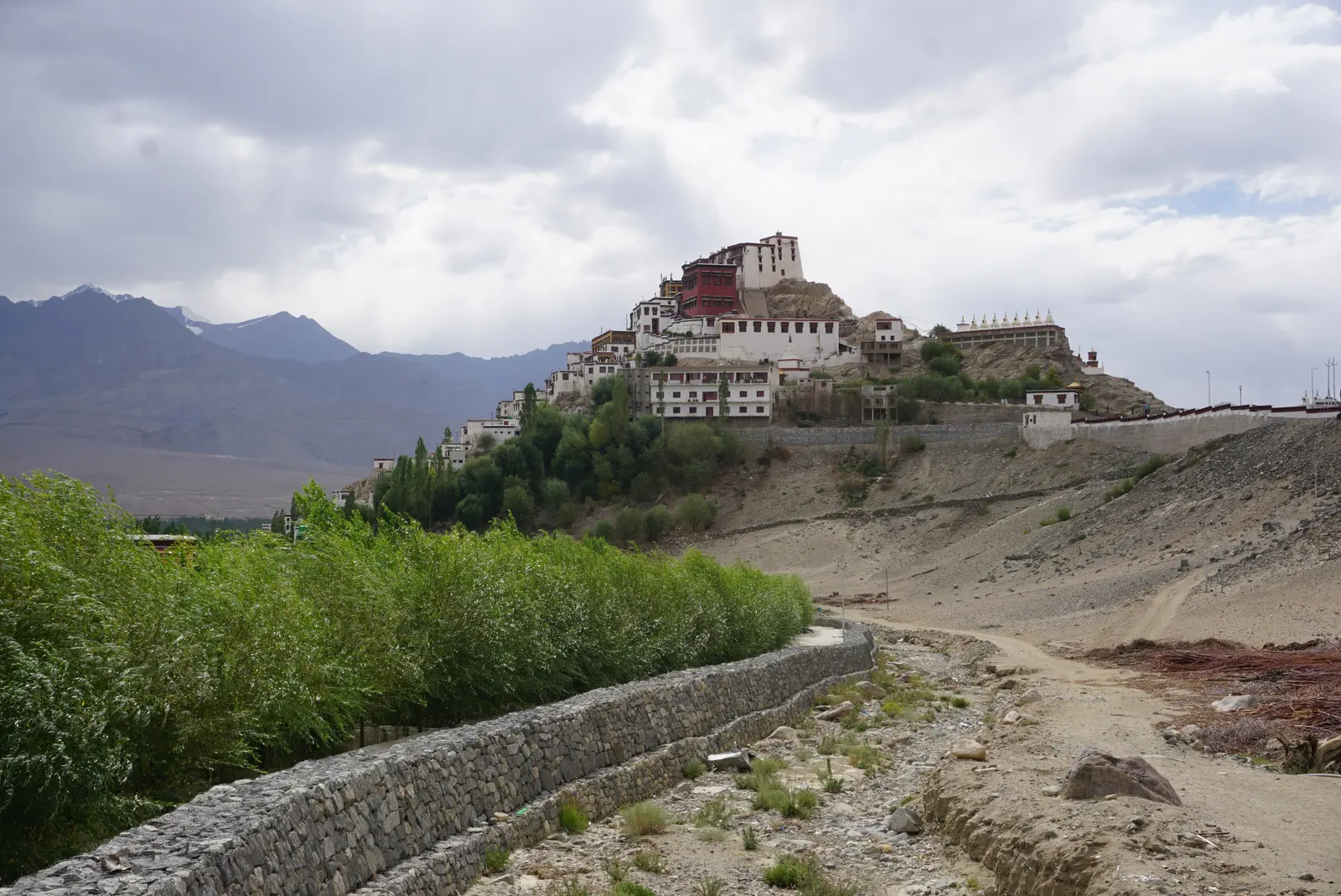 Heritage
Thiksey Travel Guide: Monastery, Morning Prayers & Maitreya Buddha
Twelve storeys of whitewashed walls climb a hillside above the Indus like a mini Potala Palace — home to a 15-metre golden Buddha and the most spellbinding 6 AM prayer ceremony in Ladakh.
 Heritage
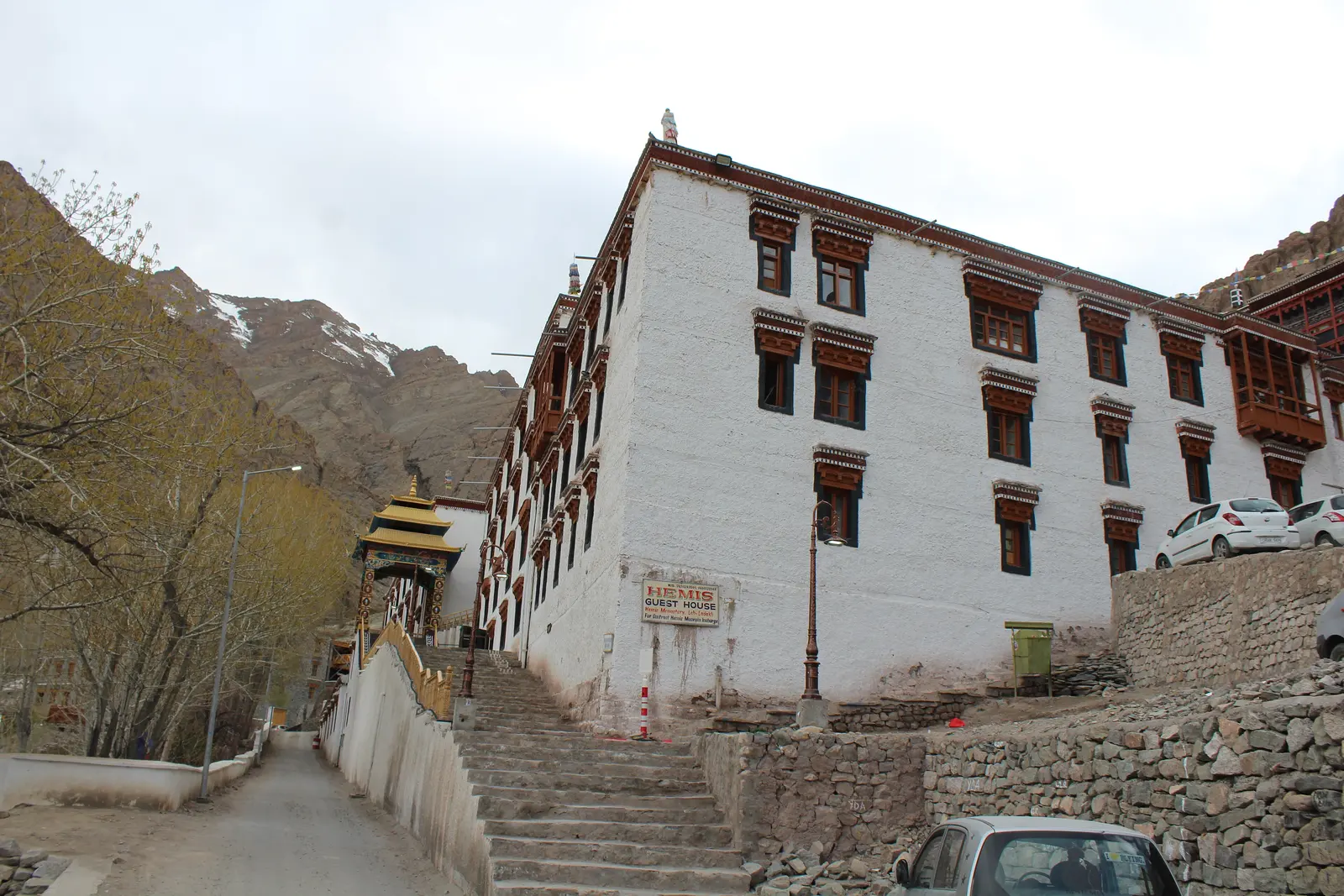
Hemis Travel Guide: Monastery, Festival & Snow Leopard Country
Ladakh's largest and wealthiest monastery, its most spectacular masked-dance festival, and the wild high-altitude kingdom of the snow leopard — all hidden in one secluded valley.
 Heritage
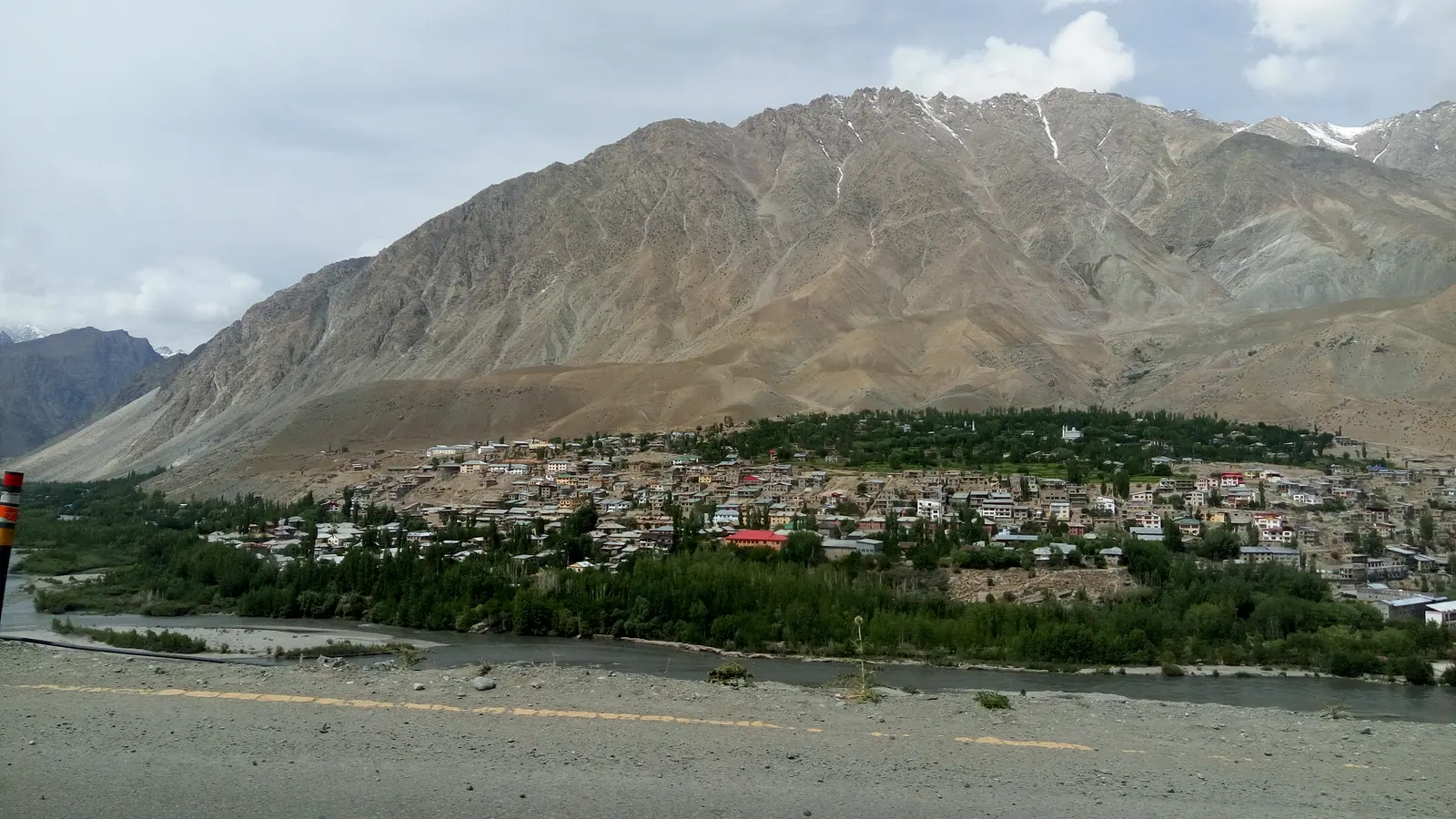
Kargil Travel Guide: Gateway to Zanskar & the Srinagar-Leh Highway
Halfway between Srinagar and Leh, where Balti Muslim and Ladakhi Buddhist worlds meet amid apricot orchards — Kargil is the highway town most travellers rush through, and the doorway to remote Zanskar.
 Road Trips
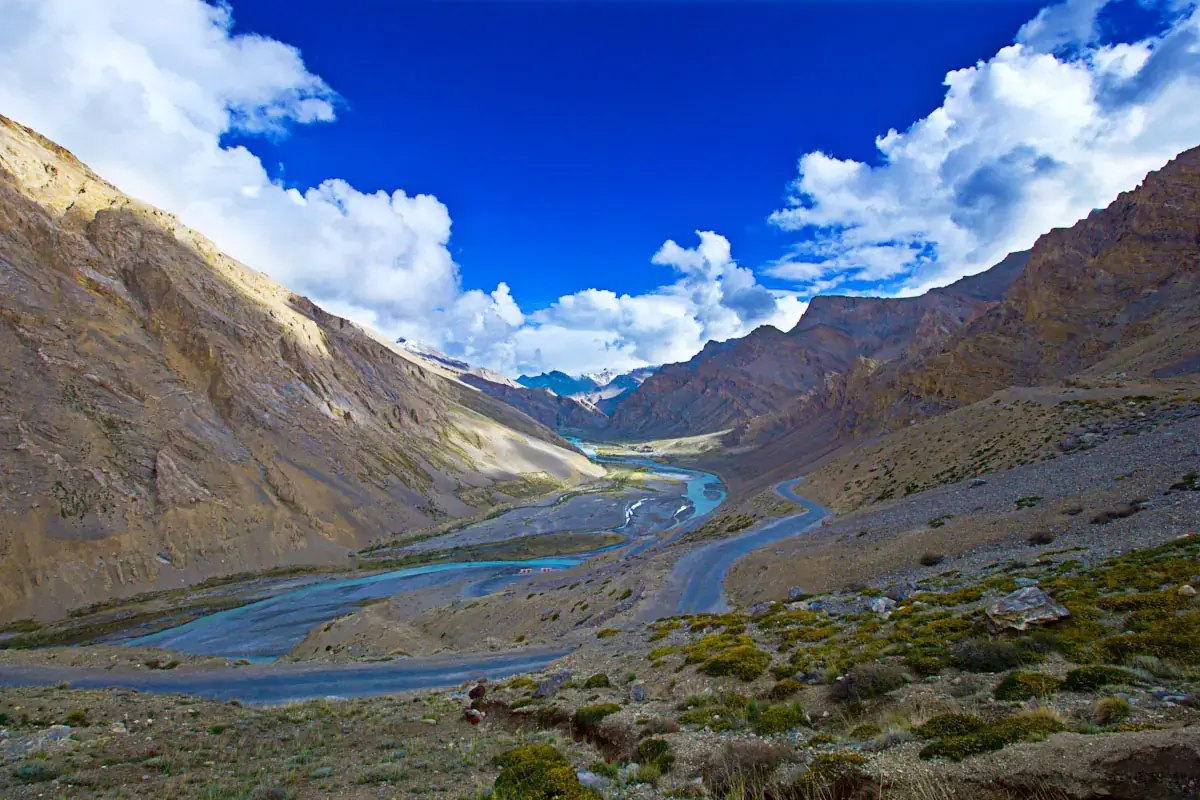
Manali to Leh Road Trip: Passes, Stops and Acclimatisation
A route guide to the Manali to Leh road trip: the route through the Atal Tunnel, Keylong and Jispa, over Baralacha La, Nakee La, Lachulung La and Tanglang La via Sarchu, Pang and the More Plains, approximate distance and driving time, where to stop overnight, fuel planning, altitude and acclimatisation, the opening season, the Delhi approach and how the route fits into a Ladakh trip.