Why Visit Thiksey?
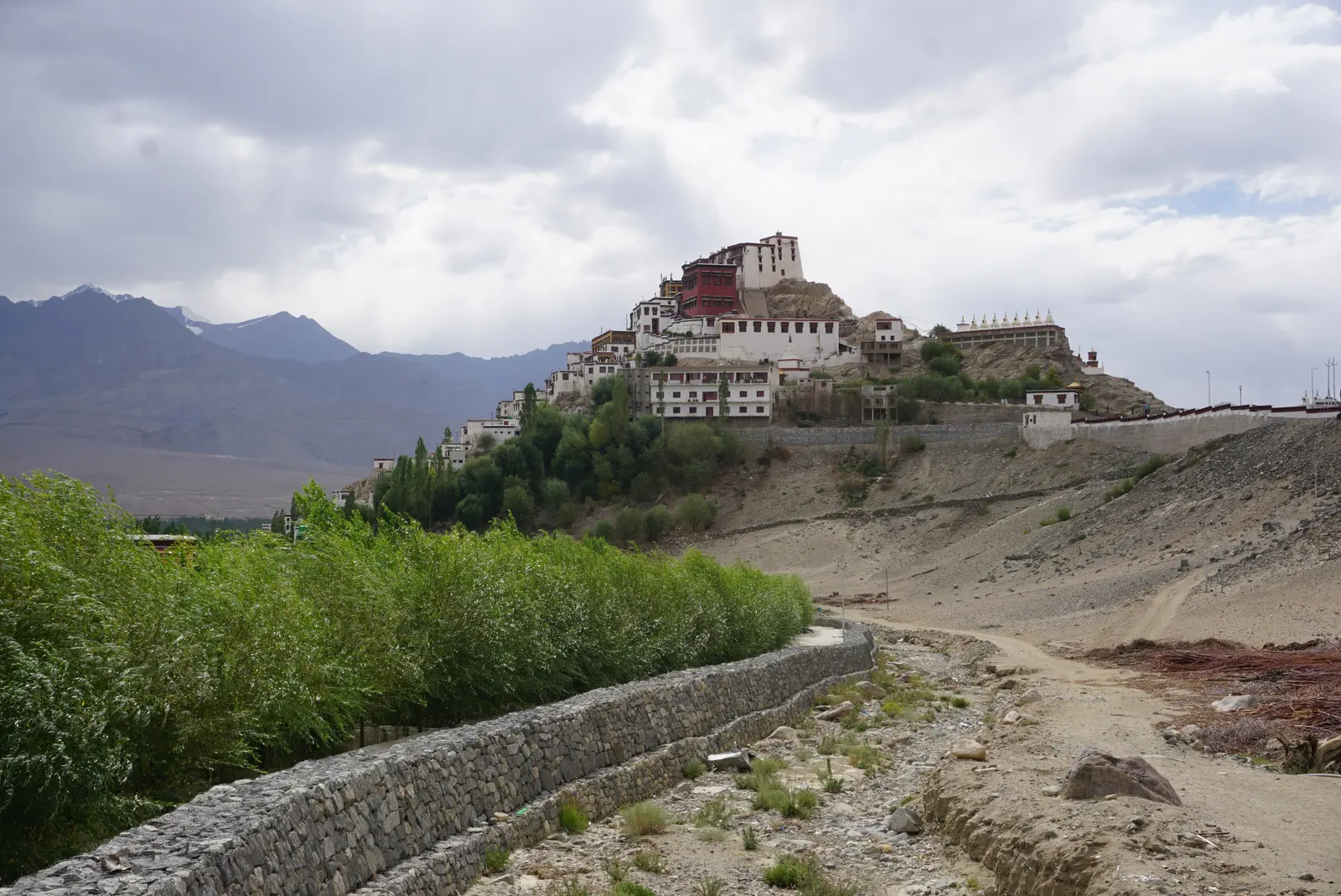
Twelve kilometres southeast of Leh, along the wide, silty ribbon of the Indus, a hillside erupts into whitewashed walls, maroon window frames, and gold finials, rising storey upon storey until it seems to grow directly out of the rock. This is Thiksey Monastery(Thiksey Gompa) — and the resemblance to the Potala Palace in Lhasa is not a marketing line, it is the first thing every visitor says out loud the moment the bus rounds the bend and the whole complex comes into view.
Thiksey belongs to the Gelugpa order — the "Yellow Hat" school of Tibetan Buddhism founded by Tsongkhapa, the same lineage as the Dalai Lama — and it is one of the largest, wealthiest, and most active monasteries in central Ladakh. Roughly eighty monks live and study here today, and unlike some of Ladakh's more remote gompas, Thiksey's rhythms of daily life are still visible: robes drying on rooftop lines, novice monks sprinting up stairwells late for class, the low murmur of chanting drifting out of open doorways at dawn.
What sets Thiksey apart from the dozens of other monasteries scattered across the Indus valley is the combination of three things found nowhere else in one place: a genuinely spectacular 12-storey silhouette, a 15-metre seated Maitreya Buddha housed in its own dedicated hall, and a 6 AM prayer ceremony that visitors can quietly sit in on. It is, without much competition, the single best half-day trip out of Leh.
🏯 Thiksey at a Glance
Planning a pilgrimage? See our guide to Buddhist sites in India.
Best Time to Visit Thiksey
Thiksey is technically a year-round destination — the monastery never closes and the monks pray every single morning of the year, snow or shine. But road conditions, light, and comfort vary hugely by season.
Leh–Manali and Leh–Srinagar highways are both open, tour buses run daily to Thiksey, and the surrounding barley fields turn a startling green against the brown hills. Mornings are cool, midday is warm. Busiest time of year.
Crowds thin dramatically after early September, skies stay crisp and clear, and the poplar trees along the Indus turn gold. Prayer halls are quieter and easier to photograph without a scrum of tourists.
Leh empties out and temperatures fall well below freezing, but Thiksey is open and utterly silent — just you, the monks, and snow dusting the tiered rooftops. Requires serious cold-weather gear and flexibility around flight delays.
Snow is melting off the high passes, the valley is still brown and dusty rather than green, but hotel prices are low and the monastery itself is as accessible as ever since it sits right on the valley floor near Leh.
Our pick: Mid-September. The tourist convoys that clog the courtyard in July have thinned out, the light is gentler, and you can sit through the entire morning prayer ceremony with barely another visitor in the room.
How to Reach Thiksey
Thiksey is one of the easiest monasteries in Ladakh to reach — no permits, no rough tracks, no high passes, just a short, scenic drive along the Indus from Leh.
- From Leh by taxi: The most common route follows the Leh–Manali highway southeast for about 19 km (~35–40 minutes). A shorter, quieter road hugging the river cuts this to roughly 12 km. A round trip taxi with waiting time costs ₹1,200–₹1,800.
- By shared taxi/bus: Local buses and shared sumos run from Leh's main bus stand toward Karu and Hemis, passing directly below Thiksey — ask the driver to drop you at the monastery gate. Fare is ₹30–₹50.
- By rented scooter/motorbike: The road is flat, well-paved, and low-altitude by Ladakh standards, making it one of the easiest self-drive day trips out of Leh. Rentals run ₹800–₹1,500/day.
- Combine with other sights: Thiksey sits on the same road as Shey Palace and Hemis Monastery, so most visitors bundle all three into a single half- or full-day loop from Leh.
The 6 AM Morning Prayers
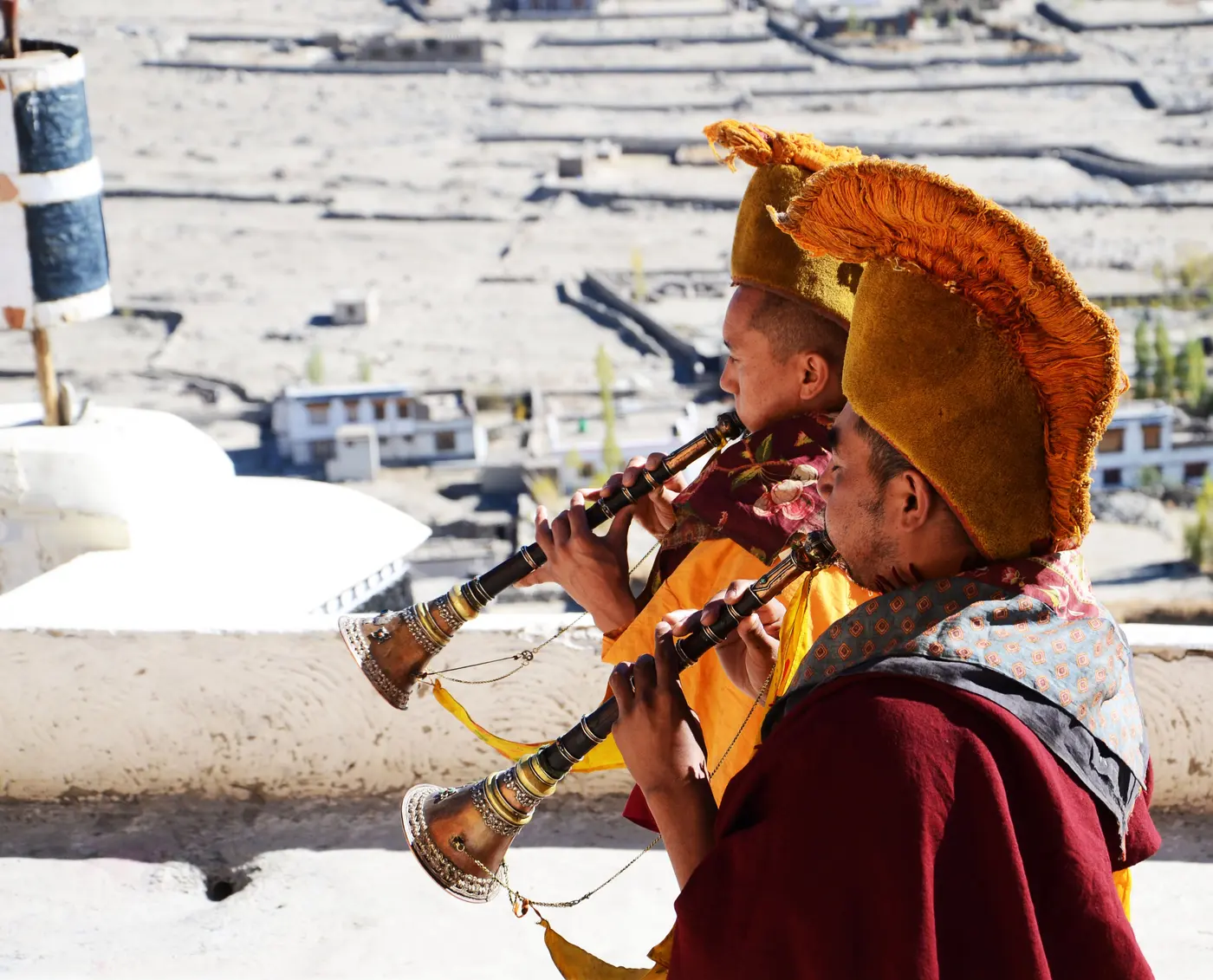
If you do only one thing at Thiksey, make it this. Every morning without fail, the monastery's monks gather in the main dukhang (assembly hall) for the first prayer session of the day — and visitors are welcome to slip in quietly and sit along the back wall.
Arrive by 5:45 AM if you can. The hall is dim, lit mostly by butter lamps, and cold enough that a down jacket is not optional even in July. Long horns called dungchen sound first, low and resonant, echoing off the surrounding hills before the sun has even cleared the ridgeline. Monks of every age — from small boys of seven or eight to elders who have chanted here for decades — file in and take their seats in rows, wrapped in maroon robes against the cold.
What follows is close to an hour of chanting, interspersed with cymbals, drums, and the occasional clatter of a young monk being handed a cup of butter tea to keep him awake. It is unrehearsed, unhurried, and entirely uninterested in whether anyone is watching — which is exactly what makes it feel real rather than staged for tourists.
🙏 Attending the Prayers: Practical Notes
- Timing: Ceremony typically runs 6:00–7:00 AM; arrive by 5:45 AM for a seat with a clear view.
- Dress: Cover shoulders and knees; remove shoes before entering the hall.
- Photography: Generally permitted without flash, but always glance for signage or ask a monk at the door — some sessions restrict cameras during specific rituals.
- Etiquette: Sit along the back or side walls, stay silent, and don't step over seated monks or ritual objects. Leave quietly if you need to exit early.
- Warmth: The hall is unheated — bring a proper jacket even in peak summer.
By the time the ceremony winds down, the sun is usually just cresting the eastern ridge, throwing long gold light across the courtyard outside — which happens to be the best possible moment to walk out and photograph the monastery's tiered facade.
The Maitreya Buddha Statue
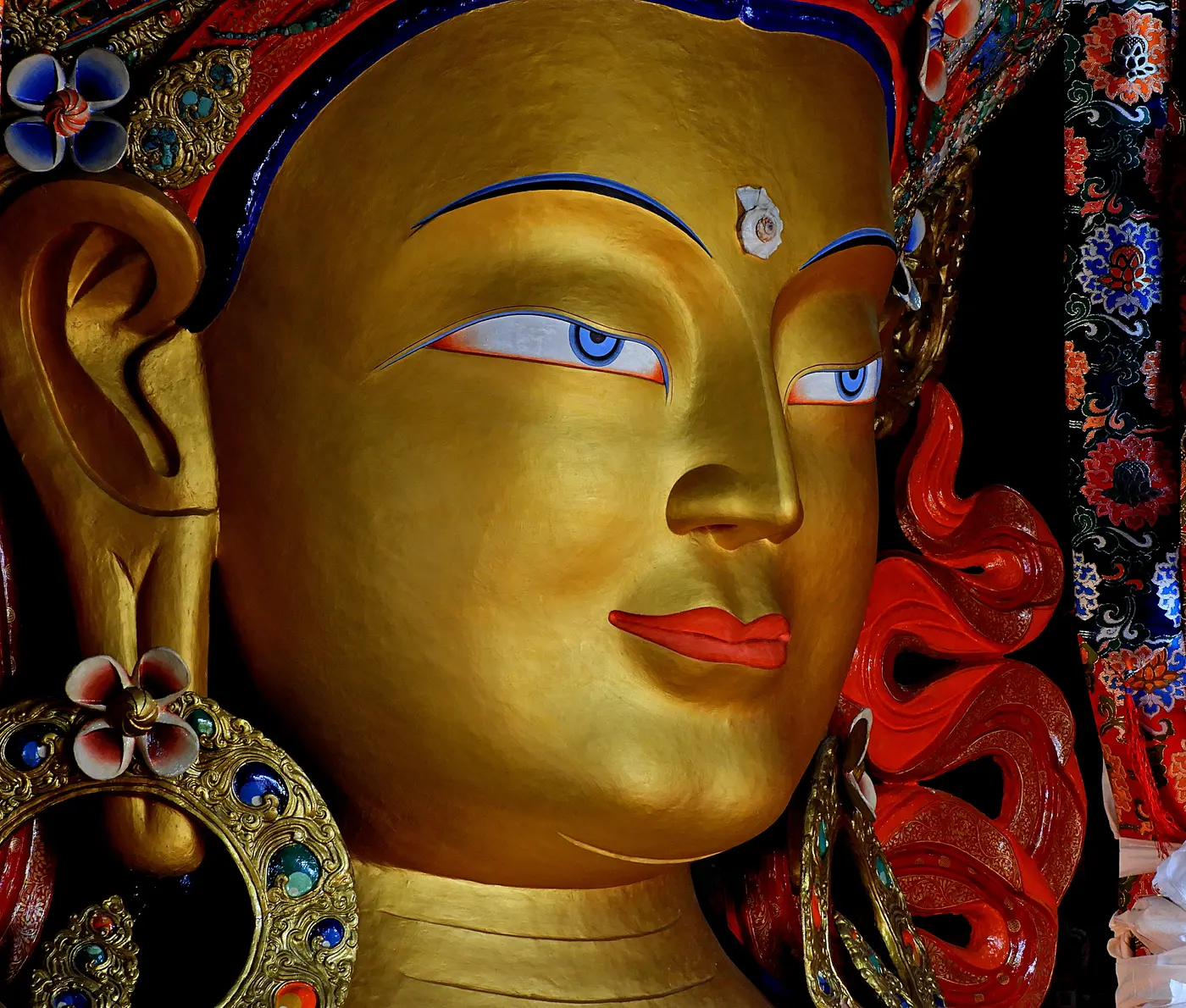
Thiksey's single most famous feature sits inside a dedicated two-storey hall built in the 1970s specifically to house it: a 15-metre-tall seated statue of Maitreya, the Buddha of the future. It is the largest such statue in Ladakh and one of the most striking pieces of religious art in the entire Indus valley.
The statue was consecrated in the presence of the 14th Dalai Lama, and its scale is almost disorienting up close — you enter at the level of its lap and have to climb an internal staircase, wrapped around the hall's interior, to reach eye level with its serene, gilded face. Faded murals of protector deities and mandalas cover the surrounding walls, lit by the soft glow of hundreds of butter lamps.
Give this hall at least fifteen to twenty minutes. Climbing the stairwell floor by floor and watching the statue's proportions shift as you ascend is, on its own, worth the trip out from Leh.
Architecture & Museum
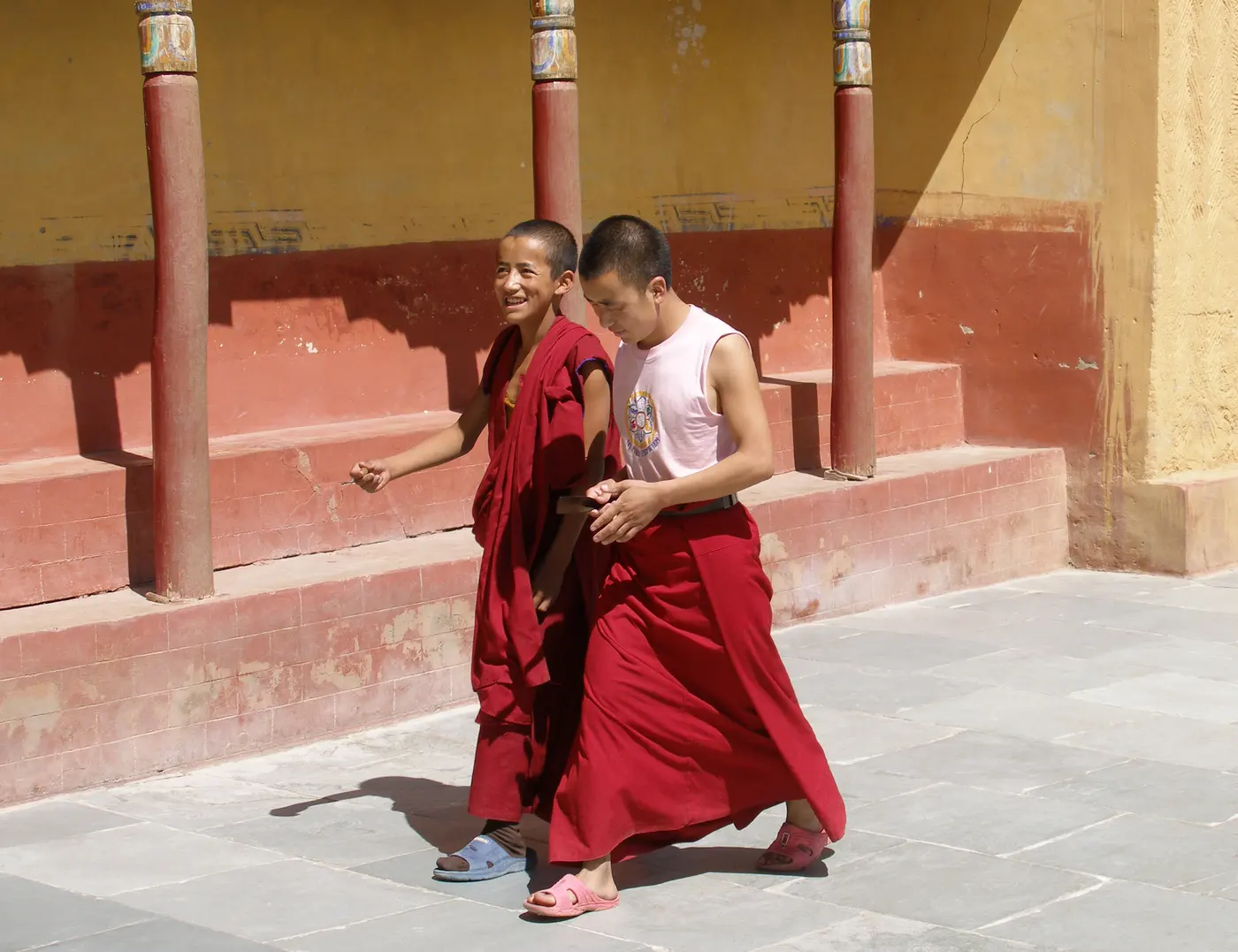
Thiksey's twelve-storey silhouette is no accident — the complex was deliberately built to echo the Potala Palace, tier upon tier of monastic buildings, assembly halls, and monks' quarters stacked up a natural hillside outcrop and connected by a maze of narrow stairwells, courtyards, and covered walkways.
Wandering the complex feels less like visiting a single building and more like exploring a small hillside village. Beyond the main dukhang and the Maitreya hall, look for the smaller Lakhang Nyerma chapel, the row of stupas lining the approach path, and the monastery's small museum, which holds a genuinely excellent collection: centuries-old thangka paintings, illuminated manuscripts, ceremonial masks used in the monastery's annual Gustor festival (held around October/November), ancient weapons, and ritual objects including conch shells and hand drums.
Unlike some Ladakhi monasteries where photography is tightly restricted, Thiksey's public courtyards and exterior are fair game throughout the day — it's the interior halls and museum where rules tighten, so always check before raising a camera indoors.
Rooftop Views of the Indus Valley
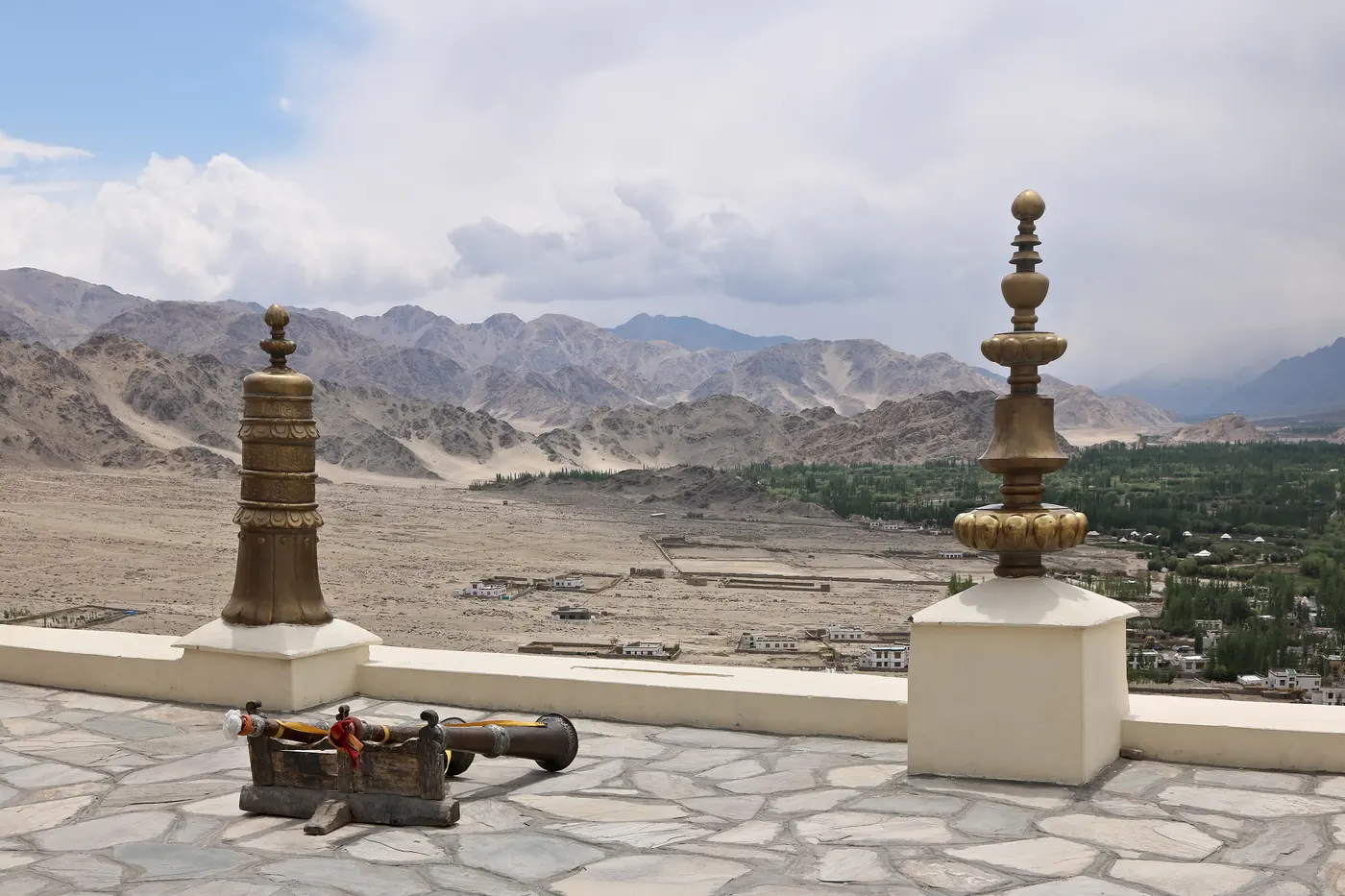
Climb to the uppermost terraces of the monastery and the reward is one of the finest panoramas in central Ladakh: the wide, braided silver thread of the Indus River cutting through a valley floor of green barley fields and poplar groves, ringed by the barren, honey-and-rust coloured peaks of the Ladakh and Zanskar ranges, with the distant white outline of the Stok Kangri massif visible on clear days.
Strings of prayer flags snap in the wind between the rooftop chortens, and it's common to find a monk or two sitting quietly with a cup of tea, watching the same view they've grown up with. Give yourself time here — it is the kind of spot that rewards sitting still rather than rushing through for a photo.
Nearby: Shey Palace & Stakna Monastery
Because Thiksey sits directly on the main road between Leh and Hemis, it pairs naturally with two other worthwhile stops — either as a quick add-on or as part of a fuller half-day loop.
Shey Palace
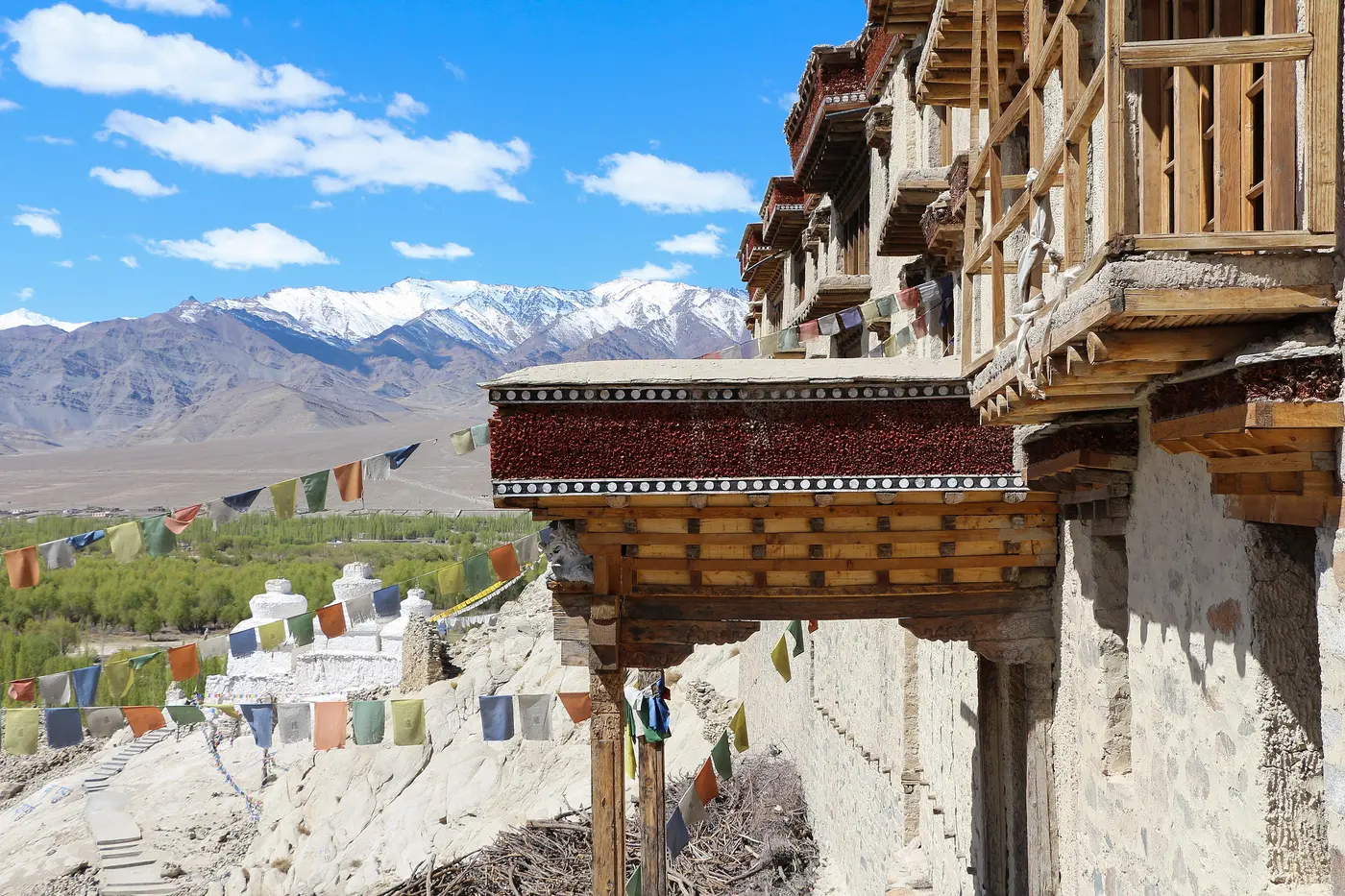
About 7 km back toward Leh, Shey was once the summer capital of the Namgyal dynasty, the royal family that ruled Ladakh for centuries. The palace itself is largely ruined and atmospheric, but its temple houses a beautiful gilded copper Buddha statue nearly as impressive as Thiksey's Maitreya. Worth 30–45 minutes.
Stakna Monastery
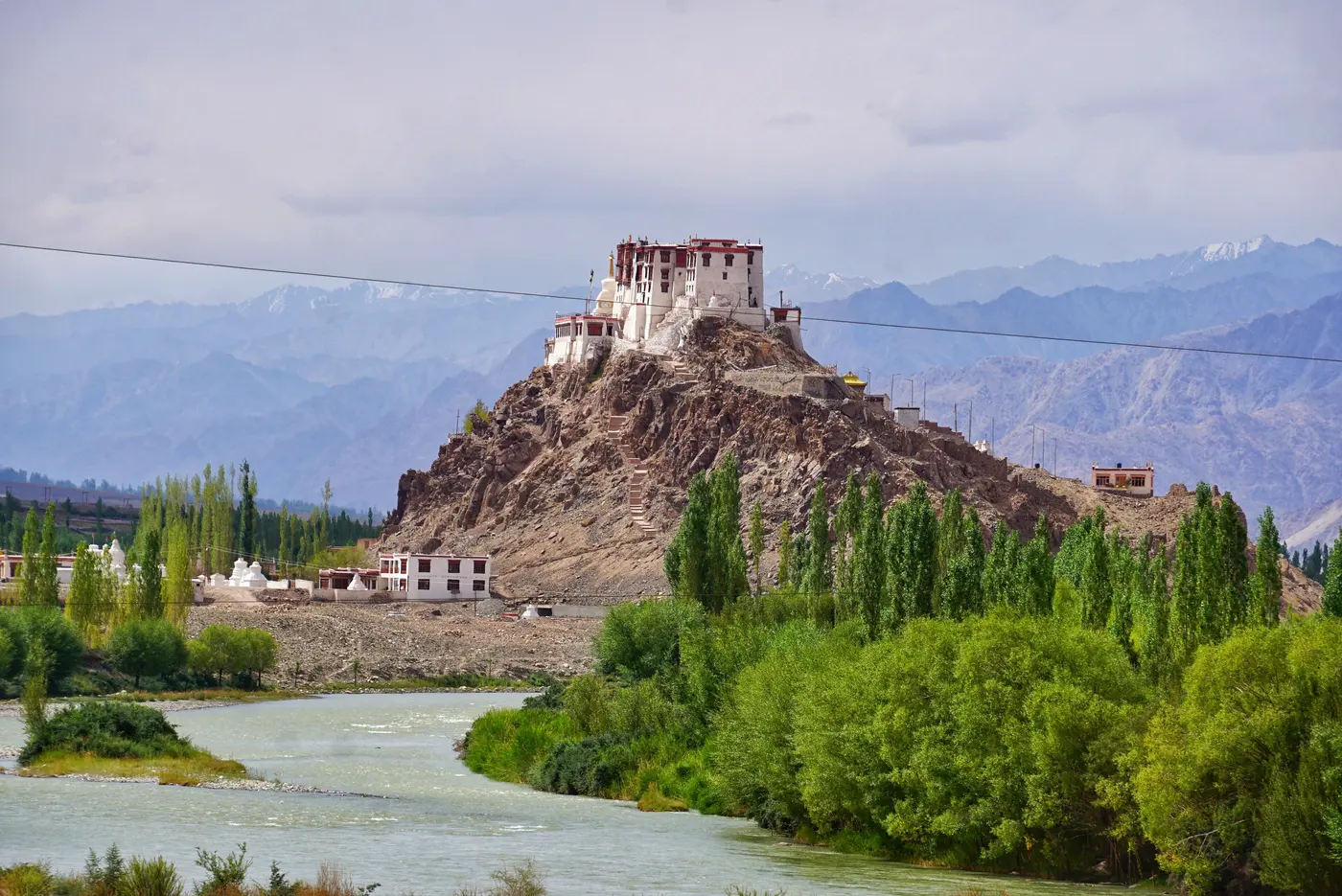
A short drive further along the Indus, Stakna sits on a small hilltop shaped, according to local lore, like a tiger's nose — which is what its name means. It belongs to the Drukpa Kagyu lineage (unlike the Gelugpa monasteries nearby) and is far quieter than Thiksey, making it a peaceful counterpoint if you want a slower, less-visited monastery experience on the same day.
Best Photography Times
Thiksey photographs beautifully at almost any hour, but two windows stand out from experience:
- Just after sunrise (7:00–8:00 AM): Right as the morning prayer session ends, low gold light rakes across the whitewashed tiers from the east, throwing deep shadows into the window recesses and making the whole complex glow.
- Late afternoon (4:30–6:00 PM): The sun swings around behind the monastery, silhouetting the prayer flags and chortens on the rooftop against a warm sky — excellent for wide shots taken from the road below looking up at the full 12-storey profile.
Midday light, by contrast, is harsh and flattens the architecture's tiered shadows — if your schedule allows only one visit, choose morning.
Where to Stay
Thiksey has no real hotel infrastructure of its own — almost everyone visits as a day trip from Leh, which has the region's full range of accommodation just 30–40 minutes away. If you're determined to be closer for the 6 AM prayers, a handful of quiet homestays and guesthouses have sprung up in Thiksey village and neighbouring Karu.
- → Guesthouses in Leh's Changspa area
- → Village homestays in Thiksey/Karu
- → Backpacker hostels near Leh Market
- → Boutique hotels in Leh's Fort Road area
- → Karu roadside resorts
- → Riverside guesthouses along the Indus
- → Leh boutique heritage properties
- → Luxury tented camps near Stakna
- → Premium resorts overlooking the Indus
Food Near Thiksey
Don't expect a café scene at the monastery gate — dining here is simple, local, and best paired with the monastery's own rhythms.
- Butter tea (gur gur cha): Offered to monks during the morning prayers; visitors can usually find a cup at small stalls near the entrance. Salty, buttery, and an acquired taste worth trying at least once.
- Thukpa & momos: Simple Ladakhi-Tibetan eateries in Thiksey and Karu villages serve hearty noodle soup and dumplings for ₹100–₹200 — perfect after an early, cold start.
- Apricot products: Roadside stalls along the Leh–Thiksey road sell fresh and dried apricots, apricot jam, and apricot oil — a genuine Ladakh Valley specialty.
- Full meals in Leh: Since most visitors return to Leh by mid-morning, breakfast after the prayers back in town — at one of the German bakeries or cafés along Fort Road — is the most common plan.
Budget Breakdown
A Thiksey visit is one of the cheapest excursions you can make from Leh — no permits, no expensive gear, just transport and a small entry fee.
| Expense | Budget | Comfort |
|---|---|---|
| Monastery entry fee | ₹30 | ₹30 |
| Round-trip shared taxi/bus | ₹60 | — |
| Private taxi (round trip) | — | ₹1,500 |
| Camera/museum fee | ₹20 | ₹20 |
| Tea & snacks | ₹100 | ₹300 |
| Half-day total | ~₹210 | ~₹1,850 |
Essential Tips
A little planning goes a long way at Thiksey, especially if the 6 AM prayers are the whole point of your trip.
✅ Do
- →Book your taxi the night before for a 5:30 AM pickup
- →Dress warmly — the prayer hall is unheated year-round
- →Remove shoes before entering any prayer hall
- →Climb to the Maitreya Buddha hall's upper level
- →Spend extra time on the rooftop for the Indus valley view
- →Combine your trip with Shey Palace and Stakna nearby
- →Carry small change for the entry and camera fees
❌ Don't
- →Use flash photography inside the halls
- →Talk loudly or walk in front of seated monks
- →Skip acclimatisation — Thiksey sits at 3,600m
- →Assume photography is allowed everywhere indoors
- →Rush the visit — the rooftop and museum deserve time
- →Arrive after 6:15 AM expecting to see the full prayers
- →Wear shorts or sleeveless tops inside the halls
Frequently Asked Questions
How many days do I need to visit Thiksey?
Thiksey is a half-day trip, not a multi-day destination — most visitors combine the 6 AM morning prayers, the Maitreya Buddha hall, the museum, and the rooftop views into a single morning out of Leh, often bundled with Shey Palace and Stakna Monastery along the same road.
What time are the morning prayers at Thiksey?
The prayer ceremony in the main dukhang typically runs 6:00–7:00 AM. Arrive by 5:45 AM for a seat with a clear view — the hall fills up and it's considerate to be seated quietly before the chanting starts.
How do I reach Thiksey from Leh?
Thiksey is about 12–19 km southeast of Leh along the Leh–Manali highway, roughly a 30–40 minute drive. A round-trip taxi with waiting time costs ₹1,200–₹1,800, shared taxis/buses run for ₹30–₹50, and rented scooters (₹800–₹1,500/day) are also common since the road is flat and well-paved.
Is Thiksey worth visiting?
Yes — it's widely considered the single best half-day trip out of Leh, combining a genuinely spectacular 12-storey silhouette that echoes the Potala Palace, a 15-metre Maitreya Buddha statue, and a 6 AM prayer ceremony visitors can quietly sit in on.
What is the entry fee for Thiksey Monastery?
Monastery entry is around ₹30, with a small additional camera/museum fee of about ₹20. It's one of the cheapest excursions you can make from Leh — no permits or expensive gear required.
What is the best time of year to visit Thiksey?
The monastery is open year-round and the monks pray every morning regardless of season, but mid-September stands out — the peak-season tourist convoys have thinned, the light is gentler, and crowds are noticeably smaller during the prayer ceremony.
What can I combine with a trip to Thiksey?
Thiksey sits on the same road as Shey Palace (about 7 km back toward Leh, with a beautiful gilded copper Buddha) and Stakna Monastery (a short drive further along the Indus, quieter and belonging to the Drukpa Kagyu lineage) — most visitors combine all three into one half- or full-day loop from Leh.
Published by the Kudozz Club editorial team · Last updated · How we research our guides
Want us to plan this trip for you?
Tell Kudozz Club where you want to go and what kind of trip you’re looking for. We’ll build a Thiksey and Ladakh itinerary around your dates and budget.
Continue Exploring
View all guides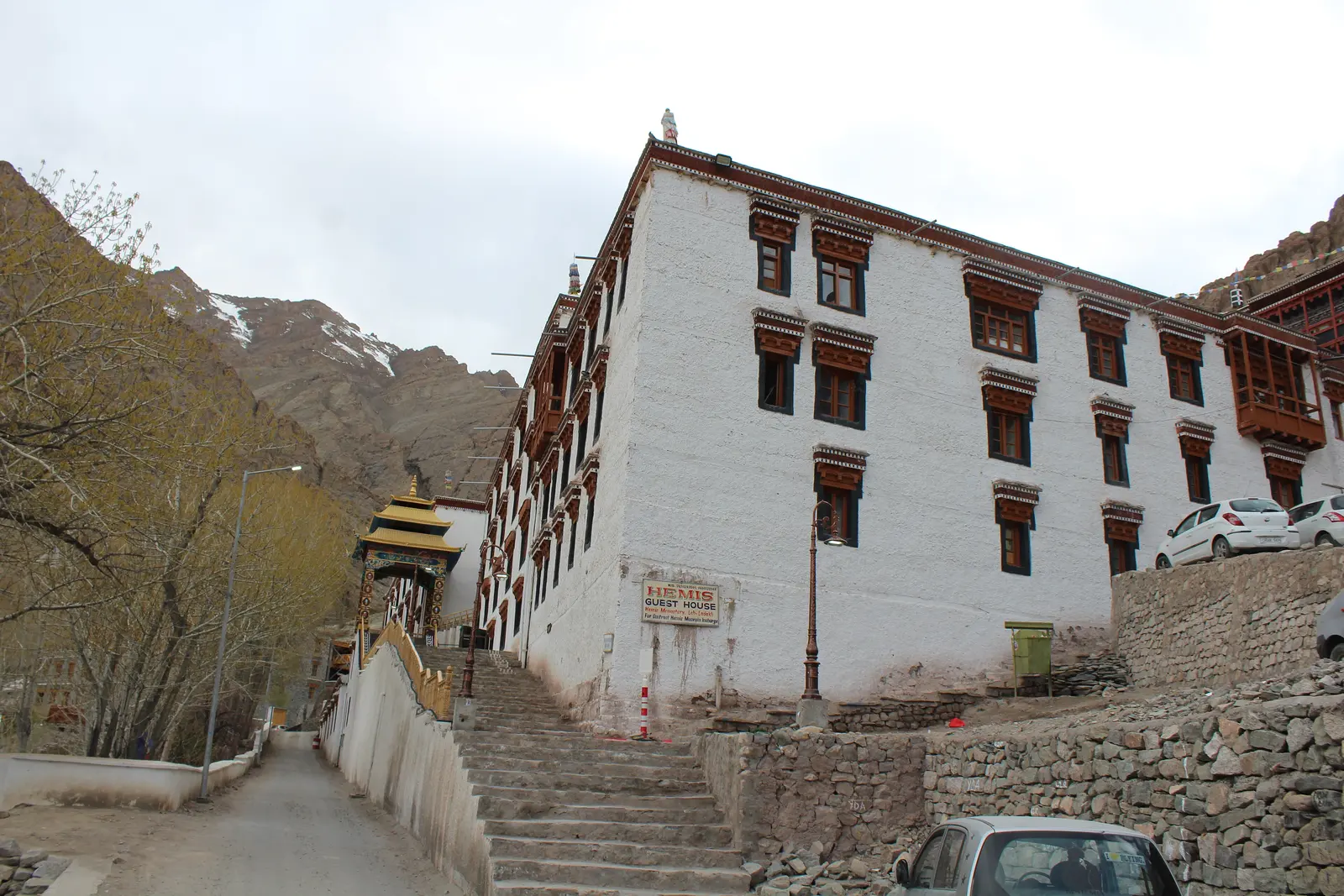 Heritage
Hemis Travel Guide: Monastery, Festival & Snow Leopard Country
Ladakh's largest and wealthiest monastery, its most spectacular masked-dance festival, and the wild high-altitude kingdom of the snow leopard — all hidden in one secluded valley.
 Heritage
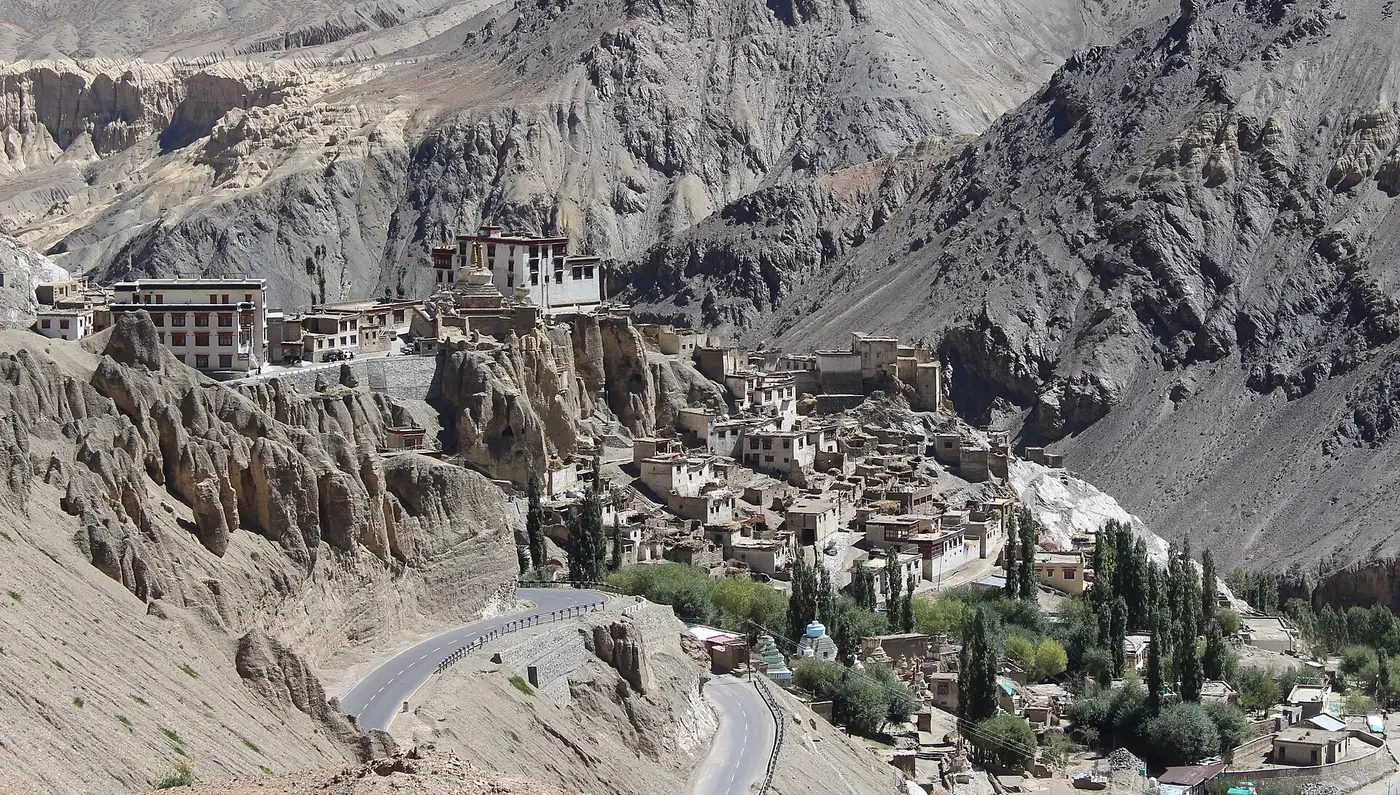
Lamayuru Travel Guide: Moonland, Monastery & How to Visit
Ladakh's oldest monastery perches above a landscape so eroded it's simply called the Moonland — here's how to see it right, from the Yuru Kabgyat festival to the short treks that begin at its gates.
 Adventure Travel
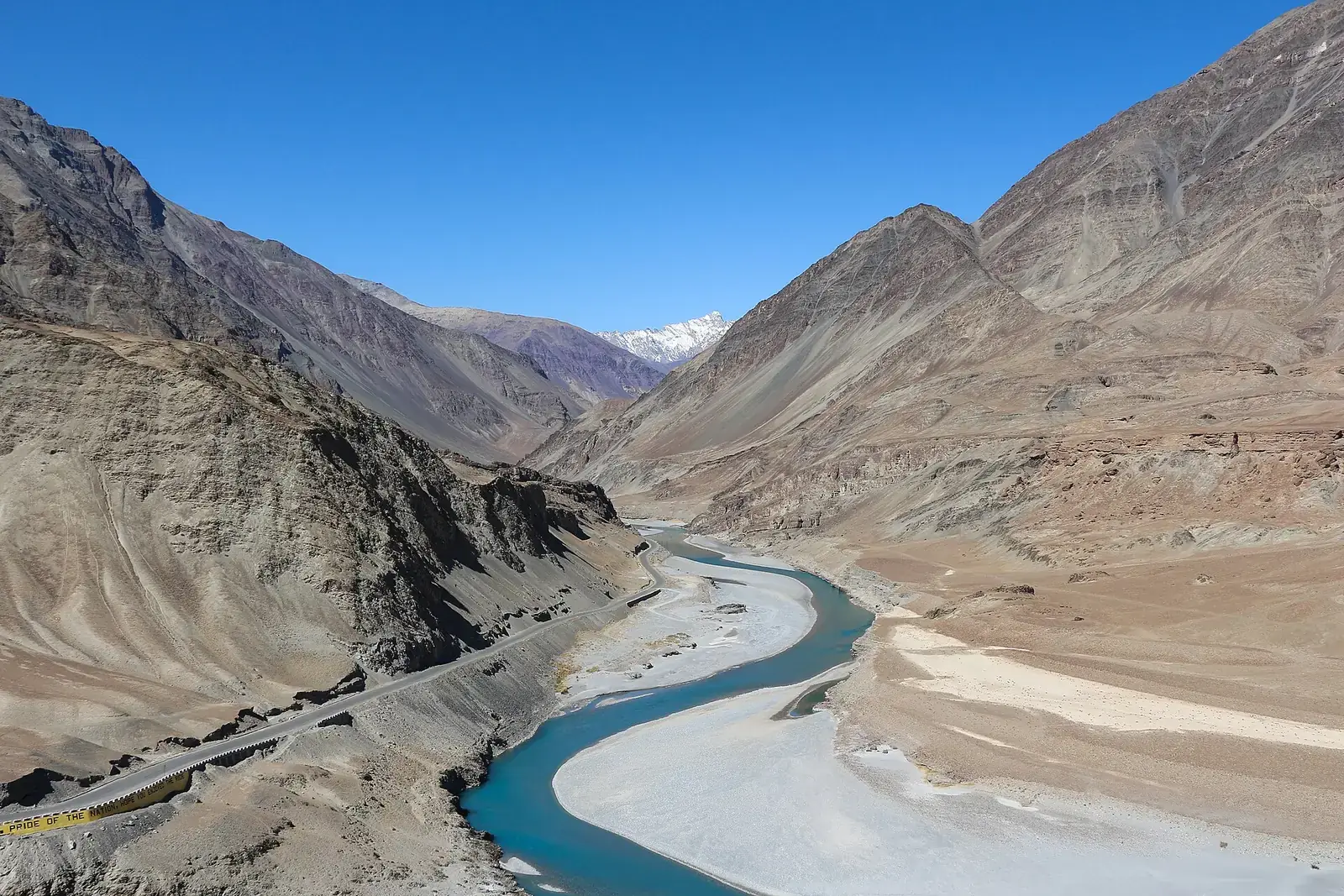
Adventure Activities in Ladakh: Rafting, Treks, Rides and Peaks
The best adventure activities in Ladakh: white-water rafting on the Zanskar and Indus, treks from the easy Sham Valley to Markha Valley and the Chadar, trekking peaks, motorcycle loops over Khardung La and Chang La, cycling descents, Bactrian camel rides in Nubra, lake camping and winter wildlife trips.
 Spiritual Tourism
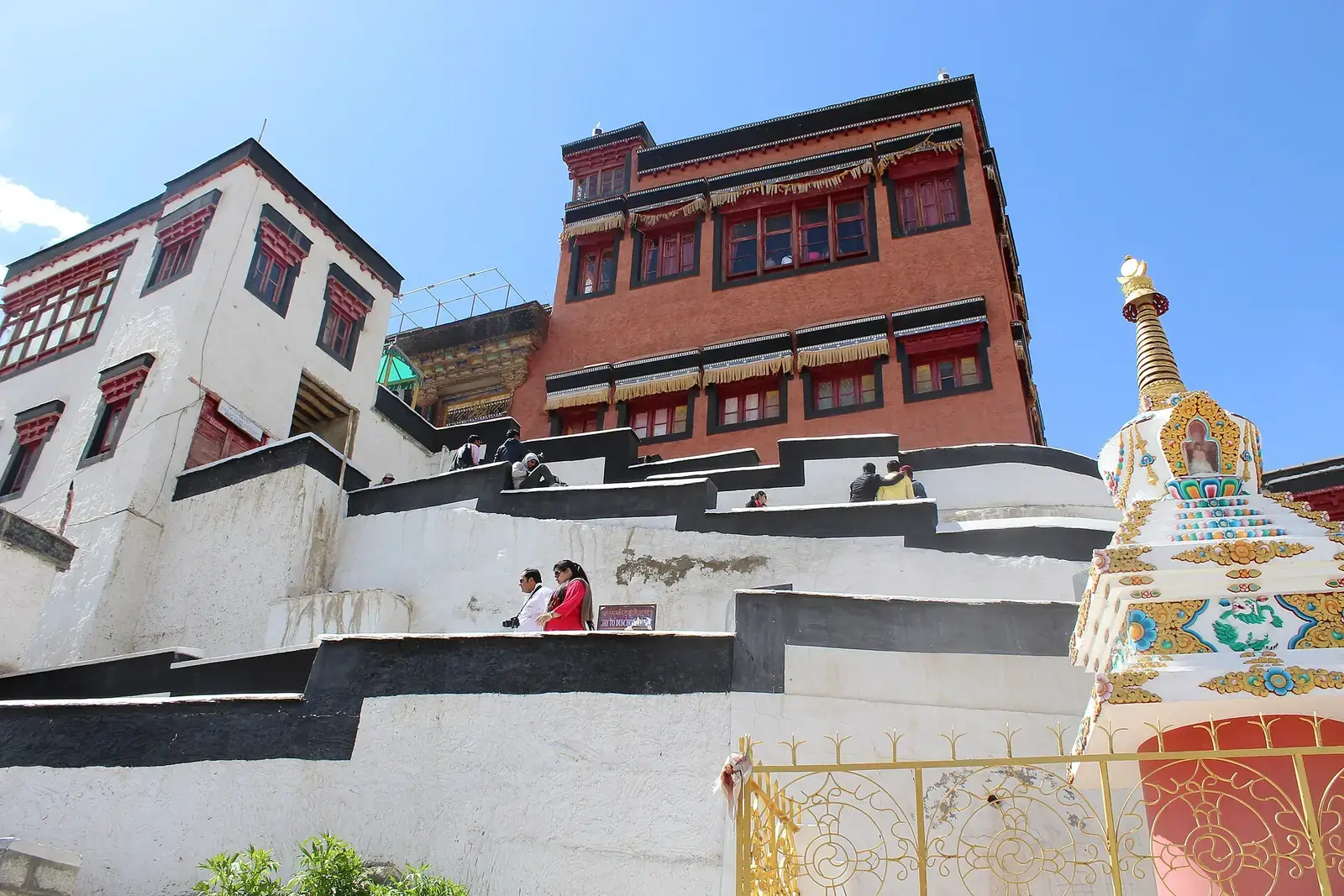
Buddhist Tourism in India: Sacred Sites and Monasteries
A guide to Buddhist tourism in India: the Buddhist Circuit in brief, then the stupas and caves of Sanchi, Ajanta and Odisha, the living monasteries of Ladakh, Spiti, Sikkim, Dharamshala, Tawang and Bylakuppe, monastery festivals, visiting etiquette and how to plan by region.