Why Dha-Hanu?
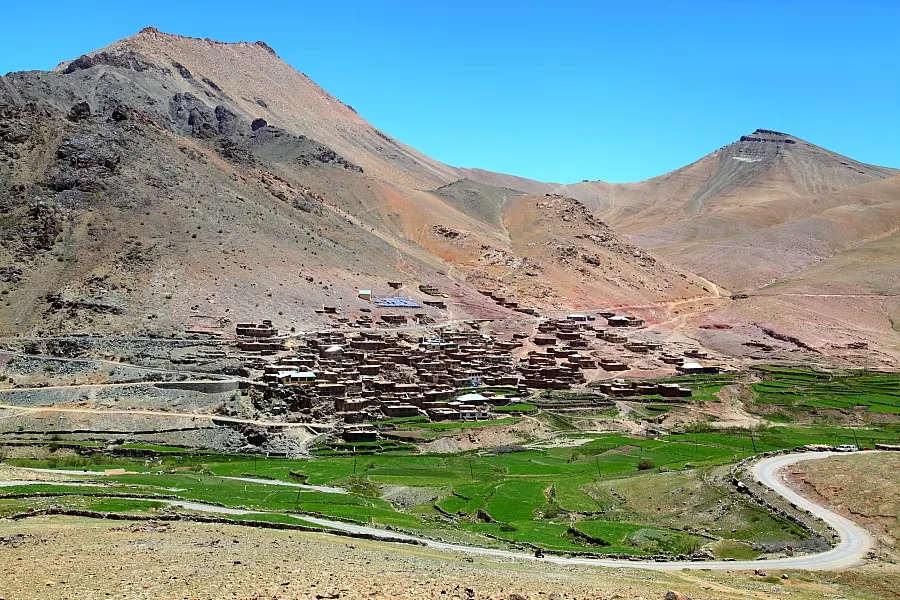
West of Leh, where the Indus curves through a narrower, greener stretch of valley before the road drops toward Kargil, sit four villages that most Ladakh itineraries never reach: Dha, Hanu, Garkone, and Darchik. Together they're often marketed as the "Aryan Valley," a name dreamed up by tour brochures and colonial-era travellers rather than by the people who live here — but the place itself needs no embellishment.
This is the heartland of the Brokpa (also spelled Drokpa or Dard), a small community of a few thousand people whose language, dress, and pre-Buddhist ritual life set them apart from every other group in Ladakh — and, arguably, from anywhere else in India. Their villages sit close to the Line of Control in the Kargil-Batalik sector, wedged between the Indus and the mountains, ringed by apricot orchards that turn the hillsides pink every spring.
Dha-Hanu rewards travellers who come with curiosity and patience rather than a checklist. There are no monasteries stacked twelve storeys high here, no turquoise lakes on postcards. What there is: terraced fields, timber-and-mud houses, apricots drying on rooftops, and a community that has fielded a great deal of outside attention over the decades — not all of it kind. This guide is as much about how to visit as it is about what to see.
🌿 Dha-Hanu at a Glance
A note before you go: the Brokpa are a living, changing community — not a living museum. Nothing in this guide should be read as an invitation to treat Dha-Hanu as a spectacle. Read the Visiting Respectfully section before you book anything.
Best Time to Visit Dha-Hanu
Like the rest of Ladakh, Dha-Hanu is only comfortably accessible for around five months of the year. Outside that window, the road along the Indus can still be open later than the high passes elsewhere in Ladakh (it runs at lower altitude), but homestays close down and daily life contracts to the essentials of surviving winter.
The valley's apricot trees flower in a wash of pale pink and white against bare brown hillsides — arguably the most beautiful time to see Dha-Hanu, though nights are still cold and some homestays haven't fully reopened.
Fields turn a deep green, irrigation channels run full, and this is when you're most likely to see Brokpa dress worn for weddings or local festivals rather than staged for visitors. Warm days, cool nights.
Rooftops and courtyards fill with apricots drying in the sun. Harvest is genuine, unhurried village life, and you'll see the economy of the valley in motion rather than performed. Book homestays ahead.
Most homestays shut, temperatures fall well below freezing, and the region effectively closes to outside visitors. Some locals travel to Leh or Kargil for the winter. Not recommended for travel.
Our pick: Late August. The apricot harvest is on, the passes and roads elsewhere in Ladakh are still busy with crowds, but Dha-Hanu stays quiet. It's a good moment to slow your own trip down to match the valley's pace.
How to Reach Dha-Hanu
There's no public transport worth relying on into Dha-Hanu — a hired taxi or your own vehicle from Leh is the practical option, and the drive itself, along the Indus, is a big part of the appeal.
- From Leh via Khalsi: Follow the Srinagar–Leh highway (NH1) west through Nimmu, Basgo and Saspol to Khalsi (~95 km), then turn off onto the local road that traces the Indus upstream into the valley. Dha is roughly 163 km from Leh, Hanu a little further; Garkone and Darchik add another 20–30 km beyond that. Budget 5–6 hours of driving each way, more if you stop at Alchi or Lamayuru en route.
- From Kargil via Batalik: An alternative approach follows the Indus downstream from Kargil through the Batalik sector — the same stretch of border country associated with the 1999 Kargil conflict — before reaching Darchik and Garkone from the west. This route is scenic and less touristed but passes through a more militarised landscape; expect checkpoints and occasional delays.
- Road condition: Mostly paved and well-maintained by BRO standards, with a few rough stretches near the villages themselves. A regular sedan can usually manage it in dry conditions, though a higher-clearance vehicle is more comfortable.
- Day trip vs overnight: A day trip from Leh is technically possible but rushed — you'll spend most of the day driving and arrive with little time or energy to engage with the place properly. An overnight homestay is strongly preferable, both for your own experience and because it puts money directly into the local economy rather than a Leh-based tour operator.
Permits & Restricted Area Rules
Dha-Hanu sits inside Ladakh's Inner Line belt, close enough to the Line of Control that it has long been treated as sensitive border territory. Rules here have shifted over the years and can shift again, so treat the following as a starting point — always verify current requirements at the DC Office in Leh or with a registered local operator before you travel.
Inner Line Permit (ILP)
Protected Area Permit (PAP)
Military checkpoints
The Four Villages
"Dha-Hanu" is shorthand for a cluster of settlements, not a single village — and the differences between them are worth knowing before you go, because they aren't interchangeable.
Dha & Hanu
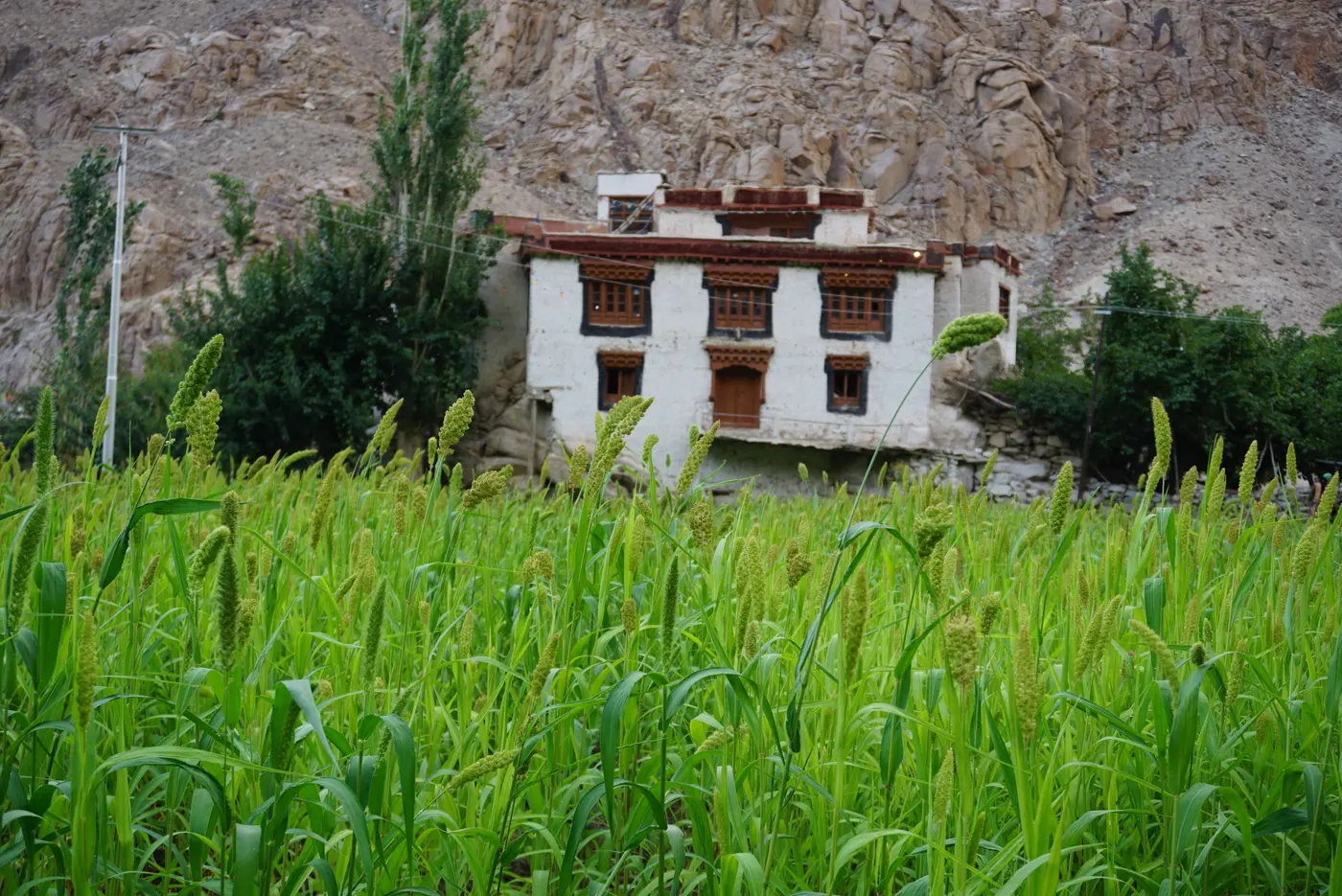
Dha, the westernmost and best-known of the villages, and Hanu (split into Hanu Yokma, the lower hamlet, and Hanu Gongma, higher up the slope) are predominantly Buddhist Brokpa villages. Prayer flags share the skyline here with the flowering apricot trees, and small chortens sit at the edge of terraced barley fields. These are the two villages most commonly opened to outside visitors, and where most of the region's limited homestay infrastructure exists.
Dha in particular has, over the decades, become the face of the "Aryan Valley" story sold in Leh's travel agencies — which has brought a trickle of curiosity tourism, and with it, some of the awkward dynamics described later in this guide. Hanu is quieter and somewhat less visited, and many travellers find it the more comfortable base for an overnight stay.
Garkone & Darchik
A short distance further along the Indus, Garkone and Darchik are also Brokpa villages, but Muslim rather than Buddhist — a distinction that traces back to generations of contact with the Muslim-majority Kargil region nearby. Architecturally and agriculturally similar to Dha and Hanu, but with a mosque rather than a gompa at the village centre, and without the same degree of tourist infrastructure.
Because they sit closer to the Line of Control, Garkone and Darchik have at times faced tighter restrictions — including periods when they were closed to foreign nationals altogether. If reaching these two villages specifically matters to your trip, confirm current access with a Leh operator before you commit to an itinerary; don't assume you'll be able to continue past Hanu.
The Brokpa People
The Brokpa (sometimes Drokpa, meaning roughly "highland pastoralist") speak Brokskat, a Dardic language distinct from Ladakhi, and trace a cultural lineage connected to other Dard communities scattered across the Gilgit-Baltistan and Kargil borderlands. In Dha and Hanu, Brokpa identity today sits layered over Tibetan Buddhism; in Garkone and Darchik, over Islam — but underneath both, older animist and nature-worship traditions persist in festivals, oral folklore, and rituals tied to harvests and mountain spirits.
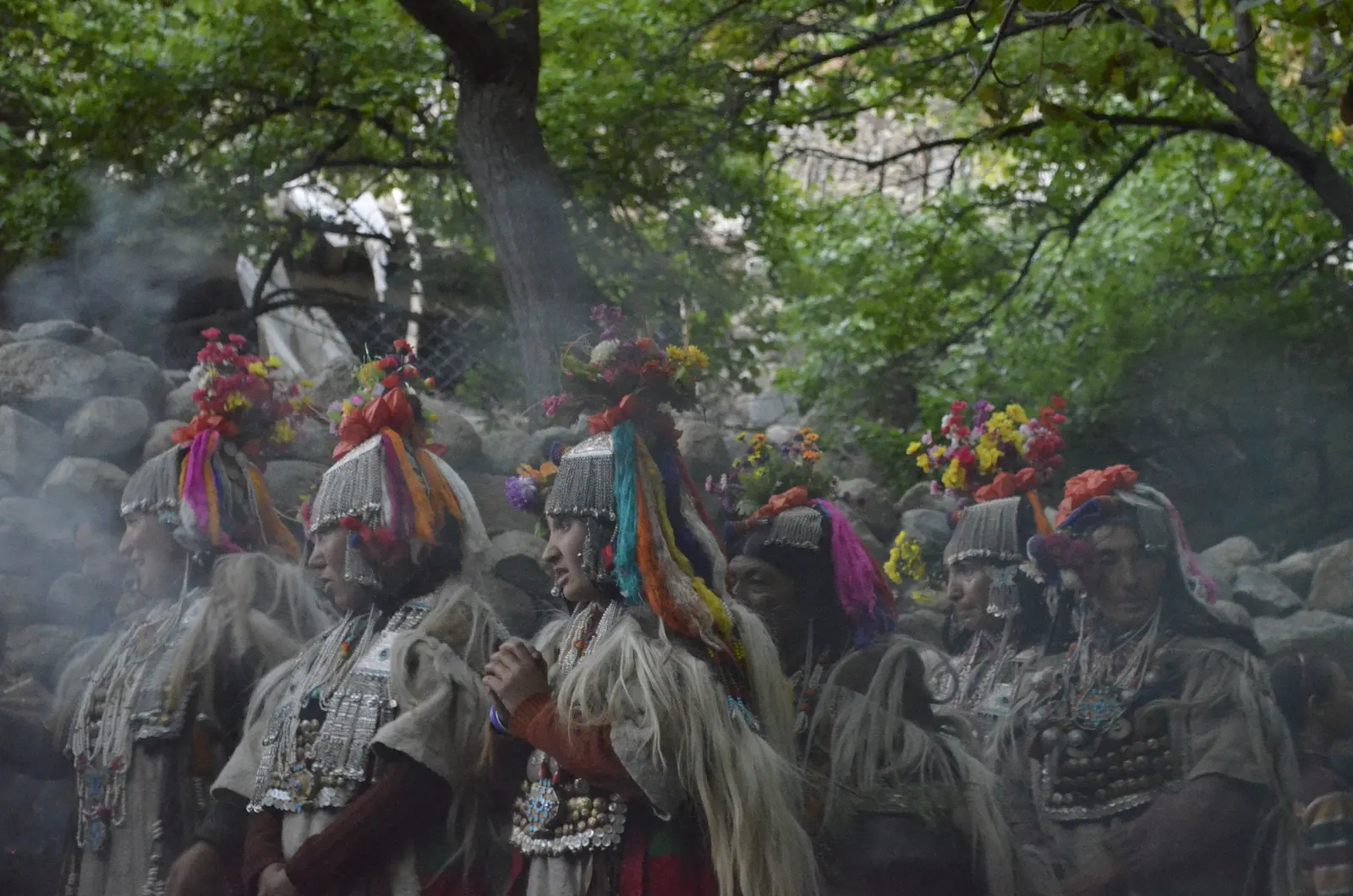
The most visible marker of Brokpa identity, and the image most travel brochures reach for, is the elaborate headdress worn by Brokpa women on festival and ceremonial occasions: a wide silver or metal band studded with coins, turquoise, and seashells, topped with fresh or dried flowers — marigolds, wild blooms, sometimes paper flowers when nothing fresh is in season. It's paired with heavy silver jewellery, embroidered woollen robes, and, in older photographs, elaborate hairstyles worked with yak-hair extensions.
It's worth being clear-eyed about when you'll actually see this: full ceremonial dress is worn for weddings, harvest festivals, and religious occasions — not as everyday village wear, whatever a tour brochure's cover photo might suggest. Some families and homestays will dress up on request for photographs in exchange for a fee, which is a legitimate transaction if it's offered and agreed to freely — but it isn't the same as glimpsing daily life, and shouldn't be mistaken for it.
The "Aryan Valley" Legend
No honest account of Dha-Hanu can skip past the "Aryan Valley" label, because it's the reason most visitors have heard of the place at all — and because it's a claim worth examining rather than repeating.
The popular story, pushed hard by decades of tourist literature, holds that the Brokpa are the last "pure" descendants of Alexander the Great's soldiers, who supposedly settled in this remote valley and preserved their bloodline in isolation for over two thousand years — complete with claims about fair skin, light eyes, and "unmixed Aryan" ancestry. It's a colourful story, and it has sold a great deal of tourism.
It is also, as far as modern genetics and serious anthropology can tell, not supported by evidence. Population genetics studies of the Brokpa have found them to be closely related to neighbouring Ladakhi, Balti, and other Dardic-speaking Himalayan populations — not a genetically isolated or distinct "pure" lineage, and certainly not verifiable descendants of a specific ancient army. The Alexander-descent story appears to be largely a colonial-era romanticisation, later amplified by tourism marketing that found "the last pure Aryans" an easier sell than "a Dardic-speaking farming community with a distinct pre-Buddhist ritual tradition."
Why this matters for how you visit
Treating the Brokpa as a genetic curiosity to be gawked at — commenting on people's features, asking invasive questions about "purity" or ancestry — is both scientifically baseless and genuinely disrespectful to the people who live here. What's actually remarkable about Dha-Hanu isn't a contested bloodline; it's a living culture, a distinct language, and a way of farming and worship that has persisted in one of the harshest inhabited landscapes on earth. That's worth your attention on its own terms.
Visiting Respectfully
Dha-Hanu's small population and its "Aryan Valley" marketing have, for years, meant a lopsided relationship between visitors and villagers — cameras pointed at people going about ordinary days, families asked to pose, curiosity that occasionally tips into treating a community like an exhibit rather than a place where people live, farm, and raise children. None of that is inevitable, and it isn't how most visitors behave — but it's common enough that it's worth naming plainly.
The good news: a respectful visit here isn't complicated. It mostly comes down to treating Dha-Hanu the way you'd want a stranger to treat your own neighbourhood — ask before you photograph, follow the host family's lead, and remember that the "unique" thing you're here to see is someone else's ordinary life.
Staying in a homestay rather than day-tripping through is itself part of visiting respectfully — it puts your money directly into a family's hands rather than a tour package, and it naturally slows your visit down from "photograph and leave" to something closer to a conversation, even a limited one across a language gap.
Apricot Orchards
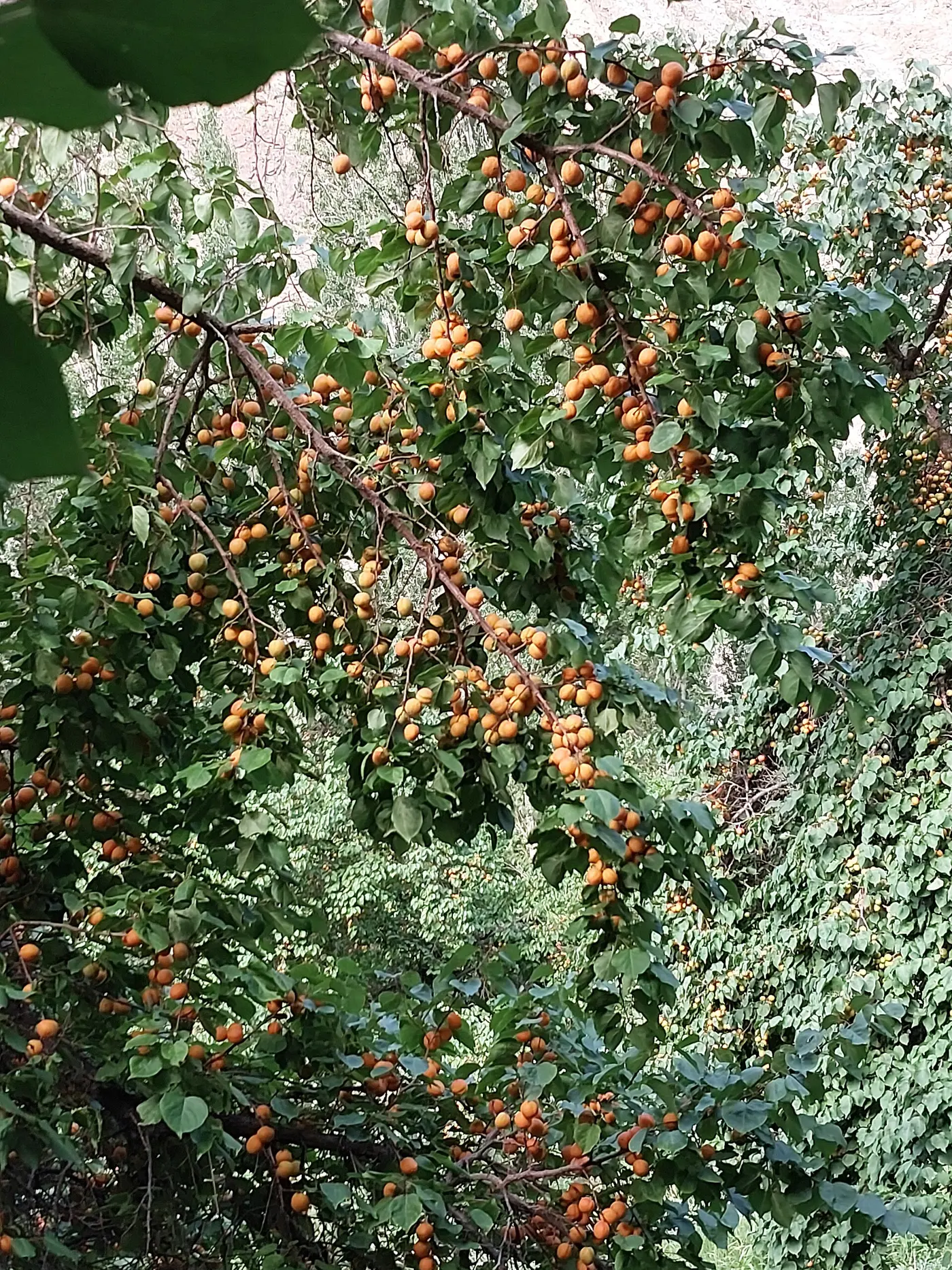
Ladakh's apricots are famous across the region, and Dha-Hanu grows some of the best of them. The valley's slightly lower altitude and sheltered position along the Indus give it a milder microclimate than most of Ladakh, and the orchards here — along with those around Kargil — supply a large share of the dried apricots sold in Leh's markets.
Blossom season in April brings the hillsides alive with pale pink flowers; by August, the harvest is in full swing, with apricots spread out to dry on rooftops, stone walls, and open ground across every village. Kernels are pressed for a mild, nutty oil used in cooking and, in small quantities, sold as a cosmetic product. Buying dried apricots or apricot oil directly from a family here — rather than in a Leh souvenir shop — is one of the simplest, most direct ways to support the local economy.
Batalik War Memorial
If you approach Dha-Hanu from the Kargil side, or make a detour that way, the road passes near the Batalik sector — one of the areas where some of the fiercest fighting of the 1999 Kargil War took place, on the ridgelines above the Indus. A war memorial here commemorates the soldiers who fought to reclaim the high ground, and it's a sobering, worthwhile stop for anyone travelling through this stretch of border country.
Given the sector's continued military sensitivity, photography rules are strictly enforced around any installation or checkpoint near Batalik — the memorial itself is generally fine to photograph, but always check with accompanying military or local personnel before doing so, and never photograph bunkers, bridges, or checkpoints along the way.
Where to Stay in Dha-Hanu
There are no hotels here, and that's rather the point. Accommodation is limited to a small number of family-run homestays in Dha and Hanu, most set up in recent years with support from Ladakh's rural tourism initiatives. Expect a simple room, shared or basic bathroom facilities, home-cooked meals, and — usually — no reliable mobile network.
- → Family homestays in Dha village
- → Family homestays in Hanu Yokma
- → A handful of newer registered stays in Hanu Gongma
- → Book through a Leh operator or the local tourism office
- → Minimal formal homestay infrastructure
- → Access may be restricted depending on the season
- → Best visited as a day trip from Hanu if permitted
- → Arrange in advance through a local contact
What to Eat in Dha-Hanu
Meals here are homestay meals — whatever the family is cooking, made with what the valley grows. It's simple, hearty food built around barley, apricots, and dairy, with some Ladakhi and Kargili staples in common with the wider region.
- Ngamphe: Roasted barley flour, similar to Ladakhi tsampa, often mixed with butter tea or milk — a staple breakfast across the valley.
- Fresh & dried apricots: In season, you'll be offered apricots at almost every stop — sweet, sun-ripened, and nothing like the dried ones sold elsewhere. Dried apricots and pressed apricot kernels make good, genuinely local souvenirs.
- Chutagi and thukpa: Hearty pasta-and- broth dishes shared with the rest of Ladakh, warming and filling after a day of walking between orchards.
- Local dairy: Yak and dzo (a yak-cattle hybrid) milk, butter, and simple cheeses feature heavily — offered generously by homestay hosts.
- Chang: A mildly fermented barley drink found across Ladakh, sometimes offered during festivals — accept graciously if you drink, and it's equally fine to decline.
Budget Breakdown for Dha-Hanu
Dha-Hanu is inexpensive once you're there — the main cost is the return transport from Leh, since there's no public transport to rely on.
| Expense | Budget | Comfortable |
|---|---|---|
| Homestay/night (incl. meals) | ₹800 | ₹1,500 |
| Return taxi from Leh (shared) | ₹1,500/person | ₹4,500 (private cab) |
| ILP | ₹20–₹400 | ₹20–₹400 |
| Dressed-up photo session (if offered) | ₹200–₹500 | ₹500–₹1,000 |
| Apricots / apricot oil to buy | ₹200 | ₹500 |
| Daily total (excl. transport) | ₹1,000 | ₹2,000 |
Essential Travel Tips
✅ Do
- →Ask before photographing any person, every time
- →Book a homestay rather than a same-day tour
- →Carry cash — there are no ATMs in the valley
- →Confirm current permit and access rules before you go
- →Buy apricots and apricot oil directly from families
- →Dress modestly, especially in Garkone and Darchik
- →Carry ID and permit copies at every checkpoint
- →Pack a warm layer even in summer
❌ Don't
- →Photograph anyone without asking first
- →Comment on people's features or 'purity' of ancestry
- →Photograph checkpoints, bridges, or military posts
- →Assume ceremonial dress is everyday village wear
- →Haggle down a fee a family has asked for photos
- →Expect mobile network or reliable electricity
- →Enter a home uninvited, even if the door is open
- →Treat a village visit as a same-day photo stop
Dha-Hanu isn't a place to rush. Give it a full day and a night if you possibly can, let the itinerary loosen, and let the valley's own rhythm — orchards, prayer flags, apricots drying on a rooftop — set the pace instead of your camera roll.
Frequently Asked Questions
How many days do you need for Dha-Hanu?
A day trip from Leh is technically possible but rushed, since you'll spend most of the day driving. An overnight homestay is strongly preferable — give it a full day and a night if you possibly can, so the itinerary can loosen and let the valley's own rhythm set the pace.
What is the best time to visit Dha-Hanu?
April–May brings the apricot blossom, when the valley's trees flower in pale pink and white against bare hillsides. June–July is the green season, with fields turning deep green and the best chance of seeing Brokpa dress worn for real weddings or festivals. Our pick is late August, during the apricot harvest, when the passes and roads elsewhere in Ladakh are busy but Dha-Hanu stays quiet. October–March, the region effectively closes to outside visitors.
How do I reach Dha-Hanu from Leh?
There's no reliable public transport, so a hired taxi or your own vehicle is the practical option. The main route from Leh follows the Srinagar–Leh highway west through Nimmu, Basgo and Saspol to Khalsi (~95 km), then a local road traces the Indus upstream — Dha is roughly 163 km from Leh, Hanu a little further, with Garkone and Darchik another 20–30 km beyond. Budget 5–6 hours of driving each way.
Do I need a permit to visit Dha-Hanu?
Yes. All Indian nationals need an Inner Line Permit (ILP) for Dha, Hanu, and surrounding villages, obtainable online or at the DC Office in Leh. Foreign nationals additionally need a Protected Area Permit (PAP), which can't be obtained independently and must be arranged through a registered Leh tour operator. Garkone and Darchik, being closer to the Line of Control, have at times been fully off-limits to foreign nationals, so confirm current access before planning around them.
Is Dha-Hanu safe for solo travellers?
Dha-Hanu itself is a quiet, low-key farming community, but it sits inside an active border sector near the Line of Control, so checkpoints, ID checks, and photography restrictions around military installations are part of the trip. Carrying original photo ID and permit copies at every checkpoint, avoiding photography of bunkers, bridges, or checkpoints, and confirming current permit rules with a Leh-based operator before travelling are the main precautions.
What is the budget for a Dha-Hanu trip?
Excluding return transport from Leh, a daily budget of around ₹1,000 to ₹2,000 covers a homestay with meals (₹800–₹1,500/night), ILP fees (₹20–₹400), and apricots or apricot oil to buy directly from families. Return taxi from Leh runs from roughly ₹1,500 per person shared to ₹4,500 for a private cab.
Is the 'Aryan Valley' label about the Brokpa people actually true?
No — the popular story that the Brokpa are 'pure' descendants of Alexander the Great's soldiers is not supported by modern genetics or serious anthropology. Population genetics studies have found the Brokpa closely related to neighbouring Ladakhi, Balti, and other Dardic-speaking Himalayan populations, not a genetically isolated lineage. The label is largely a colonial-era romanticisation later amplified by tourism marketing.
Published by the Kudozz Club editorial team · Last updated · How we research our guides
Want us to plan this trip for you?
Tell Kudozz Club where you want to go and what kind of trip you’re looking for. We’ll build a Dha-Hanu and Ladakh itinerary around your dates and budget.
Continue Exploring
View all guides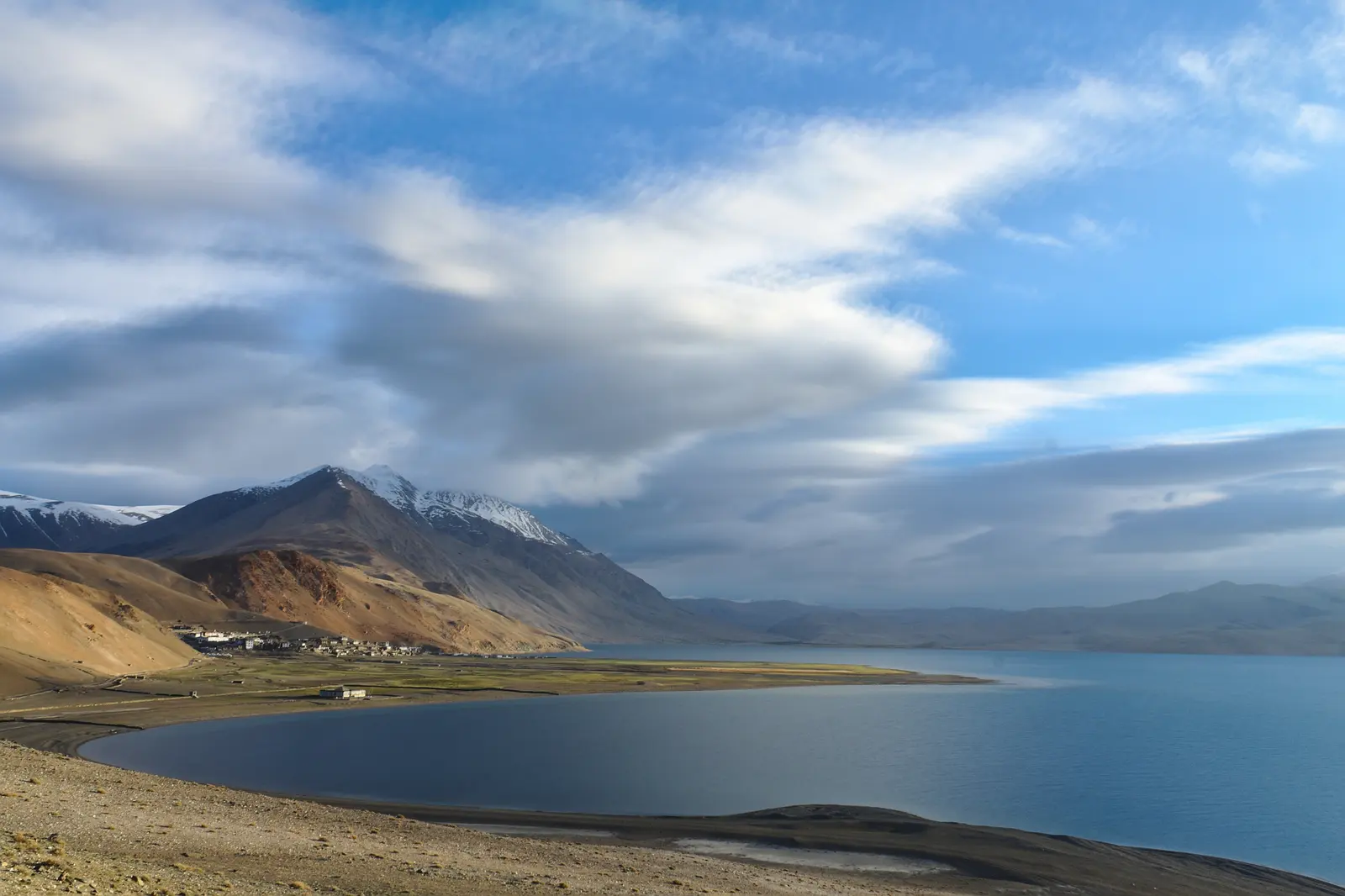 Off-beat
Tso Moriri Travel Guide: Ladakh's Most Pristine High-Altitude Lake
A sapphire lake at 4,522 metres on the remote Rupshu plateau, ringed by bare mountains and grazed by wild kiang — Tso Moriri is the Ladakh lake that stayed wild.
 Off-beat
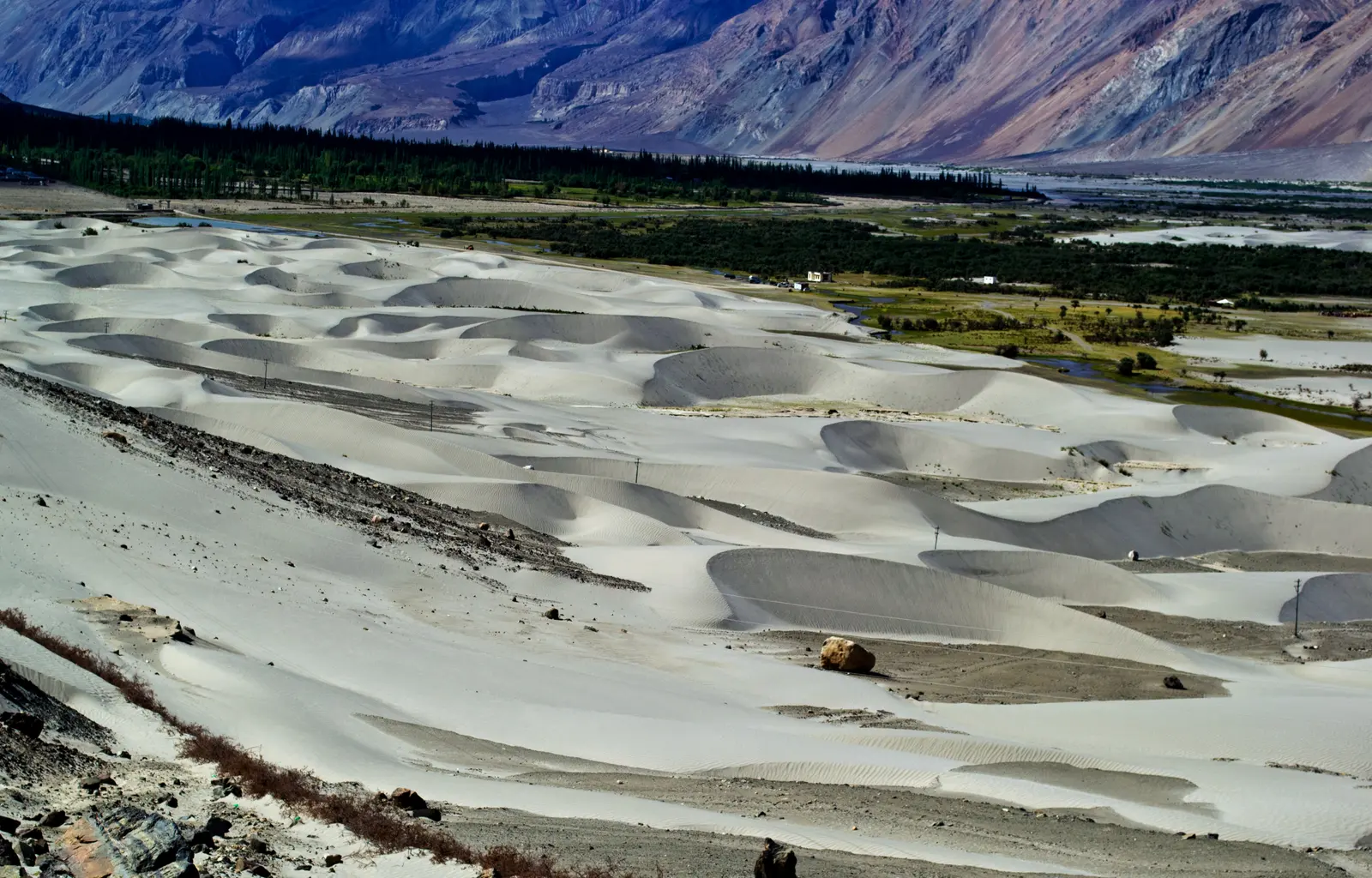
Hunder Travel Guide: Nubra Valley's Sand Dunes & Camel Safari
Silver sand dunes, double-humped Bactrian camels, and snow peaks rising from a cold desert — Hunder in Nubra Valley is Ladakh's strangest, most beautiful contradiction.
 Off-beat
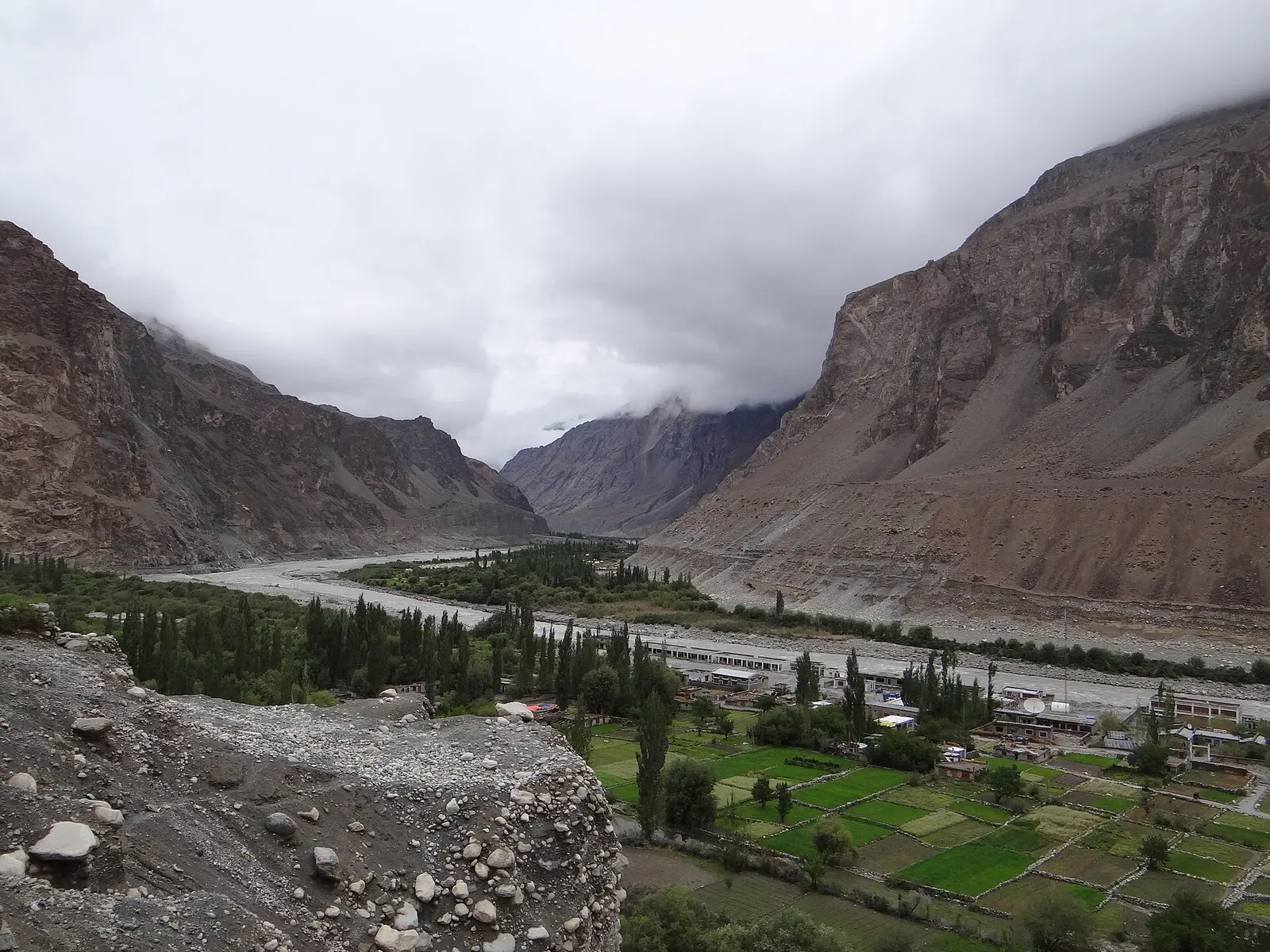
Turtuk Travel Guide: Ladakh's Last Balti Village Before the LOC
A Balti village of stone houses and apricot orchards on the Shyok River, under Pakistani control until 1971 and closed to outsiders until 2010 — Turtuk is unlike anywhere else in Ladakh.
 Off-beat
Hanle Travel Guide: Dark Sky Reserve, Observatory & Stargazing
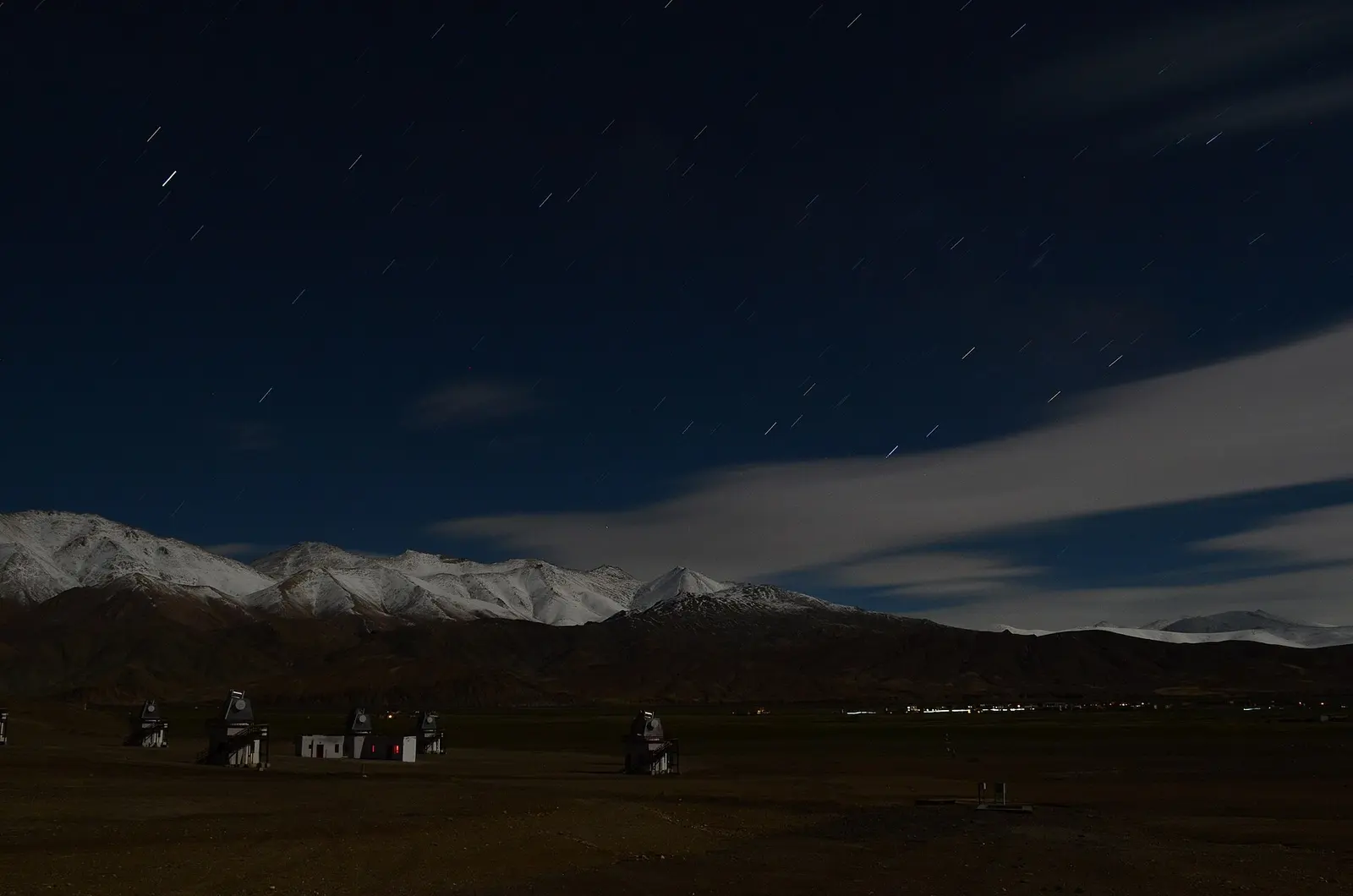
A village at 4,500 metres on the Changthang plateau where the Milky Way is visible to the naked eye — the complete guide to India's first Dark Sky Reserve and the Indian Astronomical Observatory.