Why Jaisalmer?
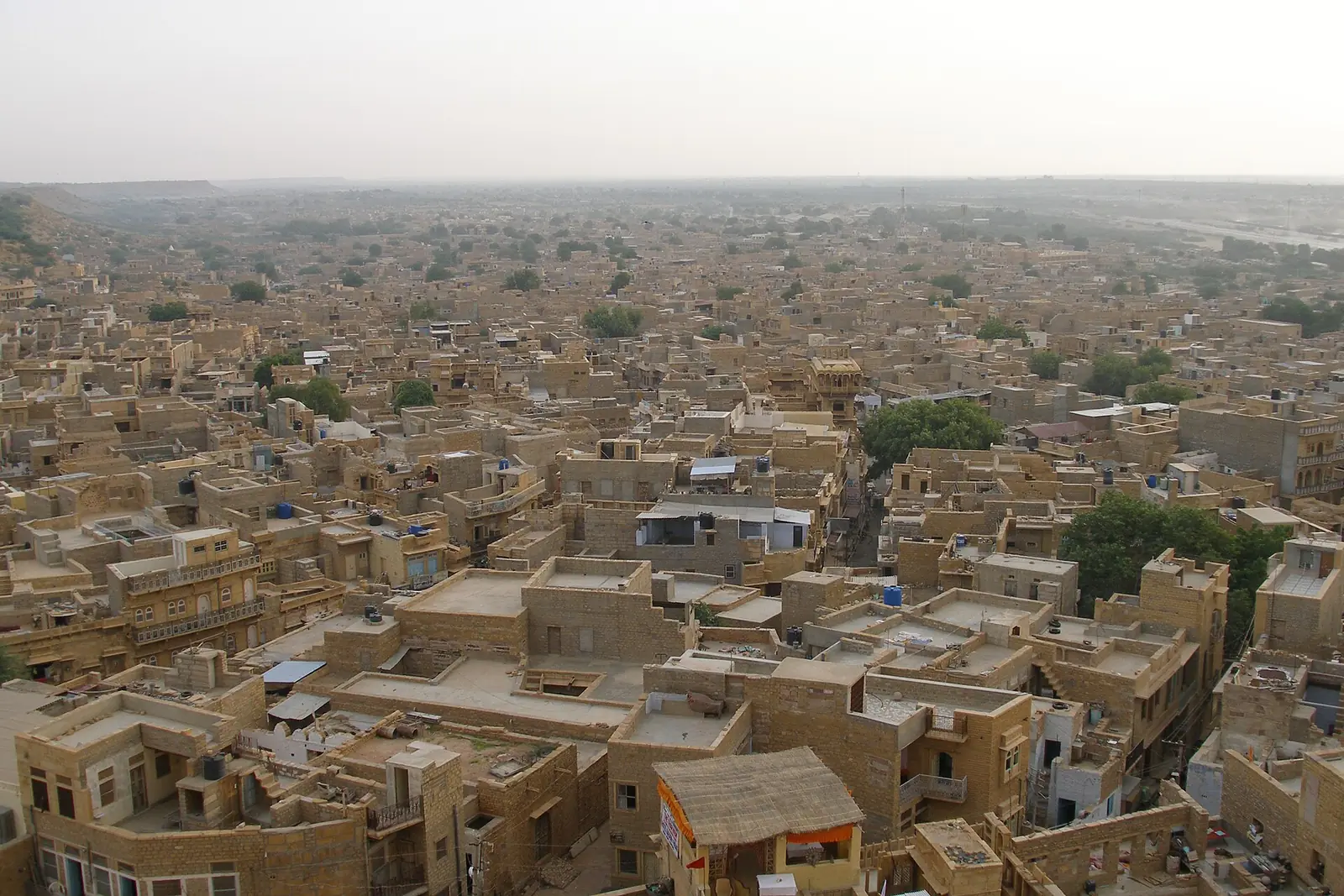
Most Indian forts are monuments — empty stone shells you walk through, photograph, and leave. Jaisalmer Fort is different. It is one of the very few "living forts" left in the world — roughly a quarter of Jaisalmer's old city population still lives, sleeps, cooks, prays, and runs shops within its walls, exactly as they have for nearly 900 years. Walking through it isn't visiting history. It's walking through someone's home.
Built in 1156 CE by the Rajput ruler Rawal Jaisal, the fort rises 76 metres above the surrounding Thar Desert on Trikuta Hill, its honey-coloured sandstone glowing intensely gold at sunrise and sunset — the reason Jaisalmer is universally called the Golden City. Inside its 99 bastions lie temples, palaces, narrow lanes, and havelis carved with a stone lacework so intricate it seems impossible that human hands produced it without power tools.
But Jaisalmer is also the gateway to the Thar Desert — one of the most densely populated deserts on earth, where camel safaris carry travellers into rolling dunes for sunset views and overnight camps under skies with almost no light pollution. The combination — medieval fort city by day, desert immersion by evening — makes Jaisalmer one of the most complete travel experiences in Rajasthan.
🏰 Jaisalmer at a Glance
Looking for activities and experiences? See our guide to the best things to do in Jaisalmer.
Planning something active? Read our guide to desert adventures in India.
Best Time to Visit Jaisalmer
Jaisalmer sits in one of the hottest regions of India — temperatures here are extreme in both directions, and timing your visit correctly is essential for comfort.
Daytime temperatures 20–28°C, cool desert nights (5–15°C), perfect for camel safaris and fort exploration. December–January is the peak season — book accommodation and camel safaris 3–4 weeks ahead. The Jaisalmer Desert Festival runs in February.
Temperatures rise into the low-to-mid 30s°C by April. Mornings and evenings are still pleasant for camel rides and fort walks. Crowds thin noticeably after February, and accommodation rates drop. Good value for those who can handle daytime heat.
Jaisalmer regularly hits 45–48°C in peak summer — among the hottest temperatures recorded in India. Camel safaris are genuinely dangerous in midday heat. Most desert camps reduce operations. Only for those with no other choice of dates.
The Thar receives very little rain even in monsoon, but what falls transforms the desert dramatically — sparse green vegetation appears briefly, and the usually stark landscape softens. Heat remains high (35–40°C) but humidity is lower than coastal India.
Our pick: Late December to early February. Crisp desert mornings, comfortable daytime fort exploration, and genuinely magical camel safari evenings where the temperature drops just enough to make a bonfire and blanket feel earned rather than necessary survival gear. Time it with the Desert Festival in February for an extra cultural layer.
How to Reach Jaisalmer
Jaisalmer is remote relative to most Rajasthan destinations — the journey itself, particularly by overnight train, is part of the desert atmosphere building from the moment you depart.
- By Air: Jaisalmer Airport (JSA) has limited but growing connectivity — seasonal direct flights from Delhi (winter season primarily). Most travellers fly into Jodhpur (JDH, 285 km, 5–6 hrs by road) which has far better flight connectivity from major Indian cities, then continue by train or road.
- By Train (most popular): Jaisalmer Railway Station is directly connected to Delhi (overnight, ~17 hours via Jodhpur), Jodhpur (5–6 hours), and Jaipur (12 hours). The overnight Delhi– Jaisalmer Express is the classic approach — depart Delhi evening, arrive Jaisalmer the following afternoon, watching the landscape transition from farmland to desert through the train window.
- By Road: Jaisalmer connects to Jodhpur (285 km, 5–6 hrs) and Jaipur (550 km, 9–10 hrs) via well-maintained highways. Rajasthan State Roadways (RSRTC) buses and private operators run regular services from both cities.
- Classic Rajasthan circuit: Most visitors combine Jaisalmer with Jodhpur and Jaipur as part of a broader Rajasthan loop — Jodhpur to Jaisalmer (5–6 hrs by road or train) makes a natural next stop after exploring the Blue City.
Jaisalmer Fort — The Golden Fort
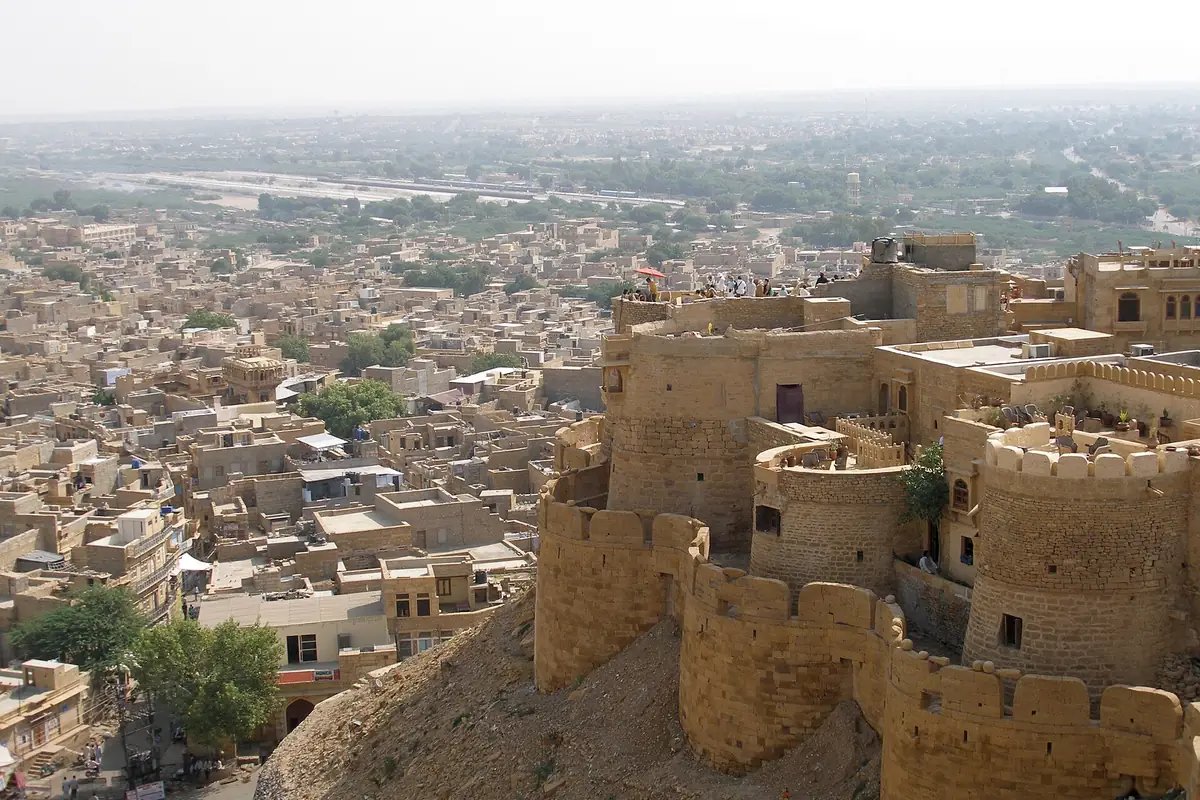
Known locally as Sonar Quila (Golden Fort), Jaisalmer Fort is one of the very few forts in the world that remains genuinely inhabited — roughly 3,000 people, about a quarter of the old city, still live within its walls in homes that have housed the same families for generations. This living quality transforms the entire experience: alongside palaces and temples you'll find functioning grocery shops, schools, guesthouses, and people going about ordinary life inside a 12th-century monument.
The fort's 99 bastions and double ramparts were built using a distinctive interlocking technique without mortar in many sections, and the entire structure was constructed from local yellow sandstone, which is why the fort glows gold at sunrise and an even more intense amber-red at sunset — the single most photographed moment in Jaisalmer.
- Royal Palace (Raj Mahal): The seven-storey former royal residence within the fort, now a museum displaying weapons, royal artefacts, and exquisite jharokha (overhanging balcony) architecture. Entry ₹50 (Indian), ₹500 (Foreign).
- Jain Temples within the fort: Seven interconnected Jain temples dating from the 12th–15th centuries, with carving work that rivals the finest temple architecture anywhere in India. Entry ₹50.
- Laxminath Temple: An active Hindu temple within the fort walls, dedicated to Lakshmi and Vishnu, with a striking silver-plated doorway.
- Fort viewpoints: The fort's western ramparts offer the best sunset views over the old city — find a quiet bastion away from the main tourist clusters for an uninterrupted view.
The Havelis
Beyond the fort, Jaisalmer's old city is famous for its havelis — ornate merchant mansions built by wealthy traders who grew rich on the camel caravan trade routes connecting India to Central Asia and the Middle East before the rise of sea trade made the desert routes obsolete. These havelis showcase some of the finest stone carving anywhere in India.
Patwon ki Haveli
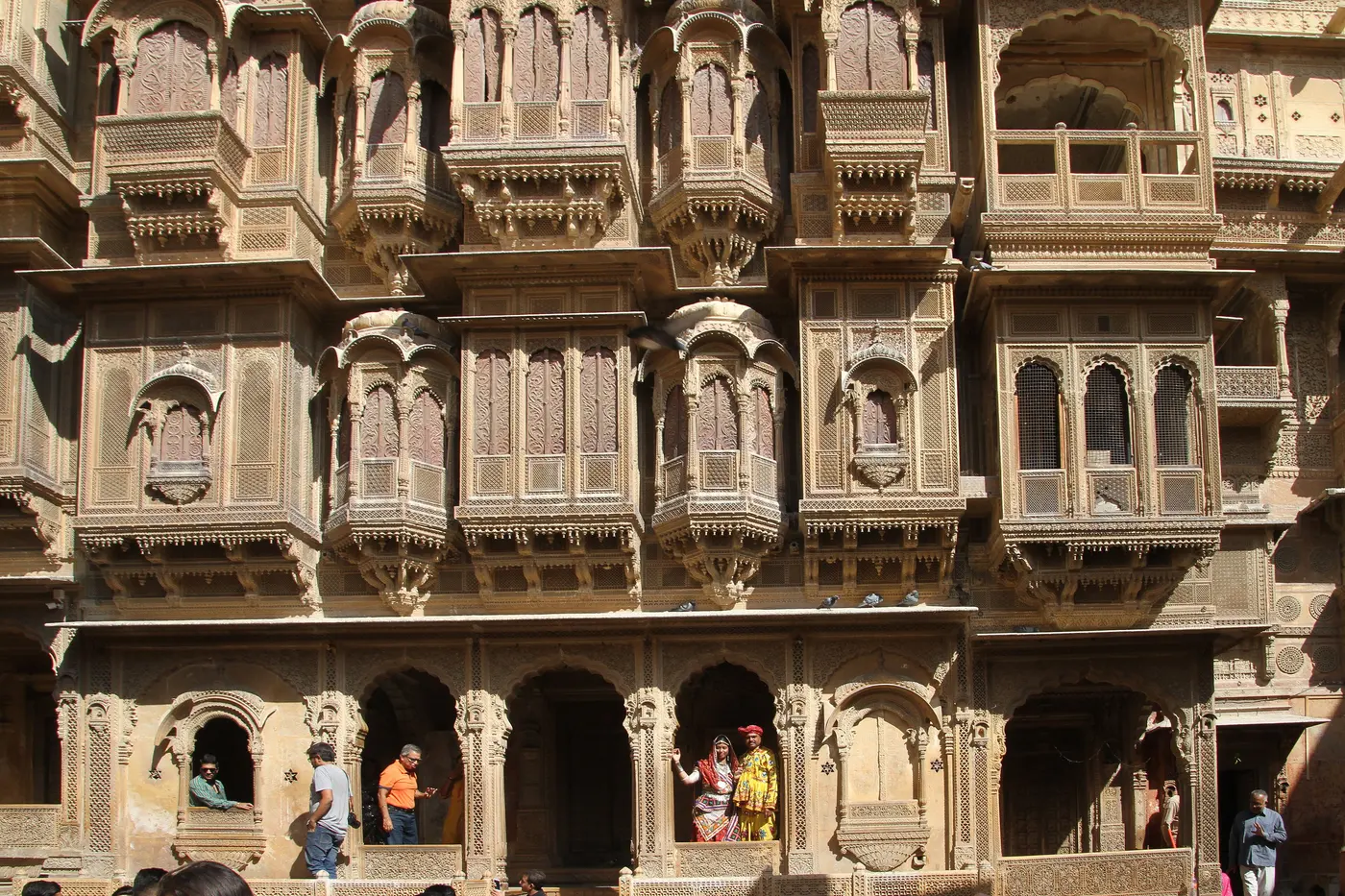
Patwon ki Haveli is actually a cluster of five havelis built between 1800–1860 by Guman Chand Patwa, a wealthy trader in brocade and jewellery, for his five sons. It is the largest and most elaborate haveli complex in Jaisalmer — five-storey facades with intricately carved jharokhas (projecting balcony windows), each one different, creating a rhythm of stone lacework along the narrow lane that's almost overwhelming in its detail.
One section is now a museum with period furniture and artefacts; the rest remains privately owned, with some sections converted into shops selling textiles and antiques. The narrow alley the haveli sits on is one of the most atmospheric spots in old Jaisalmer — arrive early morning for photography before the street fills with vendors and tourists.
- Entry: ₹100 (museum section)
- Timings: 8 AM – 6 PM
- Best for: Architecture photography, understanding merchant-era wealth
Nathmal ki Haveli & Salim Singh ki Haveli
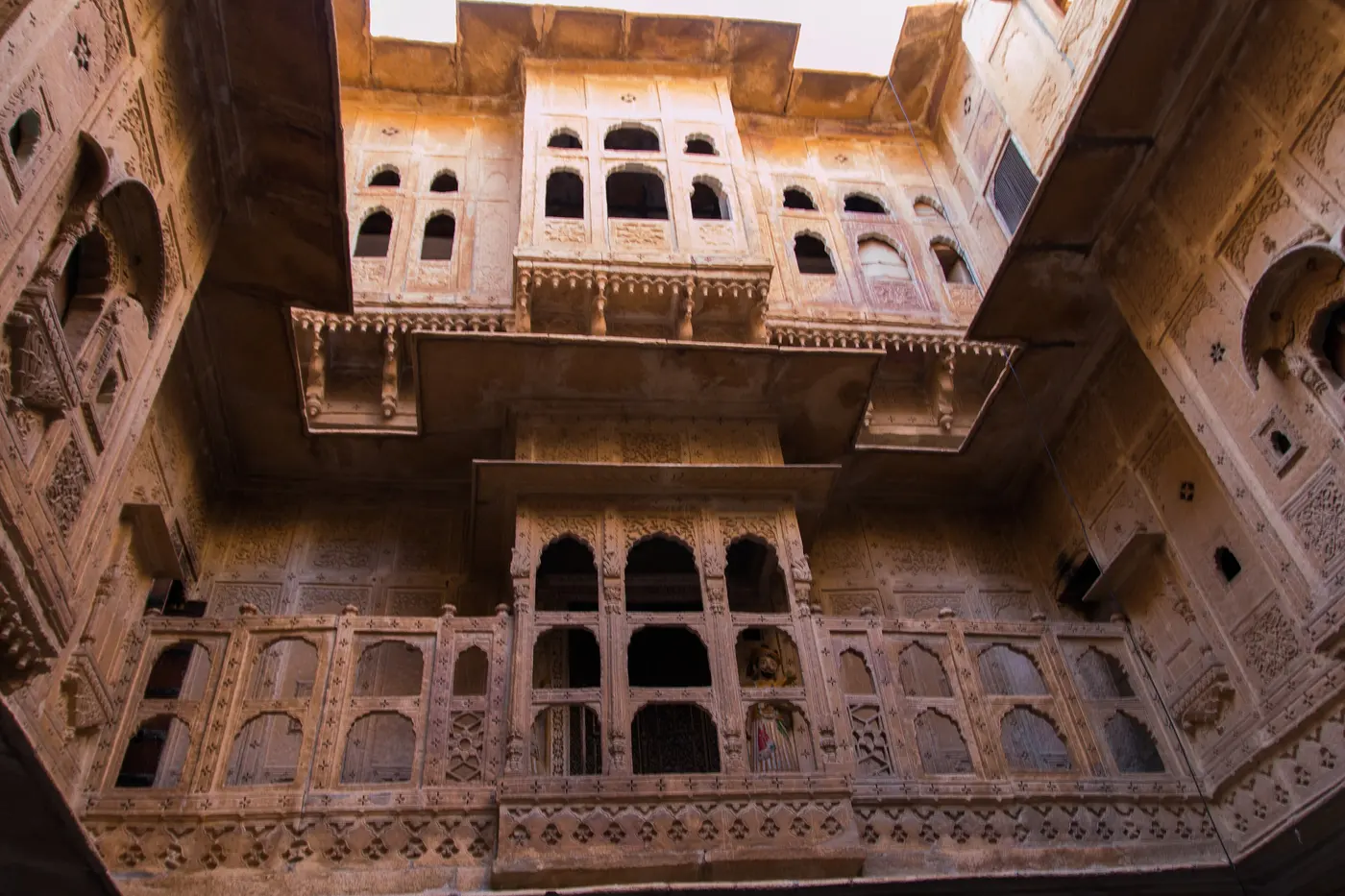
Nathmal ki Haveli, built in 1885 as the residence of the prime minister of Jaisalmer, is notable for an unusual quirk — it was constructed by two brothers working from opposite ends simultaneously, without coordinating designs, resulting in a building that is almost but not quite symmetrical, with subtle differences in the carving styles of each half that careful observation reveals.
Salim Singh ki Haveli, built in the 18th century, is distinguished by its unusual upper storey design — the roof curves outward and is supported by carved blue-grey brackets shaped like peacocks, said to resemble a ship's stern. The structure was originally intended to be even taller to match the height of the maharaja's palace, but construction was halted by royal order.
Lakes & Temples
Gadisar Lake
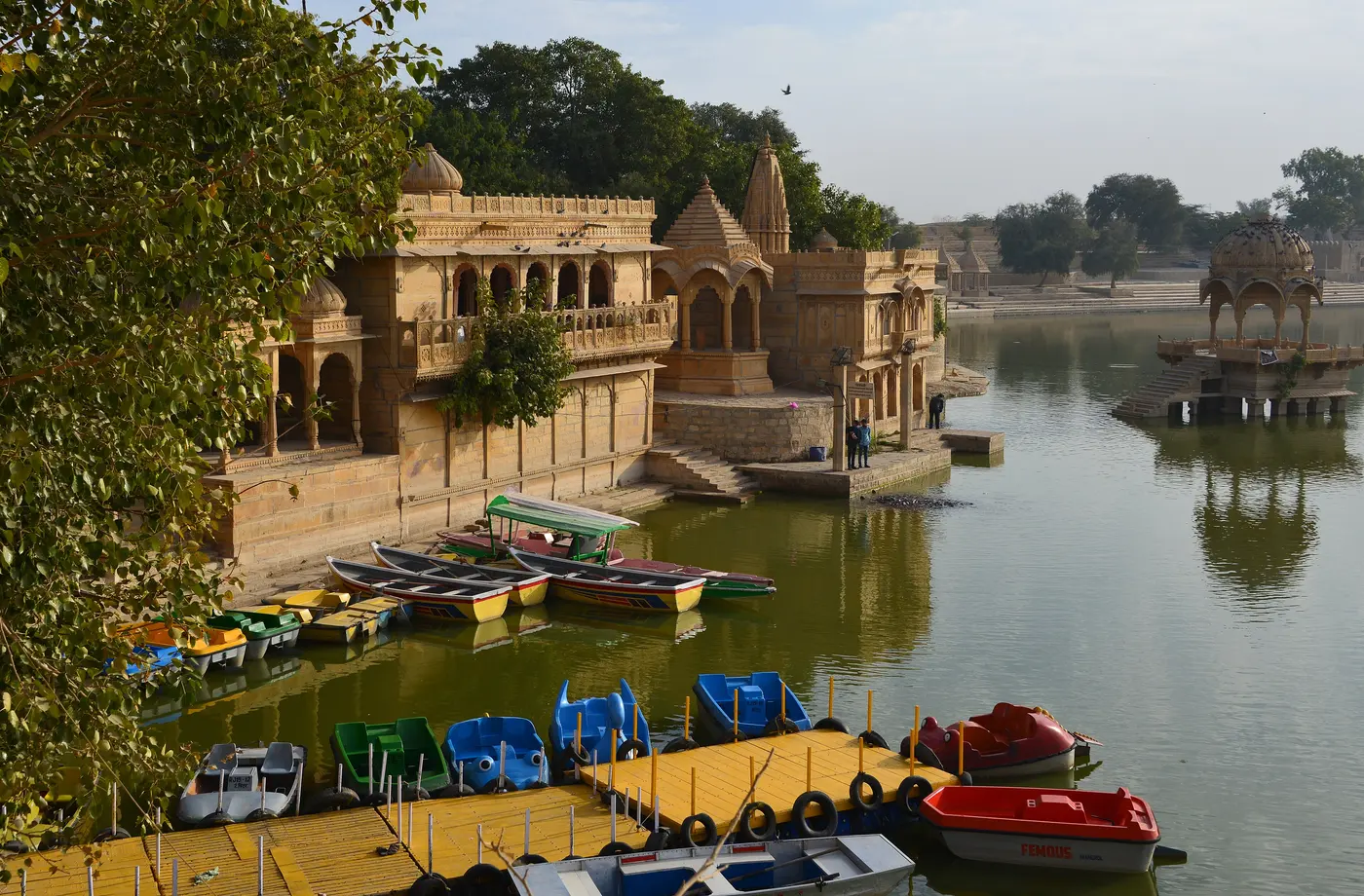
Gadisar Lake was built in 1156 CE, the same year as the fort, as Jaisalmer's primary water reservoir — an extraordinary feat of desert engineering that sustained the city's water supply for centuries before modern infrastructure. The lake is ringed by small temples, chhatris (memorial pavilions), and the magnificent Tilon ki Pol gateway — an ornate archway built, according to local legend, by a courtesan who funded its construction with her wealth, much to the irritation of the maharaja who tried unsuccessfully to have it removed.
Boat rides on the lake (₹100–₹200 for a paddle boat, more for a motorboat) are particularly beautiful at sunset, when the lake's temples and the fort silhouette beyond turn gold and pink. The lake also attracts migratory birds in winter, making early morning visits rewarding for casual birdwatching.
Jain Temples
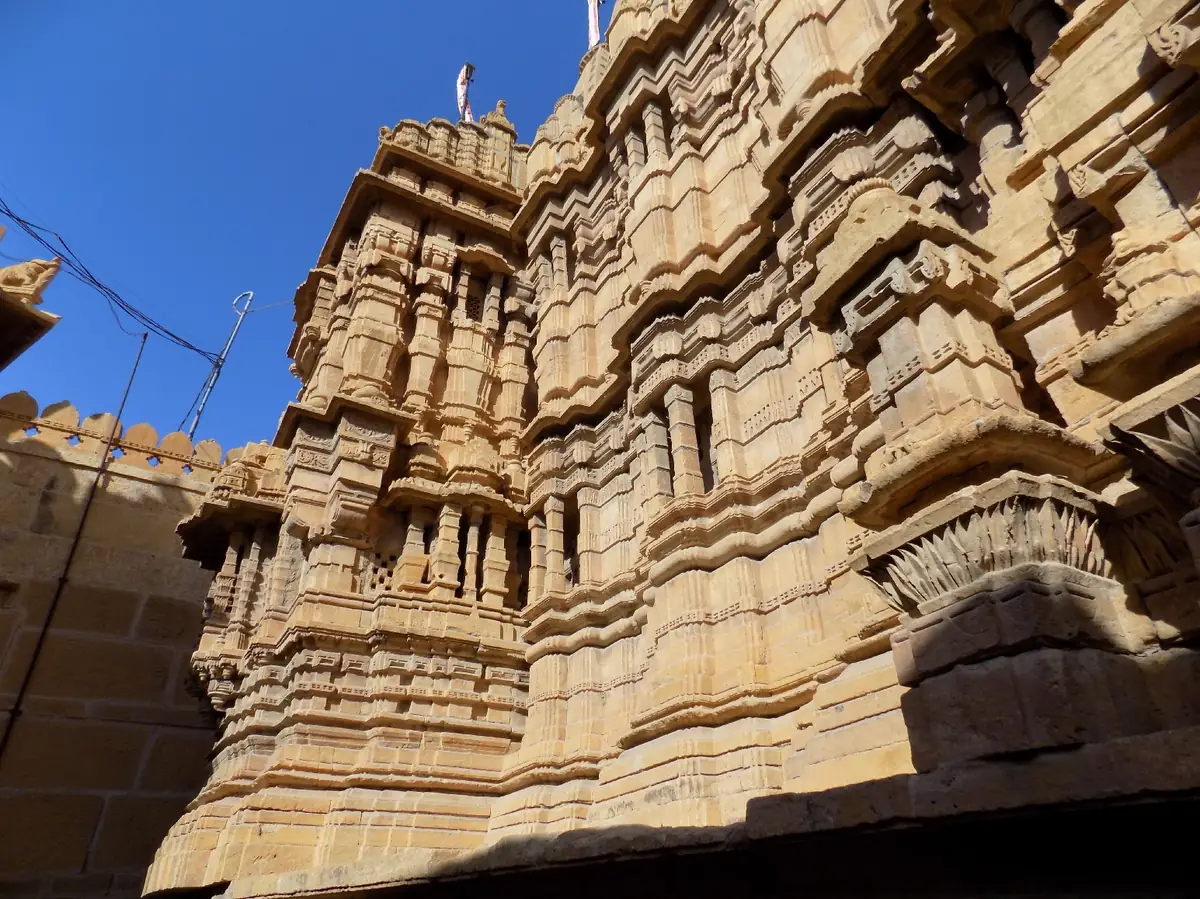
Beyond the seven temples inside the fort, Jaisalmer's old city has additional significant Jain temples that reflect the historical importance of the Jain merchant community to the city's wealth. The carving style — delicate, intricate, almost lace-like in its detail — represents some of the finest stone craftsmanship in Rajasthan, comparable in quality (though smaller in scale) to the famous Dilwara temples of Mount Abu.
- Entry: ₹50 (combined ticket usually covers multiple temples)
- Timings: 7 AM – 12 PM, 2 PM – 6 PM
- Note: No leather items permitted inside Jain temples — remove belts and leather bags before entering
The Thar Desert
The Thar Desert spans 200,000 sq km across Rajasthan and into Pakistan — and despite being one of the hottest deserts on earth, it's also one of the most densely populated, supporting agriculture, livestock herding, and a network of villages that have adapted to extreme aridity over centuries. Most visitors experience it through two main dune fields near Jaisalmer.
Sam Sand Dunes
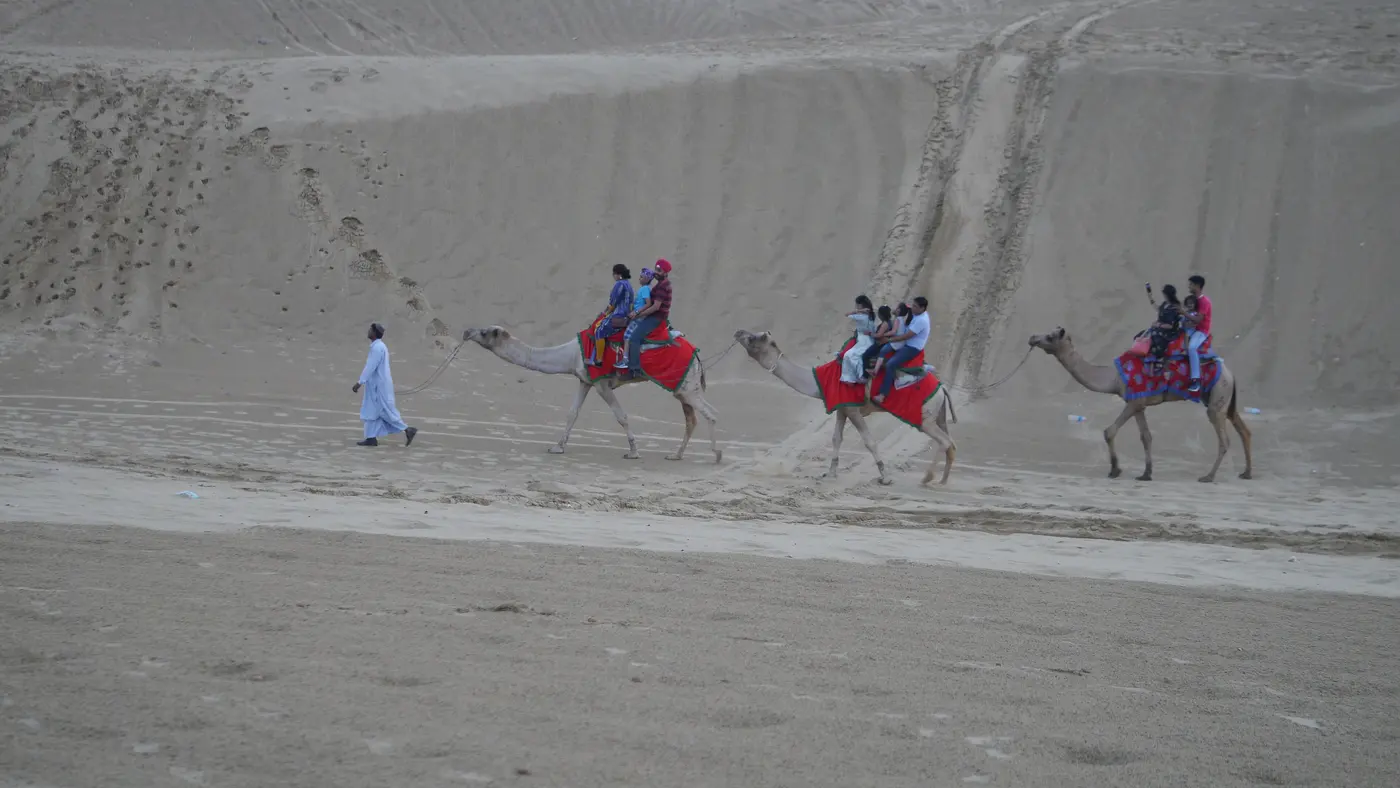
About 42 km west of Jaisalmer, Sam Sand Dunes is the most visited and most developed desert area near the city — a stretch of genuine rolling sand dunes (not all of the Thar is sandy; much is rocky scrubland) that have become the default sunset and camel safari destination for most visitors.
Sam has the advantage of accessibility and infrastructure — dozens of established desert camps, reliable camel and jeep safari operators, and easy day-trip logistics from Jaisalmer. The trade-off is crowds, particularly around sunset when tour buses arrive en masse. The dunes themselves are genuinely beautiful, but don't expect solitude during peak season evening hours.
Khuri Dunes
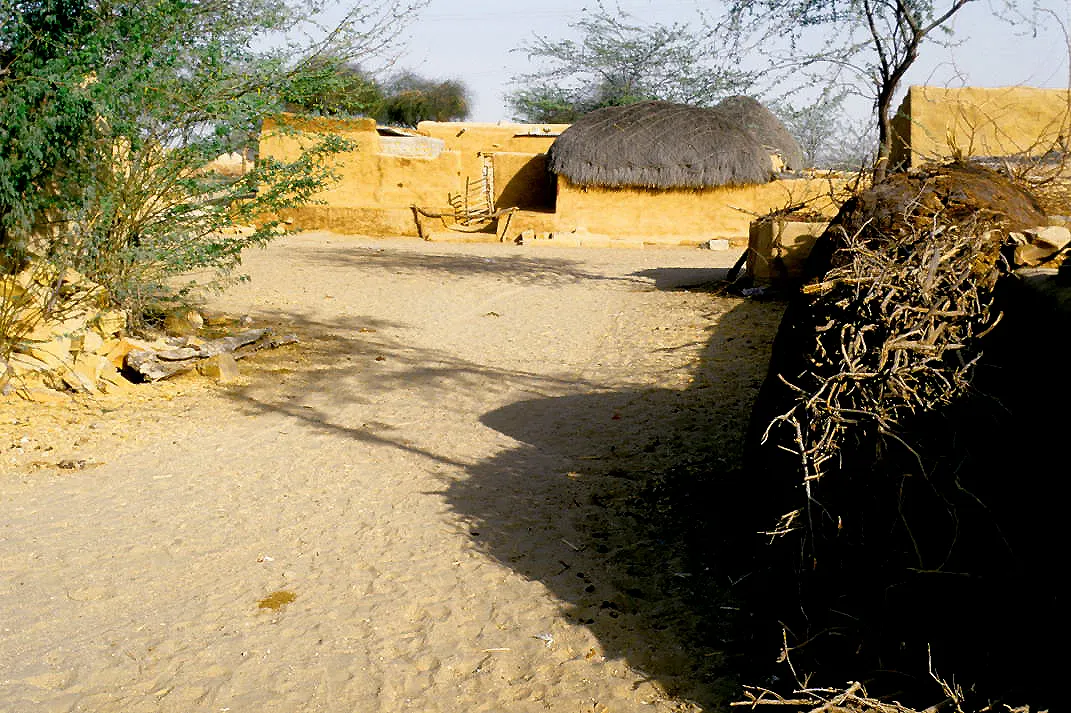
About 40 km southwest of Jaisalmer, Khuri Dunes offers a quieter, more village-immersed alternative to Sam. Khuri is a small traditional village with mud-and-thatch houses still in active use, surrounded by dunes that are arguably more photogenic than Sam's (taller, more sculptural) and receive a fraction of the tourist traffic.
Desert camps around Khuri tend to be smaller, more family-run, and offer a more genuine cultural immersion — many include a village walk, opportunities to interact with local Rajasthani families, and traditional folk music performances that feel less manufactured than the larger Sam operations.
Camel Safari — Complete Guide
The camel safari is the signature Thar Desert experience — and understanding the options properly makes a real difference to how memorable it is.
| Safari Type | Duration | Price (per person) | Best for |
|---|---|---|---|
| Sunset only | 2–3 hours | ₹500–₹800 | Day trippers, short stays |
| Overnight (1 night) | Afternoon–morning | ₹2,000–₹4,000 | Most popular, full desert experience |
| 2 nights / 3 days | Multi-day trek | ₹4,500–₹8,000 | Serious desert immersion, remote villages |
| Jeep + short camel | Half day | ₹1,500–₹2,500 | Limited time, combines transport + dune walk |
A typical overnight safari departs Jaisalmer by jeep in the early afternoon, transfers to camel at the edge of the dunes, rides for 1.5–2 hours to a remote camp spot (genuinely away from other camps if booked with a reputable operator), watches sunset over the dunes, eats a campfire dinner with traditional Rajasthani folk music, sleeps under the stars (or in a tent, depending on the package), and rides back at sunrise.
- Choose multi-day for genuine remoteness:The single overnight safari near Sam often ends up camped within sight of other groups. The 2-night/3-day treks venture genuinely deep into the desert, often reaching remote villages inaccessible by road.
- Check what's included: Meals, water, blankets, and the camel itself should be standard. Confirm whether transport to/from the dunes (jeep portion) is included or charged separately.
- Ask about group size: Some operators run large groups (10+ camels moving together); others offer smaller, more personal experiences. If solitude matters to you, ask specifically before booking.
- Camel riding is uncomfortable at first:The gait takes adjustment — expect some soreness if you've never ridden before. Most camels are well- trained and the pace is gentle; the discomfort is more about unfamiliar movement than danger.
- Book through your guesthouse or a known operator:Street touts in Jaisalmer's old city offer camel safaris at suspiciously low prices that often mean poorly maintained camels, inadequate food, or camps far closer to the road than advertised. A few hundred rupees more for a reputable operator is worth it.
Desert Camping
Beyond the camel safari camping experience, Jaisalmer has a well-developed range of standalone desert resorts near Sam and Khuri offering luxury tent accommodation without the trek — ideal for those who want the desert night sky and folk performance experience without the camel ride itself.
- Swiss tent camps: Permanent canvas tents with proper beds, attached bathrooms, and sometimes air conditioning — the most comfortable way to experience a desert night. ₹3,000–₹8,000/night.
- Luxury desert camps: High-end resort- style tented accommodation with private pools, full dining service, and curated cultural programming (folk dance, Kalbeliya performances, fire shows). ₹10,000–₹25,000+/night.
- The folk music experience: Most camps include an evening of traditional Rajasthani folk music and the Kalbeliya dance (a UNESCO-recognised intangible cultural heritage performed by the Kalbeliya tribe) around a bonfire — genuinely excellent at reputable camps, more perfunctory at budget operations.
- Stargazing: The Thar Desert's minimal light pollution makes for exceptional night sky viewing — on clear nights the Milky Way is visible to the naked eye. Several camps offer telescope sessions or simply provide mats for lying back and watching.
Kuldhara — The Ghost Village
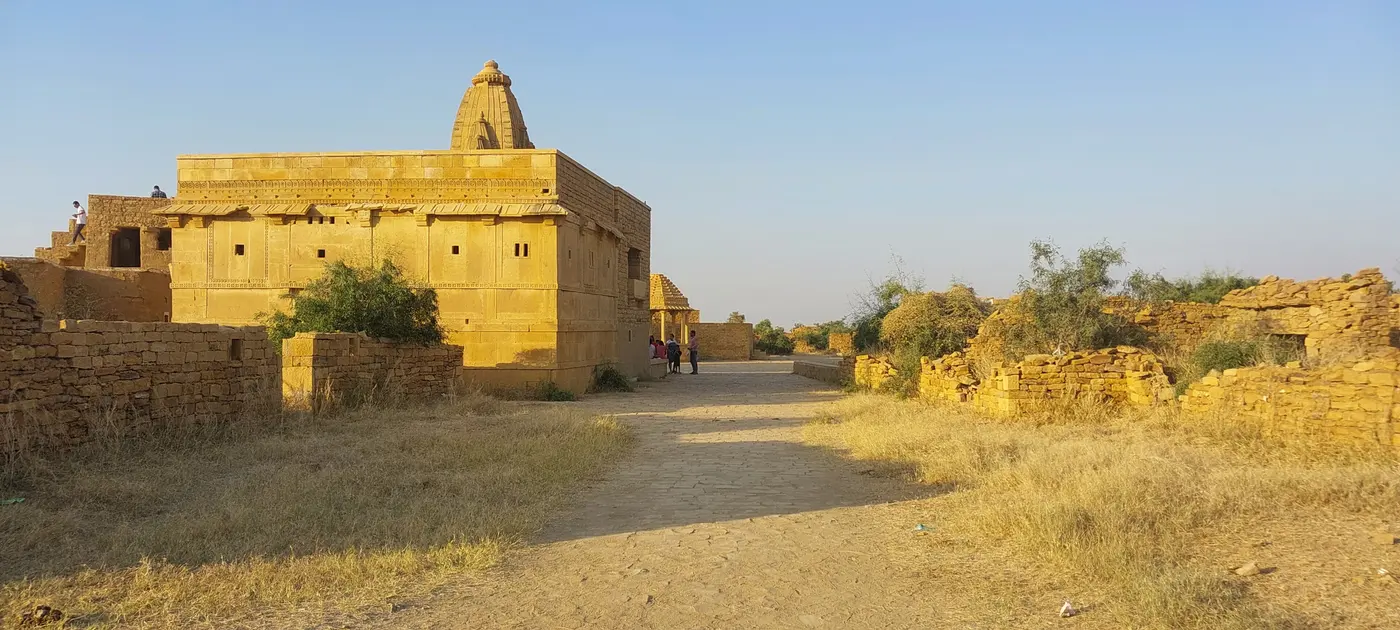
About 18 km west of Jaisalmer, Kuldharais a 13th-century village that — according to local legend — was abandoned overnight by its entire population of Paliwal Brahmins after the local minister demanded to marry a village girl, and the residents, refusing, fled in a single night, cursing the village so no one could ever resettle it. The historical accuracy of the legend is debated (some historians point to drought, taxation pressure, or water scarcity as more likely causes), but the village's genuinely eerie, completely abandoned state — stone ruins, empty streets, crumbling walls stretching across a substantial site — makes for an atmospheric stop regardless of which explanation you believe.
The site is maintained by the Rajasthan government as a protected monument, with walking paths through the ruins and informational signage. It's particularly striking at sunset, when long shadows fall across the abandoned structures.
- Distance from Jaisalmer: 18 km, ~30 minutes
- Entry: ₹10 (Indian), ₹50 (Foreign)
- Timings: Sunrise to sunset
- Combine with: Khaba Fort (5 km further), another abandoned settlement with a small museum on desert history
Where to Stay in Jaisalmer
Jaisalmer's accommodation falls into three categories: inside the fort (atmospheric but contributes to conservation strain), the old city outside the fort walls (best balance of atmosphere and sustainability), and desert camps near Sam/Khuri.
- → Zostel Jaisalmer (outside fort)
- → Hotel Renuka (old city)
- → Backpacker guesthouses near Gadisar Lake
- → Budget desert camps at Khuri
- → Hotel Killa Bhawan (fort views)
- → Nachana Haveli
- → Hotel Mandir Palace
- → Desert Tulip Resort (Sam Dunes)
- → Suryagarh Jaisalmer (best luxury in the city)
- → Fort Rajwada
- → Mirvana Nature Resort (Sam)
- → The Serai (luxury desert camp, Relais & Châteaux)
Given the conservation concerns inside Jaisalmer Fort, consider staying just outside the walls — properties like Hotel Killa Bhawan offer spectacular fort views from rooftop terraces without contributing to the structural strain inside.
What to Eat in Jaisalmer
Jaisalmer's desert cuisine evolved out of necessity — limited water and fresh produce led to a tradition built around lentils, millet, dried vegetables, and dairy that keeps well in extreme heat. The results are some of Rajasthan's most distinctive and flavourful dishes.
- Dal Baati Churma: Rajasthan's signature dish — hard wheat dough balls (baati) baked or roasted over coals, served with spiced lentils (dal) and a sweet crumbled wheat-jaggery dessert (churma). The baati is traditionally cracked open and doused in ghee before eating. Found at every traditional restaurant.
- Ker Sangri: A distinctly Jaisalmer desert dish made from dried ker berries and sangri (a desert bean pod), cooked with spices into a tangy, slightly sour curry — uses ingredients that thrive in arid conditions where little else grows.
- Gatte ki Sabzi: Gram flour dumplings cooked in a yogurt-based curry — a clever solution to desert cuisine's limited fresh vegetable access, using preserved and dry ingredients to create something genuinely delicious.
- Bajra Roti: Flatbread made from pearl millet (bajra), the staple grain of the desert since it requires far less water than wheat. Dense, slightly nutty, traditionally eaten with white butter and jaggery.
- Kalakand and Ghotua Laddu: Jaisalmer's sweet specialties — Kalakand is a milk-based fudge, Ghotua Laddu a rich, ghee-heavy ball made from gram flour. Both available from sweet shops throughout the old city.
- Best restaurants: 1st Gate Home Fusion (rooftop fort views, excellent thalis), Saffron Restaurant (Suryagarh, fine dining Rajasthani), and Trio Restaurant (long-running local favourite for authentic desert cuisine).
4-Day Jaisalmer Itinerary
Four days gives you time to explore the fort and old city thoroughly, visit the havelis, do an overnight camel safari into the dunes, and see Kuldhara — without rushing any of it.
Jaisalmer Fort & Old City
- ✓Morning: Jaisalmer Fort — Royal Palace, Jain Temples, fort ramparts
- ✓Walk the inner lanes — observe living fort culture, shop windows, temples
- ✓Lunch: Rooftop restaurant within or near the fort with city views
- ✓Sunset: Fort's western rampart for the golden-hour glow on the city
Havelis & Gadisar Lake
- ✓Morning: Patwon ki Haveli (arrive early for quiet photography)
- ✓Nathmal ki Haveli and Salim Singh ki Haveli
- ✓Afternoon: Gadisar Lake — boat ride, Tilon ki Pol gateway
- ✓Evening: Old city market shopping (textiles, leather, silver)
Kuldhara & Desert Camel Safari
- ✓Morning: Kuldhara ghost village and Khaba Fort
- ✓Early afternoon: Jeep transfer to Khuri or Sam Dunes
- ✓Camel ride into the dunes (1.5–2 hours)
- ✓Sunset over the dunes, campfire dinner with folk music, overnight camp
Desert Sunrise & Departure
- ✓Sunrise over the dunes — quietest, most beautiful light of the trip
- ✓Camel ride back, jeep transfer to Jaisalmer
- ✓Final shopping or sweet shop visit in old city
- ✓Departure by train, bus, or onward Rajasthan circuit
Budget Breakdown
| Expense | Budget | Mid-Range | Luxury |
|---|---|---|---|
| Accommodation/night | ₹700 | ₹3,000 | ₹15,000 |
| Food/day | ₹350 | ₹800 | ₹2,000 |
| Fort + monument entries | ₹150 | ₹600 | ₹600 |
| Overnight camel safari | ₹2,000 | ₹3,500 | ₹8,000 |
| Local transport/day | ₹200 | ₹600 | ₹1,500 |
| Daily total (excl. safari night) | ₹1,400 | ₹5,000 | ₹19,100 |
| 4-Day trip total | ₹6,200 | ₹18,500 | ₹65,300 |
* Excludes train/flight to Jodhpur or Delhi. The camel safari is typically the single largest line item — most operators bundle the overnight stay, meals, and transport into one price.
Essential Travel Tips for Jaisalmer
- Book camel safaris through your guesthouse or a known operator:Street touts in the old city undercut reputable operators significantly but often deliver poorly maintained camels, inadequate food, and camps far closer to the road than advertised. A slightly higher price for a reputable operator pays off.
- Choose Khuri over Sam if you want fewer crowds:Sam Dunes are more accessible but get genuinely crowded at sunset during peak season. Khuri offers comparable (arguably better) dunes with a fraction of the tourist traffic.
- The desert gets cold at night — even in winter:Visitors consistently underestimate this. Temperatures drop to 5–10°C on December–January nights. Bring or rent warm layers regardless of how hot the day was.
- Consider staying outside the fort:The conservation strain on Jaisalmer Fort from hotel construction within its walls is a genuine structural concern. Properties just outside the walls offer comparable views without contributing to the problem.
- Sun protection is non-negotiable:Strong sun, dry air, and reflective sand combine to cause sunburn and dehydration faster than most visitors expect. Cover up, drink constantly, and avoid the most intense midday hours (12–3 PM) for strenuous activity.
- Bargain respectfully in the markets:Jaisalmer's old city markets sell textiles, leather, and silverwork at prices that expect negotiation — starting offers are typically 30–50% above the seller's actual floor. Bargain firmly but politely; it's expected and part of the culture.
- Carry cash for the desert camps:ATMs are reliable in Jaisalmer town but nonexistent at Sam or Khuri. Withdraw enough cash before heading out for your safari, including for tips and any additional drinks or snacks at the camp.
- Photography permits at some sites:Some havelis and the fort's Royal Palace charge a separate camera fee — typically ₹50–₹100. Check before assuming photography is free at any entry point.
✅ Do
- →Book camel safaris through your guesthouse, not street touts
- →Visit Patwon ki Haveli early morning for quiet photography
- →Choose Khuri Dunes for fewer crowds than Sam
- →Pack warm layers even for winter desert nights
- →Watch sunset from the fort's western ramparts
- →Stop at Kuldhara on the way to or from the dunes
- →Try Dal Baati Churma at a traditional restaurant
- →Stay just outside the fort to support its conservation
❌ Don't
- →Visit May–June unless absolutely necessary — extreme heat
- →Book the cheapest camel safari without checking what's included
- →Underestimate desert night cold — pack layers regardless
- →Wear leather items into Jain temples
- →Skip Khaba Fort if you're already at Kuldhara — it's close by
- →Expect solitude at Sam Dunes during peak season sunset
- →Carry cards expecting them to work at desert camps
- →Forget sun protection — the desert sun is relentless
Frequently Asked Questions
How many days do I need for Jaisalmer?
Four days is a comfortable amount of time to explore the fort and old city thoroughly, visit the major havelis, do an overnight camel safari into the dunes, and see Kuldhara without rushing, as covered in our suggested itinerary.
What is the best time to visit Jaisalmer?
Late December to early February is the best window — daytime temperatures of 20–28°C and cool desert nights (5–15°C) make it ideal for camel safaris and fort exploration. May–June should be avoided, with temperatures regularly hitting 45–48°C.
How do I reach Jaisalmer from Jodhpur?
Jaisalmer is 285 km from Jodhpur, roughly 5-6 hours by road or train. Most travellers fly into Jodhpur first since it has far better flight connectivity than Jaisalmer Airport, then continue on by train or road.
How much does a camel safari in Jaisalmer cost?
Prices range from ₹500–₹800 for a sunset-only ride (2-3 hours), ₹2,000–₹4,000 for the most popular overnight safari, up to ₹4,500–₹8,000 for a multi-day 2-night/3-day trek into remoter parts of the desert.
Is Jaisalmer safe for solo travellers?
Jaisalmer is a well-established tourist town used to independent travellers. The main things to watch for are street touts offering suspiciously cheap camel safaris — book through your guesthouse or a known operator instead — and underestimating how cold the desert gets at night.
Should I visit Sam Dunes or Khuri Dunes?
If you have to choose one, go to Khuri instead of Sam, especially for an overnight stay. Khuri's dunes are comparably beautiful, sometimes considered more sculptural, and see a fraction of the crowds that gather at Sam around sunset in peak season.
What is the budget for a Jaisalmer trip?
A 4-day trip runs around ₹6,200 total on a budget, ₹18,500 mid-range, or ₹65,300 for a luxury trip, covering accommodation, food, fort and monument entries, an overnight camel safari, and local transport.
Published by the Kudozz Club editorial team · Last updated · How we research our guides
Want us to plan this trip for you?
Tell Kudozz Club where you want to go and what kind of trip you’re looking for. We’ll build a Jaisalmer and Rajasthan itinerary around your dates and budget.
Continue Exploring
View all guides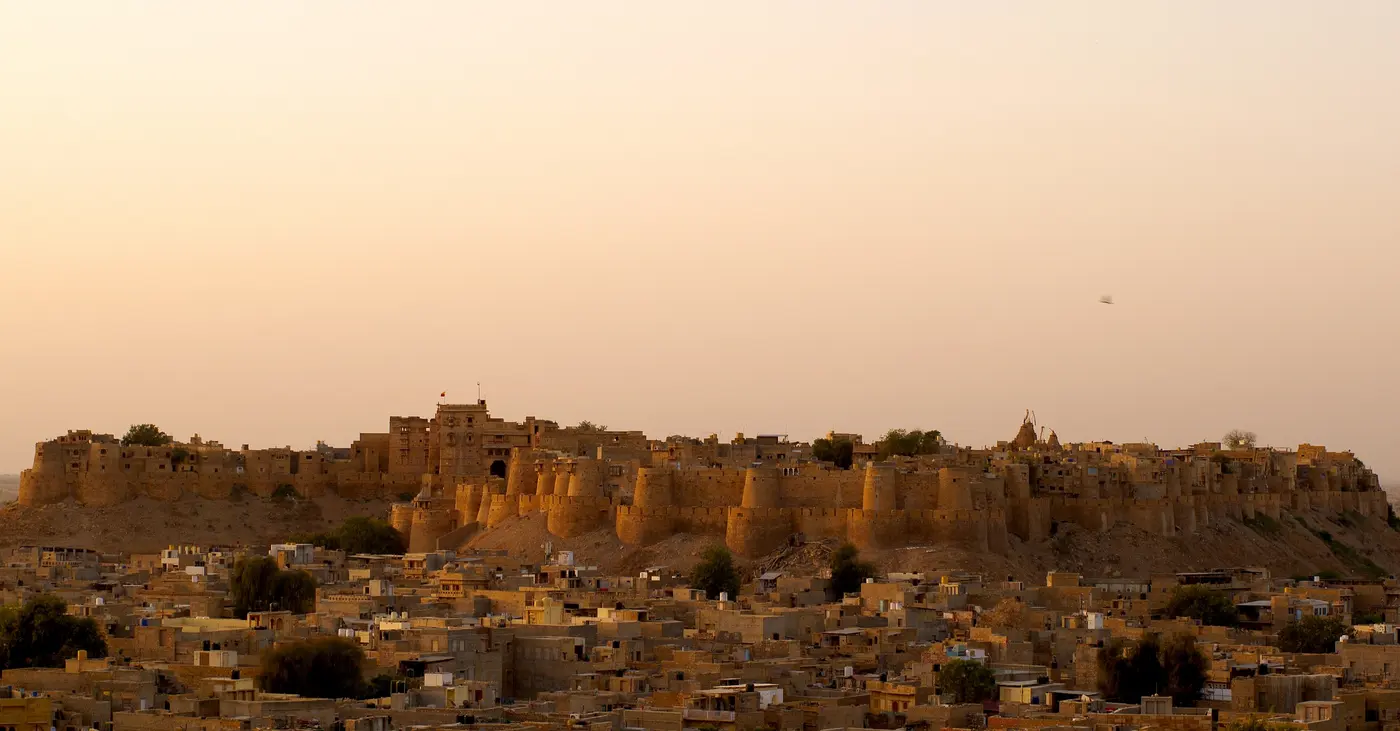 Things to Do
Things to Do in Jaisalmer: Golden Fort, Havelis & Thar Desert Experiences
The best things to do in Jaisalmer: the living Golden Fort, carved havelis, Gadisar Lake at sunrise, a camel safari and night under the stars in the Thar, and the ghost village of Kuldhara.
 Heritage
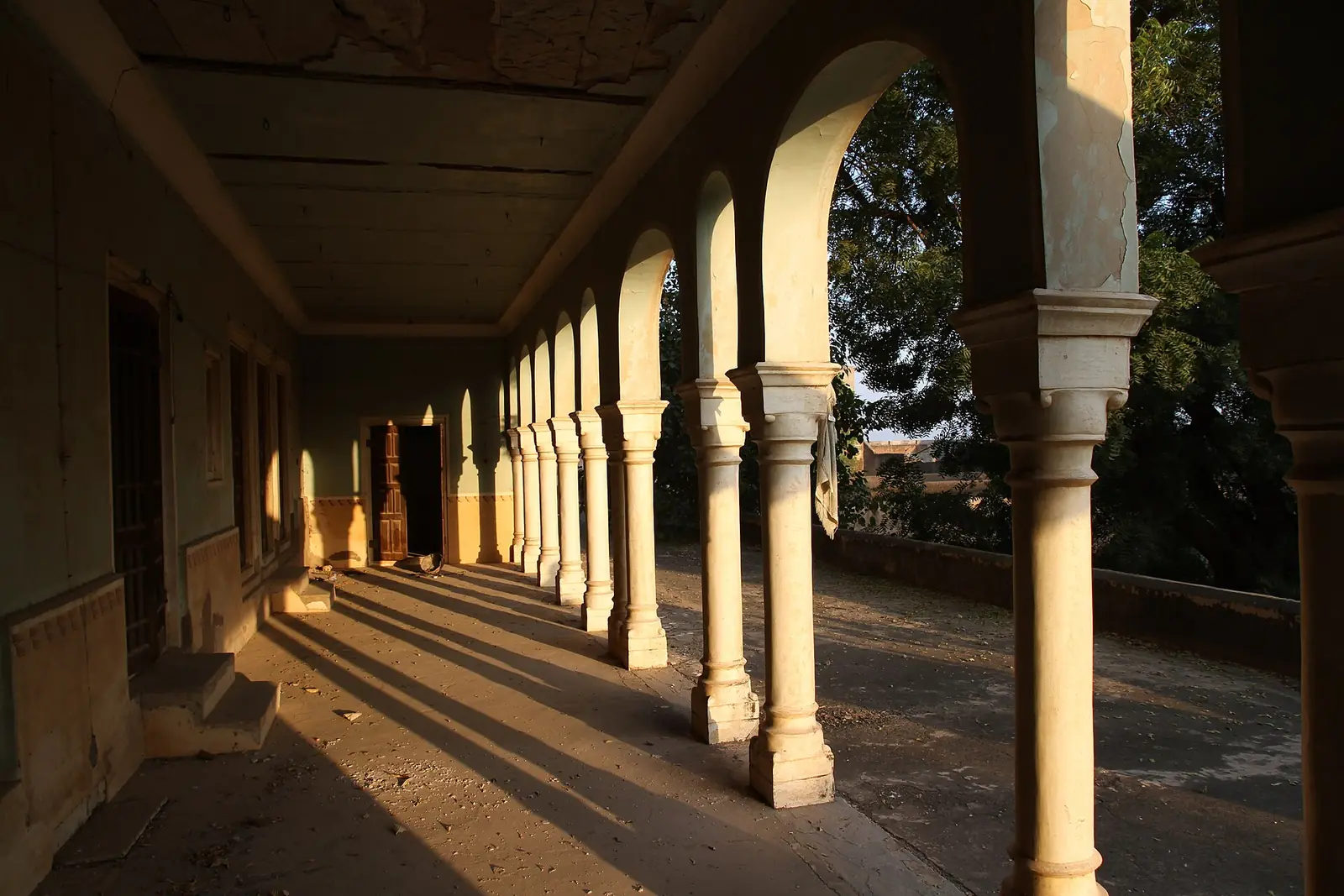
Mandawa Travel Guide: Shekhawati Havelis & Tips
A desert town where merchant fortunes were painted onto every wall — the complete guide to Mandawa's frescoed havelis and Shekhawati's open-air art tradition.
 Heritage
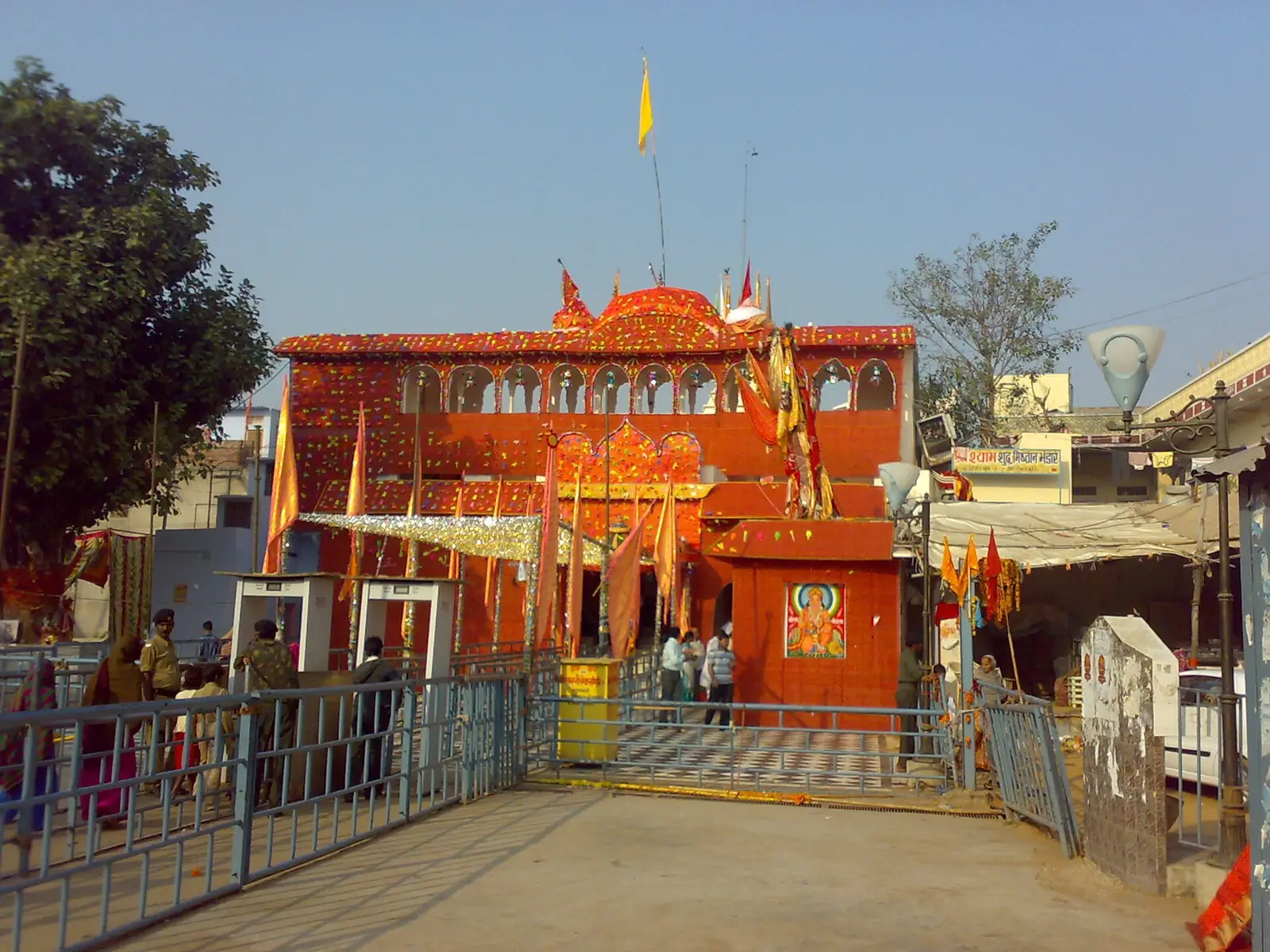
Khatu Shyam Ji Guide: Temple & Best Time
A legend of ultimate sacrifice, waves of devotional song, and one of Rajasthan's most intensely visited pilgrimage towns — the complete Khatu Shyam Ji guide.
 Heritage
Pushkar Travel Guide: Lake, Temple & Camel Fair
A sacred lake ringed by 52 ghats, one of the world's only Brahma temples, and a camel fair that turns the desert into a festival — the complete Pushkar guide.