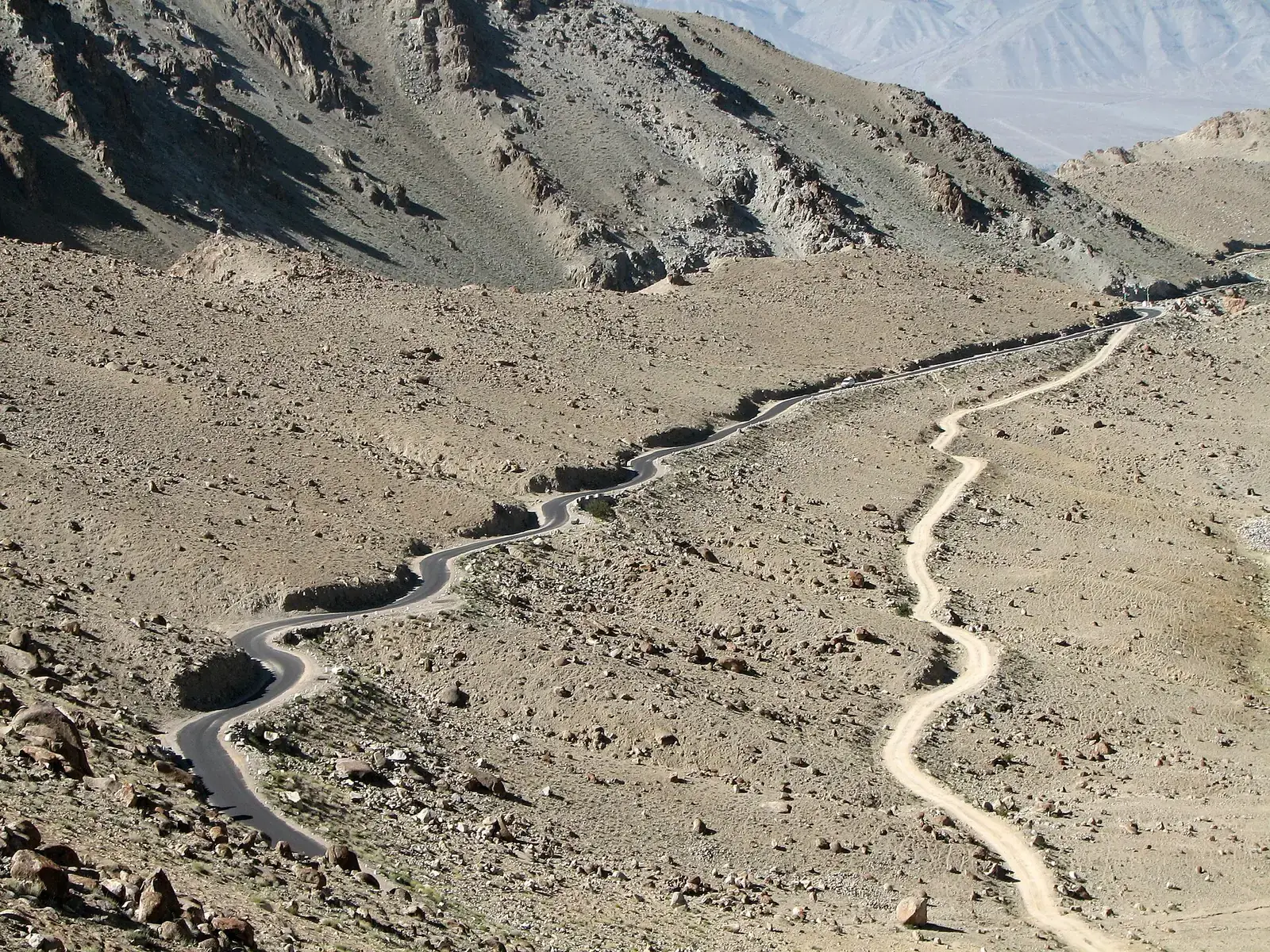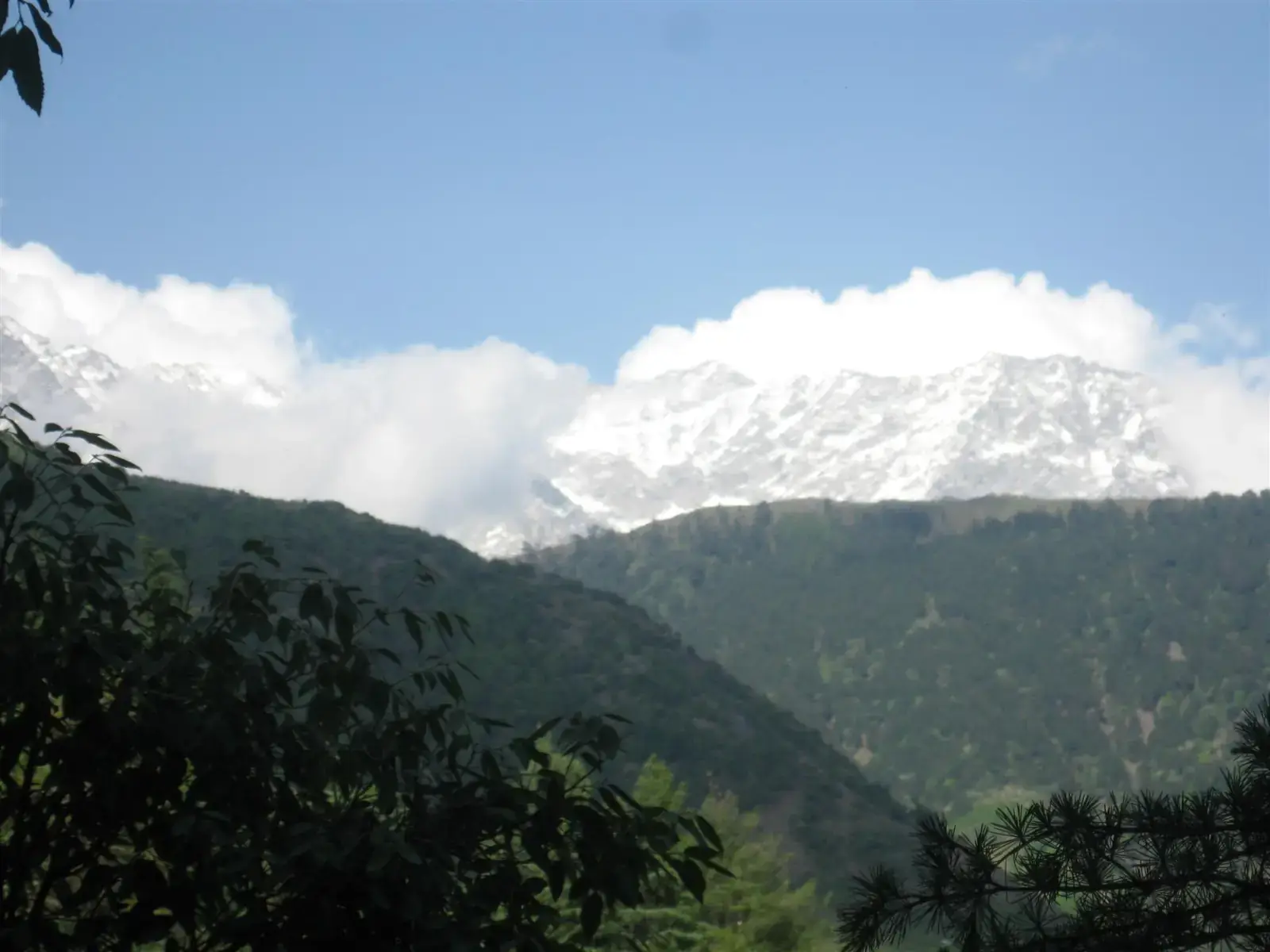
A good first trek teaches you how your body copes with long uphill days, cold nights and a little altitude, without putting you somewhere remote or dangerous if it goes badly. In India, that usually means a one- to three-day trek below about 3,000 metres, or a well-supported five-day trek in Uttarakhand or Himachal Pradesh.
The treks below are listed from easiest to more demanding. All are popular, with clear trails and places to stay or camp, and most can be done with a local guide or an organised group.
Quick answer
Good beginner treks in India include Triund near Dharamshala, Nag Tibba near Mussoorie, Kheerganga in the Parvati Valley, Prashar Lake near Mandi and the Chopta, Tungnath and Chandrashila trail in Uttarakhand, all doable in one to three days. For a first multi-day Himalayan trek, Kedarkantha, Dayara Bugyal and Brahmatal are well-supported options. Start regular walks and stair climbs a month before.
Key takeaways
- Start with a one- to three-day trek below about 3,000 metres, such as Triund, Nag Tibba or Prashar Lake.
- Chopta to Chandrashila reaches about 4,000 metres but on a short, paved path; go slowly.
- Kedarkantha and Dayara Bugyal are the usual first multi-day Himalayan treks.
- Spring and autumn are easiest; winter treks add snow and cold.
- Train for four to six weeks with walks, stairs and a loaded backpack.
Easy treks for beginners
Triund, near Dharamshala, Himachal Pradesh
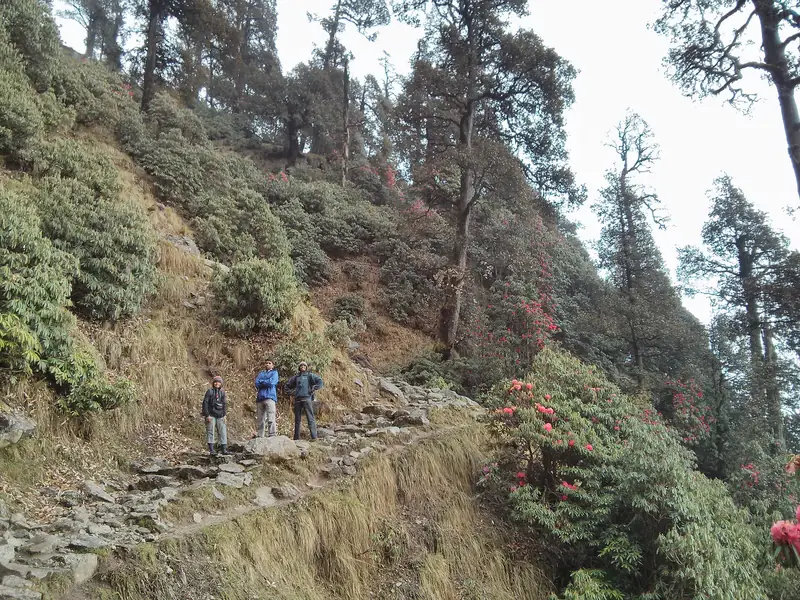
A steady climb of about 9 km from McLeod Ganj or Dharamkot to a grassy ridge at about 2,850 metres, with the Dhauladhar range close enough to touch. Most people camp or stay overnight for the sunrise. It is busy on weekends.
- Difficulty
- Easy to moderate
- Duration
- 1 to 2 days
- Best time
- March to June, September to December
Nag Tibba, near Mussoorie, Uttarakhand
The highest peak in the lower Garhwal range, at about 3,020 metres, is a short trek from Pantwari village, a few hours' drive from Dehradun. It works as a weekend trek from Delhi and is possible in most seasons, with snow in winter.
- Difficulty
- Easy to moderate
- Duration
- 2 days
- Best time
- Most of the year; snow in winter
Kheerganga, Parvati Valley, Himachal Pradesh
From Barshaini near Kasol, a forest trail climbs about 12 km to meadows at about 2,950 metres with a natural hot spring. It is the classic first trek for people visiting Kasol.
- Difficulty
- Easy to moderate
- Duration
- 2 days
- Best time
- April to June, September to November
Prashar Lake, near Mandi, Himachal Pradesh
A small lake with a floating island and a pagoda-style temple at about 2,730 metres. You can walk up from Bagi village or drive most of the way. Good in snow too.
- Difficulty
- Easy
- Duration
- 1 day
- Best time
- Year-round, road permitting
Deoria Tal, Chopta and Chandrashila, Uttarakhand
A lake walk from Sari village to Deoria Tal, then the paved path from Chopta to Tungnath temple and Chandrashila summit at about 4,000 metres. The height is real, so go slowly, but the trail is short and clear.
- Difficulty
- Easy to moderate
- Duration
- 2 to 3 days
- Best time
- April to June, September to December; snow in winter
Sahyadri day treks, Maharashtra
Lohagad, Rajmachi and Kalsubai are day or overnight treks from Mumbai and Pune on clear trails to forts and summits. They make good practice before a Himalayan trip.
- Difficulty
- Easy to moderate
- Duration
- 1 day
- Best time
- October to February (monsoon for greenery, with care)
Skandagiri and Savandurga, near Bengaluru
Short hill climbs near Bengaluru, Skandagiri for sunrise above the clouds and Savandurga for a steep granite monolith. Forest department rules on timings and bookings apply.
- Difficulty
- Easy (Skandagiri) to moderate (Savandurga)
- Duration
- Half a day
- Best time
- October to February
Your first multi-day Himalayan trek
Kedarkantha, Uttarakhand
From Sankri, forest trails lead to campsites such as Juda ka Talab and a summit at about 3,800 metres. It is usually done in five or six days with an organised group, in snow from December to March.
- Difficulty
- Easy to moderate
- Duration
- 5 to 6 days
- Best time
- December to April
Dayara Bugyal, Uttarakhand
Wide alpine meadows at about 3,400 to 3,700 metres above Barsu or Raithal villages near Uttarkashi, with views of Bandarpoonch. A gentle introduction to camping in the high meadows.
- Difficulty
- Easy to moderate
- Duration
- 4 to 5 days
- Best time
- Most of the year; snow in winter
Brahmatal, Uttarakhand
A winter and spring trek from Lohajung with frozen lakes and close views of Trishul and Nanda Ghunti, a little harder than Kedarkantha.
- Difficulty
- Moderate
- Duration
- 6 days
- Best time
- December to March
Beginner treks compared
| Trek | Highest point | Days | Best months |
|---|---|---|---|
| Prashar Lake | About 2,730 m | 1 | Year-round |
| Triund | About 2,850 m | 1 to 2 | March to June, September to December |
| Kheerganga | About 2,950 m | 2 | April to June, September to November |
| Nag Tibba | About 3,020 m | 2 | Most of the year |
| Dayara Bugyal | About 3,700 m | 4 to 5 | Most of the year |
| Kedarkantha | About 3,800 m | 5 to 6 | December to April |
| Chandrashila | About 4,000 m | 2 to 3 | April to June, September to December |
How to prepare
- Four to six weeks before, walk or jog three to four times a week, building to 5 km in about 35 to 40 minutes.
- Climb stairs with a backpack of 5 to 7 kg twice a week.
- Break in your trekking shoes on long walks before the trip.
- Learn the basics of layering and pack light; you carry what you pack unless you hire a porter or mule.
- Get a basic health check if you have any medical condition, and tell your trek leader about it.
Common beginner mistakes
- Choosing a high or long trek because of photos, not fitness.
- Wearing new shoes or cotton clothes.
- Starting late in the day and walking in the dark.
- Ignoring early signs of altitude sickness to keep up with the group.
- Not carrying enough water, snacks or a rain layer.
Safety
- Above about 2,500 metres, climb gradually and watch for altitude sickness (headache, nausea, dizziness, breathlessness at rest). If symptoms get worse, descend.
- Start early so you reach camp before the afternoon weather and darkness.
- Stay on marked trails; many accidents happen on shortcuts.
- In the monsoon, avoid Himalayan treks with landslide-prone roads and river crossings.
- Keep to the group and follow the trek leader's instructions.
- Carry a headlamp even on day treks.
What to pack
- Trekking shoes with good grip
- A rain jacket and a warm layer
- A daypack with 2 litres of water
- Snacks: nuts, chikki, dates, energy bars
- Cap, sunglasses and sunscreen
- A small first-aid kit
Plan the trip
FAQs
Which is the easiest trek in India for beginners?
Prashar Lake and Triund are among the easiest, followed by Nag Tibba and Kheerganga.
Which Himalayan trek is best for beginners?
Kedarkantha in winter and Dayara Bugyal are the most popular first multi-day Himalayan treks.
How fit do I need to be for a beginner trek?
You should be able to walk for five to six hours with breaks and climb stairs comfortably with a light backpack.
Can I do a beginner trek without a guide?
Short, busy trails such as Triund and Prashar Lake are often done independently. Multi-day treks are safer with a guide or organised group.
What is the best month for a first trek?
October and November, or April to early June, when trails are dry and weather is stable in most of the Himalaya.