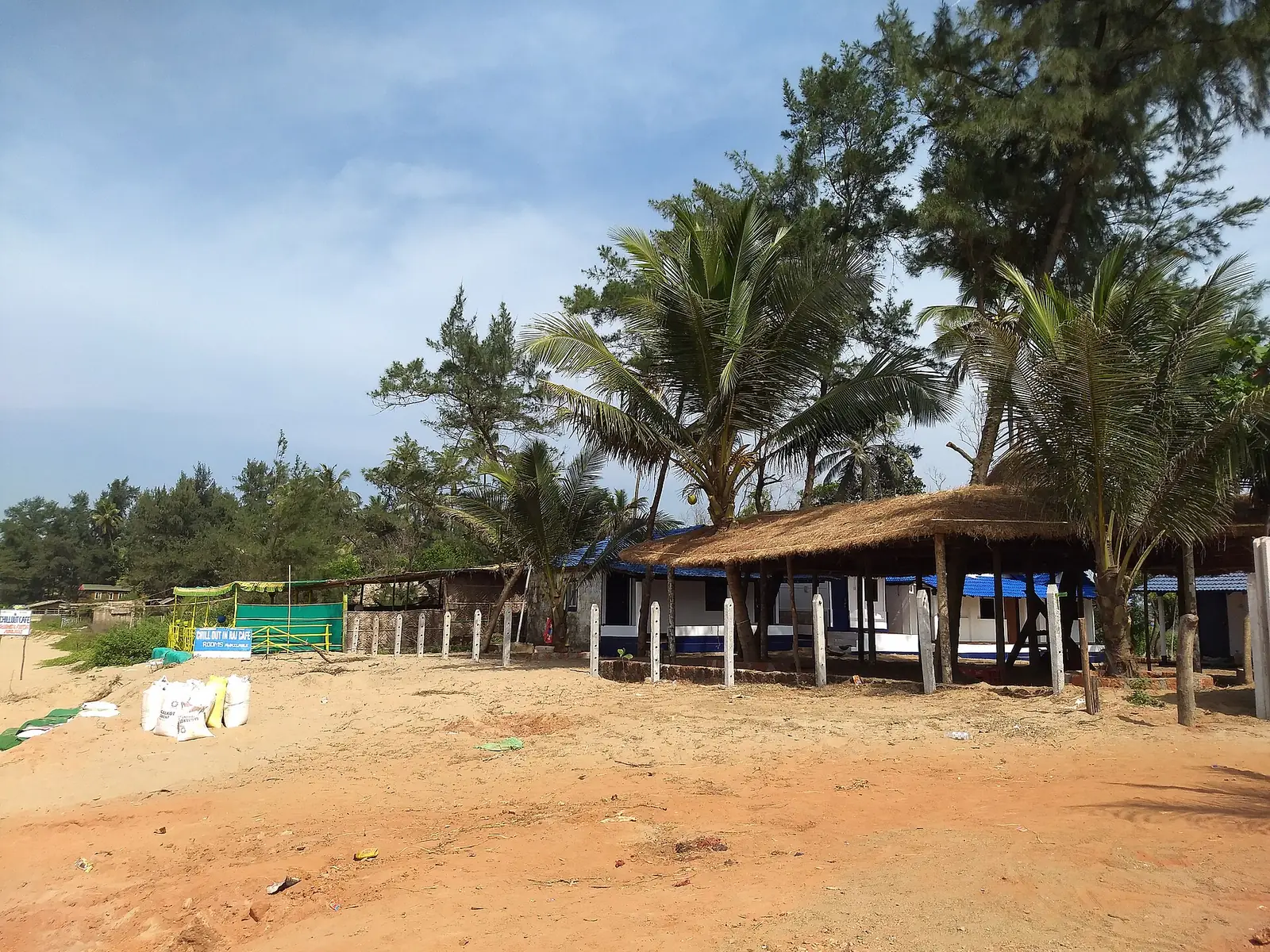
Why Gokarna?
Two hundred and fifty kilometres south of Goa, on the same Karnataka coastline, sits a temple town that has quietly become the beach destination people go to once they've decided Goa is too crowded. Gokarna means "cow's ear" in Sanskrit, named for the shape of the local coastline — but the town's real identity is as a Hindu pilgrimage centre, home to the revered Mahabaleshwar Temple, that happens to sit beside a run of some of India's most photogenic beaches.
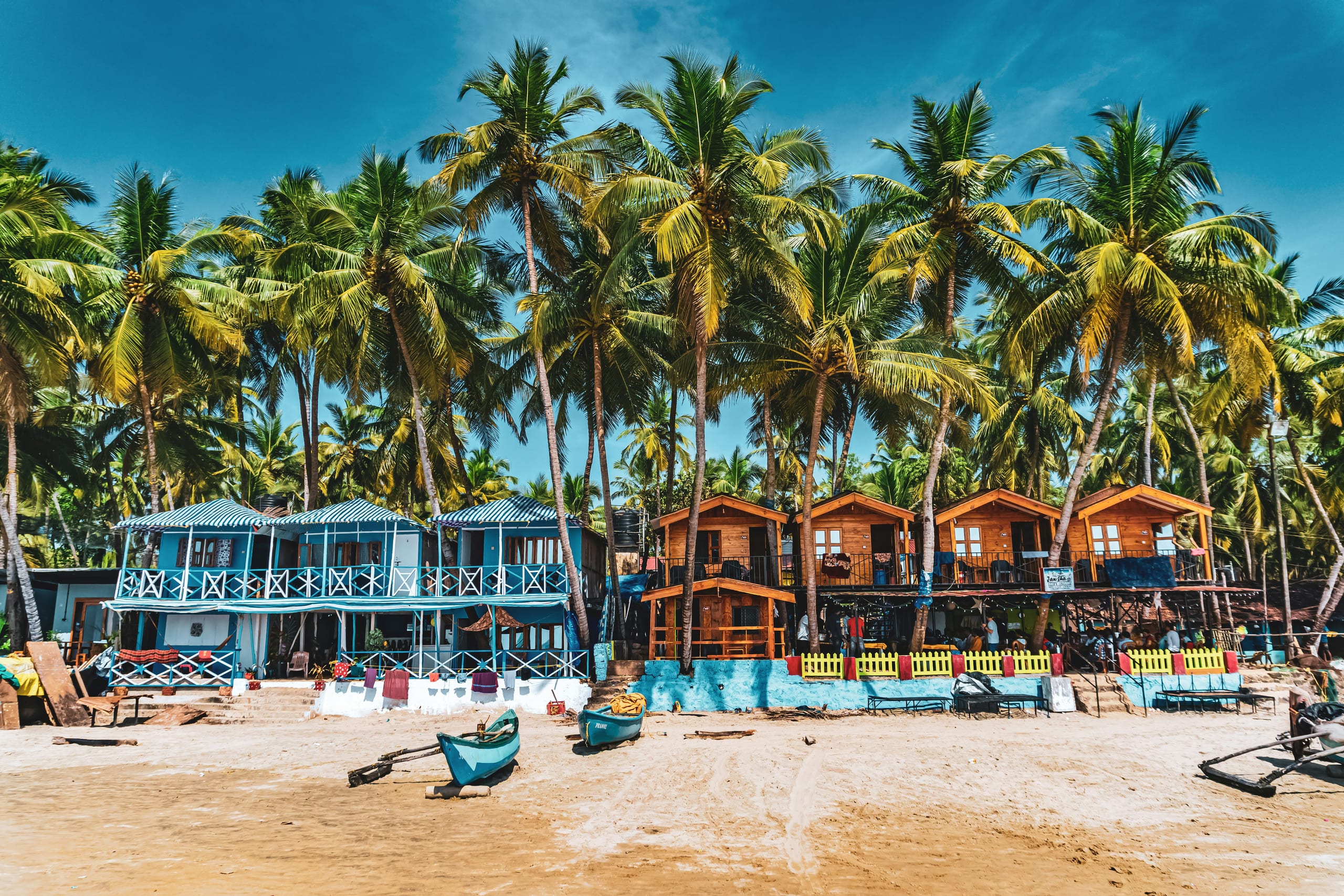
That combination is what makes Gokarna different: the main town beach (Gokarna Beach itself) is lined with temples and pilgrims, while a 45-minute walk south along the headland opens onto Kudle, Om, Half Moon, and Paradise beaches — each progressively quieter, each reachable only on foot or by boat, and none of them built up with the beach-club infrastructure that defines Goa's coast.
Gokarna rewards travellers who want beach time without nightlife, don't mind a bit of walking between spots, and are happy trading Goa's polish for genuinely secluded sand.
🏖️ Gokarna at a Glance
Looking for activities and experiences? See our guide to the best things to do in Gokarna.
Going by road? See our guide to the Bengaluru to Goa road trip.
Planning a beach holiday? Explore our guide to the best beaches in Karnataka.
Planning something active? Read our guide to surfing in India.
Best Time to Visit Gokarna
Like Goa, Gokarna's beach season is dictated by the monsoon — most beach shacks close entirely between June and September.
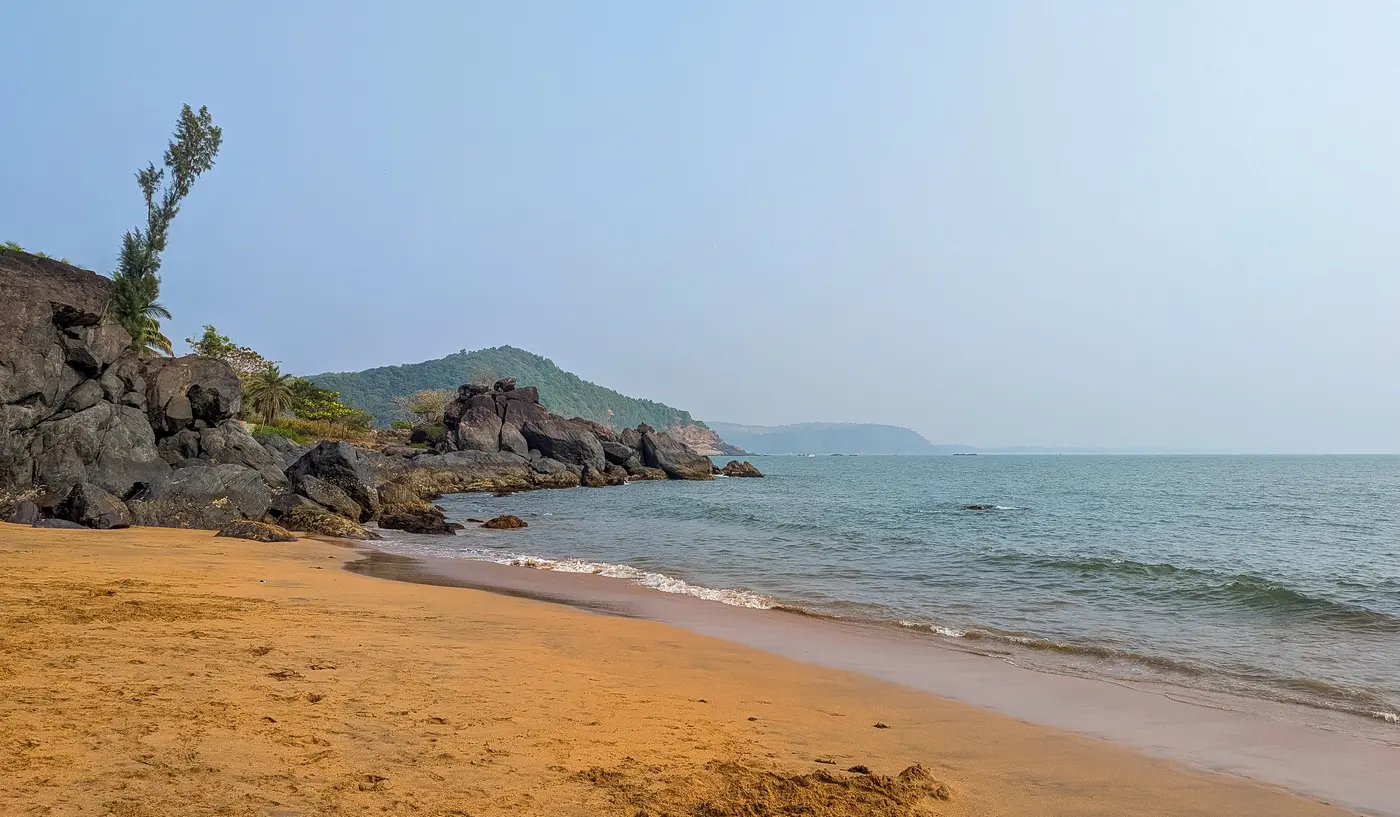
Dry, sunny, 22–32°C, calm seas and every shack open. December–January sees the biggest crowds (mostly backpackers), but Gokarna never feels as packed as Goa even at peak.
Temperatures climb past 34°C with high humidity. Very few crowds and lower shack prices, but the midday heat makes the beach trek genuinely tough.
Heavy rain and dangerous currents close most shacks and make swimming unsafe. The temple town itself stays functional, but this isn't a beach trip.
Shacks begin reopening as the monsoon tapers off. Seas are still a little rough but the crowds haven't arrived yet — good for early, quiet visits.
Our pick: Late October to December, before the Christmas–New Year backpacker crowds peak. You get the full open-shack, calm-sea season while the beaches are still close to empty on weekdays.
How to Reach Gokarna
Gokarna is less directly connected than Goa, which is exactly why it has stayed quieter — a bit more effort to reach filters out the day-tripper crowds.
- By Air: The nearest airports are Goa (Dabolim/GOI or Manohar International/GOX, ~145 km, ~3.5 hrs by road) and Hubli (HBX, ~140 km, ~3 hrs). Mangalore airport (~230 km) is a third option with more southern connections.
- By Train: Gokarna Road station, on the Konkan Railway line, is the most convenient option — well connected to Mumbai, Goa, and Mangalore, with an auto/taxi ride of about 20 minutes into town.
- By Road: Regular buses and shared taxis run from Goa (Panjim/Margao, ~4 hrs) and Mangalore (~5 hrs) — the coastal drive along NH66 is scenic in its own right.
Gokarna vs Goa
The comparison is inevitable, and useful — the two destinations suit genuinely different travellers.
🎉 Goa
Built-up infrastructure, beach clubs, nightlife, casinos, and easy point-to-point road access. Best for groups, first-timers, and anyone who wants variety and convenience over solitude.
🕉️ Gokarna
A working temple town beside genuinely secluded, walk-in beaches with minimal commercial development. Best for backpackers, couples, and solo travellers who want calm over convenience.
Think of Gokarna as what parts of Goa looked like decades ago — fewer facilities, far fewer people, and beaches you can still have mostly to yourself on a weekday.
The Best Beaches
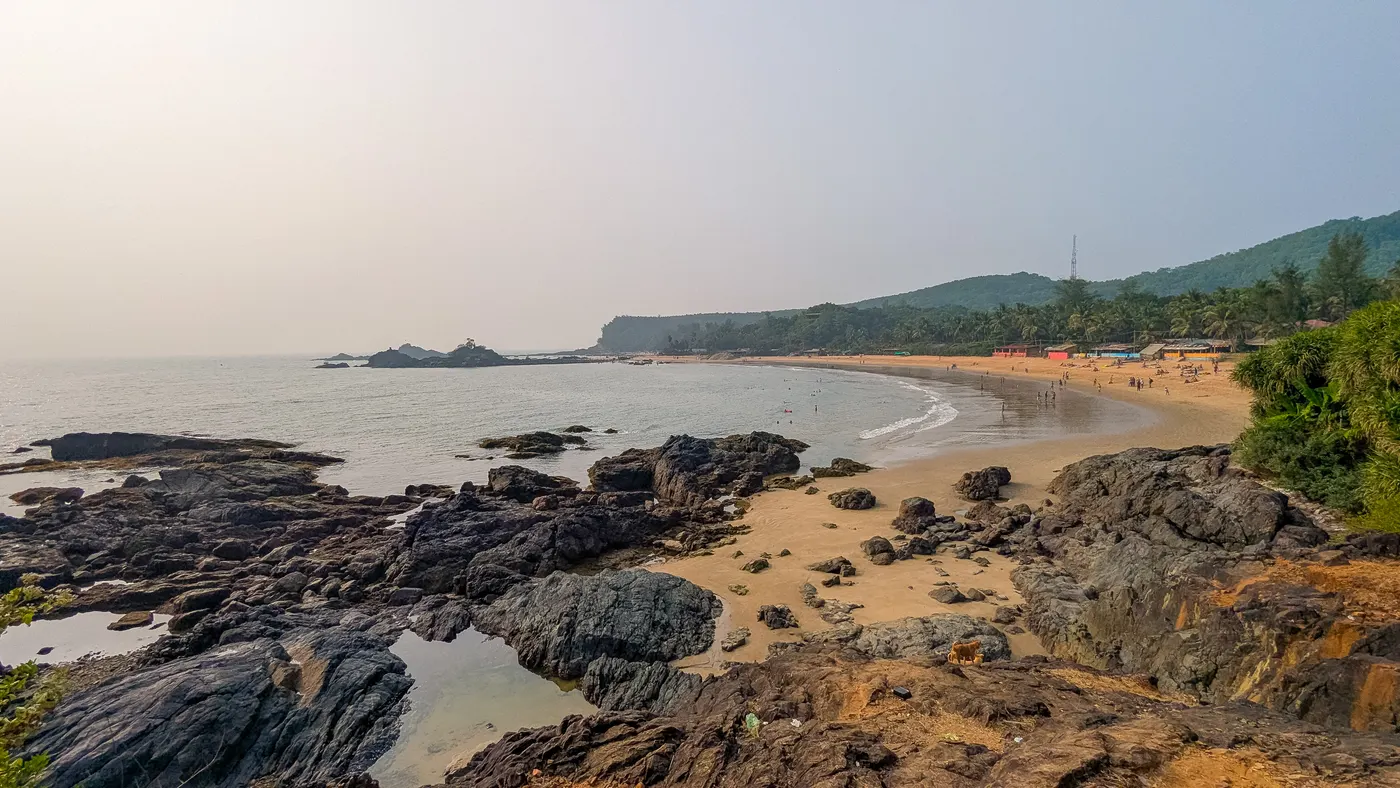
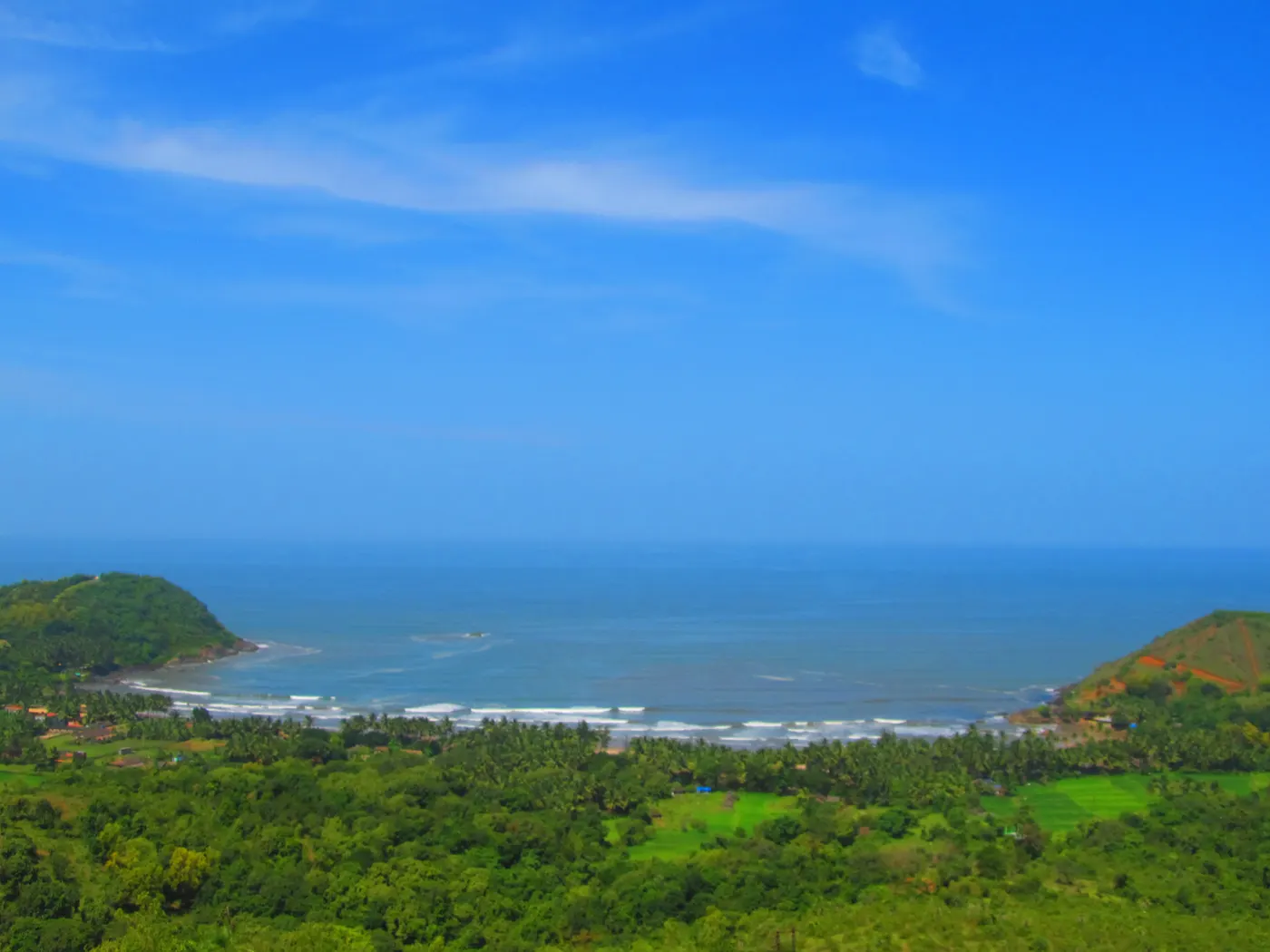
- Gokarna Beach (Main Beach): The town beach itself, right beside the temple — more locals and pilgrims than sunbathers, and the least "beach holiday" feeling of the lot. Good for a sunset walk, not for lounging.
- Kudle Beach: The first beach south of town (15-min walk), and the most developed of the southern beaches — a good range of shacks and huts, easy access, and a lively but not loud atmosphere.
- Om Beach: Named for its shape (two curved coves meeting like the Om symbol), and Gokarna's most famous and most-photographed beach — reachable by road as well as on foot, so it gets the most day-trip crowds.
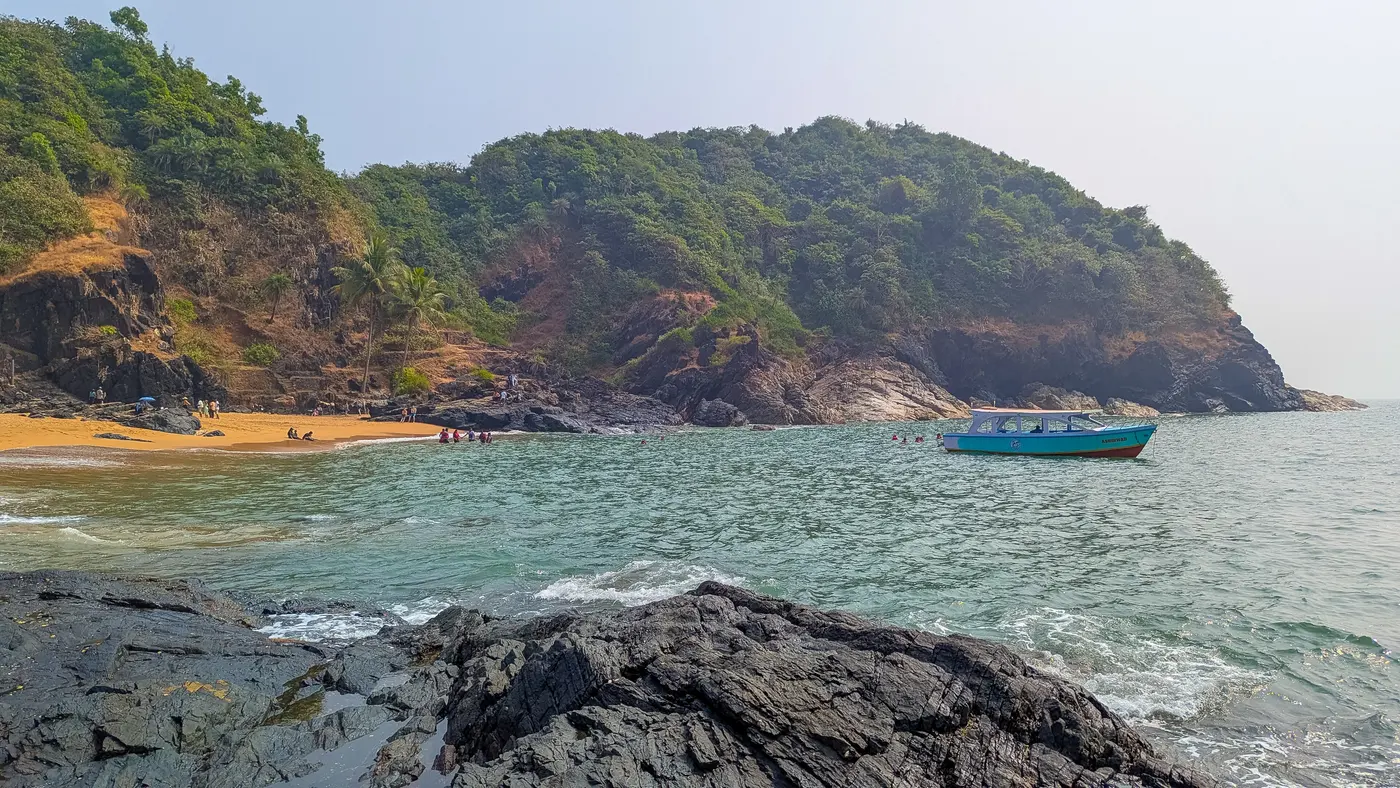
- Half Moon Beach: A short, crescent- shaped cove reachable only by trekking or boat — smaller and quieter than Om, with a handful of basic shacks.
- Paradise Beach: The most secluded of the five, boat- or trek-access only, with no permanent shacks — genuinely close to untouched, and worth the effort for anyone craving true solitude.
The Beach-Hopping Trek
The signature Gokarna experience is walking the headland trail connecting Kudle, Om, Half Moon, and Paradise — a coastal trek that most travellers do over a half-day, stopping to swim and eat along the way.
- Full route: Gokarna Town → Kudle → Om Beach → Half Moon → Paradise Beach, roughly 7–8 km one-way, 3–4 hours at a relaxed pace with stops.
- Terrain: A mix of sand, rocky headland sections, and forest path — moderately strenuous, not technical, but proper footwear matters.
- Shortcuts: Shared autos and bikes can reach Kudle and Om Beach directly by road, so you can skip the first leg and trek only the quieter Om→Half Moon→Paradise stretch.
- Return: Small boats ferry travellers back from Paradise or Om Beach to Kudle/town for a fee, avoiding a return trek in the afternoon heat.
Mahabaleshwar Temple & the Old Town
Gokarna's spiritual side is easy to skip if you head straight for the beaches, but the old town is worth at least a morning — a genuinely lived-in pilgrimage centre, not a tourist reconstruction.
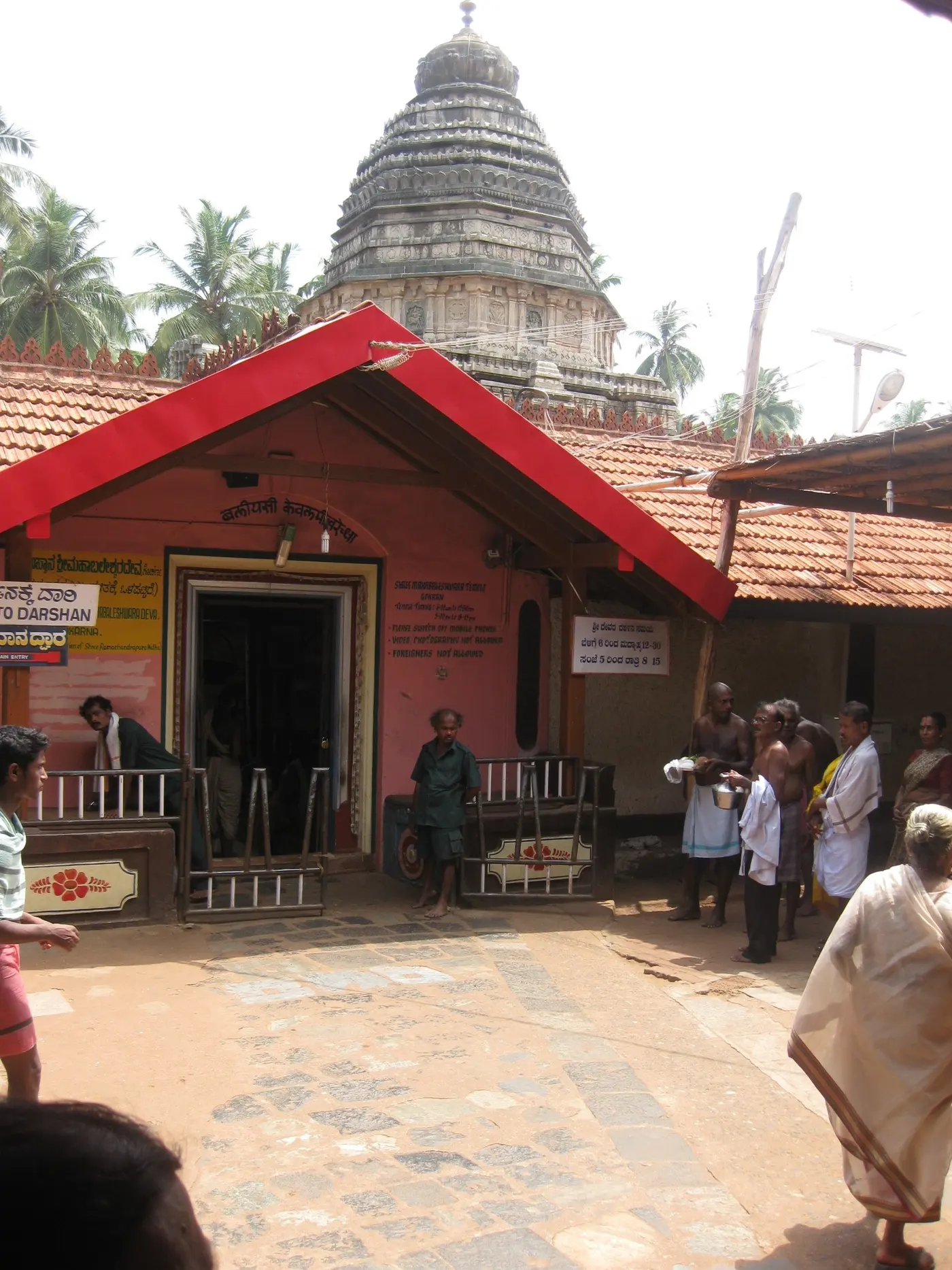
- Mahabaleshwar Temple: One of the most revered Shiva temples on the west coast, believed to house the Atmalinga — non-Hindus are generally not permitted inside the inner sanctum, but the temple complex and surrounding streets can be explored.
- Koti Tirtha: A large temple tank in the centre of town where pilgrims bathe before entering Mahabaleshwar Temple — active and photogenic at dawn.
- Old town streets: Narrow lanes lined with traditional Kannada-style houses, flower and prasad stalls, and small eateries serving South Indian breakfast — a strong contrast to the beach shacks a 15-minute walk away.
- Dress code: Modest dress (covered shoulders and knees) is expected in the temple area, even though beachwear is completely normal a short walk away on Kudle or Om Beach.
Where to Stay in Gokarna
Choose your base by beach — each has a different mix of huts, guesthouses, and mid-range stays.
- → Beach huts, Om Beach
- → Kudle Beach dorms/guesthouses
- → Namaste Cafe huts, Om Beach
- → Backpacker hostels, Gokarna Town
- → SwaSwara (Om Beach, wellness resort)
- → Kudle Beach cottages
- → Nirvana Cafe & Rooms, Om Beach
- → Boutique stays, Gokarna Town
- → SwaSwara Ayurveda villas
- → Om Beach Resort premium cottages
- → Private beachfront villas (seasonal)
Om Beach is the best all-round base — closer to the trekking trail toward Half Moon and Paradise than town, while still having enough shacks and stays to be comfortable.
What to Eat in Gokarna
Gokarna's food scene splits neatly in two: traditional Kannada thalis in the temple town, and an eclectic, backpacker-shaped beach shack menu along the coast.
- South Indian Thali: Simple, filling vegetarian thalis are the norm in the old town, often served on banana leaf at small local eateries near the temple.
- Beach shack fusion menus: Israeli, Italian, and continental dishes sit alongside seafood at most Om Beach and Kudle shacks — a legacy of Gokarna's long-running international backpacker crowd.
- Fresh seafood: Kingfish, prawns, and squid, usually grilled or curried, are the standout at beach shacks — ask what came in that morning rather than ordering off the printed menu.
- Best spots: Namaste Cafe (Om Beach, long-running backpacker institution), Prema Restaurant (Gokarna Town, reliable thalis), and the shacks at Kudle Beach for sunset dinners.
3-Day Gokarna Itinerary
Three days is enough to cover the temple town, do the full beach trek, and still have downtime on the sand — Gokarna doesn't need the 5+ days a Goa trip does.
Arrival & Temple Town
- ✓Arrive, check in around Kudle or Om Beach
- ✓Afternoon: Explore Gokarna Town, Mahabaleshwar Temple, Koti Tirtha
- ✓Evening: Sunset at Kudle Beach
- ✓Dinner at a Kudle Beach shack
The Beach-Hopping Trek
- ✓Early morning start: trek from Om Beach toward Half Moon and Paradise
- ✓Swim breaks at Half Moon Beach
- ✓Lunch and relax at Paradise Beach
- ✓Boat back to Om Beach in the late afternoon
Om Beach & Departure
- ✓Morning: Relaxed final swim and breakfast at Om Beach
- ✓Late morning: Optional dolphin-spotting boat trip
- ✓Afternoon: Depart via Gokarna Road station or onward to Goa/Hubli
Budget Breakdown
| Expense | Budget | Mid-Range | Luxury |
|---|---|---|---|
| Accommodation/night | ₹600 | ₹2,500 | ₹12,000 |
| Food/day | ₹400 | ₹900 | ₹2,000 |
| Local transport per day | ₹150 | ₹500 | ₹1,500 |
| Boat rides / activities | ₹300 | ₹800 | ₹2,000 |
| Daily total | ₹1,450 | ₹4,700 | ₹17,500 |
| 3-Day trip total | ₹4,350 | ₹14,100 | ₹52,500 |
* Excludes flight/train to the region. Gokarna runs noticeably cheaper than Goa across every category, even in peak season.
Essential Travel Tips for Gokarna
- Start the beach trek early: Beat the midday heat and the day-trip boat crowds by setting out from Om Beach before 9 AM.
- Dress modestly in the temple town:Beachwear is fine on the sand but not in Gokarna Town or around Mahabaleshwar Temple — carry a cover-up.
- Carry cash: Card acceptance is patchy at beach shacks and almost nonexistent for boat rides and local transport.
- Book Gokarna Road train tickets early:This route fills up fast on weekends during the Dec–Jan peak season.
- Check sea conditions before swimming:Currents at Om Beach and Paradise Beach can be stronger than they look — ask locally before swimming past the shallows, especially outside the main season.
- Most beach shacks close outside Oct–May:If visiting in the monsoon months, expect the temple town to function but the beach infrastructure to be largely shut.
✅ Do
- →Do the full Om–Half Moon–Paradise beach trek at least once
- →Visit Mahabaleshwar Temple and Koti Tirtha in the old town
- →Base yourself at Om Beach for the best trek access
- →Start treks early to beat the heat and crowds
- →Try the fusion menus at long-running shacks like Namaste Cafe
- →Time your trip for Oct–Dec for calm seas and open shacks
❌ Don't
- →Wear beachwear into Gokarna Town or the temple complex
- →Expect Goa-level nightlife or infrastructure
- →Swim past the shallows without checking currents locally
- →Rely on cards at beach shacks or for boat rides
- →Skip the temple town entirely — it's the other half of Gokarna
- →Visit expecting open shacks during peak monsoon (Jun–Sep)
Frequently Asked Questions
How many days do I need in Gokarna?
Three days is enough to cover the temple town, do the full beach-hopping trek, and still have downtime on the sand — Gokarna doesn't need the 5+ days a Goa trip usually does.
Is Gokarna safe for solo travellers?
Gokarna is a well-established stop on the backpacker circuit and generally comfortable for solo travellers, including solo women, especially around Om Beach and Kudle Beach where there's a steady flow of other travellers. As anywhere, check sea conditions before swimming and avoid isolated stretches after dark.
What is the best time to visit Gokarna?
October to February is the best window — dry, sunny weather between 22–32°C, calm seas, and every beach shack open. Late October to December, just before the Christmas–New Year backpacker crowds peak, is our pick for the best balance of good conditions and fewer people.
How do I reach Gokarna from Goa?
Gokarna is about 145 km from Goa's airports (Dabolim/GOI or Manohar International/GOX), roughly 3.5 hours by road. Regular buses and shared taxis also run from Panjim/Margao (about 4 hours), and Gokarna Road station on the Konkan Railway line connects directly to Goa by train.
What is the budget for a trip to Gokarna?
A budget traveller can get by on roughly ₹1,450 a day (huts, thalis, local transport), a mid-range trip runs closer to ₹4,700 a day, and a luxury stay like SwaSwara can run ₹17,500+ a day. A 3-day trip totals roughly ₹4,350 on a budget and ₹14,100 mid-range, excluding flights or trains to the region.
Is Gokarna worth visiting over Goa?
It depends on what you want. Gokarna suits backpackers, couples, and solo travellers looking for genuinely secluded beaches, a working temple town, and calm over convenience. Goa has more built-up infrastructure, nightlife, and easy access — better for groups and first-timers who want variety.
How long is the Gokarna beach-hopping trek?
The full route from Gokarna Town through Kudle, Om Beach, Half Moon, and Paradise Beach runs roughly 7–8 km one-way, taking about 3–4 hours at a relaxed pace with swim stops. Shared autos can shortcut the first leg to Kudle or Om Beach if you only want to trek the quieter Om–Half Moon–Paradise stretch.
Published by the Kudozz Club editorial team · Last updated · How we research our guides
Want us to plan this trip for you?
Tell Kudozz Club where you want to go and what kind of trip you’re looking for. We’ll build a Gokarna and Karnataka itinerary around your dates and budget.
Continue Exploring
View all guides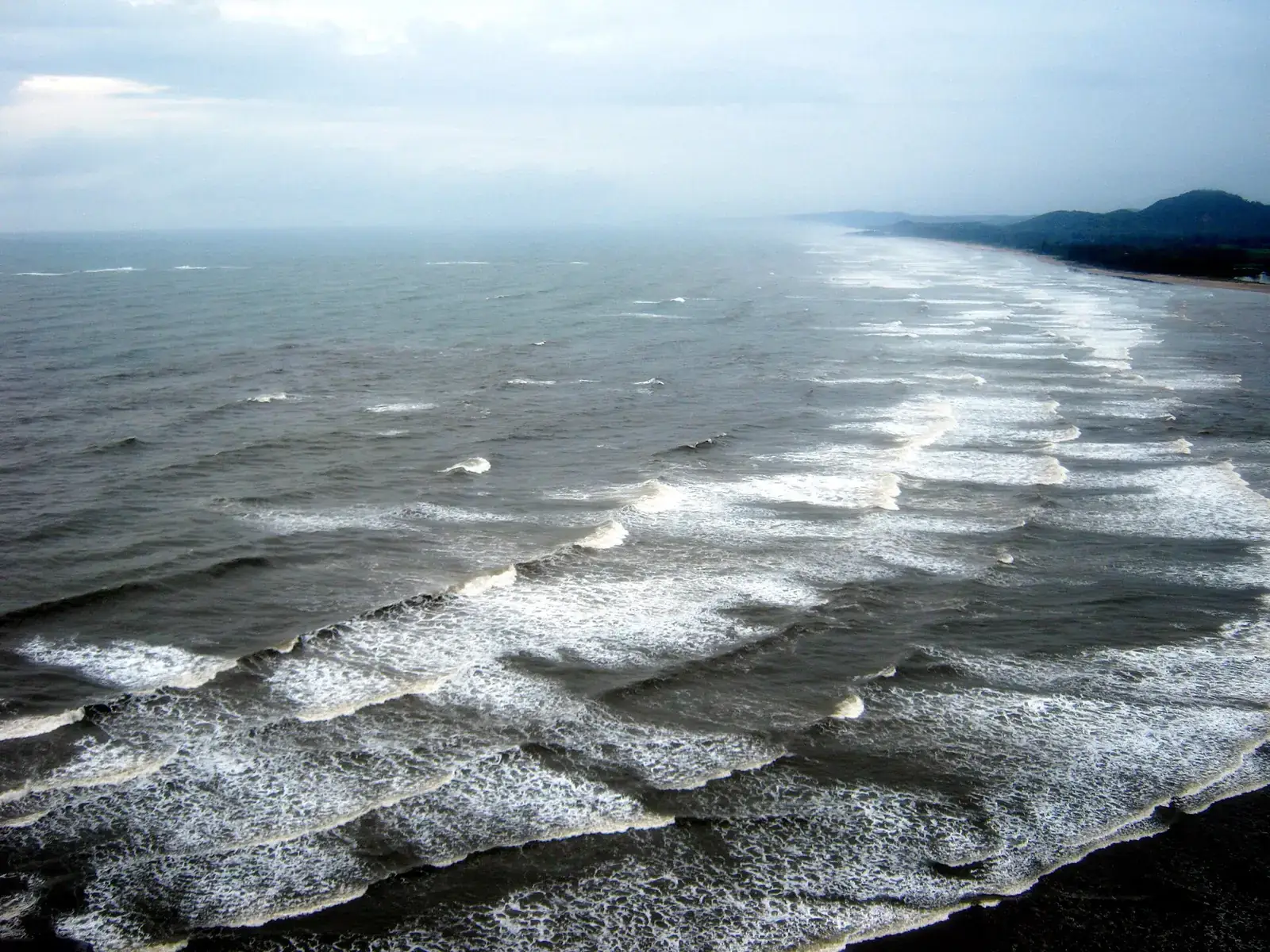 Beach Travel
Best Beaches in Karnataka: Gokarna, Udupi, Murudeshwar and Karwar
A guide to the best beaches on Karnataka's 320-km coast: Gokarna's beach trek (Kudle, Om, Half Moon, Paradise), Murudeshwar and the Netrani dive trips, Udupi's Malpe, St Mary's Island, Kaup and Padubidri, the Maravanthe road, Karwar and Devbagh, and Mangaluru's beaches, with seasons and safety.
Things to DoThings to Do in Gokarna: Beach Trek, Temples & Quiet Coves
Things to do in Gokarna: the beach-hopping trek from Kudle to Om, Half Moon and Paradise beaches, the Mahabaleshwar and Maha Ganapati temples, Kotitirtha, sunsets, kayaking, Mirjan Fort, Yana rocks and Murudeshwar with scuba at Netrani.
 Beaches
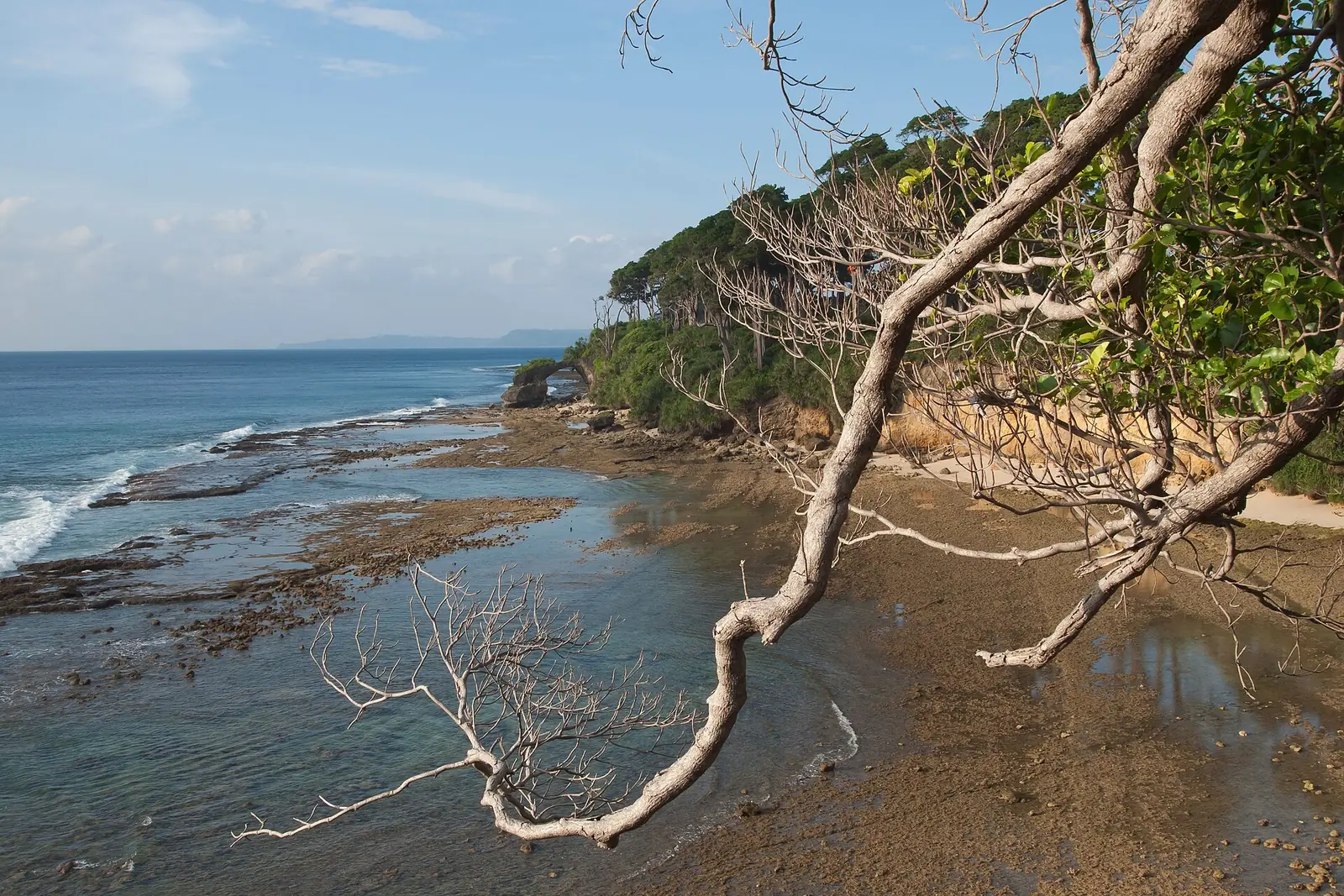
Andaman Islands Travel Guide: Beaches, Diving, Permits & Tips
Crystal-clear waters, pristine coral reefs, white sand beaches and the haunting history of Cellular Jail — the complete guide to the Andaman Islands.
 Beaches
Goa Travel Guide: Best Beaches, North vs South & Itinerary
Portuguese-era churches, beach shacks, and a coastline that switches from party-loud to monastery-quiet within a few kilometres — the complete guide to Goa.