Why Hampi?
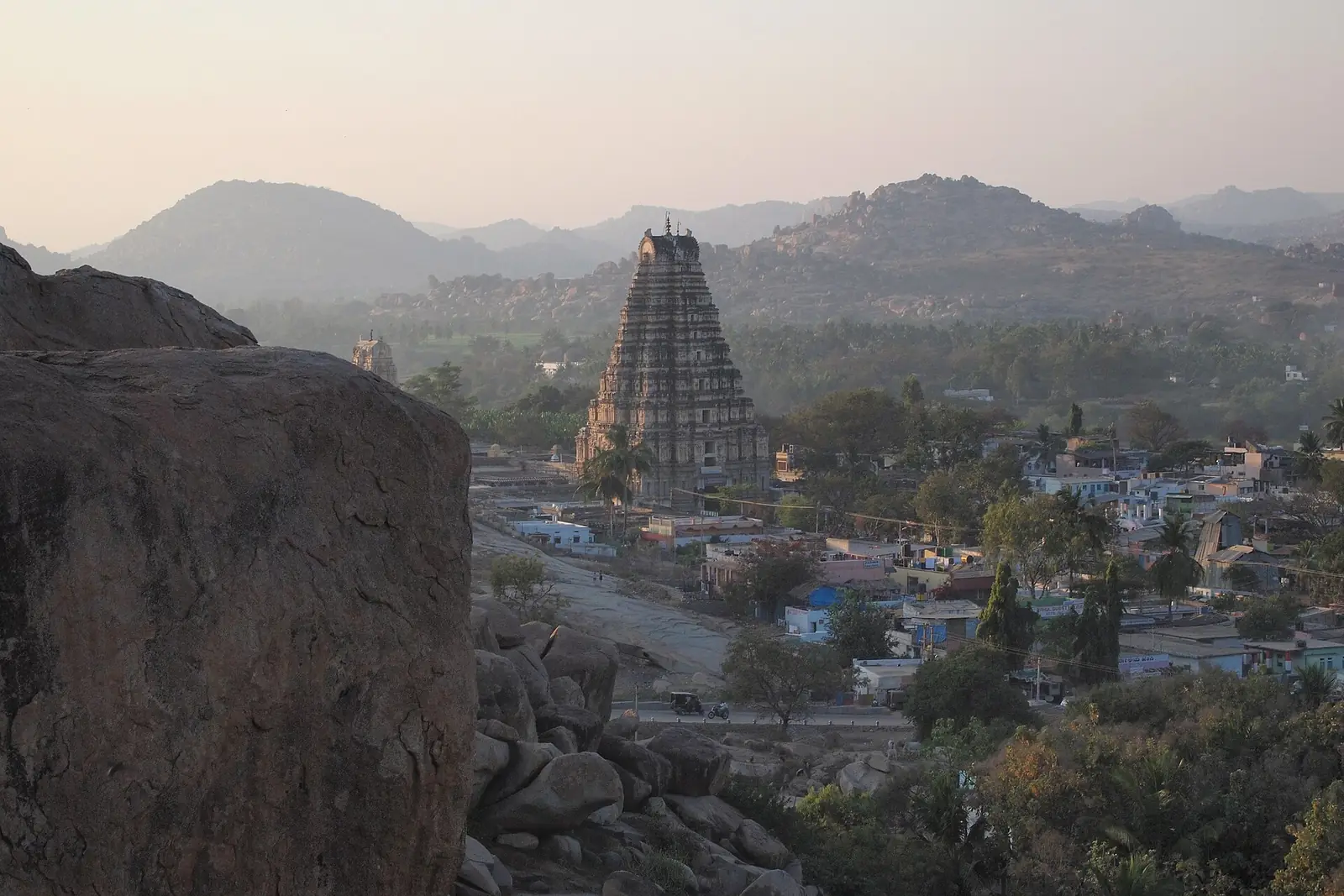
There is no other place in India quite like Hampi. Possibly no other place on earth. Imagine a landscape that looks like a giant child emptied a bag of boulders across a flat red plain — granite rocks the size of houses and apartment blocks, balanced on each other in formations that seem to defy both gravity and geological explanation. Now scatter through this landscape the ruins of a medieval empire that, at its peak in the 15th century, was one of the wealthiest and most sophisticated civilisations on the planet. Add a still-active temple, a river, rice paddies, banana plantations, and a population of langurs who own the ruins as fully as any archaeologist.
Hampi is the site of Vijayanagara — the capital of the Vijayanagara Empire (1336–1646 CE), which at its height covered most of peninsular India and traded with Portugal, Arabia, and China. The city was home to half a million people when London had 50,000. It was described by Portuguese travellers as larger and more beautiful than Rome. In 1565, the empire's army was decisively defeated at the Battle of Talikota, and the five victorious sultanates spent six months systematically destroying the city — burning, looting, and demolishing until what remained was the stone that couldn't be burned.
What remains is still extraordinary. Over 1,600 monuments spread across 4,187 hectares of UNESCO-listed landscape — temples, market streets, royal pavilions, water systems, and the boulders that were there before all of it and will be there long after. Hampi is a place where history, geology, and landscape fuse into something genuinely singular.
🏛️ Hampi at a Glance
Looking for activities and experiences? See our guide to the best things to do in Hampi.
Want a day-by-day plan? Follow our South India heritage itinerary.
Going by road? See our guide to road trips from Bengaluru.
Interested in the history? See our guide to heritage in Karnataka.
Planning something active? Read our guide to rock climbing and bouldering in India.
Best Time to Visit Hampi
Hampi sits in a semi-arid zone that gets very hot in summer and receives modest monsoon rainfall. The window for comfortable visiting is longer than many Indian destinations — but the heat at the wrong time of year is serious.
Temperatures 20–30°C, clear skies, the golden light that makes Hampi's sandstone glow at sunrise and sunset. October is lush from the monsoon. December–January is peak tourist season — book accommodation 2–3 weeks ahead. The Hampi Utsav cultural festival runs in November.
Temperatures climb to 38–44°C by April–May. The boulders retain heat and radiate it back. If visiting, start every day at 5:30 AM, retreat to accommodation between 11 AM and 4 PM, and resume in the evening. October–February is dramatically more comfortable.
Unlike many destinations, Hampi in monsoon has its own appeal — the rocks turn darker, the landscape greens, and the Tungabhadra River fills dramatically. Fewer tourists, lower prices, and the late afternoon light through monsoon clouds is exceptional for photography. Some roads flood.
The 3-day Hampi Utsav (usually first week of November) fills the ruins with classical dance performances, music, light shows on the monuments, and cultural exhibitions. The ruins at night under festival lighting are extraordinary. Book accommodation months ahead for this period.
Our pick: Late October or November — the landscape is still lush from the monsoon, the temperatures are perfect, the light is golden, and the Hampi Utsav adds a layer of cultural richness that most visitors never experience. Avoid April and May unless you thrive in extreme heat.
How to Reach Hampi
Hampi itself has no railway station or airport — all routes pass through the nearby town of Hospet(13 km away) or the city of Hubli(143 km). The approach through the Deccan plateau, with its first views of the boulder landscape, is itself part of the experience.
- By Train (best option): Hospet Junction is the closest railway station to Hampi — connected to Bangalore (Hampi Express, overnight, 9 hours, ₹250–₹900), Hyderabad (9 hours), and Goa (via Hubli). From Hospet, take an auto-rickshaw or bus to Hampi (13 km, ₹150–₹200 by auto, ₹20 by local bus). The Hampi Express departs Bangalore (Bangalore City Station) at 10 PM and arrives Hospet at 7 AM — a perfect overnight option.
- By Bus from Bangalore: KSRTC runs overnight buses from Bangalore's Majestic bus stand to Hospet (₹400–₹800, 8–9 hours). Several private operators also run direct buses. Comfortable and frequently available — book on redbus.in or KSRTC website.
- By Air: Hubli Airport (HBX) is 143 km from Hampi — IndiGo and Air India operate daily flights from Bangalore (45 min) and Mumbai (1 hr 20 min). From Hubli, take a taxi to Hospet (2.5 hours, ₹2,500–₹3,500) or a combination of bus + auto.
- By Road from Goa: Hampi is 340 km from Panaji — a 6–7 hour drive that makes it an excellent addition to a Goa holiday. Several operators run direct overnight buses from Goa.
Hampi's History — The Vijayanagara Empire
To visit Hampi without understanding what it was is to walk through one of the world's great libraries reading only the covers. The history transforms the stones.
The Vijayanagara Empire was founded in 1336 by brothers Harihara I and Bukka Raya I on the banks of the Tungabhadra River — a deliberate location chosen partly for the natural fortress the boulder landscape provided and partly for the site's Hindu sacred geography (the Tungabhadra is mentioned in the Ramayana, and the boulders are believed to be the hills where Sugriva's monkey army was based). At its peak under Krishnadevaraya (1509–1529), the city was home to 500,000 people — larger than any European city of the time — and its markets traded in spices, elephants, cotton, horses, and diamonds.
The empire was brought down at the Battle of Talikota in 1565, when a coalition of five Deccan sultanates — the Bijapur, Ahmadnagar, Bidar, Golconda, and Berar sultanates — defeated the Vijayanagara army through a combination of treachery and superior artillery. The sack of the city that followed lasted six months. By the time it ended, Vijayanagara was a ruin, and so it remained.
What the sultanates couldn't destroy — the stone temples, the carved monoliths, the aqueduct systems, the stone market stalls — remained, and it is these that survive today as one of the most remarkable archaeological sites in the world, designated a UNESCO World Heritage Site in 1986.
Harihara I and Bukka Raya I found the Vijayanagara Empire on the banks of the Tungabhadra
Deva Raya I constructs the great aqueduct bringing water from the Tungabhadra into the city
Krishnadevaraya ascends — the empire's golden age begins; population reaches 500,000
Portuguese traveller Domingo Paes describes Hampi as 'the best-provided city in the world'
Battle of Talikota — decisive defeat. Six-month sack of the city follows.
British archaeologist Colin Mackenzie begins documenting the ruins
UNESCO designates Hampi a World Heritage Site — 'Group of Monuments at Hampi'
The Sacred Centre
Hampi's monuments are broadly divided into two zones: the Sacred Centre (around Virupaksha Temple, Hemakuta Hill, and the Tungabhadra riverside) and the Royal Centre (the administrative and residential zone to the south). Both are essential. The Sacred Centre is where Hampi still lives — the Virupaksha Temple is active, priests chant, and pilgrims bathe in the river every morning.
Virupaksha Temple
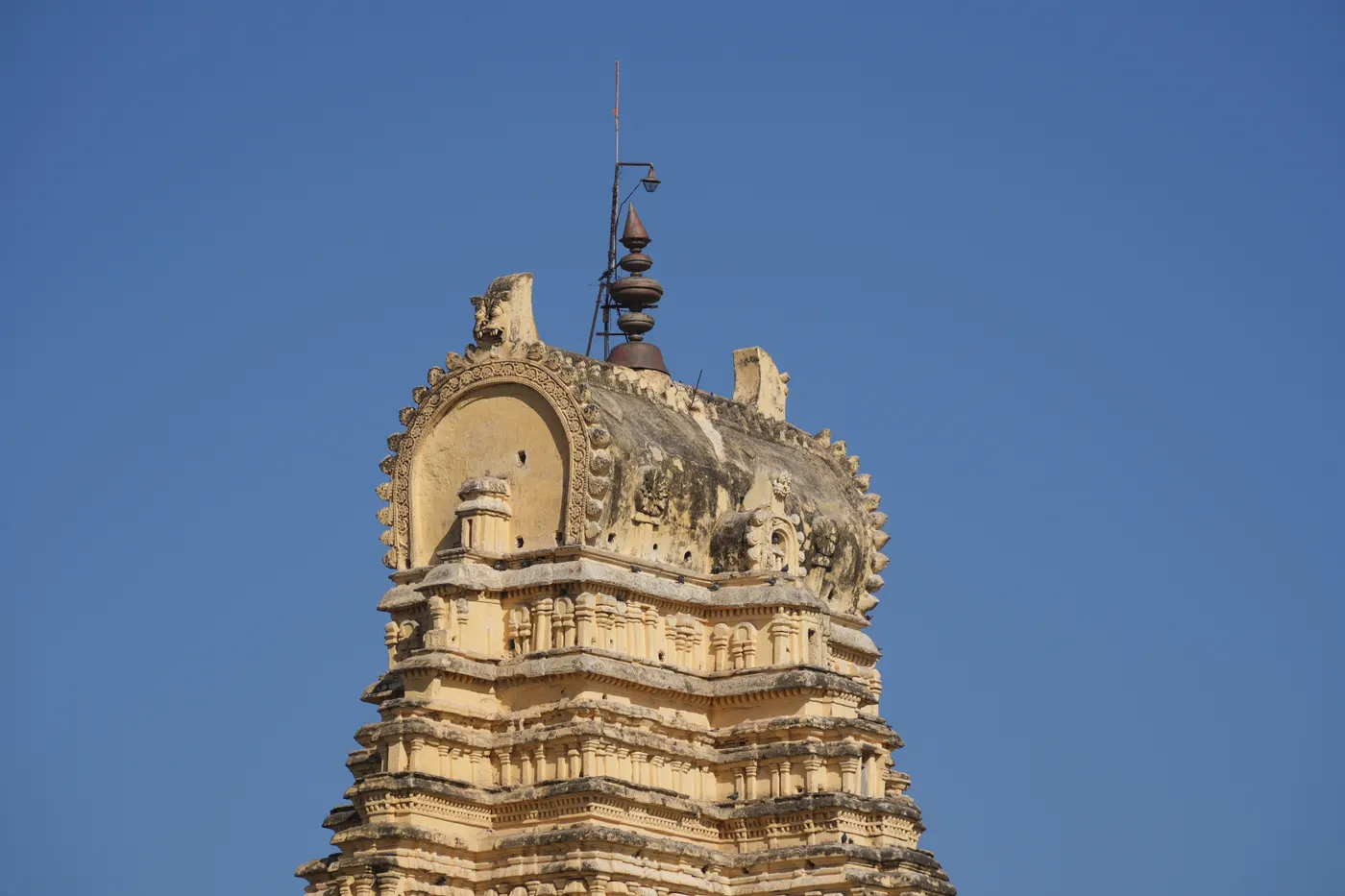
The Virupaksha Temple is Hampi's centrepiece and the only monument in the complex that has been in continuous use since the 7th century — predating the Vijayanagara Empire by 700 years. Its massive 50-metre gopuram (tower) is the first thing you see arriving in Hampi and the landmark that orients the entire site.
The temple is dedicated to Virupaksha (a form of Shiva) and is still managed by hereditary priests. Inside the dim inner sanctum, the main deity is worshipped twice daily with elaborate rituals. The temple elephant, Lakshmi, is a beloved resident who blesses devotees at the entrance in the mornings (9–10 AM) by touching their heads with her trunk in exchange for a coin. The inner courtyard has extraordinary carved pillars and mandapas dating from the 15th century.
- Entry: Free (donations welcome)
- Timings: 6 AM – 12:30 PM, 5 PM – 9 PM
- Dress code: Remove footwear. Cover shoulders and knees. Dhoti available for rent at the entrance if needed.
- Elephant Lakshmi: Present most mornings 9–10 AM at the main entrance
- Climb the gopuram: A small staircase inside leads to the top level — the view across Hampi's boulder landscape from the top of the tower is extraordinary.
Hampi Bazaar
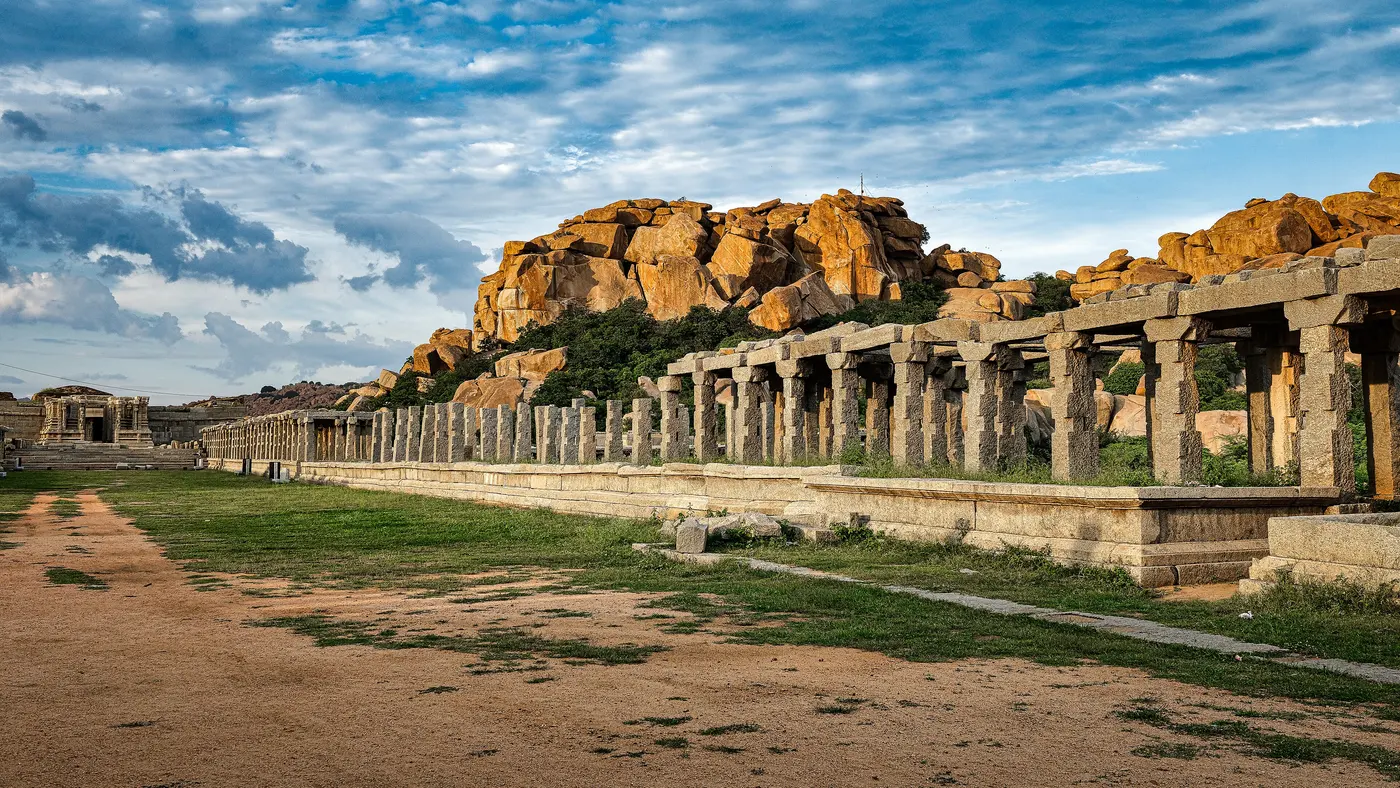
Running east from Virupaksha Temple for 800 metres is the Hampi Bazaar — once the largest market street of the Vijayanagara capital, where merchants from Arabia, China, and Portugal traded alongside local artisans. The stone stalls that lined both sides of the street survive largely intact — roofed granite platforms with carved pillars where vendors would have displayed their goods.
Today the bazaar is the social spine of tourist Hampi — guesthouses, restaurants, bicycle rental shops, and souvenir stalls occupy both sides of the road that replaced the medieval merchant street. Walk the full length and imagine it at peak, described by a Portuguese traveller as so full of rubies that they were sold by weight like common groceries.
Hemakuta Hill — The Best Sunrise in Hampi
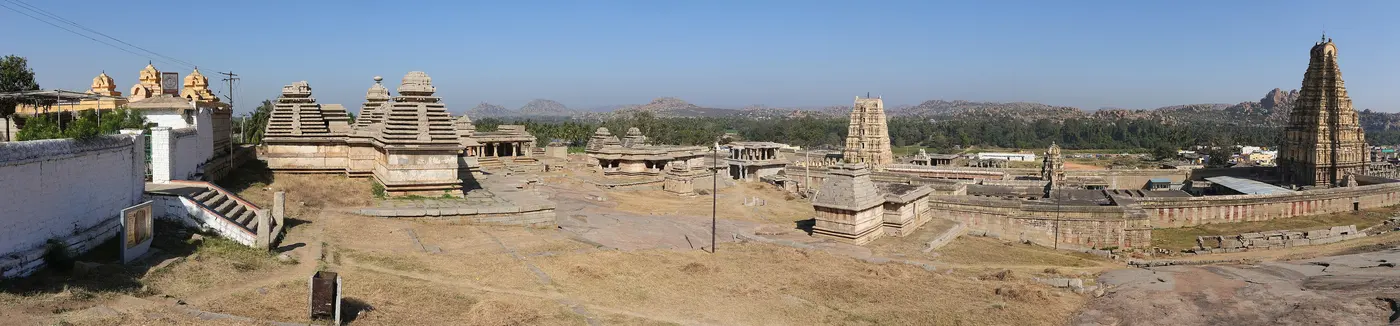
Directly behind (south of) Virupaksha Temple, the Hemakuta Hill is covered in pre- Vijayanagara temples — smaller, older, and less visited than the main sites. The hill is an easy 15-minute climb and offers the finest panoramic view in Hampi: the Virupaksha gopuram below, the boulder landscape in every direction, the Tungabhadra River glinting in the distance, and the ruins of the royal centre visible on the southern plain.
This is where every serious Hampi photographer comes for sunrise. The light at 6 AM hits the boulders and the temple towers at an angle that makes the entire landscape look like a painting. Come 30 minutes before dawn, climb the hill in the dark (the path is clear), and watch the world turn from grey to gold.
The Royal Centre
About 2 km south of Virupaksha Temple, the Royal Centre is the administrative and residential heart of Vijayanagara — where the king held court, the army drilled, and the royal family bathed. The monuments here are grander and more intact than many in the Sacred Centre, and the site has an enclosed, parklike atmosphere that makes it excellent for slow exploration.
Vittala Temple & The Stone Chariot
Vittala Temple is the architectural masterpiece of the Vijayanagara Empire and arguably the finest example of Dravidian temple architecture in existence. Built primarily in the 15th–16th century, it was never consecrated (the deity was considered too fine to be housed there) and survives in extraordinary detail as a result — the sculptors had free rein to create without the practical constraints of active worship.
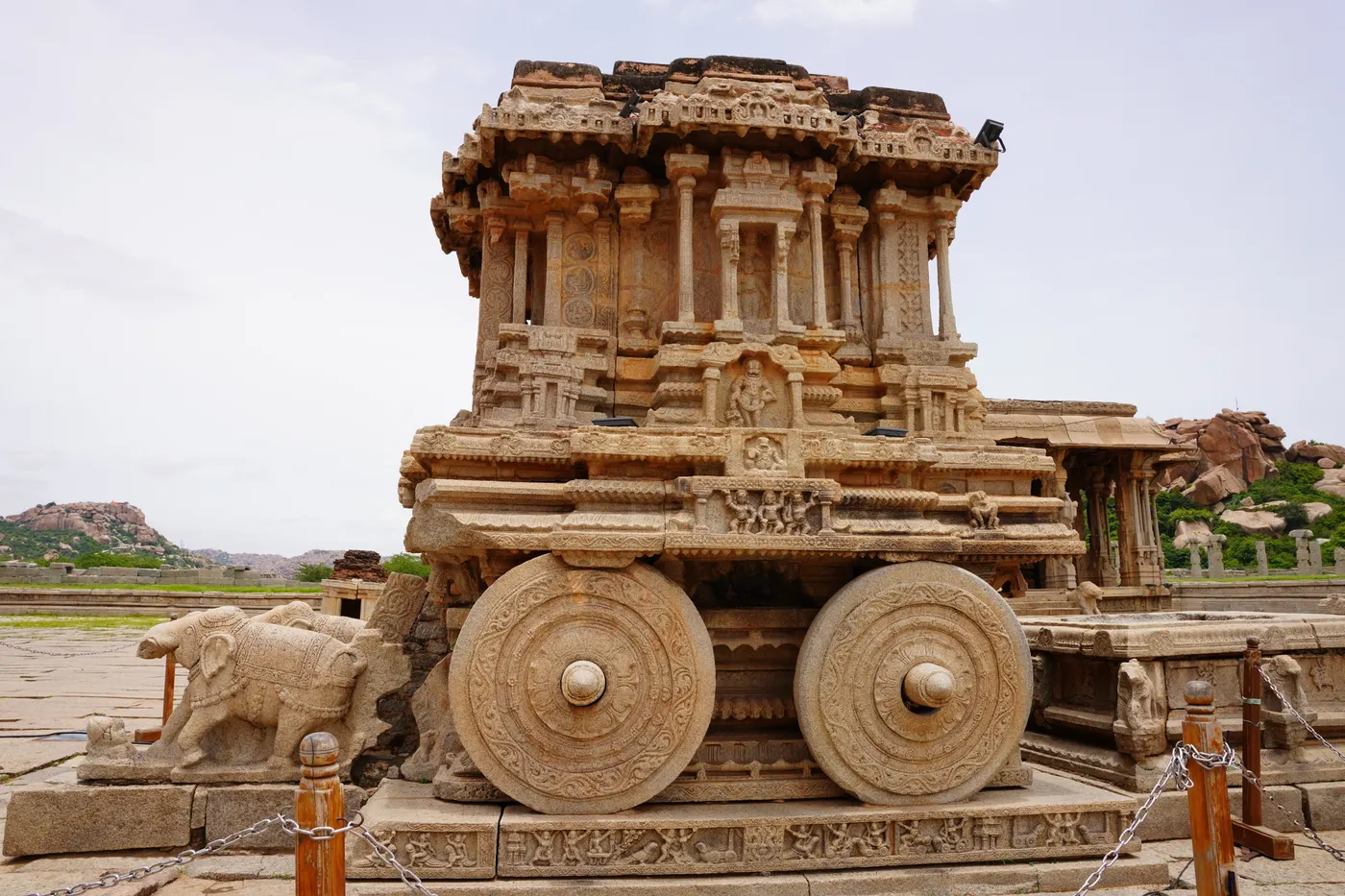
The temple complex contains three things that stop most visitors in their tracks:
- The Musical Pillars: The 56 pillars of the main mandapa are carved from single pieces of granite and each produces a different musical note when tapped. British colonials actually cut two pillars to verify there was no internal mechanism — the pillars are solid stone throughout. The musical quality comes from the specific density and tuning of each pillar's carving.
- The Stone Chariot: In the courtyard stands Hampi's most photographed monument — a stone chariot (ratha) dedicated to Garuda, the vehicle of Vishnu. Built entirely from granite, with stone wheels that once actually rotated, it is the finest stone chariot in India. The craftsmanship of the decorative panels is jawdropping at close range.
- The Kalyana Mandapa: A wedding hall with 40 pillars so intricately carved that each pillar face tells a different mythological story. The ceiling of the central bay — a lotus carved from a single stone — is one of the most extraordinary pieces of stone carving in Asia.
📋 Vittala Temple — Practical Info
Lotus Mahal & Elephant Stables
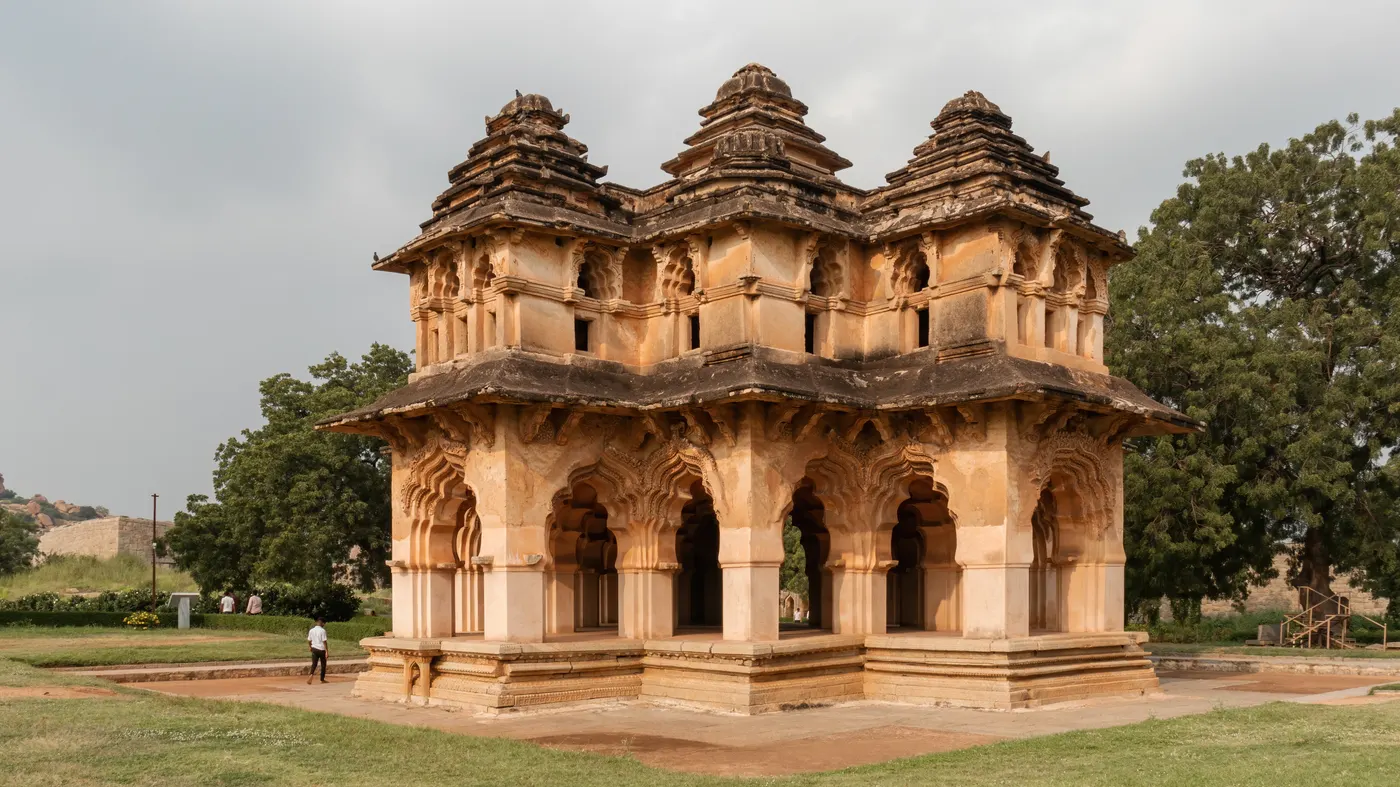
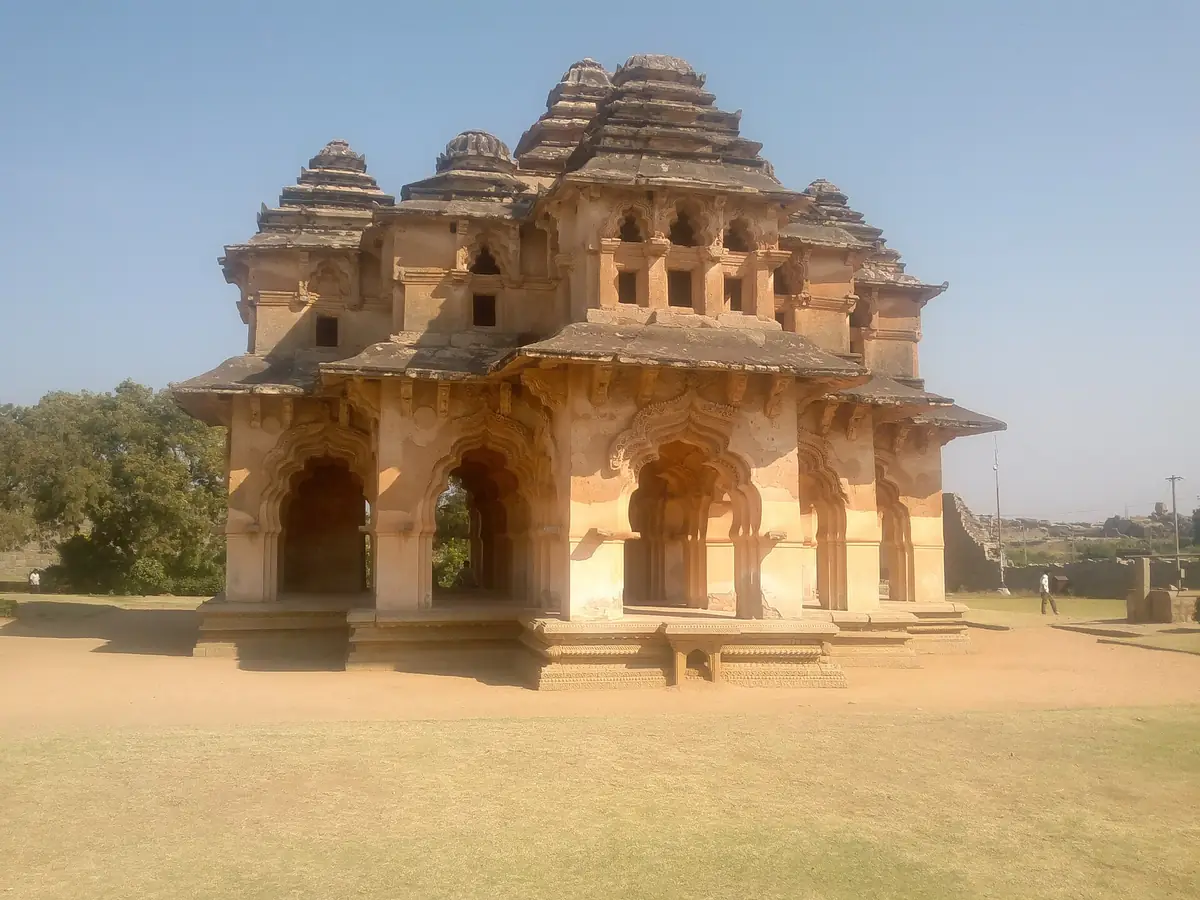
The Lotus Mahal is the most elegant secular building in Hampi — a two-storey pavilion of combined Hindu and Islamic architectural styles, its facade a series of lotus-shaped arches that give the building its name. The symmetry and delicacy of the construction is striking after the muscular scale of the temples — this was a pleasure pavilion, possibly used by the royal women, and the lightness of touch is deliberate.
Adjacent stand the Elephant Stables — eleven domed chambers in a perfect line where the royal war elephants were housed. Each chamber has a different style of dome (Indo-Islamic in design), creating a rhythmic architectural sequence that is one of Hampi's most photogenic monuments. The scale of each chamber reflects the scale of the animals housed within.
Queen's Bath
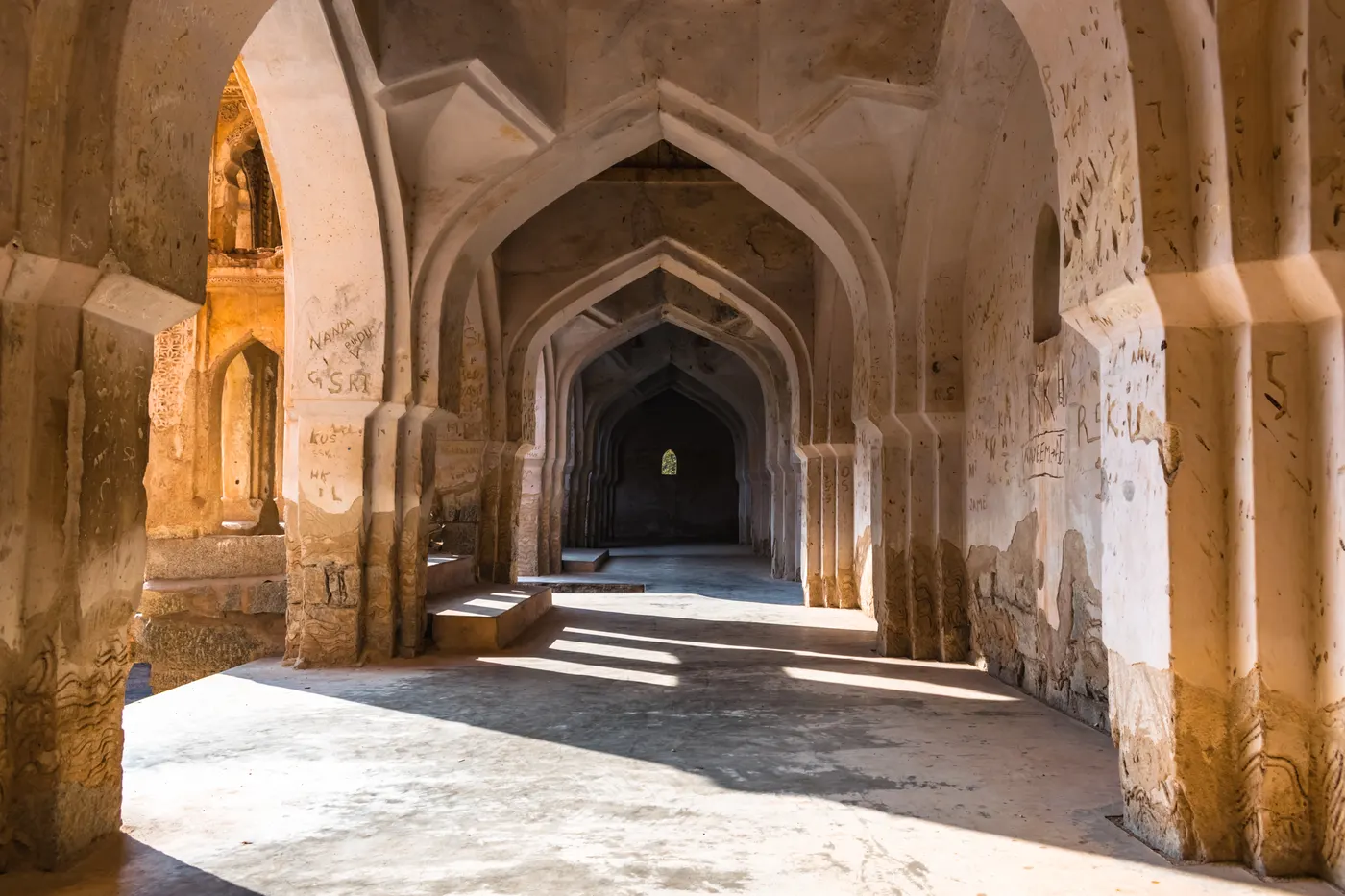
The Queen's Bath is one of Hampi's most surprising monuments — an ornate bath chamber that appears modest from outside and reveals an extraordinarily sophisticated interior. A moat-like corridor surrounds a central swimming tank fed by perfumed water through decorated pipes. The interior walls have corbelled arches, balconies, and stucco decorations that still show traces of the original pigment.
The name is likely a later attribution — the bath was probably used by the king and the royal inner court rather than specifically the queens. Whatever its users, the engineering sophistication — a fully enclosed, temperature-controlled bathing complex with a water supply system, drainage, and architectural decoration — is remarkable for the 15th century.
- Entry: ₹25 (Indian), ₹300 (Foreign)
- Timings: 8 AM – 6 PM
- Distance from Vittala Temple: 2.5 km south
Matanga Hill — Sunrise Viewpoint
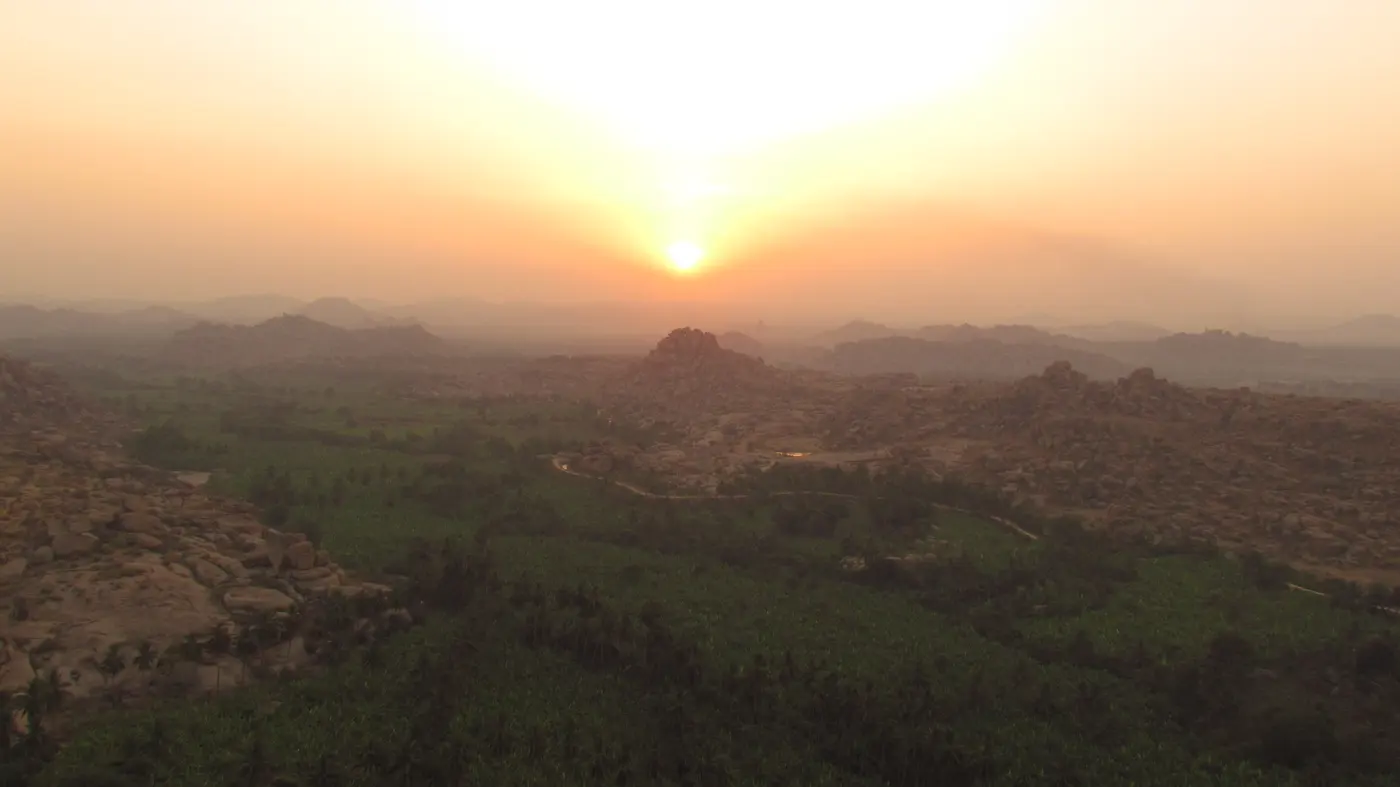
The highest point in the Hampi landscape, Matanga Hill (1,673 m above sea level but only 60 m above the plain) requires a 20-minute climb up stone steps and provides the most comprehensive panoramic view of the entire site — the Sacred Centre, the Royal Centre, the Tungabhadra River, the boulder field, and on a clear day the plains extending beyond. There is a small Virupaksha temple at the summit.
This is the classic Hampi sunrise spot — arrive 30 minutes before dawn, climb in the dark with a torch, and watch the sun emerge over the boulder horizon as the entire landscape turns from grey to gold below you. The descent is easier in full light and the morning energy of the scene — monkeys, priests, pilgrims beginning their day — rewards the early start.
Anegundi — Across the River
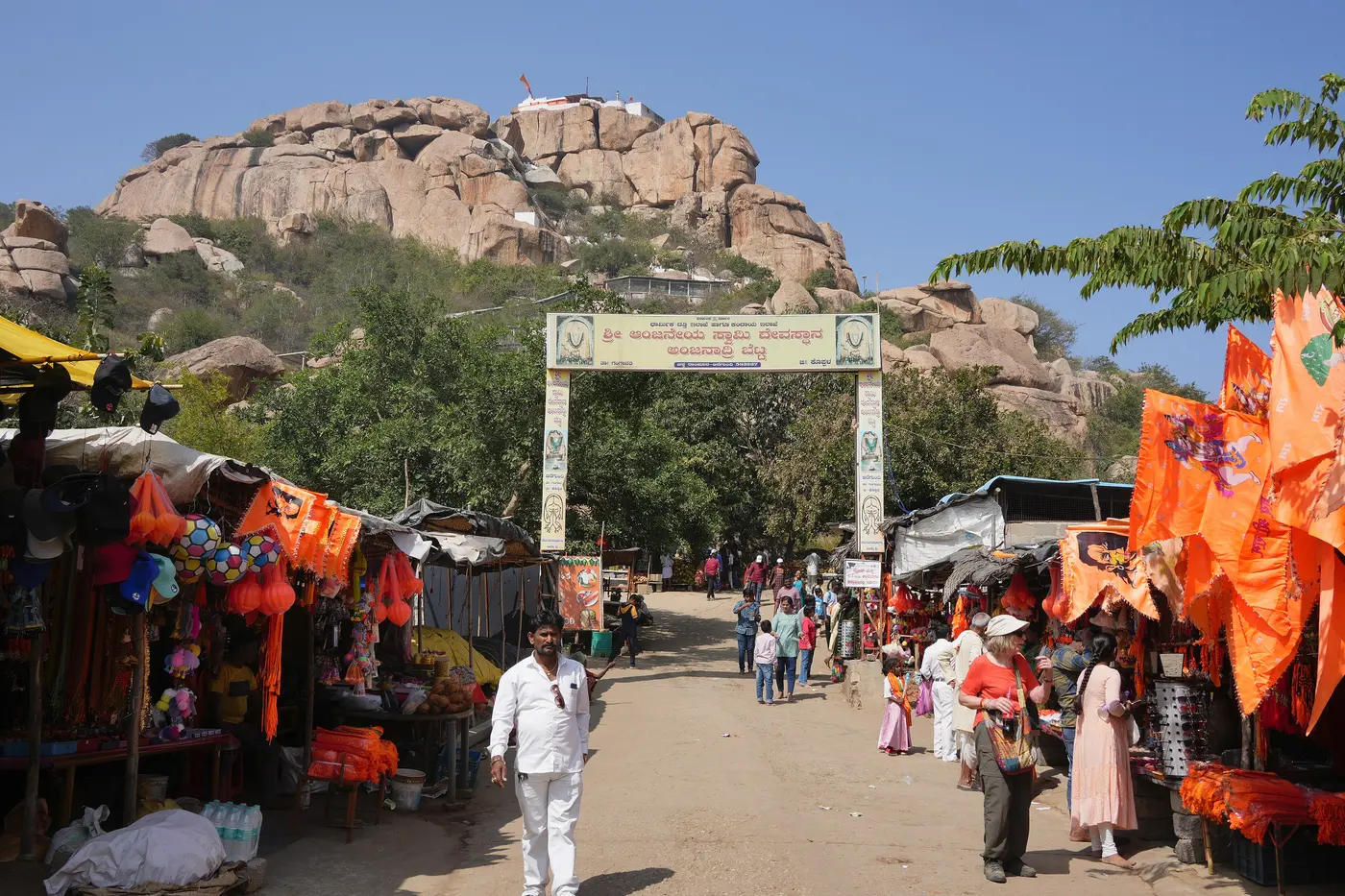
Cross the Tungabhadra by coracle from Virupaksha Ghat and you arrive in Anegundi — a village that predates even Vijayanagara and is mentioned in the Ramayana as Kishkindha, the monkey kingdom of Sugriva and Hanuman. Anegundi is older than Hampi, quieter, less visited, and in many ways more interesting for those who want to understand what this landscape felt like before the tourists arrived.
The village retains its traditional layout — narrow lanes, old houses with carved wooden doors, active temples, and women still making the Kishkindha Trust's handmade products (excellent banana fibre bags and recycled fabric items). The surrounding hills have several sites of Ramayana significance: Anjanadri Hill(believed to be Hanuman's birthplace — a 575-step climb with extraordinary views), Pampa Sarovar(a sacred lake), and a network of walking trails through boulder formations that are less crowded than the Hampi side.
- Getting there: Coracle from Virupaksha Ghat (₹50–₹80 one way, 5 min) or road via Kamalapura (7 km, ₹150 by auto)
- Anjanadri Hill climb: 575 steps, 45 min, best at sunrise or sunset
- Kishkindha Trust: Visit their outlet in Anegundi for excellent craft products that directly support village women
- Stay: Several heritage homestays in Anegundi offer the most atmospheric accommodation in the Hampi area
Bouldering in Hampi
Hampi is one of the world's premier bouldering destinations — a fact that surprises many visitors who come for the history and discover an entirely separate community of international climbers who come for the granite. The boulders that make Hampi visually extraordinary are also, from a climber's perspective, some of the finest natural bouldering terrain on earth — the granite is coarse and grippy, the problems range from beginner to V10+, and the setting is incomparable.
The bouldering season aligns with the best tourist season (October–February) — the community is most active during this period, with climbers from Europe, Japan, and the US making pilgrimages to Hampi specifically for the bouldering. The areas around Sanapur Lake, Hippie Island (the area across the river from Hampi Bazaar), and the boulders east of Vittala Temple have the highest concentration of documented problems.
- Gear rental: Crashpads, shoes, and chalk bags available from guesthouses on Hippie Island (₹300–₹600/day for crashpad)
- Guidebook: The Hampi Bouldering guidebook by Shot Rock is the definitive resource — available from guesthouses on Hippie Island
- Community: The guesthouses on Hippie Island (Mowgli Guesthouse, Goan Corner) are where the climbing community congregates — the best source for conditions, new problems, and partners
- No experience needed: The lowest-grade problems around Sanapur Lake are V0–V1 — completely accessible to anyone with good shoes and no fear of heights
Coracle Rides on the Tungabhadra
The coracle (putti) — a circular, basket- woven boat coated in tar — is one of the most ancient watercraft still in active daily use in India. On the Tungabhadra at Hampi, coracles ferry people between the Hampi bank and Anegundi (Hippie Island), and can be hired for river rides through the boulder gorge sections upstream.
A sunset coracle ride through the boulder canyon upstream from Hampi Bazaar is one of the finest experiences the site offers — the granite walls rise 30–40 metres on either side, the river turns amber in the fading light, and the silence (broken only by the paddle and the occasional heron) is extraordinary after a day among crowds and ruins.
- Ferry crossing (Hampi–Hippie Island): ₹50–₹80 per person one way, 5 minutes
- River ride (leisure): ₹400–₹600 per coracle (holds 3–4 people) for a 30–45 minute boulder canyon ride
- Best time: 5–6 PM for sunset light in the canyon
- Note: Coracles are circular and spin — some people find them mildly disorienting. Perfectly safe on the calm river sections.
Where to Stay in Hampi
Accommodation in Hampi falls into three distinct zones — Hampi Bazaar (main tourist side), Virupapur Gaddi (Hippie Island, across the river), and Anegundi (most atmospheric, least visited). Each has a completely different character.
- → Mowgli Guesthouse (Hippie Island — bouldering hub)
- → Goan Corner (Hippie Island)
- → Shanthi Guest House (Hampi Bazaar)
- → Budget guesthouses near Virupaksha Temple
- → Evolve Back (Hampi) — boutique heritage resort
- → The Hampi Heritage Resort
- → Kishkindha Heritage (Anegundi — best location)
- → Hotel Mayura Bhuvaneshwari (Kamalapura)
- → Orange County Hampi (Evolve Back)
- → Waterfront Heritage Resort
- → Hampi's Boulders (unique boulder-side location)
- → Private heritage homestays in Anegundi
Stay on Hippie Island (Virupapur Gaddi) for the most immersive Hampi experience — the boulder landscape, coracle crossings, and distance from the tourist bustle makes it feel genuinely removed from ordinary travel. Budget guesthouses here are basic but the setting is incomparable. Note: the island floods in monsoon season and becomes inaccessible.
What to Eat in Hampi
Hampi's food scene is a pleasant surprise — a mix of excellent South Indian staples, surprisingly good traveller-oriented international cafes, and the distinctive local tradition of serving meals on banana leaves. Hampi is in Karnataka's sugarcane and banana belt — the local produce is exceptional.
- Hampi thali (banana leaf meal): The most authentic eating experience — rice, sambar, rasam, kootu, pickle, papad, and dessert served on a fresh banana leaf at local restaurants near the Virupaksha Temple. Unlimited refills. ₹100–₹150. Mango Tree Restaurant does the best version.
- Masala dosa: The Karnataka staple, available everywhere and excellent here. The coconut chutney in this part of Karnataka uses fresh grated coconut rather than dried — noticeably better.
- Bisi bele bath: A Karnataka-specific rice and lentil dish cooked with tamarind, spices, and vegetables — warming, complex, and found at every local breakfast spot. Usually served with papad and pickle.
- Fresh sugarcane juice: Hampi sits in one of Karnataka's primary sugarcane growing regions. Roadside vendors press fresh sugarcane with ginger and lemon — the best version costs ₹20 and is the finest thing you'll drink all day in the heat.
- Mango Tree Restaurant: Set in a terraced garden descending to the Tungabhadra River, this is Hampi's most beloved restaurant — slow service, excellent food (both South Indian and traveller-oriented international), and a view across the boulder landscape that makes every meal an event. The lassis are outstanding.
- Hippie Island cafes: The guesthouses on Virupapur Gaddi serve rooftop meals with boulder panorama views — basic menus (pasta, sandwiches, Indian staples) but the setting makes everything taste better. The Laughing Buddha Café is the most popular.
3-Day Hampi Itinerary
Three days is the ideal length for Hampi — enough to cover both the Sacred and Royal Centres thoroughly, cross to Anegundi, do a sunrise and a sunset from different viewpoints, and have time to simply sit among the boulders without rushing.
Sacred Centre — Sunrise to Sunset
- ✓5:30 AM: Climb Hemakuta Hill for sunrise over the boulder landscape and Virupaksha gopuram
- ✓Morning: Explore Hemakuta Hill temples and the Tungabhadra riverside ghats
- ✓10 AM: Virupaksha Temple — see elephant Lakshmi, climb the gopuram, explore the mandapas
- ✓Afternoon: Walk the full length of Hampi Bazaar, visit Sasivekalu Ganesha and Kadalekalu Ganesha monoliths
- ✓5 PM: Coracle ride through the boulder canyon at sunset
- ✓6 PM: Evening aarti at Virupaksha Temple
Royal Centre & Vittala Temple
- ✓6 AM: Matanga Hill for sunrise panorama (carry torch for ascent)
- ✓8:30 AM sharp: Vittala Temple — arrive at opening before tour buses (musical pillars, stone chariot, Kalyana Mandapa)
- ✓Lunch: Mango Tree Restaurant on the Tungabhadra
- ✓Afternoon: Royal Centre — Lotus Mahal, Elephant Stables, Queen's Bath, Hazara Rama Temple
- ✓Evening: Rooftop dinner at Hippie Island guesthouse with boulder views
Anegundi, Bouldering & Departure
- ✓Early: Cross by coracle to Anegundi village
- ✓Climb Anjanadri Hill (575 steps, Hanuman's birthplace) for morning views
- ✓Visit Pampa Sarovar and the Kishkindha Trust craft centre
- ✓Afternoon: Boulder hopping near Sanapur Lake (hire local guide, ₹500)
- ✓Sunset: Hemakuta Hill or boulders near Hampi Bazaar
- ✓Evening train or bus back to Bangalore / Hospet
Budget Breakdown
| Expense | Budget | Mid-Range | Comfort |
|---|---|---|---|
| Accommodation/night | ₹500 | ₹2,500 | ₹9,000 |
| Food/day | ₹300 | ₹600 | ₹1,200 |
| Monument entries/day | ₹65 | ₹640 | ₹640 |
| Local transport (cycle/auto) | ₹150 | ₹400 | ₹800 |
| Coracle rides | ₹100 | ₹300 | ₹300 |
| Activities (bouldering/guide) | ₹0 | ₹500 | ₹1,000 |
| Daily total | ₹1,115 | ₹4,940 | ₹11,940 |
| 3-Day trip total | ₹3,345 | ₹14,820 | ₹35,820 |
* Excludes train/bus from Bangalore to Hospet (₹250–₹800 one way). Monument entry note: Indian nationals pay ₹40 at Vittala Temple plus small fees at other sites; foreign nationals pay ₹600 at Vittala. An ASI composite ticket covers multiple sites.
Essential Travel Tips for Hampi
- Start every day before 7 AM: Hampi's ruins get extremely hot by 10 AM and the major sites (Vittala Temple, Hemakuta Hill) fill with tour groups by 9:30 AM. The light between 6 and 9 AM is also the best for photography — golden, low-angle, and free of the harsh overhead glare that bleaches the stone by midday.
- Hire a bicycle: The single best way to explore Hampi is by bicycle — the Royal Centre sites are too spread out for comfortable walking, too close for an auto to be worth it, and cycling allows you to stop wherever the view demands it. Available from Hampi Bazaar shops (₹100–₹150/day for a standard bike; ₹300–₹500 for a good geared cycle).
- Get an ASI guide for Vittala Temple:The Archaeological Survey of India employs licensed guides at Vittala Temple (₹500–₹800 for a 2-hour tour). The level of detail in the carvings — narrative panels, astronomical calendars, musical scales encoded in pillar arrangements — is completely invisible without someone who knows what to look for.
- The Hippie Island coracle stops at sundown:The coracle crossing between Hampi Bazaar and Virupapur Gaddi (Hippie Island) stops operating after sunset. If you're staying on Hippie Island, make sure you're on the right side of the river before dark — or plan to take the long road route via Kamalapura (7 km).
- Respect the active temple: Virupaksha Temple is a living place of worship — not a museum. Dress modestly, remove footwear at the entrance, don't photograph the inner sanctum, and follow the flow of devotees rather than treating it as a sightseeing object.
- The boulders at sunset are as important as any monument:One of Hampi's most extraordinary experiences is simply climbing any large boulder near Hampi Bazaar at 5:30 PM and sitting with the landscape as the light changes. No entry fee, no crowds — just you, the granite, and one of the great natural-historical panoramas in India.
- Carry cash: Hampi has limited ATMs (one reliable one near Hampi Bazaar). Hippie Island and Anegundi have none. Withdraw in Hospet or from the Hampi Bazaar ATM before crossing the river.
- Don't step on or damage the carvings:Many of Hampi's most extraordinary carvings are at ground level or reachable without effort. The temptation to touch is understandable — resist it. The oils from skin, applied thousands of times a day over years, accelerate deterioration measurably. Look. Don't touch.
✅ Do
- →Arrive at Vittala Temple at 8:30 AM opening — before the crowds
- →Climb Hemakuta Hill for sunrise and sunset
- →Hire a bicycle — the only sensible way to cover the Royal Centre
- →Cross by coracle to Anegundi and climb Anjanadri Hill
- →Attend the 6 PM aarti at Virupaksha Temple
- →Get an ASI guide at Vittala Temple
- →Sit on a boulder at sunset — anywhere
- →Eat at Mango Tree Restaurant at least once
❌ Don't
- →Touch or sit on the carvings — the oils cause real damage
- →Go to Vittala Temple after 10 AM on weekends — it's overwhelmed
- →Visit in April or May without accepting the heat will dominate
- →Rely on the Hippie Island coracle after dark — it stops at sunset
- →Skip Anegundi — most visitors do and it's a genuine loss
- →Rush the Royal Centre — the detail rewards patience
- →Ignore the boulder landscape in favour of only monuments
- →Forget to carry enough cash before crossing to Hippie Island
Frequently Asked Questions
How many days do I need in Hampi?
Three days is the ideal length — enough to cover both the Sacred and Royal Centres thoroughly, cross to Anegundi, do a sunrise and a sunset from different viewpoints, and have time to simply sit among the boulders without rushing.
What is the best time to visit Hampi?
Late October or November is our pick — temperatures of 20–30°C, clear skies, and golden light, with the landscape still lush from the monsoon and the Hampi Utsav cultural festival adding music, dance, and light shows on the monuments in early November. Avoid April and May, when temperatures climb to 38–44°C and the boulders radiate heat back at you.
How do I reach Hampi from Bangalore?
The Hampi Express (Train 16591) is the classic route — an overnight sleeper departing Bangalore City Station at 10 PM and arriving at Hospet, 13 km from Hampi, by 7 AM, followed by a short auto-rickshaw ride. KSRTC also runs overnight buses from Bangalore's Majestic bus stand to Hospet (8–9 hours). Hampi itself has no railway station or airport of its own.
Is Hampi safe for solo travellers?
Yes, Hampi is a long-established stop on the backpacker circuit with a strong community around Hippie Island's guesthouses and the bouldering scene, making it comfortable for solo travellers. As with any heavily touristed heritage site, keep cash secure, stick to marked paths on the boulders and hills, and be cautious around monkeys carrying visible food.
What is the budget for a trip to Hampi?
A budget traveller can get by on roughly ₹1,115 a day (basic guesthouses, thalis, bicycle hire), a mid-range trip runs around ₹4,940 a day, and a comfort-tier trip about ₹11,940 a day. A 3-day trip totals roughly ₹3,345 on a budget and ₹14,820 mid-range, excluding the train or bus from Bangalore to Hospet.
Is Hampi worth visiting?
Yes — Hampi combines the ruins of the Vijayanagara Empire, once home to half a million people and described by Portuguese travellers as larger and more beautiful than Rome, with a surreal boulder landscape found nowhere else in India. Over 1,600 monuments spread across a UNESCO World Heritage site make it one of the country's most extraordinary destinations.
Can beginners try bouldering in Hampi?
Yes — Hampi is one of the world's premier bouldering destinations, but the lowest-grade problems around Sanapur Lake are V0–V1 and completely accessible to anyone with good shoes and no fear of heights. Crashpads, shoes, and chalk bags can be rented from guesthouses on Hippie Island for ₹300–₹600/day.
Published by the Kudozz Club editorial team · Last updated · How we research our guides
Want us to plan this trip for you?
Tell Kudozz Club where you want to go and what kind of trip you’re looking for. We’ll build a Hampi and Karnataka itinerary around your dates and budget.
Continue Exploring
View all guidesThings to DoThings to Do in Hampi: Temples, Royal Ruins, Boulders & Sunrise Hills
Things to do in Hampi: Virupaksha Temple, Hemakuta and Matanga hills at sunrise, the Vittala Temple and stone chariot, the Royal Centre, Lotus Mahal and Elephant Stables, the Queen's Bath, coracle rides, bouldering, Anegundi and cycling among the ruins.
 Heritage & Culture
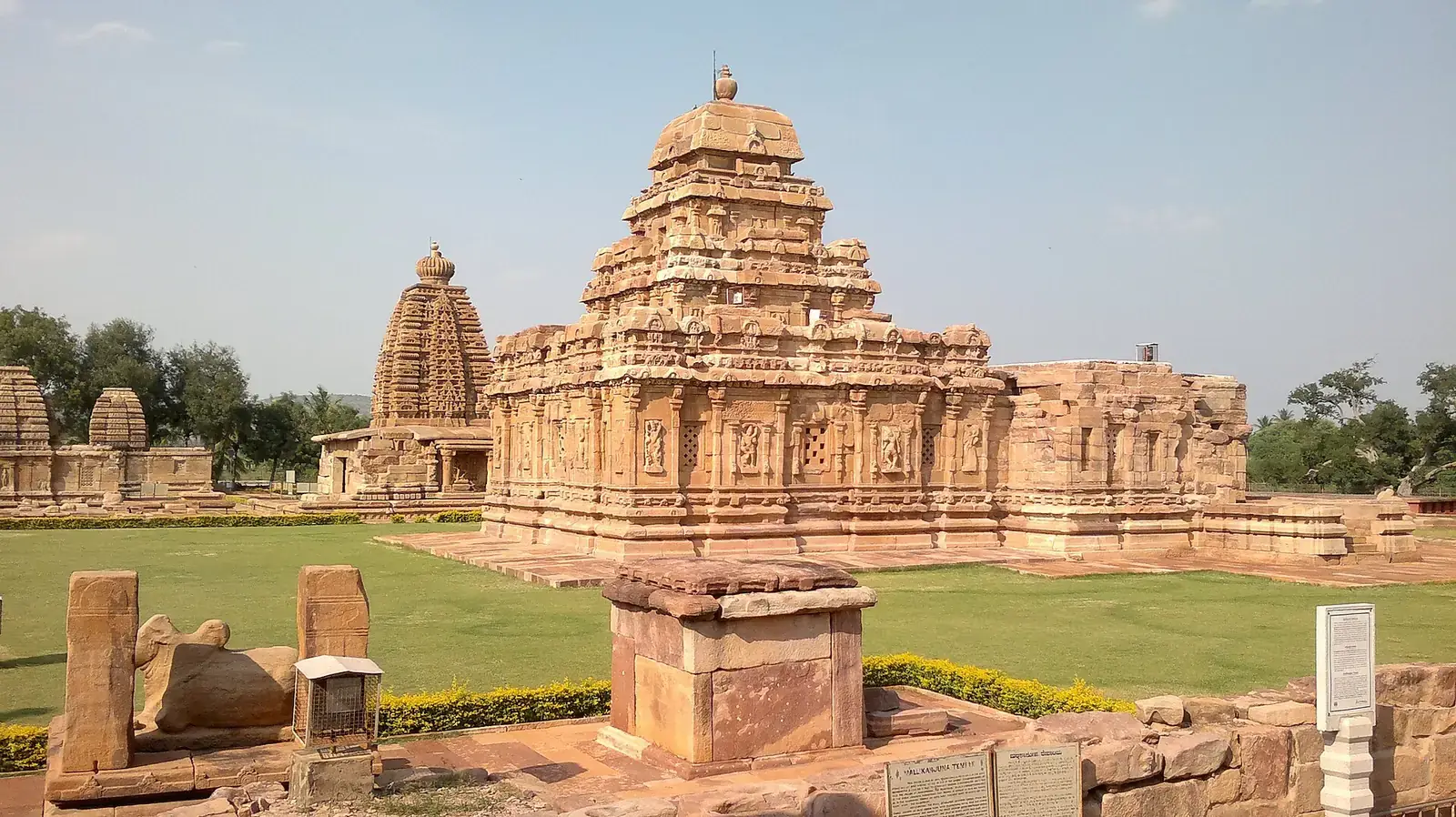
Heritage Tourism in Karnataka: Hampi, Hoysala Temples and Deccan Forts
A guide to heritage tourism in Karnataka: its three UNESCO cultural sites (Hampi, Pattadakal and the Sacred Ensembles of the Hoysalas), the Chalukya temples of Badami and Aihole, Mysuru and Srirangapatna, the Deccan sultanate cities of Bidar, Kalaburagi and Vijayapura, crafts such as Mysore silk, Channapatna toys and Bidriware, Yakshagana and Mysuru Dasara.
 Things to Do
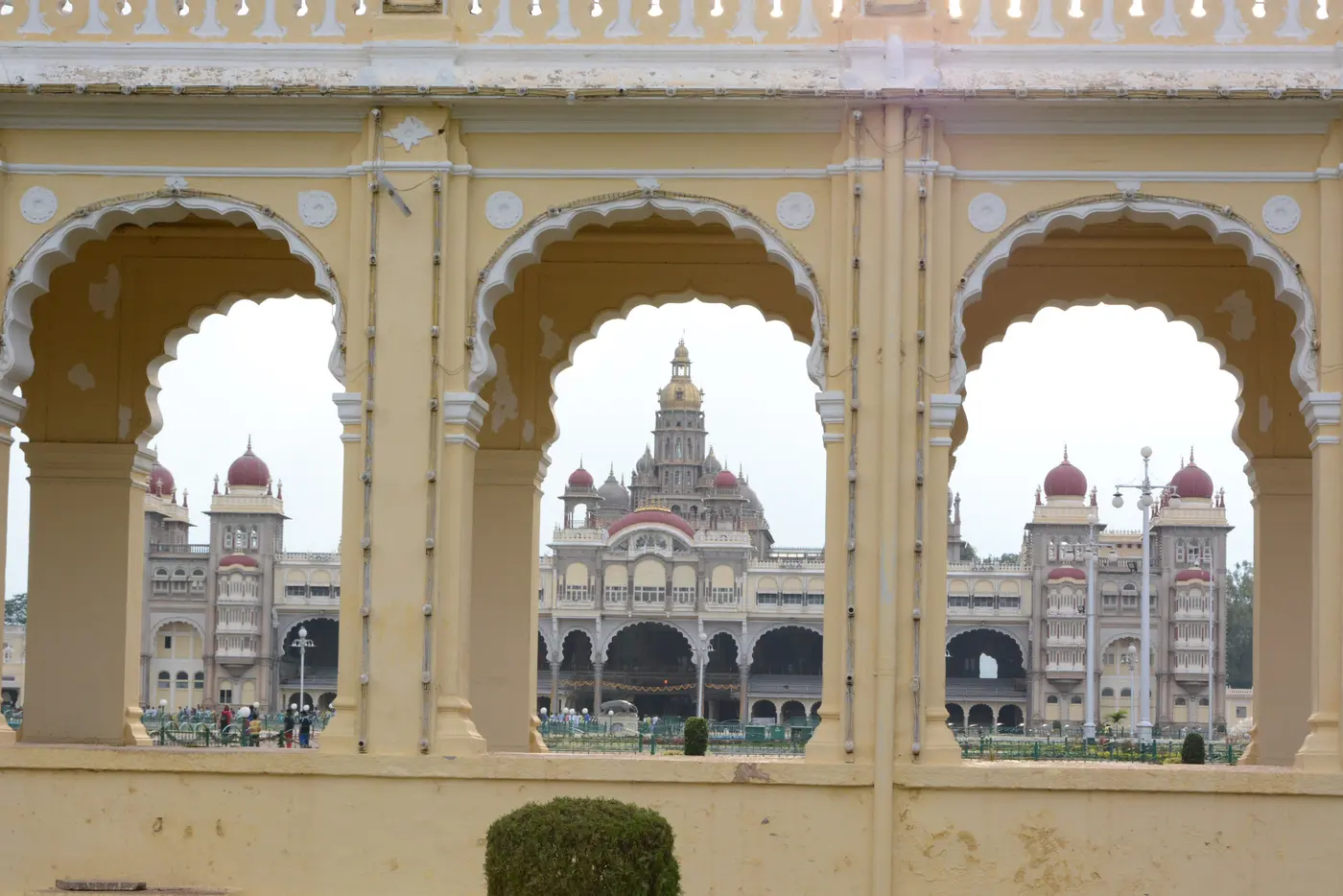
Things to Do in Mysore (Mysuru): Palaces, Dasara, Markets & Srirangapatna
Things to do in Mysore: Mysore Palace and its Sunday illuminations, Dasara and the Jamboo Savari, Chamundi Hill, Jaganmohan Palace art gallery, St Philomena's Church, Devaraja Market, the zoo, Brindavan Gardens, Srirangapatna, Ranganathittu and Somanathapura.
 Heritage
Ujjayanta Palace Guide: History, Timings & Tips
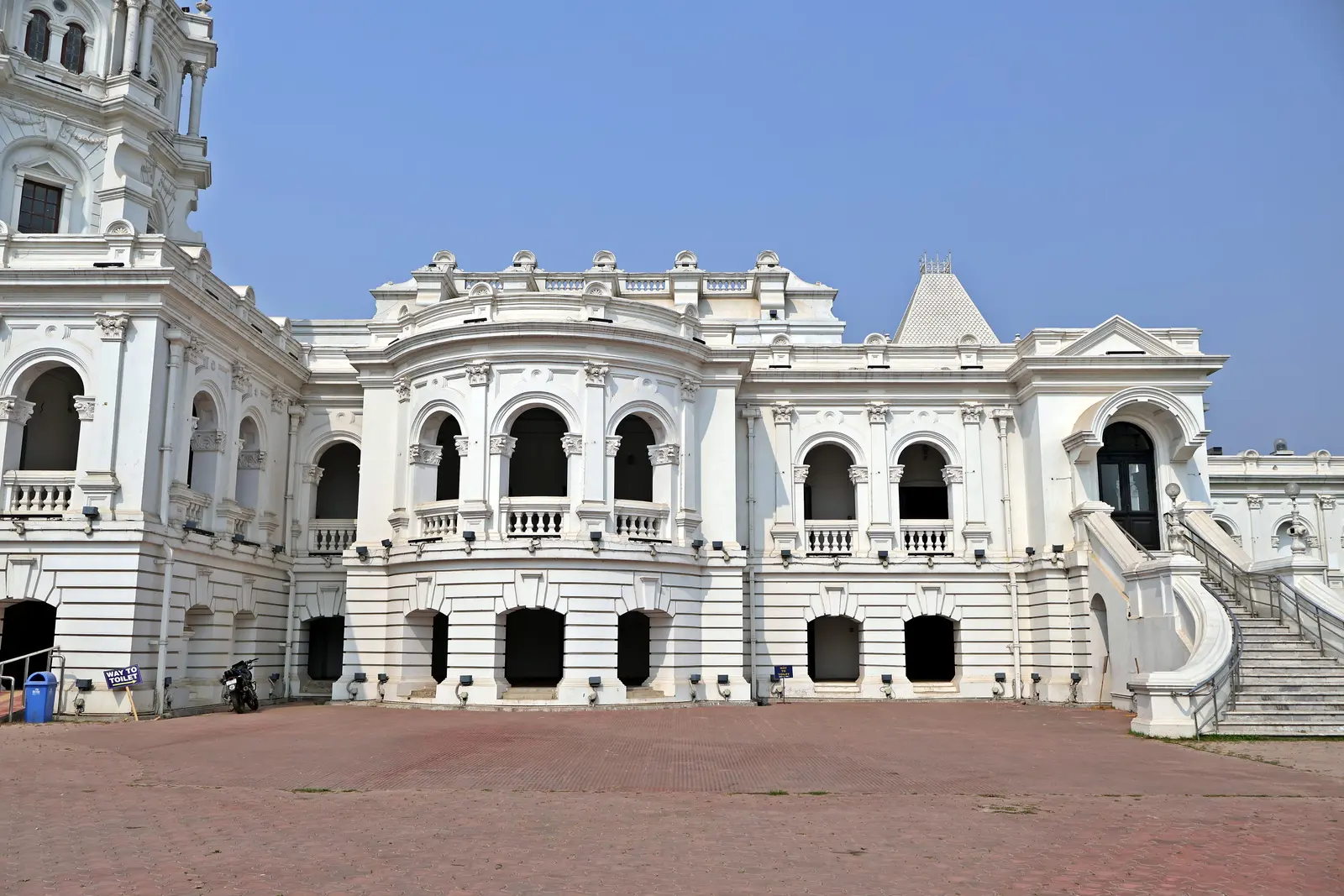
Domed roofs rising over Mughal-style gardens and twin ornamental lakes — the former seat of the Tripura kings, now the state's finest museum.