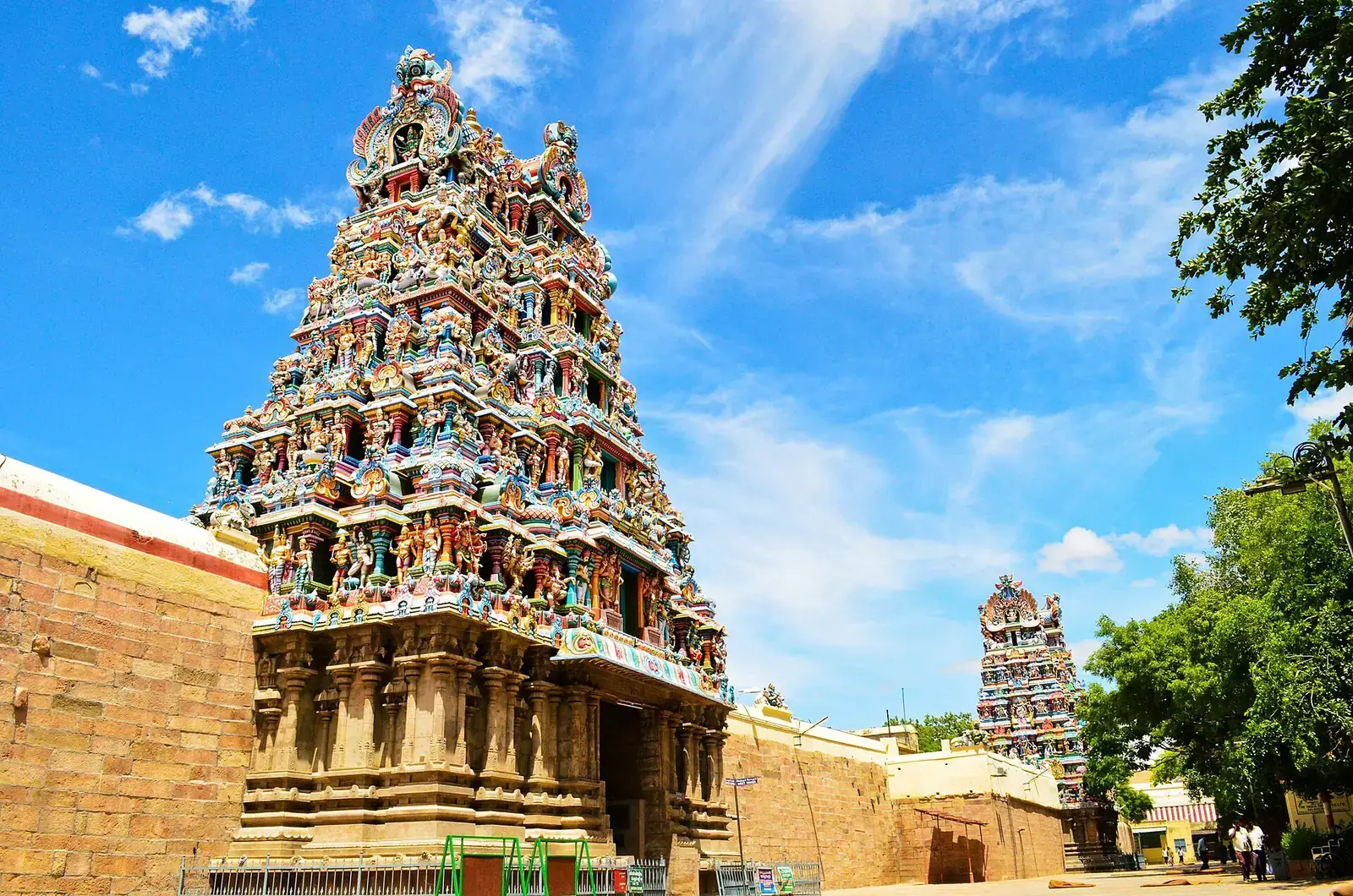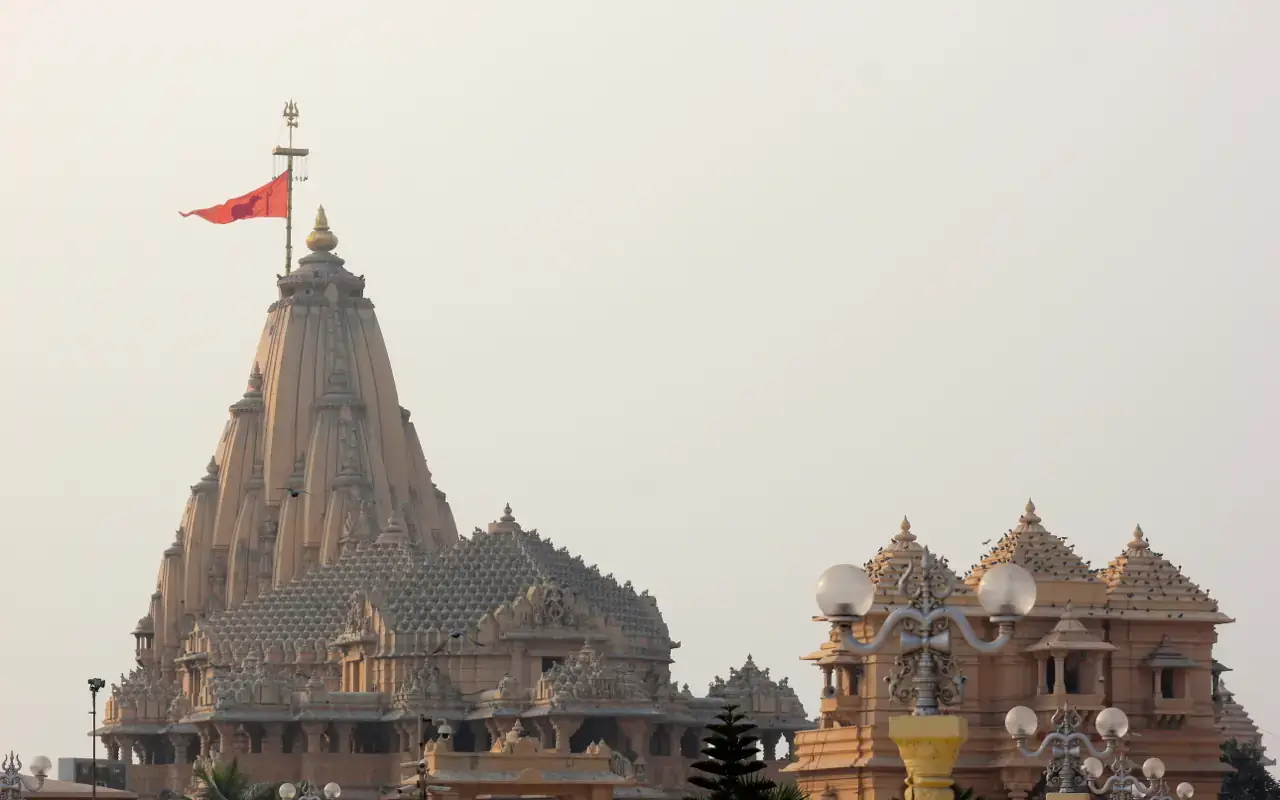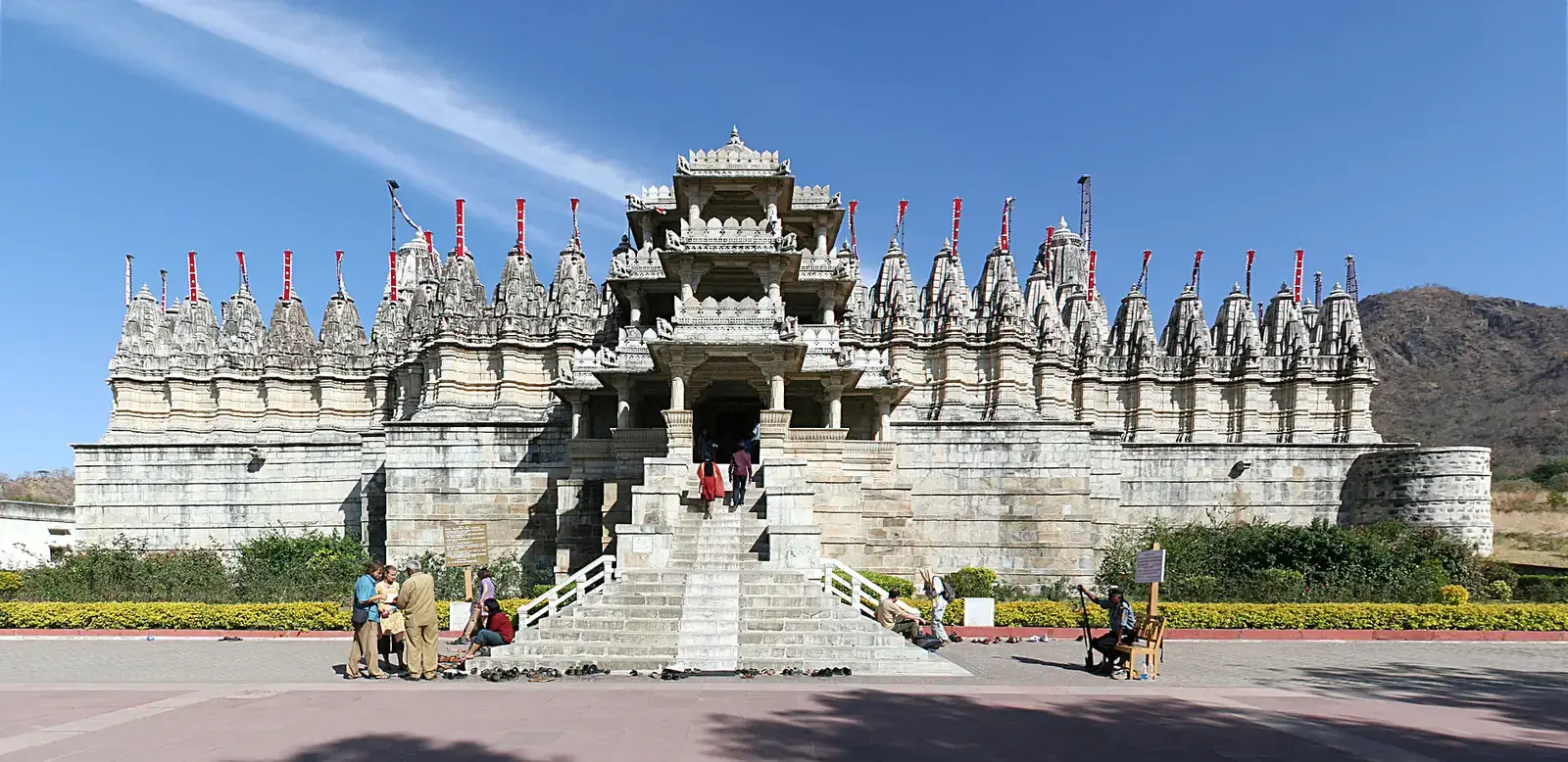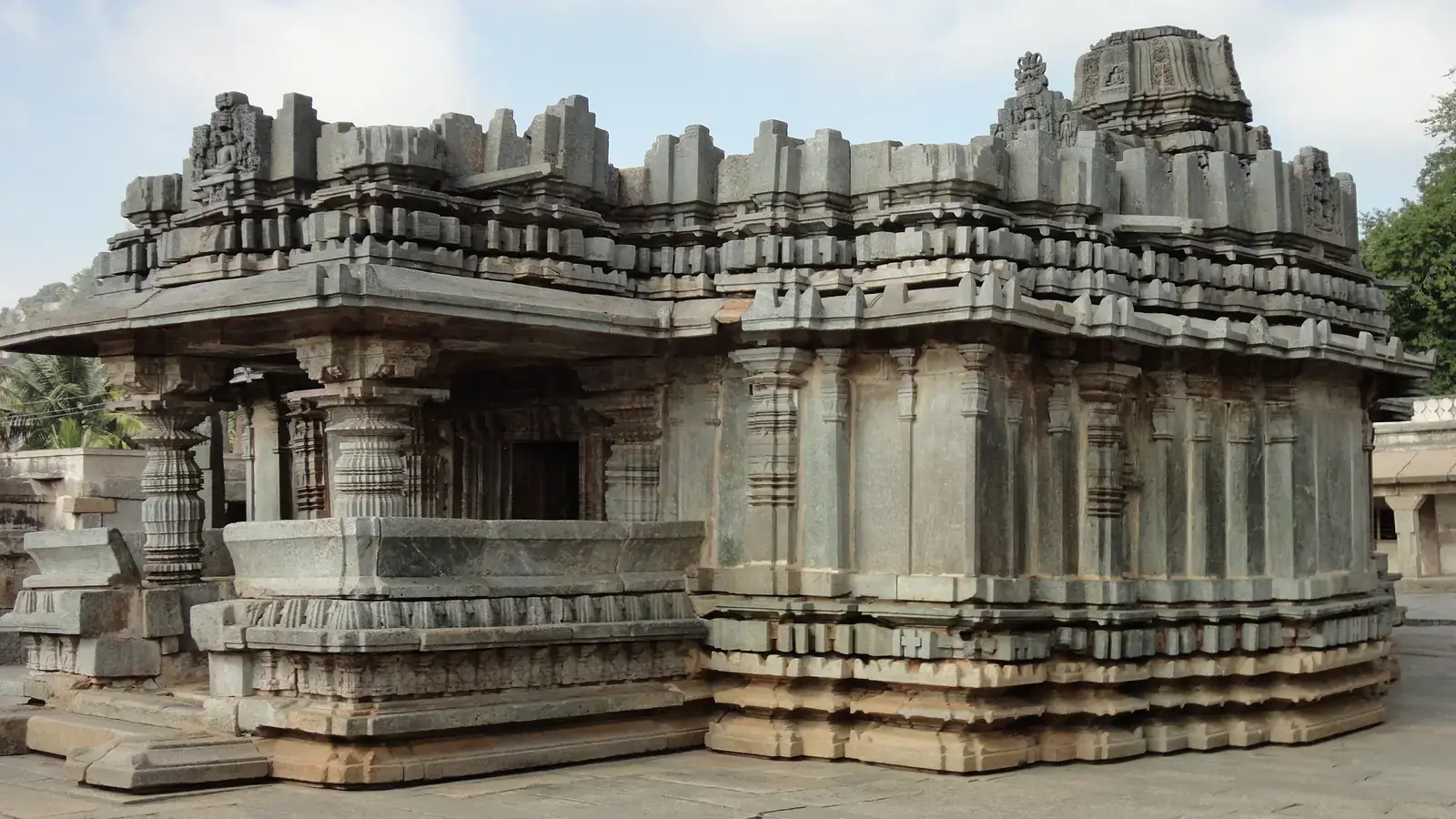
A tirtha, meaning a ford or crossing place, is a sacred site in Jainism, usually linked with the lives of the twenty-four Tirthankaras. Many are hills covered with temples, climbed on foot at dawn; others are richly carved temples in towns and forests.
Shatrunjaya at Palitana (Gujarat) and Sammed Shikharji (Jharkhand) are regarded by many Jains as the holiest. Both Svetambara and Digambara traditions have their own important tirthas, and visitors of all backgrounds are welcome at most temples if they follow the rules.
Quick answer
The most important Jain pilgrimage sites in India include Shatrunjaya hill at Palitana (Gujarat), with about 863 temples reached by some 3,500 steps; Sammed Shikharji on Parasnath hill (Jharkhand), where 20 of the 24 Tirthankaras are believed to have attained moksha; the marble temples of Ranakpur and Dilwara (Rajasthan); Shravanabelagola (Karnataka); Girnar (Gujarat); and Pawapuri (Bihar). October to March is the best season.
Key takeaways
- Palitana and Sammed Shikharji are regarded by many Jains as the holiest sites.
- Hill tirthas are climbed early in the morning, and descending before evening is customary.
- Ranakpur and Dilwara are among India's finest marble temples.
- Leather and food are usually not allowed inside Jain temples.
- October to March is best; climbs in summer heat are hard.
Major tirthas at a glance
| Tirtha | State | Known for | Our guide |
|---|---|---|---|
| Shatrunjaya, Palitana | Gujarat | About 863 temples on a hill, about 3,500 steps | Palitana guide |
| Sammed Shikharji | Jharkhand | Parasnath hill; long circuit on foot | Parasnath guide |
| Ranakpur | Rajasthan | 15th-century marble temple with a forest of carved pillars | Ranakpur Jain Temple |
| Dilwara, Mount Abu | Rajasthan | 11th to 13th-century marble carving | Mount Abu guide |
| Shravanabelagola | Karnataka | 57-foot monolith of Bahubali (Gommateshwara) | Shravanabelagola guide |
| Girnar | Gujarat | Temples of Neminath on a high hill, with a ropeway part way | Junagadh and Girnar guide |
| Pawapuri | Bihar | Where Mahavira attained nirvana; the Jal Mandir | Pawapuri guide |
| Sonagiri | Madhya Pradesh | A hill of Digambar temples near Datia | Covered here |
The holy hills
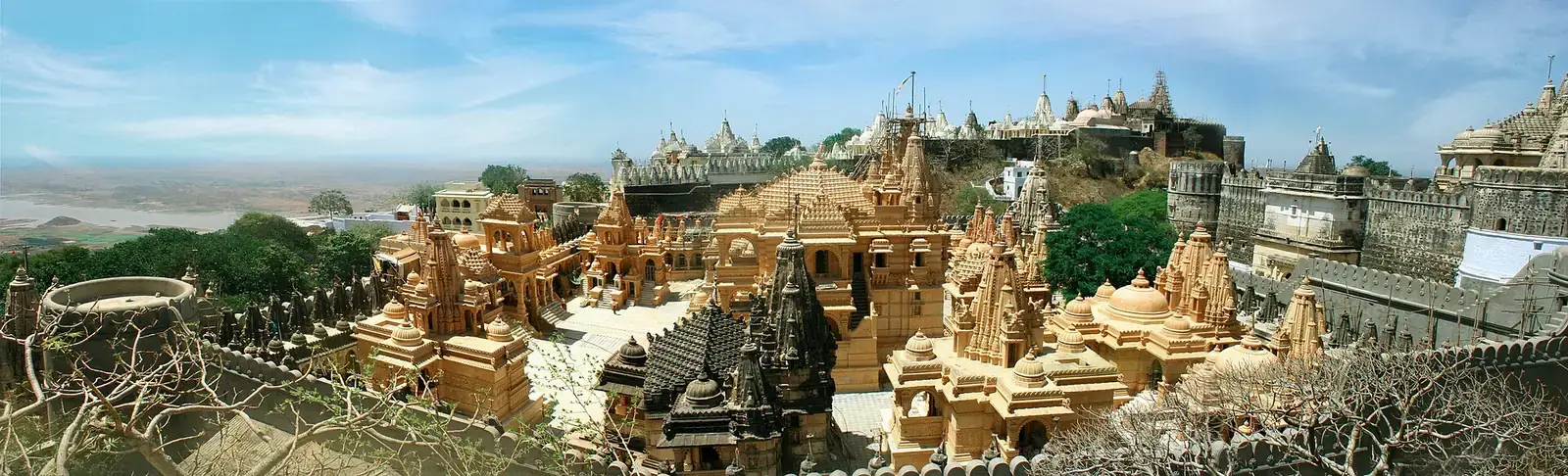
Shatrunjaya, Palitana
The climb of roughly 3,500 steps starts before dawn; the temple city on top is closed at night, and pilgrims descend the same day. Dolis (carried chairs) are available.
Sammed Shikharji
Pilgrims walk a long circuit of Parasnath hill from Madhuban, visiting the shrines (tonks) of the Tirthankaras. Most start around midnight or very early morning to finish in a day.
Girnar
Temples of Neminath and other shrines rise above Junagadh; a ropeway now reaches part of the way up.
Marble temples
Ranakpur
A four-faced (chaumukha) temple to Adinath, built in the 15th century, traditionally said to have 1,444 carved pillars, no two alike.
Dilwara
A group of temples at Mount Abu, including Vimal Vasahi and Luna Vasahi, famous for delicate marble ceilings. Photography is not allowed inside.
Other important sites
- Shravanabelagola, Karnataka: Bahubali's statue on Vindhyagiri and the basadis of Chandragiri.
- Pawapuri, Bihar: the Jal Mandir in a lotus pond, marking Mahavira's nirvana.
- Rajgir and Kundalpur, Bihar: sites linked with Mahavira's life.
- Sonagiri, Madhya Pradesh: a hill of Digambar temples near Datia.
- Shri Mahavirji, Rajasthan: a major pilgrimage temple in Karauli district.
Traditions sometimes differ on the exact places linked with events in Mahavira's life; the list follows common pilgrim practice.
Festivals
- Mahavir Jayanti (March or April).
- Paryushan (August or September), the most important period of fasting and reflection.
- Diwali, which Jains mark as Mahavira's nirvana.
- Kartik Purnima, when large numbers climb Shatrunjaya after the monsoon.
- The Mahamastakabhisheka at Shravanabelagola, held every 12 years; the next is due in 2030.
Safety
- Jain temples usually ask visitors not to carry leather or food inside, to dress modestly and to follow posted rules; some set separate visiting hours for non-Jain visitors.
- Start hill climbs early, carry water and avoid the midday heat.
- Dolis are available at Palitana and Girnar for those who cannot climb; agree rates at the official counters.
- Follow the rule of descending hill tirthas before evening.
What to pack
- Modest cotton clothing
- Non-leather belt, bag and footwear
- Water and a hat for climbs
- Socks for hot stone steps where footwear is removed
Want this pilgrimage turned into a practical itinerary?
FAQs
Are there dolis at Palitana?
Yes. Dolis (carried chairs) are available for those who cannot climb; agree the rate at the official counter.
Which is the holiest Jain pilgrimage site?
Many Jains regard Shatrunjaya at Palitana and Sammed Shikharji in Jharkhand as the holiest.
How many steps are there at Palitana?
About 3,500 steps to the temple city on Shatrunjaya hill.
Can non-Jains visit Jain temples?
Yes, at most temples, though some set separate visiting hours and all have rules on leather, food and dress.
When is the best time for Jain pilgrimage?
October to March. Kartik Purnima marks the reopening of Shatrunjaya climbs after the monsoon.
What is a Jain tirtha?
A tirtha, meaning a crossing place, is a sacred site in Jainism, usually linked with the lives of the Tirthankaras.
What is the Mahamastakabhisheka?
The anointing of Bahubali's statue at Shravanabelagola, held every 12 years; the last was in 2018 and the next is due in 2030.