A Forest Town in Jangalmahal
Jhargram is the headquarters town of its own district in the far southwest of West Bengal, sitting at the edge of the region known as Jangalmahal — literally "the forest region," a belt of sal forest and red laterite terrain that spans Jhargram, Purulia, Bankura, and West Midnapore. It's one of the easiest offbeat trips out of Kolkata, reachable by a direct train in about three hours.
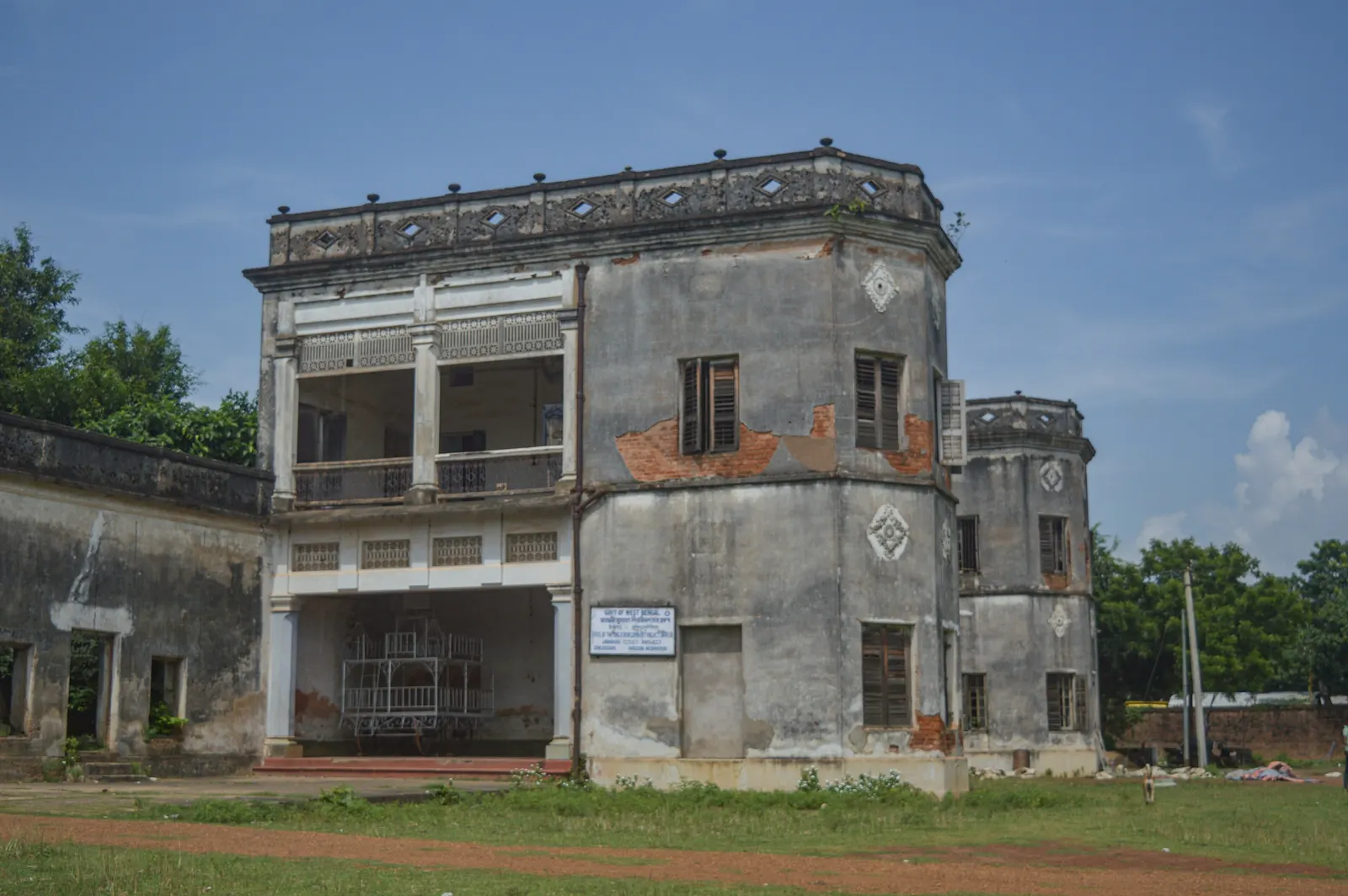
At its centre is the Jhargram Raj Palace, a heritage building that once housed the local royal family and now partly operates as a heritage hotel — a striking piece of colonial-era architecture set against the forest backdrop. A short distance away, Jhargram Deer Park (known locally as Chidiya More) lets visitors walk among free-ranging spotted deer inside sal forest cover.
For those with an extra day, the surrounding countryside — Chilkigarh on the Dulung river, Belpahari, and the Gadrasini hills — offers a deeper, quieter extension into Jangalmahal's forest and Santhal tribal-village landscape, well beyond what most visitors to Bengal ever see.
🌲 Jhargram at a Glance
Best Time to Visit Jhargram
Jhargram is a comfortable year-round trip in the sense that there's no monsoon closure to plan around, but the experience still varies a lot by season.
Cool, dry, and pleasant for walking the palace grounds, Deer Park, and any extension toward Belpahari or Chilkigarh.
Increasingly hot on the plains, making midday sightseeing less comfortable — early morning or late afternoon visits work better.
The sal forest turns a deep, vivid green and rivers like the Dulung run full, but travel to more remote spots becomes less convenient.
The most popular window for visiting the Deer Park and palace grounds, with the mildest weather of the year.
Our pick: October to February — cool, dry weather that's comfortable for both the town itself and any extension into the surrounding forest.
How to Reach Jhargram
Jhargram is one of the more accessible offbeat trips from Kolkata, thanks to a direct rail line.
- By train: Jhargram railway station sits on the Howrah-Kharagpur-Tatanagar line, with several direct trains daily from Howrah taking roughly 3 hours — the easiest and most popular way to arrive.
- By road: About 170 km from Kolkata via NH16, a 3.5-4 hour drive, workable as a long day trip or a relaxed overnight visit.
- Getting around locally: Auto-rickshaws and hired taxis cover the town's own sights easily; a full-day taxi or car hire is more practical for reaching Chilkigarh, Belpahari, or the Gadrasini hills.
Palace, Park & Temples
Jhargram Raj Palace
A grand early-20th-century building that once served as the seat of the local zamindari royal family, its architecture blending colonial and Bengali design elements. Part of the palace complex today functions as a heritage hotel, so visitors can walk the grounds, admire the façade, and in some cases dine or stay within a genuinely historic setting.
Jhargram Deer Park (Chidiya More)
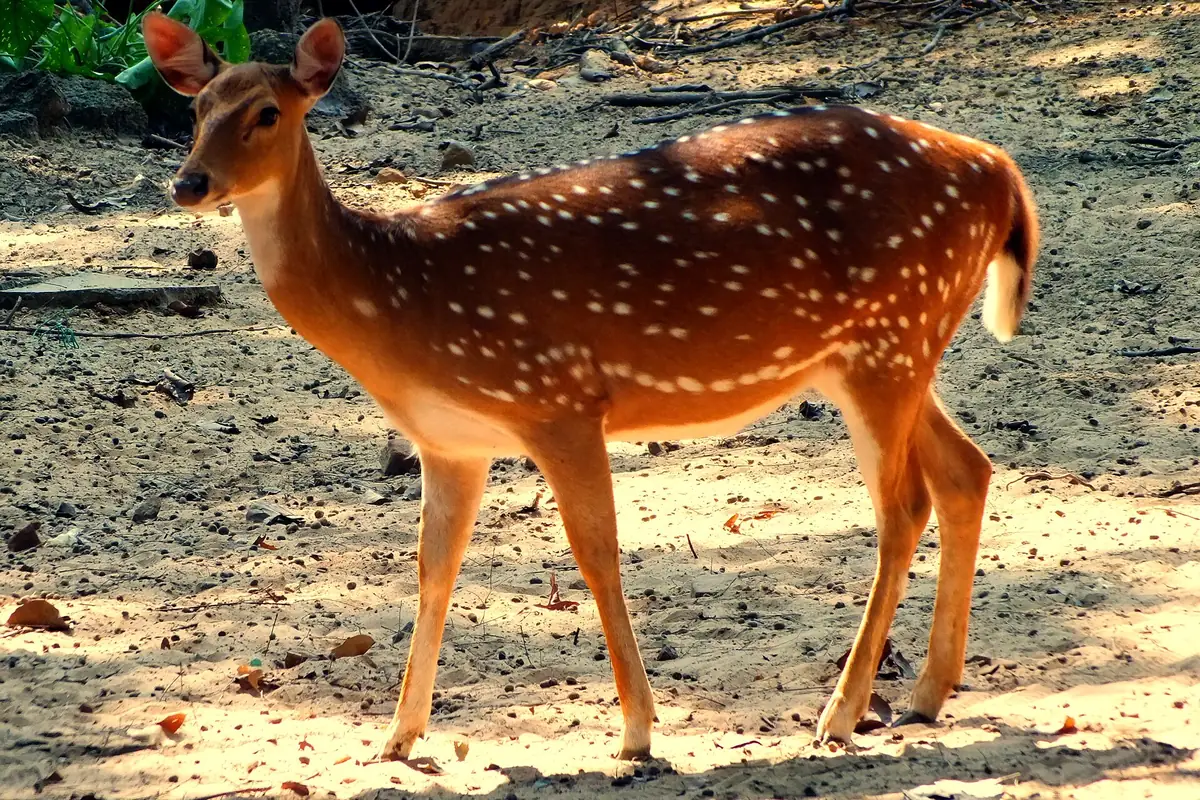
A forested enclosure near the town centre where spotted deer roam in a setting close to their natural sal-forest habitat. It's an easy, low-effort stop — good for families and anyone wanting a gentle introduction to the region's wildlife without a long safari commitment.
Kanak Durga Temple & Chilkigarh
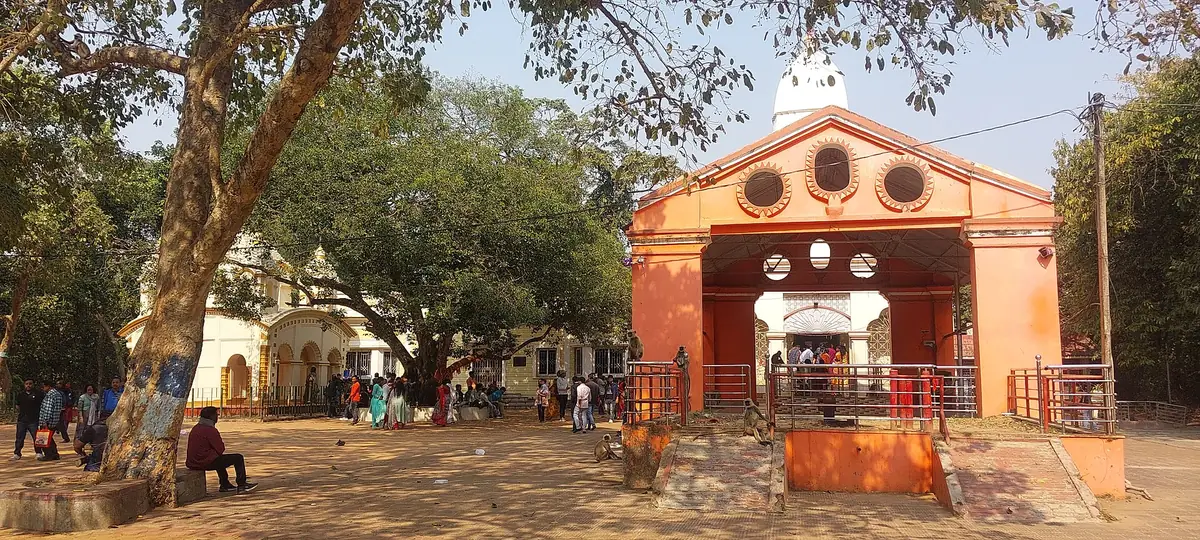
The Kanak Durga Temple sits on the banks of the Dulung river at Chilkigarh, a peaceful riverside spot a short drive from town. The temple and its ghats make for an easy half-day excursion, especially appealing around dusk when the river light softens.
Belpahari & Gadrasini Hills
For travellers with an extra day, Belpahari and the nearby Gadrasini hills offer a deeper, more offbeat extension — denser forest, Santhal tribal villages, and a noticeably quieter pace than Jhargram town itself. This is where the wider Jangalmahal region shows its most unspoiled side.
Where to Stay in Jhargram
Accommodation ranges from simple lodges near the station to the heritage palace stay itself, with a growing number of forest-fringe resorts nearby.
- → Lodges near the railway station
- → Government tourist rest houses
- → Basic guesthouses in town
- → Forest-fringe resorts
- → Tourism department properties
- → Mid-size hotels near the Deer Park
- → Heritage stay at the Raj Palace complex
- → Boutique nature resorts nearby
- → Premium forest-view cottages
Suggested Visit Plan (1-2 Days)
Palace & Deer Park
- ✓Morning train from Howrah, arrive Jhargram
- ✓Visit Jhargram Raj Palace grounds
- ✓Walk through Jhargram Deer Park
Chilkigarh & Return
- ✓Drive to Kanak Durga Temple, Chilkigarh
- ✓Evening by the Dulung river ghats
- ✓Return train or overnight stay
Belpahari Extension
- ✓Morning drive to Belpahari
- ✓Explore the Gadrasini hills area
- ✓Visit a nearby Santhal village
* Travellers wanting more forest and trekking time often continue from Jhargram toward the Ajodhya Hills further west in Purulia district.
Where to Eat in Jhargram
- Local Bengali eateries in town: Simple thalis with rice, dal, and seasonal vegetable or fish preparations are widely available near the market and station area.
- Heritage palace dining: The palace complex's own dining room, where open to non-guests, offers a more atmospheric meal in a historic setting.
- Roadside dhabas toward Belpahari: Basic but reliable stops for tea and a simple meal on the longer drives into the surrounding forest.
Budget Breakdown
| Expense | Budget | Mid-Range | Luxury |
|---|---|---|---|
| Accommodation/night | ₹1,000 | ₹3,500 | ₹8,000 |
| Train (round trip) | ₹200 | ₹600 | ₹1,200 |
| Food/day | ₹500 | ₹1,000 | ₹2,200 |
| Local taxi/day | ₹1,200 | ₹1,800 | ₹2,500 |
| Entry fees (park/temple) | ₹50 | ₹50 | ₹50 |
* Figures are per person, per day (except train, a round trip figure). Local taxi cost is best split across a group.
Essential Tips for Visiting Jhargram
- Take an early train: A morning departure from Howrah gives you a full day in Jhargram and keeps a same-day return realistic if needed.
- Hire a taxi for the day if extending to Belpahari: These outlying spots aren't well served by public transport, so a full-day car hire is the practical choice.
- Carry cash: Card acceptance and ATM density drop noticeably outside the main town.
- Visit the Deer Park in the cooler hours: Early morning or late afternoon gives both better light and more comfortable walking temperatures.
- Respect village etiquette: If visiting Santhal villages near Belpahari, go with a local guide or driver who can help with respectful, low-impact visits.
✅ Do
- →Take an early train for a full day in Jhargram
- →Hire a full-day taxi for the Belpahari extension
- →Carry enough cash for outlying areas
- →Visit the Deer Park in cooler morning hours
- →Stop at Chilkigarh for the riverside temple
- →Combine the trip with Ajodhya Hills if time allows
❌ Don't
- →Rely on public transport for Belpahari or Gadrasini
- →Expect wide card acceptance outside town
- →Visit the Deer Park at peak midday heat
- →Skip checking palace visiting hours in advance
- →Rush Chilkigarh into a quick drive-by
- →Travel to remote villages without a local guide
Frequently Asked Questions
How do I reach Jhargram from Kolkata?
The easiest way is by train — Jhargram railway station sits on the Howrah-Kharagpur-Tatanagar line, with direct trains from Howrah taking around 3 hours. By road, it's roughly 170 km via NH16, about 3.5-4 hours' drive.
What is Jangalmahal?
Jangalmahal (literally 'forest region') refers to the forested, laterite-soil belt spanning parts of West Bengal's Jhargram, Purulia, Bankura, and West Midnapore districts. Jhargram is one of its main gateway towns, known for sal forests and Santhal and other tribal communities.
Can I visit the Jhargram Raj Palace?
The heritage palace building can be viewed from outside, and part of the complex now functions as a heritage hotel where you can stay or dine even if you're not overnighting there — check current visiting arrangements locally, as access can vary.
Is Jhargram Deer Park worth visiting?
Yes, especially for families — it's a forested enclosure near the town centre (locally known as Chidiya More) where spotted deer roam in a relatively natural sal-forest setting, an easy, low-effort stop that doesn't require a full day.
What is the best time to visit Jhargram?
October to March offers the most comfortable weather for exploring the palace, deer park, and nearby forests. The monsoon (July-September) turns the sal forest a deep green but makes travel to more remote spots like Belpahari less comfortable.
How many days should I spend in Jhargram?
A single day covers the palace, Deer Park, and Kanak Durga Temple comfortably. Add a second day if you want to extend to Chilkigarh, Belpahari, or the Gadrasini hills for a deeper, more offbeat forest experience.
Published by the Kudozz Club editorial team · Last updated · How we research our guides
Want us to plan this trip for you?
Tell Kudozz Club where you want to go and what kind of trip you’re looking for. We’ll build a Jhargram and West Bengal itinerary around your dates and budget.
Continue Exploring
View all guides Off-beat
Ajodhya Hills Travel Guide: Trekking & Tribal Culture
Complete Ajodhya Hills guide — Bamni Falls, Turga Falls, Murguma Dam, Marble Lake, trekking trails, Chhau dance heritage, how to reach from Purulia, and a full visit plan.
 Off-beat
Mukutmanipur Travel Guide: Dam, Boating & Tips
Complete Mukutmanipur guide — one of India's largest earthen dams, reservoir boating, Bhairavi Temple, Pareshnath Hill, how to reach from Kolkata, and a full visit plan.
 Off-beat
Dooars Travel Guide: Wildlife, Tea Gardens & Rivers
Complete Dooars guide — the foothill forests of Gorumara, Jaldapara, Chapramari and Buxa, tea gardens, jeep safaris for rhinos and elephants, base towns, and a full visit plan.
 Off-beat
Dhanaulti: Pine Forests, Quiet Views & a Complete Guide
A quiet alternative to nearby Mussoorie — dense deodar and oak forest, the managed Eco Park, and the Surkanda Devi trek, just 25 km from the crowds.