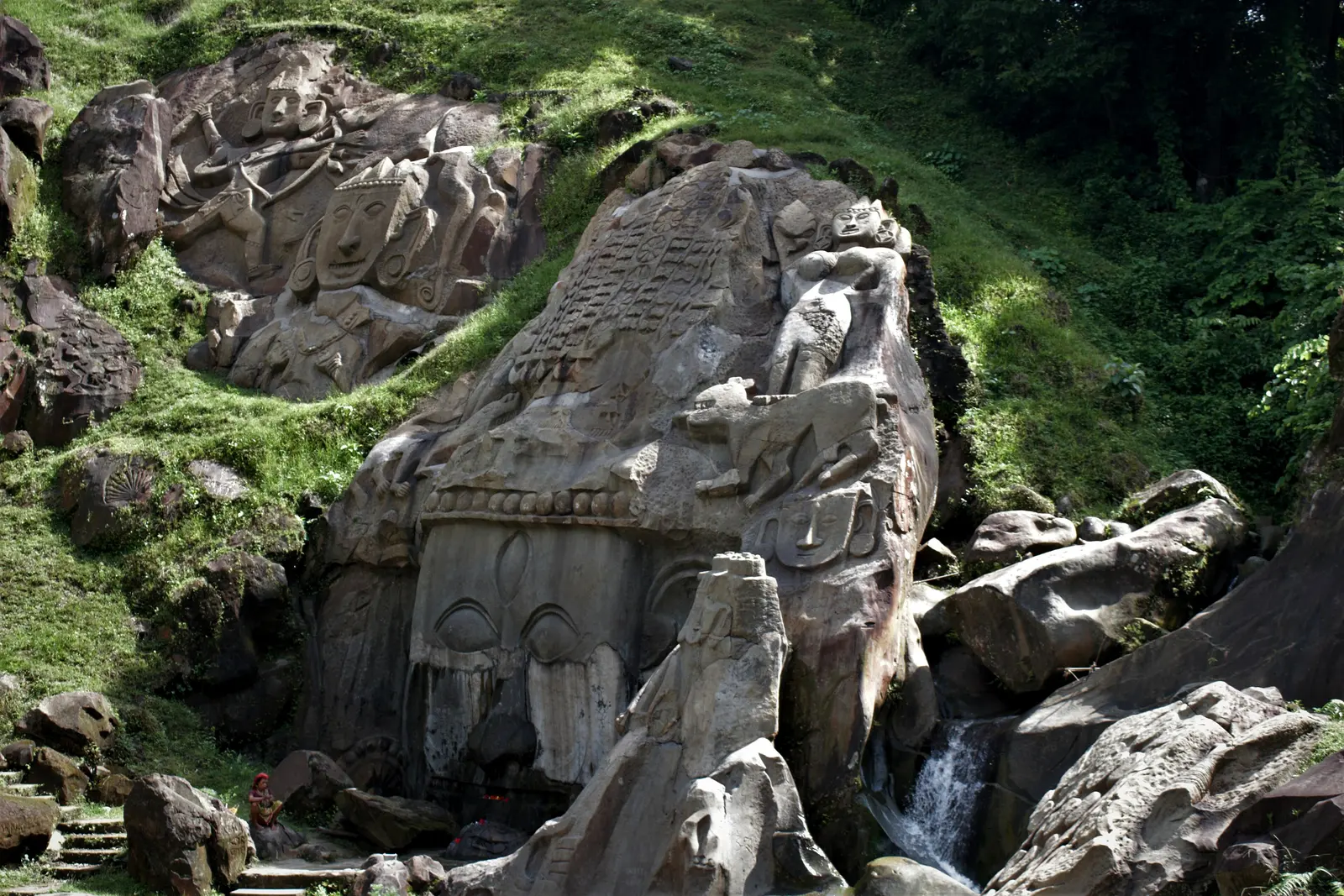
A Hillside of Ancient Carvings
Unakoti, near Kailashahar town in North Tripura's Unakoti district, is one of Northeast India's most significant archaeological sites — a forested hillside covered in massive rock-cut carvings and bas-reliefs of Hindu deities, believed to date roughly to the 7th–9th centuries CE. It's briefly mentioned as a highlight in our Tripura travel guide, but the site deserves a far deeper look on its own.
The centrepiece is Unakotishwara Kal Bhairava — a giant carved face of Shiva roughly 30 feet tall, flanked by smaller carved figures. Scattered across the surrounding hillside and forest are numerous other rock-cut images: Ganesha, Durga astride her lion, a partly buried figure of Nandi the bull, and other deities, some carved directly into rock faces and others standing as moss-covered free-standing stone images.
Local legend explains the name: "Unakoti" roughly means "one less than a crore" (one less than 10 million), tied to a story involving Shiva and a crore of gods. The site is now maintained by the Archaeological Survey of India, and it has featured in discussions around India's UNESCO World Heritage tentative list — a sign of how significant its carvings are considered, even though the site itself sees a fraction of the visitors of India's better-known heritage destinations.
🗿 Unakoti at a Glance
Interested in the history? See our guide to historical places in India.
Best Time to Visit Unakoti
The forest trail up to the carvings is the main factor to plan around — its condition changes a lot with the seasons.
Cool, dry conditions make the forested trail up to the carvings genuinely enjoyable, with good light for photography.
Temperatures rise but an early-morning visit is still comfortable before the midday heat sets in.
Heavy rain makes the forested hillside paths muddy and slippery, and the long drive from Agartala considerably harder.
A major annual fair draws large crowds to Unakoti — atmospheric, but expect a busier, less contemplative visit.
Our pick: October to March — dry trail conditions and comfortable temperatures make the forested walk to the carvings far more pleasant.
How to Reach Unakoti
Unakoti's distance from Agartala is the single biggest planning factor — this isn't a casual half-day trip.
- By road from Agartala: Roughly 178 km, about a 4-hour drive each way, mostly via Kailashahar — the standard route for most visitors.
- By rail to Kumarghat: The nearest railhead, with onward road transport of roughly an hour or so to Unakoti via Kailashahar.
- Basing yourself in Kailashahar: A short, manageable drive from the carvings themselves, and the practical base if you're not doing a same-day round trip from Agartala.
The Carvings & the Trail
Unakotishwara Kal Bhairava
The site's single most striking image — a giant carved face of Shiva, roughly 30 feet tall, set into the hillside and flanked by smaller carved figures. It's the natural centrepiece of any visit and the reason most photographs of Unakoti exist.
Scattered Rock-Cut Deities
Beyond the main carving, dozens of smaller rock-cut figures are spread across the forested hillside — Ganesha, Durga on her lion, a partly buried Nandi bull, and other deities, some carved into rock faces, others standing as moss-covered free images half-reclaimed by the forest.
The Forest Trail
Walking between the carvings involves an uneven, partly forested path — comfortable footwear matters here, and the walk itself, through quiet forest with carvings emerging unexpectedly at points, is part of what makes Unakoti memorable.
Ashokashtami Mela
Held annually around April, this is Unakoti's biggest event — a major fair that draws large crowds of pilgrims and visitors. Worth timing a visit around if you want festival atmosphere, or avoiding if you prefer a quieter, more contemplative visit.
Where to Stay Near Unakoti
Accommodation options are basic and concentrated in Kailashahar — Agartala is too far for a comfortable day-trip return if you want to explore Unakoti at a relaxed pace.
- → Basic guesthouses, Kailashahar
- → Government tourist lodges
- → Simple hotels near the bus stand
- → Better hotels, Kailashahar town
- → Tourism department properties
- → Business-style lodges
- → Very limited — none dedicated locally
- → Best luxury options remain in Agartala
- → Consider a comfortable Agartala stay instead
Suggested Visit Plan
Agartala to Kailashahar
- ✓Early departure from Agartala
- ✓Drive to Kailashahar (~4 hrs)
- ✓Check in, rest for the evening
Unakoti & Return
- ✓Morning visit to Unakoti's carvings and forest trail
- ✓Explore at an unhurried pace
- ✓Drive back to Agartala by evening
* If pressed for time, a very long single day from Agartala is possible, but expect roughly 8 hours of driving on top of the visit itself.
Where to Eat Near Unakoti
- Kailashahar town: The main option for a proper meal — a handful of local restaurants serving Bengali and Tripuri fare.
- Roadside stalls: Simple tea and snack stalls along the route and near the site entrance, useful for a quick break.
- Carry your own supplies: Worth packing water and snacks given the limited options right at Unakoti itself.
Budget Breakdown
| Expense | Budget | Mid-Range | Luxury |
|---|---|---|---|
| Accommodation/night | ₹800 | ₹2,200 | ₹4,500 |
| Car hire from Agartala (round trip) | ₹5,500 | ₹8,000 | ₹11,000 |
| Food/day | ₹400 | ₹800 | ₹1,500 |
| Entry fee | ₹30 | ₹30 | ₹30 |
* Figures are per person, per day (except car hire, a round trip figure best split across a group). Fees are approximate — confirm current rates locally.
Essential Tips for Visiting Unakoti
- Start very early: Whether doing it as a long single day or an overnight trip, an early start makes the long drive far more manageable.
- Wear proper footwear: The forested trail between carvings is uneven and partly unpaved.
- Carry water and mosquito repellent: There's limited shade-free shopping right at the site, and the forested setting means mosquitoes are a factor.
- Treat it as a living pilgrimage site too: Beyond the archaeology, Unakoti remains an active place of worship for many visitors — dress and behave respectfully around the carvings.
- Confirm timings ahead: Entry hours and fees are modest but worth double-checking locally before you set out on the long drive.
✅ Do
- →Consider an overnight stay in Kailashahar
- →Wear sturdy, comfortable footwear
- →Start the drive early in either direction
- →Carry water, snacks, and repellent
- →Time a visit around the Ashokashtami Mela if you enjoy festivals
- →Respect the site's living pilgrimage character
❌ Don't
- →Rush both legs of the drive in a single tight day
- →Visit during the monsoon if you can help it
- →Expect resort-style accommodation nearby
- →Skip proper footwear for the forest trail
- →Rely on finding a wide restaurant scene at the site
- →Forget to confirm current entry timings
Frequently Asked Questions
How far is Unakoti from Agartala?
Roughly 178 km, about a 4-hour drive each way via Kailashahar. It's one of the longest day trips out of Agartala in Tripura, which is why an overnight stay in Kailashahar is worth considering.
Is Unakoti a day trip from Agartala?
It can be, but it makes for a very long day — around 8 hours of driving alone. Many travellers prefer to overnight in Kailashahar, explore the carvings unhurried the next morning, and drive back, rather than rushing both legs in a single day.
What makes Unakoti significant?
It's one of Northeast India's most important archaeological sites — a forested hillside covered in massive rock-cut carvings and bas-reliefs, centred on Unakotishwara Kal Bhairava, a roughly 30-foot carved face of Shiva, believed to date to around the 7th–9th centuries CE. It has also featured in discussions around India's UNESCO World Heritage tentative list.
What is the best time to visit Unakoti?
October to March, when dry conditions make the forested hillside trail manageable. The monsoon (June–September) turns the paths muddy and difficult, and the site is far less enjoyable to explore.
What are Unakoti's entry timings and fees?
The site is generally open through daylight hours with a modest entry fee, though it's worth confirming current timings locally or with your driver/guide before setting out, since these details can shift.
Where does the name Unakoti come from?
"Unakoti" roughly translates to "one less than a crore" (one less than 10 million). Local legend ties this to a story involving Shiva and a crore of gods, said to explain the origin of the carvings.
Published by the Kudozz Club editorial team · Last updated · How we research our guides
Want us to plan this trip for you?
Tell Kudozz Club where you want to go and what kind of trip you’re looking for. We’ll build a Unakoti and Tripura itinerary around your dates and budget.
Continue Exploring
View all guides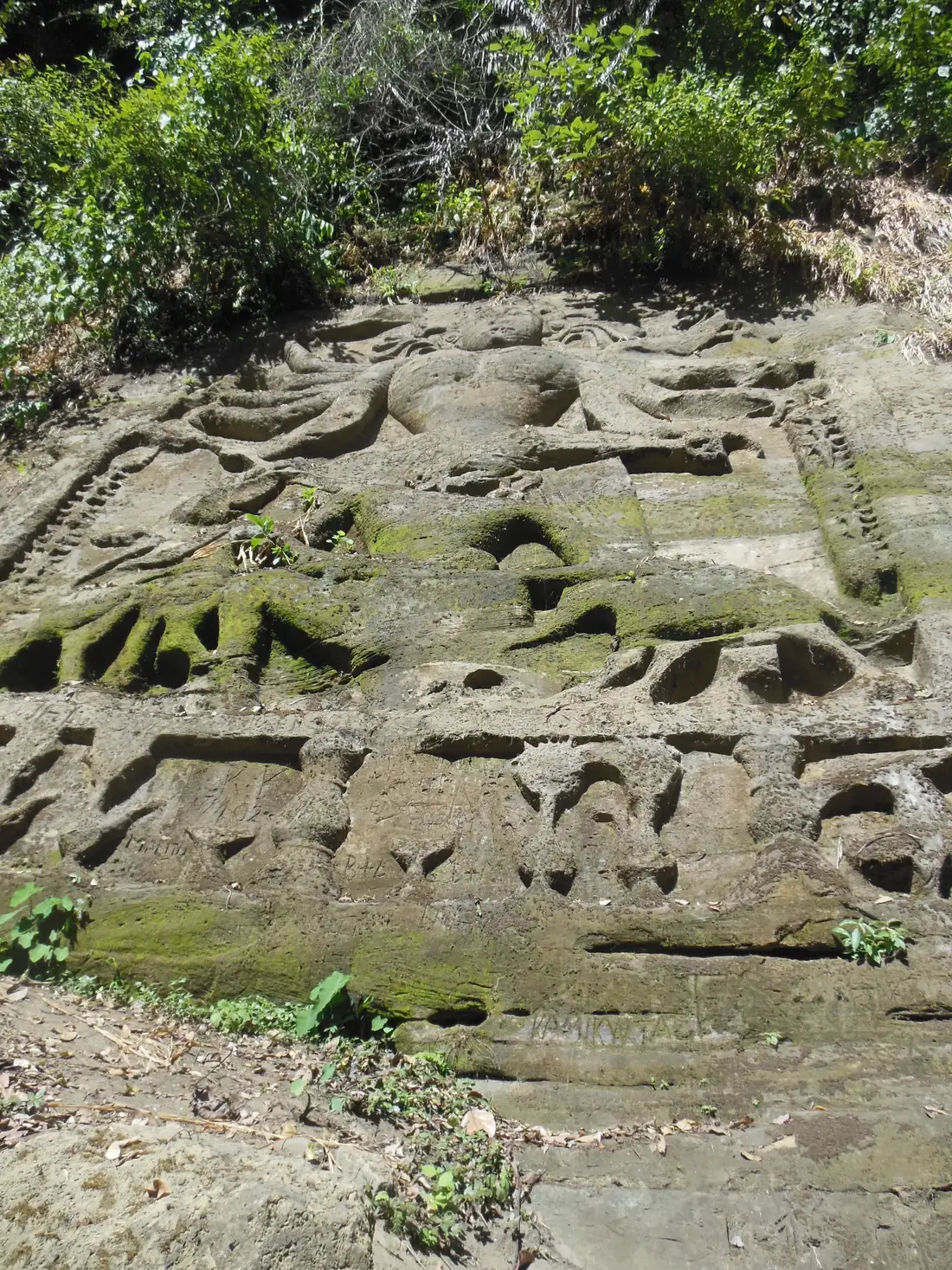 Off-beat
Chabimura Travel Guide: Rock Carvings & Boat Ride
Rock-cut Hindu deities carved into cliffs above the Gomati river, viewable only from a boat gliding through forested riverbanks — the complete Chabimura guide.
 Off-beat
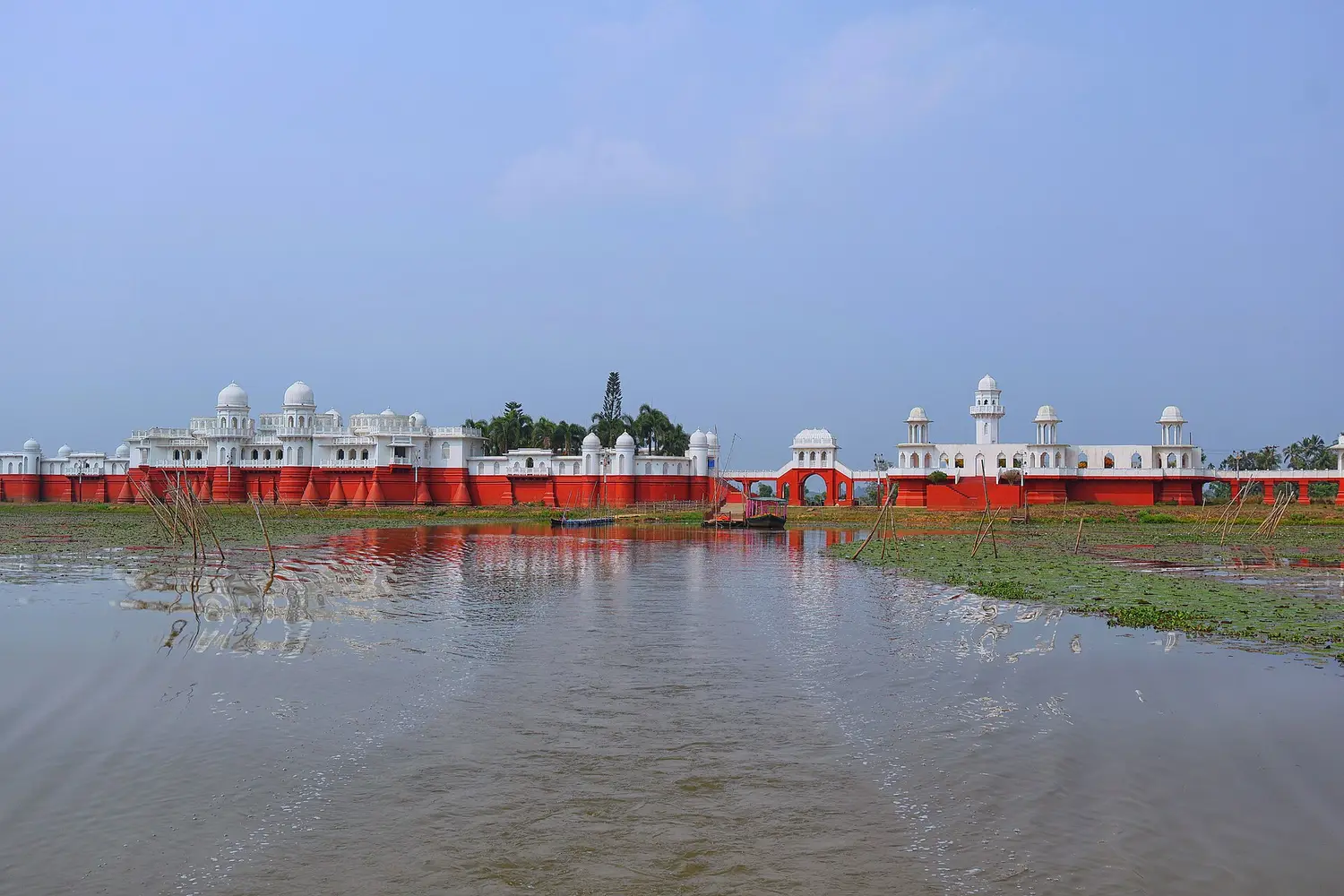
Tripura Travel Guide: Neermahal, Unakoti & Ujjayanta Palace
A palace rising from the middle of a lake, giant rock-cut carvings hidden in the forest, and a royal capital barely anyone's heard of — the complete guide to India's most overlooked princely state.
 Heritage
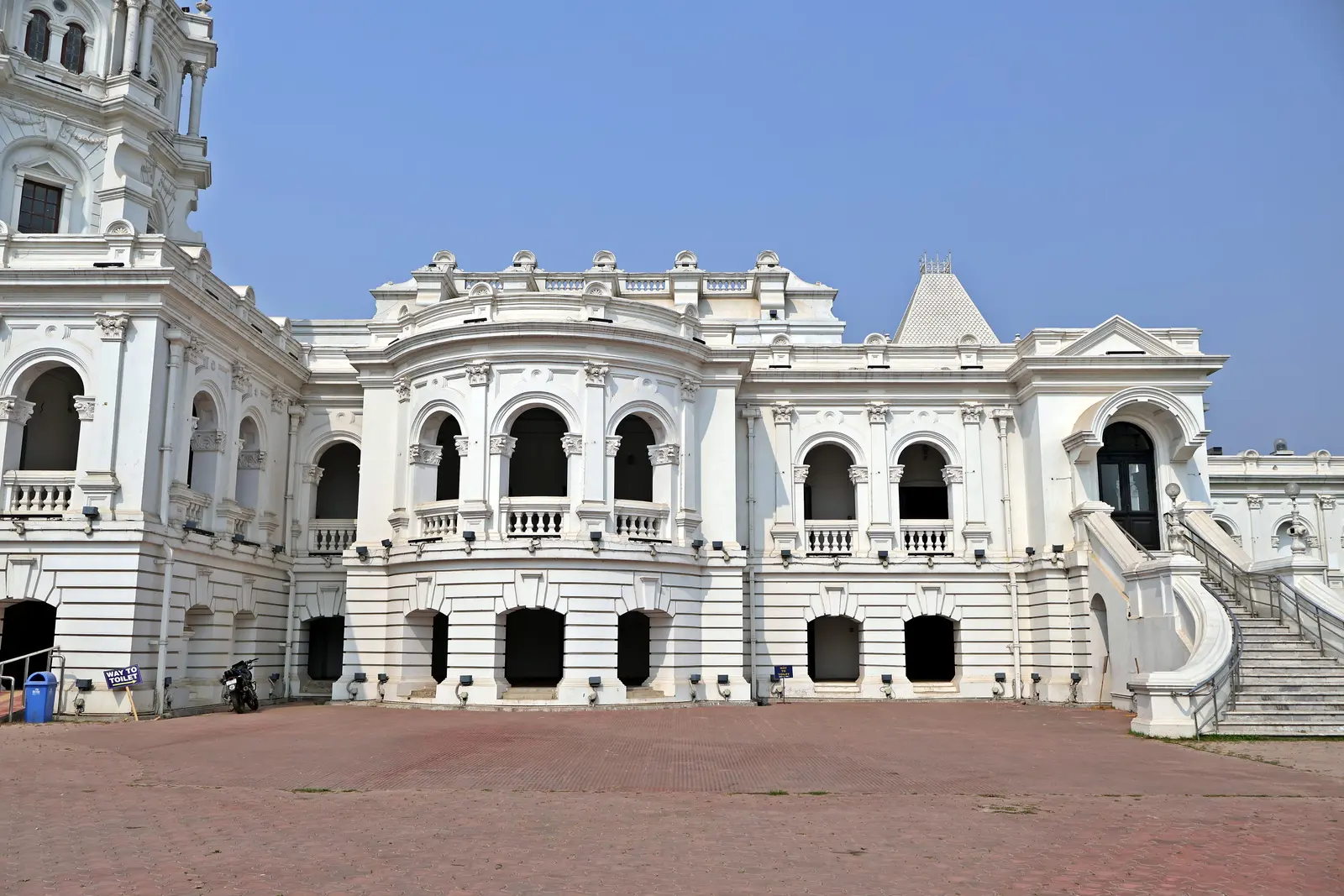
Ujjayanta Palace Guide: History, Timings & Tips
Domed roofs rising over Mughal-style gardens and twin ornamental lakes — the former seat of the Tripura kings, now the state's finest museum.
 Heritage
Udaipur Tripura Travel Guide: Lakes & Old Capital
Not the Rajasthan lake city — Tripura's own Udaipur was the old Manikya capital, ringed by sacred lakes and home to one of Hinduism's 51 Shakti Peethas.