Lothal lies in the plains of Ahmedabad district, about 80 km south-west of Ahmedabad, near the Gulf of Khambhat. It was excavated by the ASI under S. R. Rao between 1955 and 1962, revealing a planned Harappan town occupied in the 3rd and 2nd millennia BCE.
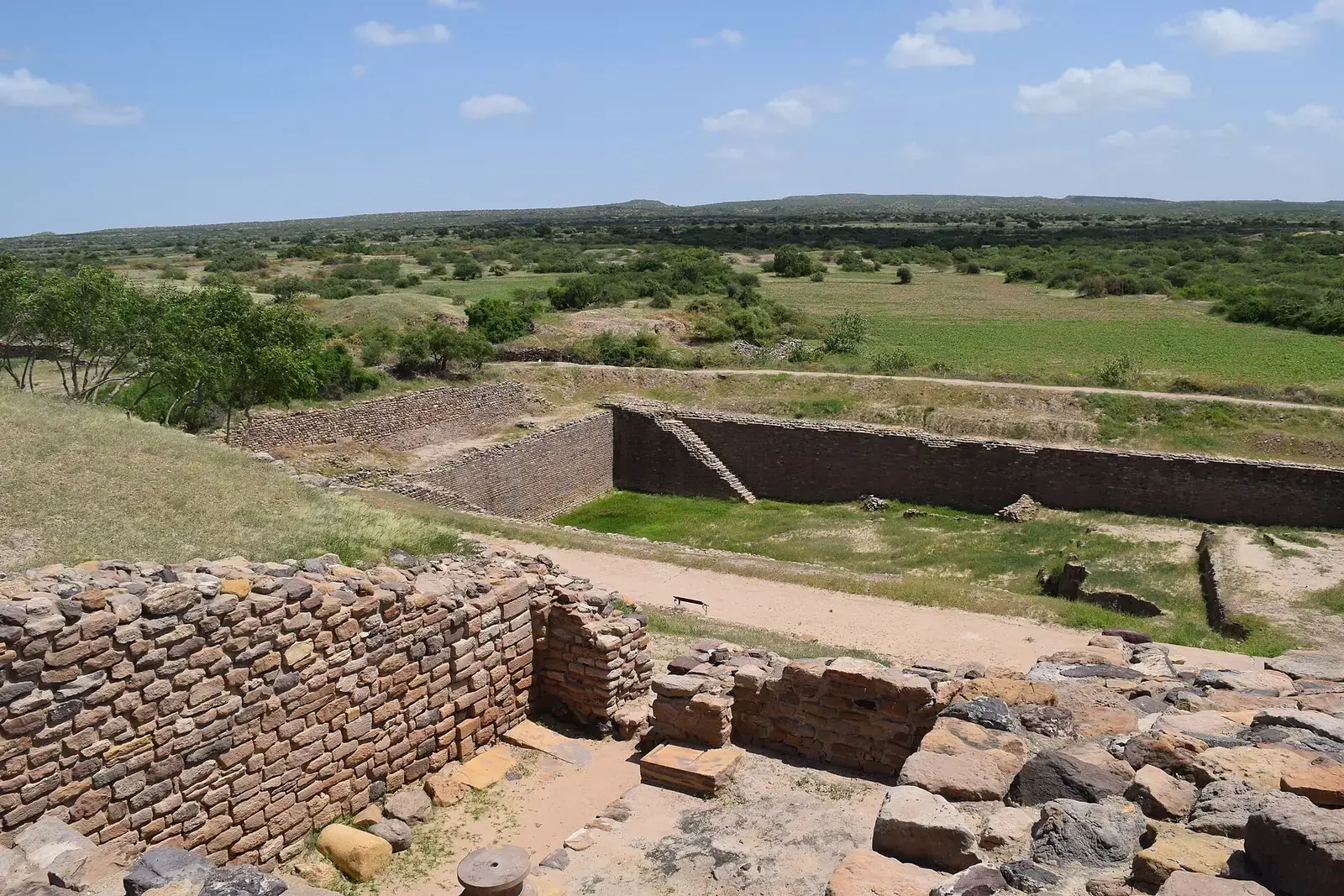
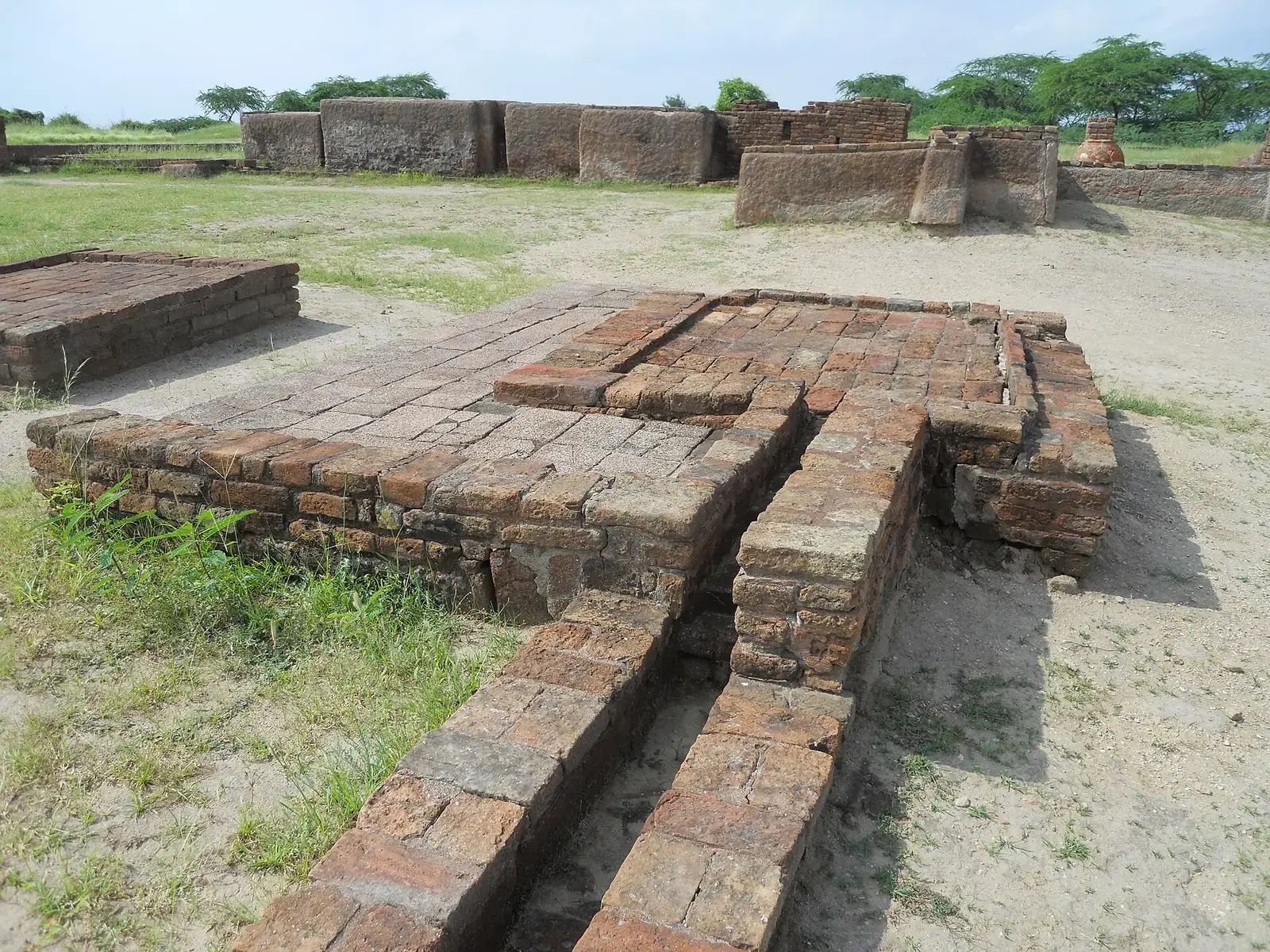
Its best-known feature is a large brick-lined basin connected to an old river channel. Most archaeologists interpret it as a dockyard, and recent studies of sediments and microfossils have supported that view, though some scholars have argued it was a water reservoir. Lothal is on India's Tentative List for UNESCO nomination.
Quick answer
Lothal, about 80 km from Ahmedabad, is a Harappan town excavated between 1955 and 1962. Its large brick basin is interpreted by most archaeologists as a dockyard, the earliest known, though a minority see it as a reservoir. Visitors can see the basin, the acropolis, the lower town and bead workshops, and the ASI museum, which is closed on Fridays. Visit from November to February.
Key takeaways
- About 80 km from Ahmedabad; allow half a day.
- The brick basin is widely interpreted as a dockyard; some scholars have proposed a reservoir.
- The ASI site museum is closed on Fridays.
- The site is exposed; visit in the cool winter months and early in the day.
- A National Maritime Heritage Complex is being developed nearby.
What you can see
The basin
A large rectangular brick-lined basin on the east side of the town, with an inlet and a spillway.
- Interpretation
- Dockyard (majority view); reservoir (minority view)
The acropolis and lower town
A raised area with drains, baths and a warehouse, and the residential lower town laid out in blocks.
Bead-making workshops
Evidence of a bead industry using carnelian and other stones, traded widely.
The site museum
Seals, beads, pottery, tools and ornaments found at Lothal, with models of the town.
- Closed
- Fridays
Evidence and interpretation
What is established: Lothal was a planned Harappan settlement with a drainage system, a warehouse, craft workshops and a large basin connected to a water channel, and objects found here show links with other Harappan sites and wider trade.
What is interpreted: whether the basin served ships (a dockyard) or stored fresh water. The dockyard reading is the more widely accepted, and has been strengthened by recent scientific studies; we present it as the leading interpretation rather than settled fact.
How to reach
- From Ahmedabad: about 80 km by road, around two hours.
- The nearest railway stations are Lothal-Bhurkhi and Dholka; road travel is more practical.
- Combine it with Nal Sarovar bird sanctuary on a winter day trip.
Tips for the visit
- Visit the museum first; it explains the layout and makes the ruins easier to read.
- Go early in the day; there is little shade on the site.
- A guide or the museum staff can point out the drains, warehouse and bead workshops.
- Combine Lothal with Nal Sarovar in winter, or with Ahmedabad's old city.
Other Harappan sites in Gujarat
Gujarat has several important Harappan sites. Dholavira in Kutch, a UNESCO World Heritage Site since 2021, is the largest and best presented. Others, such as Rangpur and Surkotada, are less developed for visitors.
When to go
- November to February: cool, dry and pleasant.
- March to June: very hot; visit early in the morning.
- July to September: rain can make the site muddy.
The National Maritime Heritage Complex
The Government of India has approved a large National Maritime Heritage Complex near Lothal, with museums on India's maritime history. It is under development; check its current status before planning a visit around it.
Safety
- Timings, closures and ticket rules are set by the ASI, state archaeology departments or site trusts and change from time to time; check the official website before you go.
- The site is open and exposed; carry water and sun protection.
- Stay on marked paths and do not walk on excavated walls.
What to pack
- Hat and sunscreen
- Water
- Comfortable shoes
- Photo ID
Want to explore India's heritage on a route built around you?
FAQs
How far is Lothal from Ahmedabad?
About 80 km, around two hours by road.
Was Lothal really a dockyard?
Most archaeologists interpret the basin as a dockyard, supported by recent studies; a minority view sees it as a reservoir.
Is the Lothal museum open on Friday?
No, the ASI museum is closed on Fridays.
Is Lothal a UNESCO site?
It is on India's Tentative List, not yet inscribed.
How much time do I need at Lothal?
About two to three hours for the site and museum.
How old is Lothal?
It was occupied during the Harappan period, in the 3rd and 2nd millennia BCE.
What else can I see near Lothal?
Nal Sarovar bird sanctuary in winter, and Ahmedabad's old city.