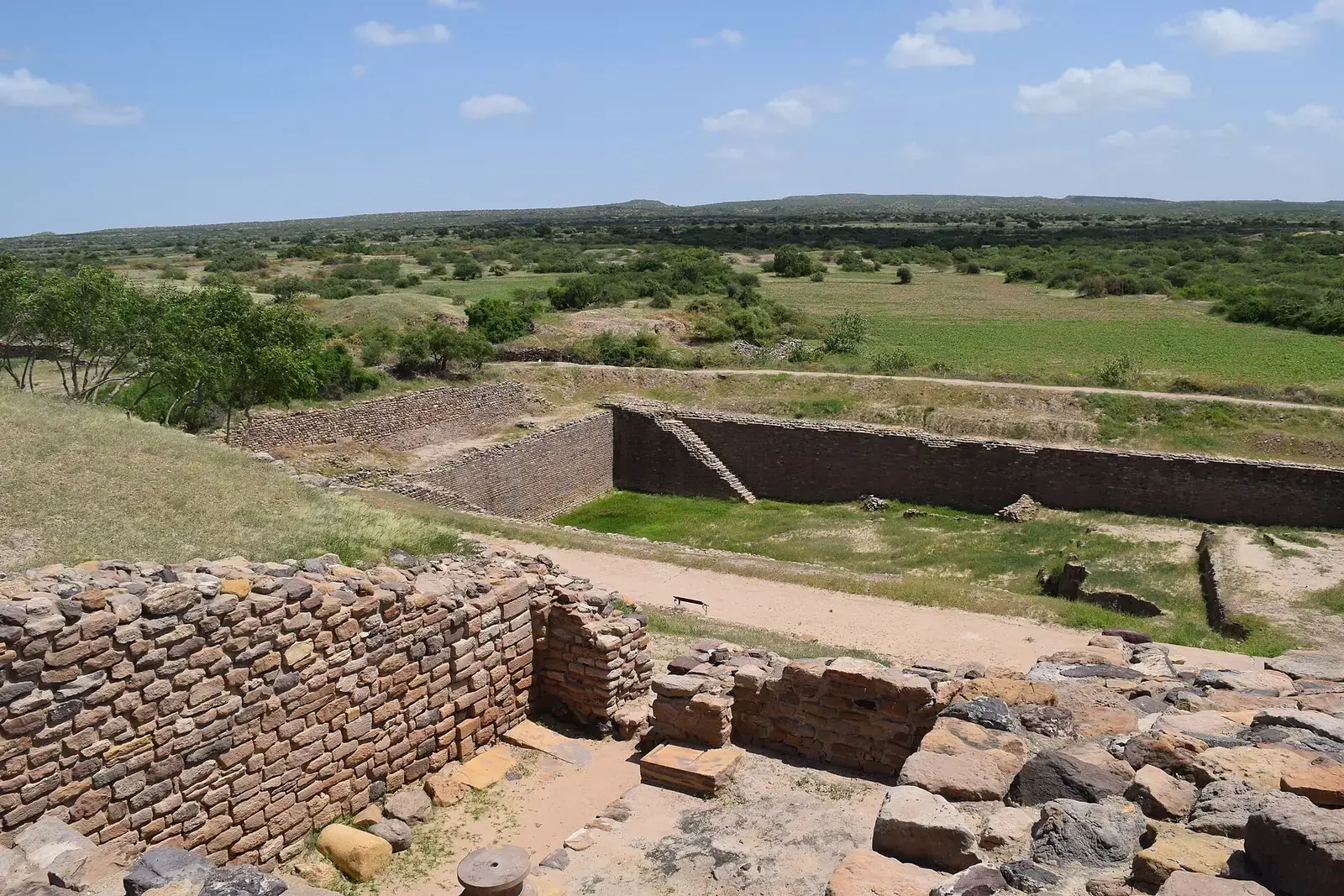
Archaeological sites in India range from rock shelters used by early humans to the planned cities of the Harappan (Indus Valley) civilisation, Buddhist monasteries and universities, and the ruined capitals of later kingdoms. Several are UNESCO World Heritage Sites, and many have good site museums run by the Archaeological Survey of India (ASI).
At these sites it helps to separate three things: what has been excavated and dated (the evidence), how archaeologists read it (interpretation, which can change), and the traditions and legends attached to a place. This guide notes where they differ.
Quick answer
India's key archaeological sites include the Bhimbetka rock shelters in Madhya Pradesh; the Harappan cities of Dholavira and Lothal in Gujarat, Rakhigarhi in Haryana and Kalibangan in Rajasthan; Buddhist sites at Sanchi, Nalanda, Sarnath and Ratnagiri; Hampi in Karnataka; and the recent excavations at Keeladi in Tamil Nadu. Visit site museums first, and go between October and March.
Key takeaways
- Bhimbetka, Dholavira, Sanchi, Nalanda and Sarnath are UNESCO World Heritage Sites.
- Dholavira is the best-presented Harappan city in India.
- Site museums make ruins far easier to understand; visit them first.
- Interpretations change with new research; good sites explain what is known and what is debated.
- Most sites are open and exposed; go early and carry water.
Key sites at a glance
| Site | State | Period | What you see |
|---|---|---|---|
| Bhimbetka | Madhya Pradesh | Prehistoric onward | Rock shelters with paintings (UNESCO) |
| Dholavira | Gujarat | Harappan | Planned city, reservoirs, signboard find (UNESCO) |
| Lothal | Gujarat | Harappan | Dock-like basin, warehouse, bead workshops; ASI museum |
| Rakhigarhi | Haryana | Harappan | Excavated mounds of a large Harappan settlement |
| Kalibangan | Rajasthan | Pre-Harappan and Harappan | Ploughed field and fire altars (as interpreted) |
| Sanchi | Madhya Pradesh | 3rd c. BCE onward | Stupas and gateways (UNESCO) |
| Nalanda | Bihar | 5th to 12th c. CE | Monastic university ruins (UNESCO) |
| Ratnagiri, Lalitgiri, Udayagiri | Odisha | Buddhist, early centuries CE onward | Monasteries, stupas and sculpture |
| Keeladi | Tamil Nadu | Sangam era | Urban settlement finds; site museum |
| Hampi | Karnataka | 14th to 16th c. | Vijayanagara capital (UNESCO) |
Prehistoric sites
Bhimbetka rock shelters
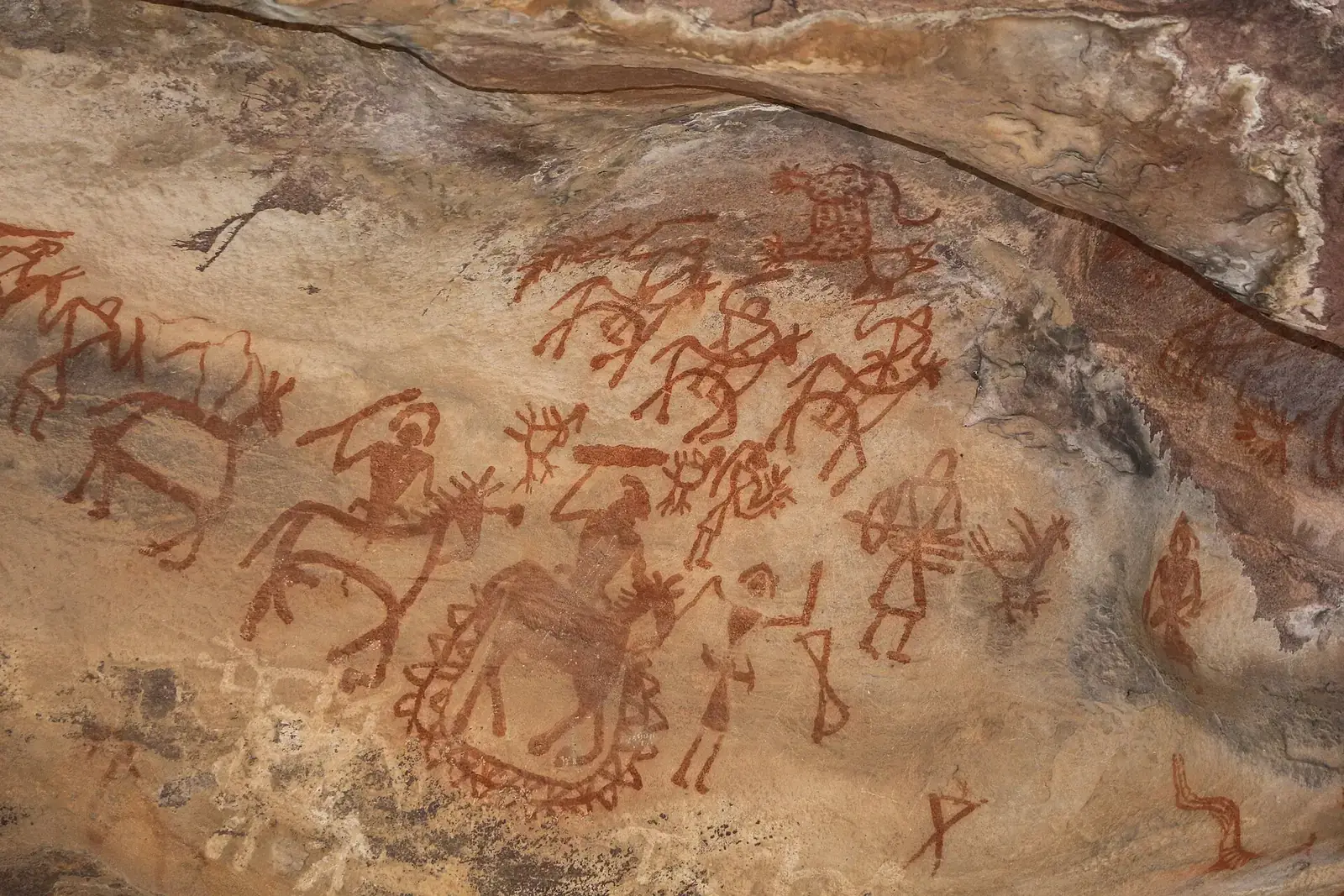
Hundreds of rock shelters in the Vindhya hills south of Bhopal, with paintings of animals, hunting and dance from many periods. The oldest layers are very old, but exact dates for individual paintings are debated.
- Near
- About 45 km from Bhopal
Harappan cities
Dholavira
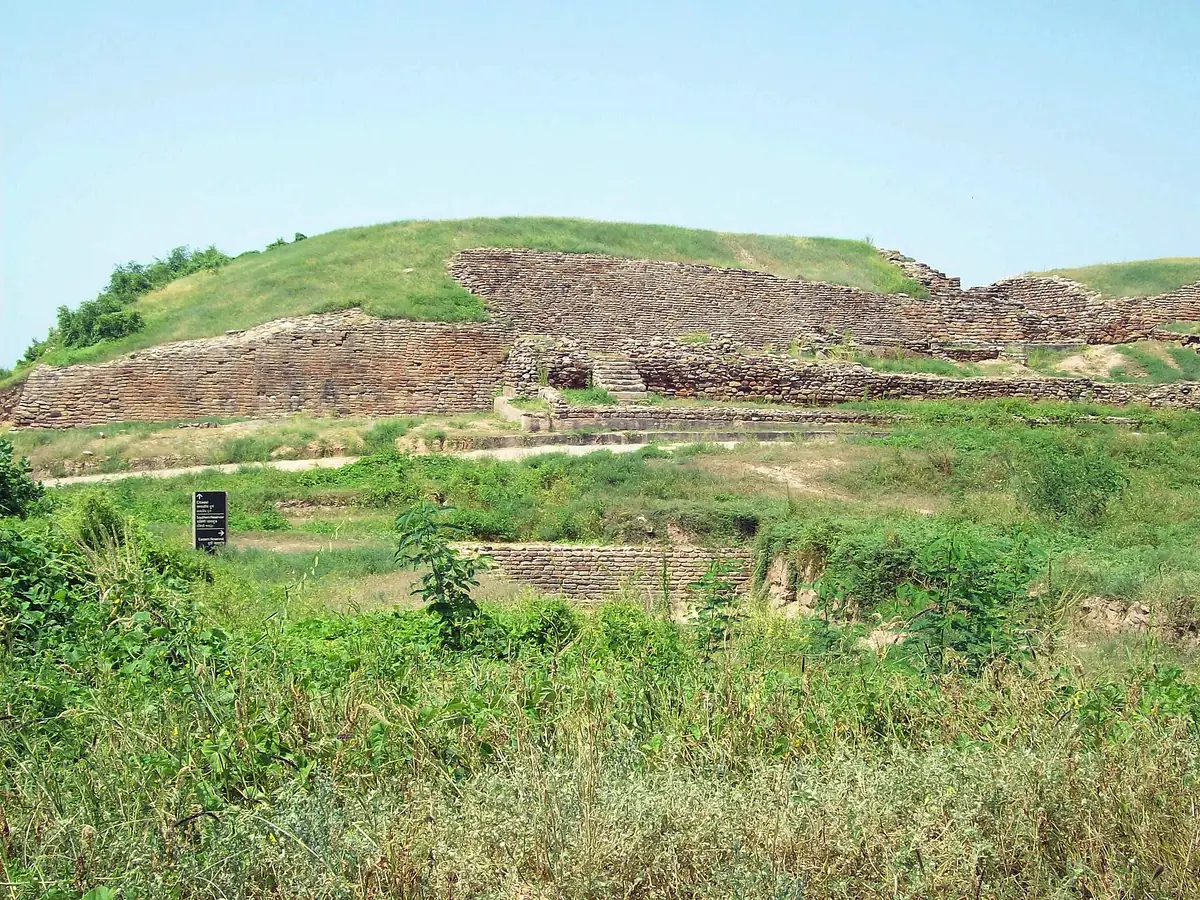
A planned city on Khadir island in the Rann of Kutch, with a citadel, water reservoirs cut into rock, and a large inscription made of Harappan signs. A UNESCO site since 2021.
Lothal
A smaller Harappan town near the Gulf of Khambhat. Its large basin is widely read as a dockyard, though some scholars have argued for other uses.
Rakhigarhi and Kalibangan
Rakhigarhi in Haryana is one of the largest Harappan sites known; excavation is continuing and visitor facilities are limited. Kalibangan in northern Rajasthan is known for an early ploughed field.
Buddhist sites
Sanchi
Stupas begun under Ashoka in the 3rd century BCE and enlarged later, with carved gateways (toranas) telling Jataka stories.
Nalanda and Vikramshila
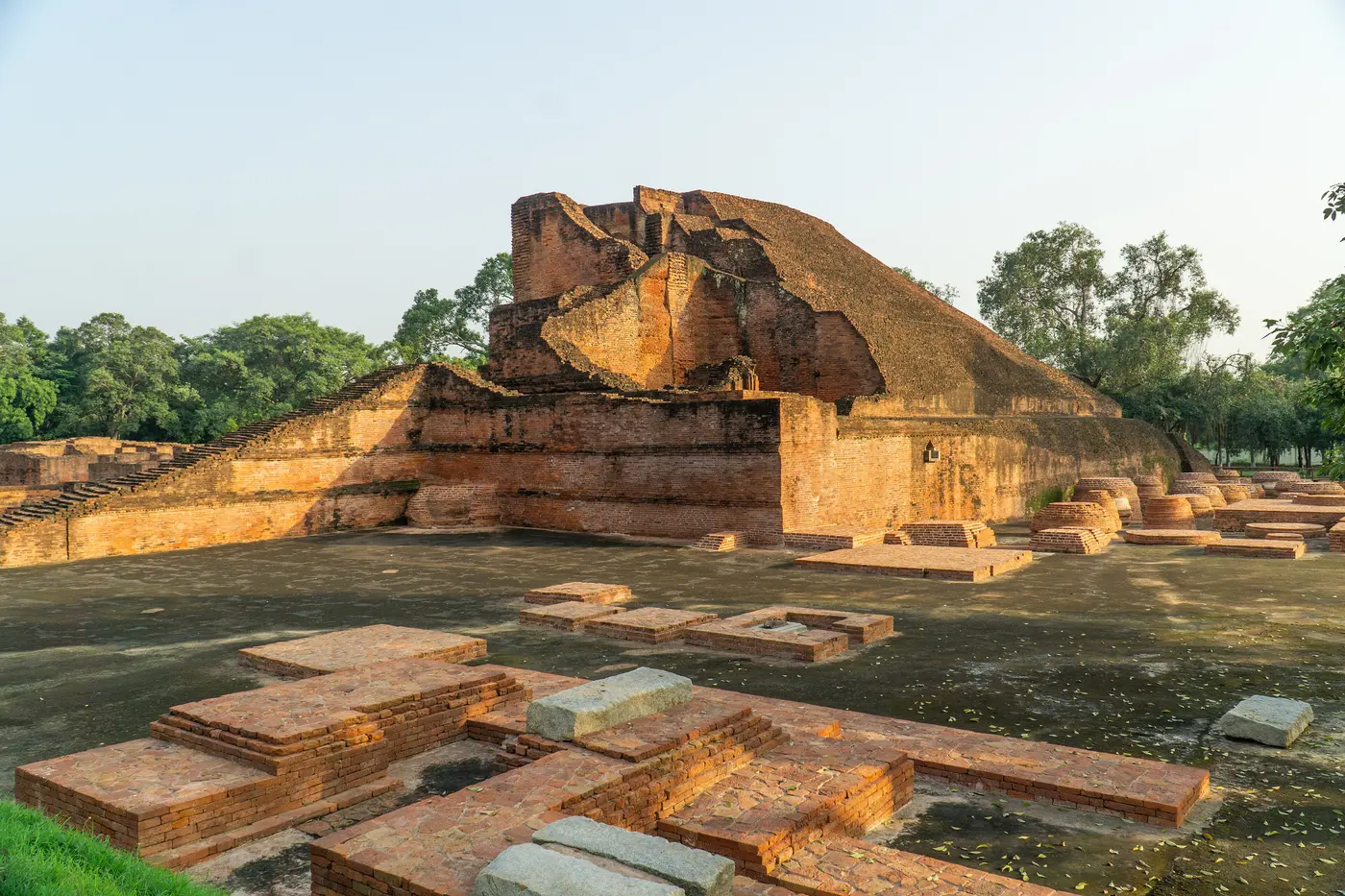
Nalanda was a great monastic centre of learning from about the 5th century CE; its excavated ruins cover a large area. Vikramshila, near Bhagalpur, is less visited.
Odisha's Diamond Triangle
Ratnagiri, Lalitgiri and Udayagiri, a cluster of Buddhist monasteries and stupas near Jajpur, with a museum at Ratnagiri.
New and ongoing excavations
Keeladi, near Madurai, has produced evidence of a Sangam-era urban settlement, including brick structures and pottery with Tamil-Brahmi inscriptions; a site museum opened in 2023. Dates and interpretations from ongoing excavations are published gradually and sometimes revised, so treat newspaper claims about the "oldest" finds with caution until the reports are out.
Tips for visiting
- Visit the site museum first, then the ruins.
- Hire a guide at larger sites such as Nalanda, Sanchi and Hampi.
- Carry water and a hat; there is little shade on most sites.
- Stay on marked paths and never pick up pottery or objects; it is illegal and destroys context.
Where to see the finds
Many of the best objects from these sites are in museums rather than on site. The National Museum in New Delhi has the largest Harappan collection in India, the Indian Museum in Kolkata holds major Buddhist sculpture, and the ASI site museums at Sanchi, Nalanda, Sarnath and Lothal display local finds in context.
Safety
- Timings, weekly closures and tickets are set by the ASI or state departments and change; check official sources before you go.
- Do not touch paintings or carvings, and follow rules on flash photography and drones.
- Sites in Kutch and the plains get very hot from March; visit early.
What to pack
- Hat and water
- Walking shoes
- Binoculars for rock paintings
- Photo ID
Want to explore India's heritage on a route built around you?
FAQs
What are the most important archaeological sites in India?
Bhimbetka, Dholavira, Lothal, Rakhigarhi, Sanchi, Nalanda, Sarnath and Hampi are among the most important for visitors.
Where can I see a Harappan city in India?
Dholavira in Kutch is the best presented; Lothal near Ahmedabad has a good museum.
Is Lothal a UNESCO site?
It is on India's Tentative List, not the World Heritage List.
How old are the Bhimbetka paintings?
They span many periods; the oldest are very old, but precise dates for individual paintings are still debated.
What is Keeladi?
An excavation near Madurai showing a Sangam-era urban settlement, with a site museum.