Why Sanchi?
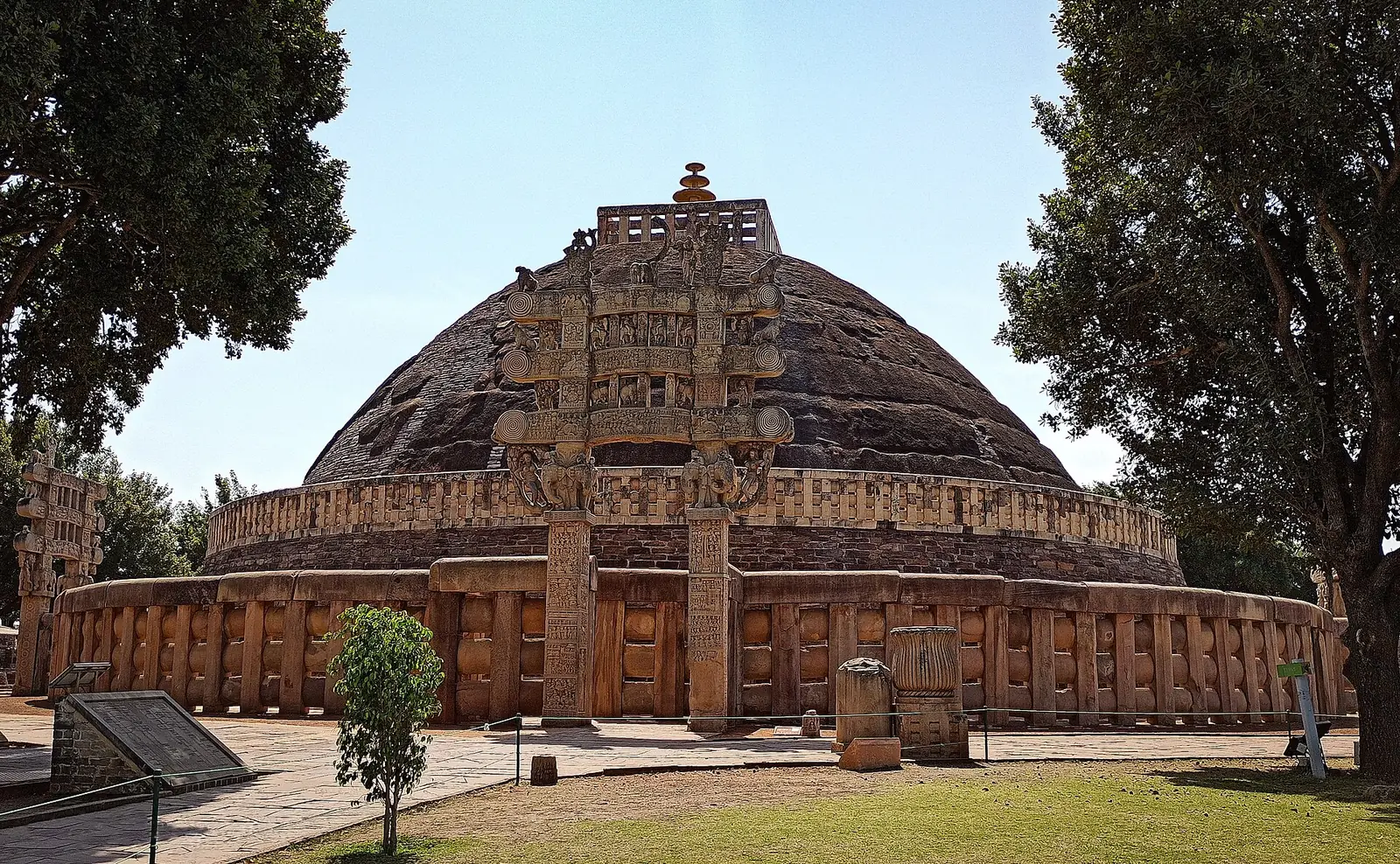
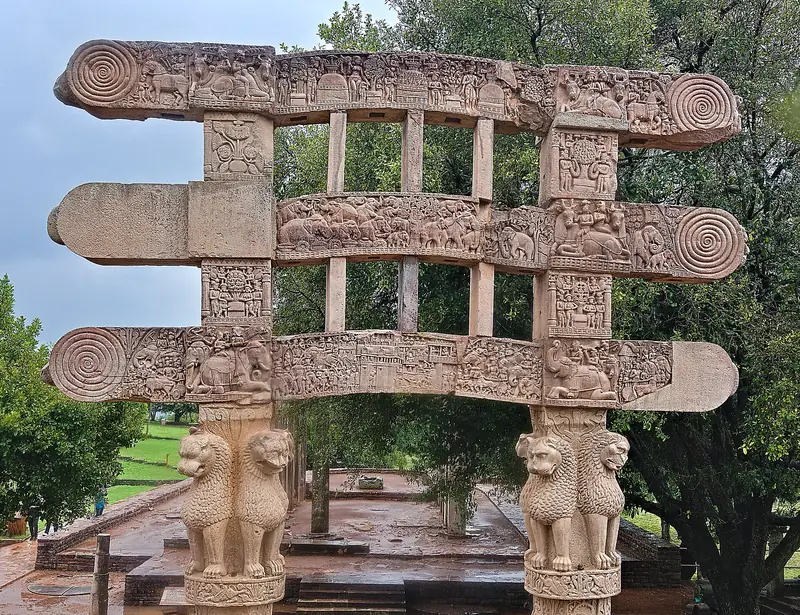
On a low hill roughly 45 km from Bhopal stands one of the most historically significant Buddhist monument complexes anywhere — commissioned by Emperor Ashoka in the 3rd century BCE, the core of the Great Stupa (Stupa No. 1) is widely cited as one of the oldest surviving stone structures in India. What Ashoka built as a simple hemispherical brick mound was later expanded over centuries, most famously with four elaborately carved stone gateways, or toranas, depicting scenes from the Buddha's life and the Jataka tales.
A distinctive feature of Sanchi's earliest carving is what it doesn't show: following an early Buddhist artistic convention, the Buddha himself is never directly depicted in human form, represented instead through symbols — the dharma wheel, the lotus, the Bodhi tree, footprints. It makes Sanchi a genuinely valuable site for tracing how Buddhist art evolved over the centuries that followed.
A UNESCO World Heritage Site, Sanchi is quieter and more contemplative than better-known sites like Khajuraho or Bhimbetka, despite comparable historical weight — reachable easily as a half-day or day trip from Bhopal.
☸️ Sanchi at a Glance
Want a day-by-day plan? Follow our Madhya Pradesh heritage itinerary.
Interested in the history? See our guide to archaeological sites in India.
Planning a pilgrimage? See our guide to Buddhist sites in India.
Best Time to Visit Sanchi
Cool, comfortable weather for walking the open hilltop stupa complex without midday heat cutting the visit short.
Temperatures climb sharply by late morning on the exposed hill — aim to arrive at opening time if visiting in this window.
The surrounding countryside turns green and light for photography can be dramatic, but intermittent rain and humidity make an unhurried visit less comfortable.
Our pick: November to February — the most comfortable window for an unhurried morning at the stupa complex, ideally combined with Bhimbetka in the afternoon.
How to Reach Sanchi
- By Air: Bhopal (BHO) is the nearest airport, roughly 55 km away — about a 1 to 1.5-hour drive to Sanchi.
- By Train: Sanchi has its own small railway station on the Bhopal–Vidisha line, though most travellers still arrive by road from Bhopal.
- By Road: The Bhopal–Sanchi drive is the most common route, and easily combined with Bhimbetka on the same day.
The Monuments at Sanchi
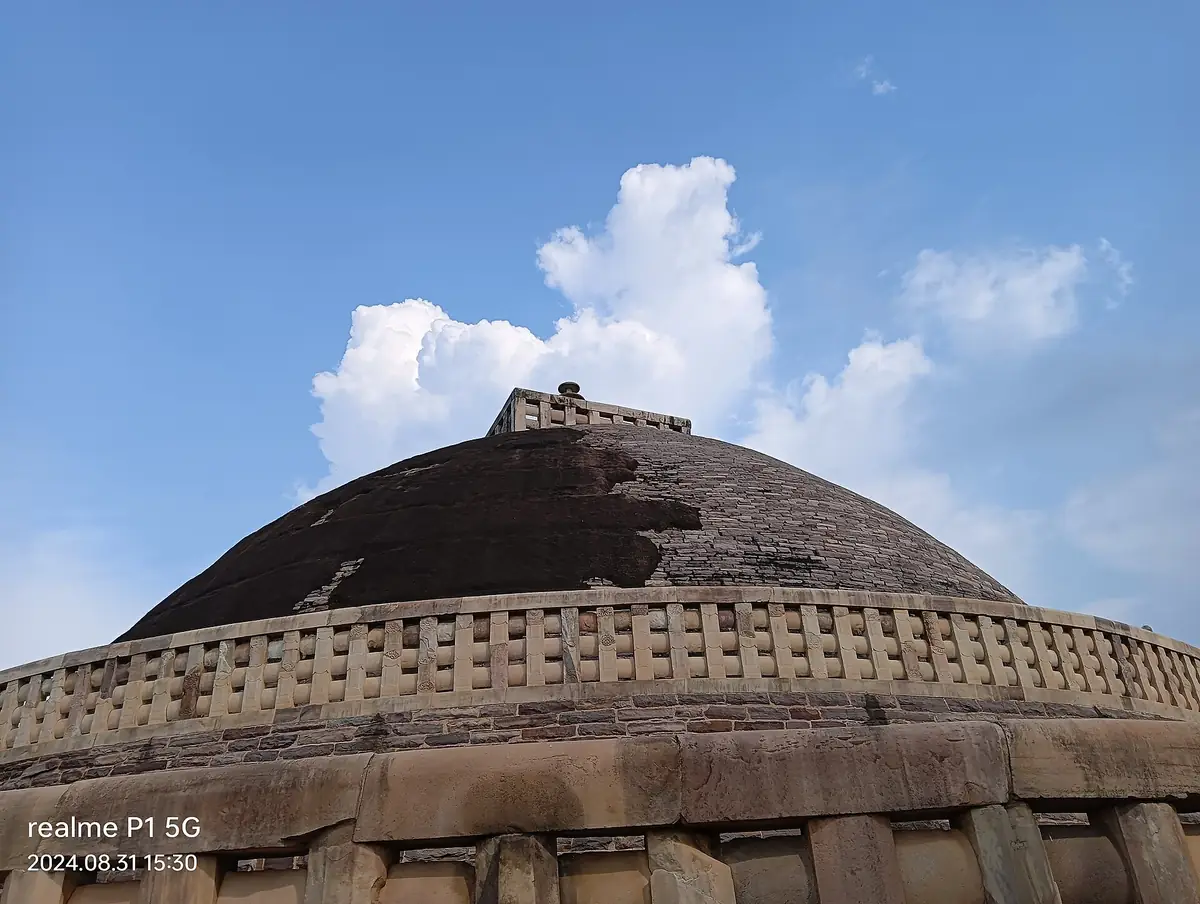
- Great Stupa (Stupa No. 1): The centerpiece — a hemispherical brick-and-stone mound commissioned by Ashoka, later expanded with four intricately carved gateways (toranas) depicting the Buddha's life and Jataka tale narratives.
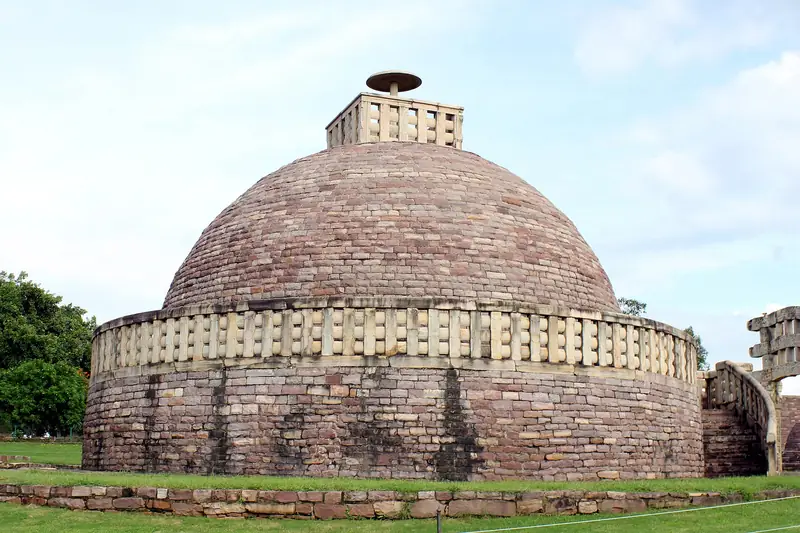
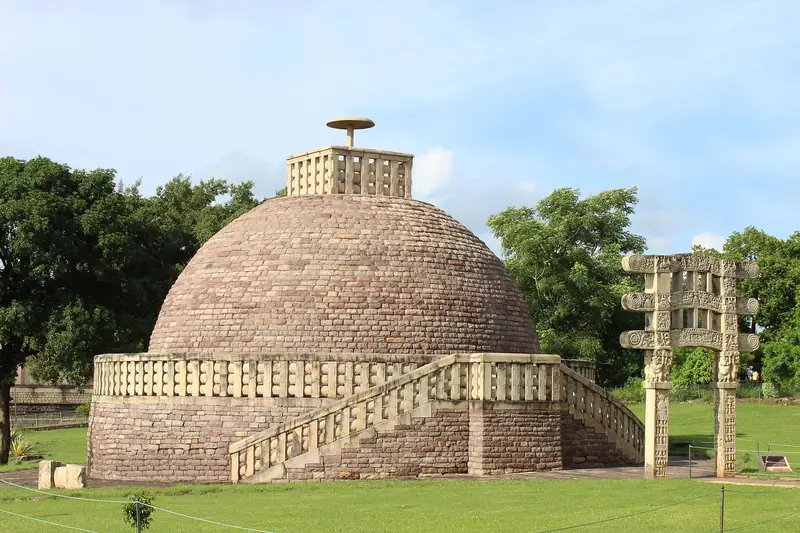
- Stupa No. 2 & No. 3: Smaller stupas nearby — Stupa No. 3 is said to hold relics of two of the Buddha's chief disciples, Sariputra and Maudgalyayana.
- Ashoka Pillar: One of the famous Ashokan pillars, now partially broken at the site, with its well-preserved lion capital displayed in the Sanchi Archaeological Museum nearby.
- Sanchi Archaeological Museum: A small site museum holding sculpture, inscriptions, and the Ashoka Pillar's lion capital — worth a stop before or after the stupa complex.
Day-Trip Itinerary
Sanchi is easily done as a half-day, and pairs naturally with Bhimbetka as a single loop from Bhopal.
Sanchi Stupa Complex
- ✓Depart Bhopal early, ~1-1.5 hr drive
- ✓Walk the Great Stupa and its four toranas
- ✓Visit Stupa No. 2 and No. 3
- ✓Stop at the Sanchi Archaeological Museum
Onward to Bhimbetka
- ✓Drive to Bhimbetka Rock Shelters
- ✓Walk the developed section of the rock art trail
- ✓Return to Bhopal by evening
Budget Breakdown
| Expense | Budget | Mid-Range |
|---|---|---|
| Car/taxi hire (full day, Bhopal round trip) | ₹1,800 | ₹3,000 |
| Entry fees (Sanchi + Bhimbetka) | ₹700 | ₹700 |
| Food | ₹400 | ₹900 |
| Total for the day | ₹2,900 | ₹4,600 |
* Figures are per group/car, not per person, and assume a Bhopal-based day trip. Entry fees are approximate — confirm current ASI rates locally before you go.
Essential Travel Tips for Sanchi
- Combine with Bhimbetka: Both sites are short visits and sit on roughly the same side of Bhopal — doing them together saves a repeat trip.
- Hire a guide at the site: The torana carvings depict specific Jataka tale narratives that are much richer with context.
- Visit the museum: The Ashoka Pillar's lion capital and other sculpture at the Sanchi Archaeological Museum add useful context before or after the stupa walk.
- Go early or late in the day: Best light for photography and the least amount of open-hilltop heat.
- Carry water: There's limited shade and few refreshment points at the stupa grounds.
✅ Do
- →Combine Sanchi with Bhimbetka in one day
- →Hire a guide for context on the torana carvings
- →Visit the Archaeological Museum
- →Go early morning or late afternoon for good light
- →Carry your own water
❌ Don't
- →Skip the smaller Stupa No. 2 and No. 3
- →Visit at midday in peak summer heat
- →Expect much shade on the open hilltop
- →Rush the torana carvings without a guide's context
- →Plan a full overnight stay — it's usually a day trip
Frequently Asked Questions
How much time do I need at Sanchi?
Half a day is enough to see the Great Stupa complex, the smaller stupas, the Ashoka Pillar remains, and the site museum at an unhurried pace. Most visitors combine it with Bhimbetka as a single-day trip from Bhopal.
Is the Sanchi Stupa really the oldest stone structure in India?
The core of the Great Stupa, commissioned by Emperor Ashoka in the 3rd century BCE, is widely cited as one of the oldest surviving stone structures in India. It was later expanded — including the famous carved gateways — over subsequent centuries.
How do I reach Sanchi from Bhopal?
Sanchi is about 45–55 km from Bhopal, roughly a 1 to 1.5-hour drive by road. Sanchi also has its own small railway station, though most travellers do it as a day trip by car or taxi from Bhopal.
What is the best time to visit Sanchi?
October to March is best — comfortable temperatures for walking the open stupa complex. Summers (April–June) get hot for an extended outdoor visit.
Why doesn't the carving at Sanchi show the Buddha directly?
Sanchi's earliest carvings follow an early Buddhist artistic convention of representing the Buddha through symbols — the wheel (dharma), the lotus, footprints, and the Bodhi tree — rather than a human figure. This makes Sanchi valuable for tracing how Buddhist iconography evolved over time.
Can Sanchi and Bhimbetka be combined in one day?
Yes, and it's the most common way to visit both — they're roughly on the same side of Bhopal, and each only needs a few hours, making a single-day loop from Bhopal practical.
What is the budget for a trip to Sanchi?
As a day trip from Bhopal, expect to spend roughly ₹800–₹1,500 for a full day covering car hire, entry fees, and food — there's no need for an overnight stay unless you're combining it with a wider Madhya Pradesh itinerary.
Published by the Kudozz Club editorial team · Last updated · How we research our guides
Want us to plan this trip for you?
Tell Kudozz Club where you want to go and what kind of trip you’re looking for. We’ll build a Sanchi Stupa and Madhya Pradesh itinerary around your dates and budget.
Continue Exploring
View all guides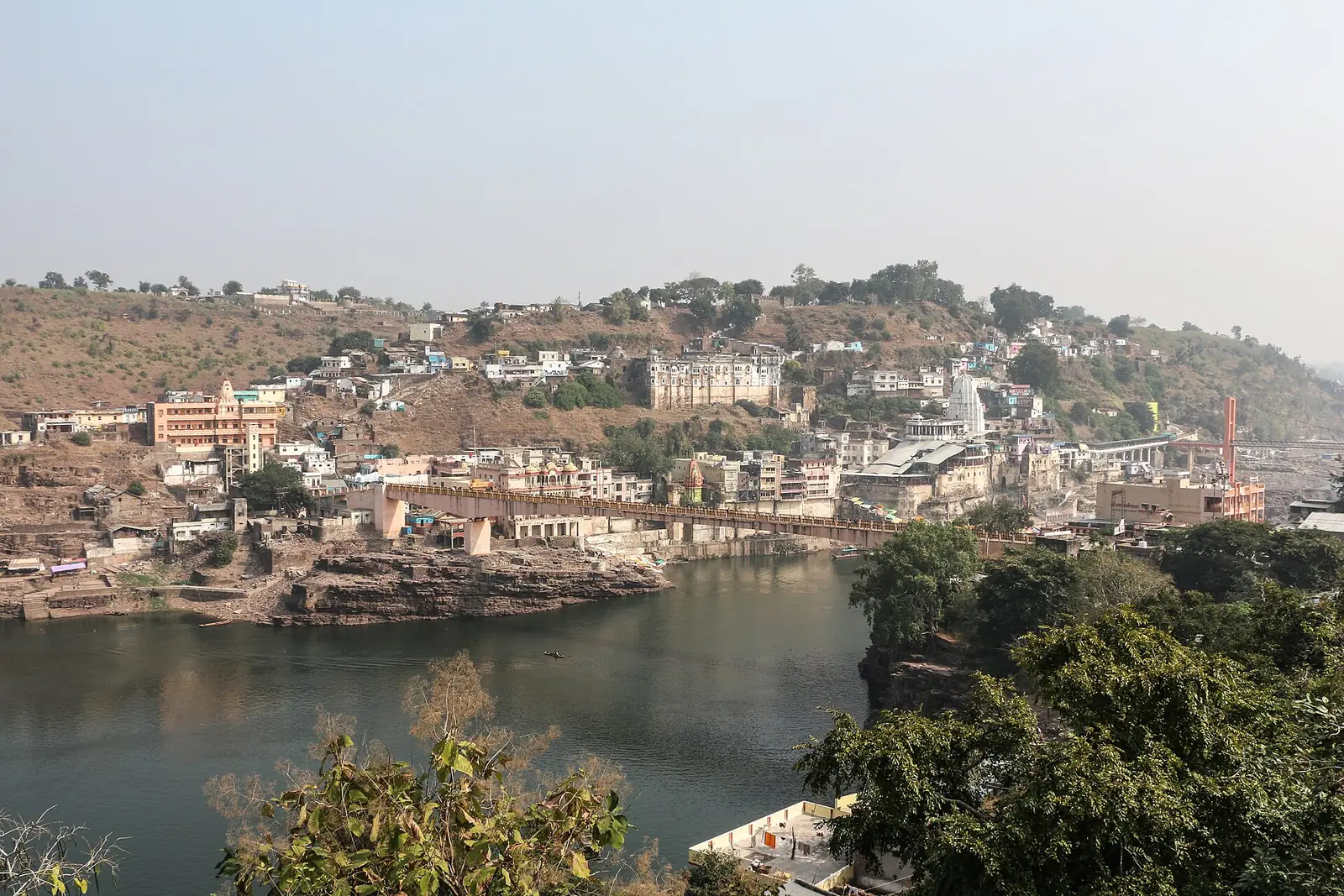 Heritage
Omkareshwar Travel Guide: Jyotirlinga Island Temple & Narmada Ghats
A Shiva temple on an island shaped like the sacred Om symbol, ringed by the Narmada River — the complete guide to Omkareshwar.
 Heritage
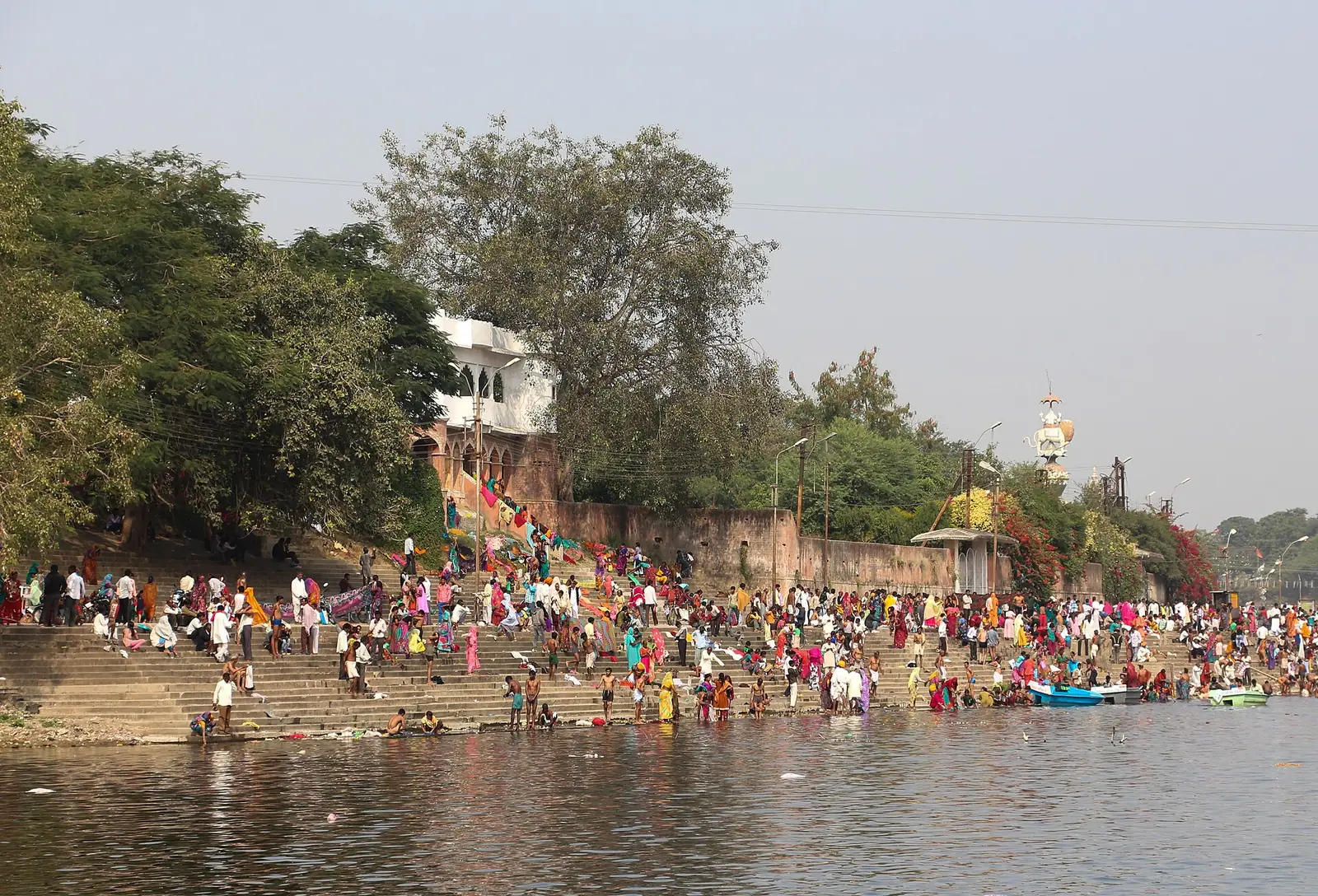
Ujjain Travel Guide: Mahakaleshwar Temple, Simhastha & Kumbh
One of Hinduism's seven sacred cities and home to a Jyotirlinga where the daily Bhasma Aarti draws pilgrims before dawn — the complete guide to Ujjain.
 Heritage
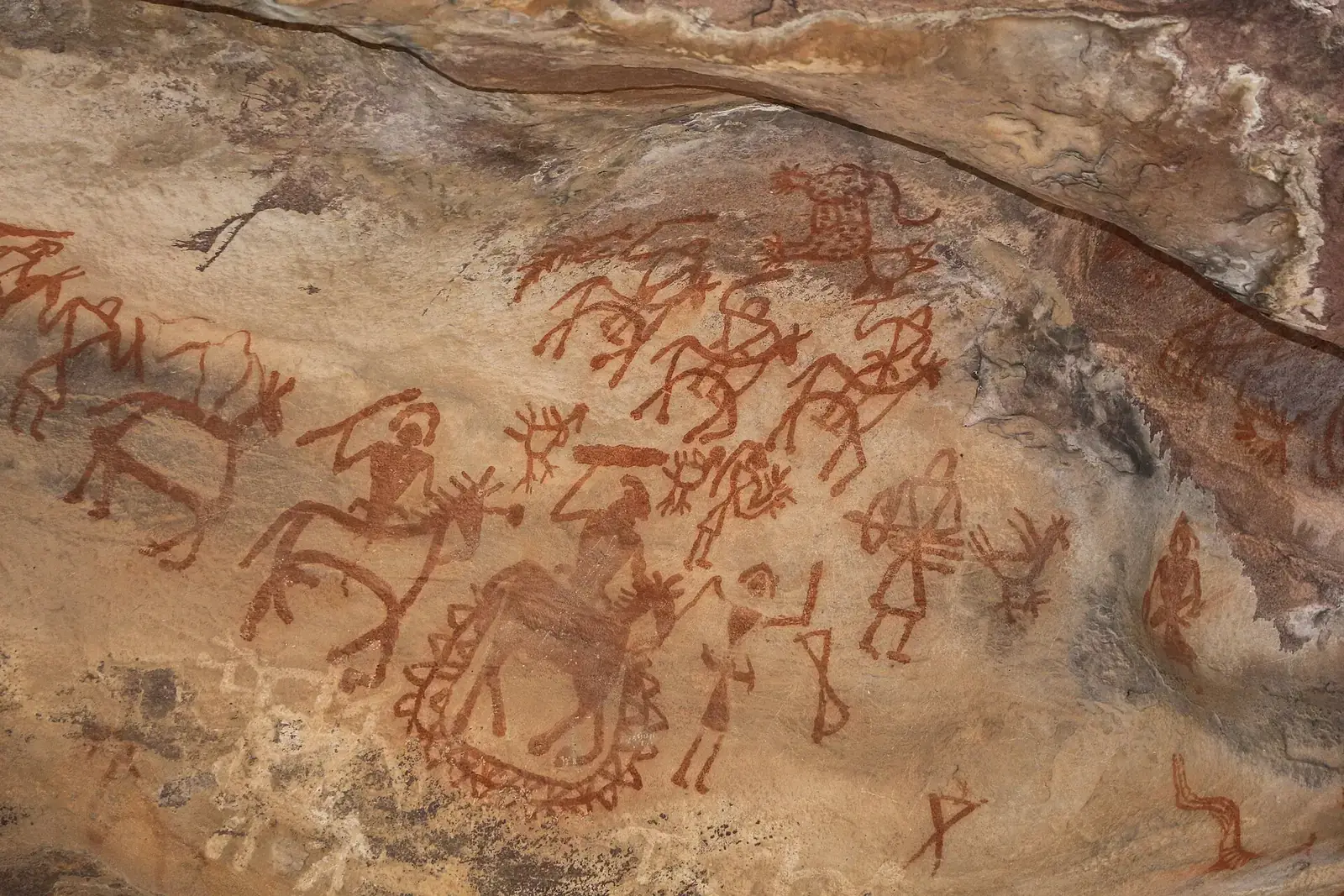
Bhimbetka Rock Shelters: Prehistoric Cave Art Travel Guide
Painted rock shelters up to 30,000 years old, tucked into sandstone outcrops on the edge of the Vindhya hills — the complete guide to Bhimbetka.
 Heritage
Sirpur Travel Guide: Ancient Buddhist Ruins on the Mahanadi
A 1,500-year-old riverside city with excavated monasteries, temples, and one of India's most significant ongoing archaeological digs — the complete guide to Sirpur.