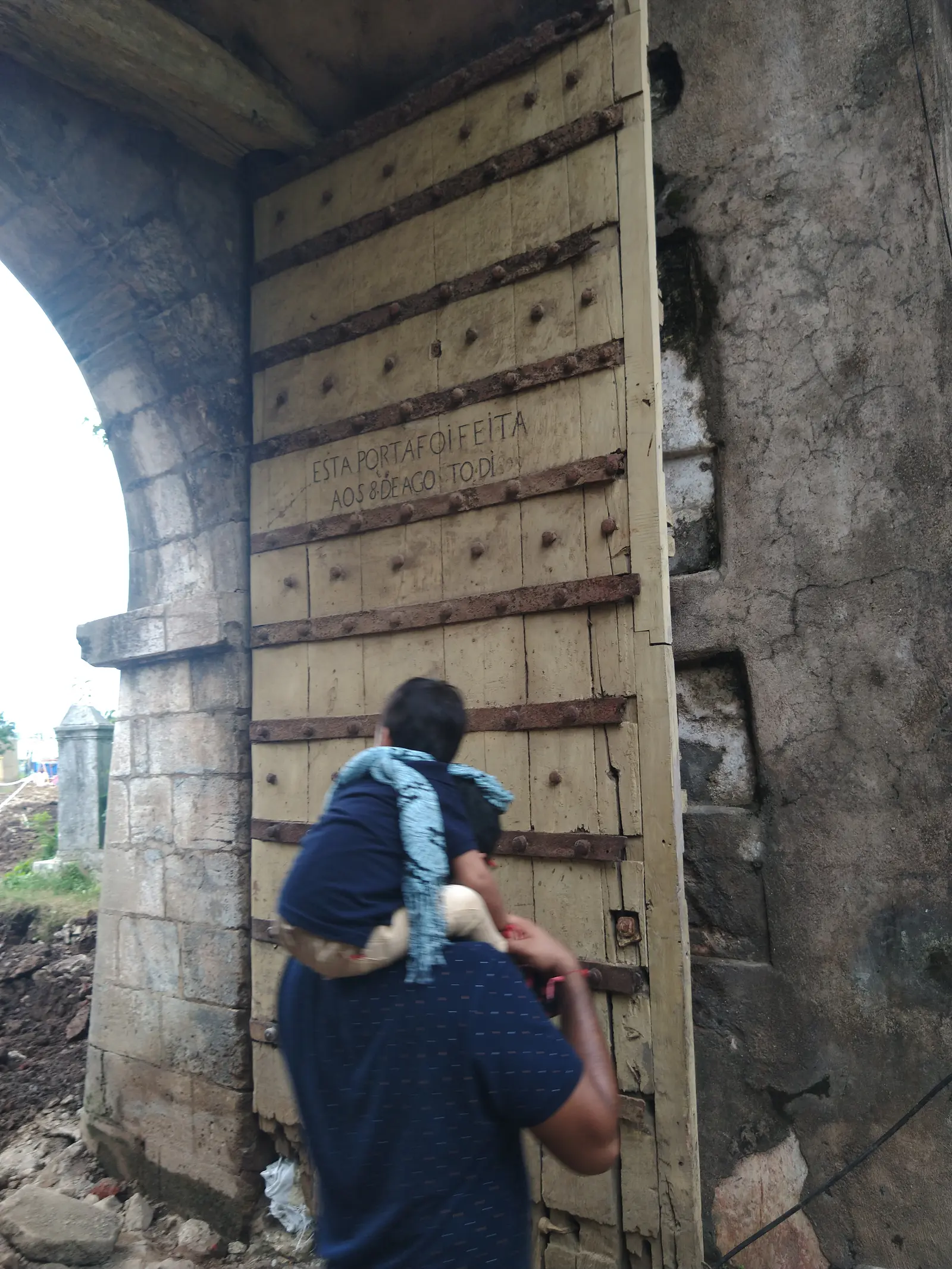
Moti Daman Fort: An Overview
Moti Daman Fort is the single largest piece of Portuguese military architecture on Daman's coastline, and one of the largest and best-preserved Portuguese forts anywhere on India's west coast. The Portuguese began building it in 1559, the year Daman was formally handed to them, and completed it in 1581. It covers about 30,000 square metres. It is often confused with the smaller Fort of St. Jerome in Nani Daman, across the river, which was built later (1615–1627).
What sets Moti Daman Fort apart from most Indian forts is scale of a different kind. It isn't a citadel perched above a town — it is the town, or at least the old core of it. The fort's massive bastioned walls enclose the entire Moti Daman quarter on the southern bank of the Daman Ganga river: lanes, houses, a church, government buildings, and open ground, all sitting inside the same perimeter that Portuguese military engineers laid out more than four centuries ago. This guide is a focused deep-dive on the fort itself — its walls, bastions, church, and the buildings within them — rather than a tour of the wider neighbourhood; for that broader picture of Moti Daman as a quarter, see our Moti Daman neighbourhood guide.
Moti Daman Fort sits within the larger story of Daman, one half of the Union Territory covered in our Dadra & Nagar Haveli and Daman & Diu travel guide, and it stands directly across the river from the smaller, older Nani Daman quarter, giving the two banks a distinctly different character — one built around a fortress, the other around a fishing harbour.
🏰 Moti Daman Fort at a Glance
Interested in the history? See our guide to colonial-era heritage in India.
Best Time to Visit Moti Daman Fort
Since most of a fort visit happens outdoors — walking ramparts, standing beside cannon emplacements, taking in sea views — the season you go in changes the experience more than any opening hours ever will.
Cool, dry mornings and evenings make walking the exposed ramparts genuinely pleasant. This is when the fort's stonework photographs best too, with clear light and low humidity.
Temperatures climb quickly and the laterite walls hold heat by midday. Visit at opening time or closer to sunset, and carry water — there's little shade along the bastions.
Rain gives the old stone walls a moody, weathered look, but rampart surfaces and steps get slick. Fine for a shorter, more cautious visit; less ideal for a long, unhurried walk.
The sea-facing bastions catch the evening light directly over the Daman Ganga estuary — arguably the single best hour to be inside the fort walls, any time of year.
Our pick: A November-to-February afternoon, timed so you're on the sea-facing ramparts as the light softens toward sunset. Cool weather, clear air, and the estuary at its most photogenic.
How to Reach the Fort (Within Daman Town)
Moti Daman Fort isn't a standalone monument out of town — it sits right within Daman's built-up area, on the southern bank of the Daman Ganga, which makes reaching it straightforward once you're anywhere in the town.
- From Nani Daman: The fort is directly across the Daman Ganga river from Nani Daman, connected by a bridge — a short auto-rickshaw ride or a walkable crossing depending on where you're starting from.
- By auto-rickshaw or taxi: The easiest way to reach the fort's gates from anywhere in Daman; drivers know it well since it also houses government offices that see daily local traffic.
- On foot: If you're already staying in or near Moti Daman, the fort's gates and ramparts are walkable — this is genuinely the best way to explore once you're inside, since the internal lanes are narrow and not really built for vehicles.
- From Vapi railway station: Daman's nearest railhead is Vapi, roughly 12 km away, from where taxis and autos run into town and on to the fort area.
The Ramparts and Ten Bastions
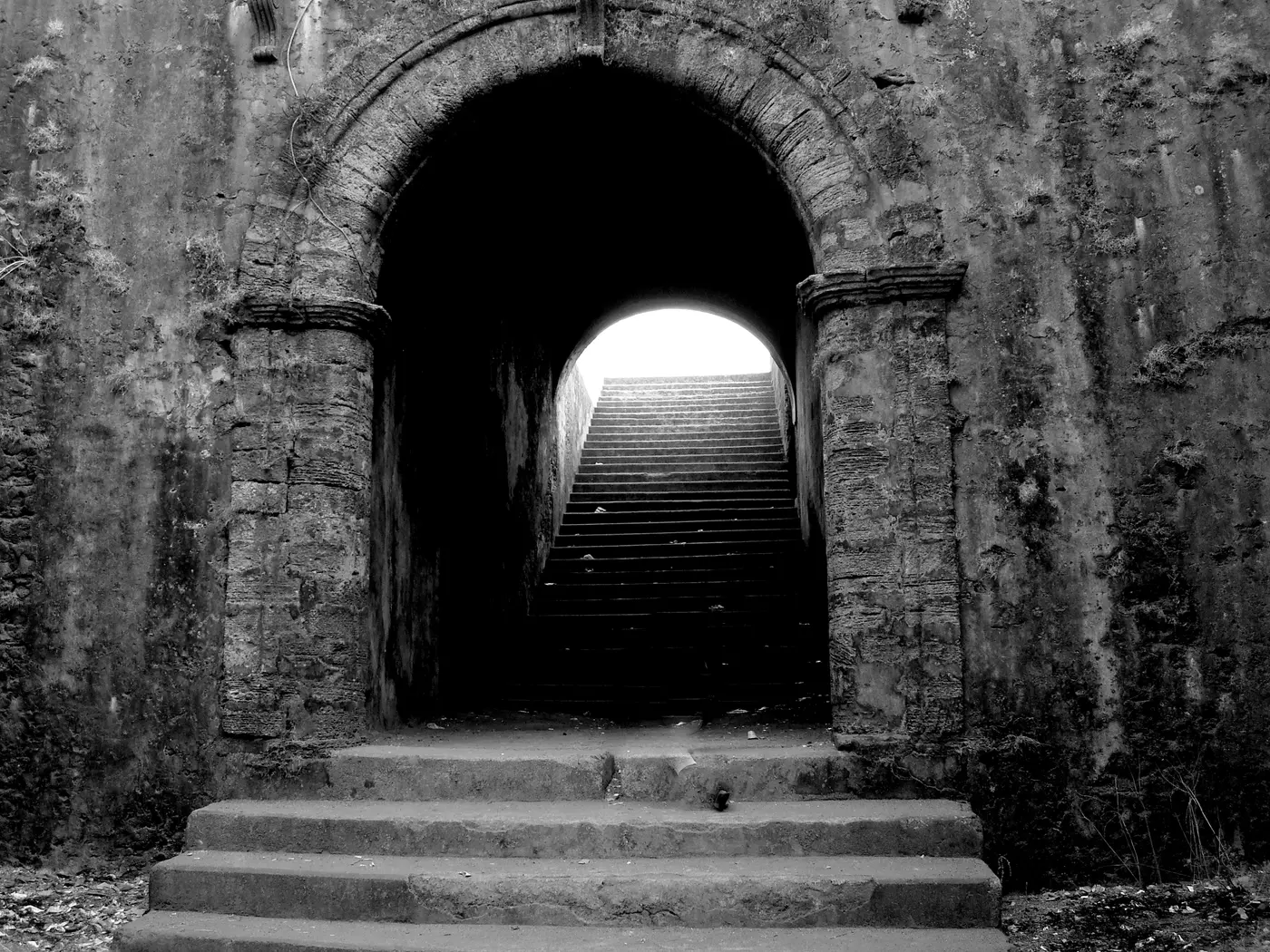
The fort's defining feature is its sheer scale of fortification. A continuous run of thick laterite and stone walls, punctuated by ten bastions, rings the entire Moti Daman quarter — not a partial wall or a single defensive face, but a complete enclosure. Each bastion was positioned to cover the approaches to the walls between it and its neighbours, a standard piece of 16th-century military engineering that, at this scale, still reads clearly today.
Walking a stretch of rampart, the walls are noticeably thick — built to absorb cannon fire, not just deter scaling — and several of the bastions still hold their original cannons, iron and bronze pieces left more or less where they were mounted centuries ago. They're not roped-off museum pieces; you can walk right up to most of them, run a hand along the barrel, and get a real sense of the angle and range they once covered.
Not every bastion is equally accessible or equally intact — some stretches of wall are better maintained than others, and a few sections abut buildings or government land that limit how close you can get. But enough of the perimeter is walkable that you can trace a genuine sense of the fort's full outline, especially along the sections nearest the river and the sea.
What's striking isn't any single bastion — it's the realisation, walking the walls, that this fortification was built to enclose an entire functioning town, not just protect a garrison. Few Portuguese forts on India's west coast operate at this scale.
Bom Jesus Church Inside the Fort Walls
Tucked inside the fort's perimeter is Bom Jesus Church, one of the genuine highlights of a visit and, on its own merits, worth a dedicated stop rather than a passing glance. Built in the early 17th century as the fort's principal church, it's one of the oldest churches in the wider Daman and Diu region.
The church's biggest draw is its interior — a gilded, ornately carved baroque altar that stands in real contrast to the plain, defensive stone outside the walls. Where the fort's exterior is all function — thick walls, cannon emplacements, sightlines — the church interior is pure ornament: gold leaf, carved woodwork, and the kind of altar craftsmanship that Portuguese colonial churches on India's west coast are genuinely known for.
Bom Jesus Church remains an active place of worship, not a roped-off historical exhibit, so time your visit with that in mind — quiet hours outside of services are best for taking in the altar and interior without disrupting anyone at prayer.
The Collectorate & Old Administrative Buildings
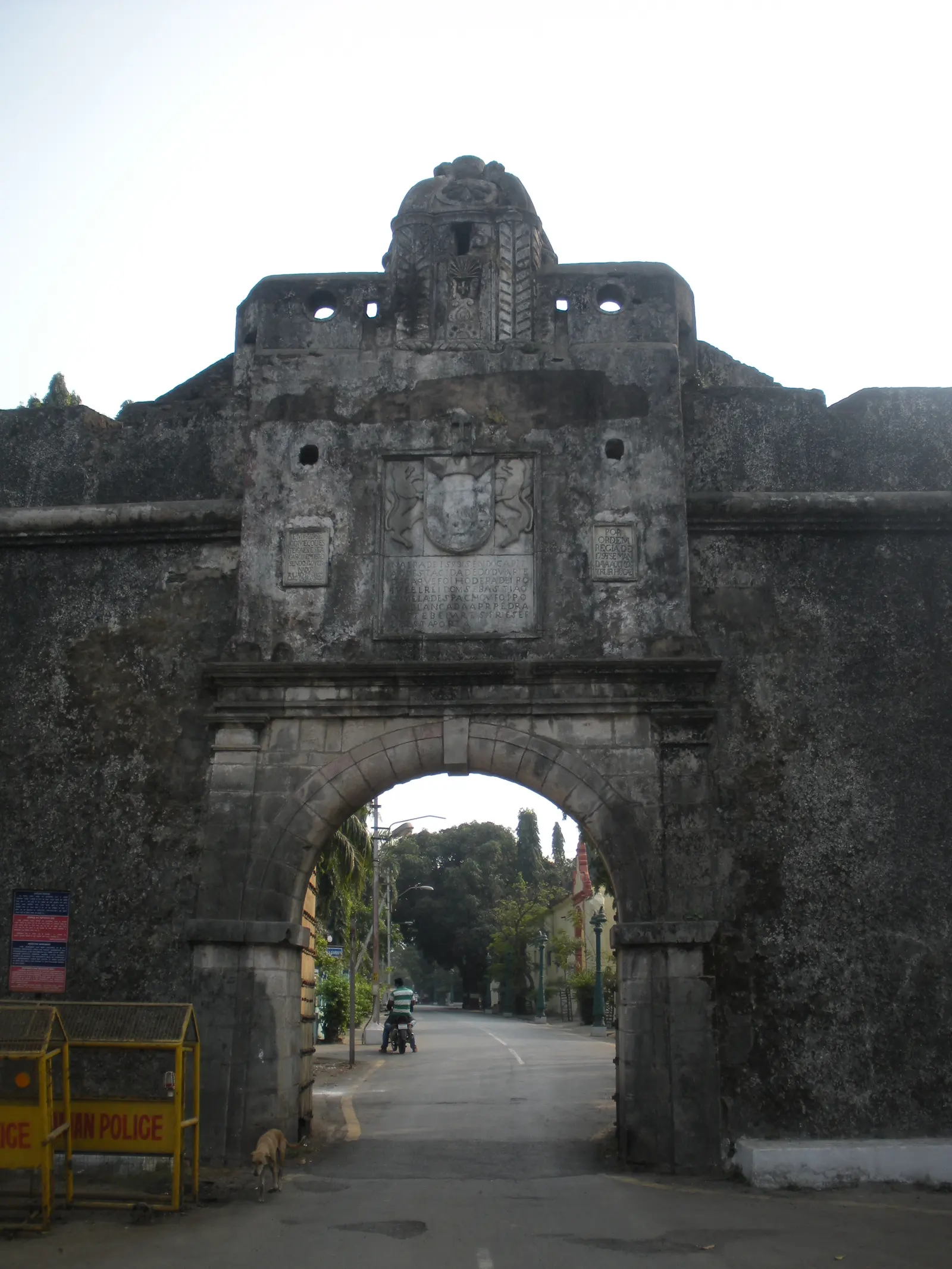
Beyond the church, a walk through Moti Daman Fort passes a cluster of old Portuguese-era administrative buildings — the offices from which the colonial government once ran Daman's affairs. Many of these structures are still standing and still in use, which is part of what makes the fort feel inhabited rather than preserved.
Today, part of the fort complex houses the district collectorate — Daman's modern seat of local government — occupying buildings that sit inside the very walls the Portuguese built centuries earlier. It's an unusual continuity: the fort has never really stopped being an administrative centre, just under different flags. Seeing government staff going about routine business inside a 400-year-old fortification is one of the small, genuinely interesting details of visiting Moti Daman Fort rather than a fort that's been frozen as a pure monument.
Because these buildings are active government offices, treat them as you would any working institution — they aren't open for casual sightseeing inside, though the exteriors and the lanes around them are very much part of the fort's walkable character.
Sea-Facing Bastions & the Daman Ganga Estuary
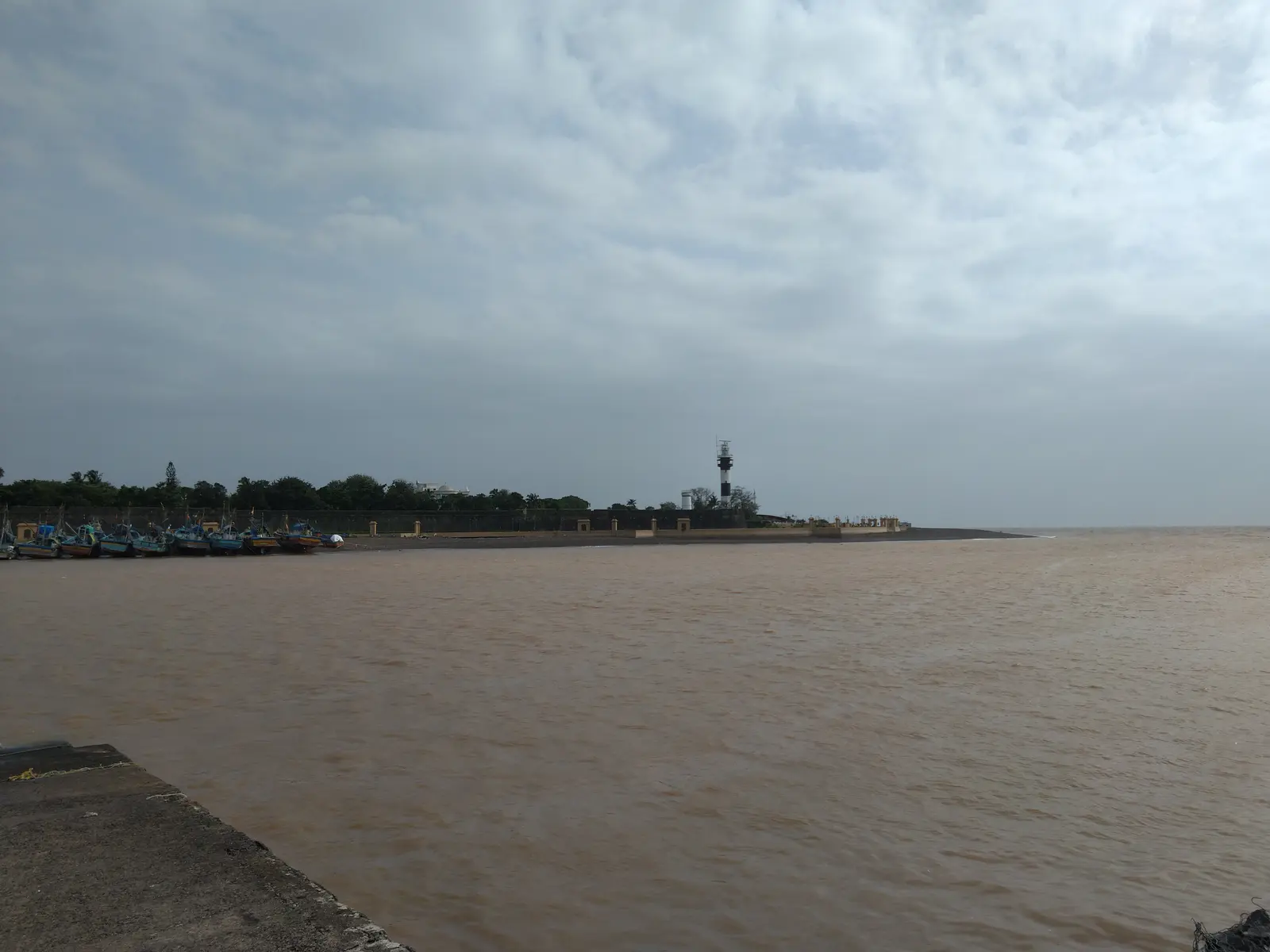
The bastions on the fort's western and northern faces look directly out over the mouth of the Daman Ganga estuary, where the river meets the Arabian Sea. This stretch of the fort also includes a lighthouse, a later addition to the original fortification but one that fits naturally into the fort's long history of watching the water — first for enemy ships, later simply to guide them safely in.
Standing on these ramparts, the view takes in fishing boats moving in and out of the estuary, the opposite bank where Nani Daman's harbour sits, and open sea beyond. It's the most scenic single vantage point in the fort, and the one place where the fort's original military purpose — controlling the river mouth and coastline — is still completely legible in the landscape.
Every Portuguese fort on this coast was built to watch the water. At Moti Daman Fort, that logic is still visible: stand at the sea-facing bastions and you're looking at exactly what the fort's builders were guarding.
Photography Tips
- Shoot the ramparts in soft light: Early morning or the hour before sunset brings out the texture of the laterite and stone walls far better than harsh midday sun.
- Frame the cannons at low angles: Kneeling to shoot along a cannon's barrel toward the sea gives a real sense of the sightline it once covered.
- Save the sea-facing bastions for sunset: The estuary and the light over open water make this the single best spot in the fort for a golden-hour shot.
- Ask before photographing inside the church: Bom Jesus Church is an active place of worship — check it's an appropriate time before photographing the altar, and avoid flash near anyone at prayer.
- Wide shots from the gates: Standing just inside one of the main gates and shooting back along the wall gives the best sense of the fort's scale, more than any single bastion close-up can.
Entry & Visiting Practicalities
Because Moti Daman Fort is a living quarter of Daman town rather than a fenced archaeological site, visiting it works a little differently than a typical ticketed monument — and it's worth being upfront and honest about that.
- Access: Walking through the fort's gates and along most of its lanes and ramparts is generally free and open, in keeping with its status as an inhabited town quarter rather than a cordoned heritage site.
- Hours: There's no single formal "opening time" for the fort area as a whole since it's a lived-in quarter — daylight hours are the practical window for exploring comfortably, and Bom Jesus Church has its own hours worth checking locally.
- Restricted areas: Government office buildings, including sections used by the collectorate, are not open for casual entry — stick to the ramparts, lanes, and church, which make up the bulk of what there is to see anyway.
- Footwear: Ramparts and old steps are uneven stone, sometimes worn smooth — comfortable, closed shoes make the walk considerably easier than sandals.
- Best pace: This isn't a site to rush through in ten minutes — the value here is in walking a real stretch of the walls, not just glimpsing a gate from a passing vehicle.
Suggested Visit Plan (1–1.5 Hours)
A focused visit to Moti Daman Fort doesn't need a full day — here's a realistic plan that covers the highlights without feeling rushed.
Enter Through the Main Gate
- ✓Get oriented at the gate — note the wall's thickness up close
- ✓Take a first wide shot of the ramparts from inside
- ✓Head toward the nearest accessible bastion
Walk the Ramparts & Bastions
- ✓Walk a stretch of wall, stopping at 2–3 bastions
- ✓Look for the old cannons still mounted in place
- ✓Take in views over the surrounding lanes and rooftops
Bom Jesus Church
- ✓Step inside to see the gilded baroque altar
- ✓Take a quiet moment in the nave if it's not in use for a service
- ✓Photograph the exterior facade before moving on
Sea-Facing Bastions & Estuary
- ✓Walk to the western/northern ramparts facing the water
- ✓Take in the Daman Ganga estuary and the lighthouse
- ✓End the visit here if timed near sunset
* If you're combining the fort with the rest of Moti Daman's lanes and markets, budget extra time separately — see our Moti Daman neighbourhood guide for that fuller itinerary.
Budget Breakdown
Visiting Moti Daman Fort itself is inexpensive by design — the main costs are getting there and back, plus whatever food or drink you pick up nearby.
| Expense | Budget | Mid-Range | Luxury |
|---|---|---|---|
| Fort entry | Free | Free | Free |
| Auto-rickshaw, one-way to fort | ₹50 | ₹100 | ₹250 (private taxi) |
| Local guide (optional) | Skip | ₹300–₹500 | ₹800+ (private guide) |
| Snacks/drinks nearby | ₹50 | ₹150 | ₹400 (sit-down cafe) |
| Total for the fort visit | ₹100–₹150 | ₹500–₹750 | ₹1,000+ |
* Excludes accommodation and travel to Daman itself — see our Daman travel guide for a full trip budget.
Essential Tips
- Wear closed, comfortable shoes: Uneven stone ramparts and steps aren't sandal-friendly, especially after rain.
- Carry water: There's little shade along the walls, and no guarantee of a vendor nearby once you're deep into a rampart walk.
- Time it for golden hour if you can: The sea-facing bastions are dramatically better in soft, late-afternoon light than at midday.
- Dress modestly for the church: Bom Jesus Church is active place of worship, not a museum — covered shoulders and knees are appropriate.
- Respect the working buildings: The collectorate and other government offices inside the walls aren't tourist attractions — admire the exteriors, don't wander in.
- Confirm access locally: Since the fort isn't a formally ticketed monument, hours and any restricted sections can vary — check with your hotel or a local before planning your visit around a fixed time.
✅ Do
- →Walk a real stretch of the ramparts, not just the gate
- →Step inside Bom Jesus Church for the gilded altar
- →Time the sea-facing bastions for sunset
- →Wear closed shoes for uneven stone surfaces
- →Carry water — shade is limited along the walls
- →Ask before photographing inside the church
❌ Don't
- →Expect a fenced, single-ticket monument experience
- →Wander into the collectorate or other government offices
- →Visit the ramparts at peak midday heat in summer
- →Rush through in under half an hour
- →Use flash photography during a church service
- →Skip modest dress when entering Bom Jesus Church
Frequently Asked Questions
What is the difference between Moti Daman Fort and Diu Fort?
Both are 16th-century Portuguese forts on India's west coast, but they're quite different in character. Diu Fort is a compact, dramatically sited sea fort on a small island, with a lighthouse and cannons pointed straight out at the Arabian Sea. Moti Daman Fort is much larger in footprint — a sprawling bastioned enclosure that contains an entire lived-in town quarter within its walls, including a church, government offices, and residential lanes. Diu Fort feels more like a monument you tour; Moti Daman Fort feels more like a walled town you walk through.
Is there an entry fee for Moti Daman Fort?
There's generally no ticketed entry fee to walk the fort area itself, since it functions as an active quarter of Daman town rather than a fenced monument — you can walk in through the gates and along most of the ramparts freely. Some individual buildings within the complex, such as government offices, are naturally not open to visitors, and access can occasionally be restricted around specific sections for maintenance or security. Always check locally on the day, as arrangements can change.
What is inside Moti Daman Fort?
Inside the fort walls is essentially an old Portuguese town quarter — narrow lanes, colonial-era houses, the Bom Jesus Church with its notable gilded altar, other smaller chapels and shrines, government buildings including the district collectorate, and open ground near the ramparts. It's a working part of Daman, not a preserved-in-amber ruin, which is part of what makes walking through it interesting.
How old is Moti Daman Fort?
Moti Daman Fort dates back to the Portuguese colonial era, with construction beginning in 1559 and completed in 1581. That makes it more than 440 years old, and one of the largest surviving Portuguese-built fortifications anywhere on India's west coast.
Is Moti Daman Fort the same as the Fort of St. Jerome?
No. They are two different forts facing each other across the Daman Ganga. Moti Daman Fort (1559–1581) is the large walled fort on the south bank that encloses the Moti Daman quarter. The Fort of St. Jerome, also called Nani Daman Fort (1615–1627), is the smaller fort on the north bank, with a statue of St. Jerome over its gateway and the Church of Our Lady of the Sea inside.
How much time do you need to visit Moti Daman Fort?
Budget around one to one and a half hours for a focused visit — enough time to walk a stretch of the ramparts, see a couple of the bastions and their old cannons, step inside Bom Jesus Church, and take in the sea-facing views over the Daman Ganga estuary. If you want to wander the internal lanes at a slower pace or spend real time with the church's interior, allow closer to two hours.
Can you visit Bom Jesus Church inside the fort?
Yes, Bom Jesus Church is generally open to visitors and is one of the fort's genuine highlights, best known for its ornate gilded wooden altar and baroque interior. As with any active place of worship, dress modestly, keep voices low if a service or prayer is underway, and check on opening hours locally since these can vary.
Published by the Kudozz Club editorial team · Last updated · How we research our guides
Want us to plan this trip for you?
Tell Kudozz Club where you want to go and what kind of trip you’re looking for. We’ll build a Moti Daman Fort and Dadra and Nagar Haveli and Daman and Diu itinerary around your dates and budget.
Continue Exploring
View all guides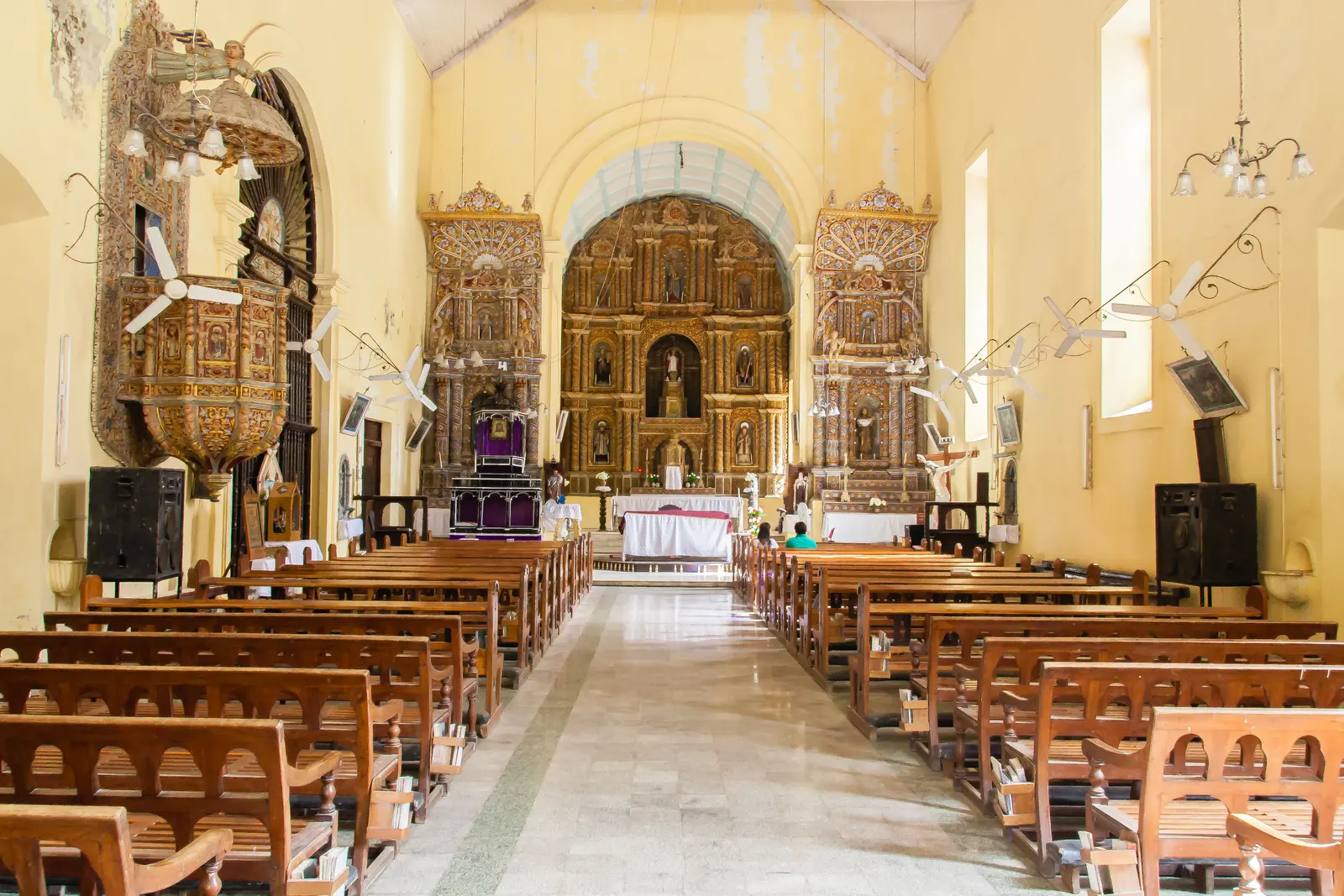 Heritage
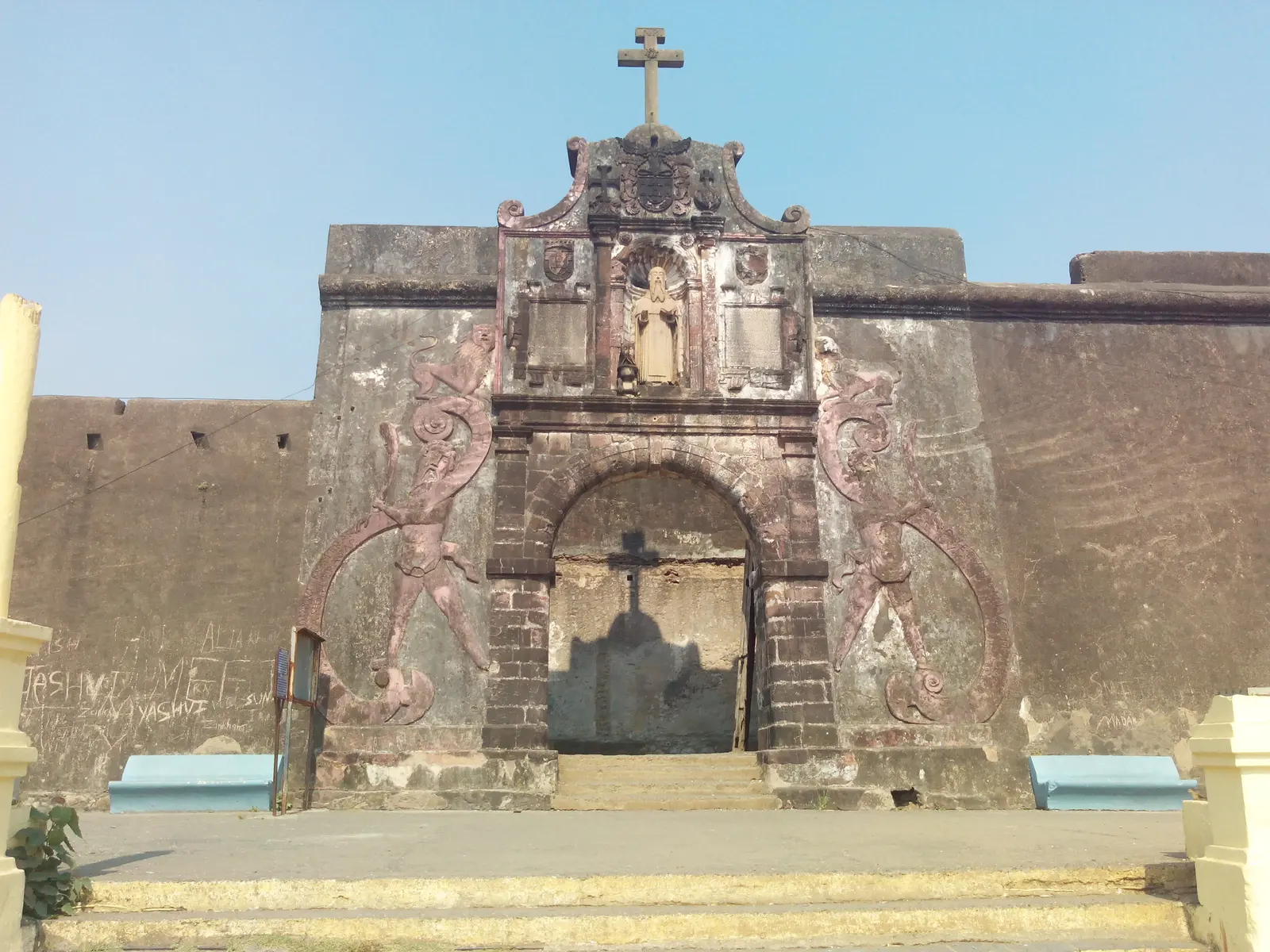
Moti Daman Travel Guide: Old Town, Churches & Fort
Massive fort walls, a gilded church altar, and the quiet lanes of old Portuguese administration — inside Moti Daman, the grander, southern half of Daman's historic riverside old town.
 Destination Guide
Daman Travel Guide: Forts, Beaches & Weekend Trip
A former Portuguese enclave split by the Daman Ganga river into Moti Daman and Nani Daman — forts, quiet beaches, duty-free shopping, and a full 2-day itinerary for this Gujarat coastal getaway.
 Heritage
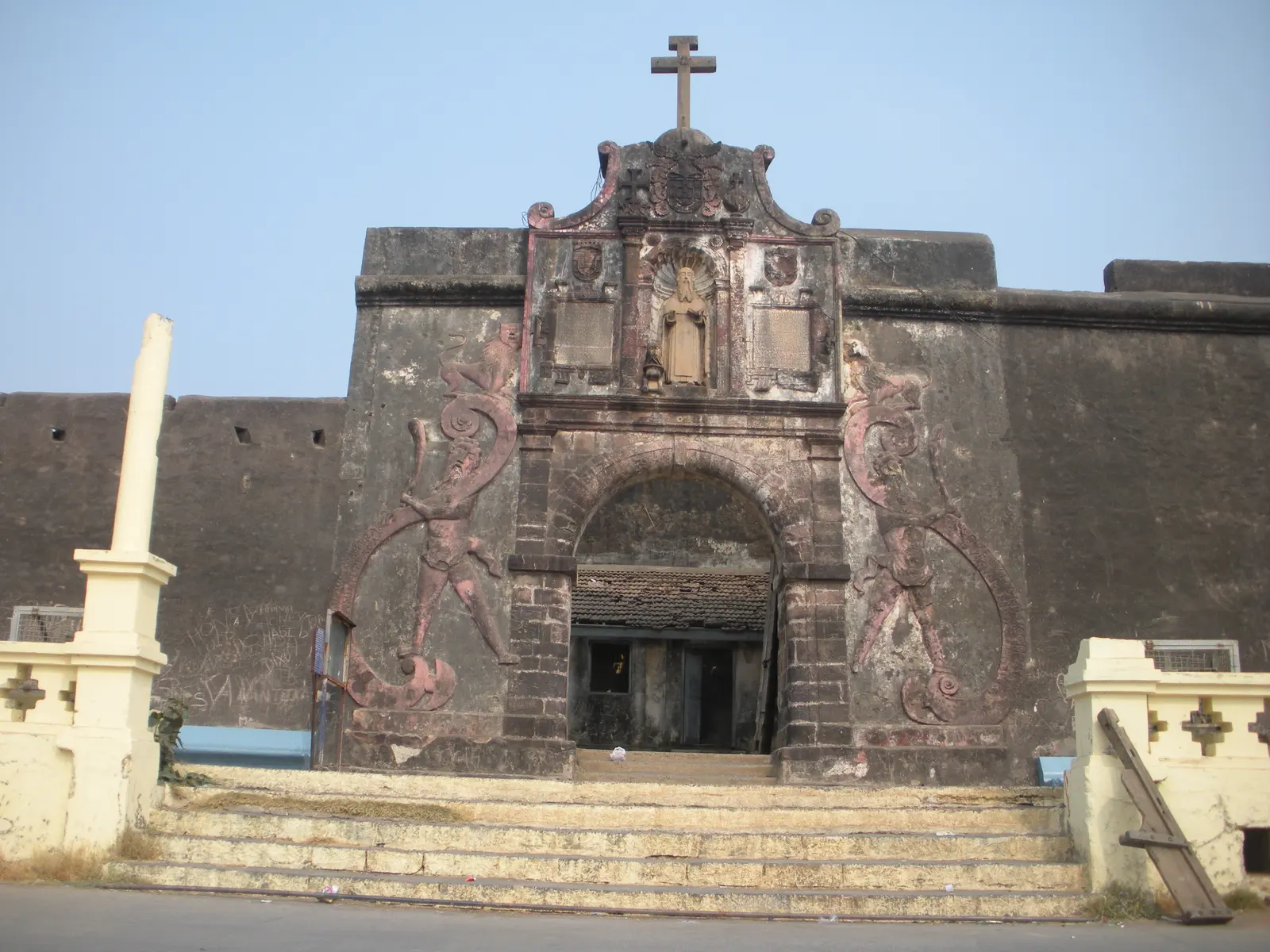
Nani Daman Travel Guide: St. Jerome Fort, Jetty & Harbour
The northern quarter of Daman town, facing Moti Daman across the river: the compact Fort of St. Jerome, its church and a busy working fishing harbour.
 Beaches
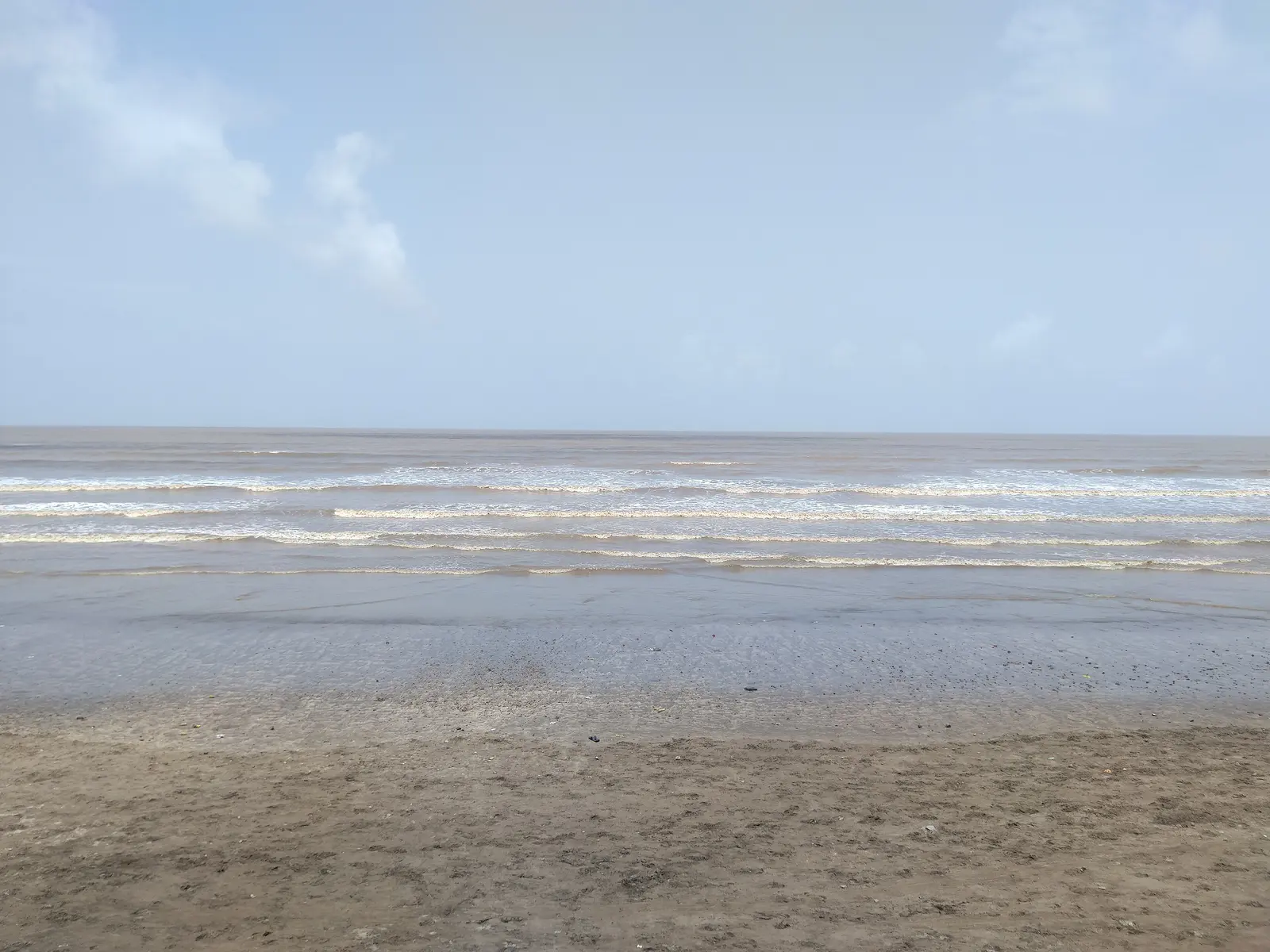
Jampore Beach Daman: Camel Rides, Timings & Tips
A long, quiet, casuarina-lined beach south of Moti Daman — camel and pony rides, sunset walks, and honest advice on swimming conditions.