Moti Daman: Daman's Grand Old Town
Moti Daman — literally "Big" or "Great" Daman in Gujarati — is the larger of the two historic quarters that make up Daman town, sitting on the south bank of the Daman Ganga river where it meets the Arabian Sea. For nearly four centuries of Portuguese colonial rule, this walled quarter was the seat of administration for the entire territory — and that history is still written plainly into its streets today, from the fort walls that still ring much of the old town to the colonial-era government buildings that now house the district collectorate.
Where Nani Daman across the river has the scrappy, working energy of a fishing harbour — boats, nets, and a market that runs on the tide — Moti Daman is Daman's more formal, dignified side. Wide fort ramparts, a genuinely beautiful colonial church, quiet residential lanes lined with pastel-painted houses, and administrative buildings that once ran an overseas Portuguese province all sit within a compact, walkable area.
This guide covers Moti Daman as a neighbourhood — what to see, how to plan a heritage walk through it, and where it fits into a broader Daman trip. The fort itself, Moti Daman Fort, whose walls define much of the old town's boundary, gets a brief overview here with a link to our dedicated Moti Daman Fort guide for anyone who wants the full structural deep dive — its bastions, gates, and building-by-building history. For the wider Union Territory context, see our Daman & Diu travel guide.
⛪ Moti Daman at a Glance
Best Time to Visit Moti Daman
Coastal Gujarat's climate is hot and humid for much of the year, and Moti Daman's fort ramparts and open lanes offer very little shade — timing your visit matters more here than in a shopping-mall town.
Cool, dry weather makes the fort walls and old-town walk genuinely pleasant at almost any hour, not just early morning and dusk.
Midday heat on the unshaded fort walls is intense — walk the old town before 10 AM or after 4:30 PM and rest through the afternoon.
Heavy rain can make the fort's stone surfaces slippery, but the old town in the rain, with almost no other visitors, has real charm for photographers.
Cooler weather and the holiday period draw more day-trippers from Mumbai and Gujarat — still uncrowded compared to Goa, but expect more company.
Our pick: A weekday morning between November and February. The light on the laterite fort walls is soft, the church is quiet, and you can cover the whole old town without rushing or overheating.
How to Reach Moti Daman
Moti Daman sits within easy reach of everywhere else in Daman town — it's a matter of crossing the Daman Ganga river, not a separate journey.
- From Nani Daman / Daman bus stand: A short auto-rickshaw ride or a walk across the bridge over the Daman Ganga river brings you straight into Moti Daman — most visitors base themselves in Nani Daman or along the beaches and cross over for a few hours.
- From Vapi Railway Station: Daman's nearest railhead, on the Mumbai–Ahmedabad main line, is about 12 km away — autos and taxis run regularly into town, dropping you within walking distance of the fort gates.
- By Road: Daman is roughly 3 hours from Mumbai and around 5 hours from Ahmedabad by car — Moti Daman sits at the southern edge of town, easily reached once you're in Daman itself.
- Getting around within Moti Daman: The old town is genuinely small and entirely walkable — no local transport is needed once you're inside the walls.
The Moti Daman Fort
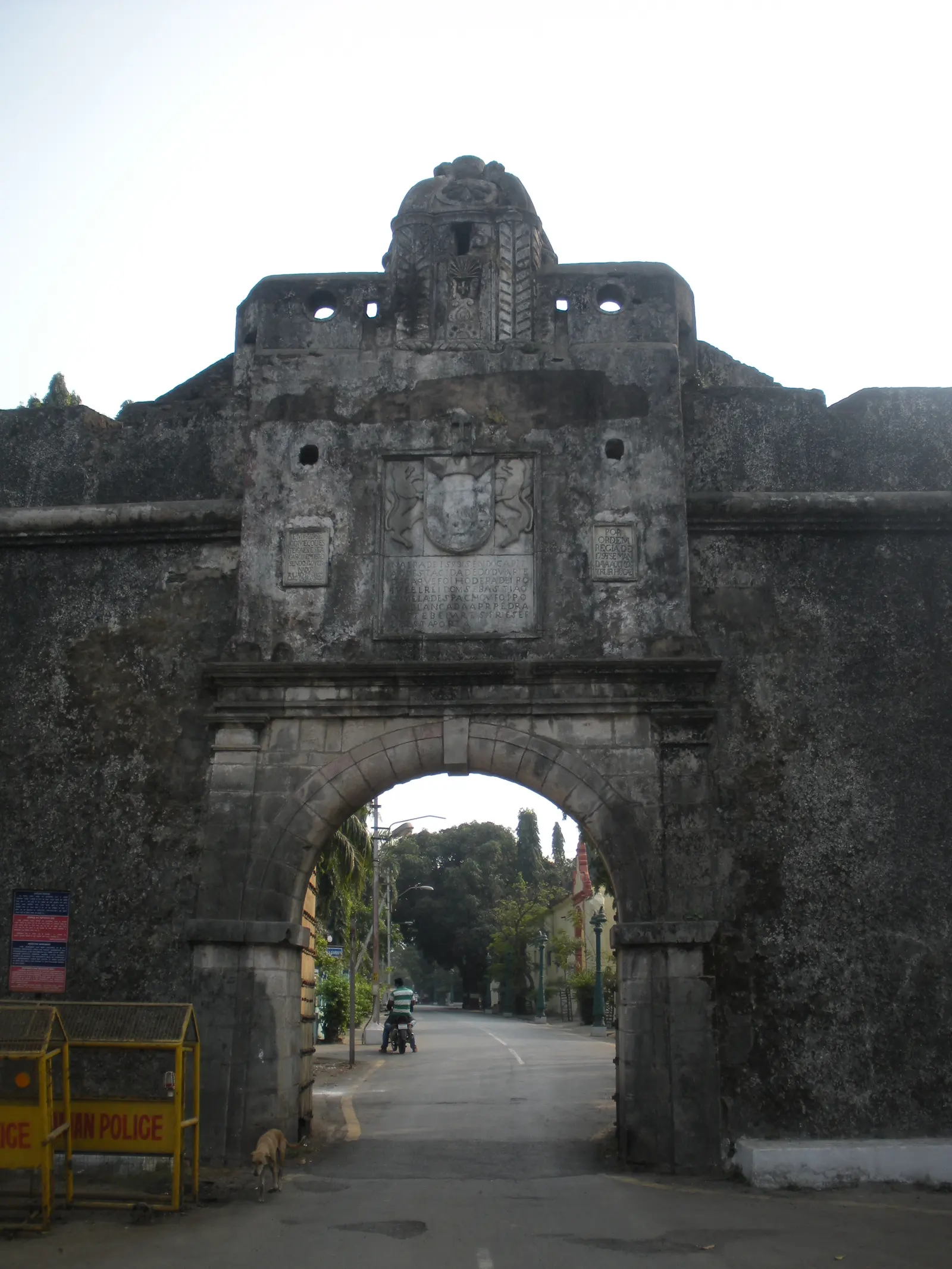
You can't really separate Moti Daman from its fort — the Moti Daman Fort, built by the Portuguese between 1559 and 1581, is what the entire old town grew up inside. Its massive laterite-stone walls, studded with bastions and a handful of surviving cannons, enclose most of the historic quarter, so walking through Moti Daman means walking largely within — or right alongside — the fort's perimeter for most of the day.
Rather than duplicate that depth here, we've covered the fort's full history, its bastions and gates, and how to explore it structure by structure in a dedicated guide — read the Moti Daman Fort guide if that's your main reason for visiting. For this neighbourhood-level guide, think of the fort as the backdrop and boundary for everything else Moti Daman has to offer — the church, the government buildings, and the old residential streets.
Bom Jesus Church
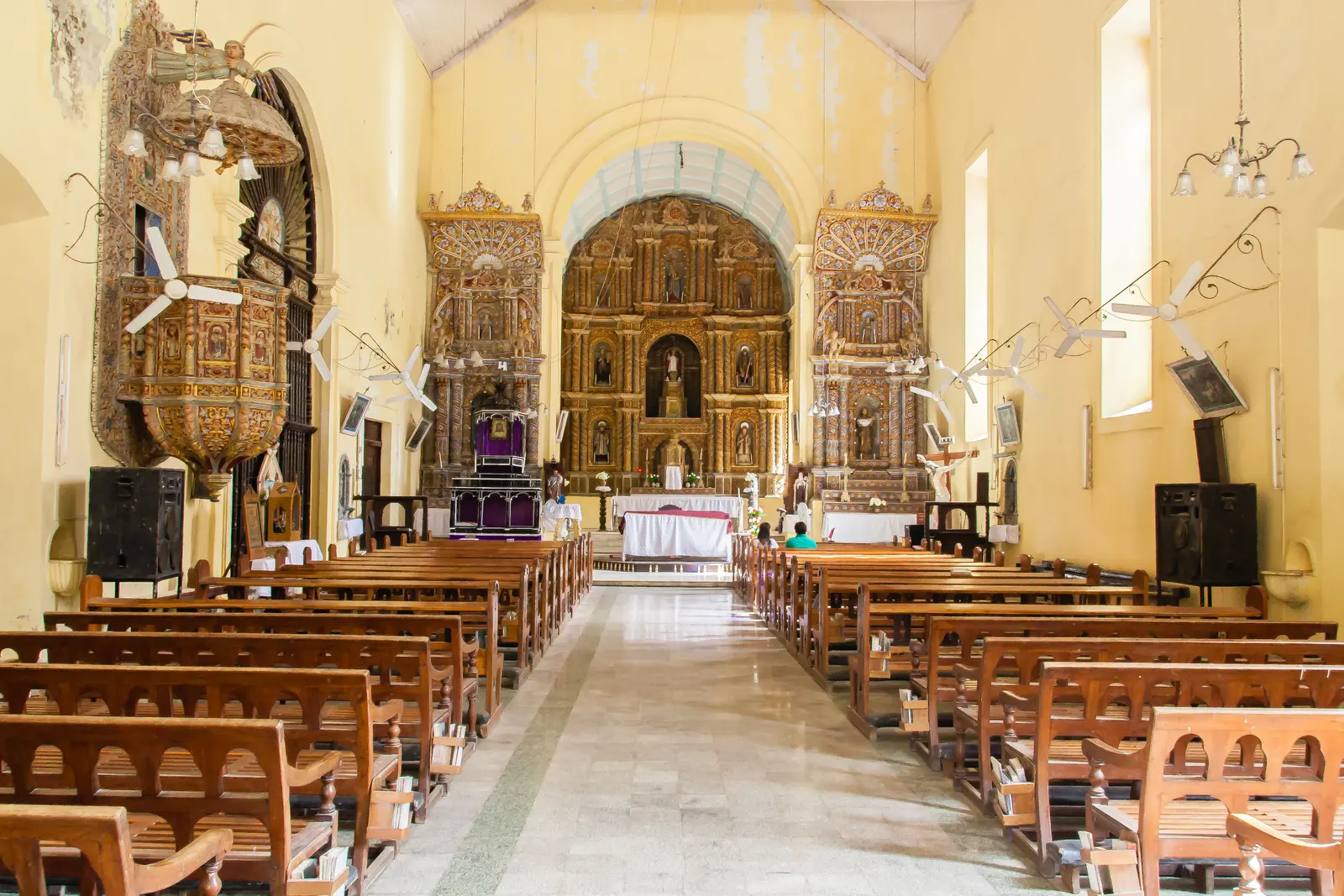
If Moti Daman has one unmissable sight beyond the fort walls themselves, it's Bom Jesus Church — a beautifully preserved colonial-era church tucked within the old town, and one of the genuine architectural highlights of the entire Daman & Diu territory. Its plain, whitewashed exterior gives little away, which makes the interior all the more striking: an ornate, heavily gilded altar, carved woodwork, and a hushed, well-kept atmosphere that feels a world apart from the busy road just outside.
The church remains an active place of worship, so time your visit outside Mass hours if you'd rather explore at leisure, and dress modestly as you would for any functioning church. Entry is free, and even a short ten-minute visit is enough to appreciate the contrast between the church's austere façade and its richly decorated interior — a pattern repeated at colonial churches across the old Portuguese territories, from Goa northward.
Come for the fort, stay for the altar — Bom Jesus Church's interior is, for many visitors, the single most memorable stop in Moti Daman.
Other Colonial Churches & Chapels
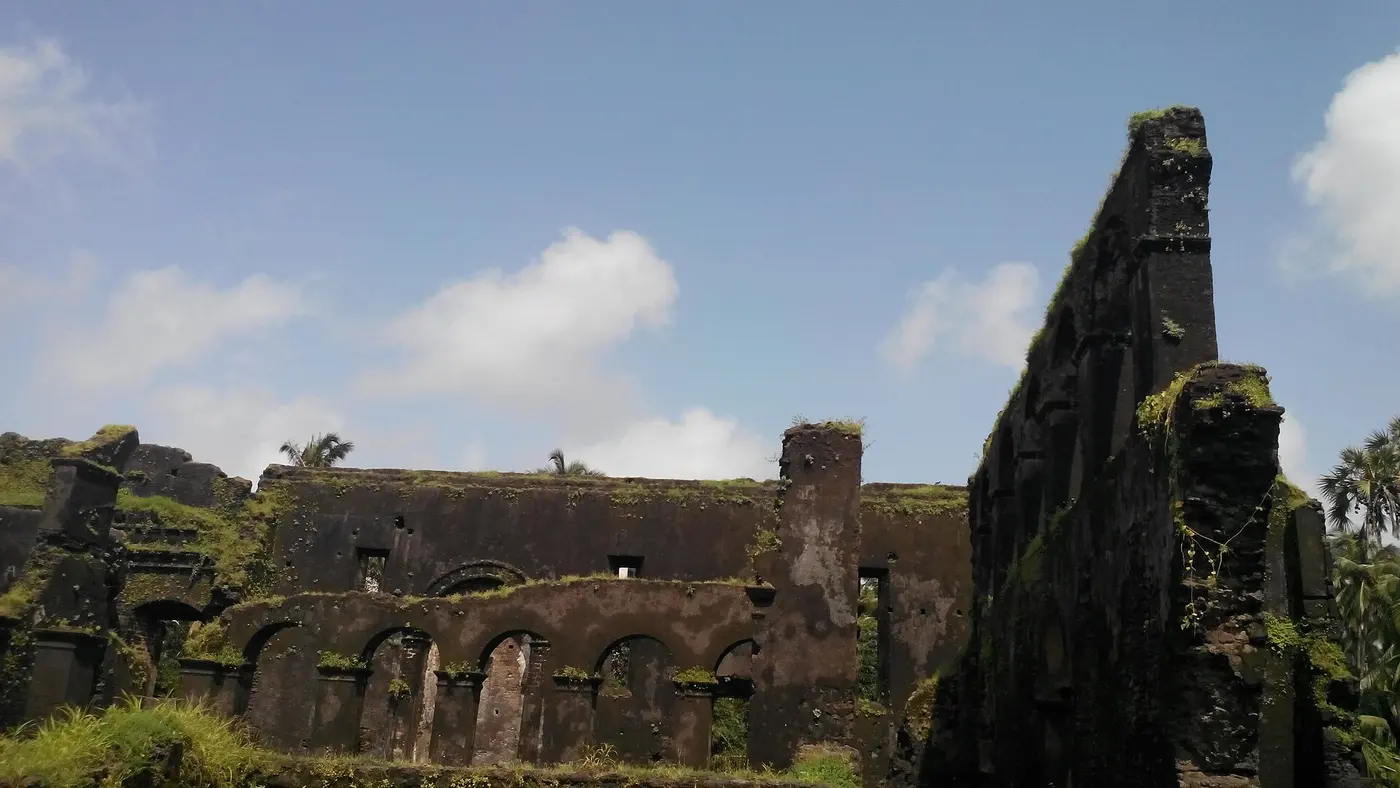
Bom Jesus isn't the only trace of Moti Daman's religious architecture. Scattered through the old town and along its edges are smaller colonial-era chapels, built over the same centuries of Portuguese presence, each modest in scale compared to Bom Jesus but worth a glance if you're walking the lanes anyway.
- Smaller wayside chapels: Compact, simply built structures dotted around the old town and along the approach roads — a reminder of how deeply Catholic religious practice was woven into everyday Portuguese-era Daman.
- Chapels tied to the old administration: A few smaller chapels sit close to the former government buildings, reflecting how closely church and colonial administration were intertwined in Portuguese territories.
None of these individually justify a special detour, but collectively they add texture to a walk through Moti Daman — glimpsed through gateways and at the ends of lanes as you move between the fort and the church.
Old Portuguese Government Buildings
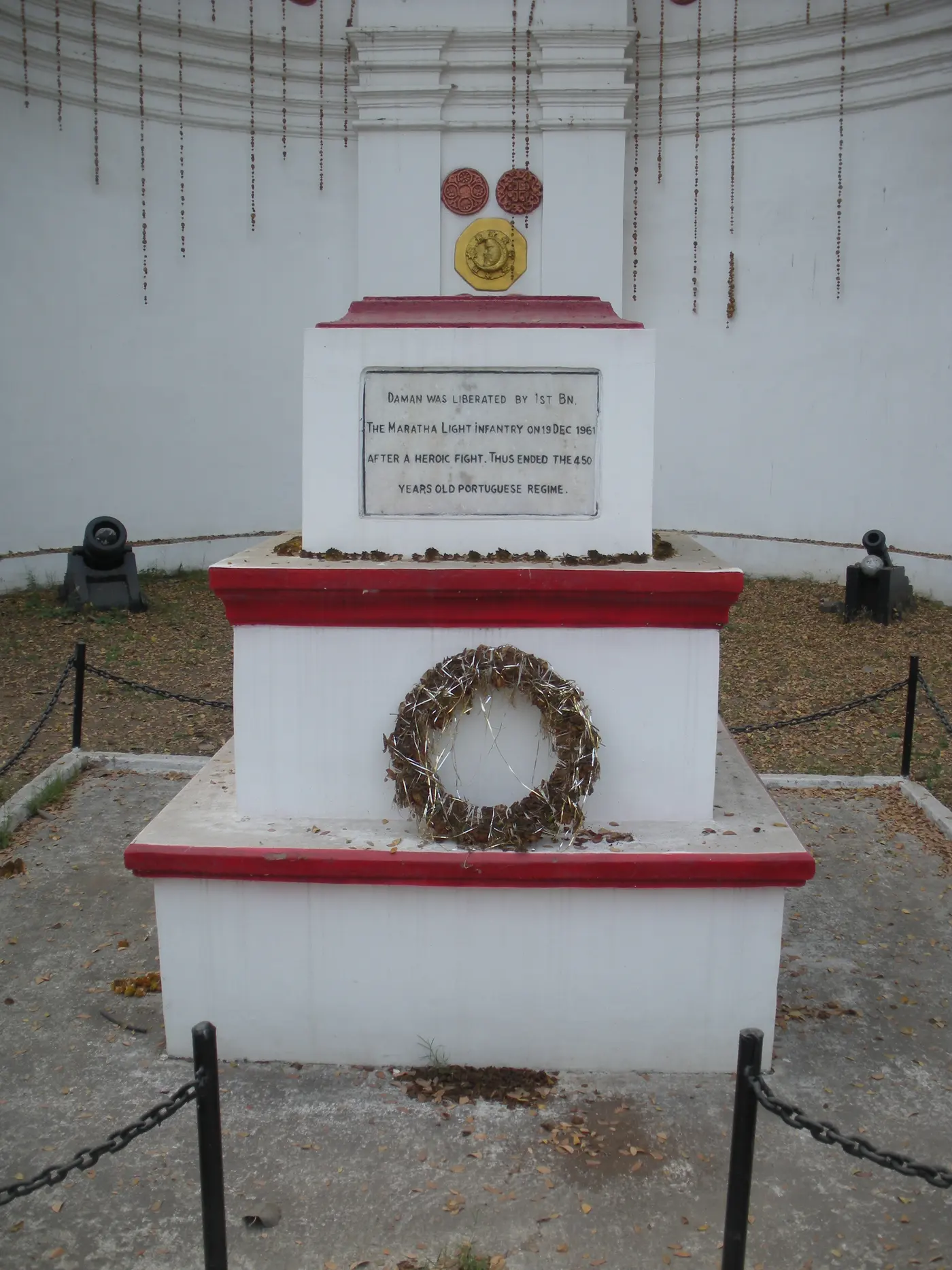
Moti Daman wasn't just a fortified church town — for centuries it was the administrative heart of Portuguese Daman, and that role is still visible in the cluster of colonial-era government buildings standing within the old walls.
- The old Secretariat building: Once the administrative office of the Portuguese province, its colonnaded façade and solid, formal proportions are typical of the period's public architecture — still in use for local administration today.
- Governor's residence, now the collectorate: The former residence of the Portuguese Governor has been repurposed as the modern district collectorate — one of the more striking examples anywhere in India of a colonial seat of power continuing to function as one, just under a different flag.
- Municipal and civic buildings: Several other whitewashed, colonnaded structures around the old town continue in low-key civic or administrative use, giving Moti Daman a lived-in feel rather than a museum-like one.
Most of these buildings are still working government offices, so treat them as sights to admire from the street rather than places to walk into uninvited — the exteriors alone, with their arched verandas and thick-walled colonial proportions, are worth the stop.
Streets & Architecture of the Walled Town
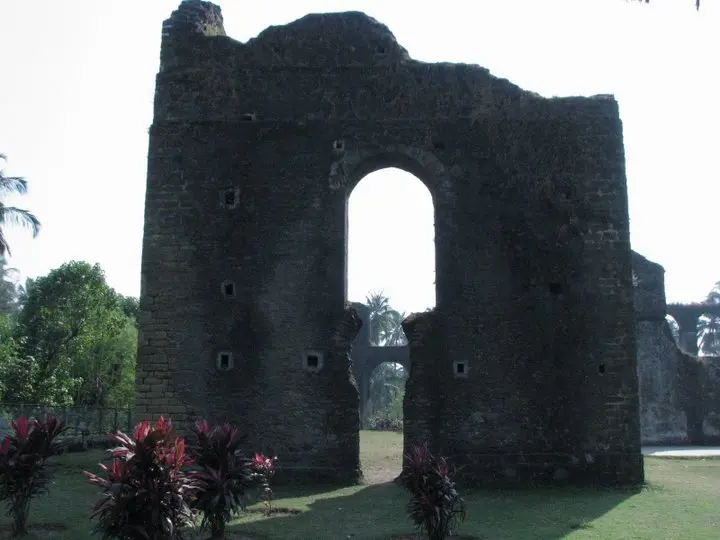
Beyond the named landmarks, Moti Daman's real charm is in simply walking its streets. Behind the fort walls, narrow lanes wind past pastel-painted colonial houses with wooden balconies, tiled roofs, and the occasional crumbling but photogenic façade — a quieter, less touristed cousin of Goa's Fontainhas or Diu's old town.
- Residential lanes: Family homes, several generations old, sit alongside small shops and churches — this is a living neighbourhood, not a preserved heritage precinct, and that adds to its authenticity.
- Bastions and gate remnants: Sections of the fort wall are directly accessible from the street, with old cannon emplacements and gateways still intact in places — worth pausing at even if you're saving the full fort walk for another visit.
- A slower pace: Compared to Nani Daman's market bustle across the river, Moti Daman moves noticeably slower — fewer vehicles, fewer vendors, more quiet corners to simply stand and look around.
A Suggested Half-Day Heritage Walk
Here's a simple, unrushed route through Moti Daman that covers everything above without doubling back — start early to beat both the heat and the midday sun on the fort walls.
Cross into Moti Daman
- ✓Cross the bridge from Nani Daman, or arrive by road/auto
- ✓Enter through one of the fort gates on the town's edge
- ✓Get oriented near the main gate before heading in
Fort Walls & Bastions
- ✓Walk a stretch of the accessible ramparts and bastions
- ✓Photograph the old cannons and gate structures
- ✓Save the full fort exploration for a separate, dedicated visit
Bom Jesus Church
- ✓Visit the church interior and its gilded altar
- ✓A quiet 15–20 minutes, longer if photographing details
Government Buildings & Old Streets
- ✓Walk past the old Secretariat and collectorate exteriors
- ✓Wander the residential lanes of colonial-era houses
- ✓Stop for tea or a snack at a local shop along the way
Wrap Up & Move On
- ✓Head back across the river toward Nani Daman or the beaches
- ✓Or continue to a fuller Moti Daman Fort exploration if time allows
* This plan wraps in around three hours — extend it to a full half-day if you're doing a thorough fort exploration rather than the brief rampart walk above.
Where to Eat Nearby
Moti Daman itself is more residential and administrative than commercial, so it's light on standalone restaurants — but it sits within easy reach of Daman's better eating options on both sides of the river.
- Small local eateries near the old town: A handful of simple shops and tea stalls near the fort approach roads serve snacks, tea, and light Gujarati fare — fine for a quick break mid-walk.
- Cross into Nani Daman for more choice: A short trip across the river brings you to Nani Daman's wider spread of restaurants, seafood shacks, and dhabas — the better bet for a proper meal before or after your Moti Daman walk.
- Daman's coastal seafood: Given Daman's fishing-harbour economy just across the river, fresh pomfret, prawns, and other local catch feature widely at restaurants a short ride from Moti Daman.
- Duty-free refreshments: As with the rest of Daman, alcohol is available tax-free at several restaurants and shops in town — a small but popular bonus for weekend visitors.
Budget Breakdown
Moti Daman is inexpensive to visit — walking the old town, the fort exterior, and Bom Jesus Church all cost nothing beyond your time. Most of the spend below is for getting there and eating, not for the sights themselves.
| Expense | Budget | Mid-Range | Luxury |
|---|---|---|---|
| Entry to fort exterior & churches | Free | Free | Free |
| Auto/taxi within Daman town | ₹100 | ₹300 | ₹800 (full-day hire) |
| Snacks & tea | ₹150 | ₹400 | ₹900 |
| Meal nearby (Nani Daman) | ₹250 | ₹700 | ₹1,800 |
| Half-day total | ₹500 | ₹1,400 | ₹3,500 |
* Excludes travel into Daman town itself. Figures assume a half-day visit to Moti Daman only, not a multi-day Daman trip.
Essential Tips for Visiting Moti Daman
- Go early or late in the day: The fort walls and old-town lanes offer almost no shade — a morning or late-afternoon visit is far more comfortable than midday, especially outside the Oct–Mar window.
- Dress modestly for Bom Jesus Church: It's an active place of worship — covered shoulders and knees, and quiet voices, are appreciated as they would be anywhere.
- Government buildings are working offices: Admire the Secretariat and collectorate exteriors from the street rather than trying to walk inside — they're functioning administrative buildings, not museums.
- Wear comfortable, closed footwear: Uneven stone surfaces on the fort walls and old lanes make sandals a less comfortable choice than sturdy walking shoes.
- Pair it with Nani Daman: The two quarters complement each other well — Moti Daman's heritage walk in the morning, Nani Daman's markets and harbour energy in the afternoon or evening.
- Carry water: There are few shops directly within the old walled town — carry a bottle rather than relying on finding one mid-walk.
✅ Do
- →Visit Bom Jesus Church for its gilded altar
- →Walk a stretch of the accessible fort ramparts
- →Go early morning or late afternoon for comfort
- →Wear closed, comfortable walking shoes
- →Pair the visit with Nani Daman across the river
- →Carry your own water for the walk
❌ Don't
- →Walk the fort walls at midday in peak summer
- →Enter government buildings uninvited
- →Visit the church mid-service without checking timings
- →Expect large-scale restaurant choices inside the old walls
- →Confuse Moti Daman with Nani Daman when giving directions
- →Rush it — the charm is in the slow, quiet lanes
Frequently Asked Questions
What is the difference between Moti Daman and Nani Daman?
Daman town is split by the Daman Ganga river into two historic quarters. Moti Daman ('Big/Great Daman') sits on the south bank and is the larger, more formal quarter — home to the Moti Daman Fort, Bom Jesus Church, and the old Portuguese administrative buildings, now the district collectorate. Nani Daman ('Small Daman') sits on the north bank and has a scrappier, working fishing-harbour character, with its own smaller fort and a bustling boat jetty. Most visitors treat them as a single half-day-plus-half-day pairing, connected by a short bridge or ferry crossing.
Is Moti Daman worth visiting?
Yes, if you have any interest in Portuguese colonial heritage. It's a genuinely underrated old town — massive laterite fort walls, a beautifully preserved church with a gilded altar, quiet lanes of colonial-era houses, and none of the crowds you'd find at a comparable site in Goa. It's not a full-day destination on its own, but as a two-to-three-hour heritage walk within a broader Daman or Daman-Diu itinerary, it's well worth the detour.
What is inside Moti Daman?
The walled quarter contains the Moti Daman Fort (whose ramparts largely define the old town's boundary), Bom Jesus Church with its ornate gilded altar, one or two smaller colonial-era chapels, the old Portuguese Secretariat and Governor's residence — now government and collectorate offices — plus residential lanes of pastel colonial houses, a few old bastions with cannons, and small local shops and eateries along the main roads leading in.
How much time do I need for Moti Daman?
Budget two to three hours for an unhurried walk covering the fort's exterior walls and gate, Bom Jesus Church, the government buildings area, and a wander through the old residential lanes. Photography enthusiasts or anyone doing the deeper Moti Daman Fort exploration should allow closer to half a day.
Is Moti Daman Fort the same as the Fort of St. Jerome?
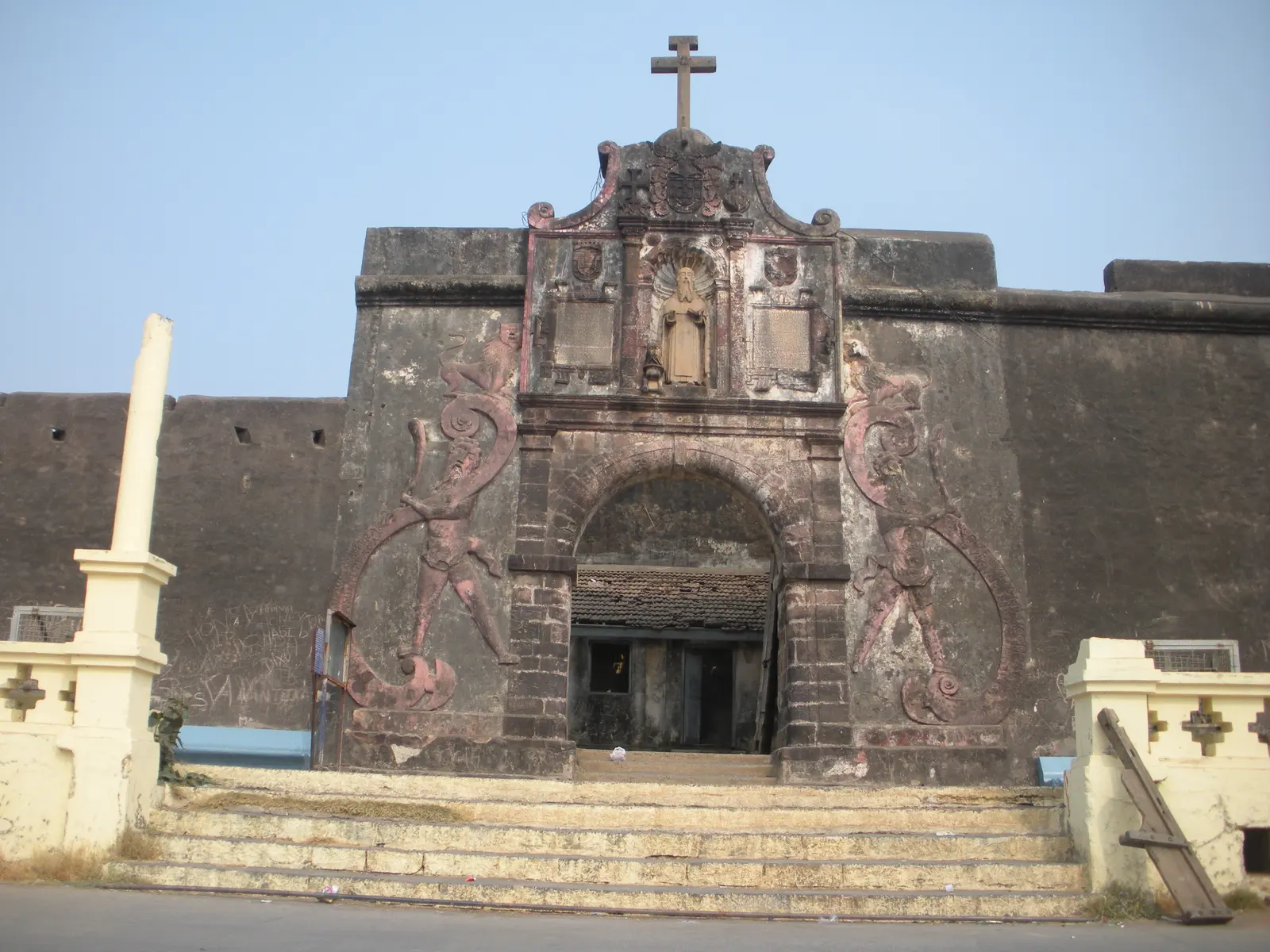
No. Moti Daman Fort (1559–1581) is the large walled fort on the south bank whose ramparts define the Moti Daman old town. The Fort of St. Jerome, also called Nani Daman Fort (1615–1627), is the smaller fort across the river in Nani Daman, with a statue of St. Jerome over its gateway.
Can you enter Bom Jesus Church for free?
Yes, entry to Bom Jesus Church is free and it remains an active place of worship, so the usual courtesies apply — modest dress, quiet voices, and checking Mass timings if you'd rather not visit mid-service. It's normally open through the day outside of active services.
What is the best time of day to visit Moti Daman?
Early morning or the couple of hours before sunset are best — the fort walls and old lanes have no real shade, and Daman's coastal humidity makes midday walking uncomfortable for much of the year. Late afternoon light also does the laterite stone and church façade genuine justice for photographs.
Published by the Kudozz Club editorial team · Last updated · How we research our guides
Want us to plan this trip for you?
Tell Kudozz Club where you want to go and what kind of trip you’re looking for. We’ll build a Moti Daman and Dadra and Nagar Haveli and Daman and Diu itinerary around your dates and budget.
Continue Exploring
View all guides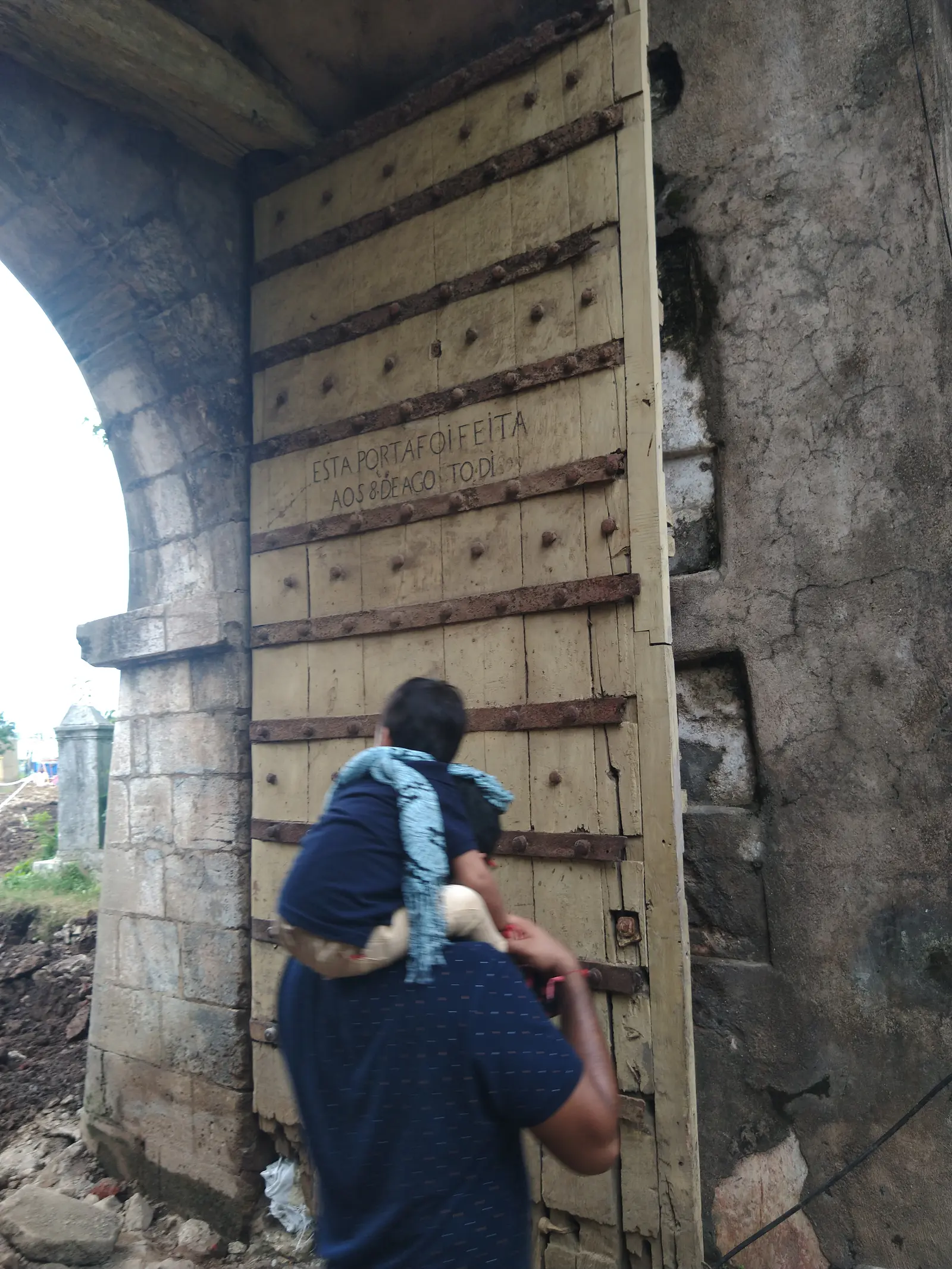 Heritage
Moti Daman Fort: History and Visiting Guide, Bastion by Bastion
A 16th-century Portuguese fortress so large it doesn't just guard a town — it contains one. Ten bastions, a gilded church, old cannons, and a district collectorate, all inside the same set of walls.
 Destination Guide
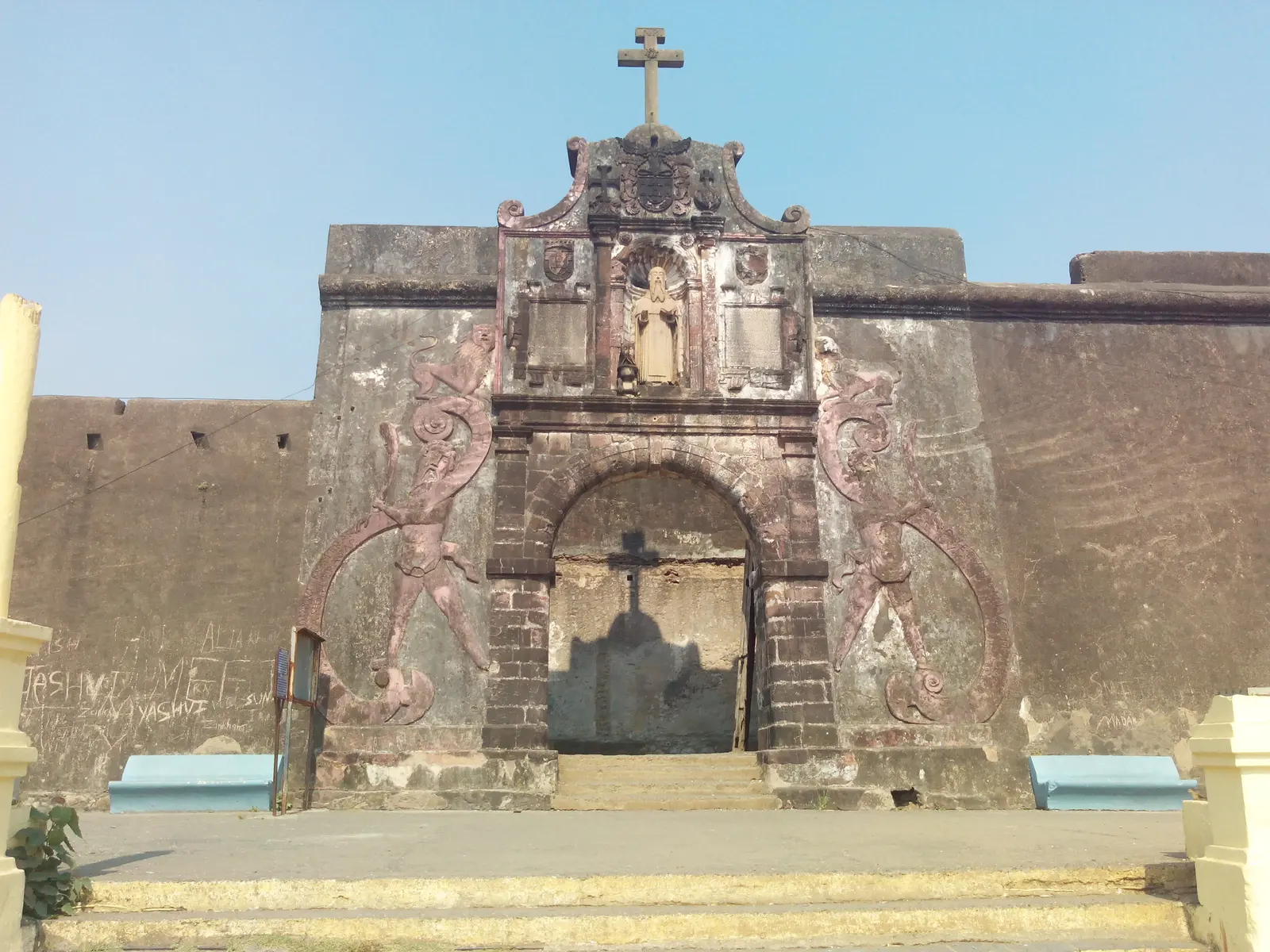
Daman Travel Guide: Forts, Beaches & Weekend Trip
A former Portuguese enclave split by the Daman Ganga river into Moti Daman and Nani Daman — forts, quiet beaches, duty-free shopping, and a full 2-day itinerary for this Gujarat coastal getaway.
 Heritage
Nani Daman Travel Guide: St. Jerome Fort, Jetty & Harbour
The northern quarter of Daman town, facing Moti Daman across the river: the compact Fort of St. Jerome, its church and a busy working fishing harbour.
 Beaches
Jampore Beach Daman: Camel Rides, Timings & Tips
A long, quiet, casuarina-lined beach south of Moti Daman — camel and pony rides, sunset walks, and honest advice on swimming conditions.