Nani Daman: Small Daman
Nani Daman — Gujarati for "Small Daman" — is the smaller, northern quarter of Daman town, sitting on the north bank of the Daman Ganga river directly across from Moti Daman ("Big Daman") on the south bank. Where Moti Daman carries the town's grander, more administrative character — its walled fort, government buildings, and the imposing Bom Jesus Church — Nani Daman has always been the working half: a fishing-harbour town built around boats, nets, and the daily rhythm of the catch coming in.
The Portuguese, who held Daman for nearly four and a half centuries until 1961, fortified both banks of the river mouth. Moti Daman got the larger fortification (built 1559–1581); Nani Daman got the smaller Fort of St. Jerome, built between 1615 and 1627 to guard the north bank. Its walls still stand, and the harbour it once protected is very much alive, packed with wooden fishing trawlers and the everyday business of a coastal livelihood.
This is what makes Nani Daman worth the short walk or rickshaw ride across the bridge — not a single postcard monument, but a genuinely lived-in coastal quarter that contrasts sharply with Moti Daman's more formal, preserved heritage core. For the fuller regional picture — Diu, Silvassa, and the rest of the Union Territory — see our complete Daman & Diu travel guide.
⚓ Nani Daman at a Glance
Best Time to Visit
Nani Daman shares Daman's warm, humid coastal climate, so the harbour walk and fort visit are far more pleasant outside peak summer heat.
Dry, pleasant weather (18–30°C) makes walking the jetty and the fort ramparts genuinely comfortable, with harbour activity at its most photogenic in the cool morning light.
Temperatures climb into the mid-30s — plan the harbour walk for early morning or just before sunset rather than midday.
Many fishing boats stay docked or out of the water during the monsoon fishing ban, so the harbour is quieter and the jetty can get slippery underfoot.
Cooler weather draws the most day-trippers to Daman overall — Nani Daman itself stays comparatively uncrowded even then.
Our pick: An early morning between November and February, when the fishing boats are either heading out or coming in with the night's catch — the harbour is at its most alive.
How to Reach Nani Daman
Nani Daman is not a separate destination in any real sense — it's one half of Daman town, reached the same way you'd reach Daman itself, with one short local crossing at the end.
- By Train: Vapi railway station (~12 km away), on the Mumbai–Ahmedabad main line, is the nearest railhead with frequent connections — an auto or taxi from Vapi takes roughly 25–30 minutes into Daman town.
- By Road: Daman is about 3 hours from Mumbai and 5 hours from Ahmedabad by road, largely via NH48. Nani Daman sits on the north bank as you enter town from the Vapi/highway side.
- From Moti Daman: A bridge over the Daman Ganga river connects the two halves of town directly — the crossing takes just a few minutes by auto-rickshaw, taxi, or on foot, so it's easy to cover both banks in a single day.
- Getting around locally: Nani Daman itself is compact and very walkable once you're there — the fort, harbour and jetty are all within a short walk of one another.
Fort of St. Jerome (Nani Daman Fort)
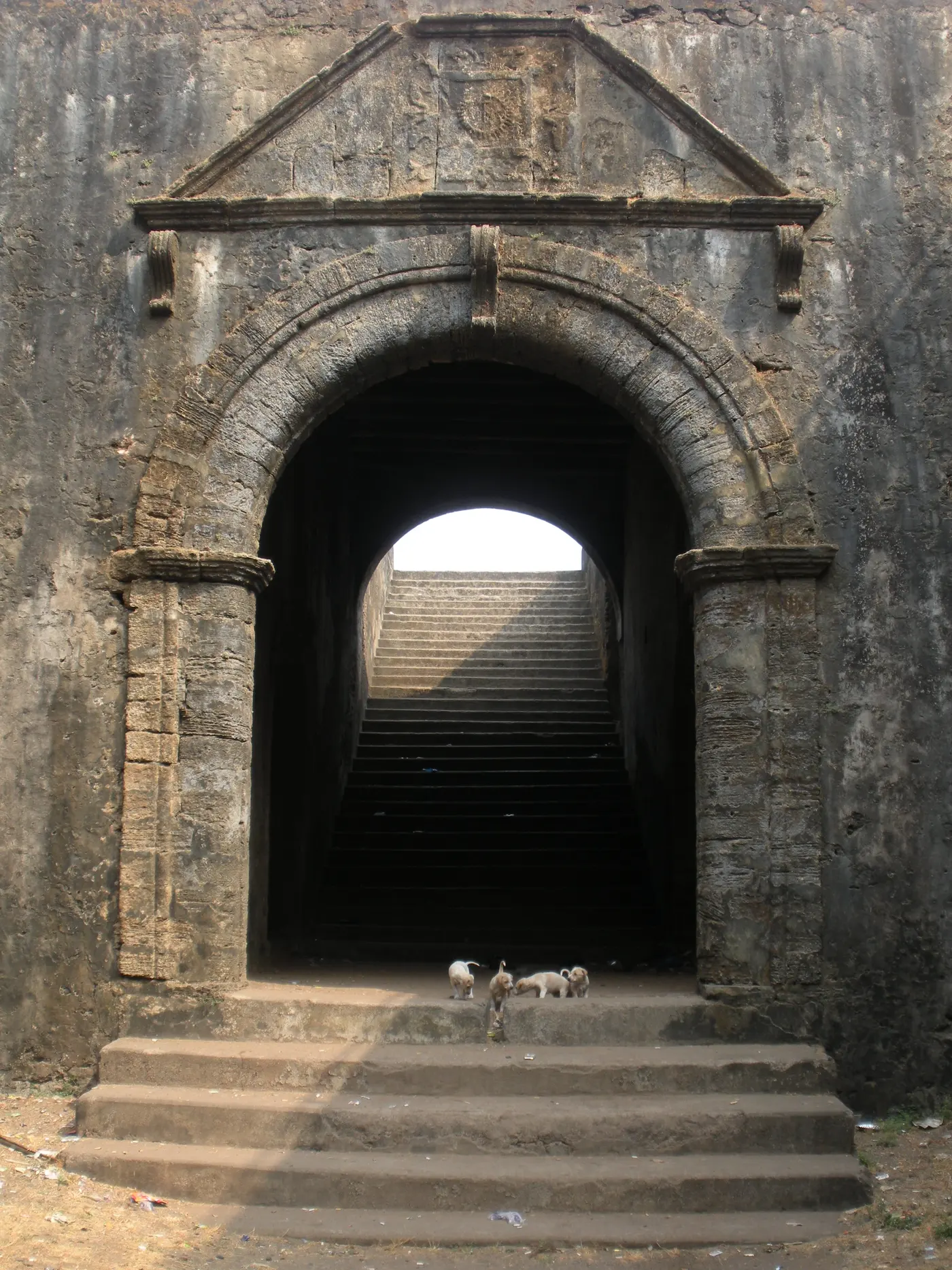
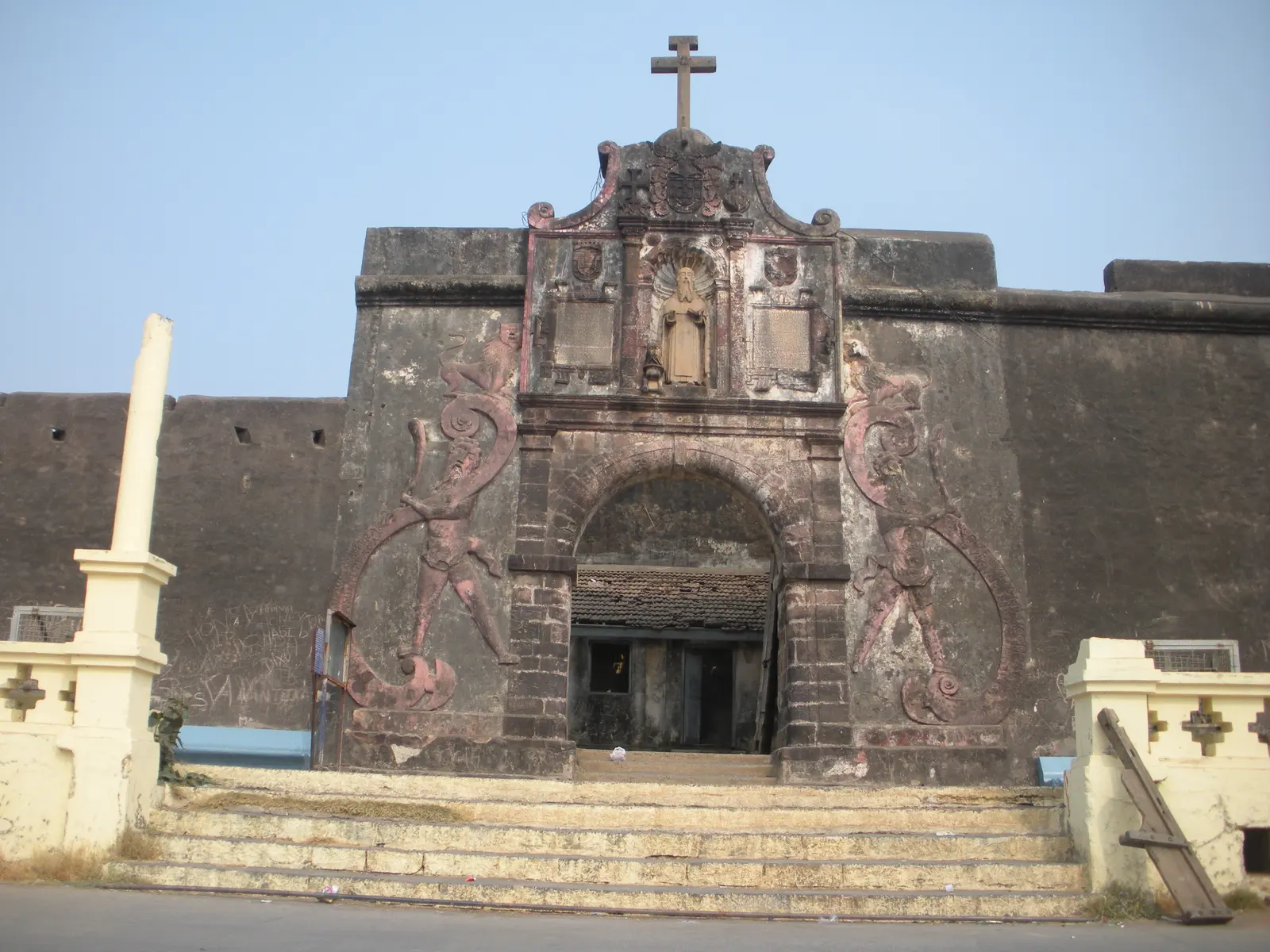
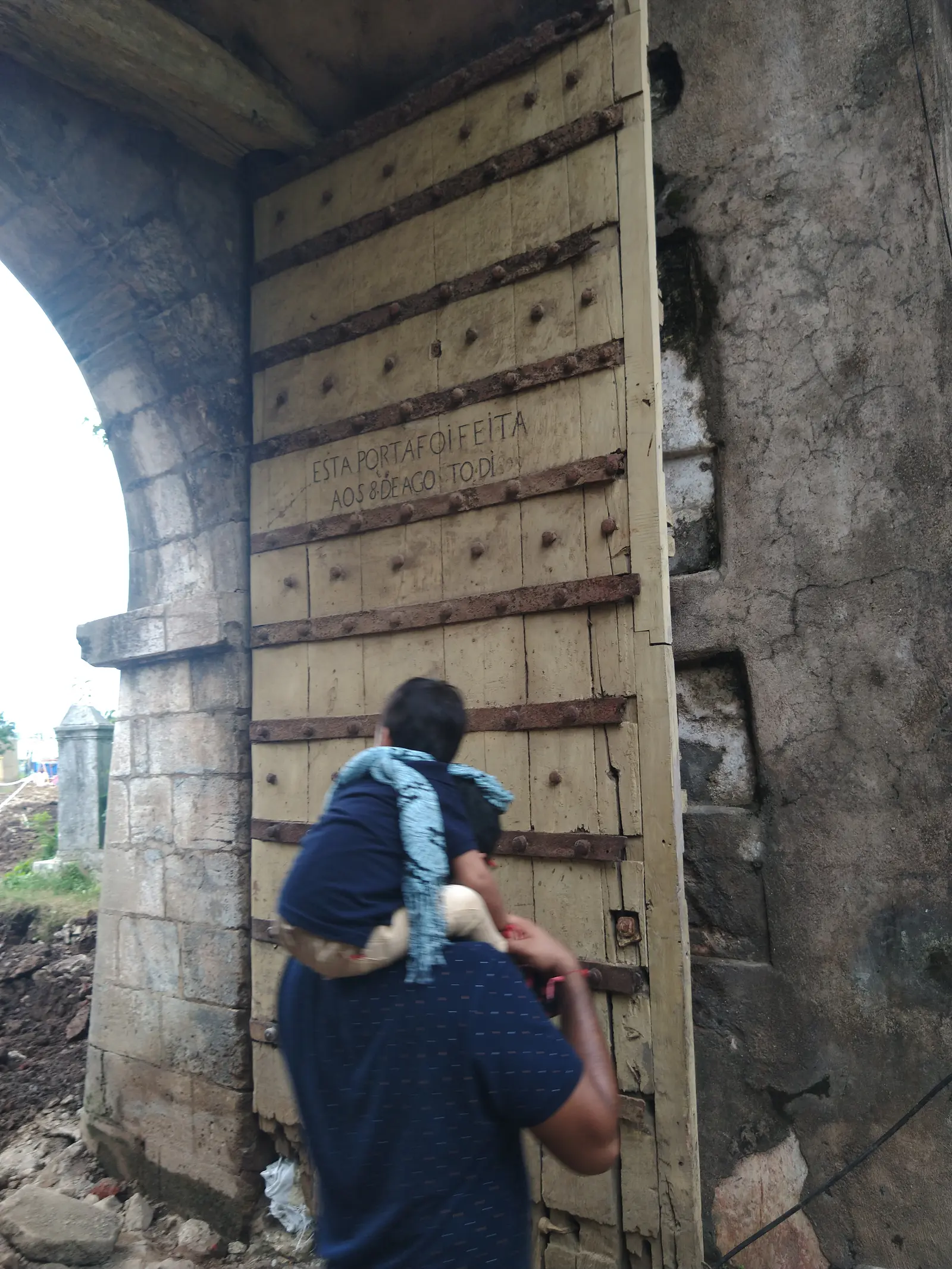
The Fort of St. Jerome, usually called Nani Daman Fort, stands on the north bank of the Daman Ganga facing Moti Daman Fort across the water. The Portuguese built it between 1615 and 1627, more than thirty years after they finished the larger fort on the south bank. It is compact, about 12,250 square metres, with high stone walls, three bastions and two gateways.
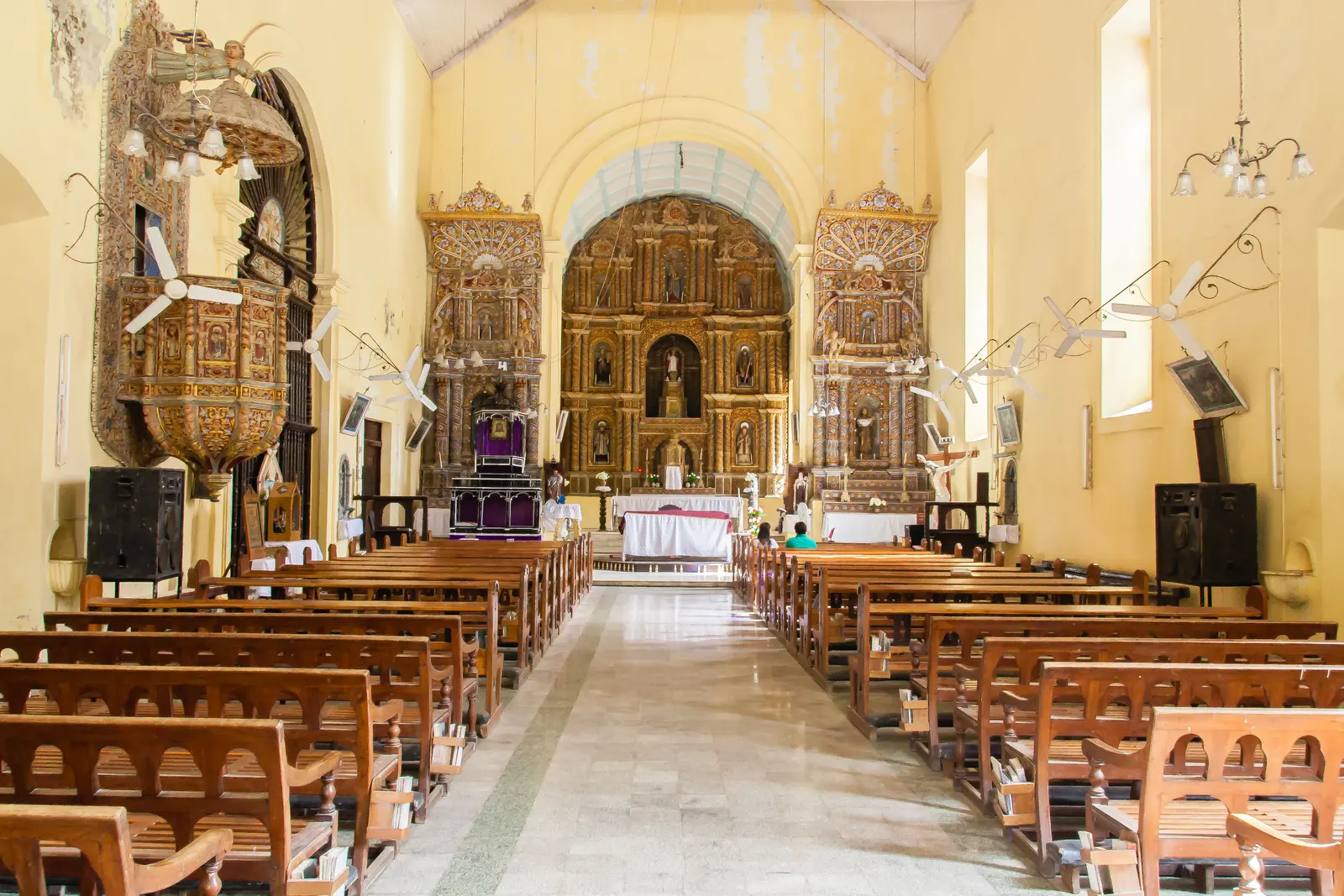
The riverside gateway is the part most visitors photograph: a large statue of St. Jerome, the fort's namesake, stands above it, flanked by carved figures. Inside, the main building is the Church of Our Lady of the Sea, known for its panelled altar. Walk up onto the ramparts for views over the fish market and the fishing fleet moored along the river.
Allow 30 to 45 minutes. It is small enough to combine easily with the harbour walk, and it makes a good contrast with the much larger walled fort in Moti Daman. Entry and opening hours can change, so check locally before you go.
Source: Daman administration, Fort of St. Jerome.
The Fishing Harbour & Jetty
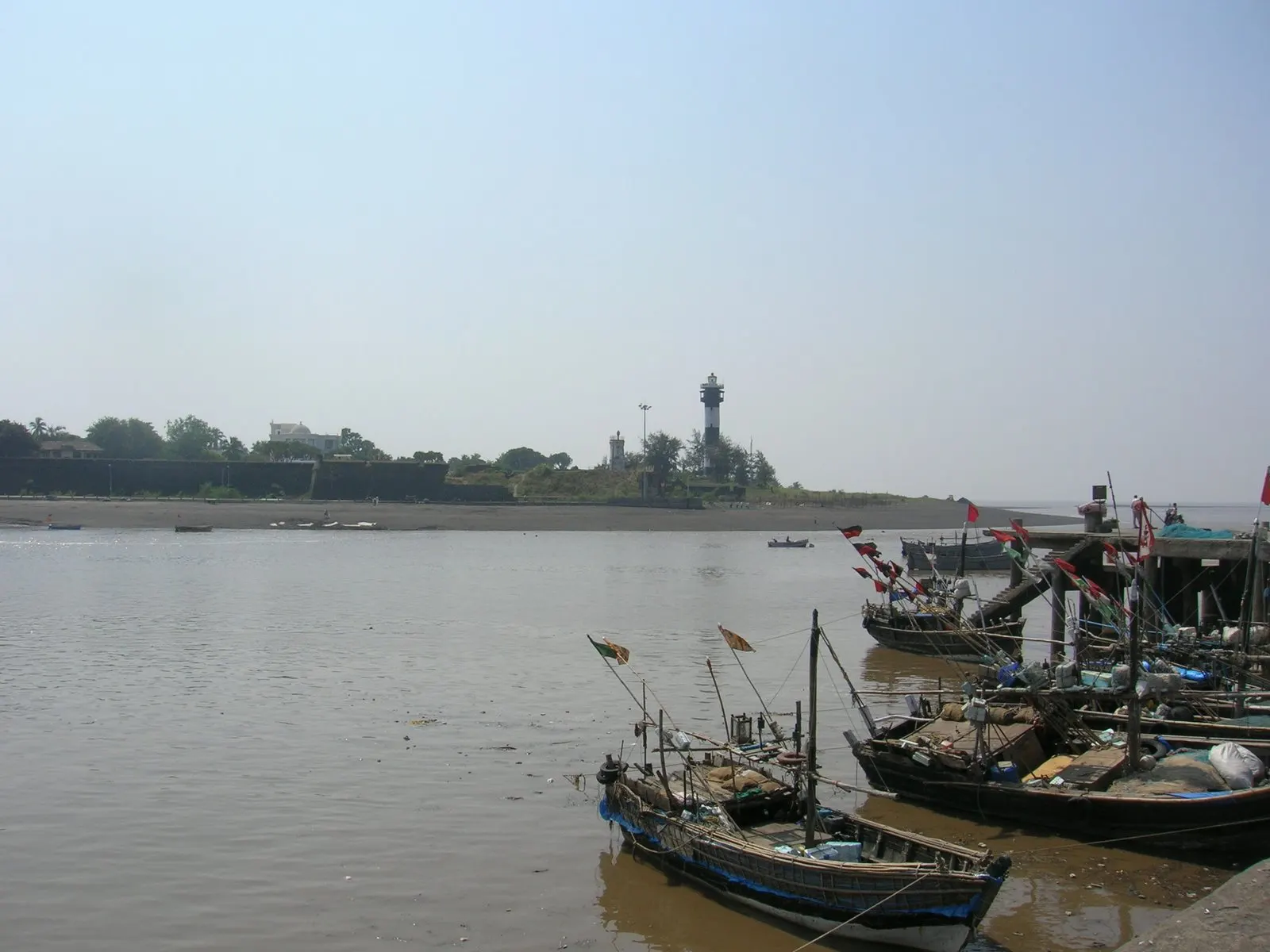
This is Nani Daman's real highlight, and the reason it's worth a dedicated visit rather than a quick drive-by. The fishing harbour and jetty along the Daman Ganga is a genuinely active working port — rows of colourful wooden trawlers packed tightly along the waterfront, nets drying in the sun, and a steady flow of fishermen, ice crates, and baskets of the day's catch moving between boats and market.
- Boats and colour: The trawlers themselves are brightly painted and closely moored — a genuinely photogenic sight, especially in the soft light of early morning or late afternoon.
- The daily catch: Depending on the hour, you'll see boats unloading pomfret, prawns, Bombay duck, and other coastal catch straight onto the jetty, sorted rapidly for the local market.
- A working community: This isn't a curated tourist boardwalk — it's the actual economic heartbeat of Nani Daman, and it shows in the ropes, diesel smell, and unhurried, practical rhythm of people at work.
- Riverfront views: From the jetty, you get a clear line of sight across the Daman Ganga to Moti Daman's fort walls on the opposite bank — a good spot to appreciate how the two halves of town face each other.
Skip the fort if you're short on time, but don't skip the harbour — half an hour spent simply watching the boats come and go tells you more about Nani Daman's character than any single monument would.
Views Across to Moti Daman
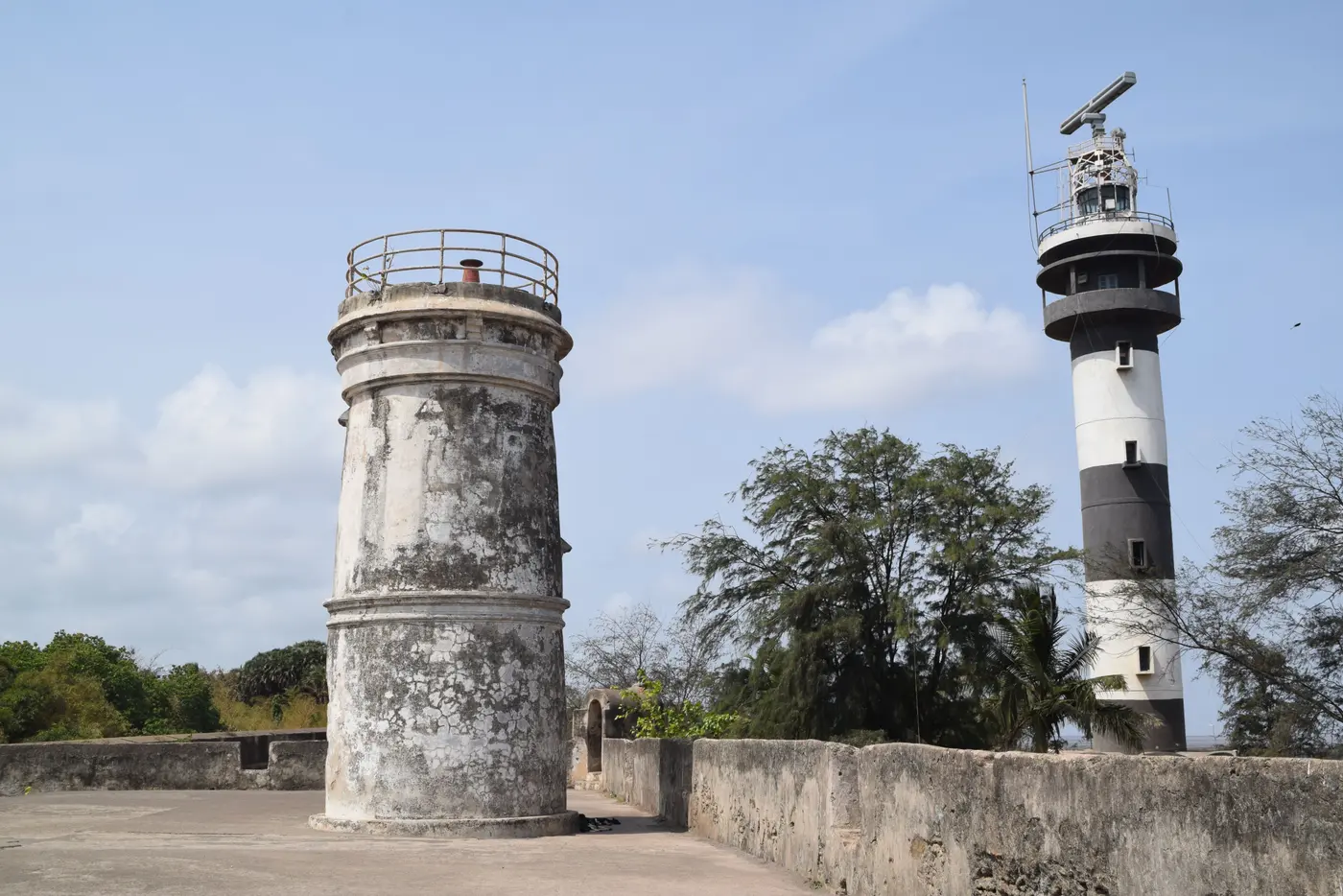
From the Nani Daman riverfront you look straight across the Daman Ganga to the walls of Moti Daman Fort. Daman's old and new lighthouse towers stand inside that fort, on the south bank, so they belong to a Moti Daman visit rather than this one.
The riverfront is still worth a few minutes: boats passing in and out of the harbour, the two forts facing each other across the estuary, and a quieter vantage point away from the busier jetty. To see the lighthouse up close, cross the bridge and walk through Moti Daman Fort.
Local Seafood & Where to Eat
Given Nani Daman's identity as a fishing harbour, fresh seafood is unsurprisingly the thing to eat here — and it's about as fresh as it gets, given how close the catch is to the table.
- Pomfret and prawns: Staples at seafront and local eateries, usually grilled or pan-fried in a coastal Gujarati style — simple preparations that let the freshness carry the dish.
- Bombay duck (bombil): A regional favourite, often fried crisp, and easy to find given Nani Daman's harbour supply.
- Small local eateries near the harbour: Unpretentious, no-frills places close to the jetty tend to serve the day's actual catch rather than frozen stock — worth seeking out over more polished restaurants elsewhere in Daman.
- Duty-free drinks: As with the rest of Daman, alcohol is sold tax-free, making a cold beer alongside fresh seafood a popular, affordable combination.
Suggested Half-Day Visit
Nani Daman doesn't need a full day on its own — it works best as a focused half-day walk, easily combined with Moti Daman or Devka Beach on either side of it.
Harbour First
- ✓Arrive early to catch boats coming in with the day's catch
- ✓Walk the jetty, watch the sorting and unloading
- ✓Photograph the boats in the soft early light
Fort & Old Lanes
- ✓Wander the older streets near the riverfront
- ✓Visit the Fort of St. Jerome: the statue-topped gateway, the church and the ramparts
- ✓Take in the view across the river to Moti Daman
Riverfront & Lunch
- ✓Walk the riverfront for views across to Moti Daman Fort
- ✓Lunch at a local eatery near the harbour — fresh seafood
- ✓Cross the bridge to Moti Daman for the afternoon, if continuing
* Many visitors pair this half-day walk with an afternoon at Devka Beach or a longer look at Moti Daman Fort on the opposite bank.
Budget Breakdown (Nani Daman, per day)
Nani Daman itself costs very little to explore — most of a visitor's spend here goes toward food. The harbour and riverfront are free to walk, and the fort has no significant entry cost (check locally, as this can change).
| Expense | Budget | Mid-Range | Luxury |
|---|---|---|---|
| Accommodation/night (Daman town) | ₹1,200 | ₹3,500 | ₹8,000 |
| Food/day (seafood meals) | ₹400 | ₹1,000 | ₹2,200 |
| Local transport (auto/rickshaw) | ₹150 | ₹400 | ₹1,000 |
| Sightseeing (fort, harbour, riverfront) | Free | Free | Free |
| Half-day total (approx.) | ₹600 | ₹1,500 | ₹3,500 |
* Excludes travel to Daman itself. Figures assume accommodation is shared with a wider Daman trip rather than booked for Nani Daman alone.
Essential Tips
- Go early for the harbour: Boats coming in with the catch and the general bustle peak in the early morning and again in the late afternoon — midday tends to be quieter.
- Be respectful around the jetty: This is a working fishing harbour, not a staged attraction — keep clear of nets, loading operations, and fishermen at work, and ask before photographing people closely.
- Wear footwear that can get wet or grimy: Jetty surfaces near the boats are often damp, fishy, and uneven — this isn't a promenade walk.
- Keep the fort short: The Fort of St. Jerome is compact; 30 to 45 minutes covers the gateway, the church and a walk on the ramparts.
- Combine with Moti Daman: The bridge crossing takes minutes, so there's little reason to visit Nani Daman without also seeing Moti Daman Fort and Bom Jesus Church on the same trip.
- Carry cash: Small eateries and vendors near the harbour mostly deal in cash rather than cards.
✅ Do
- →Visit the harbour early morning for the most activity
- →Walk the Fort of St. Jerome ramparts for river views
- →Try freshly caught seafood at a harbourside eatery
- →Combine the visit with Moti Daman across the bridge
- →Stay mindful of fishing operations on the jetty
- →Carry cash for small local eateries and vendors
❌ Don't
- →Expect a fort as large as Moti Daman's: this one is compact
- →Walk through nets, catch, or loading areas uninvited
- →Visit the jetty in your best shoes or clothes
- →Skip Moti Daman — the bridge crossing takes minutes
- →Photograph fishermen closely without asking first
- →Plan a full day here — half a day is enough
Frequently Asked Questions
What is the difference between Moti Daman and Nani Daman?
They're the two halves of Daman town, split by the Daman Ganga river. Moti Daman ("Big Daman") sits on the south bank and is the larger, more formal quarter — home to the main Portuguese fort, government offices, and Bom Jesus Church. Nani Daman ("Small Daman") sits on the north bank and is smaller and more workaday — a fishing-harbour town with the compact Fort of St. Jerome and a busy jetty. Moti Daman feels administrative and monumental; Nani Daman feels lived-in and salty.
Is Nani Daman worth visiting?
Yes, if you enjoy an authentic, unpolished slice of coastal life rather than a polished heritage site. The Fort of St. Jerome is smaller than Moti Daman Fort but well preserved, and the fishing harbour — with its packed rows of boats, the daily catch coming in, and the whole rhythm of a working port — is genuinely worth an hour or two, especially paired with a walk along the fort's riverside ramparts.
What is there to see in Nani Daman?
The main draws are the Fort of St. Jerome (Nani Daman Fort), with its riverside gateway, statue of St. Jerome and the Church of Our Lady of the Sea inside; the fishing harbour and jetty with its colourful wooden trawlers; and the view across the river to Moti Daman Fort. Together they make a pleasant, low-key half-day walk.
Is the Nani Daman fishing harbour open to visitors?
Yes, the harbour and jetty are a public part of town and visitors are welcome to walk along them and watch the boats. That said, it's a working fishing community, not a tourist attraction built for visitors — be mindful around nets, catch being sorted, and loading operations, and avoid getting in the way during the busy early-morning and late-afternoon hours when boats come in.
How do I get to Nani Daman from Moti Daman?
They're connected by a bridge over the Daman Ganga river, right within Daman town — the crossing takes just a few minutes by auto-rickshaw, taxi, or on foot. Most visitors base themselves in either half and cover both on the same day, since the whole town is compact.
What is the Fort of St. Jerome in Nani Daman?
It's Nani Daman's Portuguese fort, also called Nani Daman Fort. Built between 1615 and 1627 on the north bank of the Daman Ganga, it covers about 12,250 sq m, with high stone walls, three bastions and two gateways. The riverside gateway carries a large statue of St. Jerome, and the Church of Our Lady of the Sea stands inside. It is smaller than Moti Daman Fort (1559–1581) on the south bank.
What is the best time to visit Nani Daman?
October to March, when the weather is dry and pleasantly warm rather than humid — ideal for walking the harbour front and the fort ramparts without the discomfort of Daman's peak summer heat or the monsoon's rough seas and slippery jetty surfaces.
Published by the Kudozz Club editorial team · Last updated · How we research our guides
Want us to plan this trip for you?
Tell Kudozz Club where you want to go and what kind of trip you’re looking for. We’ll build a Nani Daman and Dadra and Nagar Haveli and Daman and Diu itinerary around your dates and budget.
Continue Exploring
View all guides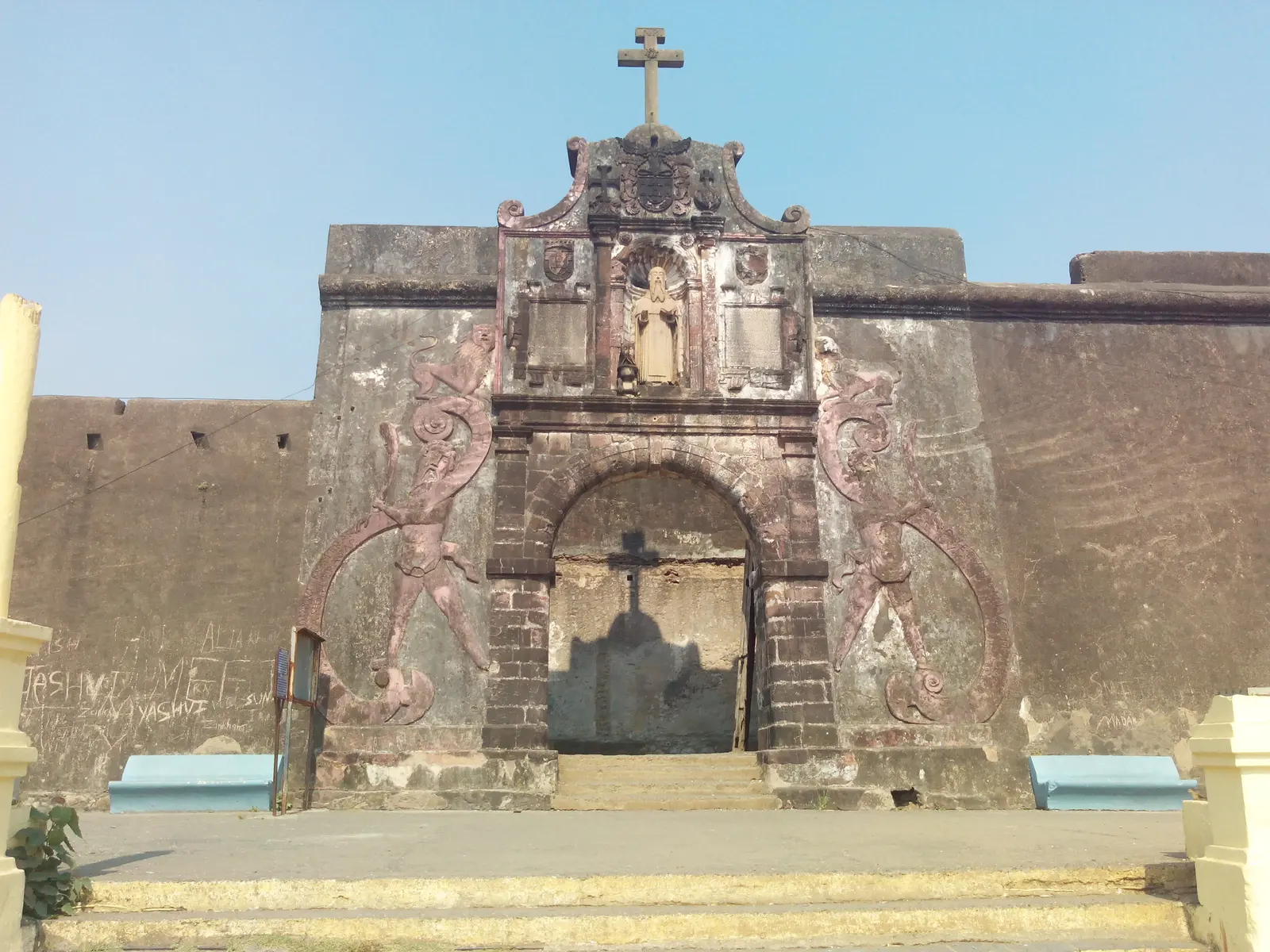 Destination Guide
Daman Travel Guide: Forts, Beaches & Weekend Trip
A former Portuguese enclave split by the Daman Ganga river into Moti Daman and Nani Daman — forts, quiet beaches, duty-free shopping, and a full 2-day itinerary for this Gujarat coastal getaway.
 Heritage
Moti Daman Fort: History and Visiting Guide, Bastion by Bastion
A 16th-century Portuguese fortress so large it doesn't just guard a town — it contains one. Ten bastions, a gilded church, old cannons, and a district collectorate, all inside the same set of walls.
 Heritage
Moti Daman Travel Guide: Old Town, Churches & Fort
Massive fort walls, a gilded church altar, and the quiet lanes of old Portuguese administration — inside Moti Daman, the grander, southern half of Daman's historic riverside old town.
 Beaches
Devka Beach Daman: Promenade, Rides & Activities
Daman's busiest, most developed beach — a landscaped seafront promenade, garden, rock-climbing wall, camel rides, and food stalls, with honest advice on the rocky shoreline and best evening visit plan.