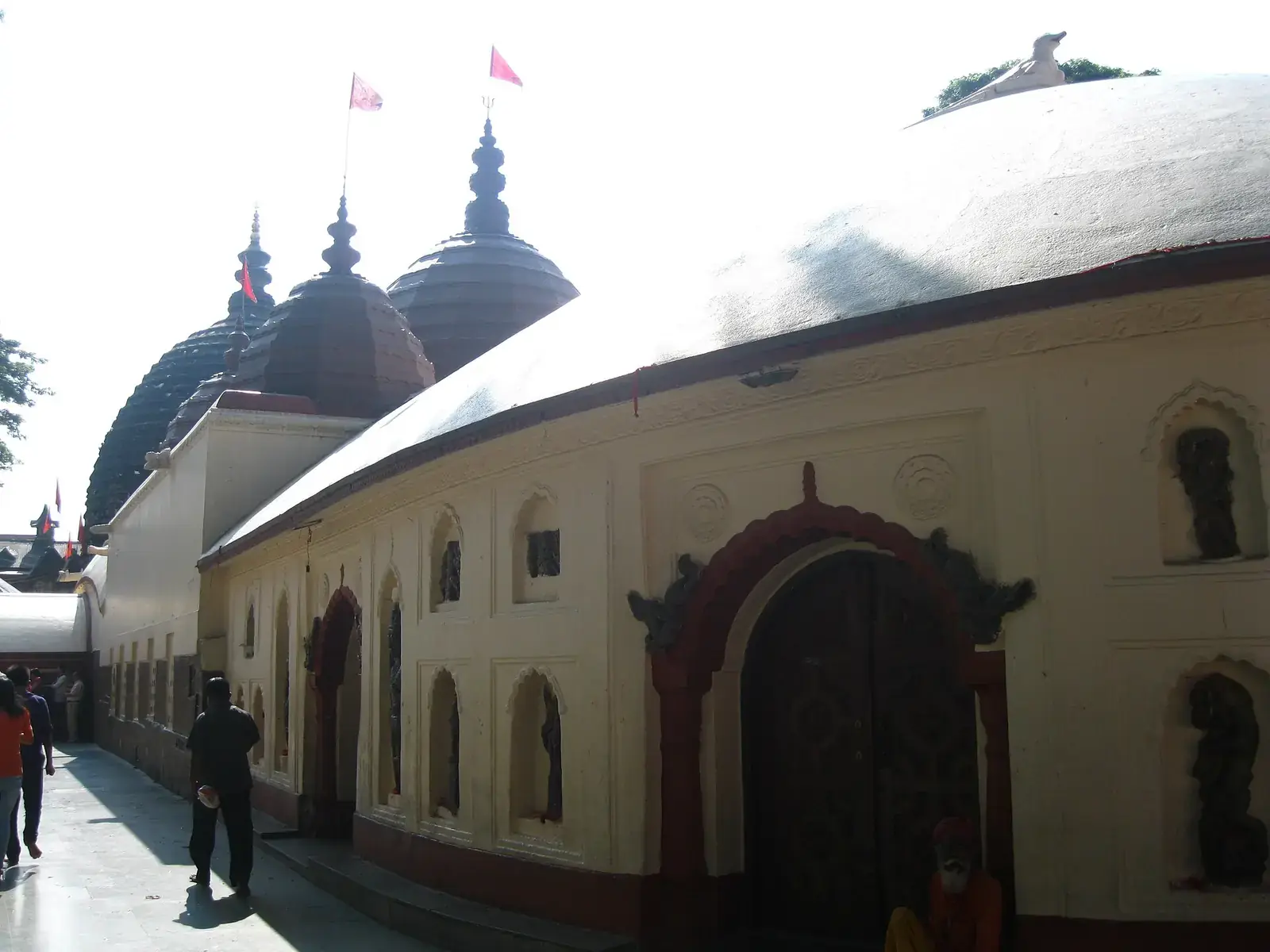
According to Puranic legend, when Sati gave up her life at her father Daksha's sacrifice, a grieving Shiva carried her body across the universe, and parts of it fell at different places. Each place became a Shakti Peetha, a seat of the Goddess, usually worshipped together with a form of Shiva as Bhairava.
There is no single official list. The 18 Maha Shakti Peethas come from the Ashtadasha Shakti Peetha Stotram, attributed to Adi Shankaracharya; the widely used list of 51 comes mainly from the Tantra Chudamani; some traditions count 52, 64 or 108. Several peethas lie outside India, in Pakistan, Bangladesh, Nepal, Sri Lanka and Tibet.
Quick answer
Shakti Peethas are shrines of the Goddess where, according to legend, parts of Sati's body fell. Different texts give different counts: 18 Maha Shakti Peethas in the Ashtadasha Shakti Peetha Stotram, 51 in the Tantra Chudamani, and 52, 64 or 108 in other traditions. Well-known Shakti Peethas in India include Kamakhya in Guwahati, Kalighat in Kolkata, Vishalakshi in Varanasi and Jwalamukhi in Himachal.
Key takeaways
- The legend of Sati and Daksha's sacrifice explains the Shakti Peethas.
- Counts differ by text: 18, 51, 52, 64 or 108.
- The 18 Maha Shakti Peethas come from a hymn attributed to Adi Shankaracharya.
- Some peethas are outside India, including Hinglaj in Pakistan and Guhyeshwari in Nepal.
- Regional routes (Himachal, Bengal, the south) are the practical way to visit several.
The 18 Maha Shakti Peethas
| Shakti Peetha | Place | Region |
|---|---|---|
| Shankari | Trincomalee | Sri Lanka |
| Kamakshi | Kanchipuram | Tamil Nadu |
| Shrinkhala | Location debated (often placed in West Bengal) | India |
| Chamundeshwari | Mysuru | Karnataka |
| Jogulamba | Alampur | Telangana |
| Bhramaramba | Srisailam | Andhra Pradesh |
| Mahalakshmi | Kolhapur | Maharashtra |
| Ekaveera | Mahur | Maharashtra |
| Mahakali | Ujjain | Madhya Pradesh |
| Puruhutika | Pithapuram | Andhra Pradesh |
| Girija (Biraja) | Jajpur | Odisha |
| Manikyamba | Draksharamam | Andhra Pradesh |
| Kamakhya | Guwahati | Assam |
| Madhaveshwari | Prayagraj | Uttar Pradesh |
| Vaishnavi (Jwala Devi) | Jwalamukhi | Himachal Pradesh |
| Mangala Gauri | Gaya | Bihar |
| Vishalakshi | Varanasi | Uttar Pradesh |
| Saraswati (Sharada) | Sharada Peeth | Kashmir (across the Line of Control) |
Much-visited Devi shrines
Kamakhya, Guwahati
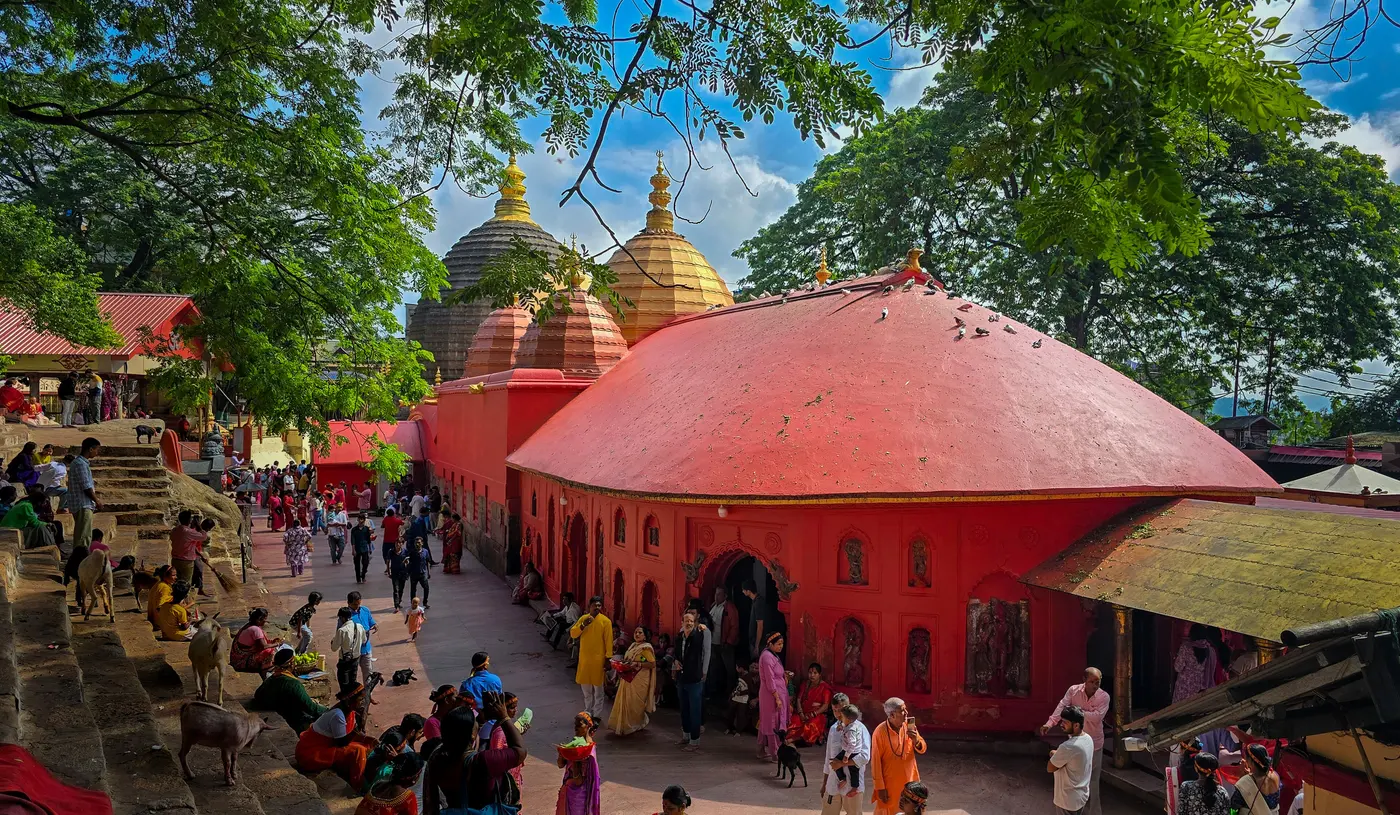
On Nilachal hill, one of the most important Shakta shrines, with the Ambubachi Mela in June.
Kalighat and Tarapith, West Bengal
Kalighat in Kolkata and Tarapith in Birbhum district are counted among the 51 in Bengali tradition.
Himachal's Devi temples
Jwalamukhi, Chintpurni, Naina Devi and Brajeshwari (Kangra) make a popular circuit.
The south
Kamakshi (Kanchipuram), Chamundeshwari (Mysuru), Bhramaramba (Srisailam) and Jogulamba (Alampur).
Regional routes
| Route | Shrines | Days |
|---|---|---|
| Himachal | Jwalamukhi, Chintpurni, Brajeshwari, Chamunda, Naina Devi | 4 to 5 |
| Bengal and Assam | Kalighat, Tarapith, Kamakhya | 4 to 5 |
| Andhra and Telangana | Srisailam, Alampur, Draksharamam, Pithapuram | 5 to 6 |
| Tamil Nadu and Karnataka | Kanchipuram, Mysuru (with Madurai's Meenakshi) | 4 to 5 |
What about Vaishno Devi?
Vaishno Devi near Katra is one of India's most visited Devi shrines. It is regarded by many devotees as a Shakti Peetha, though it does not appear in every traditional list. We include it here because it is central to Devi pilgrimage in north India.
How worship works at Shakti Peethas
At most Shakti Peethas the Goddess is worshipped together with a form of Shiva as Bhairava, whose shrine is often nearby; many pilgrims visit both. Some shrines have no idol at all: at Kamakhya the object of worship is a natural stone fissure fed by a spring, and at Jwalamukhi it is a set of natural flames.
Navratri, held twice a year (in spring and in autumn), is the most important festival at Devi shrines, followed by regional festivals such as the Ambubachi Mela at Kamakhya and Durga Puja in Bengal. These are spiritually special times but bring the largest crowds, so book stays early and expect long queues.
Safety
- Navratri and major festivals bring very large crowds; plan early.
- Follow each temple's rules on offerings, photography and dress.
- Several shrines involve hill climbs or ropeways; check access if you have mobility needs.
- Some peethas lie in restricted or cross-border areas; follow official travel advice.
What to pack
- Modest clothes, with a dupatta or scarf
- Slip-on footwear
- Warm layers for Himachal and Kashmir
- Small bag
Want this pilgrimage turned into a practical itinerary?
FAQs
How many Shakti Peethas are there?
It depends on the text: 18 in the Ashtadasha Shakti Peetha Stotram, 51 in the Tantra Chudamani, and 52, 64 or 108 in other traditions.
Which is the most famous Shakti Peetha?
Kamakhya in Guwahati is among the best known; Kalighat, Vishalakshi and Jwalamukhi are also widely visited.
Are all Shakti Peethas in India?
No. Some are in Pakistan (Hinglaj), Bangladesh, Nepal, Sri Lanka and Tibet.
Is Vaishno Devi a Shakti Peetha?
Many devotees regard it as one, though it is not in every traditional list.
What is the legend of the Shakti Peethas?
Puranic legend says that parts of Sati's body fell at these places as Shiva carried her after Daksha's sacrifice, and each became a seat of the Goddess.
When is the best time to visit Shakti Peethas?
October to March is comfortable. Navratri is spiritually important but very crowded.