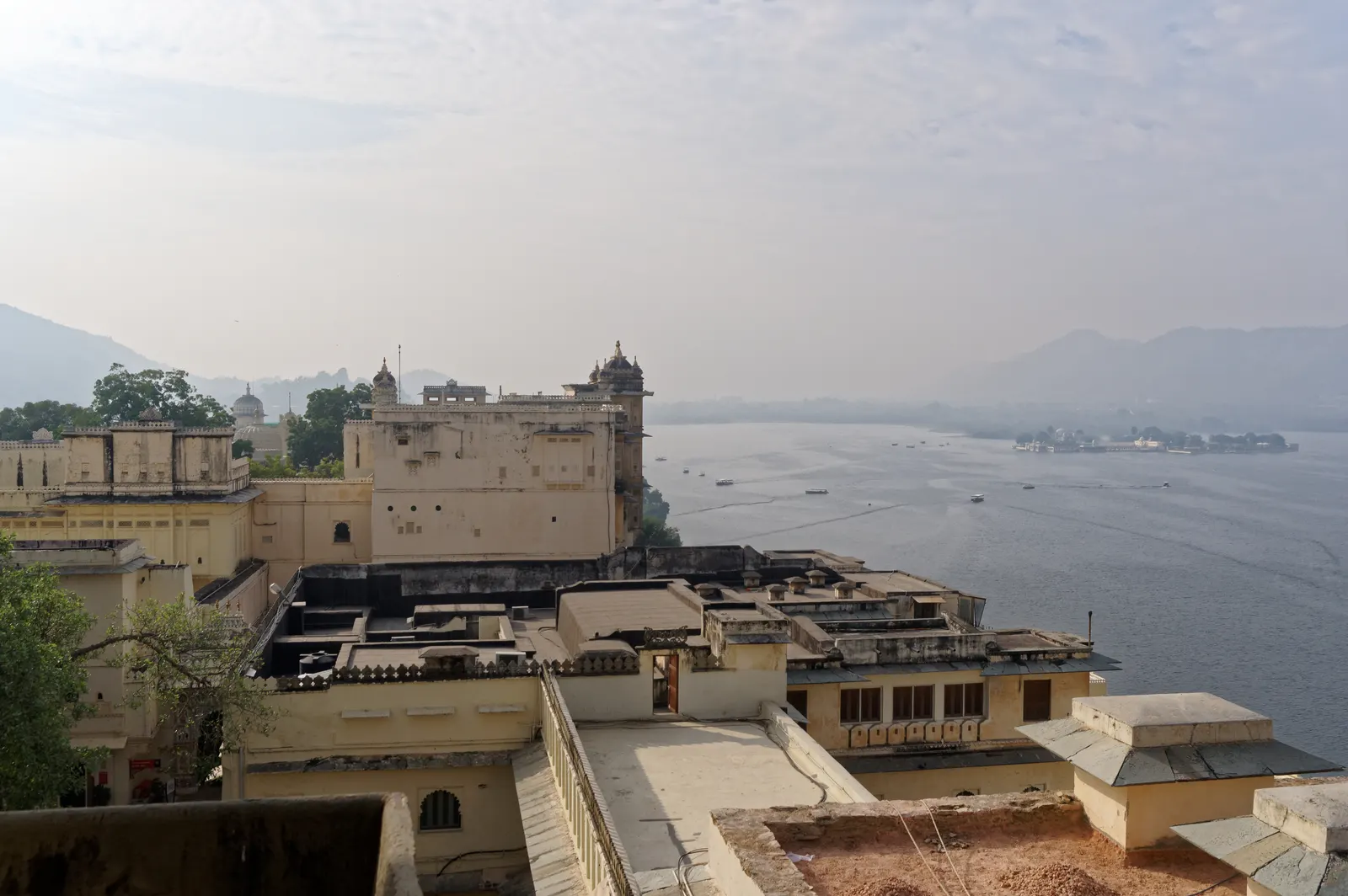
Why Udaipur?
Rajasthan is a state built on desert forts and dry, dramatic landscapes — which is exactly what makes Udaipur such a surprise. Here the desert gives way to a cluster of artificial lakes, ringed by hills and dotted with marble palaces that seem to rise directly out of the water. It's the reason Udaipur has been called the City of Lakes and, somewhat more cinematically, the Venice of the East.
At the centre of it all is the City Palace, the largest palace complex in Rajasthan, built up over nearly 400 years by successive Mewar rulers on the eastern bank of Lake Pichola. Just offshore, Jag Mandir and Jag Niwas (now the Taj Lake Palace hotel) sit on their own islands, appearing to hover on the water — an image so striking it's been the backdrop for everything from royal weddings to a James Bond film.
But Udaipur isn't only postcards. The old city's narrow lanes hold working havelis, silver and miniature-painting workshops, and rooftop cafés that turn every meal into a view. It's a compact, walkable city — most of what matters fits inside a few kilometres — which makes it one of the easiest Rajasthan destinations to see properly in two or three unhurried days.
🏰 Udaipur at a Glance
Looking for activities and experiences? See our guide to the best things to do in Udaipur.
Want a day-by-day plan? Follow our 10 to 14 day Rajasthan heritage itinerary.
Going by road? See our guide to the Rajasthan road trip.
Interested in the history? See our guide to palaces in India.
Best Time to Visit Udaipur
Udaipur's lakes make it slightly milder than the rest of desert Rajasthan, but the same broad seasonal pattern applies — cool winters are the clear favourite, summers are best avoided.
Daytime temperatures 18–28°C, cool evenings perfect for rooftop dinners and the sunset boat ride. Lakes are typically full after the monsoon. December–January is peak season — book palace-view hotels and the Lake Palace boat ride well ahead.
Temperatures climb into the high 30s°C by May–June. Sightseeing is still doable if you front-load activity to early morning and evening, but midday walking through the old city is genuinely draining.
Udaipur receives real monsoon rain, unlike the deep desert — the lakes fill dramatically, hillsides turn green, and the city looks at its lushest. Expect short, sudden downpours rather than continuous rain.
December–January nights can drop to 8–10°C, cooler than visitors expect from Rajasthan. A light jacket makes rooftop dinners and evening boat rides far more comfortable.
Our pick: October to February. Lakes are fullest right after monsoon, evenings are cool enough for a jacket and a rooftop dinner, and the light in the golden hour before sunset is exactly what makes Udaipur's palace-and-water views so famous.
How to Reach Udaipur
Udaipur is one of the best-connected cities in Rajasthan, with direct flights from most major Indian metros — the easiest of the state's heritage cities to reach.
- By Air: Maharana Pratap Airport (UDR) has direct daily flights from Delhi, Mumbai, Bangalore, Ahmedabad, and Jaipur, plus seasonal connections to other cities. The airport is about 22 km from the city centre, roughly 30–40 minutes by taxi.
- By Train: Udaipur City Railway Station connects to Delhi, Mumbai, Ahmedabad, and Jaipur with both day and overnight options. The Mewar Express and Udaipur–Delhi overnight trains are popular choices for arriving rested.
- By Road: Udaipur connects to Jaipur (405 km, 6–7 hrs), Jodhpur (265 km, 5 hrs), and Ahmedabad (260 km, 5 hrs) via good highways. RSRTC and private overnight buses run regularly from all three.
- Classic Rajasthan circuit: Udaipur pairs naturally with Jodhpur and Jaisalmer for a south-to-west Rajasthan loop, or with Mount Abu (185 km, ~4 hrs) as a shorter hill-station add-on.
City Palace
Begun in 1559 CE by Maharana Udai Singh II (Udaipur's founder) and expanded by successive Mewar rulers over the next four centuries, the City Palace is the largest palace complex in Rajasthan — a sprawling fusion of courtyards, balconies, towers, and domes built directly on the eastern shore of Lake Pichola.
Unlike Jaisalmer's austere desert fort, City Palace is all ornamentation — coloured glass, mirror-work mosaics, miniature paintings, and peacock motifs picked out in inlaid tile. Large sections remain the private residence of the Mewar royal family, while the rest is open as a museum showing armour, royal portraits, and palanquins.
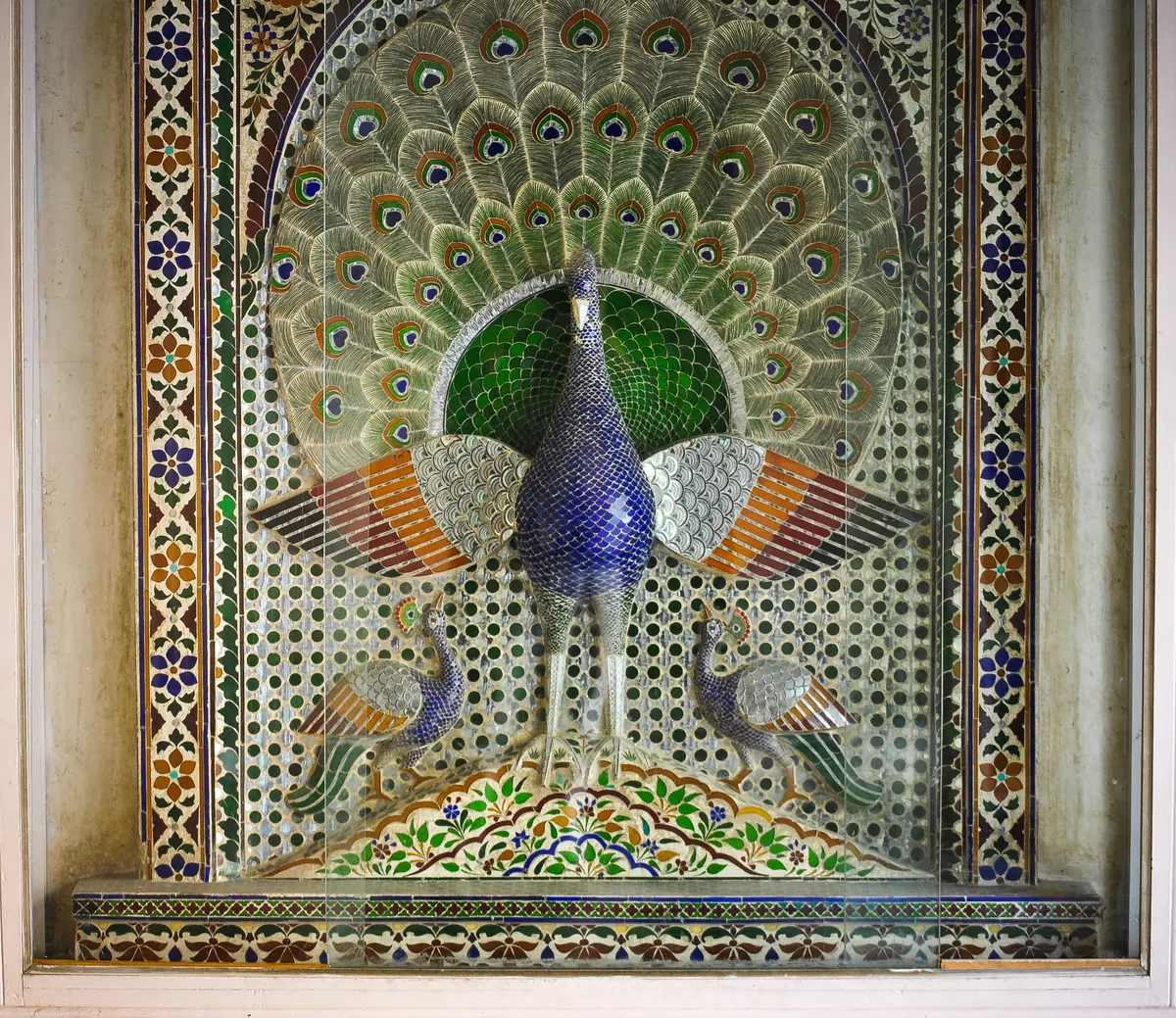
- Mor Chowk (Peacock Courtyard): The palace's most photographed room, with three life-sized mosaic peacocks in glass and tile representing the three seasons — the single image most associated with City Palace.
- Manak Mahal (Ruby Palace): A mirrored and glass-inlaid hall lined with royal portraits, one of the most opulent interior spaces in the complex.
- Crystal Gallery: A separate ticketed section housing an extraordinary collection of crystal furniture ordered from England in the 1870s by Maharana Sajjan Singh — some pieces were never even unpacked before the maharana's death.
- Entry: ₹300 (Indian), ₹700 (Foreign) for the museum; Crystal Gallery is a separate ticket (~₹500).
- Timings: 9:30 AM – 5:30 PM daily
Lake Pichola
Lake Pichola is the reason Udaipur looks the way it does — an artificial lake created in 1362 CE and later expanded under Maharana Udai Singh II, ringed by the City Palace, ghats, havelis, and hills, with two palace-topped islands rising from its centre.
Jag Mandir & Jag Niwas
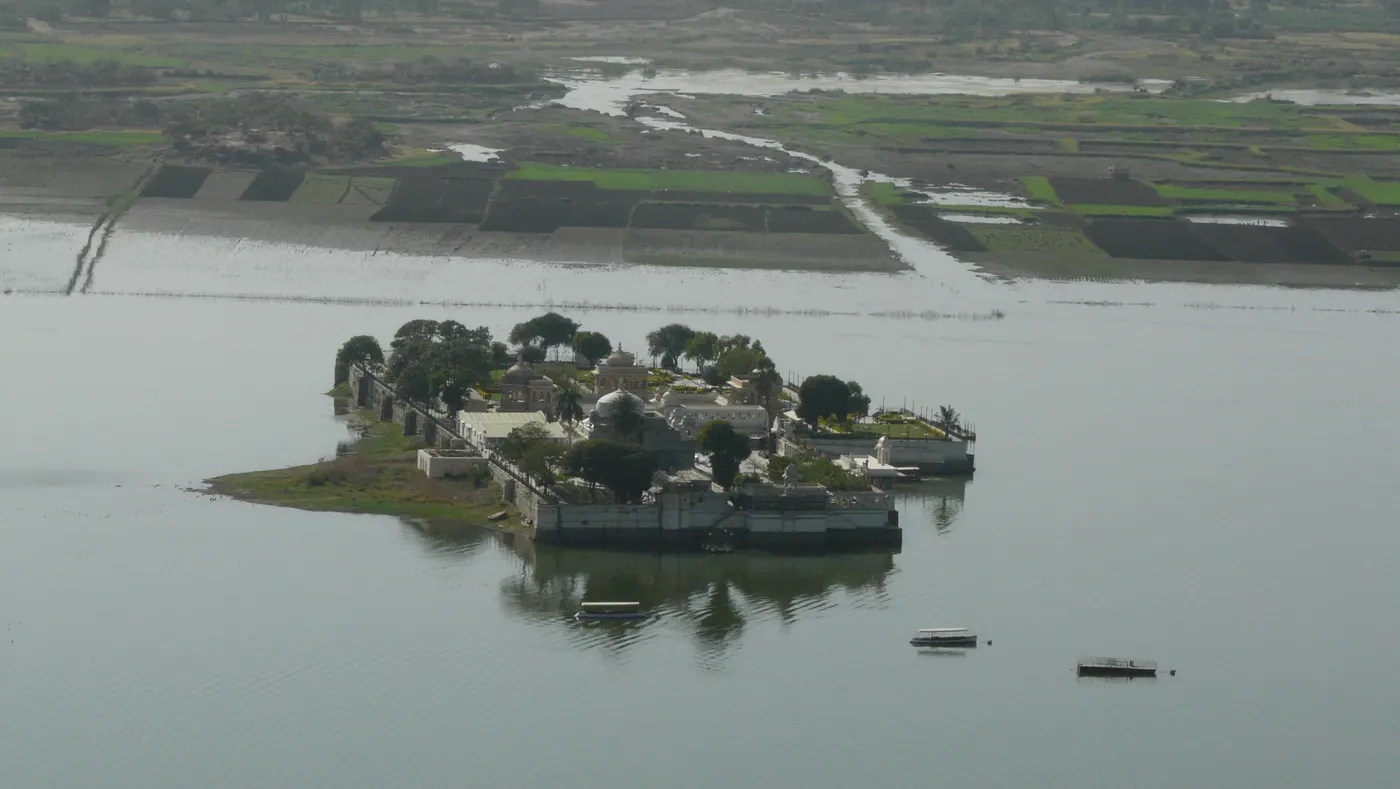
Jag Mandir, built across the 17th century on a southern island, is open to visitors as a restaurant and event venue, with a marble courtyard, garden, and elephant-carved sandstone gateway. It once sheltered a young Prince Khurram (the future Shah Jahan) during a rebellion against his father — a stay some historians believe influenced the design of the Taj Mahal decades later.
Jag Niwas, on the second island, is now the Taj Lake Palace hotel — not open to non-guests for casual visits, but its illuminated silhouette at night, appearing to float on the water, is one of Udaipur's defining views regardless of whether you stay there.
The Boat Ride
A Lake Pichola boat ride is close to mandatory in Udaipur — departing from the City Palace jetty, most trips circle past Jag Mandir with a photo stop, and the sunset departure (last slot of the day) is by far the most popular, timed so the palace skyline turns gold and pink as the sun drops behind the Aravalli hills.
- Duration: ~1 hour
- Price: ₹400–₹700 per person (sunset slots cost more and sell out first)
- Book ahead in peak season: The sunset slot fills up by early afternoon during December–January — book at the jetty counter as soon as you arrive in the city if sunset timing matters to you.
Fateh Sagar Lake
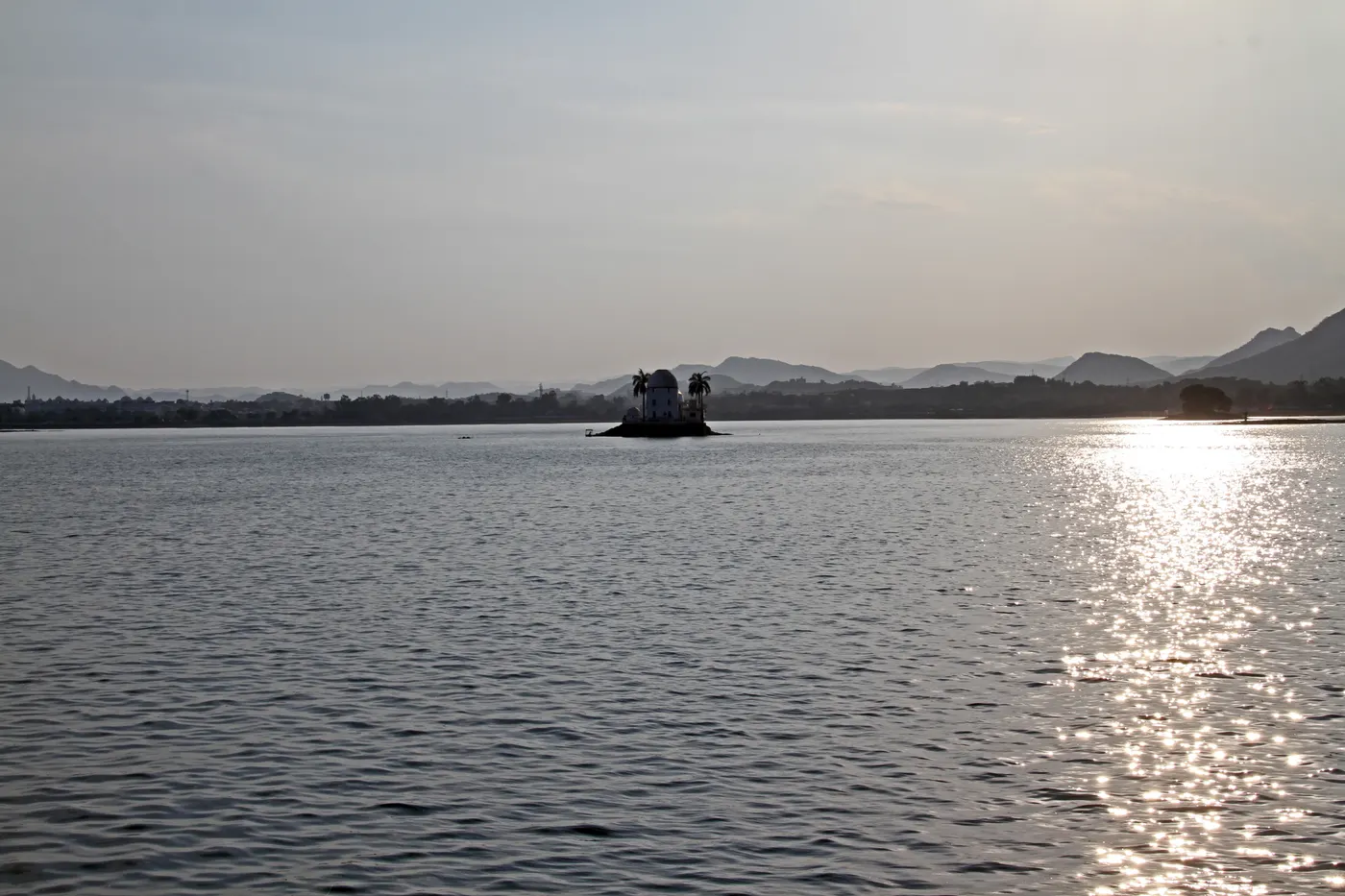
North of Lake Pichola, Fateh Sagar Lakeis Udaipur's second major lake — larger, quieter, and considerably less touristy, popular with locals for evening walks along its promenade. It holds three islands, including Nehru Garden, a small public park reachable by boat, and offers some of the best unobstructed sunset views in the city, with the Aravalli hills as backdrop.
- Boat rides: ₹200–₹400 per person, shorter queues than Pichola
- Best for: A calmer alternative to Pichola's tourist crowds, and a good spot for an evening walk or café stop
Saheliyon ki Bari
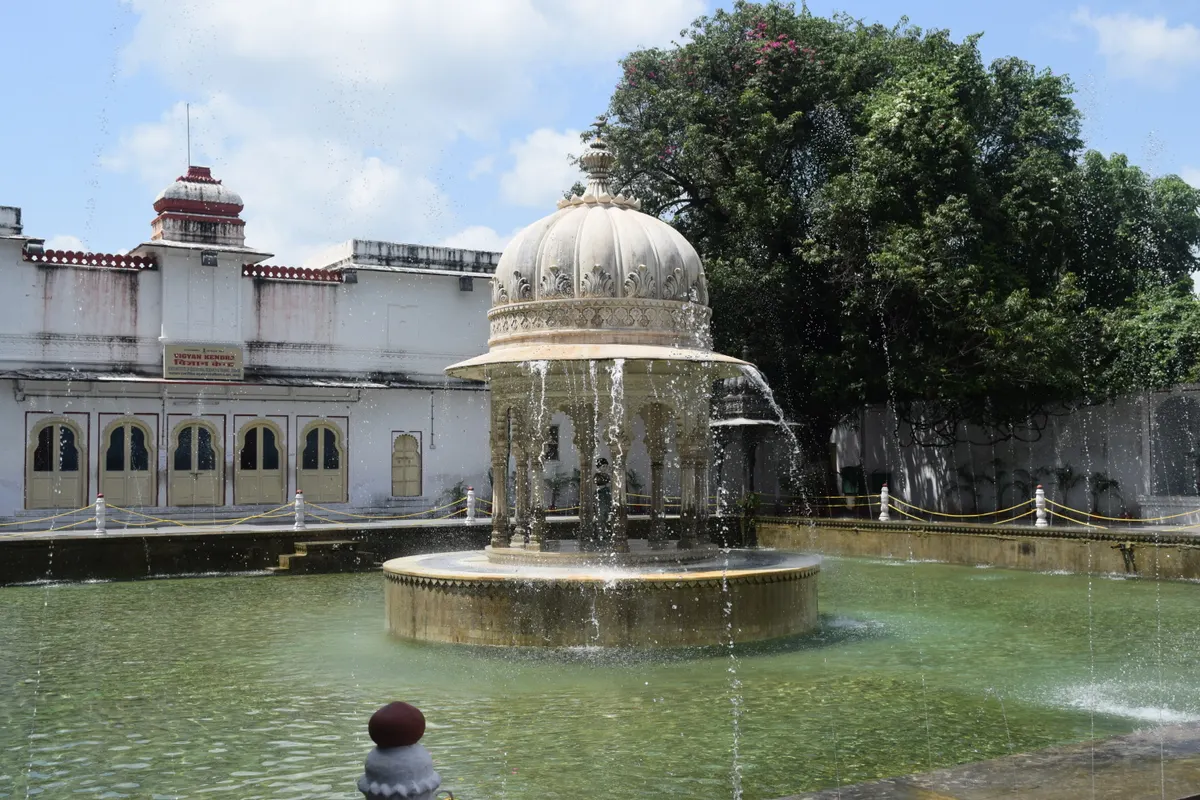
Built in the early 18th century by Maharana Sangram Singh II for the queen's attendants, Saheliyon ki Bari ("Garden of the Maidens") is a compact but beautifully maintained garden of marble fountains, lotus pools, and a small museum, designed originally so royal women could enjoy the monsoon without leaving the palace grounds.
- Entry: ₹50 (Indian), ₹200 (Foreign)
- Timings: 8 AM – 7 PM
- Best for: A quick, relaxed stop — most visitors spend 30–45 minutes here
Bagore ki Haveli
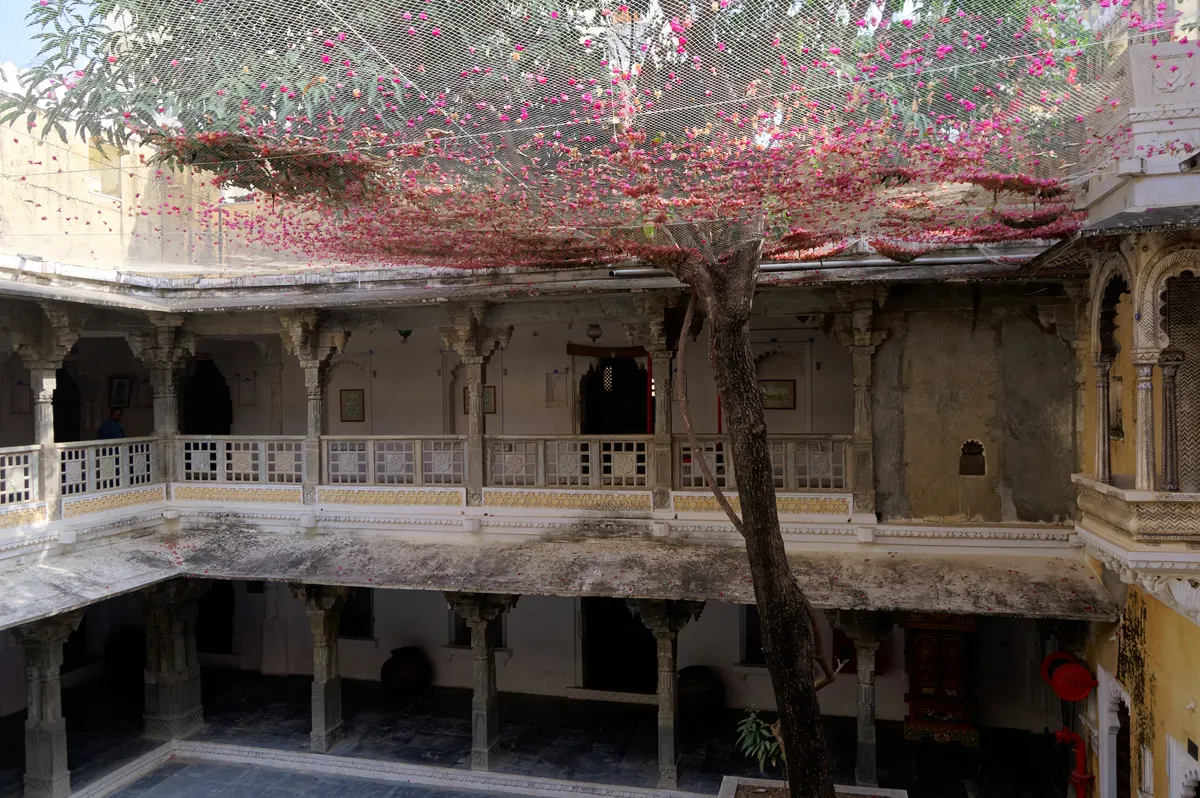
Sitting directly on the Gangaur Ghat at Lake Pichola's edge, Bagore ki Haveli is an 18th-century mansion built by a Mewar prime minister, now restored as a museum of Mewar royal life — turbans, glass and mirror work rooms, and period furniture across more than a hundred rooms.
Its real draw, though, is the evening Dharohar cultural show in the haveli's courtyard — traditional Rajasthani dance including the Kalbeliya (snake charmer) dance and a spectacular finale where a dancer balances up to eleven brass pots on her head while dancing on broken glass.
- Museum entry: ₹60
- Dharohar show: ₹150–₹200, nightly at 7 PM (arrive 20–30 min early for good seats)
Monsoon Palace (Sajjangarh)
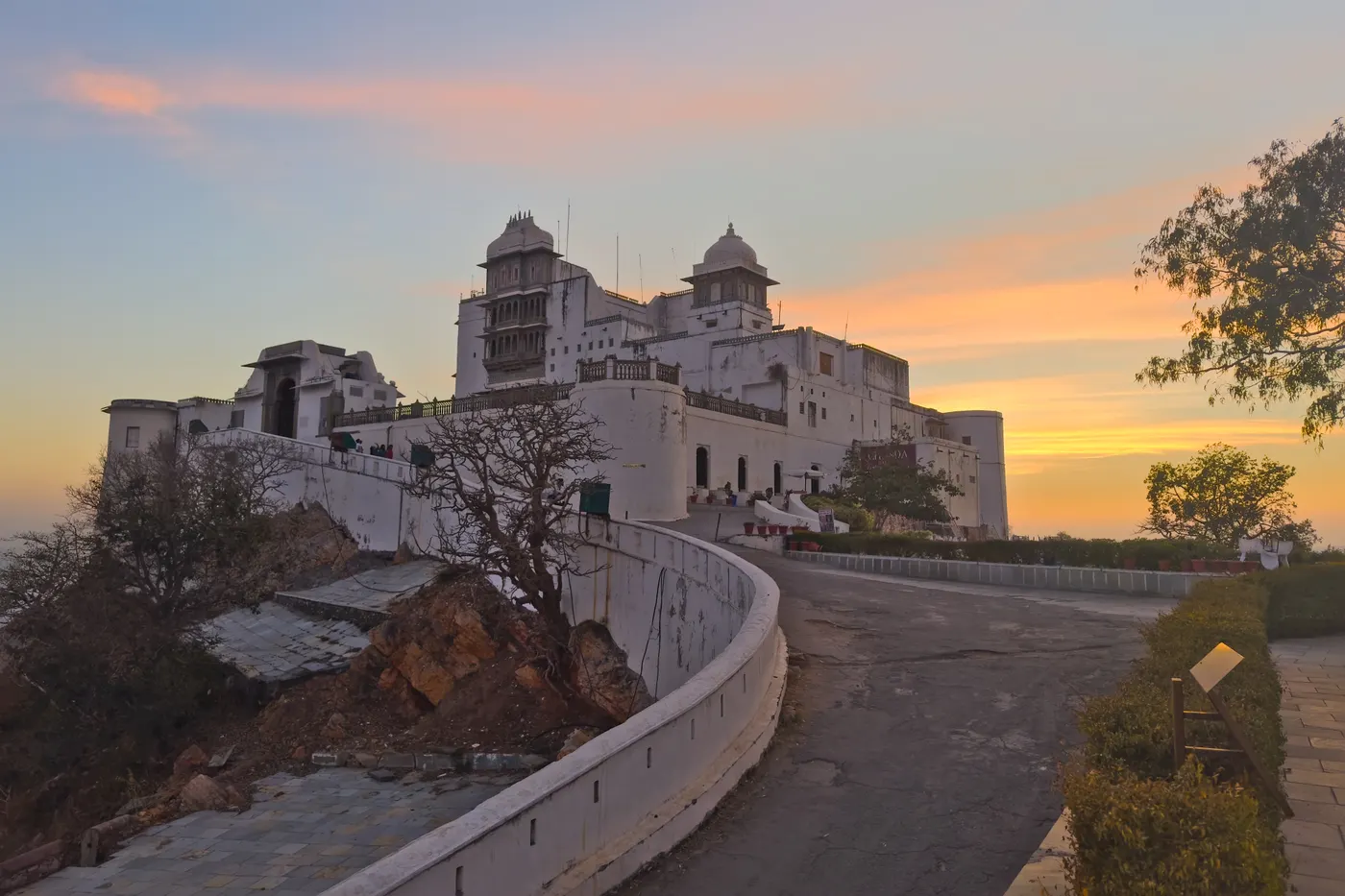
Perched on a hilltop 944 metres above sea level, the Monsoon Palace (Sajjangarh) was built in the late 19th century by Maharana Sajjan Singh, originally intended as an astronomical centre and monsoon-watching retreat. Today it's Udaipur's best sunset viewpoint, with a panoramic outlook over the entire city, Lake Pichola, and the surrounding Aravalli range.
- Distance from city centre: ~9 km, 20–30 minutes by taxi/auto
- Entry: ₹300 (includes vehicle entry to Sajjangarh Wildlife Sanctuary en route)
- Timings: 9 AM – 6:30 PM (last entry ~5:30 PM for sunset)
- Note: Book a taxi round trip rather than relying on finding return transport at the top — options thin out after dark.
The Old City & Markets
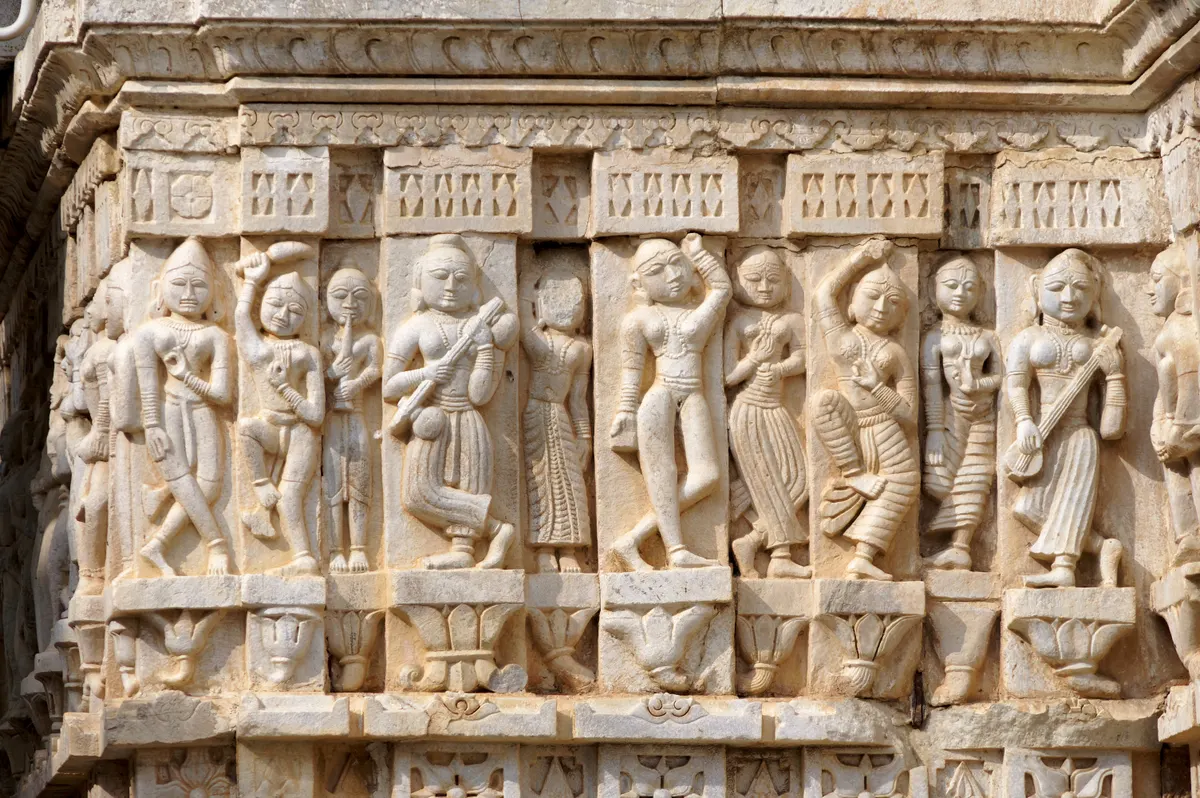
Udaipur's old city, wrapped around Lake Pichola's eastern shore, rewards aimless wandering as much as any specific sight — narrow lanes packed with miniature-painting studios, silver jewellery shops, and rooftop cafés with palace or lake views at every turn.
- Jagdish Temple: A large, active Indo- Aryan temple just outside City Palace's main gate, dedicated to Vishnu, with intricately carved pillars and a constant flow of local worshippers.
- Hathi Pol and Bada Bazaar: The main shopping stretches for textiles, silver, and Rajasthani handicrafts — expect to bargain.
- Miniature painting studios: Udaipur is known for a distinctive school of Mewar miniature painting — several old-city workshops let you watch artists at work before buying directly.
- Rooftop cafés: Cafés overlooking Lake Pichola near Jagdish Chowk and Lal Ghat are where most travellers end up for sunset drinks — arrive 30–45 minutes before sunset for a good table.
Where to Stay in Udaipur
Staying near Lake Pichola — around Lal Ghat, Hanuman Ghat, or the old city — puts you within walking distance of City Palace, the boat jetty, and Bagore ki Haveli, and most rooftop rooms come with a lake or palace view as standard.
- → Zostel Udaipur
- → Lake Ghat View Guesthouse
- → Backpacker hostels near Lal Ghat
- → Budget rooftop guesthouses, Hanuman Ghat
- → Amet Haveli (lake-facing haveli hotel)
- → Jagat Niwas Palace Hotel
- → Kumbha Palace
- → Dream Heaven Hotel (rooftop views)
- → Taj Lake Palace (on the lake itself)
- → The Leela Palace Udaipur
- → Trident Udaipur
- → Shiv Niwas Palace (part of City Palace complex)
For the best value-to-view ratio, book a mid-range haveli hotel directly on Lake Pichola — Amet Haveli and Jagat Niwas Palace both offer City Palace or Lake Palace views for a fraction of the Taj Lake Palace's price.
What to Eat in Udaipur
Udaipur's food draws on the same Rajasthani tradition as the rest of the state, with a few local specialities and an unusually good rooftop-dining scene thanks to the city's lake and palace views.
- Dal Baati Churma: Rajasthan's signature dish, found across the old city — baked wheat dough balls with spiced lentils and a sweet wheat-jaggery crumble.
- Laal Maas: A fiery Rajputana mutton curry cooked with dried red chillies — one of the state's most iconic non-vegetarian dishes, worth seeking out at a proper Rajasthani restaurant.
- Mirchi Bada: A local Udaipur street- food speciality — large green chillies stuffed with spiced potato, dipped in gram-flour batter, and deep fried. Best found near Jagdish Chowk in the evening.
- Gatte ki Sabzi and Ker Sangri: The same desert-adapted lentil and gram-flour dishes found across Rajasthan, widely available at local thalis.
- Best restaurants: Ambrai Restaurant (Amet Haveli, unbeatable ground-level lake views), Upre by 1559 AD (rooftop, City Palace views), and Millets of Mewar (rustic, traditional Rajasthani thalis).
3-Day Udaipur Itinerary
Udaipur is compact enough to cover its essentials in three unhurried days, with time for a sunset boat ride, the Monsoon Palace, and enough slack to simply wander the old city.
City Palace & Lake Pichola
- ✓Morning: City Palace — Mor Chowk, Manak Mahal, Crystal Gallery (arrive at opening)
- ✓Lunch: Rooftop café near Jagdish Chowk
- ✓Afternoon: Jagdish Temple and old-city lanes
- ✓Evening: Sunset boat ride on Lake Pichola past Jag Mandir
Gardens, Haveli & Culture
- ✓Morning: Saheliyon ki Bari gardens
- ✓Afternoon: Fateh Sagar Lake — boat ride, Nehru Garden
- ✓Evening: Bagore ki Haveli museum + Dharohar dance show
- ✓Dinner: Ambrai Restaurant for ground-level lake views
Monsoon Palace & Departure
- ✓Morning: Local market shopping — silver, textiles, miniature paintings
- ✓Afternoon: Monsoon Palace (Sajjangarh) for panoramic city views
- ✓Late afternoon: Final rooftop lunch or coffee overlooking the lake
- ✓Departure by flight, train, or onward Rajasthan circuit
Budget Breakdown
| Expense | Budget | Mid-Range | Luxury |
|---|---|---|---|
| Accommodation/night | ₹900 | ₹3,500 | ₹25,000 |
| Food/day | ₹400 | ₹1,000 | ₹2,500 |
| Palace + monument entries | ₹300 | ₹800 | ₹800 |
| Lake Pichola boat ride | ₹500 | ₹700 | ₹700 |
| Local transport/day | ₹250 | ₹700 | ₹2,000 |
| Daily total | ₹2,350 | ₹6,700 | ₹31,000 |
| 3-Day trip total | ₹7,050 | ₹20,100 | ₹93,000 |
* Excludes flight/train to Udaipur. Luxury figures spike mainly on accommodation — a night at the Taj Lake Palace alone can exceed the entire budget-tier trip total.
Essential Travel Tips for Udaipur
- Book the sunset boat slot early:It sells out by early afternoon in peak season (Dec–Jan) — head to the City Palace jetty counter as soon as you arrive in the city if you want that specific slot.
- Arrive at City Palace at opening time:Tour groups arrive by mid-morning and the narrow courtyard passages get genuinely crowded — the first hour is the only time Mor Chowk is close to empty.
- Pack a light jacket even in "warm" months:Winter nights around the lakes drop to 8–10°C, colder than most visitors expect from a Rajasthan trip.
- Book a round-trip taxi for the Monsoon Palace:Return transport options thin out after dark at Sajjangarh — arrange your ride both ways in advance.
- Bargain respectfully in the markets:Silver jewellery and miniature paintings in the old city bazaars are priced expecting negotiation — bargain firmly but politely.
- Dress modestly for temples:Jagdish Temple and other active temples expect shoulders and knees covered — carry a light scarf as a quick cover-up.
- Walk instead of driving in the old city:Lanes around Lake Pichola are narrow and best explored on foot — most key sights (City Palace, Jagdish Temple, Bagore ki Haveli) are within a 15-minute walk of each other.
✅ Do
- →Book the sunset boat ride slot as early as possible
- →Arrive at City Palace right at opening time
- →Watch the Dharohar dance show at Bagore ki Haveli
- →Pack a light jacket for cool winter evenings
- →Try Ambrai Restaurant for ground-level lake views
- →Visit Fateh Sagar for a quieter lake alternative
- →Bargain at the old-city silver and textile markets
- →Book a round-trip taxi for the Monsoon Palace
❌ Don't
- →Visit City Palace mid-morning expecting empty courtyards
- →Assume winter evenings will be warm — they aren't
- →Skip booking the sunset boat slot until late in the day
- →Wear shorts or sleeveless tops into active temples
- →Rely on finding a taxi back from Sajjangarh after dark
- →Visit April–June expecting comfortable midday walking
- →Accept the first market price without bargaining
- →Miss Fateh Sagar just because Pichola is more famous
Frequently Asked Questions
How many days do I need in Udaipur?
Udaipur is compact enough to cover its essentials in three unhurried days — City Palace and a sunset boat ride, the gardens and Bagore ki Haveli's Dharohar dance show, and the Monsoon Palace plus old-city markets, with plenty of slack for wandering.
What is the best time to visit Udaipur?
October to February is the pick — lakes are fullest right after monsoon, evenings are cool enough for a jacket and a rooftop dinner, and the golden-hour light before sunset makes the palace-and-water views especially striking. Avoid April–June, when temperatures climb into the high 30s°C and midday walking through the old city gets genuinely tiring.
How do I reach Udaipur?
Udaipur has direct flights from Delhi, Mumbai, Bangalore, Ahmedabad, and Jaipur into Maharana Pratap Airport, about 22 km from the city centre. It's also connected by train (Udaipur City Railway Station, with overnight options from Delhi and Mumbai) and by road to Jaipur, Jodhpur, and Ahmedabad.
Is Udaipur worth visiting?
Yes — it's a compact, walkable city where marble palaces appear to float on artificial lakes ringed by hills, home to the largest palace complex in Rajasthan (City Palace), the iconic Lake Pichola boat ride past Jag Mandir, and an old city of havelis and rooftop cafés that make it one of the most photogenic cities in India.
What is the budget for a trip to Udaipur?
A 3-day trip runs roughly ₹7,050 at the budget level up to ₹93,000 at the luxury level (excluding flights or train fare), with luxury figures spiking mainly on accommodation — a night at the Taj Lake Palace alone can exceed the entire budget-tier trip total.
What are the top things to do in Udaipur?
City Palace (especially the Mor Chowk peacock courtyard and Crystal Gallery), a sunset boat ride on Lake Pichola past Jag Mandir, Saheliyon ki Bari's marble fountains, the Dharohar cultural dance show at Bagore ki Haveli, and the panoramic sunset views from the Monsoon Palace (Sajjangarh) are the essentials.
Can I visit the Taj Lake Palace without staying there?
Not for a casual visit — Jag Niwas (the Taj Lake Palace hotel) isn't open to non-guests, though its illuminated silhouette on the lake at night is one of Udaipur's defining views regardless. Jag Mandir, the neighbouring island palace, is open to visitors as a restaurant and event venue.
Published by the Kudozz Club editorial team · Last updated · How we research our guides
Want us to plan this trip for you?
Tell Kudozz Club where you want to go and what kind of trip you’re looking for. We’ll build a Udaipur and Rajasthan itinerary around your dates and budget.
Continue Exploring
View all guides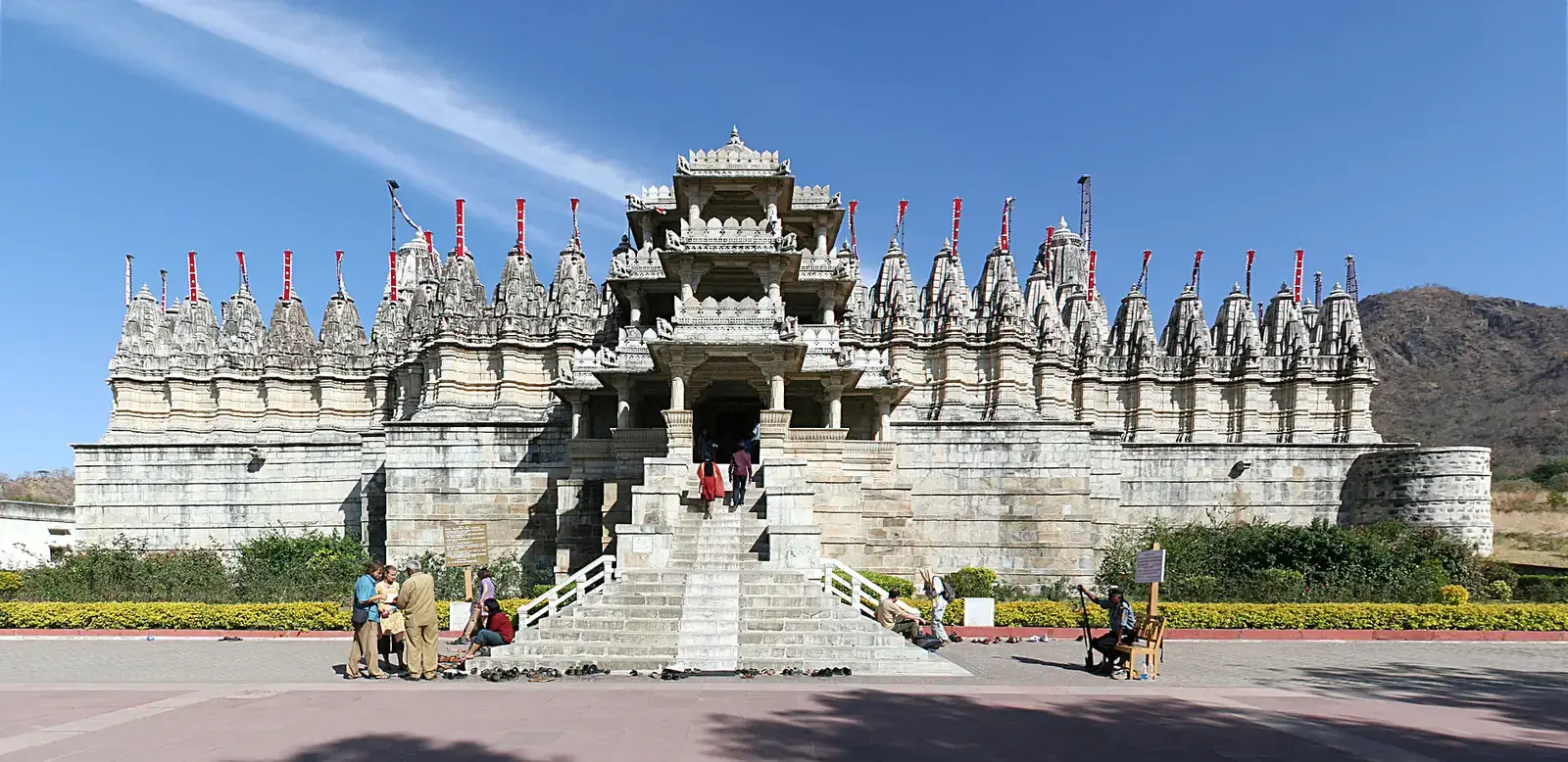 Spiritual Tourism
Ranakpur Jain Temple: Visiting Guide, Timings and How to Reach
A visitor's guide to the Ranakpur Jain Temple in Pali district, Rajasthan: the 15th-century Chaturmukha temple to Adinath, its carved marble pillars and ceilings, visiting hours and rules for non-Jain visitors, how to reach from Udaipur and Jodhpur, where to stay, and combining it with Kumbhalgarh and Jawai.
Things to DoThings to Do in Udaipur: Lakes, Palaces, Sunsets & Old City Experiences
The best things to do in Udaipur: the City Palace, a sunset boat on Lake Pichola, Bagore ki Haveli's evening dance show, Monsoon Palace views, old-city walks and day trips.
 Heritage
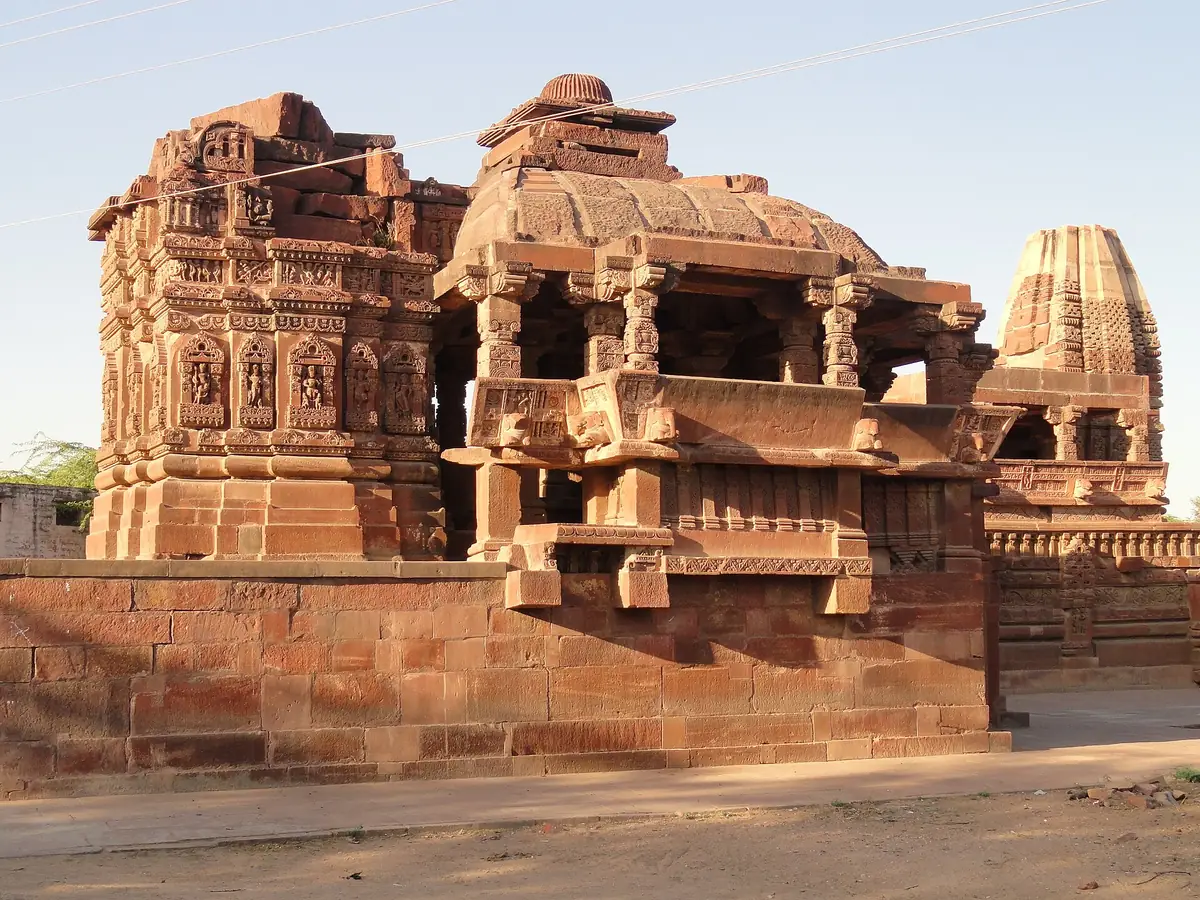
Osian Travel Guide: Desert Temples & Tips
Ancient Hindu and Jain temples rise straight out of the Thar Desert near Jodhpur — the complete guide to Osian's 8th-12th century heritage and quieter dunes.
 Heritage
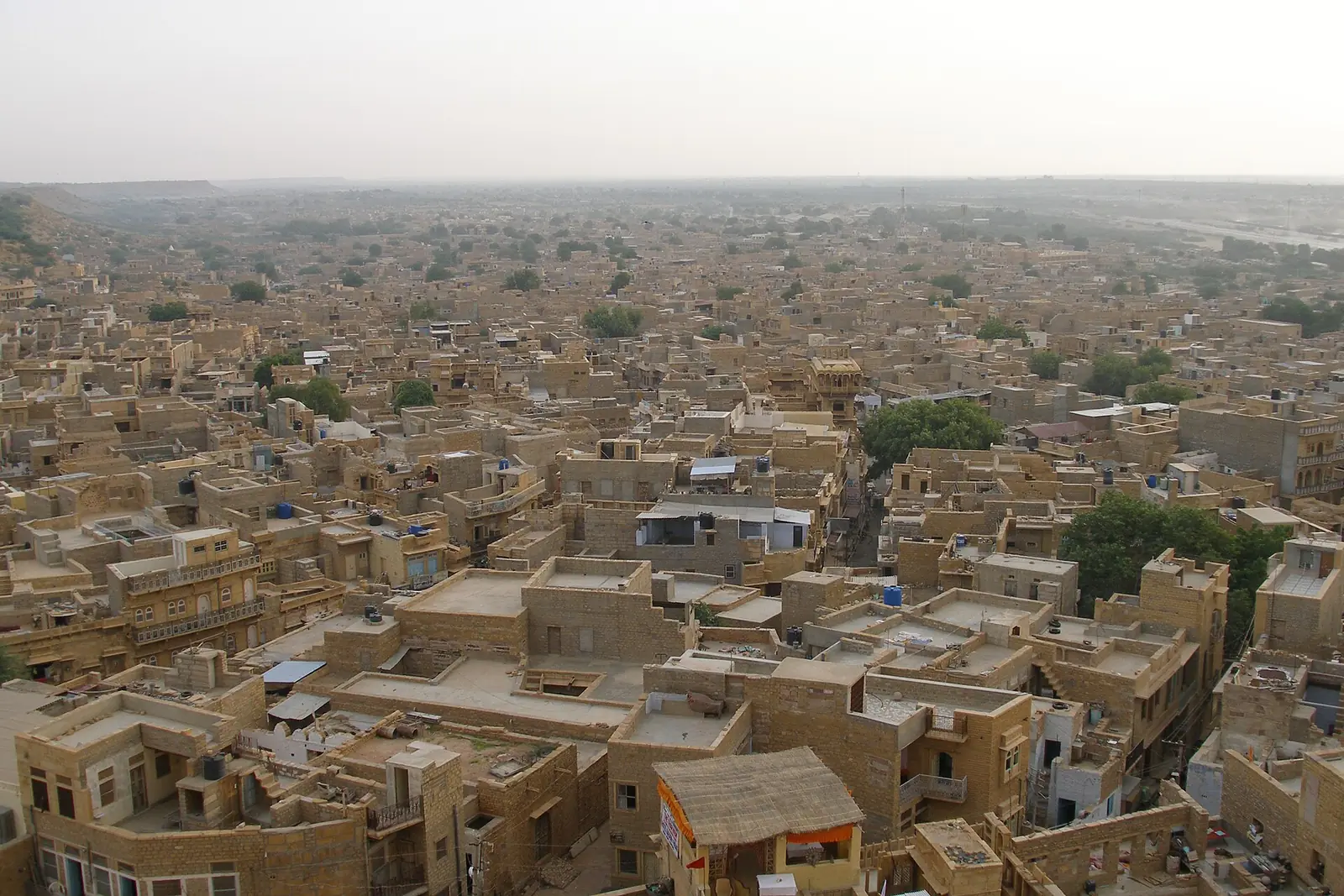
Jaisalmer & Thar Desert Travel Guide: Fort, Camel Safari & Tips
A living medieval fort rising from the Thar Desert, camel safaris into the dunes and the most spectacular havelis in Rajasthan — the complete guide to Jaisalmer.