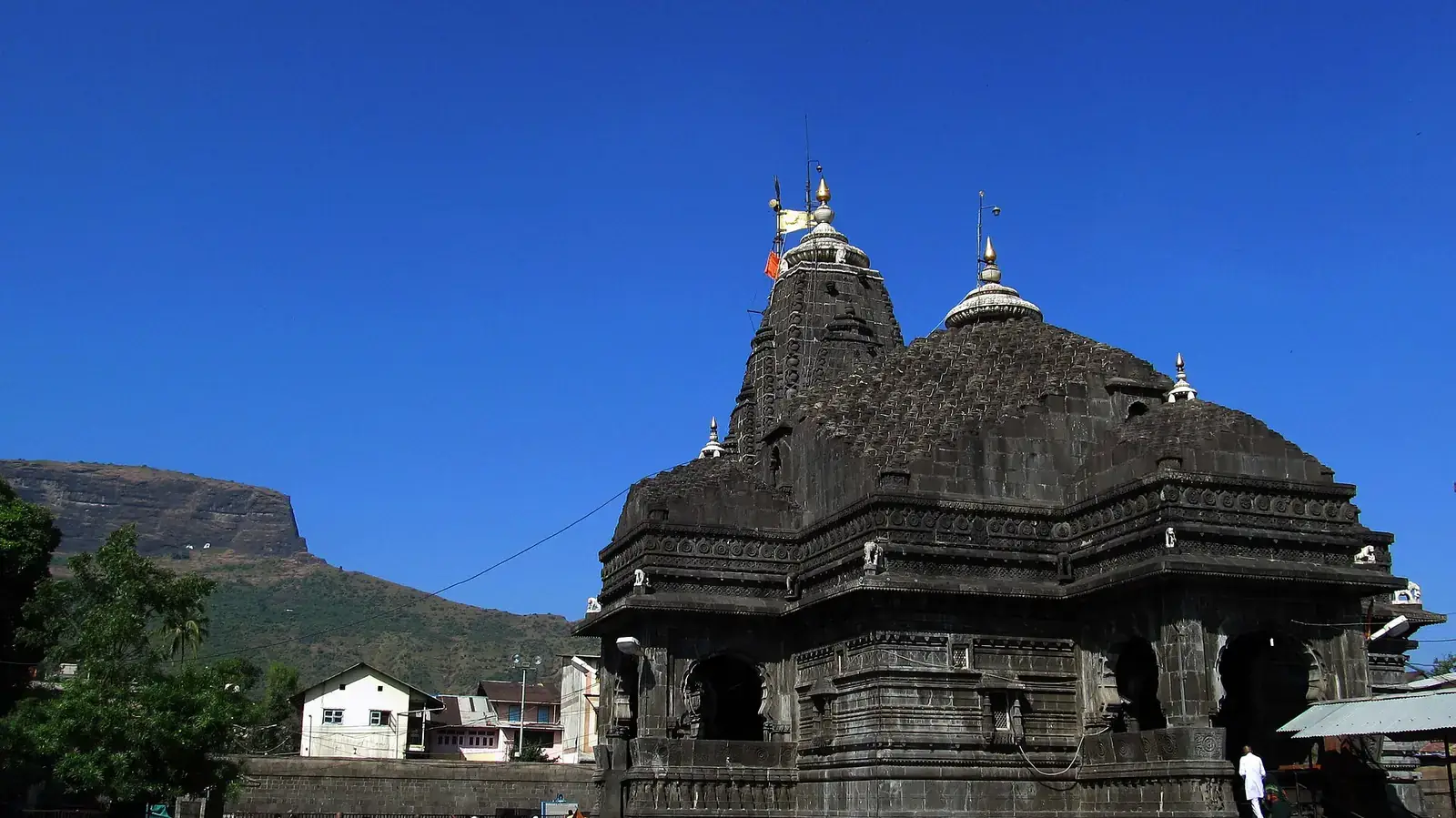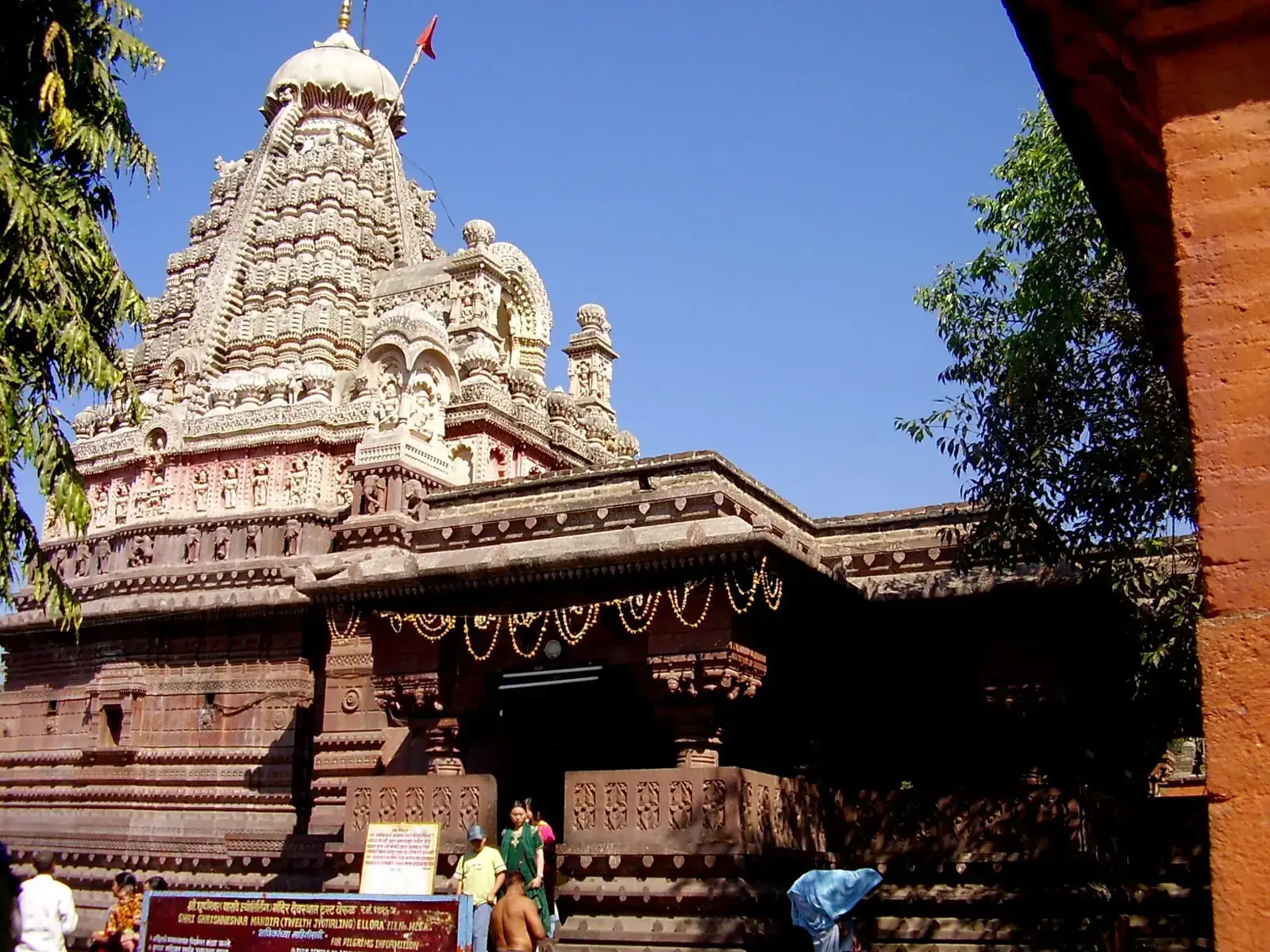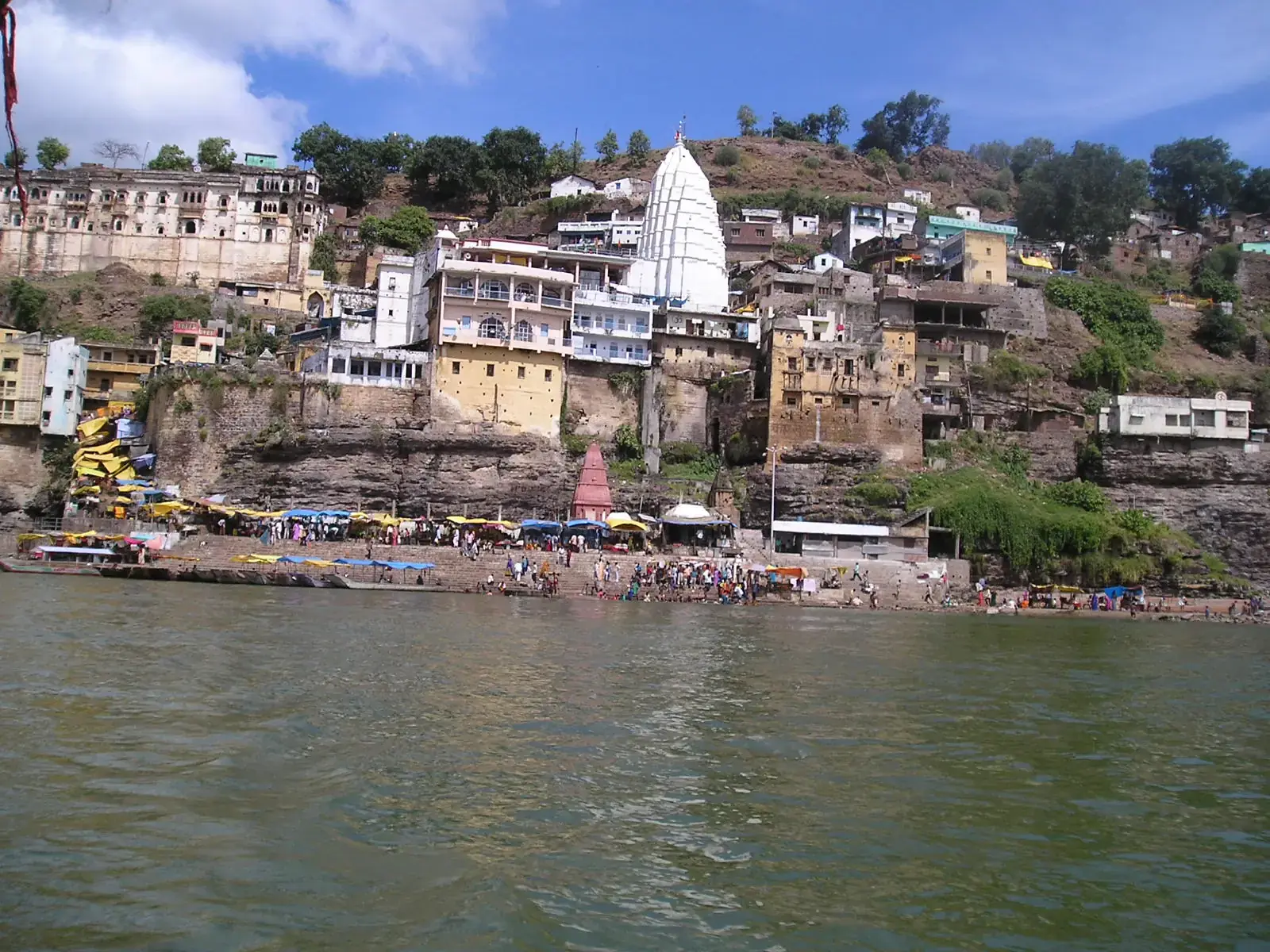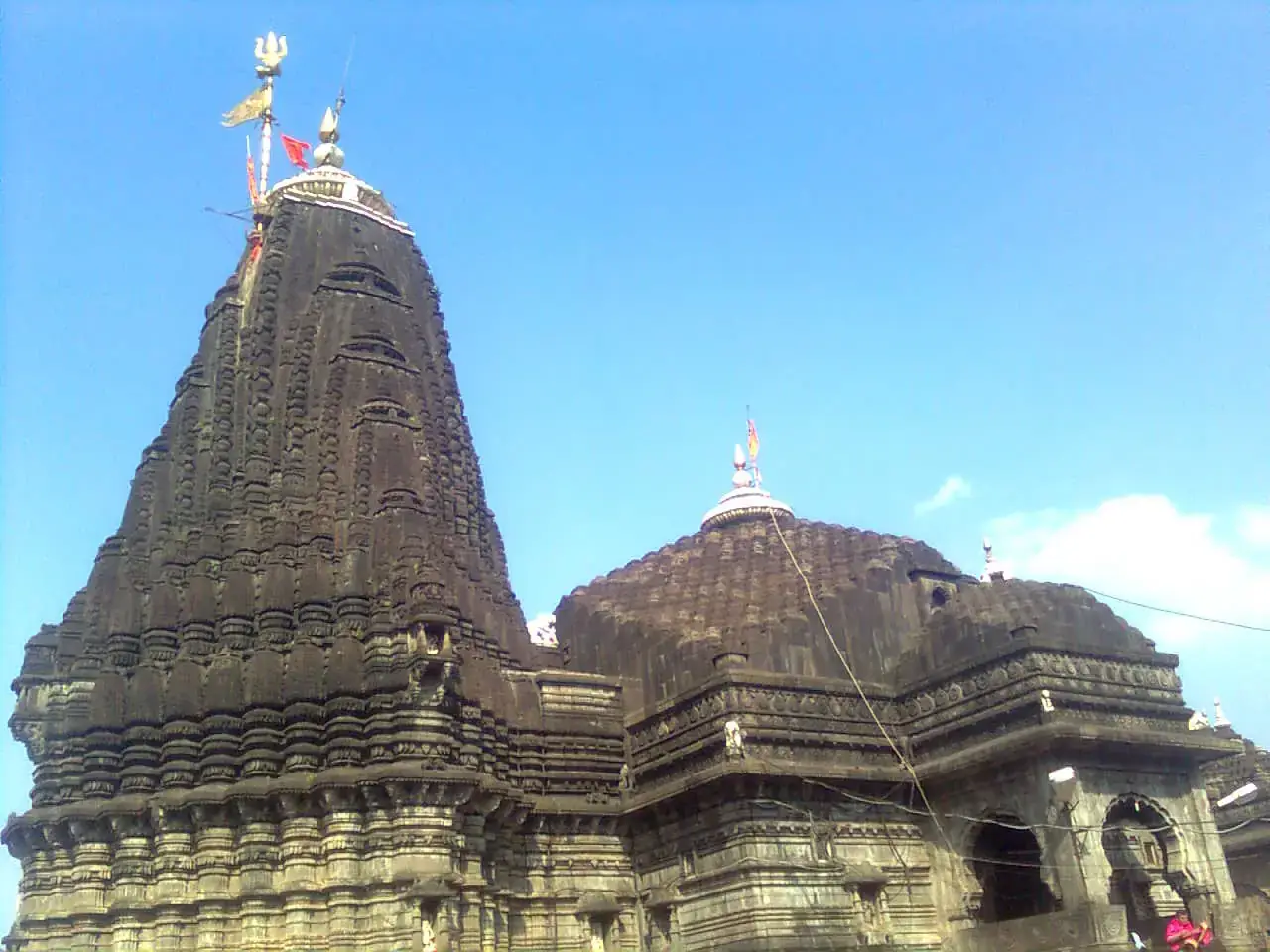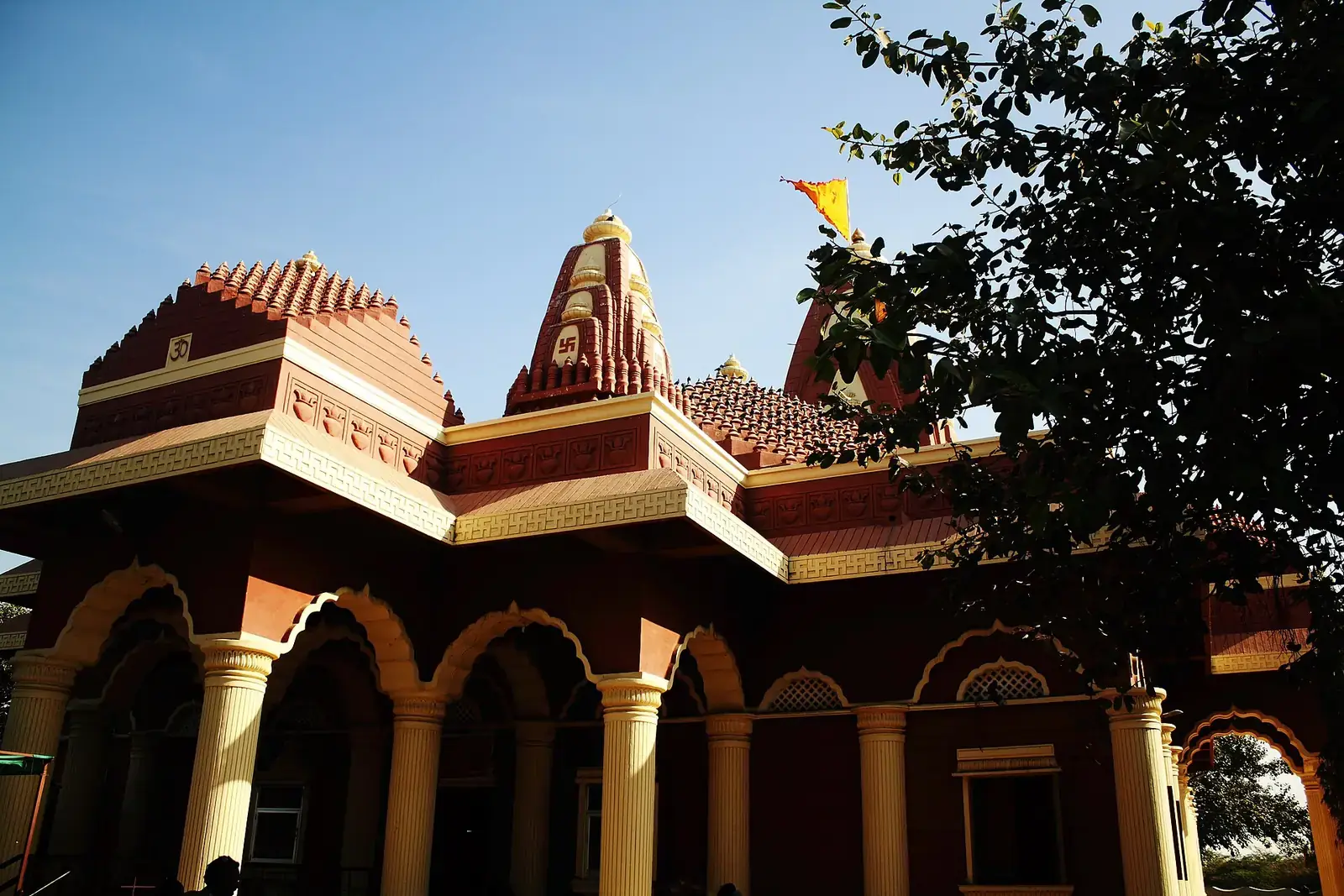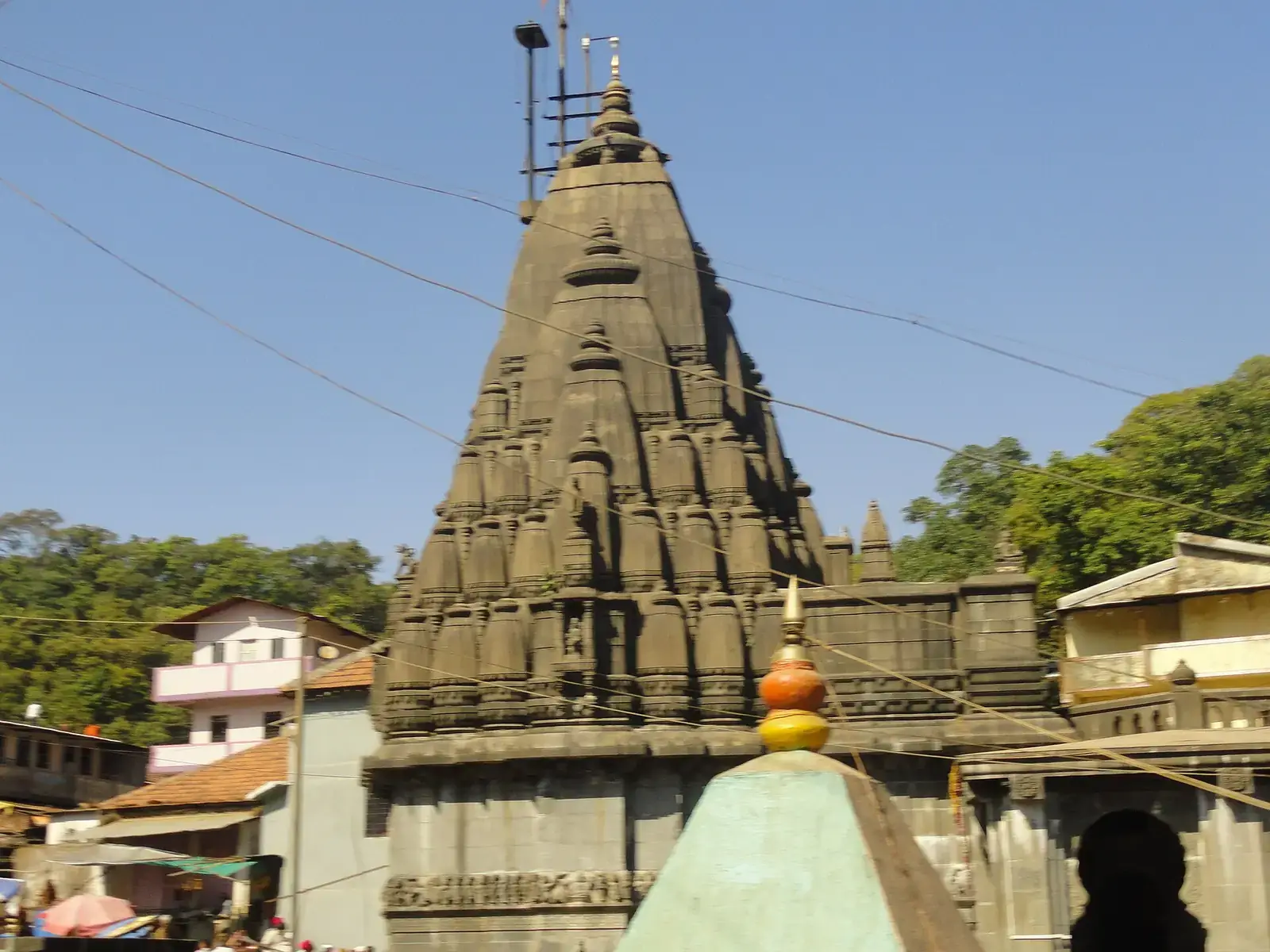
Bhimashankar Temple stands at about 1,000 m in the Sahyadri (Western Ghats), in Khed taluka of Pune district, about 110 km from Pune. Tradition places the source of the Bhima river here. The temple's older stone core was extended in the 18th century, when the Maratha minister Nana Phadnavis is credited with building the hall and shikhara.
The temple lies inside Bhimashankar Wildlife Sanctuary, known for the Indian giant squirrel (shekru), Maharashtra's state animal. In the monsoon the hills are wrapped in cloud and waterfalls, which draws trekkers as well as pilgrims.
Quick answer
Bhimashankar Jyotirlinga is about 110 km (three and a half to four hours) from Pune by road, via Rajgurunagar and Manchar, with a winding final climb. From Mumbai it is about 210 km by road, or trekkers walk up from Khandas near Karjat. Darshan is busiest on Mondays, in Shravan and on Maha Shivratri. September to February is the best time; the monsoon is beautiful but wet.
Key takeaways
- Bhimashankar is about 110 km from Pune and about 210 km from Mumbai by road.
- It lies inside Bhimashankar Wildlife Sanctuary, home of the Indian giant squirrel.
- Trekkers climb from Khandas (Karjat side) by the Ganesh Ghat or the steeper Shidi Ghat route.
- Avoid driving the ghat road at night.
- Assam's government has promoted a site in Kamrup as Bhimashankar; the Pune temple is the one most pilgrims visit.
The temple
The temple is built of dark stone in the Nagara style, set in a hollow below the car park and reached by a flight of steps. Inside the sanctum is the linga, reached through a pillared hall. Nearby shrines include Kamalaja Devi and the spring associated with the Bhima's source.
At a glance
Key facts for visitors.
- Location
- Bhimashankar, Pune district
- Altitude
- About 1,000 m
- Nearest city
- Pune, about 110 km
- Best time
- September to February
Darshan tips
- There are steps down to the temple and back up; allow extra time for older visitors.
- Weekday mornings are quieter; Mondays, Shravan and Maha Shivratri see very long queues.
- Keep phones and bags minimal; follow the notices on photography.
- Carry cash for small purchases; the hilltop has limited facilities.
Forest, treks and viewpoints
Bhimashankar Wildlife Sanctuary
Evergreen forest protecting the Indian giant squirrel, with birds and butterflies. Walks start near the temple.
Treks from Khandas
The Ganesh Ghat route is longer and gentler; the Shidi Ghat route uses steep steps and ladders and is risky in heavy rain. Both are popular monsoon treks; go with an experienced group.
- Start
- Khandas, near Karjat
Viewpoints
Nagphani point and Gupt Bhimashankar are short walks from the temple, with views over the Konkan when clear.
Another claim to the name
Most pilgrims and the traditional lists identify the sixth Jyotirlinga with this temple near Pune. The Assam government has also promoted a Shiva temple in Kamrup as Bhimashankar, citing a reference to Dakini hills in the Shiva Purana. We mention it because readers ask; this guide does not settle the question.
How to reach and where to stay
- From Pune: about 110 km via Rajgurunagar (Khed), Manchar and Ghodegaon; state transport buses run from Pune.
- From Mumbai: about 210 km by road via Pune or the Khed route; trekkers take a train to Karjat and a local vehicle to Khandas.
- Stay: basic lodges and MTDC-style stays near the temple, or stay in Pune or Manchar and make a day trip.
- The final ghat stretch is steep and winding; drive in daylight.
A day trip from Pune
| Time | Plan |
|---|---|
| 6 am | Leave Pune to avoid traffic at Rajgurunagar |
| 9:30 to 10 am | Reach Bhimashankar; darshan |
| Late morning | Walk to Gupt Bhimashankar or Nagphani point |
| Afternoon | Lunch at the hilltop stalls; start back by 3 pm to finish the ghat in daylight |
Safety
- Darshan waits vary from minutes to many hours; no one can guarantee quick darshan, so plan buffer time.
- Dress modestly (shoulders and knees covered) and follow the temple's rules on phones, bags and photography.
- In the monsoon, check trail conditions and avoid the Shidi Ghat route in heavy rain.
- Drive the ghat road in daylight and watch for fog.
What to pack
- Rain jacket and good-grip shoes in the monsoon
- Warm layer for winter mornings
- Water and snacks
- Slip-on footwear for the temple
Want this pilgrimage turned into a practical itinerary?
FAQs
How far is Bhimashankar from Pune?
About 110 km, or three and a half to four hours by road.
Can you trek to Bhimashankar?
Yes. Trekkers climb from Khandas near Karjat by the Ganesh Ghat or the steeper Shidi Ghat route.
What is the best time to visit Bhimashankar?
September to February. The monsoon is scenic but wet and slippery.
Is Bhimashankar in a wildlife sanctuary?
Yes, Bhimashankar Wildlife Sanctuary, known for the Indian giant squirrel.
Where can I stay at Bhimashankar?
There are simple lodges near the temple; most visitors stay in Pune or Manchar and make a day trip.
Is there another Bhimashankar Jyotirlinga?
The Assam government has promoted a site in Kamrup. The temple near Pune is the one most pilgrims visit.