A Desert City Built on Camel Culture
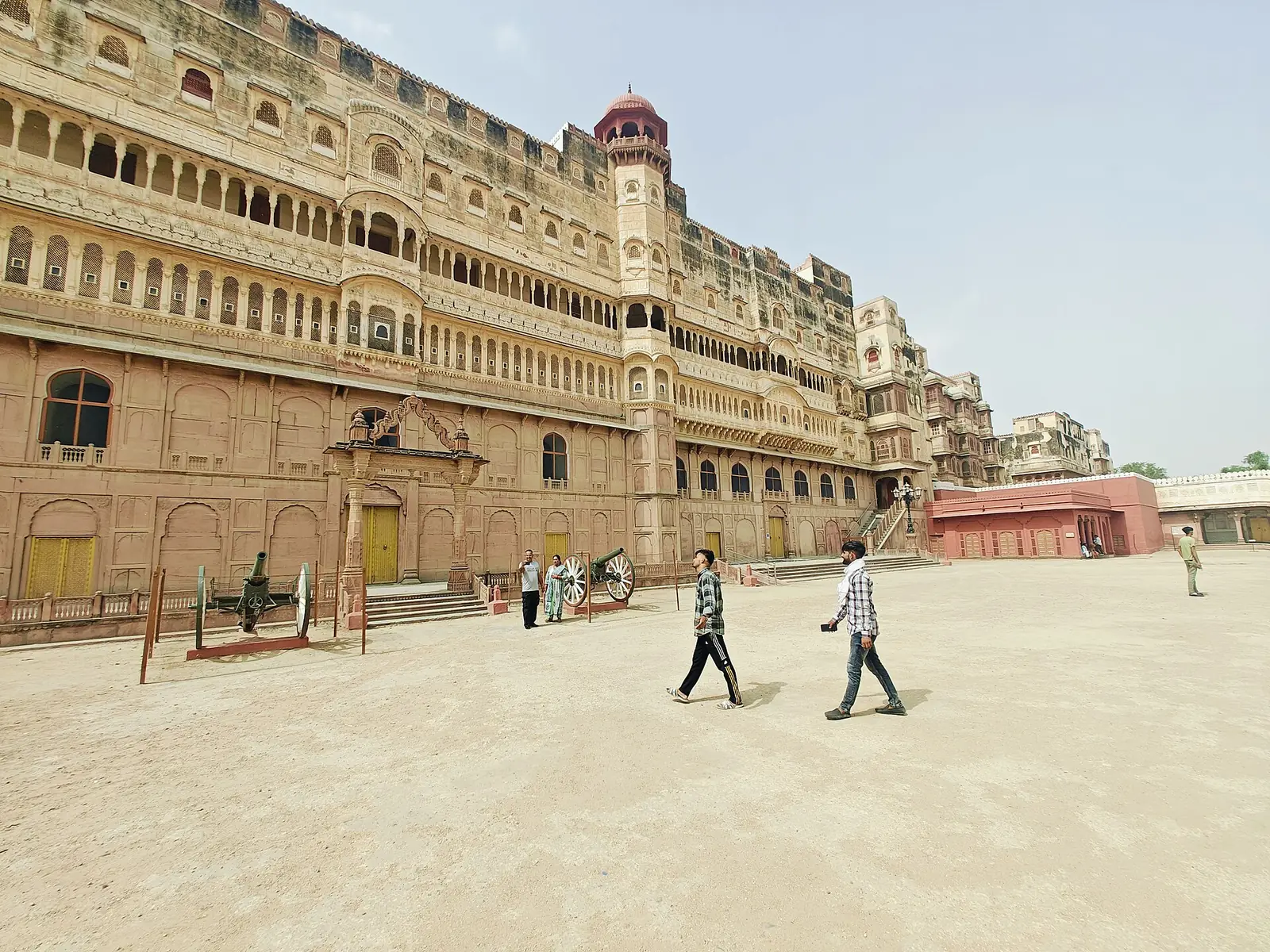
Bikaner is a desert city in northern Rajasthan, centred on Junagarh Fort — built in the late 16th century and notable for reportedly never having been conquered. Its interiors are elaborately painted and mirrored, among the most opulent of Rajasthan's fort-palaces, despite Bikaner drawing far fewer visitors than Jaisalmer or Jodhpur.
A short drive away at Deshnoke sits the Karni Mata Temple, famously known as the "rat temple," where thousands of rats living within the temple are considered sacred and are fed and revered by devotees — one of the most distinctive, and for many visitors startling, attractions in all of Rajasthan.
Camel culture runs deep here too, from the National Research Centre on Camel offering safaris and camel-milk products, to Bikaner's old-city havelis and its most famous export: bhujia, a spicy gram-flour snack sold across India but best bought fresh here.
🐫 Bikaner at a Glance
Looking for activities and experiences? See our guide to the best things to do in Bikaner.
Going by road? See our guide to the Rajasthan road trip.
Interested in the history? See our guide to the forts of Rajasthan.
Planning something active? Read our guide to desert adventures in India.
Best Time to Visit Bikaner
Bikaner's desert climate makes timing a real factor — summer heat here is severe.
Cool, dry conditions make exploring Junagarh Fort, the old city, and Deshnoke genuinely comfortable.
Desert summer temperatures regularly exceed 45°C, making daytime sightseeing genuinely difficult.
Bikaner sees relatively little rainfall even in monsoon, though humidity can still make the heat feel worse.
Bikaner's annual Camel Festival brings parades, races, and cultural performances celebrating the city's camel heritage.
Our pick: October to March — with January offering the bonus of the Camel Festival if timing allows.
How to Reach Bikaner
- By road from Jaipur: Roughly 335 km, about 5-6 hours by car.
- By road from Jodhpur: Roughly 250 km, about 4-5 hours — a common leg of a wider western Rajasthan desert circuit.
- By rail: Bikaner Junction is well connected to Jaipur, Delhi, and Jodhpur by regular trains.
Junagarh Fort, Karni Mata Temple & Camels
Junagarh Fort
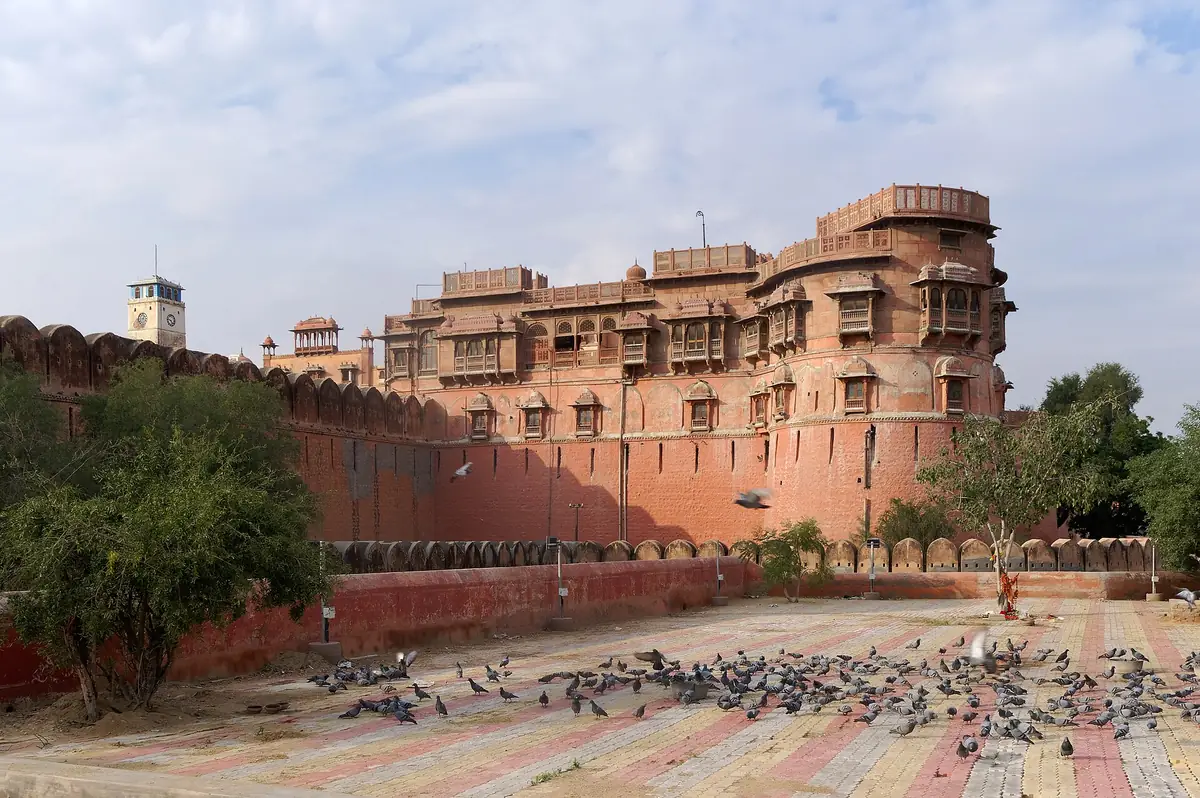
Built in the late 16th century, Junagarh Fort is notable for reportedly never having been conquered. Its interiors are richly painted and mirrored, with ornate palace chambers that rank among the most opulent in Rajasthan.
Karni Mata Temple (Deshnoke)
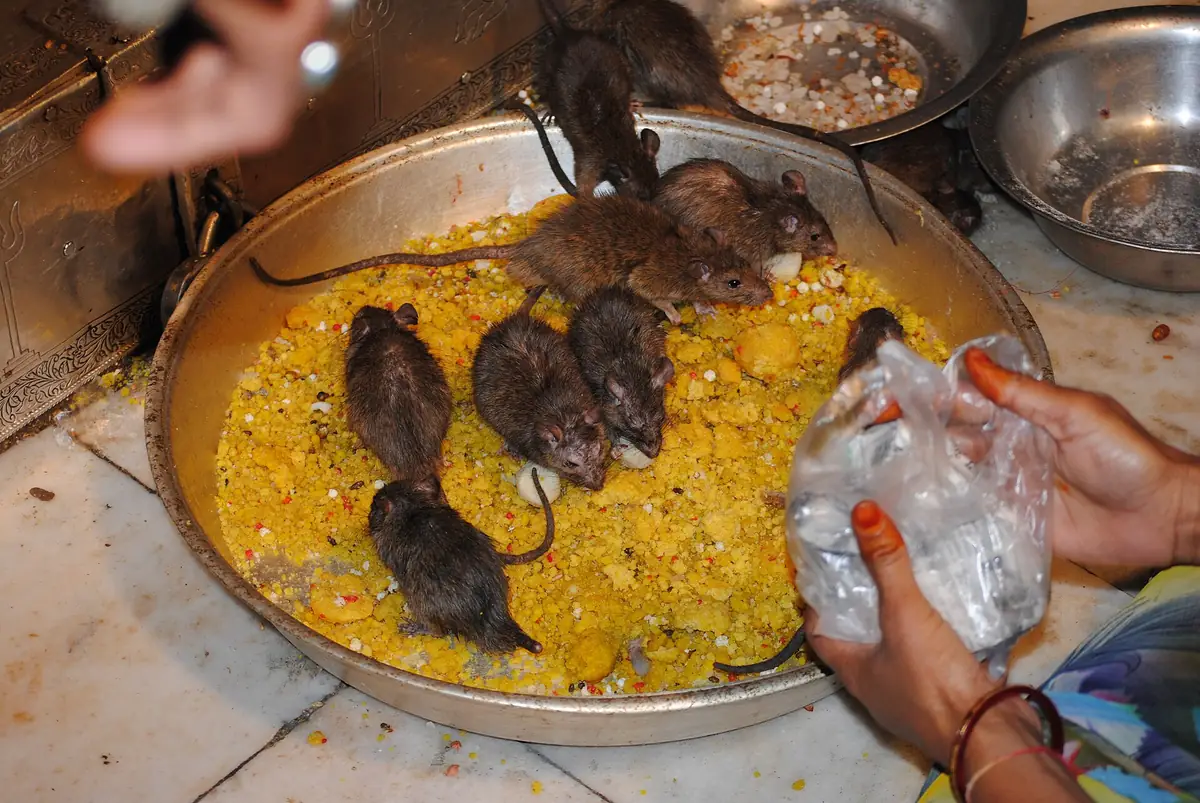
Roughly 30 km from Bikaner, this temple is famously known as the "rat temple" — thousands of rats living within the complex are considered sacred, fed and revered by devotees. Visiting involves walking barefoot among them, a genuinely distinctive experience worth approaching with an open mind.
Camel Research Centre & Safaris
The National Research Centre on Camel, near Bikaner, is a camel-breeding facility offering safaris and camel-milk products — a fitting stop given how central camel culture is to the city's identity.
Old-City Havelis
Bikaner's old town has numerous ornate havelis, worth exploring on foot for their carved facades and a sense of the city's mercantile history.
Where to Stay in Bikaner
Bikaner has a solid range of accommodation, from budget guesthouses to heritage palace-style hotels.
- → Guesthouses near the old city
- → Budget hotels close to the railway station
- → Simple homestays
- → Heritage-style hotels
- → Business hotels, central Bikaner
- → Boutique havelis converted to stays
- → Laxmi Niwas Palace
- → Premium heritage properties
- → Full-service luxury hotels
Suggested Visit Plan (2 Days)
Junagarh Fort & Old City
- ✓Junagarh Fort in detail
- ✓Old-city havelis walk
- ✓Evening at a local market for bhujia and sweets
Karni Mata Temple & Camels
- ✓Day trip to Karni Mata Temple, Deshnoke
- ✓Camel Research Centre and safari
- ✓Return to Bikaner, departure
What to Eat in Bikaner
- Bhujia: Bikaner's most famous export, a spicy gram-flour namkeen snack — buy it fresh from a reputable old-city shop for the real experience.
- Rasgulla: Bikaner's sweet shops are well regarded locally, alongside a range of other traditional Rajasthani mithai.
- Rajasthani thali: Dal baati churma and other regional staples are widely available across the city.
Budget Breakdown
| Expense | Budget | Mid-Range | Luxury |
|---|---|---|---|
| Accommodation/night | ₹1,000 | ₹2,800 | ₹8,000 |
| Food/day | ₹400 | ₹900 | ₹2,000 |
| Local transport/day | ₹300 | ₹800 | ₹2,000 |
| Entry fees (fort/temple) | ₹100 | ₹100 | ₹100 |
| Camel safari | ₹500 | ₹1,200 | ₹2,500 |
Essential Tips for Visiting Bikaner
- Go barefoot at Karni Mata Temple with an open mind: It's a genuinely unique experience — know what to expect before you go.
- Buy bhujia from a reputable old-city shop: A far more authentic souvenir than packaged versions sold elsewhere.
- Avoid peak summer (Apr-Jun): Bikaner's desert heat is among the most extreme in Rajasthan.
- Combine with Jaisalmer: The two cities make a natural western Rajasthan desert pairing.
- Time a January visit for the Camel Festival: A lively cultural bonus if your dates allow.
✅ Do
- →Visit Karni Mata Temple with an open mind
- →Buy bhujia fresh from an old-city shop
- →Explore Junagarh Fort's painted interiors slowly
- →Try a camel safari near the research centre
- →Combine with Jaisalmer for a desert circuit
- →Time a visit around the January Camel Festival
❌ Don't
- →Visit during peak summer heat (Apr-Jun)
- →Skip the Karni Mata Temple expecting to feel neutral about it
- →Rush Junagarh Fort's extensive interiors
- →Buy bhujia from unreliable roadside stalls
- →Forget Bikaner pairs well with Jaisalmer
- →Wander old-city havelis without checking access hours
Frequently Asked Questions
What is the Karni Mata rat temple and is it safe to visit?
The Karni Mata Temple at Deshnoke, roughly 30 km from Bikaner, is home to thousands of rats considered sacred and fed by devotees. It's safe to visit — the rats are habituated to visitors and generally not aggressive — though it requires walking barefoot among them, which some travelers find unusual and others find fascinating.
How far is Bikaner from Jaisalmer and Jodhpur?
Bikaner is roughly 330 km from Jaisalmer (about 5-6 hours by road) and roughly 250 km from Jodhpur (about 4-5 hours) — both are commonly combined with Bikaner in a wider western Rajasthan desert circuit.
What is the best time to visit Bikaner?
October to March, when daytime temperatures are far more manageable for exploring Junagarh Fort and the old city. Summer (Apr-Jun) brings extreme desert heat that makes sightseeing genuinely difficult.
What is Bikaner famous for food-wise?
Bhujia — a spicy gram-flour namkeen snack — is Bikaner's most famous export, sold across India but best bought fresh from an old-city shop here. Rasgulla and other sweets are also well regarded locally.
How many days should I plan for Bikaner?
Two days is a reasonable amount — one for Junagarh Fort and old-city havelis, another for the Karni Mata Temple day trip and the camel research centre if time allows.
Published by the Kudozz Club editorial team · Last updated · How we research our guides
Want us to plan this trip for you?
Tell Kudozz Club where you want to go and what kind of trip you’re looking for. We’ll build a Bikaner and Rajasthan itinerary around your dates and budget.
Continue Exploring
View all guidesThings to DoThings to Do in Bikaner: Junagarh Fort, Havelis, Camels & Bhujia
Things to do in Bikaner: Junagarh Fort's painted palaces, the Rampuria havelis, the Karni Mata temple at Deshnoke, the National Research Centre on Camel and Bikaner's famous bhujia.
 Destination Guide
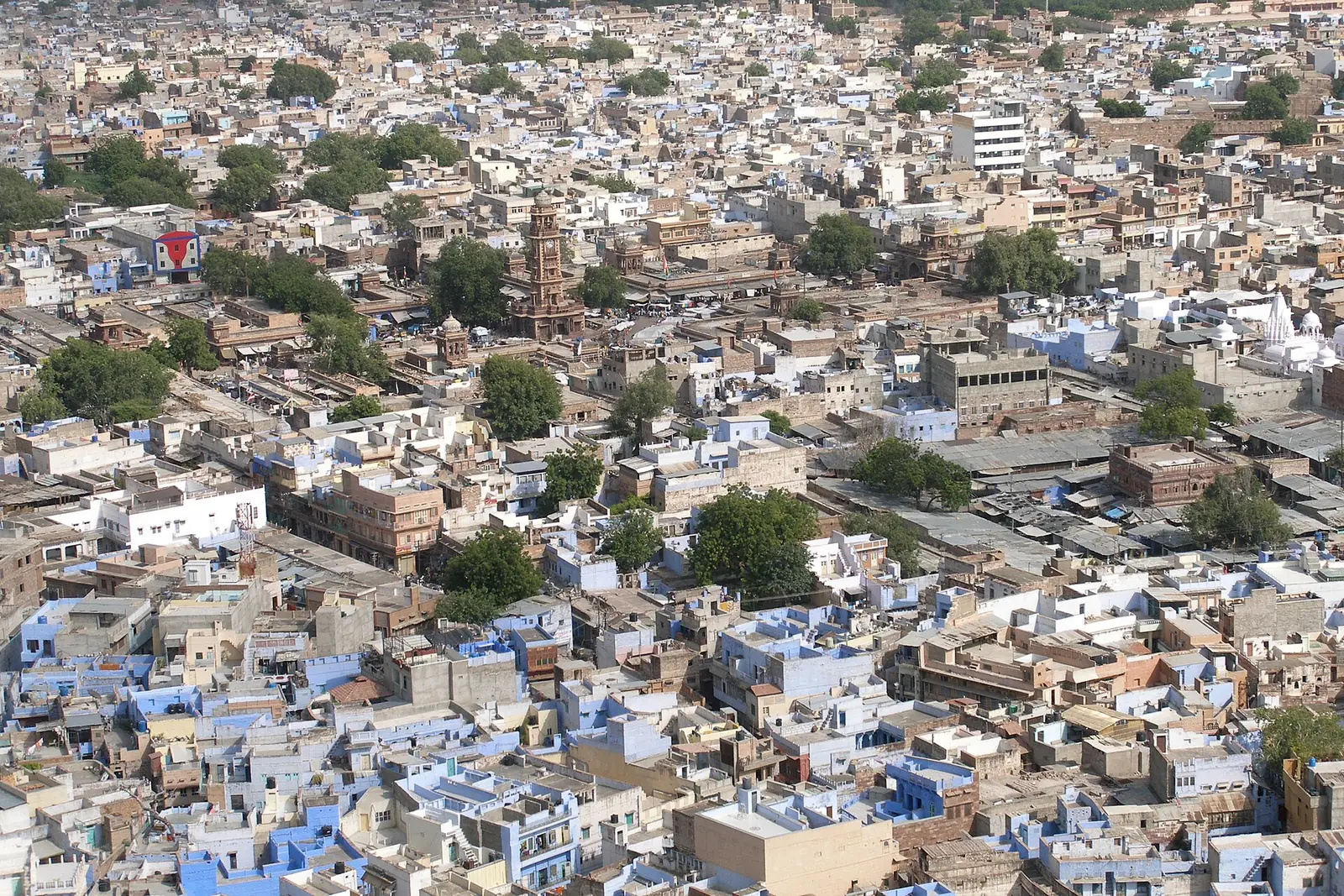
Jodhpur Travel Guide: Mehrangarh Fort & Blue City
One of India's largest, best-preserved forts rises over a sea of indigo-washed houses — the complete guide to Jodhpur, the Blue City of Marwar.
 Destination Guide
Rajasthan Travel Guide: Jaipur, Jodhpur & Pushkar Circuit
Pink-walled bazaars, a fort city painted entirely blue, and royal palaces still standing where maharajas built them centuries ago — the complete guide to Rajasthan's classic circuit.
 Destination Guide
Jaipur Travel Guide: Amber Fort, Hawa Mahal & Tips
A pink-washed old city, a hilltop fort reached by elephant, and a honeycombed palace built so royal women could watch the streets unseen — the complete Jaipur guide.