A Tiger Reserve on the Bhutan Border
Buxa Tiger Reserve sits in the far north of West Bengal, in the forested Dooars belt where the plains rise into the foothills of the eastern Himalaya and the border with Bhutan. It's one of India's designated tiger reserves, but ask anyone who's visited and they'll tell you the same thing: this is a destination for forest, trekking, and birdlife first, and tiger sightings a distant, unlikely second.
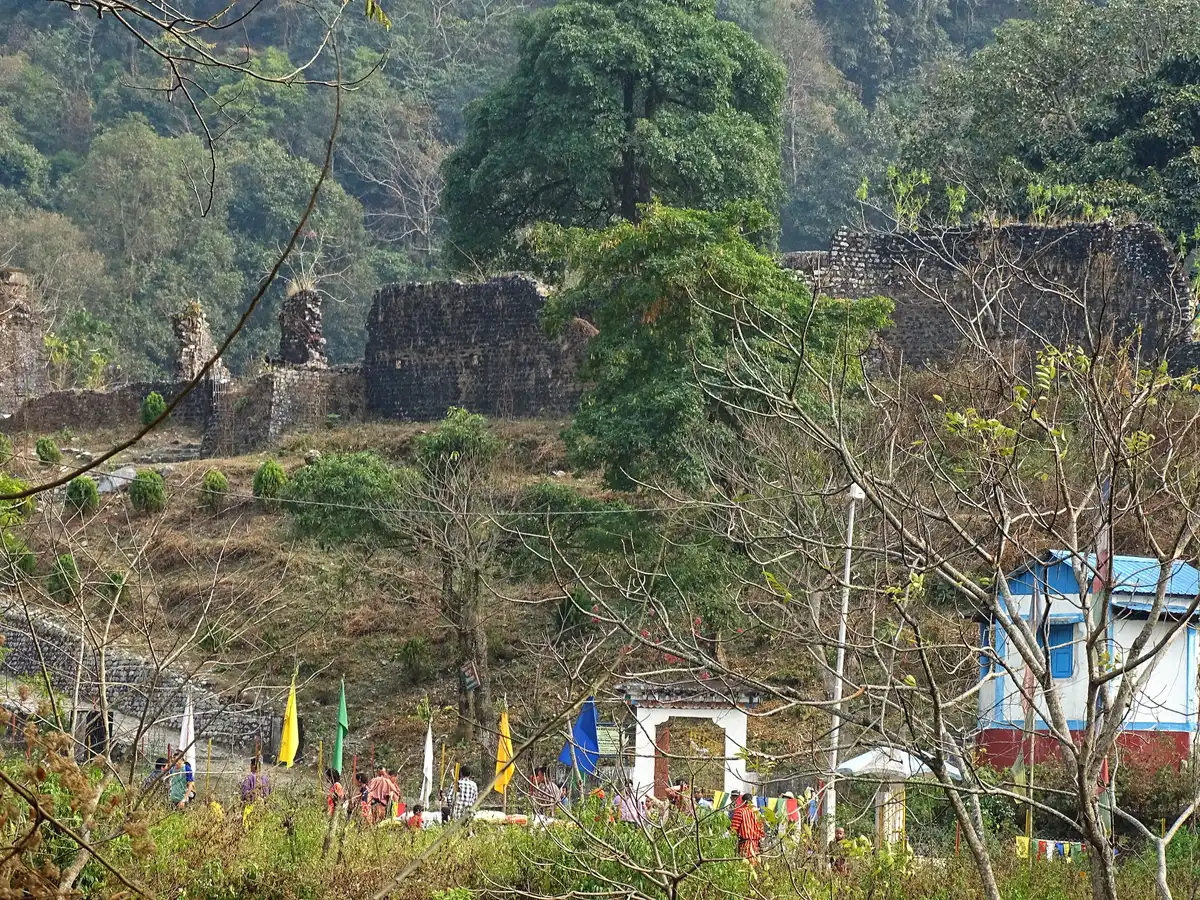
The reserve's best-known landmark is Buxa Fort, a hilltop fortification with a history stretching back centuries as a guardpost on trade routes toward Bhutan and Tibet. Under British rule it was converted into a jail, and a number of Indian freedom fighters were imprisoned here — a layer of history that gives the trek up to its ruins real weight beyond the forest scenery.
Inside the reserve, Jayanti — a village beside a seasonal river of the same name — was once a popular resort destination, and though its tourist infrastructure has scaled back considerably, it remains one of the most scenic spots in the reserve, framed by forested hills on both sides.
🏔️ Buxa Tiger Reserve at a Glance
Planning a wildlife trip? See our guide to wildlife tourism in West Bengal.
Best Time to Visit Buxa
Buxa's forest areas close for part of the year, so timing a visit matters more here than at most Dooars destinations.
Cool, dry, and the most comfortable window for the Buxa Fort trek — clear skies also make for the best views from the fort and surrounding ridgelines.
Increasingly warm but forest areas remain open, and this window can offer good birding as migratory patterns shift.
Core forest areas are usually closed to visitors during the monsoon for both safety and ecological reasons — plan around this window entirely.
The most reliable stretch for the Buxa Fort trek, with dry trails and cool temperatures that make the climb comfortable rather than gruelling.
Our pick: November to February — dry trails, cool trekking weather, and the reserve's core forest areas fully open.
How to Reach Buxa Tiger Reserve
Buxa is reached via Alipurduar, the main rail and road hub for this part of North Bengal.
- By rail/road to Alipurduar: Alipurduar is well connected by train and is roughly 170 km, about 4 hours by road, from New Jalpaiguri (NJP) or Siliguri, the main gateway for North Bengal travel.
- Onward to Santalabari or Jayanti: From Alipurduar, local shared vehicles or hired taxis cover the final stretch to the reserve's entry points — Santalabari and Buxa Duar are the main starting points for the fort trek, while Jayanti is a separate entry further into the reserve.
- Permits: Core-area entry requires Forest Department permission, generally arranged through the reserve's entry checkpoints or a local guide/operator rather than needing separate advance paperwork for most standard visits.
Fort Trek, Jayanti & Wildlife
The Trek to Buxa Fort
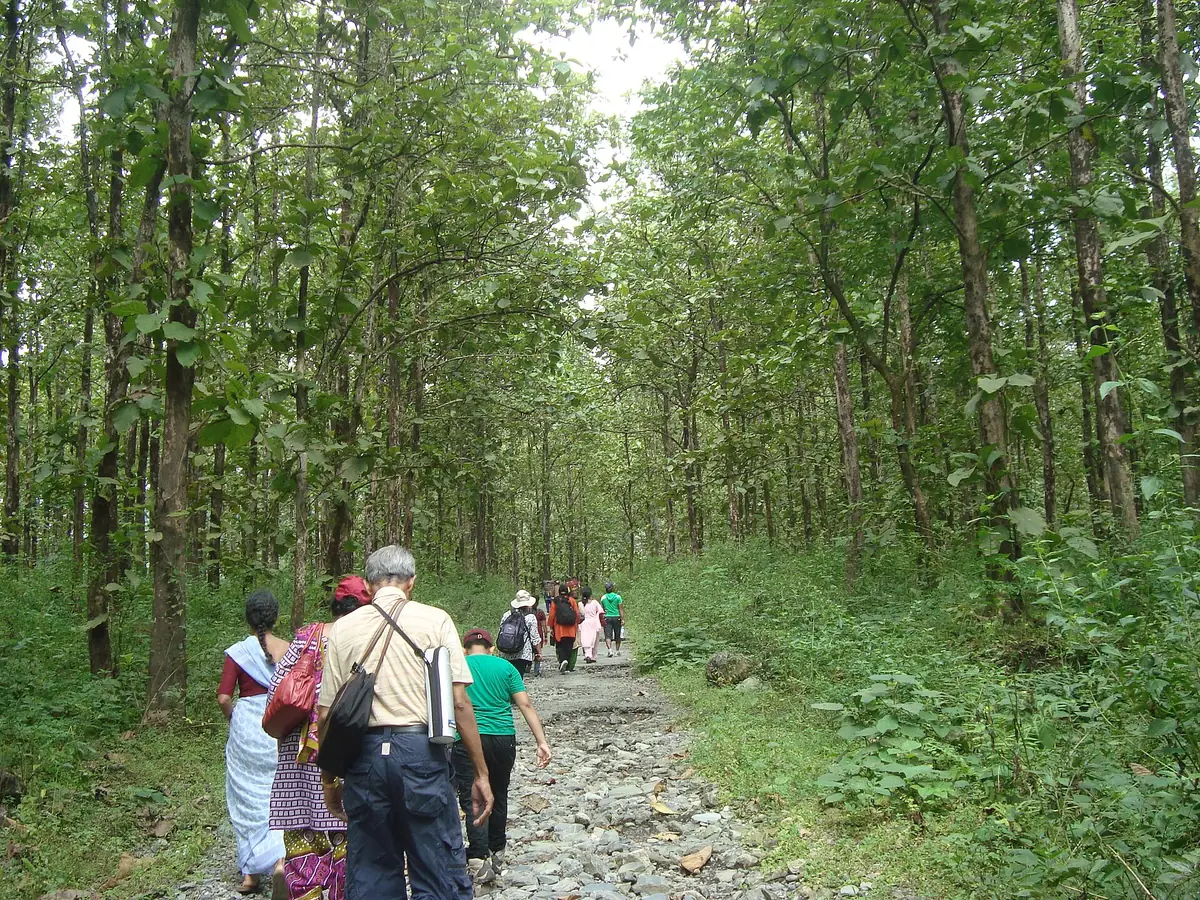
The signature Buxa experience is the trek up to Buxa Fort, usually starting from Santalabari or Buxa Duar, climbing steadily through forest to the hilltop ruins. The fort's history — a centuries-old guardpost later converted by the British into a jail for political prisoners during the freedom struggle — adds real historical weight to what is already a rewarding forest walk with views out over the Dooars plains.
Jayanti River & Village
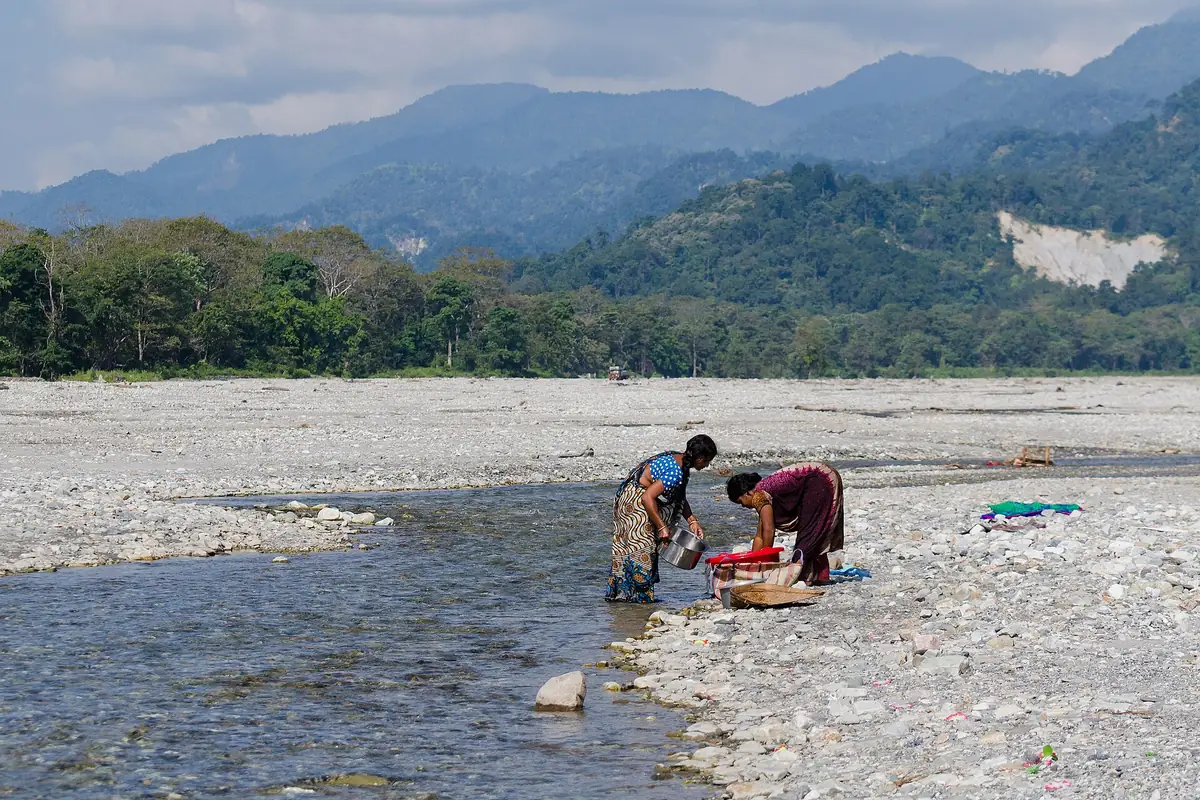
Jayanti sits beside a seasonal riverbed inside the reserve, framed by forested hills that made it a once-thriving resort destination. Its infrastructure has scaled back significantly over the years, but it remains a scenic, quiet stop worth including for the setting alone.
Wildlife & Birding
Buxa's real strength is biodiversity rather than guaranteed tiger sightings — the reserve supports elephants, gaur, and a wide range of forest birds, and is increasingly recognised among birders for species that are harder to find elsewhere in the Dooars. Come with binoculars and reasonable expectations, and the forest itself delivers even on days without a major wildlife encounter.
Core-Area Restrictions
As with most tiger reserves, Buxa's core zone has restricted access and requires permits and, for some routes, a registered guide — a system that protects both visitor safety and the reserve's more sensitive habitat.
Where to Stay Near Buxa
Accommodation is simple and forest-department-led in much of the reserve, with more options available in and around Alipurduar town.
- → Forest department lodges
- → Basic guesthouses in Santalabari
- → Simple lodges in Alipurduar town
- → Eco-resorts near the reserve buffer
- → Tourism department properties
- → Homestays in Dooars villages nearby
- → Boutique forest-view resorts
- → Premium nature lodges near Alipurduar
- → Full-board packages with naturalist guides
Suggested Visit Plan (2-3 Days)
Arrival & Santalabari
- ✓Travel from NJP/Siliguri to Alipurduar
- ✓Onward transfer to Santalabari, check in
- ✓Evening acclimatising walk near the base
Buxa Fort Trek
- ✓Early morning trek up to Buxa Fort
- ✓Explore the fort ruins and viewpoints
- ✓Descend and rest in the afternoon
Jayanti & Departure
- ✓Morning visit to Jayanti river and village
- ✓Birding walk along the forest fringe
- ✓Return journey via Alipurduar
* Many travellers combine Buxa with the wider Dooars circuit, including Gorumara National Park and Cooch Behar, for a fuller North Bengal itinerary.
Where to Eat Near Buxa
- Lodge and homestay kitchens: Most accommodation near the reserve serves simple home-style meals to guests, the most reliable option given how few standalone restaurants exist this close to the forest.
- Alipurduar town: A wider spread of restaurants and eateries for a proper meal before heading into or after returning from the reserve.
- Local tea and snack stalls: Simple stalls near Santalabari and Buxa Duar cater to trekkers heading up to the fort, useful for a quick breakfast or tea break.
Budget Breakdown
| Expense | Budget | Mid-Range | Luxury |
|---|---|---|---|
| Accommodation/night | ₹1,200 | ₹3,000 | ₹7,000 |
| Road transfer (NJP/Alipurduar round trip) | ₹1,500 | ₹3,000 | ₹5,000 |
| Food/day | ₹500 | ₹1,000 | ₹2,200 |
| Forest permit & entry fees | ₹200 | ₹200 | ₹200 |
| Local guide (fort trek) | ₹600 | ₹900 | ₹1,500 |
* Figures are per person, per day (except road transfer, a round trip figure). Guide fees are typically shared across a small group.
Essential Tips for Visiting Buxa
- Start the fort trek early: An early morning start gives you cooler temperatures and enough daylight to comfortably complete the climb and descent.
- Hire a local guide: Forest trails aren't always clearly marked, and a guide adds both safety and historical context to the fort's story.
- Lower your tiger-sighting expectations: Come for the forest, the trek, and the birdlife — a tiger sighting here is genuinely rare.
- Carry cash: ATM access is very limited near the reserve — withdraw what you need in Alipurduar or Siliguri first.
- Avoid the monsoon entirely: Core forest areas typically close from June to September — confirm current status before planning a trip in this window.
✅ Do
- →Start the Buxa Fort trek early in the morning
- →Hire a local guide for the trek and forest walks
- →Carry binoculars for birding
- →Carry enough cash for the whole trip
- →Check reserve open status before planning your trip
- →Combine the visit with the wider Dooars circuit
❌ Don't
- →Expect a guaranteed tiger sighting
- →Attempt core-zone trails without a permit or guide
- →Visit during the monsoon closure (Jun-Sep)
- →Expect wide ATM or card access near the reserve
- →Start the fort trek late in the day
- →Skip water and sun protection on the climb
Frequently Asked Questions
Will I actually see a tiger at Buxa Tiger Reserve?
Tiger sightings at Buxa are rare — the reserve is valued more for its forest, birding, and trekking than for reliable big-cat encounters. Come for the Buxa Fort trek, the Jayanti river valley, and the biodiversity of a Bhutan-border forest, and treat any tiger sighting as a bonus.
How do I trek to Buxa Fort?
The trek to Buxa Fort typically starts from Santalabari or Buxa Duar, climbing through forest to the hilltop fort. It's a moderate trek manageable by reasonably fit beginners, usually completed in a few hours each way, and best attempted with a local guide.
What is the history of Buxa Fort?
Buxa Fort dates back centuries as a strategic hill fort guarding a historic trade route to Bhutan and Tibet. Under British colonial rule it was repurposed as a jail, where a number of Indian freedom fighters were held during the independence movement — a history that gives the trek a layer of significance beyond the scenery.
How do I reach Buxa Tiger Reserve?
The base town is Alipurduar, reachable from New Jalpaiguri (NJP) or Siliguri, roughly 170 km and about 4 hours by road. From Alipurduar, local transport covers the final stretch to entry points like Santalabari or Jayanti.
Is Buxa Tiger Reserve open year-round?
No — core forest areas are typically closed during the monsoon months of June to September for both safety and ecological reasons. November to April is the main open season, with October to February offering the best trekking weather.
What is Jayanti and is it worth visiting?
Jayanti is a scenic riverside village inside the reserve, once a popular resort spot, set beside the seasonal Jayanti river with a dramatic hill backdrop. It remains a worthwhile, quieter stop for its setting even though its infrastructure has scaled back over the years.
Published by the Kudozz Club editorial team · Last updated · How we research our guides
Want us to plan this trip for you?
Tell Kudozz Club where you want to go and what kind of trip you’re looking for. We’ll build a Buxa Tiger Reserve and West Bengal itinerary around your dates and budget.
Continue Exploring
View all guides Adventure
Gorumara National Park: Safari, Timings & Tips
Complete Gorumara National Park guide — rhino and elephant jeep safaris, watchtowers, safari timings, Murti riverside stays, Chapramari sanctuary, and how to plan your visit.
 Off-beat
Dooars Travel Guide: Wildlife, Tea Gardens & Rivers
Complete Dooars guide — the foothill forests of Gorumara, Jaldapara, Chapramari and Buxa, tea gardens, jeep safaris for rhinos and elephants, base towns, and a full visit plan.
 Things to Do
Things to Do in the Sundarbans: Creek Safaris, Watchtowers & Village Life
Things to do in the Sundarbans: boat safaris through mangrove creeks, watchtowers at Sajnekhali, Sudhanyakhali, Dobanki and Netidhopani, the Dobanki canopy walk, crocodiles and birds, Bonbibi folk theatre, village walks in Gosaba and fresh Bengali fish.
 Off-beat
Ajodhya Hills Travel Guide: Trekking & Tribal Culture
Complete Ajodhya Hills guide — Bamni Falls, Turga Falls, Murguma Dam, Marble Lake, trekking trails, Chhau dance heritage, how to reach from Purulia, and a full visit plan.