What Is Karol Bagh?
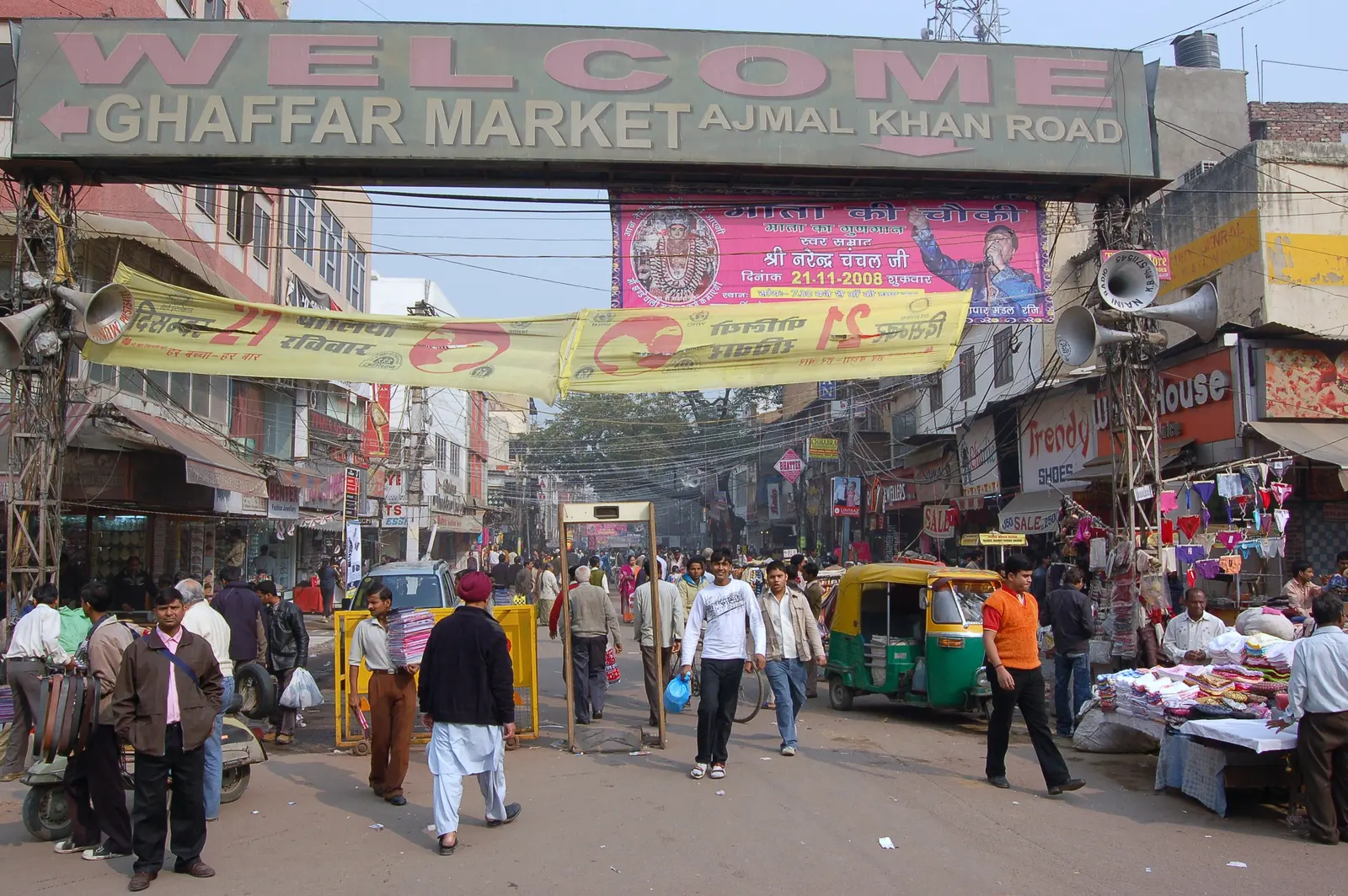
Karol Bagh is a bustling, purely commercial-and-residential neighbourhood in Central Delhi — not a monument or a heritage quarter, but one of the city's biggest markets and one of its largest clusters of budget-to-mid-range hotels. It doesn't have a Red Fort or a Jama Masjid of its own; what it has instead is a genuinely enormous volume of daily commerce, and a reputation among both domestic shoppers and value-conscious travellers as one of the most useful places in Delhi to get things done.
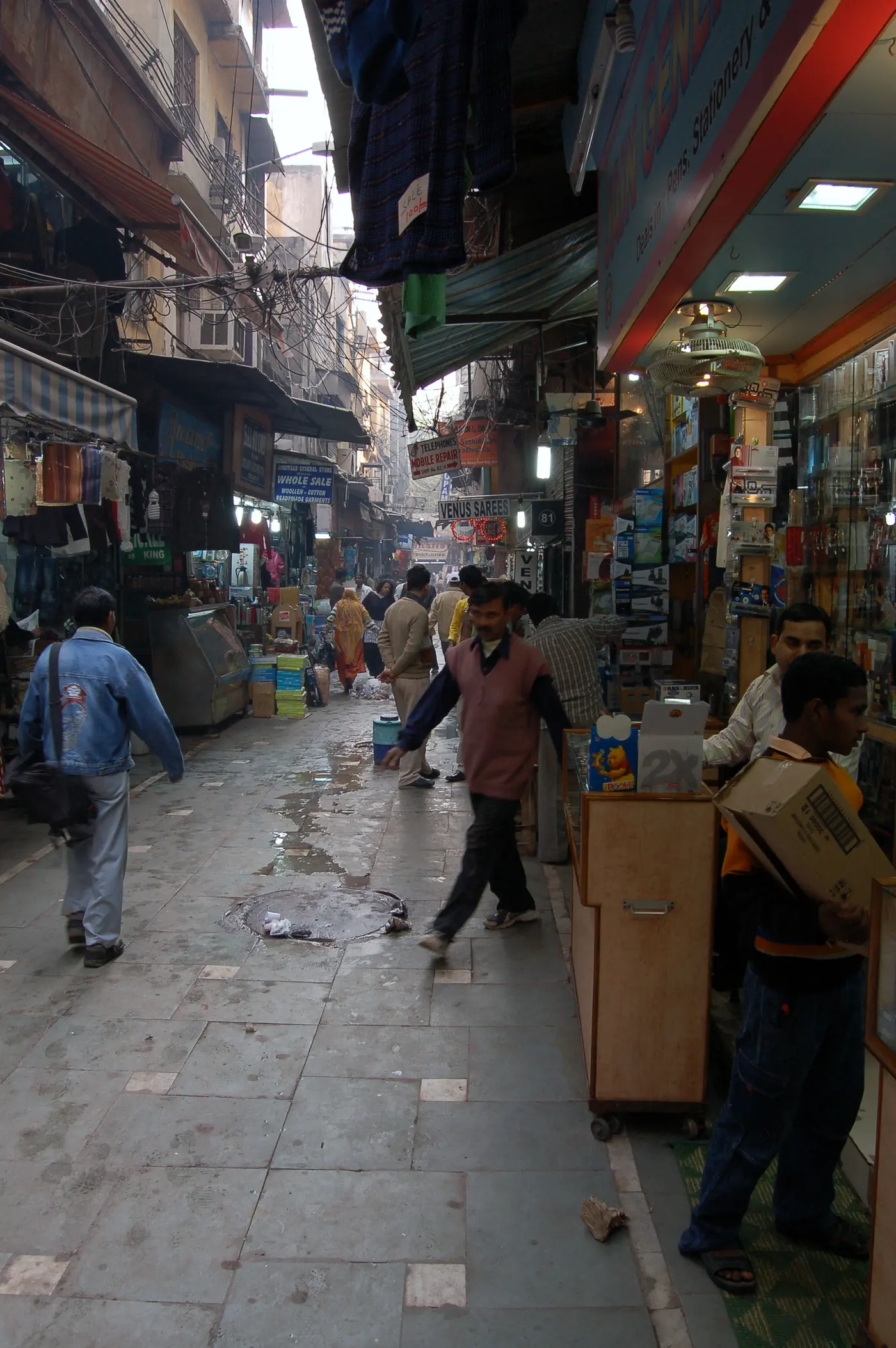
The neighbourhood's spine is Ajmal Khan Road, a pedestrianised shopping street lined with clothing, bridal wear, and footwear stores, running roughly parallel to Arya Samaj Road. A short walk away sits Gaffar Market, Delhi's best-known electronics bazaar — famous, and occasionally infamous, for cheap imported gadgets. Wrapped around both is a dense grid of hotels, guesthouses, and lodges that has made Karol Bagh one of the default budget bases for travellers passing through the city.
This isn't a neighbourhood built for sightseeing — it's built for shopping, eating, and sleeping cheaply and conveniently near a metro station. That's precisely the appeal, and this guide covers it on those terms: what to buy where, what to eat, what to watch out for at Gaffar Market specifically, and why it works so well as a place to stay.
🛍️ Karol Bagh at a Glance
Best Time to Visit Karol Bagh
Karol Bagh is a year-round market, not a seasonal destination, so timing here is more about comfort and crowd levels than about whether things are open.
- October – March: Cooler, more comfortable weather for walking Ajmal Khan Road's largely open-air stretch, which gets genuinely unpleasant to browse slowly in peak summer heat.
- Weekday mornings and early afternoons: Noticeably calmer than evenings, when the market fills up with after-work and after-school crowds.
- Weekends and festival season: Busiest by far, especially in the run-up to Diwali and wedding season, when the bridal-wear and clothing stretches of Ajmal Khan Road get extremely dense.
Our pick: a weekday morning, roughly 10 AM–1 PM — shops are open, the street is walkable, and you'll get more attentive service from vendors than during the evening rush.
How to Reach Karol Bagh
Karol Bagh's biggest practical advantage is how easy it is to reach and to use as a base — it sits close to the geographic centre of Delhi's metro network.
- Karol Bagh Metro Station (Blue Line): The neighbourhood has its own dedicated station on the Blue Line, which runs between Dwarka Sector 21 and Noida Electronic City / Vaishali — a handful of stops from Rajiv Chowk, the interchange for Connaught Place.
- From the airport: The Airport Express Line connects IGI Airport to New Delhi Railway Station in around 20 minutes; from there, it's a short onward metro ride or auto to Karol Bagh — genuinely one of the more airport-convenient budget bases in the city.
- From New Delhi Railway Station: Around 2–3 km by road, and an easy auto-rickshaw or app-cab ride, or a short metro connection via Rajiv Chowk.
- From Paharganj and Chandni Chowk: Both are reachable within 15–25 minutes by metro or auto, making Karol Bagh a practical base for exploring Paharganj and Chandni Chowk without staying in either.
Ajmal Khan Road: The Main Shopping Stretch
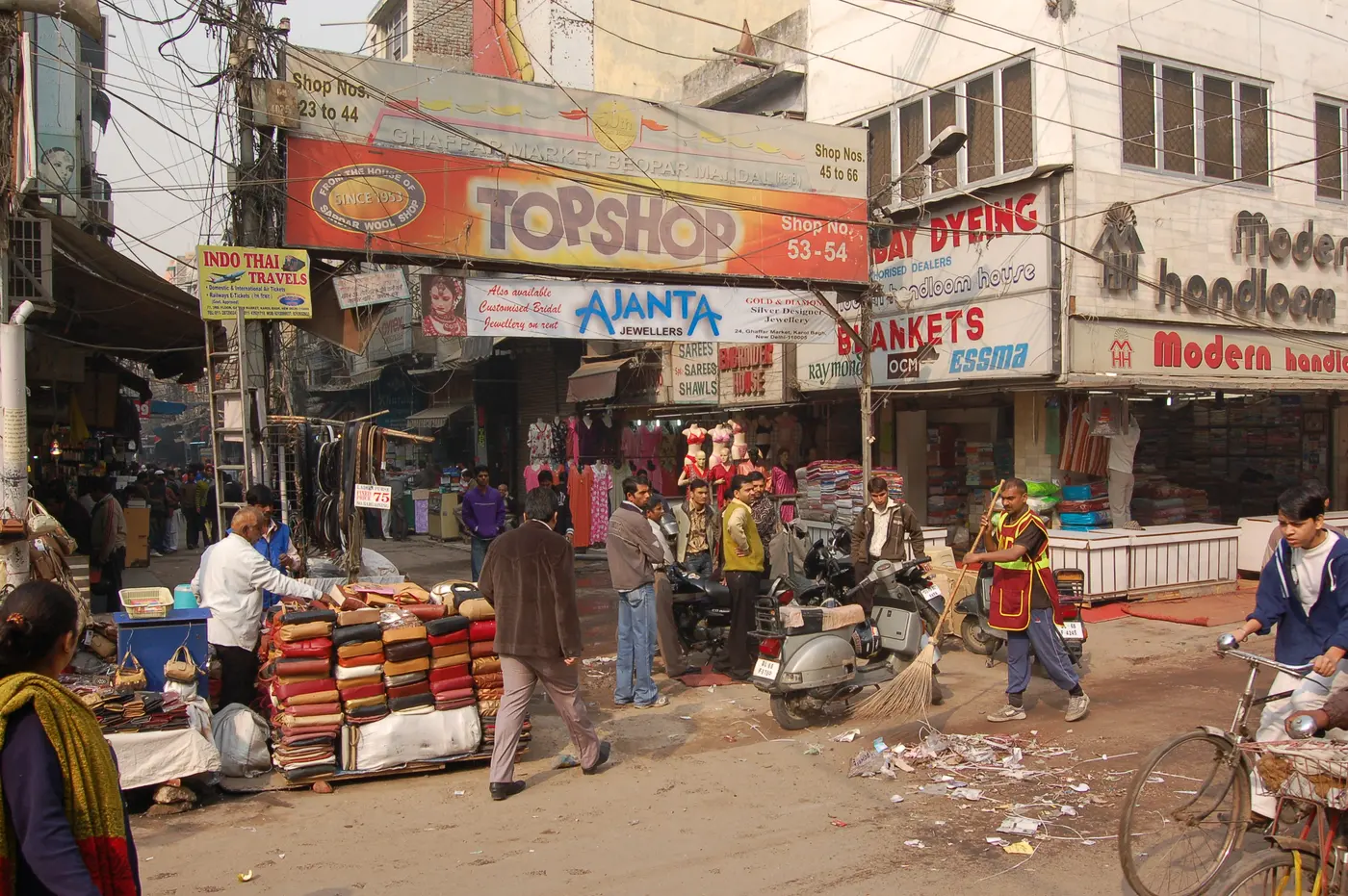
Ajmal Khan Road is Karol Bagh's main artery and its single best-known feature — a pedestrianised stretch closed to vehicle traffic for most of the day, lined end to end with clothing stores, footwear shops, and bridal wear outlets. It's one of Delhi's most genuinely popular shopping streets among locals, not just a tourist stop, which shows in the volume of foot traffic on any given evening.
- Clothing: Everything from everyday casualwear to festive and formal outfits, at prices generally lower than more polished markets like Connaught Place or Khan Market.
- Bridal and wedding wear: Karol Bagh has a genuine reputation as a wedding-shopping destination — lehengas, sarees, and groom's wear across a wide range of budgets.
- Footwear: A dense concentration of shoe shops, from everyday sandals to formal and occasion footwear, spanning several price tiers.
- Bargaining: Expected at most independent stalls, though fixed-price stores are common too — check for a price tag before assuming a shop negotiates.
The street is at its liveliest in the evening, when shop lights come on and the crowd thickens — atmospheric if you enjoy dense markets, but worth avoiding if you prefer to browse at a slower pace.
Gaffar Market: Electronics & a Necessary Caveat
Gaffar Market is Karol Bagh's other headline attraction — a tightly packed indoor-outdoor market known across Delhi for electronics, mobile accessories, and imported gadgets, often at prices noticeably lower than mainstream electronics retailers. It's a genuinely useful spot for accessories, cables, speakers, and small gadgets.
It's also honestly worth knowing that Gaffar Market has a long-standing reputation for grey-market goods — products imported outside official distribution channels — and, less commonly, counterfeit items sold alongside genuine stock. This isn't a reason to avoid the market, but it is a reason to shop carefully:
- Inspect before you pay: Open the box if possible, check that the model and specs match what's advertised, and test the item on the spot if the vendor allows it.
- Ask for a proper bill: A vendor unwilling to provide one is a signal to be more cautious, particularly for anything with a warranty claim attached.
- Be skeptical of unusually low prices: A price far below what you'd expect elsewhere is often a sign of grey-market or lower-grade goods rather than simply a good deal.
- Stick to higher-footfall, established stalls: For anything expensive, a shop that's clearly been trading for years is a safer bet than an unfamiliar stall.
Other Nearby Markets
Beyond Ajmal Khan Road and Gaffar Market, Karol Bagh has a handful of smaller, more specialised markets worth knowing about.
- Regal Market: A smaller market cluster within Karol Bagh, generally quieter than Ajmal Khan Road, with a mix of clothing and general goods stores.
- Arya Samaj Road: Running roughly parallel to Ajmal Khan Road, this stretch is known for furniture, home goods, and a somewhat different retail mix than the main pedestrian strip — worth a look if you're after something other than clothing or electronics.
- Local wholesale and accessory lanes: Karol Bagh's side lanes have smaller clusters specialising in jewellery, bags, and accessories, generally at lower prices than the main road but with more variable quality.
What to Eat in Karol Bagh
Karol Bagh's food scene runs on the same energy as its shopping — old-school eateries, street stalls, and a genuine mix of North Indian and Punjabi-style food that locals travel across the city for, alongside plenty of everyday options for a quick bite between shops.
- Roshan Di Kulfi: A long-running, well-known Karol Bagh institution for kulfi — one of the neighbourhood's most recognisable food names, worth seeking out if you have a sweet tooth.
- Street chaat stalls: Ajmal Khan Road and the surrounding lanes have a steady scattering of chaat and golgappa vendors, popular with shoppers taking a break mid-browse.
- Old-school Punjabi dhabas: Karol Bagh has several long-standing, no-frills North Indian eateries serving dal, sabzi, and tandoori staples — reliable, filling, and generally good value.
- Quick-bite chains and bakeries: For travellers who'd rather not gamble on street food, the main road has a fair spread of familiar chain outlets and bakeries alongside the local spots.
As with any dense street-food scene, go with stalls that have visible turnover and a steady local crowd — it's the simplest practical signal of freshness.
Why Karol Bagh Is a Popular Budget Hotel Base
Karol Bagh has one of the highest concentrations of budget and mid-range hotels anywhere in Delhi, and the reasons are mostly practical rather than aesthetic — this isn't a scenic neighbourhood, but it's a genuinely convenient one.
- Metro connectivity: A dedicated Blue Line station puts most of the city within reach without needing a cab for every trip.
- Proximity to Connaught Place: A short metro ride via Rajiv Chowk connects you to Delhi's central business and dining district in minutes.
- Airport access: A relatively short hop to New Delhi Railway Station and the Airport Express Line makes early-morning or late-night flights more manageable than from most other budget areas.
- Hotel density and price competition: A genuinely large supply of hotels across a small area keeps prices competitive, particularly outside peak wedding and festival season.
- Everyday conveniences: Pharmacies, ATMs, and casual eateries are all within easy walking distance of most hotels, given how commercially dense the area is.
Karol Bagh suits travellers who prioritise value, connectivity, and practicality over staying somewhere scenic or quiet — if that's your priority list, it's genuinely one of the more sensible bases in the city.
A Half-Day Shopping-and-Food Plan
Karol Bagh doesn't need a full day unless you're doing serious wedding shopping — a focused half-day covers the highlights comfortably.
Start on Ajmal Khan Road
- ✓Browse clothing and footwear stretches while the street is calmer
- ✓Compare a few stores before committing to any purchase
- ✓Bargain at independent stalls; check tags at fixed-price stores
Break for Food
- ✓Kulfi at Roshan Di Kulfi
- ✓Chaat from a busy, high-turnover street stall
- ✓Rest before the second leg of shopping
Gaffar Market
- ✓Browse accessories, cables, and small gadgets
- ✓Inspect anything higher-value carefully before buying
- ✓Ask for a bill on any electronics purchase
Wind Down
- ✓Optional detour to Arya Samaj Road or Regal Market
- ✓Metro onward to Connaught Place or back to your hotel
Budget Breakdown
Karol Bagh is genuinely one of the more affordable places to base yourself in Delhi — most of your daily spend here is discretionary, going toward whatever you choose to shop for.
| Expense | Budget | Mid-Range | Higher-End |
|---|---|---|---|
| Accommodation/night | ₹900 | ₹2,500 | ₹5,500 |
| Food/day | ₹400 | ₹900 | ₹1,800 |
| Local transport/day | ₹150 | ₹400 | ₹1,000 |
| Shopping (discretionary) | Varies widely | Varies widely | Varies widely |
| Daily total (excl. shopping) | ₹1,450 | ₹3,800 | ₹8,300 |
* Hotel rates rise noticeably during wedding season and major festivals — book ahead if travelling in those windows. Shopping spend varies too much by individual plans to average meaningfully.
Essential Tips for Visiting Karol Bagh
- Bargain respectfully, not aggressively: A polite counter-offer and a willingness to walk away gets better results than hard haggling — most independent stall vendors expect some negotiation.
- Check electronics thoroughly at Gaffar Market: Open the box, test the item, and ask for a bill before paying — especially for anything above a small, low-risk purchase.
- Go early or on weekdays for a calmer visit: Evenings and weekends turn Ajmal Khan Road into a genuinely dense crowd.
- Keep bags secured in the crowd: As with any packed Indian market, pickpocketing risk rises with crowd density — keep valuables zipped and close.
- Compare a few shops before buying: With this much retail density, the first price you're quoted is rarely the best one available nearby.
- Note your metro exit gate: Karol Bagh Metro has multiple gates surfacing at different points — check which one is closest to where you're headed.
✅ Do
- →Bargain politely at independent stalls
- →Inspect electronics carefully at Gaffar Market
- →Ask for a bill on higher-value purchases
- →Visit on a weekday morning for a calmer market
- →Try Roshan Di Kulfi and busy street food stalls
- →Use the metro — it's genuinely the easiest way around
❌ Don't
- →Buy expensive electronics without checking them first
- →Assume every low Gaffar Market price is a genuine deal
- →Expect a quiet, scenic experience — it's a working bazaar
- →Carry more cash or valuables than you need
- →Skip comparing prices across a few shops
- →Visit expecting monuments — this is a shopping trip
Frequently Asked Questions
What is Karol Bagh famous for?
Karol Bagh is one of Delhi's biggest commercial neighbourhoods, best known for the pedestrianised Ajmal Khan Road shopping strip (clothing, bridal wear, footwear), Gaffar Market's dense cluster of electronics stalls, and one of the largest concentrations of budget-to-mid-range hotels anywhere in the city — all within easy reach of the Karol Bagh Metro station.
Is Karol Bagh good for shopping?
Yes, particularly for clothing, footwear, and bridal shopping — Ajmal Khan Road is a genuinely popular destination for Delhiites, not just tourists, and prices are generally lower than in more polished markets like Connaught Place or Khan Market. It rewards a bit of patience and comparison shopping rather than buying at the first stall.
Is Gaffar Market reliable for electronics?
Gaffar Market has a genuine, long-standing reputation for electronics and imported gadgets at competitive prices, but it's also known for grey-market and occasionally counterfeit goods sold alongside legitimate stock. Inspect anything you buy carefully in front of the vendor — check that the box is sealed, the model matches what's advertised, and ask for a bill — before you hand over payment. If a deal looks too good to be true, treat that as a real warning sign here.
Is Karol Bagh a good area to stay in Delhi?
It's one of the most practical budget bases in the city — Karol Bagh Metro sits on the Blue Line with a fairly direct run to Connaught Place, and the Airport Express interchange at New Delhi Station is only a couple of stops away. The trade-off is that it's a busy, commercial, non-touristy neighbourhood rather than a scenic one, so it suits travellers prioritising value and connectivity over atmosphere.
How do I get to Karol Bagh by metro?
Karol Bagh has its own station — Karol Bagh Metro — on the Blue Line, which runs between Dwarka Sector 21 and Noida Electronic City / Vaishali. It's a handful of stops from Rajiv Chowk (Connaught Place) and connects onward to most of the rest of the network with one interchange.
What is the best time to visit Karol Bagh?
Weekday mornings and early afternoons are noticeably calmer than evenings and weekends, when Ajmal Khan Road gets genuinely packed with shoppers. Cooler months (October–March) also make the largely open-air, pedestrian shopping stretch far more comfortable than the peak summer heat.
Is Karol Bagh safe for tourists, including solo travellers?
Karol Bagh is a busy, heavily commercial, well-populated neighbourhood with a constant police and shopkeeper presence, and it doesn't have a particular reputation for being unsafe. As in any dense Indian market, the main practical concerns are pickpocketing in crowds and firm but standard bargaining — not personal safety in a broader sense. Usual city precautions apply.
Published by the Kudozz Club editorial team · Last updated · How we research our guides
Want us to plan this trip for you?
Tell Kudozz Club where you want to go and what kind of trip you’re looking for. We’ll build a Delhi itinerary around your dates and budget.
Continue Exploring
View all guides Off-beat
Lajpat Nagar Travel Guide: Central Market & More
One of Delhi's most beloved shopping neighbourhoods — Central Market's ethnic wear and bridal shopping, the Tibetan Market next door, bargaining etiquette, and a practical half-day plan.
 Destination Guide
Vasant Kunj Guide: Malls, Shopping & Nature Nearby
Delhi's upscale mall district next to IGI Airport — Ambience Mall, DLF Promenade, DLF Emporio, and the surprisingly wild Asola Bhatti forest just beyond it.
 Destination Guide
Connaught Place Guide: Shopping, Food & Nightlife
The Inner, Middle & Outer Circle layout, Central Park, Palika Bazaar, old-school eateries and nightlife — the complete guide to Delhi's Georgian-era commercial hub.
 Off-beat
Laxmi Nagar, Delhi: Market, Coaching Hub & Local Food Guide
A local's guide to Laxmi Nagar, Delhi — East Delhi's dense market-and-coaching neighbourhood, its UPSC/SSC institute ecosystem, PG accommodation, street food, and how to reach it by metro.