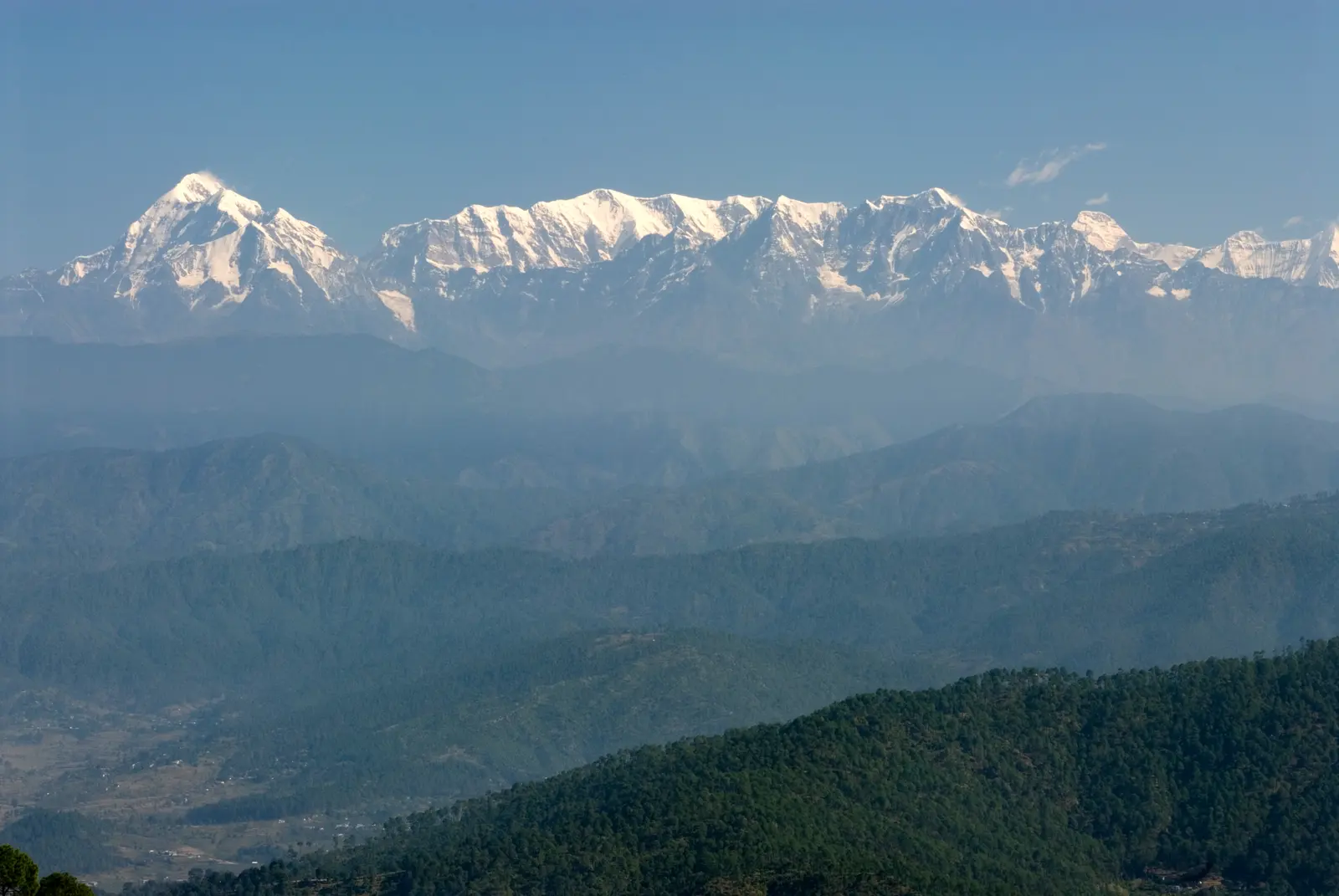
A Ridge-Top Kumaon Town
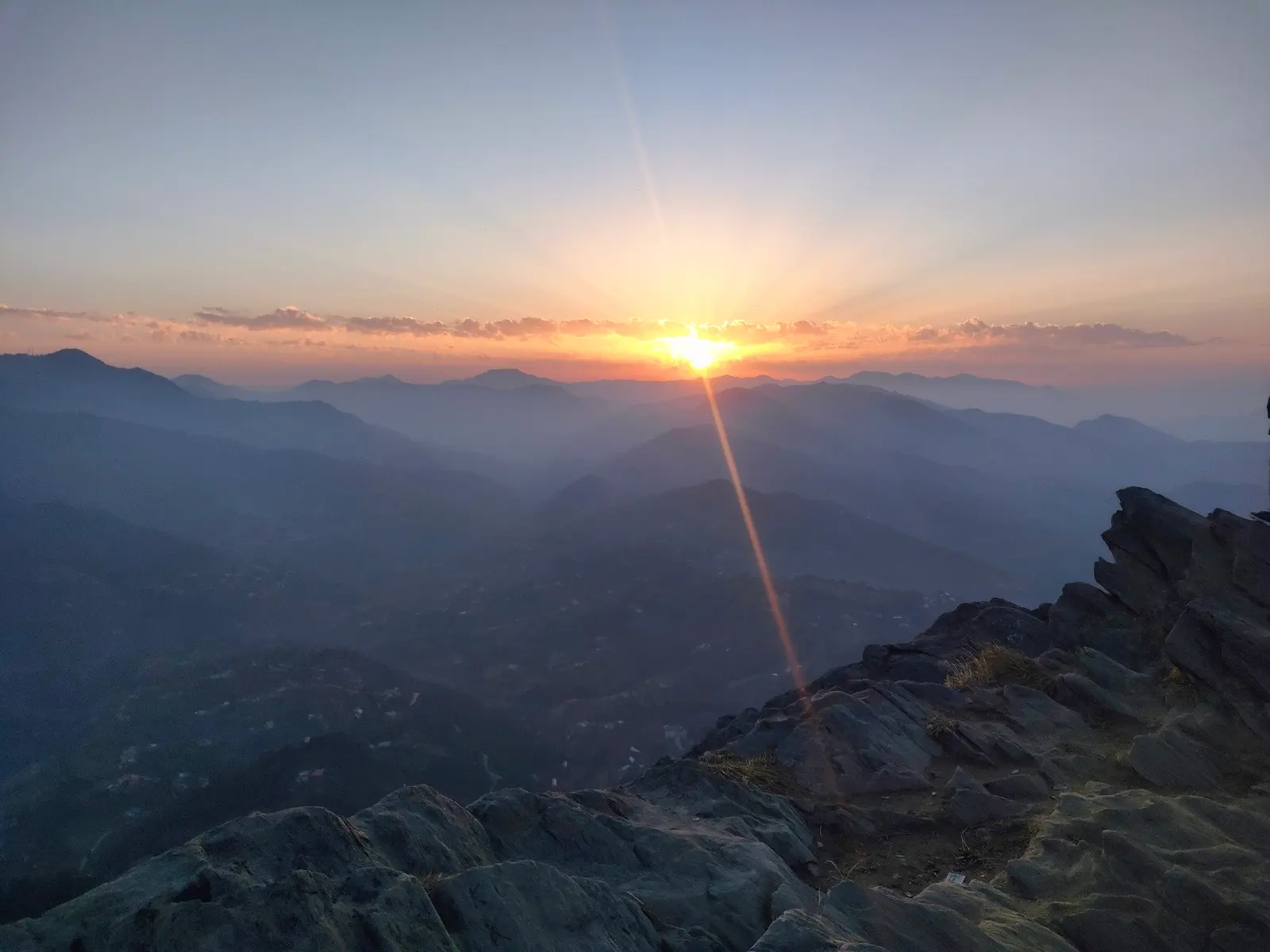
Kausani sits at just over 1,890 metres on a narrow ridge in the Bageshwar district of Kumaon, Uttarakhand, and is best known for a single thing it does better than almost anywhere else in the region: an unbroken, wide-angle view of the high Himalaya. On a clear day the range unfurls for over 300 km, taking in Trishul, Nanda Devi, and the Panchachuli peaks without a single building or tree in the way.
Mahatma Gandhi stayed here for two weeks in 1929, working on his commentary Anasakti Yoga, and reportedly likened the view to Switzerland — a comparison that has followed the town ever since. Beyond that mountain view, Kausani's charms are modest and deliberate: the Kausani Tea Estate, a scattering of colonial-era buildings, and Rudradhari Falls & Cave a short drive away.
Compared to Nainital, a few hours away, Kausani is quieter, far less commercial, and built around slow mornings on a viewpoint rather than lake boating or a busy mall road — a good pick for anyone wanting Kumaon's mountains without the crowds.
🏔️ Kausani at a Glance
Looking for activities and experiences? See our guide to the best things to do in Kausani.
Want a day-by-day plan? Follow our Garhwal and Kumaon hill-station itineraries.
Going by road? See our guide to road trips in Uttarakhand.
Comparing hill stations? See our guide to hill stations in Uttarakhand.
Best Time to Visit Kausani
Since the mountain view is Kausani's main draw, timing your visit for clear skies matters more here than in most hill towns.
Clear skies and excellent Himalayan visibility, with comfortable daytime temperatures. Rhododendrons bloom in the surrounding forests through April-May.
Post-monsoon air is at its clearest, often giving the sharpest, haze-free mountain views of the year, with crisp cool evenings.
Kausani itself sees light snow in some years, and nearby higher points can get proper snowfall. Views can be spectacular on clear days but roads occasionally close after heavy snow.
Monsoon cloud cover usually blocks the mountain view entirely for days at a stretch, and hill roads carry landslide risk.
Our pick: late April to early June, or October to November — the two windows with the clearest, most reliable Himalayan views and pleasant daytime weather.
How to Reach Kausani
- By air: The nearest airport is Pantnagar, roughly 155 km away, connected to Delhi by a handful of flights. From there, taxis and buses cover the rest of the journey by road.
- By rail: Kathgodam is the nearest railhead, about 115 km away, well connected to Delhi and other major cities. Shared taxis and buses run from Kathgodam toward Almora and on to Kausani.
- By road: Kausani is reached via Almora, about 35-40 km before it on the same route. The drive from Kathgodam or Nainital takes roughly 4-5 hours depending on traffic and road conditions.
Things to Do in Kausani
Anasakti Ashram
Built around the cottage where Mahatma Gandhi stayed for two weeks in 1929, this small ashram-museum holds photographs, letters, and memorabilia from his time in Kausani, along with a peaceful garden that shares the same sweeping mountain view he wrote about. It's a quiet, unhurried stop that takes less than an hour.
Kausani Tea Estate
A working tea garden on the town's slopes, planted in rolling green rows that make for an easy, scenic walk. Small shops nearby sell locally grown tea, and the estate itself offers a good vantage point over the valley below.
Rudradhari Falls & Cave
Roughly 10-12 km from the main town, this waterfall and an adjoining cave associated with local legend make for a pleasant half-day trip, usually combined with a short walk through pine and oak forest to reach the falls.
Baijnath Temple
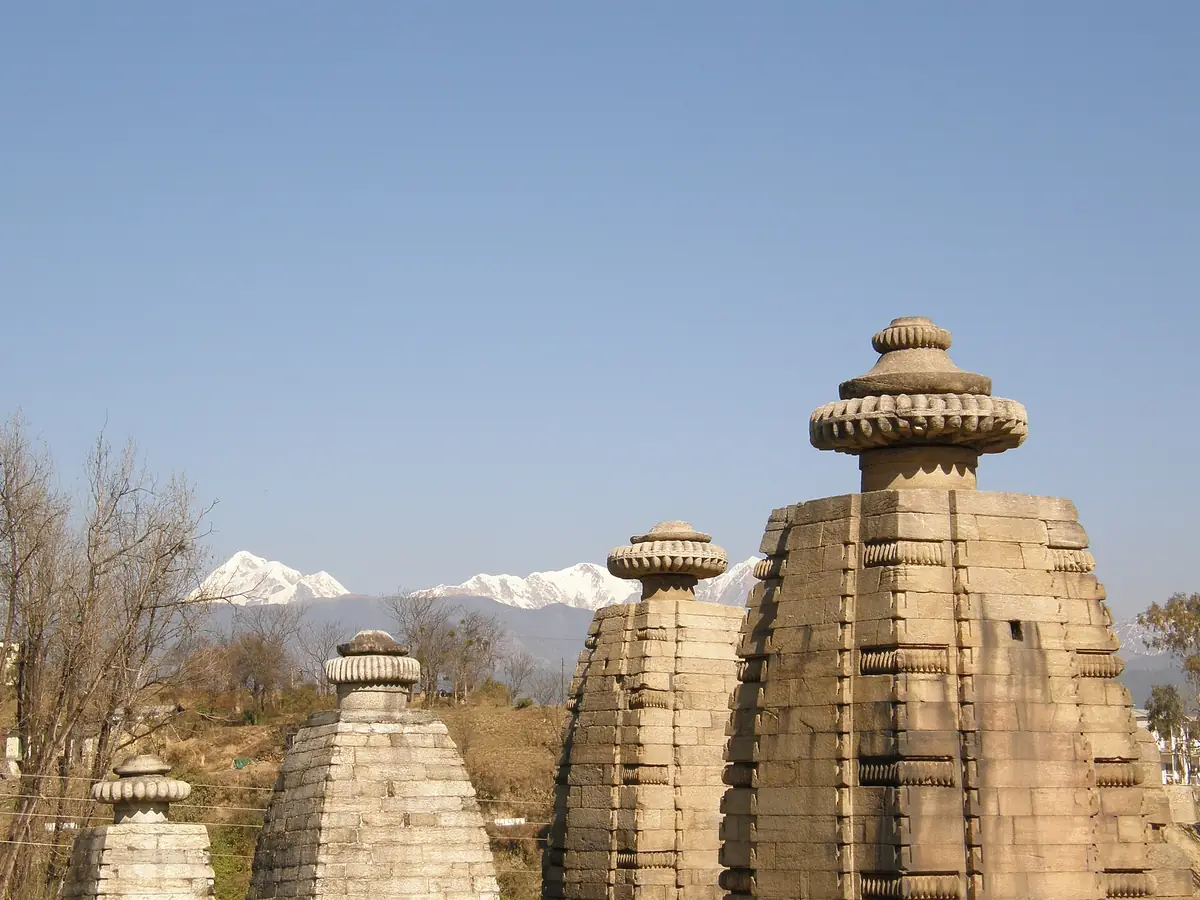
An 12th-13th century Katyuri-era temple complex dedicated to Shiva, roughly 20 km from Kausani on the banks of the Gomti river — a worthwhile detour for anyone interested in Kumaon's older stone temple architecture, in the same tradition as the larger complex at Jageshwar.
Where to Stay in Kausani
Kausani's accommodation is small in scale compared to Nainital, with most properties built specifically to capture the Himalayan view.
- → Simple guesthouses in the main market
- → KMVN (Kumaon Mandal Vikas Nigam) tourist rest house
- → Basic homestays on the ridge
- → View-facing hotels along the ridge road
- → Family-run cottages with mountain-facing rooms
- → Small resorts near the tea estate
- → Boutique heritage-style mountain resorts
- → Premium cottages with private valley views
- → Upscale properties toward the outskirts
Suggested Visit Plan (1-2 Days)
Arrival & Sunset Viewpoint
- ✓Arrive via Almora, check in by afternoon
- ✓Walk through the Kausani Tea Estate
- ✓Evening at the main ridge viewpoint for sunset over the Himalaya
Anasakti Ashram & Rudradhari Falls
- ✓Morning visit to Anasakti Ashram
- ✓Half-day trip to Rudradhari Falls & Cave
- ✓Optional detour to Baijnath Temple on the return leg
* Many travellers combine Kausani with a stop at the ancient temple cluster of Jageshwar, about 2 hours away, as part of a wider Kumaon circuit.
Where to Eat in Kausani
- Hotel dining rooms: Most stays in Kausani serve simple North Indian and Kumaoni home-style meals, often the most convenient option given the town's small size.
- Local dhabas near the market: Basic, inexpensive meals — dal, rice, sabzi, and rotis — along the main road through town.
- Tea stalls: Given the town's own tea estate, a cup of fresh local tea at a roadside stall is worth doing at least once.
Budget Breakdown
| Expense | Budget | Mid-Range | Luxury |
|---|---|---|---|
| Accommodation/night | ₹1,500 | ₹4,500 | ₹11,000 |
| Local taxi/day | ₹1,000 | ₹1,800 | ₹2,800 |
| Food/day | ₹500 | ₹1,200 | ₹2,500 |
| Rudradhari Falls trip | ₹600 | ₹1,200 | ₹1,800 |
| Entry & misc/day | ₹200 | ₹400 | ₹800 |
* Figures are per person, per day, excluding transport into Kausani from Kathgodam or Pantnagar.
Essential Tips for Visiting Kausani
- Book a view-facing room: Not every property in town faces the Himalayan range — confirm before booking if the view matters to you.
- Go early for clear views: Mountain visibility is usually best in the early morning, before afternoon haze or cloud builds up.
- Carry warm layers even in summer: Evenings stay cool year-round at this altitude, even when days are pleasantly warm.
- Don't expect nightlife or a big market: Kausani is small and quiet after dark — come for the views and the calm, not entertainment options.
- Combine with Almora and Jageshwar: Both are close enough to fold into the same trip without major detours.
✅ Do
- →Check the weather forecast before travelling for clear views
- →Wake early for the best mountain visibility
- →Visit Anasakti Ashram for context on Gandhi's stay
- →Pack warm layers for cool evenings
- →Combine with Almora and Jageshwar in one trip
- →Try tea from the local estate
❌ Don't
- →Visit in July-August expecting a clear mountain view
- →Expect Nainital-style shopping or nightlife
- →Skip confirming a view-facing room in advance
- →Rush Kausani into a single afternoon stop
- →Assume every day is clear — haze does happen
- →Forget cash — card acceptance is limited in the small market
Frequently Asked Questions
Why is Kausani called the 'Switzerland of India'?
Mahatma Gandhi stayed at Kausani for two weeks in 1929, working on his commentary Anasakti Yoga, and is widely reported to have described the view of the Himalayan range from here as reminiscent of Switzerland. The name has stuck in tourism literature ever since, even though the comparison is more evocative than literal.
What mountains can I see from Kausani?
On a clear day, Kausani offers an unbroken 300-km-plus panorama of Himalayan peaks including Trishul, Nanda Devi, and the Panchachuli group. Visibility is best in the morning and immediately after rain, and clearest overall in the Mar-Jun and Sep-Nov windows.
How far is Kausani from Nainital?
Kausani is roughly 115-130 km from Nainital by road, a drive of about 4-5 hours depending on traffic through Almora. Many travellers combine both in a single Kumaon circuit, often via Almora.
Is Kausani good for a family or a quiet retreat trip?
Yes — Kausani is considerably quieter and less commercial than Nainital, with a small market, few crowds, and its main draw being the mountain view itself rather than adventure activities. It suits travellers wanting a slow, scenic stay over an activity-packed one.
How many days should I spend in Kausani?
1-2 nights is enough to see the main viewpoints, Anasakti Ashram, the tea estate, and take a half-day trip to Rudradhari Falls. Many visitors treat it as a 1-2 night stop within a longer Kumaon itinerary rather than a standalone destination.
What is the best time to visit Kausani for mountain views?
March to June and September to November give the clearest, haze-free views of the Himalayan range. Winter (December-February) can also be excellent on clear days and brings occasional snow, but the monsoon months (July-August) usually cloud out the view entirely.
Published by the Kudozz Club editorial team · Last updated · How we research our guides
Want us to plan this trip for you?
Tell Kudozz Club where you want to go and what kind of trip you’re looking for. We’ll build a Kausani and Uttarakhand itinerary around your dates and budget.
Continue Exploring
View all guides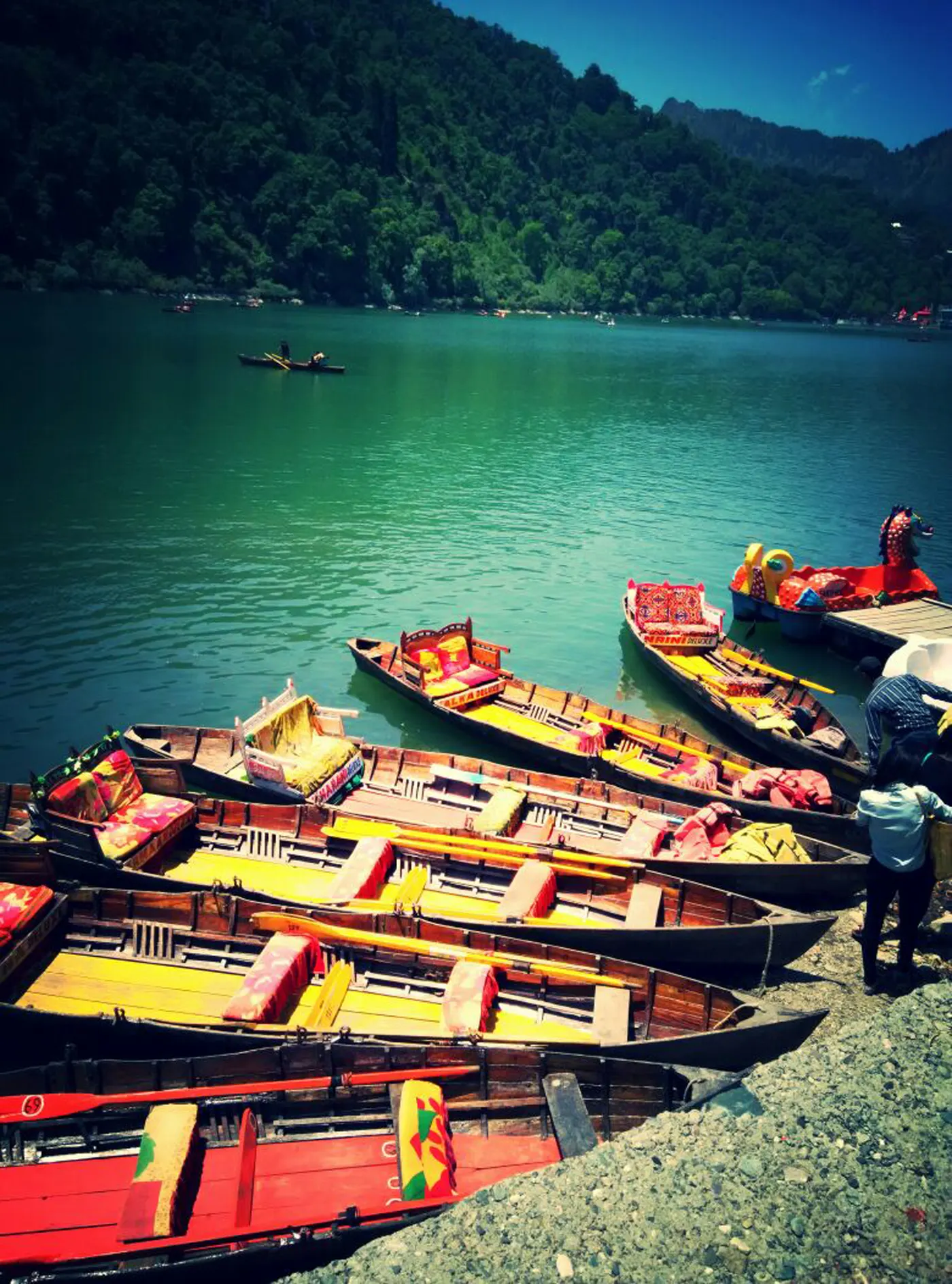 Destination Guide
Nainital Travel Guide: Naini Lake, Views & Tips
Complete Nainital guide — Naini Lake boating, Naina Devi Temple, Naina Peak's cable car, how to reach from Kathgodam, where to stay, and a full visit plan.
 Off-beat
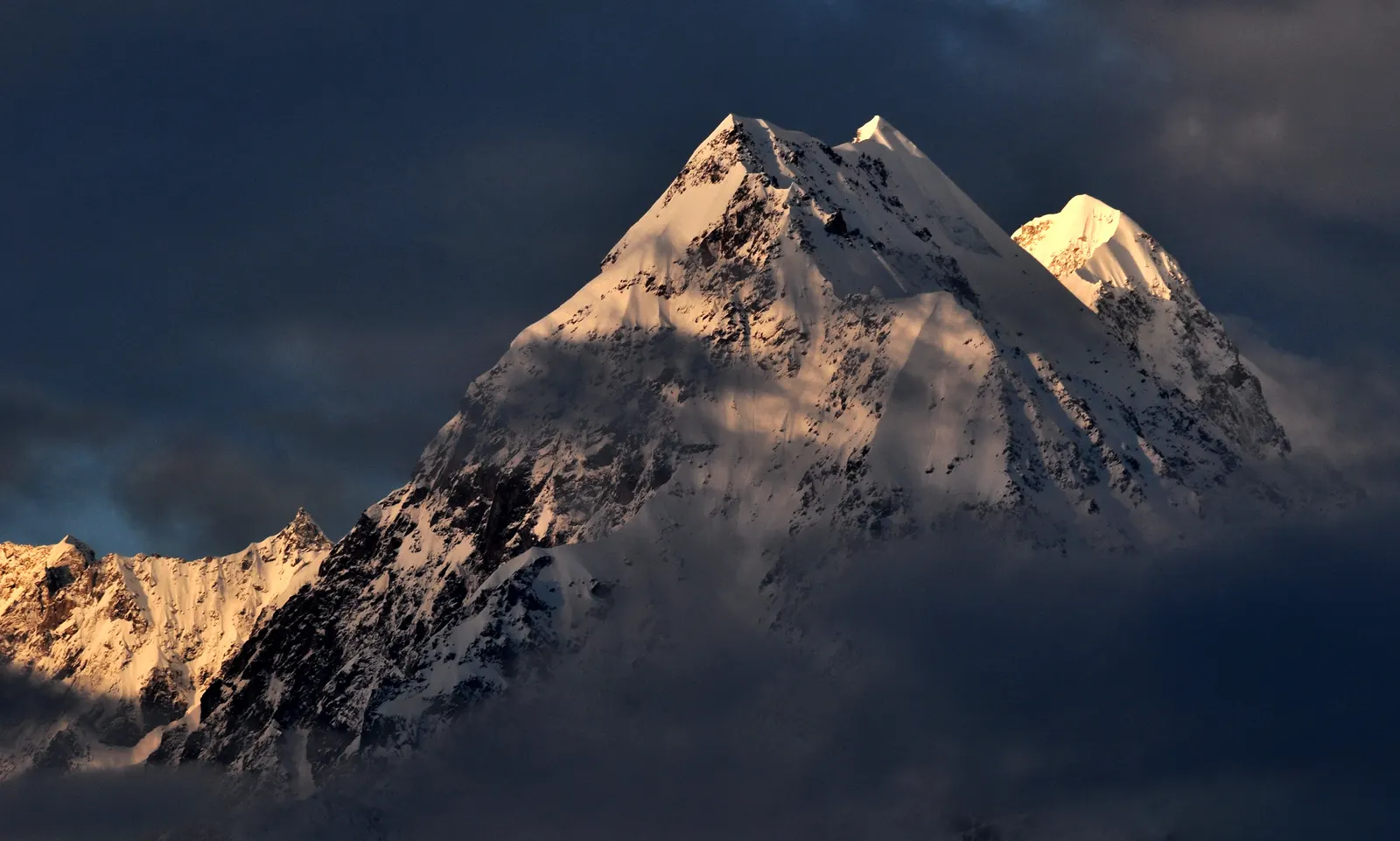
Munsiyari Travel Guide: Panchachuli Views & Treks
Complete Munsiyari guide — Panchachuli peak views, Betuli Dhar, Thamri Kund, Milam Glacier trek logistics, how to reach this remote Kumaon town, where to stay, and a full visit plan.
 Adventure
Mukteshwar Travel Guide: Views, Orchards & Adventure
A quiet Kumaon ridge town with sweeping Himalayan views, apple orchards, and a growing base for rock climbing, rappelling and paragliding.
Things to DoThings to Do in Kausani: Himalayan Sunrise, Tea Gardens & Gandhi's Ashram
Things to do in Kausani: sunrise over Trishul and Nanda Devi, Anasakti Ashram, the Sumitranandan Pant museum, Kausani Tea Estate, Lakshmi Ashram, Rudradhari Falls, and the Baijnath and Bageshwar temples.