Gateway of the Gods
Haridwar — literally "Gateway to Hari (Vishnu)" or, in an alternate reading, "Gateway to Hara (Shiva)" — is one of the seven holiest cities in Hinduism, the Sapta Puri, and among the oldest continuously inhabited places in India. It sits at the exact point where the Ganga, having tumbled down from its Himalayan source, leaves the mountains and enters the northern plains for the first time — a geographic threshold that gives the city its enduring spiritual weight.
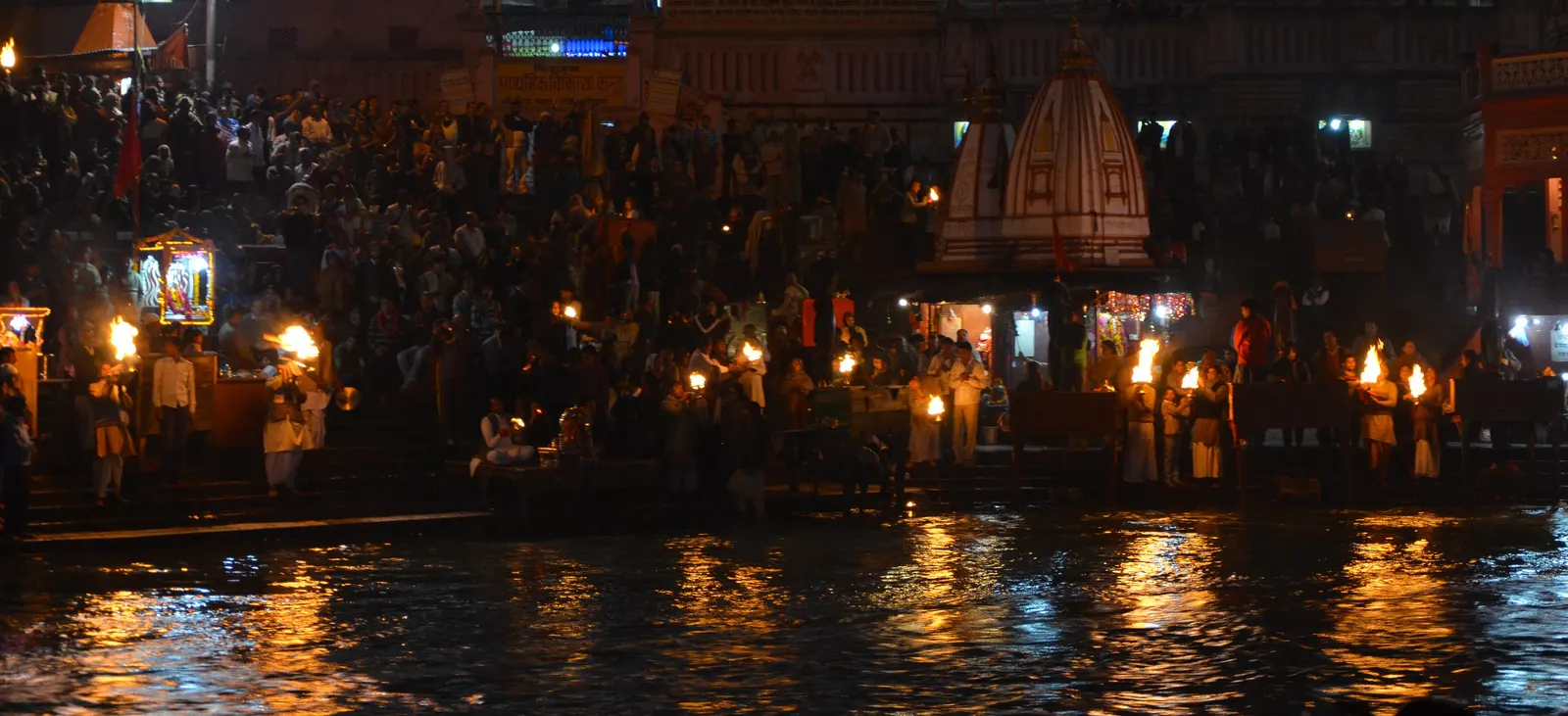
Unlike hill stations or adventure towns, Haridwar's whole identity is built around the river and its rituals. Life here revolves around Har Ki Pauri, the city's most sacred ghat, where thousands gather every evening for the Ganga Aarti — a ceremony of fire, chants, and floating diyas that is, for many visitors, the single most memorable experience in Uttarakhand. Alcohol and meat are banned within city limits, reinforcing Haridwar's identity as a place of pilgrimage rather than leisure tourism.
Haridwar is also inseparable from its twin city upstream, Rishikesh, just 25 km away on the same river — together they form one of North India's most popular two-in-one trips, pairing Haridwar's temple-town devotion with Rishikesh's adventure sports and yoga scene. Haridwar is also the traditional launch point for the Char Dham Yatra, the pilgrimage circuit to Yamunotri, Gangotri, Kedarnath, and Badrinath, and hosts the Kumbh Mela, one of the largest religious gatherings on the planet, on its rotating 12-year cycle.
🕉️ Haridwar at a Glance
Looking for activities and experiences? See our guide to the best things to do in Haridwar.
Going by road? See our guide to the Delhi to Rishikesh road trip.
Planning a pilgrimage? See our guide to spiritual places in Uttarakhand.
Best Time to Visit Haridwar
Haridwar is a year-round pilgrimage destination, but comfort, crowd levels, and river conditions shift sharply with the seasons.
Cool, pleasant weather makes the ghats comfortable to walk and sit at for the evening aarti. October-November and February-March are especially popular, with clear skies and manageable crowds outside major festival dates.
Daytime heat climbs, sometimes past 40°C by May-June, but early mornings and evenings at the ghats remain pleasant. This window overlaps with the start of the Char Dham Yatra season.
The Ganga runs high, fast, and murky, and bathing at the ghats is often restricted for safety. Heavy rain also disrupts road travel toward the Char Dham shrines.
During the Kumbh or Ardh Kumbh Mela, Haridwar sees an extraordinary spiritual gathering, but also extreme crowding, traffic restrictions, and stretched accommodation — plan far in advance if visiting during these dates.
Our pick: October to March — cool, comfortable weather for the ghats, clear evening aartis, and calmer river levels than the monsoon months.
How to Reach Haridwar
Haridwar is one of the best-connected towns in Uttarakhand, reachable comfortably by air, rail, or road from across North India.
- By Air: Jolly Grant Airport in Dehradun is the nearest, around 35 km away, with regular flights from Delhi and other major cities. From the airport, taxis and shared cabs reach Haridwar in about an hour.
- By Rail: Haridwar Junction is a major railway station with direct trains from Delhi, Mumbai, Kolkata, Chennai, and most large North Indian cities — one of the most convenient ways to arrive, especially overnight from Delhi.
- By Road: Well connected via NH334, with Delhi roughly 5-6 hours away by car or bus. Regular bus services run from Delhi's ISBT and other North Indian cities, and Haridwar's own bus stand is a major hub for onward Char Dham travel.
Har Ki Pauri & the Ganga Aarti
Har Ki Pauri
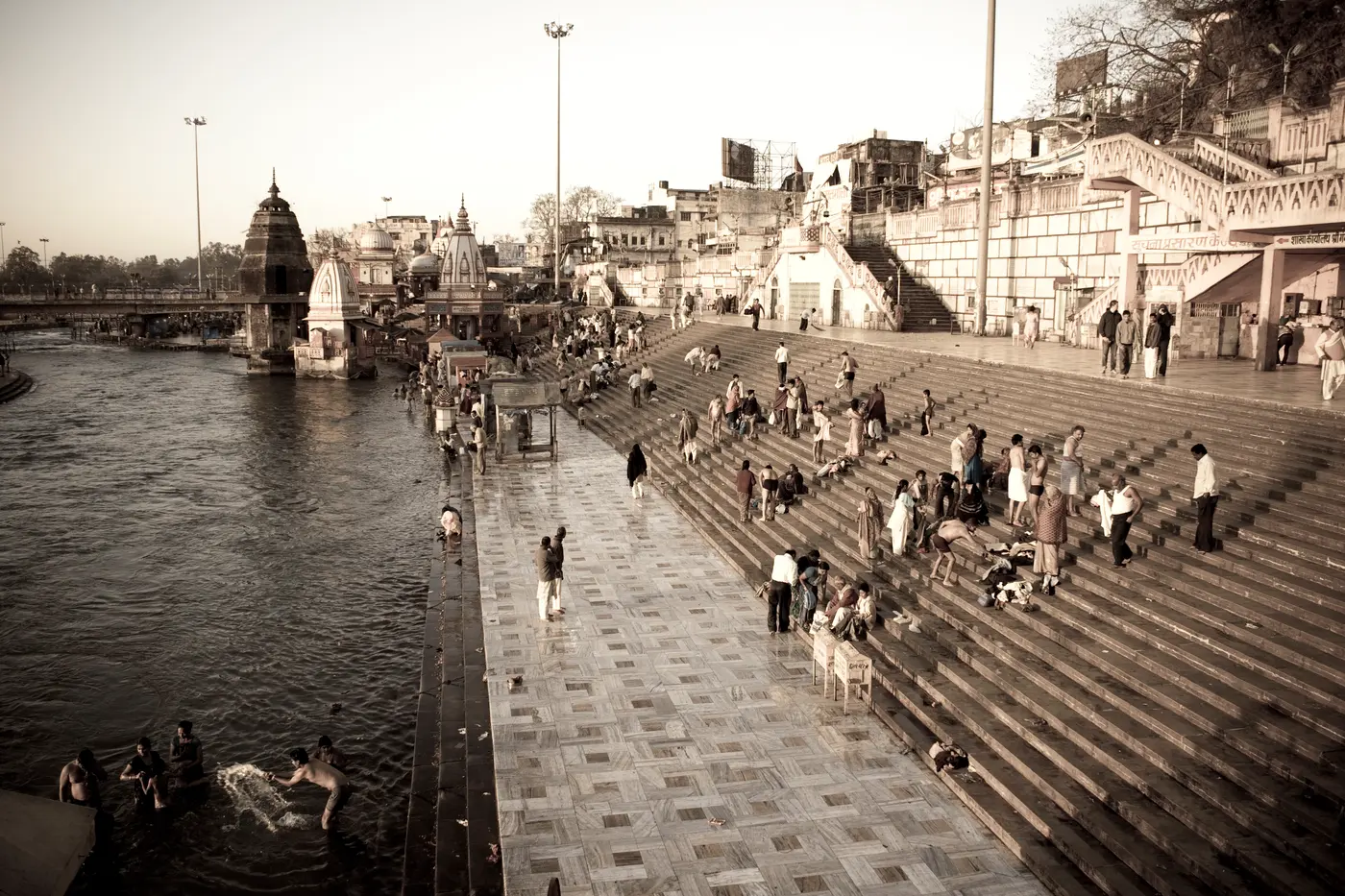
Har Ki Pauri — "the footsteps of the Lord" — is Haridwar's holiest ghat and its beating heart. According to tradition, the spot bears the footprint of Lord Vishnu, and taking a dip here is believed to cleanse a lifetime of sins. It's also the exact location where the Ganga completes its descent from the mountains, making it one of the most significant bathing points on the entire river. Pilgrims, families, and sadhus gather here throughout the day, but the ghat truly comes alive after sunset.
The Evening Ganga Aarti
Every evening at Har Ki Pauri, priests perform the Ganga Aarti — a ritual of fire offered to the river, accompanied by devotional chants, ringing bells, and conch shells. Large brass lamps with multiple flaming wicks are swept in circular motions before the water as thousands watch from the ghat steps on both banks. Many visitors also purchase small leaf-boats holding a flower and a lit diya, setting them adrift on the current — a simple, moving gesture that, multiplied by hundreds of small flickering lights drifting downstream, is one of the most photographed sights in North Indian pilgrimage tourism.
Arrive at least 45-60 minutes early for a good vantage point, especially on weekends, festival days, and during the Kumbh season, when the ghat can draw enormous crowds.
Other Notable Ghats
Beyond Har Ki Pauri, Haridwar's riverfront stretches with several other bathing ghats, each with its own local significance, along with quieter stretches upstream and downstream where the crowds thin considerably outside aarti hours.
Temples & Hilltop Shrines
Mansa Devi Temple
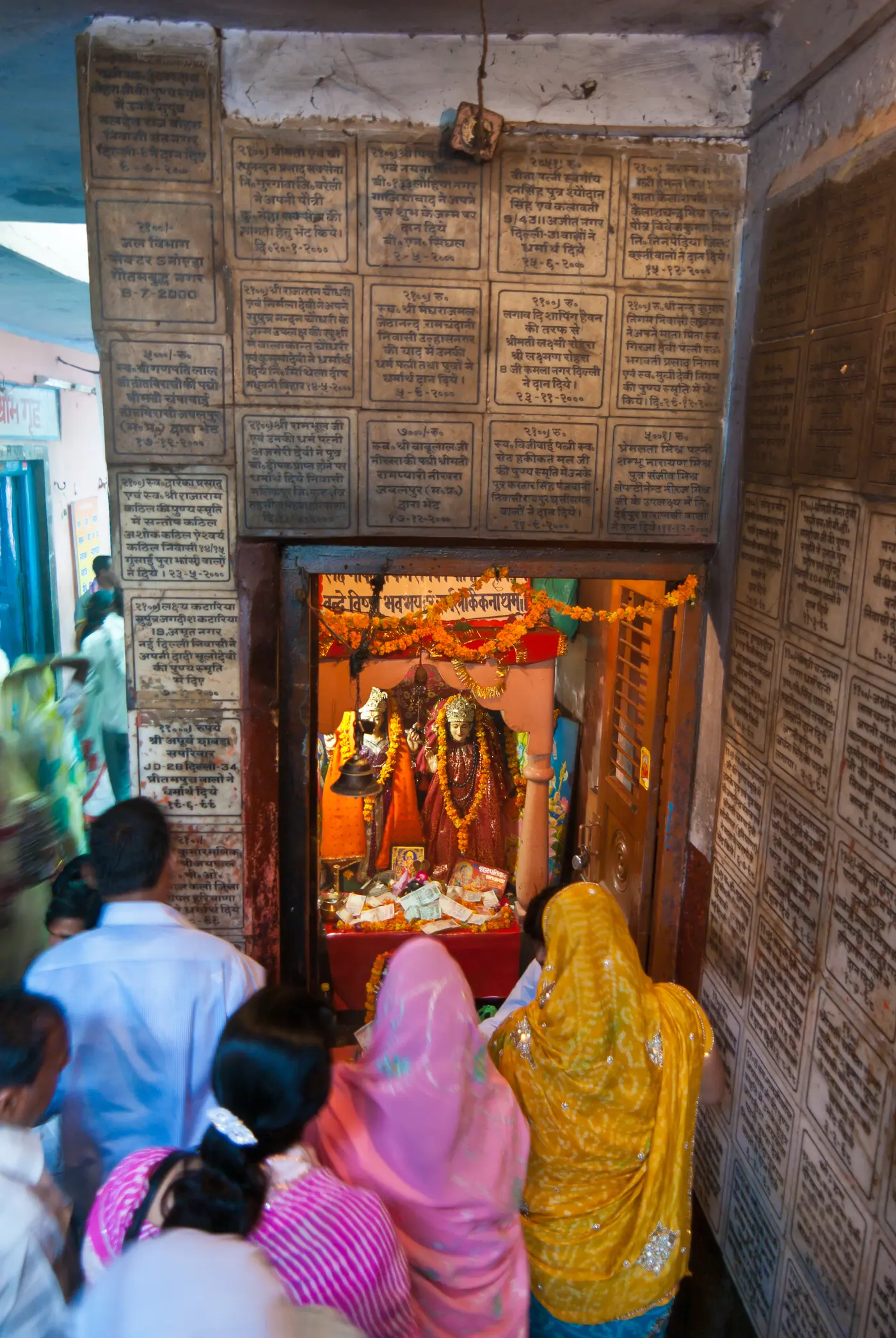
Perched atop Bilwa Parvat, Mansa Devi Temple is dedicated to a form of the goddess Shakti believed to fulfil the wishes of devotees — "Mansa" translates roughly to "wish." A cable car (the Mansa Devi Udankhatola) carries visitors up in a few minutes, offering sweeping views over Haridwar and the Ganga along the way; a stepped footpath is also an option for those who'd rather trek up, roughly an hour on foot.
Chandi Devi Temple
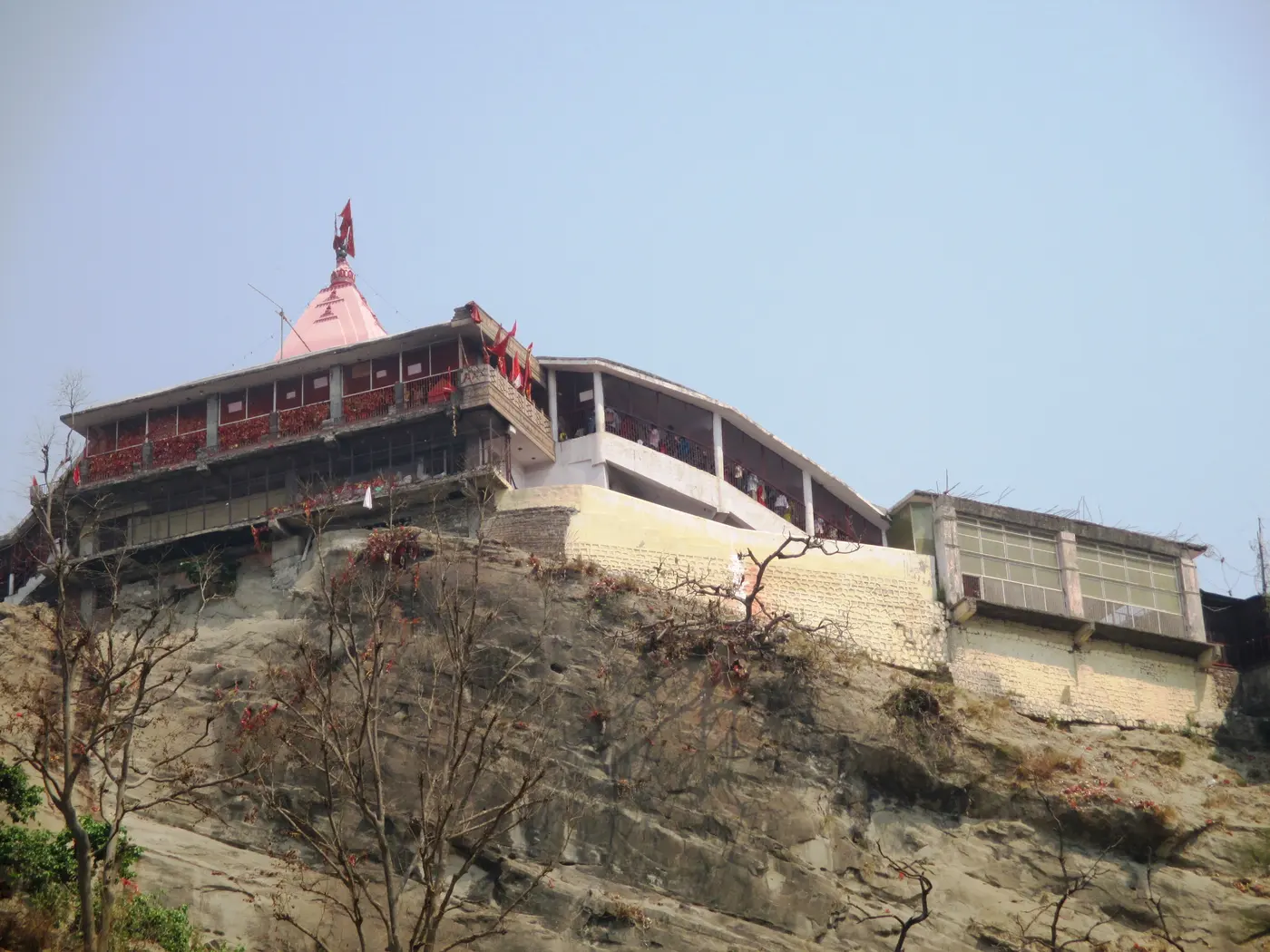
On the opposite bank, atop Neel Parvat, Chandi Devi Temple honours the goddess Chandi, said to have been established by the philosopher Adi Shankaracharya in the 8th century. Its own ropeway makes the ascent easy, though the hill is somewhat steeper and quieter than Mansa Devi's, with dense forest views on the way up and, on a clear day, distant glimpses of the Himalayan foothills.
Maya Devi Temple
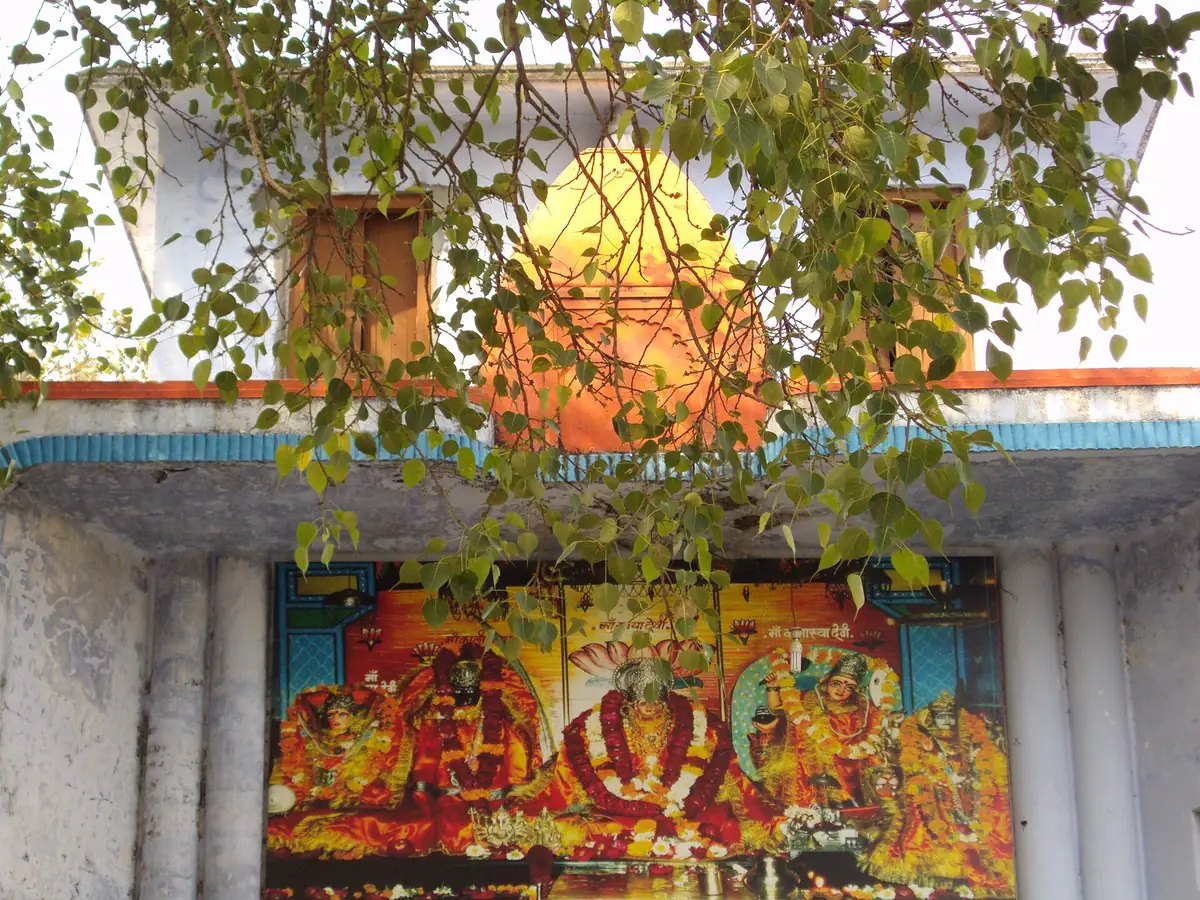
One of Haridwar's oldest temples and considered a Shakti Peeth — a site associated with the goddess Sati in Hindu mythology — Maya Devi Temple sits closer to the town centre, easily combined with a visit to Har Ki Pauri.
Rajaji National Park
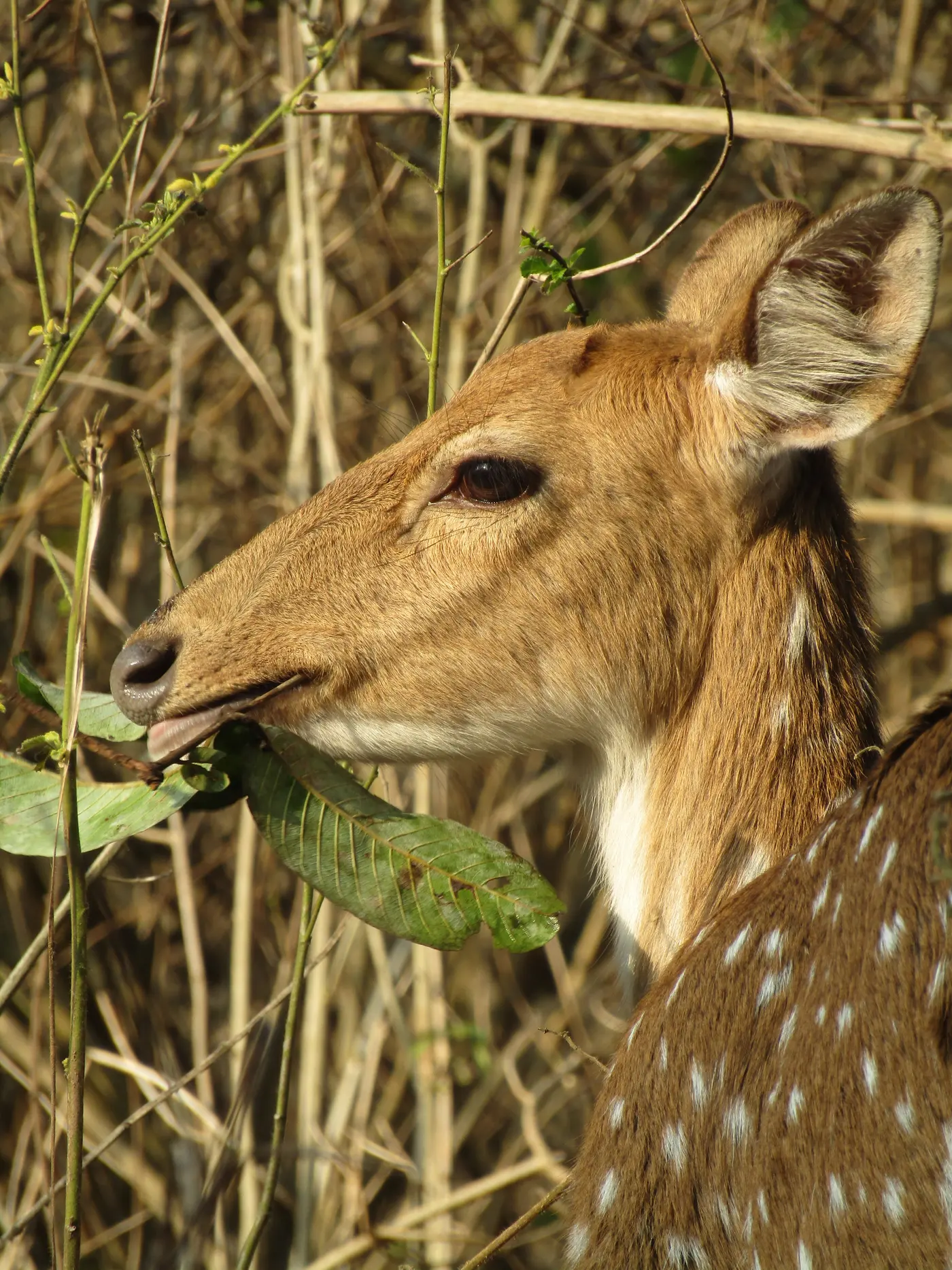
A short drive from the city, Rajaji National Park spans dense forest along the Shivalik foothills and is home to elephants, tigers, leopards, and a rich variety of birdlife. Jeep safaris from designated entry gates make for a worthwhile half-day detour for wildlife-inclined travellers, offering a very different mood from the temple-town bustle below.
The Kumbh Mela
Haridwar is one of four sacred sites — alongside Prayagraj, Nashik, and Ujjain — that host the Kumbh Mela on a rotating cycle, based on planetary positions in the Hindu calendar. Each city hosts the full Kumbh Mela roughly once every twelve years, with a smaller Ardh (Half) Kumbh Mela at the midpoint. The festival draws staggering numbers of pilgrims, sadhus, and akharas (monastic orders) for ritual bathing at Har Ki Pauri, and is recognised as one of the largest peaceful gatherings of people anywhere in the world.
Visiting during a Kumbh year is an extraordinary experience — but comes with serious crowding, stretched accommodation, and traffic restrictions across the city. If your visit coincides with these dates, book well in advance and expect a very different, far busier Haridwar than on a typical visit.
Gateway to Char Dham
For centuries, Haridwar has served as the traditional starting point of the Char Dham Yatra — the pilgrimage circuit to the four sacred shrines of Yamunotri, Gangotri, Kedarnath, and Badrinath. Buses, shared taxis, and organised tour operators heading to all four shrines originate from Haridwar's bus stand, and many pilgrims begin their yatra with a purifying dip at Har Ki Pauri before setting off into the mountains.
Practically, Haridwar is also the last major town with full city facilities — banks, ATMs, hospitals, larger shops, and reliable mobile connectivity — before the roads climb into the Garhwal Himalaya, so many travellers use it to stock up before the yatra and unwind here again on the way back down.
Where to Stay in Haridwar
Accommodation clusters mainly around Har Ki Pauri and upper Haridwar (closer to the ghats and temples), with quieter options further from the main crowds. Many properties near Har Ki Pauri are run by ashrams and trusts, reflecting the town's pilgrimage character.
- → Ashram guesthouses near Har Ki Pauri
- → Basic hotels in the main bazaar area
- → Dharamshalas (pilgrim rest houses)
- → 3-star hotels near the ghats
- → Riverside hotels with Ganga views
- → Comfortable business-style hotels
- → Upscale hotels on Haridwar-Rishikesh road
- → Riverside resort-style properties
- → Premium wellness-focused stays
Suggested Visit Plan (2 Days)
Har Ki Pauri & the Ganga Aarti
- ✓Arrive and check in, morning at leisure
- ✓Afternoon walk along the ghats and main bazaar
- ✓Arrive early for the evening Ganga Aarti at Har Ki Pauri
Temples & Rajaji National Park
- ✓Morning cable car to Mansa Devi Temple
- ✓Chandi Devi Temple and Maya Devi Temple
- ✓Afternoon safari at Rajaji National Park (optional)
* Most travellers extend this into a 3-4 day trip by adding Rishikesh just upstream, or by departing straight onward toward the Char Dham circuit.
Where to Eat in Haridwar
As a pilgrimage town, Haridwar's food scene is entirely vegetarian, alcohol- and meat-free, with a strong focus on traditional North Indian and Uttarakhandi fare.
- Pure-veg thali restaurants: Widely available across the main bazaar and near Har Ki Pauri, serving classic North Indian vegetarian meals.
- Sweet shops: Haridwar is well known for its milk-based sweets and namkeen (savoury snacks) — several long-running shops in the bazaar area are local institutions worth seeking out.
- Ashram dining halls: Many ashrams and guesthouses serve simple, wholesome vegetarian meals to guests and pilgrims, often at very reasonable rates.
- Street food along the ghats: Chaat, kachori-sabzi, and other North Indian street snacks are widely available near Har Ki Pauri, especially in the evening.
Budget Breakdown
| Expense | Budget | Mid-Range | Luxury |
|---|---|---|---|
| Accommodation/night | ₹1,000 | ₹4,000 | ₹10,000 |
| Food/day | ₹400 | ₹1,000 | ₹2,500 |
| Local transport/day | ₹200 | ₹500 | ₹1,500 |
| Cable car (each temple) | ₹150–₹250 | ₹150–₹250 | ₹150–₹250 |
| Daily total (approx.) | ₹1,900 | ₹5,800 | ₹14,500 |
* Figures are per person, per day, and exclude travel to Haridwar itself. Ropeway prices are per round trip, per temple.
Essential Tips for Visiting Haridwar
- Respect the alcohol and meat ban: Haridwar is strictly vegetarian and dry within city limits — plan accordingly, and don't expect either to be available.
- Arrive early for the Ganga Aarti: Good viewing spots at Har Ki Pauri fill up fast, especially on weekends and festival days.
- Dress modestly: As with any major pilgrimage site, covered shoulders and knees are appreciated, particularly inside temples.
- Watch your belongings at the ghats: Crowded areas like Har Ki Pauri can attract pickpockets — keep valuables secure.
- Check Kumbh Mela dates before booking: If your travel window coincides with the Kumbh or Ardh Kumbh, expect major crowding and book accommodation far in advance.
- Carry a light shawl in winter: Evenings by the river can be noticeably cooler than the daytime temperature, especially during the aarti.
✅ Do
- →Arrive early for a good spot at the Ganga Aarti
- →Try the cable car to Mansa Devi and Chandi Devi
- →Dress modestly, especially inside temples
- →Sample the local sweets and vegetarian thalis
- →Combine your trip with nearby Rishikesh
- →Check Kumbh Mela dates before finalising plans
❌ Don't
- →Expect alcohol or non-vegetarian food in town
- →Bathe at the ghats during high monsoon water levels
- →Leave valuables unattended in crowded ghat areas
- →Skip early arrival and expect a front-row aarti spot
- →Underestimate Kumbh-year crowding
- →Rush the Char Dham registration process
Frequently Asked Questions
What time is the Ganga Aarti at Har Ki Pauri?
The evening Ganga Aarti at Har Ki Pauri typically begins around sunset — roughly 6:00-6:30 PM in winter and 7:00-7:30 PM in summer, timings shift with daylight so it's worth checking the exact time locally on the day. Arrive at least 45-60 minutes early to find a good spot on the ghat steps, especially on weekends and during festivals.
Is Haridwar a good base for the Char Dham Yatra?
Yes — Haridwar is the traditional starting point for the Char Dham circuit (Yamunotri, Gangotri, Kedarnath, Badrinath). Most yatra buses, shared taxis, and tour operators originate here, and many pilgrims begin with a dip at Har Ki Pauri before setting off. It's also the last major town with full facilities — banking, medical, shopping — before the mountain roads begin.
What is the difference between Haridwar and Rishikesh?
Though only about 25 km apart on the same river, they have distinct characters. Haridwar is a temple town — sacred to Hindus as one of the Sapta Puri (seven holiest cities), with alcohol and meat banned within city limits, and its energy centred on ghats, aartis, and pilgrimage. Rishikesh, upstream, has grown into an adventure and yoga hub with white-water rafting, bungee jumping, and international yoga ashrams, and a more relaxed, backpacker-friendly atmosphere.
When is the Kumbh Mela held in Haridwar?
The Kumbh Mela rotates among four sacred river cities — Haridwar, Prayagraj, Nashik, and Ujjain — roughly every three years at one location, meaning each city hosts the full Kumbh Mela once every twelve years, with a smaller Ardh (Half) Kumbh Mela at Haridwar and Prayagraj at the six-year midpoint. The exact dates are set by planetary positions in the Hindu calendar. It draws tens of millions of pilgrims and is one of the largest peaceful gatherings on Earth.
How do I reach the Mansa Devi and Chandi Devi temples?
Both hilltop temples have a cable car (ropeway) option — the Mansa Devi Udankhatola from near Har Ki Pauri, and the Chandi Devi ropeway from across the river near Chandighat — which takes a few minutes each way. Fit visitors can also trek up on foot via stepped paths, typically 1-1.5 hours for Mansa Devi and a steeper 1.5-2 hours for Chandi Devi.
How many days should I spend in Haridwar?
One full day covers Har Ki Pauri, the evening aarti, and one hilltop temple comfortably. Two days lets you add both temples, Maya Devi Temple, and a more relaxed pace around the ghats. Many travellers combine Haridwar with Rishikesh as a single 3-4 day twin-city trip.
Published by the Kudozz Club editorial team · Last updated · How we research our guides
Want us to plan this trip for you?
Tell Kudozz Club where you want to go and what kind of trip you’re looking for. We’ll build a Haridwar and Uttarakhand itinerary around your dates and budget.
Continue Exploring
View all guidesThings to DoThings to Do in Haridwar: Har ki Pauri, Ganga Aarti & Hilltop Temples
Things to do in Haridwar: the evening Ganga Aarti at Har ki Pauri, a dawn dip, ropeways to Mansa Devi and Chandi Devi, Maya Devi Temple, Bara Bazaar, Rajaji National Park and the start of the Char Dham.
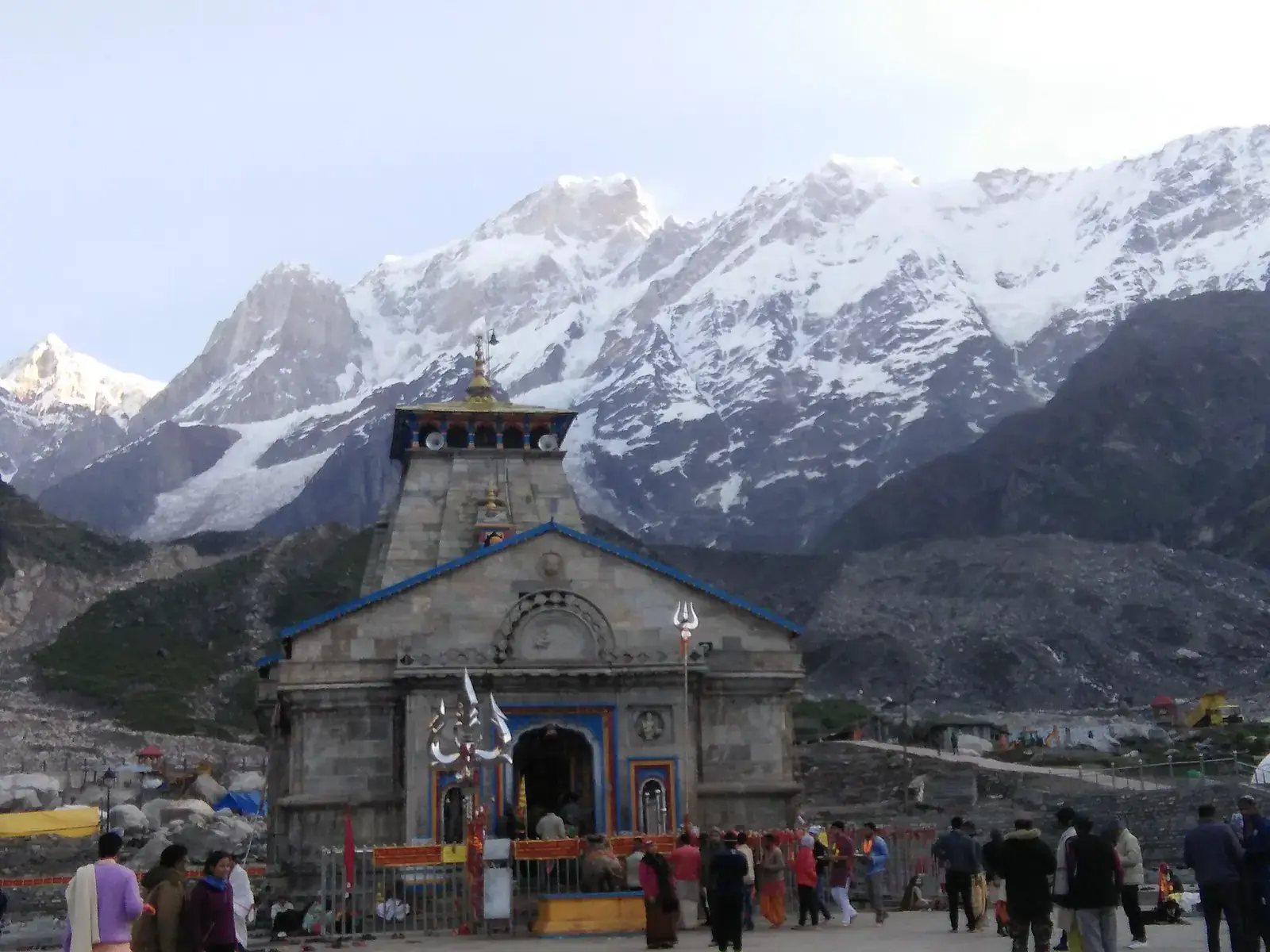 Spiritual Tourism
Spiritual Tourism in Uttarakhand: Char Dham, Haridwar, Rishikesh and Beyond
A guide to spiritual tourism in Uttarakhand, often called Devbhoomi: the Char Dham, Haridwar's Har ki Pauri and Rishikesh's ashrams and aartis, the Panch Kedar and Panch Prayag, Hemkund Sahib, Jageshwar, Kainchi Dham and Purnagiri in Kumaon, the 2027 Haridwar Ardh Kumbh, seasons and routes.
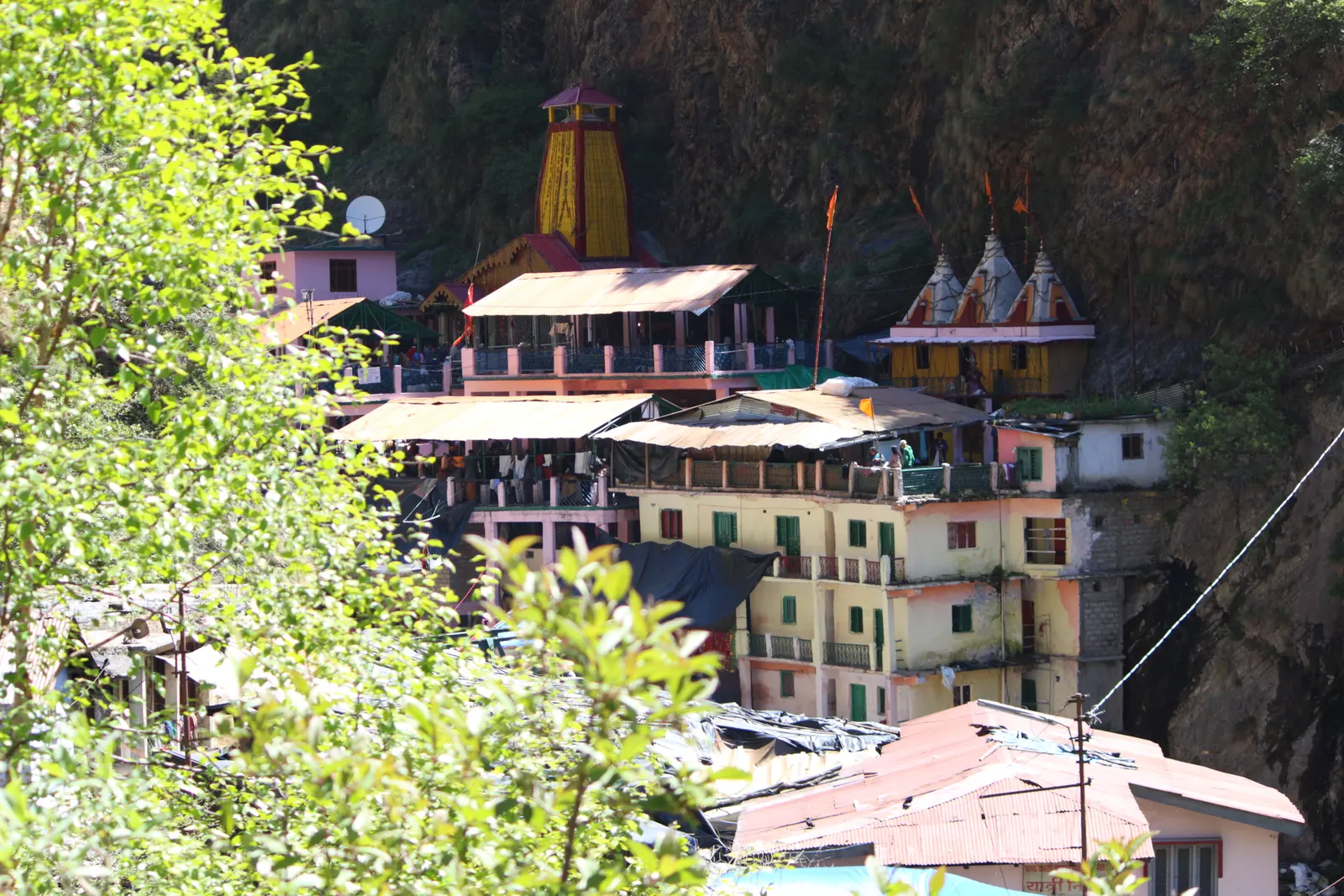 Heritage
Yamunotri Travel Guide: Trek, Hot Springs & Tips
The traditional first stop of the Char Dham Yatra — a forested trek from Janki Chatti to the Yamuna's source, past the Surya Kund hot-spring prasad ritual.
 Heritage
Prayagraj Travel Guide: Triveni Sangam & Kumbh Mela
The sacred Ganga-Yamuna-Saraswati confluence, home to the Kumbh Mela — plus Allahabad Fort, Anand Bhavan, and Khusro Bagh.