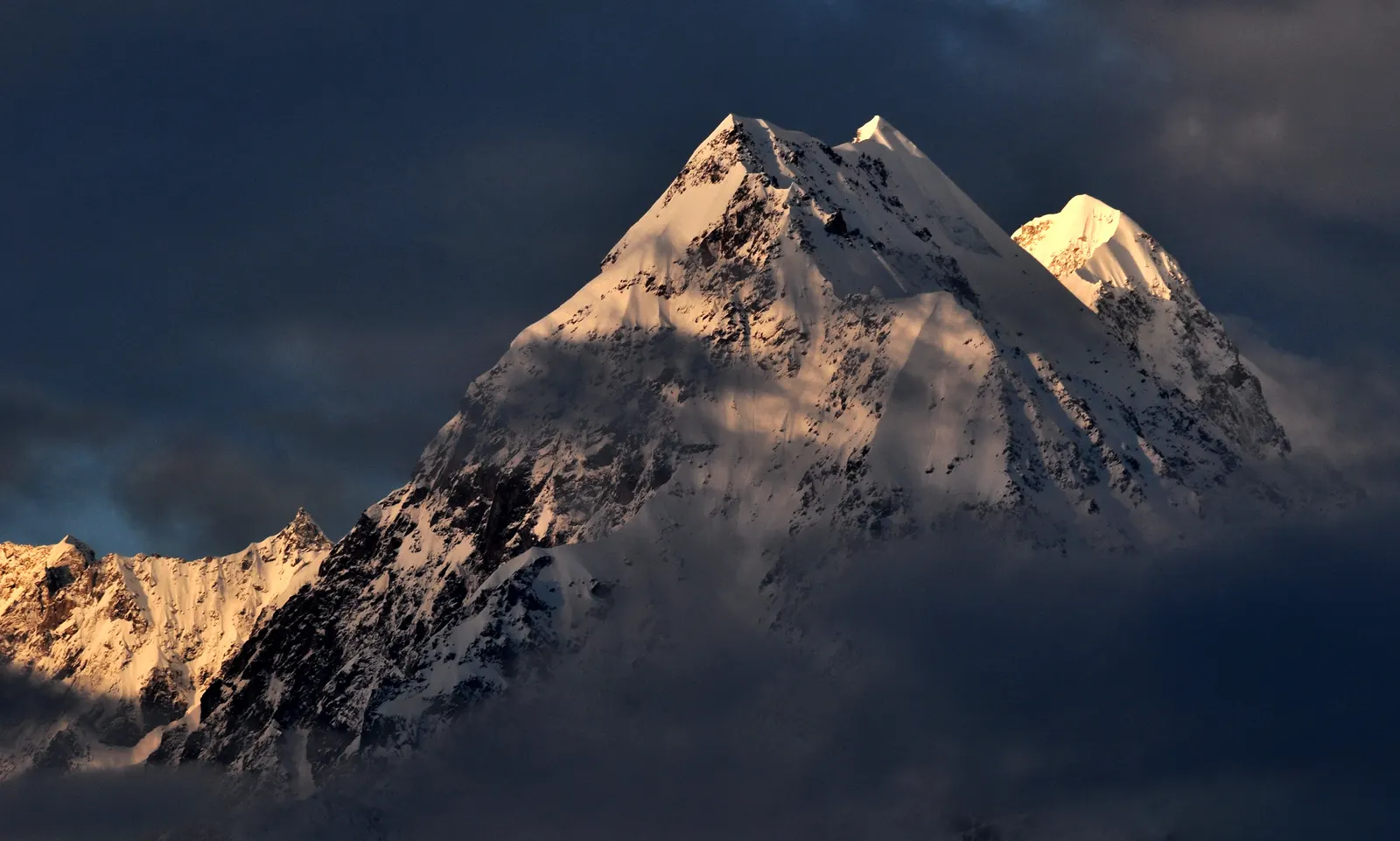
Kumaon's Remote Himalayan Frontier
Tucked into Pithoragarh district at the far eastern edge of Uttarakhand, Munsiyari sits at roughly 2,200 metres and looks straight across a deep valley at the five snow-clad summits of the Panchachuli range. Where most Himalayan viewpoints require a trek to earn their payoff, Munsiyari hands you the entire massif from the edge of town — genuinely one of the most dramatic roadside mountain views in India.
It's also a working gateway rather than a manicured hill station. Munsiyari is the traditional jumping-off point for the Milam, Ralam, and Namik Glacier treks, and a common overnight stop for travellers on the long road toward Adi Kailash and Om Parvat further north. The town itself is small, unhurried, and home to a meaningful Shauka (Bhotiya) community whose trans-Himalayan trading history is documented at the local Tribal Heritage Museum.
If Nainital and Mussoorie feel too developed and you want Kumaon at its most genuinely off-the-radar, Munsiyari is the place — just go in with realistic expectations about the long drive to get there.
🏔️ Munsiyari at a Glance
Going by road? See our guide to road trips in Uttarakhand.
Love the outdoors? See our guide to nature travel in Uttarakhand.
Comparing hill stations? See our guide to hill stations in Uttarakhand.
Planning something active? Read our guide to adventure activities in Uttarakhand.
Best Time to Visit Munsiyari
Munsiyari's high altitude and remote road access make timing genuinely important — both for peak visibility and for whether the roads in are even passable.
Clear skies before the monsoon give the sharpest, haze-free views of the Panchachuli range, with pleasant daytime temperatures for walking around town.
Post-monsoon skies are washed clean and stay clear for weeks, arguably giving the single best mountain visibility of the year.
Heavy rain brings landslide risk on the mountain roads into Munsiyari and frequently obscures the peaks in cloud for days at a stretch.
Heavy snowfall turns the valley spectacular but can close higher connecting roads for days at a time — check conditions before travelling.
Our pick: late September to November — the clearest, most reliable mountain visibility of the year, with far less rain risk on the approach roads than the spring window.
How to Reach Munsiyari
Be honest with yourself about this one: Munsiyari is genuinely remote, and reaching it is a full day's journey from the nearest transport hubs, whichever way you come.
- By air: Pantnagar Airport is the nearest, but it's still a long onward drive of well over 300 km via Kathgodam and Pithoragarh — flying in saves comparatively little time given the mountain roads that follow.
- By rail: Kathgodam and Tanakpur are the practical rail heads, both roughly 250-280 km away. Expect a full 8-10+ hour drive from either, winding through Almora and Pithoragarh on progressively narrower mountain roads.
- By road: Most visitors break the journey with an overnight stop in Pithoragarh or Berinag rather than attempting Kathgodam to Munsiyari in one push. A private vehicle or shared taxi is the only practical way to cover the final stretch.
Things to Do & See in Munsiyari
Betuli Dhar Viewpoint
A short walk or drive above town, Betuli Dhar is Munsiyari's classic sunrise spot — the Panchachuli peaks catch the first light in shifting shades of pink and gold, and on a clear morning the whole ridge is visible without a single cloud.
Panchachuli Peaks & the Pandava Legend
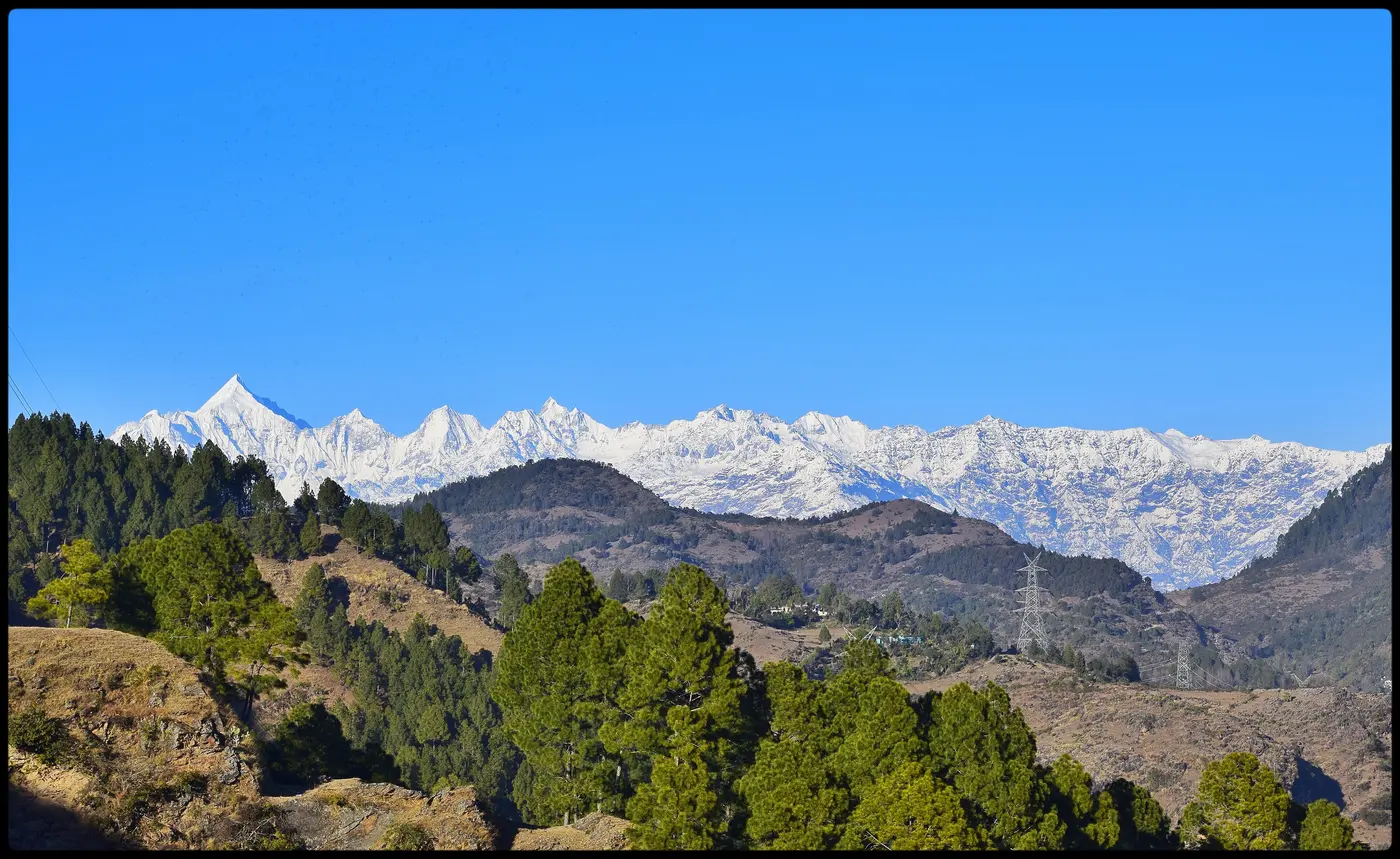
The name Panchachuli — roughly "five hearths" — comes from local legend holding that the five Pandava brothers cooked their final meal on these peaks before beginning their ascent to the heavens. Whether or not you know the story, the five distinct summits lined up across the valley are unmistakable and genuinely one of Kumaon's great sights.
Thamri Kund
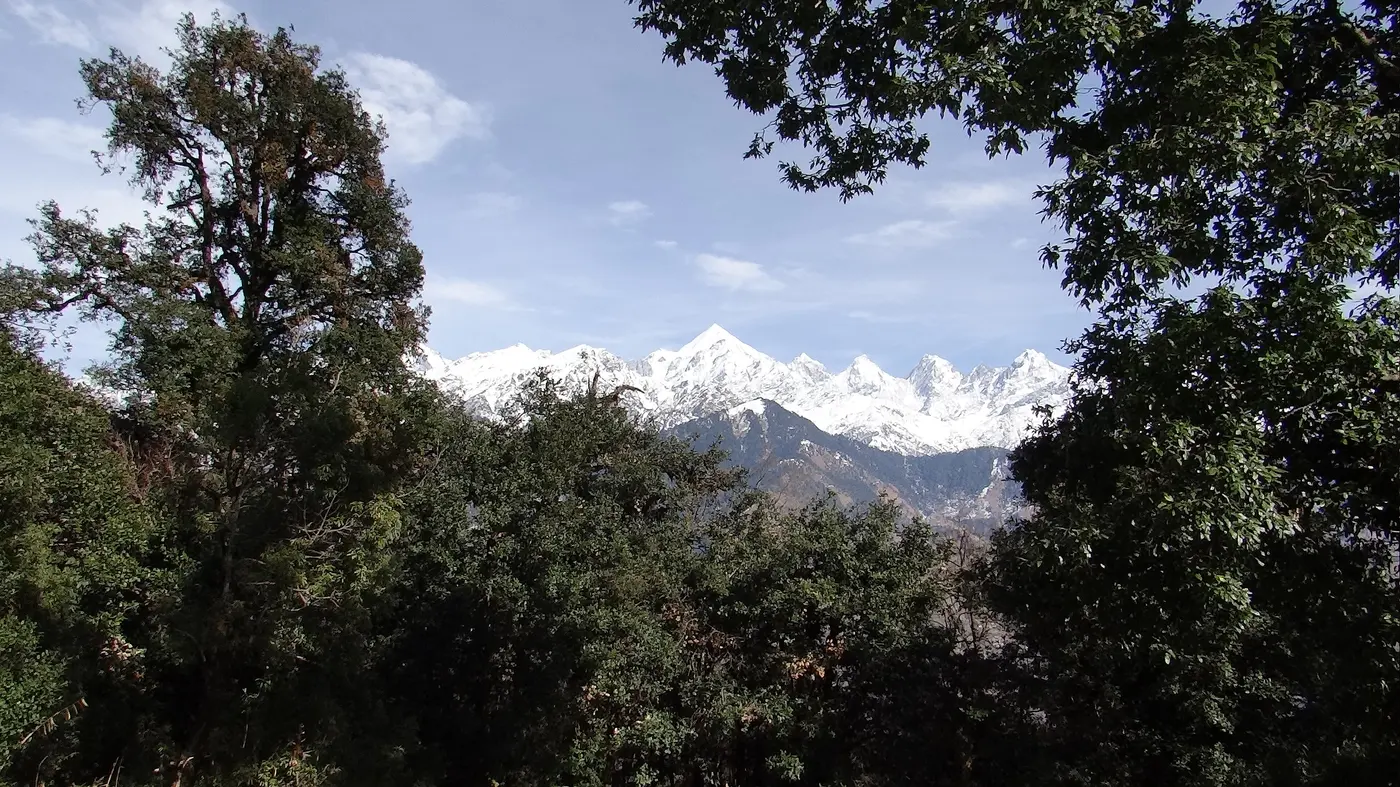
A small forest lake a short trek from town, framed by dense rhododendron and oak, and considered sacred by locals. It's an easy, peaceful half-day walk if you want a break from mountain-staring.
Tribal Heritage Museum
A small but worthwhile museum documenting the culture, dress, and trans-Himalayan trading history of the Shauka (Bhotiya) community native to this valley, who historically traded wool and salt across the Tibetan border before it closed in 1962.
Nanda Devi Temple
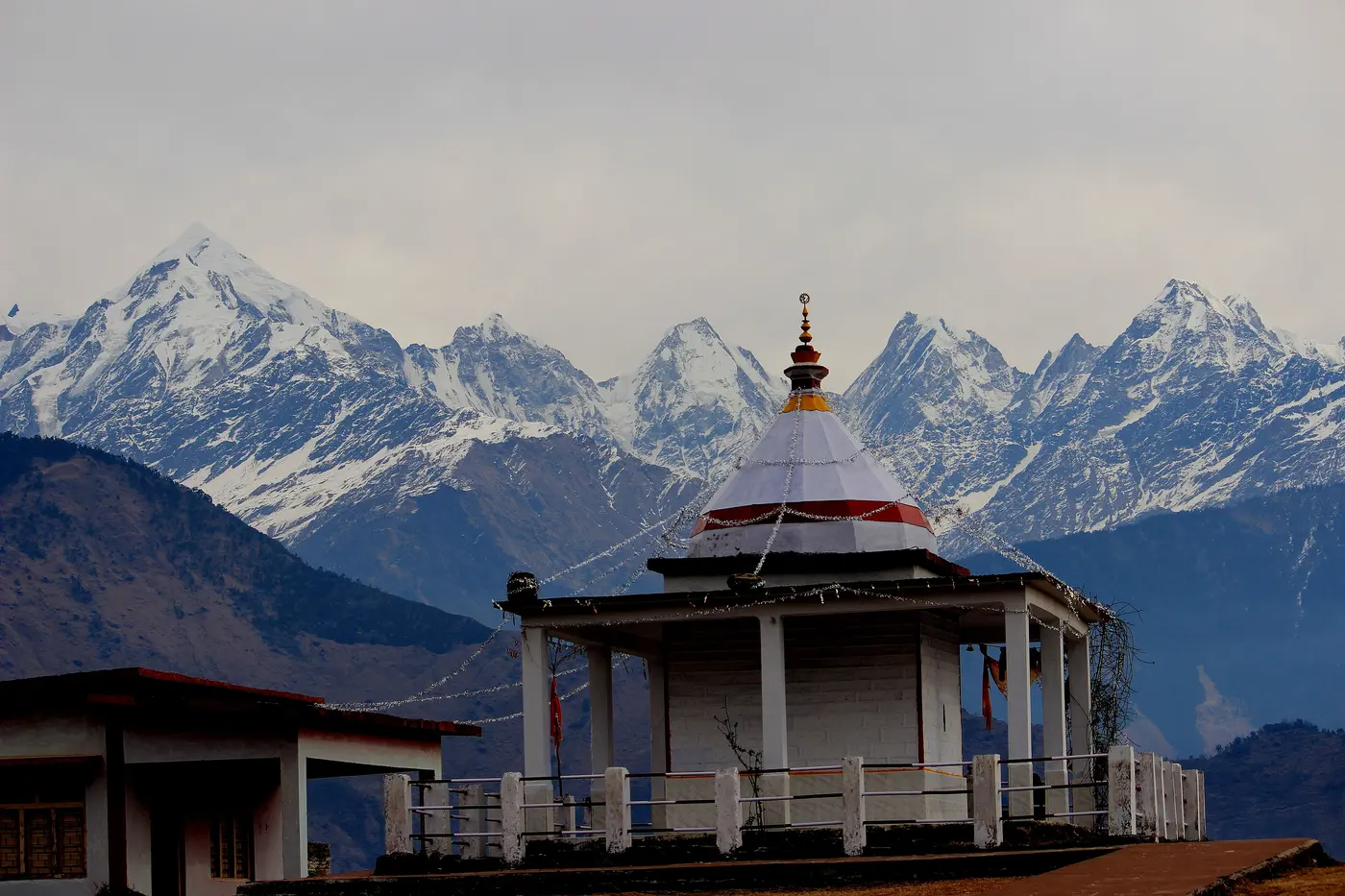
A small local temple in Munsiyari town dedicated to Nanda Devi as a goddess — distinct from the actual Nanda Devi peak, which lies further west and is not visible from here. Worth a quick stop while wandering the town.
Glacier Treks: Milam, Ralam & Namik
Munsiyari is the traditional starting point for three serious high-altitude treks — Milam Glacier (the longest and best-known, following an old trade route toward the Tibetan border), Ralam Glacier, and Namik Glacier. These are genuine multi-day Himalayan treks, not casual outings: they require an Inner Line Permit, a registered guide or trekking agency, proper acclimatisation, and several extra days of planning beyond a standard Munsiyari visit. If you're combining this with Adi Kailash and Om Parvat, Munsiyari is a natural base to organise logistics for both.
Where to Stay in Munsiyari
Accommodation is modest compared to Uttarakhand's bigger hill stations — expect simple, functional options rather than resort-style luxury, most clustered around the town's small main market.
- → Simple guesthouses in town
- → KMVN forest rest houses
- → Basic homestays
- → Valley-facing hotels near Betuli Dhar
- → Better-appointed guesthouses
- → Trekker-oriented lodges
- → The handful of higher-end mountain-view properties
- → Boutique stays with in-room heating
- → Limited options — book well ahead
* "Luxury" here is relative to Munsiyari's small inventory — options are limited, so book ahead in peak season (Apr-Jun and Sep-Nov).
Suggested Visit Plan (3-4 Days)
Travel to Munsiyari
- ✓Full-day drive from Kathgodam/Tanakpur, or an overnight break in Pithoragarh
- ✓Arrive Munsiyari by evening, settle in
Betuli Dhar & Town
- ✓Early sunrise at Betuli Dhar viewpoint
- ✓Visit the Tribal Heritage Museum and Nanda Devi Temple
- ✓Wander the small main market
Thamri Kund & Rest
- ✓Half-day trek to Thamri Kund and back
- ✓Afternoon free to soak in the peak views
Departure or Onward Trek
- ✓Begin the return journey, or continue onward toward Adi Kailash/Om Parvat
- ✓Trekkers with permits sorted begin the Milam Glacier route from here
* Many travellers pair Munsiyari with Kausani on the return leg, breaking up the long drive back toward the plains.
Where to Eat in Munsiyari
- Small local dhabas: Simple Kumaoni thalis with dal, rice, seasonal hill vegetables, and occasionally local millets — the most common option in town.
- Guesthouse kitchens: Most homestays and guesthouses cook meals to order for guests, often the most reliable option given limited standalone restaurants.
- Tea and snack stalls: Small stalls near the market serve tea, Maggi, and pakoras — handy for warming up between viewpoint visits.
Budget Breakdown
| Expense | Budget | Mid-Range | Luxury |
|---|---|---|---|
| Accommodation/night | ₹1,200 | ₹3,200 | ₹7,000 |
| Food/day | ₹500 | ₹1,000 | ₹2,000 |
| Private vehicle from Kathgodam (one way) | ₹6,000 | ₹8,000 | ₹10,000 |
| Local sightseeing/day | ₹500 | ₹1,200 | ₹2,500 |
| Guide (glacier trek, per day) | ₹1,500 | ₹2,000 | ₹2,500 |
* Figures are per person, per day, unless noted. Glacier trek permits and multi-day guide/porter costs are separate and not included here.
Essential Tips for Visiting Munsiyari
- Plan for a multi-day trip, not a detour: The long approach from any rail head means Munsiyari rewards travellers who give it proper time.
- Carry cash and warm layers: ATMs and shops are limited, and temperatures drop sharply after sunset even in summer months.
- Check road conditions before travelling: Especially just after monsoon and in winter, when landslides or snow can close sections of the route.
- Sort glacier trek permits in advance: The Milam, Ralam, and Namik routes need Inner Line Permits arranged through a registered agency — this can't be done last-minute in town.
- Book accommodation ahead in peak windows: Munsiyari's small inventory of rooms fills up during the clearest-view months of April-June and September-November.
✅ Do
- →Wake up early for sunrise at Betuli Dhar
- →Carry enough cash for the whole trip
- →Pack warm layers even for summer visits
- →Book a permitted guide if attempting a glacier trek
- →Give yourself buffer days around the drive
- →Visit the Tribal Heritage Museum for local context
❌ Don't
- →Treat Munsiyari as a quick day-trip detour
- →Attempt Milam Glacier without a permit and guide
- →Expect wide ATM or network coverage
- →Travel during monsoon without checking road status
- →Assume rooms are available without booking ahead
- →Skip acclimatisation if continuing to higher altitude
Frequently Asked Questions
Why is Munsiyari famous?
Munsiyari is famous for offering the closest, most unobstructed roadside view of the five Panchachuli peaks anywhere in Kumaon — you can see the entire snow-capped massif from the town itself, without a trek. It's also the traditional starting point for the Milam, Ralam, and Namik Glacier treks, and a common stopover for travellers heading toward Adi Kailash and Om Parvat.
Where does the name Panchachuli come from?
Panchachuli translates roughly to 'five hearths' or 'five chimneys.' Local legend ties it to the Pandavas from the Mahabharata, who are said to have cooked their last meal on these five peaks before beginning their final ascent to the Himalayas.
Can I do the Milam Glacier trek without prior experience?
Not comfortably. The Milam Glacier trek is a multi-day high-altitude route requiring an Inner Line Permit (since it approaches the India-China border area), a registered guide/agency, proper acclimatisation, and reasonable trekking fitness. It is not a casual add-on to a Munsiyari visit — budget separate time and planning if you want to attempt it.
How far is Munsiyari from the nearest railway station?
The nearest practical rail heads are Kathgodam and Tanakpur, both roughly 250-280 km away. The drive from either takes a full day (8-10+ hours) on winding mountain roads via Pithoragarh, so most visitors plan Munsiyari as a multi-day trip rather than a quick detour.
Is Munsiyari good for a first-time hill station visit, or should I go somewhere easier first?
Munsiyari rewards travellers who already know they want remoteness and don't mind long drives and basic infrastructure. If you want an easier introduction to Uttarakhand's hills, places like Nainital or Kausani are more accessible; Munsiyari is better suited to a second or third Himalayan trip.
What's the best time to see the Panchachuli peaks clearly?
April to June and September to November give the clearest views, with minimal haze and stable weather. Winter (December-February) also offers dramatic snow views but can bring heavy snowfall that closes higher connecting roads, so check conditions before travelling.
Published by the Kudozz Club editorial team · Last updated · How we research our guides
Want us to plan this trip for you?
Tell Kudozz Club where you want to go and what kind of trip you’re looking for. We’ll build a Munsiyari and Uttarakhand itinerary around your dates and budget.
Continue Exploring
View all guides Off-beat
Ranikhet Travel Guide: Cantonment Views & Golf
A quiet Kumaon Regiment cantonment town with one of India's highest-altitude golf courses, pine forests, and a slower pace than Nainital.
 Adventure
Mukteshwar Travel Guide: Views, Orchards & Adventure
A quiet Kumaon ridge town with sweeping Himalayan views, apple orchards, and a growing base for rock climbing, rappelling and paragliding.
 Destination Guide
Kausani Travel Guide: Himalayan Views & Tea Gardens
A ridge-top Kumaon town with one of the widest uninterrupted Himalayan panoramas in the region, Anasakti Ashram, tea gardens, and Rudradhari Falls.
 Off-beat
Dhanaulti: Pine Forests, Quiet Views & a Complete Guide
A quiet alternative to nearby Mussoorie — dense deodar and oak forest, the managed Eco Park, and the Surkanda Devi trek, just 25 km from the crowds.