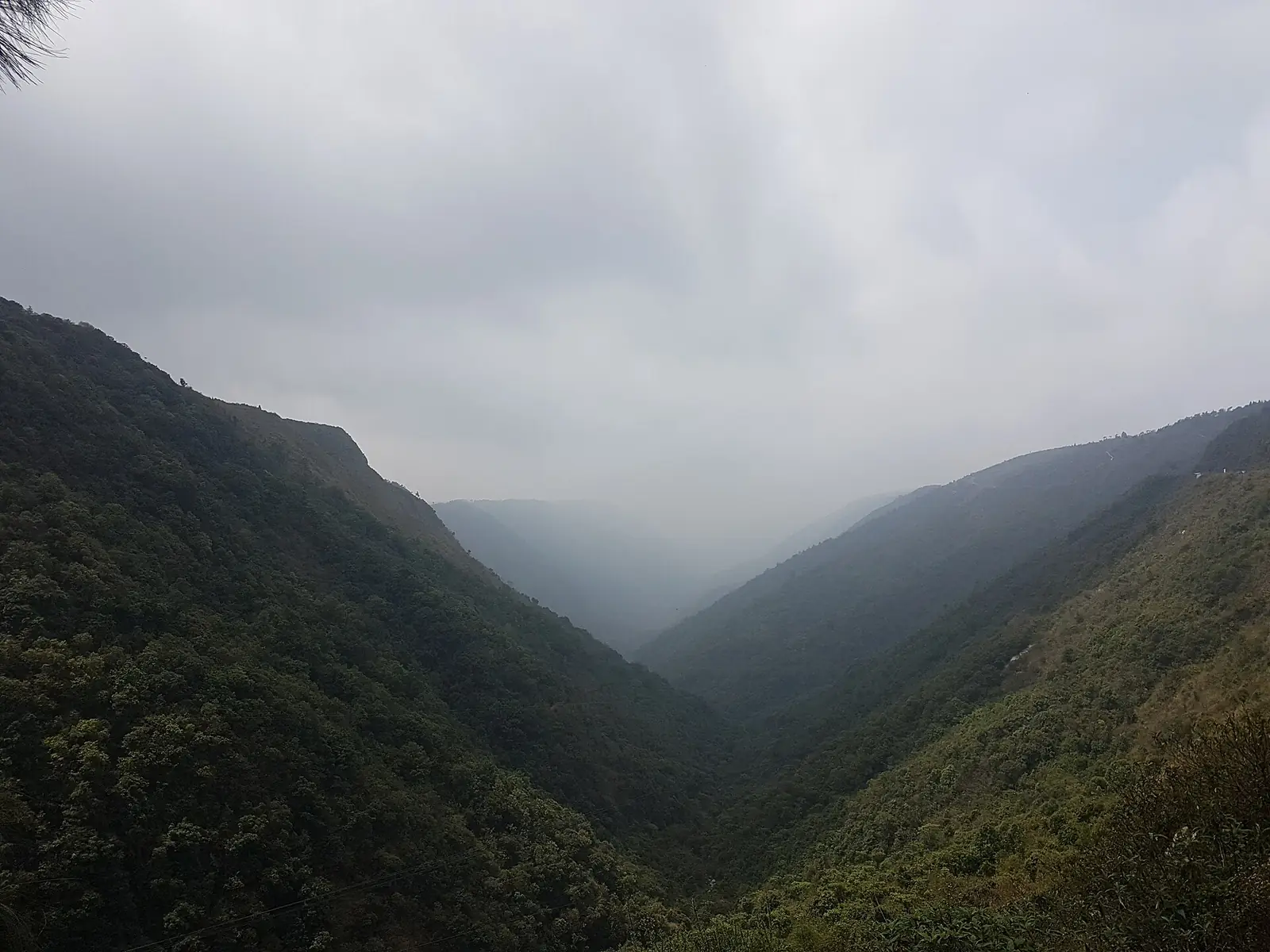
Why Meghalaya?
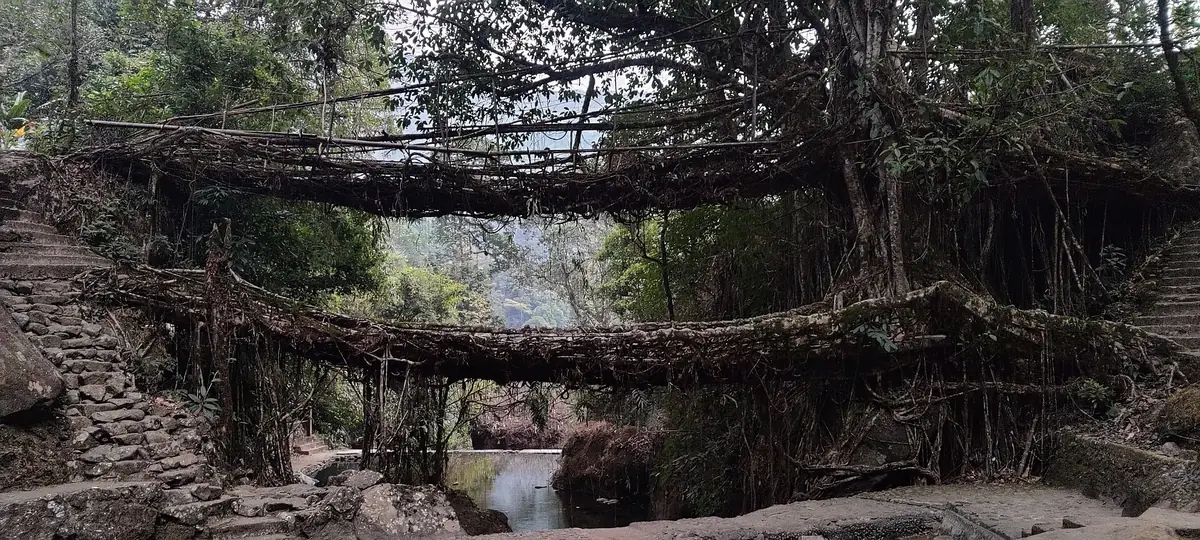
Meghalaya — literally "the abode of clouds" — is unlike anywhere else in India. Tucked into the country's Northeast, it receives more rainfall than almost any other place on Earth, and that relentless monsoon has sculpted a landscape found nowhere else: limestone caves that stretch for kilometres, waterfalls that drop straight off cliff edges into the clouds, and — most remarkably — living bridges grown from the roots of rubber fig trees by the Khasi and Jaintia communities over generations.
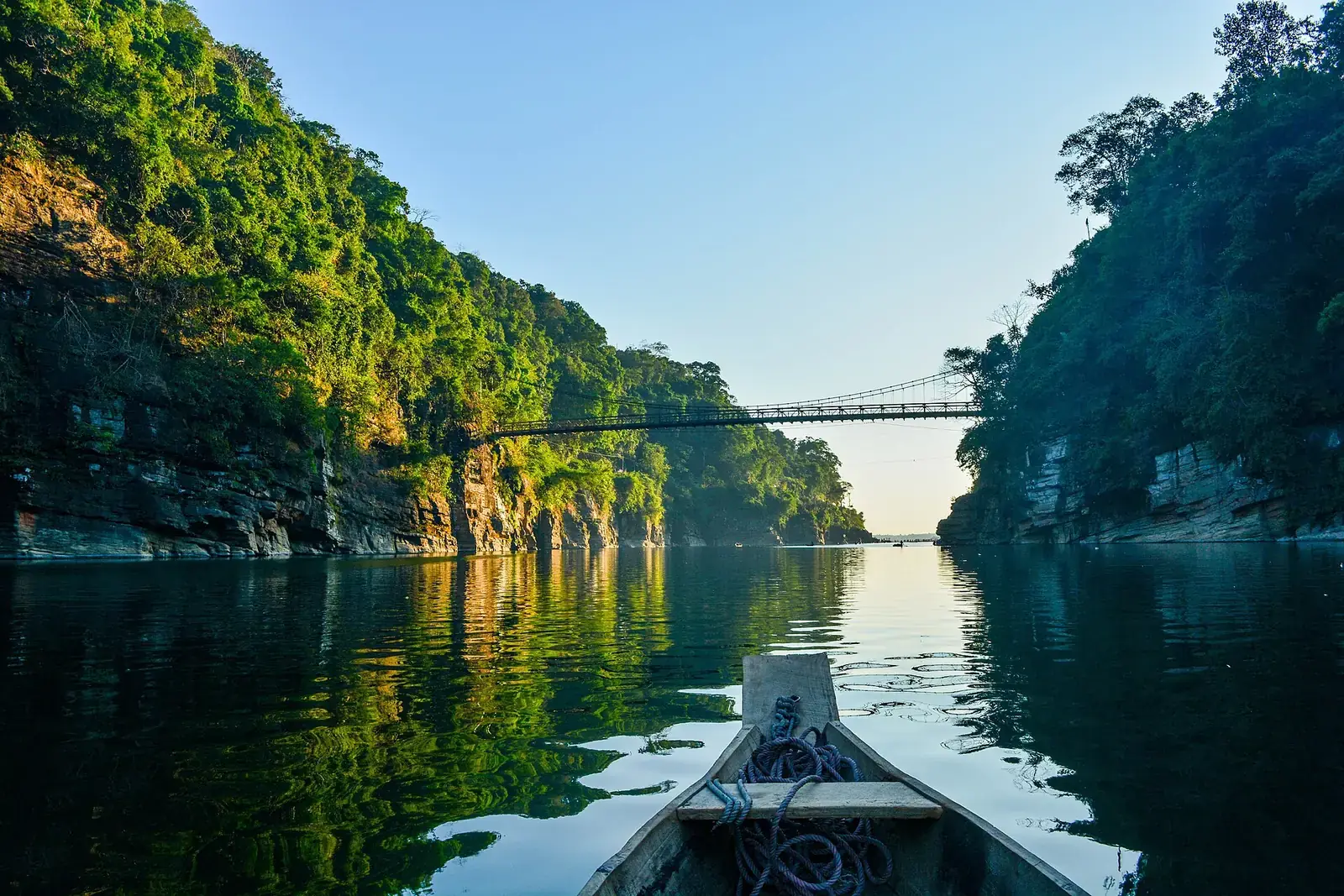
This is also a place where sustainability isn't a marketing word — it's daily life. Mawlynnong village has been called Asia's cleanest village for over a decade, the Umngot River at Dawki is so transparent that boats appear to float mid-air, and the entire state runs on a matrilineal Khasi culture that feels genuinely distinct from anywhere else in the country.
Add pine-covered hills around Shillong (still nicknamed "the Scotland of the East" from colonial times), a thriving live-music and café scene, and some of the best momos and smoked-pork dishes in India — and you have a destination that rewards travellers willing to go a little further off the well-worn trail.
🌧️ Meghalaya at a Glance
Looking for activities and experiences? See our guide to the best things to do in Meghalaya.
Want a day-by-day plan? Follow our six-day Meghalaya itinerary.
Planning something active? Read our guide to adventure activities in Meghalaya.
Best Time to Visit Meghalaya
Meghalaya's weather swings between two extremes — bone-dry winters and some of the heaviest rainfall on the planet. Timing your trip correctly matters more here than almost any other Indian destination.
Dry, clear skies, and the Umngot River at Dawki is at its most transparent. Waterfalls are less thunderous than monsoon season but still striking. Cool, pleasant temperatures (8–22°C). Peak tourist season is Nov–Feb.
Occasional showers begin, but days are mostly clear with dramatic cloud formations. Waterfalls start swelling. Fewer tourists, lower prices on stays.
Cherrapunji and Mawsynram receive some of the highest rainfall on Earth during this window. Waterfalls are at their most dramatic, but many outdoor activities (caving, root bridge treks, Dawki boating) are disrupted or unsafe. Roads can wash out.
Shillong nights drop to 4–8°C. Crystal-clear skies make this the best window for photography and for the Umngot River's glass-like clarity. Carry warm layers.
Our pick: Late October to early December. The monsoon has just cleared, waterfalls are still full, the Umngot River is transparent, and the air is crisp without being bitterly cold. Book Dawki river-boating and root bridge guides a few days ahead during this window.
How to Reach Meghalaya
- By Air: Guwahati's Lokpriya Gopinath Bordoloi International Airport (GAU) in neighbouring Assam is the main gateway, well connected to Delhi, Mumbai, Kolkata, and Bengaluru. From Guwahati, it's a 3-hour drive (100 km) to Shillong. Shillong's own Umroi Airport has limited flights (mostly from Kolkata).
- By Road from Guwahati: Shared Sumos, taxis, and Meghalaya Transport Corporation buses run regularly from Guwahati's Paltan Bazaar to Shillong (₹300–₹500 shared, ₹2,500–₹3,500 private taxi, 2.5–3 hours on NH6).
- By Train: There's no railway in Meghalaya itself — Guwahati Railway Station is the nearest railhead, connected to Delhi, Kolkata, and most major cities.
- Getting around within Meghalaya: Public transport between towns (Shillong–Cherrapunji–Dawki) is sparse. Most travellers hire a private taxi for 3–6 days (₹2,500–₹3,500/day) or join a shared Sumo circuit — renting a car and self-driving is also increasingly popular on the well-paved main routes.
Top Places to Visit in Meghalaya
Meghalaya rewards travellers who venture beyond Shillong into the surrounding villages — this is where the state's truly unique sights live.
Living Root Bridges
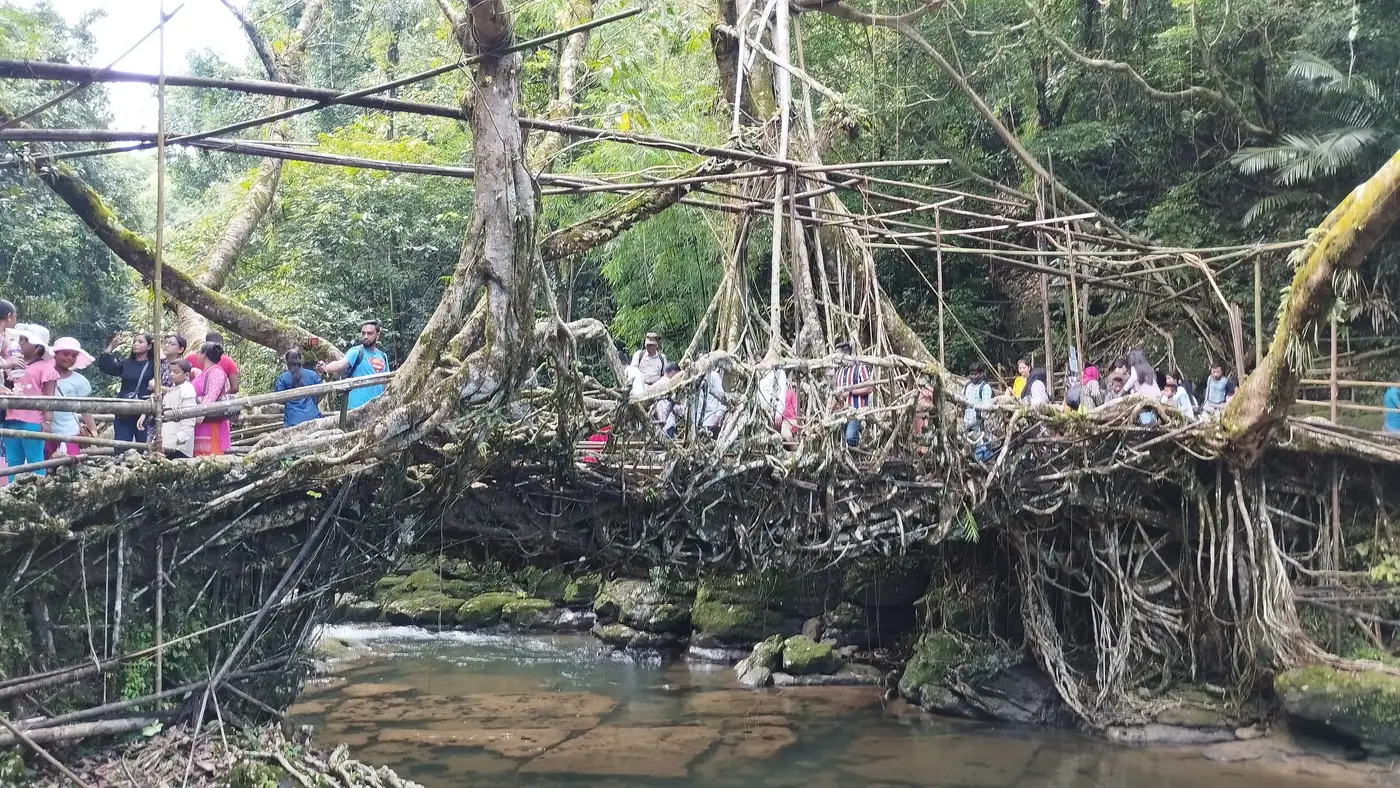
The Khasi people have been training the aerial roots of rubber fig trees (Ficus elastica) across rivers for over 500 years, guiding them along bamboo scaffolding until they fuse into living, load-bearing bridges. The most famous is the Double-Decker Root Bridge near Nongriat village — two bridges stacked one above the other, strong enough to hold dozens of people, and still growing.
Reaching Nongriat requires descending roughly 3,500 steep steps from Tyrna village — a knee-testing 2-hour descent (and a much harder return climb). The reward is a swimmable turquoise pool right beside the bridge. Less strenuous single-root bridges can be found at Riwai, near Mawlynnong, reachable in under 15 minutes on a flat path — a good option if the Nongriat trek feels too ambitious.
Cherrapunji & Its Waterfalls
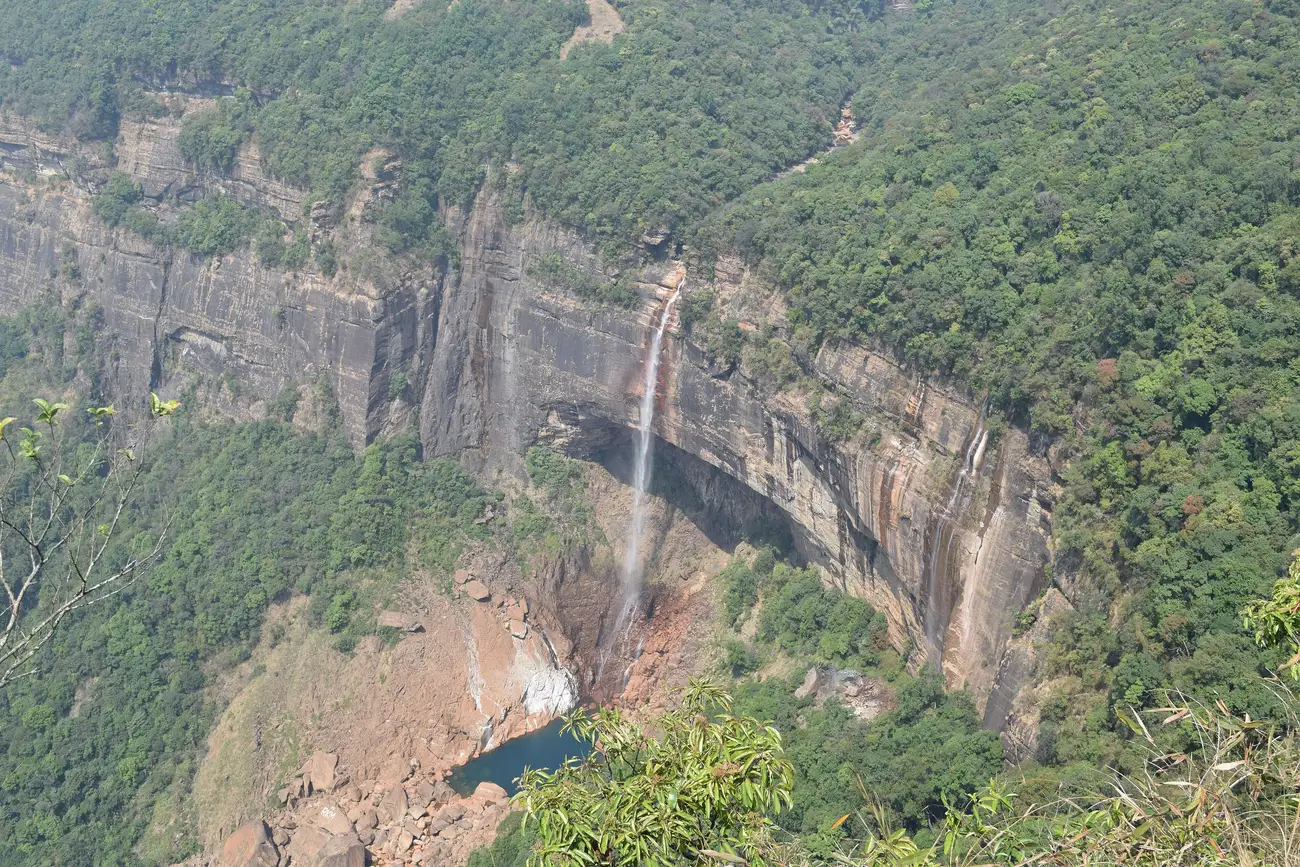
Cherrapunji (Sohra) once held the world record for the highest annual rainfall on Earth (a title now held by nearby Mawsynram). The result of all that water is a cluster of some of India's most dramatic waterfalls.
- Nohkalikai Falls: India's tallest plunge waterfall at 340 metres, dropping from a sheer cliff into a striking turquoise pool. Best viewed from the designated viewpoint, especially post-monsoon (Sep–Nov) when flow is at its peak.
- Seven Sisters Falls (Nohsngithiang): Seven parallel streams cascading down a limestone cliff face — most spectacular during and just after monsoon.
- Mawsmai Cave: A well-lit, walkable limestone cave system with dramatic stalactites and stalagmites — a good option for travellers not up for the root bridge trek.
- Eco Park: Panoramic viewpoint overlooking the Bangladesh plains below — on a clear day you can see for dozens of kilometres.
Dawki & the Umngot River
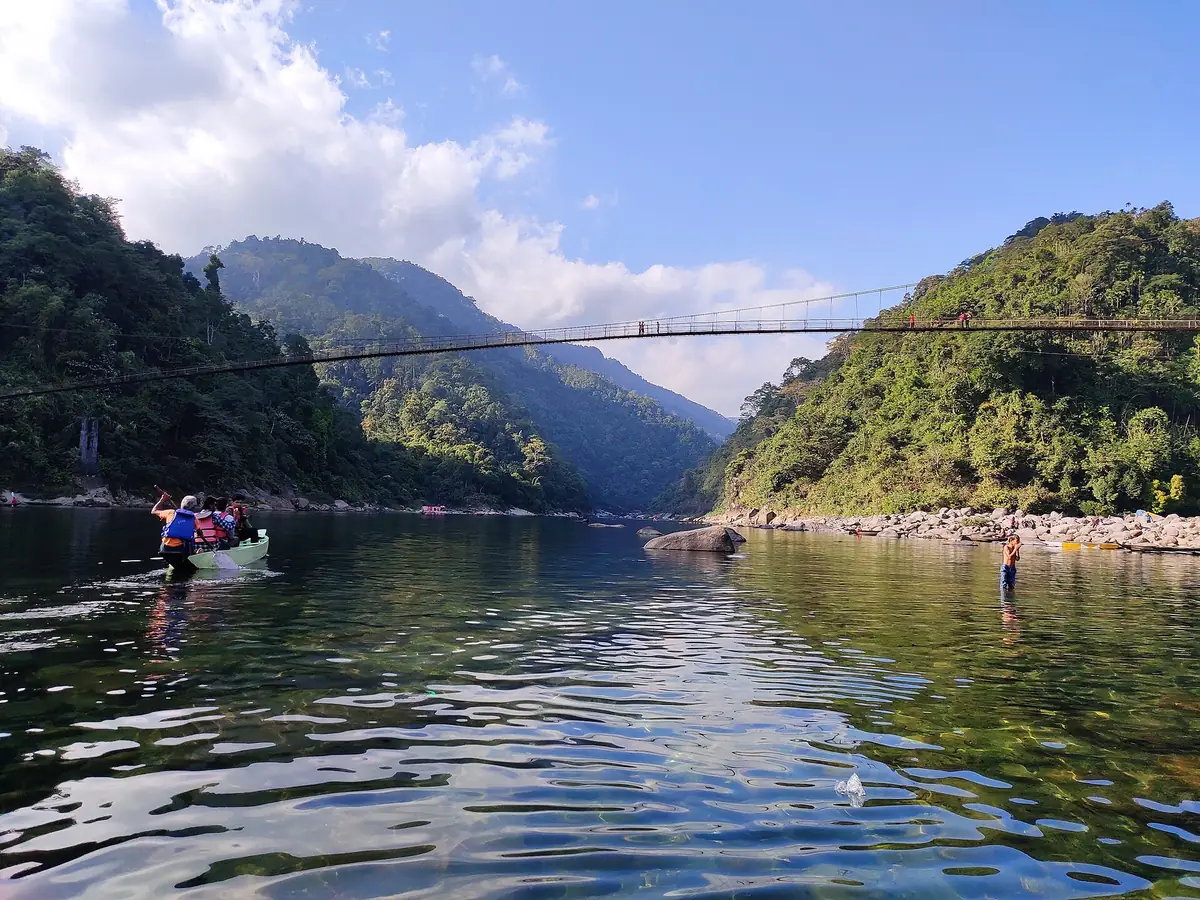
The Umngot River at Dawki, near the Bangladesh border, is famous for water so transparent that boats appear to hover in mid-air — one of the most photographed sights in Northeast India. A 30-minute boat ride (₹500–₹600 per boat, seats 4–5) glides over riverbed pebbles clearly visible metres below the surface.
Clarity peaks in the dry winter months (Nov–Feb) — during and right after monsoon, silt run-off clouds the water considerably. Nearby Shnongpdeng village has riverside camping with the same glass-clear water, plus cliff jumping and kayaking.
Mawlynnong, Asia's Cleanest Village
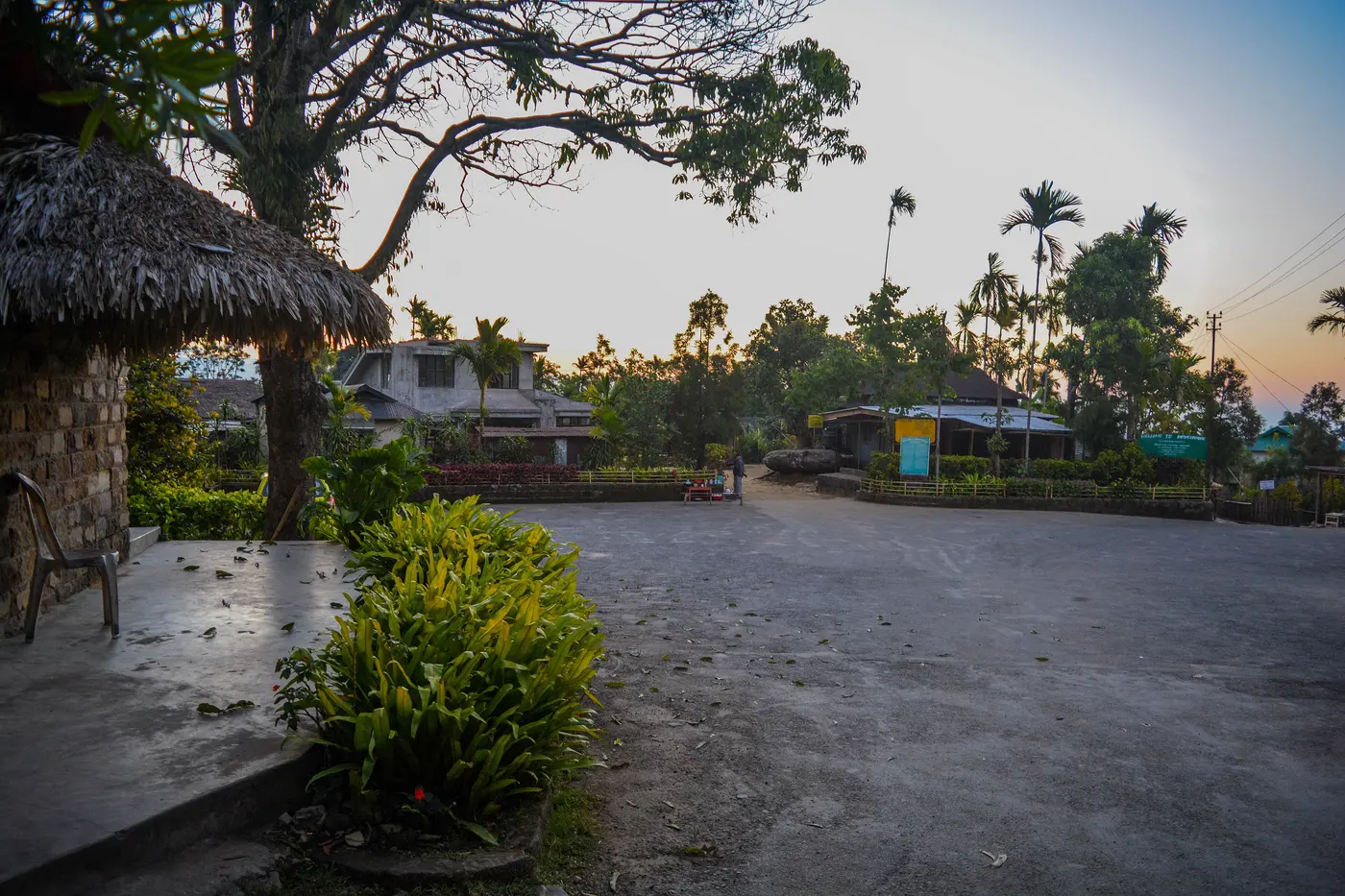
Mawlynnong has been repeatedly named Asia's cleanest village — a title the community maintains through strict, self-enforced waste management (bamboo dustbins on every corner, a total ban on plastic bags, and daily community clean-ups). Beyond the tidy lanes and flower-lined homes, don't miss the Sky View Tower, a bamboo machaan-style platform offering views into Bangladesh, and the nearby single-decker root bridge at Riwai.
Shillong
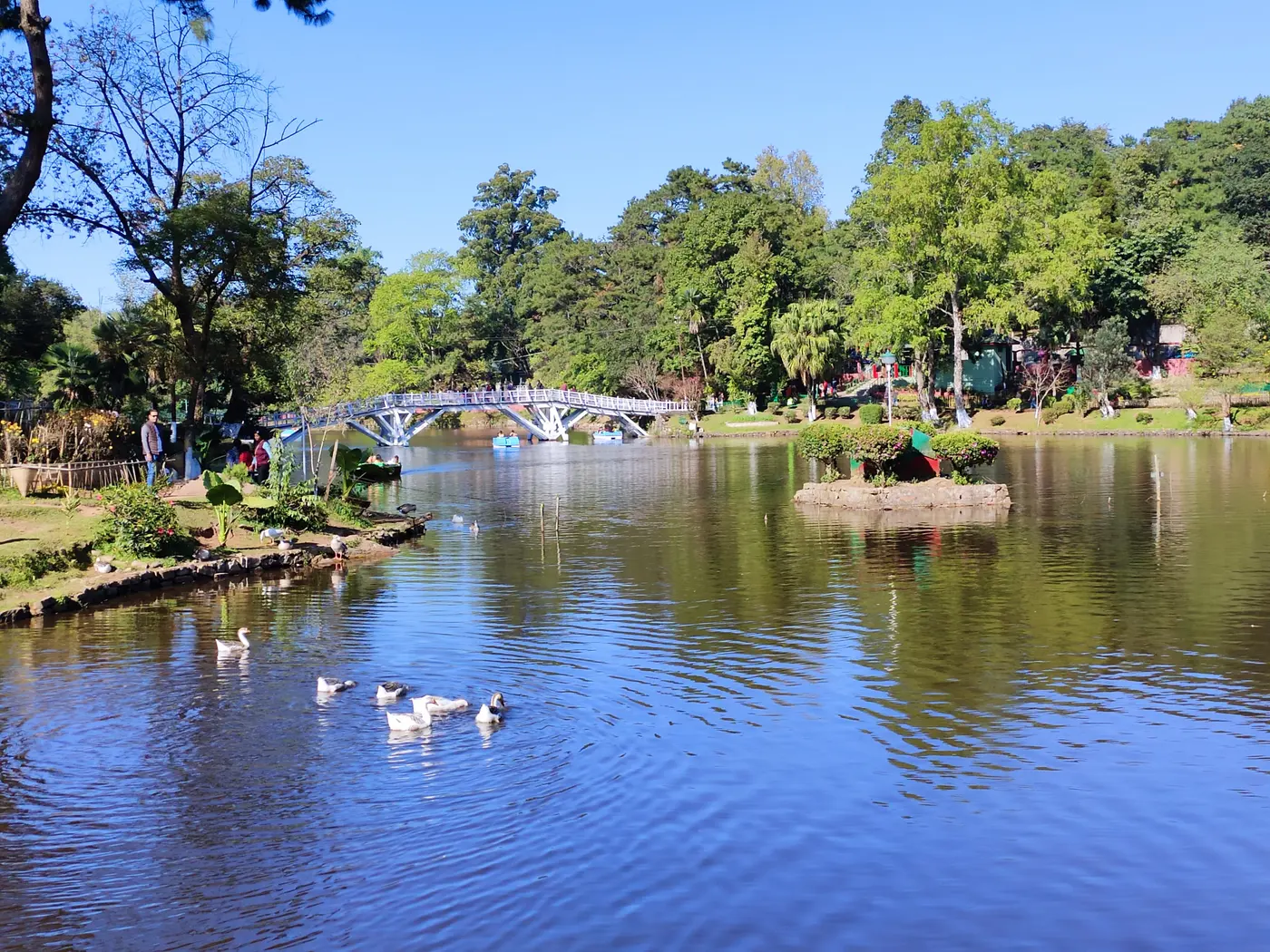
Meghalaya's capital, still nicknamed "the Scotland of the East" from British colonial times, is worth a day or two on either end of a Meghalaya trip. Highlights include Ward's Lake (a colonial-era garden and boating lake in the city centre), Elephant Falls on the outskirts, the panoramic Shillong Peak, and a genuinely excellent live-music scene — Shillong has produced more rock and gospel bands per capita than almost any other Indian city, and several venues host regular live gigs.
Police Bazaar is the commercial hub for shopping and street food, while the surrounding cafes serve some of the best coffee and bakery items in the Northeast.
6-Day Meghalaya Itinerary
This itinerary balances the physically demanding root bridge trek with lower-key sightseeing, and is structured around a Guwahati arrival/departure.
Guwahati to Shillong
- ✓Fly/arrive into Guwahati, drive to Shillong (3 hrs)
- ✓Afternoon at Ward's Lake and Police Bazaar
- ✓Evening: live music at a Shillong venue
- ✓Dinner — try Khasi smoked pork
Shillong to Cherrapunji
- ✓Morning: Elephant Falls, then drive to Cherrapunji (1.5 hrs)
- ✓Nohkalikai Falls viewpoint
- ✓Seven Sisters Falls (Nohsngithiang)
- ✓Mawsmai Cave walk-through
Double-Decker Root Bridge Trek
- ✓8 AM: Begin descent from Tyrna to Nongriat (3,500 steps)
- ✓Reach the Double-Decker Root Bridge, swim in the pool
- ✓Packed lunch at Nongriat village
- ✓Climb back up — budget 5–6 hrs round trip total
Mawlynnong & Riwai
- ✓Drive to Mawlynnong (2 hrs from Cherrapunji)
- ✓Explore Asia's cleanest village
- ✓Sky View Tower for Bangladesh border views
- ✓Riwai single-decker root bridge (short, easy walk)
Dawki & the Umngot River
- ✓Drive to Dawki (1 hr from Mawlynnong)
- ✓Boat ride on the crystal-clear Umngot River
- ✓Lunch and cliff jumping at Shnongpdeng
- ✓Evening drive back toward Shillong
Shillong & Departure
- ✓Morning: Shillong Peak viewpoint
- ✓Last-minute shopping at Police Bazaar
- ✓Coffee at a Shillong café
- ✓Drive to Guwahati for onward flight/train
Where to Stay in Meghalaya
Base yourself in Shillong for the first and last nights, and stay overnight in Cherrapunji or Sohra to avoid long daily drives back and forth. A night of riverside camping at Shnongpdeng (near Dawki) is a highlight in itself.
- → Trekker's Hut, Tyrna (for root bridge trek)
- → Shnongpdeng riverside camps
- → Zostel Shillong
- → Cherrapunji Holiday Resort (dorms)
- → Cherrapunjee Holiday Resort (cottages)
- → Ri Kynjai Resort (Shillong)
- → Polo Orchid Resort (Shillong)
- → Serene Homestay, Mawlynnong
- → Ri Kynjai – Serenity by the Lake
- → Ri Kynjai Luxury Cottages
- → The Heritage Club, Shillong
- → Vivanta Shillong
What to Eat in Meghalaya
Khasi and Jaintia cuisine centres on rice, pork, and freshwater fish, with minimal spice compared to the rest of India — flavours here lean smoky, fermented, and subtly sour.
- Jadoh: The Khasi staple — rice cooked in pork blood and fat with meat, similar in spirit to a pilaf. Widely available at local eateries in Shillong and Cherrapunji.
- Tungrymbai: A pungent fermented soybean dish cooked with pork fat — an acquired taste, but a genuine window into Khasi home cooking.
- Smoked pork with bamboo shoot: A signature Khasi dish — pork smoked over an open fire, cooked with fermented bamboo shoot for a distinctive sour note.
- Pumaloi: Steamed rice cake, often served as a breakfast staple alongside meat curries.
- Shillong café culture: Don't miss Café Shillong or Trattoria for genuinely good espresso and baked goods — a legacy of the city's cosmopolitan, music-loving culture.
Budget Breakdown
| Expense | Budget | Mid-Range | Luxury |
|---|---|---|---|
| Accommodation/night | ₹700 | ₹3,000 | ₹9,000 |
| Food/day | ₹400 | ₹900 | ₹2,200 |
| Private taxi/day | ₹2,500 | ₹3,000 | ₹3,500 |
| Dawki boat ride | ₹550 | ₹550 | ₹550 |
| Root bridge guide (optional) | ₹800 | ₹800 | ₹800 |
| 6-Day Trip Total | ₹18,000 | ₹32,000 | ₹65,000 |
Essential Travel Tips for Meghalaya
- Book taxis in advance: Public transport between towns is sparse and unreliable. Arrange a private taxi for your full circuit before arriving — last-minute options in peak season (Nov–Dec) can be scarce.
- Pack rain gear year-round: Even in the "dry" season, sudden showers are common given Meghalaya's climate. A packable rain shell is worth carrying every single day.
- Train for the root bridge trek: The Nongriat descent/climb (3,500+ steps) is genuinely strenuous. Good footwear with grip is essential — the steps are often wet and mossy.
- Cash is king: ATMs are scarce outside Shillong. Withdraw enough cash before heading to Cherrapunji, Mawlynnong, or Dawki.
- Respect Khasi customs: Meghalaya has a unique matrilineal culture — ask before photographing people, and be mindful in smaller villages that receive fewer tourists than Mawlynnong or Cherrapunji.
- Connectivity is patchy: Mobile network (BSNL works best in remote areas) drops out completely on the Nongriat trek and in parts of Dawki. Download offline maps before you set out.
✅ Do
- →Book the Dawki boat ride early morning for the calmest water
- →Carry a rain jacket even in the dry season
- →Try Khasi smoked pork at a local eatery
- →Stay a night in Shnongpdeng for riverside camping
- →Start the Nongriat trek by 8 AM
❌ Don't
- →Attempt the root bridge trek without good footwear
- →Rely on finding a taxi last-minute in peak season
- →Skip cash withdrawal before leaving Shillong
- →Litter — Meghalaya's communities take cleanliness seriously
- →Visit Dawki right after heavy rain expecting clear water
Places to Explore in Meghalaya
Every Meghalaya guide on Kudozz Club, in one place — 14 destinations covered so far, from cities and towns to individual attractions. Use this index to plan beyond the highlights above.
Frequently Asked Questions
How many days do I need for Meghalaya?
Six days is a good length for covering Shillong, Cherrapunji, the living root bridges, Mawlynnong, and Dawki without excessive rushing, as laid out in our 6-day itinerary structured around a Guwahati arrival and departure. With less time, prioritize Cherrapunji's waterfalls and either the root bridge trek or Dawki's Umngot River.
What is the best time to visit Meghalaya?
October to April is the best overall window — dry, clear skies, with the Umngot River at Dawki at its most transparent, and cool, pleasant temperatures (8–22°C). Our pick specifically is late October to early December, when the monsoon has just cleared, waterfalls are still full, and the air is crisp without being bitterly cold.
How do I reach Meghalaya?
Guwahati's Lokpriya Gopinath Bordoloi International Airport (GAU) in neighbouring Assam is the main gateway, well connected to Delhi, Mumbai, Kolkata, and Bengaluru. From Guwahati, it's roughly a 3-hour drive (100 km) to Shillong. Shillong's own Umroi Airport has limited flights, mostly from Kolkata, and there's no railway in Meghalaya itself.
Is a permit required to visit Meghalaya?
No — an Inner Line Permit is not required for Indian citizens visiting Meghalaya, unlike some other Northeast states. Foreign nationals should carry their passport and visa at all times; no special permit is needed either, but registration may be requested at some checkpoints.
What is the budget for a trip to Meghalaya?
A six-day trip works out to roughly ₹18,000 for a budget traveller, ₹32,000 for a mid-range trip, and ₹65,000 for a luxury trip, covering accommodation, food, a private taxi (the most practical way to get around), the Dawki boat ride, and an optional root bridge guide.
What are the living root bridges in Meghalaya?
The Khasi people have been training the aerial roots of rubber fig trees across rivers for over 500 years, guiding them along bamboo scaffolding until they fuse into living, load-bearing bridges. The most famous is the Double-Decker Root Bridge near Nongriat village, reached by descending roughly 3,500 steep steps from Tyrna — genuinely strenuous, so budget 5–6 hours round trip. A far easier single-root bridge is at Riwai, near Mawlynnong, reachable in under 15 minutes on a flat path.
Is Nohkalikai Falls worth visiting?
Yes — Nohkalikai Falls is India's tallest plunge waterfall at 340 metres, dropping from a sheer cliff into a striking turquoise pool, best viewed from the designated viewpoint. It's especially spectacular post-monsoon (September–November) when flow is at its peak, and it's one of several dramatic waterfalls clustered around Cherrapunji.
Published by the Kudozz Club editorial team · Last updated · How we research our guides
Want us to plan this trip for you?
Tell Kudozz Club where you want to go and what kind of trip you’re looking for. We’ll build a Meghalaya itinerary around your dates and budget.
Continue Exploring
View all guides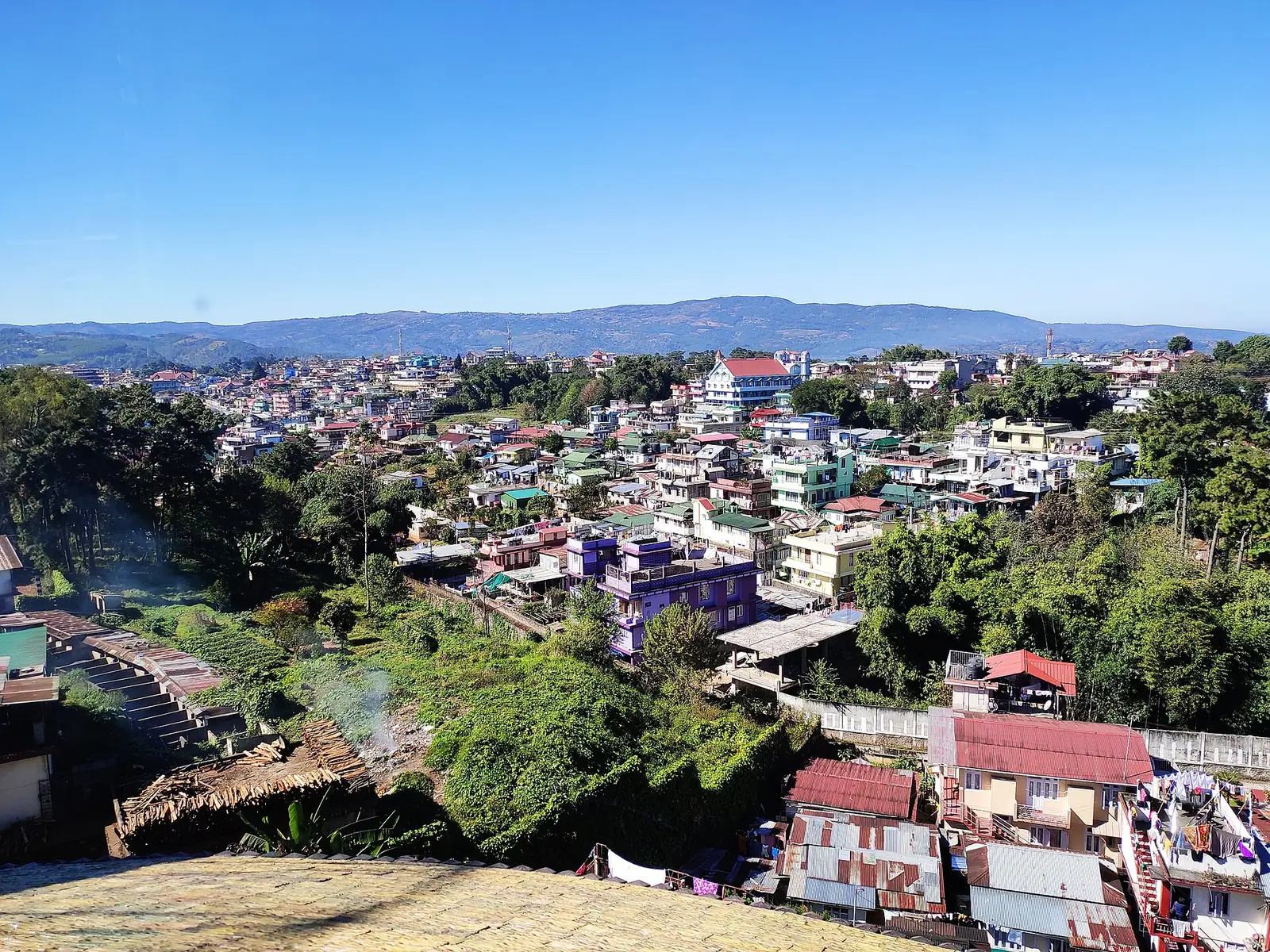 Destination Guide
Shillong Travel Guide: Sightseeing & Tips
Rolling misty hills that earned it 'Scotland of the East,' a deep-rooted rock-music culture, and the essential gateway to the rest of Meghalaya.
 Road Trips
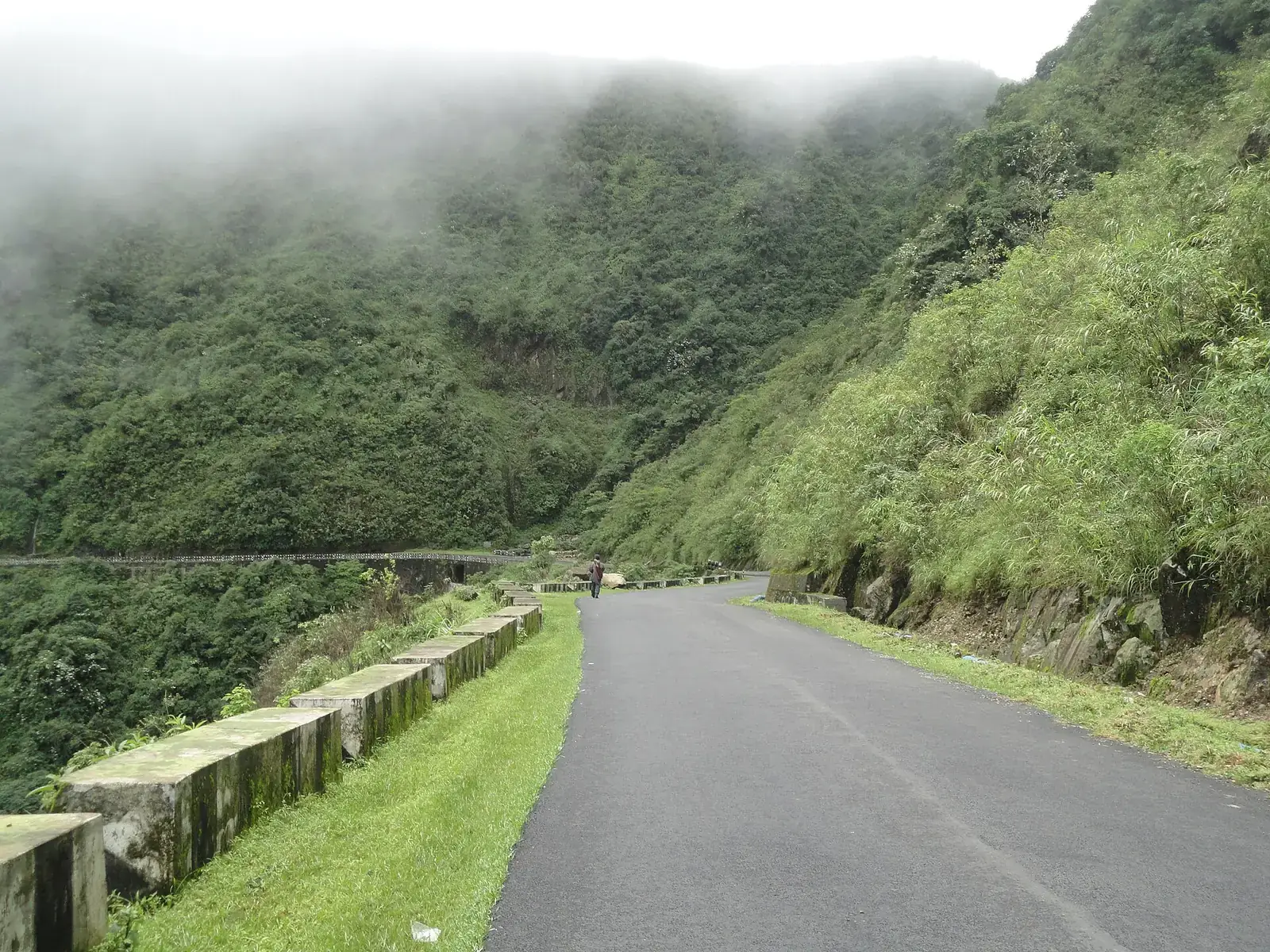
Northeast India Road Trips: Meghalaya, Assam, Arunachal and Sikkim
A guide to road trips in Northeast India: Guwahati to Shillong, Sohra and Dawki in Meghalaya, Kaziranga and Majuli in Assam, Guwahati to Tawang and Ziro in Arunachal Pradesh, the Siliguri–Gangtok road and North Sikkim, and Dimapur to Kohima in Nagaland, with Inner Line Permits, local-vehicle rules, landslides and the best seasons.
 Nature Travel
Nature Travel in Meghalaya
A guide to nature travel in Meghalaya: the living root bridges of Nongriat and Mawlynnong, the waterfalls and caves around Sohra (Cherrapunji), the clear Umngot river at Dawki, the Laitlum canyons, the Mawphlang sacred grove, the Jaintia hills' Krang Suri falls and the caves of the Garo hills, with seasons, village fees and practical tips.
 Things to Do
Things to Do in Meghalaya: Living Root Bridges, Waterfalls, Caves & Clear Rivers
Things to do in Meghalaya: trek to the double-decker living root bridge, see Nohkalikai and Seven Sisters falls, boat on the clear Umngot at Dawki, visit Mawlynnong, explore caves, see Laitlum canyons, Krang Suri falls, Umiam Lake, Shillong's music scene and Khasi food.