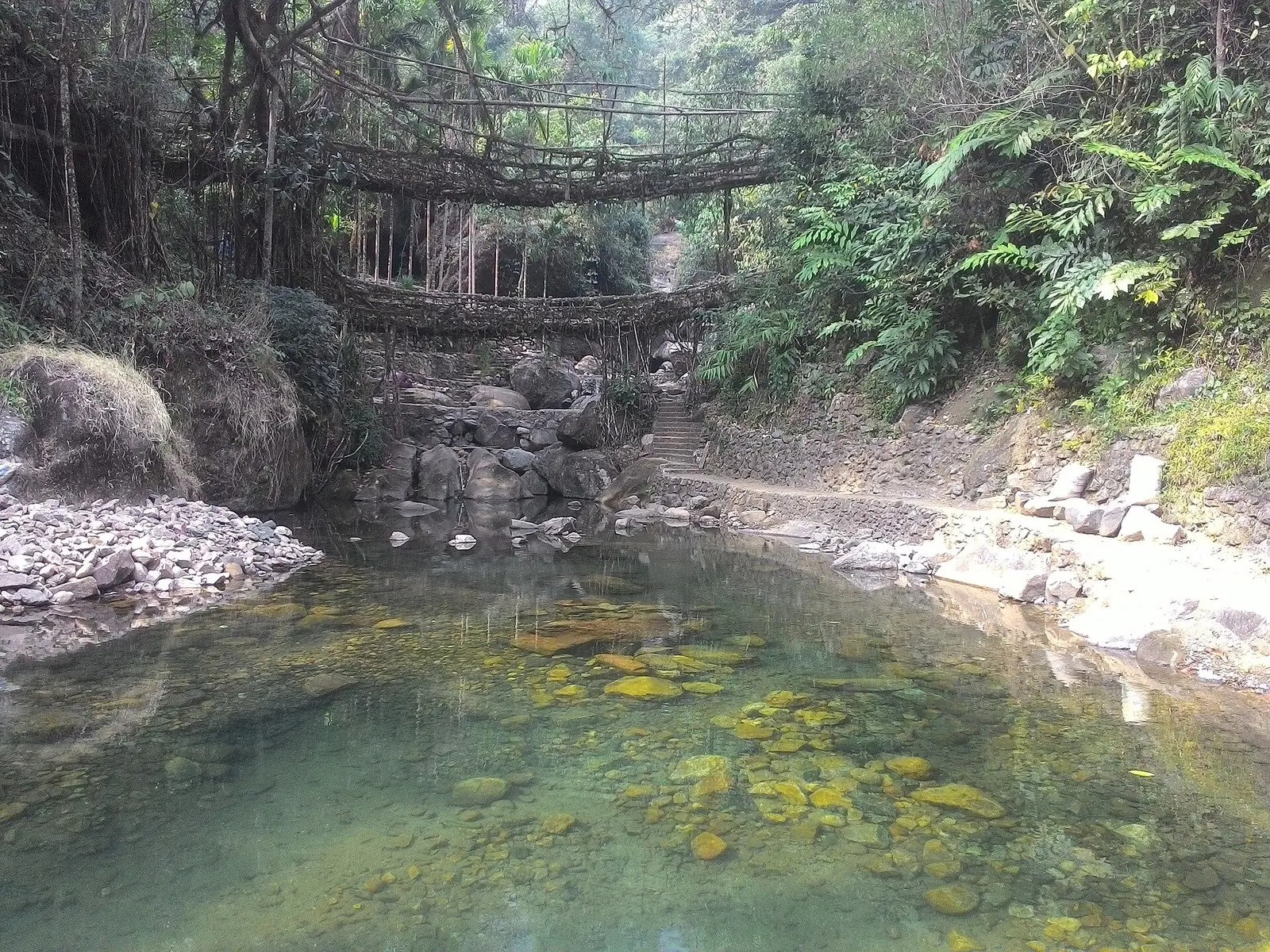
A Bridge Grown, Not Built
Nongriat is a village deep in a forested valley near Cherrapunji, home to the famous Umshiang Double-Decker Living Root Bridge — a genuinely extraordinary feat of indigenous bio-engineering. The Khasi/War people train the aerial roots of rubber fig trees across rivers over generations, letting them grow and strengthen into living bridges rather than building with dead materials.
Reaching it requires descending — and later re-ascending — a demanding stone staircase of roughly 3,500 or more steps through dense forest. This is a serious physical undertaking, and underestimating it is one of the most common visitor mistakes here.
Rainbow Falls, a beautiful waterfall near the village, is reachable with additional walking and often visited alongside the root bridge as part of the same trip.
🌳 Nongriat at a Glance
Want a day-by-day plan? Follow our six-day Meghalaya itinerary.
Love the outdoors? See our guide to nature travel in Meghalaya.
Comparing hill stations? See our guide to hill stations in Meghalaya.
Planning something active? Read our guide to adventure activities in Meghalaya.
Best Time to Visit Nongriat
Trail safety, not just scenery, is the main factor to plan around here.
Drier trail conditions make the steep stone steps considerably safer to descend and climb.
Occasional showers begin — check forecasts and avoid days with heavy rain forecast.
The stone steps become genuinely hazardous when wet. Best avoided entirely during heavy rain.
Cooler temperatures make the demanding climb back up noticeably more manageable.
Our pick: October to April — drier, safer stone steps and cooler temperatures for the demanding return climb.
How to Reach Nongriat
- Via Cherrapunji: The practical base — cross-link Cherrapunji. Drive from Sohra town to the trailhead near Tyrna village.
- The trek itself: From the trailhead, it's on foot only — roughly 3,500+ steps down through forest to reach Nongriat.
- Local guides: Widely available in Cherrapunji and useful for first-time trekkers.
The Root Bridge & Rainbow Falls
The Umshiang Double-Decker Root Bridge
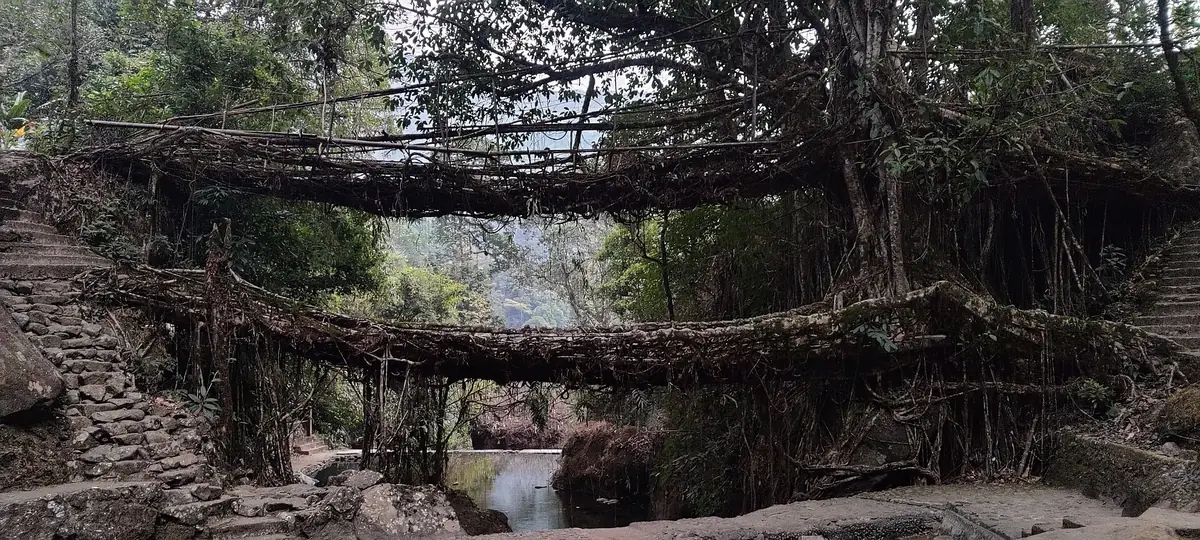
Two tiers of living root bridge stacked one above the other — a structure grown, tended, and reinforced by Khasi/War communities over many decades, still fully functional as a river crossing today.
The Step Trek
The staircase down (and later back up) is the real physical challenge of a Nongriat visit — take it at your own pace and rest as needed.
Rainbow Falls
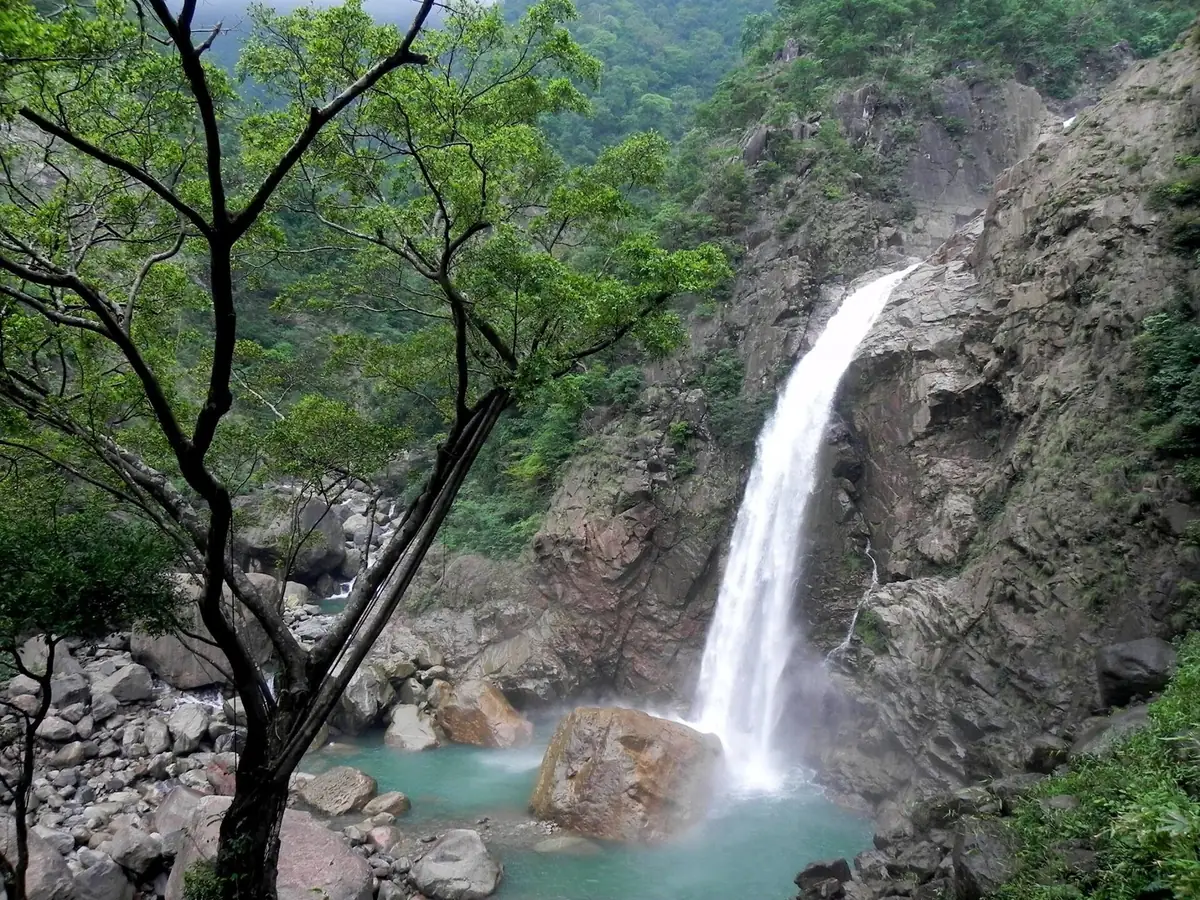
A beautiful waterfall a further walk beyond the village, often combined with the root bridge visit for those with the energy and time.
Where to Stay in Nongriat
Basic guesthouses in the village allow you to split the descent and ascent across two days rather than rushing both in one.
- → Village guesthouses in Nongriat
- → Basic homestays
- → Shared dormitory-style stays
- → Guesthouses with meals included
- → Riverside cottages
- → Sohra town guesthouses/resorts
- → For those not overnighting in the village
Suggested Nongriat Visit Plan
Single Very Long Day
- ✓Early start from Cherrapunji to the trailhead
- ✓Descend, visit the root bridge and Rainbow Falls
- ✓Climb back up before dark
Overnight in the Village
- ✓Descend and stay overnight in Nongriat
- ✓Relaxed second day for Rainbow Falls
- ✓Climb back to the trailhead the next morning
* The overnight option is recommended for most trekkers — it avoids rushing both the descent and the taxing return climb.
What to Eat in Nongriat
- Village guesthouse meals: Simple, home-style Khasi meals for those staying overnight.
- Carry your own snacks and water: Especially important for the trek itself, as options are minimal along the way.
- Cherrapunji before/after: A wider choice of food back at the base town.
Budget Breakdown
| Expense | Budget | Mid-Range | Luxury |
|---|---|---|---|
| Village guesthouse/night | ₹600 | ₹1,800 | ₹2,800 |
| Local guide (per trek) | ₹800 | ₹1,500 | ₹2,500 |
| Food/day | ₹350 | ₹700 | ₹1,200 |
| Cherrapunji transport (round trip) | ₹1,500 | ₹2,500 | ₹4,000 |
* A local guide is optional but recommended, especially for first-time trekkers.
Essential Tips for the Nongriat Trek
- Wear proper grippy trekking shoes: Given the steep, sometimes uneven stone steps.
- Start early: Regardless of whether attempting a single-day or overnight trip.
- Consider an overnight in the village: It genuinely makes the trek less punishing.
- Avoid the trek in or right after heavy rain: The stone steps become hazardous when wet.
✅ Do
- →Wear sturdy, grippy trekking shoes
- →Start the descent early in the day
- →Carry enough water and snacks
- →Consider an overnight stay in the village
- →Pace yourself on both the descent and climb
- →Check weather before attempting the trek
❌ Don't
- →Underestimate the step count or the climb back up
- →Attempt it in flip-flops or worn-out shoes
- →Start the descent late in the afternoon
- →Trek during or right after heavy rain
- →Skip carrying water for the trail
- →Rush past the root bridge without appreciating it
Frequently Asked Questions
How many steps is the Nongriat trek?
The descent to Nongriat village involves a demanding stone staircase of roughly 3,500 or more steps through dense forest, which you then re-climb on the way back — a serious physical undertaking, not a casual walk.
Is the Nongriat trek safe?
Yes, for reasonably fit trekkers with proper footwear, though the steep stone steps become genuinely hazardous when wet — avoid attempting it during or right after heavy rain.
Is an overnight stay in Nongriat recommended?
For most people, yes. Splitting the descent and the taxing return climb across two days with a night at a village guesthouse is far less punishing than attempting it all in a single very long day.
How far is Nongriat from Cherrapunji?
Cherrapunji (Sohra) is the practical base — you drive from there to the trailhead, then trek the rest of the way on foot down into the valley.
What is the best time to attempt the trek?
October to April, for drier and safer trail conditions. The steep stone steps get slippery and risky when wet, so the monsoon months are best avoided.
Published by the Kudozz Club editorial team · Last updated · How we research our guides
Want us to plan this trip for you?
Tell Kudozz Club where you want to go and what kind of trip you’re looking for. We’ll build a Nongriat and Meghalaya itinerary around your dates and budget.
Continue Exploring
View all guides Trekking
Kasol & Kheerganga: The Backpacker's Himalayan Trail
Follow the Parvati River to natural hot springs through pine forests and tiny Himalayan villages.
 Trekking
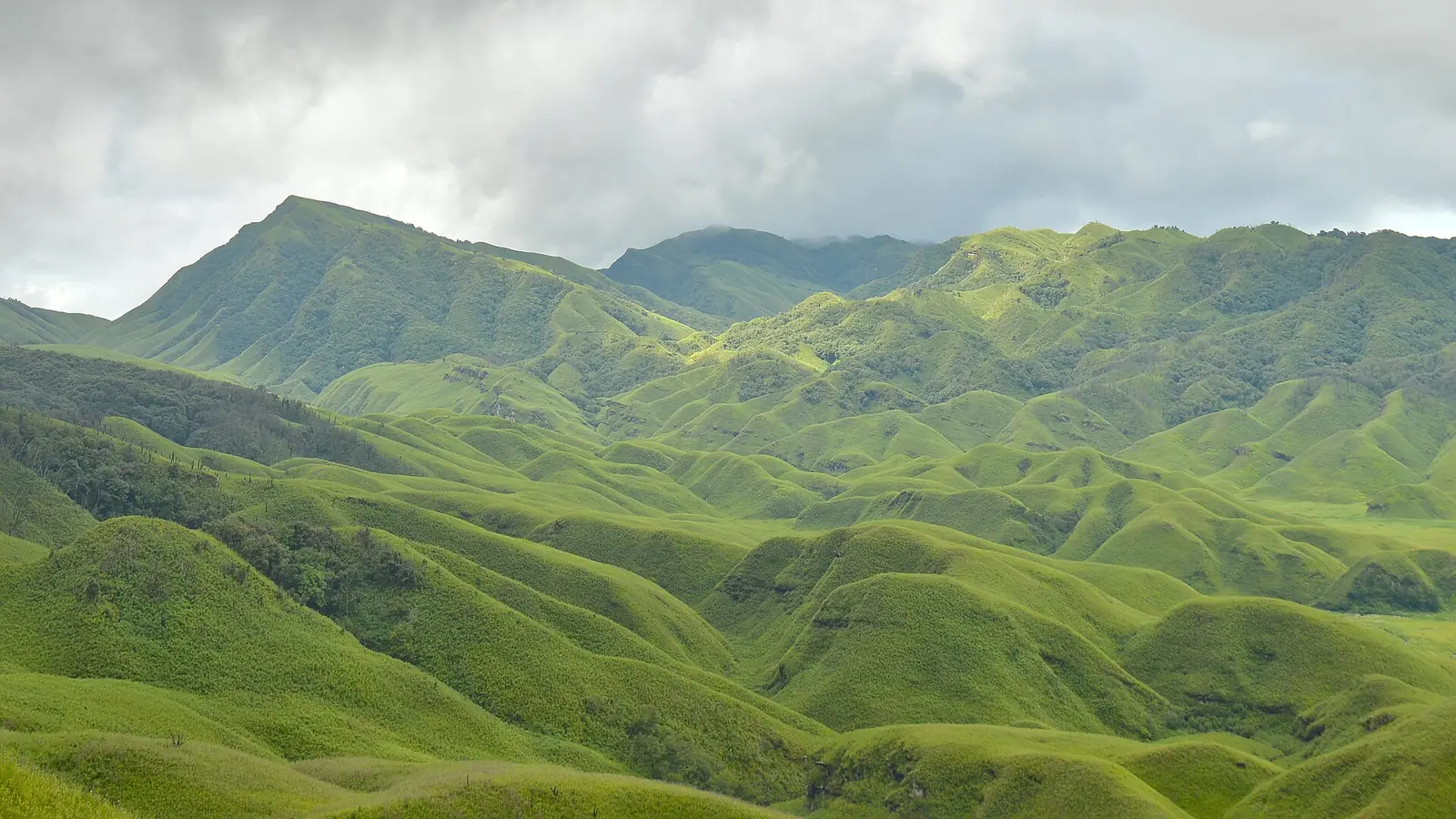
Dzukou Valley Trek Guide: Route & Best Time
Rolling green hills often compared to Scotland's highlands, and a rare lily found nowhere else on earth — the complete Dzukou Valley trek guide.
 Trekking
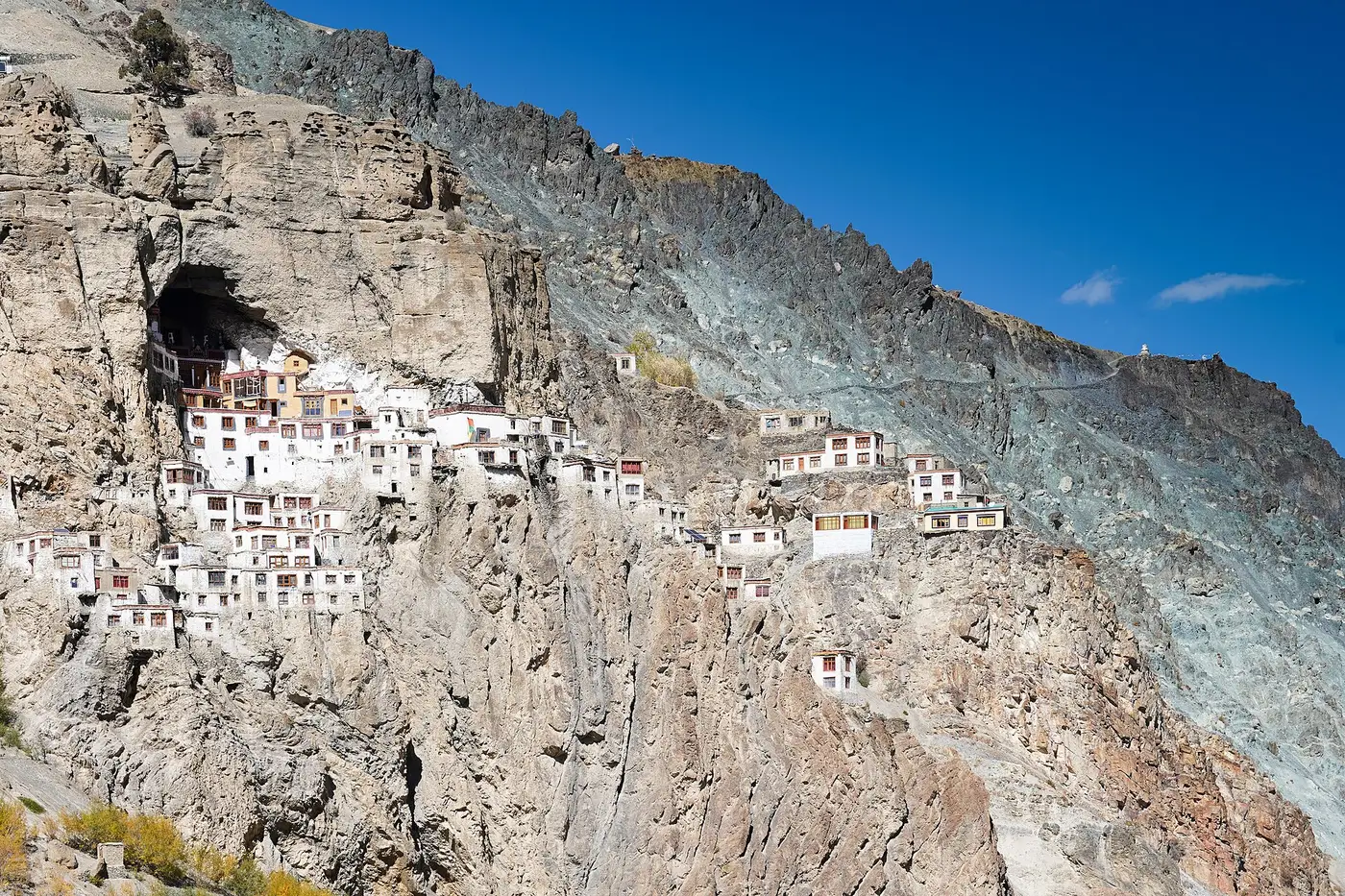
Zanskar Valley Travel Guide: Chadar Trek, Phugtal Monastery & Padum
Cut off from the world for eight months a year by snow, Zanskar is Ladakh's last true frontier — home to the legendary frozen-river Chadar Trek and the cliffside Phugtal Monastery.
 Trekking
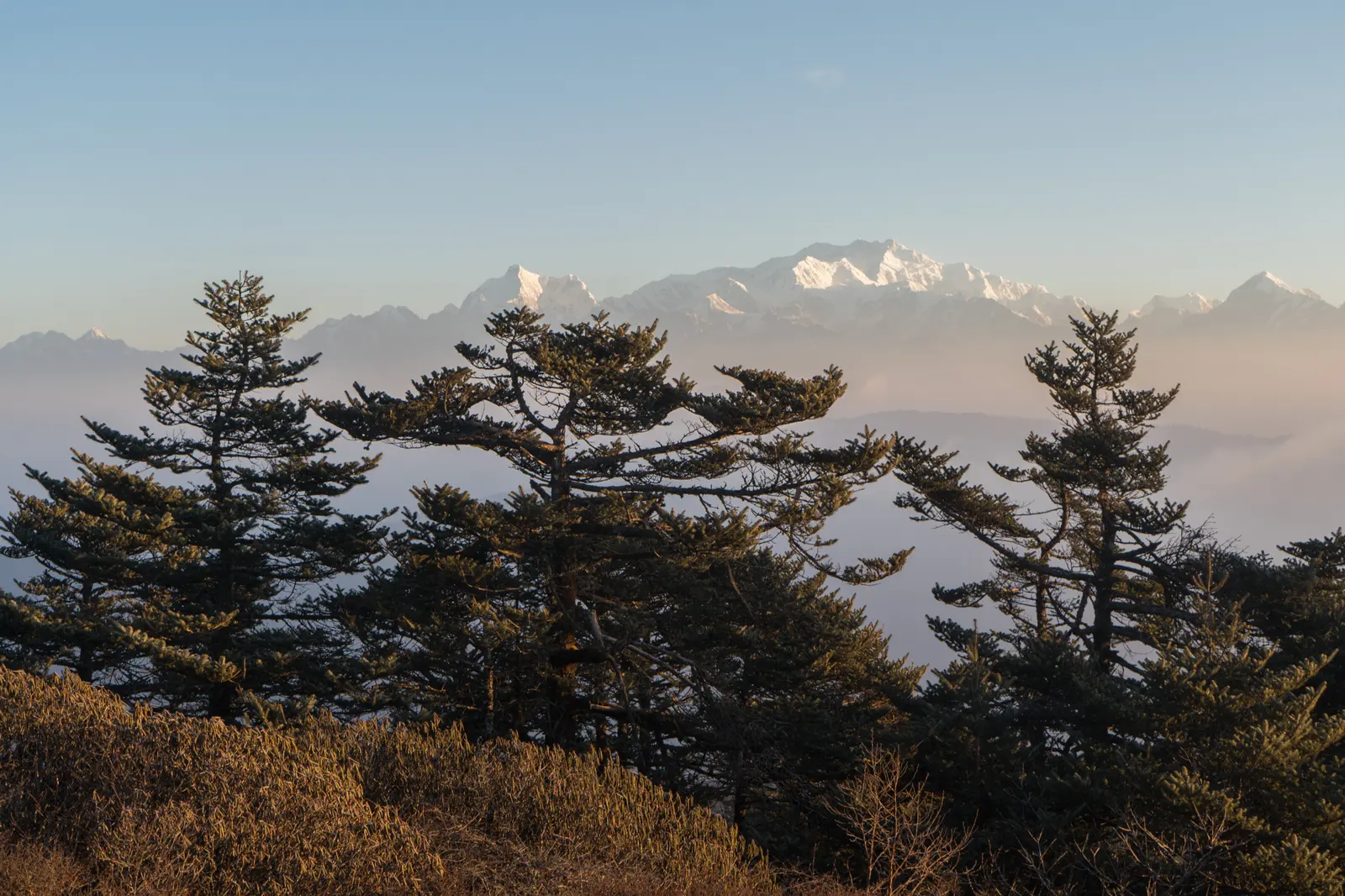
Sandakphu Trek Guide: Route, Permits & Best Time
Complete Sandakphu trek guide — the Maney Bhanjang route, permits for Singalila National Park, trek duration, tea-house stays, and views of four of the world's five highest peaks.