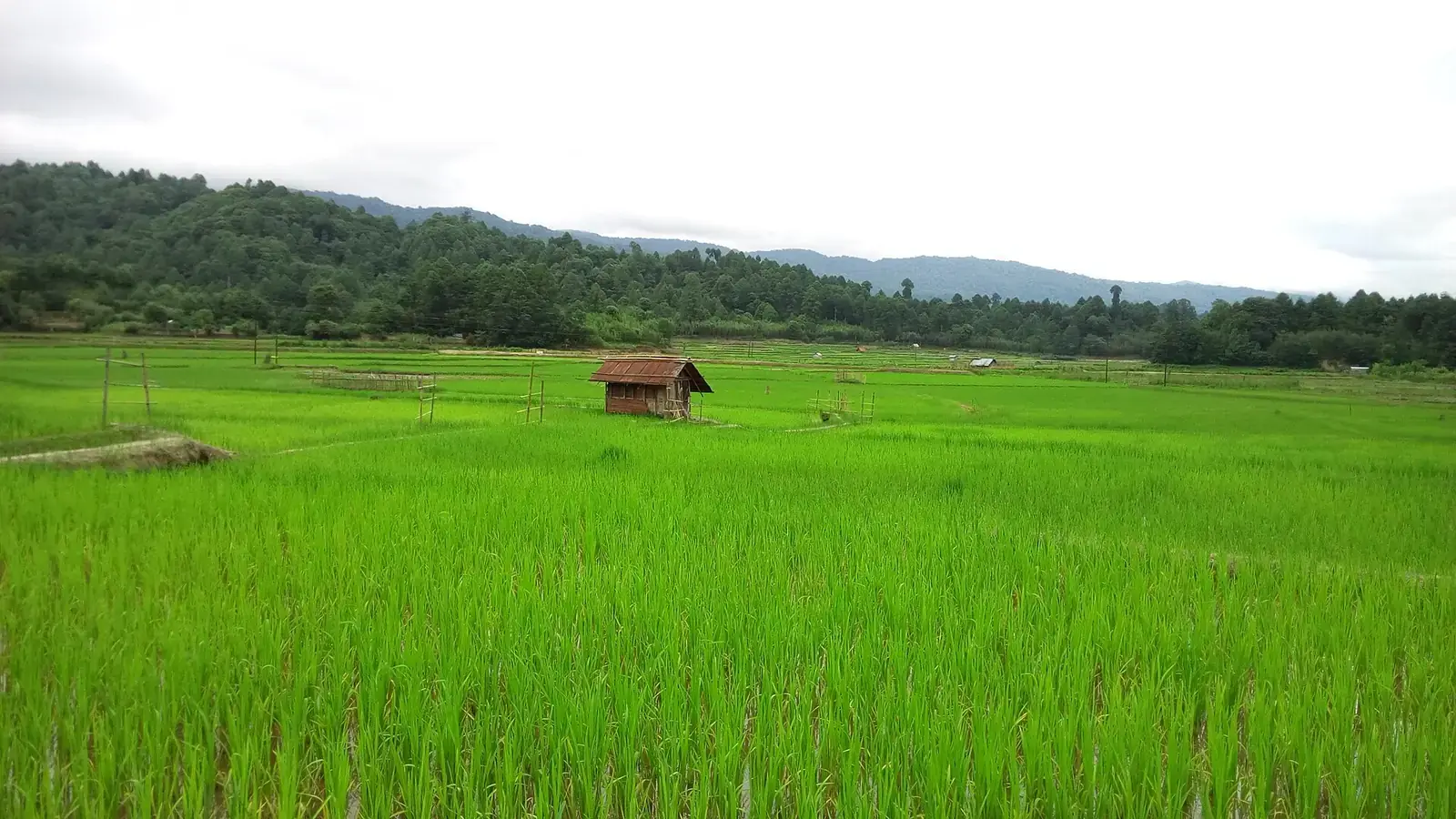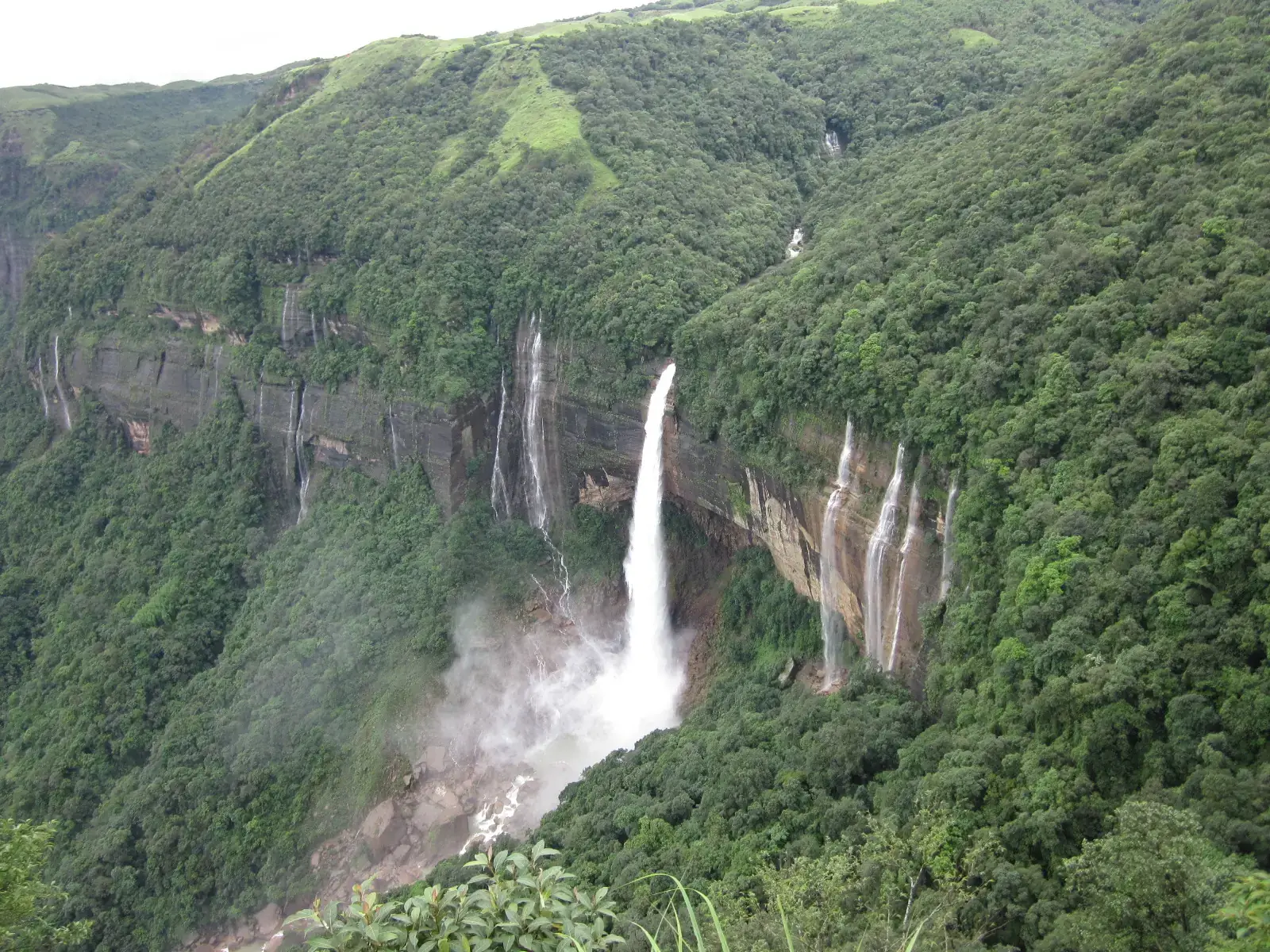
This itinerary starts and ends in Guwahati, the nearest major airport and railway hub. It follows a loop through the Khasi hills: Shillong, the Sohra plateau, the villages near the Bangladesh border, and back.
It includes one night in Nongriat, which needs a steep walk down and back up. If that is not for you, see the easier variation below.
Quick answer
A good six-day Meghalaya nature itinerary runs Guwahati to Shillong via Umiam lake (day 1), Laitlum and Sohra's waterfalls and caves (day 2), the walk to Nongriat's root bridges (day 3), Rainbow Falls and on to Mawlynnong (day 4), Dawki and Shnongpdeng on the Umngot river (day 5), and back to Guwahati (day 6). October to April is best; the monsoon brings bigger falls but more rain.
Key takeaways
- Start and end in Guwahati; Shillong is about three hours away by road.
- Stay a night in Nongriat to see the root bridges without the day crowds.
- The Umngot at Dawki is clearest from about November to April.
- Carry cash for village fees, guides and homestays.
- Keep one flexible half day for rain or fog.
The route at a glance
| Day | Route | Highlights | Stay |
|---|---|---|---|
| 1 | Guwahati to Shillong | Umiam lake, Ward's lake | Shillong |
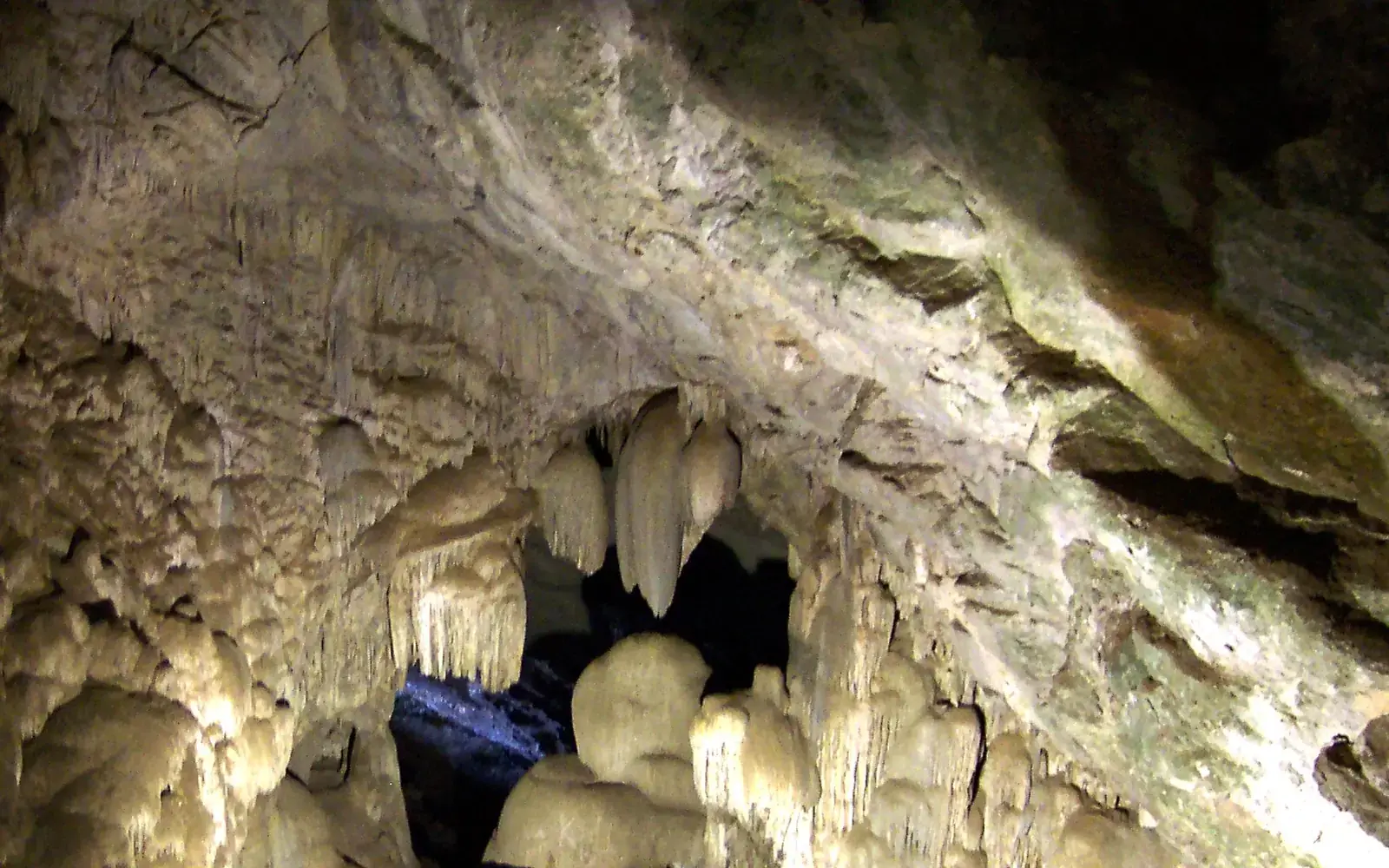
| 2 | Shillong to Sohra | Laitlum, Nohkalikai, Seven Sisters, Mawsmai cave | Sohra |
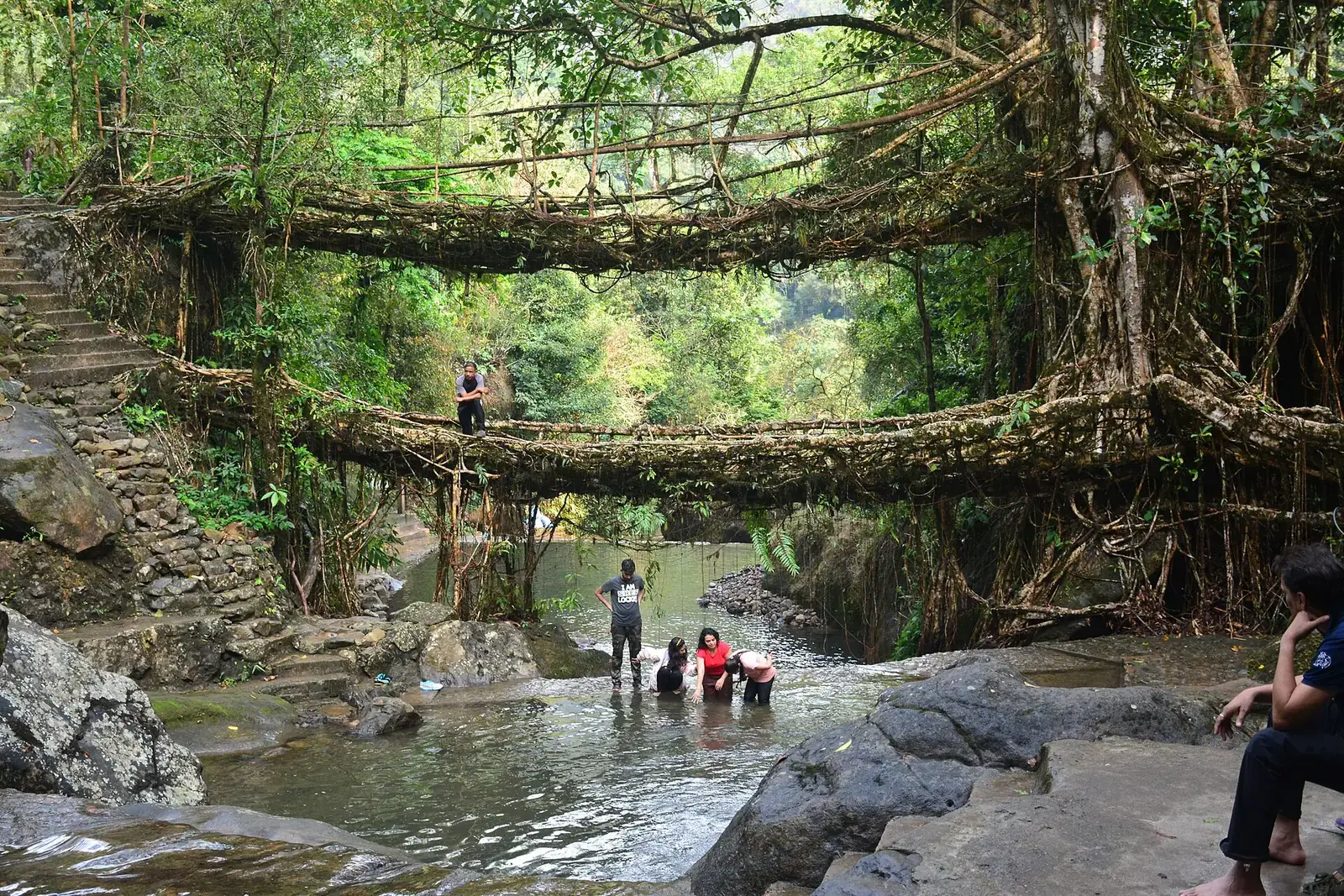
| 3 | Sohra to Nongriat | Walk from Tyrna, double-decker root bridge | Nongriat |
| 4 | Nongriat to Mawlynnong | Rainbow Falls, climb out, Riwai root bridge | Mawlynnong |
| 5 | Mawlynnong to Shnongpdeng | Dawki, Umngot river boating | Shnongpdeng |
| 6 | Shnongpdeng to Guwahati | Drive back via Shillong | Guwahati |
Day 1: Guwahati to Shillong
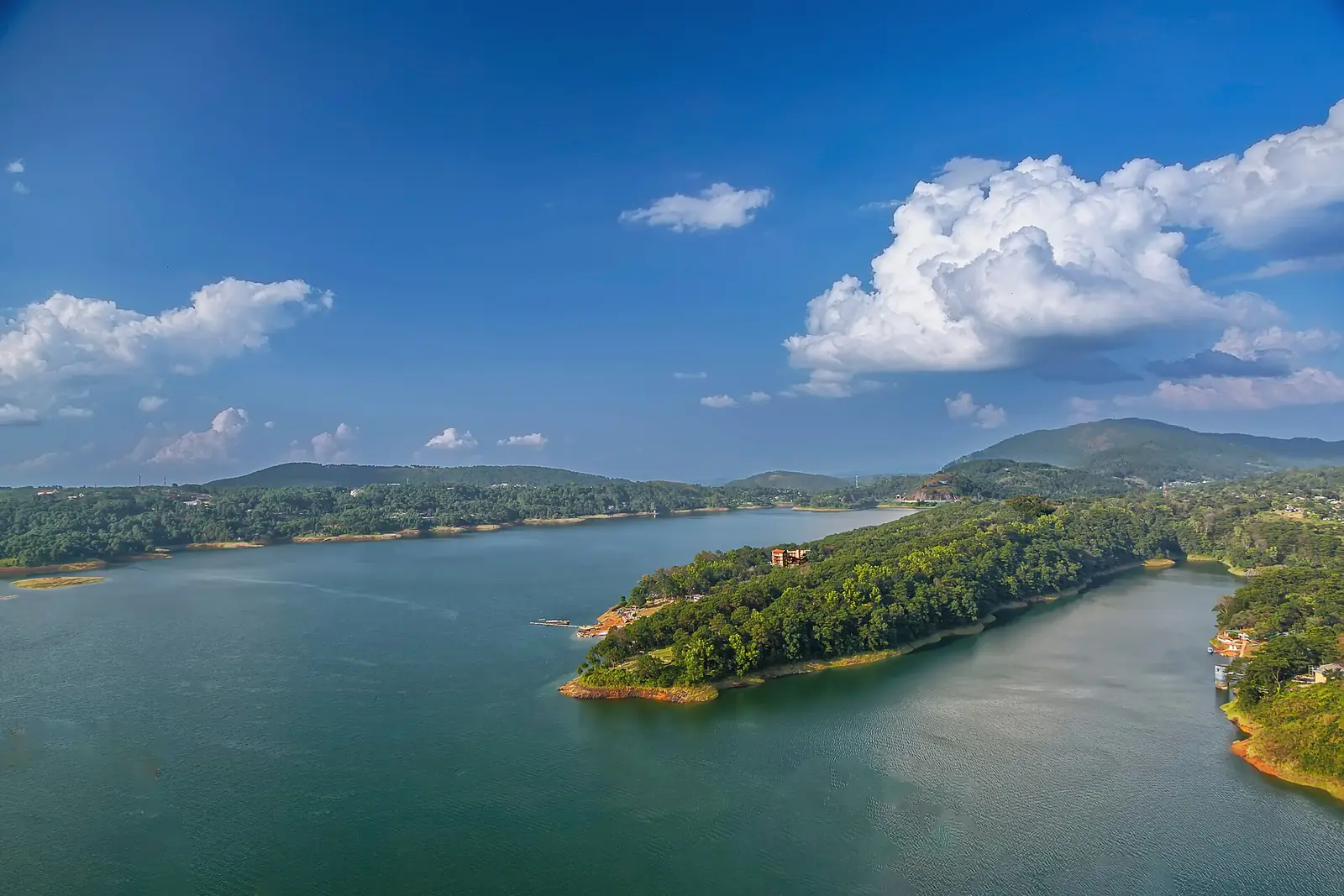
Drive about three hours from Guwahati to Shillong. Stop at Umiam lake, a large reservoir surrounded by pine-covered hills, on the way. In the evening, walk around Ward's lake or Police Bazaar.
Day 2: Laitlum and Sohra
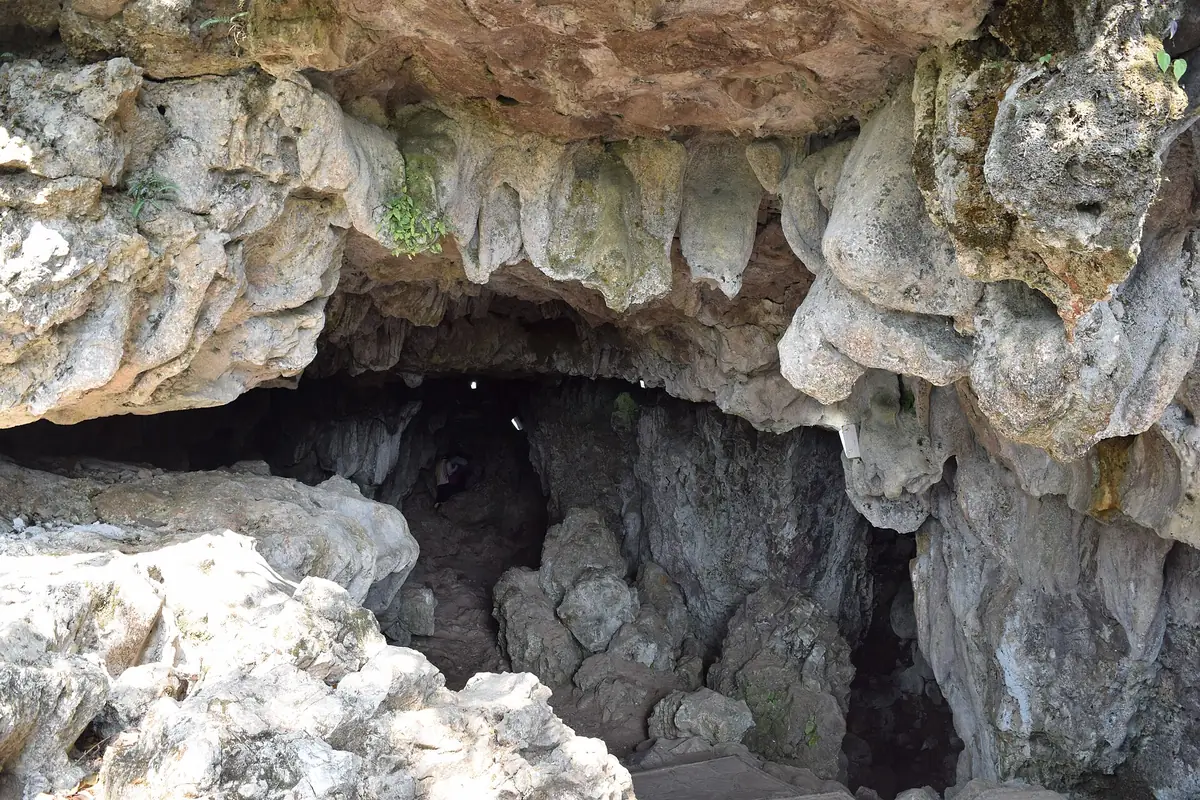
Leave early for the Laitlum canyons, a short drive from Shillong, where the plateau drops into deep valleys. Continue to Sohra (Cherrapunji), about one and a half to two hours from Shillong. See Nohkalikai Falls, the Seven Sisters Falls, and the short, lit Mawsmai cave.
Day 3: Walk to Nongriat
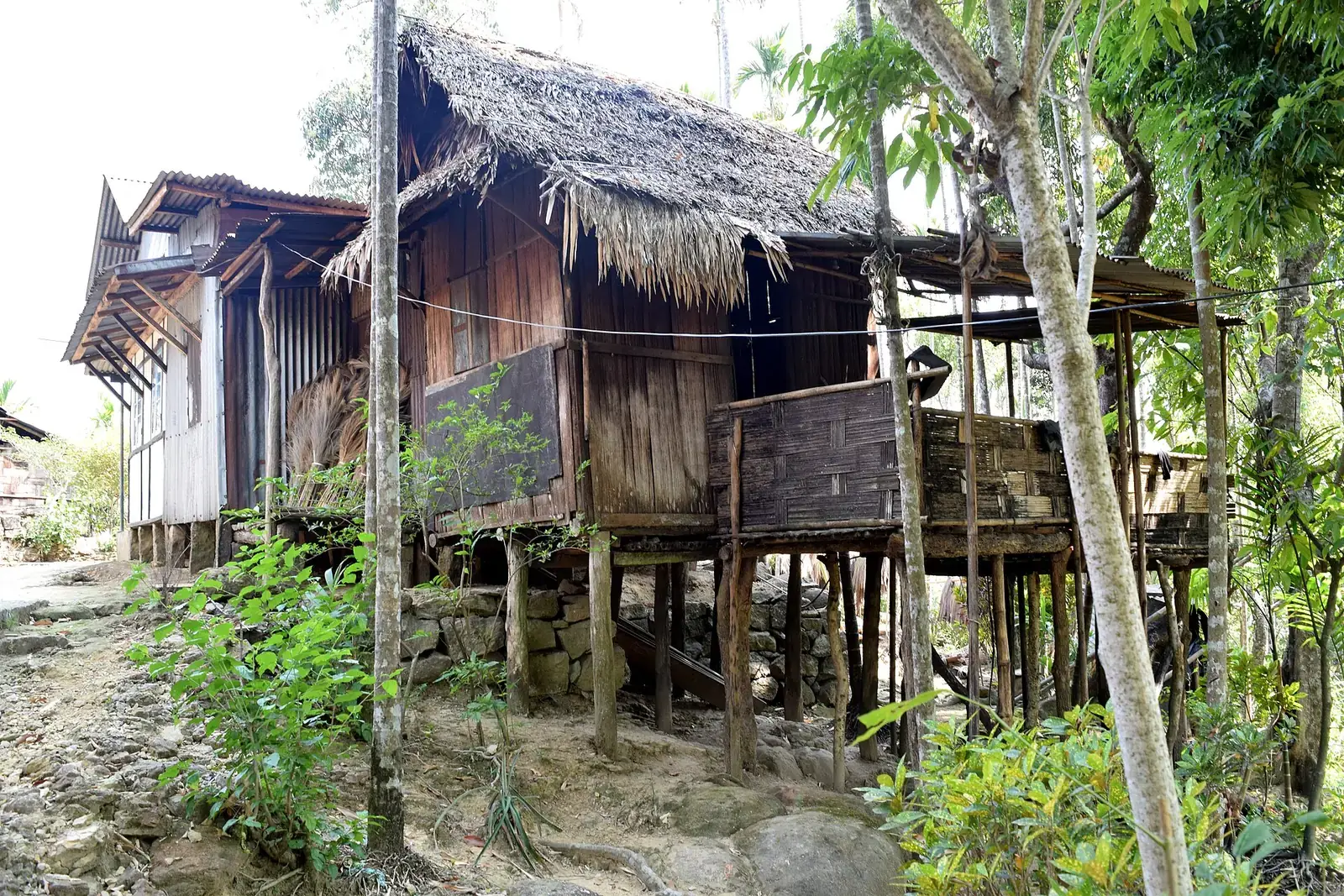
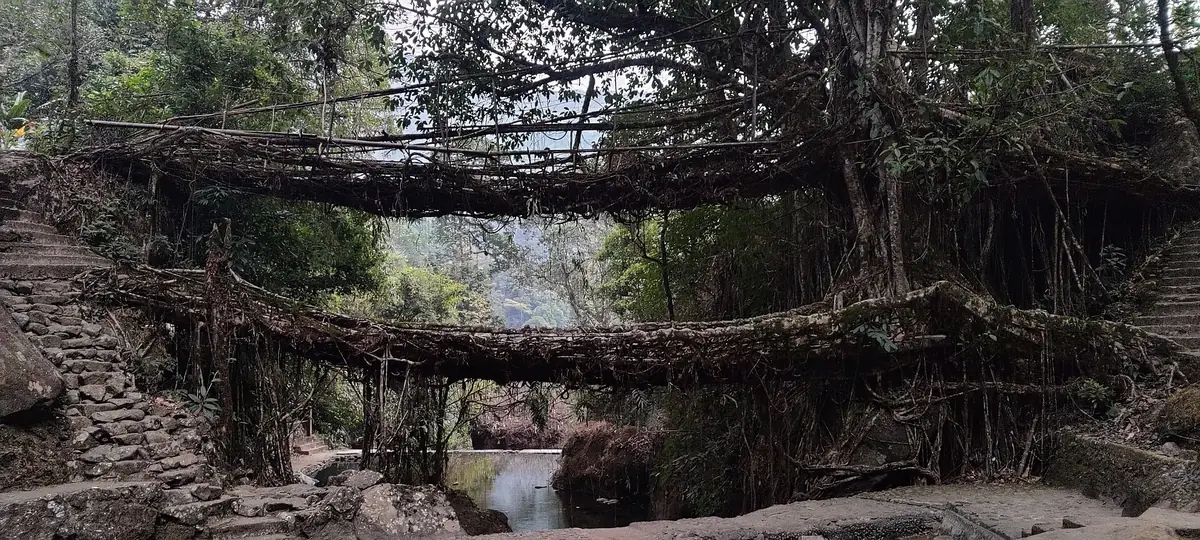
Drive to Tyrna village and walk down a few thousand steps, crossing suspension bridges over clear streams, to Nongriat. The double-decker root bridge is in the village. Stay the night in a simple homestay or guesthouse and enjoy the bridge in the quiet of the evening.
Day 4: Rainbow Falls and Mawlynnong
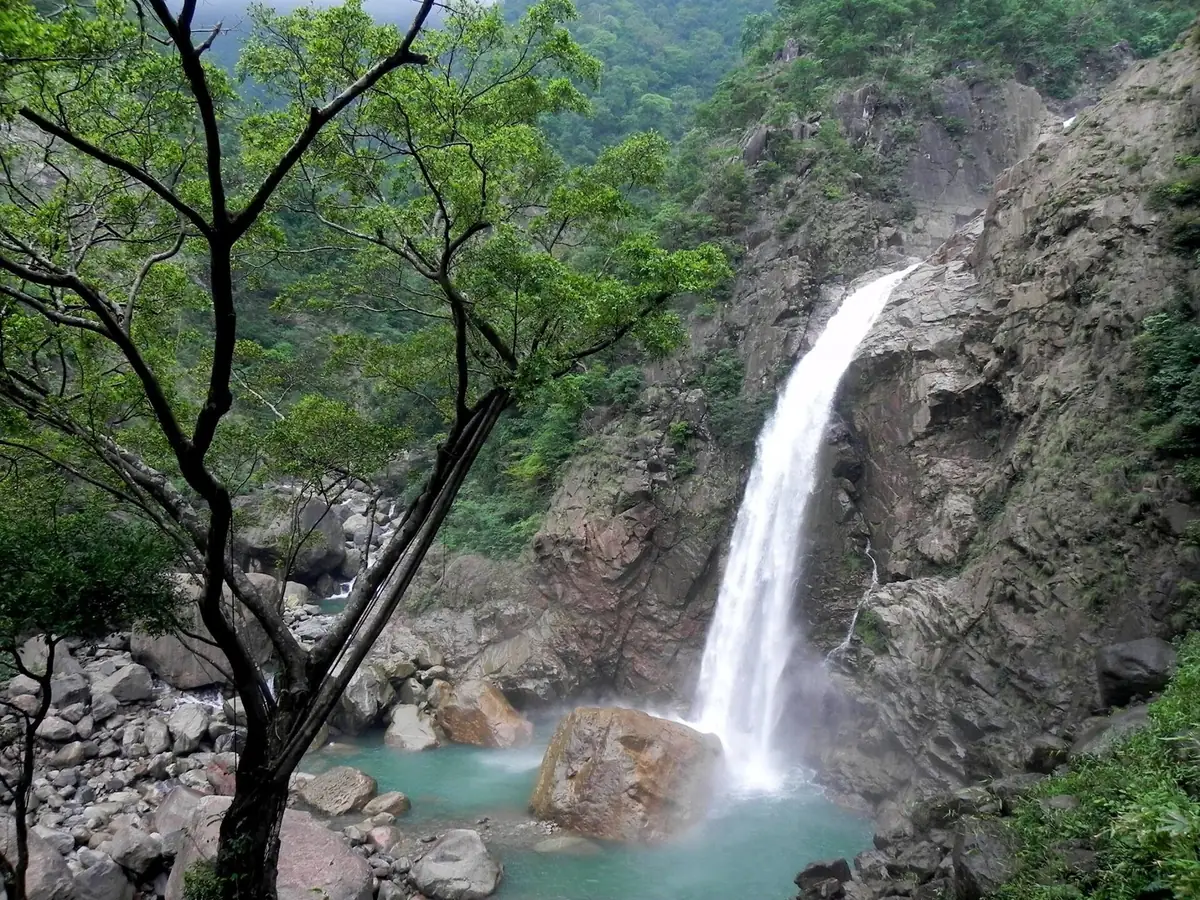
Walk from Nongriat to Rainbow Falls, about an hour further, in the morning. Climb back to Tyrna, which is the hardest part of the trip, then drive two and a half to three hours to Mawlynnong. Visit the Riwai root bridge nearby.
Day 5: Dawki and Shnongpdeng
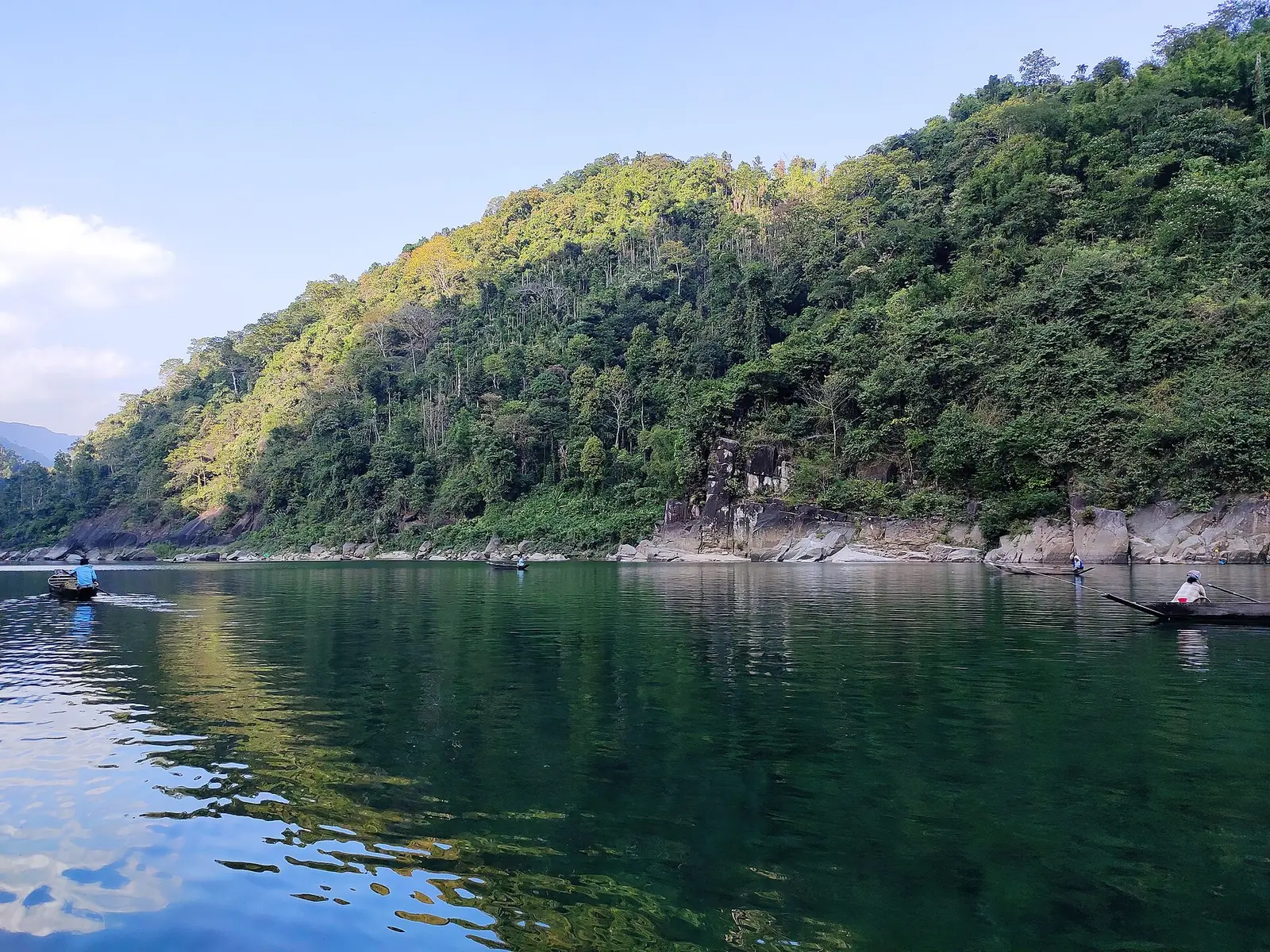
Drive about an hour to Dawki on the Umngot river. In the dry season, take a boat on water so clear you can see the riverbed. Continue to Shnongpdeng, a quieter village upstream, for the night. Operators run boating and, when conditions allow, supervised swimming.
Day 6: Back to Guwahati
Drive back to Guwahati through Shillong, which takes five to six hours. Leave early if you have an evening flight or train.
Variations
- Easier: skip the Nongriat night and visit the Riwai root bridge near Mawlynnong instead.
- Add Krang Suri falls and Jowai in the Jaintia hills for an extra day.
- In the monsoon, keep an extra day at Sohra for the waterfalls and expect poor visibility at viewpoints.
When to go
October to April is the best period, with clear rivers and walkable trails. From June to September the waterfalls are spectacular, but rain and fog can close viewpoints and make the Nongriat steps slippery.
Safety
- Stay on marked trails and viewpoints, and heed local closures after heavy rain.
- Permits, entry rules, seasonal closures and timings change; check official sources before you go.
- Carry your waste back, avoid loud music and never feed wildlife.
- Drive times are approximate and depend on traffic, weather and road works.
- The Nongriat steps are steep; carry water and go at your own pace.
What to pack
- Rain jacket and umbrella
- Walking shoes with grip
- A small day pack for Nongriat
- Cash for fees and homestays
Want the forests, waterfalls and viewpoints woven into one trip?
FAQs
How many days are enough for Meghalaya?
Five to seven days covers Shillong, Sohra, Nongriat, Mawlynnong and Dawki.
Is the Nongriat trek difficult?
It is a steep walk of a few thousand steps each way. Most reasonably fit people manage it with rest stops.
Where should I start a Meghalaya trip?
Guwahati, which has the nearest major airport and railway station.
Can I do this itinerary in the monsoon?
Yes, but expect heavy rain, slippery steps and poor visibility at viewpoints.
Is Dawki's river always clear?
No. It is clearest from about November to April and turns muddy in the monsoon.
Do I need a permit for this route?
Indian visitors do not need an Inner Line Permit for Meghalaya; check for any new registration rules.